SUBHAS CHANDRA BOSE

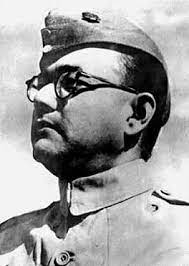
Subhas Chandra Bose, affectionately called as Netaji, was one of the most prominent leaders of Indian freedom struggle. Subhash Chandra Bose (23rd January 1897 – 18th August 1945) was a well-known freedom fighter of India whose non-compromising patriotic attitude made a national hero. His exceptional leadership qualities in gathering support for independence has earned him the honorific “Netaji” meaning “Respected Leader” in Hind He founded Indian National Army (Azad Hind Fauj) to overthrow British Empire from India and came to acquire legendary status among Indian masses.
Early Life and Childhood:

Subhash Chandra Bose was born in a Kayastha family on 23rd January 1897 at 12:10 P.M. His mother’s name was Prabhavati Dutt Bose and his father was Jankinath Bose, who was an advocate in Cuttack, Orissa, then under the Bengal Province.Prabhavati Devi was a pious and religious lady. Subhas Chandra Bose was the ninth child among fourteen siblings. Subhas Chandra Bose was a brilliant student right from the childhood. He topped the matriculation examination of Calcutta province and graduated with a First Class in Philosophy from the Scottish Churches College in Calcutta. He was strongly influenced by Swami Vivekananda’s teachings and was known for his patriotic zeal as a student. In January 1902 at the age of five, he was admitted into Stewart High School; Cuttack.Ravenshaw Collegiate School in Cuttack and Presidency College in Kolkata were some of the premier institutions where he joined in furtherance of his education.

Clearing the Indian Civil Services (ICS) :

To fulfill his parents wishes he went to England in 1919 to compete for Indian Civil Services. In England he appeared for the Indian Civil Service competitive examination in 1920, and came out fourth in order of merit. However, Subhas Chandra Bose was deeply disturbed by the Jallianwalla Bagh massacre, and left his Civil Services apprenticeship midway to return to India in 1921. Being born in a well to do family, Netaji studied in some of the prestigious schools and institutions of British India.

Subhash got selected in the Indian Civil services examination, yet resigned from his job on 23rd April 1921 and headed back towards India. The reason for his resignation from the ICS as he stated in a letter to his brother was that he was opposed to work under the British government. In the letter he further stated – “Only on the soil of sacrifice and suffering can we raise our national edifice”.

Political Life :

After returning to India Netaji Subhash Chandra Bose came under the influence of Mahatma Gandhi and joined the Indian National Congress. On Gandhiji’s instructions, he started working under Deshbandhu Chittaranjan Das, whom he later acknowledged his political guru. Soon he showed his leadership mettle and gained his way up in the Congress’ hierarchy. In 1928 the Motilal Nehru Committee appointed by the Congress declared in favour of Domination Status, but Subhas Chandra Bose along with Jawaharlal Nehru opposed it, and both asserted that they would be satisfied with nothing short of complete independence for India. Subhas also announced the formation of the Independence League. Subhas Chandra Bose was jailed during Civil Disobedience movement in 1930. He was released in 1931 after Gandhi-Irwin pact was signed. He protested against the Gandhi-Irwin pact and opposed the suspension of Civil Disobedience movement specially when Bhagat Singh and his associates were hanged.

Freedom StruggleFalling-out with Gandhi :

After the General Elections of 1937, Congress came to power in seven states and Subash Chandra Bose was released. Shortly afterwards he was elected President of the Haripura Congress Session in 1938. During his term as Congress President, he talked of planning in concrete terms, and set up a National planning Committee in October that year. At the end of his first term, the presidential election to the Tripuri Congress session took place early 1939. Subhas Chandra Bose was re-elected, defeating Dr. Pattabhi Sitaramayya who had been backed by Mahatma Gandhi and the Congress Working Committee. Clouds of World War II were on the horizon and he brought a resolution to give the British six months to hand India over to the Indians, failing which there would be a revolt. There was much opposition to his rigid stand, and he resigned from the post of president and formed a progressive group known as the Forward Block. Netaji, respected Mahatma Gandhi but was doubtful of the latter’s methods and agendas for the independence of India.  Being a soldier at heart, he tried to organize Indian politicians for forcibly deporting British from the Indian soil. Unfortunately, he failed, as senior Indian leaders at that time were largely in support of peaceful protests and marches.

Subhash Chandra Bose Essay for Students & Children | 500 Words Essay

Escape to Germany :

Subhas Chandra Bose now started a mass movement against utilizing Indian resources and men for the great war. There was a tremendous response to his call and he was put under house arrest in Calcutta. In January 1941, Subhas Chandra Bose disappeared from his home in Calcutta and reached Germany via Afghanistan. Working on the maxim that “an enemy’s enemy is a friend”, he sought cooperation of Germany and Japan against British Empire. In January 1942, he began his regular broadcasts from Radio Berlin, which aroused tremendous enthusiasm in India. In July 1943, he arrived in Singapore from Germany.

Azad Hind Fauj :

 In Singapore he took over the reins of the Indian Independence Movement in East Asia from Rash Behari Bose and organised the Azad Hind Fauj (Indian National Army) comprising mainly of Indian prisoners of war. He was hailed as Netaji by the Army as well as by the Indian civilian population in East Asia. Azad Hind Fauj proceeded towards India to liberate it from British rule. Enroute it lliberated Andeman and Nicobar Islands. The I.N.A. Head quarters was shifted to Rangoon in January 1944. Azad Hind Fauj crossed the Burma Border, and stood on Indian soil on March 18 ,1944.
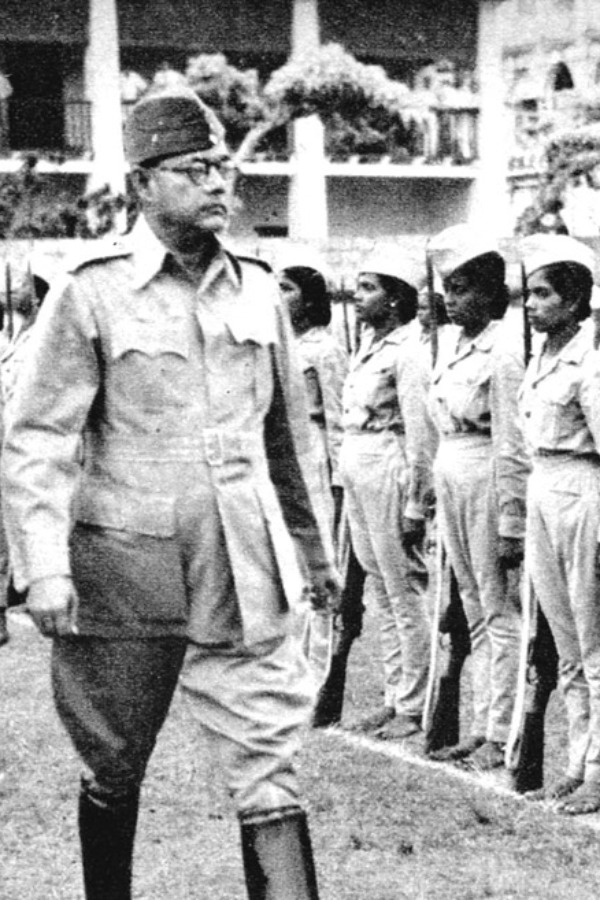
Looking Back 77 Years Ago When India Had An All-Female Rani Jhansi Regiment  In Bose's Azad Hind Fauj

Activity in exile :

A little more than a year after the japanese invasion of Southeast Asia, Bose left Germany, traveling by German and Japanese Submarines and by Plane, and arrived in May 1943 in Tokyo. On July 4 he assumed leadership of the Indian Independence Movement in East Asia and proceeded, with Japanese aid and influence, to form a trained army of about 40,000 troops in Japanese-occupied Southeast Asia. On October 21, 1943, Bose proclaimed the establishment of a provisional independent Indian government, and his so-called Indian National Army (Azad Hind Fauj), alongside Japanese troops, advanced to Rangoon and thence overland into India, reaching Indian soil on March 18, 1944, and moving into Kohima and the plains of Imphal. In a stubborn battle, the mixed Indian and Japanese forces, lacking Japanese air support, were defeated and forced to retreat; the Indian National Army nevertheless for some time succeeded in maintaining its identity as a liberation army, based in Burma and then Indochina.

Netaji’s Mysterious Demise:

The Government of India has decided to celebrate Netaji Subhas Chandra Bose’s birth anniversary every year on January 23 as Parakram Diwas. This was decided by the Central government to inspire people of the country, especially the youth, to follow on the path of Bose’s ideals. The legendary leader’s demise, however, still remains a mystery and theories come up almost until recently that Netaji had faked his death to work secretly in some other country. Today, we look at some of these death theories about the legendary legendary leader that have resurfaced over the years and been a topic of curiosity around the world.

The universally known story of his death was that he died in a plane crash on August 18, 1945 in Taihoku (Taiwan). However, his followers refused to believe this story and instead said that he survived the plane crash and lived in secret with a different identity until he grew old. One of the other bizarre theories about his death claimed that the plane crash was a decoy by the Japanese to help Bose escape to the former Soviet Union. This theory had been proposed by Retd Major Gen GD Bakshi in his book, Bose: The Indian Samurai – Netaji and the INA Military Assessment. In his book, the retired general stated that Netaji set up a Azad Hind Government embassy in Russia, he also successfully made three radio broadcasts from Siberia which gave away his location to the British. It is after this that the British interrogated Netaji and thus tortured him to death, alleges the retired general.

Netaji distinguished himself as a soldier in the history of Indian freedom struggle. His ability to gather the support of the world leaders for the cause of Indian freedom was commendable and hinted towards his diplomatic excellence. In the history of freedom struggle of India, there is no one who could replace Netaji Subhash Chandra Bose in popularity and respect.

Netaji didn't die in plane crash, he was killed: Bodyguard - Taazakhabar  News

THANK YOU !

Symbols in Absalom and Achitophel

Symbols Golden class as a symbol of misplaced veneration
In the biblical book of Exodus, the Israelite awaited Moses, their leader who had gone in search of enlightenment on Mount Sinai. During this time, without effective religious leadership, they made a golden idol in the shape of a graph and began to worship it. The golden calf was not an appropriate subject for the Israelites to worship. Dryden like in the English people’s veneration and an institution of government- a state that could be readily controlled by the people it governs- to the worship of golden calf, thereby indicating that such feeling of veneration was bad and inappropriate. The ideological notion that kings out to be constrained or limited by the government is represented as misguided.

Crown as a symbol of ruler Government and divinity appointed authorities
The text uses the word crown a decorative ornament associated with kings and rulers, to represent the kings, the government, and the legitimate authority as appointed by God. The use of the same word is to represent all these concepts lies in inviting the readers to assign to a government and to a human being the same authority they associate with their deity.

A flock of sheep as a symbol of people
The use of sheep represents a community of people with the leader as a wise shepherd, generally associated with Jesus leading his flock. It is used ironically here to tell an Old Testament story that is intended as an allegory for political events occurring in England. The Sheep represent the common English people. It suggests that people are easily swayed and led because they do not think for themselves.

Allegories rape as an allegory for rebellion
Dryden set forth a premise sometimes people cannot admit to wanting something rather, they prefer to be forced into it. Therefore, by forcing such an individual into a situation, he or she secretly desires is the person doing the forcing is doing the “victim” unnecessary and pleasing favor acting as a satirist Dryden exaggerates the argument into something so shocking it ends up supporting the opposite conclusion.

Bible story as an allegory for the exclusion crisis
The entire poem, which tells the story of Absalom and Achitophel’s rebellion against King David of Israel, is an allegory of the events that occurred in England in the late 17th century. Dryden uses biblical characters and events to comment upon the exclusion crisis and its major players ultimately supporting King Charles II in his right to the throne.

The stock market bubble

A real concern or confused market parameters?

Introduction

An assertion like ‘Had you invested in the stock markets in 2011, your investments would have doubled by now’ triggers an urgent rush to invest in the market, bringing in the feel good hormones in most people. But often times, it is extremely misleading and the results could be catastrophic.

A stock market bubble is when the prices of assets rise exponentially, often not justifying their actual value.

Investors in 2020 faced a similar conundrum. With the pandemic induced lock-downs causing normal life and businesses to go haywire, the general investor felt it was better if they pulled their money out of the market. This led to the leading market index NIFTY50 dropping to 7,500 levels,a 40% decline from its value in January 2020(NSE india). As a result, the market became almost risk free and the only way ahead was up.

Investments started pouring in as the Covid-19 cases eased by August and significant institutional and foreign investors started pouring in money into the Indian stock markets because of their abnormally low levels. The domestic average investor soon followed suit and the markets saw a revival. In fact they rose to record highs( From record lows just a few months ago!) and the expectation of ‘winning’ a trade led to impulsive buys.

Perception versus Reality

Investors are not always sensible or rationale in their investing decisions and can be prone to various types of ‘bias’. These phenomena can explain the prevailing overtly optimistic market sentiments even when the macro-economic indicators are lacking behind.

Even with parameters like the G.D.P and inflation on the wrong side of desirable, and unemployment rate sky rocketing in 2021, the profits that the top 50 companies made in India in the last fiscal year has increased. This resulted in a lot of investors ignoring those macro-economic trends and could be the reason as to why the stock market segment is rising irrespective of it.

Hence the ever increasing corporate profits and the ‘feel good’ hormones can attribute to the ascend of the stock market levels from the previous years ruins but the question remains, ‘How long can this last’? Established wisdom suggests that corporates cannot sustain a contacting economy for long and that it is bound to catch up with it sooner rather than later. Caution is advised to investors with a majority of their money in these instruments. A bubble burst is in the realm of recurrent reality and cannot be ignored as a figment of the imagination.

My best Brother

Brother isn’t it sounds too good and having an elder brother is the best part of life because from childhood to old age he always care about us.

The best part is I have experienced all these things mentioned above because I have my elder brother and he is too good. I am at 16 and till now I don’t have to ask for help from anyone and you will think why he don’t have to ask for help because” I have my elder brother to help me out from all problems and difficulties”.

But sometimes we feel like having a we elder brother is like restrictions in our life not to do this and all. We all used to fight with them but at the end we reconcile together. I don’t know about anyone but believe me having elder brother is not less then blessing.

Brothers are the only one who protect us from everyone and take care of us after our father.

BOOK REVIEW: THE FAULT IN OUR STARS

Image Source: google.com

Author : John Green
Genre : Young Adult Novel, Realistic Fiction
Publisher : Dutton Books
Publishing Date : January 10,2012
Pages : 313
Price : 399
ISBN : 0-525-47881-7

This bestseller book is an absolute treasure that will break your heart in the most beautiful way possible.
This book is one of the most intriguing reads of my life. The title comes from the quote “the fault, dear Brutus, is not in our stars, but in ourselves, for we are underlings.” From ‘Julius Ceaser’ by William Shakespeare. This simply means that people are in charge of their own destiny.

It is written in a coherent narrative style. The story revolves around Hazel Grace Lancaster who narrates the story and is experiencing stage 4 thyroid malignancy and Augustus Waters who lost his leg to osteosarcoma. Their first gathering turns out to be at a Cancer Support Group. They become hopelessly enamoured knowing their life wont last more. They talk about a ton of things including films and books. They exchange their favourite novel and agrees to read it. Augustus gives Hazel ‘Prince Of Dawn’ and Hazel proposes ‘An Imperial Affliction’, a novel about a malignant growth stricken young lady Anna. Augustus reads the story and is disappointed as the story is incomplete. Subsequent to battling a ton they meet Peter Van Houten, the writer of the book. However, they are stunned by the horrifying conduct of him towards youngsters and the story goes on.

My favourite character in the book is Hazels mother. She is sincerely solid and kind lady. It was she who enrolled Hazel to Cancer Support Group to cause her to mingle. She wants to be with Hazel all the time with an end goal to make her life additionally satisfying and fun. John Green takes you on a journey both awful and wonderful. He shows the significance of family and wellbeing. The characters are so genuine and wonderful that the reader will feel an extraordinary association with them. TFIOS is brimming with light and wealthy in feelings. It additionally teaches you to be glad even in the haziest circumstances.

Some of my favourite quotes from the book are ;

‘My thoughts are stars I cannot fathom into constellation’
‘Some infinities are bigger than other infinities’
‘That’s the thing about pain, it demands to be felt’ &

“Without pain, how could we know joy?’ This is an old argument in the field of thinking about suffering and its stupidity and lack of sophistication could be plumbed for centuries but suffice it to say that the existence of broccoli does not, in any way, affect the taste of chocolate.”

Based on the book, a Hollywood movie with the same name was released on 2014 starred by Shailene Woodley and Ansel Elgort in main roles. Later in 2020, ‘Dil Bechera’ a bollywood movie was made based on the same starred by Sushanth Singh Rajput and Sanjana Sanghi in lead roles.

Each word, each sentence of this book is mystically woven. I would recommend
this book to all readers as it will remain in the core of them until the end of
time. You will not regret picking up this book,for sure.

My rating : 4.5 stars

Top 10 Bollywood Movies to watch before you die

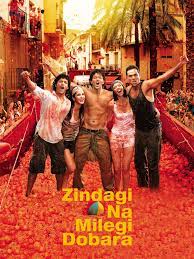
  1. Zindagi na milegi dobara

Friends Kabir , Imran and Arjun take a vacation in spain before Kabirs marraige. This trip turns into and opportunity to mend fences , heal wounds , fall in love with life and combat their worst fear . this friendship based story has its own impact on the audience with such a beautiful cast and story telling .Its a worthy watch for sure.

2. 3 Idiots

this story is also about there friends wo are studying in IIT where they struggle with the education system and their careers ahead . this story is a must watch for the students a life changing experience with a exceptional cast Aamir Khan , Shraman Joshi and R.Madhavan . the story tells us to not fear the future but live in the present

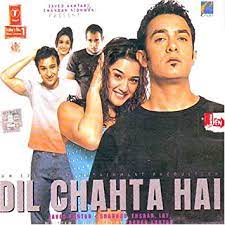
3. Dil Chata Hai

This romantic comedy, directed by then newcomer Farhan Akhtar, was a revitalizing, truthful take on bond and affection.This story was really hearttouching with not only love but the friendship it showed . the was beautiful and storytelling was also exquiste

4. Queen

After being left at the altar Rani decides that she will buid herself a new future and goes on her honeymoon to Europe alone an dhas expereince of a lifetime . a very beautiful movie to watch for all women and become independent .

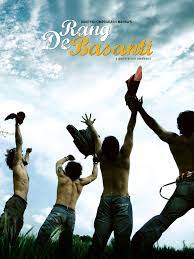
5.Rang de Basanti

The story of six young Indians who assist an English woman to film a documentary on the freedom fighters from their past, and the events that lead them to relive the long-forgotten saga of freedom.When Sue selects a few students to portray various Indian freedom fighters in her film, she unwittingly awakens their patriotism. The emotional and mental process turns them into rebels for a cause.

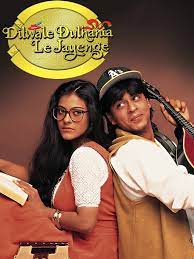
6. Dilwale Dulhania Le Jayenge

Shot throughout India, London, and Switzerland, the beloved “DDLJ” (The Big-Hearted Will Take the Bride) follows one man’s quest to win over the hand of a woman he meets by chance on a trip to Europe. The only trouble is, her father has already arranged for her to marry someone else.

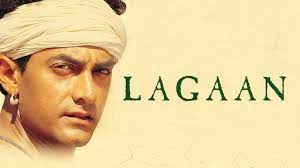
7. Lagaan

Set in the early 1890s amidst India’s colonial British Raj, Lagaan tells the tale of one village’s journey out of their overtaxed debt under their British rulers. The wager for overcoming their unjust circumstances? Beating their officers in a game of cricket.

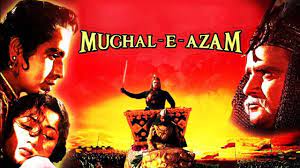
8. Mughal-e-Azam

One of the oldest industries of all time Indian Cinema evokes a sense of colour, splendour and effervescence in viewers. The industry that dates to 1896 has contributed immensely to make Indian cinema what it is today.Today, we are taking you through 20 of the most amazing and greatest Indian movies that created a remarkable mark in the industry!

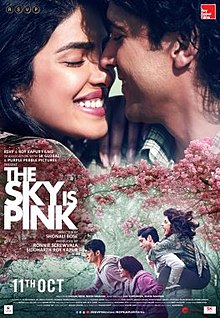
9. The Sky Is Pink

The Movie is based on the true story of Aisha Chaudhary, who suffered from severe combined immunodeficiency and pulmonary fibrosis, and tells the story of her parents Aditi and Niren as they navigate their marriage while dealing with their daughter’s illness.

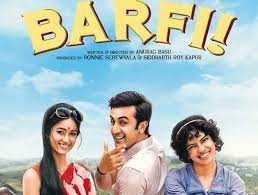
10.Barfi

When Shruti leaves Barfi heartbroken, he meets and forms a special bond with Jhilmil, a girl with autism. However, months later, a chance encounter with Shruti causes old feelings to resurface.

by ISHITA PILLAY

IG : bibliomaniac me

Self help

What is self-love?

            It is nothing but the self-improvement economically, intellectually or emotionally. In other word’s one care about him/her self in all aspects of life.

Self-doubt

When you spend all your time and energy trying to manage other people perceptive of you, you will stuck with the self-doubt.

When you do it so you will feel inadequate and at the point remember that each one of us life is different from one another.

I’m sure you’re experienced a situation where someone made your day it all because of the kind word and compliment, it can bring to yourself by a writing a letter to your own.

No person is an island, as the saying goes and that holds true for our life too, so keep people who encourage you.

Becoming comfortable with yourself

            When you make your needs priorities it is easier to feel good about who you are.

            Meditation will help’s you to find what’s your need, It’s like answering yes or no.

            Say yes or no according to you.

            Don’t let other people put you down for the things that make you unique.

            In this modern era, we don’t even have time to spend with friends and family, so at least you have to spend time with your self and you will meet the best person in this world.

Identifying the triggers

            Our body say’s what we are going through.

            Notice any tensing of muscles, increased heart rate, tingles or any physical change that generally indicates what you’re experiencing.

            It help’s to enhance your self- awareness, do notice that how your mind takes the story its good/ bad, nice/evil.

            When you are trying to identify your emotional triggers, often you can prevent yourself from being triggered, so remove your attention from that and focus on your breath.

Eliminate negativity

            The minute you catch your mind in a negative thought focus on how grateful you are.

            Be grateful what you have

            When you catch yourself in a complaint, congratulate yourself for being aware, awareness is the 1st step in stopping bad habit.

            Turn your problem into challenge.

Making new habits

            Decide clearly that you are going to begin acting in a specific way 100% of the time, whenever that be haviour is required.

            The more often you visualize and imagine yourself acting as if you already had the new habit, the more rapidly this new be haviour will be accepted by your brain and becomes automatic.

            When you realize to persist in the new be haviour it become automatic and easy and even you will feel uncomfortable when you don’t do.

            When you start rewarding yourself you will become more positive and you will become more positive and you will keep on doing.

Self-love

            People become mindful when they think, feel, do, what they want.

            You will like yourself more, when you take better care of you basic need.

            Say yes or no as per your needs, if you say yes to what you don’t like, it will deplete or harm you physically/ emotionally.

            Remember, there are no failure, if you have learned and grown from your mistakes, they are only lessons learned.

            Your purpose doesn’t have to be crystal clear to you, we are living with purpose and design.

                                    “GO HELP YOURSELF”

Women Empowerment

Gender equality is, first and foremost, a human right. A woman is entitled to live in dignity and in freedom from want and from fear. Empowering women is also an indispensable tool for advancing development and reducing poverty. Empowered women contribute to the health and productivity of whole families and communities and to improved prospects for the next generation. The importance of gender equality is underscored by its inclusion as one of the eight Millennium Development Goals. Gender equality is acknowledged as being a key to achieving the other seven goals. Yet discrimination against women and girls – including gender-based violence, economic discrimination, reproductive health inequities, and harmful traditional practices – remains the most pervasive and persistent form of inequality. Women and girls bear enormous hardship during and after humanitarian emergencies, especially armed conflicts. There have been several organisations and institutions advocating for women, promoting legal and policy reforms and gender-sensitive data collection, and supporting projects that improve women’s health and expand their choices in life. Despite many international agreements affirming their human rights, women are still much more likely than men to be poor and illiterate. They usually have less access than men to medical care, property ownership, credit, training and employment. They are far less likely than men to be politically active and far more likely to be victims of domestic violence. The ability of women to control their own fertility is absolutely fundamental to women’s empowerment and equality. When a woman can plan her family, she can plan the rest of her life. When she is healthy, she can be more productive. And when her reproductive rights — including the right to decide the number, timing and spacing of her children, and to make decisions regarding reproduction free of discrimination, coercion and violence — are promoted and protected, she has freedom to participate more fully and equally in society. Gender equality implies a society in which women and men enjoy the same opportunities, outcomes, rights and obligations in all spheres of life. Equality between men and women exists when both sexes are able to share equally in the distribution of power and influence; have equal opportunities for financial independence through work or through setting up businesses; enjoy equal access to education and the opportunity to develop personal ambitions. A critical aspect of promoting gender equality is the empowerment of women, with a focus on identifying and redressing power imbalances and giving women more autonomy to manage their own lives. Women’s empowerment is vital to sustainable development and the realization of human rights for all. Where women’s status is low, family size tends to be large, which makes it more difficult for families to thrive. Population and development and reproductive health programmes are more effective when they address the educational opportunities, status and empowerment of women. When women are empowered, whole families benefit, and these benefits often have ripple effects to future generations. The roles that men and women play in society are not biologically determined – they are socially determined, changing and changeable. Although they may be justified as being required by culture or religion, these roles vary widely by locality and change over time. Key issues and linkages
1)Reproductive health: Women, for both physiological and social reasons, are more vulnerable than men to reproductive health problems. Reproductive health problems, including maternal mortality and morbidity, represent a major – but preventable – cause of death and disability for women in developing countries. Failure to provide information, services and conditions to help women protect their reproduction health therefore constitutes gender-based discrimination and a violation of women’s rights to health and life.
2.) Stewardship of natural resources: Women in developing nations are usually in charge of securing water, food and fuel and of overseeing family health and diet. Therefore, they tend to put into immediate practice whatever they learn about nutrition and preserving the environment and natural resources.
3.) Economic empowerment: More women than men live in poverty. Economic disparities persist partly because much of the unpaid work within families and communities falls on the shoulders of women and because they face discrimination in the economic sphere.
4.) Educational empowerment: About two thirds of the illiterate adults in the world are female. Higher levels of women’s education are strongly associated with both lower infant mortality and lower fertility, as well as with higher levels of education and economic opportunity for their children.
5.) Political empowerment: Social and legal institutions still do not guarantee women equality in basic legal and human rights, in access to or control of land or other resources, in employment and earning, and social and political participation. Laws against domestic violence are often not enforced on behalf of women. Experience has shown that addressing gender equality and women’s empowerment requires strategic interventions at all levels of programming and policy-making.
6.)  Women’s Work and Economic Empowerment: In nearly every country, women work longer hours than men, but are usually paid less and are more likely to live in poverty. In subsistence economies, women spend much of the day performing tasks to maintain the household, such as carrying water and collecting fuel wood. In many countries women are also responsible for agricultural production and selling. Often they take on paid work or entrepreneurial enterprises as well. Unpaid domestic work – from food preparation to care giving – directly affects the health and overall well being and quality of life of children and other household members. The need for women’s unpaid labour often increases with economic shocks, such as those associated with the AIDS pandemic or economic restructuring. Yet women’s voices and lived experiences – whether as workers (paid and unpaid), citizens, or consumers – are still largely missing from debates on finance and development. Poor women do more unpaid work, work longer hours and may accept degrading working conditions during times of crisis, just to ensure that their families survive.
7.) Intergenerational gender gaps: The differences in the work patterns of men and women, and the ‘invisibility’ of work that is not included in national accounts, lead to lower entitlements to women than to men. Women’s lower access to resources and the lack of attention to gender in macroeconomic policy adds to the inequity, which, in turn, perpetuates gender gaps. For example, when girls reach adolescence they are typically expected to spend more time in household activities, while boys spend more time on farming or wage work. By the time girls and boys become adults; females generally work longer hours than males, have less experience in the labour force, earn less income and have less leisure, recreation or rest time. This has implications for investments in the next generation. If parents view daughters as less likely to take paid work or earn market wages, they may be less inclined to invest in their education, women’s fastest route out of poverty.

8.) Empowering Women through Education: “Education is one of the most important means of empowering women with the knowledge, skills and self-confidence necessary to participate fully in the development process.”

The Link Between Anxiety and Perfectionism

Everyone knows at least one perfectionist. They’re hyper-critical of their own work, almost to a fault. And according to a growing body of research, there’s a good chance they also suffer from an anxiety disorder. The very nature of a perfectionist makes them particularly susceptible to the illness.

Here’s what can be done about it: –

🔺on the surface, perfectionism doesn’t seem like such a bad thing. It keeps you focused and motivated. It also helps you consistently produce work of the highest quality.

🔺on the other hand, it also has the potential to wear significantly on one’s psyche. The impossibly-high standards perfectionists set for themselves can lead to a distorted sense of self-worth, in addition to high levels of stress. And that, in turn, can easily spiral into an anxiety disorder.

🔺It’s not just anxiety, either. Perfectionism has been linked to numerous other mental illnesses in medical research, including bipolar disorder, severe depression, and even suicidal ideation. In other words, if you’re a perfectionist and let your tendencies control you, they can literally kill you.


Worse still, there’s evidence that being a perfectionist doesn’t even afford you a significant advantage over non-perfectionists in the workplace. Per the Harvard Business Review:

“Our results showed that performance and perfectionism were not related to each other – perfectionists are not better or worse performers than non-perfectionists. Even employees high in excellence-seeking perfectionism were not better performers…taken as a whole, our results indicate that perfectionism is likely, not constructive at work.”

Scaling back on toxic perfectionism and setting healthy boundaries for yourself starts with understanding the source of your behaviour. As noted in health publication medical news today – which itself cited a landmark psychological work published several decades ago – there are three primary sources of perfectionism. These are:

 1◾Self-oriented.
You hold unrealistic expectations for yourself and are extremely critical of your own work. This could be caused by a negative experience at some point in your life, or simply a series of habits developed over time and linked to mental illness.
2◾ Socially-prescribed.
You believe that your peers are extremely critical and that you must be perfect in order to gain their approval.
3◾Other-oriented.
You set impossibly high standards for the people around you. This form of perfectionism isn’t exactly relevant to our discussion here, though it can occasionally overlap with one of the other two.
🔹Positive self-talk is the second step in overcoming toxic perfectionism. Understanding how your own tendencies manifest will help you structure it in the right way. Whenever a toxic belief or thought manifests in your mind, counter it with a positive one.
In other words, be compassionate towards yourself. Understand that your self-worth is not tied to your performance in the workplace or your ability to turn out flawless work. You have value as a person beyond your output.
And if self-talk alone isn’t enough to help you, know that there’s no shame in seeking help from a trained professional. Everyone could use therapy now and then.

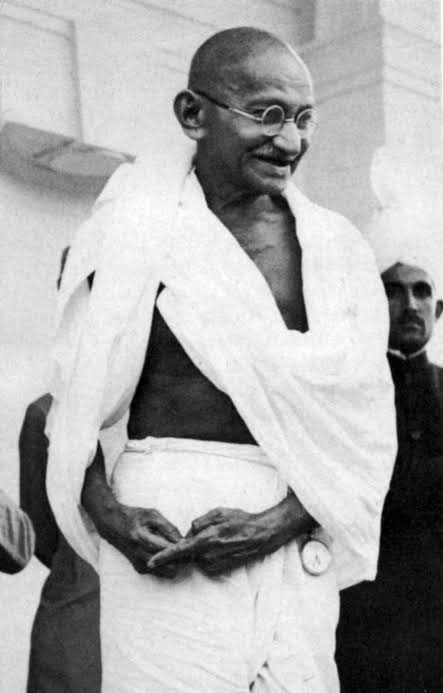
MAHATMA GANDHI

Revered the world over for his nonviolent philosophy of passive resistance, Mohandas Karamchand Gandhi was known to his many followers as Mahatma, or “the great-souled one.” He began his activism as an Indian immigrant in South Africa in the early 1900s, and in the years following World War I became the leading figure in India’s struggle to gain independence from Great Britain. Known for his ascetic lifestyle–he often dressed only in a loincloth and shawl–and devout Hindu faith, Gandhi was imprisoned several times during his pursuit of non-cooperation, and undertook a number of hunger strikes to protest the oppression of India’s poorest classes, among other injustices. After Partition in 1947, he continued to work toward peace between Hindus and Muslims. Gandhi was shot to death in Delhi in January 1948 by a Hindu fundamentalist.

Early Life

Mohandas Karamchand Gandhi was born on October 2, 1869, at Porbandar, in the present-day Indian state of Gujarat. His father was the dewan (chief minister) of Porbandar; his deeply religious mother was a devoted practitioner of Vaishnavism (worship of the Hindu god Vishnu), influenced by Jainism, an ascetic religion governed by tenets of self-discipline and nonviolence. At the age of 19, Mohandas left home to study law in London at the Inner Temple, one of the city’s four law colleges. Upon returning to India in mid-1891, he set up a law practice in Bombay, but met with little success. He soon accepted a position with an Indian firm that sent him to its office in South Africa. Along with his wife, Kasturbai, and their children, Gandhi remained in South Africa for nearly 20 years.

Did you know? In the famous Salt March of April-May 1930, thousands of Indians followed Gandhi from Ahmadabad to the Arabian Sea. The march resulted in the arrest of nearly 60,000 people, including Gandhi himself

Gandhi was appalled by the discrimination he experienced as an Indian immigrant in South Africa. When a European magistrate in Durban asked him to take off his turban, he refused and left the courtroom. On a train voyage to Pretoria, he was thrown out of a first-class railway compartment and beaten up by a white stagecoach driver after refusing to give up his seat for a European passenger. That train journey served as a turning point for Gandhi, and he soon began developing and teaching the concept of satyagraha (“truth and firmness”), or passive resistance, as a way of non-cooperation with authorities.

The Birth of Passive Resistance

In 1906, after the Transvaal government passed an ordinance regarding the registration of its Indian population, Gandhi led a campaign of civil disobedience that would last for the next eight years. During its final phase in 1913, hundreds of Indians living in South Africa, including women, went to jail, and thousands of striking Indian miners were imprisoned, flogged and even shot. Finally, under pressure from the British and Indian governments, the government of South Africa accepted a compromise negotiated by Gandhi and General Jan Christian Smuts, which included important concessions such as the recognition of Indian marriages and the abolition of the existing poll tax for Indians.

In July 1914, Gandhi left South Africa to return to India. He supported the British war effort in World War I but remained critical of colonial authorities for measures he felt were unjust. In 1919, Gandhi launched an organized campaign of passive resistance in response to Parliament’s passage of the Rowlatt Acts, which gave colonial authorities emergency powers to suppress subversive activities. He backed off after violence broke out–including the massacre by British-led soldiers of some 400 Indians attending a meeting at Amritsar–but only temporarily, and by 1920 he was the most visible figure in the movement for Indian independence.

Leader of a Movement

As part of his nonviolent non-cooperation campaign for home rule, Gandhi stressed the importance of economic independence for India. He particularly advocated the manufacture of khaddar, or homespun cloth, in order to replace imported textiles from Britain. Gandhi’s eloquence and embrace of an ascetic lifestyle based on prayer, fasting and meditation earned him the reverence of his followers, who called him Mahatma (Sanskrit for “the great-souled one”). Invested with all the authority of the Indian National Congress (INC or Congress Party), Gandhi turned the independence movement into a massive organization, leading boycotts of British manufacturers and institutions representing British influence in India, including legislatures and schools.

After sporadic violence broke out, Gandhi announced the end of the resistance movement, to the dismay of his followers. British authorities arrested Gandhi in March 1922 and tried him for sedition; he was sentenced to six years in prison but was released in 1924 after undergoing an operation for appendicitis. He refrained from active participation in politics for the next several years, but in 1930 launched a new civil disobedience campaign against the colonial government’s tax on salt, which greatly affected Indian’s poorest citizens.

A Divided Movement

In 1931, after British authorities made some concessions, Gandhi again called off the resistance movement and agreed to represent the Congress Party at the Round Table Conference in London. Meanwhile, some of his party colleagues–particularly Mohammed Ali Jinnah, a leading voice for India’s Muslim minority–grew frustrated with Gandhi’s methods, and what they saw as a lack of concrete gains. Arrested upon his return by a newly aggressive colonial government, Gandhi began a series of hunger strikes in protest of the treatment of India’s so-called “untouchables” (the poorer classes), whom he renamed Harijans, or “children of God.” The fasting caused an uproar among his followers and resulted in swift reforms by the Hindu community and the government.

In 1934, Gandhi announced his retirement from politics in, as well as his resignation from the Congress Party, in order to concentrate his efforts on working within rural communities. Drawn back into the political fray by the outbreak of World War II, Gandhi again took control of the INC, demanding a British withdrawal from India in return for Indian cooperation with the war effort. Instead, British forces imprisoned the entire Congress leadership, bringing Anglo-Indian relations to a new low point.

Partition and Death of Gandhi

After the Labor Party took power in Britain in 1947, negotiations over Indian home rule began between the British, the Congress Party and the Muslim League (now led by Jinnah). Later that year, Britain granted India its independence but split the country into two dominions: India and Pakistan. Gandhi strongly opposed Partition, but he agreed to it in hopes that after independence Hindus and Muslims could achieve peace internally. Amid the massive riots that followed Partition, Gandhi urged Hindus and Muslims to live peacefully together, and undertook a hunger strike until riots in Calcutta ceased.

In January 1948, Gandhi carried out yet another fast, this time to bring about peace in the city of Delhi. On January 30, 12 days after that fast ended, Gandhi was on his way to an evening prayer meeting in Delhi when he was shot to death by Nathuram Godse, a Hindu fanatic enraged by Mahatma’s efforts to negotiate with Jinnah and other Muslims. The next day, roughly 1 million people followed the procession as Gandhi’s body was carried in state through the streets of the city and cremated on the banks of the holy Jumna River.

Neoclassical poetry

New classicism refers to the habit of imitating the great authors of antiquity as a matter of aesthetic principle and the acceptance of the critical precepts, which emerged to guide that imitation. Up to the last quarter of 17th-century neoclassicism had little influence in England except for Samuel Johnson. No important writer paid strict attention to the rules humanist critics had formulated Dryden also produced all for love (1677) which has been called the only correct neo-classical tragedy in English, but the fashion was outdated.

The usual excuse of rules was that they helped writers to be true to nature. Alexander Pope wrote, those rules of old discovered not devis’d, Are Nature still but Nature methodized, and implicit in his view was the assumption that ‘nature’ consisted in what was generally true. Following the list of ideas and characteristics as mentioned by M. H. Abrams was shared, between 1660 and late 1700 by authors such as John Dryden, Alexander Pope, Joseph Addison, Jonathan Swift, Samuel Johnson, Oliver Goldsmith, and Edmund Burke. These may serve as an introductory sketch of some prominent features of new classic literature.

These authors exhibit a strong traditionalism which was often joined to a distrust of radical innovation and was evidenced above all in their great respect for classical writers. Literature was convinced to be primarily an ‘art’ that is a set of skills, which though it requires innate talent, must be perfected by long study and practice, and consist mainly in the deliberate adaptation of known and tested means of the achievements of foreseen ends upon the audience of readers.

Human beings as an integral part of a social organization were regarded as the primary subject matter of literature. Poetry was held to be an imitation of human life- is a common phrase a mirror helps us to nurture. And by the human action it imitates, and the art form it gives to the imitation. Poetry is designed to yield both instruction and aesthetic pleasure to the people who read it. Not art for art’s sake but art for humanity sake was the central idea of neo-classic Humanism

Both in the subject matter and the appeal of art, emphasis was placed on what human beings possess in common. Neo-classic writers viewed human beings as the limited agent who ought to set themselves only accessible goals. Many of the great works of the period satiric and didactic, attack human pride.

How to W.R.A.P decisions in Life

Every living being in this universe is subjected to make decisions for their survival – be it an ant and or a humpback whale. Fortunately, humans are the only beings gifted with the power of discrimination of understanding what is right or wrong for us and making a decision accordingly. Decisions can either be positive or otherwise but the quality of your decisions will determine how deeply they would impact your life.

It's A WRAP - Better Decision Making

Chip and Dan Heath, in their book ‘ Decisive: How to Make Better Choices in Life and Work’, talk about a Framework called W.R.A.P for making better decisions
WRAP consists of four elements:
W- Widen your options
R- Reality test your assumptions
A- Attain distance before deciding
P- Prepare to be wrong

Widen your options

There is a misconception that having a lot of options can lead to confusion and is as same as seeing only the big picture. So, people narrow their frames of you and often lose possible options that could have worked better for them.
You can start finding more options by creating a mindset where none of the options you are considering is available. What else can you do? Think about it and be surprised about how many new options crop up!

Reality test your assumptions

While encountering a decision-making situation, we all tend to select the options that support our preconceived beliefs and actions. But that might not work all the time.
We can overcome this by seeking out relevant data that might redeem or discard the options at hand. Also, for example, if you have a piece of work or a product to be published you can sample your work ok for a response from a small group first instead of jumping right into the market. Reason out to yourself why you would want to make a particular choice.

Attain distance before deciding

We often let our short-term emotions cloud our rationality and take hasty decisions. It is imperative to have a well-settled mind before making an important life decision.
Try broadening your point of view. Ask yourself what a reliable third person would do in such circumstances- step into your friend’s shoes or think like someone who you look up to. This can give you a fresh perspective of the situation at hand and make you take a better decision.

Prepared to be wrong

Voice Blog: In Order To Be Original, Prepare to Be WRONG - Ben Francia

We predict a lot in our life. What if a decision that you made is based on such predictions and things actually don’t turn up the way you wanted? What then? You should be ready to acknowledge the decision’s flaw.
Think about working back from a possible future. For example, suppose your work has been published and was poorly received. Think about how the work could have been made better so that you really don’t have to face that situation. Come up with backup ideas that can act like your ‘insurance’ and protect you in case things go the other way.

The next time when you faced a situation, remember that the process is as important as the decision itself. You are the master of your life- so make sure that the decision you made don’t make your life different from what you wanted.
Trust the process!

VOLCANOES AROUND THE WORLD, AND IT’S TYPES ?

A volcano is a land-form, a mountain, where molten rocks erupt through the surface of the planet. The volcano mountain opens downwards to a pool of molten rocks below the surface of the earth. When the pressure builds up in the earth’s crust, eruptions occur. Gasses and rock shoots up through the opening and spill over or fill the air with lava fragments. The volcano eruption can cause lateral blasts, hot ash and lava flow etc.

There are about 1,500 potentially active volcanoes worldwide, aside from the continuous belts of volcanoes on the ocean floor at spreading centers like the Mid Atlantic ridge. About 500 of those 1,500 volcanoes have erupted in historical time. Many of those are located along the Pacific Rim in what is known as the “Ring of fire.” In the United States, volcanoes in the Cascade Range and Alaska are part of the Ring, while Hawaiian volcanoes form over a ‘hot spot’ near the center of the Ring. There are 169 Potentially active volcanoes in the United States. The U.S. Geological Survey assesses and monitors hazards at volcanoes within the United States and its territories.

LARGEST VOLCANOES IN THE WORLD :

  1. MAUNA LOA VOLCANO ,HAWAII :

Mauna Loa is the biggest volcano on Earth. It is 9,170 meters tall. It is a shield volcano. Mauna Loa shares is a hot spot in the Pacific plate. It is Situated in Hawaii Volcanoes National Park, Mauna Loa is the world’s largest volcano. It’s outrageously active, chalking up 33 eruptions since 1843 when it had a big blow out. Neighbouring Kilauea is smaller but just as energetic. You can drive around the summit, as long as there are no active lava flows.

2.MOUNT FUJI,TOKYO,JAPAN :

Mount Fuji has a symmetric cone and for a few months its summit is covered in snow. It is an active volcano. Mount Fuji is a stratovolcano. It is 3,776 meters tall. It is the tallest peak in Japan. It lies on the Eurasia tectonic plate. The lava from Mount Fuji’s eruption is basaltic. A perfectly shaped volcano with a conical form and pretty snow-capped peak, Mount Fuji is japan’s most popular and visited tourist attraction, and it’s one of the most famous volcanoes around the world. It’s currently active, though last erupted in 1708, so should be safe enough to scale – as many do in summer months. If you’re feeling nervous check it out from the security of a bullet train between Tokyo and Yokohama.

Yoshida, Mount Fuji, Japan

3.MAYON VOLCANO,ALBAY,PHILIPPINESS :

Mayon Volcano is an active stratovolcano in the Philippines. It has steep slopes that form a symmetrical classic volcano. It is 8,081 feet tall. It is located on a convergent boundary between the Eurasian and Philippine plate. The lava from Mayon Volcano is pyroclastic.

4.MOUNT St HELENS, WASHINGTON ,USA:

Mount St. Helens erupted in 1980 and was one of the most devastating eruption in the USA. It is an active stratovolcano located in Skamania County, Washington. Mount St. Helens is part of the Cascade Mountain range. It’s 8,366 feet tall. It consists of lava rock interlayered with ash, pumice, and other deposits. The mountain includes layers of basalt and andesite through which several domes of dacite lava have erupted. Mount St Helens is on the plate boundary between the Juan de Fuca plate and North American plate. Mount St Helens is responsible for the most catastrophic eruption in the US: in 1980, the side of the mountain blasted out over miles and miles of expensive timberland, destroying towns, highways and bridges and killing over 50 People.

5. MOUNT BROMO,INDONESIA :

Mount Bromo and Mount Semeru, East Java, Both volcanoes are active and located in Bromo Tengger Semeru National Park, creating a landscape of a different planet. Semeru is taller and expels smoke, while Bromo fumes constantly. Mount Bromo is 7,641 feet tall and Mount Semeru is 12,060 feet tall. Mount Bromo is a small but active volcanic cinder and Mount Semeru is an active stratovolcano. They are both on the Eurasian plate. Mount Semeru is made up of layers of andesitic deposits. Mount Bromo is a small pyroclastic cone and all recent lava flows are andesitic.

6. MOUNT ETNA VOLCANOES,ITLAY :

Etna, Catania, Sicily. Mount Etna is Europe’s tallest and the most popular volcano. Roman poet Virgil said it is a home of a mythological god Hephaestus and a one-eyed monster Cyclops. Etna is an active stratovolcano on the east coast of Sicily, Italy, in the Metropolitan City of Catania. It is 10,991 feet tall. It rests on the subduction boundary where the African tectonic plate is being pushed under the Eurasian plate. It has been for active for 500,000 years and creates eruptions of Basaltic lava. Sicily harbours Europe’s tallest active volcano, Etna,is located outside the city of Catania. Visitors can make their way to the steaming, smoking summit.The temperature at the top drops considerably, so take a few layers with you. Mount Etna erupted as recently as in February 2021 and left a shower of ash that reached Catania, adding to the fact that it is one of the most active volcanoes in the world.

Mount Etna, Italy

Types of Volcanoes :

Volcanoes are grouped into four types:

  • Cinder cones
  • Composite volcanoes
  • Shield volcanoes
  • Lava volcanoes

Cinder Cones:

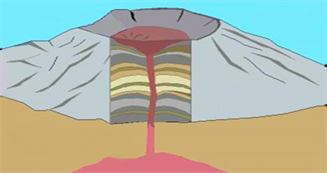
Cinder cones are circular or oval cones made up of small fragments of lava from a single vent that have been blown up. Cinder cones result from eruptions of mostly small pieces of scoria and pyroclastics that build up around the vent.

Cinder cones

Composite Volcano :

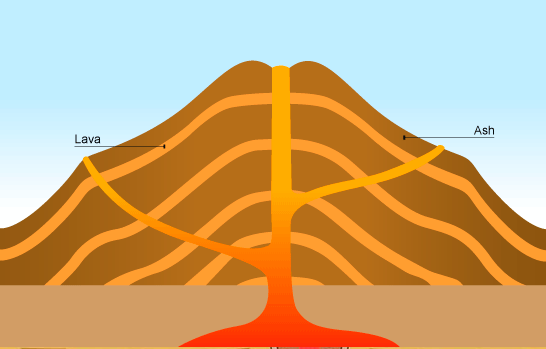
Composite volcanoes are steep-sided volcanoes composed of many layers of volcanic rocks, usually made from high-viscosity lava, ash and rock debris. These types of volcanoes are tall conical mountains composed of lava flows and other ejects in alternate layers. Composite volcanoes are made of cinders, ash, and lava. Cinders and ash pile on top of each other, lava flows on top of the ash, where it cools and hardens, and then the process repeats.

Composite volcanoes

Shield Volcano :

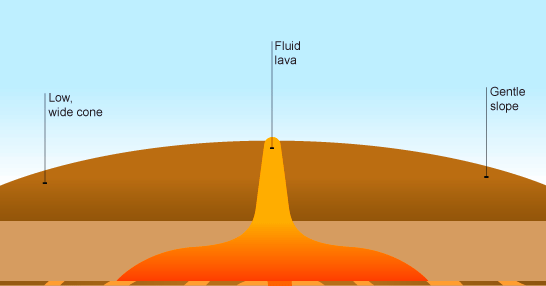
Shield volcanoes are volcanoes shaped like a bowl or shield in the middle with long gentle slopes made by basaltic lava flows. These are formed by the eruption of low-viscosity lava that can flow a great distance from a vent.They generally do not explode catastrophically. Since low-viscosity magma is typically low in silica, shield volcanoes are more common in oceanic than continental settings. The Hawaiian volcanic chain is a series of shield cones, and they are common in Iceland.

Shield volcanoes

Lava Domes :

Lava domes are formed when erupting lava is too thick to flow and makes a steep-sided mound as the lava piles up near the volcanic vent. They are built by slow eruptions of highly viscous lava. They are sometimes formed within the crater of a previous volcanic eruption. Like a composite volcano, they can produce violent, explosive eruptions, but their lava generally does not flow far from the originating vent

Lava domes

THANK YOU !

Five COMMON things that ruin Friendship!!

Introduction:

You won’t deny that Friendship is a boon to every one of us, but losing up a friendship can be the worst thing that happens to us. No one loves the heartbreak of losing someone who was like family but still ends up losing them. There can be many things that spoil Friendship but below are five common factors discussed in short.

1.The jealousy factor:

Feeling jealous is a natural thing. But if you are a true friend, then getting jealous of your friend’s success can easily ruin the bonding. Being a true friend means you should know to celebrate your friend’s success.

2.Lack of transparency:

Of course, you talk for hours but are you guys transparent and honest enough to tell each other where you are wrong? Sugar-coating everything in a friendship shows that you are staying with each other for the benefit.

3.The trust issues:

Every relation is composed of trust, and so is Friendship. If you share something confidential with your friends and spill out it in front of someone, then it’s clear that they are not your friends. And once you realize that the relationship ends permanently.

4.Lies :

If your friends lie on everything to hide situations and show their good side, you won’t keep up the Friendship. And nobody wants a friend who lies on everything.

5.Spending too much time on each other:

Yes, this sounds a little unusual, but this too can be an important reason. Spending all your spare time with your friends reduces the spark in the bonding. It happens because with passing days you will start feeling suffocated when you won’t give time to your family and other important people in life.

Conclusion.

There are already many obstacles we face daily, and we can have hundreds of reasons to end a relationship, but finding just one reason to stay together is always a good idea. We can’t make friends too often because we all know that it takes months and years to find our true gems. If things are scattering, find ways to tackle them rather than easily let go of those special people.

Key points of the New Education Policy 2020

Indian Education System was always been on debate , whether it is good or bad .People always talk about it being full of flaws with nothing good but a ritual being carried on from past forcing us to follow the static rules of system which didn’t let us to think out of the box . All we end up doing is studying the same content , the same syllabus , in the same pattern (theoretical one) that was studies by our elders . The focus is mainly on the marks not on any other traits, our abilities were mostly being judged on the basis of percentage we got as a result we end up being running to stood first on the crazy race of marks and forgetting everything after the exams , which completely does not make any sense .

Some things seems to bring about a full is stop on this static system “The NEW EDUCATION POLICY ” which came in as an hope in 2020 for bringing about a major change in the pattern .Almost everybody knows about is by now , the policy says alot about changing the education system completely and making a new one leading to changing the entire system of education of the country. The policy has a very educational friendly approach as it mainly focuses on providing the standard education , which will include all the other aspects of it other than just being the theoretical learning. Every body have their own views regarding it , many had criticized it even which may or may not be the right thing to do ,as the policy is on paper not in existence its implication seems to take alot of time itself. So let just analyze few key points of it before making an opinion .

Starting with the changes it says , to be making at school level .The important swap is made by converting “10 +2” to “5+3+3+4” which is a great step , the concept is mainly to build the strong base from the very beigining i.e at the age of 3 , though even before the change this system is followed in may cities but was not mandatory .The other important addition that is made is “learning coding from 6th standard”, which many of us are still afraid to learn , seeing the requirement of coding in the digital world the government had taken this step . Along with coding the internship kind of vocational training program has also been introduced which which help the student in critical thinking leading to creative mindset. Moving on to the third significant point “the choices of subjects ” the pattern of dividing the students in three streams has demolished by the new one in which the students will be free to choose the subjects as per their interest that means the students will no longer be left with confusion after completing their school as the freedom to choose the subjects will help them to find their interest on and make better decision .

Shifting to the Higher education , the significant point is the introduction of the MEME (Multiple entry Multiple exist ) system that will now definitely lead to the completion of higher education of all the students who finds it difficult to do it on continuation , as this system will give them the freedom to do the completion with gaps in between and also there will be an increment of one year in the three year bachelor program which will be optional , that means if you want to add this year you may otherwise their will be no pressure , the fresh year will be of the research which is an amazing point .The other point is the introduction of “Academic Bank of Credit system” under which all the credits earned by the students in the higher education will be stored on to basis of which Degrees will be awarded.

Along with these points few prime points are , all the bodies of education will now comes under one umbrella , that means now their will be only decision making body of higher education the “HEC (Higher Education Commission)”. Virtual labs will be builds so that the practical knowledge will be given to all the students .Report cards will also includes the marks of participation in extracurricular activities and marks of creativity apart from the subjects marks . Most important the investment in education has increases from 1.6% of GDP to 6%.

These are the few major points of the New Education Policy 2020, all the points seems so prime and will be so effective if will get follow up in the same way it was mention . Education do play a major role in the development of the country if all the changes will be made effectively than surely this will lead to the development of the country . Do comment down below what suggestion you have for the new policy and which beneficial change excites you the most .