Call for Papers IJR

International Journal of Research (IJR) ISSN 2348-6848 is an international journal for publishing research papers of Management and Business. Our objective is to encourage and provide international publication to Researchers, Managers, Scientists, Professionals and Professors of Management. We welcome original researches, articles, surveys and review papers from all over the world.

Our objective is to encourage and provide international publication for researchers, scientists and engineers. We welcome original un-published researches, articles, surveys and review papers from all over the world.


Aims & Scope

International Journal of Research (IJR) ISSN 2348-6848 publishes scholarly research, review and survey articles on any aspect of computer science. This Journal topics include, but are not limited to: 

  • General Management

    • Organizational Behaviour
    • Management Development
    • Accounting and Finance
    • Business Ethics
    • Equality, Diversity and Inclusion
    • Strategic Management
    • Marketing
    • Operations Management
    • R&D Management
    • Business Economics
    • Public Sector Management
    • Research Method
    • Business ethics and legal issues

    Business Environment

    • Business policies, strategies, and performance
    • Business and retail research
    • Business security and privacy issues
    • Consumer behaviour
    • Emerging advances in business and its applications
    • Innovation and product development
    • International business issues
    • Management and retail marketing
    • Marketing management and strategies
    • Relationship management
    • Risk Management
    • Retail Management and communication
    • New venture start-up
    • Retail buying
    • MIS and Retail Management
    • Demographics and Retail Business
    • HRM and Retail Business
    • Innovation in Retail Management
    • Law and management

Recommendations Of State Human Right Commission Are Legally Enforceable, Binding On Government/Authorities

In a well-written, well-worded, well-analysed, well-reasoned, well-substantiated, well-articulated and well-concluded 517-page judgment titled Abdul Sathar vs The Principal Secretary to Government and 5 others in W.P. No. 41791 of 2006 delivered as recently as on February 5, 2021, a Full Bench of the Madras High Court has held that the recommendation of State Human Rights Commission under Section 18 of the Protection of Human Rights Act, 1993 is binding on the Government or Authority. The Bench comprising of Justices S Vaidyanathan, Parthiban and M Sundar also held that it is an adjudicatory order which is legally and immediately enforceable. Very rightly so! 

To start with, the ball is set rolling by first and foremost observing in para 1 of this commendable judgment authored by Justice M Sundar for himself, Justice S Vaidyanathan and Justice Parthiban wherein it is laid down as a preferatory note that, “It is often said that interpretation is a journey of discovery, which is not akin to a regular journey of discussion and dispositive reasoning which predominantly turns on ‘construction’. Interpretation (unlike construction) is more in the nature of determining the idea of legal meaning of a Statute. Interpretation is a jurisprudential journey as it is the process of sifting a statute and/or it is provisions to seek the intention of the Legislature. In this order, we had embarked upon such a jurisprudential journey, which under the normal circumstances should have reached its destination before the dawn of December 2020, but that was not to be owing to the Corona virus pandemic and consequent lock down, which is now widely and commonly referred to as ‘Covid-19 situation’; Covid-19 was something which we did not portend or presage when this journey commenced on 17.02.2020 and thereafter we had no means of prophesying that it would impact one of us and personal staff of another of us.”
On an introductory note, it is then held in para 2 that, “We are much conscious over the joint effort to raise the efficiency and therefore, we feel it appropriate to state as to why there is a little delay in delivering this judgment, though it is not imperative for us to narrate the reasons, we believe that keeping a clear conscience is always better. We can speak only through our order with none to articulate these facts if this order is assailed in the Apex Court. Owing to conflict of judgments with regard to human rights violations, these batch of cases were referred to us by constitution of a Special Bench by the then Hon’ble Chief Justice, for a firm judicial pronouncement on the said aspect. These matters were heard by us on several listings / days in virtual Courts (Web hearing on a video conferencing platform) and finally judgment in this case was reserved on 29.09.2020.”
While continuing in a similar vein, the Full Bench then holds in para 5 that, “We have thought it appropriate and pertinent to write this prefatory note in the light of matters now before different Hon’ble Division Benches which are awaiting this verdict. Suffice to say that pronouncing of this order which should have happened before the dawn of December 2020, is happening now owing to circumstances narrated herein which we could neither foretell nor foreshadow.”
Most significantly and most remarkably, what forms the cornerstone of this commendable judgment is then stated in para 490 that, “In the conspectus of the above discourse, the following is our summation to the terms of the Reference: 
(i) Whether the decision made by the State Human Rights Commission under Section 18 of the Protection of Human Rights Act, 1993, is only a recommendation and not an adjudicated order capable of immediate enforcement, or otherwise?
Ans: The recommendation of the Commission made under Section 18 of the Act, is binding on the Government or Authority. The Government is under a legal obligation to forward its comments on the Report including the action taken or proposed to be taken to the Commission in terms of Sub Clause (e) of Section 18. Therefore, the recommendation of the H.R. Commission under Section 18 is an adjudicatory order which is legally and immediately enforceable. If the concerned Government or authority fails to implement the recommendation of the Commission within the time stipulated under Section 18(e) of the Act, the Commission can approach the Constitutional Court under Section 18(b) of the Act for enforcement by seeking issuance of appropriate Writ/order/direction. We having held the recommendation to be binding, axiomatically, sanctus and sacrosanct public duty is imposed on the concerned Government or authority to implement the recommendation. It is also clarified that if the Commission is the petitioner before the Constitutional Court under Section 18(b) of the Act, it shall not be open to the concerned Government or authority to oppose the petition for implementation of its recommendation, unless the concerned Government or authority files a petition seeking judicial review of the Commission’s recommendation, provided that the concerned Government or authority has expressed their intention to seek judicial review to the Commission’s recommendation in terms of Section 18(e) of the Act. 
(ii) Whether the State has any discretion to avoid implementation of the decision made by the State Human Rights Commission and if so, under what circumstances? 
Ans: As our answer is in the affirmative in respect of the first point of Reference, the same holds good for this point of Reference as well. We having held that the recommendation is binding, the State has no discretion to avoid implementation of the recommendation and in case the State is aggrieved, it can only resort to legal remedy seeking judicial review of the recommendation of the Commission.
(iii) Whether the State Human Rights Commission, while exercising powers under sub-clauses (ii) and (iii) of clause (a) of Section 18 of the Protection of Human Rights Act, 1993, could straight away issue orders for recovery of the compensation amount directed to be paid by the State to the victims of violation of human rights under sub-clause (i) of clause (a) of Section 18 of that enactment, from the Officers of the State who have been found to be responsible for causing such violation?
Ans: Yes, as we have held that the recommendation of the Commission under Section 18 is binding and enforceable, the Commission can order recovery of the compensation from the State and payable to the victims of the violation of human rights under Sub Clause (a)(i) of Section 18 of the Act and the State in turn could recover the compensation paid, from the Officers of the State who have been found to be responsible for causing human rights violation. However, we clarify that before effecting recovery from the Officer of the State, the Officer concerned shall be issued with a show cause notice seeking his explanation only on the aspect of quantum of compensation recoverable from him and not on the aspect whether he was responsible for causing human rights violation.
(iv) Whether initiation of appropriate disciplinary proceedings against the Officers of the State under the relevant service rules, if it is so empowered, is the only permissible mode for recovery of the compensation amount directed to be paid by the State to the victims of violation of human rights under sub-clause(i) of clause(a) of Section 18 of the Protection of Human Rights Act, 1993, from the Officers of the State who have been found to be responsible for causing such violation?
Ans: As far as the initiation of disciplinary proceedings under the relevant Service Rules is concerned, for recovery of compensation, mere show cause notice is sufficient in regard to the quantum of compensation recommended and to be recovered from the Officers/employees of the concerned Government. However, in regard to imposition of penalty as a consequence of a delinquent official being found guilty of the violation, a limited departmental enquiry may be conducted only to ascertain the extent of culpability of the Official concerned in causing violation in order to formulate an opinion of the punishing Authority as to the proportionality of the punishment to be imposed on the official concerned. This procedure may be followed only in cases where the disciplinary authority/punishing authority comes to the conclusion on the basis of the inquiry proceedings and the recommendations of the Commission that the delinquent official is required to be visited with any of the major penalties enumerated in the relevant Service Regulations.
As far as imposition of minor penalty is concerned, a mere show cause notice is fair enough, as the existing Service Rules of all services specifically contemplate only show cause notice in any minor penalty proceedings.
(v) Whether Officers of the State who have been found to be responsible by the State Human Rights Commission for causing violation of human rights under Section 18 of the Protection of Human Rights Act, 1993, are entitled to impeach such orders passed by the Commission in proceedings under Article 226 of the Constitution and if so, at what stage and to which extent?
Ans: As we have held that the recommendation of the Commission under Section 18 of the Act is binding and enforceable, the Officers/employees of the State who have been found responsible for causing violation of human rights by the Commission, are entitled to assail such orders passed by the Commission by taking recourse to remedies of judicial review provided under the Constitution of India. It is open to the aggrieved officers/employees to approach the competent Court to challenge the findings as well as recommendations of the Commission.”
No less significant is what is then stated in para 492 that, “Before we part with this Reference, we are constrained to express our considered opinion that despite all the provisions in the Act, covering wide spectrum of human rights concerns in consonance with the Rule of Law governing our polity, in the absence of an inbuilt and integral provision within the explicit frame work of the Statute, a perception has been gaining ground in the corridors of the implementing authorities that the recommendation of the H.R.Commission lacks legal sanctity and hence can be trifled with. Such perception and point of view on the part of the implementing authority may not augur well towards addressing the complaints of human rights violation in the country where the written Constitution reigns supreme and is placed at the altar of our governance.”
As it turned out, the Full Bench then observes in para 493 that, “Although the history after the introduction of the Act, reveals that by and large the recommendations of the Commission have been implemented, any discretion to the implementing authorities to either accept or not accept the recommendation would only lead to avoidable delay, forcing the Commission to invoke Section 18(b) of the Act.” 
Be it noted, it is then rightly and remarkably pointed out in para 494 that, “In a constitutional democracy, there is always a possibility of change of Governments, policy makers and so are the policies. The policies are always in a state of fluidity depending on expectations resulting in shifts and changes of perspective framework of the policy makers. In such circumstances, at the time of enactment of the Act, an assurance given on behalf of the Treasury Bench by the Hon’ble Minister concerned that recommendation of the H.R.Commission would be accorded due respect as in the case of recommendation of the Finance Commission and the Government in the past had never declined to accept the recommendation of the Finance Commission as matter of healthy convention.”
Frankly speaking, the Full Bench then adds on a practical note in para 495 that, “The history of politics and governance has been witnessing constant change through evolution of different policies and as a consequence of such change any convention observed in the past has its breaking point in tune with the time. Therefore, the Act which was introduced providing a public law remedy, cannot be operated on the basis of the assurance of the Hon’ble Minister concerned, unless the assurance is transformed into a letter of law for all the time to be followed.”
For the sake of clarity, it is then made clear in para 496 that, “The avowed intention of the policy frames at that point of time was clear but at the same time, following any convention after all is a only a matter of choice at the end of the day. If in this context, we are of the considered opinion that the intention of the framers may be given a statutory sanction within the Act itself to make the Act a complete code in itself instead of invoking the jurisdiction of the Constitutional Court for execution of the recommendation.”
As an advisory note, the Full Bench then holds in para 497 that, “We earnestly trust and hope that the Parliament in its collective wisdom would bring necessary amendments in the Act to provide wherewithal to the Commission for direct execution of the recommendation. By such initiation, the learned Parliament would be according befitting status to the Commission steered by the high constitutional dignitaries of the highest legal order.”
While making further suggestion, the Full Bench then also observes in para 498 that, “In the said circumstances, we hereby suggest to the policy makers to make suitable amendment/s in the Act providing for an internal/self-contained mechanism qua Human Rights Commission for enforcing its recommendations under Section 18 of the Act. By such amendment/s, the Act would become complete in all fours, leaving no room for procrastination in offering remedial action promptly.”
Now coming to the concluding paras. It is held in para 499 that, “Now we part this case with trust and hope that our suggestion finds codified Statutory expression in the realm of Human Rights Laws in the days to come.” Para 500 states that, “The terms of the Reference are answered accordingly.” 
Finally, it is then held in the last para 501 that, “All the individual Writ Petitions are to be posted before the Honble Benches concerned for disposal on the respective merits of the Writ Petitions, after taking note of our answers to the Reference.”
On a concluding note, it has to be said that the Full Bench of Madras High Court has very commendably held that the recommendations of State Human Rights Commission are legally enforceable, binding on government/authorities. As the ruling is 517 pages, it was just not possible to mention each and every significant point mentioned in this latest, learned landmark and laudable judgment. But we can derive satisfaction from this that we have dwelt considerably on the vital parts of this leading case which forms the sum and substance also. It would be prudent to always remember what is mentioned in para 477 of this notable judgment that, “We may not be elected Judges through Universal suffrage, nay we are nominated by operation of the Constitutional provisions to preside over Constitutional Court. Our partnership with Executive and Legislature ordains us with shared responsibility in safeguarding, protection and promotion of Human Rights. In discharge of the sublime responsibility, the role of the Constitutional Court assumes sovereign coloration and the interpretation of the Statute lies at its portals. The Act which has been conceived and designed as a Protector of Human Rights, has to necessarily include enforcer of Human Rights as well. Protection of Human Rights without enforcement would only amount to empty proclamation, as promise without a guarantee.” Same is the case with para 470 which holds that, “Human Rights Commission created to address the exalted human rights concerns is not a show-piece to the world as a token of conformity to the commitment of India to the Universal Declaration of Human Rights and International treaties, viz., International Covenant on Civil and Political Rights, 1966 and International Covenant on Economic, Social and Cultural Rights. 1966. The institution’s reach and the functional efficacy must be real to carry its constitutional obligation to the hilt. Our lawmakers must remember this always now and must amend laws to meet the present circumstances accordingly in the right earnest!
Sanjeev Sirohi

Beti Padhao, Beti Bachao movement leads to a nationwide increase in the average sex-ratio of male child to female child

In these difficult times when a good news is hard to come by, we have got a good news.

States like Uttar Pradesh, Rajasthan, Haryana, Punjab and Himachal Pradesh were suffering from a huge  difference in the sex-ratio of male child to female child due to old and prevalent malpractices such as female infanticide and abortion of female child in the womb itself, are now  seeing a decrease in the difference in the sex-ratio. By definition, sex-ratio means the ratio of males to females in a given population.

According to Mrs. Smriti Irani, Minister of Women and Child Development “Improvement in the sex-ratio in these states happened due to the Beti Padhao, Beti Bachao Scheme launched by the government. Average sex-ratio throughout the country has also improved”.

In 2015-16 , the sex-ratio was 1000 males to 918 females which increased to 1000 males to 934 females in 2019-20.

In Uttar Pradesh, the average per 1000 males is now 928 females which was previously 885. In Haryana, this average  per 1000 males became 924 females which was earlier 816. In Chandigarh it increased to 935 from 874 females per 1000 males. In Punjab female ratio increased from 892 to 920. In Himachal Pradesh, it increased from 897 to 933 females and in Rajasthan it increased from 929 to 948. It just goes to show that people are changing slowly and in a good way.

But where these states saw an increase in the ratio, some others states like Bihar, Odisha and Kerala saw a decrease in the no. of females per 1000 males thereby increasing the difference in the sex-ratio which shows that we still have a long way to go.

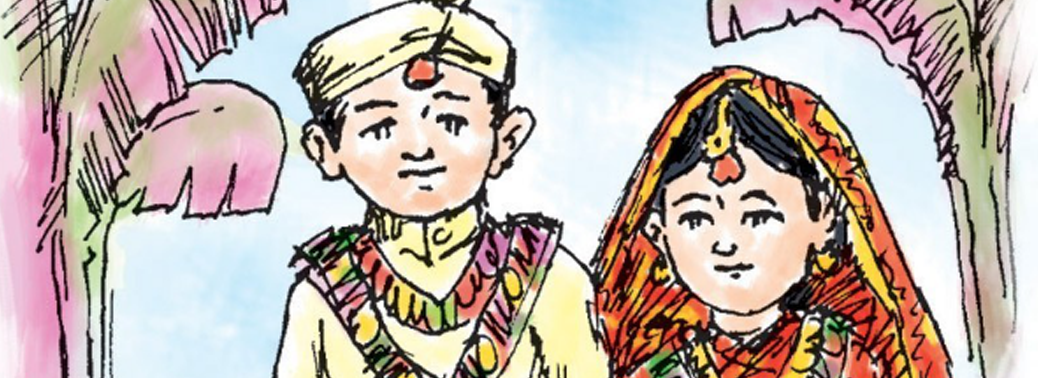
Despite Marrying Willingly A Minor Girl Can’t Be Allowed To Stay With Husband Till She Attains Majority

In a significant judgment titled Pradeep Tomar And Another v. State of U.P. and Another [Matters Under Article 227 No. 4804 of 2020] delivered on January 27, 2021, the Allahabad High Court has recently, righteously and remarkably held that a minor girl cannot be allowed to live in a matrimonial relationship with a man she claims to be her husband even if she had left her home of her own accord and married the man out of her own free will. The Single Judge Bench of Justice JJ Munir ruled thus while taking into account her High School Certificate which “clearly indicated” that she is minor as her date of birth is 04 November 2004. The Bench specifically stated that, “So long as the prosecutrix is a minor, she cannot be permitted to accompany the accused Pintoo, whom she claims to have married.”

To start with, the ball is set rolling by first and foremost observing in para 1 that, “This petition under Article 227 of the Constitution has been filed seeking to set aside an order of the learned Judicial Magistrate-I, Hapur, dated 24.11.2020, passed in Case Crime No. 516 of 2020, under Section 363 IPC, P.S. Pilakhuwa, District Hapur, directing that the prosecutrix Km. Shivani be permitted to go along with her husband, the accused Pintoo son of Omvir.”
To be sure, it is then stated in para 2 that, “A counter affidavit has been filed on behalf of the second opposite party by Mr. Rama Shankar Mishra, Advocate, which is taken on record. The petitioner has filed a rejoinder.”
On the one hand, it is put forth in para 6 that, “The submission of Mr. Sudhir Mehrotra, learned counsel for the petitioners, briefly said, is to the effect that the date of birth of the prosecutrix, according to her High School Examination Certificate issued by the U.P. Board of High School and Intermediate Education, is 04.11.2004. She is, thus, a minor, aged 16 years and 2 months approximately. She would attain majority on 05.11.2022. Mr. Mehrotra submits that the Magistrate has erred in permitting the prosecutrix to accompany her husband, an accused in the crime, going by the marriage acknowledged by the parties to be solemnized on 21.09.2020 at the Pandav Kalin Neeli Chhatri Mandir Sanatan Dharam Vivah Padti Trust, Yamuna Bazar, Delhi. Mr. Mehrotra submits that the prosecutrix, being a minor, cannot be permitted to stay in a matrimonial relationship, where the marriage would be void under Section 12 of the Prohibition of Child Marriage Act, 2006 (for short, ‘the Act of 2006’). He submits that in any case the prosecutrix, who is not a major, cannot be permitted to stay with her husband and ought not to be allowed to accompany him. Doing so, would be permitting statutory rape and also an offence under Section 5/6 of the Protection of Children from Sexual Offences Act, 2012.”
On the other hand, it is then brought out in para 7 that, “Mr. Rama Shankar Mishra, on the other hand, submits that the prosecutrix in her stand before the Magistrate has made it clear that she has married the accused Pintoo of her free will and wishes to stay with him. He emphasizes that the parties’ marriage has been registered under the U.P. Marriage Registration Rules, 2017 by the Marriage Registration Officer, Ghaziabad on 21.09.2020. He has drawn the attention of this Court towards a certificate of the registration of marriage, dated 21.09.2020.”
To put things in perspective, it is then pointed out in para 8 that, “This Court has perused the impugned order and considered the entire facts and circumstances. The prosecutrix is a little over 16 years of age. The Magistrate has been swayed to permit the prosecutrix to go along with the accused, her husband on ground that the father of the prosecutrix made an application that he would not take her back home and that he had lodged an FIR, out of social embarrassment. The Magistrate has relied upon the decisions of this Court in Smt. Rajkumari vs. Superintendent, Nari Niketan, 1998 Cr.L.J 654 (All) and Smt. Ramsati @ Syamsati vs. State of U.P., Habeas Corpus Writ Petition No. 245 of 2015, decided on 07.09.2005 to hold that upon marriage of a minor according to her wishes, she could be left free to live her life.”
As it turned out, it is then stated in para 10 that, “So far as the age of the prosecutrix is concerned, in the face of the High School Certificate, there is no cavil that evidence about her being a major, which is her stand, cannot be accepted. She cannot be referred to medical examination for determination of her age, so long as her date of birth founded on her High School Certificate, is available. This certificate clearly indicates that she is a minor. There, her date of birth is 04.11.2004. Section 94 of the Juvenile Justice (Care and Protection of Children) Act, 2015 makes the following provision regarding presumption and determination of age: 
“94. Presumption and determination of age.– (1) Where, it is obvious to the Committee or the Board, based on the appearance of the person brought before it under any of the provisions of this Act (other than for the purpose of giving evidence) that the said person is a child, the Committee or the Board shall record such observation stating the age of the child as nearly as may be and proceed with the inquiry under section 14 or section 36, as the case may be, without waiting for further confirmation of the age.
(2) In case, the Committee or the Board has reasonable grounds for doubt regarding whether the person brought before it is a child or not, the Committee or the Board, as the case may be, shall undertake the process of age determination, by seeking evidence by obtaining –
(i) the date of birth certificate from the school, or the matriculation or equivalent certificate from the concerned examination Board, if available; and in the absence thereof; 
(ii) the birth certificate given by a corporation or a municipal authority or a panchayat; 
(iii) and only in the absence of (i) and (ii) above, age shall be determined by an ossification test or any other latest medical age determination test conducted on the orders of the Committee or the Board:
Provided such age determination test conducted on the order of the Committee or the Board shall be completed within fifteen days from the date of such order.
(3) The age recorded by the Committee or the Board to be the age of person so brought before it shall, for the purpose of this Act, be deemed to be the true age of that person.”
Be it noted, it is then stated in para 11 that, “The provisions of Section 94 (2) of the Act, which are designed to determine the age of a juvenile, have been extended to the victim in Jarnail Singh v. State of Haryana; (2013) 7 SCC 263 and by a Division Bench decision of this Court in Smt. Priyanka Devi through her husband vs. State of U.P. and others 2018 (1) ACR 1061, to which I was a party. It has been held in Smt. Priyanka Devi thus: 
“13. Learned counsel for the petitioner lastly urged that provisions of Section 94 of the Juvenile Justice Act, 2015 do not apply to the case in hand as the same are available for the purposes of determination of age for a juvenile or a child in conflict with the law but would not apply to the determination of age in the case of a victim.
14. We are afraid that the aforesaid submission is not correct. The issue was examined by the Supreme Court in the case of Mahadeo S/o Kerba Maske v. State of Maharashtra and Another; (2013) 14 SCC 637 where in paragraph no. 12 of the report it was held as under: “Under rule 12(3)(b), it is specifically provided that only in the absence of alternative methods described under Rule 12(3)(a)(i) to (iii), the medical opinion can be sought for. In the light of such a statutory rule prevailing for ascertainment of the age of the juvenile in our considered opinion, the same yardstick can be rightly followed by the courts for the purpose of the ascertaining the age of a victim as well.” 
15. This issue has also been considered in an earlier judgment of the Supreme Court in Jarnail Singh v. State of Haryana; 2013 (7) SCC 263, where too it has been held that rule 12(3) of the Juvenile Justice (Care and Protection of Children) Rules, 2007 must apply both to a child in conflict with law as well as to a victim of a crime. Paragraph 23 of the said report reads thus: 
“Even though Rule 12 is strictly applicable only to determine the age of a child in conflict with law, we are of the view that the aforesaid statutory provision should be the basis for determining age, even for a child who is a victim of crime. For, in our view, there is hardly any difference in so far as the issue of minority is concerned, between a child in conflict with law, and a child who is a victim of crime. Therefore, in our considered opinion, it would be just and appropriate to apply Rule 12 of the 2007 Rules, to determine the age of the prosecutrix VWPW6. The manner of determining age conclusively, has been expressed in sub-rule (3) of Rule 12 extracted above. Under the aforesaid provision, the age of a child is ascertained, by adopting the first available basis, out of a number of options postulated in Rule 12(3). If, in the scheme of options under Rule 12(3), an option is expressed in a preceding clause, it has overriding effect over an option expressed in a subsequent clause. The highest rated option available, would conclusively determine the age of a minor. In the scheme of Rule 12(3), matriculation (or equivalent) certificate of the concerned child, is the highest rated option. In case, the said certificate is available, no other evidence can be relied upon. Only in the absence of the said certificate, Rule 12(3), envisages consideration of the date of birth entered, in the school first attended by the child. In case such an entry of date of birth is available, the date of birth depicted therein is liable to be treated as final and conclusive, and no other material is to be relied upon. Only in the absence of such entry, Rule 12(3) postulates reliance on a birth certificate issued by a corporation or a municipal authority or a panchayat. Yet again, if such a certificate is available, then no other material whatsoever is to be taken into consideration, for determining the age of the child concerned, as the said certificate would conclusively determine the age of the child. It is only in the absence of any of the aforesaid, that Rule 12(3) postulates the determination of age of the concerned child, on the basis of medical opinion.”
16. Thus, principles applicable to the determination of age in the case of a juvenile would in terms apply to cases of determination of the age of a victim as well. It may be pointed out that at the point of time when Mahadeo (supra) was decided by their lordships of the Supreme Court, the Juvenile Justice Act, 2000 was in force and their lordships were interpreting the provision of Rule 12(3) of the Juvenile Justice (Care and Protection of Child) Rules, 2007. The said Act of 2000 has since been repealed and has been replaced by the Juvenile Justice Act, 2015. The rules framed under the Act of 2000 are thus no longer on the statute book. However, the provisions that found place in Rule 12(3) of the Juvenile Justice (Care and Protection of Child) Rules, 2007 framed under the Juvenile Justice Act, 2000 are now, with certain modifications engrafted into the Principal Act vide section 94 of the Juvenile Justice Act, 2015. The inter se priority of criteria to determine age under Rule 12(3) of the Rules, 2007 (supra) and section 94 of the Act, 2015 remains the same albeit with certain modifications which are of no consequences to the facts in hand. In short, provisions of Rule 12(3) of the Rules, 2007 framed under the Juvenile Justice Act, 2000 are para meteria to the provision of Section 94 of the Juvenile Justice Act, 2015. This being the comparative position, the principles of law laid down by their lordships in the case of Mahadeo (supra) would apply with equal force to the provisions of section 94(2) of the Juvenile Justice Act, 2015 while determining the age of a victim of an offence under Sections 363 and 366 IPC. Thus, the submission of the learned counsel for the petitioners, on this score, is not tenable.””
It is also worth noting that it is then stated in para 12 that, “The provisions of Section 94(2) makes it vivid that in the face of a date of birth certificate from the school or the matriculation or equivalent certificate from the concerned examination Board, the other evidence about the age of a victim cannot be looked into. If the date of birth certificate as envisaged in clause (i) of sub-Section (2) of Section 94 of the Act is not available, the birth certificate given by a corporation or a municipal authority or a panchayat is the next evidence to be considered in the rung. It is only when the evidence about age envisaged under clauses (i) and (ii) of Sub-Section (2) of Section 94 of the Act is not available, that a victim can be referred to a medico-legal examination for the determination of her age. Therefore, even if it is the prosecutrix’s stand, which this Court assumes to be so that she is 18 years old, and has married Pintoo of her free will, she cannot be regarded as a major or permitted to prove herself a major, by asking herself to be referred to medical examination by a Board of Doctors, so long as her High School Certificate is clear on the point. After the decision of their Lordships of the Supreme Court in Suhani vs. State of U.P., 2018 SCC Online SC 781, there was some confusion whether a victim could be referred to the medical examination of a Board of Doctors for determination of her age, in the face of a recorded date of birth in the High School certificate. But, after the decision of a Division Bench of this Court in Smt. Nisha Naaz alias Anuradha and another vs. State of U.P. and others 2019 (2) ACR 2075 holding that the decision in Suhani does not lay down any law but is a decision on facts, the principles in Smt. Priyanka Devi, following the decision in Jarnail Singh, is law that would govern the fate of this case. In Smt. Nisha Naaz alias Anuradha, it was held: 
“14. A plain reading of Section 94 of the 2015, Act would reveal that only in absence of: (a) the date of birth certificate from the school, or the matriculation or equivalent certificate from the concerned examination Board; and (b) the birth certificate given by a corporation or a municipal authority or a panchayat, age is to be determined by an ossification test or any other latest medical age determination test conducted on the orders of the Committee or the Board. A Division Bench of this court in the case of Smt. Priyanka Devi Vs. State of U.P. and others in Habeas Corpus Petition No.55317 of 2017, decided on 21st November, 2017, after noticing the provisions of the 2015, Act and the earlier 2000, Act and the rules framed thereunder, came to the conclusion that as there is no significant change brought about in the 2015, Act in the principles governing determination of age of a juvenile in conflict with law, in so far as weightage to medico legal evidence is concerned, the law laid down in respect of applicability of those provisions for determination of a child victim would continue to apply notwithstanding the new enactment. The Division Bench in Priyanka Devi’s case (supra) specifically held that as there is on record the High School Certificate, the medico legal evidence cannot be looked into as the statute does not permit.
15. The judgment of the apex court in Suhani’s case (supra) does not lay down law or guidelines to be used for determination of the age of child victim. Further, it neither overrules nor considers its earlier decisions which mandated that the age of child victim is to be determined by the same principles as are applicable for determination of the age of juvenile in conflict with law. From the judgment of the apex court in Suhani’s case (supra), it appears that the concerned victim (petitioner no.1 of that case) was produced before the court and the court considered it apposite that she should be medically examined by the concerned department of All India Institute of Medical Sciences (for short AIIMS). Upon which, AIIMS, by taking radiological tests, submitted report giving both lower as well as higher estimates of age. On the lower side the age was estimated as 19 years and on the higher side it was 24 years. Therefore, even if the margin of error was of 5 years, the victim was an adult. Hence, on the facts of that case, in Suhani’s case, the first information report was quashed by the Apex Court. The decision of the Apex Court was therefore in exercise of its power conferred upon it by Article 142 of the Constitution of India which enables it to pass such decree or make such order as is necessary for doing complete justice in any cause or matter pending before it. The said decision cannot be taken as a decision that overrules the earlier binding precedents which lay down the manner in which the age of a child victim is to be determined.””
No less significant is what is then stated in para 13 that, “So long as the prosecutrix is a minor, she cannot be permitted to accompany the accused Pintoo, whom she claims to have married. In order to determine whether the prosecutrix was enticed away from her guardian’s lawful custody, or she went away of her own, this Court ascertained the prosecutrix’s stand, who is present in Court. Her stand is recorded verbatim:
Q. Aapka Naam? 
Ans. Shivani 
Q. Aapki Aayu Kya Hai? 
Ans. 04.01.2002 (18 years) 
Q. Aap Pintoo Ko Janti Hain? 
Ans. Haan. 
Q. Pintoo Kaun Hain? 
Ans. Mere Pati. 
Q. Pintoo Aapko Bahla Fusla Kar Le Gaya Tha? 
Ans. Nahi, Mai Apni Marzi se Uske Saath Gayi Thi. 
Q. Aap Apne Mata-Pita Ke Pass Jaana Chahti Hain? 
Ans. Nahi. Main Apne Pati Ke Pass Jana Chahti Hun.”
As a corollary, it is then stated in para 14 that, “Looking to Shivani’s stand, it is evident that she has not been enticed away by Pintoo. Rather, she has left her home of her own accord and married him. In this view of the matter, the marriage would not be void under Section 12 of the Act of 2006, but would be voidable under Section 3 of the said Act.”
Interestingly enough, it is then envisaged in para 15 that, “The conclusion is evident from the provisions of Sections 3 and 12 of the Act of 2006 which read as under: 
“3. Child marriages to be voidable at the option of contracting party being a child.—(1) Every child marriage, whether solemnised before or after the commencement of this Act, shall be voidable at the option of the contracting party who was a child at the time of the marriage:
Provided that a petition for annulling a child marriage by a decree of nullity may be filed in the district court only by a contracting party to the marriage who was a child at the time of the marriage.
(2) If at the time of filing a petition, the petitioner is a minor, the petition may be filed through his or her guardian or next friend along with the Child Marriage Prohibition Officer.
(3) The petition under this section may be filed at any time but before the child filing the petition completes two years of attaining majority. 
(4) While granting a decree of nullity under this section, the district court shall make an order directing both the parties to the marriage and their parents or their guardians to return to the other party, his or her parents or guardian, as the case may be, the money, valuables, ornaments and other gifts received on the occasion of the marriage by them from the other side, or an amount equal to the value of such valuables, ornaments, other gifts and money: Provided that no order under this section shall be passed unless the concerned parties have been given notices to appear before the district court and show cause why such order should not be passed.
12. Marriage of a minor child to be void in certain circumstances.—Where a child, being a minor— 
(a) is taken or enticed out of the keeping of the lawful guardian; or
(b) by force compelled, or by any deceitful means induced to go from any place; or 
(c) is sold for the purpose of marriage; and made to go through a form of marriage or if the minor is married after which the minor is sold or trafficked or used for immoral purposes,
such marriage shall be null and void.””
Needless to say, it is then rightly asserted in para 16 that, “It would, therefore, be open to the prosecutrix to acknowledge the marriage or claim it to be void, once she attains the age of majority. It would also be open to her, once she attains the age of majority, to go wherever she likes and stay with whomsoever she wants.”
Simply put, the Bench then holds in para 17 that, “Since, she is not inclined to go back to her parents, for the present, this Court is left with no alternative but to direct the State to place her in a suitable State facility other than a Nari Niketan, may be a Safe Home/Shelter Home.”
What’s more, the Bench then also holds in para 18 that, “The District Magistrate, Hapur and the Superintendent of Police, Hapur are ordered to ensure that the prosecutrix is immediately housed in a suitable Safe Home/Shelter Home, or other State facility where she would be safe and taken care of.”
Furthermore, para 19 then states that, “The learned District Judge, Hapur is also directed to ensure that a Lady Judicial Officer, posted in his Judgeship, will visit the prosecutrix once a month and inquire about her welfare. In case there is anything objectionable, she will immediately report the matter to the District Judge, who will take appropriate steps to ensure the prosecutrix’s welfare during her stay in the State facility/Safe Home/ Shelter Home, wherever she is housed.”
Thereafter, it is then held in para 20 that, “Shivani would be permitted to live in State facility/Safe Home/ Shelter Home till 04.11.2022, and thereafter, she may go wherever she wants and stay with whomsoever she likes, including Pintoo, whom she claims to be her husband.”
As we see, it is then stated in para 21 that, “In the result, this petition succeeds and is allowed. The impugned order dated 24.11.2020, passed by the learned Judicial Magistrate-I, Hapur in Case Crime No. 516 of 2020 under Section 363 IPC, P.S. Pilakhuwa, District Hapur is hereby set aside. The prosecutrix shall be dealt with in accordance with the directions made hereinabove.”
Adding more to it, para 22 then states that, “Let Shivani, who is present in person, be forthwith taken into the care of the Court Officer and conveyed through the Registrar General to the Senior Superintendent of Police, Prayagraj. The Senior Superintendent of Police, Prayagraj shall cause the prosecutrix to be conveyed in safety to the Superintendent of Police, Hapur, who, along with the District Magistrate, Hapur will carry out the directions carried in this order forthwith.”
Now coming to concluding paras. Para 23 states that, “The Court Officer shall convey Shivani to the Registrar General, who shall make immediate arrangement to take her into his immediate care and ensure compliance of this order.” Finally, the last para 24 holds that, “Let this order be communicated to the learned District Judge, Hapur, the District Magistrate, Hapur, the Senior Superintendent of Police, Prayagraj and the Superintendent of Police, Hapur by the Joint Registrar (Compliance) within 24 hours.”
To sum it up, what can be inferred from this noteworthy ruling of Allahabad High Court is that despite marrying willingly a minor girl can’t be allowed to stay with her husband till she attains majority. This is so because if she is permitted to stay with her husband it would tantamount to permitting statutory rape and also would constitute an offence under Section 5/6 of the Protection of Children from Sexual Offences Act, 2012. Such a marriage of minor would not be void under Section 12 of the Prohibition of Child Marriage Act, 2006 but would be voidable under Section 3 of the said Act. It would be open to the minor girl to either acknowledge the marriage or claim it to be void once she attains the age of majority. It is left entirely on her own discretion to take what decision she likes once she attains the age of majority. This is the real crux of this commendable judgment! 
Sanjeev Sirohi

Rail Accident Claim Can’t Be Denied On Account Of Boarding Wrong Train Mistakenly

It is in the fitness of things that the Bombay High Court has most recently on 20 January 2021 held in a latest, learned, laudable and landmark judgment titled Smt Munnibai v. Union of India in First Appeal No. 259 of 2020 that one cannot be branded as an unauthorized train passenger merely because one mistakenly boards a wrong train. The Single Judge Bench of Justice Anuja Prabhudessa ruled thus while directing railways to pay Rs 8 lakh as compensation to one Munnibai Chaube whose son died due to the injuries sustained in accidental fall from a running train. Very rightly so!
To start with, the ball is set rolling in para 1 of this notable judgment authored by a single Judge Bench of Justice Anuja Prabhudessai of Nagpur Bench of Bombay High Court wherein it is put forth that, “The appellant herein has challenged the judgment and award, dated 17/01/2017, whereby ther Railway Claims Tribunal (hereinafter referred to as “the Tribunal” for short) has dismissed the Claim Application No. OA(IIu)/NGP/2013/0340.” 
                                    <div style="text-align: justify"><br /></div><div class="separator" style="clear: both;text-align: center"><a href="https://i.ytimg.com/vi/wEjJwRhoraU/maxresdefault.jpg" style="margin-left: 1em;margin-right: 1em"><img border="0" src="https://i.ytimg.com/vi/wEjJwRhoraU/maxresdefault.jpg" /></a></div><br /><div style="text-align: justify"><br /></div><div style="text-align: justify">To put things in perspective, it is then enunciated in para 2 that, “The appellant is the mother of Vikki Munnalal Chaube, who died in a train accident on 12/12/2012. It was the case of the appellant that on the relevant date, her son Vikki was travelling from Nagpur to Tumsar Road by Train No.12101 LTT - Howrah-Janeshwari Express. It is alleged that said Vikki fell down from a running train at Mundikota Railway Station. He was taken to KTS Hospital, where he was declared dead. The appellant filed an application under Section 23 of the Railway Claims Tribunal Act, for compensation on account of death of her son in “untoward incident”.”</div><div style="text-align: justify"><br /></div><div style="text-align: justify">On the contrary, it is then stated by the Bench in para 3 that, “The claim was contested by the respondent on the ground that no such “untoward incident” had occurred resulting in the death of the son of the appellant within the meaning of Section 123(c) read with Section 124A of the Railways Act. The respondent further claimed that the deceased was not a bona fide passenger.”</div><div style="text-align: justify"><br /></div><div style="text-align: justify">As it turned out, the Bench then points out in para 4 that, “The Tribunal framed the issues and upon considering the evidence on record held that the appellant is the dependent of the deceased within the meaning of Section 123(b) of the Railways Act. The Tribunal also recorded a finding that the death of deceased had occurred in an “untoward incident”. The Tribunal further observed that the deceased was having a journey Ticket No.R94100073 from Nagpur to Tumsar Road on 12/12/2012. The Tribunal, however, dismissed the claim mainly on the ground that the said ticket was not a valid journey ticket for Train No.12101 LTT Howrah-Janeshwari Express.”</div><div style="text-align: justify"><br /></div><div style="text-align: justify">As against what has been stated above, the Bench then points out in para 5 that, “Assailing the said judgment, learned Counsel for the appellant has contended that the Tribunal was required to consider, whether deceased Vikki had lost his life as a result of “untoward incident” and whether the Railway Administration had proved and established exception or exceptions available under Section 124A of the Railways Act. He contends that the Tribunal was not justified in dismissing the petition only because the deceased had boarded a wrong train. He has relied upon the decision of Union of India vs. Rina Devi (AIR 2018 SC 2362) and Union of India vs. Anuradha &amp; another (2014 ACJ 856) to contend that the Railway Administration cannot be absolved of its liability, merely on a plea of negligence of victim as contributing factor.”</div><div style="text-align: justify"><br /></div><div style="text-align: justify">There can be no denying that there is a lot of merit in what the learned counsel for the appellant has contended. The petition should not have been dismissed by the Railway Claims Tribunal on the sole ground that the deceased had boarded a wrong train. The judgments cited above are latest and also relevant to hold the Railway Administration accountable which cannot be absolved of its liability as stated above.</div><div style="text-align: justify"><br /></div><div style="text-align: justify">Needless to say, it is then stated in para 6 that, “Per contra, learned Counsel for the respondent submits that the deceased had no valid ticket for travelling by Train No.12101 LTT Howrah-Janeshwari Express. He contends that the deceased cannot be considered to be a bona fide passenger and, hence, the Railway Administration is not liable to pay compensation to the appellant.”</div><div style="text-align: justify"><br /></div><div style="text-align: justify">Truth be told, after considering all the facts before it and perusing the records, it is then held in para 7 by the Bench that, “I have perused the records and considered the submissions advanced by learned Counsel for the respective parties. Before adverting to the facts of the case, it would be relevant to refer to the decision of Rina Devi (supra), wherein the Apex Court has observed that death in the course of boarding or de-boarding a train will be an “untoward incident” entitling a victim to the compensation and will not fall under the proviso of Section 124A merely on the plea of negligence of the victim as a contributing factor.”</div><div style="text-align: justify"><br /></div><div style="text-align: justify">More significantly, the Bench then goes on to hold in para 8 that, “In the case of Anuradha (supra), learned Single Judge of this Court (Coram : A.P. Bhangale, J.) on similar facts, has held that the Railway trains are used as convenient and affordable means of conveyance by any commoner in our country. If a passenger unguided by railway security personnel, ticket checkers or in absence of the regular announcements mistakenly boards a wrong train halting on the platform, may on realizing his mistake fall off the train due to panicky situation or otherwise accidentally, the railway administration cannot feign ignorance about the untoward incident in such case in order to shirk away from its strict liability to compensate monetarily for the untoward fatal accidents.”</div><div style="text-align: justify"><br /></div><div style="text-align: justify">Finally and far most significantly, the Single Judge Bench of Justice Smt Anuja Prabhudessai then goes on to hold in para 9 that, “In the present case, the victim Vikki had admittedly purchased a train ticket for travel from Nagpur to Tumsar Road. It is in evidence that he had boarded a wrong train. He cannot be branded as an unauthorized passenger merely because he had mistakenly boarded a wrong train. The death of the said passenger was due to the injuries sustained in accidental fall from a running train. Accordingly, the death was an “untoward incident” and was not covered by proviso to Section 124-A of the Railways Act. The Tribunal was, therefore, not justified in rejecting the claim solely on the ground that the victim had boarded a wrong train. The appellant having discharged the initial burden of proving that Vikki was a bona fide passenger and that his death was an “untoward incident”, the respondent cannot be absolved of their liability of paying the compensation to the dependents of the deceased. For the reasons stated above, the impugned judgment cannot be sustained. Hence, the following order : </div><div style="text-align: justify"><br /></div><div style="text-align: justify">O R D E R</div><div style="text-align: justify"><br /></div><div style="text-align: justify">i.       The appeal is allowed.</div><div style="text-align: justify"><br /></div><div style="text-align: justify">ii. The impugned judgment, dated 17/01/2017 in Claim Application No. OA(Ilu)/NGP/2013/0340 is quashed and set aside.</div><div style="text-align: justify"><br /></div><div style="text-align: justify">iii. The respondent-Union of India is directed to pay to the appellant a sum of Rs.8,00,000/-. </div><div style="text-align: justify"><br /></div><div style="text-align: justify">iv.   The said amount shall be deposited in the account of the claimant-appellant after verifying the identity within a period of three months. </div><div style="text-align: justify"><br /></div><div style="text-align: justify">v.     The appeal stands disposed of. </div><div style="text-align: justify"><br /></div><div style="text-align: justify">All said and done, the sum and substance of this commendable, cogent and convincing judgment delivered by Justice Smt Anuja Prabhudessai of Nagpur Bench of the Bombay High Court is that the Railway is certainly liable to pay compensation of Rs 8 lakh to one Munnilal Chaube whose son Vikki died due to the injuries sustained in accidental fall from a running train while he was travelling from Nagpur to Tumsar Road by Howrah-Janeshwari Express. Railway cannot exonerate itself from its liability on this score merely on the specious ground that he had mistakenly boarded a wrong train and as a corollary the Union of India had no option but to shell out Rs 8 lakh as compensation to the appellant. As we know, the appellant named Munnibai Chaube had filed an application under Section 23 of the Railway Claims Tribunal Act for compensation on account of death of her son in “untoward incident”.</div><div style="text-align: justify"><br /></div><div style="text-align: justify">As per Section 123(c) of The Railway Act, 1989, “untoward incident” includes the accidental falling of any passenger from a train carrying passenger. So the appellant was well within her right to demand the compensation on the ground as specified above! There is nothing extraordinary about it! </div><div style="text-align: justify"><br /></div><div style="text-align: justify">It may be recollected that the Bombay High Court last year had similarly allowed an appeal against the order of the Railway Claims Tribunal, Nagpur and had directed Central Railways to pay Rs 8 lakh as compensation to the family of one Arjun Gawande who died while alighting from a train at Badnera station. Justice MG Giratkar of the Nagpur Bench had held that even though the deceased boarded the wrong train which did not have a stoppage at Badnera station the Tribunal’s finding that the deceased responsible for his own death was not sustainable. Same is the case here also as has been rightly ruled by Justice Smt Anuja Prabhudessai!</div><div style="text-align: justify"><br /></div><div style="text-align: justify">Sanjeev Sirohi</div>

This Is No Way To Protest And Hold Nation To Ransom

“I am always ready to bear Allah’s full fury but under no circumstances will I ever block road for offering namaz. There was no space in mosque or anywhere else except on road! Offering namaz on road is a big crime for me which I will never commit under any circumstances! Not for a second will I ever do anything that disturbs others and forces them to wait for me to leave road so that they can leave for their own work!”

– Sageer Khan my best friend who in 1993-94 said this to me when I asked him why he was so upset while returning from a mosque and why can’t he offer namaz on road just like others
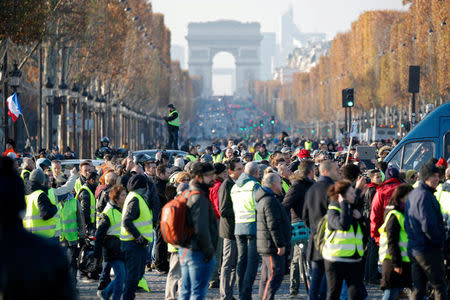
It is most shocking to see that in his second term as PM Narendra Modi has senselessly, shamelessly and stupidly allowed blocking of roads and so also the Chief Minister of Punjab Captain Amarinder Singh, Chief Minister of Delhi Arvind Kejriwal and Rajasthan Chief Minister Ashok Gehlot also have also allowed for blocking of roads and rail tracks to register their protest against the new farm laws. What is even worst is that even Supreme Court too didn’t promptly order lifting of blockade of roads and rail tracks which is most unfortunate. My best friend Sageer Khan once also rightly said to me way back in 1993 that, “No cause no matter how sacred it may be can ever justify blocking of roads and rail tracks under any circumstances. My friendship will break with you if I ever come to know that you are a party to blocking of road or rail track. But I am sure that you will never ever commit such crime in your life.”
Bluntly put: Any PM who cannot stop blockade of road and rail tracks must promptly resign and pave way for some other capable person! Which Constitution or which law or which religion or which God can justify blocking of roads and rail tracks? To hell with such Constitution or law or religion or God! To hell with all of them or any one of them depending on which ever try to justify blocking of road or rail tracks under any circumstances whatsoever which cannot be ever justified! 
Needless to say: Any PM who cannot stop carrying out of tractor rally or any other parallel rally during Republic Day in Delhi must promptly resign as this definitely lead to giving free hand to hoodlums, criminals, goons and terrorists who will not spare any opportunity to even desecrate Red Fort as we saw most recently during 26 January, 2021 which has shamed our nation in front of the whole world! More than 500 policemen were injured by armed rioters under the garb of farmers and even with folded hands when police cops requested when their was no space left for them to escape then also they kept on beating them mercilessly! Can this be justified in the name of dissent? To hell with such dissent! This can only be justified on the ground of “Might is right” and this is exactly what is happening unabashedly in our country since last two years!
Of course, it was not a coincidence that Khalistani supporters were simultaneously raising anti-India slogans and so also the historic statute of Mahatma Gandhi in America was broken! Can this also be justified in the name of dissent? Can chanting of Khalistani slogans also be justified in the name of dissent? 
More broadly, can carrying of weapons be justified during tractor rally as we saw in Delhi during 26 January? Can tractors be allowed to break all barricading that comes their way? Can tractors be allowed to crush police men if they come in their way?
Why police never spares any person even if a person commits a small mistake like not wearing a helmet etc but on the contrary when many rogues threaten to carry out rallies and dare to throw aside all check posts then they are treated with kidgloves as we saw when more than 300 policemen were injured. How long will mob violence be justified on one pretext or the other? How long will terrorists be glorified in such protests? How long will women and men be allowed to chant that, “Hain Hain Modi Marja Tun Pehla Indira ko thoka hain aab Modi ki bari hain”? Why were such anti-nationals not arrested promptly? Why was all this taken so lightly? 
There are many actors both in India and in abroad who are not coming out in open but who have made it their latest weapon to sponsor such blockade of roads and rail tracks and those foreign forces who are inimical to the very concept of India are the “real force” behind all such fundings and they must be identified at the earliest and exposed in front of the world. It is a national shame that why our government in Centre as well the Supreme Court allowed such dangerous, deplorable, despicable and dastardly blocking of roads and rail tracks which causes maximum inconvenience to the common person for months and months together and now Rakesh Tikait has warned to carry it for a year by end of 2021! All the legal luminaries, senior Supreme Court lawyers and Supreme Court Judges including CJI along with PM and Cabinet Ministers must feel most ashamed that they have allowed this most despicable blocking of roads and rail tracks right under their nose! 
Under no circumstances should the administration both in the State as well as in the Centre should have ever allowed farmers instigated by their leaders for advancing their own interests to occupy roads and rail tracks. India’s international reputation has been worst affected but leaders like Rakesh Tikait among others are least bothered about all this! What is most shocking is that the PM and the CJI have not taken it most seriously due to which this shameful, senseless and stupid act of blocking of road and rail tracks is fast becoming the order of the day! CJI Sharad Arvind Bobde should have first ordered protesters to vacate the road and to give an undertaking that they would never again occupy roads and rail tracks like this before staying the Central laws or appointing a high powered Committee to look into it. But nothing of this sort happened and the result are there for all of us as we saw during Republic day! 
To put it mildly: Our Red Fort was desecrated by hoodlums and vandalisers and this happened right under the nose of the administration. Why was permission given for such tractor parade and that too on Republic Day and that too in Capital itself to so many vehicles that it was virtually impossible to keep a control on all of them? There are many more such troubling questions which keep haunting us who love this nation!
Needless to say, too much freedom and too much tolerance allowed to mob under the garb of farmers or any other form will destroy India completely as it is goons who hijack the agenda as we saw during the Republic day parade! Who is responsible for many places like Ghazipur turning into fortress with nails on roads and concrete walls? It is these hoodlums who tarnished the reputation of India and indulged in wanton violence in which more than 500 police cops were injured which cannot be justified under any circumstances whatsoever!
How can we forget the images of farmers in their tractors considering themselves above law and clashing with the Delhi police at Red Fort where they were not permitted to go and rampaging whatever came in their way and carried out huge destroying of precious items even inside the Red Fort? As if this was not enough, many of them even tried to run tractor over police cops who had to run for saving their lives! Should the CJI and his brother Judges have sympathy for such farmers? Should they allow farmers to hold nation to ransom by blocking all entry points to Delhi?
It cannot be lightly dismissed that among all the Congress leaders, it was Captain Amarinder Singh who is Chief Minister of Punjab who was most vocal in denouncing what all happened under the garb of tractor rally on January 26, 2021. He minced no words to state unequivocally that, “My head hangs in shame at what happened yesterday in the national capital.” He also said categorically that those who were responsible for the incident were not farmers but misguided youth who were indulging in symbolism. How can this or blocking of roads be ever justified? Why rail tracks in Punjab were allowed to be blocked for months together? 
What message has gone out? Why judiciary too allowed this most despicable act of blocking of road right under its very nose? Why were these protesters allowed to take the nation for a ride and injure as many as more than 500 police personnel? What message are we setting? 
It is a no-brainer that this farmers movement has defamed India to the hilt. Spineless, senseless and shameless justification of violence under the garb of farmers protest and blocking of roads and rail tracks cannot be justified under any circumstances. Who is having the last laugh? It is countries like Canada, UK, US, Italy and Germany among others who openly support Khalistani movement and encourage them to rebel against India by allowing openly anti-India and pro-Khalistani activities on their soil and allowing them to vandalise even statutes of Mahatma Gandhi as we saw in USA! 
Should we be proud of this? It is not just a coincidence that it is mostly celebrities from these countries who are expressing maximum concern for what is purely an internal issue of India but which Opposition parties are wanting to spare no opportunity to internationalise it. It is not just a coincidence that governments of these countries are voicing maximum concern over farm laws and this despite the irrefutable fact that USA has lent its support to the farm laws under the new President Joe Biden as mentioned in the newspapers of February 4, 2021!
Never take your enemy for granted. This where India always err. Why are protesters becoming a convenient tool in the hands of foreign powers? Why are Mir Jafars and Jai Chands being allowed to set the agenda of blocking roads for an indefinitely long period so as to tarnish, tatter and toss the impeccable reputation of India to the hilt? 
I am sorry to say but this is no way to carry out a movement! We have become a laughing stock in front of the world for which farmer leaders who have misdirected farmers cannot escape from being held accountable. Why farmer leaders allowed this sacred agitation to be hijacked by radical separatists organizations who are openly advocating a separate Khalistan for Sikhs? Why Sikhs for Justice which is one such separatist organization was allowed to take the centrestage that had gone to the extent of even giving a clarion call to the Sikhs to reach the Red Fort on 26 January and unfurl the Khalistani flag and insult the national flag? Why Centre took it most lightly and why permission was granted to tractor rally which was more a terrorist rally in which we saw violent protesters trying to crush our police cops, run over barricades and vandalise Red Fort in a manner that is completely unprecedented? Centre has a lot of explaining to do on this just like in the case of Shaheen Bagh! 
The locals are also simmering in anger as it is their right to livelihood and right to free passage that is getting worst affected due to this endless farmers agitation. We have seen how tension broke out in Tikri border where more than 100 people gathered and demanded the removal of protesters from the main Rohtak Road which has been blocked for the last more than two months. How long will the locals keep patience? Why Supreme Court gave the green signal for protest to continue on roads? Do only protesters have fundamental rights? What about others who face immense difficulties and trouble in their livelihood due to such blockades? Are they second grade citizens? Only vandalisers, hoodlums, violent agitators and road blockers entitled to fundamental rights for which our Supreme Court speaks most vociferously! What about others? Should others just keep on tolerating every nonsense quietly? This is what happened during Shaheen Bagh agitations due to which riots broke out when protesters tried to block other places also feeling emboldened to block Shaheen Bagh for more than 100 days!
Pintu Kumar who is a resident of the nearby Baba Haridas Nagar at Tikri Border said that these protesters “broke our trust” and “insulted” the national flag on January 26, when the farmers abetted by some selfish and vested leaders took out the disgraceful, disastrous, dangerous, shameful, senseless and stupid tractor rally to embarrass our nation. He rightly said that, “These people cannot be farmers, as a Kisan will never attack a Jawan. These are anti-social elements. We initially supported them and gave them food as well but they have broken our trust by resorting to violence on Republic Day.” The NIA report and intelligence report had also warned of Khalistani terrorists having entered the tractor rally and farmers protest but still stupidly sanction was granted for tractor rally and the results are there for us to see for ourselves! Most shocking indeed!
Why is it that we see maximum protesters from just Punjab and one or two other states only? Why is it that Gen Bajwa of Pakistani Army wanted Kartarpur Corridor to open fast and why huge hoardings of Khalistani Referendum 2020 not taken seriously? Why is it that drones from Pakistan were entering India and dropping weapons and still we took it lightly? It is high time that we wake up and stop this mockery of our national interests for the sake of appeasement of one religion alone. Why can’t we worship in our own country? My best friend Sageer Khan once said that “Even if Allah commands me to come to Pakistan I will refuse as nation, parents and religion can never be changed and so why should I go to Pakistan to worship? Why can’t I worship him in my own country? India is the best place for Muslims to live in.” 
Movements on roads like the Shaheen Bagh sit-in by blocking road connecting two cities – Delhi and Noida for more than 100 days and now this protest against farm laws for more than 2 months are not a revolutionary upsurge as some suggest but symbol of “India Celebrating And Inviting Lawlessness, Indiscipline, Khalistani Agenda And Violence And Insulting India’s Pride Like Red Fort” which cannot be justified under any circumstances! Even all those Opposition parties who are lending their support – open or covert in any manner have only served in discrediting India as a safe place to live in! They have certainly not covered themselves in glory by hailing those who attacked our policemen and even tried to murder them by running them down under tractors!
It cannot be denied that every government has the prerogative to make new laws or make suitable changes in the existing ones. If Centre erred in not sending the farm bills to the Select Committee for discussion and in promulgating Ordinances and later converting it into law in a hurry as former Union Minister Ajit Singh points out, this by itself cannot be a justification to block rail routes as happened in Congress ruled states like Punjab and Rajasthan or block entry routes to Aam Aadmi Party (AAP) ruled Delhi. Is it not the common person who is bearing the maximum brunt of all this nonsense? How can PM, President and CJI allow ever all this nonsense to happen right under their very nose? Will this promote “rule of law” or “rule of jungle” where “Might is right” holds the ground? What are we trying to make of India?
Why thousands of crores of rupees are being allowed to be wasted due to such shameless, senseless and stupid blockades? Can farmers be above our nation and law? Can they smash vehicles, hail terror leaders like late Bhindrawale, try to run down police personnel with tractors, attack anyone who try to stop them with swords and call for gunning down PM Narendra Modi just like earlier late Mrs Indira Gandhi was gunned down? Certainly not!
How can the CJI maintain a conspicuous silence on all this? Why can’t he order prompt removal of protesters from all roads and rail tracks? Most baffling! 
Why is blocking of road and rail tracks taken so lightly even by the Apex Court? Why it took so long for the Apex Court to deliver a ruling that condemned blocking of roads? Why still were farmers then allowed to block roads and why CJI didn’t order their prompt removal from roads?
Why is it that Apex Court stayed farm laws which many Judges like Justice Deepak Gupta of Supreme Court felt was not proper as it was not the remit of the Apex Court but why no such promptness was shown in ordering protesters to stop blocking of roads in Delhi and why no initiative was taken in this regard by the CJI? Why were the common people left to suffer in the cold? How can this be justified under any circumstances?
Why are farmers going overboard on this issue and why they are feeling more encouraged by Supreme Court’s inaction in making them vacate roads and increasing political support by parties who are just concerned about their vote banks thereby completely disregarding our national interests in the longer run? Why Rahul Gandhi instead of advising Centre to build bridges and not walls maintained a stoic silence when farmers were rampaging Delhi and desecrated even our national monuments and national pride – Red Fort? Why this dubious double standards? 
Who is responsible for Centre ensuring that iron rods are hooked between two rows of cement barriers on a flank of the main highway at the Singhu border to further restrict the movement of protesters, agitating against the Centre’s new farm laws? It is those farmers themselves who indulged in lawlessness, violence and rampaging on Republic Day even after assuring the police that they would not indulge in violence of any kind due to which more than 500 police personnel got injured! Why Opposition leaders never say a word on this? Clearly, this only shows that there is more to it than meets the eye! 
One still fervently hopes that good sense prevail over farmers also now and they see the dangerous game plan that is being played by some leaders who are only interested in serving their own vested agenda at the cost of farmers! Centre has taken a very balanced stand on this and has always agreed to hold talks time and again to review the farm laws instead of holding that it is non-negotiable! Foreign actors, leaders and even foreign countries have no right to meddle in India’s internal matters with clear design to malign India and this has been underscored by many celebrities like Sachin Tendulkar among others!
No doubt, this is no way to protest that you block road and rail tracks and become overjoyed that neither State nor Central Government acted tough and even Supreme Court refused to order prompt removal from these sites due to which people face maximum inconvenience and business worth thousands of crores of rupees is adversely affected! It is a no-brainer that there are some foreign powers and powerful terror groups who are behind all the sabotage that happened on 26 January and who don’t want that India should run smoothly on roads and rail tracks! Should PM, CJI and President allow them to have the last laugh by tolerating blockade of road and rail tracks quietly or should they display zero tolerance towards it as we have seen since independence till some time back when Shaheen Bagh episode spoiled everything? It is for them to introspect and decide on this! If not checked now this will become the most dangerous trend in India and our democratic system will be completely destroyed which we can certainly ignore only at the risk of our own peril!
Sanjeev Sirohi

New Perspectives on Happiness &amp;amp; Peace

New Perspectives on Happiness & Peace (ISBN 978-81-951119-5-4)  provides a platform for happiness and Conscious Organizations research. New Perspectives on Happiness & Peace is committed to enhance holistic happiness and build conscious citizens. The scope of Book includes Individuals, Teams, Organizational, National happiness evaluations and prescriptions for improving the metrics. Besides this it aims at promoting stakeholder focus on Conscious Organizations which is a consequence of employees’ well-being and a conscious contribution to the society.

New Perspectives on Happiness & Peace is a book that publishes conceptual, quantitative and qualitative research papers relating to Individual, Team, Organizational, Societal and Cross cultural Happiness for realizing inner-peace and achieving well-being of employees, citizens and other stakeholders. The aim of the journal is also to encourage researchers to study and start discussions on leading platforms among the learned bodies on need for creating conscious Organizations as a key solution for enhancing Organizational Happiness and Peace. We welcome research papers with a methodological focus and papers bringing out on critical issues related to the happiness and creation of conscious Organizations and Peace.
New Perspectives on Happiness & Peace welcomes original research papers, review papers and book summaries related to happiness, creating and sustaining Conscious Organizations within the limits of academic and ethical standards. We invite ideas from all parts of world to submit their writings to AJHP. The basic condition for acceptance in Book is Originality, clarity, Novelty, relevant literature review, Interpreted findings, and best use of appropriate methods of research. This Book publishes Research Papers, Case study, & Book Reviews based in the Sub themes mentioned.
All papers submitted will be published in an ISBN book hard copy / e-book depending on prevalent pandemic situations. All publications will be done only if the guidelines and comments of the reviewers are incorporated, failing which they will be unfortunately delayed for the next issue after approved corrections are timely done. 
The expected learning outcomes are placed below. readers will –
1. Classify philosophical, scientific and academic literatures along with subjective experiences for aligning the existing strategies for the future work and happy workplace.
2. Advance an understanding of the 5 R-I-G-H-T Pillars of Happiness.
3. Ponder on how to use research findings to develop intervention and priorities for nurturing and sustaining Happiness at all levels in Organizations or Individual lives.
4. Analyse the development / creation of a Global Happiness Ecosystem & Infrastructure.
INDICATIVE AREAS FOR NEW PERSPECTIVES ON HAPPINESS & PEACE
1. R-Revisiting: Concepts about Happiness, Peace, Organizational Happiness, Team Happiness, Individual happiness & Conscious Organizations
2. I- Interpreting: Organizational Happiness & the Peace Conscious Practices adopted by Legendary Individuals, Societies, Organizations & Nations
3. G- Gaps between Leader & Employees: Gaps in vision, mental models, intentions, beliefs, wisdom, competencies, willingness that can either accelerate or de-accelerate the development of Conscious Organizations. 
4. H- Happiness Infrastructure: Building and analyzing frameworks that accelerates the creation of Conscious Organizations
5. T- Togetherness: Happiness is the cause of the Peace. And peace is a desired social outcome. It becomes natural to seek proposed frameworks or advance theories that promote togetherness beyond the family borders & political borders.
Topic Guidelines for BOOK CHAPTER Submission but is not limited to:
Legendary Happiness
Emerging New Normal at Workplace
Alignment of Leader-Employee relationship
Insights of Organizational Happiness
Technology role in Sustaining Happiness
Leader and Employee relationship
Strategies of Joyful, Healthy life
Turbulent zones in Mental Health of Leaders
Self-Compassion
Vibrant Organizations
Webinar Unhappiness
Well-Being of Students & employees
Happiness Ecosystem
Memory and Happiness
Habits & Happiness
Public Policies & Citizens Happiness
National Happiness
Perception Conflict
Measures of well-being and happiness 
Happiness & Meaning of work
Quality of Organizational life
Employees Aversive to promote their own Organization
Leader’s Happiness
Boss Management for workplace happiness
Mindfulness
New age methods for Stress Management
Empathy
Determinants or consequences of happiness
Happy Teachers
Smart happiness & happy communications
Happiness inequality
Peace building initiatives by Government
Governance Happiness
Peace Building Strategies adopted by Businesses
Conflict resolution
Ineffectiveness of methods to transfer human values
Sustainable Happiness
Happiness Hypothesis
Role of Failures in building Happiness

Pressing Breasts Without Disrobing Not “Sexual Assault” As Per POCSO Act But Offence Under Section 354 IPC

To begin with, if there is one judgment of Bombay High Court which is attracting maximum attention and a lot of strong reactions from even the top court, it is this one which is titled Satish vs The State of Maharashtra in Criminal Appeal No. 161 of 2020 delivered on January 19, 2021 in which the Nagpur Bench of the Bombay High Court has held that groping a child’s breasts without ‘skin-to-skin contact’ would amount to molestation under the Indian Penal Code but not the graver offence of ‘sexual assault’ under the Protection of Children from Sexual Offences (POCSO) Act. A single Bench of Bombay High Court of Justice Pushpa Ganediwala made the aforesaid observation while modifying the order of a sessions court that held a 39-year-old man guilty of sexual assault for groping a 12-year-old girl and removing her salwar. The Court has now sentenced the man under Section 354 IPC (outraging a woman’s modesty) to one year imprisonment for the minor offence.

As we see, this judgment authored by a single Judge Bench of Justice Pushpa V Ganediwala of Nagpur Bench of Bombay High Court sets the ball rolling by first and foremost pointing out in para 2 that, “This is an appeal against the judgment and order dated 05.02.2020 in Special Child Protection Case No. 28 of 2017 passed by the Extra Joint Additional Sessions Judge, Nagpur, by which the appellant is convicted for the offence punishable under Sections 354, 363 and 342 of the Indian Penal Code (hereinafter referred to as IPC) and Section 8 of the Protection of Children from Sexual Offences Act, 2012, (hereinafter referred to as POCSO Act), in Crime No. 405 of 2016 registered at Police Station Gittikhadan, Nagpur, District – Nagpur.”
Be it noted, para 3 then states that, “For the offence punishable under Section 8 of the POCSO Act read with Section 354 of the IPC, the appellant is sentenced to suffer R.I. for three years and to pay fine of Rs. 500/-, in default of fine to suffer R.I. for one month. For the offence punishable under Section 363 of the IPC, the appellant is sentenced to suffer R.I. for two years and to pay fine of Rs. 500/-, in default of fine to suffer R.I. for one month. For the offence punishable under Section 342 of the IPC, the appellant is sentenced to suffer R.I. for six months and to pay fine of Rs. 500/-, in default of fine, to suffer R.I. for one month. All the substantive jail sentences were directed to run concurrently. The appellant is given set off for the period of sentence, he has already undergone.”
While dwelling on the prosecution story, the Bench then puts forth in para 4 that, “The prosecution story, in brief, is as under : 
i) On 14.12.2016, the informant (mother of the prosecutrix) (PW-1) lodged a report at police station Gittikhadan, Nagpur, stating therein that the appellant took her daughter (prosecutrix) aged about 12 years, on the pretext of giving her guava, in his house and pressed her breast and attempted to remove her salwar. At that point of time, the informant reached the spot and rescued her daughter. Immediately, she lodged First Information Report. On the basis of the said FIR, crime came to be registered against the appellant / accused vide Crime No. 405 of 2016 (Exh. 1) for the offence punishable under Sections 354, 363 and 342 of the IPC and under Section 8 of the POCSO Act.”
To be sure, para 11 then reveals that, “At the outset, the informant – PW-1 and the prosecutrix – PW-2 are the star witnesses. The age of the prosecutrix at the relevant time was 12 years and this fact is not seriously disputed by the learned counsel for the appellant.”
It is worth noting that it is then mentioned in para 12 that, “The informant – PW-1 – the mother of the prosecutrix deposed that the incident took place on 14.12.2016. On that day at about 11.30 AM, her daughter – the prosecutrix (name kept undisclosed) went to bring guava. As she did not come back for a long time, she started searching for her. Her neighbour told her that the appellant, who was staying in the vicinity of their house, took her daughter to his house and showed her the house of the appellant. PW1 went there calling “Laxmi, Laxmi”. She saw the appellant coming down from the first floor. She asked the appellant about the whereabouts of her daughter. He denied the presence of the prosecutrix in his house. PW-1 searched for her daughter on the ground floor and then she went up to first floor. The room was bolted from outside. She opened it and found her daughter. Her daughter was crying. She took out her daughter from that room and her daughter narrated the incident that on the pretext of giving guava to her, the appellant brought her to his house and pressed her breast and when he tried to remove her knicker, she shouted. Thereafter he went out, after bolting the room from outside. Immediately, PW-1 along with her daughter proceeded for Police Station and lodged report.”
Going ahead, it is then stated in para 13 that, “PW-2 – Prosecutrix testified that on the day of incident, when she was going to bring guava, the appellant caught her hand and told her that he will provide guava to her and he took her to his house. He tried to remove her Salwar and pressed her breast. Then she shouted. The appellant pressed her mouth by his hand. The appellant went down by closing the door of the room from outside. Thereafter, her mother opened the door and entered the room and brought her outside. Then they went to Police Station for lodging report.”
Truth be told, it is then observed in para 15 that, “A perusal of the testimony of PW-1 and PW-2 on the point of incident would reveal that both the witnesses are consistent on the point that the appellant pressed the breast of the prosecutrix. With regard to removing of knicker, though in her chief PW-1 stated that the appellant/ accused was trying to remove knicker of her daughter, however, in cross examination she has corrected her statement and deposed that she told the police that the appellant tried to remove Salwar of her daughter. The prosecutrix deposed about removing of her salwar. So there is no confusion with regard to whether the accused tried to remove salwar or knicker.”
Simply put, it is then stated in para 18 that, “Evidently, it is not the case of the prosecution that the appellant removed her top and pressed her breast. The punishment provided for offence of ‘sexual assault’ is imprisonment of either description for a term which shall not be less than three years but which may extend to five years, and shall also be liable to fine. Considering the stringent nature of punishment provided for the offence, in the opinion of this Court, stricter proof and serious allegations are required. The act of pressing of breast of the child aged 12 years, in the absence of any specific detail as to whether the top was removed or whether he inserted his hand inside top and pressed her breast, would not fall in the definition of ‘sexual assault’. It would certainly fall within the definition of the offence under Section 354 of the Indian Penal Code. For ready reference, Section 354 of the Indian Penal Code is reproduced below :
“354. Assault or criminal force to woman with intent to outrage her modesty. – Whoever assaults or uses criminal force to any woman, with the intention to outrage her modesty, shall be punished with imprisonment of either description for a term which shall not be less than one year but which may extend to five years, and shall also be liable to fine.””
As it turned out, it is then made clear in para 21 that, “Section 7 of the POCSO Act, defines sexual assault and the minimum sentence provided is three years and Section 354 of the Indian Penal Code, which is related to outraging the modesty of a woman, prescribes minimum sentence of one year. In the instant case, having regard to the nature of the alleged act by the appellant and having regard to the circumstances, in the opinion of this Court, the alleged act fit into the definition of the offence as defined in Section 354 of the Indian Penal Code.”
What’s more, it is then brought out in para 25 that, “The learned APP read out Section 7 of the POCSO Act, which defines sexual assault and submitted that the act which has been proved by the prosecution “pressing of breast” comes within the definition of sexual assault under Section 7 of the POCSO Act.”
Hence it is then observed in para 26 that, “It is not possible to accept this submission for the aforesaid reasons. Admittedly, it is not the case of the prosecution that the appellant removed her top and pressed her breast. As such, there is no direct physical contact i.e. skin to skin with sexual intent without penetration.”
Now coming to the concluding paras. Para 27 lays down that, “In view of the above discussion, this Court holds that the appellant is acquitted under Section 8 of the POCSO Act and convicted under minor offence u/s 354 of IPC and sentenced him to undergo R.I. for one year and to pay fine of Rs.500/-, in default of fine to suffer R.I. for one month. The sentence for the offence punishable under Section 342 of the Indian Penal Code i.e. six months and fine of Rs.500/-, in default to suffer R.I. for one month, is maintained. The accused is on bail. His bail bond stands forfeited. Issue Non-bailable warrant against the appellant – accused. All the substantive jail sentences shall run concurrently and the appellant – accused is entitled for set off under Section 428 of the Code of Criminal Procedure.” Finally, it is then held in the last para 28 that, “Criminal Appeal stands disposed of accordingly.” 
It cannot be lightly dismissed that none other than the top court has stayed this ruling which acquitted a 50-year-old labourer from Maharashtra’s Gadchiroli district holding that groping a minor without removing her clothes was not sexual assault but molestation after Attorney General KK Venugopal pointed out that the judgment was likely to set a dangerous precedent. Venugopal added that, “It will mean that if a cloth is touched no case under Section 8 of the POCSO Act is made out. This Court must take notice of the judgment.” Justice Pushpa Ganediwala had ruled that the act of holding the hands of a minor “prosecutrix” or unzipping trousers in front of her, an act witnessed by PW-1 (prosecution witness1), in the opinion of the court did not fit with the definition of aggravated sexual assault. She reversed the conviction of the man Libnus Kujur for aggravated sexual assault that was a charge brought against him because the child was younger than 12 years of age.
Of course, it cannot be lightly dismissed that a petition filed by advocate Manju Jetley on behalf of the Youth Bar Association of India said that the High Court had also named the minor victim in its judgment which violated Section 228B of the IPC. It also cannot be lightly dismissed that the National Commission of Child Rights (NCPCR) and the National Commission for Women (NCW) took a serious note of the January 19 ruling. NCW expressed a desire to challenge the judgment before the Supreme Court and NCPCR wrote to the Maharashtra Chief Secretary to seek a review of the ruling. It added that, “It has been observed by the Commission (NCPCR) that the prosecution has failed in representing the case of the victim properly. If the prosecution had made the submissions as per spirit of the POCSO Act, the accused would not have been acquitted of the serious offence against the minor.” 
Furthermore, the letter added that, “Further, the remark “skin-to-skin… with sexual intention, without penetration” also needs to be reviewed and the State should take note of this, as it seems to be derogatory to the minor victim.” This condemnable incident had happened on February 11, 2018. On October 5, 2020, a special POCSO court in Gadchiroli convicted the labourer under Sections 354-A(1)(i) (sexual harassment) and 448 (house trespass) of the IPC and Sections 8 (punishment for sexual assault), 10 (punishment for aggravated sexual assault) and 12 (punishment for sexual harassment) read with Section 9(m) (sexual assault of a child below 12 years of age) and 11(i) sexual harassment) of the POCSO Act. He was sentenced to five years rigorous imprisonment for aggravated sexual assault. 
It is worth noting that Section 7 of the POCSO Act defines sexual assault of a child as “whoever, with sexual intent touches the vagina, penis, anus or breast of such person…” What is most problematic in this judgment is that the single Judge Bench of Justice Pushpa Ganediwala who delivered this judgment stated that, “as per the definition of sexual assault, a ‘physical contact with sexual intent without penetration’ is an essential ingredient of the offence” with “physical contact” requiring “skin-to-skin contact” and not just any contact. Strictly speaking, if this is agreed to, it would be interpreted as that if an offender uses a condom while penetrating the child, this would not amount to an offence since there was no direct contact. How can this be justified ever? Also, it cannot be overlooked that the serious offence under POCSO Act which carries a minimum of three years imprisonment which may extend to five years along with fine was reduced to Section 354 of IPC which carries a considerably lower punishment of only one year of minimum imprisonment. In addition, this case was delayed for nearly four years.
We cannot afford to ignore that Flavia Agnes who is an eminent women who has done extensive research in cases of child sexual abuse and is co-founder of Majlis Legal Centre while differing from those who commented that the Judge Pushpa Ganediwala who was elevated to the Bombay High Court in 2019 lacks exposure to the letter and spirit of the POCSO Act pointed out in her enlightening editorial titled “Weakening The Law” in ‘The Indian Express’ dated February 1, 2021 that, “ Lawyers and activists engaged with the RAHAT project of Majlis Legal Centre have closely observed the manner in which she conducted the trials in cases of child sexual abuse even before the enactment of the POCSO Act, when she was the trial judge for sexual offences against women and children in the Bombay City, Civil and Sessions Court. In our first case, which involved the sexual abuse of a four-year-old and where the police had delayed filing an FIR, she had convicted the accused, a watchman, for seven years. A high-profile criminal lawyer, Majeed Memon, appeared for the accused supported by the trustees of the school. On the other hand, our support person was a fresh graduate with no exposure to criminal courts. But it was the Judge’s sensitivity that helped in a fair trial. In another case which concerned the father raping his daughter, where the FIR was filed after 18 months, she had argued that when the police refused to register a complaint, how can the illiterate mother be blamed for delay in filing. She convicted and sentenced the accused to 10 years of rigorous imprisonment. The most challenging case she presided over is the sexual abuse by multiple men at Kalyani Mahila Bal Seva Sanstha in Navi Mumbai. We had marvelled at the manner in which she conducted the trial. There were around 10 accused and some survivors had to be examined in sign language. In May 2013, six accused were convicted, including the founder-director, of the rape of five mentally-challenged female inmates, three of whom were minors. One of the victims died after she was gang raped. Hence, prime accused and director of orphanage was also convicted of murder. So what happened in this case. Why such a mindboggling judgment that has been condemned by all concerned stakeholders – one which can become a precedent to be followed by subordinate judiciary? The harm that has been caused to the minor in this particular case as well as all future cases, cannot be easily overlooked. This judgment needs to be set aside and the comments expunged to repose the faith of all survivors of sexual violence in the judicial system.” 
So we have to concede that Justice Pushpa has a good track record and it is only in this judgment that she has erred for which she certainly deserved to be reprimanded but her entire career should not be put in jeopardy! It also cannot be ignored that mandatory sentences are counterproductive to the aim of reducing crime or acting as a deterrent. But regarding this judgment’s strong criticism we also cannot overlook what is mentioned in the editorial of Hindustan Times dated January 26, 2021 that, “The ruling is disturbing. It is a literal interpretation of the law and overlooks the fact that POCSO does not mention clothing as a factor in the crime of molesting a child. This is a matter of violating the bodily integrity of the victim. The interpretation also does not recognize the long-term psychological damage that child sexual abuse victims suffer. This reading of the law will dilute cases of child abuse and make it difficult to ensure justice. The National Commission of Women has pointed out that the order will have a cascading impact on women safety and trivialized the legal architecture in place, and has decided, rightly so, to challenge the order. The issue should also force a relook at the wording of the Act and other laws, which deal with child abuse. There can be no room for ambiguity in child abuse cases and any loophole which allows for this must be plugged at once.” 
All said and done, one has to always concede that there has to be zero tolerance on sexual offences especially in child abuse cases. All the loopholes must be first quickly identified and then deliberated, discussed and debated upon and then reformed adequately to meet the present circumstances where the cases of violence and sexual offences against children are increasing very rapidly! No doubt, there can be no leniency at all for sexual offences against children! 
Sanjeev Sirohi, Advocate,
s/o Col BPS Sirohi,
A 82, Defence Enclave,
Sardhana Road, Kankerkhera,
Meerut – 250001, Uttar Pradesh

Punishing An Adolescent Boy Who Enters Into A Relationship With A Minor Girl

In a balanced, bold and brilliant judgment titled Vijayalakshmi & Anr. v. State & Anr. in Crl.O.P.No.232 of 2021 and Crl.M.P.No.109 of 2021 delivered on January 27, 2021, the Madras High Court minced no words to state unequivocally that, “Punishing an adolescent boy who enters into a relationship with a minor girl by treating him as an offender, was never the objective of POCSO Act.” The remarks were made while highlighting the rampant misuse of the POCSO Act by families for prosecuting the partner of their teenage daughters. A single Judge Bench of Justice N Anand Venkatesh therefore insisted that the legislature must keep pace with the changing societal needs and bring about necessary changes in law and more particularly in a stringent law such as the POCSO Act.

To start with, the ball is set rolling by first and foremost pointing out in para 1 about the intent of the petition that, “This petition has been filed seeking to quash the proceedings pending in Special S.C.No.24 of 2018 on the file of the learned Sessions Judge, Mahila Court (Fast Track Mahila Court) Erode.” 
As we see, it is then stated aptly in para 2 that, “This is a very peculiar petition that has been filed by the Defacto Complainant and the victim girl, jointly seeking for quashing the proceedings pending against the 2nd Respondent who is facing trial before the Court below for offences under Section 366 of the Indian Penal Code, 1806, Section 6 of the Prevention of Child from Sexual Offences, 2012 (hereinafter referred to as “POSCO Act” or “the Act”) and Section 9 of the Prohibition of the Child Marriage Act, 2006.”
While elaborating further, it is then stated in para 3 that, “It is seen from records that the 2nd Petitioner, victim girl, is well known to the second respondent, and they were in love with each other. Ultimately, they decided to get married and went away from their respective homes and a police complaint came to be filed before the 1st Respondent and the same has now resulted in criminal proceedings against the 2nd Respondent before the Court below.”
As it turned out, the Bench then states in para 4 that, “Ms. Doulagh Nisha, Inspector of Police was present at the time of hearing through video conferencing and she informed this Court that the petitioners have approached her and informed her that they do not want to continue further with the criminal proceedings against the 2nd Respondent. It was informed to her that the 1st Petitioner wants her daughter to get married and that the same is getting delayed due to the criminal proceedings, thereby only causing more mental agony to the Petitioners.”
To put things in perspective, it is then envisaged in para 5 that, “The Defacto Complainant and the victim girl were also present at the time of hearing through video conferencing. This Court examined the victim girl and she stated that there was a love affair between herself and the 2nd Respondent and that she is not willing to undergo this agony any further and wanted the criminal proceedings to be quashed.” 
Adding more to it, it is then laid bare in para 7 that, “The father of the victim girl who was examined as PW1 also did not support the case of the prosecution and he was treated as a hostile witness.”
Still further adding more, it is then brought out in para 8 that, “The mother of the victim girl was also present at the time of hearing through video conferencing. She stated that let bygones be bygones, she wants her daughter to get married and settled in life. She further stated that she is not interested in pursuing the criminal proceedings any further and that same can be quashed by this Court.”
Significantly, the Bench then brings out in para 10 that, “This Court is instantaneously reminded of an earlier order passed by a learned Single Judge of this Court, in Sabari v. Inspector of Police reported in 2019 (3) MLJ Crl 110, wherein he had discussed in detail about the cases in which persons of the age group of 16 to 18 years are involved in love affairs and how in some cases ultimately end up in a criminal case booked for an offence under the POSCO Act. The relevant portions of the judgment are extracted here under for proper appreciation: 
“ 21.When this case was taken up for hearing, this Court became concerned about the growing incidence of offences under the POCSO Act on one side and also the Rigorous Imprisonment envisaged in the Act. Sometimes it happens that such offences are slapped against teenagers, who fall victim of the application of the POCSO Act at an young age without understanding the implication of the severity of the enactment.
26.In addition to the above, this Court is of the view that ‘warning’ of attraction of POCSO Act must be displayed before screening of any film, which have teenage characters suggesting relationship between boy and girl.
27.Apart from the above, this Court is of the view that as per the 3rd respondent’s report, majority of cases are due to relationship between adolescent boys and girls. Though under Section 2(d) of the Act, ‘Child’ is defined as a person below the age of 18 years and in case of any love affair between a girl and a boy, where the girl happened to be 16 or 17 years old, either in the school final or entering the college, the relationship invariably assumes the penal character by subjecting the boy to the rigours of POCSO Act. Once the age of the girl is established in such relationship as below 18 years, the boy involved in the relationship is sure to be sentenced 7 years or 10 years as minimum imprisonment, as the case may be.
28. When the girl below 18 years is involved in a relationship with the teen age boy or little over the teen age, it is always a question mark as to how such relationship could be defined, though such relationship would be the result of mutual innocence and biological attraction. Such relationship cannot be construed as an unnatural one or alien to between relationship of opposite sexes. But in such cases where the age of the girl is below 18 years, even though she was capable of giving consent for relationship, being mentally matured, unfortunately, the provisions of the POCSO Act get attracted if such relationship transcends beyond platonic limits, attracting strong arm of law sanctioned by the provisions of POCSO Act, catching up with the so called offender of sexual assault, warranting a severe imprisonment of 7/10 years. 
29.Therefore, on a profound consideration of the ground realities, the definition of ‘Child’ under Section 2(d) of the POCSO Act can be redefined as 16 instead of 18. Any consensual sex after the age of 16 or bodily contact or allied acts can be excluded from the rigorous 46 provisions of the POCSO Act and such sexual assault, if it is so defined can be tried under more liberal provision, which can be introduced in the Act itself and in order to distinguish the cases of teen age relationship after 16 years, from the cases of sexual assault on children below 16 years. The Act can be amended to the effect that the age of the offender ought not to be more than five years or so than the consensual victim girl of 16 years or more. So that the impressionable age of the victim girl cannot be taken advantage of by a person who is much older and crossed the age of presumable infatuation or innocence”.”
More significantly, it is then made clear in para 11 that, “There can be no second thought as to the seriousness of offences under the POCSO Act and the object it seeks to achieve. However, it is also imperative for this Court to draw the thin line that demarcates the nature of acts that should not be made to fall within the scope of the Act, for such is the severity of the sentences provided under the Act, justifiably so, that if acted upon hastily or irresponsibly, it could lead to irreparable damage to the reputation and livelihood of youth whose actions would have been only innocuous. What came to be a law to protect and render justice to victims and survivors of child abuse, can, become a tool in the hands of certain sections of the society to abuse the process of law.”
Equally significant is what is then stated in para 12 that, “As rightly recognized by the Learned Single Judge of this Court in Sabari’s Case (cited supra), incidences where teenagers and young adults fall victim to offences under the POCSO Act being slapped against them without understanding the implication of the severity of the enactment is an issue that brings much concern to the conscience of this Court. A reading of the Statement of Objects and Reasons of the POCSO Act would show that the Act was brought into force to protect children from offences of sexual assault, sexual harassment and pornography, pursuant to Article 15 of the Constitution of India, 1950 and the Convention on the Rights of the Child. However, a large array of cases filed under the POCSO Act seems to be those arising on the basis of complaints registered by the families of adolescents and teenagers who are involved in romantic relationships with each other. The scheme of the Act clearly shows that it did not intend to bring within its scope or ambit, cases of the nature where adolescents or teenagers involved in romantic relationships are concerned.”
It is also worth noting that it is then rightly pointed out in para 16 that, “In light of the above, it is only natural that there are cases of the above-mentioned nature that are on the rise at present and it does not help matters to avoid acknowledging that the society is changing and influencing people’s identity and cognition, constantly. Therefore, painting a criminal colour to this aspect would only serve counter-productively to understanding biosocial dynamics and the need to regulate the same through the process of law.”
Of course, it is then conceded in para 17 that, “This Court is not turning a blind eye to cases where the victim or survivor may, under the effect of trauma that they have undergone, studies on which show that they might tend to reconcile with the same by blaming themselves or convincing themselves that the element of consent was infact present. Nor is this Court scientifically justifying in toto, the genuineness or predicament of the accused in every case where it appears that the accused and victim child have been in a romantic relationship. That will depend on the facts and circumstances of each and every case.” 
Most significantly, it is then made absolutely clear without mincing any words in para 18 that, “In the present case, the 2nd Petitioner who was in a relationship with the 2nd Respondent who is also in his early twenties, has clearly stated that she was the one who insisted that the 2nd Respondent take her away from her home and marry her, due to the pressure exerted by her parents. The 2ndRespondent, who was placed in a very precarious situation decided to concede to the demand of the 2nd Petitioner. Thereafter, they eloped from their respective homes, got married and consummated the marriage. Incidents of this nature keep occurring regularly even now in villages and towns and occasionally in cities. After the parents or family lodge a complaint, the police register FIRs for offences of kidnapping and various offences under the POCSO Act. Several criminal cases booked under the POCSO Act fall under this category. As a consequence of such a FIR being registered, invariably the boy gets arrested and thereafter, his youthful life comes to a grinding halt. The provisions of the POCSO Act, as it stands today, will surely make the acts of the boy an offence due to its stringent nature. An adolescent boy caught in a situation like this will surely have no defense if the criminal case is taken to its logical end. Punishing an adolescent boy who enters into a relationship with a minor girl by treating him as an offender, was never the objective of the POCSO Act. An adolescent boy and girl who are in the grips of their hormones and biological changes and whose decision-making ability is yet to fully develop, should essentially receive the support and guidance of their parents and the society at large. These incidents should never be perceived from an adult’s point of view and such an understanding will in fact lead to lack of empathy. An adolescent boy who is sent to prison in a case of this nature will be persecuted throughout his life. It is high time that the legislature takes into consideration cases of this nature involving adolescents involved in relationships and swiftly bring in necessary amendments under the Act. The legislature has to keep pace with the changing societal needs and bring about necessary changes in law and more particularly in a stringent law such as the POCSO Act.”
Needless to say, it is then stated in no uncertain terms in para 19 that, “The main issue that requires the consideration of this Court is as to whether this Court can quash the criminal proceedings involving non-compoundable offences pending against the second respondent. The Hon’ble Supreme Court in the case of Parbathbhai Aahir @ Parbathbhai Vs. State of Gujrath, reported in 2017 9 SCC 641 and in case of The State of Madhya Pradesh Vs. Dhruv Gurjar and Another reported in (2019) 2 MLJ Crl 10, has given sufficient guidelines that must be taken into consideration by this Court while exercising its jurisdiction under Section 482 of Cr.P.C, to quash non-compoundable offences. One very important test that has been laid down is that the Court must necessarily examine if the crime in question is purely individual in nature or a crime against the society with overriding public interest. The Hon’ble Supreme Court has held that offences against the society with overriding public interest even if it gets settled between the parties, cannot be quashed by this Court.”
Truth be told, it is then held in para 20 that, “In the present case, the offences in question are purely individual/personal in nature. It involves the 2ndPetitioner and the 2nd Respondent and their respective families only. It involves the future of two young persons who are still in their early twenties. The second respondent is working as an Auto driver to eke his livelihood. Quashing the proceedings, will not affect any overriding public interest in this case and it will in fact pave way for the 2nd Petitioner and the 2nd Respondent to settle down in their life and look for better future prospects. No useful purpose will be served in continuing with the criminal proceedings and keeping these proceedings pending will only swell the mental agony of the victim girl and her mother and not to forget the 2nd Respondent as well.”
Finally, it is then stated in para 21 that, “In view of the above, this Court is inclined to quash the criminal proceedings in Special S.C.No.24 of 2018 on the file of the learned Sessions Judge, Mahila Court (Fast Track Mahila Court) Erode in exercise of its jurisdiction under Section 482 of the Criminal Procedure Code, 1973. Accordingly, the same is quashed and this Criminal Original Petition is allowed. Consequently, connected miscellaneous petition is also closed.” 
In totality, what this extremely laudable, learned, landmark and latest judgment delivered by Justice N Anand Venkatesh of the Madras High Court seeks to convey is that, “Punishing an adolescent boy who enters into a relationship with a minor girl by treating him as an offender, was never the objective of POCSO Act.” It cannot be also denied that the Madras High Court in this leading case has also very rightly conceded that there is rampant misuse of the POCSO Act by families for prosecuting the partner of their teenage daughters. This cannot be allowed to go on till perpetuity. A full stop has to be inserted somewhere and this is exactly what the Madras High Court has sought to do in this notable case also! There can certainly be no denying or disputing it! It is also very rightly conceded by the Madras High Court that punishing an adolescent boy who enters into a relationship with a minor girl by treating him as an offender was never the objective of the POCSO Act. It is high time and the law makers must amend the POCSO Act so that the whole life of adolescent boy is not impaired for an act which he did at the adolescent stage! 
Sanjeev Sirohi

SOCIAL, CULTURAL AND POLITICAL PERSPECTIVE ON SLUMS

Rapid urbanization represents major threats and challenges to personal and public health. The World Health Organisation identifies the ‘urban health threat’ as three-fold: infectious diseases, non-communicable diseases; and violence and injury from, amongst other things, road traffic. Within this tripartite structure of health issues in the built environment, there are multiple individual issues affecting both the developed and the developing worlds and the global north and south.
Reflecting on a broad set of interrelated concerns about health and the design of the places we inhabit, this book seeks to better understand the interconnectedness and potential solutions to the problems associated with health and the built environment. Divided into three key themes: home, city, and society, each section presents a number of research chapters that explore global processes, transformative praxis and emergent trends in architecture, urban design and healthy city research. Drawing together practicing architects, academics, scholars, public health professional and activists from around the world to provide perspectives on design for health, this book includes emerging research on: healthy homes, walkable cities, design for ageing, dementia and the built environment, health equality and urban poverty, community health services, neighbourhood support and wellbeing, urban sanitation and communicable disease, the role of transport infrastructures and government policy, and the cost implications of ‘unhealthy’ cities etc. To that end, this book examines alternative and radical ways of practicing architecture and the re-imagining of the profession of architecture through a lens of human health. 

EDITED BOOK Background

Slums is typically understood to involve all aspects of residential areas. Slums is studied by wide range of schoalrs. They include sociologists, human geographers, public health professionals, architects, planners, and urban designers, to mention just a few.
Sociologists study the life of communities in our cities, towns and neighbourhoods. Human geographers research issues ranging from into the migrations of people from rural to urban to the socio-political settings and the patterns of life and activity that characterise cities across the world. Public health professionals today continue the work of over two centuries in their field concerned with the city as an important site for public health debates. Examples in recent years include the Healthy Cities initiative developed by the World Health Organisation and multiple governmental and NHS projects to promote notions such as the ‘walkable city’, not to mention the health, community and social agenda promoted by the UN Habitat programme.
All of this research and activity of course happens alongside, and in collaboration with, those academics and professionals engaged in the built environment in more traditional ways. Architects form example have long engaged in designing buildings while working with social groups and communities on ‘community design’ projects and collaborating with the public to create more ‘human’ city environments. Urban planners obviously work with policy makers and architects directly, but are also now fully embedded in community participation exercises involving human geographers and sociologists. At an even larger regional planning level these issues are linked to government policy of community regeneration and a broader narrative on public health and healthy living that encourages active lifestyles and thus, walkable and bicycle friendly city streets.

Edited Book Chapters Rationale

Slum is an inherently interdisciplinary phenomenon. However, currently, this reality is only partially reflected in literature that periodically explores specific aspects of this interdisciplinary field, but has not yet developed a coherent platform on which to explore the full range and depth of the cross disciplinary nature of life in our cities, their physical infrastructure, their planning policies, health implications and community bonds. As a result, there is a need to develop a platform that supports research into the built environment of cities across disciplines such as sociology, human geography, community and political studies in a coherent and interconnected way.
In serving this role, the series will make a major contribution to the most embedded field of built environment studies (architecture, urban design, planning) and make significant contributions to those fields that inevitably engage with it in the course of their own specific studies (such as sociology, human geography, public health and community studies etc).
The series promises to become a fundamental reference point to scholars across disciplines in the India and further afield, giving multiple disciplines a platform to interconnect and learn from each other. It is expected to establish a clear interdisciplinary definition and reference point for the multiple perspectives and approaches to research in, and related to, the built environment.

How to Submit a Proposal

Please submit book chapters to editor@pen2print.org 
ISBN 978-81-951119-4-7

5 tips for a cyber Secure Home Experience

Cybersecurity became a full new ball game for a few IT departments when coronavirus forced businesses into enabling employees to figure from home, many of them for the primary time. Risk-averse organizations will have it covered with long-standing business continuity plans; others may have been smart enough to determine protocols and processes within the origin of the lockdown, but more are struggling to place something in situ after the event. One certainty in uncertain times is that hackers and complicated cybercriminals are looking to use the explosion in home working and vulnerabilities that are inevitable when unexpected arrangements replace the carefully monitored activity that typically protects a business. Here’s a list of the top 5 things that can help you secure your home cyber experience.


  1. Make a password management tool and make sure you use strong passwords: You may have heard that strong passwords are critical to online security. Use this link (https://iprouterlogin.com/192-168-2-1/ ) to know about the ip logins and passwords. The reality is passwords keep your hackers out of your data. If you want to make it easy to manage your passwords, try to use a password account vault or a password management tool. According to the National Institute of Standards and Technology’s (NIST)2017 new password policy framework, you should consider:


  • Dropping the crazy, complex mixture of upper case letters, symbols, and numbers. Instead, go for something that is more user-friendly but at least eight characters and a maximum of 64 characters.

  • Do not use the same password twice.

  • Always reset your password in case you forget it and change it at least once in a year for general safety.

  • Your password should contain at least one lowercase letter, one uppercase letter, one number, and four symbols but not the following &%#@_.

  • Set your password that is easy to remember and never leave any hint for the public or the hackers to hack it.


2.     Use anti-virus protection and firewall: Anti-virus (AV) protection software has been the foremost prevalent solution to fight malicious attacks. Antivirus software stops any kind of viruses from entering your device and hampering it. Take an AV software from a trusted vendor and use only that software for your device. Using a firewall is additionally important when defending your data against malicious attacks. A firewall helps classify hackers, viruses, and other malicious activity that happens over the web and determines what traffic is allowed to enter your device. Your router should even have a firewall inbuilt to forestall attacks on your network.


3.     Keep your software up to date: Ransomware attacks were a serious attack vector of 2017 for both businesses and consumers. One of the foremost important cybersecurity tips to mitigate ransomware is patching outdated software, both software systems, and applications. Here are some quick tips to induce you started: 


  • Turn on automatic system updates for your device

  • Make sure your desktop browser uses automatic security updates 

  • Keep your applications program plugins like Flash, Java, etc. updated


4.     Learn about Phishing Scams – be very suspicious of emails, phone calls, and flyers: In a phishing scheme attempt, the attacker poses as someone or something the sender isn’t to trick the recipient into divulging credentials, clicking a malicious link, or opening an attachment that infects the user’s system with malware, trojan, or zero-day vulnerability exploit. This often ends up in a ransomware attack. 90% of ransomware attacks originate from phishing attempts. A few important cybersecurity tips to recollect about phishing schemes include:


  • Bottom line – Don’t open email from people you don’t know


  • Know which links are safe and which don’t seem to be – hover over a link to find where it directs to 


  • Be suspicious of the emails sent to you generally – look and see where it came from and if there are grammatical errors


  • Malicious links can come from friends who are infected too. So, be extra careful!


5.     Protect Your Sensitive Personal Identifiable Information (PII): Personal Identifiable Information (PII) is any information that may be employed by a cybercriminal to spot or locate a person. PII includes information like name, address, phone numbers, date of birth, Social Security Number, IP address, location details, or other physical or digital identity data. Your MasterCard information should be protected by companies if they follow the PCI DSS standards. 


In the new “always-on” world of social media, you ought to be very cautious about the data you include online. it’s recommended that you just only show the very minimum about yourself on social media. Consider reviewing your privacy settings across all of your social media accounts, particularly Facebook. The risk of social security will increase if you add your birth date, home address, or other personal identification information. Hackers use this information to their advantage!


So here are few tips that can help you secure your home cybersecurity. Do give it a read and apply it. 


Enact Strictest Law To Stop Blocking Of Roads And Rails

“I am always ready to bear Allah’s full fury but under no circumstances will I ever block road for offering namaz. There was no space in mosque or anywhere else except on road! Offering namaz on road is a crime for me which I will never commit under any circumstances! Not for a second will I ever do anything that disturbs others and forces them to wait for me to leave road so that they can leave for their own work!”

– Sageer Khan my best friend who in 1993-94 said this to me when I asked him why he was so upset while returning from a mosque and why can’t he offer namaz on road just like others
It merits no reiteration that no matter how sacred the cause may be, there can be no justification for blocking roads or blocking of rails under any circumstances. To exercise one’s own fundamental right to protest peacefully does not give anyone the unfettered right to block roads and rails under any circumstances thereby causing maximum inconvenience to others. It is high time and now a law needs to be enacted which would make it obligatory that under no circumstances can anyone be allowed to block roads or block any rail route or any route which would cause maximum inconvenience to others! Law should not just be enacted but also implemented without any discrimination on all Indians!
What had happened in Shaheen Bagh is disgraceful and cannot be justified under any circumstances! For more than 100 days, the route connecting Delhi and Noida had been blocked by protesters from Shaheen Bagh who were seeking the removal of Citizenship Amendment Act as they feel that it is discriminatory and are determined that this would not be allowed under any circumstances! Why had Centre allowed this to happen at the first place?
Why PM Narendra Modi along with UP CM Yogi Adityanath were busy launching scathing attacks on the Opposition for planning the blockade of Shaheen Bagh but were themselves doing nothing to clear the blockade? One can understand that Yogi is the CM of UP where he has ensured no road is blocked or rail track is blocked and not of Delhi or Rajasthan or Punjab but Narendra Modi is the PM of India and when he was seeing that Delhi, Rajasthan and Punjab governments were doing nothing to clear the blockade then why did he himself not do anything to clear it at all? Blockade of roads, national highways, rail routes etc cannot be justified under any circumstances but it is becoming a fashion now!
It is most shameful , most shocking and most disgraceful that nothing was done to stop lawless protesters from entering Delhi in tractors to participate in tractor rally and even though intelligence agencies and NIA had warned of the Khalistani elements hijacking the limelight of 26 January Republic Day parade yet Delhi Police gave the green signal which can never be justified. What was the outcome? More than 300 policemen were grievously injured and even women police personnel were brutally beaten and vehicles were smashed and even ordinary persons were not spared by the goons, hoodlums who were in tractors and who even tried to run over policemen and even Red Fort was not spared and it was desecrated and Indian flag was thrown aside and flags of Khalsa Panth and farmers union flag were waved! This is what happens when too much of pandering happens and road is allowed to be blocked so easily and laws passed by Centre are strangely stayed by Centre which compels Justice Deepak Gupta of Supreme Court to raise serious question mark over the decision as making laws is the remit of Centre and not judiciary. Why Supreme Court forms Committees for those who block roads and rail tracks and why their demands are promptly looked into but those like lawyers of West UP who are agitating for a high court benches since more than 60 years and have even gone on 6 months strike and 3 months strike and strike every Saturday are just ignored even though this issue directly concerns the judiciary? Why Justice Jaswant Singh Commission recommendations headed by former Supreme Court Judge to create 3 High Court Benches in undivided UP not implemented even though its recommendations to create Benches in other states were promptly implemented? Supreme Court has a lot of explaining to do on this!
What trend has PM Modi set by not doing anything on this till now? Why will others also not follow the same route as we saw first in Shaheen Bagh and then in Rajasthan, Punjab and now again in Delhi? Will it not lead our country on the surest path to anarchy? To whom goes the real credit? To Narendra Modi as he is the PM of India and not Rahul Gandhi or Sonia Gandhi!
Should we be proud of it? Should we clap when PM Modi says in election rallies that the real faces of many are getting exposed for supporting rail and road blockades but himself doing nothing to clear the road thereby giving a free unfettered licence to anti social elements and lumpen elements to have the last laugh? Why has Centre not acted at all? How can anyone hold our people to ransom by blocking roads and rail tracks and vowing to ensure Delhi would be blocked for 6 months to an year?
Why even our Courts keep watching all this like a mute spectator? Why Courts and especially our Supreme Court which is the highest court of the land was not ready to direct the clearing of road forthwith as it is the common man who suffers the maximum inconvenience due to such blockades and in Delhi we saw how it culminated in worst riots after Shaheen Bagh blockades? Why don’t the long term interests of the people at large placed on the highest priority even by Centre who is watching everything and making it a part of mud-slinging exercise with Opposition party leaders? 
To hell with CAA and NRC if Centre is determined to allow anti-India slogans right in our national capital itself as we saw first in Shaheen Bagh and now again during farmers bill agitation in which Khalistani slogans were raised which under no circumstances can ever be justified! To hell with CAA and NRC if Centre fails to enact a law whereby those who chant anti-India slogans are just booked for sedition and not expelled from India permanently and their citizenship rights are not promptly terminated! To hell with CAA and NRC if Centre allows “rogues and scoundrels” to occupy roads and public places as we saw first in Shaheen Bagh then in Rajasthan and Punjab and now again in Delhi just to safeguard their own political interests and be fully satisfied by just indulging in futile “blame game exercise” as we have seen this happen time and again right in front of our eyes!
To hell with CAA and NRC if those who are illegal immigrants are expelled from India even though they love India to the fullest but those Indians who have all valid documents proving Indian citizenship are given unlimited freedom to abuse India openly, vandalise public property and block rail and road tracks for months together! To hell with CAA and NRC if Centre feels proud to allow few bunch of people who are citizens of India by birth to openly occupy public roads and public places as we are seeing time and again after the Shaheen Bagh protests and take no action against them and be happy with just criticizing Opposition parties and apportioning all blame on them alone! To hell with CAA and NRC if Centre justifies this in the name of “right to dissent” and takes no action to evict them from illegally occupying public roads and rail tracks due to which crores of rupees are wasted and honest taxpayers have to bear the maximum brunt! Why police force was used against our brave ex-servicemen in removing them violently when they were protesting peacefully demanding “One Rank One Pension” in totality as it was only officers with rank of Major General and above who were getting full benefits and not the lower ranks but now why he has no guts to act against those who are not only blocking roads to cause maximum inconvenience to public but also invading Red Fort, running tractors over police vehicles, bus and what not and stopping media from entering there and placing women and children ahead so that no action is taken? Why different laws for ex servicemen and for those residing in Shaheen Bagh or for Gujjars in Rajasthan or for farmers in Punjab who blocked rail tracks for months and now vow to block all routes to Delhi? This is certainly most befuddling! It is a ghoulish mockery of rule of law! 
Why cheap politics is being played on this? Why are forces not ensuring that no person is allowed to block roads, rail tracks and public places as they like as per their own whims and fancies? Why Centre is not giving a free hand to forces so that illegal usurpation of roads, rail tracks and public places is removed at the earliest? Why Centre is allowing this worst national insult?
Why all parties in India very strongly believe that under no circumstances should citizenship be terminated of those Indians who behave like soldiers of Pakistan and vow to fulfill their agenda by burning Indian flags, abusing our Constitution and chanting slogans of “Azadi” and “Bharat tere tukde-tukde karenge hum and block roads and rails? Why it took many decades to end ‘Most Favoured Nation’ to Pakistan which India most stupidly and most shamelessly conferred on it unilaterally in 1990s? Why we don’t follow Justice Markandey Katju who says that, “Pakistan and Bangladesh are fake countries and till 1947 integral part of India and when father Jawaharlal Nehru created one fake country called Pakistan then daughter Indira Gandhi stepped ahead and created another fake country called Bangladesh? But I am sure that in next few decades they both will be merged with India.”
What a complete shameless mockery is being made of “rule of law” in our country! How can lawless people be allowed to hold the traffic of our country to ransom for more than 100 days? Why no action had been taken by Centre on this for such a long time?
When CAA does not take the citizenship of any Indian then why so much of brouhaha was made over it? Why can’t more tolerance be demonstrated on it? Who is behind all this also needs to be investigated now! Similarly why Centre allows blockade of rail and road tracks? Do Indians know only of “fundamental rights” and never remember “fundamental duties”? Did late Mrs Indira Gandhi ever favour blocking of roads and rail tracks by inserting fundamental duties in our Constitution by 42nd Amendment or was she clear that this is being done for just “namesake” only? It is high time and fundamental duties must now be made mandatory on citizens of India!
Why vote bank politics is being played and why our national interests are being gravely compromised on this? Why no political party is ready to make sure that public roads and rail tracks are never occupied under any circumstances by anyone on any ground whatsoever? Will they cite the name of some “former Supreme Court Justice” or “Chief Justice” to justify this “utter nonsense and disloyalty” to the nation that you block roads and rail tracks without caring for the consequences? Where is our nation heading for?
Why mobocracy was allowed to be ruled in Shaheen Bagh, rail tracks in Rajasthan and Punjab and now again on borders of Delhi from different states? Is this the real rule of law? Which self-respecting nation will tolerate this?
Why Centre is most astonishingly not doing anything on this and is happy by just blaming everything on Delhi Government where it is the Lieutenant Governor who calls the shot and who too dismally fails in doing anything decisive on it? Why even Supreme Court had failed to act decisively on this by suo motu taking cognizance and calling for immediately lifting the siege of roads and public places in Shaheen Bagh and then for months of rail blockade in Punjab and Rajasthan and now again on borders of Delhi due to which the people there are suffering immeasurably?
I really fail to understand that what precedent is being set ever since PM Narendra Modi did not take any action in Shaheen Bagh even though he swiftly ordered action against peaceful protests by soldiers for OROP and made them evict the place where they were protesting? Why no swift action we saw in Shaheen Bagh and in other places which culminated in worst riots that left many dead and severely damaged our reputation in world? What precedent is being set?
Will this not encourage others also to do similarly? Why is Pakistan being allowed to set India’s agenda through its proxies in India? Why the rights of law abiding citizens is being taken for a ride by political parties and their supporters?
I can never support this under any circumstances no matter who does it! Even if Jats to which community I belong block roads and highways demanding something I will never support it under any circumstances! If Jats boycott me or even expel me for not supporting them then so be it but I can never be a party to anything which hurts our national interests under any circumstances by blocking of rails and roads! This can never be good in protecting the long term national interests of our country under any circumstances which are paramount and stands above everything else including me!
By any reckoning, Centre has certainly not covered itself with glory by not doing anything to ensure that the common man does not suffer because of a few lumpen people in Shaheen Bagh and then again on Punjab and Rajasthan rail tracks and now again on borders of Delhi! This is no way to protest that you block roads and rail tracks and encourage your followers abroad and at the protest site to raise anti-national slogans! Should we be very proud and excited about it? Can this be justified in the name of dissent?
No doubt, Centre has demonstrated quite explicitly that it is just interested only in expelling illegal immigrants even if they profess loyalty to nation as they don’t have valid documents but those Indians who have all documents are free to chant anti-India slogans, attack Red Fort on Republic Day, beat our policemen who are requesting them with folded hands not to indulge in violence and chalk out plans to divide India as long as they feel like as we are seeing right now and chant anti-India slogans over which there is a huge national outrage as anti national slogans are unacceptable under any circumstances and even eminent legal luminary and senior Apex Court lawyer Abhishek Manu Singhvi voiced his utmost concern on the repeated chanting of anti-national slogans and this is certainly not a good news for Centre led by PM Narendra Modi himself who is not doing anything to end this impasse! Centre had watched shamelessly in silence on what was happening in Shaheen Bagh and yet did absolutely nothing to stop it! Most disgusting! Same we saw in Punjab and Rajasthan and now again during protests over farmers bill over which even Manjinder Singh Bitta voiced his fuming anger while speaking in a discussion in a news channel and his anger stands fully justified!
On a departing note, it must be said unequivocally that Centre is to be squarely blamed for allowing things to turn for the worse in Shaheen Bagh and Congress is to be blamed for doing nothing to remove those who blocked rail tracks in Punjab and Rajasthan! Protest is a fundamental right of every Indian but this cannot include right to abuse India and vowing to break India to pieces and blocking roads, rail routes etc! Strictest action must be taken promptly against anyone who blocks roads, rail routes and if a law is needed to do this, it must be done right now but we see nothing happening with even Supreme Court watching everything quietly even though it has categorically said in Shaheen Bagh case that roads cannot be blocked! This is the real tragedy! Those foreign powers who blindly hate India are organizing blockade of road and rail tracks by foreign funding and yet even Centre also watches everything in eerie silence what to say for erring State Governments who appear complicit! How can all this be just glossed over by Supreme Court which is our “sentinel on the qui vive”? How can Supreme Court grant stay on the plea of those who themselves block roads and don’t themselves come with clean hands? Most baffling indeed!
What happened on 72nd Republic Day is all due to unfettered freedom given to farmers to openly say that they would wave their flag inside Red Fort yet everything was taken so lightly that today we stand discredited in front of the entire world and our more than 300 policemen have suffered many serious injuries and some are in ICU as the rioters had many sharp swords and what not with them! It is high time and Centre must now conduct furious surgical strikes on such road and rail track blockers also and not shamelessly like a beggar keep requesting them for talks and allowing them to continue blocking roads as people in general are now most agitated which can have far reaching adverse consequences if not dealt in time! Let’s fervently hope also! 
To conclude, only this alone can revive the shattered faith of the people for the ruling dispensation and this is what best suits our national interests also in the longer run! Every Indian was shocked to see open desecration of Red Fort and Rakesh Tikait who is himself a farmer leader said that, “Why didn’t police shoot down those who were insulting India’s national flag and planting their own flag?” Rakesh Tikait himself has been charged now of late by the police as he also exhorted farmers to march and his provocative statements we all have heard yet police took no action promptly and this lackadaisical approach of police, Centre and other security agencies culminated in the worst 72nd Republic Day which will always be a national shame as rioters, hoodlums, vandalisers and antisocial elements had the free run to do what they liked! How can this happen? But it has happened once again under PM Narendra Modi’s dynamic leadership! Let’s see what happens next? 
Sanjeev Sirohi, Advocate,
s/o Col BPS Sirohi,
A 82, Defence Enclave,
Sardhana Road, Kankerkhera,
Meerut – 250001, Uttar Pradesh

Decriminalising Adultery Could Lead To Instability In Armed Forces

To start with, the Centre has in a measured, commendable and calibrated move very rightly sought a clarification from the Supreme Court to the effect that the 2018 order decriminalizing adultery would apply only to civilians and not defence personnel because not prosecuting soldiers for adultery could cause “instability” in the armed force. Soldiers are expected to maintain utmost discipline always and if they lose their moral character then certainly this will lead to erosion of faith among the soldiers on their seniors who indulge in adultery and this can never be in the long term interest of armed forces as they will stop respecting them and will instead themselves also try to emulate the same which will certainly have potentially dangerous consequences for our nation as it is the armed forces who save guard our country from not just external aggression but also internal disturbances! How can this be allowed to happen under any circumstances? 

While maintaining that “honour is the sine qua non of the services”, a plea by the Ministry of Defence (MoD) asserted that adultery must remain a valid ground to prosecute defence personnel under army laws? How can adultery be ever tolerated in the armed forces? What message will go among the soldiers if it is decriminalized in armed forces also? Will it not encourage adultery? The answer is quite ostensible! 
It must be recollected that in September 2018, a five Judge Constitution Bench had struck down Section 497 of the IPC pertaining to adultery in the notable case titled Joseph Shine vs Union of India declaring it to be unconstitutional and violative of the right to equality of women in treating them as “chattel” (an item of property) and inferior to their husbands. As most of us know that Section 497 made adultery an offence only with respect to a man who has a relationship with the wife of someone else. The wife was considered neither an adulterous nor an abettor while the man instead could be jailed for up to a term of five years.
Truth be told, the MoD’s clarification plea was argued by Attorney General KK Venugopal before a Bench headed by Justice Rohinton Fali Nariman where the law officer submitted that the Army Act and other pertinent laws must be treated as outside the scope of the 2018 judgment. KK Venugopal who is one of the most senior and eminent lawyer of the Apex Court is absolutely right in pleading so. He rightly told the Bench that, “We thus want a clarification that the…judgment is not applicable to personnel of the armed forces.” Agreeing with the Attorney General, the Bench also mercifully responded that it was also of the prima facie view that the IPC and the Army Act or other laws governing navy and air force stood on a different footing and therefore even as adultery was no more an offence, it could constitute an “unbecoming conduct” under the Act.
To put things in perspective, the plea by the MoD has very rightly stated that, “The aforesaid judgment passed by this court may cause instability within the Services, as defence personnel are expected to function in peculiar conditions during the course of which many a time they have to stay separated from their families for long durations, when they are posted on borders or other far-flung areas or in areas having inhospitable weather and terrain.”
As it turned out, KK Venugopal also on January 13, 2021 submitted before the Apex Court Bench headed by Justice Rohinton Fali Nariman that the armed forces required a completely different standard of discipline and that, therefore, the Army Act and other pertinent laws must be treated as outside the scope of the 2018 judgment. Venugopal also told the Bench which also apart from Nariman included Justice Navin Sinha and Justice KM Joseph that, “Adultery can be defined as an ‘unbecoming act’ or punishable under “good order and discipline” rule under the Army Act. Such officers can be court martialled and cashiered. We thus want a clarification that the Constitution Bench judgment is not applicable to personnel of the armed forces.”
Needless to say, Venugopal also added that this clarification was required to obviate any counter-argument by an officer sought to be prosecuted that the armed forces were acting contrary to the Supreme Court’s verdict. Agreeing with the Attorney General, the Bench then responded that it was also of the prima facie view that the Indian Penal Code (IPC) and the Army Act or other laws governing navy and air force stood on different footings and therefore, even as adultery was no more an offence under the IPC, it could constitute an “unbecoming conduct” under the Army Act.
While adding a rider, the Bench then in the same vein also added that it was not competent to issue a clarification in this regard since the 2018 judgment was passed by a Constitution Bench of five Judges. The Bench also added further that, “This will have to be put up before the Constitution Bench.” Very rightly so!
Going ahead, the Bench then referred the matter to the Chief Justice of India for constituting a five-Judge Bench to examine the MoD’s application. It, however, issued a notice to the PIL petitioner in the case – Kerala-resident Joseph Shine who was represented in the court through advocate Kaleeswaran Raj. This was rightly considered necessary by the Apex Court.
To be sure, the MoD sought to highlight apart from what has been stated above that since the Supreme Court has decriminalized adultery, “there will always be a concern in the minds of the army personnel who are operating far away from their families under challenging conditions about the family indulging in untoward activity.”
Quite remarkably, what cannot be just glossed over is that while drawing a distinction between Section 497 in the IPC and the relevant laws in the armed forces, the MoD stated that unlike Section 497, the army laws did not make a difference between a male or a female and that it was a gender-neutral provision prosecuting soldiers of both the sexes for such acts.” Furthermore, the application stated that, “In other words, the army would equally proceed against a female subject to the Act, if she enters into an adulterous/illicit relationship.” It was also added that the laws governing the defence personnel were not discriminatory in nature.
Of course, it must be stated here that the Attorney General’s arguments in the Apex Court are based on inputs obtained from the defence ministry and the armed forces, army officials familiar with the case on the condition of anonymity. The officials very rightly added that adultery definitely amounts to conduct unbecoming of a soldier and those guilty have to be punished. There can be no denying or disputing it!
It goes without saying that the armed forces are hundred percent right in seeing adultery which implies “stealing the affections of a brother officer’s wife” as an offence that is just a notch below the worst offence an enlisted person can be accused of, cowardice. The provision to deal with this, drawn from Section 497, exists in all three services and the punishment is usually dismissal.
No doubt, the MoD very rightly underscored the necessity of retention of adultery as an offence for the defence personnel. It rightly maintained in simple and straight language: “That one has to remember that the Armed Forces exist in an environment wholly different and distinct from civilians. Honour is a sine qua non of the service. Courage, and devotion to duty, even at the risk of one’s lives, is part of the unwritten contract governing the members of the armed forces.”
As anticipated, it also relied rightly upon Article 33 of the Constitution to make a point that this provision allowed Parliament to restrict or modify operation of fundamental rights with regard to armed forces so as to ensure proper discharge of duties and maintenance of discipline. Looking from this prism too, the MoD said that its laws to govern defence personnel could not be held bad only because they abridged some of their fundamental rights.
While adding more to it, Additional Solicitor General Madhavi Divan who argued the Defence Ministry’s case in the top court very rightly remarked that, “I can only say that the armed forces require their own code of conduct in order to maintain discipline in the forces. The judgment striking down adultery is being applied to quash disciplinary proceedings in some cases. The provisions of the statutes which govern the armed forces permit disciplinary action in a manner different from the civilian population. That should be left intact and untouched.” Who can deny this?
It also certainly cannot be overlooked that another lawyer Chitrangada Rastravara pointed out that they were several actions which did not constitute an offence under the penal laws of India, but are punishable offences under the Army Act. She further rightly waxed eloquent to state that, “For example, desertion has no consequences under penal law; however it is a very serious offence, punishable by death under military law.”
It also cannot be denied that even woman officers want adultery law in the army and have pressed for retaining the criminality of adultery in the armed forces. Armed forces are always rightly expected to be most disciplined and it is imperative also as the security itself of our country depends on them! So let us fervently hope from now that a five Judge Bench of the Apex Court would soon be constituted and it would endorse the upright stand taken by the MoD on this key and sensitive issue! The ball is for now clearly in the court of the Apex Court. We have to keep our fingers crossed till the final verdict comes on this as it is for the Judges who have to finally decide on this as to what should be done finally! 
Sanjeev Sirohi, Advocate,
s/o Col BPS Sirohi,
A 82, Defence Enclave,
Sardhana Road, Kankerkhera,
Meerut – 250001, Uttar Pradesh