IEA and NITI Aayog launch Special Report on Sustainable Recovery Post Covid-19

Against the backdrop of the ongoing Covid-19 crisis, International Energy Agency (IEA), in collaboration with NITI Aayog, presented a ‘Special Report on Sustainable Recovery’ on 18 September 2020.  

Part of IEA’s flagship World Energy Outlook series, the report proposes a number of actions that could be taken over the next three years to revitalize economies and boost employment while making energy systems cleaner and more resilient.

The report was virtually launched by IEA Executive Director Dr Fatih Birol and NITI Aayog CEO Amitabh Kant, in the presence of Minister of Railways and Minister of Commerce and Industry Piyush Goyal.

IEA Chief Energy Modeller Laura Cozzi presented the key findings, and Chief Economic Adviser Krishnamurthy Subramanian was also present during the launch.  

Congratulating the IEA, Union Minister Piyush Goyal said this is the right time to move forward and prepare ourselves for a resilient and sustainable future, as rightly pointed out in the report. He mentioned that the current crisis should be used as an opportunity to make energy transitions smoother, faster, more resilient and affordable. He added that to this end, Indian Railways is committed and confident for 100% electrification by December 2023 and becoming net zero emitter by 2030.

As governments around the world respond to Covid-19, the IEA’s report, prepared in cooperation with IMF, details energy-focused policies and investments that could help boost economic growth, create jobs and put emissions into structural decline while making energy systems lower-cost, secure and resilient.

‘Post the 2008–09 financial crisis, green measures accounted for around 16% of the total stimulus measures. To recover from the pandemic, we must be even more ambitious and decisive towards clean investments. Given that need, IEA’s Sustainable Recovery Plan has a very useful role in guiding governments, businesses, technologists and other key decision-makers. NITI Aayog has been championing sustainable initiatives since its inception. The SDG indices, Electric Mobility Mission, ACC battery scheme and our leadership in methanol economy initiatives, stand testament to NITI Aayog’s commitment to the sustainable causes,’ said CEO Amitabh Kant.

Dr Fatih Birol agreed and added, ‘Even though Covid-19 has made 2020 such a grim year, I see increasing grounds for optimism for clean energy transitions globally. This is in part due to solar energy becoming even more competitive, thanks to efforts by countries like India. Our Sustainable Recovery Plan shows governments how to tackle today’s major economic, energy and climate challenges simultaneously. The key opportunities for India include increasing support for electric vehicles, continued investment in the power sector, and improving energy access in rural areas through improvements to the clean cooking programme.’ 

Chief Economic Adviser Dr KV Subramanian discussed India’s economic situation and path to recovery and mentioned that the pandemic has highlighted the role of sustainable economic development and India is at the forefront of this effort. 

The report mentions key sectors for creating jobs: electricity, transportation, buildings, industry and sustainable biofuels and innovations. A combination of policy actions and targeted investments will offer huge benefits to the economy and generate jobs. However, the measures highlighted in the report remains the sovereign choice of the country.

Government declares Minimum Support Prices (MSP) for Rabi Crops for marketing season 2021-22

The Cabinet Committee on Economic Affairs (CCEA) chaired by the Prime Minister Shri Narendra Modi has approved the increase in the Minimum Support Prices (MSPs) for all mandated Rabi crops for marketing season 2021-22. This increase in MSP is in line with the recommendations of Swaminathan Commission. Announcing this in the Lok Sabha today, Union Minister of Agriculture & Farmers Welfare Shri Narendra Singh Tomar said this is a very important day for farmers. The highest increase in MSP has been announced for lentil (Rs. 300 per quintal) followed by gram and rapeseed & mustard (Rs. 225 per quintal each) and safflower (Rs. 112 per quintal). For barley and wheat, an increase of Rs. 75 per quintal and Rs 50 per quintal respectively has been announced. The differential remuneration is aimed at encouraging crop diversification.

Shri Narendra Singh Tomar said that the Food Corporation of India (FCI) and other State agencies will continue to purchase farm produce at MSP as before. Hon’ble Prime Minister has always given assurance that procurement at MSP will continue, and the mandi system will also continue. The Union Agriculture Minister said that the announcement of the MSP before the start of the Rabi season will help the farmers in deciding on their crop structure. The MSP for pulses (lentil) and oilseeds has been increased to boost production of these crops so that import of these items can be reduced.

Shri Tomar said that during 2009-2014, 1.52 LMT pulses was procured by the government. During 2014-2019, 76.85 LMT pulses have been procured which is an increase of 4962 per cent. The payment made at MSP rates in the last 6 years is Rs. 7 lakh crore which is double that made by the previous government. He said that as assured by the Hon’ble PM and by the Government of India, new MSP rates have been announced today. This is proof that procurement at MSP and the APMC mandis will continue to function, however, the farmer will be free to sell his produce outside these systems anywhere throughout the country to get remunerative prices.

Indian Railways floats the revised tender of semi high speed 44 Vande Bharat trains sets.

Indian Railways has floated the revised Tender of semi high speed 44 Vande Bharat trains sets.

The Tender is for -3 phase Propulsion, Control and other Equipment  along with Bogies for Trains Sets.

Tender has been uploaded on http://www.ireps.gov.in

Pre bid meeting on 29.9.20

The Tender opening date is 17.11.20

The main features of the tender are as under:

          I.  Train sets shall be manufactured at ICF/Chennai, RCF/Kapurthala and MCF/Raebareli

            II.        It shall be local (indigenous) tender.

            III.       Two stage, reverse auction shall take place.

The revised Tender is In line with Government of India’s preference for Make In India policy, the minimum local content percentage has been revised to 75%.  . 

It is the first big tender under revised DPIIT norms of AtmaNirbhar Bharat. Having atleast 75 % domestic components .

This tender is now a Domestic Tender. Only the Companies registered in India can apply and will have to quote in Indian Rupee.

Conducting elections amid a pandemic – Democracies share valuable insights at ECI webinar

Chief Election Commissioner, Shri Sunil Arora, today underscored the commitment of Election Management Bodies (EMBs) across the world, for the conduct of timely, free, fair and participatory elections to foster democracy in the world. Herecalledformer US President Abraham Lincoln’s allusion to democracies as governments“of the people, by the people, and for the people.”

CEC also recalleda quote by Nelson Mandela: “Courage is not the absence of fear, but the triumph over it. The brave man is not he who does not feel afraid, but he who conquers that fear.”

Speaking at the conclusion of the International Webinar on “Issues, Challenges and Protocols for Conducting Elections during COVID-19: Sharing Country Experiences”, Shri Arora highlighted the common threads that emerged from the event.

CEC emphasized that today’s webinar brings out clearly the importance of training the officials involved with the conduct of elections.

During his intervention, Election Commissioner Shri Sushil Chandra emphasized that in the shadow of COVID-19, elections have not only to be free and fair, but also ensure safety for the electors as well as polling officials and security personnel on duty. He said that presentations from various countries show comprehensive preparedness required before, during and after elections. The ultimate concern is to ensure that voters feel safe while voting in covid times. He also emphasized effective communication with voters regarding safety protocols adopted by the Commission.

Union Home Minister, Shri Amit Shah expresses gratitude to Prime Minister

Union Home Minister Shri Amit Shah has welcomed the Union Cabinet decision to hike the Minimum Support Price (MSP) of six Rabi crops. Expressing gratitude to Prime Minister, Shri Narendra Modi, Shri Amit Shah, in a series of tweets, said, “Every day and every moment of Modi Government has been devoted towards welfare of farmers and the poor. Modi Government has once again reiterated its resolve towards welfare of farmers and the poor by raising the MSP of six rabi crops today. I express my heartfelt gratitude to Prime Minister Shri Narendra Modi ji and Union Agriculture Minister Shri Narendra Tomar ji for this.”

The Union Home Minister said, “Today, Prime Minister Narendra Modi has hiked MSP of Wheat by Rs. 50 per quintal, Gram – Rs. 225 per quintal, Barley – Rs. 75 per quintal, Lentils – Rs. 300 per quintal, Mustard and rapeseed – Rs. 225 per quintal and Safflower – Rs. 112 per quintal. This unprecedented hike in MSP by Modi Government is a pragmatic effort towards doubling farmers’ income.”

Shri Amit Shah said, “Those trying to gain lost political ground by provoking farmers, procured just 1.52 Lakh Metric Tonnes of pulses from farmers when they were in power between 2009-14, while Modi govt has procured 76.85 Lakh Metric Tonnes of pulses during 2014-19. This difference of 4,962% clearly exposes their hypocrisy & proves dedication of Prime Minister Narendra Modi ji.”

The Union Home Minister said, “Those opposing Modi Government’s agricultural reforms bills are against the welfare of our farmers and policy of giving them the right value for their produce. These people do not want our hardworking farmer brothers who feed the country to ever be as rich and empowered as they themselves are. However, Modi Government will give farmers their rightful dues.”

IIT JEE ADVANCED 2020 ADMIT CARD RELEASED

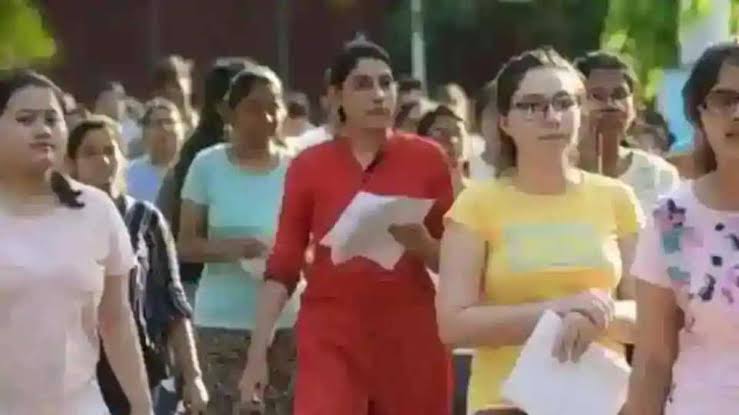
The Indian Institute of Technology (IIT) Delhi on Monday (September 21) released the admit cards for Joint Entrance Examination (Advanced) 2020 – the entrance exam for admission to undergraduate courses across IITs and IISc. The admit cards were released on official website of the board. 

Candidates who have registered for the JEE (Advanced) 2020 will be able to download their admit card online at jeeadv.ac.in. This year, a total of 1,60,864 students have registered to appear for the exam. These are the top-ranking students from the JEE Main. 
AdvertisingnullAdvertising

Around 2.5 lakh students were eligible to apply, however, the number of candidates choosing to appear for IIT entrance test declined massively this year due to the pandemic.

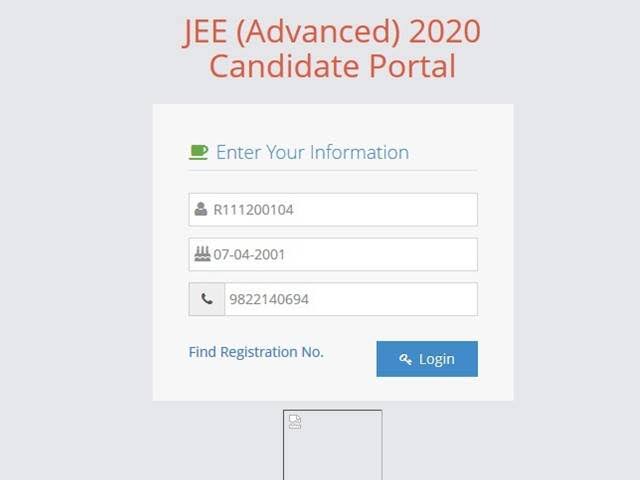
The JEE Advanced 2020 admit cards can be downloaded from Monday (September 21) 10:00 am to September 27 (9:00 pm). Candidates will have to visit jeeadv.ac.in to login and download your JEE Advanced admit card 2020.

The JEE Advanced 2020 admit cards will bear the candidate’s name, Roll Number for JEE Advanced 2020, photograph, signature, date of birth, address for correspondence and category. In addition, it will also bear the name and address of the examination centre allotted to the candidate. 

The JEE Advanced 2020 examination is scheduled to be conducted on September 27, 2020, at various centres spread across the state

How Indian culture proves that Old is gold?

“If any individual is judged by his character and morality, society is judged by its culture and tradition” said Dr S. Radhakrishnan.   Culture means the way of life followed by a community that consists of custom, tradition, religious practices and the human values. Every culture has its distinct positive features.  The culture of a community never remains same.  It is evolved over a period and is always in the process of reforming itself.   

Even from very ancient time, the Indian civilization was highly developed.  Many factors have contributed to the cultural formation.  Our scriptures like Vedas and Upanishads are considered as immense treasure of knowledge.  There are various other scriptures like Ithihas, Purana etc.  Bhagawad Gita, Ramayana and Mahabharata have taught us how we should conduct ourselves.   We have developed very good art like Music, dance, paintings, sculpture etc.  While the temples like Ramanathapuram on the southern corner of India are noted for their workmanship, novelty and sculpture, temples like Rishikesh and Badrinath in north are considered as the very abodes of God.  Hinduism is one of the oldest religions of the world and great saints like Adi Sankara, Ramanuja, Sri Ramakrishna Paramahamsa and Swami Vivekananda have enriched our religion by their interpretations.  From the day Swamy Vivekananda addressed the Parliament of Religions at Chicago; many people have turned towards India for spiritual knowledge.  Though Adi Sankara and other saints have set Self-realisation as the ultimate goal, it was Sri Ramana Maharshi who highlighted its importance and showed the way for achieving that goal.    All these developments have contributed to India a rich cultural heritage and tradition.  India has thus inherited a great tradition and a way of life which formed the basis of its culture. 

Though Mughals came and then the British came and ruled over the land, they could not destroy the culture.  The Indian culture has now become universal and it has become a land where different religions and culture survive, co-exist peacefully and flourish.  Now there are different communities and nationals in India pursuing their own beliefs and faiths.  Though India presented a picture of diversity, India has grown as a national that welcomes all ideas, philosophies and doctrines.  It is a land where people of different faith live in peace and harmony, like a family bound in mutual love and affection. 

Indians have adopted and assimilated the foreign culture and yet they have retained what is good for their own culture.   They may be communicating in English, traveling in Mercedes, dressing in western style but they never deviate from their basic tradition and culture. The car symbolizes the modern trend but its name, Maruti, symbolizes the legendary past.  Those who migrate to foreign countries adopt the culture of the country to which they migrated without deviating from their own culture. Like , I f you ever met any family who use to live in USA and still touches feet of elders. Wherever Indians go, whether USA or Dubai, along with their spouses, children and belongings, they make it a point to carry the Indian culture also with them.   This is evident from the various cultural programmes being regularly organized in foreign countries like USA, Dubai or Singapore.  Music Festival is a regular annual feature in Cleveland, USA and leading Indian artists take active part in them.  Indian temples are seen in most of the States in America, the Venkatachalapathi temple at Petersburg being the biggest among them.

Cinemas, the computer, air linkage, information technology have all brought the inhabitants of the world closer.   The world which remained unreachable and wide apart before has become a global village now.  As the geographical boundaries became mere symbols, people to people contact became more frequent.  As people mingled with each other, we find a cultural synthesis taking place in India now. 

Some adverse changes have also come in the Indian family tradition.  Previously, the wife used to be the home maker, attending to house hold duties, managing the children, attending to religious practices etc. Now, according to the modern trend more and more house-wives are going beyond their home-making avocation and take up responsibilities in business undertakings. “Now, for women, there is life even after marriage” commented a friend in a lighter vein.  Women are well educated and became partners with men in bringing about progress and prosperity.  Thanks to the winds of change blowing over and thanks to the free and liberal outlook created by modern era, India now finds itself free from its outmoded customs and practices. Though woman has proved her enormous power as a contributor for nation building, it cannot be denied that she has left a vacuum at the home front.   We need to bring up a system where our culture and tradition should be passed on to our children also.  Woman has a higher responsibility in this sphere.        

It would be pertinent to conclude this essay with the quotation of Swami Ranganathananda, the late President of Ramakrishna Mission, Kolkata:  “Change is the order of the day.  Everyday, we witness changes occurring all around us and even within us.  Society may change in infinite ways in response to historical necessities but that is no reason why cultural values underlying all human endeavors should change.”  Let us all be proud of our culture and cherish it for ever.  

So, we not only say that we are proud of being and Indian but we really are. It is always indian culture which gave us a different definition or identity infront of whole world. Like, only by seeing a Foreigner you can’t say from where he/she belongs from, but, any Foreigner can easily say that he/she belongs from india. Jai hind.

See yaa…

The story of a Stethoscope

Doctor and a stethoscope are synonymous with each other. A stethoscope is doctor’s best buddy. Hung around one’s neck, it gives doctor his identity. It is basically an instrument used to listen sounds made by heart, lungs or intestines and blood flow in veins and arteries. Let’s read how a young doctor’s shyness led to its invention which proved to be path breaking in field of medical diagnosis.

Born in 1781, a young French doctor, Rene Laennec got inspired to become a doctor when his mother passed away due to tuberculosis. He was a learnt man who studied medicine under famous physicians Dupuytren and Joan Nicholas Corvisat.

Corvisat strongly believed in diagnosing a patient by listening to heart sounds. In those days (early 1800s), it was common for a doctor to listen one’s heart beat by pressing his head directly on patient’s chest or back.

In 1816, as a part of his training, Laennec was told to examine a young overweight woman who was having heart problem. Laennec felt shy as well as uncomfortable thinking about using the traditional method. At that moment, he thought of a way. He rolled a quire of paper into a cylinder and placed one end on the chest of the patient and other end to his ear. And much to his surprise, he perceived sounds better than the other traditional method.

Successful in his impromptu experiment, Laennec devised a wooden version. It was 25 cm by 2.5 cm and could be carried around. He named it STETHOSCOPE which was derieved from a greek word sthethos( meaning chest) and scopos (meaning examination). Gradually, its use spread across Europe and US. But unfortunately Laennec died in 1826 at the age of 45 due to the same disease, as of his mother, tuberculosis.

Till date, various refinements have been made to original one. The major changes were brought by a Harward Professor, David Littmann in 1960s. He made a lighter version with better acoustics.

Littmann stethoscope are no doubt, the gold standard and used worldwide by doctors. But Laennec’s invention proved to be major milestone in the history of medical sciences.


Many of us must be unaware about this but have a knowledge always pays of.

See yaa

SCHOOLS REOPEN from today, state wise status

After a long gap of 6months due to the coronavirus pandemic, schools of some states have decided to reopen the gate of the educational institution for students of classes 9-12, on a voluntary basis . All the guidelines provided by the government for unlock 4 will be followed in the process.


The union home ministry has a set of rules for schools to follow when reopen. Students and teachers residing in containment zones are not permitted to attend schools. Only 50% of the teaching and non-teaching staff are allowed to operate, while students only from classes 9 to 12 can attend, on voluntary basis. Students who would attend have to get a permission slip signed by their parents or guardians. Schools that decide to reopen will have to continue online classes for students that stay at home.


It is mandatory for Schools which are reopening to have thermal scanners at the entrance, so that students, teachers and other staff can enter only after temperature checks. Schools have been advised to operate separate gates for entry and exit, although it is not compulsory. Most importantly, everyone entering the school premises have to wear face masks, and sanitise their hands or wash them following the 20-second rule on a regular basis.

Here is the state wise status of school reopening :

Andhra Pradesh
Schools in Andhra Pradesh for classes from 9th standard to Intermediate second year are likely to reopen from September 21. Schools, colleges, educational and coaching institutions will continue to remain shut for students and regular class activity up to September 30.


Assam
The Assam government on Wednesday issued the SoPs for reopening of schools and colleges in the state from September 21, adhering to Covid-19 protocols. After six months from the date of closure of schools due to the pandemic, the state secondary education department has notified the SOPs for reopening of educational institutions in Assam from classes 9 to 12.


Bihar
Schools in the city are making all arrangements to ensure safety of students as the Centre has allowed partial resumption of activities for students of classes 9 to 12 from September 21 as part of Unlock 4.0.


Chandigarh
Class 9 to 12 students are allowed at schools from today on a voluntary basis, for taking guidance from teachers.


Goa
Most stakeholders in the field of education on Thursday said that Classes IX-XII could begin from September 21, even as they expressed concern over ferrying students via Bal Raths and addressed parents’ apprehensions about schools resuming during the height of the Covid-19 pandemic.


Haryana
Students of classes 9 to 12 will be allowed to visit their schools from September 21 in Haryana on a voluntary basis for academic help.


Himachal Pradesh
Schools reopen in the state after the Govt allowed students of Class 9 to 12 to visit schools from September 21 on a voluntary basis, for taking guidance from teachers.


Jharkhand
There is no clarity yet. Government is still to take a call. Although education department had drafted a proposal for staggered opening from September 21, but it was not approved by state government. Any decision on it will be taken only after month end


Karnataka
The Department of Public Instruction issued the order on Saturday. It is in the view of the Union Government’s order permitting students from classes nine to 12 to visit schools to meet teachers and get their doubts cleared. However, the state government issued an order on Saturday saying that students here won’t be permitted to visit school and PU college campuses till September end or further orders which will be issued after reviewing the developing situation.


Meghalaya
Education minister Lahkmen Rymbui on Friday said that the schools in Meghalaya which are shut for six months due to the Covid-19 pandemic will partially reopen from next week for students to meet teachers to clarify their doubts. The schools will be open for students of class 9 to 12 to meet teachers to clear their doubts but there will be no regular classes and no classroom session, he added.


Although states like, Uttar Pradesh, West Bengal, Gujarat, Kerala, Odisha, Uttarakhand, and Tamil Nadu, will not reopen schools from 21st September.

Kerela and Gujarat are not willing to rush into opening schools.
Odisha chief minister Naveen Patnaik has declared closure of schools till durga puja.
Uttar Pradesh and Uttarakhand in both the states schools will not reopen as the states saw a surge of COVID-19 cases.
Tamil Nadu has decided to reopen schools only when the coronavirus outbreak will be brought under control.
West Bengal schools are closed till 30th September, after which the Chief Minister Mamta Banerjee will make a decision.

Colorism in India.

“It starts when children are young: the moment a child is born, relatives start comparing siblings’ skin colour. It starts in your own family – but people don’t want to talk about it openly.”

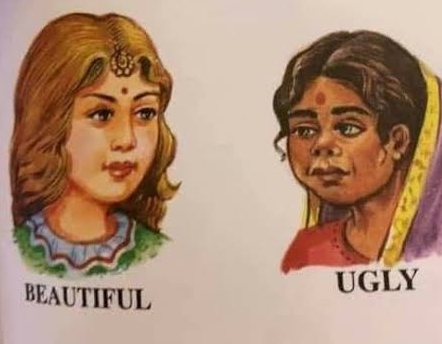
India’s hatred of dark skin, rooted in years of colonization, haunts naturally dark-skinned people there. While under British rule, white colonizers demeaned those with dark skin, favoring those with fairer skin. The British superiority in India showed the power struggle between the fair and the dark. As a result, even amongst Indians, those with darker skin were, and continue to be, looked down upon.

Darker skin represents a connection to the past and its traditions, while Westernization is considered to be modernization, creating a desire for pale skin. Fairness seems to equate to intelligence, power and beauty, leading many to try to achieve such skin.

Skin-lightening products, like “Fair & Lovely,” “Pond’s White Beauty” and “Lotus Herbals Whiteglow” are commonplace in Indian grocery stores, and make up an industry expected to be worth over $24 billion by 2027 globally. The media portrays lighter-skinned families in advertisements and TV shows, and Bollywood favors lighter-skinned actresses as the stars of films, creating an inaccurate ideal for Indians to look up to. This representation issue has been addressed more recently by many.

Yet, colorism might be most noticeable at the grassroots level. Comments from Indian relatives or acquaintances like “The bride is pretty, but dark,” “Oh, she’s so beautiful and fair!” and “She’s so dark, hopefully the baby won’t be as dark,” continue throughout the life of a “darker” Indian individual, and serve as microagressions pinning a negative connotation on those with a darker shade of brown.

This implicit bias has been internalized by Indian society and culture for decades. It does not outwardly show itself in the same way the United States’ prejudice systemically affects Black Americans, but it still accepts and normalizes the belief that lighter is better.

Colorism has led to very implicit discrimination that affects the greater society but also trickles down into everyday microagressions such as being told to drink saffron milk so your child doesn’t inherit the same dark genes you did, or that being pretty and dark is surprising or rare.

It’s a heavy burden and it’s not going anywhere anytime soon. And unlike the comments employed to “other” and homogenize South Indians, this shade of colorism is internalized and in some ways, more painful to deal with. After all, it’s not strangers who are trying to boost their own regionalist identity—but family members who honestly believe that if you were a shade or two fairer, you might be considered beautiful.

Campaigners standing up against the world’s bias towards lighter skin are fighting more than just bad medical practice and consumer habits. They are battling millennia-old preferences for lighter skin.

Colourism and skin lightening in India is a stellar case that shows us the need of using intersectionality to capture the depths of an issue. Our preference for light skin does not merely create beauty standards but also intersects with caste, class, and gender, and actually shapes the idea of womanhood in India. 

Protection against unfair contracts

The Indian Contract Act, 1872 determines obligations of the parties to perform or offer to perform respective promises unless such performance is dispensed with or excused under the provisions of the Act, or of any other law.

As informed by the Law Commission of India, in order to protect the consumers, the Law Commission in its Report No.199 titled ‘Unfair (Procedural and Substantive) Terms in Contracts’ recommended that the provisions of the Indian Contract Act, 1872 and of the Specific Relief Act, 1963 need not be disturbed.

The Consumer Protection Act, 2019 has come into force w.e.f. 20th July, 2020 and has replaced the Consumer Protection Act, 1986. As provided in the new  Act unfair contract means a contract  between a manufacturer or trader or service provider on one hand and a consumer on the other, having such terms which cause significant change in the rights of such consumer, including the following, namely:—

(i)  requiring manifestly excessive security deposits to be given by a consumer for the performance of   contractual obligations; or

(ii)      imposing any penalty on the consumer, for the breach of contract thereof which is wholly

disproportionate to the loss occurred due to such breach to the other party to the contract; or

(iii)     refusing to accept early repayment of debts on payment of applicable penalty; or

(iv)     entitling a party to the contract to terminate such contract unilaterally, without reasonable cause; or

(v)      permitting or has the effect of permitting one party to assign the contract to the detriment of the other party who is a consumer, without his consent; or

(vi)     imposing on the consumer any unreasonable charge, obligation or condition which puts such consumer to disadvantage;

This information was given in a written reply by the Union Minister of State for Consumer Affairs Food and Public Distribution, Shri DanveRaosahebDadarao in Lok Sabha today.

Union Minister Dr. Jitendra Singh delvers Kunwar Viyogi Annual Memorial Lecture of University of Jammu

Union Minister Dr Jitendra Singh today said that the common man in Kashmir is tired of terrorism and is becoming increasingly aspirational for himself and for his children.

Delivering the 1st edition of “Kunwar Viyogi Annual Memorial Lecture” of the University of Jammu on the subject “Way Forward Post Abrogation of Articles 370 and 35A in Jammu and Kashmir”, Dr Jitendra Singh said that terrorism is in its last phase in Jammu & Kashmir and terrorists on the run are hitting soft targets. He said, things are changing for the better each day and hoped for a new beginning from the next season.

Dr Jitendra Singh informed that in the 2nd term of the Modi Government, the Prime Minister had called upon to give J&K similar kind of attention and focus as was given to North-East. He said, after a very long gap, there is almost equal distribution of Central resources in Jammu and Kashmir Divisions.

Referring to his speech in Parliament during abrogation of Article-370 last year, when he described it as a miscarriage of history and anomaly of the Constitution, Dr Jitendra Singh said that what was supposed to be a temporary feature remained permanent for 70 years. He said it was the vision and strong will of Prime Minister Narendra Modi that the historic wrong was undone.

He said even the prophets of doom were proved wrong that abrogation of Articles 370 and 35A would lead to bloodshed and violence. On the other hand, the UT of J&K witnessed the most peaceful festive season be it Holi, Muharram, Eid, Diwali, Republic Day or Independence Day.

Dr Jitendra Singh said that the people of the UT are realizing that in the name of special status and self-rule, it was in fact continuation of dynastic rule of three generations and autonomy was denied at the grassroots level by not holding panchayat elections. He said, panchayat elections were held under the new dispensation of LG in J&K, thus empowering the local people.

Describing the Jammu & Kashmir Domicile Rules Notification as the dawn of a new era for Jammu & Kashmir, Dr Jitendra Singh said that history will vindicate us and prove that this course correction was in keeping with the principle of equality and the norms of a healthy democracy. He said that three generations of people in Jammu & Kashmir had been denied the right to live with justice and dignity. He said, the West Pakistan Refugees and displaced persons from PoJK have been restored their legitimate rights and a discrimination of several decades has been undone.

Recalling that two Prime Ministers of India, I.K.Gujral and Dr. Manmohan Singh, came from Pakistan,Dr Jitendra Singh quipped, they would not have become Prime Ministers if they had chosen to settle in J&K because of the discriminatory law. He also added that it is an irony that All India Services Officers, including IAS and IPS, who devoted 30 to 35 years of their life to serve in Jammu & Kashmir were, at the end of the day, after superannuation, asked to pack up, leave and look for a place elsewhere to settle. This was, he said, quite in contrast to the arrangement in several States and UTs where the All India Service officers of State Cadre are not only allowed to settle but are also provided plots of land for the same. He said the same is the case for teachers, doctors and other professionals.

Dwelling on the administrative outcomes, Dr Jitendra Singh said that post 5th August,2019, Transparency, Digitization and Accountability has increased and said that the Centre is assisting the Union Territory Government of Jammu & Kashmir to establish Grievance Portal in each of the 20 districts of the UT. He said that citizen centricity in Governance has become a new norm. Similarly, several of the stalled developmental projects in the irrigation, power and other sectors have started seeing the light of the day after remaining in cold storage for more than 30-40 years, he added.

On the cultural outcome, Dr Jitendra Singh said by making Dogri an official language, another anomaly was done away with. He said that people are gradually coming out of slavish, slack and selfish mind-set, and becoming part of the new milieu.

In his address the Vice Chancellor of University of Jammu, Professor Manoj Dhar praised the Union Minister for his passion for growth and development of Jammu and Kashmir and that of Dogri Language. He informed that a full-fledged Department of Dogri is functional in the Jammu University and soon a “Centre of Excellence” will be established for promotion of Dogri language, culture and heritage.

Professor Monika Sethi, Head of Department of English under whose aegis the webinar was organized along with Ayushman Jamwal, senior editor of News18 took part in the programme.

Pandemic related rise in mental illness cases

The Government has taken a number of initiatives to provide psychosocial support during COVID-19.

These initiatives include:

  1. Setting up of a 24/7 helpline to provide psychosocial support, by mental health professionals, to the entire affected population, divided into different target groups viz children, adult, elderly, women and healthcare workers.
  2. Issuance of guidelines/ advisories on management of mental health issues, catering to different segments of the society.
  3. Advocacy through various media platforms in the form of creative and audio-visual materials on managing stress and anxiety, and promoting an environment of support and care for all.
  4. Issuance of detailed guidelines by the National Institute of Mental Health and Neurosciences (NIMHANS), Bengaluru- “Mental Health in the times of COVID-19 Pandemic – Guidance for General Medical and Specialized Mental Health Care Settings”.
  5. All the guidelines, advisories and advocacy material can be accessed on Ministry of Health and Family Welfare website under “Behavioural Health – Psychosocial helpline” (https://www.mohfw.gov.in/).
  6. Online capacity building of health workers by NIMHANS in providing psychosocial support and training through (iGOT)-Diksha platform.

The Minister of State (Health and Family Welfare), Sh Ashwini Kumar Choubey stated this in a written reply in the Rajya Sabha here today.

Impact of COVID-19 pandemic on rural healthcare

“Public Health and Hospitals” being a State subject the primary responsibility of implementation of various health care schemes including National Health Mission lies with respective States.

The Ministry is continuously monitoring the implementation of their National Programmes & giving the required guidance to States/ UTs from time to time. States/UTs are being provided required technical and financial assistance for managing the COVID-19 Public Health Challenge from time to time.

All the States/ UTs are provided with necessary financial support under India COVID-19 Emergency Response and Health System Preparedness Package, with flexibility to use the resources based on their context and priorities. During FY 2020-21, funds of Rs 4256.81 crore have been released to the States/ UTs as on 10.09.2020.

“Public health and hospitals” being a State subject, the primary responsibility of ensuring the availability of doctors at public health facilities lies with the respective State governments.

To address the healthcare challenges, particularly in rural areas, the National Rural Health Mission (NRHM) was launched in 2005 to supplement the efforts of the State/UT governments to provide accessible, affordable and quality healthcare to all those who access public health facilities. Currently, NRHM is a sub-mission of National Health Mission (NHM).

NHM support is provided to States/ UTs for setting up of new facilities as per norms and upgradation of existing facilities for bridging the infrastructure gaps and to fill up the vacancies of Human Resource on contractual basis based on the requirement posed by them.

The States are also encouraged to adopt flexible norms for engaging specialists for public health facilities. These include ‘contracting in’ and ‘contracting out’ of specialist services and engaging specialists outside the government system for service delivery at public facilities under NHM.

States have also been allowed to offer negotiable salaries to attract Specialists including flexibility in strategies such as ”You quote, we pay”.

Financial support is also provided to States for providing hard area allowance, performance-based incentives, providing accommodation and transport facilities in rural and remote areas, sponsoring training programmes, etc to engaged human resources to address the issue of shortage of doctors and specialists in the public health facilities.

The Minister of State (Health and Family Welfare), Sh Ashwini Kumar Choubey stated this in a written reply in the Rajya Sabha here today.

Impact of pandemic on child immunisation programmes

The utilization of immunization services slowed down at the beginning of COVID-19 pandemic in April 2020, but coverage has improved subsequently because of series of measures been taken.

To restore universal immunization, following steps were taken by the Ministry of Health & Family Welfare (MoHFW) during COVID-19 pandemic:

  • States/ UTs have been provided with a series of guidelines for delivering immunization services as well as Reproductive, Maternal, New born, Child, Adolescent Health Plus Nutrition (RMNCAH+N) services in the midst of COVID 19 pandemic. The same have also been reiterated in video conferences with the states/ UTs. Guidelines are also uploaded on Ministry of Health & Family Welfare (MoHFW) website for wider dissemination.
Regular reviews are being held with the States/ UTs to discuss challenges being faced during the pandemic and the necessary measures taken to ensure immunization services.Appropriate communication material has been developed and shared with the States and UTs for addressing vaccine hesitancy and strengthening routine immunization during COVID-19 pandemic.Supply chain of vaccines and other logistics has been ensured during COVID-19 pandemic.

As per Health Management Information System (HMIS) 37,49,939 children were fully immunized in rural areas from April- June 2020 whereas 46,75,437 children have been fully immunized in rural areas during same period last year.

After each immunization session, due list of beneficiaries is prepared to track and trace individuals who have missed their regular vaccine including individual, who have missed vaccination due to COVID-19 pandemic

The Minister of State (Health and Family Welfare), Sh Ashwini Kumar Choubey stated this in a written reply in the Rajya Sabha here today.