Speaking at a webinar on the first ever International Day of Clean Air For Blue Skies Union Environment Minister Prakash Javadekar has said that the government is committed to reduce the Air polllution level in 122 most polluted cities. Underscoring the problem of Air Pollution the Environment Minister said that in 2014, the government launched the Air Quality Index (AQI) monitoring and today we are tracking the levels of Pollution on eight parameters.
The minister also thanked Prime Minister ,Shri Narendra Modi for bringing the issue of Air Pollution in his Independence Day Speech and putting across the goal of Holistic improvement in Air Quality in 100 cities. Prime Minister himself is detrimined to bring this change,said the union Environment Minister.
The Prime Minister, Shri Narendra Modi has congratulated the Defence Research and Development Organisation (DRDO) for successful flight of the Hypersonic Test Demonstration Vehicle.
In a tweet, the Prime Minister said, “Congratulations to DRDO for successful flight of the Hypersonic Test Demonstration Vehicle today. The scramjet engine developed by our scientists helped the flight achieve a speed 6 times the speed of sound! Very few countries have such capability today.”
Despite being the tough situation all over the world and the lockdown there are some commodities which still were in growth in the amount of export to different countries.In India the agri exports took a great jump of around 23% in the Q1 period i.e from April to June.
Basmati rice tops the list of exported agri commodity that is of around Rs 8591 crore which accounts for a third of India’s export in the first quarter of 2020-21.It is also the contribution of non-basmati rice which was of around Rs 2392 crores.If we talk about and what data shows,overall around an increase of Rs 4818 crore.If we take into account overall percentage of 95%.
Export of sugar contributed an increase of Rs 1719 crore and export of raw sugar Rs 448 crore during the period.It means that non-basmati rice & sugar (refined and raw) together accounted for Rs 4559 crore.If we talk of other agri commodities like pigeon pea(tur),Bengal gram and raw groundnut oil all the percentages have been increased from the past data.But from the likes of rice & sugar their export percentages are low.Report also mentions that onion was also on increase.
Export basket of tea and soya have declined numbers of around 27% and 14% respectively,as per the first quarter of the current financial year compared to the corresponding period in 2019.All this data was recorded during the UN Food and Agriculture Organization 35th regional conference for Asia and the Pacific organised by Bhutan on a virtual platform.India has shown in this tough situation that the country is ready to serve other countries at any cost and at any period of time.
Analysis of the agri report shows the performance of different agri commodities from the period April to June that pigeon pea increased to 440%(from Rs 15 crore to 81 crore this year) while Bengal gram had increased around 407%,groundnut oil 243% increase and wheat 148% rise.Incidentally Rice and Sugar which includes basmati and non-basmati,refined and raw sugar both are the commodities which requires ample of amount of waters which contributes about 78% of total export.
In lockdown it has been seen that there has been various such incidents of positive culture of which showed the power of the country.It signifies such act towards the society that any situation whether whatsoever India will never be backed down.Many examples are there but i would like take example related to health sector i.e medicines provided to many countries and another example is the worst Lebanon blast in that India provided medical,food supplies.
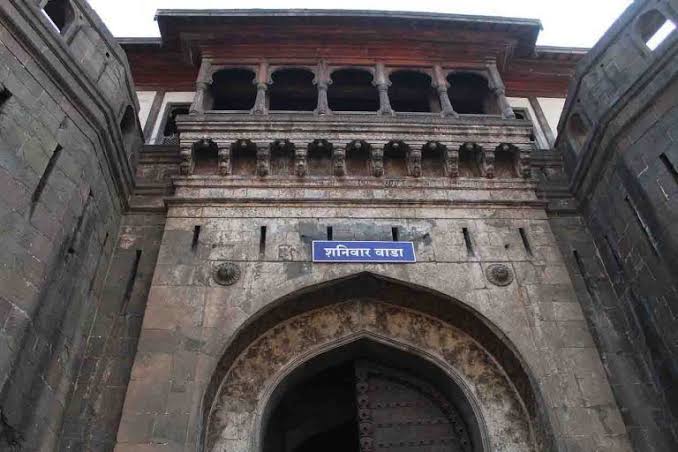
Shaniwar wada is one of the most haunted place in Pune located in the Maharashtra State of India.
The Shaniwar Wada Fort is a historic place of politics, rulers and death that embellishes the city center of Pune, India.. The imposing fort continues to stand strong after being constructed in 1732, even after a destructive fire stripped the fort of its interior palace and many other structures in 1828.
The foundation of Shaniwar Wada was laid by Peshwa Baji Rao 1 who was succeeded by his son Peshwa Balaji Bajirao, fondly known as Nanasaheb Peshwa. Nanasaheb Peshwa had three sons: Vishwasrao, Madhavrao and Narayanrao. His eldest son Vishwasrao perished during the third battle of Panipat against Afghan armies and hence, Nanasaheb Madhavrao succeeded as the 4th Peshwa of the Maratha Empire which he remained until his death in 1772.
After death of Madhavrao, Narayanrao, the youngest of Nanasaheb’s son, took over as the 5th Peshwa. He was only 17 years old at the time of his brother Madhavrao’s death and became the youngest Peshwa ruler ever. As he wasn’t an adult yet, his uncle Raghunathrao was incharge of the state on behalf of his nephew.
However, Anandibai ; wife of Raghunathrao was jealous as she wanted the throne to be her husband’s. So she seeked help of the Gardis, highly trained assassins for hire. Gardis were originally the Bheels of central India, a hunting tribe. On the last day of Ganesh Festival on 30th August 1773, several Gardi guards, led by their captain, Sumer Singh Gardi, entered the palace and started creating a commotion.
They then charged towards the sleeping Peshwa’s chambers, killing a clerk on the way. Narayanrao, seeing the Gardis and sensing trouble, ran out of his chambers towards his uncle’s quarters, screaming “Kaka! Mala Vachva!!” or “Uncle! Save me!”.
The Gardis followed Narayanrao to his uncle’s chamber and a menial pulled him while Sumer Singh Gardi cut him down. Narayanrao’s corpse was cremated secretly by the river at midnight.
To this day, many claim to capture the sight of Narayanrao’s apparition throughout the fort, or sometimes walking the banks of the river his body was dumped in. More commonly reported paranormal activity is reported from people passing by the fort who can still hear Narayanrao’s pleads for help to his uncle echoing off the tall, stone walls.
It is believed that Raghunathrao never wanted to kill his nephew and only asked Gardis for help in order to get out of captivity. According to popular legend, Raghunathrao had sent a message to Sumer Singh Gardi to capture Narayanrao. His message read “Narayanrao la dhara” where dhara means to capture. This message was intercepted by his wife Anandibai who changed the letter dhara to make it read as maaraa or ‘kill’ . The miscommunication led the Gardis to chase Narayanrao and finally kill him. Rumor has it that Narayanrao’s body was hacked into so many pieces that they had to carry the pieces in a pot.
The Shaniwar Wada Fort is a fascinating place to visit in Pune and is of immense historical significance to the area. The fort is open daily to visitors for a small fee and can be explored with or without a guide. The fort also opens nightly for a light and sound show. This consists of fountains, lasers and sounds all telling the fort’s history and paying particular detail to the story of Narayanrao.
Lately plastic has taken over the world. People often believe that all of this has happened in the recent few years, but the truth is everything takes time to happen and gradually makes its impact, and the same is with plastic.
Commercial (fully synthetic) plastic was first introduced in the year 1907 when Belgian-American chemist Leo Baekeland created Bakelite, the first real synthetic, mass-produced plastic. This breakthrough made people think, that it was going to be a great positive change for the industrial years ahead. The creation which was believed to be a boon for the world now appears to be a curse. A curse that is not only harming human life but every other life form on the planet.
Though there are many movements and initiatives taken by several organizations and governments of various countries going on, the effect of plastic is now on the verge where, either in some years it’ll be irreversible or we would have completely eradicated it.
From Mount Everest to the bottom of the sea, plastics are found to be persistent polluters of many environmental niches. Whether being mistaken for food by animals, flooding low-lying areas by clogging drainage systems, or simply causing significant aesthetic blight, plastics have attracted increasing attention as a large-scale pollutant.
The latest reports from the UN show how the consumption and demand for plastic have increased over the years. From the 1950s to the 70s, only a small amount of plastic was produced, so plastic waste was relatively manageable. By the 1990s, the plastic waste generation had more than tripled in two decades, following a similar rise in plastic production. In the early 2000s, the output of plastic waste rose more in a single decade than it had in the previous 40 years. Today, about 300 million tonnes of plastic waste is produced every year. That’s nearly equivalent to the weight of the entire human population.
Around the world, one million plastic drinking bottles are purchased every minute, while up to 5 trillion single-use plastic bags are used worldwide every year. In total, half of all plastic produced is designed to be used only once and then thrown away.
Researchers estimate that more than 8.3 billion tonnes of plastic have been produced since the early 1950s. About 60% of that plastic has ended up in either a landfill or the natural environment.
Since the 1950s, the rate of plastic production has grown faster than that of any other material. A shift away from the production of durable plastic, and towards plastics that are meant to be thrown away after a single use has also been seen. More than 99% of plastics are produced from chemicals derived from oil, natural gas, and coal, all of which are dirty, non-renewable resources. If current trends continue, by 2050 the plastic industry could account for 20% of the world’s total oil consumption. Scientists have also claimed that if the use of plastic is not reduced, then by the year 2050 oceans would contain more plastic than fish.
Single-use plastic products are everywhere For many of us, they’ve become integral to our daily lives.
The use of plastic needs to be reduced, and the improvement of plastic waste management is now a necessity. Only 9% of all plastic waste ever produced has been recycled. About 12% has been incinerated, while the rest 79% has accumulated in landfills, dumps, or the natural environment.
The government and various organizations are doing their work by introducing various rules to regulate the use of plastic and organizing events to make people aware of the impacts plastic is making on this planet. But this is not enough, we need more to prevent our environment from going into a state, from where it’s revival won’t be possible. Each and every individual needs to take charge. It is often asked that “How can an individual make an impact globally by just reducing their consumption of plastic”, the answer is if each and every individual decides to take up their responsibility then we won’t need a bigger change, these small changes would eventually make a bigger impact than any other move can.
But the questions are, are we willing to make a change? are we ready to start working instead of just speaking? are we ready to pledge that we are going to make this world a better place to live in for our future generations, or are going to make it worse enough for them to struggle to survive? The answers to all these questions lie inside us, we just need to bring them out.
” It is us who has to decide, whether we protect what we have, or we and every other thing we cherish is going to be history”
Raksha Mantri Shri Rajnath Singh held a bilateral meeting on 5th September 2020 with Iran’s Minister of Defence and Armed Forces Logistics, Brigadier General Amir Hatami, at the latter’s request. Raksha Mantri was on a transit halt in Tehran enroute from Moscow to New Delhi.
The meeting between the two Ministers took place in a cordial and warm atmosphere. Both the leaders emphasized upon the age-old cultural, linguistic and civilizational ties between India and Iran. They discussed ways to take forward bilateral cooperation and exchanged views on regional security issues, including peace and stability in Afghanistan.
The spike in the daily recovered COVID-19 patients continues in the country. For the second successive day, India has clocked a record recovery of more than70,000 patients in a single day.
73,642 patients have recovered and been discharged from either home/facility isolation or hospitals in the last 24 hours.
The total numbers of recoveries have reached nearly 32 lakh (31,80,865) as of today.
With this surge in numbers of patients getting recovered on a daily basis, India’s Recovery Rate has been further pushed upwards to 77.32% .
The Prime Minister, Shri Narendra Modi, has expressed grief over the passing away of Kesavananda Bharati Ji.
The Prime Minister said, “We will always remember Pujya Kesavananda Bharati Ji for his contributions towards community service and empowering the downtrodden. He was deeply attached to India’s rich culture and our great Constitution. He will continue to inspire generations. Om Shanti.”
As the pandemic enters the ninth month in India, the Centre has steadfastly led the response and management strategy for COVID with a sharp focus on the management of the pandemic in the States and UTs. The State/UT governments have in close coordination and integral collaboration implemented the Centre-led policies and interventions. Many have also designed customised innovative measures to fight the pandemic. These are being emulated by others, thereby facilitating wider implementation of regional ideas and best practices.
The government of Uttar Pradesh has taken various initiatives in this direction.
On 18th July 2020, the UP government established the Integrated COVID Control & Command Centres (ICCCC) in all districts as well as the State headquarter with representation of all relevant departments to address the rising number of positive cases. These centres are primarily for ensuring effective coordination among relevant departments for Non Pharmaceutical Interventions (NPIs). They also facilitate prompt referral of COVID-19 patients to the appropriate level of dedicated COVID facilities. The Command centres coordinate with zonal units to ensure prompt testing of symptomatic patients and contacts, intimation of laboratory status, facilitation of transport and facility allocation in case of admission, and regular follow up of cases under home isolation.
Uttar Pradesh has also developed a Unified State COVID Portal: which captures all information related to surveillance, testing and treatment of COVID patients. Regular trainings are being provided to ensure quality of data and data management at the District-level. Since its development, the portal has further evolved with more understanding of the disease, and interventions and feedback from the users at the State and District levels. Availability of digitalized data has facilitated decentralized as well as granular analysis for prompt decision making and response. This portal has also benefitted through interoperability with the Govt of India portal.
The State Government has also procured 1000 High Flow Nasal Canula (HFNCs) from the State funds. 500 of these have been installed and are being utilized for non-invasive management of patients in the State.
Despite the testing time of COVID lock down Bureau Of Pharma PSUs Of India , BPPI the implementing agency of Pradhanmantri Janaushadhi Pariyojana-PMBJP clocked appreciable sales turnover of Rs. 146.59 crore in the first quarter of 2020-21 and testing times as compared to Rs. 75.48 crore achieved in the first quarter of 2019-20. In the month of July, 2020, BPPI have added a sales of Rs. 48.66 Cr. The total sales up to 31st July, 2020 stood at Rs. 191.90 Crore.
The Janaushadhi Kendras remained functional during lockdown and maintained operations as part of their commitment to ensure uninterrupted availability of essential medicines. They sold about 15 lacs Face masks, 80 lacs tablets of Hydroxychloroquine and and 100 lacs Paracetamol Tablets, which saved around Rs. 1260 crore of the citizens.
Present basket of medicines sold by these kendras consists of 1250 medicines and 204 surgical instruments. The target is set to enhance it up to 2000 medicines and 300 surgical products by the end of 31st March 2024 so that all essential medicines covering therapeutic groups, like – Anti Diabetics, Cardiovascular Drugs, Anti-Cancer, Analgesics & Antipyretics, Anti Allergic, Gastro Intestinal Agents, Vitamins, Minerals & Food supplements, Tropical Medicines, etc.
The cost of Janaushadhi Medicines is cheaper at least by 50% and in some cases, by 80% to 90% of the market price of branded medicines. These medicines are procured on an open tender basis from WHO-GMP compliant manufacturers only. They undergo two stage stringent quality check process at nationally accredited labs.
In terms of number of stores, probably the biggest retail pharma chain of the world it is providing a good source of self-employment for educated unemployed youths with sustainable and regular earnings and in this way truly doing justice to its tagline “Seva bhi, Rozgar bhi”. As per the official data this has provided direct source of sustainable employ ment for more than 11600 educated unemployed youth of the country by engaging them in the scheme.
The incentive provided to the Kendra owners has been enhanced from existing Rs. 2.50 lakh to up to Rs. 5.00 lakh to be given @ 15% of monthly purchases made, subject to a ceiling of Rs. 15,000/- per month. One-time incentives of Rs. 2.00 lakh is to be provided to the PMBJP Kendras opened in North-Eastern States, Himalayan areas, Island territories and backward areas mentioned as aspirational district by NITI Aayog or opened by women entrepreneur, Divyang, SC & ST in the form of furniture & fixtures.
Jan Aushadhi Scheme’ was launched by Department of Pharmaceuticals, in November 2008 across the country with the aim of ensuring access to quality medicines for all the section of the population especially for the poor and the deprived ones.
Low reflection lenses, high reflection mirrors in devices such as better binoculars and telescopes, colour changing paints, and inks may now be powered by a newly discovered property of the interaction between light and molecules. Bengaluru based scientists have found that UV and blue light combination reversibly switches the system between 3D and 1D photonic structure — a novel interaction that can help make tunable and effective optical devices.
In their quest to develop materials for tunable and effective optical devices, Scientists from the Centre for Nano and Soft Matter Sciences (CeNS), an autonomous institute of the Department of Science & Technology, Govt. of India, have discovered that high levels of light in the blue wavelengths or actinic light lead to switching between two photo isomers — Chiral Nematic (Ch) and Twist Grain Boundary Smectic C* (TGBC*) which are liquid crystal phases possessing photonic structures in one and three dimensions, respectively. This work involving the research team of Rajalaxmi Sahoo, D.S. Shankar Rao, U.S. Hiremath, C.V. Yelamaggad, and S. Krishna Prasad from CeNS, has been published in the Journal of Physical Chemistry.
The change occurs because of interactions between light and molecules leading to photoisomerization in which light of a specific wavelength (actinic light) can bend molecules with certain linking groups. A well-known example in this regard involves a change in the shape of a macromolecule of azobenzene derivatives from essentially linear to highly bent form when irradiated with Ultraviolet light (~ 365 nm). The phenomenon found by the CeNS involves reverse transformation on stimulation with blue light. This phenomenon is quite attractive to achieve photo-driven isothermal phase transitions in liquid crystal (LC) materials. Such photoresponsive LCs are attractive for applications, including flexible polarisers, patterned objects, logic devices, and energy harvesting materials.
The present study also shows that photonic wavelength variations of over 100 nanometres can easily be achieved reversibly within a few tens of seconds, a feature that can find applications ranging from low reflection lenses and high reflection mirrors to colour changing paints and inks.
Lung cancer, the most common cause of cancer-related death worldwide, is tough to detect at early stages, making it difficult to treat. Scientists may soon have a solution in the form of diagnostic therapy for lung cancer which paves the way for personalized medicine.
Recently researchers from Jawaharlal Nehru Centre for Advanced Scientific Research (JNCASR), an autonomous institute under the Department of Science & Technology (DST), Govt. of India, have developed a theranostics (diagnostic therapy) drug candidate for lung cancer. The research work funded jointly by DST, BRICS Multilateral R&D Projects grant, and SwarnaJayanti Fellowship Grant was published in the journal Theranostics.
The selective recognition and imaging of oncogene specific non-canonical DNA secondary structures (G-quadruplex-GQ structures) holds great promise in the development of diagnostic therapy (theranostics) for cancer and has been challenging due to their structural dynamics and diversity.
Prof. T. Govindaraju, along with his team from JNCASR, developed a small molecule for selective recognition of BCL-2 GQ through unique hybrid loop stacking and groove binding mode with turn on far-red fluorescence response and anticancer activity demonstrating the potential as GQ-targeted lung cancer theranostics.
The JNCASR team reported the theranostic activity of TGP18 molecule by turn on fluorescence recognition of BCL-2 GQ through unique hybrid binding mode as well as its anti-lung cancer activity and tissue imaging potential. Their strategy of specific topology recognition through hybrid binding mode led to capitalize on the gains of oxidative stress and genome instability to kill lung cancer cells in vivo. In addition, TGP18 with turn on emission band at the lower edge of far-red to NIR spectroscopic window proved to be a viable probe for tumour tissue imaging. Collectively, theranostic agent TGP18 with outstanding biocompatibility showed in vivo tumor inhibition and tissue imaging, indicating excellent clinical translational potential.
G-quadruplexes (GQs) are non-canonical DNA secondary structures which regulate a wide range of cellular processes, including expression of several oncogenes. In cancer cells, stabilization of GQs leads to replication stress and DNA damage accumulation and therefore considered as promising chemotherapeutic target. Despite the significant attempts to combine therapeutic and diagnostic properties in a single formulation, there are no concerted reports on small molecule theranostics. Similarly, there are no molecules reported for the topology selective recognition of myriad of GQs, especially oncogenic GQs.
This study by the JNCASR team revealed that the selective recognition originating from the distinct loop structure of GQ that alters the overall probe interaction and binding affinity. TGP18 binding to anti-apoptotic BCL-2 GQ ablates the pro-survival function and elicit anti-cancer activity by inducing death in cancer cells. The JNCASR team deciphered that inhibition of BCL-2 transcription synergized with signalling cascade of nucleolar stress, DNA damage, and oxidative stress in triggering apoptosis signalling pathway. Intervention of GQ mediated lethality by TGP18 translated into anti-cancer activity in both in vitro 3D spheroid culture and in vivo xenograft models of lung and breast cancer with superior efficacy for the former. In vivo therapeutic efficacy, supplemented with tumor 3D spheroid and tissue imaging potential define the role of TGP18 in GQ-targeted cancer theranostics.
According to their findings, a remarkably lower dosage of TGP18 (0.5 mg/kg) showed anti-lung tumor activity similar to anticancer drug gemcitabine at a very high dose of 100 mg/kg. The therapeutic agent TGP18 was found to reach the target tumor site as monitored by its far-red imaging of the tumor tissue.
This methodology can be further exploited to develop cancer-type specific theranostic drugs with tremendous implications in personalized medicine. A patent application has been already filed for this invention.
Disclosing this here today, Union Minister of State (Independent Charge) Development of North Eastern Region (DoNER), MoS PMO, Personnel, Public Grievances, Pensions, Atomic Energy and MoS Space, Dr Jitendra Singh said that ISRO’s maiden mission to the Moon has sent images which show that Moon may be rusting along the poles. The sign of this finding is that even though the surface of the Moon is known to have iron – rich rocks, it is not known for the presence of water and oxygen, which are the two elements needed to interact with iron to create rust, he said.
Scientists at the National Aeronautics and Space Administration (NASA) say that this could be because the Earth’s own atmosphere is lending a helping hand which, in other words, means that the Earth’s atmosphere could be protecting the Moon as well. Thus, the Chandrayaan-1 Moon data indicates that the Moon’s poles are home to water, this is what the scientists are trying to decipher.
Dr Jitendra Singh said, as for Chandrayaan-3 is concerned, the launch may now take place somewhere in early 2021. Chandrayaan-3 will be a mission repeat of Chandrayaan-2 and will include a Lander and Rover similar to that of Chandrayaan-2, but will not have an orbiter.
Meanwhile, preparations are going on for India’s first ever Human Space Mission Gaganyaan, said Dr Jitendra Singh. The training processes and other procedures are also in place.
Constraints due to Covid pandemic led to some disruptions in the plan for Gaganyaan but efforts are going on to stick to the timeline of around 2022, he said.
The 3rdRashtriya Poshan Maah is being celebrated during the month of September 2020. Every year the Poshan Maah is celebrated under POSHAN Abhiyaan (PM’s Overarching Scheme for Holistic Nourishment), which was launched in 2018. Ministry of Women and Child Development, being the nodal Ministry for POSHAN Abhiyaan, is celebrating the Poshan Maah in convergence with partner Ministries and departments, at National, States/UTs, Districts, and grass root level. The objective of the Poshan Maah is to encourage Jan Bhagidaari, in order to create a Jan Andolan, for addressing malnutrition amongst young children, and women and to ensure health and nutrition for everyone.
The importance of Nutrition in our lives was recently emphasized by Prime Minister Shri Narendra Modi in the recent edition of his popular programme “Mann ki Baat” on 30th August 2020. The Prime Minister drew attention towards the role played by nutrition in helping children and students to attain their optimum potential. He also noted the efforts made during the past few years especially in villages where public participation in nutrition week & nutrition month (Poshan Maah) is converting nutrition awareness into a mass movement.
Smt Smriti Zubin Irani, Union Minister of Women & Child Development and Textiles had chaired an inter-ministerial meeting on 27th August 2020 and Shri Ram Mohan Mishra, Secretary, Ministry of Women and Child Development interacted with all States and UTs to secure convergent activities during Poshan Maah. Identification of Severely Acute Malnourished (SAM) Children and their management and plantation of Poshan Vaatikas– Nutri gardens, will be undertaken as focus activities during Poshan Maah, along with awareness generation regarding importance of early breast feeding, Need for good nutrition during first 1000 days of life, measures for reducing Anaemia in young women and children etc.
All the stakeholder Ministries have expressed their commitment to the objective of Poshan Maah and planned activities to bring Nutrition in focus through their verticals. Department of School Education, Ministry of Education has asked States to conduct Nutrition e-quiz and Meme making competition amongst students. Ministry of Panchayati Raj is planning to conduct special Committee meetings in every gram Panchayat during the month. Ministry of Rural Development has advised States to promote Nutri-gardens with the support of Mahatma Gandhi NREGA. Ministry of Ayush has offered to support building a healthy lifestyle by adopting Yoga and holistic nutrition. Ministry of Health and Family Welfare has also extended its cooperation for all the activities in the best possible manner.
Considering the prevalent COVID situation in the Country, Ministry of Women and Child Development is encouraging all stakeholders to use digital platforms for celebrating Poshan Maah. Social media, online activities, Podcasts, and e-Samvaad etc will be used to disseminate knowledge and information about importance of Nutrition in our lives. Ministry is also hosting a Webinar series, in which subject experts and Health Professionals will throw light on important aspects of health and nutrition for women and children.
Union Environment Minister, Shri Prakash Javadekar will be chairing a webinar on the first-ever International Day of Clean Air for Blue Skies tomorrow, September 7, 2020.
Shri Javadekar will also be reviewing the progress of the activities under National Clean Air programme (NCAP) during the course of the webinar. The webinar can be joined live on the following link :
The webinar will be joined by Principal Secretaries of the Urban Development Department and Environment Department of 28 states and 8 Union Territories. Commissioner of 122 cities as identified in NCAP programme will also participate.
It is noteworthy that Prime Minister Shri Narendra Modi in his address from the Red Fort on this Independence Day, had highlighted the need of “Holistic Improvement in Air quality” in 100 cities.
The General Assembly of United Nations on 19 December 2019 adopted a resolution to observe the International Day of Clean Air for Blue Skies on 07th September every year starting from 2020.






You must be logged in to post a comment.