

Bhupen Hazarika: A personality who received all the highest-ranked national awar
Jaipur: Bhupen Hazarika was born on 8th September 1926 in Sadiya, Assam. He was an Indian playback singer, lyricist, musician, singer, poet and filmmaker. He was popularly known as Sudhakantha. He was multitalented as he himself wrote and sung in the Assamese language. His songs are even translated in many languages and most notably in Bengali and Hindi. He is also acknowledged to have introduced the culture and folk music of Assam and Northeast India to Hindi cinema at the National level. At the age of 10, he was discovered by Jyotiprasad Agarwala, the noted Assamese lyricist, playwriter and the first Assamese filmmaker.
He is a personality who has received all the highest national awards and the are Padma Shri (1977), Padma Bhushan( 2001), Padma Vibhushan (2012), Bharat Ratna( 2019 ) and many more to count.
His famous Assamese songs include Bistirno Parore, Moi Eti Jajabor, Ganga Mor Maa and many more.
He also became the Secretary of the Reception Committee of Indian People’s Theatre Association in 1955. He had even briefly worked at the All India Radio Station at Guwahati.
Hazarika was hospitalized in the Kokilaben Dhirubhai Ambani Hospital and Medical Research Institute in Mumbai in 2011. He died of multi-organ failure on 5 November 2011. His funeral was attended by an estimated half a million people.
Author: Eduindex News
Visit us for more news at https://eduindex.org
‘KOOVAGAM’- the transgender festival in Tamil Nadu
People who identify as transgender or transsexual are usually people who are born with typical male or female anatomies but feel as though they’ve been born into the “wrong body”. For instance, a person who identifies as transgender or transsexual may have typical female anatomy but feel like a male and seek to become male by taking hormones or electing to have sex reassignment surgeries.
Koovagam is a unique festival that is celebrated among the transgender community in Tamil Nadu. It is an 18-day long festival that is celebrated in Koovagam village. This village (Koovagam) is located about 25 km away from Villupuram District of Tamil Nadu. These days fall in the month of Chiththirai (according to the Hindu calendar), that is in March/April month. The ‘Koothandavar temple‘ is the place where this festival is held.
Lord Aravan, from the epic Mahabharatam, is one of the core elements of this festival. Lord Aravan is worshipped by all the transgenders, visit Koovagam during Koovagam festival. Various mythological stories trace back to the importance of Lord Aravan among transgender community. Koovagam festival is also referred to as the Kuthandavar-Aravan Mela.
Koovagam Festival- Origin and Significance
(Source)
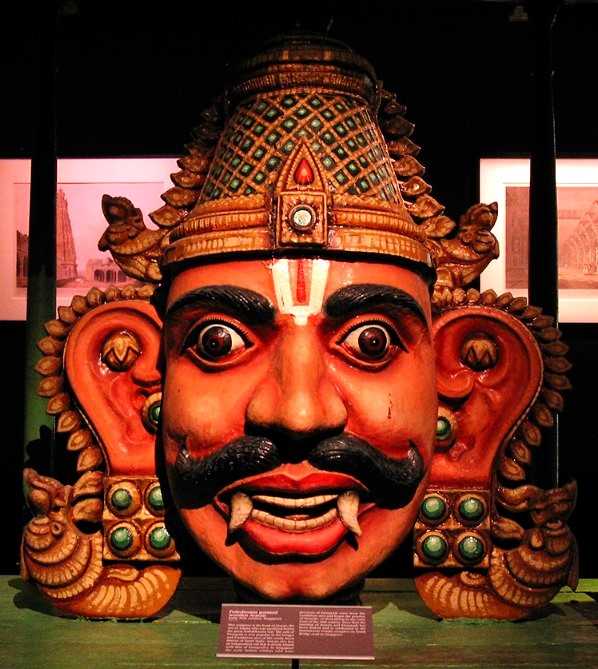
The origin, history and mythological significance of this festival trace back to the time of ‘Mahabharata‘. For Pandavas to win the Kurukshetra war, it required sacrificing a life to Goddess Kali. At this time, Lord Aravan, son of Pandava Arjuna offered to sacrifice his own life for the victory in the battle. His last wish before death was to get married and experience marital life for once. Since no woman would agree to marry a man who was supposed to die the next day, it was Lord Krishna who took the form of a woman named ‘Mohini‘. In one night, they got married, and Aravan sacrificed his life on the next day.
Koovagam festival commemorates this mythological incident and thus celebrates the union of various transgender women, also known as Aravanis, in order to celebrate this festival.
The 18 days of celebration
- Koovagam village is one of the quietest, sleepy villages. But during the Koovagam festival, it awakens and illuminates. This 18-day long festival includes a lot of activities that brings tons of transgenders at Koovagam, about 25km from Villupuram district.
- The first 16 days involve enormous activities such as programmes and cultural performances, in order to make transgender community happy. For instances, awareness skits by NGOs, singing, dancing and more.
- The 17th day is the most important one. On this day, various transgender women dress as bride (to take the form of a women called Mohini), wearing bright coloured sarees, colourful bangles, jewellery and ornaments. They visit the Koothavandar Temple in order to marry the deity ‘Aravan‘. The temple priests tie the ‘thali‘ or ‘mangalsutra‘ around their necks to signify marriage.
- The streets are filled with crowds to witness the procession and festivities. A huge image of Lord Aravan is also carried across the streets. It is kept in the temple throughout the rest of the year. It’s only during this festival that a fresh coat of paint is applied to it, and it is taken out from the sanctum.
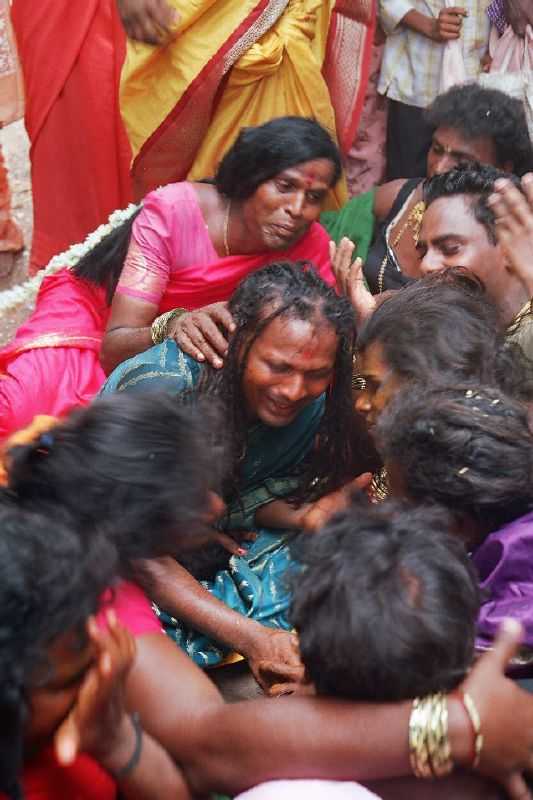
- The next day, they mourn the Aravan’s death through ritualistic dances and by breaking thier bangles, wore white saree and no makeup is worn. The priests remove the thali, signifying their widowhood.
- The rejoice heard on the day before, is converted to sorrow and mourning on the next day and this is one of the stark contrasts of this festival.
(Source)
The cultural activities and union of various flocks of people from all over the country lead to a spirit of togetherness and a sense of belonging in the hearts of everyone. It is an occasion to bring about light where there is darkness, and let all groups of people rejoice who they truly are. It is indeed a unique festival that brings about the diversity and culture of Tamil Nadu in a rather beautifully dramatic manner.
Internet Theft: Can the government be considered as a white collar criminal?
With the constant rise in digitalization, the computer stores information in binary data form and deeply on the data form which is a way that the device tracks a lot of information in an effective way. Subsequently, with the invention of personal computers and microprocessors the idea of using computers for exclusive use of an individual rose. The process was not only affordable but also made management and storage of information easier. But this evolution has also led to increased interactions and sharing of private data using computer, ultimately leading to illegal activities known as cybercrimes. Identity theft is one such crime. Identity theft refers to a crime when a person fraudulently obtains information of another person and later uses it for economic or personal gain. The theft happens in a two-step process. Firstly, the personal information gets stolen. Later, the information gets used to impersonate the victim and commit the fraud. Identity theft has already made its place among the fastest growing sector in not only the developed countries but also the developing countries. The primary reason for US being affected stands firm to the fact that all the personal information is linked to a single social security number. The number allows an individual to avail all government schemes and records related to the individual whose social security number it is. This allows very little safeguarding to the individuals whose number gets leaked. Landing on Indian records, there has been an 11% increase in identity theft and ransom ware, followed by phishing attacks increase to 9%. India also been ranked amongst top 5 countries to be affected by cybercrimes in 2013. Problematically, there is a very low conviction rate despite the high levels of cybercrime.
There are provisions in Indian Penal Code, 1860 which governed the crimes of forgery and fraud but it was later amended by the Information technology Act, 2008 as it also included the electronic record, ultimately widening the ambit of such computer data related crimes. Provisions such as section 464 criminalizing forgery, Section 465 criminalizing making of false documents, section 468 criminalizing forgery for purpose of cheating, Section 469 criminalizing forgery for purpose of harming reputation, Section 469 criminalizing the use of a genuine document as forged and section 474 of having possession of a document with intention of using the genuine document as forged were coupled with IT Act. Section 420 could be used in circumstances when the Act requires including unique identification information of any individual.
In the present scenario, the IT Act, 2000 is the main legislation governing cybercrimes in India. The objective of the Act, however, was to mainly recognize e-commerce and that’s why it did not define cybercrime. Before the 2008 amendment, the Act could impose civil liability for unauthorized access to computer or network which would have facilitated an illegal act under section 43 by way of compensation under the pecuniary limit of one crore. Also, Section 66 criminalized hacking which would result to destruction, deletion or alteration of any resource in the computer.
The Amendment of 2008 introduced the term ‘Identity Theft’. Section 66C of the Act governs the crime and provides punishment for the same.
The ‘sensitive personal data’ however required stronger laws to be formulated which could ensure the protection of private data. The ambit of the term has been defined by IT rules, 2011. It involves the data related to one’s password, financial information, sexual orientation, biometric information, medical records. Such a clause would be exceptional to the State or central government for monitoring, surveillance or interception. The same was provided under Section 69 of the Act.
Data Protection Bill 2019 and Cyber-Crime are often used together these days. Not scholarly but indeed since the bill does come with serious implications for all technological and digital service provider companies and has already generated controversies. Despite India’s attempts to create a complex legal framework with the objective of protecting data but it comes with shortcomings which are inevitable. On a bare reading, there are three serious flaws with the current draft.
Firstly, the section of data localization requires data fiduciaries to store atleast one copy of personal data on a data centre or server which is located in India. However, the centre holds the upper hand to exempt categories falling under the personal data. Also the centre can declare certain datas as critical and require them to be stored in India. In the present, this would allow all the social sites also known as foreign internet services to physically able a user data in the country. This would allow law enforcement easy access to this data, which brings to the second issue.
The law enforcement access to data section would allow processing of data considered personal by an individual in the hands of centre and in the interest of security and public welfare, the state can utilize the information which would not be illegal as it would be according to procedure established by law. Now, this access stands as a threat to the right to privacy that exists in India. If combined with the section of data localization, the government shall have access to information about users in social media.
However, this legal framework for surveillance by the government is governed by the judgment in PUCL v Union of India in which the Apex Court stated rules to concentrate the power to order and review surveillance in the executive body which doesnot require court orders or supposedly, any third party review. The measure intended to act as a stopgap measure by the SC and if any subject falls short of international human rights then there will be very little to safeguard the citizens.
The last section is about the regulatory structure created. The Centre has control significantly over the controls. The bill further gives powers to data protection authority to appoint its members by merely the recommendation of an outside committee. For a person to be an effective regulator of an institution, one must have sufficient time to learn and the bill providing only five years of term seems ineffective.
The term white collar crime has grown to define the fraudulent crimes of business and government professionals over time. The characterization of such a crime is violation of trust, concealment of information, deceit through information and categorically not dependent on any kind of force or violence imposed. White collar crimes end up having huge impacts on the society. There have been various scams in the country like the Havala scam, 2g scam, fodder scam, banking scam and many more. This does not necessarily indicate towards the entire involvement to be criminal but it merely requires one financial fraud in greed of money or power to commit such an act. Cybercrime stands as one of the biggest causes to these types of crime in the country. It is the information that single handedly threatens a person’s security and financial status.
Since the actions of Government have direct impact on the society, it is easily identifiable that when a white-collar group is discussed, the Government is a part of it.
Now, bringing the recent proposed bill and the white-collar crime concept together, the question stands whether the bill in the name of data protection is actually for protection or is merely a tool of mass surveillance by the Government.
The SC in its judgment of right to privacy in K.S Puttuswamy case declared the right as a part of Article 21 guaranteed under the Constitution. The judgment clearly stated that the right is a natural right and is a measure to protect an individual from the scrutiny of the State. Thus, any action by the State would undoubtedly result in violation of such a right and would be subject to judicial review. But the right clarified to have reasonable restrictions which empower the State to impose restrictions in accordance with a law in the interest of State’s need and also the means should be in proportion to the objectives of law.
Even if not called the worst but if the bill is passed, it would bring in major implications especially in areas of national security, foreign investment as well as international trade.
SHOR IN THE CEREBRAL CORTEX

The Krakatoa volcanic eruption in Indonesia created the loudest sound ever reported at 180 dB in the year 1883. Do you know what’s louder than that? My mind thinking, producing thoughts faster than the blink of an eye. ‘Writer must be some mad scientist solving scientific equations in her brain’, one might think. On the contrary, the equations my brain analyses are the thousand possibilities of one single situation.
Everyone is looking at me. They are talking about me. Is it my hair? Is it the shirt I’m wearing? I think the world knows about that one time when I mispronounced the word ‘laminate’ as ‘lemonade’ in 6th grade. This is it. Life gave me lemons and the lemonade I made is SOUR.
An organ made of soft tissues and approximately two clenched fists in size has the power to make and break one’s life is a big accusation on our Brains. But who is to be blamed then?
I would like to someday adopt a Fish and a Cat and a Dog. But what if the cat eats the fish and the dog chases the cat and then they all flee my house and I’m left alone with my thoughts again. You would call it unnecessary paranoia and you would be right. I don’t really reside in my body; I’m simply paying rent to it. This rented house of mine has two windows, I call them my eyes. I guess my mind is the prison and I’m never going to get out of it.
I’m a visitor inside my brain and now my thoughts have chained me to my bed and I’m stuck. Hello, is anybody there, you got keys to my cell?
Wait a minute there is nobody here miles and miles away then who really locked the cell from outside? I give it one small push and it opens with a creak. The door to my prison was never locked? I was staying there voluntarily!
The Brain is powerful. How many doors in your life, you think are locked but aren’t? How many times have you been stuck in the mental prison of overthinking? Something that really had a simple solution. There is an old African line that says, ‘When there is no enemy within, the enemy outside can do us no harm.’ Cerebral Cortex is that part of the brain which produces thoughts, the capability of imagining things beyond reality. It is the strongest force in your life. It will force its opinions on you – ‘you are not good enough’, ‘you cannot do it’, ‘what will they say about you?’,’ stop, you are not made for this.’
Dear Mind of mine, thank you for your opinions but every overthinking thought you produce is equivalent to nothing. We bring it to life with the attention we give it. Stressful thoughts knock on our doors and we tell them ‘STAY OUT’. But that makes them knock louder.
BUT HOW DO I CONTROL AND DESTROY THOSE THOUGHTS?
The secret is – don’t mind the mind. This is the natural state of existence. This is the law of universe. In Science, the first law of Thermodynamics states that, ‘You cannot create or destroy energy but you can transfer it from one thing to another.’ Thoughts will arise and yes you will fill them but you don’t have to fight, control or defeat you mind. Just stay neutral in between those thoughts and it will dissolve into silence. A peaceful state of mind.
Or we can order a pizza and transfer the energy we spend on overthinking into the process of eating this slice of cheesy heaven. But why does the circle pizza come in a square box? And why is a slice of pizza triangle? Did mathematicians invent the pizza? Is pizza the SYMBOL OF ILLUMINATI?! WHAT IF…..and just like that the writer fell into her rabbit hole of overthinking and the Shor (noise) in her Cerebral Cortex was louder than the Shor in her city.
Child Labour in India
Child labour is a crime where children are forced to work fro a very early age. It is like expecting kids to perform responsibilities like working. The average age for a child to be appropriate to work is considered fifteen years and more. Children falling below this age limit won’t be allowed to indulge in any type of work forcefully. Why is that so? Because child labour takes away the kids opportunity of having a normal childhood, a proper education, and physical and mental well-being. In some countries, it is illegal but still, it’s far away from being completely eradicated.
Causes of Child Labour
Child labour happened due to a number of reasons. Firstly, it happens in countries that have a lot of poverty and unemployment. When the families won’t have enough earning, they put the children of the family to work so they can have enough money to survive. Similarly, if the adults of the family are unemployed, the younger ones have to work in their place.
Moreover, when people do not have access to the education they will ultimately put their children to work. The uneducated only care about a short-term result which is why they put children to work so they can survive their present.Furthermore, the money-saving attitude of various industries is a major cause of child labour. They hire children because they pay them lesser for the same work as an adult. They can easily manipulate them. They only see their profit and this is why they engage children in factories.
Child Labour Laws in India
To eradicate child labour, a need for legislation and statutes were felt to prohibit the malpractice of child labour. Today, there are sufficient statutes condemning and prohibiting child labour such as:
The Factories Act of 1948: The Act prohibits the employment of children below the age of 14 years in any factory. The law also placed rules on who, when and how long can pre-adults aged 15-18 years be employed in any factory.
The Mines Act of 1952: The Act prohibits the employment of children below 18 years of age in a mine. Mining being one of the most dangerous occupations, which in the past has led to many major accidents taking life of children is completely banned for them.
The Child Labour (Prohibition and Regulation)Act of 1986: The Act prohibits the employment of children below the age of 14 yeas in hazardous occupations identified in a list by the law. The list was expanded in 2006, and again in 2008.
The Juvenile Justice (Care and Protection) of Children Act of 2000: This law made it a crime, punishable with a prison term, for anyone to procure or employ a child in any hazardous employment.
The Right of Children to Free and Compulsory Education Act of 2009: The law mandates free and compulsory education to all children aged 6 to 14 years.
Constitutional Provisions Regarding Child Labour
Several articles of Indian Constitutional provide protection and provisions for child labour.
Article 15(3) – The State is empowered to make the special provisions relating to child which will not be violative of right to equality.
Article 21(Right to Education) – No person shall be deprived of his life or personal liberty, except according to procedure established by law. The Supreme Court held that ‘life’ includes free from exploitation and to live a dignified life.
Article 21A (Right to Education) – The State shall provide free and compulsory education to all children of the age of 6 to 14 years in such manner as the State, by law, may determine.
Article 24 (Prohibition of Employment of Children’s in Factories) – No child below the age fourteen years shall be employed in work in any factory or mine or engaged in any other hazardous employment.
Article 39(e) – The State shall, in particular, direct its policy towards securing the health and strength of the tender age of children are not abused and that citizens are not forced+ by economic necessity to enter avocations unsuited to their age or strength.
Article 45 – The State shall endavour to provide early childhood care and education for all children until they complete the age of six years.
Article 51A – It shall be the duty of every citizen of India, who is a parent or guardian to provide opportunities for education to his child or ward as the case may be, between the age of six and fourteen years.
In short, the government and people must come together. Employment opportunities must be given to people in abundance so they can earn their livelihood instead of putting their kids to work. The children are the future of our country; we cannot expect them to maintain the economic conditions of their families instead of having a normal childhood.
Cruelty to animals
July 3rd 2020 is a very significant day in the history of animal welfare in the country. The north east state of Nagaland has banned the sale of dog meat. The state government announced a complete ban on the sale of dog meat in the state. Though this historical decision has been welcomed by the animal welfare groups but regulating the ban won’t be an easy task for the government. Because the dog meat is a part of the food habit practiced by the Nagas (mostly) since the time of their forefathers. It should be noticed here that the hilly state enjoys a special status given by the constitution of India under article 371 (a). This provision exempts the state of all the animal protection and welfare laws ruled in the whole country. It gives it a special status to practice its own customary law. Yet this decision is a shining hope in the fight of ending the cruelty to animals in the country.
Don’t forget ‘vinayaki’
Brutality towards animals has become a part of practice in our society. Sometimes the tradition, compulsion, and even the essential requirement is given as the reason. How can we forget the case of Vinayaki.
The pregnant elephant helplessly standing in the velliar river of kerala awaiting for her death. The widely shared photo had shaken the consciousness of millions. Vinayaki had eaten a pineapple filled with firecracker which exploded in her mouth and severely injured her. While no one intentionally fed her that fruit but filling the fruit with explosive is a local practice by farmers in order to protect their crops from wild animals. In excruciating pain, she died with her unborn calf.
Animal welfare laws
The cruelty to voiceless is being done by humans since ages. Various national and international organisations are working for the welfare of animal reforms. In India the Prevention of Cruelty to Animals act came in 1960 which criminalizes cruelty to animals. Many other subsequent laws also came in order to restrict the use of performing animal, animal slaughtering and experimentation. In year 2014 India became the first country in Asia to ban all testing of cosmetics on animals and the import of cosmetics tested on them.
The laws which we should keep in mind:
- It is a criminal offence to beat or confine animal in cages with inadequate space.
- Feeding poisonous food to stray animals is a crime and if one gets caught doing so he can be charged under section 11 of the Prevention of Cruelty to Animals Act 1960.
- Maiming, injuring or killing the animals in cruel manner is also illegal, and doing so can land anyone in jail for five long years.
Sadly, despite such strict laws cruelty towards the innocent animals is still being done and only in rare cases the culprits get punished. It’s high time that we rectify the wrongs that have been done to the voiceless and give them their due. We should remember what Mahatama Gandhi had said once that, ‘‘the greatness of a nation and its progress can be judged by the way its animals are treated.’’
Direct-to-Home (DTH)

Direct-to-Home(DTH) is none other than Direct Broadcast Satellite Television which is a type of communication satellite that usually broadcasts satellite television signals for home receptions using dish antennas and satellite ground station transmitting the signal. The DTH service provides satellite television programming directly to the subscriber\’s home anywhere in the country. Since it employs wireless technology, the subsequent programmes are transmitted to the subscriber\’s television set directly to the subscriber\’s television set directly from the satellite. This service do not involve the usage of cables or any other wiring infrastructure.

A DTH service provider has a base, a Ku-Band transponders from the satellite. The encoder converts the audio-video and data signal into a digital format and the multiplexer mixes these signals. At the user\’s end there has to be a small dish antenna and a set top box to decode and view numerous channels. On the user\’s end the receiving dish can be as small as 45 centimeters in diameter. DTH is an encrypted transmission that travels to a customer directly through a satellite. DTH transmission is decoded at the user\’s end using a set-top box.
Direct-to-home services offer an unparallel pictures and sound quality that cannot be compared with any other television transmission technologies. It has been easier to get access to high quality full HD quality television programme with surround sound at the comfort of our homes due to DTH services. Not only this much it a very commendable feature that the services allows its viewers to only pay for the channels and services they want to access or use. Thus the viewer can select from the list of dynamic packages as per their preferences. Another important feature is that it provides Advanced Viewing Control Feature such as Electronic Programmes Guide allows the viewers to check current and future programmes of all channels. The presence of a parental lock, pre-booked pay-per-view feature makes it an extraordinary and comfortable services available at home.
Global warming
Global warming is a term almost everyone is familiar with. But, its meaning is still not clear to most of us. So, Global warming refers to the gradual rise in the overall temperature of the atmosphere of the Earth. There are various activities taking place which have been increasing the temperature gradually. Global warming is melting our ice glaciers rapidly. This is extremely harmful to the earth as well as humans. It is quite challenging to control global warming; however, it is not unmanageable. The first step in solving any problem is identifying the cause of the problem. Therefore, we need to first understand the causes of global warming that will help us proceed further in solving it. In this essay on Global Warming, we will see the causes and solutions of Global Warming.
Causes of Global Warming
Global warming has become a grave problem which needs undivided attention. It is not happening because of a single cause but several causes. These causes are both natural as well as manmade. The natural causes include the release of greenhouses gases which are not able to escape from earth, causing the temperature to increase. Further, volcanic eruptions are also responsible for global warming. That is to say, these eruptions release tons of carbon dioxide which contributes to global warming. Similarly, methane is also one big issue responsible for global warming.
After that, the excessive use of automobiles and fossil fuels results in increased levels of carbon dioxide. In addition, activities like mining and cattle rearing are very harmful to the environment. One of the most common issues that are taking place rapidly is deforestation.
So, when one of the biggest sources of absorption of carbon dioxide will only disappear, there will be nothing left to regulate the gas. Thus, it will result in global warming. Steps must be taken immediately to stop global warming and make the earth better again
Global Warming Solutions
As stated earlier, it might be challenging but it is not entirely impossible. Global warming can be stopped when combined efforts are put in. For that, individuals and governments, both have to take steps towards achieving it. We must begin with the reduction of greenhouse gas. Furthermore, they need to monitor the consumption of gasoline. Switch to a hybrid car and reduce the release of carbon dioxide. Moreover, citizens can choose public transport or carpool together. Subsequently, recycling must also be encouraged For instance, when you go shopping, carry your own cloth bag. Another step you can take is to limit the use of electricity which will prevent the release of carbon dioxide. On the government’s part, they must regulate industrial waste and ban them from emitting harmful gases in the air. Deforestation must be stopped immediately and planting of trees must be encouraged.
In short, all of us must realize the fact that our earth is not well. It needs to treatment and we can help it heal. The present generation must take up the responsibility of stopping global warming in order to prevent the suffering of future generations. Therefore, every little step, no matter how small carries a lot of weight and is quite significant in stopping global warming.
Factors of Work Stress and its Management : A Practical Case Study
Abstract
This research studies work stress, and how it is related to performance and productivity in an organization. At first,
definitions and types of stress are defined, along with its sources and effect on individual. Then, a demonstration of the
subsequent consequences of individual stress on an organization is discussed, hence showing the importance of stress
management in an organization.
Stress management policies and procedures are then explained and specified for each significant type of a stressor. This
is done using a practical case study of an organization, where it shows how this firm deals with each kind of different
stressors.
Keywords: stress, productivity, time management, conflict management, workplace diversity.
- Introduction
Stress is a dynamic condition in which an individual is confronted with an opportunity, constraint, or demand related to
what he or she desires and for which the outcome is perceived to be both uncertain and important.
Organizations are mainly concerned with work stress. Nevertheless, organizations provide training to their employees
how to manage other personal stresses, since it affects work performance. In addition, organizations always follow up
with economical, environmental and political stresses, since they all directly affect organizational work and increase
their internal stress. - Types of Stress
a) Challenge Stressors (Beneficial stressors): Stress associated with workload, pressure to complete tasks, and
time urgency. They enhance motivation, energy, alertness, and positive attitude.
b) Hindrance Stressors (Negative stressors): Stress that keeps you from reaching your goals, and leave a
feeling of depression, anxiety, or pressure, such as red tape, role ambiguity, role conflict, role overload, job
insecurity, etc, and they cause greater harm than challenge stressors - Sources of Stress
a) Environmental factors
b) Organizational factors
c) Personal factors
3.1 Environmental Factors
a) Economic uncertainties of the business cycle: many organizations are downsizing, so workers are
afraid of losing their job
b) Political uncertainties of political systems
c) Technological uncertainties of technical innovations, where many technologies are replacing
human forces, and others require high technical education in order to use, which forces
employees to always keep learning and following up with these technologies.
3.2 Organizational Factors
1) Long working Hours
2) Work-Life Balance
3) Manager’s inability to find solutions for stress
4) Security Hassles
5) Retirement Plans
6) Safety Fears
7) Job stability and fear of downsizing.
8) Stress to produce
9) Stress to abide by rules
10) Stress to live up to expectations
11) Task demands related to the job
12) Role demands of functioning in an organization
13) Interpersonal demands created by other employees, stress to interact with co-workers, supervisors, and to do
this without causing hardship to ourselves or others
14) Workplace Diversity
3.3 Personal Factors
1) Family and personal relationships
2) Economic problems from exceeding earning capacity
3) Personality problems arising from basic disposition
- Consequences of Stress
Stressors are additive. High levels of stress can lead to the following symptoms:
a) Physiological: Blood pressure, headaches, stroke
b) Psychological: Dissatisfaction, tension, anxiety, irritability, boredom, and procrastination. These effects are
greater when roles are unclear in the presence of conflicting demands
c) Behavioral: Changes in job behaviors, increased smoking or drinking, different eating habits, rapid speech,
fidgeting, sleep disorders - Cost of Stress on Organization
a) Lowered productivity
b) Excessive absenteeism
c) Increased insurance costs
d) Increased turn over - Case Study: An Organization Implementation of Stress Management
The following is a demonstration of several kinds of stressors and the solutions that the organization’s management
implements for them:
6.1 Long working hours:
1) Management teaches and trains its employees on the following:
a) Good time-management techniques, never to delay work for the last minute, etc.
b) Change employees’ attitudes and encourage positive self-talk: how to think of stressful situations
as a challenge to your creative thinking, Always say: “I am capable of doing it, it’s good for me to
enhance my capabilities and learn new tough skills, etc.”
2) Managers give positive reinforcement: they tell their employees when they do a good job, and
complement them on it.
3) The Organization applies recognition and rewards programs
6.2 Work-Life balance
1) Applying Flex-time, especially for females who have children and house responsibilities, where they do not
have to be restricted to come and leave at a specific time, as long as the total sum of working hours still the
same.
2) Establishing nurseries in the organization for day care for employees’ children
3) Applying Labor Law that states to offer paid vacations of minimum 21 days for employees ( this varies
according to each country)
6.3 Technology
1) The Organization employs a specialized IT professional who is only responsible for assisting all employees
on their IT related issues
2) The organization provides specialized training courses on any topic required for work advancement
6.4 Manager’s inability to find solutions for stress
1) The organization encourages communication and always asks for feedback, where the HR manager is always
directly accessible to any employee to listen to.
2) The organization always try to follow up with all corporate and business news, in addition to new studies
published regarding work stress, how to spot it and solve it
6.5 Security Fears
The Organization has done great efforts in making employees and people feel safe by applying laws for security
checks, checking identities of visitors to the firm and not allowing unauthorized people to enter
6.6 Retirement Plans
Applying Social Security system and pension funds, which is a great insurance and relief for employees in order not
to worry about their retirement any more.
6.7 Job stability and fear of downsizing
The Economic Crisis is very complex. Unfortunately, layoffs and downsizing are forced on many organizations, and
there is nothing that management can do internally to stop this issue.
6.8 Task demands related to the job and Role demands of functioning in an organization
1) The organization applies the technique of “Improved personnel selection and job placement” which states
that it is not only enough to assign a task to a person only according to his technical skills, but also his
personality, tolerance of a specific type of stress, should be taken into consideration.
2) The organization also tries its best to set realistic goals and priorities. This is related to goal-setting
motivation theory that states that goals must be difficult, but specific and attainable, and not impossible.
3) The organization implies the “Redesigning of jobs” concept as follows:
a) Taking responsibility: it encourages employees to take responsibility for their own job and for their
contribution to the success of the company as a whole. This encourages a feeling of control over their
life and let them know how important their efforts are to the overall plan.
6.9 Interpersonal demands created by other employees, stress to interact with co-workers and supervisors
The organization tries to apply the most recent and proper Conflict management techniques as follows:
1) Setting ground rules of what is acceptable and what is not, and documenting them formally in the firm’s
policies.
2) Encouraging civilized communication.
3) Applying conflict management that focuses on issues not on personalities
4) Applying conflict management that also focuses on present not on past conflicts.
5) Applying compromising techniques that are a win-win scenario for both parties involved.
6) Applying forcing techniques when necessary after using all previous techniques.
7) Applying penalty rules for breaking any of the ground rules.
6.10 Workplace Diversity
The firm hires all kinds of experiences from all ages, genders, and from all levels of educations.
The following are some major points in managing workplace diversity:
1) Female participation:
a) The organization encourages a lot female participation, not just in entry and mid levels, but also in
executive levels.
b) It hires a large number of females.
c) It forces male co-workers to cooperate, and respect them, and even to abide to their instructions when
they are in higher positions.
2) Experience, age and education diversity:
a) Older employees, executives and managers do not treat younger employees with superiority, instead,
they treat them as their sons, teaching them and advising them.
b) Younger employees should respect older and higher executives and managers and abide to their
instructions and learn from them.
Conclusion
People are the core base of any organization, so, caring and concerning about their individual issues is a pillar for
success, and that is what stress management fulfils, where it is a declaration that an individual’s health is the overall
health of the organization.
This is also an indication that separation among employees’ different life aspects is no longer an option, hence
organizations are becoming responsible and involved in these other life aspects, all in an attempt to reduce levels of
stress as possible, which means improving work productivity as much as possible.
Reference:
Stephen Robbins, Timothy Judge, 2011. “Organizational Behavior”, 14th edition, Pearson
How can you improve your public speaking skills?
Many of us have this tendency to back off, when we are asked to speak in front of a crowd. We might be very confident with our topic and context, but something drags us back from going and delivering it. We think we are not capable of doing a public speech, but it’s the fear in us that puts us down. Can we overcome this fear? Are we really capable of doing a speech in front of a large audience? In fact, yes!
The main obstacle that comes in your way is none other than your fear. Now being scared is quite normal and fine as it can help you to prepare well in front of others. Being scared means, you have taken the speech as an important task and you don’t want to end it bad. That’s really a good sign. The problem appears when you start getting scared more than usual. This can adversely affect the way you speak and obviously it can lead your speech awful. So, lets overcome this fear with some of the tips which are mentioned below.

- Try speaking in front of your family/friends or even in front of a mirror. The main cause of the fear is that, you being aware that your performance is being watched by others. You have to make this fear as your confidence. The one way of doing it is, try to get used of having attention. Try speaking in front of people who you are really comfortable with. This can enhance your confidence and make you feel that you can do it. If you don’t feel comfortable in speaking in front of your beloved ones, use yourself as an audience in front of a mirror. This will help you get over the fear in you.
- Use eye contact. This is something all of us ignore if we are scared. We often look at walls or something else while we speak. But eye contact is very important in public speaking. It shows you are confident and genuine in your topic and yourself. Try looking all of the people as possible as you can, since it can create a feeling to the audience to really engage in your speech and remain attentive.
- Your physical appearance. When I say physical appearance I don’t mean you have to choose an expensive outfit and make up. But make sure you are dressed up in a neat and tidy way. Now this boosts your confidence in yourself. If people are not comfortable in the way they look, that never want other people to see them and this can prevent them from delivering an excellent speech. Because all they think and consider, will be their appearance.
- Stay positive. It is very important to remain positive and ignore the negative thoughts that pop up in your mind. People often overthink about the way they speak, the constant worry is that “what if i say something stupid?” or “what if I didn’t get the right word?” Never overthink like this. Make sure you know the topic well and present in the way as best as you can. Even if you make a mistake in the middle, don’t panic as it is completely okay to have mistakes because you are not a robot but a human. Kindly apologize your mistakes and go on with your speech.
Govt advises cautious use of Remdesivir, Tocilizumab for Covid-19 treatment
Health and Family Welfare Ministry has advised the states that all the ‘investigational therapies’ are required to be carried out only in proper health care facilities where close monitoring of patients is possible.
Indian Council of Medical Research and AIIMS has strongly recommended that the focus of clinical management should continue to remain on oxygen therapy, steroids, high quality supportive care including mental health counselling for patients and families. For mild cases, which are nearly 80 per cent of the total cases, Hydroxychloroquine has been recommended.
Health Ministry said, the pursuit of an effective treatment for COVID-19 has also resulted in repurposing of several drugs which are not a part of the main Clinical Management Protocol but have been indicated as investigational therapies. Remdesivir, Convalescent Plasma, Tocilizumab have been put under the investigational therapies in the clinical management protocol for COVID-19.
Health Ministry said, these drugs are only permitted for restricted emergency use for COVID-19 and can be used in specific sub-groups of patients. ICMR and AIIMS have strictly suggested the hospitals that their indiscriminate use can cause more harm than good.
The states were also told that the available evidence for Remdesivir suggests that it may decrease the time for clinical improvement when used in moderate to severe cases. However, there have been no benefits in terms of reduced mortality. Similarly, studies on Tocilizumab have not shown any benefits in mortality reduction.
Govt invites suggestions, comments for safety evaluation of hydrogen propelled vehicles
Ministry of Road Transport and Highways has notified a draft notification proposing amendment to the Central Motor Vehicles Rules, 1989 for inclusion of the standards for the safety evaluation of the vehicles being propelled through hydrogen fuel cells. It is proposed to include motor vehicles of Categories M and N, running on compressed gaseous hydrogen fuel cell, to be in accordance with AIS 157:2020, as amended from time to time, till the corresponding BIS specification is notified under the Bureau of Indian Standard Act, 2016.
Further, the hydrogen fuel specifications for fuel cell vehicles shall be in accordance with ISO 14687 till the corresponding BIS specification is notified under the Bureau of Indian Standard Act, 2016.
The Ministry has invited suggestions and comments from all stakeholders including general public on the proposed amendment, which can be sent to the Joint Secretary (MVL), Ministry of Road Transport and Highways, Transport Bhavan, Parliament Street, New Delhi-110001 upto 9th of next month.
5,746 Indians return from various countries under Vande Bharat Mission
A total of 5,746 Indians returned from different countries under the Vande Bharat Mission yesterday. They returned from Sharjah, Bahrain, Muscat, Dubai, Kuala Lumpur, Kiev, Newark, Toronto, Chicago, San Francisco, New York, London, Singapore, Manilla and Doha.
In a tweet, Civil Aviation Minister Hardeep Singh Puri informed this. He said, the Vande Bharat continues to spread hope and happiness by facilitating the return of Indians from around the world and flying out many to their destinations abroad.
Disengagement and de-escalation process between India-China is in progress: S Jaishankar
External Affairs Minister S Jaishankar has said that disengagement and de-escalation process has been agreed upon between India and China and the work is in progress. He said, we have agreed on the need to disengage because the troops on both sides are deployed very close to each other. So there is a disengagement and de-escalation process which has been agreed upon. He said, the process of disengagement has just commenced and it is very much a work in progress. Dr Jaishankar was speaking at India Global Week 2020 yesterday.
Recently, India and China have begun a long process of disengagement in eastern Ladakh after National Security Advisor Ajit Doval spoke to Chinese Foreign Minister Wang Yi.
NIA nabs two prime accused in Kerala gold smuggling case
National Investigation Agency (NIA) has nabbed the prime accused in Kerala gold smuggling case. Both accused, Swapna Prabha Suresh and her accomplice Sandeep Nair were arrested from Bengaluru yesterday evening. They will be produced before the NIA office in Cochin today.
The Customs Department had on July 5 seized 30 kg gold worth 15 crore rupees concealed in diplomatic consignment at the Thiruvananthapuram international airport.
On Friday, an FIR was registered against Sarith Kumar, Swapna Suresh and Sandeep Nair in the case. They have been charged with offences under various sections of the Unlawful Activities Prevention Act.
Swapna Suresh was on the run following the gold seizure. She was employed in Space Park and Kerala State Information Technology Infrastructure Limited (KSITL), which comes under the IT department, a portfolio held by Kerala Chief Minister.


You must be logged in to post a comment.