NITI Aayog’s Atal Innovation Mission has launched the ATL App Development Module for school children across the country. The ATL App is an online course, which is completely Free. Through six project-based learning modules and online mentoring sessions, young innovators can learn to build mobile apps in various Indian languages and showcase their talent. Additionally, to build capacities and acumen for app development within school teachers, periodic Teacher Training sessions will be conducted on the AIM App Development course.
NITI Aayog Chief Executive Officer Amitabh Kant has said that COVID-19 pandemic has brought about a big disruption, which is being tackled through the use of technology to aid everyday lives. He said, the Prime Minister has been encouraging the citizens to use technology and innovate for an Aatmanirbhar Bharat. Mr Kant said, it is crucial for the young Indians to learn skills at a young age and to enable them to become the next generation of technology leaders.
Speaking on the occasion, Mission Director of Atal Innovation Mission R Ramanan said, the launch of Aatmanirbhar Bharat App Innovation Challenge has been inspiring to the young students uniformly at school, university and industry level. He said, NITI Aayog is now bringing the skills of app development to the young tinkerers of Atal Tinkering Labs across the country so that they can integrate their Tinkering Lab innovations with mobile apps enhancing the usability and reach of their innovations. This will be one of the largest app learning and development initiatives at a school level in any country.
Megastar Amitabh Bachchan and his son Abhishek Bachchan have been tested positive for COVID-19 and admitted to a Mumbai hospital. They underwent a rapid antigen test at the Nanavati hospital and found positive.
In a tweet, Abhishek said both he and his father have mild symptoms and requested everybody to be calm and not to panic.
While Amitabh is 77, Abhishek is 44 year old.
In a tweet, Amitabh Bachchan requested all those who have been in close proximity to him in the last 10 days to get themselves tested.
Within minutes of Amitabh’s post, the get well soon wishes began pouring in, flooding Twitter and other social media platforms.
Fans and his colleagues from the film industry posted their best wishes for the star, one of India’s most loved and best known actors.
Health and Family Welfare Minister Dr. Harsh Vardhan and Information and Broadcasting Minister Prakash Javadekar prayed for the speedy recovery of Amitabh Bacchan. In a tweet, Dr. Harsh Vardhan said, he joins the whole nation in wishing him a quick recovery. Health Minister said, Amitabh Bacchan is the idol of millions in this country and they will all take good care of him.
Leader of Opposition in Maharashtra Assembly, Devendra Fadnavis also prayed for his speedy recovery.
In Madhya Pradesh, there will be a complete lockdown on every Sunday in the entire state.
AIR correspondent reports, during the lockdown on every Sunday, all markets, offices and establishments will remain completely closed. However, this order will not be applicable on the milk parlours, medical stores, hospitals and other emergency services. There will be a restriction mainly on the unnecessary movements of people.
Official release said that the violation of lockdown will be punishable under section 188. State Home Minister Dr Narottam Mishra has said in a tweet message that state governments are controlling the corona infection by the ‘Kill Corona’ campaign, but the total lockdown is being needed every Sunday in view of the increasing number of COVID-19 patients.
The COVID-19 case count in Madhya Pradesh climbed to 17 thousand 201 with addition of 544 new cases in the last 24 hours. The death toll in the state has risen to 644. The state has 1 thousand 518 active containment zones. A total of 198 persons were discharged from hospitals in the last 24 hours taking the number of the recovered cases to 12,679.
Today being Sunday, Tamil Nadu also observes a total lockdown throughout the state. It is aimed at avoiding overcrowding in public spaces.
AIR correspondent reports, this is the second successive Sunday this month that the whole state of Tamil Nadu goes under complete lockdown. The Government has made it clear that all the Sundays in July will have an intensified lockdown as it is observed that relaxations on Sundays lead to crowding outside, triggering fears of eruption of new Covid-19 clusters. However, during weekdays, unlock-2 is in vogue except in Madurai.
The total Covid-19 infection in Tamil Nadu has surpassed one lakh thirty four thousand cases with 3,965 people confirmed positive yesterday.
Meanwhile, Tamil Nadu Chief Minister Edappadi Palaniswamy has asked the External Affairs Ministry to facilitate the repatriation of over 40 stranded fishermen from the state from Iran.
In a letter to the External Affairs Minister Dr S Jaishankar, he said 681 fishermen have been repatriated safely to the state by the Indian Naval Ship INS Jalashwa on 1st of this month. He has said around 40 more are left behind due to lack of space in the ship.
Prime Minister Narendra Modi reviewed the Covid 19 situation in the country today. He took stock of the situation in various parts of the country and the preparedness of various states. Mr. Modi stressed on the need to observe personal hygiene and social discipline in public places.
He said awareness about Covid-19 should be disseminated widely and a continuous emphasis should be laid on preventing spread of the infection. The Prime Minister reiterated that there is no room for any complacency in this regard. He appreciated the concerted efforts of the Centre, State and local authorities in containing the pandemic situation in Delhi.
Mr. Modi further directed that similar approach should be adopted with other State Governments in containing the Covid-19 pandemic in the entire NCR area.
The successful example of surveillance and home based care through ‘DhanvantriRath’ in Ahmedabad was highlighted and it was directed that it may be emulated in other places.
The Prime Minister also directed that real time national level monitoring and guidance should be provided to all affected States and places with high test positivity rate.
The review meeting was attended by Union Home Minister Amit Shah, Union Health Minister Dr. Harsh Vardhan, Member, NITI Aayog, Cabinet Secretary and other senior officials.
Bengalis are always been considered as one of the most refined people all over the world. They are very culturally rich, socially aware. Kolkata is not only standing as the testimony of Indian history, but the people from Bengal have secured their place in Indian history in social, political, and literary culture as well. There remain some misconceptions about Bengalis
Bengalis only eat fish
It is a tendency to continue with ages that Bengalis eat fish only. But it is now right. Though most of the Bengalis take fish as a preference they are also admirers of meat production and other food habits. It is also true not every Bengalis not even eat fish as they do not like to.
All Bengalis are from Kolkata
Kolkata is the heart of Bengal but not all Bengalis hail from Kolkata. Many Bengali comes from Tripura, Assam as well. There are many non-Bengalis stays in Kolkata.
Fond of rice
There’s a misconception that all Bengalis are very fond of rice. But this is not true. Though their food habit includes rice at least once in a day, especially in lunch. But it differs from person to person, not all of them like to have rice.
The only desert is rosogolla
There are a variety of sweets found in Bengal. Bengalis prefer different kinds of sweets. Rosogolla is not their only dessert to have. Like there are plenty of sweets, pantua, mowa, sondesh, etc.
They greet saying “ami tomake valobasi”
“Ami tomake valobasi” means “I love you”. It never happens in any culture that when they meet to a person, greet saying I love you. Same goes for Bengalis as well. They have different ways of greeting. Though each time we learn about a language we decipher the meaning of “I love you” first. But it doesn’t imply the fact that they greet saying I love you. Bengalis say “nomoshkar” or wish good day saying “subho shokal” and so on. Moreover, Bengalis also use English in their language habit.
Bengali girls wear red-bordered white saree
Red bordered white saree is not the only category of saree Bengalis wear. Mostly in Bijoya, all girls wear the saree. But there are plenty of designs of sarees and types of wearing methods Bengalis follows. They are very delicate in the style sense. Many people resemble Bengali girls with bindi, Kajol, big eyes. But these all seem very cliche.
Bengalis only listen to Rabindra Sangeet
People from outside of Bengal think Bengalis only listen to Rabindra sangeet and immense inclined to literature. Bengalis possess a habit of the reading book like any other people from different cultures. but what they do not know or understand that not all Bengalis are bookworms and they do patronize other genres as well. India’s first rock culture was started in the ’70s with the Bengali band Moheener Ghoraguli.
All Bengalis are pro politics
Though in the independence era Bengal was the core to stimulate the freedom movement. All the Bengalis do not possess the legacy to involve themselves in active politics. Being a part of the democratic country no one claims themselves apolitical because we all the part of the building government. Many Bengalis are true quite a bit knowledgeable about politics and political history. But not all are interested in that.
There remain many misconceptions about look, culture, social, religious preferences about a community. But every culture exists with diversity and exceptions. So, generalizing the stereotypical thoughts are nothing more than a myth.
We have always heard that a pleasure trip is indeed a great way to find peace from your hectic life. But, Is it just about the place that always makes your mind fresh and better? Not really! Travel does play a vital role in refreshing your mind and body. Now, who would never love to be on a long voyage with earphones plugged into your ears and having the cool wind that blows off your face. That feel just never gets old. Travel is not just moving from one place to another but it indeed teaches you many things. It gives you an insight to your life and to your dreams.
Most of the time, traveling helps us to discover ourselves more, to find a ‘new you’ in you. You don’t need a specific place to begin your journey. Sometimes journeys with undefined destinations are the ones that often stay in our heart for so long. May be it’s because of the change in the everyday life that makes traveling wonderful or it’s just the feeling that comes along with it. Travel can help you to get a break from all the tedious and dull work and life that you have been handling and it gives you a new perspective to life. There are people who criticize journeys as a mode of escapism. Well, if it gives you a peaceful mind and a new way to analyze your life then definitely it is not escapism but rather a new solution.
True indeed!
We always heard that it is great and lucky to have your beloved ones always nearby. But, being away from them for a short period of time can get you some sort of liberation which is essential in order to seek a peaceful mind. It is true that travel fosters our imagination and self reliance. They are helpful to discover ourselves and strengthen our dreams.It makes you come out of the comfortable zone that you always have been and teaches you how to survive without all the luxuries that you otherwise enjoy. You don’t really need a reason to travel. Many of us have this tendency to see journey as a hard and complicated thing because of the unnecessary plannings and preparations that people do before deciding on a journey. It doesn’t have to be complicated like that. Consider travel as just light as it is. Enjoy the magic it makes in you. Enjoy the way it makes you feel. Travel and explore yourself rather than exploring the world.
My phone chimes with a notification sound, while the birds from the trees and skies chirp outside, my phone twitters me awake at 5:30 in the morning. My alarm is yet to wake me up but I turn it off nevertheless and reach for my device or ‘WhatsApp’ to be specific. It is now 5:45am, the Sun is not out yet but my mobile screen is brighter than ever. The world has entered my room bombarding me with wisdom and a flower wishing me good morning. It is demanding my attention, comments, jokes, wits, opinions and some fun emojis.
Dematerialisation offers flexibility along with security and convenience. Holding share certificates in physical format carried risks like certificate forgeries, loss of important share certificates, and consequent delays in certificate transfers. Dematerialisation eliminates these hassles by allowing customers to convert their physical certificates into electronic format. Dematerialisation is a process through which physical securities such as share certificates and other documents are converted into electronic format and held in a Demat Account.
An investor intending to dematerialise its securities needs to open a Demat Account with a Depository Participant (DP). A depository is responsible for holding the securities of a shareholder in electronic form, these securities could be in the form of Share Certificates, bonds, government securities, and mutual fund units, which are held by a registered Depository Participant (DP).
As a share or debenture holder it is important to be aware of the procedures to manage the investment in securities collective name for equity shares, debenture, bonds, mutual fund units etc. Managing investment in securities is simple and easy in electronic form (dematerialised form) and it has many advantages over managing is in physical form like in past there is certificate issued in favour of shareholder if he/she buy stocks or any debenture bonds.
Section 5 of the Depositories act 1996 beneficial owner enter into an agreement with the depository for availing it’s service.
Investment in shares and debentures can be held in electronic or dematerialised can be held in electronic or dematerialised form in a depository. Depository is an entity which holds securities i.e Shares, bond’s, debentures, mutual fund units etc. of investors in electronic form at the request of the investor.
National securities depository Ltd (NSDL) and Central depository services Ltd (CDSL) are the depositories that are licensed to operate in India and are registered with SEBI.
Dematerialisation is comparable to keeping your money in a bank account. In demat form the physical share certificates are replaced by e-form buying of shares are reflected as credits in your demat account and sale are reflected as debits.
It is advisable to hold the securities in demat form as it offers many advantages like in Primary market as many public issue are taking place in demat mode. To apply in publice issue you need to have a demat account. Allotment of shares in IPO(Initial Public offer) is credited to the demat account.
In secondary market if you buy any shares thn after T+2 share credit on your demat account and you don’t have any need to visit anywhere to collect your certificate. Same in selling you can sell your shares anytime in working market. Unlike in physical shares you’ve to visit exchange office and in Ring you’ve to buy or sell your stocks. (Ring is a place where in past the buyer seller bid or ask for their shares).
Pollution is the act of making something physically impure and unclean. Air pollution can be defined as the presence of toxic chemicals or compounds in the air. Some of the toxic chemicals in air that cause pollution are carbon monoxide, ozone, lead, sulphur dioxide, nitrogen dioxide, particulate matter and phosgene. The COVID-19 pandemic has had a devastating impact on both lives and livelihoods in India. While there’s not much cause for cheer in what’s being observed all around, a recent briefing released by the Global Strategic Climate Communication (GSCC) — global network of communications professionals in the field of climate and energy — points to a possible silver lining: a drastic reduction in air pollution.
‘Good-air days’ for many Indian cities
The briefing paper says that over 90 Indian cities showed minimal air pollution since the lockdown. Thirty five cities ranked “good” on the fourth day of the lockdown. These levels have been seen for the first time since the AQI was launched in 2014. Delhi, for instance, recorded its best-ever AQI score of 45 on March 26th. Other major cities also recorded significant drops in the level of major air pollutants.
Percentage drop in PM2.5 and NOx levels. Second Week of March – April 6.
A perusal of the National Air Quality database by CPCB suggests the same pattern in most cities.
Chennai’s monitoring stations are an exception. Analysis of air quality data from Chennai by Atmos shows little variation in air pollution before and after the lockdown. In fact, the data shows a spike in PM10 levels during the week of the lockdown.
Data from the only monitoring station in Chennai measuring PM10 levels indicates a spike after lockdown
This trend, however, does not indicate that Chennai’s pollution levels have somehow increased during the lockdown. Rather, it reveals the pitfalls of relying on insufficient data. The Atmos report explains that there is only one station which can monitor PM10 levels in the city.
The GSCC paper says that Chennai’s monitoring stations are recording only background levels of pollution, which exist even without the lockdown, making it hard to measure the impact of the lockdown on air pollution in the city.
Air pollution places Indians at high risk for COVID-19
The paper points out that people living with higher levels of air pollution could be at higher risk from COVID-19, since coronavirus disease is a respiratory disease. Exposure to air pollution puts people suffering from respiratory problems at higher risk for complications and death.
Air pollution caused more deaths in India in a year than COVID-19 has in the world till now. In 2017, air pollution caused an estimated 1.2 million deaths in India and is considered the third-biggest cause of death in the country. India is also home to 14 of the 15 most polluted cities in the world according to WHO.
Air pollution also exposes Indians to another high-risk factor – Type 2 diabetes. Citing a Health Effects Institute (HEI) study, the report says that “type-2 diabetes can be directly attributed to air pollution.” India is home to the second-highest number of diabetes patients in the world, behind China. The paper points out that diabetes is one of the most distinguished co-morbidities amongst COVID-19 related deaths.
The paper also highlights recent studies, which are establishing relationships between health, air pollution and COVID-19.
A study by researchers in Italy claims that the virus affected North Italy more severely because of air pollution. The hypothesis is that the virus can travel on particulate matter, which if true would make Indian cities highly vulnerable.
Another study by Harvard’s TH Chan School of Public Health makes a more alarming claim. It says that an increase of only 1 ug/m3 in PM2.5 levels is associated with a 15% increase in the COVID death rate. It claims that people living in areas of higher pollution levels are far more likely to die from COVID-19.
Air pollution exacerbates the risks associated with COVID-19 to a deadly combination of co-morbidities. While these new studies are yet to be peer-reviewed, the links between air pollution, respiratory illnesses and diabetes are well-documented. Considering the high levels of particulate matter that Indians are exposed to, the recent reduction of air pollution is a more than welcome sign.
The lockdown brought many anthropogenic (human-made) contributors to a halt. This makes it possible to study their impact on air pollution.
For instance, industrial clusters in Gujarat, infamous for being one of the most critically polluted regions in the country, also reported a significant reduction in air pollution. Vapi is ranked as the most polluted industrial area among these. Since the lock down, Vapi recorded a 79.7% drop in Sulphur Dioxide (SO2) levels according to the GSCC report. It also had one of its best days ever on March 29 with an AQI of just 80, compared to 313 just a couple of weeks before on March 18th. Daman Ganga river polluted in Vapi, Gujarat.
While industrial activity makes the crucial difference in places like Vapi, it is vehicular transportation for cities like Delhi and Mumbai. In just two weeks of lockdown, the Nitrogen Oxide (NOx) levels fell by 50% in Delhi and 60% in Mumbai according to the GSCC report.
Vehicles are a major source of pollution. A 2018 study by TERI found that vehicular transportation was responsible for 81% of Delhi’s NOx levels, while also being significant contributors to PM2.5 and PM10 particles.
The GSCC briefing identifies three major anthropogenic causes for the reduction in air pollution during the lockdown. “It is due to a steep decline in traffic volumes, construction, and industrial activities,” it says.
“It is clear that air quality can improve in a matter of weeks”
An analysis of the reduction in air pollution during the lock down reasserts a lot of what has already been well-documented – the correlation between health and air pollution, the main causes of air pollution and India’s vulnerability to them. But it also represents a possibility for what things may look like in the near future.
The report says that “it is clear that the air quality can improve in a matter of weeks. It has been demonstrated inadvertently with the lock down that by enforcing more informed and stricter rules and regulations, city administrations can achieve the goals set out in the National Clean Air Programme (NCAP).”
With more than 70% of infrastructure in the country yet to be built up till 2030, it stresses the urgent need to move towards cleaner energy and construction policies. One of its key recommendations is a move to electric and zero-emission vehicles.
What is the image that comes to your mind when you hear the word ‘job’? I am pretty sure many of us have the same vision of people with formal outfits sitting in their office cabins which is crowded with all the technical equipment. But, job does have another face. It need not always to be a way that we all have in our mind. It can be flexible, exciting and amusing. Well, the most easiest and trouble free form of job is now none other than the ‘work from home jobs’. It is really cool to have jobs that are less trouble makers and more enjoyable. People, today have wide varities of job oppertunties that can be done without even stepping out of your comfortable zone. You can easily make money by just sitting in your own home. Isn’t it really cool? Here are the list of ways in which you can earn money with less trouble. All you need is a good internet connection and a little patience.
Youtuber: The number of you tubers are getting so prominent day by day. If you have a good content with, may it be anything, you can start a you tube channel and earn money from it. The one drawback of this method that, it will be dependent on the number of subscribers and views you get. And earning through you tube is quite a gradual process. You can’t expect money right after you hard work. It takes time. But you are noticed and popular, you will start earning more than you can ever imagine.
Freelancing: This is another cool way to earn money. You won’t be a part of any company or organisation as such, but you get hired on a contract basis. Not all freelance works are work from home. It depends on the work that you are assigned with.
Digital marketing: Digital marketing simply marketing any product or services through social media platforms. Now, if you are an active participant of social media, you can market/promote other companies products and services on your own social media platforms like instagram, face book and so on. The company will pay you for the promotions.
Content writing: You can start getting paid if you have a good language and writing skills. The world itself has become digital in so many ways. Every company/organisation has an online page or website where their activities and aims are written. So, content writing has been a very demanding area.
A sanitary napkin is an absorbent item worn in the underwear when menstruating, bleeding after giving birth, recovering from gynecologic surgery, experiencing miscarriage or abortion. A sanitary napkin is used to absorb a blood flow from vagina. A menstrual pad comes under the category of feminine hygiene product that is worn external of vagina, whereas tampons and menstrual cups are inserted in the vaginal opening. The napkin/pad has to be changed several times in 24 hours based on menstrual flow. In general, one should change her pads after around 5-6 hours of wearing it. If you wear the same pad for long time( more than 6 hours), then there of chances of developing vaginal infections (no matter how your flow is). Prolonged use of sanitary napkins in a day results in overgrowth of staphylococcus aureus bacteria in your vagina. Its commonly called toxic shock syndrome. Some symptoms of toxic shock are dizziness, fever, diarrhea.
In olden days, there are no sanitary napkin or tampons or anything to use during vaginal bleeding. The only choice they had is, to keep the used old cloth (folded) in their vagina externally. They use clothes and wash and then dry them for their next use as well. The cotton used in the production of sanitary napkin (pads) contains herbicides and pesticides. pesticides and herbicides are linked to thyroid malfunction, infertility and other health problems. Cotton is not naturally ultra-white. Because some girls prefer something that is purely white to make them feel they’re putting on something fresh and clean. Sanitary pad companies use chemicals to bleach the cotton. The material used to manufacture most of the pads are derived from petroleum and forestry.
There is no research to attest that the sanitary napkins sold in India are safe. But the use of some chemicals in the feminine hygiene product raise question over how safe they really are. It’s a sanitary napkin. it’s purpose is not only to absorb, hygiene matters a lot. Hygiene parameters of the product, of how safe they are, should be disclosed on the respective packets. Unfortunately, people chooses sanitary napkins based on the cost, design, and packing. But the main consideration should be hygiene. Unconsciously, we are paying a very high price for being neat freaks. Some women may think that it’s normal to have allergies and itchiness, which is a misconception. AT times, the rash can be due to the result of irritation from the cheap fragrances (chemical soup, laced with artificial colors) and chemicals used in the manufacturing of sanitary pads. Some of the chemicals used in sanitary pads are
Polyester
Polyethylene(PET)
Propylene glycol(PEG)
Dioxin
Polychlorinated dibenzodioxins(PCDDs)
polychlorinated dibenzofurans(PCDFs)
Polychlorinated biphenyls(PCBs)
Napkins are made to absorb wetness. That’s why aside from cotton, they also contain rayon, a synthetic fiber, which is also dangerous because they also contain dioxin. Basically, when rayon is bleached, it releases dioxin.
Some shocking facts of sanitary napkins:
Almost all the conventional sanitary pads are mimicked to look like pure cotton. But that’s not true, since some pads are made of waste paper and wood pulps.
Since the white color is associated with purity, the waste papers are processed and bleached with chlorine to make it look sterile.
It may look pristine and harmless, but the bleached waste paper and wood pulp will still have the residues and by-products of bleaching. The two of deadliest toxins-dioxin and trihalomethane.
Dioxins are earmarked as No.1 human carcinogen– a substance that causes cancer in living tissues.
Dioxin is banned in early 2001 because of its ability to cause cancer in ovaries, bladder, breasts and uterus.
Dioxin also causepelvic inflammatory disease and Endometriosis.The Endometriosis Association of America correlates the very high incidence of Endometriosis to dioxin in sanitary napkins.
Dioxin can also cause infertility, hormonal imbalances and multiple menstrual disorders.
On a average, a women uses 12,000-17,000 disposable sanitary pads/tampons in her life time. Today, women are forced to believe that what they use is pure and made up of pure cotton by ceaseless advertisements through television, internet and social medias. Chemicals on your skin may be worse than eating them. Sanitary napkins are often thrown into ponds, rivers, lakes, contaminating the water bodies and the organisms live there, or thrown in the open, choking drains and polluting the soil. While the plastic in sanitary pads doesn’t degrade easily, the menstrual waste consist of blood and body fluids, is another source of pollution that can lead to deadly disease. Trash collector often handle these sanitary products with their bare hands and can easily become infected, in case the blood belongs to an HIV infected person.
When we choose a sanitary napkin we need to be conscious of what it does to our body as well as the environment after disposing off.
American Nutrition Association says that the previous day’s soaked rice is the best for the breakfast, used to be the stable diet in Kerala and Tamil Nadu.
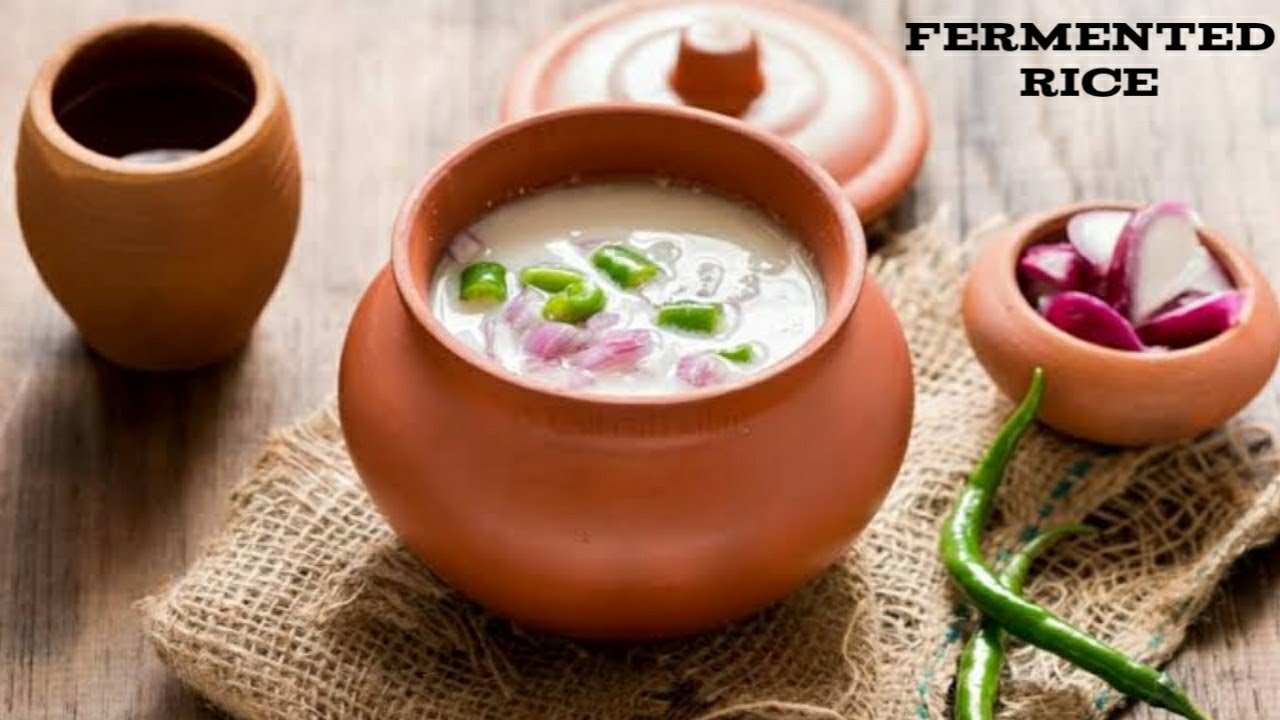
RICE: Traditionally, rice is cooked in the afternoon and the excess water is drained. After the rice cools down to room temperature, it is soaked fully in water and stored in an earthen clay pot. This covered rice pot with soaked rice is left overnight at regular room temperature. The rice would ferment by the next morning and consumed as breakfast. Traditionally, it is eaten with a side dish, raw onion or green chili. Some people prefer to drain the excess water and eat it with curd and a slight sprinkle of salt.
The lactic acid bacteria break down the anti-nutritional factors in the rice, resulting in an improved bio-availability of micro nutrients and minerals such as iron, potassium and calcium. For instance, after 12 hours of fermentation of 100 grams of rice, the presence of iron content changes from 3.4 mg to 73.91 mg.
In the agrarian communities of South East Asia, fermented rice played a vital role in the lives of people. It gives enormous energy, nutrients and cooling effect that is required for a full day of manual labor. Unfortunately, people moving up the food chain looked down on fermented rice as the pauper’s food and ignored the great nutritional value it provides.
Food scientists who researched on the food practices among various regions in the world and concluded that the South Asia’s tradition of consuming the previous day’s cooked rice soaked in plain water overnight, in the morning next day, as breakfast is the best. It has the rare B6, B12 vitamins which are not otherwise easily available in other food supplements. This rice generates and harbors millions of beneficial good bacteria that helps in digestion and has many disease fighting and immunity developing agents. The bacteria that grow in the intestine due to this rice safeguard the internal organs and keeps our body healthy. Consuming this rice helps quicker digestion and wards off ageing, bone related ailments and muscular pains. Brown rice is the best for this as its nutrients are retained intact.
AMERICAN NUTRITION ASSOCIATION has listed the following benefits, if you stick to the regular practice of consuming of fermented rice
Consuming fermented rice as breakfast keeps the body light and energetic.
Stomach aliments disappear when it’s consumed in the morning as excessive and harmful heat retained in the body is neutralized.
As this food is very fibrous, it heals constipation and also dullness in the body.
Blood pressure is normalized and hypertension subsides appreciably.
Body feels less tired due to this food as a result of which one feels fresh throughout the day.
This removes all types of ulcers in the body.
It removes allergy induced problems and also skin related ailments.
Fresh infections are kept at bay due to consuming this rice.
It helps in maintaining youthful and radiant look.
Consuming this takes away your body’s craving for tea or coffee. This is the richest source of vitamin B12 for vegans. So,please don’t throw away the extra rice in home. It could be the healthiest breakfast you will ever have. So, eat healthy and stay fit.
Audit Bureau of Circulation(ABC) is a self financing, private and independent body charged with the responsibility of conducting regular audit of the \”net circulation of newspapers and issues certificates of Net Paid Circulation every six months\”. It has a very high reputation of reliability and impartiality and is therefore coated with authority. The basic purpose of the organisation is to establish ground rules for counting circulation, make sure that the rules were enforced and also aims to provide varied reports of circulation data.
There are many objectives of ABC which includes the following-
To dessiminate circulation data for the benefits of advertisers, ad agencies and newspaper publications.
To verify the figures shown in these statements by the auditor\’s examination of necessary records.
To issue standardise statement of the circulation of members.
ABC reports help the advertisers as well as the newspapers. From the verified facts, the advertisers can draw their conclusion and prepare advertisement plans. Newspapers are also benefitted by the ABC report-
Firstly they gain both respect and confidence of the advertisers,
secondly on the basis of the report, they can peep into their own activities and programmes and make a modest review on the progress of the newspapers and makes the report which is an evidence of the newspapers worth.
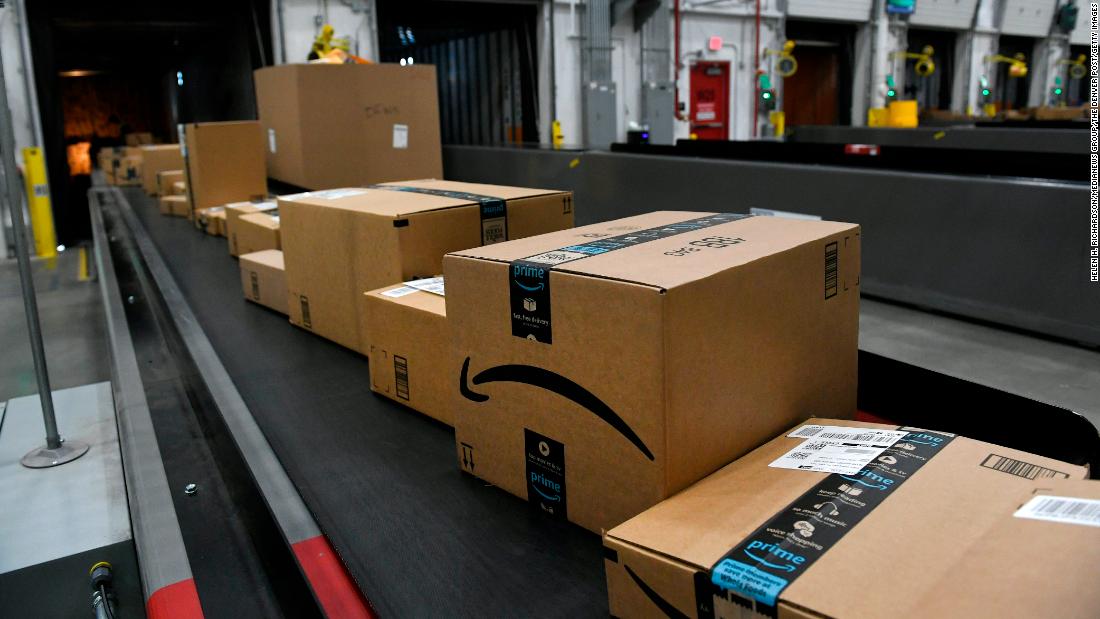
Cardboard boxes that have been used for generations and thrived in the age of e-commerce continue to flourish or could the cardboard box be facing a new challenger? Cardboard boxes are a very big deal within the U.S. The United States is the Saudi Arabia of trees. Someone’s going to make the first box and that’s almost inevitably a mill generally in the Southeast United States. China certainly doesn’t have trees and India the extent they do have trees they’re not necessarily the right types of trees and shouldn’t be dedicated towards making boxes for us. The box business grew rapidly up through 1999 when the U.S. coordinated box market had its peak shipment. Starting in the early 2000s the U.S. corrugated box market faced multiple economic obstacles.
The great recession dragged on box demand and even after the recession demand continued to slow for commodity like soda and for the boxes that transport them. The move to digital devices also coincided with a drop in demand for copy paper and newsprint. But box makers found a grace in e-commerce sales and Amazon sale specifically which were growing at mostly integer rates within the recession and post-recession years. Those e-commerce sales have become a significant market for the containerboard industry. In 2018 told a U.S. e-commerce sales were estimated to be $512 billion almost 50 percent higher than in 2015. Amazon captured 48 percent of those sales. Most estimates are that e-commerce accounts for about 10 percent of the U.S. box market. Amazon accounts for close to 5 percent of U.S. box demand. By our estimates they are clearly the single largest box user in the US. International Paper with a third of the market I think does closer to 50 percent of all the amazon boxes evidently they got a bit more share than perhaps some of the smaller players.
Amazon said they deal with most of the big box makers across the U.S. according to analysts. Those manufacturers include International Paper, WestRock, Packaging Corporation of America and Georgia-Pacific. Some investors were turning to these companies as a way to invest in the e-commerce giant without having to purchase Amazon’s pricey stock. People didn’t really start talking about buying International Paper or WestRock as a secondary investment in Amazon till about the last five years. Despite the boost from e-commerce sales the box business still isn’t growing all that much. And since 2018 their stocks have mostly underperformed the S&P 500. In 2018, 69 percent of International Papers total revenue came from the box business and that sales volume has been mostly flat for the past five years. Although the big producers sold less boxes in 2018 than in 2000, industry consolidation has dramatically narrowed the fields.
The handful of big players remaining are based in Memphis, Tennessee, Atlanta, Georgia and Lake Forest, Illinois. Analysts have told CNBC that substantial industry mergers have made it easier to collectively hike prices and those price increases have helped drive revenue. There are portions of the business that are in indisputable secular decline but if you’re in the brown part of the business, making these boxes, that’s been some very welcome growth. But those extra boxes piling up on people’s doorsteps have led to a backlash from disgruntled customers who are sick of receiving golf ball sized products in supersized boxes. It used to be that you’d order a toothbrush and it would come in three giant boxes and you’d say to yourself, what is this? Well, Amazon is trying to rectify that by using fewer boxes and using other types of packaging where appropriate. With e-commerce packaging underfire Amazon decided to change the way they do shipping. In 2008, Amazon introduced the Frustration Free Packaging program. It aims to reduce the extra packaging created when retail packaged products are placed inside Amazon boxes to be shipped. Instead, products certified in the program that are roughly the size of a blender or larger need to be packaged in their own ready to ship boxes. And those boxes also need to be made of 100 percent recyclable materials. For customers that means that the packaging is easy to recycle and the box is easy to open without all the excess packaging materials.
Amazon offered vendors an incentive of a dollar per shipment to modify their packaging. And starting August 1st 2019 Amazon is charging a $1.99 penalty for each product shipped that needs to be reboxed. And basically the point of this deadline is for Amazon to get out of the business of packaging. They want their vendors to send them boxes that Amazon doesn’t have to touch or rebox. Over the last two years we have invented two different kinds of flexible mailers. One is the blue and white all plastic mailer. We’ve recently launched in the last six, eight months a paper padded mailer that’s actually fully recyclable with the paper stream. Amazon said they made about 10 million shipments using the paper padded mailer and depending on the month the plastic mailer is used about 20 to 30 percent of the time. So really when we come down to deciding if the product is of the size it can go on a mailer, it’s not likely to be damaged by going in the mailer, the mailer is always the better fitting option and frankly is easier for the customer to choose to recycle than breaking down a corrugate box. We’re driving in that direction for many different reasons. But those plastic mailers generally are not accepted in municipal recycling programs and you’ll need to bring them to a store that accepts plastic bags. The latest stats from the EPA show that corrugated boxes were recycled at a rate of 92 percent in 2015 while plastic bags, sacks and wraps were recycled at a rate of 13 percent in 2015.
When you think about what is the greatest pain point for the consumer after having it get there safely arrive on time people are concerned about receiving something that is plastic or made a poly because of the environmental concerns. Some waste management companies say plastic packaging also causes problems for the recycling systems. Plastic mailers get caught in the recycling machinery slowing down the process and raising the costs for recyclers and sometimes contaminating entire bundles. Until Scotty on the Enterprise can beam the products from the warehouse to your living room I think Amazon’s going to be good for the corrugated business. I think there’s going to be noise I think you’re going to have challenges from time to time where people say, “Should we try and the plastic pouch?”, in the long run plastic is going to be on the wrong side of history. Because Amazon is a market leader in the U.S. e-commerce sector any move away from cardboard to plastic mailers could signal a shift for the entire industry. The corrugated box could be about to undergo a major facelift. We’re seeing some major trends among consumers and what they’re expecting from e-commerce and the first one is actually this desire for increased engagement with the package. In 2015, Amazon partnered with Universal Pictures and Illumination Entertainment to ship orders in bright yellow delivery boxes featuring cartoon characters from the movie Minions. The boxes promoting the movie and a special Amazon U.R.L. dedicated to shopping for merchandise from the film.
How empowering was it to watch Indians hold the “BLACK LIVES MATTER” placard in one hand supporting the protests in the United States and with the other hand applying a cream of poisonous chemicals to their naturally gifted skin. In this black and white world why do we hate brown? From the soil that gives birth to plants to the earthen pots which store our precious waters to the wood that burns into the flames of tomorrow’s ashes -brown is everywhere.
“Beta dhoop me mat khelo, tan ho jaaoge!”, yells the Indian parent while some family in the Europe takes their sons and daughters to play on the beach and get some tan. A land that prays Lord Krishna who is described to be as dark as the thunderous rain clouds and yet portrays him blue because anything is better than black anything is better than brown anything is better than dark.
Etymologically speaking, the Sanskrit word ‘Krishna’ means black or dark. At times, it is also translated as “all attractive”. According to Vedas, Lord Krishna is a dark-skinned God. Even in traditional patta chitras (cloth art) in Odisha, Lord Krishna and Vishnu are always shown having black skin.
50,000 years ago when our ancestors migrated from the North to the African and Asian continents, they were exposed to the UV rays of the Sun which is saturated at the equator and the tropic of Capricorn. Those days’ sunscreens were not invented hence due to evolution and the wonderful science of human body’s biology it produced melanin under the skin which acted as a natural sun screen. Skin creating its own protective layers, how cool is that?
But we as Indians would rather prefer skin burns and skin cancers than having a healthy skin. When my mother read the matrimony classified newspapers for my elder sibling’s marriage, her face falls down as she looks at those advertisements. No no-hold your horses, it’s not what you are thinking, everybody is progressive nowadays, nobody is asking for dowry. All they ask is – “seeking a fair bride for my son”, “fair and handsome boy with a fit body”, “girl should be white toned and open minded”, “boy should not be dark and not restrict our daughter from wearing her choice of clothing.” (no dowry).
To parents who are afraid because – log kya kahenge?Maa lets not look for brides or grooms who are fair, let’s look for individuals who treat people fairly. Let’s not buy besan (gram flour) for face masks rather let’s lather some potatoes in them and fry it in oil as we watch the fair besan turn into a beautiful crispy brown tasty pakodas (fritters). Fairness creams or home remedies for instant glow neither teach us to be a human with a clean heart, a heart free from the ignorance. Instead of handing a tube of glow and lovely to your loved one’s let’s make them stand in front of the mirror holding their head high because any shade is beautiful any shape is beautiful any scar is beautiful. Before teaching to love others let’s start by loving ourselves. It’s time we realise love comes in all shapes and shades, it’s time we loved all shapes and shades.
Forget snow white, I’m chocolate brown, I will write my own fairy-tale. A tale of every brown Indian girl and boy who is torn apart by the expectations of society and yet stands proud with a personality and smile beautiful than any white skinned magazine covers. To every Bollywood song that calls the actress “Gori” I would like to say – “Gore Rang Pe Na itna Gumaan kar. Gora Rang Do Din mein Dhal Jaayega” – don’t show such pride of your fair skin, the fairness will fade in time. What will remain is the virtues, beliefs, kindness and opinions .
Changing the name from fair to glow will not enlighten the young minds but it will give light to the years of colourism and discrimination to continue its course in every generation to come. Brown is beautiful and so is every colour ever discovered.









You must be logged in to post a comment.