

Author: Admin
Track2Training for students. Learn more on https://track2training.com
Story of the Manufacturer Agilis Jet Tenders
Qualitative jet tender should not only perform its main function – transfer guests and owners from shore to yachts, but also be customized in accordance with all requirements and taste preferences of the owner. We introduce to you Agilis Jettenders GmbH – a manufacturer well knowledgeable in personalization of jet boats.

“A jet tender should meet all your needs”, Maxym Starchenko is convinced. He is the owner and founder of Agilis, thus he knows exactly what he is talking about.
Agilis Jettenders GmbH is headquartered in Jülich, Germany and the company supplies luxury jet tenders all over the world now, but everything started as a family business. Mr. Starchenko was passionate about boats since his childhood; hence he created a business out of his passion and with the family support, he developed his company into a world leader among jet tender manufacturers.
“We try to meet diverse needs of our customers and comply with world-class quality standards, using only materials from leading global suppliers and cutting-edge technologies” – Maxym Starchenko.
In 2017 first model Agilis 355C was presented at the boat and watersports fair Boot Düsseldorf. The jet tender quickly found its admirers and buyers thanks to innovative technologies, luxury and high-quality materials, little accessories for greater convenience and a piece of soul invested in it. Afterwards these characteristics became an integral part of all subsequent Agilis jet tenders. There are eight models in the range now. Each model from compact and agile Agilis 280 to the most luxurious and spectacular Agilis 560D can be customized in Configurator. It`s a special Agilis application which helps to choose the different colors and materials of teak, deck, hull and other parts of boat, pick the diverse type of lights and add useful devices and accessories.
“Custom, luxury, jet. These three words fully describe Agilis tenders and our product strategy” – Maxym Starchenko emphasizes.

The safety of the customers and environment is in the first place for Agilis, that`s why it cooperates only with time-tested suppliers of spare parts and chooses only the best components for jet tenders. Agilis is responsible for product quality, thus if you choose Agilis jet tender you can be sure in everything from trouble proof engine operation to long service life of the tube’s material.
In summary, only in a few years from family business Agilis Jettenders becomes the world known jet tender`s manufacturer which is inextricably associated with customization, luxury and quality yacht tenders.
Different Types of Referencing Styles

In the academic and scholarly world, proper referencing is essential for acknowledging the sources of information and ideas used in research. Referencing styles serve as standardized systems that guide writers in citing their sources accurately and consistently. These referencing styles play a crucial role in ensuring academic integrity, allowing readers to trace the origins of the information and verify the credibility of the work. In this essay, we will explore some of the most commonly used referencing styles, their unique characteristics, and their applications in various academic disciplines.
Modern Language Association (MLA) Style:
The Modern Language Association (MLA) style is predominantly used in the fields of humanities, arts, and literature. It emphasizes clear and concise citations in parenthetical (in-text) format and a comprehensive Works Cited page at the end of the paper. The MLA style requires the author’s name and page number for in-text citations, making it easy to locate the exact reference in the source list.
American Psychological Association (APA) Style:
The American Psychological Association (APA) style is widely used in the social sciences, including psychology, sociology, education, and economics. APA formatting provides in-text citations with the author’s name and publication year, making it easier to identify the source. The APA style also requires a detailed reference list at the end of the document, listing all the sources cited in the paper.
Chicago Manual of Style (CMS):
The Chicago Manual of Style (CMS) is favored in history, humanities, and some social science disciplines. CMS offers two main citation systems: the notes-bibliography system and the author-date system. The notes-bibliography system uses footnotes or endnotes for in-text citations and a corresponding bibliography, while the author-date system utilizes parenthetical in-text citations and a reference list similar to APA style.
Harvard Referencing Style:
The Harvard referencing style is commonly used in various academic fields and is popular in the sciences and social sciences. In-text citations in Harvard style include the author’s name and the publication year. A separate reference list at the end of the document provides complete details about each source cited.
Vancouver Style:
The Vancouver style is primarily used in medicine and biomedical sciences. It employs a numeric system for in-text citations, with each source assigned a unique number. The corresponding reference list includes sources in the order they appear in the text, along with their assigned numbers.
IEEE (Institute of Electrical and Electronics Engineers) Style:
The IEEE style is specifically designed for the fields of engineering, computer science, and other technical disciplines. In-text citations include numeric references within square brackets, corresponding to a numbered reference list at the end of the document.
Harvard Business Review (HBR) Style:
The Harvard Business Review style is utilized in business-related academic writing. It follows the author-date format for in-text citations and includes a reference list at the end of the paper.
Conclusion:
In academic writing, adhering to appropriate referencing styles is critical for maintaining credibility, avoiding plagiarism, and facilitating further research. Different disciplines often prefer specific referencing styles, as each style has its own unique requirements and conventions. Understanding and correctly implementing the chosen referencing style are crucial skills for scholars, researchers, and students alike, contributing to the overall quality and integrity of academic work.
How to Use APA 7th Edition Referencing Style
The Structure of Longing and Social Resistance: A Critical Examination of Vijay Tendulkar’s A Friend’s Story (Mitrachi Goshta)
Citation
Rathod, S. M., & Ashturkar, U. (2026). The Structure of Longing and Social Resistance: A Critical Examination of Vijay Tendulkar’s A Friend’s Story (Mitrachi Goshta). International Journal of Research, 10(7), 421–424. https://doi.org/10.26643/rb.v118i11.11253
Sanjay Mangilal Rathod1
Research Scholar
Dept. of English, Research Centre, KTHM College, Nashik
Prof. Dr. Uddhav Ashturkar2
Head, Dept. of English
MVP Samaj’s KSKW College, Cidco, Nashik
Abstract
Vijay Tendulkar stands as a foundational force in modern Indian drama, renowned for dismantling bourgeois morality and exposing the raw, institutionalised violence inherent in societal structures. While plays like Ghashiram Kotwal and Silence! The Court is in Session critiques political corruption and systemic misogyny; his 1981 masterpiece, A Friend’s Story (Mitrachi Goshta), ventures into uncharted thematic territory: the psychological and social alienation of queer identity. Set in pre-independence India, the play chronicles the tragic trajectory of Mitra, a protagonist navigating her lesbian identity within a fiercely patriarchal and heteronormative framework. This article explores how Tendulkar constructs A Friend’s Story as a profound critique of societal intolerance, analysing its dramatic techniques, its subversion of gender performativity, and its enduring relevance in contemporary queer subnational discourses.
Keywords: Longing, Resistance, archetype, Gender Performativity.
Introduction
Historically, post-independence Indian drama largely relegated non-heteronormative sexualities to the margins, treating them either with comedic dismissal or clinical erasure. Vijay Tendulkar shattered this status quo by writing Mitrachi Goshta (translated into English as A Friend’s Story), arguably one of the first explicit treatments of lesbian desire in modern Indian theatre.
Tendulkar does not present queer identity through a sanitised or idealised lens. Instead, he treats it with raw realism, mapping the intersections of personal desire against rigid societal expectations. By setting the play in the 1940s—a period dominated by nationalistic fervour and traditional collective identities—Tendulkar highlights a poignant paradox: a nation striving for collective political freedom while remaining completely hostile to individual emotional and sexual liberation.
Character Relation and Narrative Framework
The narrative architecture of the play relies heavily on a complex triad of characters, each representing a distinct axis of human agency and social conditioning:
| Character | Role / Archetype | Function in the Narrative Structure |
| Mitra | The Protagonist: tragic queer figure. | Challenges heteronormative conventions; embodies raw, uncompromising individual desire. |
| Bapu | The Narrator: the empathetic observer. | Represents the progressive yet ultimately constrained middle-class conscience. Acts as the bridge for the audience. |
| Nama | The Object of Desire: conventionally feminine. | Represents fluid vulnerability trapped between societal safety (heterosexuality) and genuine impulse (homosexuality). |
Tendulkar’s decision to route Mitra’s story through Bapu’s narration is a brilliant structural technique. Bapu represents the conventional, well-meaning societal observer. Through his eyes, the audience journeys through confusion, initial resistance, gradual empathy, and ultimate grief. This narrative positioning forces a largely heteronormative audience to confront their own biases alongside Bapu.
The Disruption of Gender Performativity
In A Friend’s Story, Tendulkar anticipates modern theories of gender performativity. Mitra actively rejects the performative markers of 1940s Indian womanhood. She walks with a masculine stride, dresses with defiant neutrality, and speaks with an unvarnished candour that unsettles both her peers and her academic institutions.
However, Tendulkar avoids making Mitra a flat, rebellious archetype. Her tragedy stems from a deep internal conflict. She is acutely aware of her differences but lacks the modern vocabulary of “queer liberation” to legitimise her feelings. Her desire for Nama is possessive, intense, and volatile—a direct reflection of the pressure cooking inside an identity forced to exist entirely in the shadows. Nama, conversely, succumbs to the safety of heteronormative marriage, demonstrating how societal institutions absorb and neutralise deviations to preserve status quo stability.
Systematic Abuse and Spatial Isolation
Throughout the play, violence is rarely physical; instead, it manifests through psychological policing and spatial banishment. Tendulkar illustrates this institutional alienation across multiple settings:
- The College Campus: Nominally a space for progressive thought, it quickly transforms into an arena of surveillance, gossip, and moral panic when Mitra’s tendencies are discovered.
- The Domestic Space: Home offers Mitra no sanctuary. It serves as the primary site of containment, where her family attempts to cure or conceal her “malady.”
- The Subleased Room: The private spaces where Mitra and Nama meet are inherently temporary and fragile, constantly threatened by the intrusion of landlords, moral gatekeepers, and societal judgment.
Ultimately, Mitra’s inability to find a legitimate space within the socio-spatial matrix of her world leads to her psychological unravelling and eventual suicide. Her death is not an act of weakness, but a stark indictment of a society that offers no breathing room for authentic selfhood.
Contemporary Relevance and Critical Response
When Mitrachi Goshta first showed in 1981, it faced strong opposition, censorship, and negative reviews from conservative audiences who saw it as a foreign Western idea. Tendulkar, however, believed that human nature and desire are the same everywhere and refused to let local taboos control his art.
Today, especially after important events like the decriminalisation of Section 377 in India, A Friend’s Story has seen a strong comeback in both academic and theatre circles. Modern directors and scholars see the text not just as an old piece but as a key starting point for Indian queer theatre. It offers important historical background, showing that the fight for queer rights in India comes from local stories and is not just a recent or Western idea.
Conclusion
Vijay Tendulkar’s A Friend’s Story remains a major success in Indian theatre. By shifting his focus from large political systems to the small, personal struggles of the human heart, Tendulkar created a lasting masterpiece about the high price of staying true to oneself. Mitra stands with famous figures like Antigone or Joan of Arc—a tragic character destroyed by her refusal to give in to a world too limited to understand her greatness.
References
- Babula, M. (2010). The Plays of Vijay Tendulkar: A Critical Study. Prestige Books.
- Dharwadker, A. B. (2005). Theatres of Independence: Drama, Theory, and Urban Performance in India since 1947. University of Iowa Press.
- Tendulkar, V. (2001). A Friend’s Story (G. Gowri, Trans.). Oxford University Press.
- Tendulkar, V. (2004). Collected Plays in Translation. Oxford University Press.


What is Plagiarism and How to Avoid it
Plagiarism is the act of using someone else’s work, ideas, or intellectual property without giving proper credit or permission, presenting it as your own original creation. This includes copying text, images, music, videos, code, or any other form of content, whether from published sources, online material, or another person’s work. Plagiarism is considered unethical and is a violation of academic, professional, and creative integrity.
To avoid plagiarism, follow these guidelines:
Understand what needs citation: Any time you use someone else’s ideas, words, or creations, you must provide proper attribution. This includes direct quotes, paraphrased information, and even ideas that are not common knowledge.
Cite your sources: When using external information, cite the original source using the appropriate citation style (e.g., APA, MLA, Chicago). Include in-text citations for direct quotes and attributions for paraphrased content.
Use quotation marks: When directly quoting someone else’s work, enclose the text in quotation marks or use block quotes for longer passages to distinguish it from your writing.
Paraphrase properly: If you need to explain someone else’s ideas in your own words, ensure that you do so without copying the original structure or wording. Paraphrase in a way that reflects your understanding of the material.
Attribute ideas: When presenting concepts or ideas that are not common knowledge, attribute them to their original source. Even if you reword the information, credit the initial author or researcher.
Be cautious with online sources: With the vast amount of information available on the internet, it’s essential to verify the credibility of sources and properly attribute any information you use.
Use plagiarism detection tools: Utilize plagiarism detection software or online tools to check your work before submission. These tools can help identify unintentional instances of plagiarism and give you an opportunity to correct them.
Create your own content: Whenever possible, rely on your knowledge, analysis, and original ideas. Providing unique insights will showcase your understanding and creativity.
Seek permission for copyrighted material: If you want to use copyrighted material beyond what is allowed under fair use, seek permission from the original creator or copyright holder.
Manage your time effectively: Procrastination can lead to hasty writing and an increased risk of unintentional plagiarism. Plan ahead to have enough time to research, write, and properly attribute sources.
By following these practices and respecting the intellectual property of others, you can maintain academic and professional integrity and avoid issues related to plagiarism. Always remember that giving credit to the original creators not only helps you avoid plagiarism but also acknowledges their contributions and fosters a respectful and collaborative academic or creative community.
Paving the Path to Success: Securing an Internship at Track2Training
In today’s competitive world, internships have become invaluable stepping stones for students and aspiring professionals to gain real-world experience and enhance their skillsets. Track2Training, a renowned and esteemed organization, offers exciting opportunities for internships in various fields. This essay will outline the essential steps and strategies to successfully secure an internship at Track2Training.

Step 1: Understand Track2Training’s Mission and Values
Before embarking on your journey to secure an internship at Track2Training, take the time to understand the organization’s mission, values, and areas of expertise. Familiarize yourself with their website, blog posts, and social media channels to grasp their work culture, achievements, and ongoing projects. This knowledge will not only demonstrate your genuine interest but also help you align your goals with the company’s vision.
Step 2: Tailor Your Application Materials
Crafting a tailored and compelling application is crucial to stand out among other applicants. Carefully review the internship requirements and qualifications, and highlight your relevant skills, experiences, and achievements. Customize your resume, cover letter, and any additional documents to showcase your passion for the field and demonstrate how your unique attributes align with Track2Training’s values.
Step 3: Network and Connect
Networking plays a pivotal role in the internship application process. Leverage your existing connections, join relevant online communities, and attend career fairs or events where you might meet Track2Training representatives or employees. Engage in meaningful conversations, express your interest in the organization, and seek advice from individuals who have previously interned at Track2Training or worked in a similar capacity.
Step 4: Demonstrate Your Skills and Expertise
In addition to your application materials, consider showcasing your skills and expertise through a portfolio or personal website. Depending on the field you are interested in, you can share relevant projects, articles, or creative works that reflect your capabilities. A well-curated portfolio can leave a lasting impression on recruiters and demonstrate your dedication to your craft.
Step 5: Prepare for the Interview
If your application stands out, you may be invited for an interview. Thoroughly research Track2Training’s current projects, recent achievements, and the internship role you applied for. Prepare thoughtful questions to ask during the interview, showcasing your genuine interest and enthusiasm. Practice common interview questions and rehearse your responses to present yourself confidently and professionally.
Step 6: Showcase Your Passion and Enthusiasm
During the interview, emphasize your passion for the field and your eagerness to contribute to Track2Training’s mission. Demonstrate your ability to adapt, learn, and collaborate with others in a team-oriented environment. Highlight any previous experiences that align with the internship’s responsibilities, and share your long-term career goals to showcase your commitment to personal and professional growth.
Conclusion:
Securing an internship at Track2Training is an exciting opportunity to grow, learn, and contribute to a reputable organization in your field of interest. By understanding Track2Training’s mission, tailoring your application materials, networking, showcasing your skills, and preparing diligently for the interview, you can increase your chances of standing out among other applicants and secure the coveted internship position. Remember that persistence, dedication, and an authentic passion for your chosen field will undoubtedly be noticed and appreciated by the selection committee. So, take the leap, and let your journey to success with Track2Training begin!
Send your resume to contact@track2training.com
Visit us at http://track2training.com
Integrated Terminal Building of Veer Savarkar International Airport, Port Blair
- The New Integrated Terminal Building has been constructed in an area of 40837 Sqm at a cost of Rs 710 Crores
- It has a capacity to serve 1200 passengers during peak hours.
- Shri Jyotiraditya M. Scindia unveiled a statue of freedom fighter Veer Savarkar inside the airport premises.
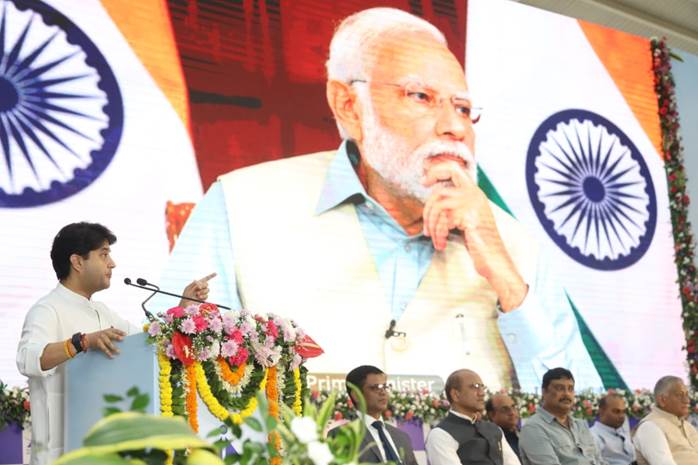
Prime Minister Shri Narendra Modi inaugurated the new integrated terminal building of Veer Savarkar International Airport today, in the presence of Union Minister of Civil Aviation and Steel, Shri Jyotiraditya M. Scindia, Gen. Vijay Kumar Singh (Rtd.), MoS, Ministry of Civil Aviation, Admiral D. K. Joshi (Rtd.), Lt. Governor, Andaman & Nicobar Islands, and Shri Rajiv Bansal, Secretary, Ministry of Civil Aviation.
The new terminal building of the airport is built at a cost of Rs. 710 Crore, on a 40,837 square meters area, and is capable of serving 1200 passengers during peak hours, which is more than three times the current capacity. Inspired by the rich biodiversity of the picturesque islands, the Port Blair Terminal building is an oyster-shaped structure that reflects the beauty of the sea and the island. The terminal building has been designed in such a way that the terminal is fully lit naturally during the daytime. A Statue of freedom fighter, Veer Savarkar is also erected at the Airport.
The event was organized in hybrid mode. Prime Minister inaugurated the terminal building by pressing a remote button through video conferencing and other dignitaries were present at the airport. As a tribute to the great freedom fighter, Minister of Civil Aviation and Steel, Shri Jyotiraditya M. Scindia along with MoS Gen. Vijay Kumar (Rtd.) and other dignitaries unveiled statue of Vinayak Damodar Savarkar (Veer Savarkar) inside the premises of the airport.
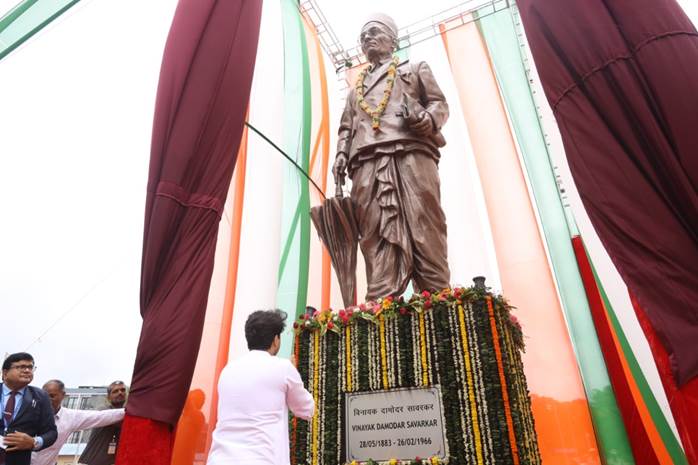
Speaking on the occasion, Minister of Civil Aviation and Steel, Shri Jyotiraditya M. Scindia said “Andaman & Nicobar is among the most beautiful gems of our country. It has witnessed major significant events in the history of Indian Independence. Veer Savarkar International Airport represents the incredible biodiversity of flora and fauna. Designed in the shape of an oyster, this airport doesn’t need an external source of light during the daytime. In terms of sustainability, this airport has double insulating system, LED lighting, Rainwater catchment, and Solar water plant.”
He further said “Apart from this airport, 3 additional airports in Shibpur, Car Nicobar, and Campbell, as well as 4 water aerodromes in Shaheed Dweep, Swaraj Dweep, and Port Blair, will be established by the Govt. of India with the investment of Rs. 150 crores. Under the leadership of Prime Minister Shri Narendra Modi, we are dedicated to the sewa, sushashan and garib kalyan. In the coming time, this airport will be the gateway to employment, education, and investment.”
Veer Savarkar International Airport, also known as Port Blair Airport, is located about 2 km south of Port Blair, Andaman Nicobar Islands. Named after Vinayak Damodar Savarkar, the noted freedom fighter, it is the only commercial airport of Andaman & Nicobar Islands. Port Blair is the capital of the serene Andaman & Nicobar Islands. Located on the east coast of South Andaman Island, Port Blair is the gateway to more than 500 pristine islands. It is also a bustling commercial hub and houses government establishments of Andaman & Nicobar Islands. Port Blair offers water-based activities like snorkeling, scuba diving, sea cruises, and glimpses of the history and culture of the region.
***
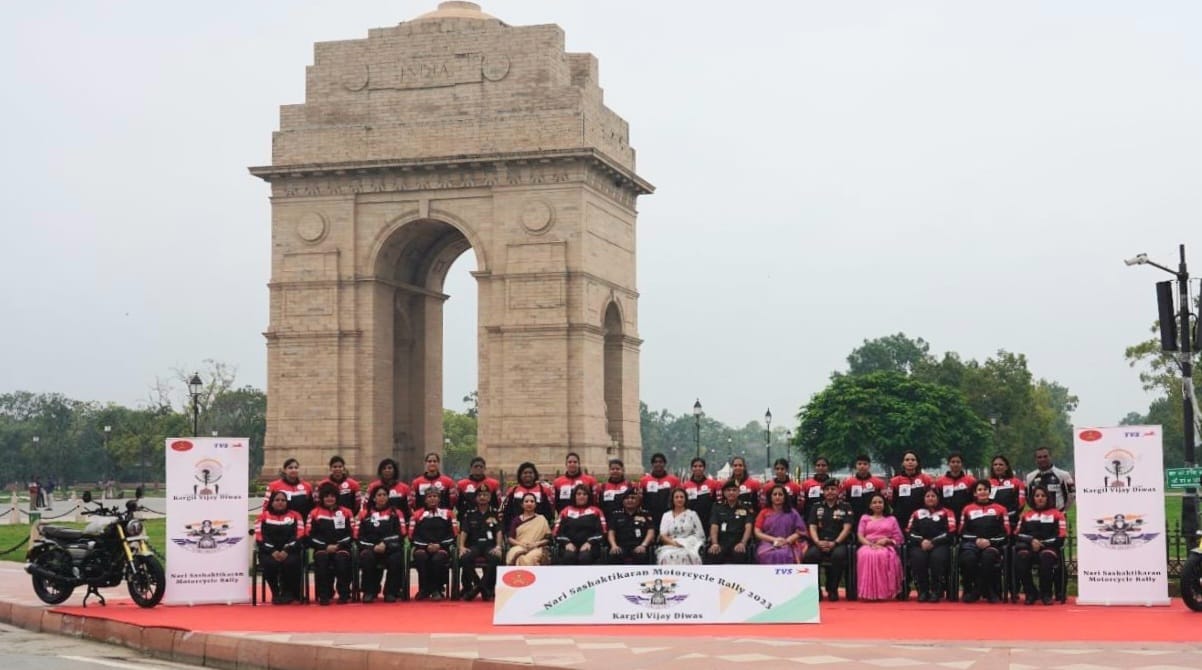
ALL WOMEN TRI-SERVICES MOTORCYCLE RALLY FROM NEW DELHI TO DRAS
To commemorate 24 years of victory over Pakistan in the Kargil War of 1999 and to highlight the indomitable spirit of women, Indian Army launched a Tri-Services ‘Nari Sashaktikaran Women Motorcycle Rally’ from National War Memorial, Delhi to Kargil War Memorial, Dras (Ladakh). The all-women Motorcycle Rally was Flagged Off by the Chief of the Army Staff, General Manoj Pande from the National War Memorial, New Delhi on 18 Jul 23. Mrs Archana Pande, Chairperson of the Army Wives Welfare Association was also present at the occasion. For the Flag Off at the National War Memorial, a host of military and civilian dignitaries including Head Business – Premium of TVS Motor Company and other sponsors were present. The Rally members were motivated and cheered by a large crowd which had gathered at the venue.
The 25-member strong tri-services team includes two Veer Naris, one of whom is a serving officer, 10 serving Indian Army Women officers, one woman officer each from Indian Air Force and Indian Navy, three women soldiers of Indian Army and eight Armed Forces spouses. The team will celebrate the decisive victory of the Armed Forces in the Kargil War and pay tribute to the soldiers who made the supreme sacrifice in service of the Nation. The Rally will cover a total distance of approximately 1000 kilometres, wherein the team will traverse through the plains of Haryana, Punjab and high mountain passes of Jammu & Kashmir and Ladakh to reach Kargil War Memorial in Dras on 25 July 23. During the Rally, the team will interact with NCC Cadets, students from various schools/colleges, Veterans and Veer Naris. For this Rally, the Indian Army has partnered with TVS Motor Company and the participants will be riding on TVS Ronin motorcycles.
The Chief of Army Staff, General Manoj Pande complimented the entire team for taking up such a challenging journey which highlights qualities of determination, Nari Shakti and the vital role played by women in Nation Building.
***
Labour and Ministers' Meeting begins in Indore, Madhya Pradesh (19th to 21 July)
The fourth Employment Working Group (EWG) meeting will focus on finalizing the Ministerial Declaration and outcome documents. In this the efforts of all the three meetings will be consolidated in this meeting. The EWG delegate’s deliberations will end at the G-20 Labour and Ministers’ Meeting (LEM), where they will gather to discuss and adopt these results. This information was given by Smt. Arti Ahuja, Secretary, Ministry of Labour and Employment, in a press conference organized on the eve of the fourth Employment Working Group of G-20 and the meeting of Labour and Employment Ministers to be held in Indore today.
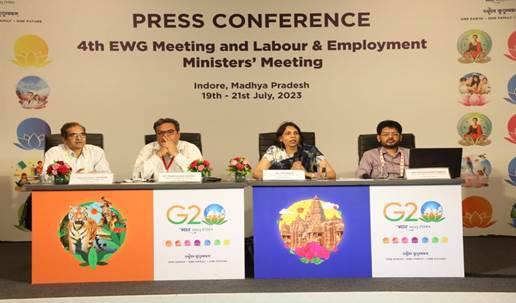
She said that this meeting will be presided over by the Union Minister for Labour & Employment, Shri Bhupender Yadav and 24 Ministers from different countries will attend. During this, representatives of G-20 members and guest countries, international and regional organizations and groups like Business-20, Labor-20, Startup-20, Think-20 and Youth-20 will participate.
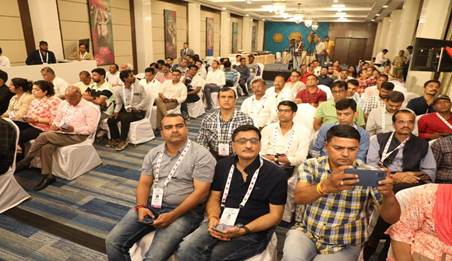
In the press conference, Smt. Ahuja told media persons that India is also keeping innovations like e-Shram portal before the working group meetings. Through this portal, complete information about the workers of unorganised sectors is available with the government, which proves helpful for taking steps towards benefitting their and their families’ interests.

Earlier, Shri Rupesh Kumar Thakur, Joint Secretary, Ministry of Labour and Employment informed through a presentation that while 86 delegates are participating in the 4th EWG meeting, 165 delegates including 24 Ministers will participate in the LEM meeting. Heads of international organizations and employers’ associations, including the ILO, OECD and the World Bank, will also attend the meeting.
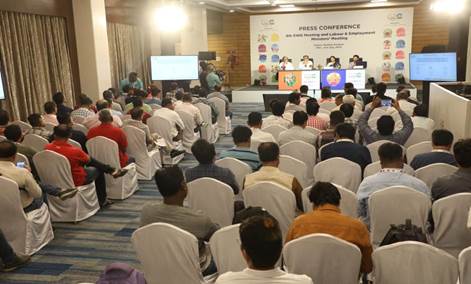
He said that it has been planned to showcase the grand natural, cultural and historical beauty of Indore and Madhya Pradesh during the event. In these, a visit to Mandu Fort and Chappan Dukan, the famous food street of Indore has been planned for the delegates. Apart from this, there will also be a heritage walk and cycle ride to see the important historical places in the city of Indore. He informed that traditional folk performing arts (music and dance) and handicrafts will also be displayed for the visiting dignitaries.
In the press conference, Dr. Pawan Kumar Sharma, Divisional Commissioner, Indore said that elaborate arrangements have been made to make the event a grand success. Apart from this, a communication plan has been also made. He outlined the measures taken by the District Administration and State Government for organizing the meeting.
****
India-USA Strategic Clean Energy Partnership Ministerial Joint Statement
Today, the Ministerial meeting of the U.S.-India Strategic Clean Energy Partnership (SCEP) was held between Indian Minister of Petroleum and Natural Gas, HE Hardeep S. Puri and U.S. Energy Secretary HE Jennifer Granholm in New Delhi. During the meeting, the sides noted the growing importance of bilateral energy cooperation between the countries while underscoring the critical importance of bilateral clean energy engagement and the achievements of the SCEP in strengthening energy security, creating opportunities for clean energy innovation, addressing climate change and creating employment generation opportunities.
In this context, the sides welcomed the growing energy trade between the countries which has been consistently scaling new heights and welcomed the commercial partnerships facilitated by the SCEP.
The sides renewed their commitment to work towards a just, orderly and sustainable energy transition, which prioritises access to reliable, affordable, and clean energy supply. Highlighting that India and the US represent the largest democracies, and the largest and fastest growing economies in the world, the sides underscored the importance of joint action and collaboration not only for bilateral progress but also for navigating the global energy transition.
The sides reviewed the ambitious and dynamic SCEP mandate, which over the years has deepened and strengthened collaboration across a wide breadth of clean energy work streams, including clean and renewable energy, energy efficiency, increased collaboration in emerging technologies like battery storage and swapping technologies, gas hydrates, advanced biofuels, and hydrogen and electrolyzer production. In this context, the sides recognised the importance of producing green/clean hydrogen as a critical energy source for global decarbonisation and agreed to support each other’s national hydrogen missions.
The sides also welcomed the work done by the five pillars of the SCEP towards deepening the cooperation between the Public and Private sectors to support decarbonization in both countries, including through public-private task forces, reverse trade missions, India-US Business Roundtables chaired by the Ministers, and other commercial dialogues.
The sides emphasized the importance of promoting energy access, affordability and energy justice in each country. The sides also acknowledged that successfully achieving ambitious climate and clean energy aspirations necessitates coordinated efforts on development of energy transition roadmaps, capacity building, job skilling, and sharing of best practices at all levels of government. In that context, the sides agreed to work toward development of net zero villages in India to support the clean energy transition.
The sides discussed ways of advancing the positive agenda outlined by Prime Minister Modi and President Biden in their Joint Statement of June 22, 2023which welcomed efforts under the SCEP to develop and deploy energy storage technologies, expand collaboration in support of their respective national hydrogen strategies and cost reduction goals, and accelerate cooperation on new and emerging renewable energy technologies. To that end, the Ministers welcomed:
- establishment of the public-private Energy Storage Task Force and related efforts to support large-scale integration of renewable energy needed to support the clean energy transition;
- deepened collaboration to scale and accelerate deployment of hydrogen technologies through the public-private Hydrogen Task Force and other efforts in support of their national hydrogen strategies, including a focus on common cost reduction goals;
- launch of the U.S.-India New and Emerging Renewable Energy Technologies Action Platform (RETAP) to accelerate development of key technologies to advance common ambitious clean energy goals.
The Ministers also welcomed the leaders’ priority of reducing carbon emissions in the transportation sector through zero emissions vehicles and continued collaboration on securing funding and enabling affordable and accessible debt and equity financing for the e-mobility sector. The sides recognized the importance of the “Electric Vehicle (EV) financing services facility” which will create dedicated funds for e-mobility.
The sides welcomed cooperation between India and the United States to advance research, development and commercialisation of technologies in the emerging fuels arena, including bio-ethanol, renewable diesel, sustainable aviation fuels, and other advanced biofuels as a unique and valued asset to the transition to a cleaner energy future.
The Ministers-affirmed the vision of Prime Minister Modi and President Biden for establishing the Global Biofuels Alliance. The Ministers discussed the role that the Global Biofuels Alliance will play in strengthening markets, facilitating global biofuels trade, development of concrete policy lesson-sharing and provision of technical support for national biofuels programs worldwide.
The sides also underscored the importance of a stable, sustainable, diversified, resilient, and globally responsible clean energy supply chain to enable energy transition pathways while minimizing risks and uncertainty.
The sides also welcomed ongoing collaboration in such areas as:
- modernizing the power system to improve reliability, resilience, flexibility, affordability, and sustainability of clean energy systems;
- promoting energy efficiency and conservation, including in buildings, appliances, and the industrial sector;
- reducing emissions across the oil and gas sector, including through examining methane abatement and transfer and deployment of technologies under voluntary and mutually agreeable terms; and
- advancing emerging technologies to support electrification and decarbonization of hard-to-abate sectors.
Recognizing the role of carbon capture, utilisation and storage to reduce emissions, the sides agreed to spur partnership in this area by building on existing cooperation and welcoming new collaboration including exploring the geologic carbon storage potential. The sides welcomed the addition of Carbon Capture, Utilization and Storage as a work stream under the Emerging Fuels and Technology Pillar.
The sides also welcomed engagement through the Low-Emissions Gas Task Force to reduce emissions across the sector through deployment of emerging technologies (i.e., CCUS, hydrogen), alternative fuels, and methane abatement technologies. The Ministers welcomed the commercial partnerships facilitated by this platform.
The sides duly acknowledged the collaboration of USAID with various Indian agencies including Indian Railways, NTPC Green National Skills Development Corporation, Skills Council for Green Jobs, and the Forum of Regulators.
The sides welcomed USAID support on feasibility of Green Chemicals for NTPC, recognizing the importance of such initiatives to ensure development of sustainable and clean energy systems.
The sides welcomed cooperation between USAID and Indian power PSUs – NTPC and SJVN– in the creation of clean energy financing policy to ensure development of sustainable, resilient, and clean energy systems.
The sides noted the importance of robust life cycle assessments and building modelling capacity to assess low carbon technologies costs and emissions, and best practices for modelling and analytics of energy consumption.
Both sides launched the South Asia Group for Energy (SAGE) to deepen the engagement between Indian agencies and US national laboratories to support research, analysis and capacity building activities such as building modelling capacity in Life Cycle Assessment of low carbon technologies and analytics on energy consumption in building sector.
The sides noted the excellent work done by PNGRB, India and FERC, USA under their MoU framework towards development of competitive markets, and promotion of investment in the oil and natural gas sector, protection of consumer interests, capacity building of personnel, up-dation of regulatory framework. The sides also appreciated the work done by PNGRB, India and ASME, USA to develop and establish policies and programs and procedures that will promote and sustain a market for Oil and Gas in India that aligns with ASME standards and certification programs and practices.
Finally, the sides praised the longstanding joint R&D under the Partnership to Advance Clean Energy-Research (PACE-R), including the US-India Collaborative for Smart Distribution System with Storage (UI-ASSIST) consortium co-led by Indian Institute of Technology, Kanpur and Washington State University. Welcoming the importance of such R&D Initiatives, the sides welcomed the successes of PACE-R to date and highlighted the final year of the R&D track on advanced smart grid and energy storage technologies.
Agencies from across the U.S. and Indian governments demonstrated a number of accomplishments across the five technical pillars of cooperation on: 1) Power & Energy Efficiency, 2) Renewable Energy, 3) Responsible Oil & Gas, 4) Sustainable Growth, and 5) Emerging Fuels and Technologies.
The Ministers affirmed that the SCEP represents a comprehensive vision to decarbonise while ensuring healthy rates of growth for both countries and expressed hope that the work undertaken under the SCEP will continue to pave the way for a new and promising future
Join our Whatsapp Group

***
Quantum Technologies and Artificial Intelligence for Transforming Lives
US Secretary, Department of Energy, Ms Jennifer M. Granholm called on Union Minister of State (Independent Charge) Science & Technology; MoS PMO, Personnel, Public Grievances, Pensions, Atomic Energy and Space Dr Jitendra Singh at North Block here today and discussed bilateral collaboration between the two countries.
The meeting assumes special significance as it comes close on the heels of PM Narendra Modi’s US visit. Ms Jennifer was accompanied by a high-level American delegation.
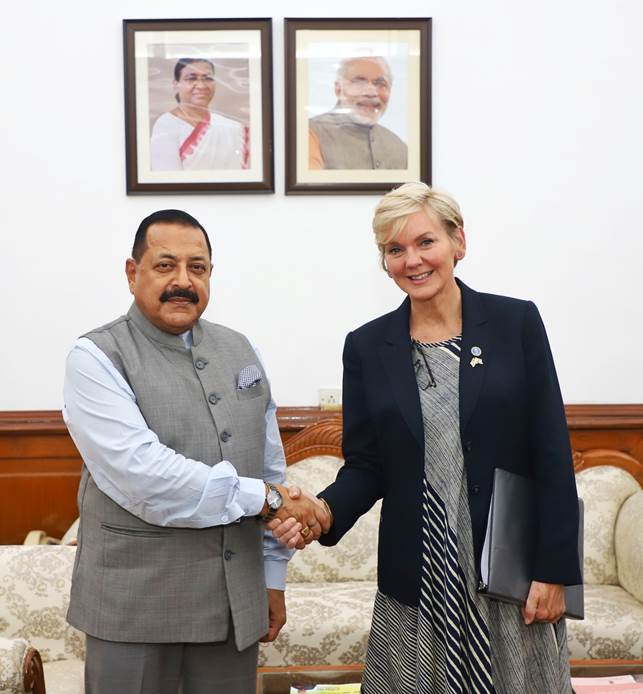
India and the United States also jointly launched a call for proposals on Critical and Emerging Technology: Quantum Technologies and Artificial Intelligence for Transforming Lives. The Indo-U.S. Science and Technology Forum (IUSSTF) and the Secretariat for USISTEF have designed the program.
Dr Jitendra Singh said, through this competitive grant program, the USISTEF selects and supports promising joint U.S.-India technology innovation and entrepreneurial initiatives that are commercially viable and socially relevant. He said, these joint initiatives can originate from U.S. and Indian entities including StartUps, government, academic, or commercial endeavours, and any combination thereof provided they focus on applied R&D, incorporate a business plan and proof of commercial concept, and have significant sustainable commercial potential.
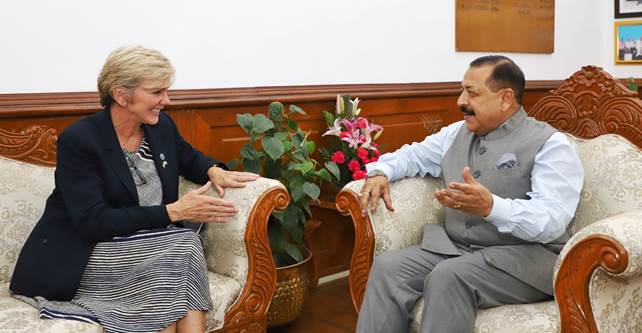
Dr Jitendra Singh said, the move comes in the wake of Prime Minister Narendra Modi’s recent visit to US, where he stressed upon a new chapter to bilateral comprehensive and global strategic partnership. The Minister said, he felt happy that both the Indian and US sides have positioned themselves quickly to take-up the decision of the leaders to the implementation level.
Dr Jitendra Singh pointed out that the engagement has charted a Technology Partnership for the future with a new direction and a new energy in the AI (America – India) relation in the AI (Artificial Intelligence) era.
Dr Jitendra Singh said, among other technology-oriented matters of high relevance, it is heartening to note that President Biden and Prime Minister Modi had welcomed the launch of a $2million grant program under the U.S.-India Science and Technology Endowment Fund (USISTEF) for the joint development and commercialization of Artificial Intelligence (AI) and quantum technologies, and encouraged public-private collaborations to develop high performance computing (HPC) facilities in India.
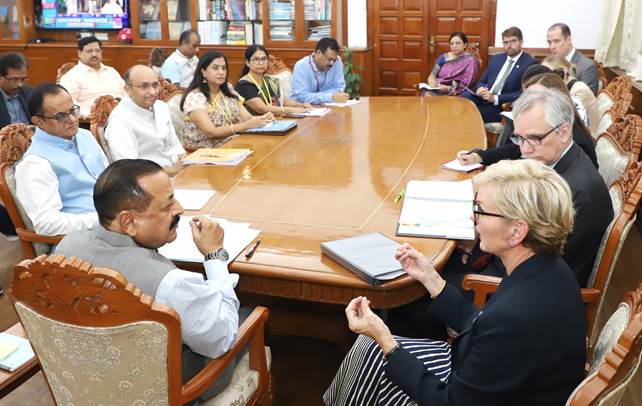
Dr Jitendra Singh informed that India has recently approved the National Quantum Mission (NQM) with an aim to seed, nurture and scale up scientific and industrial R&D and create a vibrant & innovative ecosystem in Quantum Technology (QT). Needless to say, that AI has the potential to address the world’s most pressing challenges and presents tremendous opportunities for economic development, he added.
Dr Jitendra Singh said, investments in AI and quantum technology would lead to transformative advances in our everyday lives and greatly benefit our social well-being by impacting healthcare, agriculture, climate change and more. He welcomed the transformative potential of the Endowment fund.
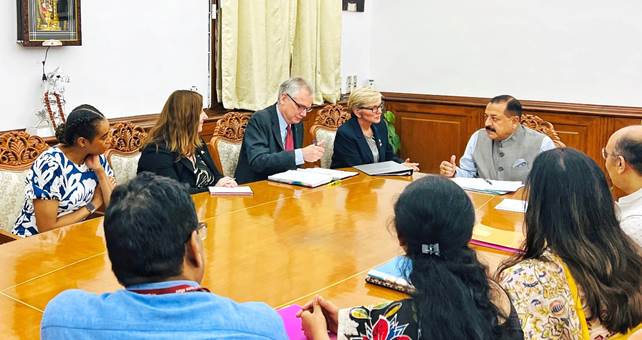
The call will remain open till August 31, 2023 and will invite promising joint Indo-U.S. technology innovation and entrepreneurial proposals that are commercially viable and socially relevant. It will provide a significant boost to the domestic as well as the US priorities looking at various facets of Sustainable Development Goals (SDG).
Global Maritime India Summit, 2023
The Union Minister of Ports, Shipping & Waterways and Ayush, Shri Sarbananda Sonowal launched the curtain raiser of Global Maritime India Summit (GIMS), 2023 in Mumbai today. The event is aimed at unlocking potential for new investment opportunities along with collaborations for knowledge and technology to enhance cooperation in trade and promote Ease of Doing Business (EODB). The event was attended by the Union Minister of State for Ports, Shipping & Waterways and Tourism, Shri Shripad Naik among others.
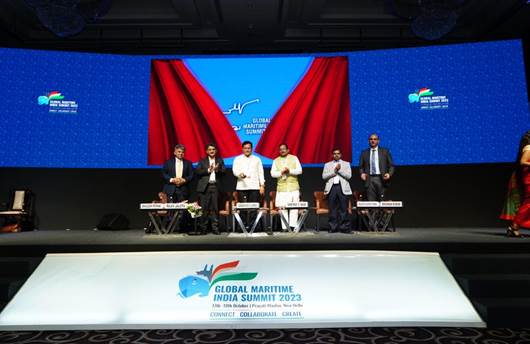
Addressing the Curtain Raiser for the upcoming Global Maritime India Summit 2023, Shri Sonowal emphasised the vital role of the maritime sector in India’s economic progression and the potential it holds for the Asia-Pacific region. “India can lead from the front,” said Sonowal. He added that India’s maritime sector is poised for growth, owing to proactive government policies around, ports, shipping and inland waterways.
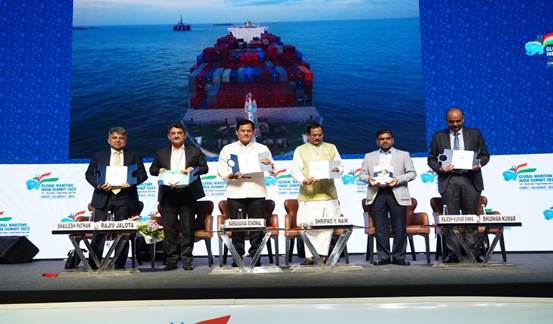
The Minister said, “The huge potential of India’s marine sector can play a significant and pivotal role in elevating the economic cycle towards an Atmanirbhar Bharat by 2047 – a vision of our dynamic Prime Minister Shri Narendra Modi ji. As key driver of India’s maritime sector, our ministry has been organising the Global Maritime India Summit, to create value from the vast potential of India’s rich maritime sector. With an identified investment opportunities of more than ₹10 lakh crores in the maritime sector of the country, we are standing at a threshold of a major economic upswing which can generate employment opportunities for more than 15 lakhs youth of India. This summit has been designed to explore and examine riches of India’s Blue Economy. We hope that the best minds of maritime sector will hedge their goodwill, intent, intelligence and skills to produce a roadmap for a sustainable development of maritime sector as well as our country.”
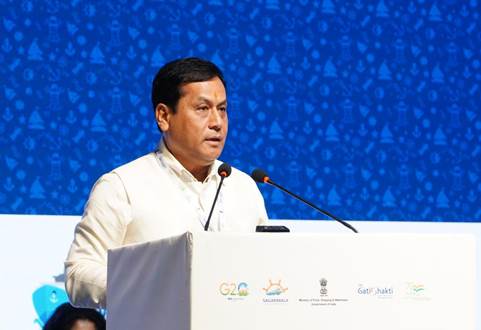
Shri Sonowal further added, “We invite all the maritime stakeholders in India and globally to be part of these investment opportunities. Under the visionary leadership of Prime Minister Shri Narendra Modi ji, India is spearheading the advancement of regional trade within BIMSTEC region, taking a prominent role in the development of various regional projects. India is actively driving the establishment of 5,000 km of multi-country waterways, a significant initiative that will effectively facilitate trade and transportation across the region.”
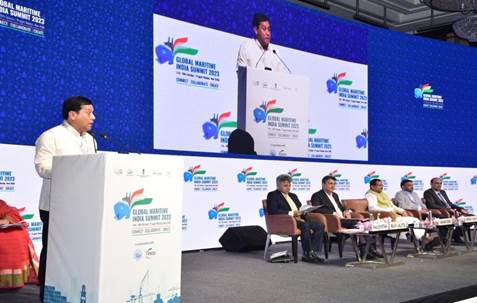
The curtain raiser event is aimed at creating a global forum of thought leaders as well as industry captains from maritime sector to harness the immense potential of Blue Economy and draw a roadmap to unlock value through creation of investment opportunities in the maritime sector of India. The forum will provide a platform for start-ups, researchers, incubators and innovators to showcase their technology & expertise. The focus areas of GMIS, 2023 are Ports of the Future; Decarbonization; Coastal Shipping & Inland Waterways Transportation; Shipbuilding, repair & recycling; Finance, Insurance & arbitration; Innovation & technology; Maritime Safety & Security and Maritime Tourism.
The Union Minister said, “India stands firmly on its commitment to developing environmentally conscious shipping solutions. Under the visionary leadership of Prime Minister Shri Narendra Modi ji, India proudly occupies the second rank in recycling worldwide, with a clear objective to ascend to the top position within the forthcoming two decades. To propel this vision, we plan to inaugurate carbon-neutral alternatives and boost the use of battery-powered vehicles and apparatus in our major ports. With a vast coastline and over 200 ports, India holds a strategic position in global trade. The country has made impressive strides under transformative initiatives like Sagarmala and the Prime Minister’s Gati Shakti National Master Plan, which have modernised port infrastructure, enhanced connectivity, and facilitated port-led industrialisation.”
Speaking on occasion, Shri Shripad Naik, said, “The Global Maritime India Summit 2023 represents a crucial milestone in our efforts to position India as a global maritime hub. Through collaborative discussions and strategic partnerships, we aim to propel our maritime sector towards sustainable growth, bolstered by innovation and cutting-edge technology.”
Shri Rajiv Jalota, Chairman, Indian Ports Association & Mumbai Port Authority; Shri Rajesh Kumar Sinha, Additional Secretary, Ministry of Ports, Shipping and Waterways; Shri Bhushan Kumar, Joint Secretary (SM), Ministry of Ports, Shipping and Waterways; Shri Rajesh Tandon, CEO, Foreign Owners Representative, Ship Managers Association; Shri Anil Devli, CEO, Indian National Shipowners Association; Shri Dhruv Kotak, Chairman, Ports & Shipping, FICCI Committee on Transport Infrastructure & MD, JM Baxi Group along with Shri Shailesh Pathak, Secretary General, FICCI also spoke on the occasion.
The curtain raiser concluded with the unveiling of the official GMIS 2023 brochure and the launch of the event’s website and mobile app to provide a comprehensive overview of the summit’s agenda and thematic sessions and will serve as essential resources for participants.
About Global Maritime India Summit (GMIS), 2023:
GMIS 2023 is a premier maritime sector focussed event to bring together pivotal figures from the industry to explore opportunities, understand challenges, and stimulate investment within India’s maritime sector. Building upon the legacy of its preceding editions, this third instalment aims to unveil broader prospects for domestic and international maritime stakeholders and investors. Ready to make its presence felt on the global stage, and spotlight India’s maritime industry, the Maritime India Summit has now evolved to the ‘Global’ Maritime India Summit this year. The summit is slated for 17th to 19th October 2023, at Pragati Maidan, New Delhi, with FICCI as the exclusive industry partner.
For more details on the Global Maritime India Summit 2023, including a complete agenda and registration details, please visit the official website at www.maritimeindiasummit.com
*****
PRESIDENT OF INDIA PRESENTS BHOOMI SAMMAN 2023
The President of India, Smt Droupadi Murmu presented the “Bhoomi Samman” 2023 at a function organised by the Union Ministry of Rural Development in New Delhi today (July 18, 2023). The awards were received by State Secretaries and District Collectors along with their teams who have excelled in achieving saturation of the core components of Digital India Land Records Modernization Programme (DILRMP).
Speaking on the occasion, the President said that acceleration of rural development is essential for the overall development of the country. For the development of rural areas, modernization of land records is a basic requirement as the livelihood of most of the rural population is dependent on land resources. A comprehensive integrated land management system is of utmost importance for the overall development of rural areas.
The President said that digitization increases transparency. The modernization and digitization of land records would have a great impact on the development of the country. Digitization of land records and its linkages with various government departments would help in proper implementation of welfare schemes. It would also be of great help in case of loss of documents due to calamities like flood and fire.
The President was happy to note that under the Digital India Land Information Management System, a Unique Land Parcel Identification Number is being provided which could be useful like Aadhaar Card. She stated that this number would help in making proper use of the lands as well as forming and implementing new welfare schemes. Linking of E-Courts with land records and registration data-base would have many benefits. The transparency that is coming from digitization would curb unethical and illegal activities related to land.
The President said that access to land related information in a free and convenient manner would have many benefits. For example, it would help in resolving disputes related to ownership and use of land. She stated that a large population of our country is involved in disputes related to land and a lot of time of the administration and the judiciary is consumed in these matters. Through digitization and linkages of information, the energy of the people and institutions, which gets consumed in resolving disputes, would be utilized for development.
Planning and Management in Companies
by Shashikant Nishant Sharma
Planning and management play crucial roles in the growth and success of a company. Here are some ways in which planning and management can help a company in its growth:
Setting Clear Goals: Effective planning and management involve setting clear and achievable goals for the company. These goals provide direction and focus, enabling the company to work towards specific objectives. By defining growth targets and milestones, planning and management help align the efforts of employees and resources towards the company’s expansion.

Strategic Decision-making: Planning and management facilitate strategic decision-making processes. They involve assessing market trends, analyzing competition, and identifying opportunities for growth. Through comprehensive planning and effective management, a company can make informed decisions regarding product development, market entry, expansion strategies, and resource allocation.
Resource Allocation: Planning and management help allocate resources effectively, ensuring they are used efficiently to support growth. This includes managing financial resources, human capital, technology, and other assets. By carefully planning and managing resources, a company can optimize its operations, streamline processes, and minimize waste, ultimately contributing to its growth.
Risk Management: Planning and management involve identifying and managing risks that may impede growth. By conducting thorough risk assessments, developing contingency plans, and implementing risk mitigation strategies, a company can navigate uncertainties and minimize potential setbacks. Effective risk management enables the company to seize opportunities while safeguarding its assets and reputation.
Organizational Structure and Alignment: Planning and management play a critical role in establishing and maintaining an effective organizational structure. They define roles, responsibilities, and reporting lines, ensuring clarity and alignment within the company. A well-structured organization promotes efficient communication, collaboration, and coordination, enabling the company to adapt to growth and scale operations effectively.
Monitoring and Evaluation: Planning and management involve continuous monitoring and evaluation of the company’s performance. By setting key performance indicators (KPIs) and regularly assessing progress, management can identify areas for improvement and take corrective actions. This data-driven approach enables the company to optimize processes, capitalize on growth opportunities, and adapt strategies as needed.
Adaptability and Flexibility: Effective planning and management foster adaptability and flexibility, crucial traits for sustained growth. Companies that can adjust their plans and strategies based on changing market conditions and customer needs are more likely to thrive. By regularly reviewing and updating plans, management can ensure the company remains responsive to evolving trends and remains agile in its operations.
In summary, planning and management provide a structured approach to growth by setting clear goals, making strategic decisions, optimizing resource allocation, managing risks, establishing organizational structures, monitoring performance, and promoting adaptability. By leveraging these practices, companies can position themselves for sustainable growth and long-term success.


You must be logged in to post a comment.