Mental Illnesses doubled among youth : Latest Study

 Latest study by JAMA Pediatrics, a medical journal, reveals that Anxiety and Depression has doubled among the youth globally, as compared to the pre-Covid period. The analysis was published on 9th August, 2021 after collecting empirical clinical data on depression and anxiety in East Asia, Europe, North America, Middle East, Central and South America.

As per the data given in the study, one in four adolescents worldwide, have shown symptoms of depression. While one in five youth suffer from symptoms of anxiety. The data has sparked concern among the mental health experts and psychologists. “Results from this analysis suggest that the pandemic has likely instigated a global mental health crisis in Youth” said Sheri Madigan, professor of psychology at University of Calgary. 

The mental health of youngsters was already deteriorating before the pandemic. Experts said that the mental health of children and youngsters have gotten worse with the passage of time in the pandemic. Some reasons that have made the situation worse include persistent isolation, disruption in education, and financial problems in the family. The pandemic has created conditions in which the youth feels hopeless and have accumulated a negative feeling inside them.

The closure of schools and online learning from home has adversely impacted the children. Loss of interaction with the peers, lack of support from the teachers along with chronic stress and instability in daily routine are also major contributors to mental illnesses. It has led to an increase in symptoms of depression like sadness, loss of interest in activities, difficulty in sleeping, loss of appetite etc. 

An uncontrollable fear and constant worry about the health of family and friends have also affected the children and youngsters, leading to an increase in the symptoms of anxiety. According to the data, these symptoms of depression and anxiety are more prevalent in young females as compared to males. Number of females affected by mental health issues was higher than males even prior to the pandemic. 

These symptoms have affected the older children more than the younger ones. Factors like loss of interaction, along with puberty related hormonal changes have affected the elder children.  Adolescents and youngsters are the most affected age group. This can be a constraint in their personal growth as well as for the society as a whole. Mental wellbeing should be promoted among the youth before they step into adulthood. Issues related to mental health can have long lasting consequences if that persists without being properly addressed. 

Children and youngsters are finding it difficult to cope up with the disruptions in their routine in these difficult and unprecedented times of pandemic. It is important to monitor and keep a check on the mental health status of children globally with the help of data, research, and studies. The collective support from parents, teachers, researchers, medical facilities and policy makers can surely develop a better future in terms of mental health for the children and youth worldwide. 


Know About ITR-1

ITR-1 can be filed by Resident Individual who has:-

1.Total income less than 50lakh rupees during the financial year. 
2. Income from salary.
3.Income from one house property.
4.Family pension scheme.
5.Agriculture income upto 5000 rupees.
6.Income from other sources that is:-
           – Interest from Saving Accounts
           – Interest from deposit (Bank/Cooperative Society/ Post Office)
           – Interest from income tax refund
           – Interest received enhanced compensation.
           – Any other interest income   
           – Family Pension 
 7.Income of Spouse (other than those covered under Portuguese Civil Code) or Minor is clubbed (only if the source of income is within the specified limits as mentioned above).
ITR-1 cannot be filed by any individual who:-
1.Is a Resident Not Ordinarily Resident (RNOR), and Non-Resident Indian (NRI).
2.has total income exceeding 50 lakh rupees.
3.has agricultural income exceeding 5000/- rupees.
4.has income from lottery, racehorses, legal gambling etc.
5.has taxable capital gains (short term and long term).
6.has invested in unlisted equity shares.
7.has income from business or profession.
8.is a Director in a company.
9.has tax deduction under section 194N of Income Tax Act.Section 194N is applicable in case of cash withdrawals of more than Rs. 1 crore during a financial year. This 
section will apply to all the sums of money or an aggregate of sums withdrawn from a particular customer in a 
financial year. Further, while calculating the limit of Rs 1 crore, cash withdrawals from all accounts maintained 
by a person with one bank are to be considered. 
8.has deferred income tax on ESOP received from employer being an eligible start-ups.
9.owns and has income from more than one house property.
10.is not covered under the eligibility conditions for ITR-1.
The precautions to be taken while filing return of income are:-
1.Download Form 26AS (Annual Information Statement) and check the actual TDS / TCS / tax paid. If you see any discrepancy, you should reconcile it with the Employer / Tax Deductor / Bank.
2.Compile and carefully study the documents to be referred to when filing your ITR, like bank statement / passbook, interest certificates, receipts to claim exemptions or deductions, Form 16, Form 26AS (Annual Information Statement), investment proofs, etc.
3.Ensure details like PAN, permanent address, contact details, bank account details, etc. are correct in the pre-filled data.
4.Identify the correct return for you (from ITR-1 to ITR-7). Provide all the details in the return such as total income, deductions (if any), interest (if any), taxes paid / collected (if any), etc. No documents are to be attached along with ITR-1. However, you need to keep these documents for situations where they need to be produced before tax authorities such as assessment, inquiry, etc.
5.e-File the return of income on or before the due date. The consequences of delay in filing returns include late filing fees, losses not getting carried forward, deductions and exemptions not being available.
6.After e-Filing the return, e-Verify it. If you want to manually verify your return, send the signed physical copy of ITR-V Acknowledgement (by ordinary post or speed post) within 120 days of filing the return to Centralized Processing Center, Income Tax Department, Bengaluru 560500 (Karnataka).
Changes in itr 1:-
In ITR-1 for AY 2021-22, there is an addition of section 115BAC. If you wish to opt for the new tax regime under section 115BAC, select Yes in the new ITR form, else select No. Please note that option for new tax regime u/s 115BAC will be available only till due date of filing of return u/s 139(1).
Documents needed to file ITR-1 are:-
1.Form 16
2.House Rent Receipt (if applicable)
3.Investment payment premium receipt (if applicable).
  • In case you miss filing the ITR within the due date u/s 139(1), you can still file your Income Tax Return but you maybe required to pay a late filing fee of up to 5000/- rupees. Additionally, you will also be required to pay interest on the tax liability (if any).
  • Different tax returns are prescribed for filing by individual taxpayers depending on their source of income and residential status. To determine the correct ITR to file, you can use the Help me decide which ITR Form to file option. You can then proceed based on questions displayed to determine the correct ITR to file.

SPIRITUAL CIRCUIT: BIHAR

GURU CIRCUIT 

TAKHAT SRI HARMANDIR SAHIB 

Maharaja Ranjit Singh Ji, the first king of the Sikh Empire, took up the reconstructions of this sacred birthplace of the great Guru in 1839. The present gorgeous edifice of Harmandir Takhat was reconstructed in 1954 as the earthquake of 1934 destroyed some part of it.

GURDWARA PAHILA BARI AKA GURUDWARA GAE GHAT 

Popularly known as Gurudwara Gae Ghat, it is dedicated to Guru Nanak Dev Ji, who stayed here during his visit to Patna in the early 1500’s

GURDWARA BAL LILA MAINI SANGAT 

Situated close to Takhat Sri Harmandir Sahib ji, this shrine stands at the former home of Raja Faateh Chand Maim. His wife or the Rani treated young Gobind Rai as her own son. When Gobind Rai left Patna, the Rani had a Gurdwara built in her home. 

GURDWARA SHRI GURU GOBIND SINGH GHAT

This Gurdwara commemorates the arrival of Guru Tegh Bahadur to Patna. After four years of touring Eastern India, the na Guru returned to Patna to join his family. 

GURDWARA HANDI SAHIB DANAPUR 

The Gurdwara was built in the memory of Shri Guru Gobind Singh Ji. An old lady whose name was Mata Jasni cooked khichdi in a handi and for Guru Ji offered it to Satguru Ji. So this place is known as Handi Sahib. 


GURDWARA BARI SANGAT SHRI GURU TEGH BAHADUR JI CHAUKI 

Gurdwara Bari Sangat Shri Guru Tegh Bahadur Ji Chauki – Bhagalpur has two Sikh Sangats where Guru Tegh Bahadur visited it in 1667. An old hand-written copy of Guru Granth Sahib acquired from the former Udasi priest of the Shrine is preserved in Gurudwara Singh Sabha.


SHRI GURU TEGH BAHADUR AITIHASIK GURDWARA, KATIHAR 

This historical gurdwara is situated at Lakshmipur Panchayat of Barari Block of Katihar District. It is approx 40km from the district headquarters. Many people visit this village as it is associated with Guru Tegh Bahadur Sahib. An ild volume of Guru Granth Sahib is also preserved here.

ALSO VISIT: Gurdwara Chacha Phaggu Mal- Sasaram, Gurdwara Pakki Sangat and Gurdwara Shri Guru Tegh Bhashur Ji- Gaya.

JAIN CIRCUIT 

KAMALDAH, PATNA 

In the area called Kamaldah (Gulzarbagh, Patna) is a high mound of brick ruins on which two Jain temples stand. There is mausoleum of Jain saint Sthoolhdbhadra and the temple of Sudarshan Swami.

KUND GRAM, MUZAFFARPUR 

As per Jain scriptures, Lord Mahavira, the 24th Tirthankar, was born at Kundagrama and his residence was at Vaniyagrama. Both the places were part of or near Vaishali. The modern Village of Bania is at the site of ancient Vaniagrama and Kund Gram is identified with the modern Village of Vasokund, about 2km northeast of the gadh mound. 

KUNDALPUR, NALANDA

A beautiful Jaisalmer stone temple is situated close to the ruins of ancient Nalanda University at Kundalpur. This houses statues of Lord Mahavira, Adinath Swami and Gautam Gandharva. This place is believed to be birthplace of Gautam Gandharva, the first disciple of Lord Mahavira. An ancient Jain temple is also here.

JALMANDIR, PAWAPURI 

Also known as Apapapuri, the sinless town, is a very sacred Jain pilgrimage center. As per Jainism belief, Lord Mahavira, the greatest propounder of Jainism, attained Nirvana at Pawapuri. Hundreds of thousands of his disciples and devotees took away the ashes after his cremation here. The rush was so great even the soils of the area were taken away and it became a tank. Later on, a beautiful temple known as Jalmandir with white marble was constructed at the center of the tank to commemorate the Lord’s Nirvana.


SAMOSARAN

This beautiful temple honors the place where Lord Mahavira sat to teach his disciples. The temple is constructed with white marble, rising by low steps into several concentric terraces with a beehive shaped shrine on the top containing the footprints of Lord Mahavira.


GONAVA JEE, NAWADA 

Gonava village is situated at around 1km north of Nawada on Patna-Ranchi road. This is a pilgrimage site for the Jains of both sections. The Digambar Jain temple is just by the side of the main road while the Shwetambar Jain temple is behind it. The temple is famous and known as a place of Nirvana of Lord Mahavira’s first disciple Gautam Gandharva. 

BISRAM, BHOJPUR

This place in the town called Arrah houses 45 Jain temples. Lord Mahavira, the 24th Jain Tirthankara, took rest here for some time during his wanderings and hence this place is called Bisram (rest).

MANDAR HILLS, BANKA 

The Mandar hills is about 700ft high that consists of a huge mass of granite overgrown near the summit with low jungle. The Sakand Purana associates Mandar or Sumeru with the old story of Amrita Manthana or churning of the ocean. Due to this religious association, the hills has assumed considerable sacred significance and is a place of pilgrimage. Two Jain Temples are situated on the summit of the hill where the Jain pilgrims worship Lord Vasupujyanatha. 
ALSO EXPLORE: Champanagar, Kundghat, Maniyar Math, Sone Bhandar, Lachhaur and Masadh. 

BUDDHIST CIRCUIT 

VAISHALI 

Vaishali was made immortal by numerous visits of Lord Buddha who came here to give sermons and lectures.He also delivered his last sermon and announced his Parinirvana (attainment of enlightment) on this holy soil. Buddha Stupa is present in this city. 

NALANDA 

Nalanda came into prominence when Lord Buddha visited here to deliver sermons and speeches. Here is Nalanda Archaeological Museum, which houses Hindu and Buddhist bronze statues, some of which are undamaged. The main attraction in the museum is the two huge terracotta jars of the first century. One can also visit Nava Nalanda Mahavira, which is an institute  completely dedicated to study and research in Pali Literature and Buddhism. 

BODH GAYA 

Bodh Gaya is the place where Prince Siddhartha attained enlightenment under a Bodhi Tree and became Lord Buddha, and gave rise to a new religion called Buddhism. Bodh Gaya is scattered with numerous stupas carved with statues of Lord Buddha in different postures. There are many international monasteries and temples here that belong to different countries. The most beautiful and grand one is the Thai Temple situate on the western side of Mahabhodi Temple. 

KESARIA, EAST CHAMPARAN 

Kesaria has a lofty brick mound capped by a solid brick tower of considerable size, which is the remains of Buddhist Stupa. Kesariya stupa is believed to be built to honour the place where Lord Buddha has spent last days of his journey, before attaining Nirvana. It is said that Lord Buddha handed over his begging bowl to the Lichhivis, people of Vaishali and requested them to go back to Vaishali after his death. To venerate the end of the life of Lord Buddha the Lichhivis are said to have build this Stupa. While formerly, it was only a mud stupa, it gain its present structure in the Maurya, Sunga and Kushana period. 

LAURIA NANDANGARH 

Lauria Nandangarh is a rural community in the region of Champaran. An attractive skeleton of an enormous stupa is present here. It is a 26m elevated ancient block reflected to be the stupa where the remains of Lord Buddha were preserved. 

RAMAYAN CIRCUIT 


JANKI TEMPLE (SITAMARHI)

This more than 100 years old Hindu temple, situated near Sitamarhi, is related to Goddess Sita’s life. The temple is believed to be the birth place of Goddess Sita.

PANTH PAKAR (SITAMARHI)

An age old banyan tree still stands here about 8km north east of Sitamarhi. It is said that when Sita left Janakpur in a planquin for Ayodhya after the marriage with Shri Ram, she was given rest for a while under this very Banyan tree. 


CHANKI GARH (WEST CHAMPARAN)

It is also known as Janaki Garh. There is a large mound in the eastern part of the village. It is a mass of solid brickwork and is 90 feet high. It was probably originally a fort and the remains of fortification can still be seen. The local tradition asserts that it was a fort of King Janak. 

VALMIKI NAGAR (WEST CHAMPARAN)

It is a place where Maharishi Valmiki lived. On the ocassion of Makar Sankranti every year a fair is held on the bank of River Gandak. There is also ancient temples of Nara Devi and Gauri Shankar at Valmiki Nagar. 

PHULLAHAR (MADHUBANI) 

It is believed that Sita, the daughter of King Janak, used to come here everyday to worship the Goddess. Lord Rama saw her first time at this place. 


KAKO (JEHANABAD) 

It is believed that Lord Ramchandra’s stepmother, Rani Kaikeyi of Ayodhya lived here for some time and the village took its name after her. 


RAINCHURA (VAISHALI)

Ram Chandra had stopped at Rainchur for a bath on his way to Janakpur. There are some marks on stone, which are said to be his footprints. 


AHIRAULI (BUXUR)

Ahirauli has a temple of Devi Ahilya. According to the legend, Rishi Gautam cursed his wife and she turned into a stone. When Lord Ram’s feet touched the stone, Ahilya became alive out of it.


TAR (BHOJPUR)

The village derives its name from Tarka, a demon killed by Lord Rama. There is a old tank in a village that is said to be the wrestling ground of Tarka. 


GIDDHESHWAR (JAMUI)

According to local legends, on Ravan’s way back to Lanka after abducting Sita, the epic fight between the vulture Jatayu and Ravan took place here on the hill tat is situated about 13km south of Jamui. 
ALSO VISIT: Sita Kund (Munger), Pretshila Hills (Gaya), Haleshwarsthan (Sitamarhi), Ahilyasthan (Darbhanga).


SUFI CIRCUIT 


MANER SHARIF (MANER, PATNA)

In the early ages, Maner was a centre of learning and it is said that grammarian Panini, and also Bararuchi, live and studied here. Maner contains two well-known Sufi tombs, that of Shah Daulat or Makhdum Daulat, known as Chhoti Dargah and the other that of Sheikh Yahia Maneri or Makhdum Yahia, called the Bari Dargah.


KHANQUAH MUJIBIA (PHULWARI SHARIF, PATNA)

Khankah Muzibia is founded by Hazrat Pir Muzibullah. An old Madrasa here has been the most important center for teaching of Islamic philosophy since its establishment. Sacred hairs of the beard of Paigamber Hazrat Muhammad Saheb are preserved here that attracts throngs of his followers. 


DARGAH SHARIF, MITHAN GHAT (PATNA CITY, PATNA)

The beautiful double storied mosque was built by Mughal Prince Azim for his teacher Mulla Mittan. It was the place where the great Sufi Saint Hazrat Makhdum Munnem used to preach his disciples during the 18th century. The ancient mosque still exist and is popularly known as Dargah Sharif. 

BIBI KAMAL SAHIBS (KAKO, JEHANABAD)

This village has the tomb of Hazrat Bibi Kamal Sahiba, a great Muslim lady saint. It is said that this lady was the aunt of Hazrat Makhdum Saheb of Bihar Sharif and possessed divine powers.
ALSO VISIT:Khanquah Emadia, Hajipur Karbala, Hasanpura, Baddi Dargah and Chhoti Dargah. 

e-RUPI : A DIGITAL VOUCHER

e-RUPI is a digital solution launched by the Hon’ble PM via video conferencing to allow cashless payment solution for COVID-19 vaccination. The digital payment solution has been developed with the support of DFS (Department of Financial Services) and NHA (National Health Authority) and is powered by NPCI (National Payment Corporation of India).
This particular digital token does not require someone to have a bank account or any particular mobile app, it works even for the non-smartphone using population. With nearly 80 per cent of the population in India having mobile connection, e-RUPI may revolutionize the digital payment system in the country.
 This digital payment instrument is in the form of pre-paid digital vouchers, which is directly delivered to the phones of beneficiaries by organizations via SMS or QR code, and may be used for purchase of specific goods or services, but can’t be converted to cash or transferred to another person.
The system has been built by NPCI on its UPI platform, and has on boarded banks that will be the issuing entities. Any corporate or government agency will have to approach the partner banks, which are both private and public-sector lenders, with the details of specific persons and the purpose for which payments have to be made. The beneficiaries will be identified using their mobile number and a voucher allocated by a bank to the service provider in the name of a given person, would only be delivered to that person.
This contact less e-RUPI is easy, safe and secure as it keeps the details of the beneficiaries completely confidential. The entire transaction process through this voucher is relatively faster and at the same time reliable, as the required amount is already stored in the voucher.
PM Modi expressed happiness, that e-Rupi initiative has come at a time when the country is celebrating the Amrit Mahotsav on the  75th anniversary of independence.
Banks with e-Rupi are:-
  • State Bank of India
  • HDFC Bank
  • Axis Bank
  • Punjab National Bank
  • Bank of Baroda
  • Canara Bank
  • IndusInd Bank
  • ICICI Bank
  • Union Bank of India
  • Kotak Bank 
  • Indian Bank
Benifits of e-Rupi :-
1.e-Rupi will provide more transparency than cash.
2.It helps corporate to enable well being of their employees.
3.Voucher redemption can be tracked by issuer.
4.It is a contactless payment, so there is no need of cash handling.
5.It does not require beneficiary to carry print out of the voucher.
6.e-Rupi does not require digital payment app or a bank account to redeem the voucher.
7.Redemption of voucher is a quick and easy process.                                              
8.It is expected to be a revolutionary initiative in the direction of ensuring a leak-proof delivery of welfare services.      
9.It can also be used for delivering services under schemes meant for providing drugs and nutritional support under Mother and Child welfare schemes, TB eradication programmes, drugs & diagnostics under schemes like Ayushman Bharat Pradhan Mantri Jan Arogya Yojana, fertilizer subsidies etc. Even the private sector can leverage these digital vouchers as part of their employee welfare and corporate social responsibility programmes.
10.It keep the details of beneficiaries confidential.

Karnataka Trails: Part 2

HANDICRAFT TRAILS 

SANDALWOOD CARVING

Undoubtedly one of the most exquisite arts associated with Karnataka, sandalwood carvings has an illustrious thousand year history. Elegantly carved and scented sandalwood figurines, tables, boxes, caskets, stationery and even furniture has found patrons around the world. The Gudigar families of shimoga, Uttara Kannada and Mysore specialise in this craft. 


BIDRIWARE

In the historical town of Bihar, under the rule of the Bahamani Sultans in the 14th century, originated a unique metalware- the Bidriware. Hookahs, goblets, plates and even bangles with patterns of vines are made out of an alloy of zinc, tin, lead and copper, inlaid with the sheets of pure silver. 


CHANNAPATNA LACQUERWARE 

Channapatna or ‘gombegala ooru’, is the small town of toys. Everyday, over 300 local craftsmen produce colorful lacquerware including wooden toys, powder boxes, napkin rings and jewellery.

SILK SAREES                                                                        

Karnataka’s silk history dates back to the time of Tipu Sultan’s reign. The Silk produced in the Kingdom of Mysore was the most grossing and widely popular culture during his period. However, the Great Depression saw the decline of the Silk due to intense competition from imported silk and rayon.The popular Silk from Karnataka now called Mysore Silk saw its revival in the 20th century. 

NAVALGUND DHURRIE                

Jamkhanas (durries) in Kannada means floor covering mats which are usually used during marriages and functions. These durries from Navalagund near Dharwad, Karnataka are well known for their structure, bold colors and form that makes them unique as compared to other durries. This craft is believed to have originated during the time of Ali Adil Shah of Bijapur. In the sixteenth century during the tussle between Deccan Sultanate and Vijayanagar Empire in 1565 AD, Jamkhana weavers migrated from Bijapur to Navalgund and continued this craft. Navalgund or Navelu in Kannada means peacock. These birds are found in abundance in this area and later got incorporated as a part of the pattern in the jamkhana.

ALSO BUY: Rosewood carving and metalware.

CULINARY TRAILS 


MANGALORE                                 

 Mangalore and love rice in all forms- red grain rice, pancakes, rice rotti and neer dosaa are extremely popular. Do not miss the mouth watering Mangalorean seafood preparations, which have taken a global appeal, and Patrode, a special dish prepared by steaming stuffed colocasia leaves.

UDUPI                                                        

The very common masala dosa has its origin in Udupi, and a whole school of South Indian vegetarian cousine taken its name from this town. This is pure vegetarian food, sans onion or garlic. Adyes, ajayinas and chutneys, including one made of the skin of the ridge gourd, are the specialties of this region.

KODAGU                                                         

Kodava cuisine is very distinctive, just as the costumes, customs and festivals of the Kodavas. Pandi curry and kadumbuttu are arguably the most delicious dishes in the Kodava repertoire. The juicy Koli curry, book putty and bembla curry are also worth trying.

ALSO TRY: Uppittu, Kori Rotti and Sandige.

CULTURE TRAILS 

YAKSHANANA                                         

The ‘celestial song’ or ‘Yakshagana’ is the most enchanting combination of dance, music and literature. The traditional theater form with a history of over 400 years is known for its extemporaneous dialogue delivery, hued costumes and dynamic dance forms. Bhagavantha, the main storyteller, accompanies a group of musicians- ‘chande’ and ‘mavdale’ as they weave mythological stories. 

DOLLU KUNITHA                                              

The Dollu Kunitha is a powerful drum dance accompained by arobatic movements, synchronised group formations and occasional screams. The shepherd community of ‘Kurubas’ performs the dance to honour their deity, Beereshwara, a form of the Hindu God, Shiva.

VEERAGAASE    

 Veeragaase gets its name from the Hindu legendary warrior, Veerabhadra, where dancer narrate the story of Daksha Yajna. Dressed in colorful garb and traditional headgear, the dancers carry a  wooden plaque of Veerabhadra in their left hand and a sword in their right.

KRISHNA PARIJATHA                                    

Krishna Parijatha is a fascinating theatrical art form and is most popular in the northern part of Karnataka. The folk art narrates the adventure of Lord Krishna and Lord Indra and is quite popular throughout the whole country. Along with the vibrant and distinct costumes, Krishna Parijatha has the capability to enchant the viewer with its powerful performance. Moreover, the simple dialogues and the exciting plot add to the charm of the performance.

BEESU KAMSALE                                          

Kamsale refers to the musical instrument, which is made of brass and is used in the performance of the art form of Beesu Kamsale. The dance is performed with rhythmic and synchronized movements of the performers in tune with the music. This art form requires the performer to have intense training and concentration to present a powerful performance.

CHOWDIKE MELA                                            

The devotees of Yellama, the patron goddess of the rural folk of North Karnataka, perform Chowdike Mela. ‘Chowdike’, a unique stringed instrument, partners their mesmerizing praise of the Goddess. The singers usually dedicate their entire lives solely to singing the heavenly glory.

OTHER ART FORMS: Puja Luniya, Jaggahalige Kunita, Suggi Kubota and Ummaattaattu. 

DASARA                                                            

The town of Mysore transforms dramatically into city of lights and celebration during the Dasara festival, held annually to commemorate the victory of Goddess Chamundi over the demon mahishasura. The ten day festival culminates in a magnificent display of horsemanship and the ever memerising torchlight parade. 

HAMPI UTSAV                                                  

The ancient, mystic charm usually sported by the village of Hampi is traded with three days of dance, music and art during the Vijaya Utsav, bringing back the grandeur of the erstwhile Vijayanagar Empire. The festival is held annually by the state government. 

BENGALURU UTSAV                                        

This nine- day long festival is conducted by the Thigalar community, in the heart of city Bangalore. The festival is dedicated to Shakthi Devi, Draupathi in her godly form. The main priest is dressed in female attire, complete with a large pyramid of flowers on the head to symbolize her. He leads a spectacular procession of Thigalars who, with swords in hands, play the mythical roles of fearless soldiers of the Goddess, once more.

OTHER FESTIVALS: Kambala, Vairamudi, Tula Sankramana, Huthri &Kadalekayi Parishe.

AQUA TRAILS 

JOG FALLS                                                       

 Visit to nature’s headlong tumble as the Sharavati River takes a spectacular drop of 956ft. In four distinct waterfalls to create highest waterfall in India.

SHIVANASAMUDRA FALLS                            

Discover nature’s creation in the form of this tiny island- town, 65km south-east of Mysore. Here the Cauvery River plummets from a height of 75m into a rocky gorge with the deafening roar. It is also home to Asia’s first hydro- electric project.

IRRUPU FALLS                                                  

Nesting beside the Nagarahole National Park, Irrupu Falls presents a stunning sight during the monsoons. The falls plunge 170 ft. In two distinct stages. It is a great picnic spot.

UNCHALLI FALLS                                            

 A 5km trek from Heggarne, a dreamy hamlet in Uttara Kannada District, through dense forests brings you to the picturesque Unchalli Falls. The sound of the large waterfall hurtling down the hilly tract shatters the silence of forests, making it an unforgettable sight. 

ALSO VISIT: Gokak Falls, Hebbe Falls, Abbey Falls, Kalhatti Falls, Magod Falls, Sathodi Falls and Lalguli Falls. 

KARWAR                                                            

With gentle waves, miles of golden sand, rugged hill ranges, thick woods and acres of emerald greenery, Karwar is a great holiday destination.

GOKARNA                                                        

This coastal town draws Hindu pilgrims, Sanskrit scholars and beach buff. Visit Om beach, which is in the shape of ‘Om’, a spiritual symbol. 

KAUP                                                               

Situated 12km south of Udupi, on the coastal belt that passes through the West Coast National Highway, Kaup has a lovely beach, a ruined fort and an old 100ft. light house. The two temples of Goddess Marianna and the Jain Basadis her, though in ruins, are worth visiting. 

ST. MARY’S ISLAND                                        

The 300m long and 100m wide palm- fringed St. Mary’s Island bears the cross placed by Vasca de Gama when he landed in 1498. Famous for its unique salt rock formations and geological importance, it has been declared National Geological Monument.

ALSO VISIT: Maple, Murudeshwara, Marawanthe, Ullal Beach, Suratkal Beach and Bhatkal. 

ADVENTURE TRAILS 

WHITE WATER RAFTING & OTHER SPORTS                                                

Indulge in the thrills of white water rafting on some unpredictable stretches of the Kali River at Dandeli, an experience so far unavailable this side of the Ganga. Kemphole, Sitanadi and Netravati are other popular destinations for white water enthusiasts. The azure waters of the Cauvery also provide for some great river rafting.                                              

Karnataka is a haven for all kinds of water sports. If you are looking for activities like coarcling, canoeing, kayaking and wind surfing, visit Honnemaradu. For scuba diving, power sailing, water skiing, sailing and water sledging, Devbagh is the ultimate  destination.

TREKKING                                                  

Die-hard trekkers can explore the coastline on foot via the enchanting Golden Trek from Karwar to Gokarna. If you want to view the distant Arabian Sea, trek to Tadiyendamol, the tallest peak in Kodagu. When it comes to rock climbing areas like Ramanagar, Savanadurga, Tumkur, Yana, Hampi and Kanakapura are the best places for it. 

JUNGLE TRAILS          


BANDIPUR NATIONAL PARK   
                

This was the private hunting ground of the Mysore Maharaja. Set against the picturesque backdrop of enchanting Nilgiris, with its mist covered peaks, this reserve is a playground for wildlife, with elephants taking lead role. Also found are tigers and other rare wild animals.

BHADRA WILDLIFE SANCTUARY                    

It is a great place to sight the tiger, the Indian bison, striped hyena and the rare flying lizard. The southern part of the sanctuary is rich in birds, butterflies and reptiles. More than 250 species of birds can be spotted here. 

RAJIV GANDHI NATIONAL PARK (NAGARAHOLE)                                  

Explore the surroundings of Nagarahole, which means ‘Snake River’ in Kannada. The park derives its name from winding course of the River Kabini that flows through the forests. Nagarahole has astonishing abundance of wildlife, especially the Asiatic elephant. It also has the backdrop of distant misty blue Brahmagiri. 

ALSO VISIT: Cauvery Wildlife Sanctuary, Anshi National Park, Daroji Bear Sanctuary, Ranganath ittu Bird Sanctuary.

NATURE TRAILS 

COORG                                                   

Coorg (also called Kodagu) is the land of coffee, cardamon, and colonels, located in beautiful hilly area settings, surrounded by the forested slopes of the Western Ghats. Kodagu seems to be a little corner of England. It is the place where River Cauvery originates. 

CHIKMAGALUR  

Nested in the Baba Budan Giri Hills, where India’s first coffee seeds were planted is a calm, serene town full of scenic surprises with hills, valleys, streams and coffee plantations. Chilamagalur is a trekker’s due to its rugged mountain trails.

KUDREMUKH  

Kudremukh or Horse Face Range gets its name from the unique shape of its peak. It is a trekker’s paradise. This wonderland of lush green forests interspersed with rivers, grassy slopes, rare orchids, caves, cascades, ruins and traces of old civilizations amaze you as you trek your way through it.

ALSO VISIT: Agumbe, Kundadri, Kemmanagundi, Nandi Hills, BR Hills and Kodachadri.


Karnataka Trails: Part 1

Karnataka is a paradise with lush green forest that want you to delve, cool blue seas that calm you down, heritage sites that take you to a fore time era, hills that challenge you to conquer, wildlife that invites you to explore, beaches that make you feel exotic, and a culture that helps you celebrate.
Capital of Karnataka is Bangalore. It has 30 districts and English is widely spoken here. Other languages spoken here are Kannada, Tula, Konkani, Kodava and Hindi. Bangalore, Mangalore, Hubli, Belgaum, Mysore and Bellary are the airports in Karnataka. Rainy season in Karnataka is from June to September.

Luxury Trails 

The Golden Chariot 

Rated by vanity as one of the top seven luxury train journeys in the world, The Golden Chariot defines luxury on wheels. It has premium facilities such as a spa, a gym, restaurants, good  ambiance rooms and a bar.
Journeys given by Golden Chariot :-
1.Pride of Karnataka                                                                                                            
 Itinerary-                                                                                              
Bengaluru — Bandipur — Mysore — Halebidu — Chikamgaluru — Hampi — Pattadakal and Aihole   –Goa — Bengaluru

2.Jewels of South                                                                                                                     
Itinerary-                                                                                                                              
 Bengaluru — Mysore –Hampi — Mahabalipuram –Thanjavur– Chettinad — Cochin –Kumarakom — Bengaluru
3.Glimpses of Karnataka                                                                                                            
Itinerary-                                                                                                                                       
 Bengaluru — Bandipur –Mysore — Hampi– Bengaluru

Health and Wellness

 Karnataka holds its own as a leading wellness destinations. Right from allopathy to alternate healing such as Ayurveda, siddha, unani and naturopathy, a variety of unconventional forms of therapy are offered around the state. 

Shopping                                                                                                                             

With its shimmering silks, sandalwood and rosewood carvings, and exquisite handicrafts, Karnataka is a shopper’s paradise. The world’s best and most popular brands line  the Bangalore’s streets.

URBAN TRAILS 

BANGALORE                                                                                                         

Bangalore  presents a cityscape that layers diverse culture with historic monuments, pubs and shopping malls with arts and craft markets, and technology parks with sprawling entertainer centers. The multi-faceted city is also one of the Asia’s most preferred cities for health care services, the array of choices ranging from specialty hospitals to traditional methods of treatments preserved intact through the centuries 

MYSORE                                                                                                                           
Once the capital of the eminent Wadiyar kings, the city of Mysore still evokes memories of grandeur and glory. Mysore continues to be hub of great activity in industry, education and the arts.The Dasara celebrations in the ‘City Royale’ are matchless- each evening during 10 day celebrations, the Mysore Palace is adorned with approximately 98000 light diyas. It is known for its magnificent palaces, majestic buildings sprawling gardens and tree lined Avenue, shimmering silks and sandalwood.

HERITAGE TRAILS 

HAMPI 

Hampi was the magnificent capital of the mighty Vijayanagara Empire. It was described as a city with extremely rich palaces, marvelous temples, aquaducts, pavilions and elegantly carved pillars. A city where merchants traded diamonds, pearls, brocades and horses. Though it lies in ruins today, one can experience rich architecture at this UNESCO World Heritage Site.
     

PATTADAKAL


Pattadakal lies on the banks of the Malaprabha River and bears testimony to the richness of Chalukyan architecture. Temples of Jambulinga, Kadasiddeshvara and Galaganatha with their curvilinear shikaras or spires are worth watching. The embellished Papanatha Temple is yet another impressive piece of architecture, with delicately chiselled ceilings and a 16- pillared main hall.


AIHOLE   

 A peaceful village on the banks of Malaprabha River, Aihole is acclaimed as the cradle of Hindu temple architecture. The most impressive one is Durga Temple with its semicircular apse, elevated plinth and the gallery encircling the sanctum.

BADAMI

It is situated at the mouth of ravine between two Rocky hills, the beautiful sculptures and rust red sandstone cliff of Badami tell many a tale of bygone era. Climb  a flight of steps to reach the four ancient rock- cut caves replete with carved pillars and bracket figures. Welcoming you will be the 18- armed Nataraja striking 81 dance poses in the first cave. The largest of these caves in the third cave, dedicated to Lord Vishnu. Below the caves in the Agastya Theertha Tank, its banks dotted with a cluster of Boothanatha temples.


BIDAR

Bidar Fort is surrounded by a triple- moated wall carved out of red rock, with complex battlements and an imposing gateway. Take a look at the ruins of royal bath, kitchen and pleasure pavilions. Experience the Rang Mahal with its elaborately carved wooden pillar, Persian couplets engraved in tiles and beautiful mother-of-pearl inlay work.

 BELUR, HALEBEEDU

Ancient capital of the Hoysalas, Belur and Halebeedu are adorn with the beauty of magnificent temples built by the dynasty. Temples here are great examples of sculptors art. There is a star- shaped Chennakesava Temple, with its 3.7m image of Lord Vijaya Narayana.

CHITRADURGA FORT

Chitradurga is known for its massive kallina kote (stone fort). It has 19 gateways, 38 posterior entrance, a palace, a mosque, granaries, four secret entrance and water tanks. The Ekanatha Temple and Chandravati Caves are worth seeing.

KITTUR CHENNAMMA FORT 

The tiny town of Kittur with its tumbledown palace, monuments, statues and horse tongas tell us about the bygone era. The fort is a  evidence  to the great freedom struggle led by Rani Chennamma.
ALSO VISIT: Bijapur, Basava kalyana, Srirangapatna & Bellary Fort. 

PILGRIMAGE TRAILS 

DHARMASTHALA

It is a  beautiful historic temple that is 8 centuries old. The temple is mainly dedicated to Lord Shiva. Besides the primary diety there are other idols like Dharma Daivas and Shakti or Ammanavaru as well as the four guardian of spirits of Lord Dharma such as Kalarkayi, Kanyakumari, Kalarahu and Kumaraswamy.
SHRAVANABELAGOLA 
That the Mastakabhisheka, the sacred head anointing ceremony of Lord Gomateshwara, is held only once in 12 years, speaks of the importance tied to the event. One of the major Jain pilgrimages of the nation, the city of sharvanabelagola sees thousands of devotees making their visit to the 57ft. tall statue of Lord every year.

ST. PHILOMENA’S CATHEDRAL, MYSORE

Krishnaraj Wadiyar IV laid the foundation for this imposing Roman Catholic Church in 1933. The stained glass windows of this imposing Roman Catholic Church in 1933. The stained glass window of this Gothic structure depict biblical scenes. It is believed that a piece of bone and drapery of St. Philomena from Rome is preserved here. 


KOLLUR MOOKAMBIKA TEMPLE 

The village of kollur lies 130km from Mangalore, amid the green canopy of the Western Ghats. Here the, Mookambika Temple, one of the seven most sacred spots of the costal region, is dedicated to the Goddess of emotional power and strength. Adi Shankaracharya, the great philosopher, is said to have visited this temple to perform penance.

GURUDWARA NANAK JHIRA SAHIB, BIDAR

It is said that Guru Nanak halted in Bidar, at a time when the area was suffering a severe drought. The Muslims saints requested him to invoke the blessings of the divine in order to obtain water. The crystal clear stream that flows out of the rock near the Gurudwara is believed to be the God’s answer to the Guru’s prayers.
ALSO VISIT: Udupi, Iskon Temple, Kudala Sangama and Madani Dargah.
                                    To be continued……….

Wooden Chess Game


                                                                     (Photo: Chess.com)

Chess, the king of all mind games….

Chess is perhaps the most popular and treasured board game in the world. The history of chess goes back to many years, decades and even centuries. But who really invented the game we all love? What was the origin of this famous mind game many millions of people play? How is it made? Many questions arises and rises our curiosity to know about it even more.

So, the tale begins about 1500 years aback when it originated in India. In India, the game was referred as Chaturanga, and has been mentioned in Persian manuscripts. From India, chess travelled to Persia, and through Muslim influence, it spread throughout the Europe. The game became very popular in the Muslim world, and it was carried throughout Islam, across North Africa and eventually into Europe.

With time the rules changed. Chess spread like a wildfire throughout Europe after the rules had been changed so that queen and bishop had greater mobility,  and was even called “mad queen chess”. This was the start of our modern chess, and the popularity and growth of chess has not stopped since then. It remains a highly popular pastime in these days. In India, this game is very famous and thanks to the grandmaster Vishwanathan Anand.

Now another big question which arises is that: How are they made? A chessboard is made up of 64 square blocks. Thirty-two squares are dark and 32 are light. The task of making a wooden chessboard is quite challenging but once you master yourself, it’s super easy.  The prospect of accurately cutting and gluing together 64 blocks is daunting, so don’t do it. The first thing to do is to select two type of woods, it can also be of same type. Take the boards and put a clean edge on each board. Then, with the newly clean and straightened edge against the fence rip them to about 4” wide and cross-cut them to 28”. Clean up one face on each board. Next clean up one edge on each board. Mark an “X” on the cleaned edge of each board. With the X edge against the fence and the X face on the table of your table saw rip 2 strips from each board 1-1/2” wide. Now you will get some strips about 3/8” thick. Set them aside for use on the border of the board. Now crosscut the 4 boards to 14”. You should now have 8 boards 1.5” wide X 14” long. Now gather up your clamps, set it and glue the edges. Try to keep all the boards held firmly and with even pressure. Let it sit for 3-4 hours. After the interval scrape away all the excess dried glue. Cut perpendicular strips. Lay out the cut strips and flip every other strip to form the chessboard pattern. Now it’s time for the second glue up. Glue up the edges and clamp it like you did before. Once dry, scrape the glue and plane it flat again. Make the border with those 3/8” scrap pieces and sand it up from 150 grit all the way to 320 grit. Then a thorough wipe down with mineral spirits. And then your chessboard will be ready.

Next comes the pieces. The wooden chess pieces are very valuable and expensive in the market because of the exotic woods used. So, we need to handle the process very effectively. So, the first step is to choose a design and then only you will go into the next step of choosing wood. It can be between 1.5-4.5m as long. The blocks are dried before in the sun. It’s only when the blocks turn out to be good the transformation begins. The most challenging part is “fine carving”. You can carve your chess pieces using special tools and your hand. Spinning takes place at 2400 rpm. And then the sanding process starts. It is very important to sand the pieces, in order to get the smooth and even surface. Chess pieces are then treated with a solution to preserve. Then final touches are made and chess pieces are polished to give it a shine.

Hence the transformation of wood into chessboard and chess pieces completes. It is a time-consuming process however it’s also true that it is worth of time.

Google's new update to Protect Children Online

 Currently, the number of children involved in online activities are increasing by the day. With online classes and other activities, cyberspace is the new learning space for the kids. It is extremely important to provide a safe digital space for the children. Google is all set to launch a new set of updates to ensure online safety for children under the age of 18. 

What are the New Updates?

The new updates focus on protecting the minor users of Google. They are working on multiple fronts to keep the online space safe. The key points of the update includes giving more control over the digital footprints, changes in advertising and digital well-being tools. 

The new update aims to give more control to the minors over their digital footprints. It allows the children or their guardians to request removal of their images from Google search results. It will reduce the online exposure of the children below 18. 

The location history of all those below 18 be will be turned off by default and it cannot be turned on without the supervision of the parents or guardian. Google search will also have the ‘safe search’ feature by default. It will remove any explicit results while searching. The Google Assistant will also have ‘default protections’ for the minors. 

13 is the minimum age limit to create your own Google account. The Youtube videos uploaded by the people above the age of 13 and below 18 will be by default posted in the private mode. Google also said that it will remove the “overly commercial content” from Youtube Kids. Google will also prevent age sensitive advertisements from being displayed to children and teenagers. The personalized advertisements based on age, gender and interests will be blocked. However, advertisements based on the context, such as the person’s search request are still allowed. 

In order to ensure digital well-being the content can be filtered out . It allows people to block access to news, webpages, podcasts on devices, using the filters on the Family Link app. The Family Link app lets parents set rules in order to ensure safe online learning, playing or searching space for their children. 

After a lot of criticism of the tech companies alleging that they were not doing enough to protect children, there was pressure on these companies to take up steps to ensure protection. Previously, in 2019, Google had to pay a fine of 170 million dollars for violating the Children’s Online Privacy Protection Act (COPPA) for collecting data from the minor users without parental consent. 

Google has emphasised that its objective is to work with “kids and teens, parents, governments, industry leaders, and experts in the field of privacy, child safety, wellbeing, and education to design better, safer products for the kids and teens.”

Disparities in Health Care

 The issues around health infrastructure and access to facilities have gained momentum in the Covid-19 pandemic. Health plays an integral part in human development. WHO defines health as “A state of complete physical, mental and social well-being and not merely the absence of disease or infirmity”. 

Better health is important to human happiness and well-being. Everybody knows the importance of healthcare these days, given the pandemic situation. But an important question that needs to be addressed is that does everyone have access to healthcare facilities? 

Access to quality health services is imperative for prevention and treatment of diseases. The National Family Health Survey (NFHS) of 2005-2006 reveals that 58.2% women from the rural areas belonging to the age group of 15-49 are anaemic. Sanitation and hygiene are crucial to maintain good health. As per the survey of 2005, only 30-35% rural households have access to proper toilet facilities. 

Access to safe drinking water is another major problem in rural areas. In many areas, safe drinking water from tap, borewell, pipeline or pump is not available. The people of these areas travel for hours to access drinking water. Lack of water or exposure to unhealthy drinking water can affect the health of the people. 

The disparity between rural and urban health infrastructure was evident in the NFHS. Mortality of infants and children in the rural areas is about 50% more than that of the urban areas. People from the rural areas spend far less on healthcare facilities. According to a report by the National Commission on Macroeconomics and Health ( NCMH), 80% of the health infrastructure, medical manpower, and other health resources belong to the urban areas. The socio-economically weaker people from the rural areas are the most affected by the highly expensive healthcare and lack of infrastructure. 


The rate of malnutrition in rural areas is alarming. There is a glaring difference between rural and urban healthcare which is evident from the rate of  Anemia, disability, death rate, birth rate, infant mortality rate, maternal mortality rate, life expectancy, total fertility rate, communicable diseases, sanitation and hunger. The National Rural Health Mission (NRHM) was launched in 2005, with the aim to provide equitable, accessible and affordable quality healthcare to the rural population. It focuses especially upon the vulnerable groups. NRHM aims to improve the Reproductive, Maternal, Newborn, Child and Adolescent health services. 

Poor health leads to lower productivity and deprivation among the people of rural areas. Poor health care is a constraint in the process of development. Effective implementation of the healthcare schemes is necessary to uplift the facilities and make healthcare accessible to the people residing in the rural areas. 

As the famous saying states “Health is Wealth”, health and development have a positive correlation. Therefore it is crucial to develop the health facilities in order to eradicate the rural-urban divide and develop rural India.


TOURISTS PLACES IN AGRA

THE OTHER NAME OF AGRA

Agra was also known as Akbarabad in the Mughal era. The name was coined by the emperor Shah Jahan, in honour of his grandfather Akbar.

 AKBARABAD 


Top Things to do in Agra!!
1.TAJ MAHAL:


One of the seven wonders of the world, Taj Mahal is located on the banks of River Yamuna in Agra. It was built by the Mughal Emperor Shah Jahan as a memorial for his third wife, Mumtaz Mahal. It also houses the tomb of Shah Jahan himself. Constructed entirely out of white marble in the 17th century, Taj Mahal is one of the most beautiful monuments in the world. Every year visitors numbering more than the entire population of Agra pass through the magnificent gates to catch a glimpse of this breathtaking monument!

2.FATEHPUR SIKRI:


Located at a distance of 40km from Agra, Fatehpur Sikri is a town in the Agra district and a famous tourist attraction. A city predominantly made of red sandstone, Fatehpur Sikri was founded in 1571 century by Mughal Emperor Akbar. It is essentially a fortified city built by the king and had been the capital of his Empire for fifteen years. Now a UNESCO world heritage site, it is home to Jodha Bai’s Palace, Jama Mosque, Buland Darwaza, and Tomb of Salim Chisti among many other famous monuments. Derived from Arab and central Asian tent encampments, the Imperial Complex is a work of pavilions arranged in formal geometry on a piece of land. 

3.JAMA MASJID AGRA:

This relatively simple mosque built almost entirely in red sandstone was built by Jahanara, the daughter of Shah Jahan. Seen in itself, this is still an imposing piece of architecture and one of the largest mosques in the country. This is still used as the main mosque in the city.

From the Taj Mahal to the Kinari Bazar, here are eight famous places in Agra that everyone should consider having on their travel itineraries.

  • Taj Mahal. Architectural Landmark, Historical Landmark. …
  • Agra Fort. Historical Landmark. …
  • Mehtab Bagh. …
  • Kinari Bazar. …
  • Tomb of Itimad-ud-Daula. …
  • Korai Village. …
  • Taj Nature Walk. …
  • Wildlife SOS.

Winston Churchill: The greatest hero of World War II who saved the whole world from Hitler

This is about the second world war. There was a great uproar in Britain only the second day after Germany attacked Poland. Prime Minister Neville Chamberlin succumbed to pressure and appointed Winston Churchill as First Lord of the Admiralty. In today’s context, this appointment can be called like Defense Secretary. Churchill was given the same position that he had in the First World War. Then he was removed from this post due to the failure of a military action.
” WINNIE IS BACK ” : 
Churchill had said long ago that not only Europe, but the whole world is in danger from Hitler. And on September 1, 1939, as soon as Poland was attacked, his claim proved to be true. When the war came to the shores of Britain, the talk of the First World War was forgotten and the 64-year-old Churchill was given the command of the war. 
Although Lord Mountbatten confirms this, historian John Perry doubts the claim that the message of ‘Winnie is Back’ was sent to Britain’s fleets spread around the world as soon as Churchill was appointed. Whatever it is. At that time there was no one in the British Parliament who was as knowledgeable on German issues as Churchill had. He spent many wonderful years of his life in understanding Germany.
Churchill also did not disappoint Britain, Europe, the world, history and above all, time. Without Churchill, England might have lost the war. He is given the status of wartime prime minister. From Gumnani to becoming the First Lord of Admiralty and then the Wartime Prime Minister, this story of his is very thrilling.
Churchill’s impudence :
Two days after the attack, on September 3, Churchill gave a speech in the House of Commons explaining the rationale for England’s entry into the war. He said, ‘The road to war will be very long and difficult, but the victory will ultimately be for England because the truth is with England. This is a matter of highest morality. Not only morality, it is also a matter of practicality.’ He further said, ‘We will fight to save the world from the Nazis. We will fight together and hence we will win’.
Churchill approached the people of England with honesty and frankness. He recognized that Britain was inferior to Germany in military power, that people’s lives were going to be difficult, sacrifices were needed and it would not go in vain. In his speeches, he said that the great cities of Europe, which were being taken by Hitler’s armies, would one day be liberated. People were believing his words. Although Chamberlin was then Prime Minister of England, Churchill became the hope and voice of the people.
Churchill’s ‘Lakshagriha’ :
The battle was being fought on every front i.e., air and sea. Britain’s naval power was stopping Germany. Nazi troops were heavy on the ground. To save the European country of Norway from Germany, the army of England had to take a fierce fight. The effect of victory and defeat on Norway would have been on England. Seeing things not working out, people started doubting Chamberlin’s ability. Voices started rising against him.
A no-confidence motion was passed against him in Parliament and he had to resign. Chamberlin offered to the King of England to make Foreign Secretary Lord Halifax the next prime minister. Rejecting this, the King appointed Churchill as Wartime Prime Minister of England on 10 May 1940. England did not have a better option than him. 
The command was now in the hands of Churchill. The moment for which he had waited so long had come, even in what difficult situation? Ramdhari Singh Dinkar has written in ‘Rashmirathi’, ‘Those who burn in Lakshagriha, the same surma emerges’. Churchill was to become Surma. Many believed that Churchill was not the right choice for this task. But within two weeks things changed.
Churchill’s Three memorable speeches : 
Few people would know that Churchill had some difficulty in speaking. Despite this, he was a very motivational speaker. More than speaking well, he also did a great job. His first speech on becoming Prime Minister was: 
I have nothing but to give hard work, sweat, tears and blood. We have the most difficult task of this era before us. Many months of struggle and torture are before us. You may ask what is our policy? All I would say is that we will fight – on land, in air and in water. We will fight with as much strength as God has given us. You may ask, what is our goal? I would say, Vijay. Victory at all costs. No matter how much fear, no matter how difficult it may be, no matter how long the road has to go. You will not survive without living. Taking this task in hand with Harsh, I seek everyone’s cooperation. Let us move forward with all our might.’
Although Britain was defeated in the ‘Dunkirk operation’, but by saving several lakhs of its soldiers, the government kept the morale of the soldiers and people high. Even while accepting this defeat, Churchill said in his speech, ‘We will fight till the end. We will fight at sea. Fight in the ocean. We will fight bravely. Whatever we have to do, we will fight for our country. We will fight in the air. We will fight on the shores. We will fall on the ground. We will fight in the fields. We will fight in the streets. We will fight in the mountains but will never surrender.’
When France was conquered by Germany and its top leadership pleaded with Hitler for mercy, it was as if darkness fell in Europe. Churchill understood that war was now inevitable. On 18 June 1940, he delivered what can be called one of the greatest speeches in the world. They said:
‘After the French war is over, now (Germany) will go to war with England. The burden of Christian civilization rests on this battle (decision). The life of Britain (the British people), its institutions and the empire depends on it. The force and anger of the enemy will now be on our side. Hitler knows we must defeat him to win. If we win, then Europe will be free, life in the whole world will progress towards progress. If we lose, the whole world including America will be lost in darkness. So, let us move towards our duty and think, if our empire and this Commonwealth survive for thousands of years, then remembering this day people will say – that was the best moment of their life!’ 
Churchill’s Tough Decisions and Diplomacy :

Hitler had greatly expanded his military capabilities as soon as he gained power in Germany. As soon as he became Prime Minister, Churchill appealed to the people to reduce their expenditure and talked about saving money for military preparations. On the other hand, France refused to hand over its ships standing in the port of Algeria to England. Churchill feared that after the defeat, French power would hand over the ships to Germany at the behest of Hitler. Churchill destroyed these warships without wasting time.
At the same time, when it came to joining hands with Russia, Churchill said, ‘If it is a question of choosing between a monster and a communist, I will choose the communist.’ After winning the war, he ironed out the opacity of Stalin’s communist regime. Said like a screen. 
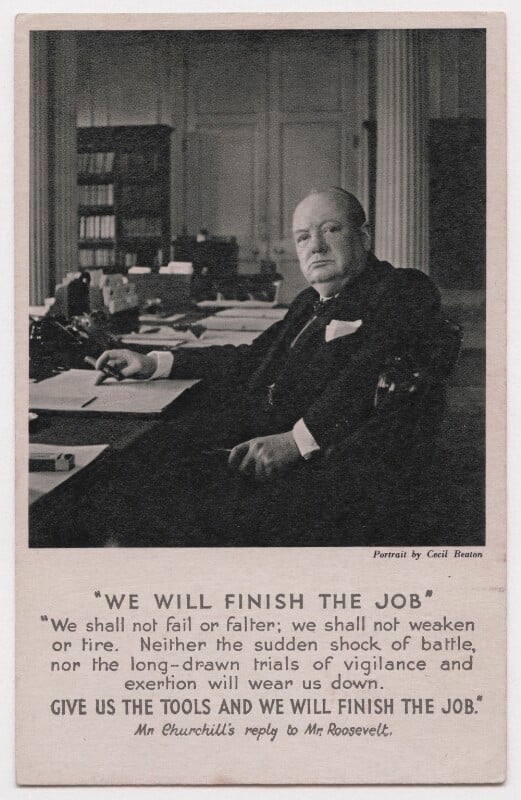
To increase the strategic power of England, Churchill appealed to America for help. He told the American people, ‘Give us your blessings and support. We will neither lose nor fall. We are neither afraid of the horrors of war, nor will we get tired. Give us weapons, we will not let you down. 
Won the war, but lost the elections :

The war was not over yet, but its result was already visible. Then came the elections in England. The popularity of Churchill, who converted England’s sure defeat into victory in World War I, was at its peak. But to everyone’s surprise, the citizens of England threw Churchill out of power. As if in the eyes of the people of England, their importance was only till the war. People no longer wanted ‘War Prime Minister’. Churchill said with restraint that ‘this is the victory of democracy’ in 1951, he won the election again and became Prime Minister again. 
Some interesting aspects of Churchill’s personality :

Churchill’s mother was American. Churchill was born premature. He never went to college. His wife’s name was Clementine Churchill, who was very similar to Clement Attlee, from whom he was elected. It was said that the number of hats he has, even his wife does not have. The fact behind his being a good speaker is also the fact that he used to have difficulty in speaking, so he used to speak very thoughtfully. He is the only Prime Minister to receive the Nobel Prize for Literature. He is the only Prime Minister of England whose residence, 10 Downing Street, was attended by the British royal family for a meal. When he died, the royal family attended his funeral. This also happened for the first time.
Yes, Churchill’s view of India was quite pessimistic. In his eyes, Indians were stupid and cowardly. They did not want India to be given independence. He would probably be the only head of state in the world who wished for Mahatma Gandhi to die.

SLEEPLESS NIGHTS


Are you getting an adequate amount of sleep these days? If not, then what is the reason behind this. Have you ever given a thought to it? Recently I was asked this great although very common question. I was completely puzzled out. I went blank. How strange is this? Isn’t it? A simple and common question like this left me pondering over many things which I have never thought about or you can say I never considered it important to think about.

What keeps me awake at night?

To find the answer to this question I started making an endless list in my mind. What can be the reason which is not letting myself have peaceful sleep at night? Many thoughts started popping into my head. I even googled to check what are the things which can keep a student like me awake at night. I found many articles but one was clashing with the other. So, I ended up with this list.

·       Stress – Yes this could be one such reason which I might take to bed with me. Study looms large in people’s minds, and I am not Einstein to not get affected by it. Stress-related to studies, job, career, parent’s and society’s expectations all these thoughts suddenly started crashing into my head. And then I realized that this could be the potential reason.

·       Insomnia – This might be the problem that maybe I am a born insomniac. Tossing and turning on the bed, failing to fall asleep. This can also be a problem.

·       Racing Thoughts – One can have control over his/her feelings but one can’t control his thoughts. It is said that you can stop someone from coming after you but how can you stop someone from thinking about you. I am the kind of person who loves being lost in her imagination. You can call me a mess of chaos. Sometimes I keep trying to make them stop, but nothing works. It is very hard for me to control my thoughts.

·       Depression– Maybe I am suffering from depression. If you sometimes start crying without any reason, then what will you call it. What will you call it when you don’t even know the reason why you are crying? I seem to cry more often when I try sleeping. But even at other times of the day when I am not crying, I often feel sad about something. And the worst part is that I don’t know the reason, or maybe I know but just don’t want to accept it.

      I started thinking about what else could be the reason which is keeping me awake at night. Then it came to me, that I should think about that one time when I slept peacefully without any thought racing around in my mind. Suddenly something hit me strikingly from within. Everything went doomed. All of the list which I have made up in my mind disappeared and only thoughts started lingering in my mind. I started feeling chills without fever. Tears started shedding from my eyes and I felt the same pain that I have been trying to hide vigorously for the past many years.

      What happens to a dream deferred? For me, it just explodes. He was my dream. His picture radiated happiness for me. He is the one whom I cannot have. You might not believe in one true love, but I do. For me, he is the only one. Even after he left me alone, he will forever be the one. I often used to think about people who used to get move on quickly. Even my friends suggested me the same but I failed and I failed terribly. Call me a loser if you want but for me, you can fall in love many a time but with just that one person whom you consider your eternal love.

      His memory was a pounding headache or a stiff back which is the reason why I have sleepless nights. Not being able to sleep is perhaps a common occurrence after a breakup. I guess it has affected me badly. Mostly because my mind is so busy running through the events that happened in the past. Even sometimes when I manage to fall asleep, I wake up more frequently. This all is due to my restless mind and my broken heart. Maybe I haven’t accepted the truth yet. Maybe I’m still stuck in the past, in his thoughts, and his memories.

      Little does my mind know that remembering those vibrant memories will likely inflict more pain and aggravate my situation further. And needless to say, he has started living in my mind persistently, even more than he used to when we were together. I used to tell him, “My happiness lies in your happiness.” He is now happy even without me then why do I have to face sleepless nights? Why do his thoughts keep me awake at night? I’ll tell you why I had to.

      ·       They say you realize the value of something when it is lost. But I had always valued him. And maybe that’s why I lost my sleep. I valued him beyond everything and when I wasn’t reciprocated, I lost my sleep.

      ·       I lost my sleep because I couldn’t get over the thought that he can even be happier without me.

      ·       His smile used to radiate happiness in my life. Thinking about the thought that it’s reflecting upon someone else’s life has made me lose my sleep.

      ·       I have lost my sleep because somewhere in the corner of my heart I knew that he will come back to me, but that desire for us to be back together is still unfulfilled.

     You might consider me a lunatic but I guess I am happy this way, lost in my unfathomable thoughts, lost in the memory of that last tranquil night when I was in his arms lost in our world together. I am now used to of these sleepless nights where I am awake with his thoughts subconsciously protracting in my mind. While I am writing this, I can feel that same pain running through me. Memories are sneaking out of my eyes and rolling down my cheeks. Something which was endured within my heart for so long has suddenly busted out. I finally got the answer to my question. His memories are the one which makes me awake at night. Maybe I will have these sleepless nights forever.

Art and Mental Health

 In our daily life filled with stress and tension, art can be a great source of comfort to our minds. “Creative Therapy” has the power to heal the mind and has a positive impact on mental health. Any form of art, especially drawing, painting and sculpting is considered to be a therapeutic practice. Its benefits on mental well-being can be traced from the psychological theories by Adrian Hill, Edward Adamson, and Donald Winnicott.

“Art as Healing”

Artist Edward Adamson, also known as the father of art therapy in Britain, has written the book “Art as Healing”. It highlights his findings on the positive impact of art in healing the patients suffering from mental illnesses. He worked on his idea of “art therapy” in the psychiatric hospital in Netherne and with the patients in his studio in West London. He collected the artworks produced in these sessions, which is known as the Adamson Collection. 

 According to him, art is not simply a form of occupation or art therapy to distract or absorb, but a dynamic and unique aid to the patient’s recovery. He believes that mental illness is a breakdown of personality and art is one of the expressions of a human being’s personality. The patient can achieve harmony through the art forms. 

Art is a way of expressing ideas of a personality. There are three major benefits of using art as the healing process for those suffering from mental illness. Firstly, the patient feels relief when their ideas are expressed through art. Secondly, they can externalise and examine their ideas. Thirdly, the doctor gets a permanent record of the state of mind of the patient at that moment. The patient’s subconscious mind gets displayed through the painting.  


Art for mental well-being

Involving in any form of art brings peace and joy to the mind. It acts as the “food for our soul”. Another benefit of art is that it has the capability to calm our mind. It helps us to cope up with the day-to- day stress. It can be a fun as well as productive activity to do in leisure time or to take a break from work and a busy schedule. 

Participating in any form of art gives us a sense of purpose and achievement. It helps immensely to boost self esteem. Not only does art calm the mind, but it also helps us to grow it creatively. Art improves the skills of the brain like learning, focusing, memorising, problem solving, patience and concentration. While painting, the obstacles faced are tackled by finding creative solutions. It enhances the creative thinking skills of our brain. 

As a child, most of the people are involved in some form of art, be it drawing, painting, sculpture or anything else. But gradually as we grow old we tend to leave it behind, ignoring the numerous psychological benefits and mental positivity it offers. Art is a great exercise that can strengthen,  calm and heal our mind.