Trust

Everyone is no one to everyone. You is both singular and plural in English grammar but it’s different in life. It’s always singular and you are only you and no one cares. Caring is done only if you pay. Money makes people and breaks people. If you have money, you can buy anything. Believe no one else you become only one.

Have faith in others but don’t trust others. Being you everytime and thinking only about you is atmost necessary in this cruel world. Have faith and beleive in yourself. No one is going to help unless you help them. Why do anyone help anyone without getting something. Giving is difficult and taking is easy. Beleive the process but not people. Trust no one and have faith in you. Life in this selfish world is so selfless. Living for others make your mates treat you as some other random guy. Never hope for something . Expecting is foolish because you are a fool to expect. Never give and never hope for the return.

Someone is something to you when he expects something to you and you become something when he gets his something. Don’t give atleast a thing and if anyone gives you something to you even before you give them believe him. Trusting blindly is so easy. Don’t give them opportunity because that makes them to have a choice between leading a luxurious life and happy life. Everyone will experience a moment in their life whether to choose a luxurious life by breaking the choice or to have a happy life by keeping the promise.

Believing your children isn’t trust worthy because there are few of them whom we can take as examples. Sometimes trusting yourself is too dangerous but there will be no choice to make because you are the choice maker. Make yourself strong because atlast you will be left alone right beside you to condolence yourself. It’s ok if you betray yourself because it’s better than getting betrayed by some others. Have a great hioe and become a master of making you. Don’t ever try to oversmart yourself because you know who you are.

Improve your mindfulness!

How are you coping nowadays? Is everything going according to what you have planned? Or are you making the efforts to change your ways?

COVID-19 has surely changed our way of living life, doing business and definitely changed our perception of life. Our body was programmed to wake up in the morning, doing personal work, dressing up and heading for work, returning to our loved ones and spending time with our families. But now we wake up and we feel like we are running in circles. Waking up and trying to do everything at one go, with overloaded information and then there is a huge feeling of procrastination and it seems like everything is taking a toll on our mind. Nowadays we are always feeling like doing “more” and “better”, and that too in a very short span of time. Now there is no harm is trying to do more and in a better way, but there should be a pause on this. Our mind is taking its own time to adapt to this drastic change and we should be patient enough to give time to our mind.

Mindfulness. Such a long word and yet so simple. It is a state of our mind where we are aware of the present and we are aware of our own behavior at each moment. Study reveals that it is very crucial to practice and imbibe mindfulness so that we do not feel stressed and depressed. Now is the time, more than ever when such a practice can improve us and make us feel alive more than ever.

A few tips by which you can bring mindfulness in your life:

  1. Wake up early. It is a good habit to wake up by 6 AM in the morning and take a whiff of fresh air. It clears you brain and makes you feel energized.
  2. Meditate. Make sure to meditate for about 10-15 minutes in the morning. It will make you ready for the day.
  3. Read newspaper. Study shows that what we study in the morning, we tend to remember it for a long time. Newspaper or a few pages of your book will open your mind to face the day.
  4. Sip green tea. Obesity is the new form of smoking. To reduce the caffeine intake and to ensure our health is in good condition, switch from black to green tea.
  5. Eat slowly and mindfully. Take small bites and stay away from T.V, laptop or any kind of social media while eating. Let your body and mind to enjoy the food.
  6. Talk to nature. Staying within the closed doors will make us sicker. Take some time out and enjoy the greenery outside.
  7. Check you digital time. Always try to keep a tab on the time you are spending on social media or on the screen. For this one can use Pomodoro Technique.
  8. Follow your passion. Now is a great time of you want to follow up on something which you previously did not get time to do. It will also be good to keep stress at bay.

These are the few techniques which one can definitely follow to practice mindfulness. It is advisable to acknowledge that things are tough but we should also be mindful to not let stress build its house in our mind.

Till then, stay safe and be mindful….

Source: https://www.ellevatenetwork.com/articles/6170-be-more-mindful-7-tips-to-improve-your-awareness

Feminist

The feminist movement (also known as the women’s movement, or simply feminism) refers to a series of political campaigns for reforms on issues such as reproductive rights, domestic violence, maternity leave, equal pay, women’s suffrage, sexual harassment, and sexual violence, all of which fall under the label of feminism and the feminist movement. The movement’s priorities vary among nations and communities, and range from opposition to female genital mutilation in one country, to opposition to the glass ceiling in another.
Feminism in parts of the Western world has gone through three waves. First-wave feminism was oriented around the station of middle- or upper-class white women and involved suffrage and political equality. Second-wave feminism attempted to further combat social and cultural inequalities. Although the first wave of feminism involved mainly middle class white women, the second wave brought in women of color and women from other developing nations that were seeking solidarity. Third-wave feminism is continuing to address the financial, social and cultural inequalities and includes renewed campaigning for greater influence of women in politics and media. In reaction to political activism, feminists have also had to maintain focus on women’s reproductive rights, such as the right to abortion. Fourth-wave feminism examines the interlocking systems of power that contribute to the stratification of traditionally marginalized groups.
Feminism in China started in the 20th century with the Chinese Revolution in 1911. In China, Feminism has a strong association with socialism and class issues. Some commentators believe that this close association is damaging to Chinese feminism and argue that the interests of party are placed before those of women.

HISTORY :

Feminism in the United States, Canada and a number of countries in western Europe has been divided into three waves by feminist scholars: first, second and third-wave feminism.Recent (early 2010s) research suggests there may be a fourth wave characterized, in part, by new media platforms
The women’s movement became more popular in May 1968 when women began to read again, more widely, the book The Second Sex, written in 1949 by a defender of women’s rights, Simone de Beauvoir (and translated into English for the first time in 1953; later translation 2009). De Beauvoir’s writing explained why it was difficult for talented women to become successful. The obstacles de Beauvoir enumerates include women’s inability to make as much money as men do in the same profession, women’s domestic responsibilities, society’s lack of support towards talented women, and women’s fear that success will lead to an annoyed husband or prevent them from even finding a husband at all. De Beauvoir also argues that women lack ambition because of how they are raised, noting that girls are told to follow the duties of their mothers, whereas boys are told to exceed the accomplishments of their fathers. Along with other influences, Simone de Beauvoir’s work helped the feminist movement to erupt, causing the formation of Le Mouvement de Libération des Femmes (The Women’s Liberation Movement). Contributors to The Women’s Liberation Movement include Simone de Beauvoir, Christiane Rochefort, Christine Delphy and Anne Tristan. Through this movement, women gained equal rights such as a right to an education, a right to work, and a right to vote. One of the most important issues that The Women’s Liberation movement faced was the banning of abortion and contraception, which the group saw as a violation of women’s rights. Thus, they made a declaration known as Le Manifeste de 343 which held signatures from 343 women admitting to having had an illegal abortion. The declaration was published in two French newspapers, Le Nouvel Observateur and Le Monde, on 5 April 1971. The group gained support upon the publication. Women received the right to abort with the passing of the Veil Law in 1975.

Feminism: Belief in and desire for equality between the sexes. As Merriam-Webster noted last month: “the belief that men and women should have equal rights and opportunities.” It encompasses social, political and economic equality. Of course, a lot of people tweak the definition to make it their own.

According to Maggie Humm and Rebecca Walker, the history of feminism can be divided into three waves. The first feminist wave was in the nineteenth and early twentieth centuries, the second was in the 1960s and 1970s, and the third extends from the 1990s to the present.

Why is spirituality important?

Spirituality is everything to do with the Spirit, the Soul, the Atman or what in reality is the life energy within us. Why is that important? Because that is everything! If there is no life energy within us, then we are dead, then there is nothing. The only thing that truly exists is this life energy which is us, but which we don’t realize. We think that we are the body, we are the mind, when in reality we are the Spirit. Therefore, Spirituality is the study of the Spirit. It is being conscious of who we truly are. If we do not follow a life that is Spiritual or rather being that life energy, that Soul or the Atman, then we are living a life of illusion.

There is a growing body of evidence indicating that spiritual practices are associated with better health and wellbeing for many reasons, including:

  1. Contemplative practice is good for you.
    Contemplative practices are activities that guide you to direct your attention to a specific focus—often an inward-looking reflection or concentration on a specific sensation or concept. Many spiritual traditions have a long history of using contemplative practices to increase compassion, empathy, and attention, as well as quiet the mind.
  2. A spiritual community can improve your life.
    Many spiritual traditions encourage participation in a community. Spiritual fellowship, such as attending church or a meditation group, can be sources of social support which may provide a sense of belonging, security, and community. Strong relationships have been proven to increase wellbeing and bolster life expectancy, which is perhaps why one study found a strong association between church attendance and improved health, mood, and wellbeing
  3. Spiritual strength can help you overcome hardships.
    Having a strong spiritual outlook may help you find meaning in life’s difficult circumstances.
    The spiritual practice of recognizing the interconnectedness of all life can also help buffer the pain that comes with difficult. If we can compassionately remind ourselves in moments of falling down that failure is part of the shared human experience, then that moment becomes one of togetherness rather than isolation. When our troubled, painful experiences are framed by the recognition that countless others have undergone similar hardships, the blow is softened.
  4. Spiritual people make healthier choices.
    Adhering to a particular spiritual tradition may bring an indirect health benefit because many traditions have rules about treating the body with kindness and avoiding unhealthy behaviors. Research shows that perhaps because of these tenets, people who practice a religion or faith tradition are less likely to smoke or drink, commit a crime, or become involved in violent activity, and they are more likely to engage in preventative habits like wearing seatbelts and taking vitamins.
  5. Spirituality may help you live longer.
    An exhaustive review that compared spirituality and religiousness to other health interventions found that people with a strong spiritual life had an 18% reduction in mortality. Giancarlo Lucchetti, lead author of the study, calculates that the life-lengthening benefits of spirituality can be compared to eating a high amount of fruits and vegetables or taking blood pressure medication. Although some researchers have suggested that the extent of spirituality’s benefit on health is exaggerated, most researchers agree there is a positive relationship between religious and spiritual practices and better health outcomes.
  6. Forgiveness is good medicine.
    Letting go of blame and negative feelings after a hurtful incident is a practice that is reflected by a number of spiritual traditions, including Christianity, Islam, Buddhism, and Judaism. Modern science shows the health benefits of forgiveness are numerous: better immune function, longer lifespan, lowered blood pressure, improved cardiovascular health, and fewer feelings of anger or hurt.

Ayurveda: The ancient art of healing.


Ayurveda is a 5,000-year-old system of medicine with historical roots of natural healing in the Indian subcontinent. Ayurveda is a science of life (Ayur = life, Veda = science or knowledge). Globalized and modernized practices derived from Ayurveda traditions are a type of alternative medicine. Approximately 90% of ayurvedic preparations are plant-based. The vast field of Ayurvedic science is gaining more importance and popularity across the globe because of its amazing therapeutic values. In olden days man lived very close to nature and whenever he got indisposed he cured himself by the resources and materials provided by nature, which is nothing but the herbs.

Right from very olden days it is believed that Ayurvedic herbs are supposed to give a solution for all kinds of diseases which was even considered impossible by other field of medical science. The sages in olden days were mainly involved in experimenting the different kinds of herbs and then the preparation of ayurvedic medicine from them. Study of each herb indepth, along with its effects of the doshas is to be considered for designing the Ayurvedic herb formulas. Each herb with its own characteristic features is thus used for specific diseases and its treatment.

Ayurvedic medicines prepared from the herbs are said to have no side effects. Herbs play a major role in Ayurvedic system. Herbs possess infinite potencies or Saktis and work wonders. A small herb dissolves stones in the bladder, kidneys and gall-bladder in a minute or the twinkling of an eye.

An Ayurvedic herb is a plant source which is used in the preparation of ayurvedic medicines. The plant on the whole with its leaves, flowers, fruits, seeds, roots, roots bark, and resin has medicinal values apart from its flavour and fragrance. It acts as a perfect mechanism in bringing a balanced harmony between the mind and spirit. When compared to other synthetic drugs ayurvedic herbal medicines do not cause any side effects. It works effectively fighting against various infections and diseases and thereby gaining quick recovery. Ayurveda is a perfect science of life and consists of a body of most remarkable knowledge on the internal mechanism of human health and longevity, on medicinal herbs and therapeutic roots, on the efficacious treatment of human ills by eradicating from the human system the very sources of their causation. The Ayurvedic science which works based on the herbs promises wonders to mankind when taken in a wise and prudent manner.

Digitization of food- a boon or bane?


The world today is driven by technology. Anything
you need is just a touch away. People are being
spoon fed by applications that help us tap and order
when it comes to food. Some of the famous mobile
apps for ordering food in India includes Zomato,
Swiggy, Uber eats and lot more. It’s no doubt that
these apps are really helpful and mobile technology
has gifted us a lot but like every coin has two sides
this technology also has some disadvantages.
What fuels digital food ordering ? Is it just
convenience, low cost or is it complete laziness?
These apps have not only has increased reliance on
outside food but also has significantly changed the
way people eat. Ordering food by tapping your
screen literally equals to no energy wasted and one
ends up ordering more than they can consume. It
somehow killed the mobility of people.
According to the statistics reports, the revenue of
online these apps is expected to grow at a rate of
9.3% annually. Currently their revenue is USD
94,385M in 2019. It is noticed that social skills of
people have been badly affected. It promotes
unhealthy lifestyle. It results in high intake of
calories which develops obesity in teenagers. These
apps manipulate us with false claims of healthy
eating. This terrible cycle continues to loop and we
are caught in a web spun by these apps and thus
there is no way out.

The Vast IT Sector with great job opportunities.

The most basic information technology definition is that it’s the application of technology to solve business or organizational problems on a broad scale. No matter the role, a member of an IT department works with others to solve technology problems, both big and small.
Simply put, the work of most organizations would slow to a crawl without functioning IT systems. You’d be hard-pressed to find a business that doesn’t at least partially rely on computers and the networks that connect them. Maintaining a standard level of service, security and connectivity is a huge task, but it’s not the only priority or potential challenge on their plates.
More and more companies want to implement more intuitive and sophisticated solutions. IT can provide the edge a company needs to outsmart, outpace and out-deliver competitors
Information technology is the study, design, development, implementation, support or management of computer-based information systems—particularly software applications and computer hardware. IT workers help ensure that computers work well for people.
Nearly every company, from a software design firm, to the biggest manufacturer, to the smallest “mom & pop” store, needs information technology workers to keep their businesses running smoothly, according to industry experts.
Following are the job Opportunities in the field of IT

  1. Development of software using various computer languages and programming.
  2. Hardware support and programming, maintenance of hardware to support the developers and project managers is a more challenging and more important job for the IT professionals.
  3. Developing new sites, networking and testing are the booming career paths in IT.
  4. Providing database support, Database administration, backup of the data, these all come under database management which is also the backbone of the company’s IT.
  5. Developing video games, making animation videos, computer graphics designing and other user interactive technologies have a lot of new opportunities.
  6. Creating and maintaining anti-virus and anti-hacking software, the creation of firewalls for networking security, creating the software to arrest cyber crimes and providing cybersecurity is a booming career path for aspirants to want to work in IT sector.
  7. Software Testing is also a very high fetching career path because any new software has to be tested vigorously as the development of software involves a lot of expenditure and company cannot afford to use software which has bugs

The Versatile Sushant


Sushant was definetley a gem that we all lost recently. He was not only a good actor but was also a multitalented human being.
He was born in Patna, to Krishna Kumar Singh and Usha Singh. He was the eldest in the family and has four elder sisters.
The actor lost his mother at a very young age and was devastated. He was very close to her. He often posted about her and said how much he missed her.
Sushant was a bright student with excellent academic career. He secured 7th rank in AIEEE and got admission in Delhi college of engineering in 2003. He was also a winner of national Olympiad in Physics.
During his studies he also joined dance classes and also acting classes. He always knew what made him happy and what was he meant for. In 2006 he dropped out of college and devoted his full time for his acting career.
He made his television debut with the role of Preet Juneja in the serial ‘Kis desh me hai mera dil’. Later he got fame with his role of “manav” in Pavitra Rishta.
Sushant was also part of dance reality shows like “Jhalak Dikhla Jaa season 4” and “Zara nach ke Dikha”.
Sushant had a passion for astronomy. He was curious about the world around. He loved computer gaming and coding.
Sushant also took Marshal art lessons from Allan Ami.
He gave supherhit movies such as M.S. Dhoni, Chichore and Kedarnath. Which were one of the finest movies in Bollywood.
He made his film debut with Kai Po Che along with RajKumar Rao. He also Assisted Mohit Suri in the filming of Raaz 2.
This is really a great loss to the industry. A man with such dynamic mind and talent deserved the world. But you never know what destiny holds for you. It’s rightly said that you never know what a person in going through. He may have million dollars with him or may own big car but your mental state is the only thing that gives you peace.

CASE SUMMARY: BIKRAM CHATTERJI VS. UNION OF INDIA

Case Name: Bikram Chatterji & Ors. Vs. Union of India & Ors.

Appeal No.: Writ Petition(s) (Civil) No(s).940/2017

Date of Judgment: 21-Aug-18

Court: Supreme Court of India

The case study is a landmark decision of the Hon’ble Supreme Court regarding the real estate industry in India and presumably the most anticipated in the light of the various challenges faced by home-buyers throughout India.

FACTS:

In 2011, Projects of Amrapali group launched construction of 42000 flats in Noida and Greater Noida and promised that delivery of possession will be made after 36 months. Buyers in 2010 – 2014 signed the buyer’s agreement. Even after payment of 40% consideration they faced the threat of forfeiture. The agreement contained some terms as to interest of owners, Clause 14 authorized himself to finance himself from any loans by way of mortgage/ charge / security and allotees cannot raise objection. Clause 15 authorized the builder to keep full authority over flat depriving allotees any lien or interest despite full payment. Clause 19(a) the builder was obliged to complete flats of Centurion Park within 30 months from date of commencement of signing agreement which may vary more or less than 6 months. Clause 19(c) builder fixed sum of Rs. 5 per square feet per month for period of delay. Breach of obligation by respondents to deliver flats even within 36 months. They did not pay amount to the allotees and also the bank. And buyers had to pay the EMI’s to bank thereby causing double loss.

Some consumers approached NCDRC by filing consumer complaint. Bank of Baroda filed a company petition in 2017 before the NCLT under Section 7 of Insolvency and Bankruptcy Code, 2016. The NCLT appointed Interim Resolution Professional. Moratorium was also declared thereby under the SARFAESI Act, 2002. The order adversely affected the interest of thousands of homebuyers of various projects being developed by Amrapali.

Meanwhile, a writ petition was also filed in Supreme Court. The apex court after hearing the complaints and in light of the accusations of draining off of funds being made against the Amrapali Group decided to take cognizance of petition and ordered to conduct a forensic audit over all the agencies of Amrapali Group.

ISSUES:

  • The charges levied by officials, banks, home purchasers and development agencies shall be valid.
  • The Amrapali Group’s RERA registration may be cancelled.
  • Form of relief accessible to homebuyers.

HELD:

Supreme Court held that:

RERA Amrapali Group registration under RERA Act shall be revoked and NBCC (India) Ltd is finalizing various projects.

The separate lease agreements issued for projects under consideration in favour of Amrapali Group Authorities are revoked and all the rights will now be vested in the Court Receiver who has authority to alienate, lease out or take any decision to raise funds. The Court Receiver will pay money raised to NBCC will complete the project with 8% profit margin (senior Adv., Shri R. Venkataramani).

The Authorities and Banks do not have the right to sell the property of the property buyers or the land leased for payment of their dues. They have to receive all their charges from the selling of other assets attached to the Amrapali Group.

The right of the lessee shall be enshrined in the Court Receiver (formerly with the Amrapali Group) and shall, by means of an authorized person on his behalf, conclude a tripartite agreement and perform all other acts as may be necessary and shall also make sure that the title is handed over to the home-buyers and that the possession is handed over to them.

https://indiankanoon.org/doc/6791744/

Assam Floods: Causes and Solutions

Brahmaputra is one of the largest river of the world. it flows through china, India and Bangladesh and then merges with the Ganges, and then flows into the Bay of Bengal. The Brahmaputra is among the world’s top five rivers in terms of discharge as well as the sediment it brings. The river is known to cause havoc in the state of Assam during the monsoon season. The destruction caused by the flood is humongous as it affects the lifestyle of the people in a large way. The government has made some efforts but those efforts have not been successful in finding the solutions to the floods.

Almost every year the river causes flood in the state, making many people homeless and taking lives of many. This year almost 75 people have died due to the flood and a staggering 3 million people have been affected due to it till now. The flood also causes a lot of damage to the flora and fauna of the state. Nearly 95% of the area of Kaziranga National park is under water during these floods which causes the death of many animals in the National Park. It has been found that more rhinoceros have lost their lives due to the floods than poaching. The one horned Rhinoceros have been listed as vulnerable species in the IUCN red list , found only in Assam now. Also, many other animals like Elephant, Hog Deer and wild bear also die every year due to this flood.

There are both man-made and natural reasons behind these floods. The earthquake which cause the landslides are one of the many reason behind these floods as they send in a lot of waste and debris in the river which causes the riverbed to rise above the normal point. The soil erosion and the bank erosion are also an important reason in causing this flood as it has been estimated that nearly 10000 hectares of land is lost to bank erosion every year. The width of Brahmaputra is also increasing every year by substantial figure and has nearly doubled in the past century. Building of dams and encroachment of forest land has also caused the increase in the chances of flood every year.

The government has made embankments to control the floods, but many argue that making embankment causes more problems than solving them. the embankments cause water logging and more floods in the areas where the embankments have not been made because it makes the level of the river to rise. This can be seen from that no. of deaths and damage has not changed despite extensive embankments. Building embankments is only a temporary solution to the problem.

Some solutions have been suggested by the experts to deal with this situation of flood in the Assam. firstly, the government needs to improve the drainage system in the state, so that the problem of water logging can be solved. The government needs to make better safety alarm system which can alarm the people regarding the floods before hand. Also, the infrastructure which can withstand flood needs to built. Houses need to built above the flood level in the state. China which also suffers from lot of floods can also be looked upto as an example as it has been building “sponge cities”, in which instead of hard concrete, more permeable and green spaces are being used to soak up the rainfall. The same solution can be reached out in assam.

The Government need to find some innovative solutions to these floods because it is very disappointing that people are still dying from floods and the state has to deal with so much damage every year due to these floods, when we are living in 21st century. With the help of proper technology, we can create cities which can withstand floods. The media also needs to highlight the situation, so that proper attention can be brought out to this problem which can force the state to take this problem more seriously. It is hard to find a permanent solution to this problem. But, the government can at least try to find some solutions which can reduce the damages caused due to these floods to the minimum.

Chris Evans and other Members of Avengers Honor a Real-Life Hero

Captain America- otherwise known as Chris Evans and other Avenger’s cast, Chris Hemsworth, Mark Ruffalo, and Tom Holland took time to pay tribute to a real-life hero.

That hero is a six-year-old Bridger Walker of Cheyenne, Wyoming. His heroic deed went viral after his Aunt Nikki Walker shared the story on Instagram and tagged the Avengers stars, who Bridger idolises.

Bridger came between a dog and his sister and sustained several bites on his cheek and head before he got himself and his sister out of danger, with his injuries requiring two hours of surgery and some 90 stitches.

The Walker siblings had gone over to a neighbor’s house and one of their dogs came at Bridger’s sister. Bridger jumped in between in order to save his little sister. He later told his parents, “if someone had to die, I thought it should be me.”

Moved by his heroic deed Hemsworth, Evans, Ruffalo, Holland, and Jeremy Renner sent him warm wishes and inducted him as part of the Avengers. Evans even sent him Captain America’s costume and the shield along with an encouraging video message.

His aunt as been updating social media about Bridger’s progress and the number of celebrities that have reached out to Bridger to praise him. Another post by Nikki Walker shows Bridger dressed in Spider-Man costume and chatting on video call with Tom Holland who plays the superhero on screen.

While Bridger is unable to fully smile due to his injuries, the little boy has been very happy with all the love and adulation that has come his way. Many offered financial assistance to his parents who have appealed them to donate to certain charities instead.

World Emoji Day- Emoji says it all

Whether you celebrate today with a happy face, a pair of raised hands, or mere heart-eyes, July 17 marks World Emoji Day.

Well, thinking of messages without emojis is extremely difficult for each one of us today. Emojis make conversations interesting and help us express ourselves the best way. They shapes our feelings and moods in a virtual space. You may be crying, dancing, eating, cooking, or rolling on the floor laughing, there is emoji for every occasion.

As we get busier with no time to type long messages, emojis, animated stickers are becoming the future form of messaging. Who knows, there could be a day soon when we chat only via emojis and no texts.

World Emoji Day is a global event observed to enhance the power of emojis for enhancing our everyday conversations. These digital icons have added more meaning to our conversations. Unlike before, emojis are not only limited to faces; now they also include animals, flowers, planets, alphabets, clothes, activities and the list goes on.

Also, we now have emojis that are gender neutral or the ones that spread across the skin tone spectrum; such an effort makes virtual communication inclusive and accessible by all. There’s a pool emoticons to choose from and each one of them has their own unique meaning.

Do you know that a Japanese engineer created emojis in 1998.

Oxford Dictionary’s Word of the Year for 2015 was the ‘tears of joy emoji’. It was the first time in history the dictionary used a pictograph as its infamous ‘Word of the Year’. It was chosen because it was the most used emoji globally in 2015.

Emojipedia’s Jeremy Burge launched World Emoji Day on July 17, 2004.

July 17 is not a random date. It was chosen because it is the day that featured on the emoji calendar on the apple keyboard. If you are an iPhone user, you can notice this on your smartphone.

To celebrate World Emoji Day, Apple is previewing a selection of new emoji that will be available this fall with a free software update for iPhone.

Is this what we call a “Revolution”?

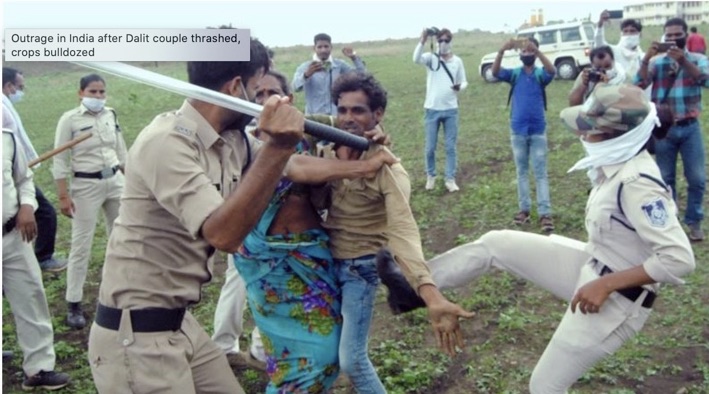
The world has been divided into groups, sub-groups in which the people are categorised by either caste or religion and now on the basis of colour also. All of this is a very abstract topic and we just can’t argue on this but can we at least not work like the society, can we just look everyone with the same mindset, treat them equally, respect them equally. Our society has been ruled and judged by the superiors and is still being judged by our so called politicians who have manipulated the minds of the people and have turned off the ‘Humanity’ mode in them.

Things have turned really outrageous where people still haven’t learnt the real meaning of helping each other and treating everyone as equal. A recent example of “A Dalit couple” in Madhya Pradesh who have committed suicide because their crops were thrashed and they were being beaten up from the cops. This was a very brutal act against the marginalised sections of our society where those two were crying out for help and were begging to the police to stop and spare them, but nothing happened because it was an order from the government. This cruel and shameful act took place after the couple were seen growing crops on the land which was being inherited by the government. They were quickly rushed to the hospital after both of them consumed pesticides, and now they are in a normal condition.

Al Jazeera

“When our standing crop has been destroyed, we don’t have the option but to kill ourselves” Devi quoted.

All of this took place because the Government wants to build a college at the same spot where the couple had their farms and the government wanted them to leave everything and clear the land, but they didn’t accept their order because they were in debt and farming was the only source of living for their family. But in this also again the Political parties have started their war where they are blaming each other for this incident. This issue has come up weeks after that brutal and senseless incident where a son and a father were beaten up to death in Tamil Nadu by the cops.

What are we doing? where is the world going? On one hand where the policemen/policewomen are given the authority to serve for the country and work for the civilians, protect them, prevent all the evil things which are taking place in the society and on the other hand the police is beating up their people. Please stop, we are already having multiple issues in our society, people are dealing with numerous problems and above all Farmers are the fruit givers to the society, they feed us, how can we take their land and built something in place of a farm. This issue is something very serious and we have to fight against this, we have to fight against the rights of the farmers because they work for the Primary sector of the society. I hope this article will ring a bell of humanity in each one of us and will force us to make an initiative and stop the evil doings of this society, if not this at least we can pray for the farmers, for their health and well-being.

https://www.tribuneindia.com/news/nation/uproar-over-video-showing-madhya-pradesh-cops-beating-up-couple-mercilessly-for-resisting-land-eviction-113744

Mass Communication

The mass communication is the study of mass media. Mass media include newspapers, magazines, television, movies, radio etc. The mass media transmits information to a large number of people simultaneously.


The mass media has several functions. It can be used to highlight issues, create awareness, entertain people, analyze political progress, and is also known to create new social norms. The mass media can influence people’s actions in both good and bad ways. They are therefore responsible for exercising care and monitoring while disseminating information.


For example, in the case of the assassination of Aarushi (Noida) that shocked the country last year, some media outlets went so far as to dismiss their traditional roles and take on the roles of investigative organizations. Things have gotten to the point where some angry members of the public are demanding state laws from the media by slandering the parents of a dead daughter.


In this case, initially, the media, with the help of unconfirmed facts and false information, were able to temporarily influence public opinion which led them to believe that the parents were the ones who were killed. This is widely reported in the media. At the same time, in the case of Jessica Lall and Nitish Katara, the media played a major role in getting the suspect to write. The implication of this is that most media outlets can play an important role in society as long as they are responsible and not discriminated against.


In recent times, the media has become increasingly effective in addressing issues. Reporting dates just gone. In its place there are newly focused media looking for active participants in solving the burning issues of the day. The ‘Times of India’ is an excellent example.


Its ‘lead India’ campaign to identify Indians with leadership credentials to lead the country and his recent ‘Teach India’ campaign to include everyone in his quest to promote literacy among flawless segments are commendable. This is a very big media. Today the media has become a forum for ordinary men to voice their concerns in a way that will be heard by those who are important.


During the Great Depression of the 1930s, US President Roosevelt used social media as a radio to strengthen the morale of the American people. In Germany, however, Hitler used mass media to obtain permission to become his oppressive Nazi regime. So big media can be a tool for achieving good and bad intentions

National Commission For Women

It is said that the best way to know about society, a civilization and a culture, try to know as much possible about the women. In India, women have come a long way from the rare women scholars and sages of the Vedic age to the women in different sectors of society and civilization today, such as the armed forces, arts, information technology, politics and a number of similar sectors which have traditionally been male dominated, while simultaneously balancing the roles of wife, mother and daughter. While Indian women have fought against the patriarchal Indian society and triumphed at many levels, cases of rape, dowry deaths, female infanticide, sexual harassment at workplaces, female illiteracy, and similar problems are still rampant in Indian society. It was in this backdrop that the Committee on the Status of Women in India (CSWI) the establishment of the National Commission for Women to fulfill the surveillance functions and to facilitate redressal of grievances and to accelerate the socio-economic development of women.

The principle of gender equality is enshrined in the Indian Constitution. The Preamble, promotes Equality of status and of opportunity; the Fundamental Rights enshrined in Part III of the Indian Constitution and Directive Principles enshrined in Part IV of the Constitution all promote gender equality. The Constitution not only grants equality to women but has also made special provisions for ensuring equality Thus, as per the recommendations of the CSWI and in order to uphold the mandate of the Constitution, in January 1992, the National Commission for Women (NCW), was set up as a statutory body under the National Commission for Women Act, 1990 (Act No. 20 of 1990 of Government of India) to carry out the mandate set by the Act as well as CSWI.About The Commission. This chapter aims at informing the reader of the need for a commission such as the National Commission for Women and the impetus for its establishment in 1992. The chapter further examines the relationship between the constitution and the commission, the mandate given by the constitution as well as the basic administrative set up of the commission as per the constitution.

Importance of The Commission:

Women as a class neither belong to a minority group nor are they regarded as a backward class. India has traditionally been a patriarchal society and therefore women have always suffered from social handicaps and disabilities. It thus became necessary to take certain ameliorative steps in order to improve the condition of women in the traditionally male dominated society.The Constitution does not contain any provision specifically made to favor women as such. Though Art. 15 (3), Art. 21 and Art. 14 are in favor of women; they are more general in nature and provide for making any special provisions for women, while they are not in themselves such provisions. The Supreme Court through interpretive processes has tried to extend some safeguards to women.

The objective of the NCW is to represent the rights of women in India and to provide a voice for their issues and concerns. The subjects of their campaigns have included dowry, politics, religion, equal representation for women in jobs, and the exploitation of women for labour. They have also discussed police abuses against women.

The commission regularly publishes a monthly newsletter, Rashtra Mahila, in both Hindi and English

1.The commission shall perform all or any of the following functions
• Investigation: The Commission shall investigate and examine all matters relating to the safeguards provided for women under the Constitution and other laws
• Report : The Commission shall present to the Central Government, annually and at such other times as the Commission may deem fit, reports upon the working of those safeguard
• Implementation of those safeguards : As per the reports recommendations for the effective implementation of those safeguards for the improving the conditions of women by the Union or any state
• Review: The Commission shall review, from time to time, the exiting provisions of the Constitution and other laws affecting women and recommend amendments thereto so as to suggest remedial legislative measures to meet any lacunae, inadequacies or shortcomings in such legislations.
• Take up Cases: The Commission shall take up cases of violation of the provisions of the Constitution and of other laws relating to women with the appropriate authorities

• Complaints: The Commission shall look into complaints and take suo moto ( in its own motion ) notice of matters relating to➢deprivation of women’s rights;
➢non-implementation of laws enacted to provide protection to women and also to achieve the objective of equality and development;
➢non-compliance of policy decisions,guidelines or instructions aimed at mitigating hardships and ensuring welfare and providing relief to women, and take up the issues arising out of such matters with appropriate authorities
• Special studies : The Commission shall call for special studies or investigations into specific problems or situations arising out of discrimination and atrocities against women and identify the constraints so as to recommend strategies for their removal
• Promotional and educational research : The Commission shall undertake promotional and educational research so as to suggest ways of ensuring due representation of women in all spheres and identify factors responsible for impeding their advancement, such as, lack of access to housing and basic services, inadequate support services and technologies for reducing drudgery and occupational health hazards and for increasing their productivity

Evaluation of progress :The Commission shall participate and advice on the planning process of socio-economic development of women and evaluate the progress of the development of women under the Union and any State. • Inspect: The Commission shall inspect or cause to inspected a jail, remand home, women’s institution or other place of custody where women are kept as prisoners or otherwise and take up with the concerned authorities for remedial action, if found necessary;
• Litigation Expenses: The Commission shall fund litigation involving issues affecting a large body of women;
• Periodical reports :The Commission shall make periodical reports to the Government on any matter pertaining to women and in particular various difficulties under which women toil;
• Any other matter :The Commission shall any other matter which may be referred to it by Central Government.

  1. Reports to be laid before each House of Parliament:
    The Central Government shall cause all the reports to be laid before each House of Parliament along with memorandum explaining the action taken or proposed to be taken on the recommendations relating to the Union and the reasons for the non-acceptance, if any, of any such recommendations. Where any such report or any part thereof relates to any matter with which any State Government is concerned, the Commission shall forward an copy of such report or part to such State Government who shall cause it to be laid before the Legislature of the State along with a memorandum explaining the action taken or proposed to be taken on the recommendations relating to the State and the reasons for the nonacceptance, if any, of any such recommendations.
  2. Powers of a civil court
    The Commission shall, while investigating any matter have all the powers of a civil court trying a suit and, in particular in
    respect of the following matters, namely :-
    –summoning and enforcing the attendance of any person from any part of India and examining him on oath; –requiring the discovery and production of any document;
    –receiving evidence on affidavits;
    –requisitioning any public record or copy thereof from any court or office;
    –issuing commissions for the examination of witnesses and documents; and
    –any other matter which may be prescribed

the Commission has managed to fulfill the mandate, if not completely then to a great extent. The achievements mentioned in the prior chapter are only a few of many similar achievements and they are proof of the popularity and support the Commission is gaining from the Indian woman. There is no doubt about the effectiveness of the Commission and about the good work which it is doing for the women of India, however, there are certain shortcomings in the working of the Commission, which, if rectified, would lead to a more efficient and productive Commission.