

A deep-sea coral garden ecosystem is discovered with an outstanding depth of 1500m by a scientist from UCL, Zoological Society London and Greenland. Scientists of the UK and Greenland have found the Greenland sea coral garden habitat the first kind of habitat that has been recognized using an inventive and low-cost deep-sea video camera.
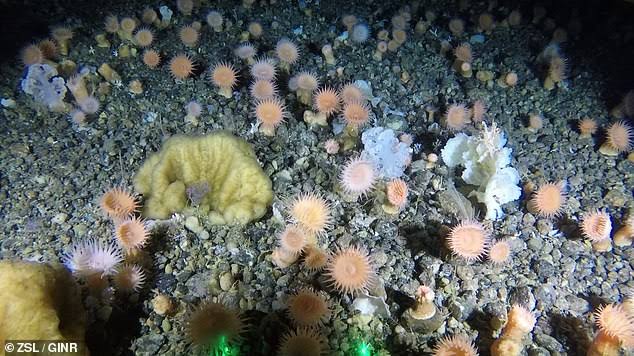
The study has shown that the economically important deep-sea trawl fisheries are adjacent to the habitat. The researchers hope that the United Nation recognized the 486 Km2 regions under the ‘Vulnerable Marine ecosystem’ so that it can be preserved and maintained. The soft coral garden found by the Uk-Greenland team exists in total darkness and where the pressure is 50 times greater than at the surface.
Coral gardens are characterised by collections of one or more species, that sits on a wide range of hard and soft bottom habitats, from rock to sand, and support a diversity of fauna,’ said Chris Yesson of the Zoological Society of London. The gardens are made of non-reef coral species, spotlighting mainly cauliflower corals, sponges, anemones, brittle stars and hydrozoans and other organisms.
PhD. Researcher (UCL) and ZCL first authors said that despite our earth is covering about 70% of the deeps we hardly mapped it. The inventions of the low-cost tools carry numerous probabilities in discovering and maintaining marine ecosystems. Since discovering the deep-sea is very costly and difficult since the pressure increase by one atmosphere as we go 10m deep. However, the innovative and low-cost video camera is able to discover the new ecosystem where the pressures is fifty times greater than at the surface.
The researchers have successfully developed the towed video sled using a steel frame on which they mounted a GoPro video camera, lights and lasers to provide an understanding of scale (made by integrating high power laser pointer made by UCL’s Institute of Making) in pressure-proof housings. The video sledge which was made as of the size of mini copper-on the seafloor for around 15 minutes at a time took footage from 18 different sites across the seafloor taking out 1239 photos from the video footage for further investigation.
Me long said ‘A towed video sled is not unique. However, our research is certainly the first example of a low-cost DIY video sled led being used to explore deep-sea habitats in Greenland’s 2.2 million square kilometres of sea, ‘
Continued by Dr. Yesson saying “Given that the ocean is the biggest habitat on earth and the one about which we know the least, we think it is critically important ti develop cheap, accessible research tools. These tools can be used to explore, describe and crucially inform management of these deep-sea resources.”
Greenland virtually is unexplored, although more than 2000 enormous species have been known till now contributing in making complex and diverse habitats. Greenland’s economy depends on a small number of fishers trawls on the seabed despite knowing very less about the marine habitat and hoping that studies on the deep sea will increase the understanding of ecological relationship said by Mr.Martin Blitcher.






 The history of Kuchipudi can further be traced back to the 1st century B.C. but the more popular stories are from 1502 A.D. According to some local legends, an orphan boy adopted the name Sidhendra Yogi acquiring higher studies, and one day when he asked God to help him cross a river, he vowed to devote his life to religious affairs. He then began to teach Brahmin boys devotional dance which was called Natya Shastra (which translated to offerings to God). In those days Kuchipudi was performed once in a year but was cautiously kept out of the reach of Devadasis. Even today in some coastal areas of Andhra Pradesh Kuchipudi is not accessible by all; it is still performed by all-male troupes.
 With its lilting music and flowing music, Kuchipudi performances are a delight to watch. The beautiful costumes and light makeup of the artists contribute to their vibrant stage presence. While a male wears a dhoti, a female is adorned with a sari that is stitched with a pleated cloth that opens like a hand fan when the dancer stretches or bends her legs while portraying spectacular footwork. Traditional jewelry like a metallic waist belt is used along with ghungroos for producing rhythmic sounds. The eye expressions are given extra importance by outlining them with black kajal.

You must be logged in to post a comment.