Climate Change and Human Rights

It is an indisputable fact that climate change has detrimental effects on human beings and in particular on the disadvantaged. Yet, many normative frameworks of analysis tend to ignore the human rights angle.

Scholars such as Simon Caney believe that a Human Rights approach is the appropriate way forward to use as the main lens while viewing and analyzing Climate Change. Caney recognized three major elements of this.  1. Climate change jeopardizes some key human rights. 2. A human-rights-cantered analysis of the impacts of climate change enjoys several fundamental advantages over other dominant ways of thinking about climate change. 3. A human-rights-cantered analysis of the impacts of climate change has far-reaching implications for the kind of action that should be taken.

The need of the hour is an understanding among the international community at large that climate change isn’t simply a political or economic issue. It is very much a human rights issue, the biggest one of its kind. Problems such as greenhouse gas emission into the atmosphere, not only destroy ecosystems but at the same time, they also violate human rights.

The United Nations Environment Programme in its 2015 Climate and Human Rights report outlined that extreme weather events are more prevalent in a warming world, leading to death, destruction of property and crops and limited access to food, water, shelter, healthcare as well as education. This report hence highlighted the detrimental implications that climate change has on human life.

World leaders must understand the severity of the problem at hand. A lot is at stake for humanity and the question of human rights if we continue to delay climate action. Environmentalists believe that most effective option would be to reduce greenhouse gas emissions as quickly as possible. The impacts of the greenhouse gasses currently in the atmosphere will be felt for decades. Thus, applying a human rights approach is more crucial than ever before.

As climate change intensifies, people will be forced to adjust, invest big in infrastructure or migration. This shows that those who have more money can afford to escape severe damage. But those who are historically neglected or marginalized in will be further disadvantaged and threatened. This shows that climate change does not impact everyone equally. Low income communities, women will all be disproportionately affected as global temperatures rise. These groups will thus suffer the most due to climate change. But what this inequality of climate impacts could lead to is a continued hindrance to the progress of climate action as those better-off would continue to feel that they’re relatively safe from the adverse effects of climate change.

Thus, in order to level the playing field, it is crucial to recognize the adverse effects of climate change, which violates human rights and disproportionately affects communities that are already most vulnerable. The reason that we need a human-rights approach is because it attempts to protect the vulnerable, while a cost-benefit analysis fails to do so because of its character, and a security-based approach fails to do so because its concern is only with climate change that causes conflict.

Art and culture of Karnataka

From its exuberant art and culture of multilingual ethnicity, astounding dance forms, mesmerising music, sophisticated heritage, zealous festivities, elegant clothing and delectable cuisine Karnataka has a plethora of historical secrets, interwoven within a rich and varied culture. It is a major tourist attraction with cities like Bangalore, the scenic Coorg, the lesser known hill town of Chikmagalur, and heritage sites like Hampi, which attract countless people every year. Karnataka offers a little something for everyone, be it a history enthusiast, a nature lover, or someone looking to immerse oneself in its cultural heritage. It is home to various tribes, the unique Siddi community, many Tibetan refugees, the anthropological enigma that is the Kodava community and others, who contribute to its own unique culture.
Earlier, painting involved not only the act itself but the entire process, from making one’s colours to watching as they come to life. Paper, wood, cloth, etc. were some of the materials artists used as a base for their paintings. Brushes weren’t made from synthetic materials but were made from the original hair of animals like camels, goat, and squirrel. The Mysuru style of paintings usually are representations of legends, mythical scenes, and the royal family. This style of painting from Karnataka is known for its simplicity and intricate detailing across the country. The artists used a particular gesso paste, consisting of zinc oxide and gum, which formed a protective layer on the painting, which has kept them undamaged even after 150 years.

Karnataka is home to 50 different tribes, each having their traditions and customs. Tribal art is another indigenous art form. Hase Chitra mud painting is an art form emerging from the Shimoga and Karwar districts and is currently being revived. 

Languages of Karnataka

The diversity of Karnataka isn’t just in its art and history but also in religious and linguistic ethnicity. Combined with their long histories, the cultural heritage of the state lies in its language. The Kannadigas envelope most of the state that comprises 30 districts, while Karnataka is also home to Kodavas, Tuluvas, and Konkanis
Kannada is spoken as a native language by about 74% of the people of Karnataka. 
The native speakers of Tulu called Tuluvas also form a dominant ethnic community of Karnataka. Tuluvas cover most of Dakshina Karnataka, Udupi, Kasargod of Kerala which is often termed as Tulu Nadu. The Tuluvas form 2.38% of the total population of Karnataka. 
Beary or Byari is spoken by the Muslim communities of Dakshina Kannada and Udipi districts. This language has influences of Malayalam, Arabic and Kannada

Music of Karnataka

The only state that flourishes with both Hindusthani music from North and Carnatic music from the south is Karnataka. 

What is Karnataka famous for?

Close to the Arabian Sea and the Lacca dive Sea, Karnataka is known for its beautiful yet unpopulated beaches and rich culture. … The state is famous for its natural, cultural and architectural heritage and there are plenty of places one can visit on his/her trip to Karnataka.

Dance of Karnataka

The ritual dances of Karnataka are known as Kunitha. One such dance is the Dollu Kunitha, a popular dance form accompanied by singing and the beats of decorated drums. This dance is primarily performed by men from the shepherd or Kuruba caste.

Famous food

The main food items are Jowar and wheat rotis, accompanied by a variety of spicy curries, pickles and buttermilk. The South Karnataka cuisine is dominated by steamed rice, and ragi(finger millet) and the traditional dish is the Ragi ball (Ragi mudde)

Atmosphere of this beautiful state

Winters start from January and last till February, during winters the climate of Karnataka remains pleasant. Every region of Karnataka experiences cold winter-wave and average temperature falls between 32°C to 20°C or even below that. Karnataka receives a delightful shower during months of October and November.

Behaviour of Karnataka people


They are very sweet as like their sweet Payasum . They love to interact with different kind of people and they obey their guest..

Must visit Karnataka it is a dream City with pure atmosphere. (no pollution)

Apples are…..poisonous??

We’ve all heard the tale of  The Snowhite and the seven dwarfs, and the famous scene when the cruel queen poisons Snowhite with an apple. We say that it is a tale and nothing real, but is it…??

Source: Pexels

Now you might have been ridiculed by this statement but no worries! According to healthline, apples are nutritious, can be good for weight loss, for your heart, have compounds that help in fighting with asthma antand has antioxidant properties etc. So, we’re good. But is it the apples that are poisonous…nope. The poison we are talking about resides in the seeds and the core of the apples….

  • Apple seeds

These fruits come from the family of Rosaceae . They include namely apricots, cherries etc. They contain a compound called amygdalin, which releases a gas when in contact with human digestive enzymes.

Suppose, you ate an apple, maybe you were in hurry and ate the core of apple as well. Well now the seeds are maybe chewed by you or directly swallowed. But the problem is, it doesn’t matter if you chew or swallow it, the second it comes in the contact with the digestive enzymes, in your stomach, amygdalin will start releasing the cyanide gas.

Source: Pinterest

  • Cyanide poisoning

The amygdalin , which has now come into contact with the enzymes, will start releasing  hydrogen cyanide (HCN). Now, you don’t mess with HCN because this gas is extremely poisonous. Infact, it is known to be one of the deadliest poisons ever existed. Cyanides made used in warfare and during mass suicide. Cyanide is present in many compounds and also occur naturally for eg. seeds. The seeds, not any seeds, but the seeds from Rosaceae  family, release the HCN gas as mentioned above.Now, what makes this gas so dangerous and lethal, particularly to humans? Well, cyanide, once into your bloodstream, prevent the cells from the usage of oxygen.As a result, the cells affected die. Cyanide is A cell is a basic unit of life, as the textbooks say, without it, life would not be possible for we, multicellular creatures. And living like an amoeba seems inconvenient, doesn’t it?

Cyanide is fatal for our vital organs, the heart and the brain.Cyanide is also present in  the cigerrates smoke, which makes it lethal, constant breathing theses smokes lead towards cancer. ( We are not telling that eating apple seeds will cause cancer, that’s a typical Google answer- No! The information given is purely on constant intake or breathing of cyanide)Cyanide is also used in the combustion of synthetic materials like plastic. There are many industrial uses of cyanide in various forms, one can only say that eating it would not  be a good idea now, would it?

One advantage which we get is the swallowing the cyanide is less toxic than actually breathing it.

 If all this does not give you  goosebumps then damn! You hardcore!

Source: Pinterest

•Research

According to the centres of Disease control and Prevention, only about 1-2  mg/kg is enough to be called fatal. So an average apple contains about  5 seeds, and daily consumption in prescribed as unhealthy.But this varies from person to person according to the health of a person. So, for death,  about 200 apples would be needed.

Okay, but if the apple seeds are fatal…..what about apple seed oil? Or  Apple juice?They are used widely, are they not poisonous?

The answer is that your body is strong enough to uphold small amounts of cyanide. A small amount of this compound is easily detoxified by the smart system of your body. So it’s alright if you accidentally gulp down a seed!

The problem  arises when you do this on daily basis. That’s when the real thing happens.Same is for the case of apple juice, they usually contain very small amounts of cyanide often detoxified by the body. But as a precaution, checking the quantity of cyanide is recommended.

  • Mode of cyanide poisoning
  1. Inhalation,through cigeratte smokes etc.
  2. Cyanide gas absorbed by the skin.
  3. Swallowing cyanide through the medium of amygdalin the seeds.

•History

In olden times, their was a woman who was fed up by her husband. Maybe due to constant abuse and intoxication (not specifically identified through the source)

So she devised a plan to kill her husband. Everyday she would grind apple seeds and mix them with milk and give it to her husband to drink. Now apple seeds are a very sneaky things. They usually smell like bitter almonds to some people as smelling it is purely genetic and usually limited only to some people.So, even if the husband did smell the milk, he might have just knocked the thought thinking it to be almonds. And the husband, eventually died. The later part is not available but I am sure she would have felt a tiny bit guilty because death through cyanide poisoning is horrible.

  • Symptoms
  1. Dizziness
  2. Headache
  3. Nausea
  4. Vomitting
  5. Rapid breathing and rapid heart rate
  6. Restlessness and Weakness

Now ,if you notice these Symptoms, it may not necessarily be cyanide poisoning so calm down!

But  a visit to the  doctor is advisable and important

  • Treatments

Now, after introducing you to this possibility, it is only fair, if the solution is given.There are not many treatments, but it can be cure through some supplements and antidotes. Supportive medical care can be convenient because the symptoms can show up at any point of time. For further information, one can contact

Email id: cdcinfo@cdc.gov

Cyanide poisoning is not a great thing to go through with, but with caution  to not  eat apple or any seeds from the Rosaceae familiy or inhaling this gas. But in this complicated world, there are literally a million and more brutal ways death can occur, cyanide poisoning can atleast be identified!

Reference

healthiness.com

cdc

AD CHOICES AND HOW DOES IT AFFECT ADVERTISERS AND CONSUMERS


Ad choices basically give information to the consumer or the viewer that where his or her data was used, which company used their data based on their likes, for example like whatever product they search on their web, then the advertisements related to it started showing them on different websites. Its very small icon which we mostly see on the right corner of our phone screen so when we click on the icon we find out the information which is given there like which company used your web browser information and many other options whatever option you prefer you can easily take it if you don’t want to see those advertisement then there is an option opt out you can easily prefer it and that particular company stop taking your information and show less relevant advertisements. Origin of ad choices basically started from FTC when they started doing research to know about those companies which used consumer data for their advertising purpose so basically they concern about people’s data or the advertisers so its implemented for controlling consumers privacy so the control should be in the hands of consumer or viewer that what they allow and what kind of advertisement they wanted on their

screens the user easily saw it and use it most of the people don’t know about it they should know these kinds of platform so this article help them to know all about the ad choices the name suggests all the things. There are also some kind of problems usually faced by viewers or user that they don’t notice it because of its smallest size so this is an also the biggest reason for not knowing it .so because of this many problems get solved, like the advertisers who advertise their products get information of only those viewers who opt in for that, so it basically targeted only those. It also helps the viewer or user to see more advertisements of products similar to it, so in the future it will help them to take that particular product, or maybe according to their interest they will purchase it immediately, so this helps the viewer as well as the advertiser

How does it affect advertisers
So basically it helps the advertisers to build trust among consumers like which company uses their data and where so the consumer know everything about it and they will take decision based on it what they allow and also transparency like nothing is hide with them so they can easily trust a particular company and saw their ads and the result of that they may buy their products and ifthey like it they prefer to others so here there is huge profit to an advertisers and the company and also if they particularly saw ads for example any company a new company comes in a market with new product then the company want to advertise their product so less number of people are aware about it so they started using their advertisements so on digital platforms then after watching their advertisements more people will know about it and they remember their brand name so it will help the company. For the better and building trust is important. It will also help the advertisers to show those products only in which the person is interested so it increases the chances of their sales for example if you like beauty products like fair and lovely cream which is used for lighting skin tone you buy it and search it on your web then advertisement related to it started showing on your screen so that may be you influenced by it and but that product so these are the some examples how advertisers get profit by using ad choices it only done if the user don’t off it .for any advertiser it’s

important to gain people trust as much as possible.

How does it affect consumer.
it affect the consumer, as I said, the companies take their web browsing activity and show them advertisements which according to their likes, so that it’s very much important for consumers to know their things, then only they will take a decision. it always helps the consumers privacy. If we talk about how it helps the consumers, then basically it will help them to cut those companies from the list which they don’t think are relevant for the consumers will see different advertisements, so they get to know about more products and their speciality, so if they want to take that particular product or in future they need, something which fulfil their needs then they think about that product and buy it so it will also help the consumers in different ways.
Ad choices help advertisers as well as consumers if another time you see that icon in your phone then click on it so that you know what companies know about you and it’s important for you to know about them.

Internet for aspiring engineers

Engineering is being one of the most popular courses since few decades, especially in India. But, the idea of exactly what a engineer is ?.. lacking among most of us. That’s ok, not a problem…..because our’s is a nation, where most of the people recently got being aware about education. So, it takes sometime to build strong educational infrastructure and awareness among us. This process, can be done faster only when all of us actively take up initiatives on our own, which indirectly affects the whole nation’s growth.

Internet been a great game changer, without which the technology evolution would be infinitesimally small. Do you know, India is providing internet at very cheap price than any other countries in the world. So,we are really lucky to have easy access to such powerful resource. So, i will get started to atleast introduce you with one interesting thing and you will start using it, when necessary.

Engineering definitely demands creativity and also knowledge. There are humongous amount of resources available, but sometimes only few delivers the best content and meets our requirements. I just want to give you a few names of websites to find about your academics. But, engineers should also have sound knowledge of basics, mostly of class 11 and class 12, through only helps us to understand further concepts. Toppr is one the best website provides you with free content,in a creative way. Embibe, will be a best source for solving questions and provide you with analytical reports and schedules. Vedantu,byjus,unacademy,askiitians,brilliant.org are the other few that provides various articles on individual topics.

Now, to getting onto the engineering academics, there are no specific websites that fulfills all of your interest, because various colleges design curriculum in their own way. But, The knowledge we learn always gives us an extra edge over others. It is always necessary to follow up the trends of education and industrial requirements. so, we have to follow some premium resources, and for us it’s better to refer the websites and social pages of iits,nits and government organisations. They always be helpful to measure our position nationally.

khan academy, edx, coursera, futurelearn, cisco will be some best resources to learn courses for free, but can obtain certificate by paying some money after completion of your course. Nptel is one of the best resource available to all, and also can value your learning by getting certificate at very reasonable pay, after giving a test.

here comes up with good youtube channels…iisc banglore, 3blue1brown,crashcourse, Neso academy, Tutorial point, mathsindepth, allaboutelectronics, letslearn,math-u- see, nptel, gradeup, seeker, IMA video, quanta magazine are few channels.

And there were few channels that able to improve your lifestyle, and are mike boyd, wall street journal, quint, mind your decisions, mind valley, momspresso, tedx, fightthenewdrug,cs dojo, kodegod,timelabpro, fearless soul, phlearn and many more.

There is always many more to explore in your own style, but every resource above directs towards various perspectives. pdfdrive, internet archive, z-library for books and for basic programming w3schools, tutorialpoint,javatpoint,sololearn, programiz, begineersbook.com and others.

Sex…Still a taboo?..

SEX…Oops!. I broke the stereotype of running away from this topic. Yes, even we are 130 crore population but ironically sex is still a taboo here. Generations after generations, we’ve been running from talking about sex, neither grandparents told this to our parents nor they tell us. Even a condom advertisement on the television make us feel uncomfortable just because we never talked about it. Sex is still a curiosity for a teenager. When parents and even teachers keep this as a secret, it adds into the curiosity. When a human hits puberty, it’s normal that he/she gets attracted to opposite sex, harmones rule them in this age. But the thing is nobody know the real science. So porn which is abundantly available on the internet becomes the saviour. These innocent teenagers go through such stuff and then they start exploring. The tag “relationship”works in the name of exploring the opposite sex and our body needs. In this cyclone of curiosity, things go beyond limit at times. Now the blame game begins, because whoever accepts sex as a need will be called characterless by the society. This goes to heartbreaks and emotional breakdowns. But they forget that their partner is of the same age and also learning things as you are. Now the society “4 log” will come into the picture. Everyone will judge you by all means and you’ll also try to prove partner guilty in the fear of society. The thing is these 4 long don’t even care. Our loved ones, family and friends will stay by our side.
Now here’s my question, can this be avoided?
Yes, together we can. Instead of running away from it, lets talk about it. Let’s educate ourselves and the upcoming generations rather than protest after something bad happens. Let’s not hesitate, let’s educate!…

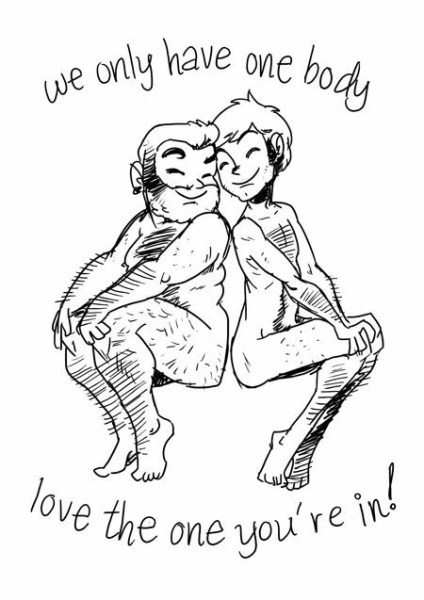
My Body – My pride!…

Have you every watched yourself standing infront of the mirror NAKED?. I bet most of you will say No. But why?, because we never loved our body. We grew up watching people teasing and judging each other by their body shape, size and color. “Look he’s so fat, looks like a balloon”
“Hey, why do you need a table, you’ve your own belly”
“Ohh you’re so dark, nobody will marry you”
“He’s wandering without a shirt, he should’ve shaved the body hair atleast. He looks like a gorilla wandering on the beach”
“She’s wearing a sleeveless and she didn’t even shave her underarms,Eww!”
We all grew up hearing such stuff including people commenting about our eyes, nose, hair, height and even sizes of sexual parts.
This hammering since the childhood made us hate our bodies. Even if we face mirror naked by mistake, we rush to cover ourselves up, cause this feeling that we lack something, we are not good is always there in back of our mind making us hate what god has given us.
But the basic thing is people are nobody to judge you regarding your body. You can grow body fat as you want, grow body hair anywhere you want, unless and until it’s causing use some physical trouble, don’t try to hesitate loving your body. People gonna say, even if your transform yourself from fat to fit or grew hair on your head. They will always have something to say. But it’s your self confidence which will make you love your body. Just give it a try. Explore yourself. Observe every mole, every scar, every stretch mark the life gave you till now. Cry one or two times if you want, but then feel proud of yourself the way you are. You’ll definitely feel strong and your confidence will rise high. Even I’ve tried to feel myself positive towards my body. Though I haven’t succeeded in it totally but I’m sure I’ll reach there soon. The feeling of liberation when we’re confident of whatever we have inside out is what we actually crave for. That’s why I’ve so much respect for boudoir artists. I mean we don’t even dare to face the mirror and they face the camera with pride. What an amazing level of self acceptance they’ve. They accepted themselves the way they are and carry that much pride to flaunt. I even interacted with few of them and they told me how it helped them to boost their confidence, how they feel positive inside out. If they can, then we also can! And yes it’s not necessary to face the camera always. Be yourself. Take pride in it. Even if you atleast start loving your body, it’s a clear win for you. Say it with pride, I’m proud of my body and I’m not ashamed!…

Social media in today’s era

Priya Yadav,
Social Media creates a virtual world through the internet which the user can access using any social media platform (Facebook, Twitter, Instagram). In today’s era, social media has become an important part of life, which has many features, such as providing information, entertaining, and educating. About 700 million people in India’s 125 billion populations have phones. From which 25 crore people have smartphones in their pockets. 155 million people visit Facebook every month and 16 crore people live on WhatsApp every month.
While social media plays a positive role, some people also misuse it. By using social media incorrectly, such people try to divide people by spreading maliciousness. Misleading and negative information is shared through social media, which adversely affect the public. And through social media, also there have been many developmental works that have enriched democracy, which has increased the unity, integrity secularism, socialist qualities of any country.
These days, the increasing trend of social media has not only caught the youth, but even the teenage students have not been able to stay away from its attraction. The habit of accessing these websites until the morning and before going to sleep at night has left the children far away from the real world. When the students sitting with their hands on their mobile phones will have time to introspect. The main reason for the increasing problem of stress among students is their increasing busyness on social media.
Disadvantages of social media
Loss of memory
According to a study done by social media, more use of social media has the opposite effect on memory. Important information is not safe in the minds of such people. Actually, in spare time, the brain works to secure information. But even in free people are busy in online activities, due to which their mind is not able to get rest and it directly affects their memory.
Communication skills are lacking
There is a lack of sociality in students who are always engaged in online conversation, that is why they avoid communication face to face with people in private, due to which they lack communication skills while every area of life, whether academic or having professional, excellent communication skills is very important because the art of effective communication increases your success percentage.
Concentration is affected
Even during studies, most of the attention of the children remain on the message notification on their phones, due to which their attention is not focused on education. The distraction caused by social media sites like Facebook, WhatsApp, Twitter, etc. That means the academic performance of students also falls due to distraction.

IGNORING THE MAIN ROLE

After actor Sushant Singh Rajput was found dead in his Bandra residence in Mumbai, reports claimed that the actor had been suffering from depression because of professional setbacks engineered by nepotism in Bollywood.
The film industry has been traditionally guilty of promoting family raj at the expense of outsiders. Rajput was a promising actor without being an A-lister or having a godfather in Mumbai. The infinitely bigger developing story of the same period was the impact of the Covid-19 pandemic. Rajput died on June 14, a period in time when the dreaded virus had been infecting unsuspecting people the world over, including India.
Two and a half months later, India is among the worst-hit nations in the world.

Each new day is the forerunner of bad news with thousands falling sick and many dying a few days after getting infected. The nation’s economy has hurtled towards a big crash with the GDP shrinking by 23.9 per cent in the first quarter of 2020-21.Lakhs of Indians have experienced job losses, among them daily wage earners whose lives are a struggle for survival even under normal circumstances.
Troubled by the news of sickness and deaths, faced with the possibility or reality of unemployment, and aware that there is no reliable vaccine and well-defined route of treatment, many are doing what they can to protect themselves from the wrath of the virus.
Other ‘brave’ ones who are being inexplicably reckless are not only more susceptible to the illness, but the infected ones among them are also guilty of spreading it among those taking precautionary measures. The presence of such irresponsible individuals is a significant worry for the Indian society.
Given a choice between continuous coverage of the pandemic and prolonged focus on the SSR death case, where should the media look? It must concentrate on the pandemic and its aftermath by delivering stories on health, economy and society to the consumer. The entry of the girlfriend in the script (Rhea Chakraborty, a national name now) followed by hysteria on social media enhanced the focus on the case, which is providing with the recipe for action in the media each day.
Cacophonic drama is irresistible for certain news anchors, who are capitalising on the story’s ability to deliver entertainment packages. These anchors are analysing the case endlessly, knowing they will find a captive audience that the coverage of Covid-19 may not guarantee.
The need to find viewers for TV shows and online visitors in an eternal rat race has made rationality disappear in many sections of the media. While that is not a good thing, don’t expect such disproportionate coverage to end anytime soon. The treatment of the Sushant Singh
Rajput case by many TV news channels is a good example of how the interrelated concerns about ratings and revenues drive news coverage in substantial parts of the electronic media. The mainstream electronic news media, it can be argued , has demonstrated a serious lack judgment by distorting national priorities. They also include the pandemic that shows a sign of abating with cases rising exponentially and putting public health system under unbearable strain

UNRESOLVED BORDER TENSIONS

Looking back at the past 70 years, China-India relations have moved ahead despite wind and rain and gone through an extraordinary development path. In the 1950s, the leaders of the older generation of the two countries made the historical decision to establish diplomatic relations between China and India, and jointly advocated the Five Principles of Peaceful Coexistence. “Hindi Chini Bhai Bhai” (Indians and Chinese are brothers) resounded throughout our two countries. From the 1980s, the two sides agreed to solve the boundary question through peaceful and friendly consultation, established strategic and cooperative partnership for peace and prosperity, and achieved all-round development of bilateral relationship.

Despite 2020 marking 70 years of diplomatic ties between China and India, the border tension over the past month has been heightened again.Troops from the world’s two most populous countries engaged in a physical clash. Although the two Asian giants are not stranger to border incidents, it was the first time in decades that the border dispute turned deadly. The question of whether India can sustain and withstand retaliatory measures from China is one that requires much thought and deliberation from the government. India fears that China is violating rules of origin norms and pumping goods into India through their common trading partners in Asia, by abusing the loopholes in existing trade agreements. The Ministry of Commerce and Industry in India has called into scrutiny various free trade and bilateral agreements that India is roped into, with countries that have similar agreements with China.
India has already refused to sign the Regional Comprehensive Economic Partnership (RCEP), fearing that it could pave the way to Chinese goods flooding the Indian market and overthrowing domestic manufacturers. However, if we are looking at backing out of other such regional and bilateral agreements as well, India has much more to lose than China does in the long run.
More concerning is the possibility that China may decide to strike back by throwing Indian companies out of China. We are already seeing reports of customs authorities in Hong Kong and China, holding back some consignments of Indian exports after Indian ports started inspecting Chinese imports. This is only going to get worse if India implements a blanket ban on Chinese imports, against all odds.
If India really seeks to check the unregulated flow of Chinese imports in India and create a dent in the Chinese economy, India would have to do a lot more than just cut down imports that are coming in directly from China. We would also have to narrow down all consumer products that are manufactured or processed, even in part, in China before finally being assembled and exported to India from another country. The obvious knee-jerk reaction of shutting down these big brands would only have a minuscule impact, if at all, on the Chinese economy. On the other hand, the question of whether India can sustain and withstand retaliatory measures from China is one that requires much thought and deliberation from the Indian government.
The coronavirus crisis, in particular China’s mismanagement of the initial stages of the outbreak, has generated intensely negative public sentiments against Beijing—in India and many other countries around the world. Countries have demanded an investigation into the origin and handling of Coronavirus. Indian app ‘Remove China Apps’ highlights backlash against Chinese business amongst the Indian public. Its popularity comes amid calls for a boycott of Chinese mobile apps in India as a border dispute in Ladakh fuels a backlash against products from China. It scans a user’s phone for apps such as ByteDance’s TikTok and Alibaba’s UC Browser and removes them. Popular Indian yoga guru Baba Ramdev described deletion of Chinese apps as a “national service”.
The COVID-19 pandemic is reviving sentiments against Chinese products in the country. The recent backlash against China over faulty testing kits or alleged suppression of actual numbers of infection are fuelling online campaigns in India urging people to reduce dependence on Chinese electronics and refrain from buying them.Previous boycott calls have focused on Chinese goods, whereas this one especially targets Chinese apps.
This isn’t the first time that Chinese products or brands have drawn flak in India. Some experts point out that in the short term this will raise questions in people’s minds, but in the medium term they don’t see any impact of these campaigns on Chinese companies or products

Period Leaves: Necessity For A Faction

Zomato, a restaurant aggregator and food delivery company, has been dominating the headlines of the tabloids since August. The reason? A landmark decision of introducing ‘period leaves’ for their women and transgender employees. On an annual basis, 10 leaves can be availed under this category. Regardless to say, this has stirred a full blown debate on and off the screens.

Though most of the people on Twitter have expressed support and elation over this progressive move, a faction of people have opposed the whole idea. The most common arguments that one will hear from the ‘against’ camp are about how women managed these with their sick/casual leaves. Or how the employers would be less inclined to include more female staff in the workforce, or consider them for an important position. Or, how there is a scope for the female employees to abuse these leaves and get an easy way out of commitments. 

Managing periods with casual leaves is a very ungrounded argument, for the labour policies vary drastically across different Indian states.  Under the Shops and Establishment Act, an employee working in Maharashtra has no sick leaves per say, and can avail a paid leave of upto 5 days for every 60 working days. On the other hand, an individual working in Assam can avail 12 sick leaves annually and has 16 earned leaves after 12 months of continuous service. This shows the glaring irregularity in the leave policies, which makes it very difficult for female employees of various regions to take menstrual leaves. Corporate sector needs to consider this, and seriously! Meanwhile, the government needs to find a ubiquitous solution too. As, this affects a significant working population of the public and private sector. The Menstruation Benefit Bill, introduced by Ninong Ering, a MP of Arunachal Pradesh in 2017, though didn’t see the light of the day, opened up the large avenue for consideration for the government. Bihar government has set an example here, by availing leaves of two days per month categorized ‘for biological reason’ since 1992.

We, as a society, have a flawed understanding about menstruation. As a result, most of the men, and sometimes women, consciously or otherwise, fail to acknowledge that menstrual conditions are far from universal. Each female experiences different kinds of pain and/or discomfort during their menstruation phase. Individuals with medical conditions endometriosis,dysmenorrhea, PCOS etc. suffer the worst brunt. Sometimes, even the travel to work elevates the pain and makes it unbearable. And trying to justify the gender bias on the basis of biological processes is a matter of regressive judgement. Now, a question might be possessed, is it constitutional? Especially when our Constitution stresses on equality. The answer is an undebated yes. Article 42 of the Constitution mandates “provision for just and humane conditions of work and maternity relief.” As a mid way solution, some companies have the provision of work from home, for those who have the desk jobs. This allows the female employees to work comfortably at their own convenience. Also, with the technological support available, attending meetings are also a possibility and in many companies, a reality. A bit of co-operation can go a long way for inclusivity of all the employees without any compromise on their health and well being. 

The naysayers made a special point regarding the field jobs, for it is more demanding and requires being in action all the time. Regarding this, journalist Barkha Dutt has argued how female employees have to work double hard in certain fields to prove their merit than their male counterparts. And the introduction of ‘period leave’ might leave them with an obvious disadvantage. While this is a valid concern and hence needs further discussion and deliberation, the moot point boils down to how this leave is an OPTION for those who are in dire need of it, and hence does not account for the blatant generalization that is being made.

At present, open conversation and sensitization about menstruation is a requirement. Because, the stigma attached with the leave prevents many women from availing it. With the taboo about menstruation in India, many women actually choose pain over the shame and embarrassment! The de-stigmatisation also creates an understanding and sense of empathy in the male counterparts. At the very least, individuals availing the leave deserve a ‘benefit of doubt’. Also, not everyone has the same pain threshold, so it is upon the females alone to decide if the pain is overbearing enough to avail the leaves. 

It is high time that menstruation is viewed just as a biological process, shedding all the social taboos attached to it. Then only, proper and inclusive discussions can be held regarding the validity of these leaves, where women from all spheres of economic development have their contribution.

Website referred:

https://paycheck.in/labour-law-india/leave-and-holidays/state-wise-leave-provision

Insights –2nd day of JEE MAIN 2020 with Paper analysis.

Irrespective to student’s opinion, Govt. managed to organise the JEE Main Exams for nearly 8 lakhs of students from 1st of September to 6th of September. On the first day of exams i.e. 1st September, there were many speculations and doubts on the conduction of exams. However, there was no big news of any kind of unwanted and bad news across the country. Same was the situation in 2nd day. There was no such news of unpleasant incident around the whole country and exam went smooth, we can say although it faced many other issues. There was the news of students getting late across the country.

In a major announcement today, just half-an-hour before the exam began, the Nagpur bench of the Bombay High Court said that the students residing in flood-affected areas in Vidarbha region of Maharashtra can approach the National Testing Agency (NTA), if they were unable to reach the exam centre or reached late. The court also asked NTA to check the veracity of the claims and decide their representation within 15 days.

The JEE paper 2 was held yesterday and today onwards, the engineering exam will be conducted. JEE Main morning shift timing is 9 am to 12 noon. NTA conducted 1st shift exam with all security measures and students maintained social distancing. But still, some centres were failed to maintain social distancing and students shared photos and videos on twitter for the same. Due to the COVID-19 pandemic, the exam is being conducted amid special arrangement, from no shoes with thick soles to mandatory masks at exam hall – several arrangements have been made by the NTA. Over 10 lakh masks, 10 lakh pairs of gloves, 1,300 infrared thermometer guns, 6,600 litres of hand sanitiser and an equal amount of disinfectant liquid, 6,600 sponges, 3,300 spray bottles and 3,300 cleaning staff have been arranged at an additional cost of almost Rs 13 crore.

JEE Main 2020 for B.Tech/ B.E shift 2 has been concluded at 6 pm across 660 centres. Students are coming out of exam centres. The exam will be conducted at 660 centres across the country, which was increased from 570.

Analysis

On the analysis of the paper of JEE Main 2020, Exams pattern was observed like following. Paper was on the decent hard level. As per students, student’s reaction was not quite good. The stress of paper and fear of being corona positive while visiting the centre was peeping out from their faces.

-The overall level of the exam was Easy to Moderate. 

-Most of the Students were able to attempt 13-14 questions easily.

-however, physics section was a little difficult.

-Maths was moderate but they were quite time consuming.

-Chemistry was the easiest part in all three subjects.

-A lot of questions were based on NCERT & Applications (60-70%).

-Distribution of all questions were uniformly asked from whole syllabus in each of the subjects.

To know more about the question paper and its detail with every question, you can browse the JEE paper too. National Testing Agency (NTA) will publish JEE Main question paper PDF at nta.jeemain.nic.in. It will be released in candidate login, at jeemain.nta.nic.in.

The Joint Seat Allocation Authority (JoSAA) will start counselling for admission to IIITs, NITs, and GFTIs soon after the declaration of the JEE Main result. The registration for JoSSA counselling, according to the JEE Advanced brochure, will begin tentatively on October 6.

Candidates, who qualify in JEE Advanced 2020 and seek admission to BArch programme in IITs, will be required to sit for the Architecture Aptitude Test, or JEE Advanced AAT 2020.

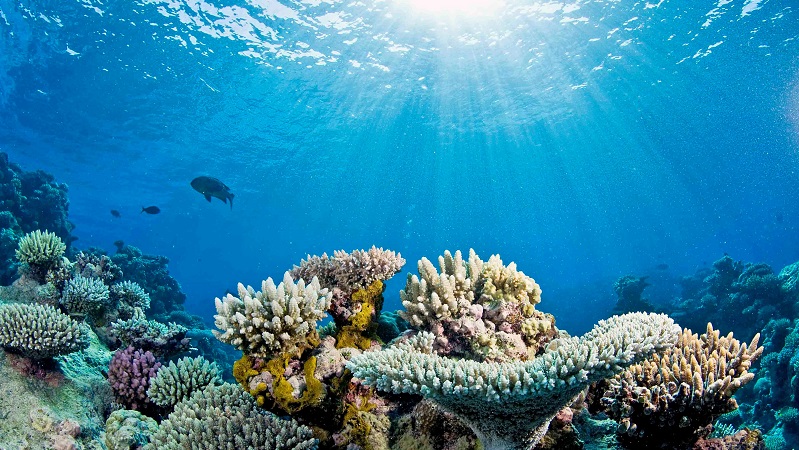
Acidification of Ocean causes Coral ‘Osteoporosis’

Retrieved from climatechangenews.com

It has been long since the scientists have been suspecting ocean acidification being the cause of affecting corals’ capacity of forming their skeletons. They were not able to isolate the effect as continuous heating of ocean temperatures due to warmer weather also contributed to effect on coral growth. The scientists of Woods Hole Oceanographic Institution came up with new study according to which certain impact of acidification of ocean on reef was seen. The study was funded by the U.S. National Science Foundation which was later published in Geophysical Research Letters. In this study, scientists showed a remarkable reduction in coral skeletons’ density due to continuously increasing acidity since the 1950s, of the Great Barrier Reef which is one of the largest coral reef systems in the world.  

Because of the declining pH of the ocean (turning more acidic), the animals like corals are finding it difficult to build their skeletons as acidification of the ocean leads to less density, taking away coral’s strength in the same way as osteoporosis withers human’s bones. The scientists say that it can be easily detected just by seeing them that they are not stronger anymore and it will heavily affect the reef and break it.

Yoga: Physical and Mental fitness.

Benefits of yoga

Yoga is a complete combination of spiritual, mental and physical practices which was originated in ancient India. It is followed by many people all around the world. It is adapted by the people in their lifestyles on daily basis  Yoga is a type of work out that involves both mind and body, it is much more than just burning calories and strengthening muscles.

Among with them their are some other major health benefits of yoga.

Improves overall health.

Yoga is combined of cardio, functional and strength training which effects the overall health physically and mentally. Yoga helps in developing core strength, improving immunity, improving mental health, improves heart health, increases immunity, decreases stress, etc. A few minutes of yoga everyday can bring some good changes in your everyday lifestyle.

Develops strength.

Yoga poses requires balancing of the body, and it takes a lot of strength to hold your body in balanced posture. Regular yoga helps you to strengthen the muscles of your arms, legs, back and core. It works as a full body workout. 

Boosts metabolism.

Yoga can be a very good way to increase your metabolism. As it helps in improving digestion, circulation and increasing lean muscle mass. And by boosting the metabolism, yoga can also help in loosing weight as it helps in burning calories.

Improves flexiblility and posture

Yoga poses works by stretching your body muscles. Regular yoga is a great way to improve your flexibility and posture. Few weeks of daily yoga can help you to feel less stiff and you will be able to move your body better. It also serves the purpose of keelping your body toned.

Improves mental health and concentration.

Everyday yoga helps a person to relax mentally and concentrate better. Yoga and meditation requires you to concentrate on your breathing, it helps you to calm your mind and be more relaxed mentally. As a result few minutes of yoga in the morning can result in better concentration throughout the day.

Plight of Dugg Dugge Brahmins

Maharaja Gulab Singh brought Dugg-Dugge Brahmins from Rajasthan approximately 170 years back to accept ‘Shani Daan’ and to perform ‘Shani Dev Pooja’ as a priest as Hindu priests were not ready to accept ‘Shani Daan’ and denied to perform such ‘Pooja (worship)’ and accept ‘Daan (alms)’ related to ‘Shani Dev.’ The Brahmins who were bought on special request in 1970’s are now living in inhumane conditions and have not even issued domicile certificates till now. They still collect alms on Saturdays and some of them are seen on roads as astrologers or palmists.

They are scattered in the areas of Ramban and other parts of Jammu region. These communities’ people are still waiting for their domicile certificates whereas Gurkha and Valmiki communities were the first to get it by the BJP leaders after last year’s revocation of Article 370 and 35- A. The administration had been dawdling the matter of issuing Permanent Resident’s Certificate (PRC) to the people who had no land records or ration cards as these are necessary parameters for domicile certificates. They cast their vote in elections every year as they have been issued with Aadhar card  but can’t get PRC in the view of no land of theirs at the place.

There are 27 families comprising 136 members of the impecunious community residing at Maitra in Ramban district. Bakshi Ghulam Mohammad, who was the Prime Minister in Jammu and Kashmir at that time had allocated a piece of land at Phelti Maitra in Ramban to the nine families of this community. Though in 2012, the ruling government provided them ration cards which were discarded in 2015-16 due to unknown reasons.  They live in huts or shanties which have electricity connection but no water or toilet facilities and the area in which they reside is known as Bakshi Nagar after the Prime Minister who had provided them at least a place to live.

They can’t get proper education because of poverty, in the whole community there are only two boys who have got college education and a girl whose education is going on. Those two boys also left their education to do some menial work to earn money.

Though they have been given assurance by the government recently that their domicile certificates will be issued soon and it is a ray of light in their lives.