Reality shows have now become the latest end. Their initial popularity with the masses, helped in the number of such shows produced today. Reality shows take the form of various competitions and challenges where celebrities or the common man participate. There is or essentially no script involved and the interest of the show lies inherently in the personality of the audiences and the tasks. Many of these competitions are judged by eminent personalities within the field. There was a need for a change in the television industry from the onslaught of the various soaps that were telecasted.
However, the question that emerges today is…how real are these reality shows? May critics believe that there isn’t even a modicum of reality in any of these shows. They are often scripted and only aim at high TRP’s. The shows have a planned course and the masses are simply captivated. Though they provide raw drama and an undisputable display of anger, love, guilt and jealousy, these are often tactics used to keep the audiences fastened rather than a genuine display of emotion. There are many others, who are loyal supporters of reality shows and believe that they have indeed provided a platform for the common man to exhibit his talent and gain success. Various dance and singing reality shows as well as quiz shows for children and adults provide them with a means through which provide, they can showcase their talent and intelligence Through these shows they often gain various opportunities to prove their courage. But sadly, one cannot deny that the USP of many of these shows is emotion and melodrama and as a result the purpose of the show is often side-lined. The recent crop of reality shows have come up with themes that tends to belittle important social institutions. In spite of the fact that it has its own pros and cons various channels and producers are misusing the originality of these shows by introducing new themes and shows to keep the masses entertained. Some of the most popular Indian reality shows include ‘Kaun Banega Crorepati’, ‘Big Boss’ and ‘Indian Idol’. Many movie icons are also willingly accepting the task of anchoring these shows so as to connect with people and exploit the scope of T.V as a medium of maintaining one’s popularity.
However, there is a need to ensure that this genre does not deteriorate like the previous trends. The shows must always be well researched and fresh in its approach rather than look at reality T.V as a formula and launching shows that have little creativity and uniqueness.
“That is part of the beauty of all literature. You discover that your longings are universal longings, that you’re not lonely and isolated from anyone. You belong.” ― F. Scott Fitzgerald
In today’s world of cut-throat competition and skills-based learning, parents, particularly in India, encourage their children to pursue higher education in the sciences, especially in engineering and medicine as the number of job opportunities in these fields are far more than in any other field. Consequently, there is a predominant idea among large sections of the society in India that those who pursue subjects related to Humanities and Social Sciences are less intelligent and that these subjects are only of academic importance, having no real value in the practical world as they offer limited employment opportunities.
However, such people are mostly ignorant or not highly educated as they tend to make injudicious comparisons between fields of studies, most of them do not realize that the Arts and the Sciences are interconnected. As there have been scientific movements in the course of history, whereby earlier pseudo-scientific notions were replaced with modern inventions and discoveries, so there also have been artistic and literary movements that have displaced the age-old concepts in a similar manner, transposing them with newer approaches. Accordingly, even the study of literature has become more practical in approach and has adopted the experiential method of learning. Few people are aware of the fact that the inspiration behind Einstein’s theory of Relativity was the writings of the sixteenth century philosopher and visionary, Giordano Bruno.
The study of literature has actually had a humanizing effect on people. It has opened the eyes of people to the problems of the world and has enabled them to empathize with the victims of an unequal social order. Knowledge of these has induced many industrialists and business people to involve themselves in philanthropic activities. Also, literature has provided us insights into the cultures and practices of different countries across time Through the study of literature, we have come to know about the social orders of ancient Greece, India and Mesopotamia as well as of Medieval Europe and Early Modern America and Europe.
A Literature also provides us with a welcome respite from the hectic day-to-day lives because it is also a source of entertainment in the form of theatrical productions and films. Good films and plays provide families the opportunity to be together, even if for a short while. This is important in maintaining the familial bond because every individual is always busy in chasing his or her dreams.
Lastly, one cannot help but admit that good stories are always welcomed and they are an integral part of human existence, and all good stories are nothing but literature. Thus, we cannot deny the fact that literature helps in enhancing the whole personality of a reason. It has the power to lead the whole society towards the right path.
It’s a relief to hear the rain. It’s the sound of billions of drops, all equal, all equally committed to falling, like a sudden outbreak of democracy. Water, when it hits the ground, instantly becomes a puddle or rivulet or flood………………….Alice Oswald
Among many other season which Bengal enjoys, the rainy season is one of them. It starts in the first week of July and continues up to September. It sets in with heavy showers which brings great relief after the hot days of Summer. The earth bursts into green grass. The wrinkled plants turn green. The dry ponds, pools and rivers are filled up with water. Nature bears a charming scenery everywhere. The farmers’ hearts swell with joy. They become busy with preparing land for sowing. The timely rainfall proves to be a happy boon to them. It brings the crop on nicely without irrigation. Thus, the rainy season is very useful and important.
But the rainy season is also the source of troubles. The village roads turn muddy. The accumulation of water here and there stops the movement of vehicles. The communication system is cut off. The possibility of the spread of many diseases becomes more. Not only this, the excessive rain causes flood. The crops are damaged and the lightly built houses collapse. People are rendered homeless and helpless. The outdoor work is prevented. The poor are bound to suffer.
However, the rainy season is liked by many people. They find the beauty, joy and attraction of the spring and the autumn in this season. The green scenery everywhere makes nature look like the newly married bride. The half-fed animals of summer look blithe and boony because of the abundance of fodder in nature. The frog’s crock, the peacock’s dance, the peasants’ song and the drizzle of rain water make nature throb with life. Thus, the rainy season is as enjoyable as the spring and the autumn.
With the growing physical and mental development an adolescent wants to express his opinion independently, to take part in different social activities and to become self-dependent like any adult member of the society. On attaining adolescence, the child who earlier used to depend on his elders, finds himself full of life and energy and cannot help but to take part in the diverse activities of the society. Thus, he defies the dominance of his elders and wants to proceed in life independently
Need for self-recognition
The adolescents not only want to take part in different social activities but also want self-recognition. They want to attract attention of other people by showing their abilities. The children in adolescence want to project themselves before the society in such a way so that people can appreciate their qualities and give them due respect and recognition.
Need for self-expression
There is a great desire among the children in adolescence to express their feelings, thoughts and ideas. At this age, every child wants to express himself in his area of proficiency like sports, dramatics, studies, music, literature, art or any other medium.
Need for social life
One of the important needs of adolescents is to take part in the greater social environment. Before entering into the age of adolescence, children do not get much scope to mix with people outside their family. But as they attain adolescence children want to experience the greater social-life and want to get involved closely in different social activities. This need for social life gets an outlet when the adolescents involve themselves in the activities of different social institutions like club, social welfare committee, community service etc.
Need for self-reliance
Another important need of children in adolescence is the need for self-reliance. There is a great desire among the children of this age to become self-reliant as soon as they attain puberty. And they start dreaming about their future professions and the ways to establish themselves in their respective fields. The children of this age are also very eager to acquire professional qualifications according to their choice.
Need for Philosophy of life, morality and need to know the unknown
The children in adolescence want to have a philosophy of life, a clear concept of morality and want to know all the things which are unknown to them. They have a lot of inquiries regarding the basic purpose of life. They want to know how human life can be goal-directed and what is the main aim of life. When the children attain puberty, they also indulge in a great deal of thinking over the concept of right and wrong, good and bad. They want to evaluate all the activities of themselves and people around them in accordance with the concept of right and wrong. There is always a tendency among them to do whatever is morally right. And if they do something morally wrong, they go through terrible mental agony. At adolescence, there is also a great desire among the children to know what is unknown to them. The new discoveries of science have a great influence on the minds of adolescents.
Need to satisfy sex-related curiosity
As the children attain puberty they develop a deep sex-related curiosity. This curiosity greatly perturbs them as the result of natural outcome of their sexual development. First, they try to satisfy this curiosity by natural means. But later, by being ignored or scolded by the elders, they try to satisfy this curiosity through abnormal ways. Adolescence is one of the important stages of growth and development of the child. At this stage a unique disturbance develops in the mind of the child. According to modern Psychologists, this disturbance in the mind of the child is not an essential outcome of his physical development, rather it occurs in the mind of adolescents because of unfavourable environment.
“A lie that is half-truth is the darkest of all lies.” ― Alfred Tennyson
In true sense, the word deception implies ‘make believe’, that is, convincing a person that something exists whereas, in reality, it does not exist. Deception is a simple tool for enticing people and trapping them to believe in something unbelievable. This is an evil that has subsisted among human beings since time immemorial in literature and history we come across several uses of deceptive methods; even in our contemporary world, deception is rampant. In fact, such is the enormity of deception that it is often difficult to distinguish the real from the fake. Consequently, even today we come across reports of how many large corporations, especially related to chit funds, dupe their investors through unrealistic schemes. As a result of their ‘get-rich-quickly schemes lakhs of innocent investors lose their lifelong savings because they are shown the dream of coming out of their miseries but are pushed to the brink of perishing.
Deception is also a major tool used in forging currency notes and other negotiable instruments like cheques and drafts. Governments across the world have introduced many new techniques to ensure that their markets are not flooded by fake currency notes or negotiable instruments but, so far, there has been no fool-proof methodology to prevent the menace. Master criminals always manage to deceive by preparing exact copies of the originals. The same applies for important documents like passports and visas.
With the dawn of online shopping, fraudsters have had a free-run as it is practically easy to dupe people and escape without leaving a trace. People end up paying money for products bought online but never actually receive the goods on many occasions, or even if they do, such goods are either defective or elaborately wrapped empty boxes are provided. Consequently, tracking cyber-criminals is very difficult and the number to solved cases is low.
However, like everything else, even deception is a double-edged weapon: it can be used against a deceitful enemy and so serves as an important military tactic, especially in guerrilla warfare. We have read how Babur, the first Mughal Emperor enticed Ibrahim Lodhi to charge headlong and then fall into the covered trenches on the battlefield or how Chhatrapati Shivaji, the great Maratha warrior, used deception to kill Afzal Khan and harass Aurangzeb. Nobody can ever forget the deception carried out by Mark Antony in inciting the Romans from the Forum to rebel against the conspirators who killed Julius Caesar.
In present day military tactics, elaborate plans are drawn out to combat the enemy. The best-known methodology is to plant spies among them so that delicate information can be easily retrieved and the opponent’s actions can be monitored.
“Animals are a window to your soul and a doorway to your spiritual destiny. If you let them into your life and allow them to teach you, you will be better for it.”― Kim Shotola, The Soul Watchers: Animals’ Quest to Awaken Humanity
God’s creations
“Wherever there are wild animals in the world, there is always an opportunity for caring, compassion and kindness.”― Paul Oxton
Animals are the creations of God. They are as much important in the scheme of things as men. Animals, nature and man constitute the ecology. Harm to any of these means the disturbance of the ecological balance. Moreover, as God’s best creation, man has the responsibility to look after the welfare of the animals, which undoubtedly look forward to man for protection and survival. If man fails to do this duty it would be a moral crime on his part.
Respect to Almighty
“love about any animal or bird is pure because in that love u dont expect anything from them”― Kedar dhepe
Love of animals is the love of God. It is wrong to do harm to the animals, to beat them and kill them. Animals are generally good. They do not harm anybody unless they are harmed. They kill others for necessity and sport. Even ferocious animals like tigers and snakes do not injure or kill anybody unless they are attacked. Love of animals is an essential part of human nature. The domestic animals like cows, dogs, cats serve us faithfully. Small animals are dumb and meek. They depend on us. So, it is wrong to oppress and kill them. It is our moral duty to love them and keep them in their own places If we love them, they will love us and thus a natural bond will be established.
Love to nature
“The way you treat the animals around you will be the nature of the animal within you” ― Sir P.S. Jagadeesh Kumar
Animals like tigers, lions, deer end many others are part and parcel of Nature. They provide beauty and harmony to Nature. Reckless destruction of these animals is as bad as rash demolition of forests. Preservation of wild animals is a duty for all. They maintain the balance in nature. Moreover, they are a big attraction to the children, men and foreigners. We like to see the variety of God’s creations. It is also our duty to preserve them.
Work is worship for those who take work seriously and it should be so because your work reflects your personality to some extent and how we do it is also part and parcel of our identity. Here in, comes the real trouble because when you do the work you enjoy, you try to put in your heart and mind into it but, if you are unfortunate enough to be doing the kind of work that you are not proud of, then surely enough it shows in your outcome.
Money, being the prime factor in today’s world and so, when your sole priority is to mint money, then it hardly matters whether you are an engineer or an interior designer. You would try to impress upon the authorities in your field with the sole objective of prosperity in your field. For this, you may go to any extent of unethical attempts, without even thinking about its aftermath.
Mental tension and stress and the related health hazards are all part and parcel of today’ s changing world. Today’s young generation is the first generation of professionals who are earning, four times more than what their parents have earned and so they have a lot of money at their disposal, which is making them spend more All this was possible only because of India’s changing economic condition and the advent of multinational companies with huge capital investment and infrastructure.
In fact, the call centre culture has also changed our lives for the worst, since lifestyle patterns are changing drastically. Initially, youngsters seem to be enjoying the western influence of working like asses on five days and reserving the weekends for parties and celebrations. And to get those two days of relief, they are ready to slog whether they like their job or not. It henceforth, becomes a mechanical slogging where, you are not concerned, whether your mind is at work but it’s just about the finished product that they look forward to. On the whole, we cannot rule out the fact that there are people, who are fortunate enough to bag the job they desire or those who have ultimately landed in those fields, where they have wanted to be. Such people are really lucky in the sense that they do their work with the utmost dedication and they have a fulfilment in life, even if they are not taking home fat salaries like their counter-parts, but don’t have any satisfaction to boost of.
There is a third side to all this and that is trying to derive meaning in whatever meaningless things we are doing to make both ends meet. So even if, one is in a job that is detested by him, he can still work towards generating a positive attitude to one’s Work. Try and enjoy, what one is doing and thus try to attain a sense of satisfaction, that he supposes, he could have otherwise got.
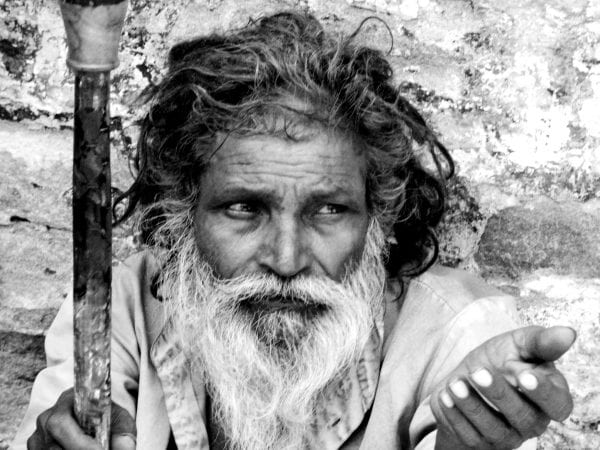
At a tender age when children should study in schools, play with toys and enjoy their leisure, many of them are seen on roads seeking alms to make both ends meet due to selfish motives of some miscreants that make them beg under extreme conditions. Masked perpetrators of such deeds are making it a huge business by remaining behind the scenes. The plight of such children is really heart-wrenching. Several initiatives are taken by various institutions and NGOs to check it, but to no avail. Not because they are not true to the work they are doing, but because people like us are not ready to accept that by giving them money we are encouraging begging. The situation is not better throughout the nation as these beggars can be seen begging at traffic intersections, market places, religious places and outside educational institutions. Many of them are mowed down by speeding vehicles. Such children sometimes take to stealing and snatchings. They also disrupt the traffic. There is a need to unmask those elements who are behind the menace. Don’t encourage begging, instead help them by instilling positive ideas and educating them. JASPREET SINGH, PATIALA, editorial@tribune.com
A Street Beggar Begging has been declared an offense in independent India, but it has really no real impact. On almost every red light’, there are number of beggars who beg in the name of mercy or religion. Initially, people used to beg only in desperate circumstances but now-a-days, it has become a profession. Those who can make easy money by begging. do not want to work. And at times, they can earn more than an honest worker. At every crossing, a woman carrying a child, a handicap person. young children asking for alms for food or in the name of God, IS a common sight. They can all work to earn their livelihood, even the handicapped, because all self-respecting people try to stand on their own feet. Of course, crippled people should be helped, but not by giving them alms. Begging cannot be justified at any cost. People use different innovative ideas for begging. Some form singing parties, some wear saffron clothes and carry a bowl, others beg in the name of charitable institutions. Some try to rouse sympathy by carrying small, crying, hungry infants but while giving aims to any beggar, one should always remember that one is not helping the beggar in any way by giving them money but is only satisfying his ego of being a kind and benevolent man. Begging is a stigma on the name of any nation and charity should be given only to charitable institution so that it reaches those who really need them.
“The greatest patriotism is to tell your country when it is behaving dishonorably, foolishly, viciously.” ― Julian Barnes, Flaubert’s Parrot
Patriotism means love of one’s motherland. The attachment to one’s motherland is as innate as one’s affection for one’s parents. Man’s first loyalty is to himself, then to his family and then to his own country. India is a land of many cultures, traditions, and languages. But Indians stand as one whenever there is a threat to the integrity of India. They stood up unitedly at the time of the Chinese aggression. Recently it has been proved during the Kargil war in Kashmir. Thus, patriotism brings out the qualities of unity, service and sacrifice. Patriotism encourages the noble quality of self- sacrifice for the cause of one’s country.
Gitanjali 35
Where the mind is without fear and the head is held high; Where knowledge is free; Where the world has not been broken up into fragments by narrow domestic walls; Where words come out from the depth of truth; Where tireless striving stretches its arms towards perfection; Where the clear stream of reason has not lost its way into the dreary desert sand of dead habit; Where the mind is led forward by thee into ever-widening thought and action Into that heaven of freedom, my Father, let my country awake…………BY RABINDRANATH TAGORE
Patriotism, however, sometimes develops a false national pride. The people of a particular geographical area have intolerance for the people of other areas. They even nurse evil feelings and enmity and go to war. This is not real patriotism. We know the horrors of war due to aggressive patriotism.
We have to shed mutual bickering, shed the difference of being high or low and develop the sense of equality and banish untouchability. We have to restore the conditions of Swaraj prevalent prior to British rule. We have to live like the children of the same father.- Sardar Vallabhbhai Patel
Patriotism is a noble virtue when love of one’s country does not lead to the hatred against other nations. One’s love of one’s country should expand itself into a love for all world. Narrow patriotism reeds passions and prejudices and so it is despicable. It brings hatred and wars. True patriotism must seek peace and prosperity of e world. It must be free from narrowness and meanness. It is Possible to combine patriotism with love for the people of the world. Thus, patriotism may least to international brotherhood.
Men, money and material cannot by themselves bring victory or freedom. We must have the motive-power that will inspire us to brave deeds and heroic exploits. -Netaji Subhash Chandra Bose
“All round me are words, and words and words, They grow on me like leaves, they never Seem to stop their slow growing From within… But I tell my self, words Are a nuisance, beware of them, they Can be so many things, a Chasm where running feet must pause, to Look, a sea with paralyzing waves, A blast of burning air or, A knife most willing to cut your best Friend’s throat… Words are a nuisance, but. They grow on me like leaves on a tree, They never seem to stop their coming, From a silence, somewhere deep within…” ― Kamala Suraiyya Das, Summer in Calcutta
ABOUT THE POET
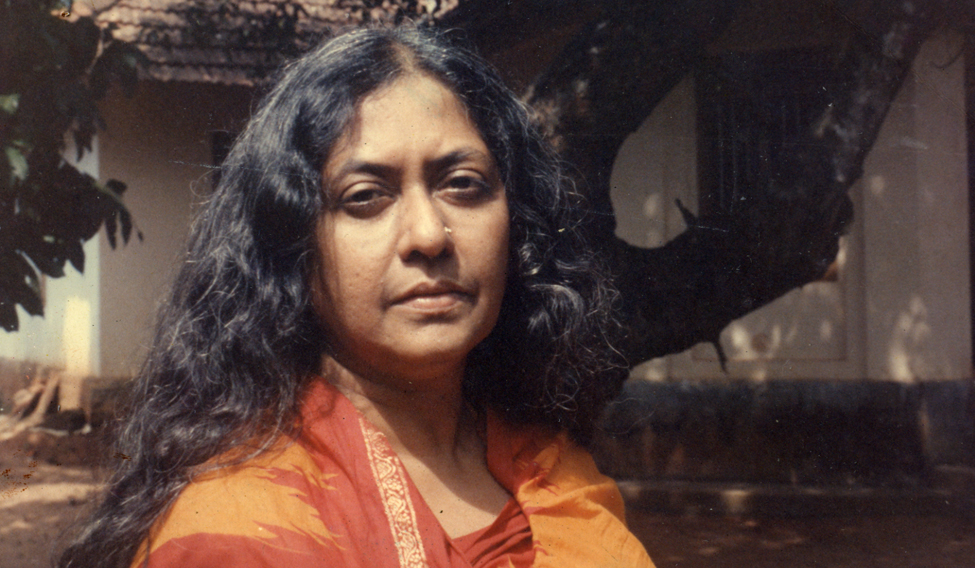
Kamala Das was born in the year 1934 in Malabar, Kerala. She received her education at home. Her mother wrote poetry in Malayalam and Kamala Das also published short stories in Malayalam before her first book of poems, Summer in Calcutta’ appeared in 1965 and brought her recognition. Her works in English include The Playhouse and Other Poems’ and her autobiography ‘My Story’.
Her poetry is frank and open. It impresses by being totally natural and distinctively feminine. Her favourite theme is fulfilment and unfulfillment in love and her expression is striking for its frankness and intensity of feeling. She won the poetry award of the Asian PEN, Manila in 1964 and the Kerala Sahitya Academy Award in 1969.
THE POEM
In this poem Kamala Das recreates idealized moments in her childhood. It is a nostalgic, sentimental reminiscence of her family home in Malabar. She remembers the landscape of Kerala. Others may be annoyed by the heat dust and noise, but she always longs for the hot noon in Malabar because it is associated in her mind with wild men, wild thoughts, wild love.’ It has been often said that her poetry is in the nature of a psychic striptease and she always exudes autobiography. Most of her poems deal with the theme of unfulfilled love, her search for love and her failure to get it. Some of them, like the poem under consideration also deal with the loss of her happy childhood in the family home in Malabar. She writes, from every city I have lived, I have remembered the noons in Malabar with an ache growing inside me, a homesickness.’
The poem is a nostalgic journey down memory lane and the poetess looks back on her pre-marital years when she lived happily in her family home in Malabar. She particularly misses the hot noons of Malabar when the streets of Malabar used to be crowded with interesting people and pleasant sounds, beggars, bangle-sellers, fortune-tellers and other strangers used to throng the streets. She confesses that no doubt her house in Calcutta also gives her a chance to see and hear similar type of people. In the Calcutta streets also can one see a fortune-teller with parrots and soiled cards, beggars and bangle-sellers sell their wares in sing-song voices. But there is a major difference between the noons in Malabar and those in Calcutta.
Everything and everybody in Malabar bore a look that was innocent pure and familiar. All pulsated with a warm and full life her home, the Malabar town and its landscape. Contrasted with it Calcutta appeared strange and dirty. The cries of the beggars, fortune- tellers and bangle-sellers jar harshly to the ears of the poetess. There are jungle voices and their eyes hot burning and wild. The heat of the noon in Calcutta is maddening and strange.
To live in Calcutta is a torture for Kamala Das as her mind and body reject this environment. Her soul yearns to return to her heavenly home in Malabar where she spent a joyous childhood.
Malabar was a place which the poetess associated with love but in Calcutta she finds the people to be freaks, abnormal persons who cannot love. The poetess attempts to show that the transition from childhood is from a world of joy and love into a cold, indifferent world. The childhood memories are a much-needed relief.
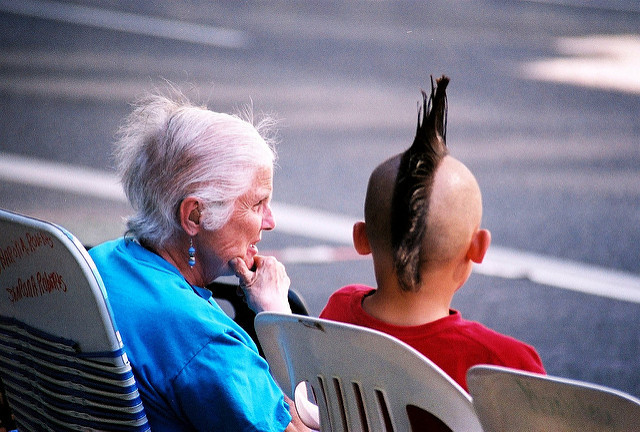
The gap between the old and the young people is called generation gap. Old people feel that lack of respect for the elders and disrespect to the existing system of the society will bring disaster for young generation. Young boys and girls, on the other hand, feel that ‘the old are fools’. The gap between the old and the new generations is widening owing to several reasons.
First, all young people feel that the present education has no relation with the realities of life. Secondly, the present life has become busy and fast. Thirdly, the young people are generally idealistic. When they find corruption in every sphere of life, they feel disgusted. Fourthly, to express their unhappiness with the existing state of affairs, young people take to violence or behave oddly.
In order to bridge the generation gap, elders should be sympathetic towards the young. They should realise the emotion, ambition and problems of the young. The young should realise that they have no experience in life.
So, they should value the advice of the elders. The general gap between the two groups of people is so wide in the western countries that they live separately. In India the traditional joint family system has slowed the growth of this gap. But now such a family also is breaking down.
“O master poet, I have sat down at thy feet. Only let me make my life simple and straight, like a flute of reed for thee to fill with music.”— Rabindranath Tagore
ABOUT THE POET
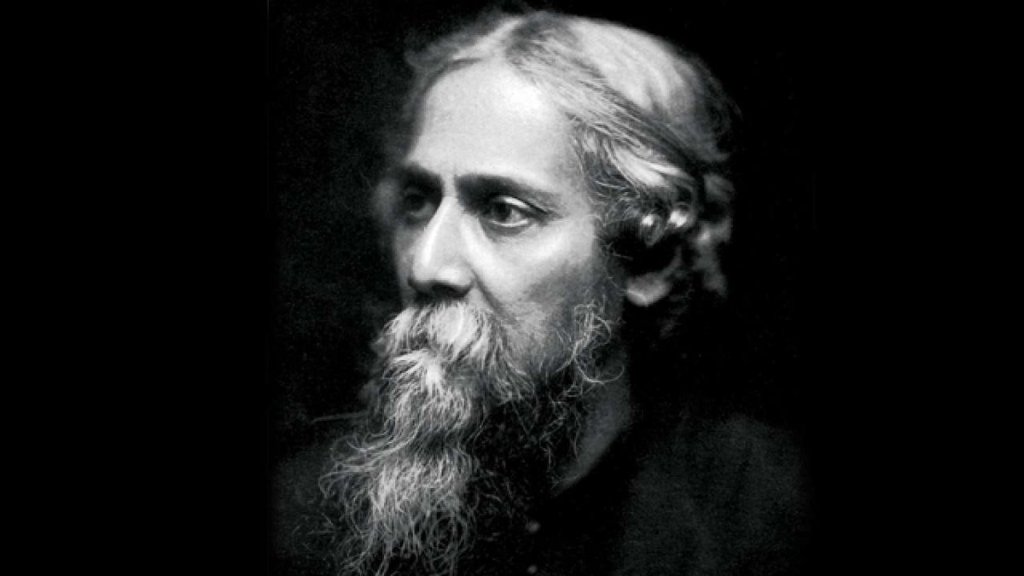
Rabindranath Tagore was born in Calcutta on May 6, 1861. Tagore came from a wealthy Bengali family. He was educated privately and went to England in 1877 to study law but soon returned to India or a time he managed his father’s estates and became involved with the Indian nationalist movement writing propaganda. His characteristic later style combines natural descriptions with religious and philosophical descriptions. He is our greatest poet after Kalidas. His Gitanjali published in 1912, won the Nobel Prize.
Tagore wrote a large number of lyrics in Bengali and translated some of them himself into English. He also wrote novels, short Stories and plays. His best-known novels and poetry include The Gardener, The Crescent Man, Songs of Kabir. ‘Chitra’ etc.
Tagore was a messenger of India who showed Europe some of the beauty and greatness of our ancient land. He brought great glory to his motherland.
THE POEM
‘Flute-music’ is the story of a lower middle-class clerk who lives an abject poverty. He lives in a dingy room on the ground floor of two Storeyed houses. He barely manages to exist on his meagre salary and feels suffocated and nauseated by the darkness and foul smell of the alley. But one evening the music from the flute of one of the Residents makes him dream and he feels uplifted like a king. He dreams of marrying the girl of his dreams and forgets his destitute life.
The poem gives an account of the poverty-stricken existence of a middle-class clerk.
In Kinu, the milkman’s street, on the ground floor room of a double storeyed house lives a poor clerk. The windows of the room have bars, the walls are old and peeling, falling to dust in most places or damp with moisture. On the door of the room is pasted Picture of Lord Ganesh, the god who brings success and prosperity, taken from a roll of cloth. Apart from the clerk there is another inhabitant of the room who lives without paying any rent, it is a lizard. But there is a difference between the lizard and the clerk, unlike him the lizard never goes hungry. The clerk gets a salary of twenty-five rupees a month as a junior clerk in a trading office. The Datta’s give him food for giving tuition to their son. In the evening he goes to Sealdah station to save the cost of electricity in his room and to while away time. Engine’s puff, whistles shriek, coolies shout, passengers hurry past. He stays there till past ten ‘o clock and then goes to sleep in his dark, silent and lonely room.
In a village, situated on the banks of the Dhalesvari river, his aunt’s family resides. He was to marry her brother-in-law’s daughter. The moment was lucky for her, no doubt about that, as he ran away. The girl was saved from marrying him, a poor man and he was saved from her. She did not come as his wife to the room but he was always thinking of her: dressed in a Dacca sari, with the red vermilion on her forehead showing her marital status.
It was raining heavily. His cost of travelling by tram mounts. But still his pay is deducted for reaching office late. In the street are strewn mango peels and stones, pulp of jack-fruit, rotting fish-gills, dead kittens and all kinds of other rubbish. Like his fast-diminishing salary his umbrella is also full of holes. His office clothes are wet and water oozes out like a religious man who has bathed for his prayers. The damp dinginess of monsoon prevails in his room, like an animal that has been trapped, still and shocked. Day and night the clerk feels helpless and bound on to a world which is only partly alive.
At the street corner lives Kanta babu-a man with long hair which has been carefully parted, large eyes and tastes which have been carefully pampered. He regards himself as a good musician who is skilled at playing the cornet: its sound can be heard at intervals, wafting on the vile-smell of the street it is heard sometimes in the middle of the night and sometimes at dawn, sometimes it can be heard in the afternoon when the sun shines brightly and the shadows are also not dark. However, on that particular evening Kanta babu starts playing the notes of Sindhu-Baroya raag on his instrument. The whole sky resounds with the soulful music playing the notes of the pain of separation. At that very moment the filthy street is no longer a reality, as false and dirty as the senseless talk of a drunk man, and the clerk also forgets his reality and feels at par with the Emperor Akbar. His torn umbrella takes the form of an emperor’s royal parasol and his soul rises along with royalty towards the same heaven. He no longer feels humble, the music uplifts him as if he were a king.
The music is what is true, a reality where, in the eternal evening he visualises his wedding, the waters of the Dhalesvari river flow its banks shaded by the leafy tamal trees and the girl waits for him in the courtyard of her house, wearing a Dacca sari, with the red mark of vermillion on her forehead.
Education administration is a fast-changing field that requires knowledge of modern classroom practices and insights in student behavior. My experiences in education and administration make me the ideal candidate for this position.
The position listing for principal stated that you were searching for a candidate who could develop and maintain curriculum standards. I served as a teacher for seventeen years before entering administration and am keenly aware of the state and local standards for curriculum development.
I might not have sparkling marks and dazzling grades up to post graduation due to many reasons, but nevertheless, this lacuna always has kept me awaken and stimulated to impart updated education to my students at every level of their academic growth and aspiring career to score big, achieve high.
Close to 19 years of sound academic experience in more than one school has accustomed me to various teaching-learning and working experience. Employed in various capacity right from common teacher to HOD English to academic coordinator and finally to an esteemed post of a Principal has given me ample space, time, authority and opportunity to groom my pedagogic skill, academic quality, planning ability, leadership efficiency, administrative proficiency and management capacity, appropriately.
As a School Principal, I am nurtured, experienced and accumulated with vital information related to School leadership, Operation, Management, Administration, Marketing, Teaching, Training, planning and community relationship building. Being a priest of English, Sound writing and communication skills have always assisted me to be resourceful and updated at every level of my progress.
Educational requirements change quickly, and principals often act as liaisons between the state and the teaching staff. My experience in curriculum development has helped me be able to interpret state standards and communicate them efficiently to my colleagues. As a principal, I would be comfortable holding everyone accountable for these rapidly changing standards.
My resume highlights specific examples of my administrative and leadership duties, my strong problem-solving, creative thinking, and long-range planning abilities. Additionally, I am adept in communicating with a diverse population.
I relish the range of challenges that are part of this job and enjoy working with students, parents, and teachers. My interests, strengths and abilities, along with my experience, I believe, are exactly what you want for this position. I hope you will give me the opportunity of a personal interview to help me understand your needs better and explain to you in greater detail how I can contribute to your school system.
One needs to aim for the sky, to achieve as much as a mountain in the bargain Success in life comes only to those who are ready to work hard for the same. The key to success is to have an aim in life and the earlier you attain this aim, the better.
In spite of all the new options in today’s times, there are those age-old professions that are a favourite with most of the youngsters all the time. These include, the profession of a doctor, an engineer and that of a teacher or an advocate. I too, wanted to be part of one of these noble professions. If my memory proves me right, I always wanted to be a teacher. What is exciting about teaching is that this is one of the few professions where you are actually dealing with living beings. To make a difference to a child’s life or to positively influence a child in such a way as to bring about good change, is a great achievement in itself. Somewhere, along the path, we are also the product of the reinforcements made by our parents and teachers, one way or the other.
However, even our Puranas reinstate that the teacher or the guru’ comes above God. The reason being that teacher is the person who shows you the way to God, or teaches you, what God is all about. So, if the enlightenment of God and the things around you comes from one particular force, then that is the person to be revered, first.
The responsibility being immense, it’s not an easy job either. If the young minds have to look forward to you as a source of knowledge, then you need to be one. With the quantum of knowledge increasing day by day, it’s a difficult task to keep abreast of the upcoming information. Apart from all this, what is more important in this profession is whole hearted dedication and willingness to work beyond the restrictions of time and assigned duties.
With all this view in mind, I would like to pursue my ambition to be a teacher. It’s anyhow of least importance to assert which subject I would specialize in because subject is not as important, as to know, how to effectively teach it. Be it Maths. English or Science, to develop a flair and love for the subject is a teacher’ s greatest challenge. A bad teacher can always generate an aversion towards the subject in the minds of the children, just by not giving the subject a proper treatment. My ultimate aim would be to be such a teacher who would make a difference in the lives of young minds and bring about their overall development.
Reality shows have now become the latest end. Their initial popularity with the masses, helped in the number of such shows produced today. Reality shows take the form of various competitions and challenges where celebrities or the common man participate. There is or essentially no script involved and the interest of the show lies inherently in the personality of the audiences and the tasks. Many of these competitions are judged by eminent personalities within the field. There was a need for a change in the television industry from the onslaught of the various soaps that were telecasted.
However, the question that emerges today is…how real are these reality shows? May critics believe that there isn’t even a modicum of reality in any of these shows. They are often scripted and only aim at high TRP’s. The shows have a planned course and the masses are simply captivated. Though they provide raw drama and an undisputable display of anger, love, guilt and jealousy, these are often tactics used to keep the audiences fastened rather than a genuine display of emotion. There are many others, who are loyal supporters of reality shows and believe that they have indeed provided a platform for the common man to exhibit his talent and gain success. Various dance and singing reality shows as well as quiz shows for children and adults provide them with a means through which provide, they can showcase their talent and intelligence Through these shows they often gain various opportunities to prove their courage. But sadly, one cannot deny that the USP of many of these shows is emotion and melodrama and as a result the purpose of the show is often side-lined. The recent crop of reality shows have come up with themes that tends to belittle important social institutions. In spite of the fact that it has its own pros and cons various channels and producers are misusing the originality of these shows by introducing new themes and shows to keep the masses entertained. Some of the most popular Indian reality shows include ‘Kaun Banega Crorepati’, ‘Big Boss’ and ‘Indian Idol’. Many movie icons are also willingly accepting the task of anchoring these shows so as to connect with people and exploit the scope of T.V as a medium of maintaining one’s popularity.
However, there is a need to ensure that this genre does not deteriorate like the previous trends. The shows must always be well researched and fresh in its approach rather than look at reality T.V as a formula and launching shows that have little creativity and uniqueness.


















 Eduindex
You must be logged in to post a comment.