A review is a critical evaluation of a text, event, object, or phenomenon. Reviews can consider books, articles, entire genres or fields of literature, architecture, art, fashion, restaurants, policies, exhibitions, performances, and many other forms. This handout will focus on book reviews. For a similar assignment, see our handout on literature reviews.
The reading response gives you an avenue to invite yourself into the written text and to make a connection with it. In many college courses you will be assigned to write papers about subjects with which you have no personal interest. Reading responses help to generate connections between the reader and text.
How?
The key to writing a compelling academic paper for any college course is being able to forge a personal connection on some level with your subject. You must care in some way about your subject, or else your writing will be lifeless, and your instructor, a human being, will have read a re-hashing of the facts of his/her course a million times before. Or, forget about writing for a college course. What about writing a report in the workplace? What about proposing a new idea to your boss? Such careful awareness of audience and tailoring your writing to a specific audience is an aspect of successful writing we’ll work on in this course. However, you can’t even get to the point of getting someone else to care about what you are writing if you don’t care yourself.
That doesn’t mean you should only write about subjects that interest you. On the contrary, half of the battle in writing a successful paper is coming up with an idea on a topic which is usually of little interest to you—finding an angle or connection through which you can approach or examine the text. What does it remind you of? Why do you respond emotionally? Or why do you not respond? Ask questions to find avenues into a piece of writing. The creativity involved in continually forging such difficult connections will help you develop into a writer who can grab a reader’s attention by approaching a topic or subject through your own unique personal lens, that is, by looking at something through an angle no one else can see.
Through active responding to reading, and examining your responses, you can learn to practice new approaches of interpretation to common themes. Many of the ideas you generate in the reading responses will prove useful when you sit down to write the short essays (or maybe even your research paper).
Let’s start with knowing that what is Kodi software and why one should have it.
What is Kodi software?
Initially released in 2002 [as Xbox media play], in 2003 [as Xbox media centre]. Kodi software application is developed by the XBMC Foundation, Kodi is a free and open-source media player software application, it’s a non-profit technology consortium. It’s a 10-foot user interface with television and remote controls.
With a view of most streaming media such as podcasts, music, videos and views from the internet, one can access all Common digital media. These are some of its platform PowerPC, IA-36, ARM and x64(x84-64). Available in 12[75 including incomplete translations] language. HTPC it’s is a multi-platform home-theater PC application. Kodi is highly customizable so allow it’s users to stream media content via online services such as Crackle, Amazon Prime Internet Videos, Pandora Internet Radio, Spotify and Youtube.
The later version of kodi has a (PVR) graphic front and end. All these available advantages make Kodi a great software to be utilized.
Let’s now dive into how to download Kodi for free.
Already millions of people are enjoying this great software for free. Kodi is running on the most common processer architectures, iOS, Android, MOS X and Windows operating systems.
How to download : select your platform
As Kodi supports a large range of devices and operating systems, it is multi flavour. Simply select your platform in which you want to install Kodi on and enjoy Kodi.
To kill a Mockingbird is a novel written by Harper Lee. The book was published in 1960 and was successful right away. It was Harper Lee’s first novel which sold more than 30 million copies all over the world and was also given the Pulitzer Prize. This novel is a classic among and outside of the bibliophiles for some very valid reasons. Let’s explore them
Plot
The story is set in a fictional town of Maycomb in Alabama and narrated by a 6 year old girl, Jean Louise Finch, the daughter of a righteous and virtuous lawyer Atticus Finch.
The story begins with Jean Louise and her brother Jeremy Finch talking about their esoteric neighbour Boo Radley who never went out of his house and that fascinates the Finch siblings yet they are scared of him too much. It revolves around the adventures of the Finch siblings in the beginning.
These adventures are followed by some worries that rain down on the finch household by virtue of a case their father is working on, the case of Tom Robison, an African-American fellow who is accused of rape of a young white girl Mayella Ewell. Atticus Finch is fighting in favor of Robinson. This story is set up in the 1930s, when discrimination against African Americans was prevailing, a good evidence of that is provided in the book when different churches are mentioned for the white and African American people. Because Atticus was fighting for Robinson, he was looked down upon by the people of Maycomb, especially some of the more powerful figures of the town. Atticus Finch and his children are threatened all this while but he didn’t deter, he refused to step down until Robinson was given a chance, but he didn’t stand a chance.
The trial takes place and Tom Robinson is convicted of raping the girl even though all odds favor him. He is pronounced guilty because of the color of his skin. Nevertheless, an African American man being given the chance to explain himself was a huge leap for that town, all because of Atticus’s determination and skill. This case affects the finch siblings as well.
A deeper look
At first glance, the story seems about the escapades of Jean Louise and her brother Jeremy Finch but after a close look one will discover that this novel explores more profound issues in Maycomb which parallels the issues that 20th century and to some extent even 21st century America faces. First and foremost it addresses racism, in not the best of ways but you can’t blame the author considering the times it was written in. it doesn’t deal with racism nor does it offer any solution to deal with it. It simply mentions the bizarre laws that existed or rather lack of any laws. Understanding is a thing that Atticus does very well, he possesses the ability to understand even his enemies even When a mob is about to attack him. “A mob’s always made up of people, no matter what” is what he says to his children when talking about the same incident. His empathy is something that keeps the readers wondering.
It touches on the subject of gender roles and how Jean Louise who was a tomboy was told by her aunt to act ladylike. And it talks about subjects that can only be realized when you read and think about it yourself
“Think Again: The Power of Knowing What You Don’t Know” by Adam Grant
Adam Grant is an organizational psychologist who studies how people find motivation and meaning. In this book, Grant encourages people to not only learn from being wrong, but explore how it makes us feel. He examines why we’re uncomfortable “thinking again,” how we can develop greater introspection, and how we can teach others to think again in a way that is often more productive than getting everything right the first time. This book encourages readers to overcome overconfidence and embrace not knowing everything.
“How To Avoid A Climate Disaster: The Solutions We Have and the Breakthroughs We Need” by Bill Gates
Backed by ten years of research, Bill Gates uses this book to explain why and how we must work towards a goal of zero greenhouse gas emissions. Split into three main parts, Gates describes the environmental fate we currently face, the ways in which technology can function to help us reduce or eliminate our greenhouse gas emissions, and an accessible, well-defined plan by which all individuals, corporations, and governments can abide to reach this goal. This read is urgent and practical, an ambitious plan but one that is optimistic about the future of our environment.
“Between Two Kingdoms: A Memoir of a Life Interrupted” by Suleika Jaquad
In a trans formative story that grips readers from the first pages, we meet Suleika Jaquad in the summer after graduating from college with a world of opportunities ahead of her. After a swarm of strange itches, inescapable exhaustion, and a flurry of tests, Suleika is diagnosed with leukemia just before her 23rd birthday. After four years in a hospital bed, Suleika finally beats cancer to find a new set of challenges ahead of her: How to live rather than survive. Full of emotional truths, this is a story of heartbreak and triumph from a survivor with a chance to begin again.
“Broken (in the best possible way)” by Jenny Lawson
Jenny Lawson is a popular blogger known for her sarcasm and unique outlook on life. She’s been open about her struggles with depression and her mental health journey and, with this book, encourages readers to humanize and destigmatize mental health in her own notoriously hilarious ways. With a series of funny anecdotes, Jenny hopes readers feel less alone in their own experiences with depression and anxiety, especially in a time where more people are struggling with their mental health than ever before.
“Crying in H Mart: A Memoir” by Michelle Zauner
Michelle Zauner explores growing up Korean American, feeling the high expectations of her mother, and bonding with her grandmother over late-night food in Seoul. As she grows into adulthood, she feels more and more distant from her Korean heritage — until her mother is diagnosed with terminal pancreatic cancer. Forced to reconnect with her identity, Zauner offers the truest look at her most difficult days, portraying every bit of grief and conflict mixed with stunning food descriptions.
“Four Hundred Souls: A Community History of African America, 1619-2019” edited by Ibram X. Kendi and Keisha N. Blain
This is a chronological account of 400 years of previously silenced Black history in America. Curated by two historians, this book begins with the arrival of 20 enslaved Ndongo people in 1619 and continues to tell stories of slavery, segregation, and oppression over 80 chapters. There are also celebrations of African art and music, a life-changing collection that concludes with an essay from Alicia Garza on the Black Lives Matter movement.
“A Swim in a Pond in the Rain” by George Saunders
George Saunders teaches Russian short stories to MFA students at Syracuse University, focusing on what makes stories great, what fiction can tell us about ourselves, and the ways in which literature reflects our world today. This book is a version of his class, using Russian short stories across seven essays to demonstrate how relevant great writing still is. This book is highly accessible, abandoning complex literary concepts in the search for more straightforward answers, making it a perfect new publication for those who loved Stephen King’s “On Writing”.
“The Light of Days: The Untold Story of Women Resistance Fighters in Hitler’s Ghettos” by Judy Batalion
This is a nonfiction book that reads like a thrilling historical fiction novel, a previously forgotten story of Jewish women who became resistance fighters in World War II after watching the Nazi destruction of their communities and the murders of their family members. The author is the granddaughter of Polish Holocaust survivors, transporting readers to 1939 where Jewish women bribed German soldiers, paid off guards, hid revolvers, and bombed train lines to fight for the freedom of their people.
“The Sum of Us: What Racism Costs Everyone and How We Can Prosper Together” by Heather McGhee
Heather McGhee is an economist who explains how racism and white supremacy have negative social and economic effects on white people, too. She uses the concept of “zero-sum” (the idea that progress for some comes at the expense of others) to introduce her own new concept: The Solidarity Dividend, an idea that progress is felt amongst all when people come together across race and achieve what cannot be done alone. Heather uses historical examples and individual stories to explain how racism against minorities has had negative consequences for everyone, and to offer real solutions for a better future.
“Aftershocks: A Memoir” by Nadia Owusu
“Aftershocks” is a memoir from a woman who was raised all around the world, struggling to understand all the pieces of herself. Nadia Owusu’s memoir is a beautifully written story about a complicated earthquake of a young life and understanding the aftershocks of trauma and vulnerability. When Owusu’s mother abandoned her at two years old and her father died when she was 13, she was raised by her stepmother, unable to shake the feelings of loneliness. Her story is a weave of memoir and generational history, a journey of understanding the compilation of experiences and cultures that comprise an identity.
“You’ll Never Believe What Happened to Lacey: Crazy Stories About Racism” by Amber Ruffin and Lacey Lamar
Amber Ruffin and Lacey Lamar are sisters who collaborated to create a compilation of what seem like absurdly unreal stories of racism, yet are all true and sometimes regular experiences for Black people. Told with hilarious sibling banter, the sisters swap stories of people mistaking them for Harriet Tubman, putting their whole hand in their hair, and their interaction with a racist donut store owner. Amber and Lacey shed light on these ridiculous moments of racism with which Black people can commiserate and others can learn from.
“Last Call: A True Story of Love, Lust, and Murder in Queer New York” by Elon Green
This is a true crime book about the Last Call Killer, a serial killer who targeted gay men in New York in the 1980s and ’90s. Because of the high murder rates, the AIDS epidemic, and the sexuality of the victims, the Last Call Killer had been mostly forgotten despite the graphic and horrifying nature of the murders. This book traces the decades-long search for the murderer while also sharing the stories of the victims and the resilience of the gay community.
Why change your IP address Changing your IP address can be useful if you want to avoid being attacked by other users who are targeting your IP address, or if you simply want a new online identity from an IP standpoint. You can change your IP address on a Mac at any time through System.
Don’t worry. Changing your IP address is easy, even if you’ve never done it before. It’s also perfectly safe and — as long as you’re not using it to break other laws — it’s legal. Your computer and phone have several types of IP addresses (short for internet protocol, a unique series of numbers that identify your specific device with your online browsing), but we’ll focus on the type normally changed to protect your privacy as you browse, and those which make you appear like you’re in a different country.
If you just want to change your IP address without the additional privacy boost, you can either enter your preferred IP manually, or you can just force your device to retrieve a new one automatically.
Is it even legal to change your IP address?
Yes, it’s legal to change your IP address in the US. People change their IP addresses routinely when facing direct attacks on their online security, when testing a website before it goes live, or when they simply prefer to protect their privacy. Obviously, this FAQ is in no way offering legal advice and you should consult a licensed attorney for specific questions, but the legal boundaries on IP address changes usually start with what you change your IP to, and what you do with that new IP address.
If you’ve changed your IP to impresonate individual or a business — often called IP spoofing — you could be running afoul of the US Computer Fraud and Abuse Act. You might also run into trouble if you’re changing your IP address to access a website you’ve been banned from. IP spoofing is also a tool used by some cybercriminals to perform a handful of well-known attacks, most commonly those related to identity theft and those aimed at crippling websites with organized distributed denial of service bombardment.
A group of cognitive psychologists, curriculum theorists and instructional researchers, and testing and assessment specialists published in 2001 a revision of Bloom’s Taxonomy with the title A Taxonomy for Teaching, Learning, and Assessment. This title draws attention away from the somewhat static notion of “educational objectives” (in Bloom’s original title) and points to a more dynamic conception of classification.
The authors of the revised taxonomy underscore this dynamism, using verbs and gerunds to label their categories and subcategories (rather than the nouns of the original taxonomy). These “action words” describe the cognitive processes by which thinkers encounter and work with knowledge.
A statement of a learning objective contains a verb (an action) and an object (usually a noun).
The verb generally refers to [actions associated with] the intended cognitive process.
The object generally describes the knowledge students are expected to acquire or construct. (Anderson and Krathwohl, 2001, pp. 4–5)
The cognitive process dimension represents a continuum of increasing cognitive complexity—from remember to create. Anderson and Krathwohl identify 19 specific cognitive processes that further clarify the bounds of the six categories.
The Cognitive Process Dimension – categories, cognitive processes (and alternative names)
The knowledge dimension represents a range from concrete (factual) to abstract (metacognitive) (Table 2). Representation of the knowledge dimension as a number of discrete steps can be a bit misleading. For example, all procedural knowledge may not be more abstract than all conceptual knowledge. And metacognitive knowledge is a special case. In this model, “metacognitive knowledge is knowledge of [one’s own] cognition and about oneself in relation to various subject matters . . . ” (Anderson and Krathwohl)
The Knowledge Dimension
Factual
knowledge of terminology
knowledge of specific details and elements
Conceptual
knowledge of classifications and categories
knowledge of principles and generalizations
knowledge of theories, models, and structures
Procedural
knowledge of subject-specific skills and algorithms
knowledge of subject-specific techniques and methods
knowledge of criteria for determining when to use appropriate procedures
Metacognitive
strategic knowledge
knowledge about cognitive tasks, including appropriate contextual and conditional knowledge
self-knowledge
Bloom’s Revised Taxonomy Model
Note: These are learning objectives – not learning activities. It may be useful to think of preceding each objective with something like, “students will be able to…:
The Knowledge Dimension
Factual
The basic elements a student must know to be acquainted with a discipline or solve problems in it.
The Knowledge Dimension
Conceptual
The interrelationships among the basic elements within a larger structure that enable them to function together.
The Knowledge Dimension
Procedural
How to do something, methods of inquiry, and criteria for using skills, algorithms, techniques, and methods.
The Knowledge Dimension
Metacognitive
Knowledge of cognition in general as well as awareness and knowledge of one’s own cognition
The Cognitive Process Dimension
Remember
Retrieve relevant knowledge from long-term memory.
Remember + Factual
List primary and secondary colors.
Remember + Conceptual
Recognize symptoms of exhaustion.
Remember + Procedural
Recall how to perform CPR.
Remember + Metacognitive
Identify strategies for retaining information.
The Cognitive Process Dimension
Understand
Construct meaning from instructional messages, including oral, written and graphic communication.
Understand + Factual
Summarize features of a new product.
Understand + Conceptual
Classify adhesives by toxicity.
Understand + Procedural
Clarify assembly instructions.
Understand + Metacognitive
Predict one’s response to culture shock.
The Cognitive Process Dimension
Apply
Carry out or use a procedure in a given situation.
Apply + Factual
Respond to frequently asked questions.
Apply + Conceptual
Provide advice to novices.
Apply + Procedural
Carry out pH tests of water samples.
Apply + Metacognitive
Use techniques that match one’s strengths.
The Cognitive Process Dimension
Analyze
Carry out or use a procedure in a given situation.
Analyze + Factual
Select the most complete list of activities.
Analyze + Conceptual
Differentiate high and low culture.
Analyze + Procedural
Integrate compliance with regulations.
Analyze + Metacognitive
Deconstruct one’s biases.
The Cognitive Process Dimension
Evaluate
Make judgments based on criteria and standards.
Evaluate + Factual
Select the most complete list of activities.
Evaluate + Conceptual
Determine relevance of results.
Evaluate + Procedural
Judge efficiency of sampling techniques.
Evaluate + Metacognitive
Reflect on one’s progress.
The Cognitive Process Dimension
Create
Put elements together to form a coherent whole; reorganize into a new pattern or structure.
The Power Of Your Subconscious Mind is a spiritual self-help book, which teaches you how to use visualization and other suggestion techniques to adapt your unconscious behavior in positive ways.
Understanding your subconscious mind as a photographic mechanism removes the emotion and struggle from changing your life, because if it is simply a matter of replacing existing mental images with new ones, you begin to see the ease with which you may change.
‘The law of your mind is the law of belief itself,’ Murphy says. What we believe makes us who we are. William James observed that whatever people expect to be true, will be so, irrespective of whether the object of their belief exists in fact. In the West we have made ‘the truth’ our highest value; this motivation, while important, is weak next to the actual power of belief in shaping our lives.
1. You Receive Answers To Prayer Because Of Mental Acceptance About What You Pray
Murphy proposes that your religious affiliation is not what makes prayer effective. Rather, it is based on your ability and willingness to accept what you pray.
It makes sense that whatever you can and do accept on a conscious level has to be accepted by your subconscious as well.
Another statement that expands on this idea is this one: “the subconscious mind is subject to the conscious mind.” What Murphy is saying is that you can train your subconscious mind to believe what you can accept on a conscious level.
2. Your Subconscious Mind Has The Answer To All Your Problems
This statement makes perfect sense if you don’t have any problems with the idea that your subconscious mind = God.
Even if not for that, though, it speaks to the power of the subconscious mind. You don’t need to go looking outside for the answers you seek – Murphy is saying – you can look inside, and pose questions to your subconscious.
The answers may not come immediately, but your mind is always working on problems you submit to it even when you’re doing other things, and it will eventually present to you a workable solution.
3. Faith Is The Only Universal Healing Principle Operating Through Everybody
I believe the implication here is that faith is created by accessing and harnessing the power of our subconscious minds. Illness, physical ailments, and even traumatic experiences can be healed by repeatedly submitting thoughts of healing to our subconscious minds.
Can we be healed by any other means? According to Murphy, no. Faith is the universal healing principle. Of course, I don’t think he would discount the importance of medicine and other orthodox cures, but I have to guess that in this case he is referring to instances of healing that have occurred in so-called “healing services”, churches, or religious gatherings.
4. If A Prayer Is Answered, It Is Answered Scientifically
What Murphy is suggesting is that there is a formula to prayers that are answered. He explains that “science” means knowledge that is coordinated, arranged and systematized, so the idea here is that we can cooperate with our subconscious minds to see more of our prayers answered.
If anything, the entire book sheds light on how little attention and thought we give to our subconscious minds, and what fantastic tools they are in helping us achieve ends that we desire to see in our lives.
5. Don’t Compel Your Subconscious Mind To Accept Your Idea By Willpower
Although Murphy does talk about presenting positive thoughts and images to our subconscious minds, he is also quick to caution us that we can’t force things. Our willpower is limited, and it continues to decrease and diminish throughout the day. Can you imagine how tiring it would be to force yourself to think the same things and visualize the same images all day long?
I think the idea is that we can plant seeds and nurture them, but we shouldn’t be constantly uncovering the soil to see how our seeds are doing. We must keep pulling the weeds and watering the seed, and while that may require a daily investment, it shouldn’t take more than a couple of minutes.
6. The World You Live In Is Determined By What Goes In Your Mind
Regardless of whether you subscribe to Murphy’s theology, I think this is something we can all agree on. What goes into your mind is hugely important. If you choose poorly, you’ll assimilate bad attitudes, behaviors, and thoughts. If you choose well, you’ll begin to see positive changes within yourself.
What world do you want to live in? Have you thought about it? If you aren’t sure what you want to achieve in your lifetime, it makes it much harder to select input that will assist you on your journey. If you are fully in alignment with your objectives, choosing the right input becomes much easier.
7. Man Punishes Himself With His False Concepts Of God
We create our own misery. No one else does it for us. I think I know exactly what Murphy was saying here. I can attest to the fact that my false concepts of God led me down a path of misery.
In 2014, I went through a period of depression. Up until that point, I had felt that there was a clear path laid out ahead of me. Suddenly, that path disappeared and I could no longer see what was ahead. I cried out to God, but to no avail. My prayers kept hitting the ceiling. And, in retrospect, I feel it was my false ideas of the divine that were responsible for my bouts of depression.
Mysticism is the belief that something outside you controls your life. Recognizing that you are in control and you can rely upon your subconscious mind for the answers you seek is empowering. Right or wrong is not something you can check against a book. Right or wrong is embedded deep within you already, and to try to fit yourself into someone else’s ideas is to try to put a square peg in a round hole.
Be willing to see the unchangeable change.
Give yourself permission to be successful.
Don’t allow other people’s fears to cast shadows of doubt.
Surround yourself with positive reinforcement.
Speak your success as a present fact, not a future plan.
W HEN Gustavus Swift, a youngster in knee breeches, dressed and sold his first calf to the fisherfolk of Cape Cod, he laid the foundation of the largest meatpacking business in the world. The desire to make money—to have a business of his own—was a driving force in the make-up of young Swift. In Barnstable, he was known as a chap with a lot of “get up and go” to him. So it was not surprising that when he felt the desire to make money, he didn’t waste his time wishing, but took his courage in his two hands and started in the dressed beef business in his dad’s backyard.
No doubt there were other young men in Barnstable who wanted to make money too. But while they were wondering how they could make it, Gus Swift cut the Gordian knot. It meant work for him. It was not a pleasant way to make money. There was the possibility of his not being able to sell his calf after he had dressed it. He had to walk miles in order to market his veal, for Cape Cod in those days was a “spread out” sort of place.
But Swift didn’t care.
He wanted money
The work, the walking and the adventure were fun. And because he regarded making money as fun instead of work, he later was able to come to Chicago and start the great Swift packing business. How different from the average young men of today! They are usually more interested in having a good time than they are establishing themselves in a business of their own. Being in business is so confining! So they concentrate on enjoying themselves, serene in their philosophy that tomorrow is another day. If these people, and they are not all young people either, worked half as hard at making money as they do at having a good time, they would be rich.
Then there are people who are willing to work and do work hard at making money, but they are not successful because they lack a target. They are like the chap who hunts big game with a shotgun. They do a lot of shooting, but they bag very little game. Next to being willing to pay the price of success in hard work, the most important thing is to have a definite, clear-cut objective. Since it is necessary to crawl before you walk, it is suggested that you make that objective $1,000.
What you about this story of hard work and dedication
Known Mysterious Incident About“the queen of crime” except her famous novels.
Born in Torquay in 1890, Agatha Christie became, and remains, the best-selling novelist of all time.
She is best known for her 66 detective novels and 14 short story collections, as well as the world’s longest-running play – The Mousetrap. Her books have sold over a billion copies in the English language and a billion in translation.
Agatha Christie is one of the greats of mystery literature. For eleven days, she was at the center of her own mystery, that got international headlines. Unlike the plots in her brilliant books, the motives underpinning this particular storyline are rather vague.
The characters of this real and known incidents were the Two of Britain’s most famous crime writers, Sir Arthur Conan Doyle, creator of Sherlock Holmes, and Dorothy L. Sayers, author of the Lord Peter Wimsey series and herself (Agatha Christie” the queen of crime”).
AGATHA CHRISTIE’S DISAPPEARANCECASE
WHAT DO WE KNOW-
On the December night of 3rd,1926 she drove away from her home in Berkshire and vanished completely. Her car was found abandoned and a huge manhunt was launched. Arthur Conan Doyle, author of the Sherlock Holmes mystery stories and Dorothy L. Sayers, author of the Lord Peter Wimsey series, participated in the search. Their specialist knowledge, it was hoped, would help find the missing writer.
Her disappearance would spark one of the largest manhunts ever mounted. Agatha Christie was already a famous writer and more than one thousand policemen were assigned to the case, along with hundreds of civilians.
Agatha Christie’s disappearance prompted a nationwide search and for the first time in UK history, aeroplanes were employed as part of the search effort.
Newspapers offered rewards for information and her husband Archie was suspected of foul play.
The Home Secretary, William Joynson-Hicks, urged the police to make faster progress in finding her.
It didn’t take long for the police to locate her car. It was found abandoned on a steep slope at Newlands Corner near Guildford. But there was no sign of Agatha Christie herself and nor was there any evidence that she’d been involved in an accident.
Not until 14 December, fully eleven days after she disappeared, was Agatha Christie finally located. Eventually, it was revealed that Christie had absconded to Harrow gate via train, where she spent eleven days hobnobbing with the young social crowd under the name of her husband’s mistress. Christie, upon being discovered, says she had no memory of the events.
The Speculations–
Agatha Christie rarely talked about the incident, simply putting it down to about of temporary amnesia caused by a blow to the head.
The consensus of opinion at the time was that the whole affair (no pun intended) was an act of revenge aimed at her erring husband.
Recent researches on her medical condition suggest that she was suffering from Alzheimer’s disease or other dementia. She died of natural causes in early 1976.
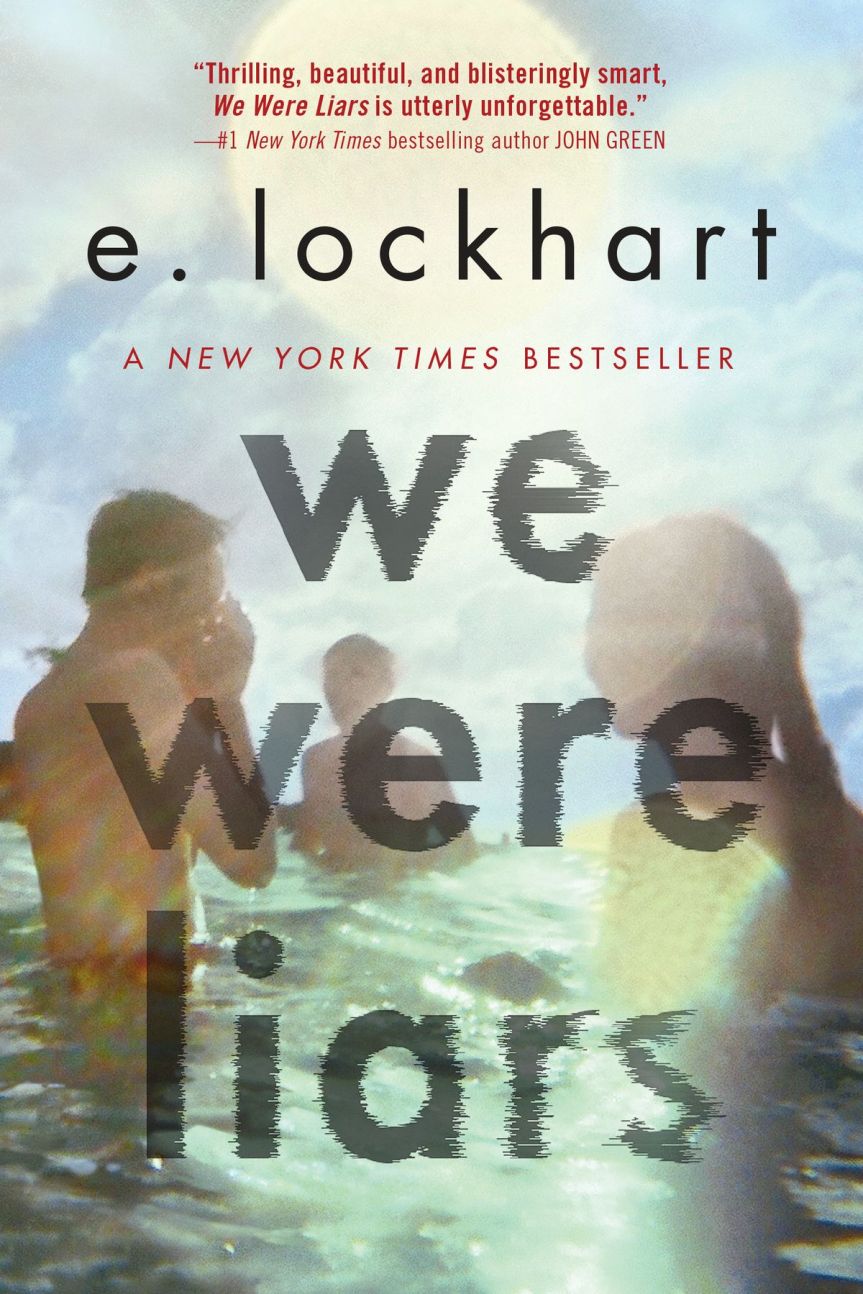
Yes, you read it write. This book has been trending on Booktok (book recommendation tiktoks) under the titles of “books that I would sell my soul to read for the first time again”, “books that will make you sob” or something as simple as “must have books”. But this particular book made many heads turn.
So, what’s all the hassle about? That’s exactly what we are here to find out.
Book history-
This book was written by E. Lockhart in 2014 and did a commendable job. The real hype began when in 2019 this book made an appearance in Booktok and ever since it’s still in the lists of many.
Popular sites like Daily Trojan recently added “We were liars’ on their must read pile. Publishers weekly too has named it as one of the most discussed book on TikTok.
Plot check.-
Nope, sorry can’t say. My lips are sealed.
But still for the sake of our lovely readers I will give you some insight. The plot is everything. It’s about a family, a rich one, whose story is narrated by a girl who can’t remember the last summer she spent on that island. No literally she can’t remember what happened. And believe me when I say that’s the only the start of the mysteries that revolve around the great Sinclair family.
Next up comes the plot twist. The suspense of this book will make you question reality. It will toy with your brain. But this book make every misery it puts us through worth it.
Theme park.-
The themes portrayed by the author E. Lockhart is quite literal slap on the society. The book challenges social norms head on. Ranging from racism to rich/poor and everything in between this book has it all. It also deals with psychological disorders which I might add is a very sensitive and controversial territory. But E. Lockhart sashayed her way into it quite elegantly.
This book can be added in our school syllabus and no one would question it. Cause that is life. Real one not the Shakespearean where people die unnecessarily or take unfinished revenges.
Why are Tiktokers hyped about it?
The reason behind this is one word “narration”. The lines can be stolen, plot can be copied, hell even if entire idea of this book is plagiarized, still no one can copy the way the author narrates this book. The narration keeps you on edge, makes you restless and leaves a mark right on your soul. The ending will have you wailing in a corner of your room and question life and the entire credit goes to how beautiful the story has been narrated.
And that’s right I would personally sell my soul to read for the first time again.
Not just luck-
‘We were liars’ made I to the popular list mainly due to Booktok but what makes this entire ordeal a little disappointing is that why such a great book written by a very talented author need a social media platform to get popular and sell some copies. It’s been a long time since I have been a reader, whilst social media is a great advertising platform, I still feel books should have a separate platform where we can find genuine books which are of our interest and not just the books which were lucky enough to reach Tiktokers.
‘We were liars’ is like a ride on emotional rollercoaster. It takes you to another level of epiphany. This book has the capability to change one as a person and I am so not exaggerating.
Booktok made me read it but I hope you can say the review made you read it.
“Treasure is there where the heart is,” says Paulo Coelho, author of one of the world’s best-selling books, ‘The Alchemist.’ Because of its extremely inspiring, enlightening, and life-changing substance, this book has sold millions of copies.
It was originally written and published in Portuguese in 1988. It is a worldwide best-seller that has been translated into over 70 languages. With only 167 pages, the book is relatively brief.
PLOT
The narrative is about a shepherd kid named Santiago who lives in the desert near Egypt’s pyramids and dreams of a treasure hidden in the midst of the desert. Later, he is compelled by a magician to go in quest of his wealth. He, on the other hand, does not take the advise seriously and begins working at a bakery, where he earns a decent sum of money. He encounters an elderly guy on a daily basis who tells him about the god’s omens.
MAKTUB is a term that meaning “everything is written” in Arabic. It has been used numerous times. Later, with the assistance of the strange old man and the bakery owner, he realises that his treasure is his destiny, so he embarks on a trek through a vast desert to Egypt’s pyramids. He falls in love with a tribal girl while on the voyage, but he needs to leave her in order to continue his quest, but he vows to return. He also encounters a genuine alchemist, who explains the science of alchemy to him. He falls in love with the desert and its enchantment throughout this long trek.
Santiago travels through the Mediterranean and the Sahara in search of his treasures in Egypt, as well as to fulfil his own legend, which is his life’s mission. The book chronicles his trip and the numerous encounters he had while pursuing his ambition. Santiago meets a lot of new people and faces a lot of challenges along the road, which helps Santiago learn and grow along the way. Is he able to locate the treasures in Egypt’s Pyramids?
For a large number of people, the book has proven to be life-changing. It’s a lot of fun to read since it’s full of action, suspense, and thrills. The quotations strewn throughout the book are also quite enlightening. This book is highly recommended for everyone who wants to make a positive change in their life and is looking for inspiration.
QUOTES FROM THE BOOK
“One’s Personal legend(destiny) is what you have always wanted to accomplish. Everyone, when they are young, knows what their Personal Legend is. “At that point in their lives, everything is clear and everything is possible. They are not afraid to dream, and to yearn for everything they would like to see happen to them in their lives. But, as time passes, a mysterious force begins to convince them that it will be impossible for them to realize their Personal Legend….whoever you are, or whatever it is that you do, when you really want something, it’s because that desire originated in the soul of the universe. It’s your mission on earth.” Paulo Coelho, The Alchemist
“Tell your heart that the fear of suffering is worse than the suffering itself. And that no heart has ever suffered when it goes in search of its dreams, because every second of the search is a second’s encounter with God and with eternity. ”Paulo Coelho, The Alchemist
“If someone isn’t what others want them to be, the others become angry. Everyone seems to have a clear idea of how other people should lead their lives, but none about his or her own.” Paulo Coelho, The Alchemist
“Love is not to be found in someone else but in ourselves; we simply awaken it. But in order to do that, we need the other person.” Paulo Coelho, The Alchemist
“One is loved because one is loved. No reason is needed for loving.” Paulo Coelho, The Alchemist
“You can become blind by seeing each day as a similar one. Each day is a different one, each day brings a miracle of its own. It’s just a matter of paying attention to this miracle.” Paulo Coelho, The Alchemist
“It’s the possibility of having a dream come true that makes life interesting.” Paulo Coelho, The Alchemist
“There is only one thing that makes a dream impossible to achieve: the fear of failure.” Paulo Coelho, The Alchemist
What will be your response if your dreams become your reality? Wouldn’t you be delighted to live your alternate reality! What it’s a goofy fantasy? Let me take you all in the world of fantasy; Alice in Wonderland is a movie directed by Tim Burton, is a 3-D blend of live action and animation of Lewis Carroll novel Alice in Wonderland.
SYNOPSIS
The story starts with a girl named Alice who has a reoccurring dreams since her childhood. She has turned 19 year old mourning over the death of her father. She is attending a garden party at Lord Ascot’s estate, she is confronted into an unwanted marriage relation with Ascot’s son. Taking some time to take a decision she in haste follows a rabbit to a rabbit hole under a tree, unintentionally falling into it. The story takes a drastic turn by that incident and opens a portal to her recurring dream world from where she begins her journey to the Wonderland and also finding her true self. On her journey she meets the different characters of wonderland ; the Caterpillar (played by Alan Rickman), Mad Hatter(played by Johnny Depp), White Rabbit (played by Michael Sheen), Red Queen (played by Helena Bonham Carter), White Queen (played by Anne Hathaway) and many more. The destiny unfolds the secret of her presence in Wonderland. She was brought her to fulfill the pronounced Oracle. This adventure helps Alice to overcome her fears, insecurities and emerge as victorious. The adventure helps Alice to realise her potential and follow her own will and doesn’t get lost in the society rituals or let them decide your potential and future.
Overall the movie is pretty good, it’s a bit intense and scary at times for younger children who could not understand the film depictions just because of the scary secens. As it’s the Lewis Carroll bizzare imagination not many can match that level of fantasy creativity. The cast was great, everyone perfectly fits into their allotted characters. Their costumes, the makeup, the dialogue delivery everything was perfectly done. My personal favourite would definitely be The Red Queen I feel her presence on screen always keep’s the audience jolly and entertained. Her carzy acting her weird dressing sense everything just speaks confidence it just creates a feeling of nostalgia. I love everything about her in my opinion well sorry on advance for being baised! I feel the cinematography was substantialthr visual effects makes a person experience the scenes. According to me the story unfolds quite briskly. The direction was great but the writer could have added more parts of the actual novel, the film can be more descriptive. But what can we say after all it’s Tim Burton film who is unique in his work. So it’s a must watch movie .
In 1954, widower U.S. Marshal Edward “Teddy” Daniels and his new partner, Chuck Aule, go on a ferry boat to Shutter Island, the home of Ashecliffe Hospital for the criminally insane, to investigate the disappearance of a patient, Rachel Solando (who was incarcerated for drowning her three children). Despite being kept in a locked cell under constant supervision, she has escaped the hospital and the desolate island.
In Rachel’s room, Teddy and Chuck discover a code that Teddy breaks. He tells Chuck that he believes the code points to a 67th patient, when records show only 66. Teddy also reveals that he wants to avenge the death of his wife Dolores, who was murdered two years prior by a man called Andrew Laeddis, whom he believes is an inmate in Ashecliffe Hospital. The novel is interspersed with graphic descriptions of World War II and Dachau, which Teddy helped to liberate. After Hurricane Carol hits the island, Teddy and Chuck investigate Ward C, where Teddy believes government experiments with psychotropic drugs are being conducted. While separated from Chuck for a short while in Ward C, Teddy meets a patient called George Noyce, who tells him that everything is an elaborate game designed for him, and that Chuck is not to be trusted.
As Teddy and Chuck return to the main hospital area, they are separated. Teddy discovers a woman (in a sea cave he tried to take refuge in) who says she is the real Rachel Solando. She tells him she was actually a psychiatrist at Ashecliffe, and when she discovered the illegal experiments being run by them, she was incarcerated as a patient. She escaped and has been hiding in different places on the island. She warns him about the other residents of the island, telling him to take care with the food, medication and cigarettes, which have been laced with psychotropic drugs. When Teddy returns to the hospital, he can’t find Chuck and is told he had no partner. He escapes and tries to rescue Chuck at the lighthouse, where he believes the experiments take place. He reaches the top of the lighthouse and finds only hospital administrator Dr. Cawley seated at a desk. Cawley tells Teddy that he himself is in fact Andrew Laeddis (an anagram of Edward Daniels) and that he has been a patient at Shutter Island for two years for murdering his wife, Dolores Chanal (an anagram of Rachel Solando), after she murdered their three children.
Andrew/Teddy refuses to believe this and takes extreme measures to disprove it, grabbing what he thinks is his gun and tries to shoot Dr. Cawley; but the weapon is a toy water pistol. Chuck then enters, revealing that he is actually Andrew’s psychiatrist, Dr. Lester Sheehan. He is told that Dr. Cawley and Chuck/Sheehan have devised this treatment to allow him to live out his elaborate fantasy, in order to confront the truth, or else undergo a radical lobotomy treatment. Teddy/Andrew accepts that he killed his wife and his service as a US Marshal was a long time ago.
The ending of the novel has Teddy receive a lobotomy in order to avoid living with the knowledge that his wife murdered their children and he is her murderer.
Review
Have you seen the movie Shutter Island starring Leonardo DiCaprio? If you haven’t yet, read the Shutter Island book first. It was originally published in 2003 by Dennis Lehane, and made into a movie not long ago, 2010 actually. I personally haven’t seen the movie either, but after reading the book I’ve decided I HAVE to see the movie adaptation.
Why was the book so good? Many people will already be familiar with Lehane’s work, he’s a famous thriller/crime novelist, so to start off the book is really well written. Not only that, but the plot is fantastic, with lots of twists that you never see coming, which always makes great for a screenplay as well. The copy of the book that I read was a lent to me by a colleague of mine, so it was an older, well-loved paperback from a while back; a nice change from the brand new books I typically get! Anyway, as mass market paperbacks typically do, it had quotes and blurbs from press reviews all over the cover, and a few of them described the book as ‘cinematic’, meaning the descriptions of the scenery and characters are so vivid that readers can easily imagine these scenes in their mind. Of course these were just predictions at the time, but the book was good enough for Martin Scorsese to take notice, as he was the eventual director of the film.
For those of you who like ‘spooky’ summer time reads, this book is definitely for you, so make some time for some ‘oldies but goodies’ on your shelf, and then clear away an afternoon to watch the movie when you’re done the book.
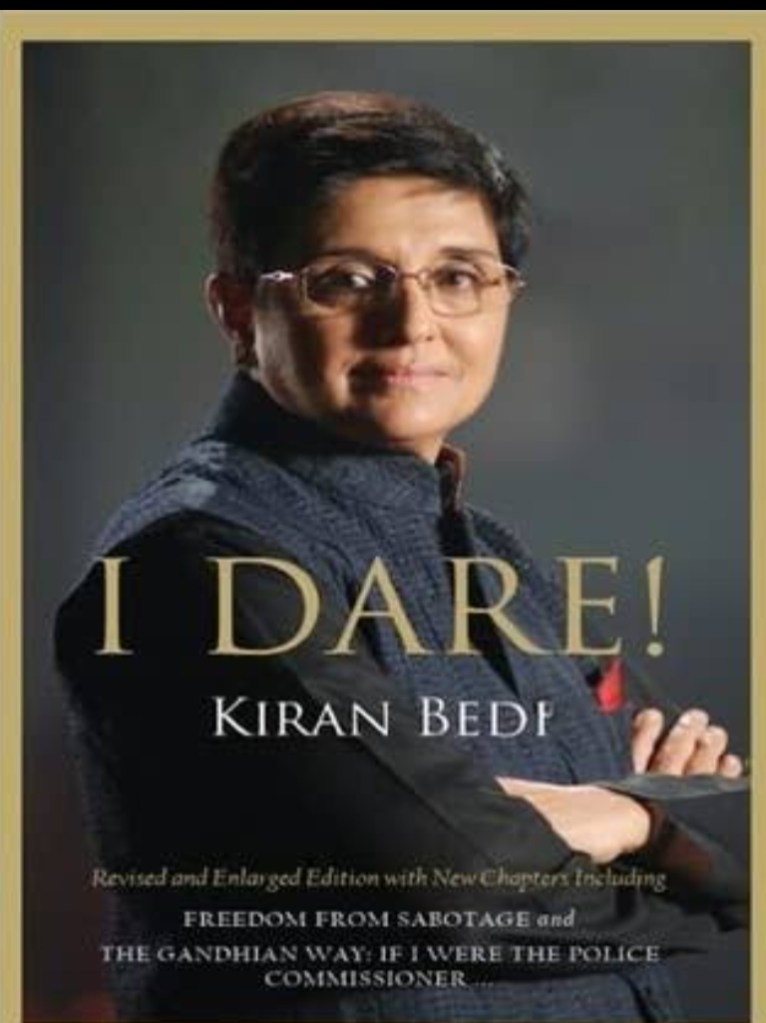
This book was first published In 1995, has been translated into six languages. It was voted as the ‘Biography Of The Decade’ by India Today. The book incorporates her ‘Personal And Spiritual Journey’ on which she embarked, not only for the prisoners, or the Trainees in The Delhi Police but also for herself. The book is an insight of who Kiran is and ‘What Is It That Makes Her What She Is’.
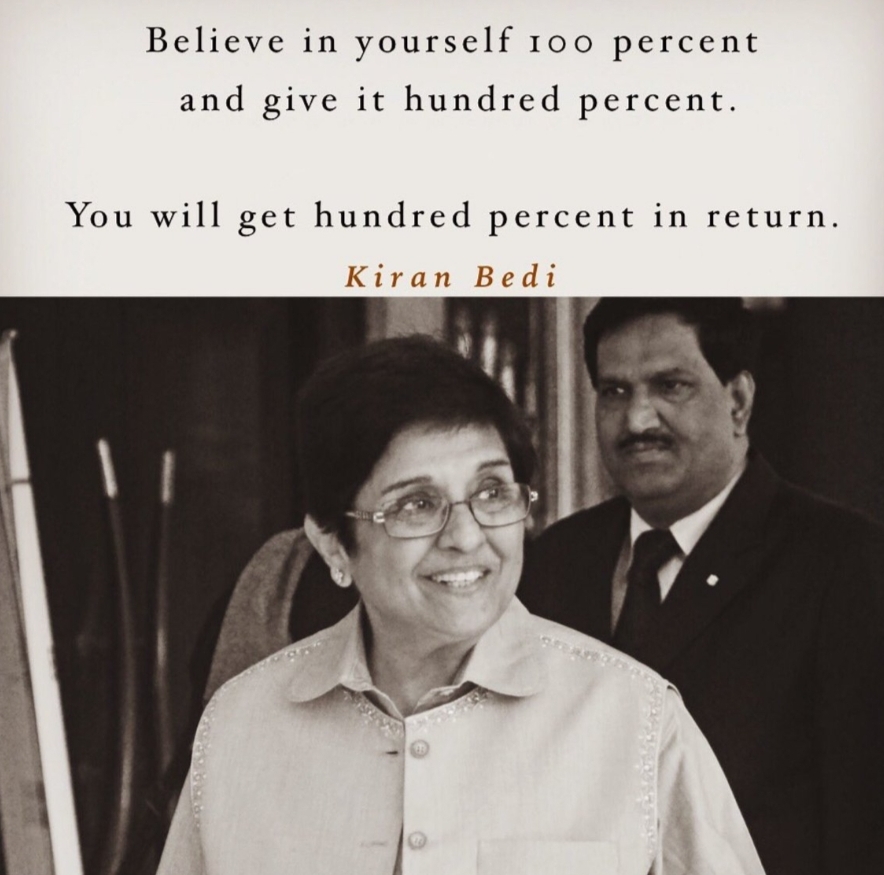
Biography of Kiran Bedi. She became internationally recognized after recieving the Ramon Magsaysay Award in Government Service, also considered the Asian Nobel Prize. Her work as the first woman in the Indian Police Service, and as the Inspector General of Tihar Prisons Delhi, got international attention. Her work in the field of crime prevention, forging partnerships in policing and prison transformation was absolutely innovative in the field of restorative justice.
You all may know who is she. Her biography will make you know her. The ups and downs, the highs and lows of her life. She is an inspiration to most of us.
The author has penned the events of Kiran Bedi’s life in detail. He has done a wonderful job by giving us the biography of such a wonderful personality.
This book teaches us to take a stand for the right, for ourself. It teaches us self empowerment. It makes us realize that one person can make a huge difference. You will learn about leadership. This book is a written-witness of a revolution.
I would recommend it to all those who dare to believe in themselves. If you are not that person, after reading this book you may be one of that kind.
Like I say : Reading books is magic, it makes you live hundreds of lives in a single one. Or atleast that’s what I believe. Hopefully this book will have an impact and magic you are/ were waiting for. I’ll take a leave.











 Eduindex
You must be logged in to post a comment.