As Globalisation takes over the world, more and more businesses are expanding and opening their manufacturing units, branches, outlets, offices all over the globe. While some grow exponentially and expand their market, sales and customer base, some fail to get any response and incur huge promotional, travel, administration and financial costs.
This is why it is extremely crucial to form an entry strategy that suits the organisation. It is also important to assess the financial position and capacity of the organisation and to understand that International business gives delayed returns as spreading awareness, competing with the competitor’s product and building an International customer base takes time and incurs promotional costs.
Once the business is ready to enter the international market, there are several factors to be considered.
Firstly, the organisation needs to conduct market research and choose the country and the specific locations where there is demand for their product/service.
Secondly, assessing the culture, language of the country and city is also very important. The organisation can make the necessary changes (if any) to its product/service and its packaging and labelling accordingly.
The last step is to form an entry strategy that suits the organisation and the market and implement the stategy.
Ways of entering an International Market
There are several ways to enter a market depending on the product/service reach preferred by the organisation and the financial capacity of the organisation.
Direct Exporting- In this method, the organisation directly sends its products, transfers its employees and workers to the location chosen. It involves huge setup, transportation and transfer costs. Therefore, this method is only used when the product that is being exported has a lot of demand in the new market and will definitely get a response from the target audience. For example, exporting machines to developing countries where there’s no manufacturing of such machines but a huge demand for the same.
Through a distributor- In this method, products are sold to distributors who are wholesale buyers. The distributor uses his own selling and pricing strategies to sell the product in the market.
Licensing- Through licensing, the organisation can share its technology, method and basic know how with local companies. However, through this method, the product is sold under the local companies’ name and brand so there is no scope of building an international brand and consumer base.
Contract Manufacturing– Through this method, the company pays a local manufacturing unit to manufacture their products by sharing their technology and design. It saves the cost of exporting or setting up a manufacturing unit abroad and is ideal for products that require large scale production.
Strategic Alliance- This method includes Mergers, Acquisitions and Joint Ventures. In Joint Ventures, two companies form another company to work as partners. For example, Hero Honda. In Mergers and Acquisitions, one company merges with or acquires another company. There is no formation of third company or new identity in this case. For example, Walmart acquired Flipkart.
Through an Overseas agent- Using this method, the company hires a local agent to make business relationships on behalf of the company. The agent acts as a sales representative who sells the products on behalf of the company and has no direct relationship with the customers. The agent gets commission on his sales. This is an effective method to save costs in case the organisation wants to test out the response of the foreign potential consumers or distribute their products on small scale without incurring huge costs.
A market is said to be an arrangement between buyers and sellers to exchange goods or services for money. A stock exchange is a highly organised market ,where listed securities are bought and sold under a code of rules and regulations.
A stock exchange Market is also known as a ‘security exchange or ‘, ‘security market ‘ or ‘share bazar ‘.
It is an organised market for the purchases and sale of industrial and financial securities or where financial instruments like stocks, bonds and commodities are traded.
It is a platform where buyers and sellers come together to trade financial tools or securities , adhering to SEBI’s well-defined guidelines. SEBI’s responsibility is to ensure that the securities market in India functions in an orderly manner.
” A stock exchange is an association of persons engaged in buying and selling of shares , stocks , debentures and bonds for public on commission and are guided by certain Rules and usages “ …….. Dr. K.L Garg
” A stock exchange is an organised auction market where buyers and sellers come together through their brokers ,to effect transactions in securities admitted to listing on the exchange and unlisted securities for which a market is maintained “ ……… Charles W. Gerstenberg .
” A stock exchange is a marketplace where securities that have been listed thereon ,may be bought and sold for either investment or speculation “ …….. W.Pyle .
” Stock exchange means a body of individuals ,whether incorporated or not , constituted for the purpose of assisting ,regulating and controlling the business of buying , selling and dealing in securities .” …….. Securities Contracts ( Regulation ) Act , 1956
The stock market is a market where exchange of regular activities of buying, selling, and issuance of shares of publicly-held companies take place.
Key meaning :-
• it is an organised market where securities are purchased and sold • transaction takes place between the members or their authorized agents on behalf of the investors. • securities refer to shares , stocks , debentures and Government bonds . • Securities are traded in a stock exchange in a systematic manner for investment . • only listed securities are traded in a stock market. • functions on the basis of rules and regulations. •It is managed by the Board Of Directors elected by the shareholders . • brings a huge amount of capital necessary for the economic progress of a country .
Names and locations of stock exchanges in India :-
At present there are 24 recognised stock exchanges in India .
The major stock exchanges in India :-
1: Bombay ( Mumbai ) Stock Exchange :- This stock exchange was formed on 13th December , 1887 in the name of Native Share and Stock Brokers Association . It is a non – profit making voluntary association . It is organised and controlled by Bombay Securities Control Act . The rules and regulations of this exchange are its own and approved by the Government of Maharashtra.
2: Calcutta ( Kolkata ) Stock Exchange :- This stock exchange was set up in the year 1908 at Royal Exchange place , Calcutta . In 1923 , it was registered in the name of Calcutta Stock Exchange Association Ltd. with 300 members . It is a public company limited by shares .
3: National Stock Exchange ( Greater Mumbai ):- This stock exchange was recognised by the Central Government on 26th April , 1993 . The object of its establishment was to convert the exchange market into a professional market . It provides security (i.e , shares , debentures , bonds , etc.) trading facilities at the national level through satellite communications systems .
This stock exchange was established in 1992 . It has been promoted jointly by ICICI , UTI , IFCI , IDBI , SBI , GIC ,LIC , Capital Market Ltd. and Canara Bank Financial Services Ltd. These institutions are the sponsor members of this exchange. Its head office is in Mumbai . It has four regional offices at Kolkata , Delhi , Chennai and Mumbai . It helps smaller companies to raise funds at low cost .
There are two types of stock exchange market investment :-
Primary market – Primary market creates opportunities for the issuer to issue shares and bonds , and acts as a market where companies meet their investment requirements . The companies enlist their shares for the first time in the market and sell their shares through an Initial Public Offering or IPO.
Secondary market – The secondary market is a trading market platform for investors or issuers , and is also known as the stock market. It is a market where shares of a company are traded after being initially offered to the public in the primary market by the help of brokers or agents . It is a market where buyers and sellers meet directly.
Functions and Services of a Stock Exchange:-
Stock exchange renders the following services :-
1: Services to the Investors :-
• Investment guide :- Stock Exchange periodically publishes the quotations of listed securities. Investment can decide about purchase and sale of securities on the basis of stock exchange and quotations . Thus , the investors can get the maximum benefit from their investment.
• Liquidity of Investment :- Stock Exchanges are ready and continuous markets for purchase and sale of securities .The securities can easily be converted into cash as the needs of the investors arise .
• High Collateral Value of Listed Securities :- Listed securities in any stock high collateral value . These securities are preferred by rational investors . The securities of such companies can be sold easily . The investors have no fear of risk while trading in listed securities.
• Better use of Capital :- The prices of shares reflect the profitability and efficiency of the company concerned . A stock exchange helps the investors in choosing good companies for their investment .
• Protection from Bad deliveries :- Securities in the stock exchanges are listed after the proper scrutiny . It prevents the trading of false and duplicate securities .
2: Services to corporate sector
• Wide market for new securities :- A stock exchange serves as a sales counter for new securities . Once a company gets listed in a stock exchange, it’s shares are traded freely in that exchange . Therefore , a company can raise a huge amount of capital from different types of investors.
• Increasing Goodwill of the company:- The shares of only those companies are listed in the stock exchange which are financially sound . Therefore , listing of shares adds to the goodwill and credit standing of a company.
• Transfer of Securities at suitable prices :- In the event of a merger or amalgamation ,the company whose securities are listed ,is in a better position than the company whose securities are not listed.
• Assist development of companies :- A stock exchange is an essential adjunct of companies for quick capital formation . It provides a wider and a ready market for the secur of companies . It ensures higher bargaining power to companies in the event of further expansion and merger.
• Knowledge about future investment :- Companies can get relevant information regarding trends of investment , investors choices and priorities etc., From the stock exchange on a regular basis .The companies can plan their future issue of capital on the basis of such information.
3: Services to Society :-
• Capital formation :- A stock exchange provides good investment opportunities to investors .It promotes the habit of savings and investment.
• Industrial Development :- A stock exchange helps to mobilize public savings for the economical development of the country.This leads to industrial and commercial development .
• Utilizing scarce capital for productive purposes :- Idle lying funds can be invested in securities on account of stock exchange .
• Useful to Government :- The government plays a vital role as an entrepreneur in the promotion and management of commercial and industrial enterprises . A stock exchange helps the Government in raising sufficient funds for rapid industrial growth .
Operators In A Stock Exchange
Stock market operators are market participants who form a organise stock securities purchases and sales .
Generally found operators:-
Broker :- A broker acts as a link between the investors and the jobber . He is a commission agent of buyer or seller of securities . A broker charges commissions from both the buyers and the sellers. He does not specialize in any particular security .He assists in buying and selling all types of securities .
Jobber :- Jobber can sell and purchase securities in his own name . He is a professional operator . He gets no commission for his service. His income is the profit in purchase and sale of his securities. The service of a jobber is both useful for both the investors and the stock exchange.
Speculators in Stock Exchange
On the basis of Zoological characters , speculators are of four types :-
• Bull
In India , bull speculator is known as ” Tejiwala “. The stock market is called a ” bullish market ” when there are large numbers of bulls speculators . A ‘bull’ is an optimistic speculator who buys securities with the exception of a rise in their prices . He makes purchases of Securities to be sold in future at a higher price to make profit .
• Bear
In India , a ‘ bear ‘ speculator is known as a ” Mandiwala “. When a stock market has large number of bears ,it is known as ” bearish market “. A bear speculator expects a fall in the prices of securities . He sells securities with the hope of buying the same at a lower price before the date of delivery.
• Stag
A ‘stag ‘ is a ” premium hunter “. He never holds securities as a permanent investment. He issues shares by the new company on the basis of their issued prospectus .He sells these shares at a premium soon after the allotment is made . The premium earned became his profit.
• Lame & duck :- A ‘lame-duck’ is a bear speculator struggling against the difficulties involved in meeting his commitments. He struggles like a duck to purchase shares so that he may deliver the same to another party . He is a bear speculator who is in no position to find shares .
Trading procedure in a Stock Exchange.
Trading in stock markets means the transfer (in exchange for money) of a stock or security from a seller to a buyer. This requires these two parties to agree on a price.
Procedure :-
• Selection of a broker • Placing the order • Executing the order • Preparing the contract note • Final settlement.
Goods and services tax is an indirect tax which is levied by government on taxable value of goods, services or both were supplied by persons. It is a value added tax which is charged in every stage of supply.
Goods and services tax came into force in India on 1st July 2017, which is marked as one of the historical dates in India’s tax history.
Goods and services tax which helped remove various taxes under one.
Excise duty, Service tax, VAT, CST, Entry tax, etc. = GST
Goods and Services tax is a destination-based tax which is levied on every stage from the manufacturing level to the final consumer of that goods or services, only on the value addition.
Salient features of GST or GOODS AND SERVICES Tax.
Levy on Good and Services
Goods and services tax is only levied on taxable goods and services on each stage of transaction a tax on, Except supply of alcohol and liquor for human consumption
Indirect Tax
GST is an indirect tax which means tax liability on consumer in indirect they pay tax indirectly to the government.
Dual GST in India
India is a federal country there fore a Dual GST system has been adopted.
1. On Intra state supply- The GST to be levied on intra state supply of goods or services would be called CGST or SGST. E.g., A transaction took place inside the state. 2. On Inter state supply- The GST to be levied on interstate supply of goods and services would be called IGST. E.g., A supply took place between M.P. and C.G.
Uniform GST law in India.
SGST tax of each state is just a copy of CGST act passed by central government, except changing reference from central tax to state tax. Forms and procedures are all same all over India and rates are also expected to be uniform. There would be no difficulty for a businessman to set his/her business in many states.
Consumption based TAX
GST is a consumption-based tax which means the state which is finally consuming the goods and services.
Registration
A supplier of Goods and services or both should be registered under GST law –
1. Supplier of goods or/and services within the state. 2. Registration is not required for farmers and supplier of wholly exempted goods.
Multi point TAX
GST is applied on every state of transaction.
GST is not only implied in India it is on effect in many parts of the words.
When the GST was not implemented in India and was in the process there were various challenges IN front of the makers. But with continuous efforts GST was implemented successfully in India.
Though the revenue collected from GST in the fiscal year 2019-2020 was about Rupee 10 lakh crore which is less than expected.
A administration is been set up to govern the Goods and services Act properly in India.
There are various references in History which act as evidence that taxation existed in olden times also. Some references are ‘Arthashastra’ by Chanakya, King Dalip’s regime and Caesar Augustus. The word “Tax” originated from “Taxation” meaning ‘an estimate’. These were imposed and collected on the trade of commodities or livestock in a disorganised manner. The importance of tax increased with time and became a source of government income and expenditure.
TAX STRUCTURE IN INDIA
India has a well developed taxation structure. The tax system in India is mainly a three-tier system which is based between the Centre, State governments and the Local Government organisations. In most cases, these local bodies include the local councils and the municipalities. According to the Constitution of India, the Government has the right to levy taxes on individuals and organisations. However, the Constitution states that none has the right to levy or charge taxes except the authority of law.
The tax structure in India is divided into two components: Direct Taxes (such as income tax) and indirect taxes (such as custom duty).
I. Direct Taxes: Direct taxes are those taxes that are not shifted, that is, the incidence of which falls on persons who pay them to the government, the taxpayer. According to Article 265, each tax levied or collected has to be backed by an accompanying law, passed either by the Parliament or the State Legislature.
The direct taxes in India are: 1. Wealth Tax-
Wealth tax is one of the major direct taxes in India. It is also known as the Wealth Tax Act, 1957. This tax is applicable to all the citizens of India. Wealth tax is the cess levied on owned property. It applies to those who enjoy property ownership benefits. It is applicable to every property owner till he or she retains the ownership of that particular property. The tax paid on property depends entirely on the current market rate. In case the property is not generating any income, then also wealth tax has to be paid.
2. Corporate Income Tax-
Corporate income tax is levied in many different forms in India. Corporate Income Tax is primarily meant to be paid by domestic corporations. Domestic corporations in India pay a minimum income tax rate of 35 per cent along with a surcharge of 2.5 per cent. Corporate income tax is also applicable to foreign organisations that have their own economic bases working in the country. These types of corporations are required to pay tax on 40 per cent of their income along with a surcharge of 2 per cent. This surcharge goes as a reservation for funding the state‘s education. Corporate income tax is also applicable to all the people that are working for any corporation in or outside India.
3. Personal Income Tax-
This is the most common form of tax in India. The system of personal income tax in India is very similar to the taxation system in the United States of America. It is based on the personal income of an individual. If the annual income of an individual is under Rs. 1, 80, 000/- then he or she is exempted from paying any personal tax. There are further allowances made under the personal income tax domain for the physically handicapped and elderly.
II. INDIRECT TAXES: An indirect tax is defined as a tax levied on goods and services rather than on income or profits. Given below are the indirect taxes imposed in India:
1. Sales Tax-
Sales tax is the tax levied by the State Government on goods bought and sold in the country. This policy is followed in most industrially developed countries in the world. The taxes levied under sales tax are not the same for all kinds of goods.
2. Custom Duties-
Custom duties were introduced in India through the Customs Act in 1962. This duty was introduced with the aim of checking illegal exports and imports of goods. Taxes are charged for all the goods that are imported into the country, mainly to protect the industries in India.
Shortcomings of Indian Tax System:1. Canon of Justice: The increased activities of the Government of India to develop the infrastructure and economy indicate a regressive tax structure that is against the canon of justice. The lower and middle income groups have to bear more burden of taxation as compared to the higher income groups because the government tries to raise amounts by indirect taxation.
2. Agricultural Income: Agricultural income is not taxed in India. Hence, there is a higher burden of taxes on the urban areas.
3. Complex Tax Framework: India has a complex tax framework with contradictory tax exemptions. Efforts are being made by the IT Department to enhance and simplify transparency of the tax system to help the individual taxpayers by reducing their compliance costs.
4. Removal of Tax Incentives: Tax exemptions are given to achieve the objectives of development but they promote rent seeking behaviour, contributing to the complex tax laws. Exemptions lead to tax leakage and tax abuse which makes the system counterproductive and dysfunctional.
5. Refunds: Getting refunds of tax from the Income Tax Department is a difficult process. It should be made easier by easy accessibility through internet services and refunding electronically.
6. PAN: The tax base must be increased by extending PAN to cover all citizens serving as a Citizen Identification Number.
7. Monopolistic Power of Tax Officials: The tax officials operate within a geographical limit with ambiguously defined roles that leads to abusive behaviour on their part. A high degree of discretionary power and lack of adequate monitoring and reporting mechanisms leads to corruption. The tax officials misuse the rules of the government and extract illegal payments from taxpayers.
8. Lack of Supervision: There is a lack of supervision and monitoring of officers and holding them accountable for their actions. There must be promotion and enforcement of ethical standards, merit based recruitments, promotion procedures and regular staff rotation schemes to prevent the creation of a nexus.
9. Decrease in Tax Revenue due to Corruption: Corruption decreases tax revenue, which leads to a shortfall in the funds of the government. This forces governments to resort to public borrowing and public debt, thereby endangering fiscal sustainability. Corruption adds to the adverse effect over investment and growth.
10. Broadening the Tax Base: The majority in India do not file personal income tax. To bring them into the tax net, the government adopted a “one-in-six” scheme under which an individual satisfies one out of six criteria. This measure has increased the number of individual income tax payers, but a lot needs to be done still.
India was different from other countries as they were made by the Indian citizens without any sort of external interference.
There are different types of taxes in India. The system of taxation in India is clearly vested in the hands of authorities such as the central government, state government and the local governments. The taxes that are levied by the central government are on personal income, central excise, custom duties and service tax.
The Securities and Exchange Board of India (SEBI) is the regulatory body for securities and commodity market in India under the jurisdiction of Ministry of Finance , Government of India. It was established on 12 April 1988 and given Statutory Powers on 30 January 1992 through the SEBI Act, 1992.
Securities and Exchange Board of India (SEBI) was first established in 1988 as a non-statutory body for regulating the securities market. It became an autonomous body on 30 January 1992 and was accorded statutory powers with the passing of the SEBI Act 1992 by the Indian Parliament. SEBI has its headquarters at the business district of Bandra Kurla Complex in Mumbai and has Northern, Eastern, Southern and Western Regional Offices in New Delhi, Kolkata, Chennai, and Ahmedabad respectively. It has opened local offices at Jaipur and Bangalore and has also opened offices at Guwahati, Bhubaneshwar, Patna, Kochi and Chandigarh in Financial Year 2013–2014.
The SEBI is managed by its members, which consists of the following:
*The chairman is nominated by the Union Government of India. *Two members, i.e., Officers from the Union Finance Ministry. *One member from the Reserve Bank of India. *The remaining five members are nominated by the Union Government of India, out of them at least three shall be whole-time members.
SEBI has to be responsive to the needs of three groups, which constitute the market:
*issuers of securities *investors *market intermediaries
SEBI has three powers rolled into one body: quasi-legislative, quasi-judicial and quasi-executive. It drafts regulations in its legislative capacity, it conducts investigation and enforcement action in its executive function and it passes rulings and orders in its judicial capacity. Though this makes it very powerful, there is an appeal process to create accountability.
In today’s world, it is very easy to confuse Insurance with Investment. One might feel that he/she is investing in their future and decreasing their future financial burden because he/she purchased an insurance policy. Let’s take a look at the definition of insurance and investment.
Insurance refers to a contract or policy in which an individual or entity receives financial protection or reimbursement against losses. It protects the insured against risk of losses or damage.
Investment, on the other hand, refers to an asset or item acquired with the goal of generating income or appreciation. For example, real estate, mutual funds, shares etc.
With the increase in types of insurance policies and persuasive insurance sales representatives, people tend to think of insurance as investments. However, Insurance merely provides protection in the event of loss, which may or may not arise. In case of no loss or damage, sum total of all the insurance premium paid is profit for the insurance company.
On the other hand, the main purpose of an investment is to generate income by providing returns (dividends and interest) and/or capital gains (value appreciation; increase in price). Insurance does not provide any substantial returns. It merely provides reimbursement in the event of loss/damage and therefore, it is not an investment.
Do you need Insurance?If yes, what kind?
Insurance planning is essential to protect against different kinds of risks and to be financially prepared in case of loss or damage to life or property. However, it should not be used a means to invest.
There are different types of insurance which can be broadly classified into Personal, Property and Liability. There are three types of insurance that you must have to protect against risk, not as an investment: Health insurance, Term life insurance and Automobile insurance.
Health insurance is a must to ensure that in case of an accident or injury, hospital and medical bills don’t eat away your savings.
Term life insurance ensures that in case of death of the earning member of the family, the family has enough to survive for a substantial period of time. Term life insurance has a fixed period and hence, has a very low monthly premium with a decent coverage. However, if the policy expires and the insured is still alive, the insured does not get any amount back. So, this policy should only be taken by the earning member at the right life stage in case he/she does not own enough assets to leave behind for his/her family.
Automobile Insurance (third party) is mandated by the Government of India on the purchase of a vehicle and hence, every vehicle owner should have one.
Other types of insurances sold and bought in the name of ‘investment’ like Endowment plans, Money back policy and the new policy called Unit-linked insurance plans(ULIP) which allows you to invest in the stock market should be avoided at all costs.
It is much more profitable to invest in the market through mutual funds or investor’s Demat account than to do the same through insurance companies. The rate of return in the market is much higher and it doesn’t cost as much as Insurance.
For example, if you buy Money Back insurance plan with a policy term of 20 years with ₹10,00,000 assured cover, the monthly premium calculated on LIC premium calculator comes out to be around ₹6300-6500 per month.
As calculated above, the total premium paid is ₹11,27,282 and the total amount received is ₹18,20,000. The total profit/return (approx.) is only ₹6,90,000 in 20 years. The return on investment (Return/Total Amount paid x 100) is only 61%.
However, if the same amount is invested in SIP of any instrument with a return rate of just 6% for the same time period (20 years), the returns (calculated on Groww SIP calculator) are much higher.
₹6000 rupees invested monthly in any instrument with a return rate of only 6% for 20 years gives a return of ₹13,46,000 making the total value of the investment ₹27,86,000. The ROI (Return/Total Amount paid x 100) in this scenario is 93%.
Conclusion
Although Insurance is an essential part of Financial Planning to protect against different kinds of risks which varies from person to person, it should not be mixed with Investment. For greater returns and growth, investors should directly invest in the market or in any other instrument which suits their risk appetite and capacity.
Taxes constitute a major source of revenue for modern governments. The total revenues of modern states besides tax revenues, non–tax revenues, customs and excise duties etc. also constitute parts of the revenue system. Tax revenues are important and useful as they do not create any liability to the state. Taxation is the only practical means of raising the revenue to finance government spending on the goods and services that most of us demand. Setting up an efficient and fair tax system is, however, far from simple, particularly for developing countries.
Purpose of Taxation: Taxation is an important part of the national economic development. It serves many purposes, which are as follows:
1. Pace of Economic Development: Tax policy can affect the pace of economic development and the way the rewards of that development are distributed.
2. Improvement of Different Sectors: Collection of revenue helps to improve the performance of different sectors of the country. It cannot perform its administrative and development activities without collection of revenue. It is the main objective of tax.
3. Redistribution of Income: It means the transfer of income from some individuals to others caused by progressive tax. Such redistribution from rich to poor reduces inequality. This can be accomplished by increasingly higher taxes, for example, estate and income tax.
4. Correction of Externalities: Taxes can correct externalities and other forms of market failure such as monopoly. The purpose of taxes is to enable the government to regulate social welfare activities and to create a market to induce such activities. Also, government spending by using collection of taxes by increasing productive capacity and thus overcoming market failure. For example, health care may lead to a more healthier and productive workforce.
5. Import Taxes: Import taxes may control imports and therefore help the country’s international balance of payments and protect industries from overseas competition. Indigenous industries may be awarded protection by way of taxation with the help of imposition of high custom duties on foreign goods.
Objectives and Principles of Tax:
1. Tax as a Percentage of GDP: The current economic turmoil and recession requires special measures from governments. Degrees of taxation must be clearly stated as a percentage of Gross Domestic Product. Substantial tax gains show that there is quite a lot of burden on individuals as well as business houses. There must be an appraisal done before a tax is levied to question the requirement for new regulations and to set up a precise and up-to-date estimate of costs.
2. Tax Simplification and Stability: Tax legislation and operation should be simple and straightforward to understand and comply with. To avoid too much time consumption in coping up with tax compliance, the volume of legislation must be kept to a minimum. Amendments in tax law, especially those that are opposite to earlier tax breaks or incentives that were the basis of business planning, must be reduced as much as possible.
3. Openness, Transparency and Accountability: Tax policies should be transparent and without bias, but for a part of a declared discriminatory policy such as one required for promoting new businesses. There is a wider political question about the extent to which it is appropriate to use taxation as an instrument of social policy, for example, penalising smoking by heavy duties or environmental taxes to mitigate climate change.
4. Certainty: This principle has been given by Adam Smith and explained earlier. The law should be framed in such a way that its interpretation must be the same whosoever analyses it. Authorities must be capable to amend and alter long established practices to which businesses are used to. Taxpayers must have certainty over Revenue authorities’ interrelations.
5. Tax Competitiveness: The globalisation of business implies that every nation must make sure that its tax rates are competitive and its administration user friendly. Tax is a significant issue and a deciding factor in setting up a business.
6. The tax base of a nation is more important than its rate. For instance, the headline corporate tax.
7. Efficiency: Efficient tax systems need to be developed so that the amounts due to the government can be collected without any delay, avoidance or evasion. Such efficiency would prevent the build-up of a black economy on one hand, and help the taxpayers in tax payment procedure on the other.
Hence, a tax system that is rational, equitable and simple needs to be created. To promote growth, a stable revenue stream is needed so that inequalities are reduced and economic sustainability is achieved.
The social issue is a problem that influences by many citizens within a society.
Social issue be a group of common problem in present society and one that many people struggle to solve. Social issues are distinguished from economic issues. Some issues have both social and economic aspects, such as immigration. There are also issues that don’t fall into either category, such as wars.
The definition of a social problem has both an objective component and a subjective component. The objective component involves empirical evidence of the negative consequences of a social condition or behavior, while the subjective component involves the perception that the condition or behavior is indeed a problem that needs to be addressed.
social issues influence society
Slow social change is desirable, but rapid social change threatens social order. Social problems weaken a society’s stability but do not reflect fundamental faults in how the society is structured. Solutions to social problems should take the form of gradual social reform rather than sudden and far-reaching change.
COVID-19 from 2020 is the hell of the year for all of us . the world facing many issues in this pandemic situation . many of people lose thire dear and nears ones and many of finacial supports many of the people become homeless, they don’t have proper food to continue thire lifes
In every conntry thire many of issues facing in society , in this pandemic the people facing issues are:
Suicide Prevention
With so many people forced into lockdown and isolation over the last year, many people have suffered from poor mental health. In Victoria alone, there has been a 40% spike in calls to various mental health hotlines as a consequence of COVID-19, and it is now more important than it ever has been to pay attention to the struggles of millions of people around the world
Family Violence
Another victim of the pandemic are families who are in dangerous situations due to loss of work, lockdowns and being isolated from the public. Record rates of family violence were recorded in 2020, and cases have increased dramatically, resulting in many support services struggling to help those in need
The Rise In Homelessness
Over the last year, the number of people who have been forced into homelessness has surged as short-term coronavirus and housing protections have phased down. Due to loss of income, many families have had to bear the burden of being kicked out of housing due to an inability to pay rent.
Our Ecological Crisis
Poverty and pandemic aside, another issue we are facing is the ecological crisis due to the collapse of ecosystems and troubling disappearance of biodiversity. Although the slowdown in economic activity due to COVID-19 created a very brief reduction in global carbon emissions, it is impossible to ignore the mounting effects of unchecked human activity over the last decade or so
Speeding Up The Vaccine Rollout
Last but certainly by no means the least, 2021 will see the COVID-19 vaccines being rolled out in most countries around the world. Although more than 360 million vaccine doses have been administered, there is a troubling gap between vaccination programmes in various countries, with many yet to report even a single dose.
Common of Social Issues
Poverty and Homelessness. Poverty and homelessness are worldwide problems. …
Climate Change. A warmer, changing climate is a threat to the entire world. …
Overpopulation. …
Immigration Stresses. …
Civil Rights and Racial Discrimination. …
Gender Inequality. …
Health Care Availability. …
Childhood Obesity.
Poverty and Homelessness
Poverty and homelessness are worldwide problems. According to Habitat for Humanity, one-quarter of the world’s population lives in conditions that harm their health and safety. Many do not have shelter, a basic human need for survival.
This social issue also goes beyond the 25% of the population directly affected. Because of the lack of shelter for this vulnerable population, there is greater stress on government and social programs, including schools and healthcare systems.
Climate Change
A warmer, changing climate is a threat to the entire world. Climate change affects the entire world population, and the Union of Concerned Scientists calls this social issue “one of the most devastating problems humanity has ever faced.”
The 800 million people already living in extreme poverty will be impacted most severely. Around the world, people are already noticing warmer winters, more severe storms and rainfall events, and more frequent wildfires. These issues already put stress on governments and systems in many countries.
Overpopulation
As the population of the world grows, resources become scarcer. The United Nations reports that the current population of 7.7 billion people is expected to grow in coming decades, with a projection of 8.5 billion people by 2030.
The fastest growing areas of the world, such as sub-Saharan Africa, often face already scarce resources like land for farming. As the population becomes more than the country can sustain, people will need to move elsewhere to avoid starvation and homelessness.
Immigration Stresses
People move from one country to another, and in itself, this isn’t a social problem. However, immigration can place stress on government programs and social systems within a country, and it can be a divisive topic in a society. These immigration-related stresses affect many people.
Civil Rights and Racial Discrimination
Civil rights, or the rights of citizens in a country to have equal treatment socially and politically, is another one of the most significant social issues in America and around the world. More than 40 years after the Civil Rights Act passed, almost 60% of African Americans still live in segregated neighborhoods and 90% of African Americans report that racial discrimination is still a major problem.
Gender Inequality
A report from the Pew Research Center Fact Tank indicates that about 50% of Americans feel the country needs to do more to address the income gap between men and women. Women still lag behind men in wages and top leadership positions held, although they are now more likely to attain a college degree.
Worldwide, the situation is even more extreme. UNICEF reports that 12 million girls are married before they reach adulthood, and 98 million high school-aged girls do not attend school.
Health Care Availability
When people are sick or hurt, they need access to medical care to get better. According to the Centers for Disease Control and Prevention (CDC), almost one in 20 U.S. citizens do not obtain needed medical care because of the cost. Worldwide, 97 million people become impoverished by seeking needed medical care, as reported by the World Health Organization (WHO). Governments around the world are working on this problem, as are nonprofit organizations.
Childhood Obesity
Some types of social problems are health-based, but they also have an impact on socio-economic issues. For instance, the CDC reports that 18.5% of U.S. children are considered obese, having a body mass index at or above the 95th percentile.
However, the childhood obesity epidemic doesn’t affect all children equally. Children in families where the parents have more education and higher incomes are far less likely to be obese than those in families with less education and lower incomes.
Poor Leadership
Many of the social problems in society are connected in subtle ways, but all social problems are connected to the leadership of countries, corporations, and other groups. An ongoing Gallup poll asks Americans to rate the most important problems and social issues facing the country. By far, the most significant issue was poor leadership; 28% of respondents list it as the number one problem.
Social Issues Teens facing
Advances in technology mean today’s teens are facing issues that no previous generation has ever seen. While some issues are not exactly new, electronic media has changed or amplified some of the struggles young people face.
Depression
According to The National Institute of Mental Health, an estimated 3.2 million adolescents in the United States had at least one major depressive episode in 2017. That means about 13% of teenagers may experience depression before reaching adulthood.
Depressive disorders are treatable, but it’s important to seek professional help. If your teen seems withdrawn, experiences a change in his sleep patterns, or starts to perform badly in school, schedule an appointment with your teen’s physician or contact a mental health professional. Do not delay getting help for your teen if you notice these symptoms
Bullying
It’s also important to talk to your child about when and how to get help from an adult. Remind them that asking for help is not a sign of weakness, but instead a show of courage. Talking about how someone has humiliated them is never an easy topic.
Sexual Activity
Of the 20 million new sexually transmitted diseases each year, more than half were among young people between the ages of 15 and 24.
Parents may not be aware that their children are sexually active, however. Talk to your teen about sex, even if you don’t think your child is engaging in sexual activity.
Drug an Alcohol use
Make sure you have regular conversations with your teen about the dangers of drugs. And don’t forget to mention the dangers of prescription drugs, too. Many teens do not recognize the dangers of taking a friend’s prescription or popping a few pills that are not prescribed to them.
Unfortunately, teens often underestimate how easy it is to develop an addiction. And they don’t understand the risks associated with overdosing. Be sure you are talking about these risks on a consistent basis.
Fixing Social Issues
Although many Americans feel their leaders are the biggest problem they face, governments, corporations, and communities are working to fix some of the top social issues. These are just a few of the actions they are taking:
Schools are implementing anti-bullying programs, which the PACER National Bullying Preventions Center says can decrease bullying by up to 25%.
Community efforts to help reduce childhood obesity include adding salad bars to school lunches, focusing on physical fitness, and adding obesity prevention initiatives to hospitals.
The U.S. enacted the Affordable Care Act (ACA) to begin addressing the challenges in health care availability, and it remains an important political issue.
The European Union is on track to meet its goals for reducing carbon emissions and helping mitigate the effects of climate change. Other countries are also working hard to make progress.
*The Presence of the U.S. Military Troops in Afghanistan
*The Challenges of Remote Education
*Arctic Pole Environmental Situation
* Global Pandemic & Vaccination
* Travel Restrictions
1.Poverty and Homelessness:-
Poverty and homelessness are worldwide problems. According to Habitat for Humanity, one-quarter of the world’s population lives in conditions that harm their health and safety. Many do not have shelter, a basic human need for survival.
This social issue also goes beyond the 25% of the population directly affected. Because of the lack of shelter for this vulnerable population, there is greater stress on government and social programs, including schools and healthcare systems.
2. Climate Change:-
A warmer, changing climate is a threat to the entire world. Climate change affects the entire world population, and the Union of Concerned Scientists calls this social issue “one of the most devastating problems humanity has ever faced.”
The 800 million people already living in extreme poverty will be impacted most severely. Around the world, people are already noticing warmer winters, more severe storms and rainfall events, and more frequent wildfires. These issues already put stress on governments and systems in many countries.
3. Overpopulation:-
As the population of the world grows, resources become scarcer. The United Nations reports that the current population of 7.7 billion people is expected to grow in coming decades, with a projection of 8.5 billion people by 2030.
The fastest growing areas of the world, such as sub-Saharan Africa, often face already scarce resources like land for farming. As the population becomes more than the country can sustain, people will need to move elsewhere to avoid starvation and homelessness.
4. Immigration Stresses:-
People move from one country to another, and in itself, this isn’t a social problem. However, immigration can place stress on government programs and social systems within a country, and it can be a divisive topic in a society. These immigration-related stresses affect many people.
For instance, the Pew Research Center reports that the United States has more immigrants than any other country; 13.6% of the U.S. population identifies as an immigrant. This is a divisive issue in the U.S. population, with some groups calling for stricter immigration laws. Although the majority of U.S. citizens welcome immigrants, a 2019 Gallup poll indicates 23% of people think immigration is the most important social issue facing the country.
5. Civil Rights and Racial Discrimination:-
Civil rights, or the rights of citizens in a country to have equal treatment socially and politically, is another one of the most significant social issues in America and around the world. More than 40 years after the Civil Rights Act passed, almost 60% of African Americans still live in segregated neighborhoods and 90% of African Americans report that racial discrimination is still a major problem.
6. Gender Inequality:-
A report from the Pew Research Center Fact Tank indicates that about 50% of Americans feel the country needs to do more to address the income gap between men and women. Women still lag behind men in wages and top leadership positions held, although they are now more likely to attain a college degree.
Worldwide, the situation is even more extreme. UNICEF reports that 12 million girls are married before they reach adulthood, and 98 million high school-aged girls do not attend school.
7. Health Care Availability:-
When people are sick or hurt, they need access to medical care to get better. According to the Centers for Disease Control and Prevention (CDC), almost one in 20 U.S. citizens do not obtain needed medical care because of the cost. Worldwide, 97 million people become impoverished by seeking needed medical care, as reported by the World Health Organization (WHO). Governments around the world are working on this problem, as are nonprofit organizations.
8. Childhood Obesity:-
However, the childhood obesity epidemic doesn’t affect all children equally. Children in families where the parents have more education and higher incomes are far less likely to be obese than those in families with less education and lower incomes.
9. Bullying:-
Obesity can also have an impact on another important social issue: bullying. The PACER National Bullying Prevention Center indicates that obesity and other appearance issues are among the top reasons children report being bullied.
Despite recent anti-bullying initiatives, more than 20% of American students report being bullied. A third of those being bullied report that it happens at least once or twice each month. Additionally, 24% of middle school students report they have been victims of cyberbullying, or bullying conducted online.
10. Poor Leadership:-
Many of the social problems in society are connected in subtle ways, but all social problems are connected to the leadership of countries, corporations, and other groups. An ongoing Gallup poll asks Americans to rate the most important problems and social issues facing the country. By far, the most significant issue was poor leadership; 28% of respondents list it as the number one problem.
11. Fixing Common Social Issues:-
Although many Americans feel their leaders are the biggest problem they face, governments, corporations, and communities are working to fix some of the top social issues. These are just a few of the actions they are taking:
Schools are implementing anti-bullying programs, which the PACER National Bullying Preventions Center says can decrease bullying by up to 25%.
Community efforts to help reduce childhood obesity include adding salad bars to school lunches, focusing on physical fitness, and adding obesity prevention initiatives to hospitals.
The U.S. enacted the Affordable Care Act (ACA) to begin addressing the challenges in health care availability, and it remains an important political issue.
The European Union is on track to meet its goals for reducing carbon emissions and helping mitigate the effects of climate change. Other countries are also working hard to make progress.
12. Raise Awareness Through Education:-
Discussing social issues can be contentious, but it’s also an important part of making progress on these problems facing society. Community and classroom activities involving social issues can help raise awareness for these topics. Writing about social issues can also help expand people’s understanding of these important challenges.
13. Covid-19 & Global Pandemic:-
Without a doubt, almost every sector of modern life has been affected by the global pandemic restrictions and the rules of social distancing. Even though several countries of the world seem to return to normal life, the matters of logistics and global trading are still vague. As an example of social topics dealing with this issue, you may consider writing about how the Covid-19 crisis has affected a particular company or the entire industry.
14. The Black Lives Matter Social Movement:-
It is hard to find anything that has marked the last two years in terms of social importance. The Black Lives Matter movement has captured the entire world because the issues of racial prejudice are relevant as ever. In terms of possible topics, you can compare the BLM movement with the student protests in the 1970s or the Montgomery Bus Station protest.
15. Green Energy Conversion:-
This social issue is mostly related to environmental problems, yet the global conferences in 2021 are dedicated to finding safe ways to convert all available energy to safe methods. You may consider writing about the latest innovations to the solar energy sector and talk about wind turbines if you are majoring in Electrical Engineering. At the same time, you can consider writing about school education and the importance of educating the youngsters about our environment.
16. The Presence of the U.S. Military Troops in Afghanistan:-
It is a sensitive social issue in the United States as President Biden has announced about the troops leaving Afghanistan in 2021. This social topic is s quite important as it is not only a political issue but also a matter of national security.
17. The Challenges of Remote Education:-
As we are making it through yet another year of distance learning with Skype and Zoom solutions for video conferences, the challenges of modern learning are evident. Consider writing about how the student habits and attitudes have changed in 2021 and think about what pros and cons of this issue you can explore.
18. Arctic Pole Environmental Situation:-
The Arctic Pole Ice Shield is the social issue that became apparent in 2021 as explorers and scientists from all fields of science started to reveal updated information. Regardless of your college course, you can approach this social issue through the prism of environmental protection, political bias, economics, marketing, and even the logistics that are also present in this sector.
19. Global Pandemic & Vaccination:-
The subject of vaccination might be among the most discussed social issues today, yet it does not make it to the lists of immediate issues because of the political games at play. For example, you can write about unequal distributions of vaccines to certain countries and the ways how politics manipulate this sensitive matter.
20. Travel Restrictions:-
As the warm times are coming closer, the majority of people think about traveling. Even if you are not up for the times of leisure, you may consider some business travels. The list of restrictions is changing all the time, which makes it a relevant social issue in 2021. You can consider writing about new safety regulations and the ways how the Covid-19 has affected our travel routines and rules.
Business management involves the supervision, organisation and coordination of business resources and operations to achieve specific objectives.Managing yourself: introduction to management and leadership styles. Managing money and key financial concepts, including the implications of various sources of finance and the relative importance of cash flow and profit. Managing people, stakeholder management and professional communication.
Topics Of Business AND Management:-
*Advertising
* Business Planning
* Business Planning Guides
* Business Structure
* Business Structure
* E-Commerce
* Employment Issues
* Energy Topics
* Financial Management
*Integrating Business and Family
* Inventory Control
* Insurance
* Legal Issues
* Marketing
* Market Research
*Merchandising
* Packaging
* Pricing
* Record Keeping
* Risk Management
* Self-Employment Assessment
* Social Media
* Taxes
* Time Management
1. Advertising:-
Advertising — A fact sheet on advertising your business from the U.S. Small Business Administration.
Advertising (PDF) — Another advertising fact sheet from U.S. Small Business Administration.
Advertising — A PowerPoint presentation on advertising by Rutgers University Cooperative Extension.
Advertising Topics — A variety of advertising topics for agricultural business owners.
Online Advertising — Tips on online advertising by the U.S. Small Business Administration.
2. Business Planning:-
Business Planning — Business planning fact sheet by Penn State University.
Business Planning Workbook — Business planning resources for small farmers from the University of Maryland.
Business Plans Made Simple — A six-page fact sheet on how to write a business plan for your small business from the Nevada Small Business Development Center.
Economic Analysis of a New Business — Doing It Right — An eight-page fact sheet on conducting an economic analysis of your new business from Kansas State University Research and Extension.
Market Planning for Value-Added Agricultural Businesses (PDF) — A 53-page market planning guide and workbook from the University of New Hampshire.
Plan Your Farm — Business planning tools for small-scale farmers from Cornell University.
Restaurant Start-Up Profile (PDF) — A 51-page fact sheet on starting-up your own restaurant from the Illinois Institute for Rural Affairs.
Starting a Business — A fact sheet on starting a home-based business from the Iowa Small Business Development Centers.
Starting a Business in Your Home: Weighing the Pros and Cons — A four-page fact sheet on the pros and cons of starting a home-based business from UMaine Extension.
Starting a Home Business — An eight-page fact sheet on starting a home-based business from UMaine Extension.
Starting a Successful Catering Business (PDF) — A six-page fact sheet on starting a catering business from Virginia Cooperative Extension.
Starting Your Own Business (PDF) — A four-page fact sheet on starting your own business from the University of Wisconsin Extension.
Ten Frequently Asked Questions for Micro and Home Based Business Start-Ups — A four-page fact sheet on micro and home-based business start-ups from the Oklahoma Cooperative Extension Service
Writing a Business Plan (PDF) — A six-page fact sheet on business planning by the University of Tennessee.
3. Business Planning Guides:-
Business Plan Guide — Guide with worksheets to assist in developing your business plan from the Massachusetts Small Business Development Center Network
Business Planning — A guide for writing farm-based business plans from Cornell University.
Business Planning for the Agriculture Sector: A Guide to Business Plan Development for Start-up to Mid-Size Operations — A book to help agricultural business operators and a full fledged business plan from Cornell University
Business Plans and Profiles Index — A subject guide to sample business plans and profiles for specific business types from Carnegie Library.
Developing a Bed & Breakfast Business Plan — A 98-page fact sheet on creating a bed and breakfast business plan from Illinois Extension.
Developing a Business Plan for Value-Added Agricultural Products — A four-page fact sheet on developing a business plan for value-added agricultural products from Oklahoma State University
Landscape Business Planning Guide — How to develop and implement a well-defined business strategy from Cornell University
Online Business Planning Software — A free business planning software tool for agricultural and natural resource businesses from the University of Minnesota.
Sample Business Plan: Moose Mountain Cafe — Sample plan for a cafe business from New Hampshire Small Business Development Center.
Sample Business Plans — A selection of business plans to assist in the wording of your own plan from Michigan Small Business & Technology Development Center.
Sample Business Plans — A list of business plans to assist in drafting a plan for your business from the Small Business Development Center Network.
Sample Business Plans — Sample business plans for a wide range of businesses.
Scaling Up for Regional Markets — Scaling up for regional markets tutorial by ATTRA.
4. Business Structure:-
Choose Your Business Structure — A fact sheet written by the U.S. Small Business Administration.
Determine Your Federal Tax Obligations— A fact sheet on what form of legal entity you should use from the U.S. Small Business Administration.
Farmers’ Guide to Business Structures — A SARE publication outlining the various forms of business structures available to farmers’ and small businesses.
How toOrganize Your Business — A six-page fact sheet on how to organize your home-based business from UMaine Extension.
Selecting an Organizational Structure for Your Small Business — A four-page fact sheet on structuring a small business from Montana State University.
Starting, Operating, or Closing a Business — Web links to a new business checklist, selecting a business structure, employees, deductions, recordkeeping and accounting methods, and FAQs from the IRS.
5.Customer Service:-
Customer Service — Customer service video by the U.S. Small Business Administration.
Focus on Customer Service — A Colorado State University Fact Sheet on improving your service to customers.
Obtaining Referrals to Increase Sales — Methods of gaining referrals in the sales industry from the University of Florida Extension.
So You’re in Sales — A six-page fact sheet on customer service for your home-based business from UMaine Extension.
The Customer is Still King — University of Maryland Extension bulletin on customer service.
6. E-Commerce:-
Creating Valuable Content that Converts — Recorded webinar exploring ways to improve the online presence for small businesses from eXtension.org.
Email Marketing — A fact sheet for eMarketing from the U.S. Small Business Administration.
Five Key Ingredients in Creating a Small Business Website — An article about creating a website for your small business by the U.S. Small Business Administration.
Maps, Apps and Mobile Media Marketing — Recorded webinar exploring a variety of ecommerce tools for your business from eXtension.org.
Selling On-line — A 24/7 Opportunity – Factors to consider in starting an on-line business by the University of Maryland Extension.
You are Here — Recorded webinar exploring mapping tools for small businesses from eXtension.org.
7. Employment Issues:-
Charming the Worker Bees — A fact sheet on employee compensation from the Iowa Small Business Development Center
Communication on the Job for Employees — A four-page fact sheet on communication for employees from the Alabama Cooperative Extension System.
Communication Skills for Daily Use at Work — A four-page fact sheet on communication skills at work from the Alabama Cooperative Extension System.
Developing and Implementing Sound Hiring Practices — A ten-page fact sheet on hiring procedures and practices from Purdue University Cooperative Extension.
Evaluating Employee Performance — A fact sheet from eXtension.org.
Great Employees Require Great Employers — A fact sheet on recruiting employees from the Iowa Small Business Development Center
Independent Contractor or Employee? — A fact sheet from the Internal Revenue Service.
Managing Employees — A fact sheet on employees from the U.S. Small Business Administration.
Orientation and Training of New Employees (PDF) — A fact sheet from North Carolina State University Cooperative Extension.
Overtime Rule — (Maine DOL Information and Resources). Maine Department of Labor information about the new overtime rule.
Recruiting and Retaining Employees — A video from the U.S. Small Business Administration.
Writing Effective Job Descriptions — A fact sheet from the U.S. Small Business Administration.
8. Energy Topics:-
Saving money through energy conservation and alternative energy sources — Energy saving tips for the homeowner, traveler, and business owner. Includes video how-to from UMaine Extension.
Efficiency Maine Business Program — Save energy and money and improve the environment from Efficiency Maine.
9. Financial Management:-
Balance Sheet Template — An Excel spreadsheet from the Maine Small Business Development Center.
Benchmark Data — 2015 Farm Credit East financial benchmark data for selected natural resource-based industries.
Break-Even Analysis Template — An Excel spreadsheet from the Maine Small Business Development Center.
Capital Sources for Your Business — A six-page fact sheet on finding capital sources for your business from UMaine Extension.
Cash Flow Template — An Excel spreadsheet from the Maine Small Business Development Center.
Developing an Income Statement (PDF) — A fact sheet from Oklahoma State University Extension.
Managing a New Business: A Beginner’s Guide to Financial Concepts and Tools — A 16-page fact sheet on successful small business management from Oregon State University.
Preparing Financial Statements — A fact sheet from the U.S. Small Business Administration.
Profit and Loss Template — An Excel spreadsheet from the Maine Small Business Development Center.
Setting Up Your Own Business: Financing Your Business — A three-page fact sheet on financing your business from the University of Nebraska – Lincoln Extension.
Setting Up Your Own Business: Monitoring the Health and Growth of Your Business — A six-page fact sheet on using financial statements to measure the health and growth of your business from the University of Nebraska – Lincoln Extension.
10. Integrating Business and Family:-
Setting Personal, Family and Business Goals for Business Success — from Iowa State University.
11. Inventory Control:-
Managing your Inventory — A fact sheet on stock control in your small business from the Iowa Small Business Development Center
12. Insurance:-
Agricultural Business Insurance — A fact sheet on insurance options for farm businesses from Penn State University.
Business Insurance: The Basics — When considering business insurance, business owners should start with the basics from the Missouri Small Business development Centers.
Get Insurance — What type of insurance to get for your business from the U.S. Small Business Administration.
How to Insure Your Business — 4-page fact sheet covers insurance types, state laws, insurance options and steps to setting up an insurance program from UMaine Extension.
13. Legal Issues:-
Avoiding Patent, Trademark and Copyright Problems — An eight-page fact sheet on how to avoid patent, trademark and copyright problems from the Nevada Small Business Development Center
Copyright Basics — A fact sheet on dealing with copyright issues from the Iowa Small Business Development Center
Deciding if Bankruptcy is an Option for You — Information about bankruptcy options provided by the Virginia Cooperative Extension.
Patents, Trademarks and Copyrights — U.S. Small Business Administration video on intellectual property protection.
Taxes and Permits — A six-page fact sheet on taxes and permits for your home-based business from UMaine Extension.
14. Marketing:-
Building Your Brand During a Downturn — Fact sheet on branding from the Missouri Small Business & Technology Development Centers.
Developing a Sensible and Successful Marketing Attitude — A five-page fact sheet on general marketing principles from Purdue University Cooperative Extension.
Developing and Implementing a Successful Marketing Plan — A five-page fact sheet on developing and implementing your marketing plan from Purdue University Cooperative Extension.
Direct Marketing of Farm Produce and Home Goods (PDF) — Direct marketing alternatives and strategies for beginning and established producers.
Food for Profit: Marketing Your Food Product — A fact sheet on the basics of marketing food products profitable by Penn State University Extension.
Is There a Market for My Product or Service? — A fact sheet on marketing techniques for growing businesses from the Iowa Small Business Development Center
Marketing Specialty Forest Products (PDF) – A fact sheet discussing was entrepreneurs can market their specialty forest products by the University of Nebraska.
Marketing Strategies to grow your business — A fact sheet on understanding marketing for small businesses from Penn State University.
Marketing: What Needs to be Done — An eight-page fact sheet on marketing from Kansas State University Research and Extension.
15.Market Research:-
A Do-it-Yourself Approach to Market Research — A fact sheet on conducting market research from MissouriBusiness.net.
Building Healthy Communities: Analyzing Local Markets — An eight-page fact sheet on analyzing local markets from Kansas State University Extension.
Demographics and Lifestyle Analysis — A fact sheet from the University of Wisconsin Cooperative Extension.
Estimating Retail Market Potential — A four-page fact sheet on estimating retail market potential for your home-based business from UMaine Extension.
Marketing Research for Entrepreneurs and Small Business Managers (PDF) — An eight-page fact sheet on market research for small businesses from Montana State University Extension Service.
Market Research: Surveying Customers to Determine Their Needs — A two-page fact sheet to aid in conducting your market research from the University of Wisconsin Extension.
Micro and Home-Based Businesses: Market Research — A six-page fact sheet on market research from Oklahoma State University Extension
Tradeshow Marketing — A fact sheet to help prepare for trade shows from the U.S. Small Business Administration.
16. Merchandising:-
Merchandise Presentation for Agricultural Businesses — A Penn State University publication on food product merchandising.
17. Packaging:-
The Role of Packaging in Society and the Environment — Understanding the types of packaging and the purpose from the University of Florida.
18. Pricing:-
How to Price Your Products and Services — A four-page fact sheet on pricing your products and services from the Iowa Small Business Development Center
Introduction to Pricing — A U.S. Small Business Administration resource to sound pricing strategies.
Micro and Home-Based Business Product Pricing — A four-page fact sheet on pricing for micro and home-based businesses from Oklahoma Cooperative Extension Service
Smart Pricing Strategies — A fact sheet on pricing from the Virginia Cooperative Extension.
Understanding Pricing Objectives and Strategies — A publication on pricing strategies for the value-added agricultural producer.
19. Record Keeping:-
Financial Statements — A fact sheet describing the balance sheet, income statement, and the cash flow statement from UMaine Extension.
Ratio Analysis — A fact sheet on using ratios to analyze your business performance from UMaine Extension.
Recordkeeping — A fact sheet from the U.S. Internal Revenue Service.
Record Keeping for a Small Business — A Powerpoint Presentation on basic recordkeeping from the U.S. Small Business Administration.
Record Keeping for Profit — A six-page fact sheet on record keeping for your home-based business from UMaine Extension.
Records — A fact sheet on tips for successful record keeping from UMaine Extension.
Setting Up Your Own Business: Records and Bookkeeping — A six-page fact sheet on records and bookkeeping for your small business from the University of Nebraska-Lincoln Extension.
The Projected Cash Flow Statement — A fifteen-page fact sheet on developing a projected cash flow statement from Purdue University Cooperative Extension.
20. Risk Management:-
Risk Management Agency Homepage — Website listing of resources related to risk management in Agriculture from the United States Department of Agriculture Risk Management Agency.
The Ag Risk Education Library — Risk Management Education Center from the University of Minnesota.
21. Self-Employment Assessment:-
Self- Assessment Checklist (PDF) — A self-assessment tool from the Nevada Small Business Development Center.
Small Business Readiness Assessment Tool — Take a test to see if you are ready to start your own business from the U.S. Small Business Administration.
Starting and Managing a Business — Programs and services to help you start, grow and succeed from the U.S. Small Business Administration.
22. Social Media:-
Getting Down to Business with Social Media — Recorded webinar exploring the use of social media in your business from eXtension.org.
How to Use Social Media for Your Farm Business(PDF)— A workbook designed to help you better understand how to use social media marketing in your farm business.
Intro Social Media for Small Business — Introduction to using social media in small business from the Alabama Cooperative Extension System.
Social Media and Internet Marketing — Social media and Internet marketing for small business from SBDC.NET.
Social Media for Agricultural Businesses: Blogs — A Penn State University publication about using Blogs as a marketing tool in your business.
Social Media for Agricultural Businesses: Facebook — A Penn State University publication about using Facebook as a marketing tool in your business.
Social Media for Agricultural Businesses: Twitter — A Penn State University publication about using Twitter as a marketing tool in your business.
Using Facebook to Grow Your Farm Business — A webinar that will teach you how to use Facebook to help market your farm business.
Using Social Media to Grow Your Farm Business — A webinar outlining strategies for using social media to help market your farm business.
23. Taxes:-
Business Use of a Car — A fact sheet from the U.S. Internal Revenue Service.
Filing and Paying Taxes — A fact sheet from the U.S. Small Business Administration.
IRS Checklist for starting a business — Start up checklist for small businesses from the IRS.
Self-Employed Individuals Tax Center — Basics on self-employment, filing requirements, and reporting responsibilities for independent contractors from the IRS.
Small Business and Self-Employed Tax Center — One stop resource assistance center for filing your business returns from the IRS.
Taxes and Permits — A six-page fact sheet on taxes and permits for your home-based business from UMaine Extension.
24. Time Management:-
7 Leaders Share Insights About Work-Life Balance — A Syracuse University publication offering seven time management tips for balancing work and life.
Managing Time in the Workplace — A four-page fact sheet on learning to manage time from the University of Florida.
Ten Strategies for Better Time Management–A fact sheet written by the University of Georgia Extension.
Time Management for a Small Business (PDF) — A time management guide from the U.S. Small Business Administration.
25. Branding:-
Branding Power Video — Proper branding creates an anchor in the customer’s mind which can be triggered by recurring events. When you really, really build a brand, every time that somebody has that recurring need in their life, your product is what is going to pop in their mind and that is what branding is.
Marketing Your School Foodservice DVD & Guide — Join FAME’s Golden School Foodservice Director of the Year, Jean Ronnei, and foodservice branding guru, Tom Whitney, for a step-by-step guide to marketing and branding your school foodservice program.
Accelerate Your Business — How can any organization consistently improve its most important desired outcomes, and do it in a way that is sustainable? In the end, it comes down to mastering simple, practical processes that can be repeated over and over again. In this content-loaded seminar.
Over the past decade, social media has managed to secure a special position in our hearts. Like every other evolutions in the world, the way we use social media platforms also evolves. With the quick growth of social media, trends change every second day and thus brands and individuals are in a hurry to adopt them fast!
Major Trends…
1) Augmented Reality
Augmented reality (AR) is an interactive experience of a real-world environment where the objects that reside in the real world are enhanced by computer-generated perceptual information, sometimes across multiple sensory modalities, including visual and auditory.
How it is used in different ways in social media?
Now, during the pandemic times, it wasn’t easy for people to go out for shopping and try out the things they wanted to purchase. So Augmented Reality became an important feature in social media apps so that consumers can try out the business products from their respective homes.
Popular furniture company IKEA using AR.
MORE COMMON EXAMPLES OF AR IN SOCIAL MEDIA
Mark Zuckerberg, founder of Facebook, recently said Augmented Reality has slowly become the company’s “topmost priority” . We have already witnessed how social media apps like Snapchat and Instagram have become more AR oriented– all the face filters that we use on such social media apps are nothing but small facets of Augmented Reality.
Credit: The Verge
2)VIRTUAL REALITY
Virtual reality (VR) refers to a computer- generated simulation in which a person can interact within an artificial three-dimensional environment using electronic devices, such as special goggles with a screen or gloves fitted with sensors. Users have a realistic feeling experience when it comes to Virtual Reality.
VIRTUAL REALITY IN SOCIAL MEDIA
A) VR CHAT VRChat is a free-to- play massively multiplayer online virtual reality social media platform. It allows players to interact with others as 3D character models. Users can interact via text chats and then play the games according to their needs.
Credits: Business Insider
B) FACEBBOOK SPACE It allows an integration with Facebook, which makes it easy to invite our friends and acquaintances to the VR world. Three people can actually interact using a VR device. This has however now been discontinued.
3)Shopping through Social Media
Many new brands and business firms deal with their consumers entirely though social media platforms like Facebook and Instagram.
Both these social media platforms provide services like a complete e- commerce portal and also allows business firms to show their products on the platforms while attaching a link to the firm’s official website. Customers can view products, see prices and can directly order products from these social media platforms.
Credits: Cosmetics Business
4) News Culture on Social Media
This is one of the most popular trends we tend to see these days on social media. People spent most of their times in social media and therefore many mainstream media channels maintain good interaction with their audiences on social media platforms like Instagram, Facebook and Twitter via video stories, pictorial presentations and like.
Many new media houses are completely based on social media. People mostly get to know about recent happenings through social media. Twitter as compared to any other social media platform has distinctively been credited for instantaneous news.
Facebook page of ABP News
5) Hash-tag Culture
This is another form of social media trend that can be seen these days where interested groups make a hash-tag phrase (for example: #xyz) regarding their concerned matters. This has widely been witnessed on Twitter and Instagram where users make their interested topics “trendy” on social media. This is especially done on Twitter to bring anything to public notice.
When we hear a term like this we often confined ourselves in a nutshell thinking about it as a technical expression. But what does digital marketing mean? Is this a simple marketing we do for goods normally? Or it is more than that?
Well, we will know some of the basic features of digital marketing and will try to understand the concept thoroughly.
This word does not contain only one theme like most words. It contains a series of online services the company provides to its customers. Marketing is a broad term that encompasses every activity related to promoting the services of a business or selling products to customers and when it is done online it is termed digital marketing.
Being ready to take your business online requires various aspects, so marketers generally tend to follow up SWOT stratergy that means strengths, weaknesses, opportunities, and threats in taking up the business online. It has various components-
1. Search Engine Optimization (SEO)
2. Content Marketing
3. Social Media Marketing
4. Pay Per Click (PPC)
5. Affiliate Marketing
6. Native Advertising
7. Marketing Automation
8. Email Marketing
Together these all come under one field of digital marketing. Now you have the answer to why this field is so demanding in today’s world. It not only help you to learn new skills but also very helpful in getting a handsome salary if you opt for it as a profession. All you require is to see, think, do, and care about the type of marketing you will be staging online.
A very famous KPIs approach which stands for key performance indicators: measurable, practical, achievable, and provides directions towards your online business is very useful.
So, to understand it on a brief note we can say that browsing anything, related to any product or service through your browser comes under digital marketing. The term comprises of a large internet service consisting of almost everything which we do on the internet.
“It’s much easier to double your business by doubling your conversion rate than by doubling your traffic.”
A Slogan is that ornament which accentuates the beauty of your Brand Name by evoking emotions towards your services and company. Let us understand this statement with the help of storytelling format.
Your company is all set. You have decided on the services you would offer and on the basis of that, you have come up with a suitable brand name that would surely appeal to the mob out there! But, what if we add a cute slogan that would briefly explain your services or your way of delivering those services? That’s when you think of a Slogan which represents your company. Thus, it can be considered as a symbol that accentuates your services thereby making it easier for people to remember your brand visually that is, through your Logo and verbally through those brief subtle words that give an interesting image to your company.
That’s the reason, a slogan needs to be written well because it can leave deep an impact on the audience and can make them emotionally attached to your services. In short, one can consider a slogan as a Melodramatic Weapon that straightaway targets a customer’s heart! Of course, how you deal later with your customers too guarantees the image of your company.
Slogan as a Weapon!
A slogan needs to provide that warmth to the customer! It must possess that X factor or creativity. You want the customer to feel comfortable enough to work with you which should be very strategically highlighted in the slogan. All of this in just a couple of words? Yes, that’s what makes business a tough job because one can’t compromise with creativity since “Uniqueness is the Key to Successful Business.” Taking inspiration or copying other slogans wouldn’t be that eye catching or impressive enough to draw customers toward you! For instance, a Digital Marketing agency can use a slogan like, Guaranteed Creativity and Commitmentor Trusted and Reliable Online Space For Allwhich very subtly reassures your genuineness as well as helps people tag you as an appropriate platform that wouldn’t indulgent in fraudulent prospects since we all know, how difficult it is to simply trust anyone on the net today!
Comfortable Customer!
For instance, you own an eatery for which a good slogan could help. Let’s consider, Paula’s Creamy Junction selling cakes and all other creamy delights which would definitely be enhanced with a great slogan that would directly target the mob. A slogan like, Awaken Your Taste Buds or Indulge into Heavenly Delights would make people tempted and attracted towards your services.
Tempted Customers!
The slogan thus, explains your services with emotions which is necessary to awaken generosity and genuineness of your brand which people consider before trying you out! Also, slogans can sometimes explain the way a company imparts its services. For instance, a slogan for the same eatery could be, Crafted with Love or Hand Baked with Love which explains your intentions and method of preparation in short.
Some slogans use philosophical ideas like, Being Dedicated Always or Upholding the Customer Always which too, attract customers since people who resonate with your ideals or practically love them would willingly take a step towards you!
Reassuring its Presence! Let’s Go Dine 😉
However, selecting ideals and remarks for your slogans that would resonate and appeal to a wider section of the society completely depends on you, since nothing can be done without research. Interviewing people, having online surveys, emailing a few for their opinions, consulting your near and dear ones like colleagues or friends for ideas, could work. If most of the people adhere to a particular ideal and would appreciate seeing that in a company’s slogan which hasn’t as of yet been used, then make sure you grab that opportunity! Of course, be nice to your near and dear ones who come to you as customers initially through your slogan so that they can, with the power of feedbacks, get more customers for you!
Thank You For Your Precious Time (which I suppose wasn’t wasted with this enlightening article) 😉
I have already enlightened you about why having hobbies are important. In case you have missed it out then do read it by clicking on the link below.
We all have hobbies. It might be writing, painting, Youtubing, dancing, and whatnot. We all love to follow our hobbies because they are interesting and make us happy. And any work done happily and enjoyably brings spectacular success. Even Maya Angelou says so.
“You can only become truly accomplished at something you love. Don’t make money your goal. Instead, pursue the things you love doing and then do them so well that people can’t take their eyes off of you.” – Maya Angelou
Now many of you might think, is it possible to transform a hobby into a full-time career? Yes, you can definitely do so. All you need to do is prepare a rock-solid strategy and plan. In the following lines, I will point out some of the areas which you need to consider why preparing your strategy.
MADE WITH CANVA
CLEAR YOUR MIND:
So, first things first. List down the hobbies/passions you love and then prioritize what you are most inclined to. Make sure to write things short and clear. Once you choose your hobby, ask yourself certain questions. Like, why do you want to make this your career? What are your goals? Answering these questions will bring clarity to your mind. You would be more serious and driven towards your decision.
DO MARKET RESEARCH:
After you have decided on your path, do full market research. Read about your target market and its trend. The potential customer’s demands and the type of product and service you would provide. Collect data on all of these dominions. Write down your full research on paper and accordingly chalk out your plan. Make sure you consult your plan and strategy with wise counsel.
DO IN-FIELD PRACTICAL:
Once your plan’s blueprint is ready, take it out to the customer. The best way to know the quality of your plan is to do an in-field practical. Take up your plan to a potential customer and ask him about their view on your project. What product/ service they would want to get? Or what are their demand from this field? These analyses would help you get ample knowledge about your project, the opinion of the customers, and its scope in the market.
LEARN MARKETINGBASICS:
After you have done the research and began the production, start learning about the ways to advertise your product. For reaching out to the customers and interacting with them, you need to know the marketing basics. Nowadays, Digital Marketing is heightening. Learn how you can connect with your customers online. The initial step in this would be to start your website and a social media handle. You can even run digital ads on Google Search, Facebook, or Instagram. These are some low-cost advertisement platforms, where you can create a wide customer base.
BE CONSISTENT:
Out of all these steps, the one thing that matters most is being consistent. You might not be able to attract a generous number of customers, or your product might not stand out in the market. Whatever the situation might be, you do not have to lose hope. Just be consistent in your work. Accept the defects and shortcomings and work upon them. But, never let your energy and enthusiasm fade even a little.
Dwayne Johnson, a Hollywood actor says, “Success isn’t always about greatness. It’s about consistency. Consistent hard work leads to success. Greatness will come.”
Keep these basics in mind and follow these steps and one day you would definitely shine bright.
Web development is a method of providing site structure and maintenance and this is work done in the background, intending to keep the site look good, running quickly, and performing well with consistent customer interactions. Web developers use various programming dialects to do this. The dialect used depends on the type of errand. Performance and the stage of their work. Online promotion skills are popular all over the world, and they are well paid, making them an excellent career choice.
This is one of the areas that are easier to open up, and the rewards are more generous because you need not have to struggle with a formal university degree to obtain qualifications. The field of web development is mainly divided into front-end(client-side) and back-end(worker-side).
Comparing Front-End and Back-End Development
The Front-End web developer is responsible for layout, design, and interaction with HTML, CSS, and JavaScript. He takes an idea from the drawing board and implements it. The content you see and use, such as the visual aspects of the website, drop-down menus, and text, is put together by a front-end developer who has written many programs to link and build elements, improve their appearance, and add interactivity. The program runs through the browser. It happened behind the scenes. This is where the data is stored. Without this data, there is no external interface.
The Back-End or the server side of the network consists of the server hosting the website, the application that starts the website, and the database where the website is located. Server-side developers use computer programs to ensure the smooth operation of servers, applications, and databases. Such developers need to analyze the company’s needs and propose effective software solutions. ng uses different server-side languages such as PHP, Ruby, Python and Java.
The Industrial applications
In larger organizations and companies, a Web development team can consist of hundreds of people (Web developers) and follow standard practices such as agile Web development. Small organizations may only need a permanent or contract developer, or assist in the allocation of appropriate positions. As a graphic designer or IT expert. Web development can be collaborative work between departments, rather than the domain of a specific department. Web developer professions are divided into three types: front-end developers, back-end developers, and full-stack developers. Responsible for the actions and images that run in the user’s browser, while the internal developers are responsible for the server.
All of this may seem difficult to understand at first glance, but you don’t need to understand all of them immediately. You will gradually increase your awareness and things will start to click. The good news is that learning to be a developer is easy to get and access. This applies in particular to Open Classrooms.




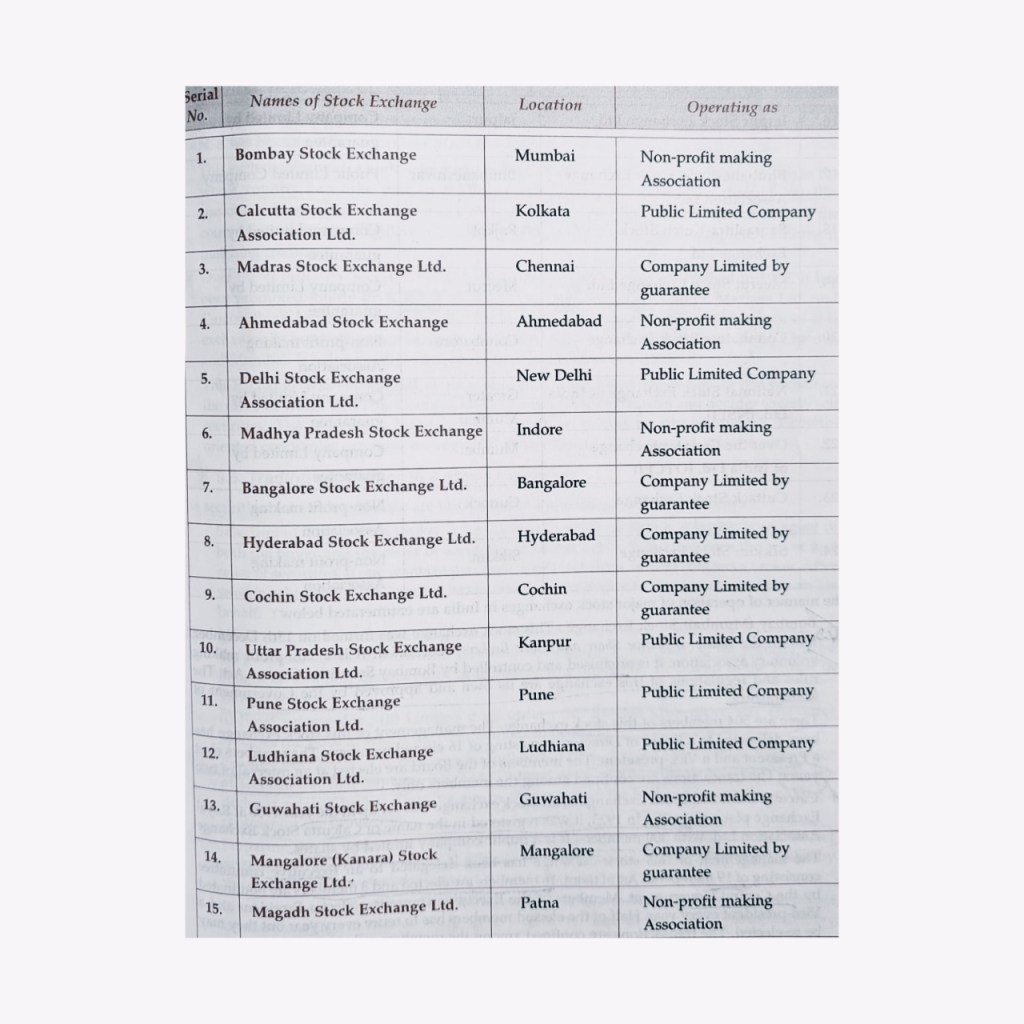




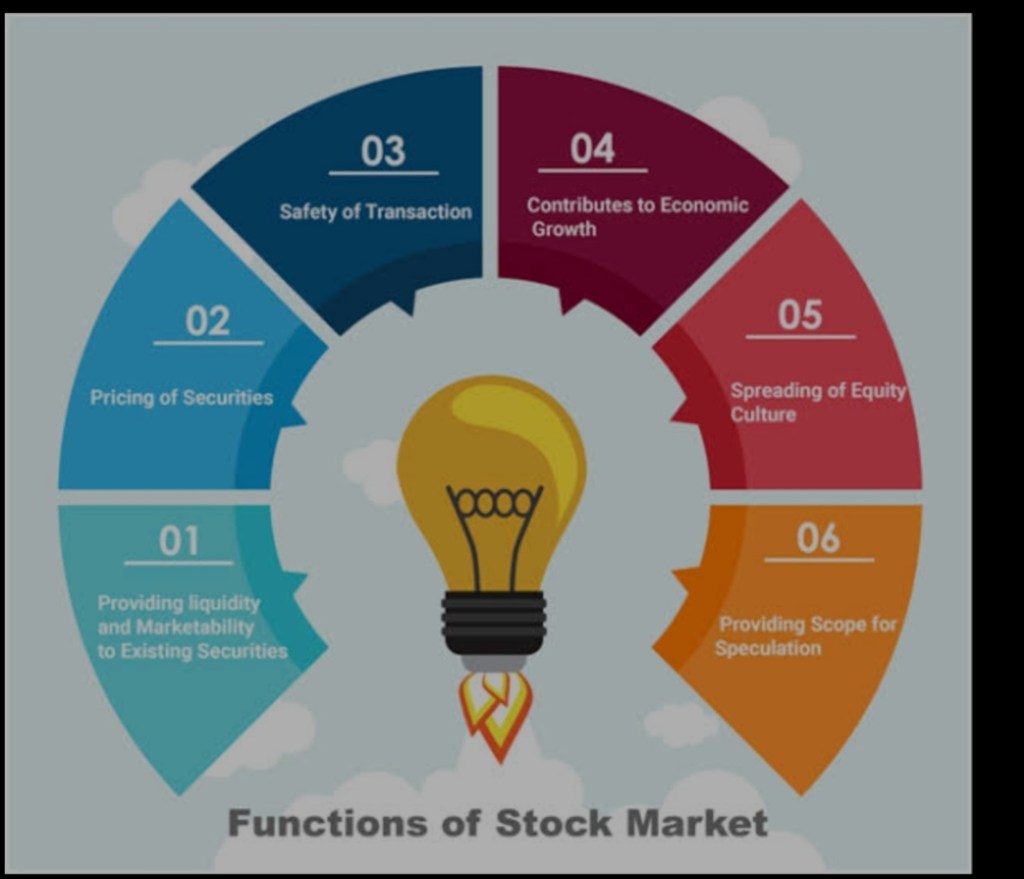



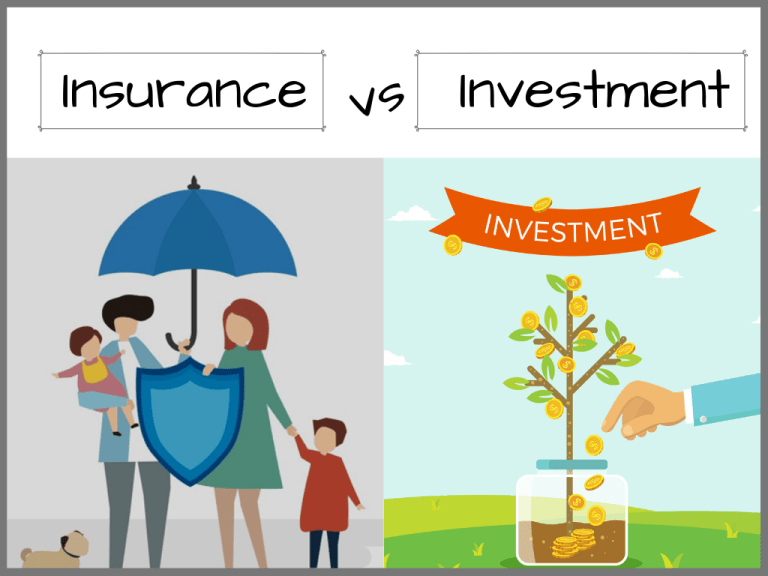
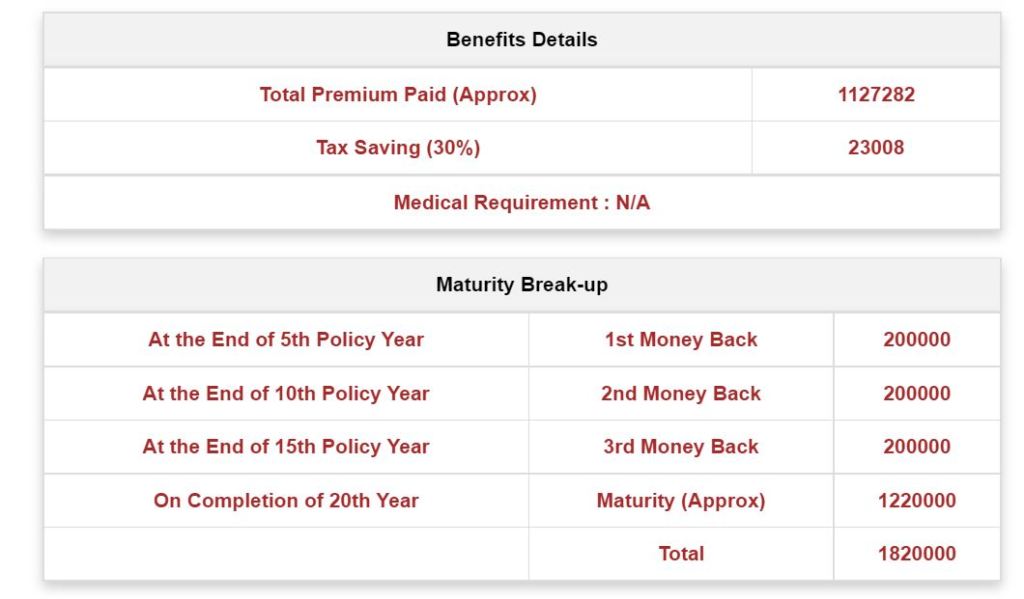
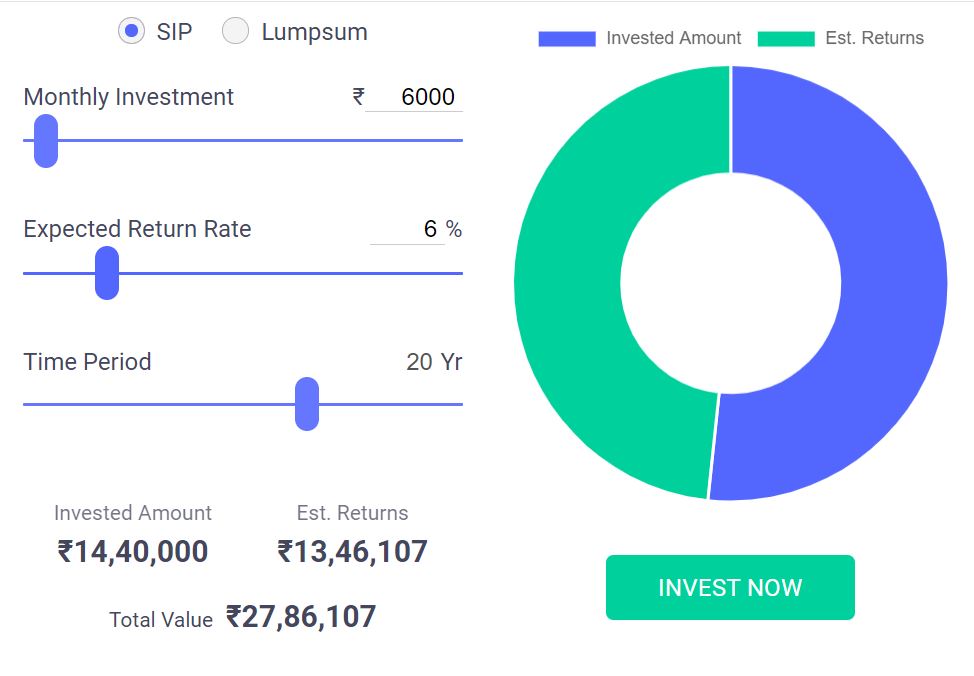


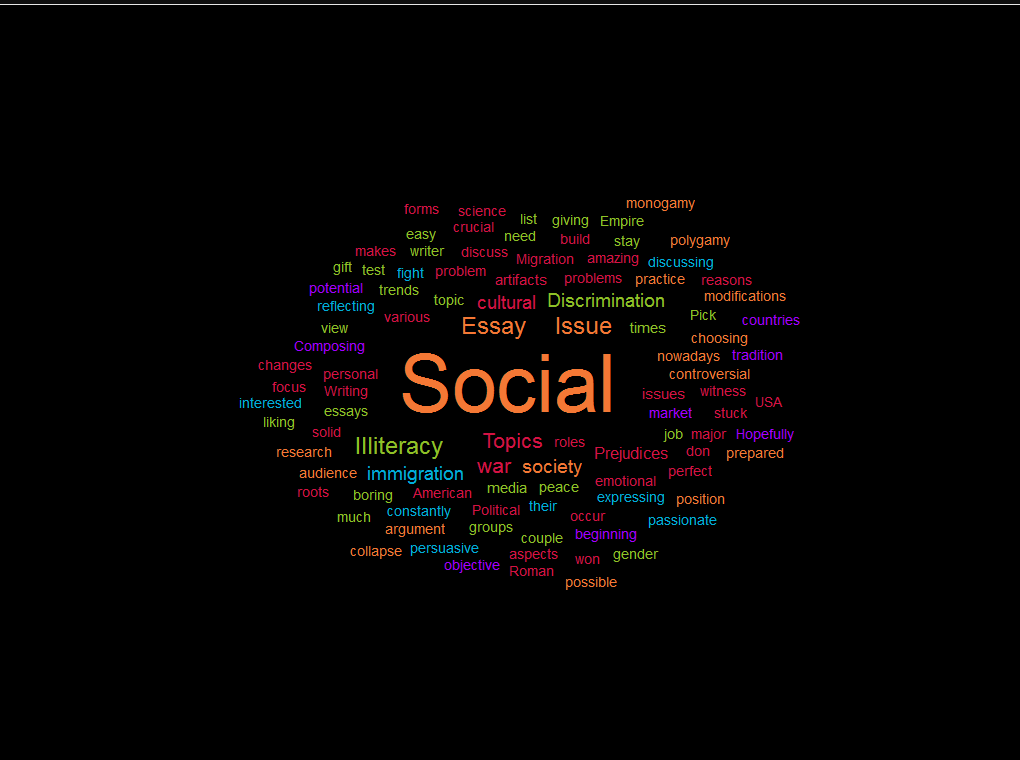
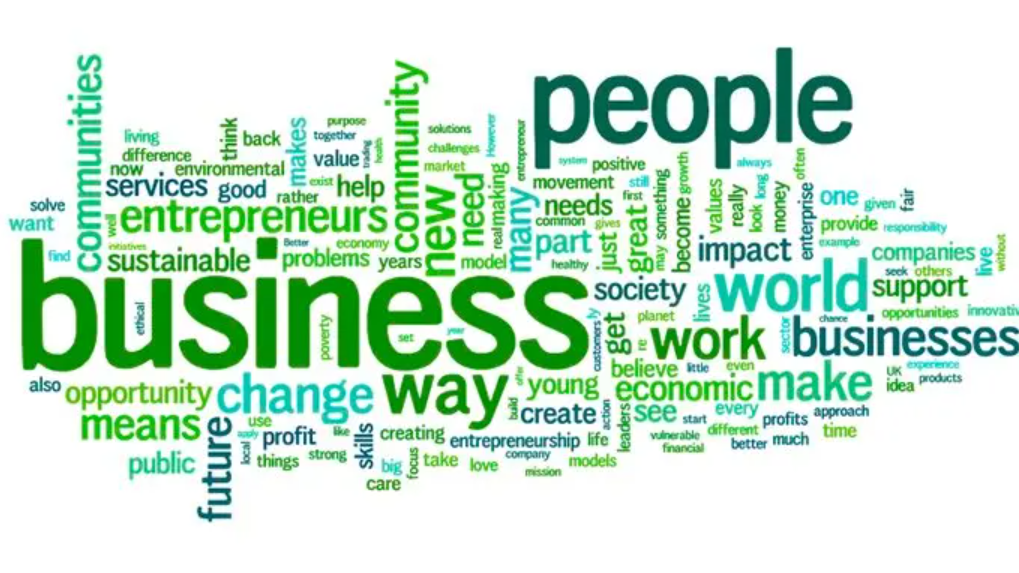










 Eduindex
You must be logged in to post a comment.