“Testing is the process of executing a program with the intent of finding faults.”
Testing is an important aspect of the software development life cycle. It is basically the process of testing the newly developed software, prior to its actual use. The program is executed with desired input(s) and the output(s) is/are observed accordingly. The observed output(s) is/are compared with expected output(s). If both are same, then the program is said to be correct as per specifications, otherwise there is something wrong somewhere in the program. Testing is a very expensive process and consumes one-third to one-half of the cost of a typical development project. It is largely a systematic process but partly intuitive too. Hence, good testing process entails much more than just executing a program a few times to see its correctness.
Testing is the process of demonstrating that errors are not present.
The purpose of testing is to show that a program performs its intended functions correctly.
Testing is the process of establishing confidence that a program does what it is supposed to do.
Customers may use the software in different and strange ways. Their involvement in testing may help to understand their minds and may force developers to make necessary changes in the software. These three terms are related to the customer’s involvement in testing with different meanings.
Alpha Testing
These terms are used when the software is developed as a product for anonymous customers. Therefore, acceptance testing is not possible. The alpha tests are conducted at the developer’s site by the customer. These tests are conducted in a controlled environment and may start when the formal testing process is near completion.
Beta Testing
The beta tests are conducted by potential customers at their sites. Unlike alpha testing, the developer is not present here. It is carried out in an uncontrolled real life environment by many potential customers. Customers are expected to report failures, if any, to the company. These failure reports are studied by the developers and appropriate changes are made in the software. Beta tests have shown their advantages in the past and releasing a beta version of the software to the potential customer has become a common practice. The company gets the feedback of many potential customers without making any payment.
Acceptance Testing
This term is used when the software is developed for a specific customer. The customer is involved during acceptance testing. He/she may design adhoc test cases or well planned test cases and execute them to see the correctness of the software. This type of testing is called acceptance testing and may be carried out for a few weeks or months. The discovered errors are fixed and modified and then the software is delivered to the customer.
Gone are the days where people don’t pay attention to visual things .Now people are quite serious about visuality of things.The designing industry is growing at the rate 23-25% annually.India currently need more than 1 lakh interior designers .In coming future , interior designing is one of the most popular designing profession in india.The interior designing market said to be increased by 8.3% by the end of the year 2025.With increase in standard of living in both urban and rural areas ,a good living styles became the inseparable part people.
With the rapid growth of commercialation ,the living standard of people changed .To live in the most beautiful house is been a dream of both urban and rural people. The experts says there is surely the positive growth in interior designing sector in india.It is surely the best career for creative people.
Modern world has opened the doors for newer technologies. Every day, people bring new ideas to transform the way of thinking and doing things. Stories from all over the world from different fields influence many to pursue with their field of interest. There are several successful women in many fields in India also; they become true inspiration to all the young dreamers. Moreover, this pandemic have also taught us to be more skillful to achieve success and continuous growth in our lives.
One of the inspiring stories that have made young girls believe in their dreams is that of P.V. Sindhu. She started playing Badminton at the age of 8 and made her international debut when she was 17 yrs old. After tremendous hard work and with constant learning she became the World’s 6th Ranking Women in Single Badminton. This dedication and her constant efforts are real inspiration for the women out there who believe on themselves.
Image: Sports24
Likewise, Sharanya a 24 yr old young junior doctor who treated the victims of the Kozhikode Plan Crash. After working for 1 year at Kozhikode General Hospital,she quits to start preparing for her NEET exams. On one of the fateful night, when the hospital needed all hands on deck, she jumped into help without a second thought.
12 year old Haaziq from Pune came up with ingenious innovation- Ervis – which is a prototype ocean cleaner ship that can suck out plastic from the surface of the ocean. The picture of a young whale that died of intestinal blockage after consuming huge amount of plastic is what made this 12 year old to wage war against plastic. His novel idea received global attention and he got a chance to present this idea before audience through TED-X club.
India is one of the countries having most number of youths; the need is to give them a proper direction to think and to bring a change. Engagement of young people at local, national and global levels is impacting lives. The more they explore the more idea they collect. At this stage of confusion and uncertainty youths from different part of India are setting examples for others. No talent should be wasted, because they are capable of much more. But due to societal pressure and constant discouragements they often confused to choose their field of interests.
Image: Rightful Owner
The 22 year old a Haimanti founder of the NGO Junoon, is the inspiration for people who want to bring a change in the field of education especially for underprivileged children. Since May 2018, she has been on a mission to equip them with necessary skills along with education that will enable her to enroll them in a regular school under the Right to Education Act.
There are several more tales of young minds whose acts inspire us to work towards innovative methodologies. A young regular college student from Palakkad district, Shahinsa belongs to an agrarian family from the Panamanna village have deep passion for farming and finds the time to grow crops using modern technology in the fields.
Sriya Donepudi (15), a school going girl from Khajaguda started an initiative to recycle used flowers after social functions. She collected discarded flowers from various events and with the help of women from economically weaker sections they made soaps, paper-weights and other items from floral waste. According to The New Indian Express, this initiative made her bag The Diana Awards of 2020.
In the year 2017, Malhar and his friends collected the garbage thrown by visitors at Dadar Beach. Earlier, they started it as a weekend activity that gradually turned into a fully fledged cleanup movement engaging over 20,000 Mumbaikers. Collectively they have gathered 1000 tonnes of waste including plastics, stale food and religious offerings that had been cleared from the beach side. His efforts for this cleaning drive recognized globally when United Nations felicitated him on the International Volunteer Day.
Most of Indian startup and innovation landscape provide opportunity to young inventors to bloom. Their keen observations combined with deep sense of strategic ideas helps them in dealing with various problematic situations in the field of technology. These tales not only made us proud but also inspire us to build a new India with innovative thoughts.
Image : Shutterstock
Each of us is great in our own fashion. Even a tiny story of inspiration can influence thousands of youngsters to pursue their dream; each act can impact the world. Every one of us has that hidden power, the requirement is to have faith and continue our work with relentless efforts. These tiny tales of youths inspires many to pursue their dream . This pandemic is really tough and a challenging time for all the innovators but if you’re passionate enough to achieve your goal, you should continue with perseverance and patience.
Water is the basic needs of the individual for the Survival. Some of the things like oxygen, water, food are very essential for the individual to live. After the oxygen, water is very much important for the individual survival and for the whole environment as well. Water is used in the daily basis for many of the activities like drinking, cleaning, watering, and also for some of the electric purposes etc.
There are plenty of water in the seas but there is no use of them. Because, all the seawater are salty and not food for drinking purpose. They can be made for drinking by some of the beautification methods which takes lots of processes and also the time. Scarcity of the water is not only the India’s problem but also the global problem.
If the wasteage of water is continued in the same way, there will be a day where no water can be found for drinking purposes and for some of the utility purposes. Most of the people waste water without any need. Using water for the purposes are all good but Wasting the water without any reason is a bad habit that an individual must not develop. It is very easy to waste water rather than saving the drop.
The main sources of water are surface water, ground water and rain water.
Importance of water :
Water is very important to the human body. Every one of your cells,organs and tissues use water to help with temperature regulation, keeping hydrated and maintaining bodily functions. In addition, water acts as a lubricant and cushions your joints. Driniking water is great for your overall health. Because your body loses water through breathing, sweating, and digestion, it’s important to rehydrate by drinking fluids and eating foods that contain water.
Water delivers important nutrients to all of our cells,especially muscle cells, postponing muscle fatigue. Water helps weight loss. Water helps you feel full longer,without adding any additional calories.
Benefits of Drinking water :
* Increases Energy & Relieves Fatigue. Since your brain is mostly water, drinking it helps you think, focus and concentrate better and be more alert.
* promotes weight loss.
* Flushes out Toxins.
* Improves skin complexion
* Maintains Regularity.
Best source of water :
1. Watermelon – water content : 92%
2. Strawberries – water content : 91%
3.cantaloupe – water content : 90%
4.peaches – water content : 89%
5.oranges – water content : 88%
6. Skim Milk – water content : 91%
7. Cucumber – water content : 95%
8. Lettuce – water content : 96%
9. Broths and soups – water content : 92%
10. Zucchini – water content : 94%
11. Celery – water content : 95%
12. Plain yogurt – water content: 88%
13. Tomatoes – water content : 94%
14. Bell peppers – water content : 92%
15.cauliflower – water content : 92%
16. Cabbage – water content : 92%
17. Grape fruit – water content : 88%
18. Coconut water- water content : 95%
19. Cottage cheese – water content: 80%
Disadvantages of water :
It is said that too much consumption of water can lead to fluid overload in the body and imbalance in the body. Excess water can lead it lower sodium levels in the body, which may further lead to nause, vomthing, cramps, fatigue. This condition is known as hyponatremia.
The best method to save water is to use in limited amounts. That is, to limit the water without wasting much water.
Just because no one else can heal or do your inner work for you, doesn’t mean you can, should or need to do it alone.
Lisa Olivero
Have you ever felt the stark desire to inevitably scream in a room full of people, hoping they just care enough to notice the signs you have been leaving regarding your deteriorating mental state and how desperately you need help? But instead, you just accept your solitude in an empty chair and try to repress your bottled-up emotions deep within the realms of your consciousness.
A lot of us might have gone through the same situation at a certain point in our lives. The primary reason behind this subconscious aversion to the expression of thoughts is the mere fact that humans have been conditioned to do so throughout their lives. Men are typically the most vulnerable victims of this detrimental mindset. From an early age, they are frequently instructed to not cry like a girl. According to a survey, a significant percentage of men in the nation are currently depressed, and they themselves admitted that they lack a support system.
Mental health is still a deeply rooted stigma that people aren’t ready to accept. In order to understand the concept one needs to broaden the perspective of understanding humans and follow certain ways like-
Instead of asking,”How are you?” ask,” How are you, really?”
Look for obvious signs in a person- whether they feeling low from abnormal no. of days.
Asking your closed ones to describe their day in detail and be a good listener.
Do not mistreat someone who is already going through some sort of trauma.
Treat people with kindness, you never know what someone is going through.
Additionally, in India, therapists continue to be overlooked as a useful resource for treating a person’s mental health. A person is called a “lunatic” if they see a therapist. In light of the increased public awareness during the pandemic’s lockdown time, these issues are being explored on social media, and many people now see psychology as a crucial component of the educational system. People have now started considering mental health as being equally essential as physical health as because of an alarming spike in suicide incidents during this period. Still, awareness needs to be assured at ground level and there is still a long way to go to see the day when all of us are not reluctant to lend a helping hand to our fellow humans.
A fundamental aspect of any society should be understanding, accepting, and embracing each and every emotion one feels which makes them human.
Alacrity The GRE has a predilection for words that don’t really sound like what they mean. Alacrity is no exception. Many think the word has a negative connotation. Alacrity, however, means an eager willingness to do something. So imagine the first day at a job that you’ve worked really hard to get. How are you going to complete the tasks assigned to you? With alacrity, of course. An interesting correlation: the more alacritous (adjective form) you are when you’re learning GRE vocabulary, the better you will do.
Prosaic Prosaic conjures up a beautiful mosaic for some. For others, the pro- is clearly positive. So if somebody or something is prosaic, it must surely be good. Once again the GRE confounds expectations. Prosaic means dull and lacking imagination. It can be used to describe plans, life, language, or just about anything inanimate that has become dull (it is not used to describe people).
A good mnemonic: prose is the opposite of poetry. And where poetry, ideally, bursts force with imagination, prose (think of text-book writing), lacks imagination. Hence, prose-aic.
Veracity:- Veracity sounds a lot like voracity. Whereas many know voracity means full of hunger (the adjective form voracious is more common), few know veracity. Unfortunately, many confuse the two on the test. Veracity means truthful. The adjective form, veracious, sounds a lot like voracious. So be careful. Paucity Paucity is a lack of something. In honor of paucity, this entry will have a paucity of words.
Maintain The second definition of this word – and one the new GRE favors – is to assert. One can maintain their innocence. A scientist can maintain that a recent finding support her theory. The latter context is the one you’ll encounter on the GRE. Contrite Word roots are often misleading. This word does not mean with triteness (con- meaning with). To be contrite is to feel remorse.
Laconic Another word that sounds different from what it means. A person is described as laconic when he/she says very few words. I’m usually reminded of John Wayne, the quintessential cowboy, who, with a gravely intonation, muttered few words. As this allusion betrays may age more than anything else, think of Christian Bale in Batman.
Pugnacious Much like a pug dog, which aggressively yaps at things near it, a person who is pugnacious likes to aggressively argue about everything. Verbally combative is another good way to describe pugnacious. Disparate If two things are fundamentally different, they are disparate. For instance, verbal skills and math skills are disparate, and as such are usually tested separately, the GRE being no exception.
It may be your first real job, the pay is low, the hours long, and you are at the bottom of whichever career ladder you seek to climb.
But—
Though these points are true in most cases, there are many benefits of internships, as well. In fact, taking that internship now may just help you skip a few rungs on your way up that career ladder in the future.
Applicationofeducationandcareerexploration.
Internships are a great way to apply the knowledge from the classroom to real world experience. Learning is one thing, but taking those skills into the workforce and applying them is a great way to explore different career paths and specializations that suit individual interests.
Actual Work Experience
When you’re in college or a fresh grad, your resume probably looks as if it was printed in invisible ink—there’s not much on there, right?
The number one reason for taking an internship is for gaining actual work experience.
Sure, you may have worked as a barista or SAT tutor part-time, and you can definitely add those items to your resume. However, if your dream is to be a web developer at Facebook or practice environmental law to help fighting climate change, those high school jobs or college gigs are nothing more than filler on your job resume or cover letter.
On the other hand, internships are where you get to obtain experience in the field you’ll pursue on your career path. It’s a job, and likely the first one on your resume and cover letter that’ll make a future hiring manager sit up and take notice.
Gain experience and increase marketability
Having an internship gives you work experience in the career field you want to pursue. Not only does this give individuals an edge over other candidates when applying for jobs, it also prepares them for what to expect in their field and increases confidence in their work.
A Paycheck
For most intern programs that don’t offer college credits, and even for some that do, a regular paycheck is one of the most desired benefits of internships.
While interns’ paychecks are usually considered peanuts when compared to the “real” employees at the company, were you to compare, it’s still money in the bank. Rather than bartending to help you pay for college expenses (unless that’s where your heart lies), a paid internship in your chosen field will put some cash in your wallet while earning invaluable industry experience—a win-win, right?
Professionalism
Internships can provide students with the soft skills needed in the workplace and in leadership positions. In a (2018), 57% of people rated soft skills as being more important than technical skills. Skills, such as communication, leadership, problem-solving, and teamwork can all be learned through an internship and utilized beyond that experience.
Build your resume
Most organizations and jobs that you apply to following graduation want employees to have some sort of professional experience, even for entry level job. In the event that you are a finalist for a position and haven’t had an internship experience but the other finalist has, you may lose out on a job opportunity, so make sure you at least have one internship on your resume before leaving college to give you a leg up on the competition.
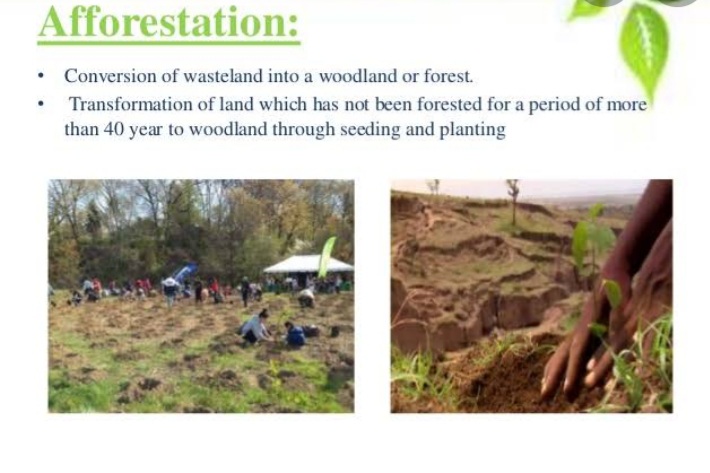
Afforestation is very useful to prevent and maintain the oxygen levels. Due to the deforestation, many of the trees are being cut and the oxygen supply has been reduced very drastically. Afforestation will help to maintain the oxygen levels in the atmosphere and helps the individual and the world to be healthy all the time. Oxygen is the minimum need for the individual to survive on the earth. If there is no oxygen, then which will cannot live or survive. When there is no o2, It is equally difficult for the animals to survive.
It also helps to maintain good forests. Deforestation, that is cutting of the trees makes the land abandoned and trees life less. When an individual takes a step forward to plant trees that is afforestation, good number of trees will be grown and the forests will be developed.
The most important thing for the animal’s survival is trees that give shelter and plants for the food. When the trees are being cut, some of the animals find no shelter and sometimes no food to eat. When afforestation takes place animals will find good shelter and also good food to eat.
Importance of Afforestation :
Afforestation helps to addess all the issues of soil erosion and barren land at the same time. Tress acts as wind barriers thereby weakening the speed of the wind and reducing its impact and ability to carry big soil particles.
The impacts of afforestation is occuring in many parts of world, can modify the nature and transformations of soil organic carbon and associated soil prevents, which in turn can affect plant diversity and ecosystem function. Afforestation also decreased soil bulk density and pH, and increased soil water content.
Types of Afforestation :
Afforestation materials are mainly divided into three categories: seed,seedling,and cutting. The choice of these three types of afforestation materials and methods is related to site conditions, tree species and age.
Various causes of Afforestation :
* Afforestation is highly fundamental in creating an alternative source pool of nature resource.
* Afforestation aids in tackling global warming and stabilizing global temperatures.
* protection of sensitive areas, biodiversity, and natural cycles.
* Afforestation can support wildlif.
* Afforestation creates employment and can provide a source of livelihood.
Advantages of Afforestation :
* A constant supply of forest products.
* prevents soil erosion.
* stabilizes the climate.
* Has the potential of reversing global warming and climate change.
* Better quality air.
* Improve watershed.
* preservation of wildlife.
* provision of employment and economic opportunities.
Disadvantages of Afforestation :
If not properly managed, afforestation can result in a reduction of local biodiversity, the modification of particular biomes, the intriduction of non – native and potentially invasive species, reduced stream flow and lost revenue from agricultural.
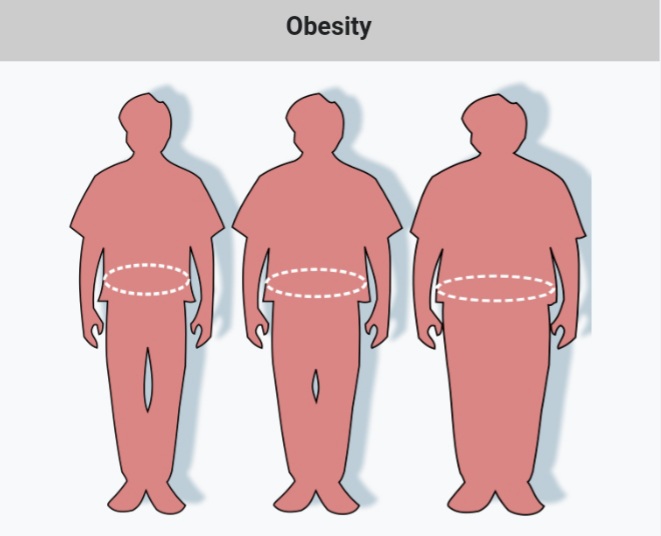
Obesity is described by the BMI (Body mass index). The obesity in the body is nothing but the high level of fat stored in the body. It is a very bad thing which in future leads to many health problems.
Many of the children are falling obese now a days. This is because of not having good food. Many of the children are highly addicted to the junk food. The junk food intake in the body increases the fat levels in the body.
A disorder involving excessive body fat that increases the risk of health problems. Obesity often results from takingin more calories than are burned by exercise and normal daily activities.
Symptoms:
Obesity occurs when a person’s body mass index is 25 or greater . The excessive body fat increses the risk of serious health problems.
What causes obesity?
Obesity is generally caused by eating too much and moving too little. If you consume high amounts of energy , particularly fat and sugars, but do not burn off the energy through exercise and physical activity, much of the surpluse energy will be stored by the body as fat.
8 Most common causes of obesity :
* physical inactivity.
* overeating.
* Genetics.
* A diet high in simple carbohydrates.
* A frequency of eating .
* Medications.
* psychological factors.
* Diseases such as hypothyroidism, insulin resistance, polycystic ovary syndrome, and caushing’s syndrome are also contributors to obesity.
Let us now look at some methods to prevent obesity.
*Healthy and nutritious food :
It is very important to consume healthy and nutritious food every day. To gain a sufficient amount of nutrients and and to be healthy it is very important to consume nutritious food. Consuming nutritious food helps us to gain sufficient energy. Being healthy prevents us from Many deadly diseases.
*Exercise :
Exercising at least for 10 to 15 minutes a day help the individual to be physically fit and also mentally strong. Exercising every day is a very good habit which everyone need to make it and perfect habit to do. Exercising 10 to 15 minutes also relieves us from the stress and the tension we have had. So, it is better to spend at least 10 to 15 minutes even in our hectic schedule an exercise.
* yoga :
Yoga relives from the stress and tension we have had. Sparing at least 10 to 15 minutes time on yoga benefit is a lot. It relaxes the muscle and comes to mind. It helps to be physically fit and mentally strong. All the asanas and pranayama helps to Gain strength and to be physically fit.
*Meditation :
Meditating for certain minutes helps to calm the brain and soul. It helps and relieving the stress and the tension we have had. It helps us to focus on the things which we are willing to do. It also equally helps us to be mentally strong. It is such a good and a mandatory practice an individual must obtain and must follow without any delays.
* Monitor your weight regularly.
* Be consistent.
Who obese people?
BMI is calculated by dividing a person’s weight in kilograms by the square of their height in metres. A BMI of 25.0 – 29.9 is classified as overweight but not obese, while a BMI of 30.0 or over is classified as obese. A BMI of graeter than 35.0 is classified as severely obese.
Adult BMI calculator
BMI WEIGHT STATUS
Below 18.5 underweight
18.5 – 24.9 Normal
25.0- 29.9 overweight
30.0 and above obese
The negative effect of obesity :
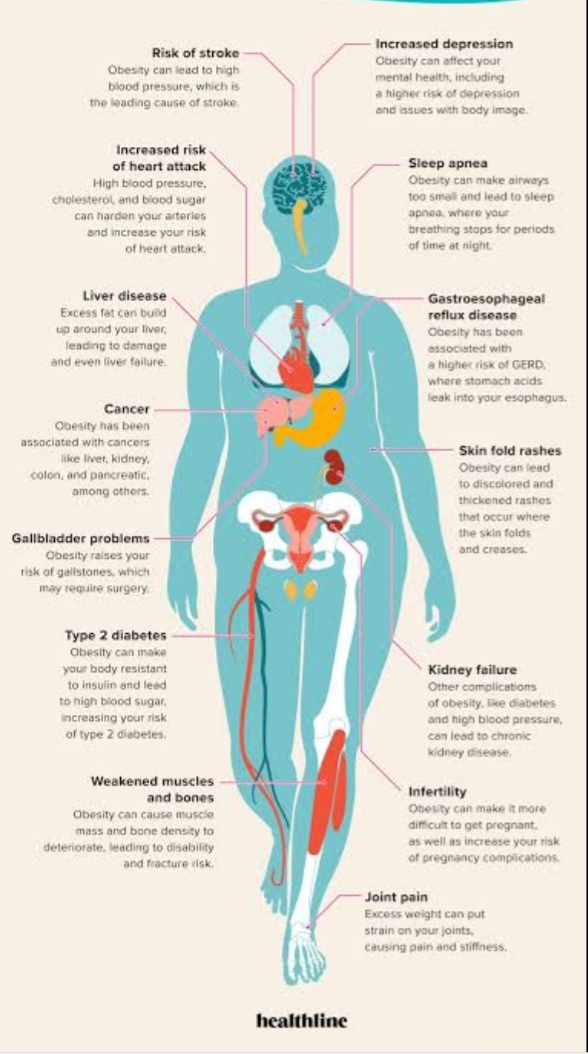
Obesity is serious beacause it is associated with poorer mental health outcomes and reduced quality of life. Obesity is also associated with the leading causes of death in the united states and worldwide, including ,diabetes, heart disease, stroke, and some types of cancer.
Banks play an important role in financial stability and the economy of a country. It is a financial institution that accepts deposits from the public and creates a demand deposit while simultaneously making loans.
Credit creation is one of the most important functions performed by commercial banks. It separates a bank from other financial institutions . In simple terms credit creation is the expansion of deposits. A bank expands the demand deposit into multiple cash reserves as demand deposits are the principal medium of exchange.
In words of Newly ” Credit Creation refers to the power of commercial bank to expand secondary deposits either through the process of making loans or through investment in securities “
Credit Creation is a situation in which banks give more loans to consumers and businesses with the result that the amount of money in circulation increases . In other words , it refers to the unique power of banks to multiply loans and advances and hence create credit on the basis of the primary deposit of the account holder .
According to G.N Halm , “The creation of derivative deposits is identical with what is commonly called the Creation of Credit .” __________________________________________ Arguments Regarding Credit Creation .
There have been two views on the Credit Creation by bank by two economists Hartley Withers Walter Leaf .
According to Withers , banks can create credit by opening a deposit , every time they advance a loan . This is because every time a loan is sanctioned , payment is made through cheques . As long as a loan is due , a deposit of the amount remains outstanding in the books of the bank . This every loan creates a deposit .
Walter Leaf did not agree with this view . According to them, banks cannot create money out of thin air . They can lend only what they have in cash . Therefore , they cannot and do not create money .
The given argument was related to single bank and hence ,as pointed out by Prof Samuelson , “The banking system as a whole can do what each small bank cannot do : it can expand its loan and investments many times the new reserves of cash created for it , even though each small bank is lending out only a fraction of its deposits .”
Thus , banks are able to create credit or deposits by keeping a small cash in reserves and lending the remaining amount .
Basis of Credit Creation
Demand deposits are an important constituent of money supply and the expansion of demand deposits means the expansion of money supply . The entire structure of banking is based on credit . Credit basically means getting the purchasing power now and providing to pay at some time in the future .
Bank deposits form the basis of credit creation.
Bank deposits can be divided into two types :-
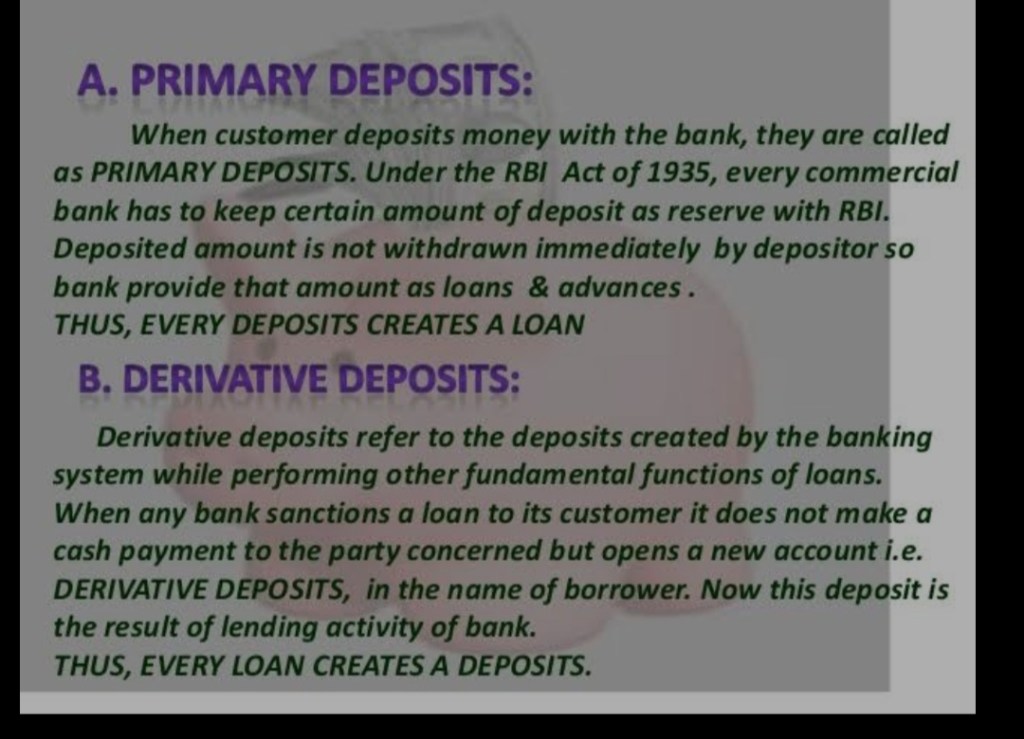
• Primary Deposits :- A bank accepts cash from the customer and opens a deposit in his name . This is a primary deposit . These deposits simply convert currency money into deposit money . These deposits form the basis for the creation of credit. These deposit creates a loan .
• Secondary or Derivative Deposit :- A bank grants loans and advances instead of giving cash to the borrower , opens a deposit account in his name . This is the secondary or derivative deposit . Every loan creates a deposit . The creation of a derivative deposit means the creation of credit .
Banks can expand their demand deposits as a multiple of their cash reserves because demand deposits serve as the principal medium of exchange .
Aspects of Credit Creation
The two important aspects of credit creation are :-
Liquidity :- The bank must pay cash to its depositor when they exercise their right to demand cash against their deposit .
Profitability :- Banks are profit – driven enterprises . Therefore a bank must grant loans in a manner which earns higher interest than what it pays on its deposit .
Assumptions :-
The bank’s credit creation is based on the assumption that during any time interval only a fraction of its customers genuinely need cash . The bank also assumes that all its customers would not turn up demanding cash against their deposit at the same time .
Concepts of Credit Creation.
• Bank deposit :- Bank deposits are the basis of credit creation . Bank deposits constituent of primary deposit and secondary deposit .
• Bank as a Business institution :- Bank is a business institution which tries to maximize profit through loans and advances from deposits.
• Borrowing rate :- The rate at which commercial banks accept deposits is known as the borrowing rate.
• Lending rate :– The rate at which the commercial banks lend money to the customers is known as the lending rate.
• Spread :- The difference between the lending rate and the borrowing rate is known as the spread.
Spread = Lending rate – Borrowing rate.
• Concept of Cash Reserve Ratio :- It is legally compulsory for the bank to keep a certain minimum fraction of the deposit as a reserve. This is known as Cash Reserve Ratio (CRR) or Legal Reserve Ratio (LRR).
Banks only keep a fraction of deposits as cash reserves because all depositors do not approach the bank for withdrawal of money at the same time. There is a constant flow of new deposits into the banks.
• Excess Reserves :- The reserves over and above the cash reserves are the excess Reserves used for loans and credit creation .
• Concept of Credit Multiplier :- The credit multiplier or deposit multiplier measures the amount of money that the banks are able to create in the form of deposits with every unit of money that it keeps as a reserve.
It is calculate as,
Money Multiplier (MM or K) = 1/ CRR times
Given a certain amount of cash , a bank can create credit multiple times . In the process of multiple credit creation , the total amount of derivation deposits that a bank creates is a multiple of initial cash .
Cash Deposit = ∆ D Cash Reserve Ratio = r Total deposit = ∆ M
Derivation :-
∆ M = ∆ D + (1- r) ∆ D + ( 1- r ) ² ∆ D +( 1- r )³ ∆D +……….( 1-r ) ^ n-1 ∆ D . – (i)
By multiplying both side by (1-r) in equation (i)
( 1- r) ∆M = (1-r ) ∆ D +(1-r)² ∆D + (1-r)³ ∆D ………..(1-r)^ n ∆ D. -( ii )
Subtracting equation i and ii we get ,
( 1-r) ∆ M – ∆M = – ∆ D + ( 1- r) ^n ∆ D.
∆ M ( 1-r-1 ) = – ∆ D [ 1- ( 1-r) ^n ]
If n = ~ Then , (1-r) ^n =0
So ,
r ∆M = ∆ D ( 1-0 ) r∆ M = ∆ D
∆ M = 1/r × ∆ D .
Hence ,proved ,
Total deposit = Cash deposit × Credit Multiplier Coefficient.
Process of Credit Creation
There are two ways of analyzing the credit creation process:
• Single bank Credit creation system.
• Multiple bank Credit creation system.
Single Bank Credit Creation:-.
In this system, one bank operates all the cash deposits and cheques.
Explanation with hypothetical example :-.
Assumption :-
Bank receives a cash deposit from person A , of Rs. 1000.
The bank requires a CRR of 20 percent.
The remaining money is lent to another person B , C , D …and so on.
Explanation :-
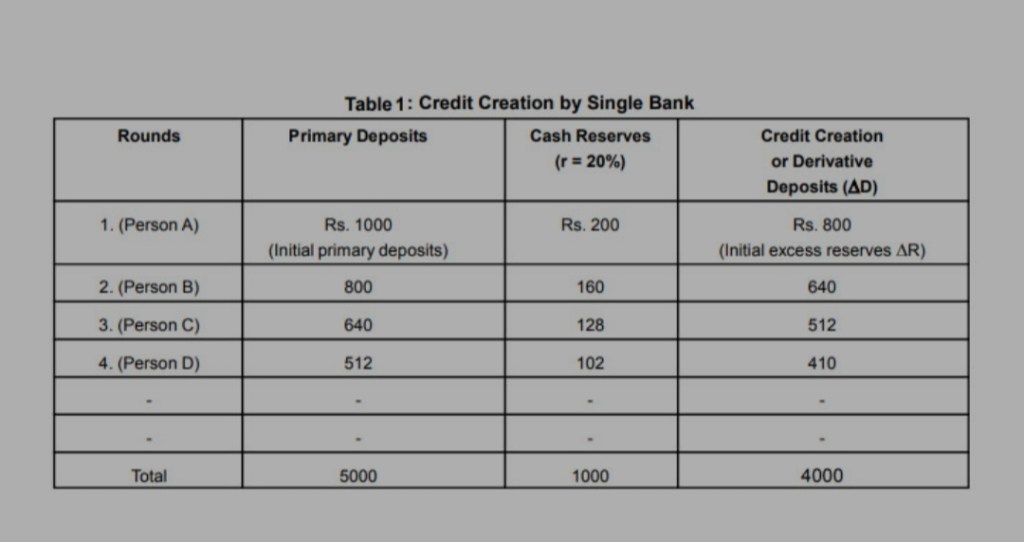
Person A deposits 1,000 rupees with the bank, then the bank keeps only 200 rupees in the cash reserve and lends the remaining 800 to another person B.
They open a credit account in the borrower’s name for the same.
Similarly, the bank keeps 20 percent of Rs. 800 (i.e. Rs. 160) and advances the remaining Rs. 640 to person C.
Further, the bank keeps 20 percent of Rs. 640 (i.e. Rs. 128) and advances the remaining Rs. 512 to person D.
This process continues until the initial primary deposit of Rs. 1,000 and the initial additional reserves of Rs. 800 lead to additional or derivative deposits of Rs. 4,000 (800+640+512+….).
Adding the initial deposits, we get total deposits of Rs. 5,000.
In this case, the credit multiplier is 5 (reciprocal of the CRR) and the credit creation is five times the initial excess reserves of Rs. 800.
Multiple Credit Creation by the Banking System
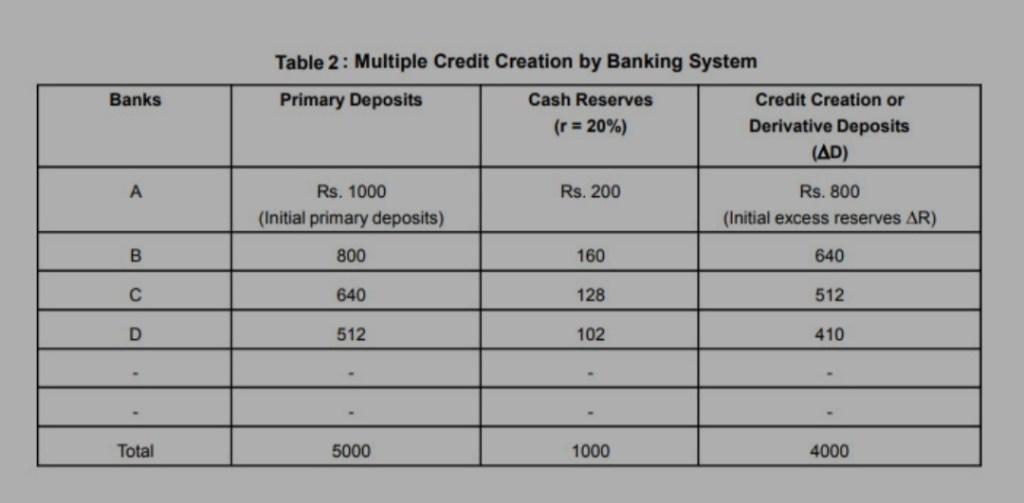
In multiple credit creation by a bank , deposit of one bank is the gain of deposit for some other bank. This transfer of cash within the banking system creates primary deposits and increases the possibility for further creation of derivative deposits
Multiple banking system includes the following assumptions :-
• There are. many banks , say A,B, C ,.etc.
• First Bank has a cash deposit of Rs. 1000.
• The bank requires a CRR of 20 percent.
• The remaining money is lent to another bank B , C , D …and so on.
The initial deposit of Rs. 1,000 with bank A leads to a creation of total deposits of Rs. 5,000.
Limitations :-
Commercial banks have limited power in the creation of credit . The following are the limitations on the power of commercial banks to create credit.
•The credit creation power of banks depends upon the amount of cash they possess .
• An important factor that limits the power of banks to create credit is the availability of adequate securities .
• The banking habits of the people also govern the power of credit creation on the part of banks .
• The minimum legal reserve ratio of cash deposits fixed by the central bank is an important factor which determines the power of banks to create credit.
• The process of Credit Creation is based on the assumption that banks stick to the required reserve ratio by the Central Bank .
• If there are leakages in the credit creation steam of the Banking system , credit expansion will not reach the required level.
• The power of credit creation is further limited by the behaviour of the other banks .
World war 1 which is also known as great for begin in 1914 after the assassination of Archduke Franz Ferdinand of Austria. The World war 1 was a global originating in Europe it led to the mobilization of more than 70 million military personnel including 60 million euro peons making it one of the largest was in the history it was one of the deadliest conflict in history the World war 1 started in 28 July 1914 and came to an end on 11 November 1918 which was the estimate of four years three month and two weeks after the declaration of the World war 1 the allies won war World war and gain the treaties. The treaties of Versailles that was signed on 28 June 1919 and the treaty of saint- Germaine-laye which was signed on 10th of September the treaty of Neuilly- sus-seine which was signed on 27 Nov. The treaty of Trainon which was signed on 4th June 1920 and treaty of sevres signed on 10 aug 1920 and the United States Austria’s peace treaty e which was signed on 25th August 1921, US Hungary peace treaty which was signed on 29 aug 1921 and finally the treaty of Lausanne which was signed on 24 July 1923.
There are the most positive outcome from the World war 1 and in the peace treaty that ended World war 1 set the stage to World war 2. World war 1 was a significant turning point in the political cultural economic and social climate of the world the war and its immediate aftermath sparked numerous revolutions and uprisings. The world war resulted in allied victory which was Central power victory on the eastern front nullified buy defeat on the Western front and Italian front. Secondly fall of our continental empires in Europe including Germany Russia Ottoman Empire and Austria Hungary. Tali Russian revolution and Russian civil war with the collapse of the Russian empire and the subsequent formation of the Soviet union widespread unrest and revolutions throughout Europe and Asia. Finally creation of the league of nations. Now looking into the changes that took place in the territory after World war 1 was formation of new countries in Europe and the middle East transfer of German colonies and territories partitioning the former Ottoman Empire Australia Hungary and the Russian Empire. Transfer of territory to other countries. The lives for the losses of the soldiers around 552500 military dead hand around 12832000 Ande Ande casualties and losses of 43 86000 military and around 80 388000 military wandered around approximately 18357000 and 12794000 Ross their life and the civilian around 400000 and 3700000 civil lines lost their life and network of inter locking alliances in largest the crisis from a bilateral issue in the balkans to one involving most of Europe.
Ful Russians mobilization was announced on the evening of 30 fully Austria Hungaryand Germany did the same while Germany demanded Russia demobilized within 12 hours when Russia fail to compel Germany declared war on Russia in support of Austria Hungary and lettered shift on 6 August 1914. Ultimately as a result of this was the Austro- Hungarian German Ottoman and Russian Empire ceased to exist and numerous new states were created from there remains. However despite the the conclusive allied victory and the creation of the league of nations during the peace conference intended to prevent future.
A second world war was followed just over 12 years later it ended with the defeat of the central powers the war was virtually unprecedented. in the slaughter, Carnage and destruction it caused. The main conflict during the world war took place with the Germany Austria Hungary Ottoman Empire and the Bulgarian. Work called Central powers fought against great Britain France Russia Italy Japan United States and the Romanian. The allied powers by the time the war was over the allied powers claimed victory more than 16 million people soldiers and civilians alive were did. The blood shed on the battlefield of the Western front and the difficulties the soldiers had for years after the fighting ended failure to deliver mandated reparationsLeads to the armed occupation. Imperial dynasty in Australia and Aryan Germany the Ottoman Empire and Russia collapsed.
12 July is the day to Honors transcendentalist Henry David Thoreau.Born on 12 July Thoreau was an advocate of living a simple life .He belives that “As you simplify your life,the law of the universe will be simpler.”He was an environmentalist , poet and transcendentalist .He was the man of simplicity who believes “less is more”.
National simplicity day was created to help people to enjoy their life.As simple the word sound ,as complex is when you practice it. livinga simple life,you will find the most beautiful thing in the world.
Technical skills are the abilities and knowledge needed to perform specific tasks. They are practical, and often relate to mechanical, information technology, mathematical, or scientific tasks. Some examples include knowledge of programming languages, design programs, mechanical equipment, or tools.
Some of the very famous tech. Skills:
1. Project Management. Being able to effectively coordinate resources, people and budgets as a project manager is one of the best technical skills that you can have. 2. Analysis of Big Data and Business 3.Intelligence. 4. Information Security. 5. Designer. 6. Marketing Assistant. 7. Writer. And many more…
Create a dedicated Technical Skills section for the resume.
If they’re heavily emphasized in the job description, then your Technical Skills section should be at the top of your resume, just below your introduction, and above your professional experience. A bulleted list will make it easy to read.
These are some of the basic tech. Skills:
* Word Processing Skills. * Spreadsheets Skills. * Database Skills. * Electronic Presentation Skills. * Web Navigation Skills. * Web Site Design Skills. * E-Mail Management Skills. * Digital Cameras
How can you improve your technical skills? So, here are the steps to improves ones technical skill.
1. Enroll in Technical Classes or Workshops. 2. Get Technical Books. 3. Volunteer for Technical Projects. 4. Subscribe to Technical Sites and Magazines. 5. Develop Knowledge of a Second Language. 6. Practice What You Learned.
Before directly going into the SEO techniques I would like to make you understand about the concept of digital marketing easily with a simple example that we encounter in our daily routine. ” Most of us use Gmail almost everyday for various purposes. When ever we open our Gmail we observe different sections holding different mails in it especially when we open “Promotions” section in our mail box, we used to see different mails from various websites which are offering discounts on their products or courses.” These mails are the strategic implementations of the websites in order to increase their marketing on the internet to get profits. This type promotions in Gmail sections leave a foot print of ” DIGITAL MARKETING”.
DIGITAL MARKETING:
Digital marketing is a platform that is widely used for marketing with help internet connected devices. It uses latest digital technologies to reach people. Now a days digital marketing is crucial for the entrepreneurs to share their idea, promote their products and build their audience.
SEARCH ENGINE OPTIMIZATION(SEO):
When we search for a content through search engines like google, then that particular search engine shows a random websites for our search as an answer. This random gathering of information by search engines is possible with the help of search engine optimization which helps search engines to show the best available content for the given query.
SEO is an effective way to improve the rank of websites in search engines in order to increase the visibility of websites. SEO is a technique to optimize the website with the suitable key words. Let’s see some latest SEO hacks to improve the ranking of page which helps in increasing your websites market.
LATEST TRENDS OF SEO:
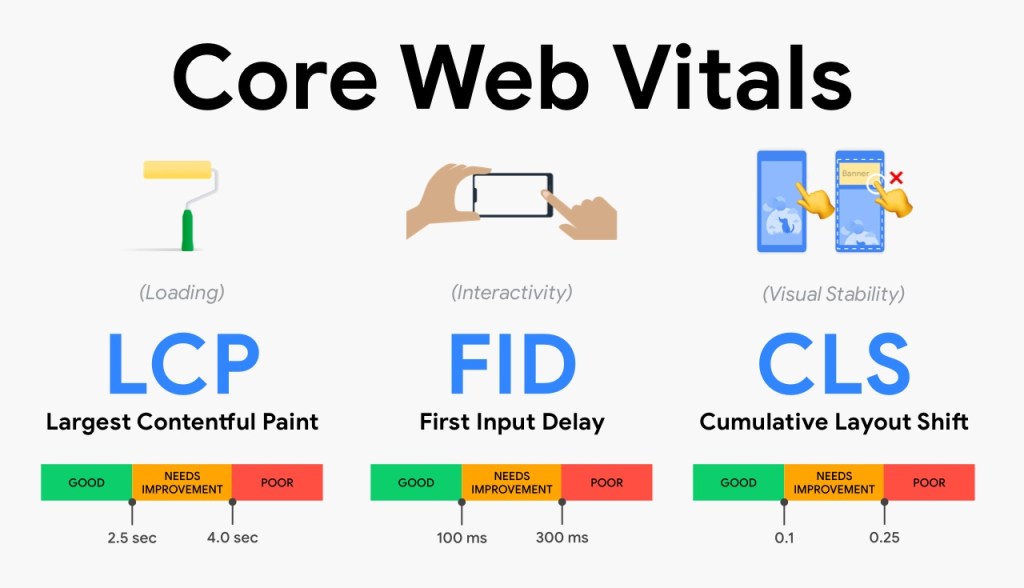
UNDERSTAND CORE WEB VITALS OF THE SITE: Google has recently announced that core web vitals will become the new ranking signals by combining previous UX related signals also. Core web vitals is a new term that haven’t heard in previous years but it plays a crucial role in 2021 because google has developed a new algorithm to measure the page experience based on the score off core web vitals.
To make you understand better, core web vitals are the measurement capabilities of the content in a website. These measurements are depended upon page speed, page responsiveness and page visual stability which are known as LCP(Largest contentful paint), FID(First input delay), CLS(Cumulative layout shift). These measurement speeds are shown in the following picture.
AI PLAYS A LARGE ROLE IN SEO: AI is changing the interaction methods of people with online content. Google has unveiled an algorithm a few years back which is called as “RankBrain”. This algorithm paly’s a crucial role in ranking the pages with the help of “SERP’s ” results. Experts believe that user experience signals are the primary for ranking the page, so by using this algorithm search engine like google can easily captivate the rate of time that has spent on the website by readers which gives the better feedback on the content quality of website.
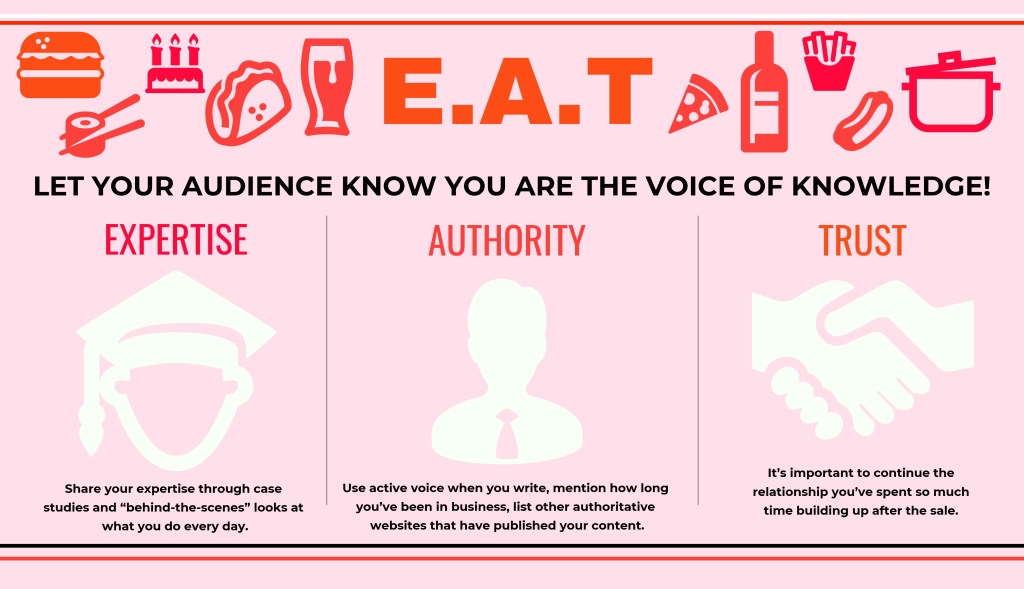
USE “EAT” PRINCIPLE: EAT principle helps website optimizer to master a long term SEO success, despite of Google’s constantly changing algorithms. EAT stands for Expertise, Authority and Trustworthiness. These three principles are essential to measure the brand of websites on the web. In order to establish your brand’s authority, trustworthiness and reputation then you have to follow these rules:
Try to engage with customers in a better way and request them to provide reviews and feed back to your work.
Try to insert high quality links in you site.
Follow EAT principles on your website through testimonials, case studies and other forms of social proof.
Along with the above discussed principles we should also follow the below stated tips to improve the traffic to your website:
Create new content and try to update the old.
Give first priority to the user experience.
Improve featured snippets to make your content more prominent.
Improve mobile friendly content to improve search rankings.
Support long tail key words and optimize the images that you place in your content and don’t forget to keep effective back links on your site.
Finally, The content designers of websites should keep in mind that , Relevant & Optimized content wins every time in the ranking of page on search engines and also the core of SEO is about figuring out what works for the site or client and then changing it when it stops working. Always keep a close eye on your competitors and follow the best practices to thrive best in marketing.
Since its founding in 1949, Public Administration and Development (PAD) has been reviewing and assessing the practice of public administration at the local, regional, national and international levels where it is directed to managing development processes in low and medium income countries.
The role of public administration in bringing about development?
On the role of public administration, it will address such areas as sustained economic growth, the promotion of social development, facilitating infrastructure development and protecting the environment, promoting public- private partnerships, managing development programmes and maintaining a legal framework for
ROLE OF PUBLIC ADMINISTRATION IN DEVELOPMENT TO BE CONSIDERED AT RESUMED GENERAL ASSEMBLY SESSION 15-19 APRIL
19960412 Background Release The crucial role of public administration in development, particularly in developing countries and economies in transition, will be the subject of a one-week resumed session of the General Assembly, beginning on Monday, 15 April. The resumed session represents the first time the Assembly will meet specifically to consider that issue.
The aim of the resumed session of the General Assembly is to explore themes contained in two distinct categories: the role of public administration, and capacity-building for effective administration. Thirteen specific topics were identified within those categories.
On the role of public administration, it will address such areas as sustained economic growth, the promotion of social development, facilitating infrastructure development and protecting the environment, promoting public- private partnerships, managing development programmes and maintaining a legal framework for development.
With respect to capacity-building, the Assembly will discuss improving civil service systems, organizational strengthening, the enhancement of policy-development capacity, strengthening financial management for development, human resource development for the public sector and the development of administrative capacities for post-conflict and crisis conditions.
In deciding to hold the resumed session, the Assembly recognized the important role that governments and public administrations can play in promoting sustained economic growth and sustainable development (resolution 49/136). It also recognized the need for strengthened public administrative and financial management capacities in order to ensure a civil service that is responsive to the needs of the people.
As a stimulant to its discussion, the Assembly will have before it a report of the Secretary-General containing a series of recommendations on strengthening the role of the United Nations in public administration and development, including recommendations for national governments (document A/50/847-E/1996/7).
Recommendations in Secretary-General’s Report
The report of the Secretary-General contains recommendations on the role of policy-making for public administration and development, the focus of the United Nations programme on that subject, the coordination of relevant activities within the United Nations system and support of donors. It also includes recommendations for national governments and United Nations responses.
On the role of policy-making, the Secretary-General recommends that the issue of public administration and development be included as a regular item on the agenda of the General Assembly and the Economic and Social Council and that the Group of Experts on Public Administration and Finance be redesignated the Committee on Public Administration and Development, which would report to the Council. Likewise, the United Nations programme in public administration and finance should be renamed the United Nations programme in public administration and development.
The United Nations programme in public administration and development should enhance its role as the central depository for materials, reports and non-print media on public administration and development worldwide, the report recommends. Using the latest technology, it should become the clearing-house for all materials on the subject, to serve as a catalyst for a network of international, regional and national institutions and organizations involved in those issues. The programme’s focus should be on action-oriented, practical research on effective systems and procedures in public adminstration.
Tied to its research and clearing-house functions is the assistance the United Nations can provide to individual governments, at their request, in helping them improve their governmental machinery and public management systems for development. To that end, the United Nations programme should be strengthened in the areas of advisory services, needs assessment, diagnostics and substantive support to projects. It is recommended that the United Nations assist governments, when requested, in translating the recommendations of global conferences into detailed programmes for implementation.
The report recommends that the United Nations programme assist in all the phases of the restoration of public administration institutions in countries recovering from conflict and crises, and that it actively assist developing countries and countries with economies in transition.
On coordination of public administration and development activities within the United Nations system, the Secretary-General recommends that a consultative group on the matter will meet once a year, under the auspices of the Department for Development Support and Management Services. It will focus on closer collaboration in the planning and implementation of global
– 3 – Press Release GA/9056 12 April 1996
programmes of information exchange, research, preparation of guidelines, and organizations of seminars and workshops. It will also provide a forum for mobilizing international assistance.
With regard to donor issues, the report recommends that the donor community recognize the significance of public administration in development and provide adequate resources to improve such structures in developing countries and those with economies in transition. Particular consideration should be given to the loan of expertise to carry out practical research and advisory missions. To that end, the Secretary-General recommends the establishment of a trust fund for United Nations activities in public administration and development.
The Secretary-General highlights a number of recommendations for governments made by the Group of Experts on Public Administration and Finance, which held its twelfth meeting from 31 July to 11 August 1995. Following each recommendation is a projected United Nations response (document A/50/525- E/1995/122, annex).
The Group states that national governments should strengthen the policy, advisory and administrative capacity in critical areas, while the United Nations programme can organize professional exchanges, arrange professional training programmes and prepare case studies on policy matters for dissemination.
According to the Group, in the process of restructuring public administration, government institutions should be encouraged to develop strategic plans and monitor their performance, while the United Nations would continue to undertake comparative studies on restructuring and disseminate them on a regular basis.
Leaders should invest in people, upgrading the capacity of national training institutions to develop a core group of professional trainers, the report states. The United Nations would seek to create and sustain momentum for a global exchange of information on human resource development.
Governments are asked to establish clear goals, encourage operational flexibility, measure results impartially and develop appropriate incentives, while the United Nations would continue offering advisory services in areas including the management of change, performance management and measurement, and information technology.
Public administration services should be provided to reflect ever- changing needs of the citizens they serve, the Group states. The United Nations can assist in developing state-of-the-art technological communication networks.
– 4 – Press Release GA/9056 12 April 1996
Furthermore, governments should encourage financial management at the grass-roots level, the Group states. For its part, the United Nations would assist governments in creating and strengthening national capacities in fiscal policy analysis and economic management, and in promoting a proper environment for capital flows for investment, private sector development, transparency and accountability.
According to the Group, governments should seek objective evaluations of their privatization programmes to establish the appropriate place and timing of privatization in structural adjustment programmes; they should also pay greater attention to performance improvement in parastatals. For its part, the United Nations shall, at the request of the government, arrange for such evaluations, assisting governments in defining the role and scope of their public, private and combined sectors.
While governments should provide an encouraging environment for small and medium-sized enterprises, the report states, the United Nations would assist countries by operating an information clearing-house, developing case studies of successes and failures and providing technical support.
National governments should assume the responsibility for establishing environmental standards for all infrastructure policies, the Group states. The United Nations would assist governments in administrative capacity- building and infrastructure management. Codification of laws must be undertaken to facilitate access to legal guarantees, with the United Nations assisting governments to organize a legal framework of public administration and strengthen judicial supervision of public administration.
For countries recovering from crisis and conflict, the development of both immediate and transitional or long-term strategies is recommended. The United Nations would provide special assistance to countries in post-conflict situations and to collapsed States, to help restore effective public administration.
Governments should promote the use of aid as a stimulant for development and economic growth in civil society, the Group states. The United Nations would provide technical assistance to strengthen institutional machinery capable of evaluating the consistency between development project outcomes and such macro-objectives as growth, employment and income distribution.
Related Meetings, Activities
A number of activities are also being carried out in connection with the resumed session. Among these, Cabinet ministers and other high-ranking officials from each of the major regions will hold an executive session to discuss their experiences in restructuring governments. An International Technical Forum was held on 11 and 12 April at Headquarters, the site of a
– 5 – Press Release GA/9056 12 April 1996
related Internet Exposition until 19 April. (For more information, see Note to Correspondents No. 5329, of 10 April.)
In the lead-up to the resumed session, regional meetings were held in Africa, Asia, Latin America and the Caribbean, and Central and Eastern Europe. The impetus for the session arose from the June 1994 Tangier Declaration of the Pan-African Conference of Ministers of the Civil Service, which called for the convening of a global conference on public administration and development.




























 Eduindex
You must be logged in to post a comment.