Modernism & Postmodernism – I

1922 – TS Elliot’s Wasteland & James Joyce’s Ulysses, Virginia Woolf – Jacob’s Room

1927 – Virginia Woolf – To the lighthouse.

1924 – Manifesto of the Surrealist Moment – Andre Bretel

1937 – Guernica – an anti-war painting. 

1914 – Stravinsky – Rise of Spring

Before Modernist was the Victorian Period, certain set of practices that was held sacrosanct up until the 1920’s, and everything that came out post 1920’s questioned everything. Linear chronological narrative was held sacrosanct for ages, and Elliot, James Joyce, Virginia Woolf were subservient to these narrative, alongside the impressionist, and the Credo of Modernism ‘make it new’ campaign by Ezra Pound; Modernist thinkers and philosophers stood for renovation and experiments, ‘Avant Garde’ ‘Sapere Aude’ (dare to know – courage to chart new territories) – after WWI. 

Theoretical justification form this break of the past ? Why ? The central image of modernism was a big large void that defined Modernism – Scepticism/disbelief/boredom/disillusionment/restrictive and that this is not ‘it’, and to replace it with something new; and everything that was held important started falling apart. The science that was to make everything better couldn’t hold, the centre was falling apart and one couldn’t make sense of it, here structuralism to poststructuralism – Derrida – meaning is differing. 

1990 – Virginia Woolf – Modern Fiction – in the pre-verbal or pre-literate thought your words are not linear, because it’s happening in your mind, therefore chronological pattern never works, it’s always in a flux, therefore she suggests “stream-of-consciousness” – a randomness of a narrative – no structure, a linear mode of storytelling – Virginia Woolf’s Mrs. Dalloway. 

Purist, Exclusivist/Universalist – to contain a single meaning – something that is questioned by Modernism. Meta Narratives/Grand Narratives that dictate the Euro – Centric understanding of the world, that make things/life better or easier – Marxism, Religion – Christianity – Redemption. 

Single Epistemology (the theory of knowledge) 

Post Colonial/Gender/Race came in complicating others. 

Moving the Centre by Ngugi wa thiongo, and Afrocentrism. 

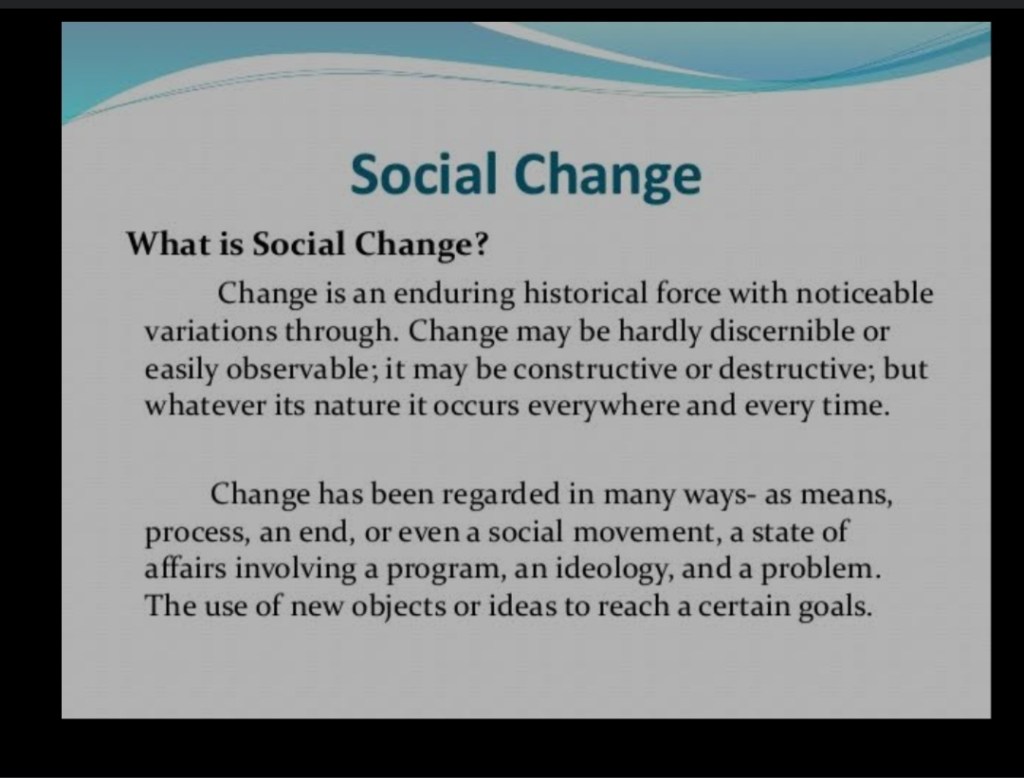
Social Change ( Meaning, Definitions, Causes )

Nothing social remains the same , nothing social abides .

Nature is never at rest . Change is present in the world because change is the Law of Nature .
Like Heraclitus an ancient Greek philosopher said ,
” It is impossible for a man to step into the same river twice “
According to Heraclitean philosophy , “Neither remains the same “, ” the reality of change , the impermanence of being the inconstancy of everything but change itself “

Society we live in is changing .
It’s not a static phenomenon but a dynamic entity . It’s an “ongoing process “subject to constant change due to many forces and factors that irresistibly cause changes .

The perfect example can be observed in our own history , where the man’s rise and growth from the Paleolithic age to the Neolithic age, then to the Stone Age and next to the copper age to development over time, technologies expand, ideologies and values take on new components; institutional functions , modernization etc .

Incessant changeability is the very inherent nature of human society .
Hence , social change is due to the fact that humans are dynamic beings and undergo variation .

Meaning of social change

Social change in general means change in society .
Society is a web of Social relationships .

Social relationships include social processes and social interactions .

Hence , ‘social change ‘ is used to indicate the changes that take place in human interaction and interrelations .

Society is composed of a vast and complex network of patterned human relationships in which all humans participate.
When human behaviour is in process of modification , this is another way of indicating social change.
Thus , apparent alteration in the mutual behaviour between individuals which takes place is a sign of social change .

Definitions :-

Social change is a term used to describe variations in or modification of any aspect of social processes , social patterns , social interactions or social organisation .”
– M.E. Jones

By social change is meant only such alterations as occur in social organisation , that is structure and functions of society “
– Kingsley Davis

Social change may be defined as a new fashion or mode , either modifying or replacing the old ,in the life of a people – or in the operation of society “
– Majumdar ,.H.T

Social change refers to a ‘ process ‘ responsive to many types of changes ; to changes in the man-made conditions of life ; to changes in the attitudes and beliefs of men , and to the changes that go beyond human control to the biological and the physical nature of things .”
– MacIver and Page

MacIver also refers to social change as simply a change in human relationships .

Thus , social Change includes alternations in the structure and functions of the society .


Characteristics of Social Change

1:
Social Change is Continuous

2:
Social change is universal

3:
Social Change in Environment

4:
Social Change is Human change

5:
Social Change Results from Interaction of a Number of Factors

6:
Social Change May Create Chain Reaction

7:
Social Change Involves Tempo (or Rate) and
Direction of Change

8:
Social Change maybe planned or unplanned

9:
Social Change is an Objective Term

10:
Social Change can be a short as well as long run process.

11:
Social Change is Temporal


Sources of Social Change

There are several factors due to which social relationships undergo constant alterations .
Sociologists as well as many anthropologists have been debating and discussing the sources of social change .

Fundamentally , there are two factors that are major sources of social change according to various discussions by several sociologists.

Diffusion
• Inventions

The source of social change is to be found in both diffusion and invention .

Social change takes place due to cultural diffusion i.e spread of elements of culture from one local group to another .
Every society borrows the cultural elements of another society for its progress directly or indirectly . Many tribes became more civilized by diffusion of cultural elements from several local groups.

Social change also takes place because of the inherent capacity of people to invent .
Invention refers to the rearrangement of known traits into new patterns or configurations .
Inventions in every field whether industrial , agricultural , communication or transportation had a huge impact on society .
Hence , inventions constitute the major source of social change.


Causes of Social Change


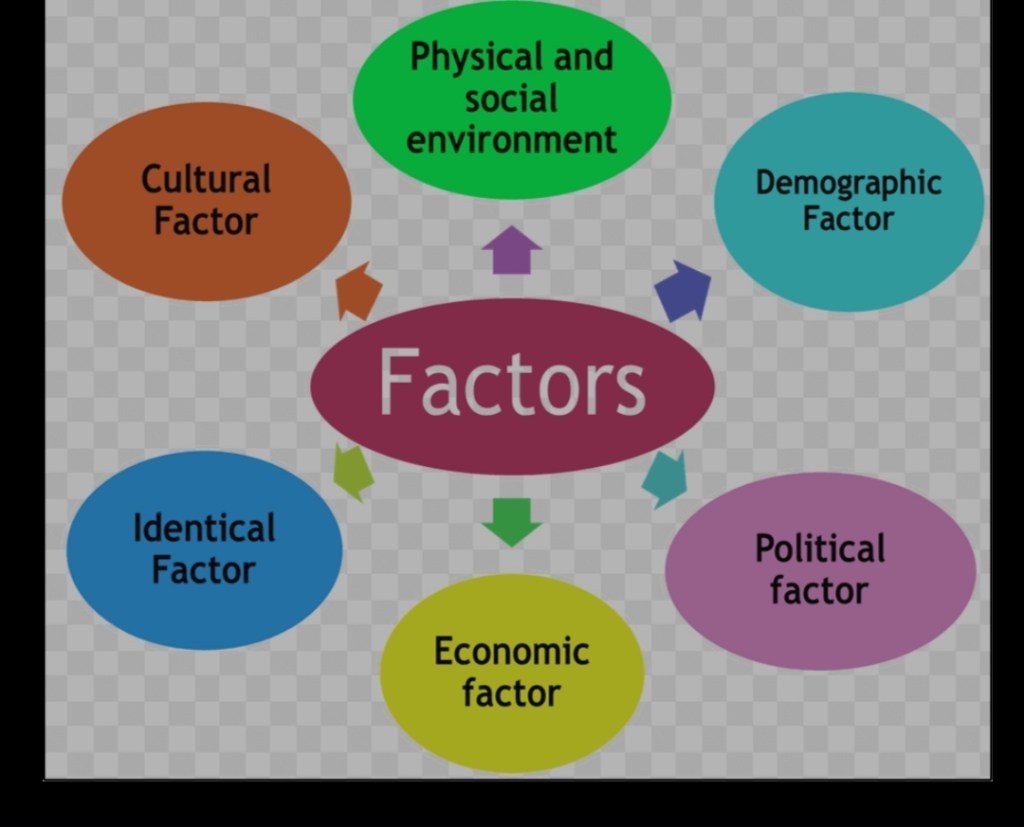
There is no single cause that produces change in society . Several factors operate together to cause social changes .

According to Harry M. Johnson the cause of social change are of three types

i) the causes of social change are inherent either in the general social system or in any specific social system.

ii) the change is caused because of some impact from the social environment of the social system.

iii) changes due to impact from a non – social environment .

The physical , biological , cultural and the technological factors have been generally regarded as the potential factors of social change.
Lapiere regarded these factors as ‘intervening variables ‘ rather than just ‘ causal or determining ‘ factors .


Geographical / Physical Factors


This factor emphasised the impact of the geographical environment upon human society .
According to Huntington ,. alternation in climate is the sole cause of the evolution and devolution of civilization and cultures.
Some social ecologists have attributed much importance to geographical factors for social change.
The physical factors such as climate , rivers ,climate , mountains , natural vegetation etc have profound influence on human society but these factors cannot solely explain the cause of rise and fall of civilization . Hence , the influence of geographical factors are neither decisive nor negligible.

Biological Factors

Biological factors include living and non living creatures. Man is influenced by non-human biological factors and modifies them to serve his purposes .
The biological factors influence the numbers , the composition ,the birth rate , the death rate , the fertility rate and hereditary quality of the successive generations.
Among the biological factors is the qualitative aspect of population , that produces major social change which has dynamic relations with man and society.

Cultural Factors

According to Max Weber theory of comparative study of religious and economic institutions , the main cause of social change is cultural factors.
Cultural factors consist of values and beliefs , ideas and ideologies , morals and manners , customs and traditions and various institutions .
Ideas and ideals , ideologies and philosophies are inherently changeful ,hence not only social values direct social changes but change themselves .
Dawson and Getty have written that culture gives speed and direction to social change and determines the limits beyond which social change cannot occur .
Our behaviour , living , thinking etc are influenced by the changes in social values.

Technological Factors

Technological Factors have immense influence on social change .
Ogburn stated , ” Technology changes society by changing our environments to which we ,in turn , adapt . The change is usually in a material environment and the adjustment we make to the changes often modifies customs and social institutions .”

The increase in new machines , new discoveries had a very great influence upon society.
Technology is the product of civilization .It is a systematic knowledge through which using tools and running machines helps to serve human purpose .
A single invention may have innumerable social changes . In the modern age technological factors are among the predominant causes of social change.


Role of Great Men in Social Change

Great Men like Buddha , Mahavira , Shankaracharya , Jesus Christ , Zoroaster , Prophet Mohammed , Confucius and many other great personalities introduced revolutionary change in the realms of religion .
Napoleon Bonaparte, Washington , Lincoln , Karl Marx, Lenin , Mao Tse Tung , Kemal Pasha , Mahatma Gandhi , Hitler , Mussolini , Khomeini and many others have caused revolutionary changes in the political field .
Similarly many writers , scientists , philosophers have many contributions to social changes .

Great Men and their leadership , revolutionary thoughts , extraordinary talents , powerful expression , ability and efficiency have brought revolutionary and long lasting changes in society .

All Social changes occur because of the actions of men and women .

As Robert Bierstedt said ,

Culture is not self innovating , ideas are not self creating , and technology is not self inventing . Somehow , somewhere , in a society , a man breaks however slightly from tradition . He does some things in a different way . He finds a shortcut . He has a new idea or makes a new discovery . When that happens whether he is a ‘ great man’ or not , he has distributed the stream of culture and like a stone , tossed into the waters , it’s ripples may go on forever . It may affect a while , all the compartments of culture and all the sectors of society .”

Done Class 12th , What Next?

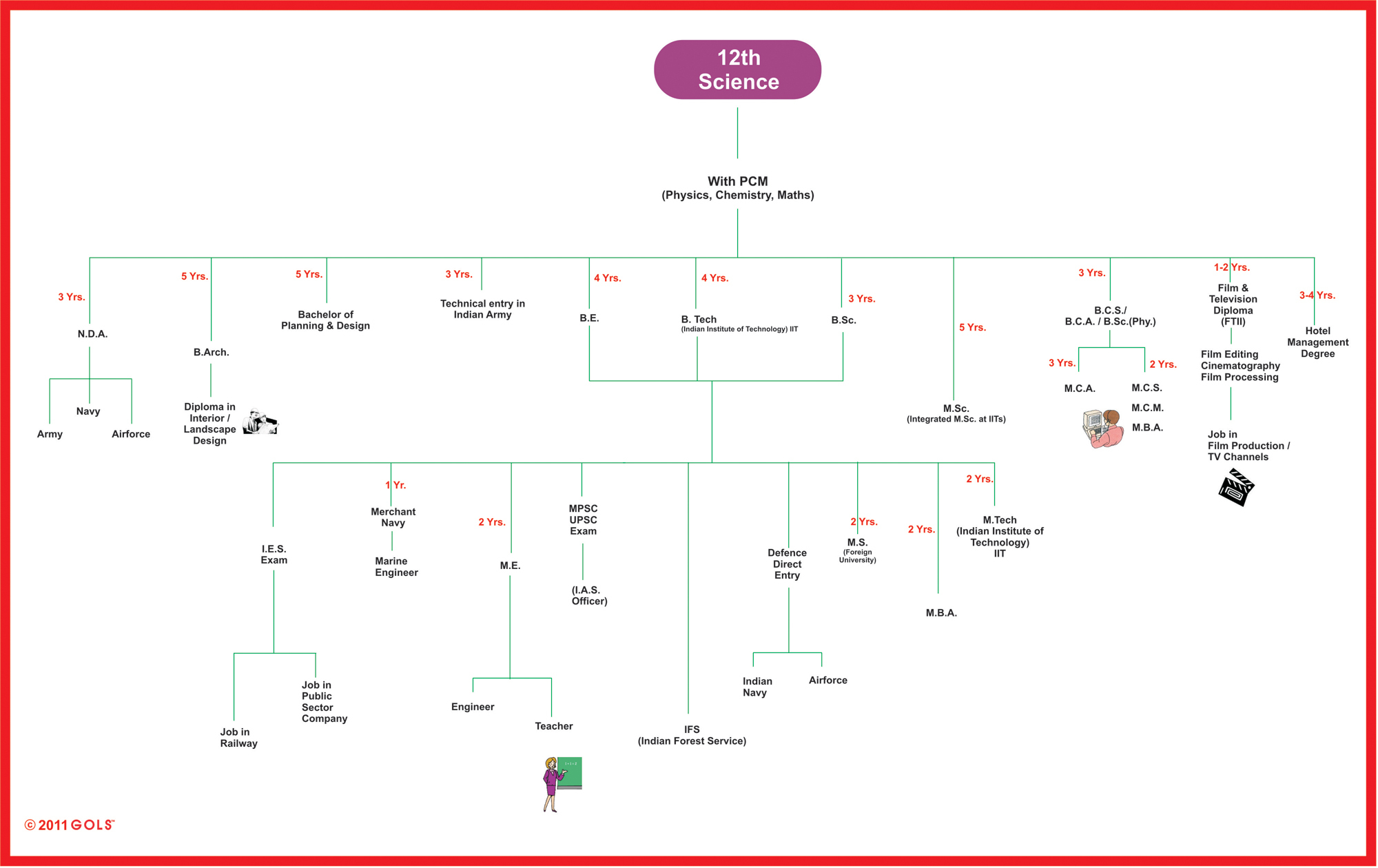
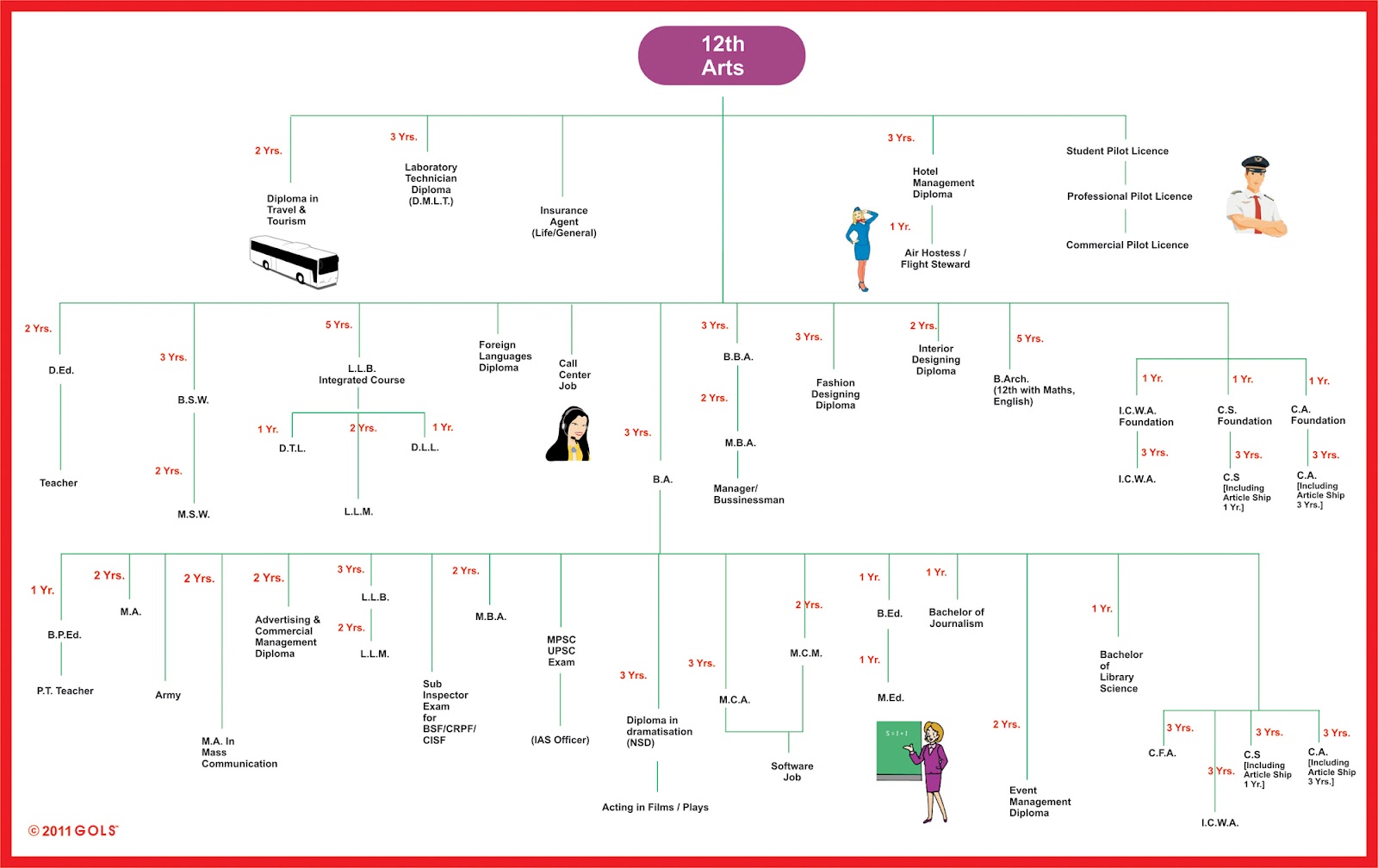
After the class 10th and 12th people usually have a dilemma of what to do next. Most of the children opt for medical and non-medical lines eying to become a computer science engineer or a doctor. In most cases people chose these streams purely based on pay, some due to parental pressure – Well Sharma Ji’s son and daughter are engineer and doctor so how can their relative’s children chose arts or commerce. This is a common notion throughout the country. Other professions are not considered at par. But what exactly are other professions?

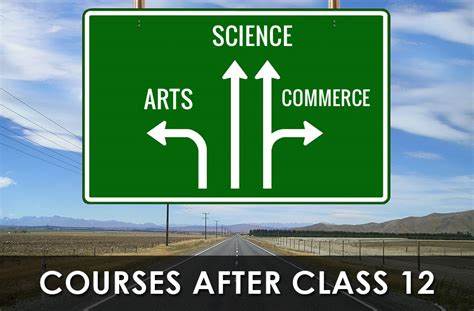
After class 10th streams are broadly divided into Medical, Non-medical, Commerce, and Arts. The detailed professions after class 12th are below:

See the source image

Non-Medical

It mainly comprises physics chemistry and math. Most of the people do BTech which is further branched into a plethora of fields like Computer science, Mechanical Engineering, Chemical and so on. People also do Bachelor of Architecture which comprises building construction. Besides this people can also opt for 3 year long BSc courses in the field of Mathematics, Chemistry, Physics, Computer Application.

Medical

After completing physics chemistry and biology students have options like MBBS, BDS which comprises of Dental Science, B Pharma. ( a 4 year long for becoming a chemist) , BSc Nursing, BHMS (Bachelor of Homoeopathic Medicine and Surgery), BAMS (Bachelor of Ayurvedic Medicine and Surgery). Just like Non, medical students can also opt for B.Sc. in Chemistry, Biology, Physics.

See the source image

Commerce

They have math, economics, accounts, business studies as their subjects. The most popular stream followed after class 12th is B.COM, a 3-year long course consisting of subjects related to finance and commerce. People who further want to do MBA usually opt for B.COM. There also other courses like BBA (Bachelor of Business Administration), CA, etc.

Arts

There are innumerous subjects like political science, history, English, economics, etc. Usually, people opt for BA after class 12th which can be done for various subjects like philosophy, political science, English, etc. People whose interest lies in drawing and painting chose BFA (Bachelor of Fine Arts). After that, they can take various professions like interior designing, etc.

Common courses

There are various courses which a student can opt after class 12th irrespective of their branch. People interested in law can opt for LLB (Bachelor of Law). People belonging to the agriculture domain opt for B.Sc. Agriculture. To become a fashion designer students do B.Sc. in Fashion Design. Students having a passion for teaching opt for B.Ed. in their particular domain. People who are intrigued by mass communication and journalism opt for BJMS(Bachelor of Journalism and Mass Communication. Likewise, there are various other fields.

Although there are various fields to explore students usually are restricted to particular fields like medical and non-medical. However, if someone has a passion in a particular domain, he/she will find success one day or another …

Course Description: Bachelor of Management Studies

Introduction

Bachelor of Management Studies or BMS is an undergraduate program for management studies offered by many universities throughout the world. The course allows you to obtain the knowledge and skills needed to assume management positions in a wide range of organizations. Management studies program provide students with a solid foundation in organizational behavior and human resource management while electives in labor-management relations, negotiation, conflict resolution, compensation systems and organizational development allow students to develop deeper knowledge in specific areas of interest. In addition to business management course, it will equip you to understand how organizations work, how they are managed, and how they interact with object oriented programming using c++ and data structures, national and international environments.

Course Structure

  • Core and Major Curriculum

This program enables students to develop advanced knowledge and skills in a range of business functions while setting them within the wider context of current business practice. In the first and second years, students have a variety of choices with an understanding of the role of the core business disciplines:

  • Accounting
  • Introduction to finance
  • Operations and Information management
  • Human resource management
  • Introduction to marketing
  • Micro Economics
  • Organizational Behavior
  • Business Law

In third year, students will study Organizational Strategy and they will have a choice of subjects from a list of options, based on their own interests and career aspirations. These options offer excellent opportunities to gain relevant work experience to prepare for their careers or add an international dimension to their undergraduate study.

Main Course Descriptions

  • What is Management?

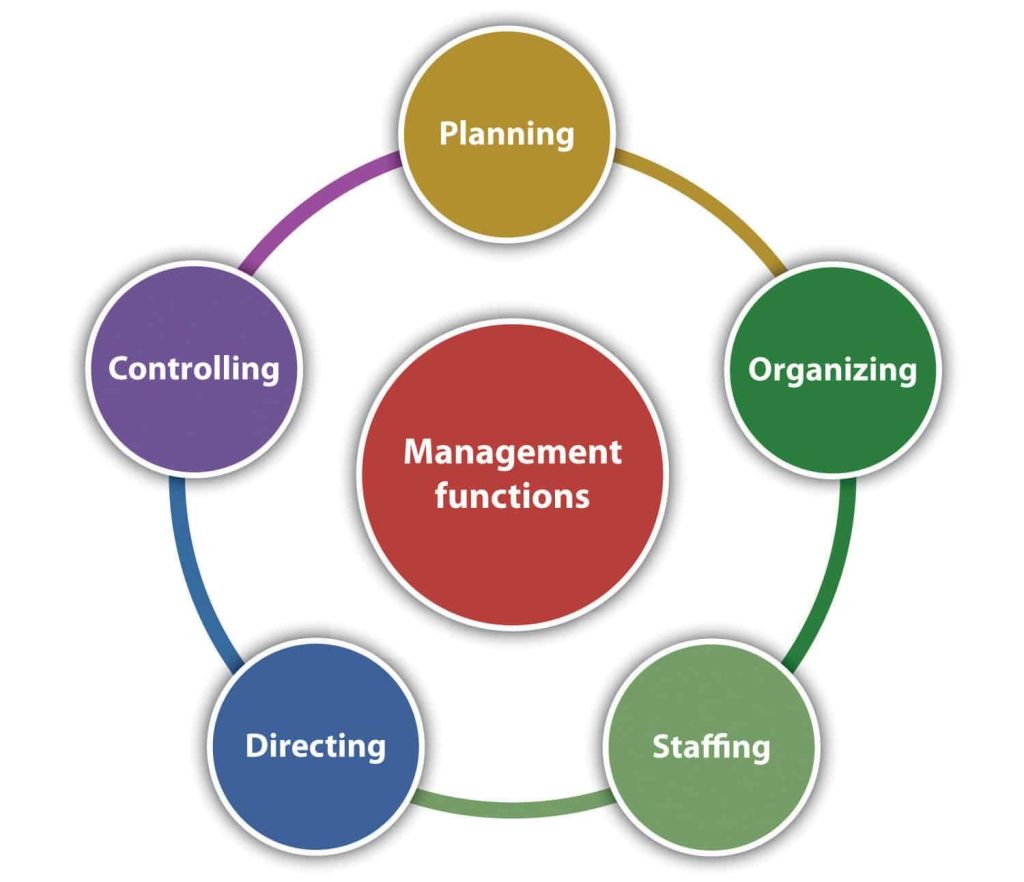
This course gives a brief introduction to the critical management skills involved in planning, structuring, controlling and leading an organization. It provides a framework to help students understand managing and being managed. Thus, leading them to become a more effective contributor to organizations that they join. Students can develop a system view of organizations through examining organizations as part of a context. It aims to train the learners to diagnose and suggest the suitable solutions to various managerial and organizational cases.

  • What is Human Resource Management

The focus of this course is to explore the principles of leading and managing people efficiently in today’s global enterprises. In this field, students access HR policy and practice in the areas of employment law, job analysis, employee relations and international HRM.

  • What is Organizational Behavior

This organizational behavior course combines classic arguments and contemporary empirical debates by discussing different elements of organizational structure. It introduces theoretical and empirical research on individual, interpersonal and group effectiveness at work. Course topics can be extended from decision making, motivation, leadership, teamwork to organizational culture. The learning method highly focuses on applying the essential tools of human side of management in role-play exercises and group projects in global organizations.

  • What is Economics for Management

The objective of the course is to show students how economics theory is related to the applications in managerial decision making and how resources are allocated and coordinated to achieve the organizations’ end goal. It emphasizes microeconomics ideas to solve problems and define the main concepts and models used in economic analysis. “Course topics covered include consumer theory, production, applications to the labor market, market structure, monopoly, oligopoly, product differentiation, pricing, decision analysis, bargaining, auctions, and asymmetric information.”

  • What is Law and Policy

The primary aim of the course is to make students aware of the basic legal concepts and implications affecting business transactions. It fosters a deeper practical sense of how to critically manage the important relationship between business and the natural environment 

  • What is Organizational Strategy

The first half of the course studies strategic situations and learn how to utilize the analytical tools to evaluate a firm’s position in the industry. Due to the modeling foundation of game theory, students will be tackled the real-world challenges and build the appropriate action plans .The second half of the course explores the evidence of different managerial styles and the impact on firm process, organizational change and corporate culture that constitute today’s collaborative business environments.

Optional Courses

The flexible management courses share a common first year before allowing you to focus on your chosen specialism to enhance your career prospects. The dissertation and optional modules allow students considerable opportunities to focus their studies on areas of special interest. Students are able to choose some elective modules (optional courses) from a selection list include:

  • Strategic management
  • Managerial Economics
  • Bank Strategy and Management
  • Entrepreneurship
  • Introduction to International Business
  • Leadership
  • Advanced Financial Accounting

Conclusion

Business management focuses on the organising, planning and analysing of business activities that are required to efficiently manage and run a business.You will learn what makes an organisation successful in a saturated global business environment and will gain the knowledge and skills required to work for businesses of all sizes – from multinational companies to start-ups. 

Online education

frustrating indeed!!

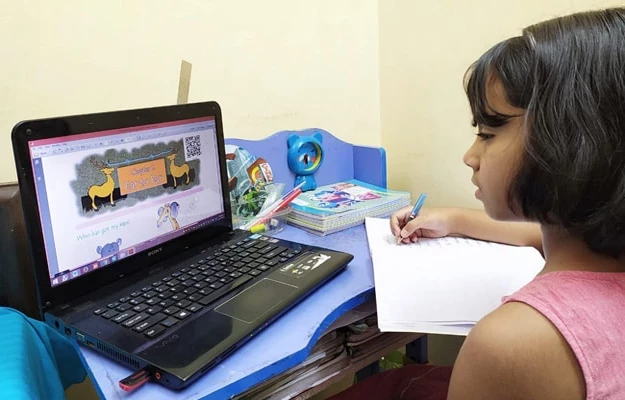
Online study has become a trend and more schools are opting for it with each passing day; more so, in the wake of COVID-19 lockdown.

Advantages

The online method of study has several advantages. It is very convenient as both you and your teacher can interact from the convenience of your respective homes. You can also ask questions and raise queries as you use to do in the classroom.

The online study method becomes more important in case of a natural calamity of emergency. The perfect example in this regard is the recent COVID 19 pandemic that the world is still recovering from. To date, many schools are running online classes, for the safety of students. Online study is indeed a safer alternative to school education.

Schools Have Saved Operational Costs During Lockdown; Can't Charge Students  For Unused Facilities : Supreme Court

Disadvantages

Apart from numerous advantages, the online method of the study also presents certain disadvantages. It lacks the filled with enthusiasm kind of environment presented by a classroom. The lively and joyful ambience of a classroom is usually lacking in an online session. Teachers and students interact with each other only on subject matters on one by one basis.

Moreover, overexposure to gadgets presents its own health hazards like headache, weak eyesight and lack of concentration, etc.

Conclusion

Despite the disadvantages, the online study method proved to be beneficial in certain specific conditions. When it is not advisable to leave your home, or it isn’t convenient for you, then in that case online study becomes a blessing in disguise.

reference-https://www.aplustopper.com/essay-on-online-education/

Courses and programs

Courses and programs for students are the main role to their education .

A program is your degree . A course is one building block (subject) of your program

Our featyre is depends on our Courses and programs

Some of courses

1 B.Com. This is the most popular choice among Commerce stream students. …

2 Chartered Accountancy.

3 Bachelor’s course in Economics.

4 Company Secretaryship course.

5 Law courses. …

6 Management courses. …

7 Technical courses. …

8 Designing courses.          

And some more

Administration Studies

Architecture Studies

Art Studies

Aviation

Business Studies

Construction

Cosmetology Studies

Design Studies

Economic Studies

Education

Educational and academic news and updates

Energy Studies

Engineering Studies

Environmental Studies

Fashion

Food and Beverage Studies

General Studies

Health Care

Humanities Studies

Journalism and Mass Communication

Languages

Law Studies

Life Sciences

Life Skills

Management Studies

Marketing Studies

Natural Sciences

Performing Arts

Professional Studies

Self-Improvement

Social Sciences

Sport

Sustainability Studies n

Technology Studies

Tourism and Hospitality

How to W.R.A.P decisions in Life

Every living being in this universe is subjected to make decisions for their survival – be it an ant and or a humpback whale. Fortunately, humans are the only beings gifted with the power of discrimination of understanding what is right or wrong for us and making a decision accordingly. Decisions can either be positive or otherwise but the quality of your decisions will determine how deeply they would impact your life.

It's A WRAP - Better Decision Making

Chip and Dan Heath, in their book ‘ Decisive: How to Make Better Choices in Life and Work’, talk about a Framework called W.R.A.P for making better decisions
WRAP consists of four elements:
W- Widen your options
R- Reality test your assumptions
A- Attain distance before deciding
P- Prepare to be wrong

Widen your options

There is a misconception that having a lot of options can lead to confusion and is as same as seeing only the big picture. So, people narrow their frames of you and often lose possible options that could have worked better for them.
You can start finding more options by creating a mindset where none of the options you are considering is available. What else can you do? Think about it and be surprised about how many new options crop up!

Reality test your assumptions

While encountering a decision-making situation, we all tend to select the options that support our preconceived beliefs and actions. But that might not work all the time.
We can overcome this by seeking out relevant data that might redeem or discard the options at hand. Also, for example, if you have a piece of work or a product to be published you can sample your work ok for a response from a small group first instead of jumping right into the market. Reason out to yourself why you would want to make a particular choice.

Attain distance before deciding

We often let our short-term emotions cloud our rationality and take hasty decisions. It is imperative to have a well-settled mind before making an important life decision.
Try broadening your point of view. Ask yourself what a reliable third person would do in such circumstances- step into your friend’s shoes or think like someone who you look up to. This can give you a fresh perspective of the situation at hand and make you take a better decision.

Prepared to be wrong

Voice Blog: In Order To Be Original, Prepare to Be WRONG - Ben Francia

We predict a lot in our life. What if a decision that you made is based on such predictions and things actually don’t turn up the way you wanted? What then? You should be ready to acknowledge the decision’s flaw.
Think about working back from a possible future. For example, suppose your work has been published and was poorly received. Think about how the work could have been made better so that you really don’t have to face that situation. Come up with backup ideas that can act like your ‘insurance’ and protect you in case things go the other way.

The next time when you faced a situation, remember that the process is as important as the decision itself. You are the master of your life- so make sure that the decision you made don’t make your life different from what you wanted.
Trust the process!

UNDERSTANDING SOFTWARE DEVELOPMENT LIFE CYCLE

In todays cyber world we are driven with a technical life style which introduces software to be an integral part in our day to day life. It is hardly possible to imagine our every day life with out any computerized process. When we closely observe the applications that we use daily we all get a common doubt that, how were these applications are developed and what is the process behind them? Let me explain you about the process of developing a software keenly.

SOFTWARE DEVELOPMENT LIFE CYCLE:

Whenever there is a need for sophisticated system or an end user web or a mobile application we have to design a procedure which describes the whole process of development from starting stage to final stage. Similarly, Software development life cycle is also a methodology or a set of principles that should be followed in every software development team as preliminary steps to development a software.

This software development life cycle organizes the whole work process of the project into different stages which simplifies the work in order to complete it in the desired dead lines and it also focusses on the cost of project development. According to the project type we can apply different software development life cycles. The different SDLC processes applied by the companies are Agile model, RAD model, Waterfall model, Spiral model etc…. Though there are different models for the different kinds of projects, we use the following stages most frequently.

THE STAGES OF SOFTWARE DEVELOPMENT LIFE CYCLE:

1) BRAIN STORMING (OR) PLANNING: This is the first and fore most step in the software development life cycle process. This stage include brain storming session and then the development team finalizes an idea to proceed further into the project. After the completion of brain storming the team plans about the initial and core stages of the project and they also set the time frames and strategies to complete the project. When the prerequisite stage is perfectly completed then only the can move to the requirements stage.

2) DEFINING REQUIREMENTS: In this stage the team understands the project in deeper and classifies the requirements according to the stages of the project development and also in this stage only the team analyzes the future risks of the project and comes to a conclusion on the overall cost of the project.

3) DESIGN: Software design is the most complicated stage in the project development cycle. During this phase the team conceptualizes the created solution and verifies that whether the created solution meets the requirements or not. In this stage the team concentrates on the functionality of the solution and also analyze the structure capabilities, objectives of the proposed solution. After identifying a certain design for the development of software team forward in to development stage.

4) DEVELOPMENT: The development stage is all about converting the design into the actual software through coding. This stage of the development cycle is the longest path as it is the back bone of the whole project and the software development team should have to verify the code constantly to meet the requirements of the project. Once the development of complete architecture of the solution is completed. The team proceeds to the testing stage.

5) TESTING: In this stage the developed solution is tested under different methods in order to fix the bugs in the code and all the verified code at different stages are integrated in this stage. The testing stage is mainly useful for checking the quality of developed code prior to its release.

6) IMPLEMENTATION & MAINTENANCE: Once the software is certified with out having any errors or bugs then the team will release the developed software to production environment. This means the developed software product can be used by customers. Though the software is implemented also the development team must focus on the maintenance of the software in order to fix the bugs and update the new features.

These are the stages that are commonly used in every software development life cycle by a developer team. This SDLC process is use full to make perfect time frames for the completion of desired software product and also SDLC gives a perfect figure about total cost accomplished for the development of the project at every stage. Finally, SDLC is a process which sets the whole work in an organized and simplified manner.

Introduction about different Schools, Colleges, Universities

Introduction about different Schools:-

INTRODUCTION:-

ust as teachers may teach a broad spectrum of subject matter from math, science, English, to foreign languages, technology and the arts, they also teach across a wide age range and in many different classroom settings around the country.

The specific type of school in which a teacher teaches can have a huge impact on many aspects of their teaching career. From public schools — including magnet schools, charter schools, urban schools, rural schools and high needs schools — to private schools including military schools and boarding schools, every classroom setting is different and each has it’s own unique benefits and challenges. Deciding where you are best able to make a difference can be difficult.

Learn more about each type of schools to help you decide where you can fit in best:

  • Public Schools
  • Charter Schools
  • Magnet Schools
  • Private Schools
  • High Needs Schools
  • Urban Schools
  • Rural Schools

1. Public Schools:-

 A public school is government funded and all students attend free of cost.Because of funding from several sources, private schools may teach above and beyond the standard curriculum, may cater to a specific kind of students (gifted, special needs, specific religion/language) or have an alternative curriculum like art, drama, technology etc. Public schools have to adhere to the curriculum charted out by the district, and cannot deny admission to any child within the residential school zone.Public schools are often thought of as shoddy, less disciplined and low-grade curriculum.

2. Charter Schools:-

A charter school is a public school that operates as a school of choice. Charter schools commit to obtaining specific educational objectives in return for a charter to operate a school. Charter schools are exempt from significant state or local regulations related to operation and management but otherwise adhere to regulations of public schools — for example, charter schools cannot charge tuition or be affiliated with a religious institution.In other words, charter schools are publicly accountable — they rely on families choosing to enroll their children, and they must have a written performance contract with the authorized public chartering agency. Charter schools are also autonomous — they have more flexibility in the operations and management of the school than traditional public schools.

3. What Is A Magnet School:-

Unlike charter schools or private schools, a magnet school is part of the local public school system. At regular public schools, students are generally zoned into their schools based on the location of their home – students go to the school that is nearest where they live. However, this may not always be true since boundaries can seem arbitrary and in some smaller towns schools are not zoned at all. But, magnet schools exist outside of zoned school boundaries. Whereas private schools are completely separate from local public school districts, and charter schools are public schools with private oversight, magnet schools remain part of the public school system and operate under the same administration and school board.

4. Private Schools:-

Many of the private primary and secondary schools in the United States were founded by religious institutions in order to incorporate religious beliefs and teachings into their students’ education, integrating it with a traditional academic curriculum. Some of the first religious schools were founded by the Catholic Church, and these parochial schools are still prevalent amongst private schools. Since then, however, many other religious denominations have started schools to provide religious education, and families often choose to enroll their children in schools whose policies reflect their own values. Nowadays, Protestant, Jewish, Muslim, Orthodox Christian and other religiously based schools are quite common. In addition, some private schools, boarding schools and military academies, offer their own unique approaches to education.

5. High Needs Schools:-

The No Child Left Behind Act of 2001 External link  defines a high-needs school as “within the top quartile of elementary and secondary schools statewide, as ranked by the number of unfilled, available teacher positions; or is located in an area where at least 30 percent of students come from families with incomes below the poverty line; or an area with a high percentage of out-of-field-teachers, high teacher turnover rate, or a high percentage of teachers who are not certified or licensed.” Essentially, high needs schools require teachers because they cannot fill job vacancies or retain teachers, or they have teachers who are not qualified or who teach in subjects outside their field. High-needs schools also serve communities of higher poverty rates, where classrooms are influenced by the difficulties of their students’ lives. Most high-needs schools are located in rural or urban areas.

6. Urban Schools:-

When thinking of high need schools, the first thing that comes to mind for many people is the image of an inner city school, crowded and poorly funded. The truth is, while this is a stereotype and many urban schools perform exceptionally well, there are still urban schools across the country that are in high need of teachers and resources.At the most technical level, urban schools are classified as city schools by the National Center for Education Statistics External link  (NCES). The NCES categorizes all schools into four locales by their size, population density and location in relation to a city. This is an “urban-centric” classification system. The four locale categories used by the NCES’ urban centric classification system External link  are city, suburb, town and rural. Urban schools are then broken down into three subcategories based on the Census Bureau External link ’s definitions of urbanicity:

7. Rural Schools:-

Ultimately, the technical definition of a rural school corresponds to our general understanding of rural areas; they are characterized by geographic isolation and small population size. All schools are categorized into four locales by their size, population density and location. The National Center for Education Statistics External link  (NCES) defines these locales by the school’s proximity to a city an “urban-centric” classification system. The four locale categories used by the NCES’ urban centric classification system External link  are city, suburb, town and rural. Rural schools are then broken down into three subcategories based on the Census Bureau External link ’s definitions of urbanicity. Rural schools are also all classified as high need schools.

Introduction about different Colleges:-

INTRODUCTION:-

college (Latin: collegium) is an educational institution or a constituent part of one. A college may be a degree-awarding tertiary educational institution, a part of a collegiate or federal university, an institution offering vocational education, or a secondary school.

In most of the world, a college may be a high school or secondary school, a college of further education, a training institution that awards trade qualifications, a higher-education provider that does not have university status (often without its own degree-awarding powers), or a constituent part of a university. In the United States, a college offers undergraduate programs; it may be independent or the undergraduate program of a university, it is generally also used as a synonym for a universitywhile in some instances a college may also be a residential college. A college in francophone countries [fr]—France (see secondary education in France), Belgium, and Switzerland—provides secondary education. However, the Collège de France is a prestigious advanced research institute in Paris.

Learn more about each type of colleges to help you decide where you can fit in best:

  • Community and Junior Colleges
  • Historically Black Colleges and Universities 
  • Liberal Arts Colleges
  • Women’s Colleges
  • Tribal Colleges
  • Technical Institutes and Professional Schools

1. Community and Junior Colleges:-

These colleges offer the first two years of a liberal arts education, as well as career or vocational training. Successful completion of a community or junior college curriculum earns graduates an associates degree. Many students continue on to a four-year institution after completing a community or junior college program.

2. Historically Black Colleges and Universities:-

These colleges originated when African-American students were legally denied access to most other institutions of higher education. Now, these colleges celebrate African-American culture and empowerment, and give black students the chance to experience an educational community in which they are finally part of the majority. A common abbreviation for this type of college is HBCU.

3. Liberal Arts Colleges:-

These colleges focus on the education of undergraduate students (students who are earning a bachelors degree). Classes are generally taught by professors who see teaching as their primary responsibility. Because most liberal arts colleges are smaller than universities, classes tend to be smaller and more personal attention  is available. Instead of preparing for a specific career path, students who attend liberal arts colleges are exposed to a broad sampling of classes. In addition, they select at least one area of in-depth study that is their college “major.” Many employers look for graduates of liberal arts programs.

4. Women’s Colleges:-

These colleges offer women the opportunity to enjoy a learning community where they are in the majority. Additionally, these colleges have a much larger population of female faculty and administrators. Women’s colleges graduate a high number of science majors, as well as students who continue on to graduate school or professional studies.

5. Tribal Colleges:-

Like HBCUs or Women’s colleges, these colleges focus on the needs and education of a group that has been traditionally underrepresented in higher education. In this case, these colleges focus on the education and empowerment of Native American students while celebrating a specific tribe’s unique culture and accomplishments.

6. Technical Institutes and Professional Schools:-

These colleges or institutes enroll students who have made a choice as to what career path they are taking. The curriculum at these colleges focuses solely on preparing students for these specific careers. Most of the career options offered at these colleges are in music, fine arts, engineering, or technical sciences.

Introduction about different Universities:-

INTRODUCTION:-

The original Latin word universitas refers in general to “a number of persons associated into one body, a society, company, community, guild, corporation, etc”. At the time of the emergence of urban town life and medieval guilds, specialized “associations of students and teachers with collective legal rights usually guaranteed by charters issued by princes, prelates, or the towns in which they were located” came to be denominated by this general term. Like other guilds, they were self-regulating and determined the qualifications of their members.

In modern usage the word has come to mean “An institution of higher education offering tuition in mainly non-vocational subjects and typically having the power to confer degrees,” with the earlier emphasis on its corporate organization considered as applying historically to Medieval universities.The original Latin word referred to degree-awarding institutions of learning in Western and Central Europe, where this form of legal organisation was prevalent and from where the institution spread around the world.

Learn more about each type of Universities to help you decide where you can fit in best:

  • Central universities, or Union universities
  • State Universities
  • Private Universities
  • Deemed university

1. Central universities, or Union universities:-

in India are established by an Act of Parliament and are under the purview of the Department of Higher Education in the Ministry of Education.In general, universities in India are recognised by the University Grants Commission (UGC), which draws its power from the University Grants Commission Act, 1956.In addition, 15 Professional Councils are established, controlling different aspects of accreditation and coordination.Central universities, in addition, are covered by the Central Universities Act, 2009, which regulates their purpose, powers, governance etc., and established 12 new universities.As of 1 June 2020, The list of central universities published by the UGC includes 54 central universities.

Other types of universities controlled by the UGC include:

  • State universities are run by the state government of each of the states and territories of India, and are usually established by a local legislative assembly act.
  • Deemed university, or “Deemed-to-be-University”, is a status of autonomy granted by the Department of Higher Education on the advice of the UGC, under Section 3 of UGC Act, 1956.
  • Private universities are approved by the UGC. They can grant degrees but they are not allowed to have off-campus affiliated colleges.

Apart from the above universities, other institutions are granted the permission to autonomously award degrees. These institutes do not affiliate colleges and are not officially called “universities” but “autonomous organisations” or “autonomous institutes”. They fall under the administrative control of the Department of Higher Education.These organisations include the Indian Institutes of Technology, the National Institutes of Technology, the Indian Institutes of Science Education and Research, the Indian Institutes of Engineering Science and Technology, the Indian Institutes of Management, the National Law Schools, the All India Institute of Medical Sciences, and other autonomous institutes.

2. State Universities:-

State universities are run by the state government of each of the states and territories of India, and are usually established by a local parliament act. As of 26 August 2011, the UGC lists 281 state universities, around 170 of which are receiving Central/UGC assistance. The oldest establishment date listed by the UGC is 1857, shared by the University of Mumbai, the University of Madras and the University of Calcutta.

In India, state universities are run and funded by the state government of each of the states of India.Following the adoption of the Constitution of India in 1950, education became a state responsibility. Following a constitutional change in 1976, it became a joint responsibility of the states and the central government.As of 17 March 2021, the UGC lists 426 state universities.

3. Private Universities:-

Private universities are approved by the UGC. They can grant degrees but they are not allowed to have off-campus affiliated colleges. The UGC list from 1 September 2011 lists 94 private universities.

Private universities and private colleges are usually not operated by governments, although many receive tax breaks, public student loans, and grants. Depending on their location, private universities may be subject to government regulation. This is in contrast to public universities and national universities. Many private universities are nonprofit organizations.

4. Deemed university:-

Deemed university, or deemed-to-be-university, is an accreditation granted to higher educational institutions in India, conferring the status of a university. It is granted by the Department of Higher Education.To quote the Ministry of Human Resource Development (MHRD), “An Institution of Higher Education, other than universities, working at a very high standard in specific area of study, can be declared by the Central Government on the advice of the University Grants Commission (UGC), as an Institution ‘Deemed-to-be-university’. Institutions that are ‘deemed-to-be-university’ enjoy the academic status and privileges of a university.”

Deemed university, or “Deemed-to-be-University”, is a status of autonomy granted by the Department of Higher Education on the advice of the UGC, under Section 3 of UGC Act, 1956. The UGC list from 23 June 2008 lists 130 deemed universities. According to this list, the first institute to be granted deemed university status was Indian Institute of Science which was granted this status on 12 May 1958. Note that in many cases, the same listing by the UGC covers several institutes. For example, the listing for Homi Bhabha National Institute covers the Institute of Mathematical Sciences, the Indira Gandhi Centre for Atomic Research and other institutes. The list below includes only the major institute granted the status, and such additional institutes are not listed separately.

Reference Link:-

https://teach.com/careers/become-a-teacher/where-can-i-teach/types-of-schools/rural/

https://www.cappex.com/articles/match-and-fit/the-different-types-of-colleges

https://sites.google.com/site/universitiesindiaonline/types-of-universities-in-india

What is Web Hosting? And its Types

Web hosting is an online service that enables you to publish your website or web application on the Internet. When you sign up for a web hosting service, you basically rent some space on a physical server where you can store all the files and data necessary for your website to work properly.

A server is a physical computer that runs without any interruption so that your website is available all the time for anyone who wants to see it. Your web host is responsible for keeping that server up and running, protecting it from malicious attacks, and transferring your content — such as text, images, files, etc. — from the server to your visitors’ browsers.

Types of Web Hosting Packages

  1. Shared Hosting

This type of hosting is the most common answer for most web hosting needs and it’s an excellent solution for most small businesses and personal blogs. With this type of hosting, you’re sharing one server with other clients. Websites hosted on the same server share all its resources, such as memory, computing power, disk space, and others.

  • Pros :
  • Low cost, excellent for small online business websites
  • No need for specific technical knowledge
  • Pre-configured server options
  • User-friendly control panel — hPanel
  • Maintenance and server administration is taken cared for you
  • Cons :
  • Little or no control over server configuration
  • Traffic surges on other websites can slow down your website

2. VPS Hosting

When you’re using a Virtual Private Server — or VPS for short — you’re still sharing a server with other users. However, your web host allocates an entirely separate partition for you on that server. This means you get a dedicated server space and a reserved amount of resources and memory. In fact, VPS hosting can be great for medium-sized businesses with a rapidly growing number of websites and traffic.

  • Pros :
  • Dedicated server space
  • Traffic surges on other websites have no effect on your performance
  • Root access to the server
  • Easy scalability and high customizability
  • Cons :
  • More expensive than other types of hosting
  • Technical and server management knowledge is a must

3. Cloud Hosting

Cloud hosting is currently the most reliable solution on the market. With cloud hosting, your host provides you with a cluster of servers — your files and resources are replicated on each server. When one of the cloud servers is busy or encounters a problem, your traffic is automatically routed to another server in the cluster. This results in little to no downtime, which is excellent if you own a very busy website.

  • Pros :
  • Little to no downtime
  • Server failures have no effect on your website
  • Allocates resources on demand
  • Pay-as-you-pricing strategy — you only pay for what you use
  • More scalable than other web hosting types
  • Cons :
  • Hard to estimate the actual costs
  • Root access is not always provided.

4. WordPress Hosting

WordPress hosting is a particular form of shared hosting, created for WordPress site owners. Your server is configured specifically for WordPress and your site comes with pre-installed plugins for crucial tasks, such as caching and security.

  • Pros :
  • Low cost and beginner-friendly
  • One-click WordPress installation
  • Good performance for WordPress sites
  • Customer support team trained in WordPress issues
  • Pre-installed WordPress plugins and themes
  • Cons :
  • Recommended only for WordPress sites, which can be a problem if you want to host more than one website on your server

5. Dedicated Hosting

Dedicated hosting means that you have your own physical server that’s dedicated solely to your website. Therefore, you’re given incredible flexibility over how you want to manage your website. You can configure your server as you wish, choose the operating system and software you want to use, and set up the whole hosting environment according to your own needs.

  • Pros :
  • Full control over server configuration
  • High reliability and security options
  • Root access to your server
  • Cons :
  • High cost, more oriented towards larger businesses
  • Technical and server management knowledge is a must

Use of MS Excel in today’s world.

Excel is typically used to organize data and perform financial analysis. It is used across all business functions and at companies from small to large. The main uses of Excel include: Data entry.

Excel is a software program created by Microsoft that uses spreadsheets to organize numbers and data with formulas and functions. Excel analysis is ubiquitous around the world and used by businesses of all sizes to perform financial analysis.

The main uses of Excel include:

1 Data entry
2 Data management
3 Accounting
4 Financial analysis
5 Charting and graphing
6 Programming
7 Time management
8 Task management
9 Financial modeling
10 Customer relationship management (CRM)
** Almost anything that needs to be organized!

Excel is used extensively in finance and accounting functions. In fact, many organizations run their entire budgeting, forecasting, and accounting functions entirely out of Excel spreadsheets.

While Excel is defined as a “data” management tool, the data that is most commonly managed is financial. At CFI, we would define Excel as the ultimate financial software. While there are other pieces of financial software that are tailored toward performing specific tasks, the strongest point about Excel is its robustness and openness. Excel models are as powerful as the analyst wishes them to be.

Accountants, investment bankers, analysts, and people in all types of financial career paths rely on excel to perform their daily job functions.

And one should know how to use MS Excel. Its on of the most important skill in today’s corporate world.

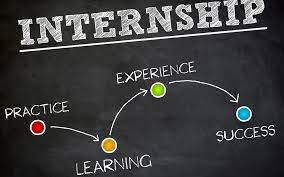
INTERNSHIPS

The internship is the main source for a college student to improve and prove his/her knowledge.

Every college student has composed placements and off compose placements.

At the time of placements in a different company, we have to submit our Resume. That resume gives our real appearance to interview. If we have done any internships and any skill development that will help for our desired company placements.

Lets more about internships

Internships is the training and real-time project to the confidence of our skills for real-world understanding

 The internship is an opportunity offered by an employer to potential employees, as an intern, to work at a firm for a fixed period of time. Interns are usually likes undergraduates or students, and most internships period last between a month and three months. … An internship can be either paid or voluntary.

Which internships we have done?

Internships are based on your desired knowledge, department and day by day improved courses

Things to consider when choosing an internship

  • Which sector are you interested? …
  • What will be your responsibilities? …
  • What will you will get ? …
  • Where you have to do? …
  • What’s the environment like is it comfortable ? …
  • Will you get the opportunity to more network? …
  • What are the skills will you learn? …
  • What are your qualifications for ?

Let specific directions for your internships

There are some websites for internships that may have offline and online internships :

  • Linkedin
  • Glassdoor
  • Google
  • Internshala
  • Internship.com
  • Internmatch.com
  • Youturn
  • Idealist
  • Global Experience
  • Coolworks

Go for these websites you will find “updated(your name) version.0”

Wannacry Cyber Attack

What was the cyber attack?

The WannaCry ransomware attack was a worldwide cyber attack in May 2017 by the WannaCry ransomware. It propagated through EternalBlue, an exploit developed by the United States National Security Agency (NSA) for older Windows systems. WannaCry is a ransomware cryptoworm, which targeted computers running the Microsoft Windows operating system by encrypting data and demanding ransom payments in the Bitcoin cryptocurrency. The worm is also known as WannaCrypt, Wana Decrypt0r 2.0, WanaCrypt0r 2.0, and Wanna Decryptor. It is considered a network worm because it also includes a transport mechanism to automatically spread itself. This transport code scans for vulnerable systems, then uses the EternalBlue exploit to gain access, and the Double Pulsar tool to install and execute a copy of itself. WannaCry versions 0, 1, and 2 were created using Microsoft Visual C++.

When did it happen?

The attack began on Friday, 12 May 2017, with evidence pointing to an initial infection in Asia at 07:44 UTC. Within a day the code was reported to have infected more than 230,000 computers in over 150 countries. Officially the initial outbreak was from 12 May 2017 to 15 May 2017. Organizations that had not installed Microsoft’s security update from April 2017 were affected by the attack.

How did it happen?

The vulnerability WannaCry exploits lies in the Windows implementation of the Server Message Block (SMB) protocol. The SMB protocol helps various nodes on a network communicate, and Microsoft’s implementation could be tricked by specially crafted packets into executing arbitrary code. It is believed that the U.S. National Security Agency discovered this vulnerability and, rather than reporting it to the infosec community, developed code to exploit it, called EternalBlue. This exploit was in turn stolen by a hacking group known as the Shadow Brokers, who released it obfuscated in a seemingly political Medium post on April 8, 2017. Microsoft itself had discovered the vulnerability a month prior and had released a patch, but many systems remained vulnerable, and WannaCry, which used EternalBlue to infect computers, began spreading rapidly on May 12. In the wake of the outbreak, Microsoft slammed the U.S. government for not having shared its knowledge of the vulnerability sooner.

Who did it?

The US and UK governments have said North Korea was responsible for the WannaCry malware attack affecting hospitals, businesses and banks across the world in May 2017. Ironically, it was allegedly developed as a cyber-attack exploit by the US National Security Agency. Although they were reported to have known of the tool’s vulnerabilities, the NSA didn’t bring it to Microsoft’s attention until the hacker group called Shadow Brokers leaked EternalBlue to an obscure website. Further analysis of the attack by companies such as Symantec revealed links to the Lazarus group who in turn have been linked to North Korea although the attack does not bear the hallmarks of a nation-state campaign.

Which security services were violated?

WannaCry spread using an exploit called EternalBlue, created by—and subsequently stolen from—the U.S. National Security Agency (NSA). EternalBlue enabled attackers to discover vulnerable computers on the target network. WannaCry also leveraged an NSA backdoor called DoublePulsar to install WannaCry on the networkThe WannaCry ransomware attack hit around 230,000 computers globally .A third of NHS hospital trusts were affected by the attack. Terrifyingly ambulances were reportedly rerouted, leaving people in need of urgent care in need. It was estimated to cost the NHS a whopping £92 million after 19,000 appointments were canceled as a result of the attack. As the ransomware spread beyond Europe, computer systems in 150 countries were crippled. The WannaCry ransomware attack had a substantial financial impact worldwide. It is estimated this cybercrime caused $4 billion in losses across the globe.

Affected organizations

  • Andhra Pradesh Police, India
  • Automobile Dacia, Romania
  • Boeing Commercial Airplanes
  • Cambrian College, Canada
  • Hitachi
  • Honda
  • Instituto Nacional de Salud, Colombia
  • Portugal Telecom
  • Pulse FM
  • Renault
  • Russian Railways
  • University of Milano-Bicocca, Italy
  • Vivo, Brazil

Aristotle’s view on the Tragic Hero [Part B]

Along the same lines of how a tragic hero need to be an enabler for not just a good plot but to reach for the desired set of emotions equally is 5) Hamartia a tragic hero with imperfections; the specific being his/her “tragic flaw” not the best adaptation of Hamartia, but is far more commonly used for a characteristic moral failing in an otherwise predominantly good man. The Hamartia of the hero is closely and inseparably connected with 6) “Peripety” the several of fortune from the point-of-view of the character involved and for a spectator or a reader the plot of the play as a whole is a reversal of the direction of the action. The analogy is thus that Peripety is contained in the idea of the boomerang effect of one’s own action. 7) Discovery – “A change from ignorance to knowledge.” The discovery of the truth of the matter is the costly beginning from the state of ignorance which is the very essence of “hamartia”. Hamartia, Peripety and Discovery all together in their ideal schematisation of the tragic plot.
Furthermore, tragedy, is presupposed as purging out of emotions of Pity and Fear i.e. Catharsis; exhilaration, a pleasurable sense of relief and the Tragic hero is given the title of the enabler of the purgation of these emotions. Relation of emotional catharsis which tragedy helps generate is the tragic pleasure. Therefore the continuous insistence towards Pity and Fear is because pity is generated under the pretence of a tragedy towards the character whose punishment for the audience is exceeding his crime; the punishment is more that what he deserves, and similarly Fear is when the hero; who being “not pre-eminently just and virtuous” is still better than ourselves and yet failed, then what hope do we have left?
Therefore the catharsis that Aristotle mentioned just once in Poetics is of emotions that occurs accidentally but surely in a tragedy is something he elaborates on, this accident is to be experienced to everyone in the audience or to anyone reading a work of art; no 

matter of high intellect does experience this form of proper pleasure which happens through proper tools and albeit perceived to be an “accident” is a sure shot guaranteed by the tragic hero.
Thus the tragic hero of Aristotle accounts to the whole of the Tragedy to be brought up to its potential and serve its purpose.

Aristotle’s view on the Tragic Hero [Part A]

Make sure you also read the second part of this post.

When Aristotle is talking about the tragic hero, it’s important to pan out where the tragic hero is being placed at and accordingly the significance of the ‘tragic hero’ needs to be questioned. This is furthered by the interpretation of the plot and the use of tragedy in the said plot that would give the idea of what Aristotle is describing as the tragic hero. So it’s important to understand tragedy; before anything, and so Poetics seems to be a plausible guide alongside plenty of other definitions within a dictionary which although correct; doesn’t fully help apply the idea of Aristotle. No-one in any absolute sense could define what Poetics denote as words have been genuinely lost in translation and what we could scavenge are a sense of one’s own point-of-view or interpretation to pacify their intellect; one could contest it to be inconsistent and probably is right in doing so, but the fact of the matter is the idea of lost in translation remains undeterred. 

Additionally, discussing on the characteristics of the tragic hero is an extremely elaborated idea of what Tragedy is and while, Aristotle’s Tragic Hero is someone who is primary agent in his Tragedy; which is an essential element in the notion of arousing Pity and Fear – the catharsis of Pity and Fear for Tragic Pleasure is also an important characteristic feature for the Tragic Hero. 

Humphrey house affirm seven points directed towards the dramatic character or the tragic hero 1) The tragic hero or the character in a tragedy must be Good. Tragedy is a limitation of personages better than the ordinary man. Hence goodness of character is a prerequisite for Aristotle as it is the foundation of initial sympathy in a spectator without which tragic emotions cannot be roused, that is tragic pleasure is ultimately conveyed through sympathy or Pity, a very basic of the whole tragic pleasure. All characters in a tragedy for Aristotle should be equivocally good. Although Aristotle’s good man is not good unless he is desiring specific, positive, good ends and working towards the attainment; therefore its necessary for the execution of a tragic plot that the hero has to be “not prominently virtuous or just”; adding here Immanuel Kant who talks action to be morally worthy, something that should be executed to do the right thing for the right reason and is said to hold that to do the right thing for personal reason isn’t morally right and that the motive of duty should be autonomous and not altruistic. Scholars have questioned on what does Aristotle mean by “good”, and it’s later when reading Poetics is established on the Ethical Goodness of a character. 2) Appropriateness of Character – a fitting character, the Plot should attempt to guarantee the individuality of Character in compliance to its status which is fundamental. 3) “Likeness” of Character – the literary portrait produced by the poet should be ‘like the original’, i.e. like what the personage in question is in history of legend; depriving the poet of his creative freedom and ties him to a quiet indefinable exemplar, because history and legends are largely the creation of other writers. Likeness — Aristotle differentiating Tragedy and Comedy by the consideration of type of characters shown acting in each — characters are either better or worse than ourselves, or just like ourselves: although Comedy makes its personages “worse” and Tragedy makes its personages “better than the men of the present day.” 4) Consistency – Aristotle describes a formula “consistently inconsistent” it is not concerned with momentary conflicting passions but with “the basis or foundation of a character “, — habit, bent or tendency.