Disaster Management

A disaster is a sudden, calamitous event that seriously disrupts the functioning of a community or society and causes human, material, and economic or environmental losses that exceed the community’s or society’s ability to cope using its own resources. Though often caused by nature, disasters can have human origins. Disaster Management can be defined as the organization and management of resources and responsibilities for dealing with all humanitarian aspects of emergencies, in particular preparedness, response and recovery in order to lessen the impact of disasters. Disaster management Is a systematic process of planning, organizing, and leading in order to effectively manage the after-effects of a disaster. It aims to reduce the negative impact or consequences of adverse events.

Types of disasters

Disasters can be classified as natural, man-made and human-induced.

Ex. of natural disasters :
Earthquakes
Volcanoes
Floods
Cyclones

Ex. of man-made disasters :
Nuclear leaks
Chemical leaks / spills
Terrorist activities
Structural collapse

Ex. of human-induced disasters :
Global warming
Large scale deforestation
Large scale biological warfare

Disaster Management Cycle

Disaster management is an enormous task. Disasters are not confined to any particular location, neither do they disappear as quickly as they appear. Therefore, it is essential that there is proper management to optimize efficiency of planning and response. Due to limited resources, collaborative efforts at the governmental, private and community levels are necessary.

Disaster Management, and Methodology

Disaster management is a cyclical process; the end of one phase is the beginning of another Timely decision making during each phase results in greater preparedness, better warnings, reduced vulnerability and/or the prevention of future disasters.
Mitigation: Measures put in place to minimize the results from a disaster.
Examples: building codes and zoning; vulnerability analyses; public education.
Preparedness: Planning how to respond.
Example: preparedness plans, emergency exercises/training; warning systems.
Response: Initial actions taken as the event takes place. It involves efforts to minimize the hazards created by a disaster.
Examples: evacuation, search and rescue; emergency relief.
Recovery: Returning the community to normal. Ideally, the affected area should be put in a condition equal to or better than it was before the disaster took place.
Examples: temporary housing; grants; medical care.

VARIOUS PHASES OF DISASTER MITIGATION

Disaster prevention
These are activities designed to provide permanent protection from disasters. Not all disasters, particularly natural disasters, can be prevented, but the risk of loss of life and injury can be mitigated with good evacuation plans, environmental planning and design standards. In January 2005, 168 Governments adopted a 10-year global plan for natural disaster risk reduction called the Hyogo Framework. It offers guiding principles, priorities for action, and practical means for achieving disaster resilience for vulnerable communities.

Disaster preparedness
These activities are designed to minimise loss of life and damage – for example by removing people and property from a threatened location and by facilitating timely and effective rescue, relief and rehabilitation. Preparedness is the main way of reducing the impact of disasters. Community-based preparedness and management should be a high priority in physical therapy practice management.

Disaster relief
This is a coordinated multi-agency response to reduce the impact of a disaster and its long-term results. Relief activities include rescue, relocation, providing food and water, preventing disease.

Disaster management in India

In order to manage the various kinds of disasters occurring sporadically in various parts of India, The Disaster Management Act, 2005 provides for the constitution of the following institutions at national, state and district levels.
National Disaster Management Authority
State Disaster Management Authorities
District Disaster Management Authorities
National Institute of Disaster Management and
National Disaster Response Force

Elder Abuse

Life is a really wonderful gift from God, and one of the most essential aspects of it is aging. An individual’s life is divided into stages such as infancy, childhood, puberty, maturity, middle age, and old age. We are all busy in the early phases of our life, discovering the lovely hues of youth, learning new things, and are more inclined toward self-development. Then we approach adulthood and begin to organize our life, whether it’s our employment, marriage, children, family requirements, and so on; the list is infinite. Then there’s old age, which is the most relaxed and serene time of our life. It is that point in our lives when we can sit back and reflect on our lives, our successes, our ups and downs, and feel satisfied.

As we become older, we start to notice certain changes and may develop some impairments that are quite typical for our age. People of this age need to be helped in any way imaginable, whether emotionally, financially, physically, or cognitively. However, the unfortunate fact is that some people in today’s world fail to grasp such basic human foundations. The number of incidents involving children’s misunderstanding of elderly people and their needs is growing, and in many cases, this leads to elder abuse.

Indian Scenario

India is a land of ethics and feelings, where we respect each other’s emotions and believe in peaceful coexistence. In India, where we cherish and accept a value-based, joint family system, old age has never been an issue. Indian culture has always been courteous and supportive of elders. With that in mind, elder abuse was never regarded as an Indian issue, but rather as a Western one.

However, the coping abilities of both younger and older family members are now being tested more frequently than ever before. There are occasions when younger family members exhibit undesirable conduct, which the elder family members see as odd and causes them to feel ignored and discouraged.

People used to regard their parents with the greatest reverence and worship them as gods, but the harsh realities of today’s society are quite different. Children perceive parents as a burden that no one wants to bear. This is why many parents are found in deplorable situations walking around or placed in old age facilities. Today’s scenario is extremely paradoxical and awful, with animals receiving more love and [1]affection than people and humans being treated worse. It’s revolting how brutally parents are abandoned by their children.

They are the ones that work diligently their entire lives to see their children succeed and selflessly offer all within their means to make them a civilized human being. Our parents experience various challenges and impairments as they age, which is quite natural, and all they want is to be loved and supported in the same manner they did for their children, but when the opposite situations arise, these children appear to avoid their duties.

The current generation’s self-centered mentality and steady movement toward Western culture has undermined the hold of traditional values and ethics. One of the other reasons for such conduct is people’s rising greed and desire to be wealthy and powerful. As a result, they participate in elder abuse and emotionally and psychologically manipulate their parents in order to compel them to give up their property and other possessions in favour of their children.

Elder Abuse: Meaning And Types

Elder abuse (also known as elder mistreatment, senior abuse, abuse in later life, abuse of older adults, abuse of older women, and abuse of older men) is defined by the World Health Organization (WHO) as a single or repeated act, or lack of appropriate action, occurring within any relationship where there is an expectation of trust, that causes harm or distress to an older person.

It is not necessarily essential for abuse to be committed by children; it may be committed by anybody, such as a spouse, family member, or any other person on whom an old person is reliant; nonetheless, abuse by children is the most serious issue that must be addressed (including their spouse). The phrase abuse looks to be quite easy, but it is actually a highly complicated term with a wide range of meanings. There are several forms of abuse, including physical abuse, mental abuse, sexual abuse, financial abuse, and neglect. An old person may be subjected to the following types of abuse:

  1. Physical abuse: Elder physical abuse is defined as the purposeful use of force against an older person that results in bodily injury ranging from physical pain to death.
  2. Emotional abuse: Psychological and emotional abuse are purposeful behaviours that cause an older mental agony, fear, or suffering. Insults, seclusion, humiliation, intimidation, and name calling are all examples.
  3. Elder sexual abuse: is defined as any type of coerced or unwanted sexual encounter with an older adult. Some of the indicators of sexual abuse include anus or genital bleeding, newly transferred sexually transmitted infections, anus or genital discomfort, pelvic injuries, and so on.
  4. Elder financial abuse: is the unlawful, unapproved, or inappropriate use of an older person’s resources by someone in a trusting relationship with that individual. This type of abuse can occur with persons who are unable to grasp their financial accounts or conditions due to advanced age.
  5. Neglect: Senior neglect occurs when the person in charge of the older’s care fails to safeguard the elder from harm or fails to satisfy the elder’s needs in a way that results in or risks significant injury.

Neglect is not an honest accident:

It is the result of carelessness or a lack of regard for the wellbeing of an elder. It may include depriving elders from basic needs like- shelter, clothing, health upkeep or nutrition needs.

Indian Provisions Regarding Elder Abuse:

The point is, what are we doing to address this issue, and do we have any provisions in place in our country? The following acts and legislation have been introduced in this regard:
The Parental Maintenance Act of 2007 – This law has been modified twice, once in 2013 and again in 2018. The original Act stated that sons had a legal responsibility to care for their parents. Following a 2013 modification, parents might file a complaint against their sons, and the boys could be held legally liable for not supporting their parents. Daughters and sons-in-law were also deemed liable for supporting their parents under the 2018 modification.

The Parents and Senior Citizens Act (2007) makes it a legal requirement for children and legal guardians to pay maintenance to elderly people. It enables state governments to establish and operate old age homes in each district. Senior persons who are unable to sustain themselves might ask for a monthly stipend from their children. Children or heirs may be penalized if they do not provide support to elderly people. The punishment may be a Rs.5000 fine, three months in jail, or both.

Whereas it is critical to address the new law that was proposed in 2019 to alter the contents of the previously stated bill. The Parents and Senior Citizens Amendment) Bill 2019 aims to provide for the maintenance and welfare of parents and senior citizens by ensuring their basic needs, safety and security, the establishment, management, and regulation of institutions and services, and the rights guaranteed by the Constitution. It also mentions eliminating the Rs10000 cap and appointing nodal police officers for senior people at each police station and district-level special police unit, as well as a helpline for senior persons.

While many faiths have varied measures to safeguard the rights of older persons, some are extremely specific, such as the legislative provision for parental support under Hindu personal law included in Section 20 of the Hindu Adoption and Maintenance Act, 1956. Similarly, Muslim laws, Christian laws, and even Parsees laws have similar clauses. The Indian Constitution has provisions to protect the rights of individuals beyond the age of 60. Because these articles are part of Chapter IV of the constitution, which discusses the Directive Principles, they cannot be enforced by a court of law, as mentioned in Article 37; nonetheless, they serve as the foundation for any legislation.

Article 41 of the Constitution guarantees elderly persons the right to work, education, and public support. It also requires the state to protect these rights in instances of disability, old age, or illness. Meanwhile, Article 46 states that the elderly’s educational and economic rights must be maintained by the state.

Conclusion:

Some societal changes are unavoidable, such as raising older people’s understanding of their rights and the types of assistance available under various laws. Furthermore, politicians must broaden their view on the term “NEEDS,” since they frequently fail to understand the social “needs” of belongingness, preserving power, and a position of significance in the family, a set of needs that frequently go unsaid.

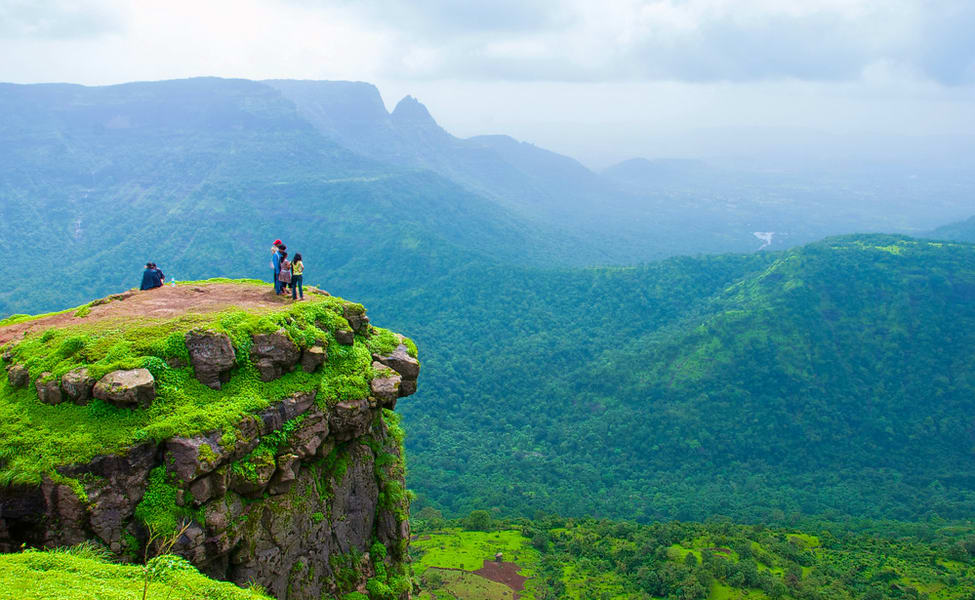
LONAVALA

Mumbai’s Heaven

If one thing is known to help you get through a tough week or month, it is travelling. Travelling gives you the much needed break from the hustle and bustle of life. Even if that’s not the case, travelling is very essential for your self growth. It opens up your mind and makes space for new thoughts and adventures. If you are planning your next trip, Mumbai would be the place for you. The city is a combination of beaches and mountains, and there is nothing better than that.

When you think of Mumbai, the first place that pops up in your mind is Lonavala. Monsoon and Lonavala go together like peanut and jelly. Lonavala is a place you think of when you are planning a weekend long trip to unwind from your daily life. This place has something to offer for everyone. The huge landscapes are great for kids to play on, the mountains are a treat for adrenaline junkies, forts and caves for our history lovers and last but not the least a place with breathtaking views for all those who are just looking to relax and sip their drink all day. Needless to say, Lonavala is much more than a hill station. There are several tourist attractions which you don’t want to miss. Some of the best places that will surely make your holiday more interesting are:

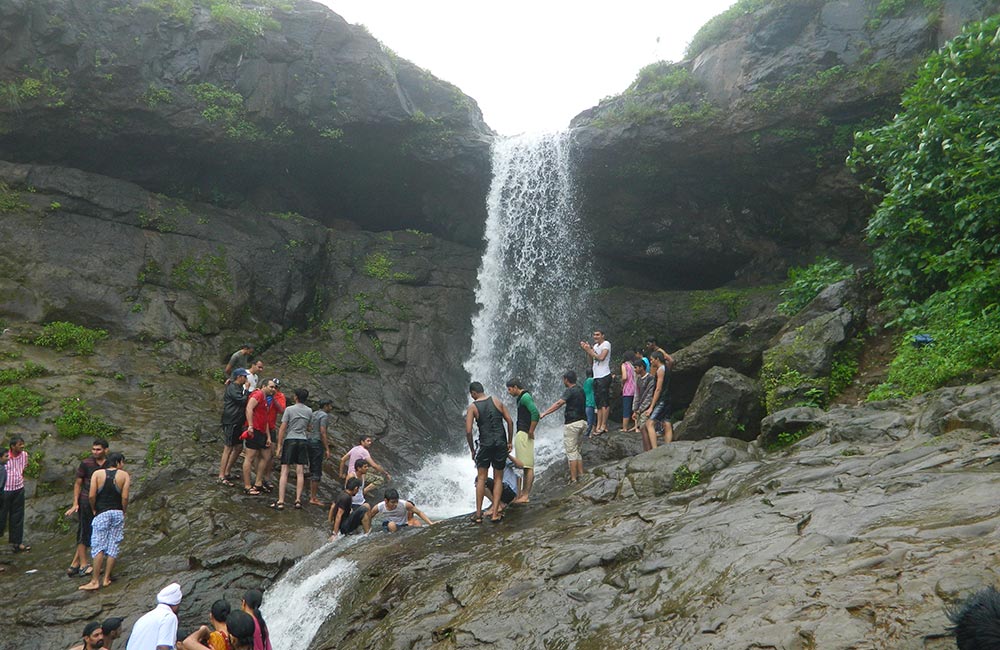
  • Tiger’s Leap- Situated near I.N.S. Shivaji Base, Lonavala: This spot is an attraction for people who are into trekking and hiking. The waterfall in the valley is an added advantage. The sound of water rushing down the mountain is all you need to forget everything about your work.
  • Bhaja Caves- Situated in Bhaja village of Lonavala: This spot is believed to be one of the oldest caves in India and has been declared as a national monument. There are 22 entrances to the cave. The architectural design of this place is something you wouldn’t want to miss.This place is a real gem for everyone who is interested in knowing more about India’s trade history.
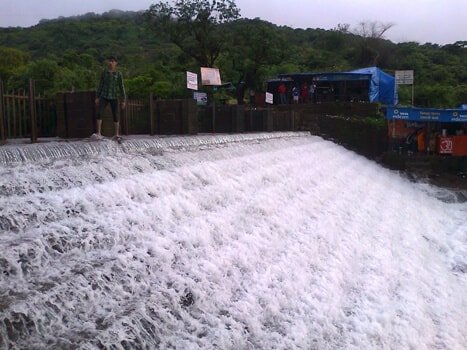
  • Bhushi Dam- Situated near I.N.S. Shivaji Base, Lonavala: Bhushu dam is just a 15-minute drive from Tiger’s leap. It is a magnificent dam built in the 1860s. It is situated on the Indrayani river in Lonavala. The place is always crawling with localities and tourists and to enjoy your visit it is suggested to go during the monsoon season when there are light rains.
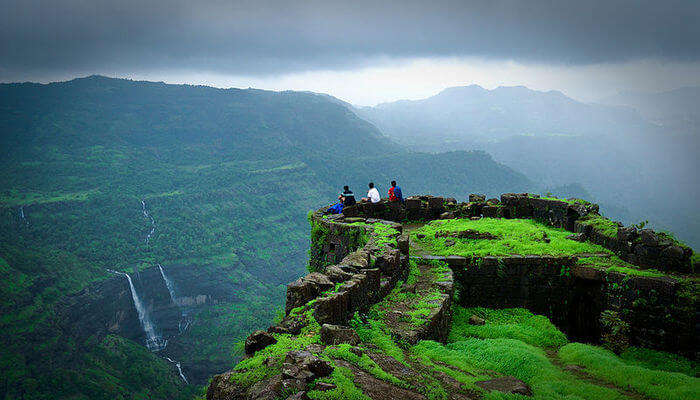
  • Rajmachi Fort- Situated in Rajmachi Village, Lonavala: This spot undoubtedly tops the list of the favorite tourist destination with its breathtaking view. Visitors trek to reach the highest point and all the hassle is totally worth it.
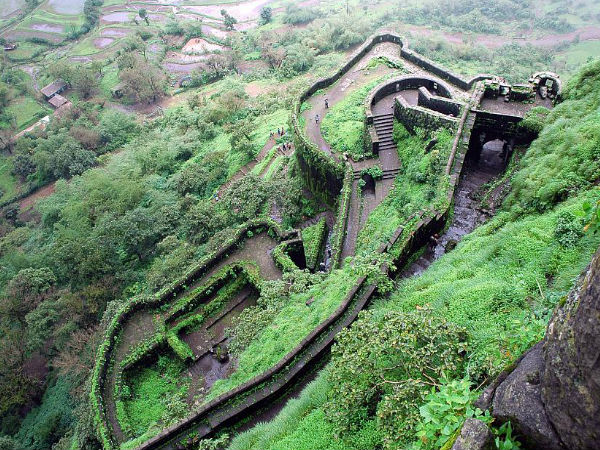
  • Lohagad Fort- Another tourist favorite destination would be the Lohagad Fort. It is 52 km from Lonavla and is close to other sites such as Bhaja Caves and Karla Caves.
  • Pawna Lake- Situated 30km from Lonavala: This spot is best for camping and picnic. Its wide landscape offers a breath of fresh air and much-needed peace and calm.

Lonavala is no wonder the favorite tourist destination. This place is a hot-spot for the localities to escape their daily life and enjoy everything that the place has to offer, be it the nature or the history lessons. Doesn’t matter if you enjoy gazing the stars or watching the sunrise, Lonavala is the place for you.

National Human Rights Commission

National Human Rights Commission, a statutory body , was established in 1993 under a legislation enacted by the Parliament namely, the Protection of Human Rights Act, 1993. The commission is the watchdog of Human Rights in the country, that is, the rights related to life, liberty, equality and dignity of the individual guaranteed by the constitution or embodied in the international covenants and enforceable by courts in India.

Composition of the Commission:

The commission is a multi-member body consisting of a chairperson and five members. The chairperson should be a retired Chief Justice of India or judge of the Supreme Court and the members should be a serving or retired judge of the Supreme Court, a serving or retired Chief Justice of a high court and three persons having knowledge of practical experience with respect to human rights.

 In addition to these full time members the commission also has 7 ex-officio members- the chairpersons of National Commission for minorities the National Commission for SCs,the National Commission for STs, the National Commission for Women, the National Commission for OBCs and the National Commission for Protection of Child Rights and Chief Commissioner for Persons with Disabilities.

Functions of the Commission: 

To enquire into any violation of human rights or negligence in the prevention of such violation by a public servant, either suo motu or on a petition presented to it or on an order of a court.

To intervene in any proceeding involving allegations of violation of human rights pending before a court. 

To visit jails and detention places to study the living condition of inmates and make recommendations there on.

To review the constitutional and other legal safeguards for the protection of human rights and recommend measures for the effective implementation.

To review the factors including acts of terrorism that inhibit the enjoyment of human rights and recommend remedial measures.

To study treaties and other international instruments on human rights and make recommendations for their effective implementation.

To undertake and promote research in the field of human rights.

To spread Human Rights literacy among the people and promote research.

To encourage the efforts of NGO working in the field of human rights.

To undertake such other functions as it may be considered necessary for the promotion of human rights.

Performance of the Commission:

The various Human Rights issues taken up by the commission are as follows-:

Abolition of bonded labour.

Functioning of the mental hospitals at Ranchi, Agra and Gwalior .

Functioning of the government protective home (women), Agra.

Issues concerning the right to food.

Review of the child marriage restraint act 1929.

Protocols to the Convention on the Rights of Child.

Preventing employment of children by government servants:Amendment of service rules.

Abolition of child labour

Guidebook for the Media on sexual violence against Children.

Trafficking in women and children: Manual for Judiciary for Gender Sensitization.

Sensitisation programme on Prevention of Sex tourism and Trafficking.

Maternal anaemia and human rights and so on.

Egypt takes centre stage in West asian affairs

Egypt

• Capital – Cairo.

• Borders with:
 Libya – west
 Sudan – south
 Israel – Northeast

• Strategic location – Hub for trade routes between Africa, Europe, and Asia.
 Enhanced with opening of the Suez Canal.

• Topography – dominated by the Nile River.

• Official language – Arabic

• 2013 – Overthrew its first democratically elected
government.

• $12 billion aid package from Saudi Arabia, the
United Arab Emirates (UAE) and Kuwait. • West Asian deposits – grants for the import of petroleum products.

West Asian politics

• Influenced by the active role played by Saudi
Arabia and the UAE.

• Role of Egypt – reluctant.
• Qatar Blockade – role of Egypt was not much intense.
 2017 – Arab transport blockade against Qatar in order to punish for its ties with radical Islamist groups.
 To pressure reducing its diplomatic and economic relations with Iran.

• Egypt regained influence – Good and abled
management of its economy – facilitated Egypt.
 Egyptian Economic reforms, 2015.
 Foreign exchange reserves of $40 billion by 2018.
 Growth rate of 5.6% in 2019.

Present Developments in West Asia

• Israel-Palestine conflict – negotiations by the
Egyptian diplomats and intelligence officers.

• Turkey – anxious to reopen its relations.

• Tripartite grouping
 Intent to broaden regional engagements.
 For Egypt – opportunity to move beyond its traditional dependence on Saudi Arabia
and to assert its leadership in the region.
 Coalition – near-bordering land mass and a considerable domestic agricultural and
industrial capacity.
 Extensive cooperation in energy connectivity
and reconstruction areas.

Challenges

• Ethiopia’s “Grand Ethiopian Renaissance Dam” on the Blue Nile
 Concern – source of around 95% of Egyptian fresh water.
 Fear – Restrict this access to fresh water – “existential threat”.

 Egypt tackling with
 Diplomatic engagements with Sudan, Uganda, Burundi, Rwanda and Kenya.
 Major dam and hydropower project in
Tanzania.
• Strained relations with Turkey – Libyan peace
process and the East Mediterranean.
 Delineated energy claims in the Mediterranean sea – in conflict with Turkey’s claims. • Present scenario of pandemic
 Unemployment on a rise.
 Economy – slowed down recovery.
 Percentage of workers without adequate income increased.
 Poverty rate – 2% higher than in 2015.
 Concern – might compel Egypt to seek assistance from the Gulf States.

World Nature Conservation Day

Conservation is the care and protection of  resources so that they can persist for future generations.

Conservation seeks the sustainable use of nature by humans along with preservation.

Preservation means protecting nature.

World Nature Conservation Day is celebrated on 28 July annually.

It is celebrated to generate awareness of the nature and its conservation.

Nature conservation means conserving habitat of different living organism, preventing deforestation, halting species extinction, reducing overfishing and mitigating climate change.

There is increasing interest in extending the responsibility for human well-being to include the Welfare of sentient animals.

Government play a major role in conserving our natural resources and various living organism.

There are various natural conservation is the laws implemented by government.

There are various threat to biodiversity:-

  • Habitat loss and fragmentation
  • Introduction of alien invasive species
  • Disturbance
  • Harvesting and over exploitation
  • Soil, water and atmospheric pollution
  • Intensive agriculture and forestry
  • Climate change

Habitat loss and fragmentation

  • Forests and grasslands turned into deserts.
  • Mangroves get cleared for fuel wood and prawn farming leads to Habitat loss of marine fish.
  • Waste land is increasing.
  • Human activities likely to eliminate approx 10 Millions species by the year of 2050.
  • Rate of disappearance of tropical forest in India is 0.6 % per year.

Thus, there is a need for conservation of living organism as well as natural resources.

Project Tiger – 268 in 1972 in 9 tiger reserve which increases to 1500 in 1997 in 23 Tiger Reserves.

Extinction of Dodo in Madagascar

Alien species

  • Introduction of Exotic breeds and disappearance of native species through biotic interaction.
  • Invasive species is a threat for Island ecosystem due to lack of competitors and Predator that control the population of native ecosystem.
  • E.g.-
    • Amazon sailfin catfish responsible for destruction of the population of Switzerland of Kolkata
    • Water hyacinth
    • Lantana bushes

Disturbance

  • Natural disturbance are very much differ from man made disturbance.
  • Natural disturbance like forest fire, cyclone, draught, Tsunami, etc. They disturb ecosystem very different way.
  • Human disturbances like synthetic compound, pesticides, massive release of radiation or spillover of oil in soil also affect our environment.
  • Biomagnification.
  • Eutrophication i.e, nutrient enrichment
  • Effect of anti-inflammatory drugs, diclofenac on vultures.

Harvesting and over exploitation

  • Exploitation includes hunting, fisheries, the impact of trade in Species and species parts.
  • Due to exploitation many species are getting treated at Global label such as births 30%, mammals 33%, amphibian 6%, marine fishes and reptiles.
  • Fishing often takes large incident catches of non-targeted species and crawling can destroy whole Marine community that live on sea floor.
  • Illegal poaching of animal for large economic benefit.
    • Skin and bones of Tiger, Ivory of elephant, horns of Rhinos, perfume of the Musk deer.

Climate change

  • Climate change is a major threat for all the species present on the globe.
  • Due to climate change the Global temperature is rising (0.74 degrees celsius in global mean surface temperature relative to pre- industrial levels), more extreme weather events, changing pattern of rainfall and drought can expected to have significant impact on biodiversity.

These factors affect directly and indirectly to the species in the form of:-

  • Loss of Polar habitat
  • Loss of coral reef
  • Ocean acidification
  • Shifting of weather
  • Effect on food chain

IUCN  Red List category

Red list is a catalogue of taxa that are facing the risk of extinction.

  • At present it is known as International Union for the conservation of nature and natural resources
  • IUCN has recognised 9 Red List categories of species:-
    1. Extinct
    2. Extinct in the wild
    3. Critically endangered
    4. Endangered
    5. vulnerable
    6. Near threatened
    7. Least concern
    8. Data deficient
    9. Not evaluated

The protected areas of India are :- National Park, Wildlife sanctuaries, conservation Reserves, community Reserves, biosphere reserve, Marine protected areas.

Measures should be taken to conserve nature:-

  • Reduce reuse and recycle
  • Choose sustainable development
  • Choose long lasting light bulbs
  • Try to use renewable resources more than non-renewable resources.
  • Save water
  • Volunteer for clean up our environment
  • Volunteer for clean up our environment
  • Use public transport system
  • Plant more trees
  • Try to avoid plastic
  • Try to minimise pollution at individual level
  • Use reusable shopping bags
  • Educate others about anthropogenic activities or impact of anthropogenic actions on our environment and what can we do to prevent its bad effects.

ANIMAL LOVERS

“Animals are a window to your soul and a doorway to your spiritual destiny. If you let them into your life and allow them to teach you, you will be better for it.”― Kim Shotola, The Soul Watchers: Animals’ Quest to Awaken Humanity

God’s creations

“Wherever there are wild animals in the world, there is always an opportunity for caring, compassion and kindness.”― Paul Oxton

Animals are the creations of God. They are as much important in the scheme of things as men. Animals, nature and man constitute the ecology. Harm to any of these means the disturbance of the ecological balance. Moreover, as God’s best creation, man has the responsibility to look after the welfare of the animals, which undoubtedly look forward to man for protection and survival. If man fails to do this duty it would be a moral crime on his part.

Respect to Almighty

“love about any animal or bird is pure because in that love u dont expect anything from them”― Kedar dhepe

Love of animals is the love of God. It is wrong to do harm to the animals, to beat them and kill them. Animals are generally good. They do not harm anybody unless they are harmed. They kill others for necessity and sport. Even ferocious animals like tigers and snakes do not injure or kill anybody unless they are attacked. Love of animals is an essential part of human nature. The domestic animals like cows, dogs, cats serve us faithfully. Small animals are dumb and meek. They depend on us. So, it is wrong to oppress and kill them. It is our moral duty to love them and keep them in their own places If we love them, they will love us and thus a natural bond will be established.

Love to nature

“The way you treat the animals around you will be the nature of the animal within you”
― Sir P.S. Jagadeesh Kumar

Animals like tigers, lions, deer end many others are part and parcel of Nature. They provide beauty and harmony to Nature. Reckless destruction of these animals is as bad as rash demolition of forests. Preservation of wild animals is a duty for all. They maintain the balance in nature. Moreover, they are a big attraction to the children, men and foreigners. We like to see the variety of God’s creations. It is also our duty to preserve them.

MOM – THE DIVINE SOUL!!!

Have anyone seen God in person? I think many of us would answer, No. But the right thing is everyone is seeing God daily in face of our mother. Yes, she is a unique gift, God had given to us. Am I right, now? In precise, she is the world’s precious gift which God have given to us. The feeling which we get when we are with our mother is the true divine feel that can be felt when we pray to God. None of us might say, I don’t like my mother, right? I can answer this myself. No one would say, I don’t like my mother. Though we don’t say anything to her, should would find what happened to us. And ask us what had happened. This is the divine feel of motherhood. Have you ever thought how things are hard to your mother?

The happiest feeling in this world is that a girl is carrying an another life in her. Yes, that feel cannot be bought buy money. Do you know how happy a mother would be when she is carrying her child in her uterus? Eventhough, she doesn’t know whether you are a boy or a girl, she had began to love you already. The only soul who loved you since the day you began to grow in her belly, is definitely your mother. She cannot eat the food she likes, or to lead her normal life. She lives in a dream world while she is carrying you. A survey says that the pain of childbirth is equal to jumping from the highest palce and even it is equal to the crushing of all the bones in your body. The pain we say that I was cheated by someone, hurt by someone, etc., can we say this pain is equal to the pain your mother endured during your birth? No. This labor pain cannot be expressed in words. A mother risk her life to give birth to her child and let him/her see this beautiful world. Everyone in the world can be selfish, greedy and picky but not our mom. She has never been greedy or selfish because she had you. After birth, she gives her blood as milk that’s been the food to us. No matter whatever heights we reach and whatever we do, this life and body is given by her. A mother would do anything to make her child feel happy and secure.

The Power of a Mother's Prayer | Guideposts

No matter how tired she is or how sick she is, the first word come from her mouth would be have you eaten? This shows that nothing matters more than you. Do you know how late she sleep and how early she wake up? Many don’t know, because they haven’t noted this! The next thing is giving the things that we want. If you want anything to eat, without any hesitation she make and give you, right? She doesn’t care whether she likes it or not!. She just want us to be happy and healthy. Sometimes, she used to eat the leftovers and sleep with a half-filled stomach. Mother is the one who teach us what is good and what is wrong in everything. She will correct the mistakes that we make.

After marriage, all the girls, you would be able to feel that motherhood is a gift to us. Yes, motherhood is the unique gift given by god to us. We feel sorry for the child without a mother and a mother without a child. Motherhood is same for everyone. Even the sterile women have the feeling of motherhood. So, stop judging women by their fertile or sterile nature. Let me ask you a quuestion. If your mother has gone out in the morning and haven’t been back to home for a day what would you do? Obivously, you would search for her right. This shows how you love your mother and how the bond between you two is! Think about a child without mother? Not having a mother is the only thing they would regret throughout their life. I hope you would have understood how mother is important in your life!

Mothers Day Quotes For Students And Children - Kids Portal For Parents

Don’t hurt or scold or argue with your mother for some silly things and don’t make her feel upset about it. Because there are children longing for mother’s love. Cherish this wonderful gift, God have given to you. Cherish your mom as high as you can. At last, Mom-the divine soul, this title suits this article right? God is in the face of your mother. Make you mother feel happy for you. Spare some time, talk to her. This would be the great gift that you give her.

Mother Quote | Quote Number 542279 | Picture Quotes

Dickinson’s “Much Madness is divinest Sense” – New Critics Perspective

“Much Madness is divinest Sense” is a poem by the American poet Emily Dickinson. This article will analyse the poem under the theoretical framework of New Criticism. New Criticism is a school of thought that viewed the text as an autotelic entity “constituted by internal relations and independent of reference either to state of mind of the author or the actualities of the external world.”

The New Critics emphasised on Close reading. Which means that, they looked at the poem as an organic entity of its own instead of associating it to the external cultural and historical background. A close reading of this poem would hence exclude all external factors such as the time period or the socio-political background which the poem might refer to. Furthermore, Wimsatt and Beardsley coined the terms intentional and affective fallacies. According to them, reading the poem by trying to understand the ‘intent’ of the poet would fall under intentional fallacy. In this poem, reading it with reference to Emily Dickinson or her views and criticisms on religion and patriarchy must be avoided. Affective fallacy refers to reading the text in terms of the emotional effect that it has on a particular reader.

The poem presents several sets of opposing forces like sanity and insanity, rationality and irrationality, and consequences of either assenting or demurring. The poet persona offers two opposing choices. If one chooses to assent and follow the orders without questions, then they are considered sane. But if one chooses to voice out their opinion and demur against the orders, then they are instantly branded as dangerous and are subjected to punishment. The persona does not specify which is better. Although assenting seems like the easier option of the two, the individual has to go against their beliefs and give up their freedom of choice to be labelled safely as sane. Meanwhile, demurring results in the curbing of physical freedom or the loss of a social status, but the individual at least had the satisfaction of being true to themselves. Both the choices ultimately result in the loss of freedom in one way or the other. Thus, the poem achieves perfect balance or equilibrium and is rendered invulnerable to irony.

Ambiguity, paradox and metaphors have been used throughout the poem. The terms ‘much’, ‘madness’ and ‘sanity’ are not terms that are adequately quantifiable. They are ambiguous in the sense that each of these are perceived differently by different individuals. What ‘much madness’ is to one person might not be the same to another. Similarly, madness in itself is an ambiguous term as it can be defined only with reference to context. In the beginning line, madness is considered to be the divinest sense, and yet, due to the subjective nature of the perception of madness, it is also seen as something dangerous. This serves as a paradox within the poem.

In his essay “The Well-Wrought Urn”, Cleanth Brooks speaks of the ‘heresy of paraphrase’ wherein, the text cannot be subjected to summarisation without losing its meaning. Similarly, in this poem, culling out a line from within the poem would render it meaningless. The poem works as an organic unity wherein all the lines complement each other within the context to give it full meaning.

The New Critics considered the form of the poem to be equal or reflective of the content of the poem. Here, the random capitalisation of words and the abrupt pauses disrupts the flow and rhythm of the verse, hence reflecting the sense of madness mentioned in the poem. Similarly, words like ‘much’ and ‘madness’ are repeated to emphasise on the inherent theme of the poem. In the sixth line, we see that the lines are much shorter and simpler as the persona speaks about assent and its simple consequences. But in the seventh and eighth lines, the lines are much complex and stretched out as the persona speaks of demurring which is reflective of the dire consequences mentioned in the poem. Dashes are present throughout the poem linking each line to another which is representative of the ‘chain’ mentioned in the final line. The poem “Much Madness is divinest Sense” can be regarded as an ‘ideal poem’ according to the framework laid down by the New Critics. The poem presents two opposing forces of assenting and demurring which achieves equilibrium by proving that neither is better off than the other, hence rendering the poem invulnerable to irony. The poem also uses ambiguity as well as paradox to convey the theme better. The form of the poem is reflective of the content which maintains the organic structure of the text.  

Some Historical Tourists Places in India

Travelling is the part of human life. Travelling give knowledge, inner peace, change of mind. India has a glorious history of past. All around India we can see the footprint of history. They are the great tourist attraction of India. Delhi & Agra is the main tourist attraction in the case of historical tourist places as there are  many monuments ,construction are situated here.  Let’s talk about some of them ––

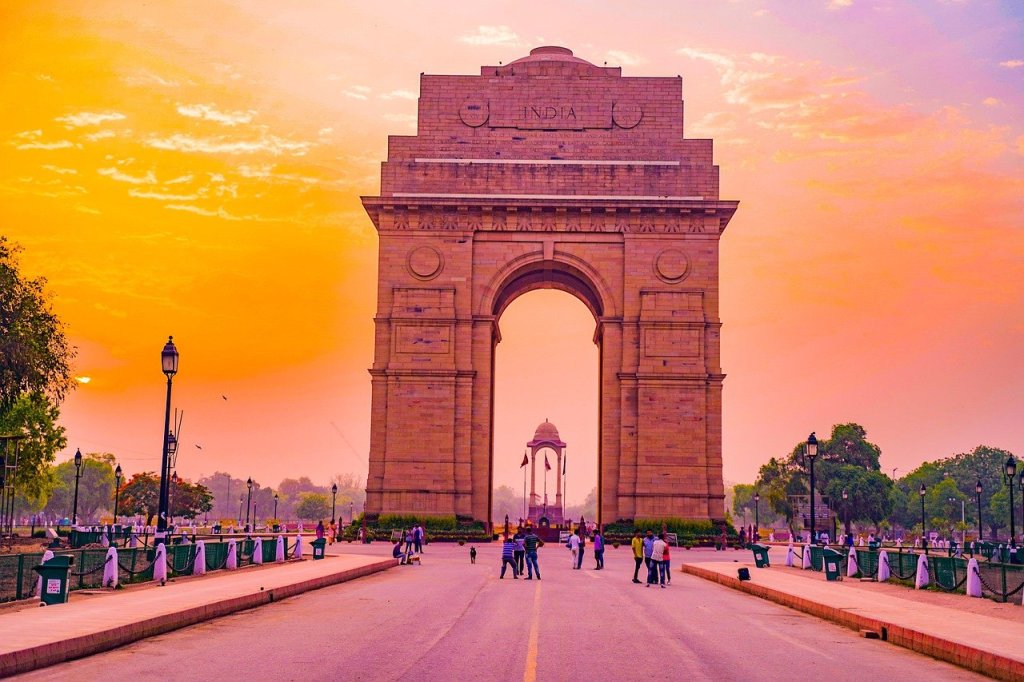
1.India Gate: It is situated in Rajpath in New Delhi , the capital of India . It is the symbol of the capital of India, Delhi. The designer of India Gate was Sir Edwin Lutyens. It was constructed on 12th February on 1931.It is a 42m tall war Memorial. India Gate of constructed in the memory of the 70000 British Indian Army soldiers who sacrificed their life during the first world war and in the third Anglo Afghan war. There is a ritual that in every Republic Day Prime Minister of India will visit the gate ‘Amar Jawan Jyoti’ canopy is also the part of India Gate.

India Gate

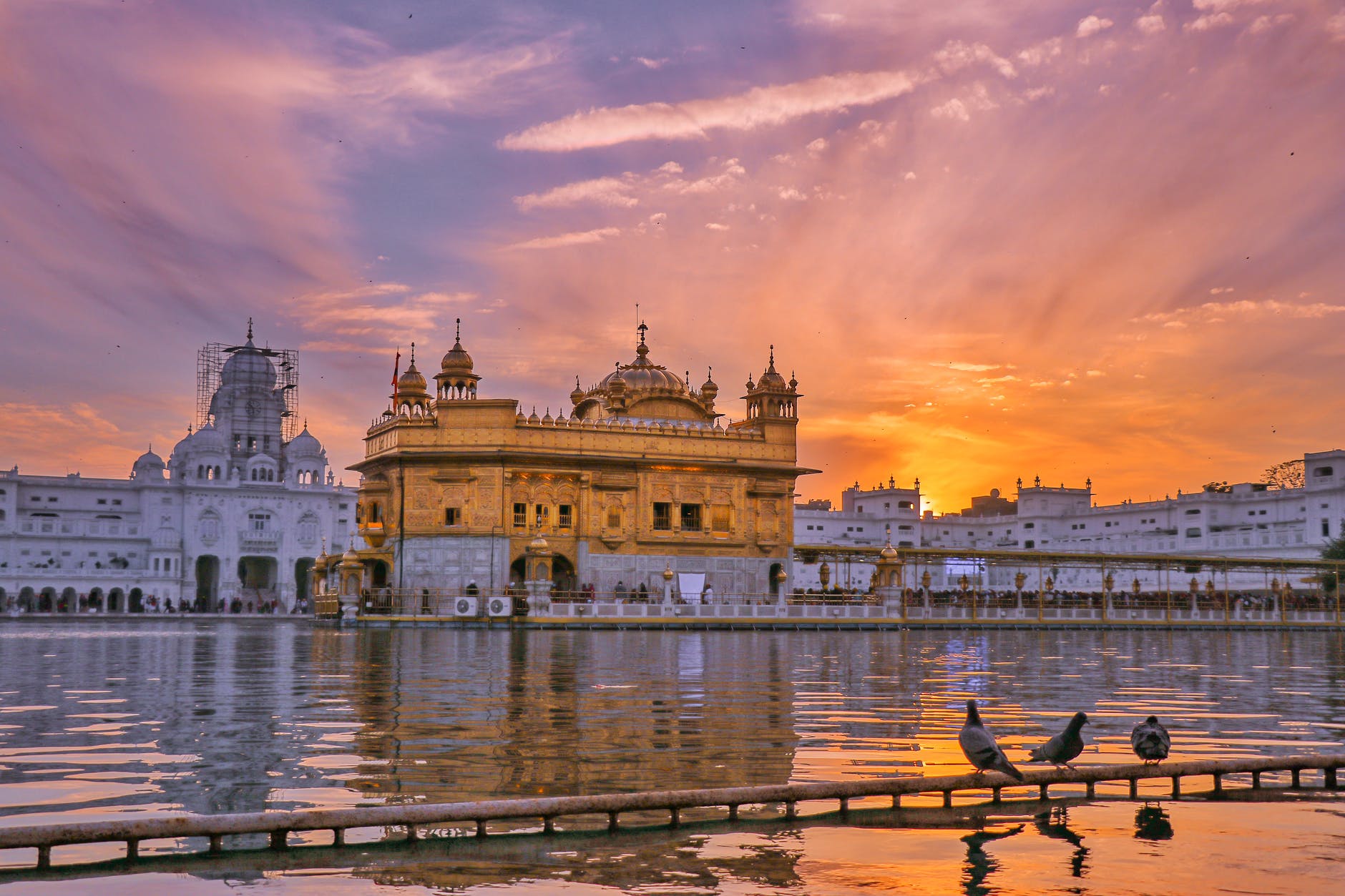
2.Golden temple: It is situated in Amritsar in Punjab. It is a pilgrimage tourist place. Its construction was completed in the year of 1604. It’s another name is Harmandir Sahib (which mean abode of God). It is very remarkable shrine with the concepts of purity, virtual reality and spirituality for not only Sikhs but also for other religions. Guru Arjan contributed a copy of Adi-Granth in 1604 in Golden temple. There is an artificial pool called Sarovar as a source of holy water. It is acknowledged as UNESCO World Heritage site.

Golden temple

3.The Lotus Temple: It is situated in New Delhi in India. It is a worship house. This construction was completed in 13th November in the year of 1986. It was made by architect Fariborz Sahba. It is a huge construction with the model of lotus flower. It was devoted to worship of Bahai Faith. Its unique structure of blooming lotus flower attract lots of visitors from all around the world.

The Lotus Temple

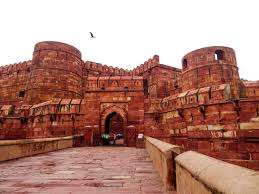
4.Agra Fort: it is situated in Agra of Uttar Pradesh. It is acknowledged as the UNESCO World Heritage site. It is also called Red Fort of Agra. The whole construction was made by red sandstone. This was constructed by Mughal emperor of India, Akbar in the year of 1565 to 1573. It was made when Akbar came Agra and made Agra the capital of his ruling region. It is also the sign of Indian rebellion in the year of 1857.

Agra Fort

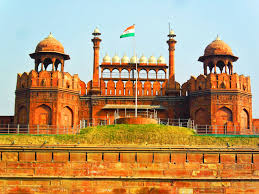
5.Red Fort: It is situated in Old Delhi in India. Its other name is Lal Qila. It is also acknowledged as UNESCO World Heritage site. It was made by Mughal emperor Shah Jahan in the year of 1573. The architect of these construction was Ustad Ahmad lahori. It was the main abode of Emperor Shah Jahan .It is significant for the shifting of the capital from Agra to Delhi. It is a ritual that in the Independence Day of India (15th August) Prime Minister will host the national flag in Red Fort.

Red Fort

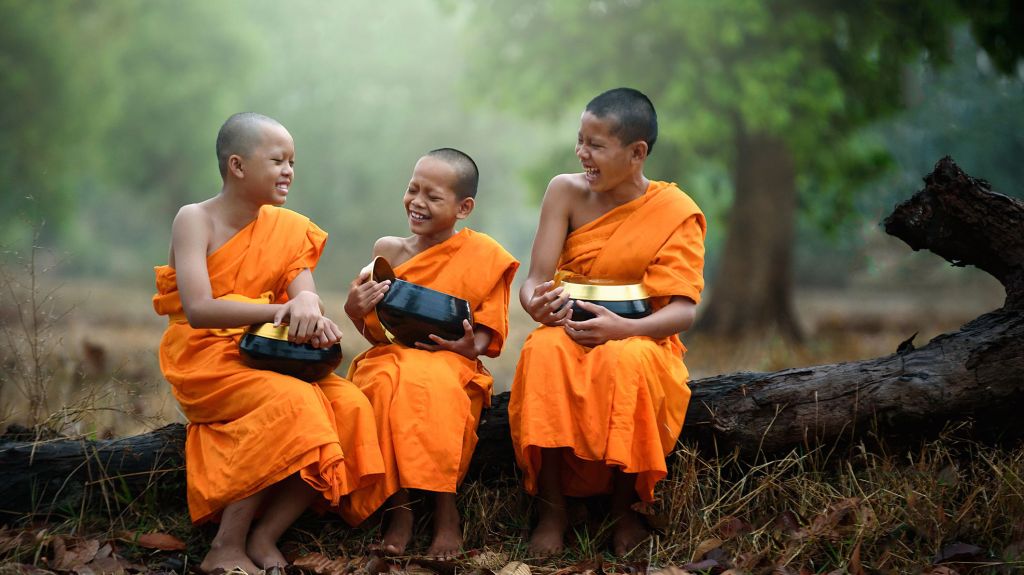
A Monk

Who are Monks ?

Why people are becoming Monks?

Is it some kind of religion ?

How a monk lives ?

What kind of God they persuit ?

Want to know more about them , then start some reading .

Introduction

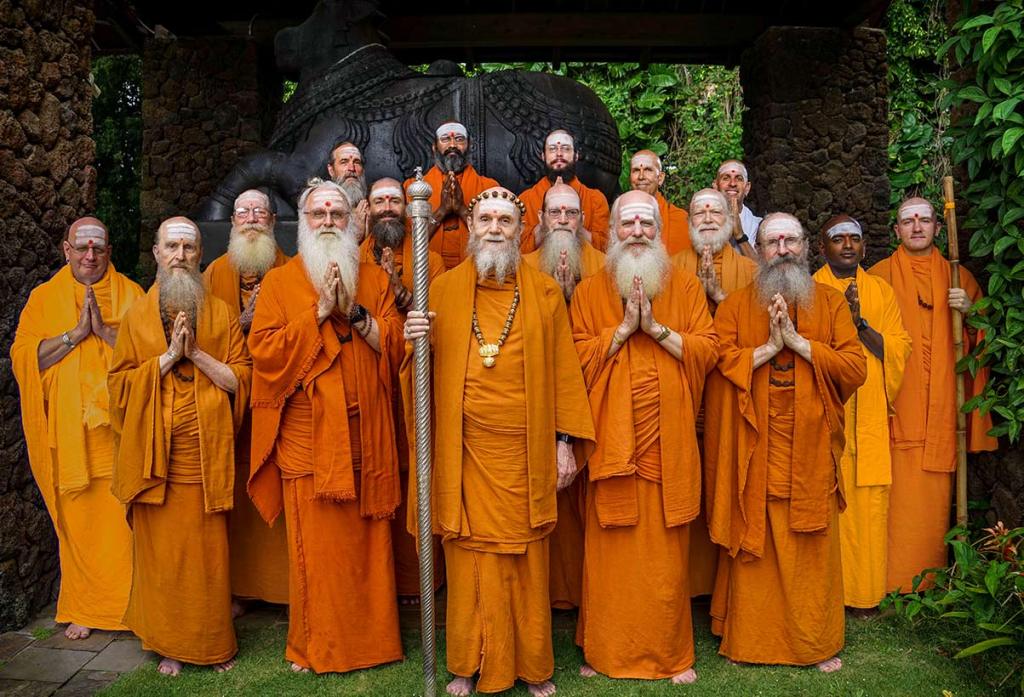
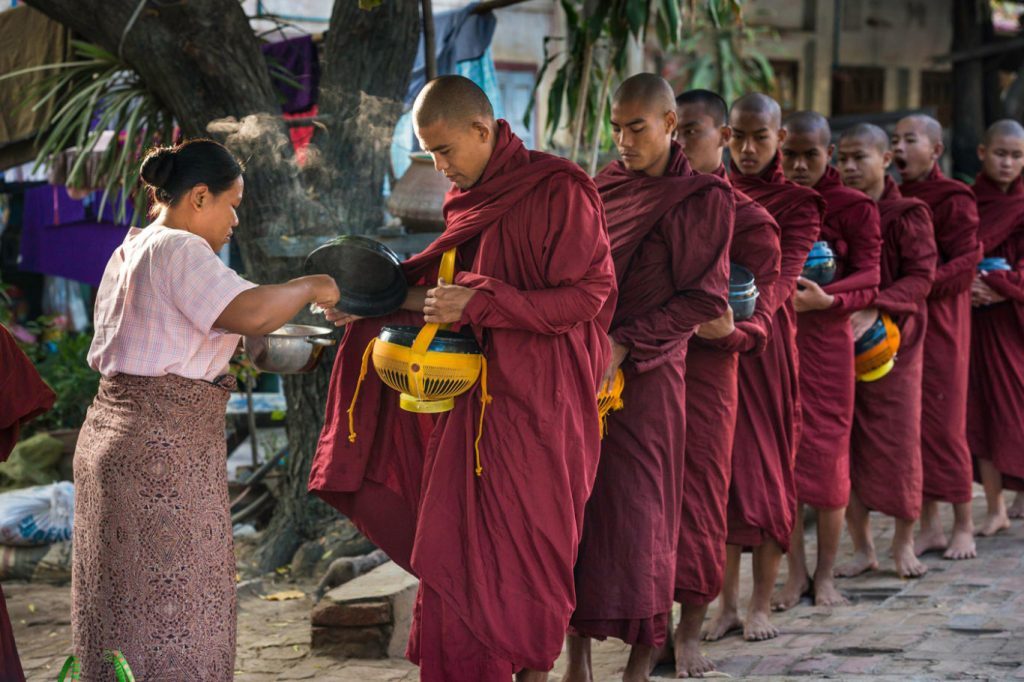
A monk is a person who practices religious asceticism by monastic living, either alone or with any number of other monks . A monk may be a person who decides to dedicate his life to serving all other living beings, or to be an ascetic who voluntarily chooses to leave mainstream society and live his or her life in prayer and contemplation. The concept is ancient and can be seen in many religions and in philosophy.

In simple words , A monk is a man who devoted part or all of his life to a religion. The word comes from Ancient Greek, and can be translated as solitary. In Greek, the word can apply to women, but in modern English it is mainly used for men. The word nun is usually used for female monastics. Monks practice asceticism. They either live alone, or together with other monks who share the same ideals. Monks can be found in different religions, most often in Buddhism, Christianity, Hinduism, Jainism and Taoism.

There living

Monks usually follow rules and regulations for convenient life. As a monk you must obey these rules .

  1. Poverty: the monk cannot own anything.
  2. Chastity: the monk cannot have sex or a sexual relationship and cannot start a family or get married.
  3. Solitude: the monk should always be alone. Some monks choose to not follow this law.
  4. Silence: the monk shall not speak unless it is necessary.
  5. Generosity: the monk should always help other people.
  6. Stillness: the monk cannot travel far unless it is necessary. Sometimes this means that the monk must be cloistered which means that they must not leave their monastery (especially Warsa period). Sometimes they can be allowed to leave, but must not go very far.
  7. Duty: The monk must do some things every day. For example, the monk must pray or meditate and must do some work.

Indian monks

One of the finest and versatile monk in India was Swami Vivekananda . Swami Vivekananda was greatly inspired by Ramakrishna. For Swami, Ramakrishna was just a plain and simple villager, who was a part of the Kali temple. However, his intense spiritual practices intrigued Swami.

For five years, Swami learnt everything from his master, Ramakrishna. After his master left the world, everyone looked up to Swami. He urged the followers of Ramakrishna to leave the worldly pleasures and look up to God.

“You cannot believe in God until you believe in yourself.”

His saying intrigued just not one nation but the whole world .

Life lessons

Being a monk , gives you a pleasure of being yourself . We live in the world where we get pleasure from materialistic things . We become selfish , ruthless, dull, lifeless and worthless. You have to believe in yourself in order to excel in life.

Start learning from lessons.

  • When you start to do meditation you recognize the egotistical mind.
  • Trying until you get it right.
  • The answer to your question is inside of you.
  • Real wisdom in life comes from doing something and failing.
  • We must be both compassionate and resilient.
  • Patience is a virtue.
  • Detach from your ego.
  • Happiness come from within, and also comes from outside.

Link

the power of music

I suppose music in itself is healing,” American musician Billy Joel oncestated. “It’s an explosive expression of humanity. It’s something we’re all touched with the aid of using. No count number what way of life we’re from, all and sundry loves tune.” Most people might wholeheartedly accept as true with this assertion, and it’s far this generic bond with tune that has led researchers throughout the globe to research its healing cap potential. “We have a the sort of deep connection to tune due to the fact it’s far ‘hardwired’ in our brains and bodies,” stated Barbara Else. We can all consideras a minimum one tune that, whilst we pay attention it, triggers an emotional reaction. It is probably a tune that followed the primary dance at your wedding, for instance, or a tune that reminds you of a tough break-up or the lack of a cherished one. “We have a the sort of deep connection to music due to the fact it’s far ‘hardwired’ in our brains and bodies,” Barbara Else, senior marketing consultant of coverage and studies on the American Music Therapy Association advised Medical News Today.

“The factors of tune – rhythm, melody, etc. – are echoed in our physiology, functioning and being.” Given the deep connection we’ve got with tune, it’s far possibly unsurprising that several research have proven it is able to gain our intellectual fitness. A 2011 have a take a observe with the aid of using researchers from McGill University in Canada observed that being attentive to tune will increase the quantity of dopamine produced with inside the mind – a temperimproving chemical, making it a viable remedy for depression. And in advance this yr, MNT pronounced on a have a take a observe posted in The Lancet Psychiatry that cautioned being attentive to hip-hop tunemainly that from Kendrick Lamar – might also additionally assist people to apprehend intellectual fitness disorders. But an increasing number of, researchers are locating that the fitness advantages of tunemay matchpast intellectual fitness, and as a result, a few fitness specialists are calling for tuneremedy to be extra broadly integrated into fitness care settings. In this Spotlight, we take a betta have a take a observed number of the cap potential fitness advantages of tune and have a take a observe whether or not, for a few conditions, tune can be used to improve – or maybe replace – modern-dayremedy strategies. Reducing ache and tension Bob Marley as soon as sang: “One accurate factor approximately tune, whilst it hits you sense no ache.” According to a few research, this assertion might also additionally ring true. Earlier this yr, MNT pronounced on a have a take a observe led with the aid of using Brunel University withinside the UK that cautioned tune might also additionally lessenache and tension for sufferers who’ve gone through surgery. By studying seventy two randomized managed trials regarding extra than 7,000 sufferers who acquired surgery, researchers observed folks who have been performed tune after their manners pronounced feeling much less ache and tension than folks who did now no longer pay attention to tune, and that they have been additionally much less probable to wantachemedicine. This impact turned into even more potent for sufferers who were given to pick out the tune they listened to.

Talking to MNT, have a take a observechief Dr. Catharine Meads stated: “If tuned turned into a drug, it might be marketable. […] Music is a noninvasive, secure, reasonably-priced intervention that have to be to be had to all and sundry present process surgery.” This have a take a observe is simplyone in every of many hailing tune for its outcomestowardsache. In March 2014, researchers from Denmark observedtunecan beuseful for sufferers with fibromyalgia – a ailment that reasons muscle and joint ache and fatigue. Listening to calm, enjoyable, self-selectedtunedecreasedache and expandeduseful mobility significantly” amongst 22 sufferers with fibromyalgia, in line with the investigators. But why does tuneseem to ease ache? While the precise mechanisms continue to be unclear, many researchers consider one cause is due to the factbeing attentive totune triggers the discharge of opioids withinside themind, the frame’s herbalache relievers. Dr. Daniel Levitin, of McGill University in Canada, and associatesspeakapproximately this principle in a 2013 evaluate, bringing upstudies that observedhumansskilledmuch lesssatisfaction from being attentive to their preferredtunewhilst given Naltrexone – a drug that blocks opioid signals – suggesting tune induces the discharge of opioids to ease ache. An powerfulstrain reliever When feeling stressed, you coulddiscoverbeing attentive to your preferredtune makes you sensehigher – and there are variousresearch that aid this impact. A have a take a observepronouncedwith the aid of using MNT remaining month, for instance, observed that toddlers remained calmer for longer once theyhave beenperformedtunein place of spoken to – even if speech concernedtoddlerspeak. The have a take a observe researchers, together with Prof. Isabelle Peretz of the Center for Research on Brain, Music and Language on the University of Montreal in Canada, cautioned the repetitive sample of the tune the toddlers listened to decreased distress, in all likelihoodwith the aid of using promoting “entrainment” – the cappotential of the frame’s inner rhythms to synchronize with outside rhythms, pulses or beats. Research indicatestune lowers stages of the “strain hormone” cortisol. Another have a take a observeperformed in 2013 observed that now no longermost effective did being attentive totuneassistlessenache and tension for kidson the UK’s Great Ormond Street Hospital, it helped lessenstrainunbiased of social factors. According to a few researchers, tunemight also additionallyassist alleviate strainwith the aid of usingdecreasing the frame’s cortisol stages – the hormone launched in reaction to strain. The evaluatewith the aid of using Dr. Levitin and associates, however, indicates this strain-relieving impact is depending on what form oftune one listens to, with enjoyable tune observed maximum probable to decrease cortisol stages. Another mechanism with the aid of using which tunemight also additionally alleviate strain is the impact it has on brainstem-mediated measures, in line with Dr. Levitin and associates, which include pulse, coronary heart charge, blood stress and frame temperature; again, the impact is depending on the form of tune listened to. “Stimulating tune produces will increase in cardiovascular measures, while enjoyable tune produces decreases,” they explain. “[…] These outcomes are in large part mediated with the aid of using tempo: gradual tone and musical pauses are related to a lower in coronary heart charge, breathing and blood stress, and quickertune with will increase in those parameters.” Music’s impact on coronary heart charge and its cap potential as a strain reliever has led some of researchers to consider tune will also be powerful for treating coronary heart conditions. Earlier this yr, MNT pronounced on a have a take a observe provided on the British Cardiology Society Conference in Manchester, UK, wherein researchers from the UK’s University of Oxford observed repeated musical termsmight also additionallyassistmanipulatecoronary heartchargeand decrease blood stressaleven though they statedextrastudiesis needed on this area. Music and reminiscence Certain songs have the cap potential to remind us of positive intervals or occasions in our lives – a few that make us smile, and a few we might instead forget. With this in mind, researchers are an increasing number of investigating whether or not tune might also additionally resourced reminiscence recollect. Studies advisetunemight also additionally resourced reminiscence recollect for adults withinside the early ranges of dementia.

In 2013, a have a take a observe posted with inside the magazine Memory & Cognition enrolled 60 adults who have been gaining knowledge of Hungarian. The adults have been randomized to one in every of3gaining knowledge of tasks: speak unexpected Hungarian terms, speakme the identicalterms in a rhythmic style or making a song the terms. When requested to recollect the terms, the researchers observedmembers who sang the terms had an awful lotbetterrecollect accuracy than the alternativecorporations. “These consequencesadvise that a ‘pay attention-and-sing’ gaining knowledge ofapproach can facilitate verbatim reminiscence for spoken overseas language terms,” say the authors. Evidence from such research has led researchers to indicatetunemight also additionallyassistreminiscencerecollect for humans with cognitive disorders, which include Alzheimer’s disease. A have a take a observepostedwithinside themagazine Gerontologist remainingyr assessed the impact of tune on reminiscencerecollect in people with early-degree dementia. For the studies, 89 humans with dementia and their caregivers have been randomly assigned to both a 10-week making a songtrainingorganization, a 10-week tune listening trainingorganization or normal care. The consequencesfound out that each the making a song and tune listening corporationsnow no longermost effective had highertemper and averagewellbeing that the same old care organization, however they validatedhigher episodic reminiscence on cognitive assessmentsTrusted Source. The making a songorganizationadditionallyconfirmedhigherrunningreminiscence than the same old care organization. “Regular musical enjoymentsportsmay have long-time period cognitive, emotional, and social advantages in mild/mild dementia and willconsequently be applied in dementia care and rehabilitation,” the authors concluded. Helping get bettermind injury, deal with seizures Increasingly, studies is indicating that tune can assistresourcehealing from mind injury – which include that from stroke. A 2008 have a take a observeperformedwith the aid of using researchers from the University of Helsinki in Finland observed that stroke sufferers who listened to tune for round 2 hours each day had higher verbal reminiscence and interest and a extrafinetemper than folks who listened to an audio ee-e book or not anything at all. What is extra, research have proven that tunemight also additionallyresource speech healing following stroke. One have a take a observeperformed in 2013 with the aid of using researchers from Korea, for instance, observed that stroke sufferers who advancedcommuniqueissues after stroke validatedprogressed language cappotential following 1 month of neurologic tune therapyTrusted Source. Commenting at theviableadvantages of tuneremedy for stroke sufferers, Barbara Else advised MNT: “While the neuroscience and studies findings across thediversetuneremedy interventions hired to aid speech, language, and communique are unexpectedlydeveloping and evolving, that is an interesting area. When blended with our colleagues’ running with thosesufferers in associated disciplines, we regularly see accurateconsequences. Many open questions continue to behowever thepaintingscould be very encouraging.” It has additionally been cautioned that tunemight also additionallyassistdeal with epilepsy – a mindailmentcharacterisedwith the aid of using the prevalence of seizures. Reported with the aid of using MNT in August, a have a take a observeobserved the brains of sufferers with epilepsy displaydistinctive responses to tune than the brains of thesewith out the condition. Conducted with the aid of using Christine Charyton, of The Ohio State University Wexner Medical Center, and associates, the have a take a observeobserved the brains of humans with epilepsy confirmedmore synchronization in reaction to tune – a “surprising” locating. “Persons with epilepsy synchronize earlier than a seizure. However, in our have a take a observe, sufferers with epilepsy synchronized to the tunewhile not having a seizure,” Charyton advised us. These consequences, Charyton stated, ought tocausea uniqueremedyapproach for epilepsy. “Persons with epilepsy might also additionally use the tune to relax; strainreasons seizures to occur,” she explained. “By being attentive to the tune, many suffererspronounced that they felt relaxed.” Music remedyhave to be appliedextra in fitness care settings Based at thewidespreadproof that tunegivesseverafitnessadvantages, many specialists are calling for moreusage of tuneremedyinsidefitness care settings. “Music therapists are poised and equipped to assess, supply and recordtuneremedyremedyhoweveradditionally to discuss with our colleagues (physicians, nurses, physiotherapists physical, occupational therapists, speech-language pathologists, etc.) to aid the affected person as a part of the interdisciplinary group and care of the affected person,” Else advised MNT. In addition, Else believes that tuneremedyought toprovide an opportunityremedyalternative for a few conditions – which includeanxiety headaches. “A extracomplex case instance I can consider, even thoughextra rare, is for positivepeople who enjoy seizure hobbyrelated totune and auditory exposures – regularly high-frequency sounds and rhythmic intensity,” she stated. “Customized tuneremedy interventions to deal with the offending acoustic exposures can aid stabilization of the affected person’s signs and might also additionally, in turn, bring about a medicinediscount or taper,” she continued. Based at thestudies to date, there’struelyproof that we’ve gotan awful lotextra than simply an emotional reference totune. So the following time you placed on your preferred track, have a touch dance roundsecurewithinside theunderstandingwhich you are probable to be reaping a fewfitnessadvantages.

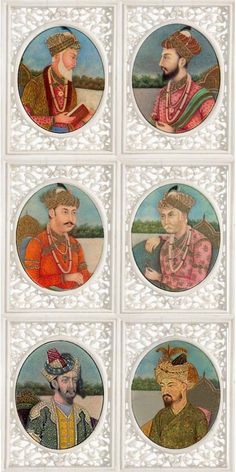
Rulers of the Mughal empire.

In India, the Mughal Empire was perhaps the best domain ever. The Mughal Empire administered countless individuals. India became joined under one guideline, and had extremely prosperous social and political years during the Mughal rule. There were numerous Muslim and Hindu realms split all through India until the organizers of the Mughal Empire came. There were a few men like Babar, grandson to the Great Asian victor Tamerlane and the vanquisher Genghis Khan from the northern district of Ganges, stream valley, who chose to take over Khyber, and at last, the entirety of India.

Babar (1526-1530):

the extraordinary grandson of Tamerlane and Genghis Khan, was the first Mughal sovereign in Quite a while. He went up against and crushed Lodhi in 1526 at the main skirmish of Panipat, thus came to build up the Mughal Empire in India. Babar governed until 1530, and was prevailed by his child Humayun.

Humayun (1530-1540 and 1555-1556):

the oldest child of Babar, succeeded his dad and turned into the second head of the Mughal Empire. He managed India for almost 10 years however was removed by Sher Shah Suri, the Afghan ruler. Humayun meandered for around 15 years after his loss. In the interim, Sher Shah Suri passed on and Humayun had the option to crush his replacement, Sikandar Suri and recapture his crown of the Hindustan. Nonetheless, before long, he kicked the bucket in 1556 at a youthful age of 48 years.

Sher Shah Suri (1540-1545):

was an Afghan chief who assumed control over the Mughal Empire in the wake of overcoming Humayun in 1540. Sher Shah involved the seat of Delhi for not over five years, but rather his reign end up being a milestone in the Sub-landmass. As a lord, he has a few accomplishments in his credit. He set up an effective policy management. He set up an income assortment framework dependent on the estimation of land. Equity was given to the everyday person. Various common works were completed during his short rule; planting of trees, wells and working of Sarai (hotels) for voyagers was finished. Streets were laid; it was under his standard that the Grand Trunk street from Delhi to Kabul was assembled. The money was additionally changed to finely printed silver coins called Dam. Notwithstanding, Sher Shah didn’t endure long after his increase on the seat and kicked the bucket in 1545 after a short rule of five years.

Akbar (1556-1605):

Humayun’s beneficiary, Akbar, was brought into the world in a state of banishment and was just 13 years of age when his dad kicked the bucket. Akbar’s reign holds a specific noticeable quality ever; he was the ruler who really invigorated the establishments of the Mughal Empire. After a progression of triumphs, he figured out how to curb the greater part of India. Regions not under the realm were assigned as feeders. He additionally embraced a placating strategy towards the Rajputs, henceforth diminishing any danger from them. Akbar was an incredible victor, yet a fit coordinator and an extraordinary manager too. He set up a large group of establishments that end up being the establishment of a managerial framework that worked even in British India. Akbar’s standard additionally stands apart because of his liberal approaches towards the non-Muslims, his strict advancements, the land income framework and his popular Mansabdari framework. Akbar’s Mansabdari framework turned into the premise of Mughal military association and common organization.

Akbar passed on in 1605, almost 50 years after his rising to the seat, and was covered outside of Agra at Sikandra. His child Jehangir then, at that point accepted the seat.

Jehangir:

Akbar was prevailed by his child, Salim, who took the title of Jehangir, signifying “Hero of the World”. He wedded Mehr-un-Nisa whom he gave the title of Nur Jahan (light of the world). He cherished her with dazzle enthusiasm and gave over the total reins of organization to her. He extended the realm through the expansion of Kangra and Kistwar and merged the Mughal rule in Bengal. Jehangir did not have the political endeavor of his dad Akbar. Be that as it may, he was a fair man and an open minded ruler. He strived to change society and was lenient towards Hindus, Christians and Jews. Be that as it may, relations with Sikhs were stressed, and the fifth of the ten Sikh masters, Arjun Dev, was executed at Jehangir’s orders for giving guide and solace to Khusrau, Jehangir’s defiant child. Craftsmanship, writing, and design succeeded under Jehangir’s standard, and the Mughal cultivates in Srinagar stay a suffering declaration to his imaginative taste. He passed on in 1627.

Shah Jahan:

Jehangir was prevailed by his second child Khurram in 1628. Khurram took the name of Shah Jahan, for example the Emperor of the World. He further extended his Empire to Kandhar in the north and vanquished the majority of Southern India. The Mughal Empire was at its apex during Shah Jahan’s standard. This was because of right around 100 years of unmatched thriving and harmony. Therefore, during this rule, the world saw the extraordinary advancement of expressions and culture of the Mughal Empire. Shah Jahan has been known as the “modeler ruler”. The Red Fort and the Jama Masjid, both in Delhi, stand apart as transcending accomplishments of both structural designing and workmanship. However regardless of anything else, Shah Jahan is recalled today for the Taj Mahal, the gigantic white marble sepulcher developed for his better half Mumtaz Mahal along the banks of the Yamuna River in Agra.

Aurangzeb:

Aurangzeb climbed the seat in 1658 and controlled preeminent till 1707. Along these lines Aurangzeb governed for a very long time, coordinating with Akbar’s reign in life span. However, lamentably he got his five children far from the regal court with the outcome that none of them was prepared in the specialty of government. This end up being exceptionally harming for the Mughals later on. During his 50 years of rule, Aurangzeb attempted to satisfy his aspiration of bringing the whole Sub-landmass under one principle. It was under him that the Mughal Empire arrived at its top in matter of region.

The Indus Valley Civilization

The Indus River Valley Civilization, 3300-1300 BCE, otherwise called the Harappan Civilization, stretched out from advanced upper east Afghanistan to Pakistan and northwest India.

Significant advancements of this civilization incorporate normalized loads and measures, seal cutting, and metallurgy with copper, bronze, lead, and tin.

Little is perceived about the Indus script, and subsequently, little is thought about the Indus River Valley Civilization’s establishments and frameworks of administration.

The progress probably finished because of environmental change and relocation.

Geology and time period

In 1856, British pilgrim authorities in India were occupied with checking the development of a railroad interfacing the urban communities of Lahore and Karachi in cutting edge Pakistan along the Indus River valley.

As they kept on working, a portion of the workers found many fire-prepared blocks stopped in the dry landscape. There were countless genuinely uniform blocks, which appeared to be very old. Regardless, the laborers utilized some of them to develop the street bed, ignorant that they were utilizing old antiques. They before long found among the blocks stone antiques made of soapstone, including multifaceted creative markings.

However they didn’t know it then, at that point, and however the main significant unearthings didn’t occur until the 1920s, these rail line laborers had stumbled upon the remainders of the Indus Valley Civilization, otherwise called the Harappan Civilization, after Harappa, the first of its destinations to be uncovered, in what was then the Punjab area of British India and is currently in Pakistan. At first, numerous archeologists thought they had discovered remnants of the old Maurya Empire, an enormous domain which overwhelmed antiquated India somewhere in the range of c. 322 and 185 BCE.

Prior to the unearthing of these Harappan urban communities, researchers imagined that Indian progress had started in the Ganges valley as Aryan migrants from Persia and focal Asia populated the area around 1250 BCE. The revelation of old Harappan urban communities agitated that origination and moved the course of events back another 1500 years,situating the Indus Valley Civilization in a completely unique natural setting.

Alleviation guide of Pakistan including the starting points of the Indus Valley realm, Mehrgarh, in the lower regions of a mountain pass. Guide shows Pakistan, Afghanistan, the northwest piece of India and Punjab, and part of the Arabian Sea.

Help guide of Pakistan including the starting points of the Indus Valley realm, Mehrgarh, in the lower regions of a mountain pass. Guide shows Pakistan, Afghanistan, the northwest piece of India and Punjab, and part of the Arabian Sea.

Alleviation guide of Pakistan. Picture kindness Wikimedia Commons.

Researchers are as yet sorting out data about this baffling civilization, however they have taken in an extraordinary arrangement about it since its rediscovery. Its starting points appear to lie in a settlement named Mehrgarh in the lower regions of a mountain pass in current Balochistan in western Pakistan. There is proof of settlement around here as right on time as 7000 BCE.

The Indus Valley Civilization is regularly isolated into three stages: the Early Harappan Phase from 3300 to 2600 BCE, the Mature Harappan Phase from 2600 to 1900 BCE, and the Late Harappan Phase from 1900 to 1300 BCE.

This guide shows the degree of the Indus Valley Civilization during the Mature Harappan Phase. Civilization is featured in brown in the space of current Pakistan and northern India. The remainder of the guide is green and is an incomplete guide of India and the region northwest of Pakistan.

This guide shows the degree of the Indus Valley Civilization during the Mature Harappan Phase. Progress is featured in brown in the space of advanced Pakistan and northern India. The remainder of the guide is green and is an incomplete guide of India and the region northwest of Pakistan.

Indus Valley Civilization in the Mature Harappan Phase (2600-1900 BCE). Picture civility Wikimedia Commons.

At its pinnacle, the Indus Valley Civilization may have had a populace of more than 5,000,000 individuals. The Indus urban communities are noted for their metropolitan arranging, a specialized and political cycle worried about the utilization of land and plan of the metropolitan climate. They are additionally noted for their prepared block houses, elaborate waste frameworks, water supply frameworks, and groups of huge, nonresidential structures.

The Indus Valley Civilization started to decay around 1800 BCE. Archeological proof shows that exchange with Mesopotamia, found to a great extent in present day Iraq, appeared to have finished. The high level seepage frameworks and showers of the extraordinary urban communities were worked over or impeded. Composing started to vanish, and the normalized loads and measures utilized for exchange and tax collection dropped out of utilization.

Metropolitan framework and design

By 2600 BCE, little Early Harappan people group had formed into huge metropolitan places. These urban areas incorporate Harappa, Ganeriwala, and Mohenjo-daro in cutting edge Pakistan and Dholavira, Kalibangan, Rakhigarhi, Rupar, and Lothal in current India. Altogether, in excess of 1,052 urban areas and settlements have been discovered, mostly in the overall locale of the Indus River and its feeders.

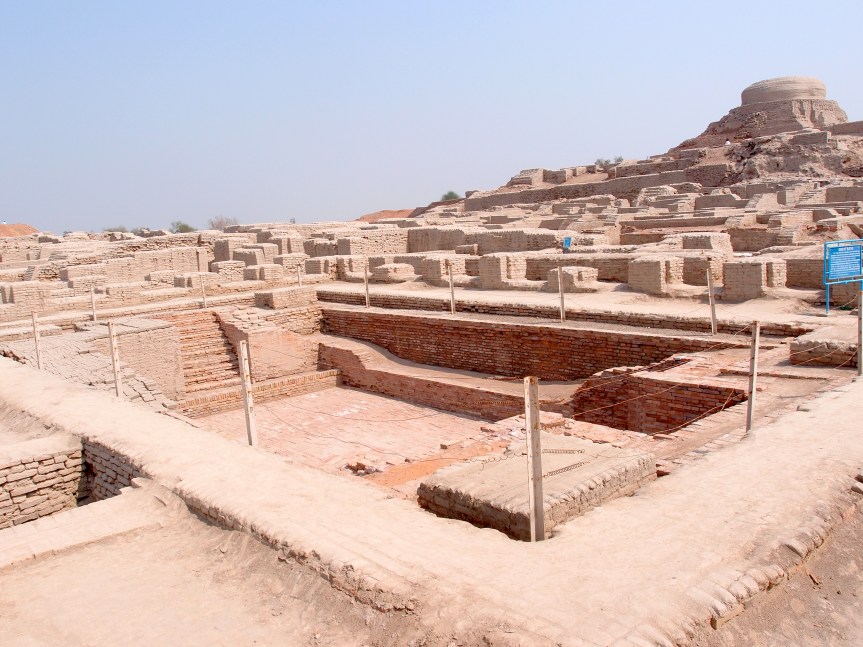
Mohenjo-daro is thought to have been underlying the twenty-6th century BCE; it became not just the biggest city of the Indus Valley Civilization however one of the world’s soonest major metropolitan communities. Found west of the Indus River in the Larkana District, Mohenjo-daro was quite possibly the most modern urban areas of the period, with cutting edge designing and metropolitan arranging.

Archeological remaining parts at the lower town of Lothal. The blocks are uniform in size and are dark earthy colored shaded. They are in a field of dead grass and are lined by low-lying green trees and bushes.

Archeological remaining parts at the lower town of Lothal. The blocks are uniform in size and are dark earthy colored hued. They are in a field of dead grass and are lined by low-lying green trees and bushes.

Archeological remaining parts at the lower town of Lothal, showing uniform fire-prepared blocks. Fire-prepared blocks will hold up to dampness, making them fit to building showers and sewers. Picture kindness Wikimedia Commons.

Harappa was a braced city in cutting edge Pakistan that is accepted to have been home to upwards of 23,500 inhabitants living in etched houses with level rooftops made of red sand and mud. The city spread more than 150 hectares—370 sections of land—and had sustained managerial and strict focuses of a similar sort utilized in Mohenjo-daro.

The two urban communities had comparative association and included strongholds, focal regions in a city that were vigorously sustained—ensured with protective military designs. Moreover, the two urban communities were arranged along the Indus River. This construction would have permitted those at the more significant levels of the structures in one or the other city to peer down the waterway and see into the distance.

The remaining parts of the Indus Valley Civilization urban communities show wonderful association; there were very much arranged wastewater seepage and garbage assortment frameworks and perhaps even open showers and silos, which are storage facilities for grain. Most city-inhabitants were craftsmans and shippers gathered in particular areas. The nature of metropolitan arranging proposes effective city governments that set a high need on cleanliness or strict custom.

Harappans exhibited progressed design with dockyards, silos, stockrooms, block stages, and defensive dividers. These huge dividers probably shielded the Harappans from floods and may have stopped military struggles. In contrast to Mesopotamia and Ancient Egypt, the occupants of the Indus Valley Civilization didn’t construct enormous, great designs. There is no convincing proof of royal residences or sanctuaries—or even of rulers, armed forces, or ministers—and the biggest designs might be storage facilities. The city of Mohenjo-daro contains the Great Bath, which may have been a huge, public washing and social region.

Colonialism

Expansionism or colonialism is an act of control, which includes the oppression of one individuals to another. One of the troubles in characterizing expansionism is that it is difficult to recognize it from colonialism. Every now and again the two ideas are treated as equivalent words. Like expansionism, colonialism additionally includes political and monetary power over a reliant domain. The historical underpinnings of the two terms, nonetheless, gives a few insights about how they vary. The term state comes from the Latin word colonus, which means rancher. This root helps us that the training to remember expansionism typically elaborate the exchange of populace to another region, where the appearances lived as perpetual pilgrims while keeping up with political loyalty to their nation of beginning. Colonialism, then again, comes from the Latin expression imperium, which means to order. Hence, the term dominion causes to notice the way that one nation practices control over another, regardless of whether through settlement, sway, or backhanded instruments of control.

The authenticity of expansionism has been a longstanding worry for political and moral savants in the Western custom. Essentially since the Crusades and the success of the Americas, political scholars have battled with the trouble of accommodating thoughts regarding equity and regular law with the act of European power over non-Western people groups. In the nineteenth century, the strain between liberal idea and pilgrim practice turned out to be especially intense, as territory of Europe over the remainder of the world arrived at its pinnacle. Amusingly, in similar period when most political rationalists started to guard the standards of universalism and correspondence, similar people actually safeguarded the authenticity of expansionism and dominion. One method of accommodating those obviously gone against standards was the contention known as the “edifying mission,” which recommended that a transitory time of political reliance or tutelage was important all together for “uncouth” social orders to progress to where they were fit for supporting liberal organizations and self-government.

The objective of this section is to break down the connection between Western political hypothesis and the task of imperialism. Subsequent to giving a more exhaustive conversation of the idea of imperialism, this passage will clarify how European masterminds advocated, legitimized, and tested political control. The third area centers around radicalism and the fourth segment momentarily talks about the Marxist custom, including Marx’s own safeguard of British expansionism in India and Lenin’s enemy of colonialist compositions. The fifth segment gives a prologue to contemporary “post-pilgrim hypothesis.” This methodology has been especially powerful in scholarly investigations since it causes to notice the different ways that postcolonial subjectivities are established and opposed through digressive practices. The last segment will present an Indigenous scrutinize of pioneer expansionism that arises both as a reaction to frontier practices of mastery and dispossession of land, customs and customary history and to post-pilgrim hypotheses of universalism. The objective of the passage is to give an outline of the tremendous and complex writing that investigates the hypothetical issues arising out of the experience of European colonization.

Expansionism is anything but a cutting edge wonder. World history is loaded with instances of one society slowly extending by consolidating a nearby area and settling its kin on recently vanquished region. The old Greeks set up settlements as did the Romans, the Moors, and the Ottomans, to give some examples of the most renowned models. Imperialism, then, at that point, isn’t confined to a particular time or spot. In any case, in the sixteenth century, expansionism changed unequivocally due to mechanical advancements in route that started to interface more far off pieces of the world. Quick cruising ships made it conceivable to arrive at far off ports and to support close ties between the middle and settlements. Hence, the advanced European frontier project arose when it became conceivable to get huge quantities of individuals across the sea and to keep up with political sway despite topographical scattering. This passage utilizes the term expansionism to depict the cycle of European settlement and political authority over the remainder of the world, including the Americas, Australia, and portions of Africa and Asia.

The trouble of characterizing expansionism originates from the way that the term is regularly utilized as an equivalent for government. Both expansionism and dominion were types of triumph that were relied upon to profit Europe financially and deliberately. The term imperialism is much of the time used to portray the settlement of North America, Australia, New Zealand, Algeria, and Brazil, puts that were constrained by an enormous populace of lasting European occupants. The term colonialism regularly portrays cases in which an unfamiliar government manages a domain without huge settlement; common models remember the scramble for Africa for the late nineteenth century and the American mastery of the Philippines and Puerto Rico. The qualification between the two, nonetheless, isn’t altogether reliable in the writing. A few researchers recognize states for settlement and provinces for monetary misuse. Others utilize the term expansionism to depict conditions that are straightforwardly represented by an unfamiliar country and difference this with colonialism, which includes backhanded types of mastery.

The disarray about the significance of the term government mirrors the way that the idea has changed after some time. Albeit the English word government was not ordinarily utilized before the nineteenth century, Elizabethans previously portrayed the United Kingdom as “the British Empire.” As Britain obtained abroad conditions, the idea of realm was utilized all the more as often as possible. Colonialism was perceived as an arrangement of military mastery and sway over regions. The everyday work of government may be practiced in a roundabout way through nearby congregations or native rulers who offered recognition, yet sway rested with the British. The shift away from this customary comprehension of realm was impacted by the Leninist examination of colonialism as a framework situated towards monetary abuse. As per Lenin, dominion was the essential and inescapable aftereffect of the rationale of collection in late private enterprise. Along these lines, for Lenin and resulting Marxists, government depicted a recorded phase of private enterprise instead of a trans-authentic act of political and military mastery. The enduring effect of the Marxist methodology is clear in contemporary discussions about American government, a term which generally implies American financial authority, whether or not such force is practiced straightforwardly or in a roundabout way (Young 2001).

Given the trouble of reliably recognizing the two terms, this passage will utilize imperialism as an expansive idea that alludes to the venture of European political control from the sixteenth to the 20th hundreds of years that finished with the public freedom developments of the 1960s. Post-imperialism will be utilized to portray the political and hypothetical battles of social orders that accomplished the change from political reliance to sway. This passage will utilize government as an expansive term that alludes to financial, military, political mastery that is accomplished without critical lasting European settlement.

  1. Normal Law and the Age of Discovery

The Spanish success of the Americas started a philosophical, political, and moral discussion about the utilization of military power to secure authority over unfamiliar terrains. This discussion occurred inside the system of a strict talk that legitimized military victory as an approach to work with the transformation and salvation of native people groups. The possibility of a “edifying mission” was in no way, shape or form the creation of the British in the nineteenth century. The Spanish conquistadores and pilgrims expressly defended their exercises in the Americas as far as a strict mission to carry Christianity to the local people groups. The Crusades gave the underlying stimulus to fostering a legitimate precept that supported the victory and ownership of unbeliever lands. While the Crusades were at first outlined as guarded conflicts to recover Christian grounds that had been vanquished by non-Christians, the subsequent hypothetical developments assumed a significant part in resulting endeavors to legitimize the success of the Americas. The center case was that the “Petrine order” to really focus on the spirits of Christ’s human run required Papal purview over fleeting just as profound issue, and this control stretched out to non-devotees just as adherents.

The transformation of the local people groups, be that as it may, didn’t give an unproblematic defense to the undertaking of abroad triumph. The Spanish success of the Americas was occurring during a time of change when humanist researchers inside the Church were progressively impacted by the regular law hypotheses of scholars like St. Thomas Aquinas. As per Pope Innocent IV, war couldn’t be pursued against heathens and they couldn’t be denied of their property essentially in light of their non-conviction. Affected by Thomism, Innocent IV presumed that power was real just in situations where unbelievers disregarded regular law. Nonbelievers had real domain over themselves and their property, however this territory was repealed in the event that they demonstrated unequipped for administering themselves as per rules that each sensible individual would perceive