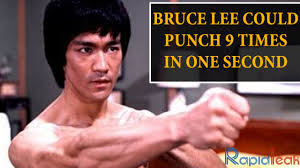
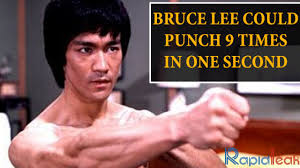
A Great Martial Artist ‘Bruce Lee’.

Born – Lee Jun-fan, November 27, 1940 ,San Francisco, California, U.S.

Died – July 20, 1973 ,(aged 32)Kowloon Tong,British Hong Kong.

Cause of death – Cerebral edema ,Resting place Lake View Cemetery, Seattle, Washington, U.S.

Other names – Bruce Lee Siu-Lung, Lee Yuen-cham, Lee Yuen-kam.

Citizenship – United StatesBritish Hong Kong

Occupation – Martial artist,philosopher, actor, director, screenwriter, producer.

Spouse(s) – Linda Emery ​(m. 1964).

About Bruce Lee:

Bruce Lee, the very name breathes enthusiasm and life euphoria in the minds of thousands of action movie lovers. When we talk about action movies today, particularly in the martial arts genre, it is impossible to forget, that Bruce Lee was the one who began it all with movies like The Big Boss (1971), Fist of Fury (1972), Way of the Dragon (1972), Enter the Dragon (1973) and The Game of Death (1978). Gone were the days when action movie lovers would be pleased with the gun fight of Clint Eastwood or the epic chariot races of Charlton Heston. Kung Fu had made its entrance in the world of entertainment, courtesy the silver screen. Bruce Lee was born on 27 November 1940. His father, Lee Hoi Chuen, was Chinese and his Catholic mother, Grace Ho, was of three-quarter Chinese and a quarter German ancestry. Lee and his parents went from the US to Hong Kong when he was three months old. Lee’s father was one of the leading Cantonese opera and film actors at the time.

At the age of thirteen, Bruce Lee took Kung Fu lessons with Yip Man. Having learnt the basics from his father, Bruce showed keen interest in the art and a year later, in 1955, had private training with the man who would later become the President of the Australian Federation of Kung Fu, William Cheung. At this time, the martial artist, Wong Shun Leung, who was consistently involved with dangerous and brutal competitions, had Bruce Lee privately train with him. Both Wong Shun Leune and William Cheung were students of Yip Man in his school at the same time as young Bruce Lee. Despite the advantages of his family’s high social status during his youth in Hong Kong, the neighbourhood where Bruce grew up was dangerous and full of gang rivalry. Bruce Lee evolved in these conditions as a dangerous street fighter. No wonder then that at the high school level at St Francis Xavier’s College in Kowloon, Lee was part of the school boxing team in inter-school tournaments.
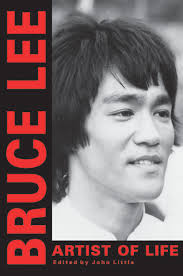
Through his father, Bruce was introduced into films, and by the time he was 18, he had acted in 20 films. While in the United States from 1959 to 1964, Lee abandoned thoughts of a film career in favour of pursuing a career in martial arts. Destiny had different plans for him and the lightning fast moves of Bruce Lee landed him the role of Kato in the TV series The Green Hornet. This led to a host of other television serials like Iron Side (1967) and Here Come the Brides (1969). Lee’s return to Hong Kong landed him in Raymond Chow’s The Big Boss and Fist of Fury, and Lee was a big star overnight. Lee became a god of action cinema with the Warner Brothers’ production Enter the Dragon, but a cruel and inexplicable death snatched him away from his fans six days before the release of this movie.

We remember Lee today as a man who redefined action on the silver screen. We remember his high kicks, his exceptionally fast punches and the spine-chilling fight sequences. ‘Lee, pound for pound, might well have been one of the strongest men in the world, and certainly one of the quickest,’ said Chuck Norris. When a child today watches Jackie Chan or Jet Li and gets excited to throw a punch, no father fails to remind him that these are compared to the master-Bruce Lee. hing Lee has left a unique legacy in the world of sports and cinema, imitated by millions but mastered by none.

Devoted Teacher:

Lee finished high school in Edison, Washington, and subsequently enrolled as a philosophy major at the University of Washington. He also got a job teaching the Wing Chun style of martial arts that he had learned in Hong Kong to his fellow students and others. Through his teaching, Lee met Linda Emery, whom he married in 1964. By that time, Lee had opened his own martial arts school in Seattle.He and Linda soon moved to California, where Lee opened two more schools in Oakland and Los Angeles. He taught mostly a style he called Jeet Kune Do, or “The Way of the Intercepting Fist.” Lee was said to have deeply loved being an instructor and treated his students like a clan, ultimately choosing the world of cinema as a career so as not to unduly commercialize teaching.Lee and Linda also expanded their immediate family, having two children — Brandon, born in 1965, and Shannon, born in 1969.

Mysterious Death:

Most of the people said that he died under mysterious circumstances .On July 20, 1973, just one month before the premiere of Enter the Dragon, Lee died in Hong Kong, China, at the age of 32. The official cause of his sudden and utterly unexpected death was a brain edema, found in an autopsy to have been caused by a strange reaction to a prescription painkiller he was reportedly taking for a back injury. Controversy surrounded Lee’s death from the beginning, as some claimed he had been murdered. There was also the belief that he might have been cursed, a conclusion driven by Lee’s obsession with his own early death.More rumors of the so-called curse circulated in 1993, when Brandon Lee was killed under mysterious circumstances during the filming of The Crow. The 28-year-old actor was fatally shot with a gun that supposedly contained blanks but somehow had a live round lodged deep within its barrel.
THE HISTORY OF TEA

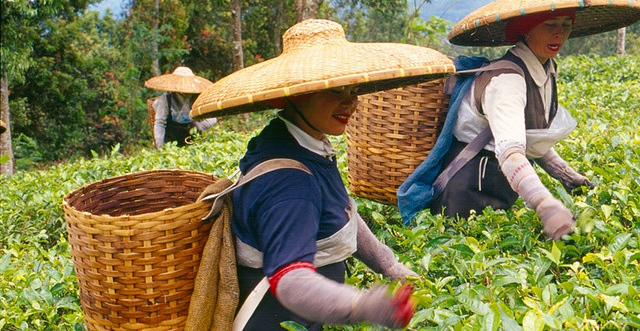
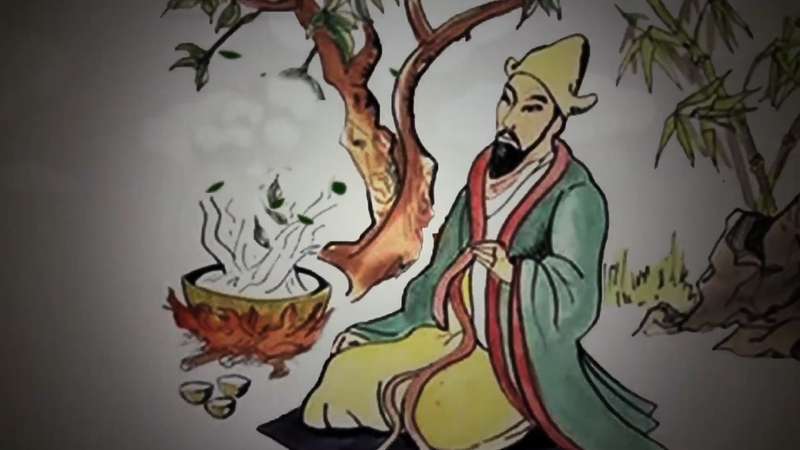
During a long day spent roaming the forest in search of edible grains and herbs, the weary(tired) divine farmer Shennong accidentally poisoned himself 72 times. But before the poisons could end his life, a leaf drifted into his mouth. He chewed on it for sometime and it started to revive him, and that is how we discovered tea. Tea doesn’t actually cure poisonings but the story of Shennong, the mythical Chinese inventor of Agriculture, highlighted Tea’s importance to ancient China.

Archaeological evidences suggests tea was first cultivated there as early as 6000 years ago, or 1500 years ago before the Pharaohs built the Great Pyramids of Giza. That original Chinese tea plant is the same type that’s grown around the world today, yet it was originally consumed very differently. It was earlier eaten as a vegetable or cooked with grain porridge. Tea only shifted from food to drink, 1500 years ago when people realized that a combination of heat and moisture could create a complex and varied taste out of the leafy green. After hundreds of years of variations to the preparation methods, the standard became into heat tea packaged into portable cakes, grinded into powder, mixed with hot water and created a beverage called “muo cha, or matcha”. Matcha became so popular that a distinct Chinese tea culture emerged. Tea became the subject of books and poetry, the favorite drink of emperors and medium for artists. They would draw extravagant pictures in the foam of the tea, very much like the “espresso art” seen in the different coffee shops today.

In the 9th century during the Tang Dynasty, a Japanese Monk brought the first tea plant to Japan. The Japanese eventually developed their own unique rituals around tea, leading to the creation of the Japanese tea ceremony. In the 14th century during the Ming Dynasty, the Chinese emperor shifted the standard from tea pressed into cakes to loose leaf tea. At that point, China still held a virtual monopoly on the world’s tea trees, making tea one of the three essential Chinese export goods, along with Porcelain and silk. This gave China a great deal of power and economic influence as tea drinking spread around the world.

That spread began in earnest around the early 1600s when Dutch Traders brought Tea to Europe in large quantities. Many credits Queen Catherine of Braganza, a Portuguese noble woman, for making tea popular with the English Aristocracy when she married King Charles II in 1661. At the time, Great Britain was in the midst of expanding it’s colonial influence and becoming the new dominant world power, and as the Great Britain grew, interest in tea spread around the world. By 1700, tea in Europe sold for ten times the price of coffee and the plant was still only grown in China. The tea trade was so lucrative that the World’s fastest sailboat, the Clipper ship, was born out of the intense competition between Western trading Companies. All were racing to bring their tea back to Europe first to maximize their profits. At first, Britain paid for all this Chinese tea with silver. When that proved too expensive, they suggested trading tea for another substance, opium. This triggered a public health problem within China as people became addicted to the drug. Then in 1839, a Chinese official ordered his men to destroy massive British Shipments of opium as a statement against Britain’s influence over China. This act triggered the first opium war between the two nations.

World Nature Conservative Day

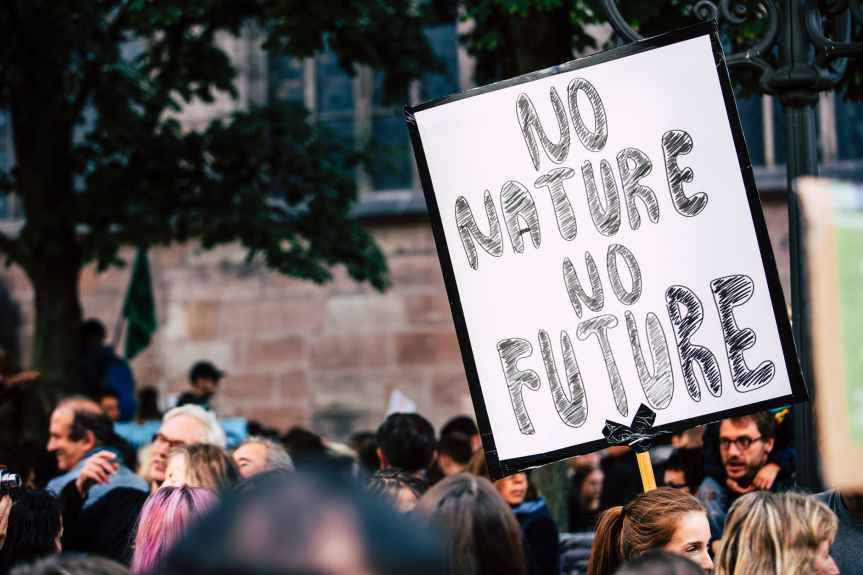
Conservation of nature is basically conservation of resources such as wind, water, sunlight, land, vegetation, animal life and minerals. We get all these resources by nature without any human intervention. These resources are further employed to create various things that make the lives of humans as well as other creatures present on Earth comfortable.

Natural resources have been mainly classified into renewable resources and non-renewable resources. Renewable resources are those that can be naturally regenerated. It includes air, water and sunlight. The emphasis is generally on the use of renewable resources rather than nonrenewable resources as nonrenewable resources are depleting rapidly and are difficult to compensate.

Photo by Artem Podrez on Pexels.com

Conservation of nature is an issue that needs to be taken seriously. Governments of various countries are using many methods to conserve resources, in the same way people should also come forward to contribute in this direction. There are some ways through which the common man can help in the preservation of nature. Those methods include planting trees, limiting paper usage, preventing wastage of water and electricity, stopping animal poaching, and employing rainwater reuse systems. It is not difficult to put the above measures into practice in a planned way. If each of us gave our meaningful contribution for the protection of nature, then whatever benefits it would bring would be truly tremendous for mankind.

Nature has provided us numerous gifts such as air, water, land, sunlight, minerals, plants, and animals. All these gifts of nature make our earth a place worth living. Existence on Earth would not be possible without any of these. Now, while these natural resources are present on Earth in plenty. Unfortunately, the necessity of most of these has increased extremely over the centuries due to growth in the human population.

What is Conservation of Nature?Conservation of nature means the preservation of forests, land, water bodies, and minerals, fuels, natural gases, etc. And to make sure that all these continue to be available in abundance. Thus all these natural resources make life worth living on Earth. Life would not be imaginable without air, water, sunlight as well as other natural resources present on the earth.Thus, it is essential to conserve these resources in order to retain the environment integral. Here is a look at the types of natural resources existing on Earth and the ways to conserve these:Types of Natural Resources:Renewable Resources:

These are resources such as air, water, and sunlight that refill naturally.Non-Renewable Resources: These are resources like fossil fuels and minerals that do not restock reform very slowly.Biotic: These originate from living beings and organic material like plants and animals.Abiotic: These come from non-living things and non-organic material. These comprise air, water, and land as well as metals like iron, copper, and silver.Natural resources are also categories such as actual resources, reserve resources, stock resources and potential resources based on their development stage.

How to Conserve Nature and Its Resources?Many of the natural resources are being used at a faster rate as compared to their speed of production. There is so a necessity for conservation of nature and the natural resources it offers. Here are some of the ways in which these resources can be conserved:Reduce Water ConsumptionWater is available in abundance on Earth. This is one of the reasons people do not consider much before using it. However, if we keep using it at this speed. In the future, we may not be left with as much of it. Therefore, simple things such as turn off the tap while brushing or reuse the leftover water to water the plants can help in this direction.Reduce Usage of ElectricityUse only as much energy as you require. It is thus advised to limit the usage of electricity. Simple habits such as turning off the lights before parting your room, turn off the electric appliances after use. Switching to energy-saving fluorescent or LED bulbs can make a change.

Restrict Usage of PaperPaper manufacturing depends only on trees. Increasing the use of paper means encouraging deforestation. This is one of the key reasons for concern is in today’s time Always ensure you use only as much paper as necessary. Stop taking print outs and use e-copies instead to do your bit.Use Newer Agricultural MethodsThe government must aware the methods such as mixed cropping, crop rotation. Also, the government should teach the minimum use of pesticides, insecticides. Appropriate use of manures, bio-fertilizers, and organic fertilizers to the farmers.Spread AwarenessSpreading awareness about the conservation of nature is always a necessary step. It can be achieved only when more and more people understand its importance and the ways in which they can help. Besides this, it is essential to plant more and more tress. It is necessary to contribute towards lowering air pollution. We must use shared transport and employing rainwater harvesting systems to conserve nature.ConclusionNature comprises of everything that surrounds us.

The trees, forests, rivers, rivulets, soil, air all are the part of nature. Keeping nature and its resources integral. So, it is very important for the continuation of life on earth. It would be difficult to imagine life on earth, which has a spoiled natural environment.Therefore, taking appropriate steps to conserve nature in its untouched form. It must be a priority for the human race. Only human beings with their power and ability can save nature in its purest forms.

MY VISIT TO “REPLICA OF AMARNATH”,TIMMERSAIN MAHADEV CAVE, UTTRAKHAND

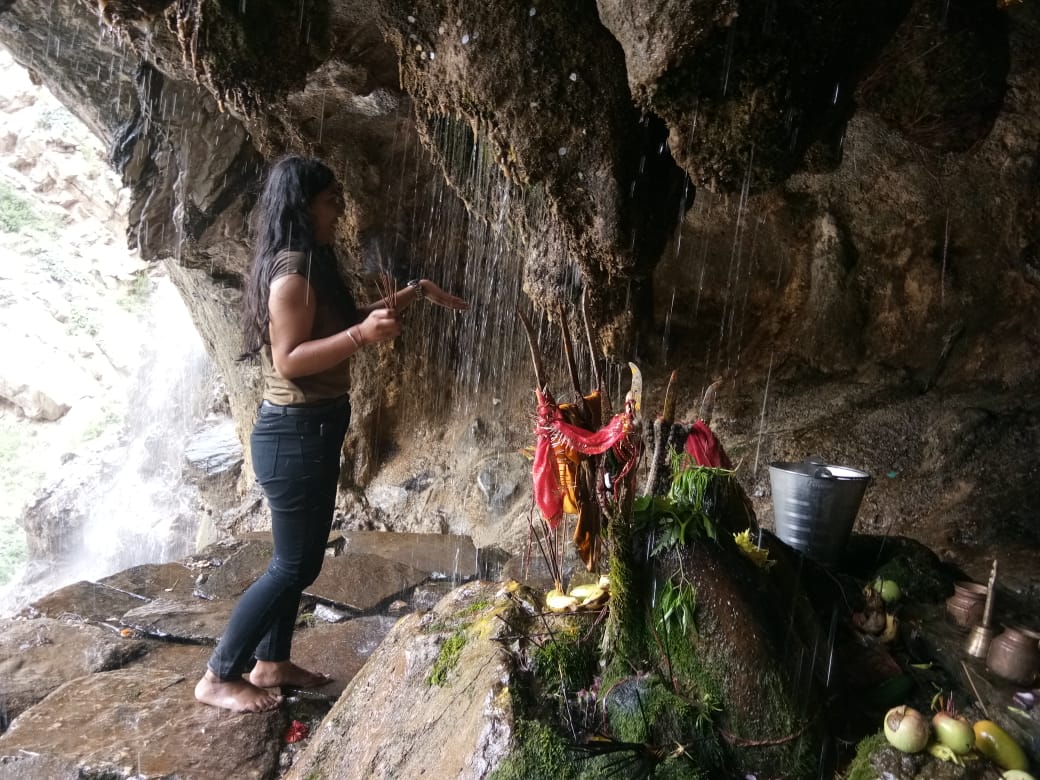
Me at Timmersain Mahadev , replica of Amarnath cave.

Uttarakhand , also known as “DEV BHUMI” or “the land of gods” is famous for its temples famous all around the world . yesterday only I visited a place which is attracting tourists a lot these days , that place is TIMMERSAIN MAHADEV CAVE Timmersain Mahadev is a cave of lord Shiva which is situated in Niti village of Chamoli district of Uttarakhand. Cave is famous as the replica of Amarnath shrine of Jammu and Kashmir. Because of it’s a natural Shivaling of snow, this place is getting popularity day by day. On the lines of Baba Amarnath Yatra, pilgrims are now travelling to Timmersain Mahadev in the Niti Valley of Chamoli district in Uttarakhand. 

Tourism Minister, Shri Satpal Maharaj said “A Shivaling is present inside the caves in Timmersain, which is located about a km before the last village in the Niti Valley of Joshimath block. The Shivaling is always anointed with the water dripping from the hills. While melting, the ice takes the shape of the Shivaling every year which is known as Barfani Baba or Timmersain Mahadev. Baba Barfani sits as a self-proclaimed Shivaling in Timmersain. Every year a Shivaling of more than 10 feet is formed here in winters. It is believed that Lord Shiva stayed at this place during Kailash Yatra. Therefore, this place is famous by the name of Sausa Mahadev. The devotees can now visit the restricted area of Niti Valley without any permission, and they can easily visit Timmersain Mahadev. 

A part from the temple , there is this beautiful valley that is “NITI VALLEY “Niti is a small village located in the Niti valley of Joshimath. Niti is the last village and outpost in Indo-Tibetan border in Chamoli district. At an height of 3600 meters, Niti is situated near southern Tibetan border. The Niti Pass located at 5800 meters connects India with Tibet. During winters, Niti village and valley is covered with heavy snow. The villagers of Niti still follow the traditional methods of lifestyle in the mountains.

You will be amazed to know that Niti village inhabitants move to lower Himalayas in the valley & resides I the alternative village because there is heavy snowfall & no one can live at that place for 6 months from November to April. After these 6 months Niti Village is again filled with inhabitants.

There are some other villages near Niti such as Gamshali, Bampa, Kailashpur, Malari, Kosha , Raini , Timmersain Mahadev, & Tapovan. The disaster which shivered the whole valley of Tapovan & Raini village on 8th of February , come in the way to Timmersain Mahadev cave .

Government of Uttarakhand is trying to get permission to open this valley for tourist & make this a famous tourist place . This place will help Uttarakhand gain employment & tourists at a very high range as Jammu & Kashmir is getting . This is my initiative to make you all know about this place , & my personal advice to you all is , you must come & visit this holy place & see Mahadev in the form of slow Shivaling.

Major World Religions

Religions exist in all parts of the world, in different forms. Religion is prominent worldwide because it gives answers to the age-old questions of where humans came from, what is our place in this world, and where do we go after we die. Religions are systems of belief that have developed in response to these and other eternal mysteries. Hence, they were formed as a way to explain humanity’s unanswerable questions and comfort us with the fact that there is some higher power(s) acting as the controlling force in the universe. With time, many new religions have developed in the world, each giving their own explanations and defining their own gods/principles. Obviously, it is impossible to know which religion is accurate, or whether any religion is accurate at all. However, it is important to understand the various religions we have in the world, as they provide meaning and purpose to many individuals. Here is a brief look at some of the major world religions.

Hinduism

It is the major religion of India, but is also present in other parts of the world. There are a variety of beliefs and spiritual practices in Hinduism, which is why it is sometimes referred to as a ‘way of life’ as opposed to a single organized religion. There is a pantheon of gods in Hinduism, and different people may worship different deities. Hindus believe in the doctrines of samsara (the continuous cycle of life, death, and reincarnation) and karma (the universal law of cause and effect). One of the key thoughts of Hinduism is atman, or the belief in a soul. This philosophy holds that living creatures have a soul, and they are all part of the supreme soul (paramatman). The goal is to achieve moksha, or salvation, which ends the cycle of rebirths to become part of the absolute soul. Furthermore, Hindus strive to follow dharma, which is a code of living that emphasizes good conduct and morality.

Judaism

Judaism is the world’s oldest monotheistic religion, dating back nearly 4,000 years. It is most commonly practiced in the USA and Israel. Unlike Hinduism, followers of Judaism believe in only one God who communicates to believers through prophets. The Jewish sacred text is called the Tanakh or the Hebrew Bible, and Talmud is a collection of teachings and commentaries on Jewish law and principles. Jewish people worship in holy places known as synagogues, and their spiritual leaders are called rabbis. The six-pointed Star of David is the symbol of Judaism.

Buddhism

Buddhism is a religion that was founded by Siddhartha Gautama (the Buddha) more than 2,500 years ago in India. Its practice has historically been most prominent in East and Southeast Asia, but its influence is growing in the West. Followers of Buddhism do not acknowledge a supreme god or deity. Instead, they focus on achieving enlightenment, which is a state of inner peace and wisdom. When followers reach this spiritual echelon, they are deemed to have experienced nirvana. The path to enlightenment is attained by following morality, meditation and wisdom. Buddha’s most important teachings, known as The Four Noble Truths, are essential to understanding this religion.

Christianity

Christianity is the most widely practiced religion in the world. The Christian faith centers on beliefs regarding the birth, life, death and resurrection of Jesus Christ. This is also a monotheistic religion. Christians believe there is only one God, and he created the heavens and the earth. This divine Godhead consists of three parts: the father (God himself), the son (Jesus Christ) and the Holy Spirit. The Holy Bible includes Jesus’s and his disciples’ most important teachings, and offer instructions for how Christians should live. The cross is the main symbol of Christianity, representing the crucifixion of Jesus Christ and how he died as a sacrifice for everyone’s sins.

Islam

Islam is the second largest religion in the world after Christianity, with about 1.8 billion Muslims worldwide. Muslims are also monotheistic and worship only one, all-knowing god known as Allah. Islam teaches that Allah’s words first reached the people in Mecca, through the divine messenger known as prophet Muhammad. Muslims live a life of complete submission to Allah, and believe that all that happens in life is god’s will. The Quran is the major holy text of Islam, and Mosques are the places of worship for Muslims. Followers worship Allah by praying and reciting the Quran. They believe there will be a day of judgment, and life after death.

Conclusion

The religions mentioned here are only some of the most popular ones in the world. In fact, there are hundreds of religions with different beliefs and practices. Religion has been an aspect of culture for as long as it has existed, and its main purpose is to provide a person with insight into life and give them some meaning. A person can choose to follow whichever religion fulfils his spiritual needs and gives him something meaningful to believe in.

Indian Independence Act of 1947

On February 20 1947, the British Prime Minister Clement Attlee declared that the British rule in India would end by June 30 1948 after which the power would be transferred to responsible Indian hands. This announcement was followed by the agitation by the Muslim League demanding partition of the country. Again on June 3rd 1947 the British government made it clear that any constitution framed by the constituent assembly of India cannot be applied to those parts of the country which were unwilling to accept it, on the same day Lord Mountbatten the viceroy of India put forth the partition plan known as the Mountbatten plan. The plan was accepted by the Congress and the Muslim League. Immediate effect was given to the plan by enacting the Indian Independence Act 1947.

Features of this act were as follows:

It ended the British rule in India and declared India as an independent and Sovereign state from August 15 1947.

It provided for the partition of India and creation of two independent Dominions of India and Pakistan with the right to secede from the British Commonwealth.

It abolished the office of Viceroy and provided for either dominion a governor general who was to be appointed by the British King on the advice of the Dominion cabinet. His Majesty’s government in Britain was to have no responsibility with respect to the Government of India and Pakistan.

It empowered the constituent assembly of the two dominions to frame and adopt any constitution for the respective nations and repeal any act of the British Parliament including the Independence Act itself.

It empowered the constituent assembly of both the Dominions to legislate for their respective territory till the new Constitution was drafted and enforced. No act of the British Parliament passed after August 15 1947 was to extend to either of the dominions unless it was extended thereto by a law of the Legislature of the Dominion.

It abolished the office of the Secretary of State for India and transferred his functions to the secretary of state for Commonwealth affairs.

It proclaimed the lapse of the British paramountcy over the Indian princely states and the Treaty relations with the tribal areas from August 15 1947.

It granted freedom to the Indian princely states to join the Dominion of India or dominion of Pakistan or to remain independent.

It provided for the Governance of each of the dominance and the provinces by the government of India Act of 1935 till the new Constitution was framed. The dominions were  however authorised to make modifications in the Act.

It deprived the British monarch of his right to veto bills or ask for reservation of certain bills for his approval. But this right was reserved for the Governor-General. The governor-general would have full power to assent to any bill in the name of His Majesty.

It designated the governor general of India and the provincial governors as constitutional heads of states; they were made to act on the advice of the respective Council of Ministers in all matters.

It dropped the title of Emperor of India from the Royal titles of the king of England.

It discontinued the appointment to the civil services and reservation of posts by the secretary of state for India

The members of the civil services appointed before August 15 ,1947 would continue to enjoy all the benefits they were entitled to till that time.

At the stroke of midnight of 14-15 August 1947 the British rule came to an end and the power was transferred to the two new independent dominions of India and Pakistan. Lord Mountbatten became the first Governor General of the new Dominion of India, he swore in Jawaharlal Nehru as the first Prime Minister of independent India. The Constituent assembly of India formed in 1946 in became the parliament of the Indian Dominion.

Biography: Guru Nanak

Guru Nanak was the founder of the religion of Sikhism and the first of the ten Sikh Gurus. He was born on 15th April,1469 into a Bedi (Khastriya) family in a Muslim village of Rai Bhoi Di Talwandi, now called Nankana sahib near Lahore. His father was Mehta Kalyan Das Bedi, popularly shortened to Kalu Mehta and his mother was Tripta Devi. At the age of 5 he voiced his interest in divine subjects. At the age of 7 he was enrolled at the village school. He followed her elder sister to Sultanpur to live with her and her husband Daulat khan at the age of 16 years. He was married to Mata sulakhniat about 19 years of age. At the age of 30 he had a vision and disappeared from the village. After three days he reappeared and spoke about god’s path-“ There is neither Hindu nor musalman’ so whose path shall I follow? I shall follow god’s path.” He said that he had been taken to god’s court. There he was offered a cup filled with Amrit(nectar) and given the command- “ This is the cup of the adoration of god’s name. Drink it….I have bestowed the gift of my name upon you. Let this be your calling. “He made four major journeys-first, towards Bengal and assam, second, towards Tamil Nadu, third, towards Kashmir, Ladakh and Tibet, and the final tour towards Bagdad, mecca and medina on the Arabian peninsula. At Mecca, Guru Nanak was found sleeping with his feet towards the Kaaba Mosque. Kazi Rukan-ud-din observed this and angrily objected this and angrily objected. Guru Nanak said,” please turn my feet in a  direction where there is no house of god.” The Kazi understand the meaning that “god is everywhere” and was struck with wonder. Guru Nanak preached “god is the doer and without god there is no other.” He advised his followers to practice his teachings in three ways:

  • Naam Japna: Chanting the Holy name,
  • Kirat Karo: Earning a living honestly,
  • Vand Chakko: Helping those with less who are in need.
  • Guru Nanak expired on 22 September,1539 in Kartarpur at the age of 69.

ARE WE REALLY ENJOYING OUR WORK?

Work is worship for those who take work seriously and it should be so because your work reflects your personality to some extent and how we do it is also part and parcel of our identity. Here in, comes the real trouble because when you do the work you enjoy, you try to put in your heart and mind into it but, if you are unfortunate enough to be doing the kind of work that you are not proud of, then surely enough it shows in your outcome.

Money, being the prime factor in today’s world and so, when your sole priority is to mint money, then it hardly matters whether you are an engineer or an interior designer. You would try to impress upon the authorities in your field with the sole objective of prosperity in your field. For this, you may go to any extent of unethical attempts, without even thinking about its aftermath.

Mental tension and stress and the related health hazards are all part and parcel of today’ s changing world. Today’s young generation is the first generation of professionals who are earning, four times more than what their parents have earned and so they have a lot of money at their disposal, which is making them spend more All this was possible only because of India’s changing economic condition and the advent of multinational companies with huge capital investment and infrastructure.

In fact, the call centre culture has also changed our lives for the worst, since lifestyle patterns are changing drastically. Initially, youngsters seem to be enjoying the western influence of working like asses on five days and reserving the weekends for parties and celebrations. And to get those two days of relief, they are ready to slog whether they like their job or not. It henceforth, becomes a mechanical slogging where, you are not concerned, whether your mind is at work but it’s just about the finished product that they look forward to. On the whole, we cannot rule out the fact that there are people, who are fortunate enough to bag the job they desire or those who have ultimately landed in those fields, where they have wanted to be. Such people are really lucky in the sense that they do their work with the utmost dedication and they have a fulfilment in life, even if they are not taking home fat salaries like their counter-parts, but don’t have any satisfaction to boost of.

There is a third side to all this and that is trying to derive meaning in whatever meaningless things we are doing to make both ends meet. So even if, one is in a job that is detested by him, he can still work towards generating a positive attitude to one’s Work. Try and enjoy, what one is doing and thus try to attain a sense of satisfaction, that he supposes, he could have otherwise got.

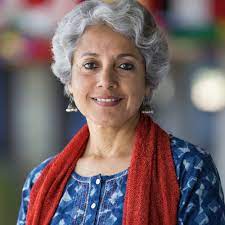
SOUMYA SWAMINATHAN!!!

In this highly competitive world, everyone is trying to prove themselves in their areas of interest. Like men, now women are also pursuing their dream wilfully. They are the most competitive persons when compared to men. This doesn’t mean that men are incapable. Just that women are firm and strong enough to prove themselves. You may have a thought why am I talking about women too much? There is definitely a reason. Yeah! Today, I am going to share with you about an Indian Woman who marked her identity in WHO. I think you may have guesses or you should have found who she is? I think, your guess is correct. It’s our Soumya Swaminathan.

Dr. Soumya Swaminathan

Everyone know about the “Father of Green Revolution of India”, Dr. M.S. Swaminathan, right? Soumya Swaminathan was the daughter of Dr. M.S. Swaminathan. She was born on 2nd May 1959 at Kumbakonam, Chennai, Tamil Nadu. Her full name is Soumya Swaminathan Yadav. Her mother, Mina Swaminathan, was an Indian Educationalist. Soumya has two siblings namely Madhura Swaminathan and Nithya Swaminathan. She was married to Ajit Yadav who was an orthopedic surgeon.

Dr. Soumya Swaminathan with her parents and two siblings

Now, let’s see about Dr. Soumya Swaminathan’s educational qualifications and her academic achievements.

  • She received her M.B.B.S degree from the Armed Forces Medical College, Pune.
  • She completed her M.D. in AIIMS, New Delhi.
  • She got her Diplomate of National Board from National Board of Examinations.
  • She completed her Ph.D., in neonatalogy and pediatric pulmonology.

Let’s see about her Career achievements.

  • In 1989, she was a Research Scholar in the Department of Pediatric Respiratory Diseases in United Kingdom till,1991.
  • She also worked as a Senior Research Registar, at Cardiopulmonary Medicine Unit in New Jersey.
  • In 1992, she joined National Institute for Research in Tuberculosis, as a coordinator and later she became it’s Director.
  • From 2009 to 2011, She worked as the Coordinator of WHO/UNICEF/UNDP, for a research and training on Tropical diseases in Geneva.
  • She was the Director of ICMR and Secretory of the Ministry of Health and Family Welfare, in India from August 2015 to November 2017.
  • From 2017 to March 2019, Dr. Soumya Swaminathan was the Deputy Director-General of WHO.
  • In 2019, she has become the Chief Scientist of WHO in research about the SARAS CoV-2 and worked hard in this pandemic getting detailed reports from all the countries. And she conducted interview once in two week to make us know the exact situation of the covid.
Gross inequity in vaccine access hurting; China way ahead, says WHO's Dr  Soumya Swaminathan - The Financial Express

Let me tell you some of the awards won by her. In 2008, She received Kshanika Oration Award from ICMR. In 2011, she was given an Lifetime Achievement award by the Indian Association of Applied Microbiologists. In 2016, She received Research Endowment Award from NIPER and ASTRAZENECA.

I am inspired so much by Dr. Soumya Swaminathan. Yes, now I have the spark to achieve something big in my career and want to reach heights like her. What about you? I hope you too have your own dreams. Give your full effort and just do it. She had proven herself and made her Father proud. Let’s be like her and make our parents proud. Her achievements show us, how capable women are!! How strong!! Okay, Come on! Women, have confidence in yourself that you can do anything and everything! If you can’t, who can!! Let’s make our India proud.

Some Reference Links;

2010 v/s 2020

We no longer smile at people

It has been ages since I last smiled at an unknown stranger when our eyes met. Social media, news, movies, has made us so uptight and alert that our natural reflex has shifted from smiling to suspecting them.

We no longer enjoy food as we did

Snapchat and Instagram have made people forget the value of here and now. Instead of being happily in the present moment, we are often more focused on portraying a happy life which may be far from the reality. The satisfaction of the first sip of the morning tea or the first bite of the domino’s pizza doesn’t feel the same as it did a decade ago. The first thought that we have when we see a delicious food now is to click a perfect picture to show other’s how wonderful our life is.

We no longer see Bollywood as we did before

A decade back movie stars were famous for their work and that was enough in itself. Acting was seen as a profession and a job. However, the current Bollywood seems more like a political party than a show business. It is not the work but the lives of the celebrities that we are most interested in. Political leaders are supposed to have opinions and that is what is to be taken seriously by the people. However, now it is the opinions of our favourite celebrities that we are more into.

We no longer have real meaningful bond

The friendship and relationship trends have changed since the last decade. There were more meaningful bonds between link minded people who were true to one another (even behind their back). However, now the long evening chai meets have turned to Starbucks coffee meets. Where though we are physically together, but mentally and emotionally far into two different worlds in our mobile phones.

MEANING OF LEARNING

Why Learning Experience Matters | Litmos Blog

Generally people think that learning through practice is to make someone better than what he/she was earlier . To think so is not complete appropriate . However, it cannot be denied that there is an improvement as a result of learning . But it can lead towards unwanted or undesired changes . A child who plays football, may also learn wrong technique . Indeed , learning has a detailed explanation . The process of learning begins from the birth and continues throughout life. That is why it is said that learning takes place from womb to tomb. Learning means to adjust or adapt oneself according to the situation . There is a change in the behaviour of an individual after learning and he changes himself according to situations . The various psychologists have defined learning in different ways. However, they reach approximately at the same point . There are following definitions of learning by some eminent psychologists.

  • According to Guilford, ”We may define the term very broadly in saying that learning is any change in behaviour resulting from behaviour.”
  • According to R.S. Woodworth and D.G. Marquis, Learning consists in doing something new provided, this something new to be retained by the individual and reappears in his later activities.’
  • According to G. Murphy , ‘‘From this point of view it would be legitimate to regard learning as modification both of behaviour and of the way of perceiving.”
  • According to Whitkar, ”Learning may be defined as the process by which behaviour originates or is altered through training or experience.”

On the basis of the above-mentioned definitions, the following conclusions can be drawn :

  • Learning is adaptation and adjustment .
  • Learning is a continuous process.
  • Learning is universal.
  • Learning is a change in behaviour.
  • Learning is improvement and development .
  • Learning is a new organisation of experiences.
  • Learning is purposive and goal directed.

INDEPENDENCE

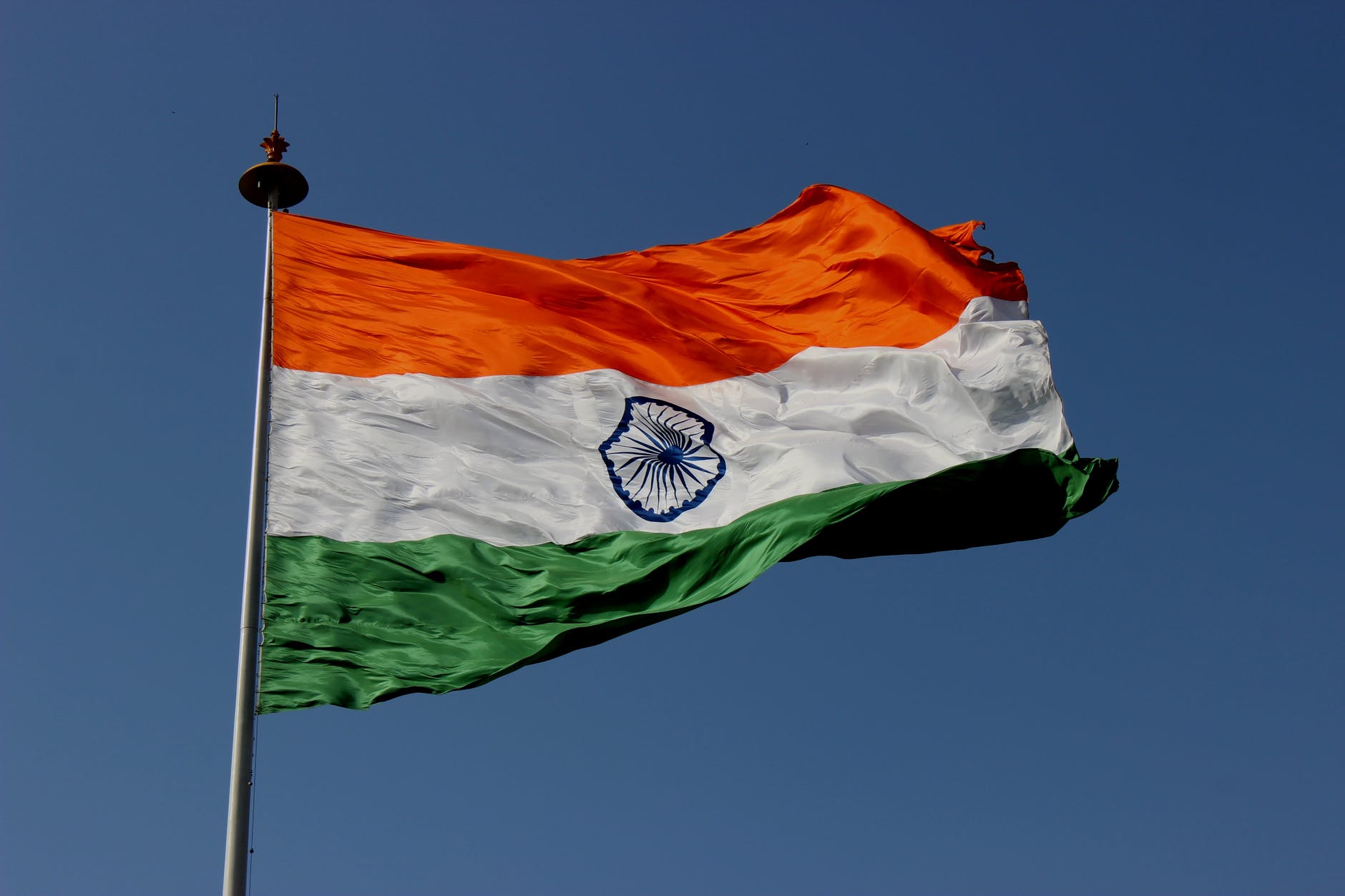
We remember the day with the sacrifices of our brave Indian freedom fighters. When India got independent, our first Prime Minister, Pandit Jawaharlal Nehru Unfurled, our tricolor national flag at Red Fort and Lahori Gate in Delhi. From that day and onward, this day celebrated as an independent day. The honor of the day’s solemn occasion, many programs dedicated at Red fort-like march past by our Indian soldiers, 21 gunshots are fired for the beginning of events and cultural activities by school students. Kite flying has also done as the tradition of Independence Day celebration, with kites of various sizes, shapes, and colors filling in the sky. Later on, from the year 1974, all the chief minister of respective State unfurled the National flag. We soonly update Paragraph on Independence day in hindi and Bengali.

Another contemporary relevance of the independence day as Anniversary of the partition of the subcontinent into countries, India and Pakistan. Our country is recognized as the largest democracy in the world. On this day, the Indian Independence Act 1947 was passed by the UK Parliament, which transferred legislative sovereignty to the Indian nation.

Photo by Alok Uniyal on Pexels.com

One of the most memorable days in Indian history is 15th August. It’s the day on which the Indian sub-continent got independence after a long struggle. India only has three national festivals that are celebrated by the whole nation as one. One being the Independence Day (15th August) and the other two being Republic Day (26th January) and Gandhi Jayanti (2nd October). After independence, India became the largest democracy in the world. We fought very hard to get our independence from the Britishers. In this essay on Independence Day, we are going to discuss the history and importance of Independence Day.

History of Our Independence DayFor almost two centuries the Britishers ruled over us. And the citizen of the country suffered a lot due to these oppressors. British officials treat us like slaves until we manage to fight back against them.We struggled for our independence but work tirelessly and selflessly under the guidance of our leaders Jawahar Lal Nehru, Subhash Chandra Bose, Mahatma Gandhi, Chandra Shekhar Azad, and Bhagat Singh. Some of these leaders choose the path of violence while some choose non-violence. But the ultimate aim of these was to drive out the Britishers from the country. And on 15th August 1947, the long-awaited dream come true.Why We Celebrate Independence Day?To relive the moment and to enjoy the spirit of freedom and independence we celebrate Independence Day. Another reason is to remember the sacrifices and lives we have lost in this struggle. Besides, we celebrated it to remind us that this freedom that we enjoy is earned the hard way.Apart from that, the celebration wakes up the patriot inside us. Along with celebration, the young generation is acquainted with the struggles of the people who lived at that time.

Activities on Independence Day

Although it’s a national holiday the people of the country celebrate it with great enthusiasm. Schools, offices, societies, and colleges celebrate this day by organizing various small and big events.

Every year at Red Fort the Prime Minister of India host the national flag. In the honor of the occasion, 21 gunshots are fired. This is the begging of the main event. This event is later on followed by an army parade.The school and colleges organize cultural events, fancy dress competitions, speech, debate, and quiz competition.Importance of Independence DayEvery Indian holds a different viewpoint about Indian Independence. For some, it’s a reminder of the long struggle while for youngsters it stands for the glory and honor of the country. Above all, we can see the feeling of patriotism across the country.The Indian’s celebrate Independence Day with a feeling of nationalism and patriotism across the country. On this day every citizen echoes with festive feeling and pride in the diversity and unity of the people. It’s not only a celebration of Independence but also of the unity in diversity of the country.

Supernatural Creatures

Supernatural creatures are not explainable by the laws of nature. They have abilities which are superhuman. Abilities like magic, levitation, mind control, extra sensory perceptions.
They have been mentioned in various forklore and mythological books and contexts. It states that humans believe in a superior power, good and bad. We can know more about these supernatural creatures from various movies and tv shows like the vampire diaries, lucifer, twilight, conjuring, supernaturals, etc. But they have showed some creatures like hybrids (vampire and werewolf) , and heretics (vampires with magical powers) which are not mentioned in any mythological history and are fictional.
Although there is no proof that they still exist but some paranormalists believe that ghosts and spirits do exist.
Some supernatural creatures and phenomenons :
1. Deity – They are the believed to be god, a supreme power. They are worshipped by people.
2. Angels – They are said to be the intermediataries between god and earth. They protect the children of god.
3. Prophecy – They are said to be the ones who completes God’s task on earth.
4. Revelation – When god or the good spirit appreas in form of visions or dreams.
5. Reincarnation – When the supernatural starts living inside the bodies of others.
6. Spirits – They are ghosts or angels.
7. Demon – A bad entity as said in religious history.
8.  Witchcraft – Practice of magical powers in a person.
9.  Miracles – Events which are not explainable by nature or scientific laws.
10. Banshee – Female spirit who’s whining amd crying is fatel.
11. Elf – Legendary beings who are mysterious and small.
12. Devil – Evil subordinates or bad spirits who harm humans.
13. Dwarf – Small creatures with magical powers.
14. Fairies –  Who are human like with magical powers and seem to keep others happy.
15. Genie – Creature who fulfils his master’s wishes.
16. Ghost – Spirit of a dead person who haunts people.
17. Giant – A mythical creature of superhuman size.
18. Golem – Artificially created human being by supernaturals.
19. Guarding angel – Who protects a person.
20. Imp – A small creature
21. Leprechaun – A small creature who is mysterious and troublesome.
22. Pixie – A fairy or elf.
23. Vampires – Human like creatures who cannot stand sunlight and drink human blood to survive.
24. Werewolf- A human like creature who turns into a wolf on certain specific occasions.
25. Wraith- A supermatural spirit who reanimates a dead body
26. Sirens – The legend of Greek mythology states that the monstrous women would sing enticing songs and lure sailors to their doom to eat them.
27. Basilisk – A serpentine creature who, much like the Gorgons of Greek myth, can kill with one look.
28. Phoenix – The golden bird who, at the end of its life, burst into flames only to be reborn again.
29. Cyclopes – The one-eyed giant who captured and ate people.
30. Centaurs – With the top half of a human and the full body of a horse.
31. Goblin –  a small grotesque supernatural creature, regarded as malevolent towards human beings.
32. Troll – one of a class of supernatural creatures that dwell in caves or mountains and are depicted either as dwarfs or as giants.

Nikola Tesla

Serbian-American engineer and physicist Nikola Tesla (1856-1943) made dozens of breakthroughs in the production, transmission and application of electric power. He invented the first alternating current (AC) motor and developed AC generation and transmission technology. Though he was famous and respected, he was never able to translate his copious inventions into long-term financial success—unlike his early employer and chief rival, Thomas Edison.

Nikola Tesla and Thomas Edison

Tesla arrived in New York in 1884 and was hired as an engineer at Thomas Edison’s Manhattan headquarters. He worked there for a year, impressing Edison with his diligence and ingenuity. At one point Edison told Tesla he would pay $50,000 for an improved design for his DC dynamos. After months of experimentation, Tesla presented a solution and asked for the money. Edison demurred, saying, “Tesla, you don’t understand our American humor.” Tesla quit soon after.

Nikola Tesla and Westinghouse

After an unsuccessful attempt to start his own Tesla Electric Light Company and a stint digging ditches for $2 a day, Tesla found backers to support his research into alternating current. In 1887 and 1888 he was granted more than 30 patents for his inventions and invited to address the American Institute of Electrical Engineers on his work. His lecture caught the attention of George Westinghouse, the inventor who had launched the first AC power system near Boston and was Edison’s major competitor in the “Battle of the Currents.”

Westinghouse hired Tesla, licensed the patents for his AC motor and gave him his own lab. In 1890 Edison arranged for a convicted New York murderer to be put to death in an AC-powered electric chair—a stunt designed to show how dangerous the Westinghouse standard could be.

Buoyed by Westinghouse’s royalties, Tesla struck out on his own again. But Westinghouse was soon forced by his backers to renegotiate their contract, with Tesla relinquishing his royalty rights.

In the 1890s Tesla invented electric oscillators, meters, improved lights and the high-voltage transformer known as the Tesla coil. He also experimented with X-rays, gave short-range demonstrations of radio communication two years before Guglielmo Marconi and piloted a radio-controlled boat around a pool in Madison Square Garden. Together, Tesla and Westinghouse lit the 1891 World’s Columbian Exposition in Chicago and partnered with General Electric to install AC generators at Niagara Falls, creating the first modern power station.

See the World through books!

As the current pandemic has got us all confined in our house, a lot of dreams of travelling around the world has been crushed. So instead, how about I take you on a world tour via books!

However, this book tour will happen over a series of 7-8 days, so pack up your luggage accordingly. 

This tour begins with the largest continent – Asia. 

( PLEASE NOTE THAT THESE ARE SOME OF THE MANY COUNTRIES IN ASIA, THOSE THAT ARE MISSING WILL HAVE THEIR OWN PART IN THE NEXT BLOG OR SO AND THIS BLOG HAS NO PREJUDICE AGAINST ANY COUNTRY OR COUNTRIES.) 

Afghanistan

  • 1) Born under a million shadow – Andrea Busfield.
  • 2) A Thousand Splendid Suns – Khaled Hosseini.
  • 3) The places in between – Rory Stewart.
  • 4) A Thousand Rooms of Dreams and Fear – Atiq Rahimi.
  • 5) The Patience Stone – Atiq Rahimi.

Armenia 

  • 1) Passage to Ararat – Michael J. Arlen.
  • 2) The Sandcastle Girls – Chris Bohjalian.
  • 3) Armenian Golgotha – Grigoris Balakian.

Azerbaijan 

  • 1) Mirror of the Invisible World: Tales from the Khamseh of Nizami.

Bahrain  

  • 1) City of Strangers – Andrew Gardner.

Bangladesh

  •  1) A Golden Age – Tahmima Anam
  • 2) The Black Coat- Neamat Imam
  • 3) Banished! – Han Dong

Bhutan

  • 1) Buttertea at sunrise – Britta Das
  • 2) The Kingdom at the centre of the world: Journeys into Bhutan – Omair Ahmad
  • 3) The Circle of Karma – Kunzang Choden.

China

  • 1) Soul mountain – Gao Xingjian.
  • 2) The April 3rd Incident – Yu Hua.
  • 3) The Art of War – Sun Tzu.

India

  •  1) The God of Small things – Arundhati Roy.
  • 2) The White Tiger – Aravind Adiga.
  • 3) The Inheritance of Loss – Kiran Desai.
  • 4) A Suitable boy – Vikram Seth.
  • 5) Midnight’s Children – Salman Rushdie.
  • 6) A Fine Balance – Rohinton Mistry.
  • 7) Sea of Poppies – Amitav Ghosh.

Indonesia

  • 1) This Earth of Mankind – Pramoedya Ananta Toer.
  • 2) Man Tiger: A Novel – Eka Kurniawan.
  • 3) Durga/Umayi -Yusuf Bliyarta Mangunwijaya.

Japan

  • 1) Norwegian wood – Haruki Murakami.
  • 2) Convenience store women – Sayaka Murata. 
  • 3)Kafka on the shore – Haruki Murakami. 
  • 4) Strange Weather in Tokyo – Hirami Kawakami. 
  • 5) The Memory Police – Yöko Ogawa.
  • 6) Killing Commendatore – Haruki Murakami.
  • 7) Manazuru – Hiromi Kawakami.

South Korea

  • 1) Kim Ji-young, Born 1982 – Cho Nam-ju.
  • 2) The Vegetarian – Han Kang.
  • 3) Human Acts: A Novel – Han Kang.
  • 4) The White book – Han Kang.
  • 5) The Hen Who Dreamed She Could Fly – Sun-mi Hwang.
  • 6) If I Had Your Face – Frances Cha.
  • 7)Pachinko – Min Jin Lee.

Thailand

  • 1) Sightseeing – Rattawut Lapcharoensap.
  • 2) Four Reigns – Kukrit Pramoj.
  • 3) Bangkok wakes to Rain – Pitchaya Sudbanthad.

Pakistan

  • 1) Train to Pakistan – Khushwant Singh.
  • 2) The Wandering Falcon – Jamil Ahmad.

Saudi Arabia

  • 1) Girls of Riyadh – Rajaa Alsanea.

Myanmar

  • 1) The Glass Palace – Amitav Ghosh.

Iran

  • 1) The Man who snapped his fingers: Fariba Hachtroudi.

(PLEASE NOTE, THAT ABOVE MENTIONED BOOKS ARE JUST SOME OF THE MANY BOOKS THAT ARE EITHER PUBLISHED BY OR WRITTEN ABOUT THAT COUNTRY.)