*The Presence of the U.S. Military Troops in Afghanistan
*The Challenges of Remote Education
*Arctic Pole Environmental Situation
* Global Pandemic & Vaccination
* Travel Restrictions
1.Poverty and Homelessness:-
Poverty and homelessness are worldwide problems. According to Habitat for Humanity, one-quarter of the world’s population lives in conditions that harm their health and safety. Many do not have shelter, a basic human need for survival.
This social issue also goes beyond the 25% of the population directly affected. Because of the lack of shelter for this vulnerable population, there is greater stress on government and social programs, including schools and healthcare systems.
2. Climate Change:-
A warmer, changing climate is a threat to the entire world. Climate change affects the entire world population, and the Union of Concerned Scientists calls this social issue “one of the most devastating problems humanity has ever faced.”
The 800 million people already living in extreme poverty will be impacted most severely. Around the world, people are already noticing warmer winters, more severe storms and rainfall events, and more frequent wildfires. These issues already put stress on governments and systems in many countries.
3. Overpopulation:-
As the population of the world grows, resources become scarcer. The United Nations reports that the current population of 7.7 billion people is expected to grow in coming decades, with a projection of 8.5 billion people by 2030.
The fastest growing areas of the world, such as sub-Saharan Africa, often face already scarce resources like land for farming. As the population becomes more than the country can sustain, people will need to move elsewhere to avoid starvation and homelessness.
4. Immigration Stresses:-
People move from one country to another, and in itself, this isn’t a social problem. However, immigration can place stress on government programs and social systems within a country, and it can be a divisive topic in a society. These immigration-related stresses affect many people.
For instance, the Pew Research Center reports that the United States has more immigrants than any other country; 13.6% of the U.S. population identifies as an immigrant. This is a divisive issue in the U.S. population, with some groups calling for stricter immigration laws. Although the majority of U.S. citizens welcome immigrants, a 2019 Gallup poll indicates 23% of people think immigration is the most important social issue facing the country.
5. Civil Rights and Racial Discrimination:-
Civil rights, or the rights of citizens in a country to have equal treatment socially and politically, is another one of the most significant social issues in America and around the world. More than 40 years after the Civil Rights Act passed, almost 60% of African Americans still live in segregated neighborhoods and 90% of African Americans report that racial discrimination is still a major problem.
6. Gender Inequality:-
A report from the Pew Research Center Fact Tank indicates that about 50% of Americans feel the country needs to do more to address the income gap between men and women. Women still lag behind men in wages and top leadership positions held, although they are now more likely to attain a college degree.
Worldwide, the situation is even more extreme. UNICEF reports that 12 million girls are married before they reach adulthood, and 98 million high school-aged girls do not attend school.
7. Health Care Availability:-
When people are sick or hurt, they need access to medical care to get better. According to the Centers for Disease Control and Prevention (CDC), almost one in 20 U.S. citizens do not obtain needed medical care because of the cost. Worldwide, 97 million people become impoverished by seeking needed medical care, as reported by the World Health Organization (WHO). Governments around the world are working on this problem, as are nonprofit organizations.
8. Childhood Obesity:-
However, the childhood obesity epidemic doesn’t affect all children equally. Children in families where the parents have more education and higher incomes are far less likely to be obese than those in families with less education and lower incomes.
9. Bullying:-
Obesity can also have an impact on another important social issue: bullying. The PACER National Bullying Prevention Center indicates that obesity and other appearance issues are among the top reasons children report being bullied.
Despite recent anti-bullying initiatives, more than 20% of American students report being bullied. A third of those being bullied report that it happens at least once or twice each month. Additionally, 24% of middle school students report they have been victims of cyberbullying, or bullying conducted online.
10. Poor Leadership:-
Many of the social problems in society are connected in subtle ways, but all social problems are connected to the leadership of countries, corporations, and other groups. An ongoing Gallup poll asks Americans to rate the most important problems and social issues facing the country. By far, the most significant issue was poor leadership; 28% of respondents list it as the number one problem.
11. Fixing Common Social Issues:-
Although many Americans feel their leaders are the biggest problem they face, governments, corporations, and communities are working to fix some of the top social issues. These are just a few of the actions they are taking:
Schools are implementing anti-bullying programs, which the PACER National Bullying Preventions Center says can decrease bullying by up to 25%.
Community efforts to help reduce childhood obesity include adding salad bars to school lunches, focusing on physical fitness, and adding obesity prevention initiatives to hospitals.
The U.S. enacted the Affordable Care Act (ACA) to begin addressing the challenges in health care availability, and it remains an important political issue.
The European Union is on track to meet its goals for reducing carbon emissions and helping mitigate the effects of climate change. Other countries are also working hard to make progress.
12. Raise Awareness Through Education:-
Discussing social issues can be contentious, but it’s also an important part of making progress on these problems facing society. Community and classroom activities involving social issues can help raise awareness for these topics. Writing about social issues can also help expand people’s understanding of these important challenges.
13. Covid-19 & Global Pandemic:-
Without a doubt, almost every sector of modern life has been affected by the global pandemic restrictions and the rules of social distancing. Even though several countries of the world seem to return to normal life, the matters of logistics and global trading are still vague. As an example of social topics dealing with this issue, you may consider writing about how the Covid-19 crisis has affected a particular company or the entire industry.
14. The Black Lives Matter Social Movement:-
It is hard to find anything that has marked the last two years in terms of social importance. The Black Lives Matter movement has captured the entire world because the issues of racial prejudice are relevant as ever. In terms of possible topics, you can compare the BLM movement with the student protests in the 1970s or the Montgomery Bus Station protest.
15. Green Energy Conversion:-
This social issue is mostly related to environmental problems, yet the global conferences in 2021 are dedicated to finding safe ways to convert all available energy to safe methods. You may consider writing about the latest innovations to the solar energy sector and talk about wind turbines if you are majoring in Electrical Engineering. At the same time, you can consider writing about school education and the importance of educating the youngsters about our environment.
16. The Presence of the U.S. Military Troops in Afghanistan:-
It is a sensitive social issue in the United States as President Biden has announced about the troops leaving Afghanistan in 2021. This social topic is s quite important as it is not only a political issue but also a matter of national security.
17. The Challenges of Remote Education:-
As we are making it through yet another year of distance learning with Skype and Zoom solutions for video conferences, the challenges of modern learning are evident. Consider writing about how the student habits and attitudes have changed in 2021 and think about what pros and cons of this issue you can explore.
18. Arctic Pole Environmental Situation:-
The Arctic Pole Ice Shield is the social issue that became apparent in 2021 as explorers and scientists from all fields of science started to reveal updated information. Regardless of your college course, you can approach this social issue through the prism of environmental protection, political bias, economics, marketing, and even the logistics that are also present in this sector.
19. Global Pandemic & Vaccination:-
The subject of vaccination might be among the most discussed social issues today, yet it does not make it to the lists of immediate issues because of the political games at play. For example, you can write about unequal distributions of vaccines to certain countries and the ways how politics manipulate this sensitive matter.
20. Travel Restrictions:-
As the warm times are coming closer, the majority of people think about traveling. Even if you are not up for the times of leisure, you may consider some business travels. The list of restrictions is changing all the time, which makes it a relevant social issue in 2021. You can consider writing about new safety regulations and the ways how the Covid-19 has affected our travel routines and rules.
Privatisation refers to the process by which the government transfers the productive activity from the public sector to the private sector. It is basically the transfer of ownership from the central government to the private sector. A vast majority of economies have been supporting privatisation and have launched massive privatisation programmes during the last two-three decades ago. The supporters believe that privatisation and disinvestment has many advantages. The first and foremost being improvement in efficiency and performance. Since private sector is profit oriented, the decision making is inclined more towards efficiency. Moreover, privatisation establishes a market for managers which improves the quality of management. Here fixing responsibility is much easier. Public enterprises cannot be held responsible for any lapse i their responsibilities but this is not the case with private sector. That is way the performance of private sector is better. Decision making is faster in private sector in comparison to public sector. Delayed decision making is often equivalent to making no decision at all. The problem of red tapism which is present in public sector is absent in the private sector. In the contemporary businesses environment, it has become important to take spot decisions without wasting time. Remedial measures are also taken early in private sector. Because private sector faces threats of takeover, liquidation, loss of assets etc., the likelihood of taking remedial measures in advance is very common which is not quite often observed in the public sector. The succession is well planned out in private sector. The public sector enterprises however, remain headless for long periods of time. This causes confusion and delayed decision making. Such a situation does not exist in private sector. Privatisation leads to better customer service. This is due to the fact that the survival of a private sector enterprise depends on customer satisfaction, since it is the satisfaction that insures repeated buying and profit generation. For creating sustained markets for themselves, the quality of services offered by private sectors for their customers are quite good. The critiques have however, criticised privatisation and disinvestment on the following grounds. There has been undervaluation of assets. The performance on disinvestment front has been dismal. The main reason for this is the fact that disinvestment was carried out in a hasty, unplanned and hesitant way. It was launched without a required condition of its take off. Adequate efforts were not made for the much needed linkage between public enterprise and capital market. Considerable under pricing of public enterprises shares results in considerable loss to the government. Critiques argue that privatisation leads to unemployment. Supporters call it marginal retrenchment of labour but still, the future employment scenario for labour is a cause of worry. Having low productivity jobs in public sector is a better alternative to unemployment as the later does not increase a nation’s income definitely does not increase welfare of workers. Privatisation of PSUs is more risky. Since private sector is more interested in profit generation, critiques argue they won’t worry much about local labours and the costs would be borne by customers.
(Sample information about bank for project assignment .)
Introduction :-
Chamber’s Twentieth Century Dictionary defines a bank as an ” institution of keeping , lending and exchanging etc. of money .”
Banks play an important role in financial stability and the economy of a country. It is a financial institution that accepts deposits from the public and creates a demand deposit while simultaneously making loans.
The word has it’s origin from Old High Germanic origin banc, banke meaning “bench, counter”. Though some people trace its origin from the French word “Banque “.and the Italian word ‘Banca.
History of banking :-
The First stage of banking system :-
It was a merchant banker who first established the system of banking by trading commodities rather than money . Their trading activities required the remittances of money from one place to another ,for this they issued “ hundis“( letter of transfer ) to remit the funds . In India such merchant bankers were known as “Seths “ Although , before 1640 the practice of self saving and self keeping were found in the temple of Babylon .
The Second stage :-
The next to merchant bankers in the establishment of the banking system were goldsmiths . The goldsmith started charging something for taking care of money and bullion . He started issuing receipts as evidence for receiving valuables . He started lending gold and silver as there were no marks of the owner . Goldsmith receipts became like cheques as a medium of exchange and a means of payment.
The Third stage :-
Next to the goldsmith were moneylenders to strengthen the growth of the banking system.The moneylenders became the bankers who started performing the two functions of modern banking ,that is accepting deposits and advancing loans .
The first bank called the ‘Bank of Venice ‘ was established in Venice , Italy I’m 1157 to finance the monarch in his wars . But modern banking began with the English goldsmith’s after 1640 . The first bank in India was the ‘Bank of Hindustan ‘ started in 1770 by Alexander& Company; an English agency house in Calcutta . But the first bank in the modern sense was established in the Bengal Presidency as the Bank of Bengal in 1806.
Definition :-
Many Economists have defined banks highlighting its various functions .
According to Crowther , ” The banker’s business is to take the debts of other people to offer his own in exchange ,and thereby create money “.
Kent defines a bank as ” an organ whose principal operations are concerned with the accommodation of the temporarily idle money of the general public for the purpose of advancing to others for expenditures “
Sayers define bank as ,” Ordinary banking business consists of changing cash for bank deposits and bank deposits for cash ; transferring bank deposits from one person or cooperation ( one ‘depositor ‘) to another ; giving bank deposits in exchange for bills of exchange , government bonds , the secured or unsecured promises of businessmen to repay etc. ” .
Cairn Cross stated bank as , “ Bank is a financial intermediary institution which deals in loans and advances”.
In words of P.A. Samuelson , “ Bank provides service to its clients and in turn receives perquisites in different forms. ”
Indian Company Law 1936 defines Bank as “ a banking company which receives deposits through current account or any other forms and allows withdrawal through cheques or promissory notes “.
Thus , a bank is an institution which accepts deposits from the public and in turn advances loans by creating credit . It is different from other financial institutions as other institutions do not create credit .
Types of Bank :-
Banks can be classified on the basis of :- functions , consumer , structure , ownership and organisation .
The above flow chart shows various classification of banks .
Functions of bank :-
Bank as an institution of keeping , changing , lending and creating money , performs various functions all together .
Functions of bank are divided into two categories :-
1:Primary functions.
2:Secondary Functions
Primary Functions of Bank :-
Primary function of bank include major two functions :-
A:-. Accepting of deposits B:- Advancing loans .
A:- Accepting deposits :-
This is the oldest function of a bank. While banking was developing into an institution bankers used to charge a commission for keeping the money in its custody . Accepting of Deposit is considered to be the fundamental function of a bank . The bank accepts the deposit by the public , guaranteeing safety and interest .
Banks accept different types of deposits from the public . These deposits can be divided as the following :-
1: Saving Deposits :-
Saving deposit is a deposit on which the bank pays small interest to the depositors who are usually small savers . The process of opening the account for saving deposits can be said as a plain sailing process . It can be opened in a single name or in joint names. The depositors just need to maintain minimum balance . This type of deposit is suitable for small savers and wage earners .Such deposit encourages saving habits among the public. The rate of interest is low and there is no restriction on the number and amount of withdrawals.
2:Fixed Deposits:
Fixed deposits are mainly for savers who do not need money for stipulated periods from 6 months to longer periods ranging up to 10 years or more. Money is deposited for a fixed tenure . Bankers pay higher rates of interest on such deposits and the rate increases with the length of the time period of the fixed deposit But there is always a limit of the interest rate which can be paid . There is no withdrawal money allowed during the maturity period . In case depositors withdraw before maturity, banks levy a penalty for premature withdrawal.
3:Current Deposits:
Businesses keep deposits in their current account . They can withdraw any amount standing to their credit in current deposit by cheques without notice . These deposits act as a short term loan to meet urgent needs. The bank does not pay interest on such accounts but charges a high-interest rate along with the charges for overdraft facility on a nominal sum for services rendered to its customers.
4:Recurring Deposits:
This type of deposit is mainly made by salaried paid persons or traders . Certain amount of money is deposited in the bank at a regular interval. Money can be withdrawn only after the expiry of a certain period. A higher rate of interest is paid on the deposit .
B:- Advancing Loans.
Another of the primary functions of a bank is to advance loans to its customers .A bank earns profit and carries on its business by lending a certain percentage of cash lying in deposits at a higher interest rate than it pays on such deposits. Bank offers the following types of Loans and Advances:-
1: Cash Credits:
The bank advances loans to businessmen or individuals against certain specified securities .i.e against mortgage of certain property tangible assets or guarantees. It is a short term loan facility up to a specific limit . Cash credit can be given to any type of account holder as well as to those who do not have an account with a bank. The amount of the loan is credited to the current account of the borrower . Interest is charged on the amount withdrawn . The borrower can withdraw cash through cheques according to his requirements.
2:.Call Loans :-
These are very short term loans advanced to bill brokers for not more than fifteen days . They are advanced against first class bills or securities . Such loans can be reduced at very short notice .
3: Bank Overdraft:
A bank often permits to draw cheques for a sum greater than the balance lying in his current account . This is done by providing the overdraft facility up to a specific amount . This facility is for current account holders. The interest for overdraft is paid only on the borrowed amount for the period .An overdraft facility is granted against collateral security.
4: Discounting the Bill of Exchange:
It is a type of short term loan, where the bank provides money to the creditor holding a bill of exchange by discounting the bill of exchange . The bank gets the payment on maturity of the bill from the drawee or acceptor of the bill .
Secondary Functions of Bank:-
Secondary functions of the bank have the same level of importance as the primary function. The secondary functions are also classified into two parts:
A:- Agency functions B :- Utility Functions
A:- Agency Functions of Bank
The bank provides various Agency services to its customers . Banks are considered as agents for their customers . Various Agency services of bank include :-
• Transfer of Funds that include mobilising of funds from one branch/place to another .
• Collection and Payment :- of dividend, salary , pension , rents , electricity bills , bills of exchange , the money of the cheques through the clearing section of the customer’s.
• Bank also buys and sells the shares and debentures of the clients and debits or credits the account. This is known as portfolio management.
• Bank acts as an income tax consultant to its clients as well as acts as a trustee and executor of property and will of its customers.
(For some services the bank charges a normal fee while it renders others free of charge .)
B:- Utility Functions of Bank
• Besides other services banks also perform a number of other services . It acts like the custodian of the valuables of its customers by providing them lockers where they can keep their jewellery and valuable documents .
• It issues various forms of credit instruments such as cheques , drafts , travellers cheques etc which facilitate transactions.
• Bank also acts as a referee to clients and issues letters of credit.
• It also deals in foreign exchanges ,social welfare programmes, project reports etc.
• Banks also publish journals which provide statistical information about the money market and business trends of the economy .
Function that differs a bank to other financial institutions.
Other than the primary and secondary functions the most important function of a bank which distinguishes it with other financial institutions is the Credit Creation .
Credit creation :-
Credit creation is one of the most important functions performed by commercial banks. It separates a bank from other financial institutions . In simple terms credit creation is the expansion of deposits. A bank expands the demand deposit into multiple cash reserves as demand deposits are the principal medium of exchange.
In words of Newly ” Credit Creation refers to the power of commercial bank to expand secondary deposits either through the process of making loans or through investment in securities ”
Note :- the function of banks can be used in the sense of a commercial bank functions .
Festivals in India are celebrated in many parts of India, as India is subdivided into different Linguistic States. The local Government in each State also specifies certain festivals, in addition to Central Government festivals and holidays, depending on the local population which have elected them.
INDIA
INDIA Festivals of India
Festivals in India Festivals in India are celebrated in many parts of India, as India is subdivided into different Linguistic States. The local Government in each State also specifies certain festivals, in addition to Central Government festivals and holidays, depending on the local population which have elected them.
India is a multi-cultural country India is a multi-cultural country, and it is reflected in the Festivals of India: Festivals of India is about various social, religious, and national festivals celebrated in different parts of India. India has been rightly described as a sub-continent and of its major festivals, many are region-specific festivals too. There are many festivals which are celebrated as national festivals; while a number of them are celebrated by members of particular religious or social groups. India is a land of festivals. These Indian festivals bind all Indians together of different castes, religions, etc there is no discrimination while celebration. When there is no discrimination then it is called INDIA.
The major festivals are from religious groups as under:
Diwali or Deepawali Dussehra Raksha Bandhan Krishna Janmastami Ugadi Maha Shivaratri Ramanavami Makar Sankranti Holi Pongal Onam Bonalu Hanuman Jayanthi Vasant Panchami Thaipusam Chaitra Navratri Gangaur Festival Mahavir Jayanti Rath Yatra Mahavir Jayanti Guru Purnima Ganesh Chaturthi Maharishi Valmiki jayanti Karva Chauth Dhanteras Govardhan Puja Bhai Dooj Eid-ul-Fitr Muharram Ramzan Barawafat Milad-Un-Nabi Giaravahin Sharif Hazarat Ali’s Birthday Shab-e-Barat Jamat-Ul-Vida Id-ul-Zuha (Bakrid or Eid-Ul-Zuha) Good Friday Easter Christmas Losar Buddha Purnima Hemis Gompa Ullambana Guru Nanak’s Birthday Jayanti Guru Govind Singh’s Birthday Jayanti Guru Teg Bahadur’s Martyrdom Day BaisakhiMJNJ
And many more! But this is the power of our Indian culture we celebrate all of the festivals together and happily.
Since, this pandemic known as Covid 19 commenced, it made a huge impact to the whole world and everything went digital. And the necessity for using windows and its best features became more important. We’ll talk about Windows 10 and some of its best apps to ease up your work from home or many other experiences. There’s a wide range of apps available and it might be difficult to choose. So, whether you’re in need for a better work from home experience or beneficial productivity or some entertainment, we got you covered with some of the best apps for Windows 10 for 2021.
Spotify Music
Microsoft store on Windows 10 makes it easier for you to download this app. All the music and podcasts lovers can discover a lot here. The sync feature of this app is amazing as it can easily switch from your mobile to desktop and vice versa. Moreover, it provides a clean user interface and it has a “made for you“ playlist for your every mood. A little mood enlightenment from work requiressome good music and Spotify got it all covered.
2. Netflix
Who refuses to Netflix and chill? A break from work is necessary. And Netflix brings all your favorite shows and movies in one place. It got a huge range of your favorites with the genre of your choice. Moreover, you can choose from 3 subscription plans, skip the intros and all the videos are streaming. So, what’ s stopping you?
3. Audible Love reading books but can’t make out time to read? This app solves it all.
Audio book app is accessible anytime, anywhere. Just plug-in your earphones and explore the world of your favorite books. It’ll also improve your fluency, vocabulary, attention span and memory. And the biggest benefit, time management. So from now, listen your books.
4. Duolingo If you love languages, then this is the best place for you.
You can download this app from Microsoft store easily. Moreover, this app asks for no fee and is ad-free. It’s small lessons will help you to achieve your goals smoothly as it picks up the course from the basic level. Learn languages from the highest rated platform from the comfort of your home.
5. Google Meet Whether it’s a business meeting or online schooling, Google meet became one of the most important educational tool for workspace. More than 100 million users access this app and it’s easily available on Microsoft store. This app is secure and virus free. Moreover, it’s features like live captioning, speech to text, easy messaging, layout and screen setting and compatibility makes it beneficial and easy to use.
6. WhatsApp Desktop
Messaging has become an important feature and WhatsApp became a huge success during this pandemic.
WhatsApp desktop is easily available on Microsoft store. If you have less disc space then WhatsApp web is best for you. This app brings keyboard shortcuts for a better productivity. You can use a type in keyboard, drag, drop, copy or paste files from the sites and ease your work load. Bigger screen experience without any problem is good, isn’t it?
7. Pinterest
Need some inspiration or ideas for life? Don’t worry! This platform is for everyone- your hobbies, interests, etcetera, everything is available here. It has a five star rating on the store for a good reason, you get to the source directly and moreover it’s free of cost, you just need to sign in. So, pinning your interests or pinning interests of your choice is up to you.
Digitalization is the process of converting information in the form of text, audio, video, or any combination of all three or more into digital format. The omnipresence of computers in our daily lives had its roots in the introduction of computers in Indian workspaces in the 1990s. Since then the proliferation has increased manifold and digitalization has become an integral part of lives. Indian IT exports have been one of the major contributing factors to our GDP and this will not slow any time soon.
Digitalization has certainly made out lives much more comfortable and easier than it was a couple of decades ago. Since 2015 Indian government focused on increasing digital proliferation to even more areas. With the initiatives like digital India, numerous services have been transferred into digital platforms. This is evident with some major examples like the Driving license and Learners license services which have been fully transferred to an online platform and all the paperwork can be completed without visiting the RTO. The candidates have to select their slot and attempt the test of the stipulated date. This is reduced middlemen corruption and made the process of obtaining a driver’s license much more seamless. After the advent of the Covid pandemic, there has been an unprecedented growth in digital platforms. People who were wary or unsure of digital platforms were forced to learn and adapt due to the unavailability of non-digitalized services due to restrictions. Schools have adapted to the age of online classes. The consumption of online coaching platforms has increased. Businesses are developing infrastructure to support their digital services. Small business owners are jumping on online platforms to reach a wider range of potential clients.
But there are still many discrepancies with digital proliferation. This growth and reach of digital are not equally distributed. India still faces many problems due to its weak infrastructure and limited internet connectivity. This phenomenon which is also called ‘Digital Divide’ has to be addressed quickly. Because many rural areas don’t have the facility of good internet connectivity and many rural communities have not been able to avail many benefits of this digital revolution. Government schools in rural areas have been affected the most during the pandemic as the schools there don’t have adequate funding to facilitate online classes. Many teachers are untrained to use digital tools and many students don’t have laptops or smartphones to really take advantage of online classes. But this problem is not just limited to rural and undeveloped areas and many people whom we call urban poor also face similar problems.
Government initiatives are commendable but there needs to be more focus on the equal distribution of these digital services. There has to be a greater emphasis on how the services can be availed by the weaker economic section of the society otherwise it will only exacerbate the issue of the digital divide that we are facing right now. Despite having the second biggest internet user base second to China, only half of our population has an active internet connection. A new policy needs to be implemented at a national level so that digital services can be availed equitably by every citizen of India.
Public debt refers to the accumulation of annual budget deficits. It is basically the amount a country owes to lenders inside or outside of itself. Public debt is the sum of internal or external debt. The former refers to the public loans floated within the country while the later refers to public loans taken from other countries.
In India, public debt has increased tremendously over the years. This is mainly due to the fact that India is a developing economy the government requires massive investments in infrastructure and capital goods industries. For these purposes, they have to resort to borrowing. Development projects also involve a lot of raw materials. In the past few years the prices of petroleum products have increased significantly and so has it’s import bill in India. The exports however, have not increased in the same proportion. Consequently, the obligations of external debt has increased in India. The total public debt of India in 2016-17 has been 50.3 per cent as a proportion of GDP. The external debt has to be paid in terms of foreign currency and it’s repayment creates serious problems.
A criteria of assessing the burden of public debt should not be the amount but how the funds are actually used. If public debt is wasted is becomes a problem rather than the debt which is used productively. It has been observed that in India a vast amount of external debt has been used for maintenance imports and has not really increased productive capacity. This shows that burden of external debt is quite heavy. Internal debt however, has been used more productively. A significant amount of it has been utilized for development of industries, railways, projects, services etc. Just like the central government, the state government also faces problems of public debt. Over the years, the expenditures of state governments have increased more than the revenue they get. This is mainly because tax potential is not at its fullest. Large investments made in projects like electricity, irrigation etc. have not generated expected returns. Since the burden of public debt is so heavy, economists have come up with different strategies to tackle it. One way can be the reduction of interest rates. This is specifically for internal debt. Reducing the interest rate can bring down debt-GDP ratio. Interest rate can be reduced directly or indirectly by making debt less risky. A monetary policy which reduces risk and real interest rate can aid in doing so. Selling a part of vast real estate can also help in raising resources. Government of India hold s a vast majority of real estate especially railways which hold a large amount of land along its rail tracks. Some economists have suggested the government to sell some part of this real estate to generate necessary funds. Another way to curb public debt is to reduce public expenditure and increase revenues. Reducing public expenditure is not easy especially for India which is a developing economy. As far as rising revenues are concerned, suggestions have been made for increasing taxation. This is however, not feasible. A substitute for this can be building ways to reduce loopholes that allow tax avoidance.
Web development is a method of providing site structure and maintenance and this is work done in the background, intending to keep the site look good, running quickly, and performing well with consistent customer interactions. Web developers use various programming dialects to do this. The dialect used depends on the type of errand. Performance and the stage of their work. Online promotion skills are popular all over the world, and they are well paid, making them an excellent career choice.
This is one of the areas that are easier to open up, and the rewards are more generous because you need not have to struggle with a formal university degree to obtain qualifications. The field of web development is mainly divided into front-end(client-side) and back-end(worker-side).
Comparing Front-End and Back-End Development
The Front-End web developer is responsible for layout, design, and interaction with HTML, CSS, and JavaScript. He takes an idea from the drawing board and implements it. The content you see and use, such as the visual aspects of the website, drop-down menus, and text, is put together by a front-end developer who has written many programs to link and build elements, improve their appearance, and add interactivity. The program runs through the browser. It happened behind the scenes. This is where the data is stored. Without this data, there is no external interface.
The Back-End or the server side of the network consists of the server hosting the website, the application that starts the website, and the database where the website is located. Server-side developers use computer programs to ensure the smooth operation of servers, applications, and databases. Such developers need to analyze the company’s needs and propose effective software solutions. ng uses different server-side languages such as PHP, Ruby, Python and Java.
The Industrial applications
In larger organizations and companies, a Web development team can consist of hundreds of people (Web developers) and follow standard practices such as agile Web development. Small organizations may only need a permanent or contract developer, or assist in the allocation of appropriate positions. As a graphic designer or IT expert. Web development can be collaborative work between departments, rather than the domain of a specific department. Web developer professions are divided into three types: front-end developers, back-end developers, and full-stack developers. Responsible for the actions and images that run in the user’s browser, while the internal developers are responsible for the server.
All of this may seem difficult to understand at first glance, but you don’t need to understand all of them immediately. You will gradually increase your awareness and things will start to click. The good news is that learning to be a developer is easy to get and access. This applies in particular to Open Classrooms.
Industrial sickness refers to the situation wherein an industrial firm performs poorly, incurs losses for several years and often defaults in its debt repayment obligations. The problem of industrial sickness has grown significantly over the years in India and a large number of industrial units were affected by it.
There are various causes of industrial sickness. Firstly, an internal cause can be faults at the planning and construction stage. Faulty decisions like setting up the firm in the wrong location i.e. a location which lacks infrastructure facilities or lacks market availability cause problems in the long run. Unplanned production, unbalanced capital structure etc. are all faulty decision which makes a firm sick.
Defective plant and machinery is another reason for industrial sickness. It has been observed that small scale sector do not seek professional technical guidance in choosing machinery. At times technology adopted is outdated and inappropriate. Production with this sort of technology is bound to be inferior and likely to suffer cost and price disadvantage. An external cause of industrial sickness is demand and credit restrain. During the times of recession, there is a steep decline of demand in the market. This causes losses to individual units especially the products with high prices like automobiles. If such situation persists for long durations, then industrial units are prone to turn sick. The most important internal cause of industrial sickness is management problems. Management can make or break a firm. Incorrect managerial decisions pertaining to the fields of finance, production, marketing etc. can ruin a business. Absence of quality control systems, lack of inventory, inadequate maintenance are some examples of mismanagement. Entrepreneurial incompetence is yet another reason for industrial sickness. Many entrepreneurs in the small scale sector do not have basic knowledge of business, manufacturing, costing, accounts etc. Units set up by them often turn sick. Industrial sickness can have serious consequences. It is a set back for employment opportunities. When a firm turns sick, it can actually go out of business. Closure of an industrial firm renders its workers unemployment. This situation can be more serious if a big firm with a large number of employees gets shut down. Unemployment brings a lot of complications with itself. This can cause industrial unrest. Closure of a big firm also causes labour unrest which can result in industrial strikes which threatens the peace of industrial environment. Industrial sickness also leads to wastage of resources. When a sick firm is shut down, resources invested in that unit are wasted. In case of large firms this problem is more serious as a lot of investment is made in its plants and machinery. In fact other industries which are linked to a sick firm through backward or forward linkages, also incur some losses. Closure of large sick units also effects investors and entrepreneurs and creates a psychology of despair. The prices of share fall down and affect the entire stock market. Even banks and financial institutions which have granted loans to these units suffer losses. Locking up funds in the sick units negatively affects the future lending programmes of banks and financial institutions. Industrial sickness also results in loss of revenue of government. Since industrial sickness has such a wide range of impact, it is considered as a social problem in India.
Adam Smith was a Scottish economist and philosopher. He has become famous by his influential book The Wealth of Nations (1776). Smith was the son of the comptroller of the customs at Kirkcaldy, Fife, Scotland. The exact date of his birth is unknown. However, he was baptized at Kirkcaldy on June 5, 1723, his father having died some six months previously. At the age of about fifteen, Smith proceeded to Glasgow university, studying moral philosophy under “the never-to-be-forgotten” Francis Hutcheson (as Smith called him). In 1740 he entered Balliol college, Oxford, but as William Robert Scott has said, “the Oxford of his time gave little if any help towards what was to be his lifework,” and he relinquished his exhibition in 1746. In 1748 he began delivering public lectures in Edinburgh under the patronage of Lord Kames. Some of these dealt with rhetoric and belles-lettres, but later he took up the subject of “the progress of opulence,” and it was then, in his middle or late 20s, that he first expounded the economic philosophy of “the obvious and simple system of natural liberty” which he was later to proclaim to the world in his Inquiry into the Nature and Causes of the Wealth of Nations. About 1750 he met David Hume, who became one of the closest of his many friends. In 1751 Smith was appointed professor of logic at Glasgow university, transferring in 1752 to the chair of moral philosophy. His lectures covered the field of ethics, rhetoric, jurisprudence and political economy, or “police and revenue.” In 1759 he published his Theory of Moral Sentiments, embodying some of his Glasgow lectures. This work, which established Smith’s reputation in his own day, is concerned with the explanation of moral approval and disapproval. His capacity for fluent, persuasive, if rather rhetorical argument is much in evidence. He bases his explanation, not as the third Lord Shaftesbury and Hutcheson had done, on a special “moral sense,”nor, like Hume, to any decisive extent on utility,but on sympathy. There has been considerable controversy as how far there is contradiction or contrast between Smith’s emphasis in the Moral Sentiments on sympathy as a fundamental human motive, and, on the other hand, the key role of self-interest in the The Wealth of Nations. In the former he seems to put more emphasis on the general harmony of human motives and activities under a beneficent Providence, while in the latter, in spite of the general theme of “the invisible hand” promoting the harmony of interests, Smith finds many more occasions for pointing out cases of conflict and of the narrow selfishness of human motives. Smith now began to give more attention to jurisprudence and political economy in his lecture and less to his theories of morals. An impression can be obtained as to the development of his ideas on political economy from the notes of his lectures taken down by a student in about 1763 which were later edited by E. Cannan (Lectures on Justice, Police, Revenue and Arms,1896), and from what Scott, its discoverer and publisher, describes as “An Early Draft of Part of The Wealth of Nations, which he dates about 1763. At the end of 1763 Smith obtained a lucrative post as tutor to the young duke of Buccleuch and resigned his professorship. From 1764-66 he traveled with his pupil, mostly in France, where he came to know such intellectual leaders as Turgot, D’Alembert, AndréMorellet, Helvétius and, in particular, Francois Quesnay, the head of the Physiocratic school whose work he much respected. On returning home to Kirkcaldy he devoted much of the next ten years to his magnum opus, which appeared in 1776. In 1778 he was appointed to a comfortable post as commissioner of customs in Scotland and went to live with his mother in Edinburgh. He died there on July 17, 1790, after a painfull illness. He had apparently devoted a considerable part of his income to numerous secret acts of charity. Shortly before his death Smith had nearly all his manuscripts destroyed. In his last years he seems to have been planning two major treatises, one on the theory and history of law and one on the sciences and arts. The posthumously published Essays on Philosophical Subjects (1795) probably contain parts of what would have been the latter treatise. The Wealth of Nations has become so influential since it did so much to create the subject of political economy and develop it into an autonomous systematic discipline. In the western world, it is the most influential book on the subject ever published. When the book, which has become a classic manifesto against mercantalism, appeared in 1776, there was a strong sentiment for free trade in both Britain and America. This new feeling had been born out of the economic hardships and poverty caused by the war. However, at the time of publication, not everybody was convinced of the advantages of free trade right away: the British public and Parliament still clung to mercantilism for many years to come (Tindall and Shi). However, controversial views have been expressed as to the extent of Smith’s originality in The Wealth of Nations. Smith has been blamed for relying too much on the ideas of great thinkers such as David Hume and Montesquieu. Nevertheless, The Wealth of Nations was the first and remains the most important book on the subject of political ecomomy until this present day.
Users can subscribe/follow other YouTube channels and users.
Create playlists to organize videos and group videos together.
What is the main purpose of YouTube?
YouTube provides a simple way for people to store videos online and share them with others. YouTube videos cover any topic anyone cares to upload a video about. These videos are easy to share via other forms of social media, email and websites and can also be embedded in other websites
What are the benefits of being a YouTuber?
Benefits of Having a YouTube Channel
Give the Audience More Content. One really good reason to add video and a YouTube channel to your site is to give the audience more content. …
Extra Source of Traffic. …
Closer Personal Connection. …
Another Source Of Revenue. …
Modernizing. …
Creative Outlet. …
Get Outside Your Comfort Zone.
Teens Like YouTube because?
YouTube is a free to use service and a can be a great space for teens to discover things they like. For many young people, YouTube is used to watch music videos, comedy shows, how to guides, recipes, hacks and more. Teens also use the video-sharing service to follow their favourite vloggers (video blogger), subscribe to other YouTubers and celebrities they are interested in.
By YouTube what the people wish to like ?
The way the their mind sets and Intrest videos
there are different kind of people
Wish to learn new things
spend time on their mind sets
giving live news and events
Advantages and Disadvantages
1. In education YouTube help in term of provide the video of teaching and learning for the students to get the knowledge from the professors in another part of the world.
2. The students are able to access to the sources of learning anytime anywhere they want without any payment.
3. Provide the chance for all the learner to study with the high professional teacher especially for those who have no chance to go university.
4. There are many skill people who upload their video and we can learn from their skill.
5. YouTube is the very wide classroom for teaching and learning which we can save our time and budget.
6. It is a biggest source of study which easy to understand by the video such as video on how to make up, video on how to cook, video on how …etc.
Income inequality refers to the unevenness in the distribution of income throughout the population. In India, income inequality has emerged as one of the major economic problem and is increasing. According to World Inequality Report 2018, inequality in India has increased substantially from the 1980s onwards. The top 0.1 per cent earners have captured more growth than bottom 50 per cent all combined. There are several reasons for this inequality. Firstly there is an extreme concentration of wealth and economic power in the hands of large industrialists. They have acquired massive assets over time. This can be due to easy availability of money in form of loans from banks. Secondly, inequalities have existed for a very long time, since the time of colonialization. The zamindari system was responsible for inequalities in land ownership which resulted in concentration of tangible wealth. Even though zamindari system was abolished, the damage had been done. The concentration of land ownership could not be broken. Even today, the main reason for income inequalities in rural areas is the concentration of ownership of lands.
Another reason for income inequality is the rising capital intensity of technology. Over the years, due to digital tsunami and consecutive rise of IT sectors, the demand for labour have significantly reduced over the demand for capital. Reduction in wages and unemployment has increased. More skilled workers have a higher demand and wage in comparison to low skilled workers. This has contributed towards increasing gap in income levels. Furthermore, there exists urban bias in private investments. Mostly rural people are the ones who are not very advanced with the technology. Majority of population in India belongs to rural sector and therefore a pattern of urban bias is observed in private investments. It can be seen as the use of highly mechanised projects. Here the share of wages added is relatively low. This naturally leads to inequality in income distribution and wealth accumulations. Inflation has also greatly contributed in rising income inequality. It has affected the real incomes of working class while benefited traders, farmers, industrialists. Not much has been done to prevent this effect of inflation and hence the result is income inequality. Even the credit facilities are responsible for income inequalities. Large business frims or individuals have an easy access to loans and financial supply on favourable and supporting terms. They have an access to formal capital market but the vast majority of small marginal farmers, labours etc. do not have this. They depend largely on moneylenders who exploit them by charging high interest rates. The government has desperately tried to curb these inequalities by taking various measures. Various land reforms and redistribution of agricultural land has taken place and the government has even tried to control monopolies and restrictive trade practices. Several employment and wage policies and social security measures have been undertaken and special programmes for the upliftment of rural population have been taken up. Even then, income inequality exists. All of these measures have little impact on poverty and thus inequality continues to grow.
So before I write this article I want to say that doesn’t matter how you look how we look the most precious and beauteous thing in this world is the inner beauty!
Skin disorders vary greatly in symptoms and severity. They can be temporary or permanent, and may be painless or painful. Some have situational causes, while others may be genetic. Some skin conditions are minor, and others can be life-threatening.
While most skin disorders are minor, others can indicate a more serious issue. Contact your doctor if you think you might have one of these common skin problems
There are many different types of skin disorders. Here is a list of 25 with pictures
And so on but all of these skin diseases can be cured. Don’t take a lot of time just sitting at the home and thinking about these diseases go to a dermatologist and make sure you have a Open conversation with him/her. You’ll definitely get the better results after that treatment.
And guys if you’re bullying someone due to these diseases then please this article is not for you! You need to be honest with yourselves that am I giving my best to everyone.
INTRODUCTION The best phase of human life is childhood. It is the most innocent phase of our life. In this stage human foundations are laid for successful adult life. In this phase we spend the most cosy, carefree and tension free lifestyle. We pass our time by playing, and leading a tensionless fun life. But there are many children who spend their life supporting themselves instead of spending it in a carefree and fun-loving manner because for them learning and playing are scared and tormented. They are controlled & tortured by others.
They want to get out from this dark world but they are forced to stay in this world. This is the true story of the child labour. Child labour is term that we all heard about in news or in movies.
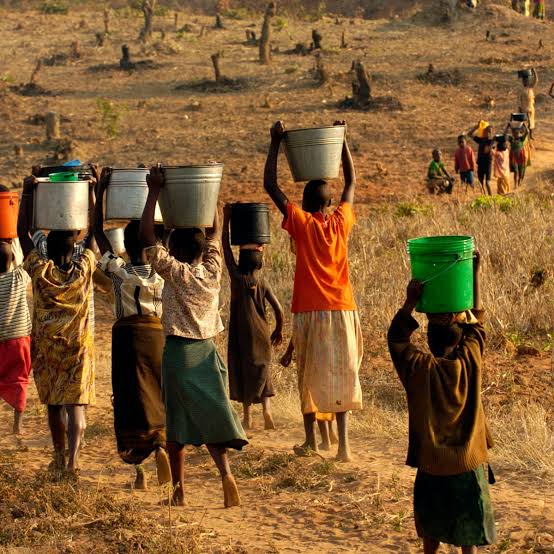
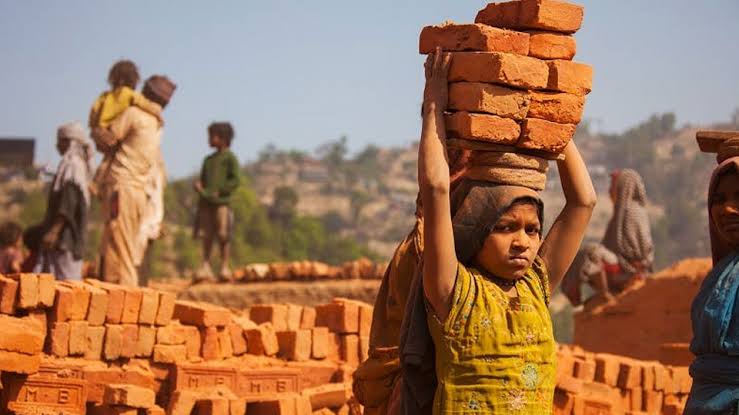
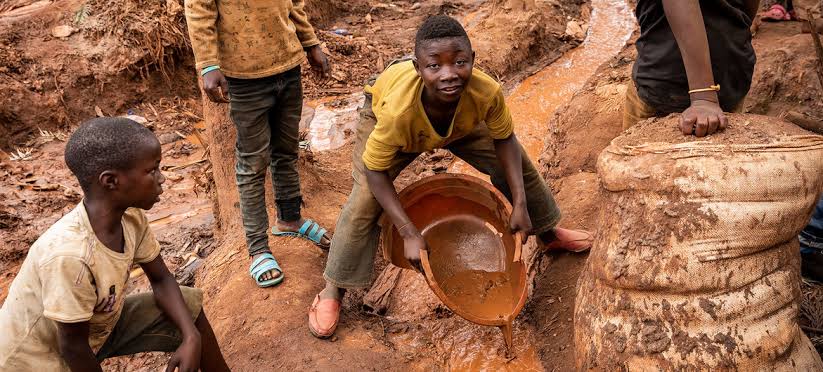
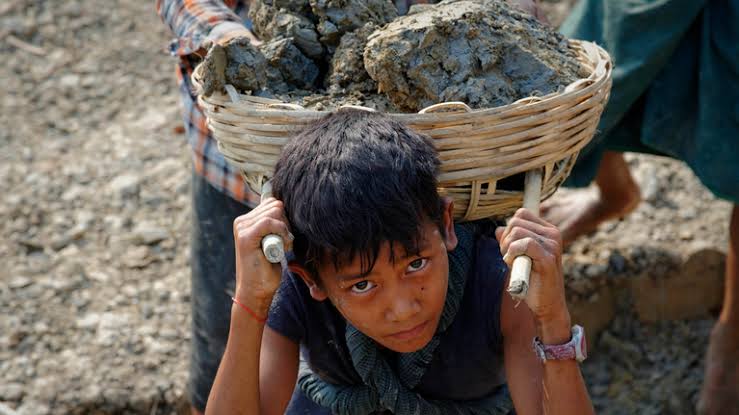
Child labour is a crime. In some underprivileged families who are suffering from poverty, children are forced to work from a very early age to support themselves economically because they expect their kids to take responsibilities of working and provide food for them. Industries and individuals take the advantage of their poverty and employ children to put them to work at very low payables.
They are forced to work for long hours in dangerous factories. Sometimes they are forced to carry heavy loads that weigh even more than their body weight.
Then comes some individuals’ who hire children in their house for domestic help. They are so rude that when the children make a single mistake they beat them and torture them physically.
Those children do not get proper food to eat or clothes to wear. Sometimes they are made to starve and given worn-out clothes to wear. This is the story of many children who are suffering in this cruel world. The average age for a child to be appropriate to work is considered 15 years or more, below this age limit won’t be allowed to indulge in any work forcefully. Child labour takes away the kid’s opportunity of having a normal childhood a proper education and physical and mental wellbeing in some countries. It is illegal, but still now it is practiced in many countries.
CAUSES OF CHILD LABOUR The main reasons for the ever-growing child labour are poverty and lack of education. The parents think that their children are money-making machines. To earn more money by getting sympathy from other people they carry infants on the street begging. Then when they grow up, they take them and eventually sell them to employers.This is a sickness that is rampant across the length and breadth of India But other than poverty and lack of education, many other reasons are also responsible for child labour. Firstly, it is common in those countries where unemployment is more than poverty. When the families are unable to earn enough money to support their lifestyle they put the children to work so they can have enough money to survive. At the same place if the adults are unemployed. The younger ones have to go to work. When people are illiterate then it is very common that they will send their children to work. This is because being uneducated all they care about is short term results due to which they send children to work even if the earning is less to survive their present . This destroys the future of children. They also remain uneducated and later after growing up when they start their own family they repeat the same thing as their parents did i.e., sending their children to work at an early age.
WORSTCONDITION FACED BY CHILD LABOUR
India is in the second-highest number of child labour after Africa. The worst employment bfir children is bonded child labour which is also known as slavery for lifetime. Indian Parliament passed an act on the bonded labour system in 1976 but in spite of this act people still keep on practicing this system. It is estimated that almost 10millions children are victims of the bonded child labour. They work as domestic servants in India. Apart from India, almost 55 millions of children are hired across the world for bonded child labour. The children are sold to money lenders as a payment of the money borrowed by their parents which they failed to return. Children living in streets, instead of going to school, work in streets as a beggar, or selling flowers. This also is an example of child labour of different category. They are made to stay without eating food for many days so that people feel sad for them and give some. Nowadays child labour couples who abuses child has become one of the greatest maladies across the world. Every year the number of child abuse increases especially in the case of the girl child.This usually happens when someone abuses a girl at home, then to hide this fact her family sell her to an employer or money lenders as domestic help or the girl gets married to a man older than her age.
ERADICATION OF CHILD LABOUR To eradicate child labour we should formulate some efficient solutions which will save our children. The future of other countries dealing with these social issues will also get enhanced. With the help of this one can create several unions that work to prevent child labour solely. It would help the children to indulge in this work and punish those who make them do it. Stakeholders must take responsibility Increased access to education Provide support for children Improve economic growth Engage with the Sustainable Development Goals
HUMANITY Humanity can be defined as quality of being human; the peculiar nature of man, by which he is distinguished from other beings. Being human does not mean that an individual possesses humanity.
We live in a world that, although it has borders, it is limitless. People can travel anywhere, see anything, experience every feeling that ever existed, but we are not satisfied. We try to impose borders on ourselves, we fight today to be recognized as not belonging to “their community”, to be labeled as part of a smaller group. We fight today to impose limits to a world in which yesterday people have fought so that it didn`t have any. And we applauded them.
Humanity is an important part of life which tells that to help others, try to understand other and realize the people problems with our own eyes and try to help them
For showing humanity you don’t need to be a rich person, even a poor person can sow humanity by helping someone or sharing his or her food, etc.
When you show humanity you have a feel click or a pinch from your inner soul which you cannot get from something else.
Every religion tells us about humanity, peace and love that is why no religion is higher than humanity.
Humanity is an important part of life which tells that to help others, try to understand other and realize the people problems with our own eyes and try to help them
For showing humanity you don’t need to be a rich person, even a poor person can sow humanity by helping someone or sharing his or her food, etc.
When you show humanity you have a feel click or a pinch from your inner soul which you cannot get from something else.
Every religion tells us about humanity, peace and love that is why no religion is higher than humanity.
“I should like to help everyone if possible, Muslims, Hindus, Christine’s, Jew, gentile, black men, white. We all want to help one another; human beings are like that. We all want to live by each other’s happiness, not by each other’s misery. We don’t want to hate and despise one another. In this world there is room for everyone and the earth is rich and can provide for.
Yeah today I will tell stories of three people who are the biggest example of humanity and they are human lover.
Firstly just imagine yourself I fill this class with garbage how will you feel like you will not stay in this but there is one who go in that garbage search there and you what he found. He found a dead body of child he took that body washed it and buried that body and from that day he used to search in garbage with his wife this man is no other than Mr. Abdul Sattar Edhi the lover of humanity . He is the founder and head of the Edhi Foundation, a non-profit social welfare organization in Pakistan. He is the man who serve is whole life serving for humanity without any selfishness. He has bathed and buried over a thousand unclaimed bodies in a time when selfishness and greed are at their peak and nobody seems to know the meaning of words like altruism and selflessness. His achievements in the field of charity are bound to make one think that his name is synonymous to nobility and humanity. And today he is running Pakistan biggest network of ambulances and shelter.
Moreover his charity does not discriminate based on religion, race or gender. For him, religion is human rights. Edhi has spent many sleepless nights working and serving for humanity whether it is to bury unclaimed bodies or feeding any poor. Besides it he lives a simple life living in small house many of times he used to sleep on the concrete or on the small batch outside his shop his qualities makes him the man of simplicity and human being lover.
As Edhi Said: “No religion is higher than Humanity”
Secondly I will talk tell you about a person who is basically a Pakistani but he is living in Canada he had son named as Ali and his son was 18 years old this man lost his son in accident. The accident was like that his son was working part time as pizza delivery boy when he was on the way for the delivery one black guy who was also of his age come before him and said him money but Ali was honest with his job he refuse that and that guy shoot him that time. When Ali’s father came to know about his son’s death he was in shock and after few days police caught the person who killed his son and called Ali’s father to come when he reach there he came to know that boy who killed his son is 18 years old he is orphan u people know at that time what he said u guys can’t believe it Ali’s father said “I don’t want to do any case on this boy I want to adopt this boy and want to take all responsibilities of this boy because today I lost my son I don’t want tomorrow somebody else lose his 18 years old son”. Just for a minute place yourself on the place of Ali’s father what will be you feeling your 18 years old son shoot dead. Ali’s father this act of humanity raise whole mankind and today he has 4 orphanages in Canada where he take responsibility of around 800 children.
Thirdly the person I am talking about is the well-known personality the person who give us world cup in 1992 he is great leader and humanity lover he is Imran Khan. Most notable among his humanitarian efforts has been the establishment of Shaukat Khanum Memorial Cancer Hospital and Research Centre, named after his late mother. It is Pakistan’s first and only cancer hospital that provides 75% free health care, and was built on public donations. Imran is now building a second hospital in Karachi, based on the successful Lahore model. In 1994, he inaugurated Namal College, a technical college which is now an associated college of University of Bradford.
Although these people do things for humanity on larger scale we should come on ourselves what we have do for humanity every day we spend our time hanging around with friends going outside for parties have we ever feed a poor person on the road have we ever realize how poor people live their lives no we haven’t because we never realize that for what we are in this world we never realize our duties towards humanity.
We should must realize for what we are in this world because every religion teach us humanity and one who serve humanity is the happiest man on the globe real happiness is your inner satisfaction which you can get by serving humanity what so ever how much you are rich you can’t buy inner happiness







 Eduindex
You must be logged in to post a comment.