DEEPIKA KUMARI – INDIAN ARCHER!!!

Everyone in the world have some unique talent. The talent to do something vary from person to person. Yes, I believe I have the talent of writing articles. I would say this is my unique talent. Likewise, we haven’t heard a lot about the so called unpopular games. Archery is not as famous a cricket. But Archery is a wonderful sport. The people who has interest in this is also low. This game needs a free and concentrated mind. In this game, concentration plays a major role. Let me ask you a question? Do you know the name of any archers in India? Have you heard of Deepika Kumari? I would say I have heard her name and now I know about her a little bit by writing this article. Come on! Let’s see about Deepika Kumari.

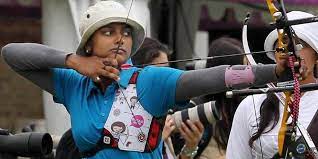
Deepika Kumari Mahato was born on 13th June 1994 in Ranchi, Jharkand. Her father, Shivnarayan Mahato, is an auto-driver and her mother Geeta Mahato, a nurse at Ranchi Medical College. Her interest in Archery came from hitting the mangoes with stones. Many of us did this, but this has laid the strong foundation for her archery career. Deepika’s family was financially unstable and they cannot buy her new equipments to practice. So she used bamboo bow and arrow. After that her cousin helped her to develop and improve her talent.

DEEPIKA KUMARI

DEEPIKA’S PROFESSIONAL CAREER:

  • She made her breakthrough in 2005, by entering the Arjun Archery academy run by Wife of Jharkand Chief Minister Arjun Munda.
  • Her professional career started in 2006 by joining Tata Archery Academy in Jhamsedpur. After being sent there, she had uniform and professional equipments and she praticed hard. She only returned home after three years, by winning Cadet World Championship title in November 2009. She is the one to get first medal for India in Archery.
  • Deepika became the second women to win the World Archery Competition held in 2006.
  • She won the 11th Youth World Archery Championship in 2009 at her age of fifteen.
  • In 2010 Common Wealth Games, She won two medals, one in individual event and the other in team event. In the same year, she was awarded Outstanding performance at CWG in the women’s catergory at the Sahara Sports ceremony.
  • In the 2010 Asian games, she lost in the individual Archery game to a North Korean player in the Bronze-level playoffs. But as a recurve team defeated Taipei of China in the Bronze-level playoffs.
  • In 2012, She won her first Word Cup individual stage, held in Turkey.
  • In London Olymbics 2012, She lost to Amy Oliver of Britain in the opening rounds due to relatively high fevers and winds.
  • In July 2013, she won the gold medal in Archey World Cup stage 3 held at Mendellin.
  • In September 2013, she won silver in the FITA Archery World Cup.
  • In 2015, in Stage 3 Archery world Cup, she won bronze in the individual event. She won team Silver with her teammates in the same World Cup.
  • In November 2015, she won a bronze medal in the Asian Championship with Jayanth Taldukar in the Recurve Mixed Team event.
  • In April 2016, at the first stage of the World Cup in Shangai, Deepika equaled the Ki-Bo-Bae’s world record of (686/720) in the women’s recurve event.
  • In November 2019, Deepika Kumari secured an Olympic quota at the Continental Qualification Tournament being held on the sidelines of the 21st Asian Archery Championships in Bangkok.
  • She won three gold medals In Stage Three World Cup held in Paris 2021.
  • She recorded the 13th triple gold and became the 11th archer to achieve the feat – in the 15-year history of the Hyundai Archery World Cup.

In 2017, a Biographical Documentry called Ladies First, flimed the life of Deepika Kumari. This movie won at London Independent Festival and was screened in  Mallorca Film Festival in October 2017. This movie has also been submitted in Short Documentary category at Oscars.

Deepika Kumari - Wikipedia
PadmaSri awarded by Hon’ble Pranab Mukerjee.

AWARDS WON BY DEEPIKA KUMARI

  • 2012 – Arjuna Award by the Government of India
  • 2014 – FICCI Sportsperson of the Year Award
  • 2016 – Padmasri by the Government of India
  • 2017 – Young Achievers award which is felicitated by Vogue.
Read more;

https://en.wikipedia.org/wiki/Deepika_Kumari

URBAN FARMING: AN INITIATIVE FOR FOOD SECURITY

Even after living or residing in a city, a person can start his or her business in agriculture industry and it is sustainable also. The business will provide food into the busy and populated areas and cities. Urban Farming.

WHAT IS URBAN FARMING?

In simple terms Urban farming is the process of producing or cultivating food inside the city limits. This business has both pros and cons. This business faces challenges but it also offers many benefits to the city, like increased food security, decreased waste, community involvement and many more. Urban Farming is also known as Urban Gardening or Urban Agriculture and it means the practice of cultivating, processing and distributing food in and around cities or towns or urban areas. It involves animal husbandry. bee keeping, horticulture, aquaculture etc.

NEED OF URBAN FARMING:

  • Provide Food to the growing population
  • Reduce pressure on the traditional methods of cultivation
  • Help improve Quality of Life
  • Reduce Food Security
  • Reduce Environmental Impact
  • Help improve the landscape of the city

TYPES OF URBAN FARMING

Urban Farming is of many types, like: Street Landscaping, Tactical Gardening, Backyard Gardens etc.

VERTICAL FARMING
  1. Backyard Gardens: It generally means growing food in the property of a home and sharing it with family, friends or neighbors.
  2. Street Landscaping: Improving the landscape of the streets with the help of living street design or community gardens etc.
  3. Tactical Gardens: Utilizing small spaces available in a practical way (that doesn’t involve much expenses). Ex: Keyhole Garden which replace parking spot in streets.
  4. Forest Gardening: Gardens in urban forests including crops, fruits or herbs or nuts and even vegetables.
  5. ROOFTOP GARDENS: Using spaces of roof for growing food. This method helps in reducing Urban Heat Island effect and help in improving the quality of air.
  6. Green Walls : Using the space on internal and external walls to grow food.
  7. Vertical Farms: Planting or cultivating vertically for reducing the usage of land and land footprint of agriculture.
  8. Animal Husbandry: Raising animals for food and cities also allow residents to raise a limited number of such animals.
  9. Urban Beekeeping: It is a very common hobby and has many benefits for the local environment.
  10. Aquaponics: Raising aquatic animals such as fish etc. and in urban areas this can be done by capturing storm water and creating self sustaining system.
ROOFTOP FARMING

IMPORTANCE OF URBAN FARMING:

Urban Farming is an essential part of urban ecological and urban ecosystem and helps in improving the sustainability of the area. It plays an important role in Urban management system . A growing city will produce large number and amount of waste and urban agriculture acts like a solution for solving this issues by turning urban wastes into productive resource system. It helps in bringing original and nurtitious food to the local communities which has many direct health benefits. It reduces the risk of harmful conditions and vulnerability to get exposed to different chemicals used for increasing the longevity of the food and fruits.

India and her Handlooms

Indian handloom industry saw a reduction in 30% of its trade in the year 2020. This means that the already struggling industry will see further cut in costs. There is an urgent need to innovate new ways to market the goods it produces. The modern state of India still has one of the largest employed workforce in the textile sector, and a large part of it is the handloom industry – which is mostly worked in by the artisans who are either poor or are working hard to preserve their traditional way of manufacturing clothes and designs. For India presents a rainbow in manufacturing methods – right from the famous Benarasi Saree to the now almost extinct methods of making silk and woolen garments in the remote hills of Ladakh and Kashmir.

Cotton has been cultivated in the Indian subcontinent for over 3000 years. And that is probably also the age of a rich tradition of fabric making. With the advent of the bronze age through the influx of Greco-Roman, Mongol, Iranian, Vedic and Afghan cultures into the modern age of Mughals, Marathas, British and later the republic of India and her neighbours – the Indian textile industry has seen a plethora of changes and demand.

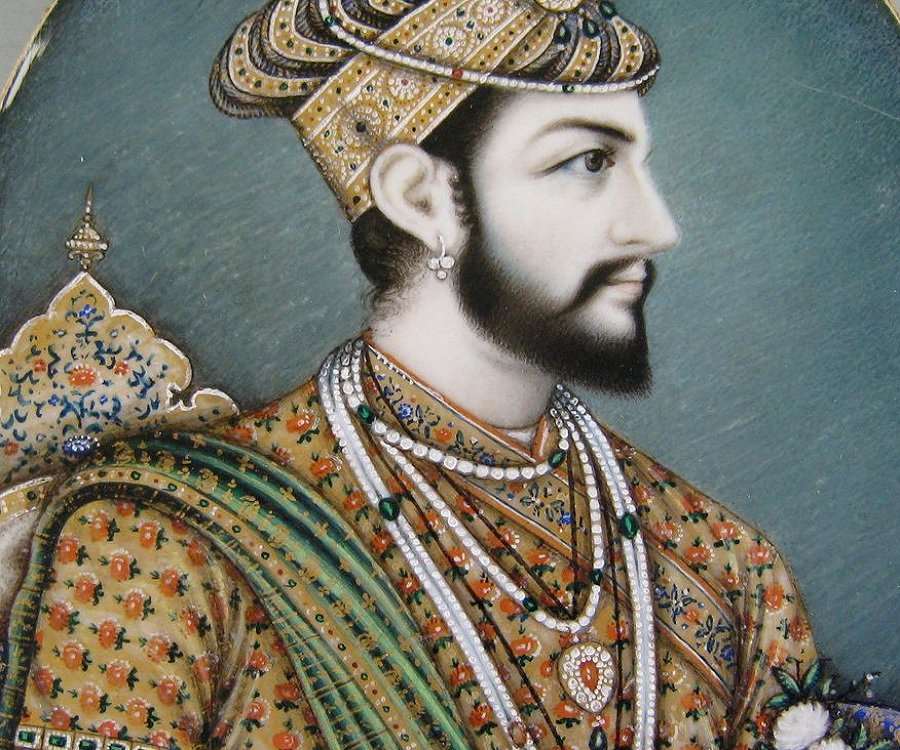
Shah Jahan Biography - Childhood, Life Achievements & Timeline
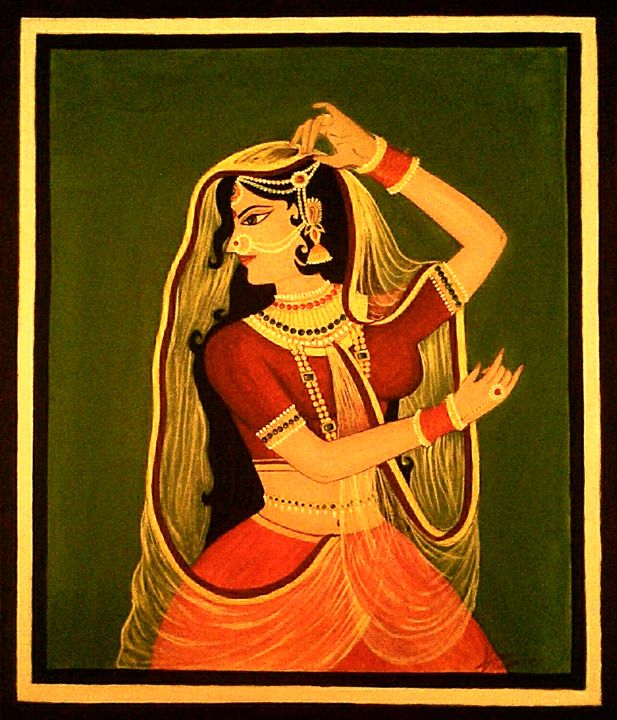
Queen of royal India - SSK Art Gallery - Paintings & Prints, Ethnic,  Cultural, & Tribal, Asian & Indian, Indian - ArtPal
From dhotis and sarees to kurtas and Salwars – India has seen a plethora of changes in its clothing culture.
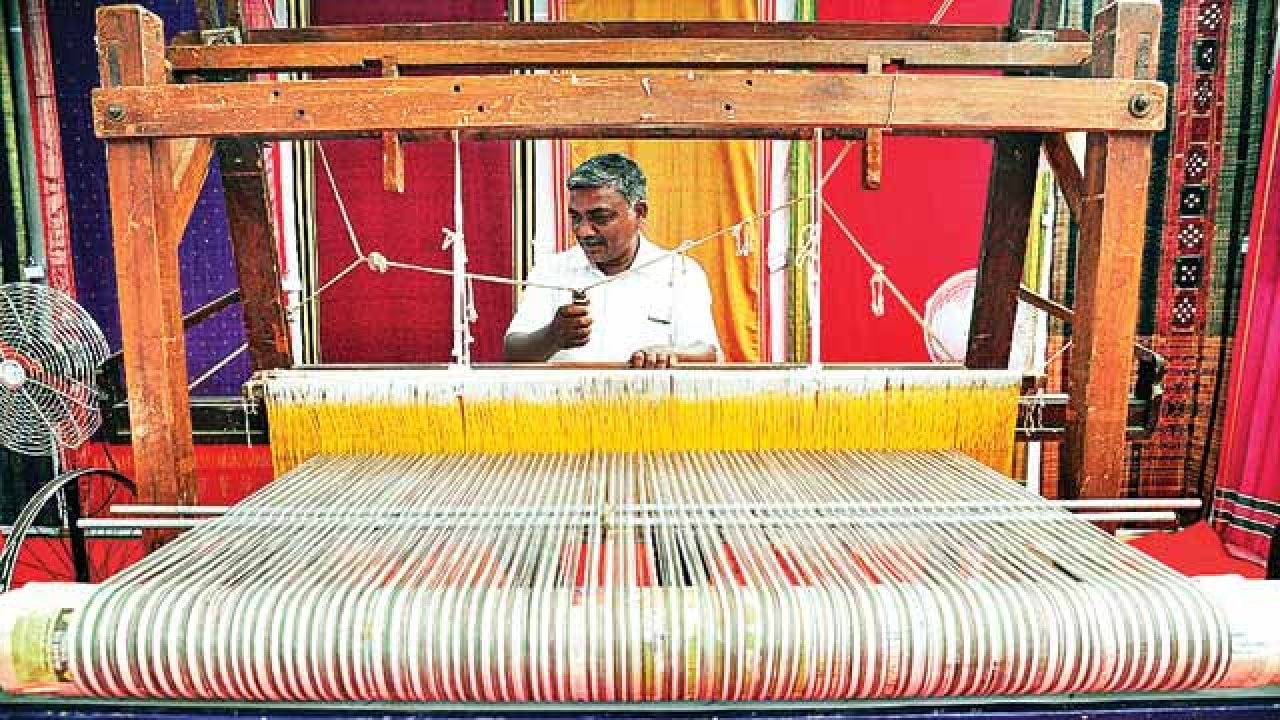
India's handloom export declined by 30% within a year: Text Min statistics
Social enterprises looking at innovative ways to revive handloom sector  post-lockdown - The Economic Times

Handloom has a great symbolic importance to India. For it was the first Industry that stood as a symbol of self-reliance during the British Raj resistance period, a rhetoric the current Indian Prime Minister used in his Atmanirbhar Bharat campaign. After all, if it were not for Indian fabric – the famed Muslins and Pashminas and Indian spices – the British would have had to search for other reasons to come and settle in a land so very far away from their motherland.

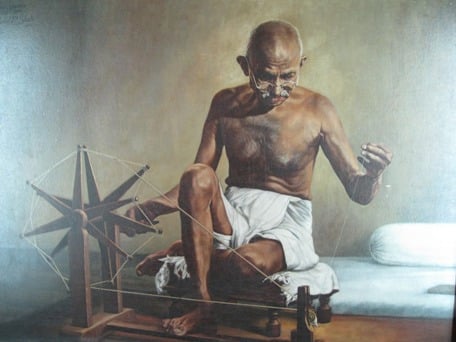
Cherishing the charkha | Indian Link
Gandhi used handloom as a symbol of self reliance

7th August marks the National Handloom day – a day dedicated to an industry that is rapidly finding itself in a stage where only the ones who are super-nationalist and the rich opting for it. Handloom products are often costly than the cheap produce of the machines that invaded the textile industry 200 years ago, effectively ushering in the Industrial Revolution in the 17th century England.

Back to India, here is a list of some famous Indian handloom industries and the cities in which they are concentrated.

  1. Varanasi – The famed Banaras Silk sari is the prized possession of many north Indian women as that is the standard sari of the bride in marriages in households that can afford them. And yet, the Benarasi artists are increasingly been replaced by machines that are producing cheaper saris though with reduced finesse. To add to it is the Zamdani works on cotton fabric, quite endemic to the city.
  2. Jaipur – Jaipur and its handloom industry have the royal family of Jaipur as its patrons. There are establishments and shops that were opened by the last Rajmata of the city, Gayatri Deviji to promote local industries. To add to that is the already existing tradition of Bandhni, Zari and Patti works.
  3. Surat – One of the oldest textile industries that were spotted and used by the local rulers and the British alike. The silk industry in Surat is one of the largest of its kind in the country.
  4. Kota – The tuition capital of the country is also home to the Kota Doria, Gotta Patti and the Kota weave artisans.
  5. Lucknow – The city has an industry that keeps alive the times when nawabs ruled over the city of Lucknow, the then capital of the Awadh state. Most famous of its local weaves is the Chikankari work.
  6. Bhadohi – The small town is only 40km from Varanasi and has been the centre of Indo-Persian carpet work since the era of the Mughal Emperor Akbar and has the largest carpet making industry in the country.

Well, there are many more of such cities and villages when one researches about them. Many of the ingenious art forms that are involved in making clothes are dying with less than 50 families left that carry forward the tradition. The sad part – machines cannot replicate that finesse. Such is the case of the wool and silk industry in the Gharwal and Kashmir valleys.

After the pandemic or even during it, let us and our government support this remnant of our history, our art, our tradition and a symbol of first instance of our modern industrial self reliance.

10 REASONS WHY YOU SHOULD TRAVEL TO THE MOUNTAINS

The mountains show the raw beauty of nature, extreme calmness and offer so much more than you can imagine. Feel the sun on your face and back and enjoy the cast number of activities provided by the mountains…. It can be canoeing or hiking or climbing or fishing etc. which will never make you regret your decision to travel the mountains. Go and Retreat on your next vacation.

REASONS TO TRAVEL MOUNTAINS :

  1. Health Benefits: Travel to mountains can be very therapeutic with the miles stretching greenery and beautiful sounds of birds.
  2. Finding Peace: Mountains help you find your inner peace in life and give the opportunity to discover and explore the beauty of nature.
  3. Mesmerizing Beauty: The terrain is rough and reaching some places can be tough but you will get to feel that because you will be mesmerized with the beauty of the mountains. This beauty helps in healing, giving peace and a whole pure feeling.
  4. Tranquility and Peace: People head to mountains when they need some peace and space. The mountains take you to a uncomplicated lifestyle. 10 minutes of meditation can heal your soul and give the peace that you want.
  5. Pure Air: One of the best things about mountains is the pure air which you won’t find anywhere else. Take a deep breathe and feel it immediately. You will get to know and feel the difference. You will surely miss this fresh air once you return to the city life.
  6. Adventures: Mountains offer a range of adventures which will add better experiences to your trip. And hiking is one of the best and most amazing adventures to do in mountains.
  7. Welcoming Nature of the People: The people of the mountains welcome you with a warm smile and everyone you meet in the mountains will be very polite and helpful. You will not feel like a stranger there.
  8. Disconnect: Mountains give you the perfect chance to escape from the chaotic lifestyle and everyday rush. It is important for everyone to take a break and enjoy their life with a free time.
  9. Build Relationships: Travelling to mountains give a great time to spend with your family and friends. Mountains offer many activities and adventures which can be done in groups and here you can do them with your family and friends and even other travelers which gives you an opportunity to build relationships.
  10. Not a Sight but an Experience: The best thing about the mountains is the experience that you will get and not just the scenes. You will understand and explore nature; come across different people and welcoming locals; adventures and events; fresh air and purity and peace. You will be disconnected from the entire chaos and hectic lifestyle and will get a perfect vacation filled with purity, tranquility and adventures.

The adrenaline rush from the peaks, the serene tranquility and the heights of mountains will fill your heart with happiness and joy. Mountains really bring out the best from you, set your soul free and happy. The tall peaks, the misty environment, the warm locals- a retreat to the mountains brings you back to the city with a clearer mind and a happier heart.

Planting trees!!!!

We all know that the world is heading towards deforestation, global warming, drought etc., What is the major cause of this global changes? It is us. We humans are quite selfish when it comes our own deeds. We keep on cutting the trees, increasing pollution, high useage of plastic etc. What can we do to make our earth lively and healthy? There is no other remedy than planting trees. Yes, there reason we live is the trees. Without them we won’t be alive. Let’s see about planting trees and its importance.

Planting trees will not solve the issue of climate change • Earth.com

Why trees are important to us?!?!

Trees are important to the environment because they provide oxygen and they act as carbon sinks. A carbon sink is a natural or artificial body that stores carbon dioxide. The more trees you have, the more carbon dioxide that you can store. This is because they take in carbon dioxide and then release oxygen, which allows them to store more carbon dioxide.

Importance of Planting more Trees. — Steemit

Planting trees has several benefits, including the fact that they help to reduce greenhouse gases (GHGs). They also help to reduce the amount of carbon dioxide in the atmosphere. As a result, planting trees can help to mitigate the effects of climate change.

Trees are also important for the environment because they provide a habitat for wildlife. They also help to improve the quality of air and water, and they provide a home for birds, insects, and other small animals.

When you plant a tree, you are helping to reduce the amount of carbon dioxide in the atmosphere. So, it is important that you plant a tree. The more trees you plant, the more you will be helping the environment.

What are the trees can be planted??

There are several different types of trees that can be planted. Some of these include the following:

Oak trees, Redwood trees, Pine trees, Alder trees, Fir trees,Bamboo trees,Evergreen trees, Deciduous trees.

METHOD OF PLANTING TREES:

  • Dig a big hole, put the rootball in, cover with dirt.

This is probably the most common method. It’s simple and easy, but it’s not the best. The tree will grow fine if you fill the hole with a small amount of compost. This will help the tree get established quicker and, in the long term, will make the tree more resilient to drought. But it’s harder to dig a big hole, and it’s hard to get the compost in there without disturbing the rootball. It’s also worth noting that the tree is going to be much happier if you can put the hole in a slightly damp area.

Do water the plant regularly until its becomes a tree. You may plant whatever tree you like and the most important thing is to maintain them in a good condition. Everybody says plant trees, save earth, save water. But in reality, how many of us has really planted trees? Think about it and find the best answer yourself!!

TOP 25 TREE PLANTING QUOTES | A-Z Quotes

Read more;

Place Of A Women In Society

It is rightly said woman is the backbone of society. From times immemorial, woman have been considered inferior to man in a patriarch society. Man has always treated woman not as an equal partner in life but as a mere slave. Biological superiority of man over woman has made him callous towards her. She has always being confined to the four walls of the house. Man has just treated her as an object of gratifying his sexual lust and physical desires.

Women have been denied most of the rights that give dignity of human beings. She has suffered a lot because of the whims and prejudices that man harbours towards her. But at the same time she has been called the better half of the man but unfortunately these are just sugar coated words. He abuses her physically, sexually, morally, economically and socially. There is no doubt that she has certainly been the victim of discrimination on the basis of sex. However, the scenario is changing very fast. The Constitution of India protects women’s rights by granting her equal status.

Woman have played a vital role in Indian struggle for freedom. Today, women are becoming more and more vigilant about their rights. They have discarded the Pardah system and have crossed the boundaries by exposing them in outer world. They are jostling with men in every walk of life braving their worth.

Education, political awareness and the impact of western culture have made her more vigil and aware about her rights. The concept of superiority of man is tottering. Today, woman have proved to be better doctors, administrators, pilots, academicians then many of the male counter parts. But despite this she is at the lower rung of the ladder in society. Though she is gaining economic independence but lately she is also exposed to sexual exploitation in offices and working places. Ironically, man still regards her as an unusual commodity.

Money Management

“Money” is a medium of economic exchange in which prices and values are expressed. It is very important to live a life. Just like the three basic units of life- “food, cloth and shelter”. Money is also can be said to be the basic unit as we can but food, cloth and shelter with money only. So its management is also important. “Money Management” means budgeting, saving, investing, earning, spending money in the best way possible. Spending money to satisfy cravings/needs is a natural human phenomenon. The idea of managing money has been developed to reduce the amount of money that is spend on items that add no significant value to one’s living standards. In a nut shell money management means spending money carefully on the needs rather than on wants and wishes and also saving it for the better future.

In Indian Society, if we take a look, we can see that indian society people/groups were divided into different categories on the basis of their earning and living standards. People are divided on assets and income/expenditure. Based on these parameters there are broadly three categories (sub categories are also there) i.e., rich/upper class people, middle class people and poor/lower class people.

Rich/upper class refers to a group of individuals have highest place and status in society. These people are considered the wealthiest, lying above the poor and middle class in the social hierarchy. Middle class people fall between the poor class and upper class. They are neither poor nor rich. These people have a simple living and their earning are mostly equal or less than their expenditure resulting to short debts. Poor/lower class people are those who live under poverty. They are homeless, living on roads and slums, don’t have food to eat, usually dependent on begging and daily wage activities.

People ending up in the same category in which they are born, it is very less likely that a poor class person becomes a middle class one in this life span. There are chances that a rich person becomes a middle class one due to many reason but the chances of upgradation in class is very less.

The reason for such situations- “Wrong money management” and less/no knowledge of managing money. Rich people become more rich and poor become more poor and middle class reamains in debt, the reason behind this phenomenon is that knowledge of money management is not being taught in school and if we talk about poor class children dont even go to school. They don’t even know how to read and write. Money management is taught at home rather than in school. Many of us usually learn about money from our parents.

Talking about poor people, how can you say that they can teach their children about money when they themselves don’t have money to fill their stomach. Poor people just teach their children to go school and work hard. It might happen that the child will pass with excellent grades in his/her academic career but even after this their economic status and mindset remain poor and they keep running in the vicious cycle of poverty like a rat.

Children of upper class are given exposure and knowledge of money management from their childhood. As their parents have more than enough money and seeing their parents earning and managing money they also learn and their intellectual development happens in the same matter but it is not possible in the case of middle and lower class as they themselves don’t have enough money so how can they teach their children about the importance of the same.

Money management should be a topic of concern as it is an important aspect of one’s life which determines his/her status and standard of living. Money management be taught from school level only then children can understand the importance of it. Both government and private schools should organise lecture and seminars on the topic “money management”. If they can manage then parents should also be invited to attend such seminars and lectures. Parents should also give opportunities to their child to learn about the money, its expenditures, saving and management. Parents should send their children to the nearby shops to purchase small goods.

Tips for Money Management

1.Every child should be given the opportunity to go to schools. 2.Budgeting should be done to save money. 3.One should create a realistic monthly budget. 4.Everyone must track their spending. 5.One should build up their savings 6.Must pay your bills on time. 7.Have an investment plan. 8.Know your money priorities. 9.Differentiate between needs and wants.

Money is important to live a good life so as its management also. Money management is a skill that everyone must know to have a good present and better future. Children should be taught about money management at school from the very beginning. It is effectively must to manage money to have a good lifestyle. So don’t waste your time and manage your money now to have a healthy, happy and wealthy lifestyle.

Child Labour

Child labour is the worst form of child exploitation. There are more than 25 million child labourers in India. There is nothing more henious than this line. When it is time for children to play in the garden, they are forced to do banded labour. They have dreams to fulfill so it is need of the hour to stop this exploitation. They need play, education and nutrition. These must be provided to them but unfortunately they have to work in inhuman conditions. Childhood which is the most carefree period of a person’s life becomes a nightmare for them. they are mercilessly exploited at the hands of certain sections of the society.

Penury, in fact, is the root cause of all the troubles. It forces the poor parents to engage their children to work for them and earn something. The main culprits of the society are greedy contractors, the poor and uncaring parents and also the perceptors who do not teach. This gigantic wrong must stop and must be eliminated.

Law against child labour must be made strict and be enforced. Severe punishment should be given to those who indulged in or even encourage child labour. Though various steps have been taken by the government and many voluntree organisation are working to prevent the exploitation. Yet this social evil has not been eradicated completely. It is our foremost duty to look into this grave problem and take stringent actions in order to safeguard the rights of children.

The need of the hour for the government and NGOs is to come forward to establish institutes which provide free education and free meds. Primary education should be made mandatory. Until and unless we all get together to fight against the inhuman exploitation of children. We will not be able to eliminate this social stigma completely.

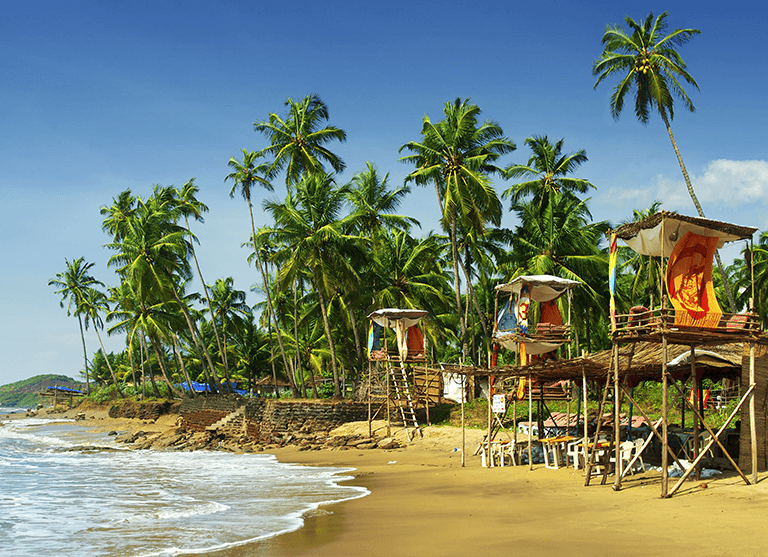
WHY BEACHES ARE THE BEST CHOICE FOR VACATION

India has a variety of landscapes to offer. It can be the snowy mountains or river sides and lakes or plantations or beaches. India has a coastline of over 7500 km and has numerous beaches. Vacation means different for different people. For some it could be visiting prestigious museums, learning local language and for some it can be exploring the new place and for some it can be doing adventures and even trying the exotic new foods and cuisines. The sea sides give the free winds of the beach, gentle caressing waves and the mysterious depths of water will increase your interest in travelling the sea even more. The feeling achieved after sitting beside the seashore and watching beautiful sunset cannot be matched with anything else.

Lets see why you should plan your next holiday to the beach :-

  1. RECONNECT WITH NATURE: You will get to connect with the nature and the beach is the best spot to do so. From witnessing the vast sea to watching the tiniest seashell you will experience everything.
  2. ENJOY THE EXCITING BEACH ACTIVITIES: The beaches can also make your trip exciting with the beach activities and endless ways to enjoy your stay. There are many outdoor activities to try. From beach games to extreme sport, beaches are the power pack of excitement and joy. The beaches offer many activities, it can be renting a jet ski, boat, kayak, or paddleboard. It is like camping.
  3. It’s Chill: Wear filp flops, sundresses and play clothes and there you go…. You are ready to enjoy the amazing beaches! Your time here will be filled with comforts, casual (without any hurried itinerary) and adorable and unique little stores and little things, yummy ice creams and quiet streets all these are very adorable. Nothing is like the chaos of the big city. You can relax in the safe, warm and welcoming sunset beach. It’s cool and exciting…
  4. AWESOME FOOD: Vacations offer you the opportunity to try new tastes and cuisines. You can find top-notch restaurants and fresh seafoods from little shops and store. You can find the, in new and creative ways and beach is thus the perfect place. All you need to do here is, some meal planning, search few restaurants of your interest and enjoy the awesome food.
  5. SUNSETS AND STARS: There is no place for stargazing than beach! Here, the evenings are quiet and peaceful. You will get to enjoy the vast sea and ocean, stars and sky. Beaches will give you the best days with their amazing little things and vast experiences…. And Yes, Sunset beaches are the best place to watch sun set and nights. There is something in these beaches which will always attract you and you should visit them…
  6. BEACH TOWNS AND ISLAND PEOPLE : Everyone here is in a chilling mood and is very welcoming. Everyone has a smiling face which will not make you feel as a stranger there. Enjoyment is in the air! Relax! Life is simple. Let the islanders remind you.

The view of the mesmerizing sunsets, the soothing sound of the sea and the children playing is a pleasing scene and noise which can only be experienced in beaches. Yup, holidays are awesome and can be very purposeful and good to soul. We can escape from or hectic lifestyle and can earn our days off. A beach holiday can be very healing and can renew your perspective in a very special way.

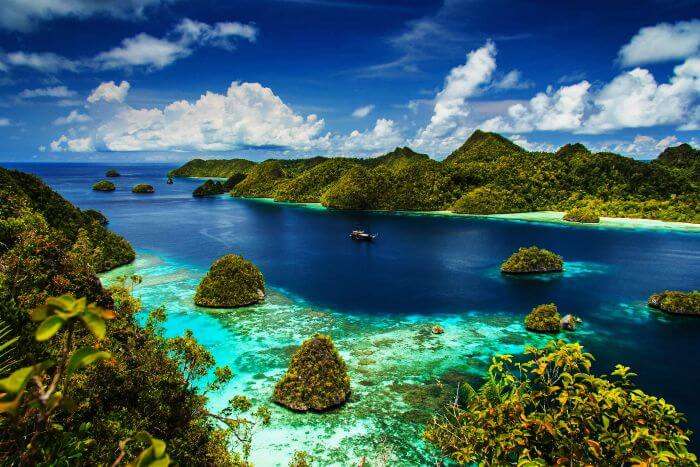
INDONESIA: PERFECT DESTINATION FOR BUDGET TRAVELERS

20’s are the most precious days of our life and are incredible. In this phase, you are old enough to be reasonable, responsible, courageous and knowledgeable. And in this age, you are young enough to have your time of freedom and open- mindedness.

WHAT IS THE BEST ACTIVITY TO DO IN YOUR 20s ? TRAVELLING…. Travelling gives a great experience and is a great way to enjoy these days of young age, to start exploring the world and to start a career. But in this age, we also think about doing activities which will be pocket friendly and will also not drain out the money. Therefore, money is a major obstacle for adventure and travelling for the people in their 20s. It’s very rare to find young persons who have sufficient amount of money for travelling.

The first step towards selecting a place for travelling is “doing a research”. Travelers seek out more unique and affordable ways to travel and the solution to this is research… Iam also one of those individuals who are aspiring to travel and here I have mentioned some awesome countries which are budget friendly and are easy to travel when you’re young and while on a budget from my research’s and bucket list. And Iam super excited to share about Indonesia from my researches.

The world has numerous countries, infinite number of gorgeous places and the more we travel, the more we get interested to explore and it is good to travel. There are many perfect places which are accessible without paying for private tour guide to travel in your 20s.

What makes Indonesia an ideal place for tourists ?

  • Indonesia is a land gifted with beaches, exotic water villas on peaceful islands, cultural ethos and vibrant tribes. The country provides many surreal places and all together they offer a mix of outlandish island and numerous adventures which will make a successful trip.
  • The country has many beautiful islands, beaches and lakes for beach and water bodies lover; national parks for wildlife lovers; active volcano sites for adventurous soul and many places to explore.
  • Indonesia is perfect place for every type of travelers. It is a place that gives peaceful time and alone time as well as adventures. Starting from wild and extravagant adventures to beautiful sights, Indonesia is the summation of every sort of adventure and peaceful. So, pick your favorite place and experience the adventure and peace of a lifetime.
  • Bali is the main tourist destination and in addition to that, the country has hundreds of little islands to visit every single day.
  • Indonesia is a perfect destination for a low cost vacation. As you move towards the inland more, the more the prices will go down. This place is economically feasible and you can also visit Lombok or Sumatra island.
  • The main deciding factor of budget is “transportation” . Depending on the transportation, the trip can get cheaper or even expensive. Intercity travelling can be very expensive and time consuming, so sticking to one region can be a solution. Indonesia gives large number of adventures to experience, explore and rejoice. So, spending more time in a particular place will allow you to travel deeper and explore more and will make the experience more meaningful.
  • If someone wants to travel far and wide on a budget, then using local transportation can be a solution.
  • Apart from Bali, Indonesia provides many beautiful resort island and Indonesia’s archipelago is even wider than United States and offers a whole world to discover.

From white sand beaches to jungles and savannahs, and from blue flame spewing volcanoes to remote rainforests which has orangutans…

Indonesia is a budget traveler’s dream. Indonesia’s best islands and mountains await your wandering soul! Have a look.

HOW DDMP: 2041 ADDRESS THE ISSUE OF POLLUTION

Master Plan is a dynamic long term planning document which kays down guidelines for regulating and guiding the future growth and development of cities. Master Plan provides actions and strategies for meeting the social and economic needs of the current and future population. It includes analysis, recommendations, economy, housing, transportation etc. depending on the social, economic and environmental conditions of the are The purpose of a Master Plan is to promote growth and guide and regulate present and future development of towns and cities with a perspective of 20-25 years. It is an instrument to work out land and infrastructure requirements for various urban and rural uses, and allocate land for various uses to result in harmonious and sustainable distribution of activities. The plan guides the physical development of the community with the help of its long-term planning visions. This provides long ranged, comprehensive strategies which consists of all functions and make the community function.

DRAFT DELHI MASTER PLAN (DDMP)

The Master Plan of Delhi is the key instrument that facilitate and regulate Delhi’s development by assessing and analyzing the present condition and will guide how sustainable and balanced development can be achieved. The apex body of the master plan is the Delhi Development Authority and the implementation of this plan is the collective responsibility of all agencies involved in the development of Delhi.

The Draft Delhi Master Plan (DDMP)- 2041. focuses to take measures for reducing the tackling the air, water and noise pollution level in the city with the help of measures, such as ‘refuge points and self-sustained isolated residential areas to deal with the challenges of pandemic. Greener environment, Yamuna cleaning, economy focusing on areas such as IT, service sector and hospitality, enhanced mobility promoting cleaner fuels, addressing housing needs of the poor, and rejuvenation of the heritage fabric of the city are among the key features of the draft Master Plan of Delhi 2041.

DDMP aim to address issues of pollution

  1. Strategies to address Vehicle Pollution: The key strategies for achieving this include:  adoption of mix-use transit-oriented development (TOD), migration to greener fuels for public transport. The main aim of mix-use and transit-oriented development (TOD) is the reduction in average trip length and bringing jobs and homes closer to transit networks. With the help of using clean fuels the plan tries to encourage clean travel and green mobility by “improving pedestrian, cycling and EV infrastructure”.
  2. Strategies for Improvement of Water Quality: The improvement of water quality in the Yamuna and various natural drains, lakes and baolis by assigning different agencies with specific tasks, such as checking the outfall of untreated wastewater from surrounding developments.
  3. Strategies for large housing requirements: The plan tries to meet the future housing requirements through large scale greenfield development using “the land pooling method”.
  4. Strategies for low density housing requirements: The DMP tries to address the development of low density and low floor area ratio (FAR) residential areas within Green Development Area. It will also focus on regeneration of existing areas through “improvement of existing stock and creation of new units”.
  5. The second volume contains “Spatial Development Strategy and Action Plan” which highlighted major strategies and provisions covering both green field and brown field development in the city.

MANAGING MONEY AND INCREASING SAVING

“Before Money becomes Wealth, it’s just Money. And for making Wealth from Money, we need to MANAGE it.”

Money Management is the broad concept which incorporates the key principles required for developing wealth and for preserving and protecting that wealth. It teaches about investing, budgeting, banking, tracking your expenses and assess the tax liabilities. This can also be called as Investment Management. Thus, Money Management is a technique where high interest output is delivered with any amount invested for money.

Spending money for satisfying needs, wishes and cravings regardless of whether they are justifies and included in a budget. can be seen in every human and is a very natural tendency and phenomenon and this idea of money management is especially developed to make the people, institutions and firms understand how to channelize and reduce the amount of money spent on different items and values which care not significant and which do not have any contribution in enhancing their living standards, long term asset or benefit. Money gives you the sense of self fulfilment and this sense of self fulfillment doesn’t come from rigorous spending of money or buying wealth but from having an amount of money which will not get outlived while fulfilling their lives needs, ambitions and providing a meaning livelihood which is convenient for them.

Thus, for money management it is also important to properly analyze the behavioral aspect of individuals or firms. Money Management also focuses on the behavioral attributes which influence the decision made by investors or organizations or individuals. And this decision making phenomena can severely affect the outcomes of long term strategies. In fact, everyone battles against the powerful elements like taxes, debt or inflation etc. which have the power to destroy and take away the wealth that we have attained by working hard. And a single wrong decision can affect and ensure our defeat.

8 Tips for Money Management:

  1. CREATING A COMPREHENSIVE BUDGET PLAN (Listing the amount of money you receive and planning how to manage your expenses by using that amount and what will be your savings.)
  2. TRIMMING UNNECESSARY DAY TO DAY COSTS (Identify different ways to save and start from small scale. Eliminate day to day unnecessary costs and avoid penalty charges and fines)
  3. FIND WAYS TO PAY LESS INTEREST ON YOUR DEBTS
  4. MAKE GOALS FOR EFFECTIVE SAVINGS AND ACCELARATE THE SAVINGS
  5. AVOID PAYING MORE TAX THAN NEEDED
  6. USE ONLINE BANKING (because they help in setting up payment reminders, scheduling future bills and help in reviewing and analyzing the amount of money spent.)
  7. SAVE FOR RETIREMENT AND PLAN ACCORDINGLY
  8. WORK WITH AN ADVISOR (To reduce financial stress and feel secured. They help in analyzing your financial status and set up goals.)

NEED OF MONEY MANAGEMENT

  • Money and Finance Management is a vital part of personal and business life. Hence, it is hard to ignore and needs to be planned with proper vision, career, finances, goals etc. and these will drive your future. Proper financial knowledge is important for starting any successful business and it is the ability to manage one’s money.
  • It develops the ability of a person to understand financial concepts which will help him in managing money better. And ensures financial well being.
  • Money Management and Financial literacy is one of the major life skill and it increases the financial ability of a person. One can start investing in his 50s also but starting early has its own benefits.
  • Today, the rich is getting richer, poor is getting poorer and the middle class people are getting indebted. The reason is the lack of knowledge of money management. People learn about money management from their parents and families and not in school. What will the children of poor people learn about money management for them? The only thing that they know is to study hard for getting a job. That’s why even after having proper knowledge, skills and expertise they don’t get proper job and don’t get enough savings.

Money management

Abstract

Money management helps one to control expenses and save the money for other purposes. Money management is a healthy habit. In this article we are going to know why money management is important and how it affects the different classes of society. 

Introduction

Earlier our ancestors usually said if we spent our money on unnecessary Mata laxmi ( Devi of wealth) would leave your house. They basically advise the next generation to manage the money. Today the words might change but the habit of managing money is considered a good habit. 

Nowadays the rich become richer and the poor become poorer. The reason could be many of this situation but the factor affect the all reason is money management 

Our society divided into three part basically: 

  • High or luxury class – This class has a luxurious lifestyle. They are mainly tycoons, businessmen, ministers , doctors and high ranking government officials. 
  • Middle class- This class has a normal lifestyle. They have to earn to feed themselves and get education and pay taxes. They are mainly teachers, low ranking government officials, professors and monthly paid workers.
  • Low class- This class usually wagers who work on a daily basis for their daily bread butter.

Here the point should be noted that high class people live their life without any financial difficulties. Lower class know that they have to work and eat on a daily basis but the middle class people have to pay tax, need to work hard to reach high class and couldn’t complain when they compare their lives to the lower class.  

For this, Money management is a way to make a balance point. 

What is money management? 

Money management is a science as well as an art of organising money to fulfil the needs of an individual or group. The process includes spending, investing and budgeting the capital. 

Importance of money management

We always get advice that watch over the expenditure, don’t buy unnecessary things, do investment, prepare a budget of your expenses and save money on a regular basis. 

  • To get the future goal

We all have some major goals in our life. That goal needs a large amount of money to complete. A higher class person’s major goals could be buying more firms or luxurious items. A lower class and  a middle class person have different goals such as building a home, children’s marriages and their own lifetime security. A lower class person could not put such efforts but a middle class person has to put efforts to make an image in society. They borrow the money from legal and illegal methods to match the status of higher class. It leads them to the grave of loan. Money management can help all the classes to reach their goals. If they watch over their expenses and save money on a regular basis they could attain their future goals. 

  • Managing risk

Money management also gives support to managing the risk. Life is unpredictable. We don’t know what could be next. So it is important that we have enough savings to manage that risk. 

  • Help in saving

Money management also helps in saving money for the future. When you make a budget of your expenses, you get an idea where you spent more and less. You try to find an alternative and reduce your expenditure. That you know how much and from where you can save the money.

  • Bring more opportunities

Good opportunities need a good amount of money. As we know today every skill furnishing classes are so expensive. In the competence world we need to learn new skills everyday. If We want to grab opportunities we need to be financially strong. Money  management helps us to bring more opportunities to reach our goals.

Many times we think about how the rich become richer and the poor become poorer. Do they have their own bank or government supporting them? Are rich people not giving the appropriate amount of wages? Is it because of unequal distribution of resources? 

The answer of all is a live example- Dheerubhai ambani. His father was a middle class person but he built an emperor for his sons. He made it possible because he knew the management of money. He invests, saves and expands his money by analysing, rethinking and with a backup plan. After him his son mukesh ambani and his son also follow the same path. In their case we can say children learn managing the art of money from their family. 

Poor or lower class people thought that only higher education can help their child to become rich or upgrade their living standard. But when the child is not introduced to the term management how could they learn financial management? 

The middle class people have knowledge about money management but they never implicate such terms in their lives. They are dependent on loans for their further needs. 

So it is important that schools need to involve such subjects which could make a brief understanding of money management at primary to higher levels of education. There should be some activities in the curriculum which provoke the student to learn money management. Most of the well educated people don’t know the basic rules of investment. They don’t know because they never get a chance to do so. It is a high to make awareness among the people about the money management. 

WORLD’S LARGEST SHIP BREAKING YARD: ALANG, GUJARAT

Alang is the biggest ship breaking yard in the world and is situated in Gujarat, India. Hundreds of ships get scrapped here every year. With the increasing popularity of the yard, the number of ships getting scrapped here is also increasing steeply. With this the number of threats on the health of the workers working there and the marine environment is also increasing. There is a steep increase in threats on them. Unlike other countries, India had lacks strict policies and regulations for protecting and preserving the marine environment. This leads to irreversible harm on the surrounding flora and fauna as well as the health of the laborer’s. Indian coasts have coral reefs and due to the unregulated practice of ship breaking activity, the coral reef of the coast has vanished and destroyed completely. It is having serious impacts on the marine life. Alang has now become the storage of toxic wastes, radioactive elements, poisonous gases and waste, unusable oil which have now entered into the marine food chain and and are also affecting the health of the workers working there. The laborer’s work in dilapidated condition with least safety measures and poor health care facilities.

Ship Breaking Yard at Alang, Gujarat

EXISTING SHIP RECYCLING CAPACITY OF ALANG

Currently the ship breaking yard has 153 plots or ship breaking yards on 10 kilometer long coast in Bhavnagar District of the state. Out of these 131 plots practice ship breaking activities and just 80 plots have ships for breaking. So, 48 per cent of the ship breaking capacity is laying idle in the site. In the year 2011 -12, 415 ships with a total 3.85 million Light Displacement Tonnage (LDT or weight of a vessel without fuel, cargo, etc.) came to the site and the capacity of the site was almost full. And after that there was a decrease in the number of ships coming. In 2021, only 199 ships came to the site.

In this entire process of ship breaking, there are numerous factors and aspects which are not being considered and are neglected. The protection of health, safety and sanitation of the workers is not considered, the negative impacts of the practice on the marine ecosystem and the surrounding environment is not being considered properly and the potential threats on the flora and fauna are not considered properly. Some of the regulations and rights of the workers which are being violated are:

  1. Violation of Legal Frameworks for Adequate Health Facilities: One of the major problems in the ship breaking site is the absence of proper health care facilities for the workers. The region as 2 hospitals only which are under staffed and don’t possess necessary health care infrastructure for treating fatal emergencies. There is no ambulance facility in the area as well. Regulations Violated: the International Labor Organization (ILO) guideline of 2003, which outlined detailed provisions for the safety and health of workers in ship-breaking industries etc.
  2. Violation of Regulations provided for secured employment of laborer’s: The ship breaking yard of Alang is labor intensive and does not use modern technologies like China and Japan. Thousands of people migrants migrate from different parts of the state (especially Odisha, Uttar Pradesh, Bihar etc.) to Alang Sosiya for getting employment but there is no employment security here. A number of workers are Alang Sosiya Ship Breaking YARD (ASSBY) have also said that there is a always a delay in payment of wages and they do not receive any financial benefits as laid down by different labor laws of India. The workers are not even paid for extra work on Sundays and when they are on leave. Regulations Violated: The Workmen’s Compensation Act 1923; the Payment of Wages Act 1936; the Factories Act 1948; the Employees’ State Insurance (ESI) Act 1948; The Minimum Wages Act 1948; the Employees’ Provident Funds Act 1952; the Payment of Bonus Act 1965 etc.
  3. Absence of database providing details of migrant workers: The District Authority does not maintain any database regarding the number of migrant workers working in the ship – breaking yard. Regulations Violated: Chapter II of the Inter-State Migrant Workmen (Regulation of Employment and Conditions of Service) Act, 1979, specifies that the state government shall appoint a registering officer for the purpose of registering interstate migrant workmen. Ship-breaking industries continue to recruit migrant workers without registering under this Inter-State Migrant Workmen Act.

Nature of Partnership

When two or more persons join hands to set up a business and share its profits and losses it is called Partnership. Section 4 of the Indian Partnership Act 1932 defines partnership as the ‘relation between persons who have agreed to share the profits of a business carried on by all or any of them acting for all’.

Partners are the persons who have entered into partnership individually with one another. Partners collectively are called ‘firm’. The essential features of the partnership are as follows:

Two or More Persons:
There should be at least two persons coming together to form the partnership for a common goal. In other words, the minimum number of partners in a partnership firm can be two.
Indian Partnership Act, 1932 has put no limitations on maximum numbers of partners in a firm. But however, Indian Companies Act, 2013 puts a limit on a number of the partners in a firm as follow:
1.For Banking Business, Partners must be less than or equal to 10.
2.For Any Other Business, Partners must be less than or equal to 20.
3.If the number of partners exceeds the limits, the partnership becomes illegal.

Agreement
The partnership is an agreement between two or more persons who decided to do business and share its profits and losses. To have a legal relationship between the partners, the partnership agreement becomes the basis. The agreement can be in written form or oral form. An oral agreement is equally valid. But, preferably the partners should have a written agreement, in order to avoid disputes in future.

Business
To carry on some business there should be an agreement. Mere co-ownership of a property does not amount to the partnership. The business must also be legal in nature, a partnership to carry out illegal business is not valid.

Mutual Agency
The business of a partnership firm may be carried on by all the partners or any of them acting for all. This statement has two important implications. First, to participate in the conduct of the affairs of its business, every partner is entitled. Second that a relationship of mutual agency between all the partners exists.
For all the other partners, each partner carrying on the business is the principal as well as the agent. He can bind other partners by his acts. And also is bound by the acts of other partners with regard to the business of the firm.

Sharing of Profit
The agreement between partners must be to share profits and losses of a business. Sharing of profits and losses is important. The partnership is not for the purpose of some charitable activity.

Liability of Partnership
Each partner is liable jointly with all the other partners. And also when is a partner, severally liable to the third party for all the acts done by the firm. Liability of the partner is not limited. This implies that for paying off the firm’s debts, his private assets can also be used.

Partnership Deed
Agreement to carry on a business between the partners, partnership comes into existence. The partnership agreement can be either oral or written. The Partnership Act does not require that the agreement must be in writing. But when the agreement is in written form, it is called ‘Partnership Deed’. Partnership deed should be duly signed by the partners, stamped & registered.

Partnership deed generally contains the following details:
1)Names and Addresses of the firm and its main business;
2)Names and Addresses of all partners;
3)A contribution of the amount of capital by each partner;
4)The accounting period of the firm;
5)The date of commencement of partnership;
6)Rules regarding an operation of Bank Accounts;
7)Profit and loss sharing ratio;
8)The rate of interest on capital, loan, drawings, etc;
9)Mode of auditor’s appointment, if any;
10)Salaries, commission, etc, if payable to any partner;
11)The rights, duties, and liabilities of each partner;
12)Treatment of loss arising out of insolvency of one or more partners;
13)Settlement of accounts on the dissolution of the firm;
14)Method of a settlement of disputes among the partners;
15)Rules to be followed in case of admission, retirement, a death of a partner; and
16)Any other matter relating to the conduct of business. Normally, all the matters affecting the relationship of partners amongst themselves are covered in partnership deed.