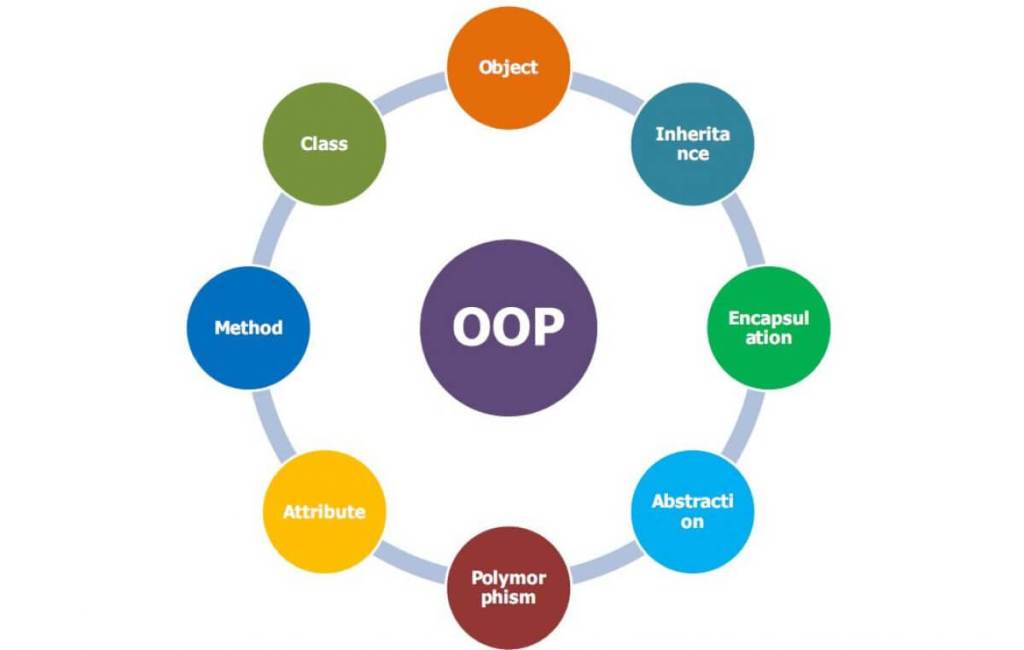
Features Of OOP

Benefits Of OOP

  • OOP guarantees more reliability of data
  • OOP ensuring better maintainability
  • Modularity for easier troubleshooting
  • Reuse of code through inheritance
  • Flexibility through polymorphism
  • Effective problem solving
  • It also provides better readability
  • It is easier to visualize real–world objects
  • Software complexity can be easily managed
  • It simplifies the tasks of writing and debugging
  • It is easy to partition the work in a project based on objects
  • Object oriented systems can be easily upgraded from small to large systems

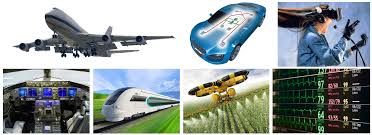
Applications Of OOP

  • Real Time Systems
  • Object Oriented Database
  • AI and Expert Systems
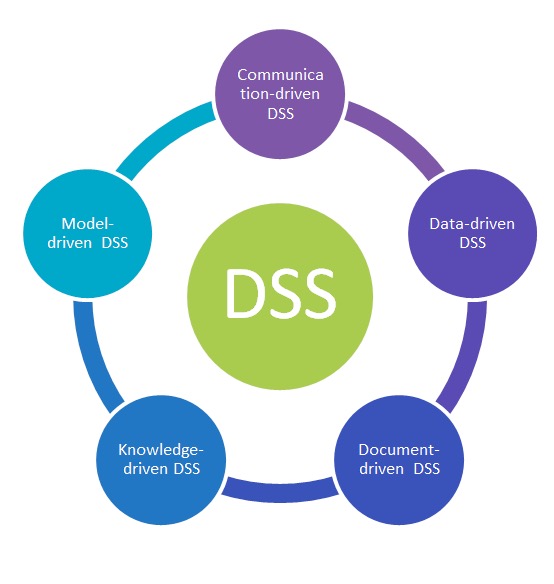
  • Decision Support System
  • Hyper Text and Hypermedia
  • Office Automation System
  • CAM/CAD systems
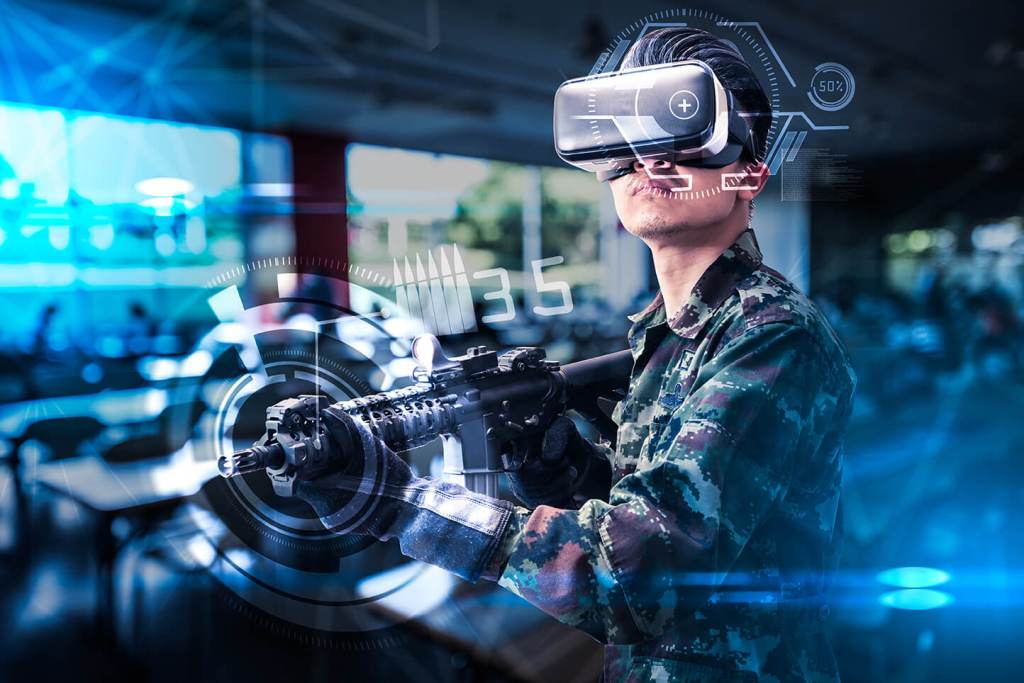
  • Simulation and modeling
  • Neural networks and parallel programming

OOP Languages

Longest running light bulb since 1901: The case of Planned Obsolescence

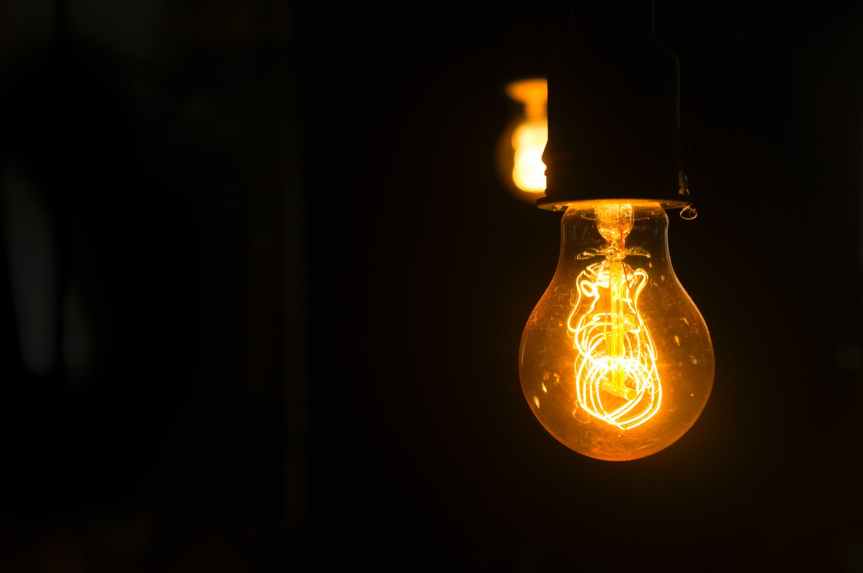
Centennial Light is the longest-running electric light bulb on record. It has been running continuously since 1901 and it has never been switched off. It is located in Fire Station 6 in Livermore, California. The ordinary dim light bulb looks like any other bulb and there is also a camera that live-streams the light bulb onto the internet.

Link for the official website and live webcam of the light bulb.

http://www.centennialbulb.org/photos.htm

It was manufactured in the late 1890s by the Shelby Electric Company, of Ohio, using a design by the French-American inventor Adolphe Chaillet. It has operated for over 100 years with very few interruptions. In 2011, it passed a milestone: One million hours of near-continuous operation. In 2015 it was recognized by Guinness World Records as the world’s longest-burning bulb.

The 60-watt bulb uses a carbon filament. One of the reasons for its longevity is that it seems to have an incredibly durable vacuum seal. There have been some researches done on bulbs manufactured by Shelby Electric Company of that era. But no one really exactly knows how these eternal bulbs were made as they were experimenting with various but the company was experimenting with a variety of designs at the time.

The electric model was quite different when first homes in The U.S had electricity. The servicing was the responsibility of the electric companies and customers would purchase entire electrical systems manufactured by a regional electricity supplier. The companies would also take care of the installation and servicing of any burned out electric bulbs would be replaced for free.

It made more logic for the suppliers to manufacture bulbs that would last longer and would burn out as least as possible. But this business model was later replaced and homeowners were responsible to change the light bulbs. It was soon realized that it would be more profitable to make cheaper bulbs that burned out faster. Since the mid-1900s goods were manufactured with a pre-determined expiry date aimed at forcing consumers into repeat purchases. This phenomenon has only been exacerbated in recent years. This can also be called planned obsolescence.

In 1924, the life span of the light bulbs was at least 2,500 hours. Phoebus cartel was formed in 1925 in Geneva. It comprised of the major incandescent light bulbs manufacturers at that time: Osram, General Electric, Associated Electrical Industries, and Philips. The cartel had directed their engineers to cut the life of the bulbs to 1,000 hours, which the engineers did by adjusting voltage and current. The cartel was intended to operate for 30 years but it was starting to fall apart in the early 1930s after General Electric patents expired and as the cartel faced competition from non-member manufactures from other regions. The cartel ceased its operations after the outbreak of World War II in 1939.

Planned obsolescence is a very critical area it does not only decrease the lifespan of the good but as a consequence, it is also wasteful. It is not sustainable for the environment and the main focus of this practice is to maximize profits. It also reminds us that technological innovations are often not accessible in favor of corporate greed.

References:

Introduction about different Schools, Colleges, Universities

Every student wants to join a dream college or university.

After schooling, we desire to join a top college or university for the security of our feature

Is a college the same thing as a university? What does “liberal arts” mean? Why are some colleges called public and others private? Here are the basics of the types of colleges.

Let me know about NIT AGARTALA

Institute is committed to developing highly competent young Engineers, Scientists, and Management Professionals to cater to the ever-increasing techno-managerial needs of national and international standards fulfilling professional ethics and societal commitment.

MISSIONS

• To produce techno-managerial human resources in line with global needs, offering a state-of-the-art facility, research, and engineering and allied disciplines.

• To enhance the effectiveness of technical education with innovative systems and devising a mechanism to facilitate the application of research findings to solve real problems of industries/academics.

• To nurture and sustain an academic ambience conducive to the development of intellectually capable and committed professionals so that effective growth is obtained for the region’s economic development and the nation as a whole.

• To establish as the corridor of higher education for the South East Asian countries.

EDUCATION SYSTEM

Presently the Institute offers eight UG courses and PG courses in several fields along with Post Doctoral Fellowships. This Institute is autonomous under NIT being act passed by the parliament.

The Institute recently introduced a new curriculum in IITs where more elective subjects are being offered to make the system flexible. Previously, the Institute used to follow the mark based system of evaluation, but have been switching over to a credit-based system to keep track of the global evaluation methods. Industrial training, Undertaking projects are parts of the education system and students are also encouraged to take various activities for social development through NSS and NCC.

Initiatives

The Institute recently has been converted from State Engineering College to National Institute of Technology. The total seats have been increased from 250 to 420 for the academic session 2007-2008. Recently three Under Graduate courses has been introduced in Electrical & Electronics Engineering, Transportation Engineering and Production Engineering. The Civil Engineering Department will start a PG programme in Structural Engineering to fulfil the requirement of the State. The nonresidential campus is to be made residential with the reopening of two boys hostels and one girl’s hostel for the students admitted for the session 2007-2008. A master plan is under preparation for 335 acres of land where a new campus will be built with modern facilities for the overall requirement of the Institute. The Institute is getting a 33 VK dedicated power supply through Tripura State Electricity Corporation Limited for uninterrupted power supply in the campus. The R. D. Department of Govt. of Tripura took total renovation work of the existing buildings after conversion to NIT. The Institute has also obtained a grant of 12 crore rupees from DoNER for the development of infrastructures like the extension of the Library Building, an extension of the Academic Building, the Centralized Computer Centre, a new water treatment plant and boys and girls common room. The campus is now totally connected through Wi-Fi with WiMAX wireless backbone and all e-journal facilities are available in the digital library of NIT Agartala.

RTI ACT- Every Citizen’s right!

Right to Information (RTI) is an act of the Parliament of India which sets out the rules and procedures regarding citizens’ right to information. This particular act was passed as an independent act by the Indian Parliament in the year 2005.

The RTI act has been useful in getting to know our personal grievances, making our politicians and elected representatives accountable.

The RTI act empowers common public in India by indirectly involving them in decision making and in other important public affairs. Every citizen in India through this act got the privilege of right to be informed.

RTI ACT: Controversial, yet beneficial.

Very recently, an RTI application was filed by a group of individuals seeking to know about source of a particular line in NCERT History textbook of grade 7th which said “Temples were rebuilt after they were destroyed by the Mughals”. The individuals wanted to know about the source of information regarding the text to which the response was “Source of information is unknown”.

In such a case, one may argue that RTI act doesn’t mandate an authorised body to respond “according to the query” (meaning, they just have to respond, it does not matter what the response is) that is, an authorised body doesn’t necessarily have to respond, they can just pass the query off by saying “no source of information available.”

But at the same time, RTI ACT as mentioned earlier is a powerful tool for citizens through which commoners in the country can keep an eye on the government and its activities. For example, in 2016, when Demonetisation was announced by the Government of India, Mr. Venkatesh Nayak filed an RTI application which revealed that RBI did not agree with Government of India’s justification that the decision would curb corruption in India.

Another example could be the Commonwealth Games Scam, in which an RTI application was filed by a non-profit organisation which revealed that Delhi Government had diverted Rs. 744 crores from funds which were kept only for Dalits to Commonwealth Games.

A very successful case was also found in Bangalore where a bundle of corruptions and dereliction of duties in allowing encroachment of government land of 12,000 square feet without the permission from the respective authorities by New Cambridge School Trust. The Assistant Executive Engineer who was supposed to actions against the encroachment of land which was worth Rs. 6 crores was found protecting the illegal encroachment of land. These irregularities came out when an RTI application was filed before the Executive Engineer Division in Bangalore.

Denouement:

RTI act from the beginning has been into controversies for being chaotic and problematic in many cases. But in my view, these instances of chaos are again because of the same loopholes we have in our democratic system and legal system we strive to fight against via the help of RTI act. Nonetheless, the act has enabled the citizens to become more aware and hold the government accountable when required. This is evident from the fact that India ranked 4th best in the world for RTI laws. The recent amendment of act in 2019 is however criticised as many feel, it would give Central Government more power.

DISABILITY ETIQUETTES

Disability Etiquette - United Spinal Association

Disability etiquette is a set of guidelines dealing specifically with how to approach persons with disabilities . Before knowing about disability etiquettes , it is essential to understand certain basic things such as if someone has a disability don’t assume he/she needs help . In fact , adults with disabilities wants to be treated as an independent persons , So offer help only if the person with disability seems to need it . Physical contact should be avoided . Always speak directly to the person with a disability , not to his/her friend . Persons with disabilities are the best judge of what they can or can’t do .

General Disability Etiquettes

Disability Etiquette | OSU TOPS Program

The general disability etiquettes are stated below :

  • Always put the person first , i.e., say ‘person with disability ‘ rather than ‘disabled person’ . Always avoid the outdated words like handicapped , retarded , physically challenged or differently – abled . For example , refer to ‘person who are blind ‘ rather than ‘ blind person ‘.
  • In case of introduction to a person with a disability , it is appropriate to shake hands .
  • When you meet a person with a visual impairment , always identify yourself and others who may be with you .
  • Leaning or hanging on a person ‘s wheelchair should always be avoided because such act is generally considered annoying . In fact , the chair is the part of the personal body space of the person who uses it.
  • Always listen carefully as well as attentively when you are having conversations with a person who has difficulty in speaking . Have patience and wait for the person to finish rather than correcting or speaking for that person . Generally , ask short questions that require short time .
  • When talking with a person who is on a wheelchair or person who uses crutches , keep yourself at eye level in front of the person to facilitate the talk .
  • To get the attention of a person who is deaf or having hearing impairment , tap the person on the shoulder or wave your hand . You should look directly at the person and speak clearly .
  • Never patronize person who use wheelchairs by patting them on the head or shoulder .
  • Always introduce yourself to persons who are blind using your name .
  • Always avoid asking personal questions to an individual who is differently-abled .
  • Always give additional time to a person with any disability to do or to say something .
  • Always have conversation at a normal tone of voice . Don’t talk in high pitch to such individuals .
  • Don’t pretend to understand if you are facing problem in doing so .
  • If you need to leave a person who is blind , inform him that you are leaving and ask him if he needs anything before you leave .

|Ageing Dams|

India is ranked third in the world in terms of building large dams, of the over 5,200 large dams built so far, about 1,100 large dams have already reached 50 years of age and some are older than 120 years.

Minor and medium dam shelf-life is lower than large dams for example Krishna Raja Sagar dam built in 1931 is 90 years old and Mettur dam built in 1934 is 87 years old.

Implications of ageing dams:

In a paper ‘supply-side hydrology last gasp’ Rohan D’Souza writes the siltation rate of Bhakra dam is 130.86 % so at this rate it will function for merely 47 years as against the original estimate of 88 years.

When when the dams ages the soil replaces water, the supply of water decreases and this in turn leads to reduction in the cropped area as  less water is received and which increases dependency on on the rain which is erratic in nature and groundwater is overexploited, the crop yield increases and farmers income thereby decreases.

By 2050 this will pose difficulties such as scarcity of water to feed the ever increasing population.

The flawed siltation rates reinforce the argument that designed flood cushions within several reservoirs across many river basins may have already depleted substantially due to which floods become more frequent downstream of dams. For example the flooding of Bharuch in 2020, Kerala in 2018 and Chennai 2015 a few examples attributed to downstream releases from reservoirs.

Way forward:

The way forward in the situation can be the building of medium or minor irrigation based small storage structures, identifying mechanisms to recharge aquifers and store water underground.

Hence, India will eventually feel difficulty in finding sufficient water in the 21st century to feed the rising population by 2050, grow abundant crops, create sustainable cities, or ensure growth. Therefore all stakeholders must come together to address this situation urgently.

Elon Musk

Elon Reeve Musk is an entrepreneur and business magnate. He is the founder, CEO, and Chief Engineer at SpaceX; early stage investor,[note 2] CEO, and Product Architect of Tesla, Inc.; founder of The Boring Company; and co-founder of Neuralink and OpenAI. A centibillionaire, Musk is one of the richest people in the world.

Musk was born to a Canadian mother and South African father and raised in Pretoria, South Africa. He briefly attended the University of Pretoria before moving to Canada aged 17 to attend Queen’s University. He transferred to the University of Pennsylvania two years later, where he received bachelor’s degrees in economics and physics. He moved to California in 1995 to attend Stanford University but decided instead to pursue a business career, co-founding the web software company Zip2 with brother Kimbal. The startup was acquired by Compaq for $307 million in 1999. Musk co-founded online bank X.com that same year, which merged with Confinity in 2000 to form PayPal. The company was bought by eBay in 2002 for $1.5 billion.

In 2002, Musk founded SpaceX, an aerospace manufacturer and space transport services company, of which he is CEO and CTO. In 2004, he joined electric vehicle manufacturer Tesla Motors, Inc. (now Tesla, Inc.) as chairman and product architect, becoming its CEO in 2008. In 2006, he helped create SolarCity, a solar energy services company that was later acquired by Tesla and became Tesla Energy. In 2015, he co-founded OpenAI, a nonprofit research company that promotes friendly artificial intelligence. In 2016, he co-founded Neuralink, a neurotechnology company focused on developing brain–computer interfaces, and founded The Boring Company, a tunnel construction company. Musk has proposed the Hyperloop, a high-speed vactrain transportation system.

Musk has been the subject of criticism due to unorthodox or unscientific stances and highly publicized controversies. In 2018, he was sued for defamation by a diver who advised in the Tham Luang cave rescue; a California jury ruled in favor of Musk. In the same year, he was sued by the US Securities and Exchange Commission (SEC) for falsely tweeting that he had secured funding for a private takeover of Tesla. He settled with the SEC, temporarily stepping down from his chairmanship and accepting limitations on his Twitter usage. Musk has spread misinformation about the COVID-19 pandemic and has received criticism from experts for his other views on such matters as artificial intelligence and public transport.

How to be a great leader

How can you describe a great leader? Great leaders aren’t always found with title CEO or manager on their business card.

Anyone can demonstrate leadership qualities.

It’s not about winning a popularity contest. You don’t have to be liked to be respected. It’s about serving and influencing others regardless of their job title in the effort to achieve a certain goal. More than anything, it’s about creating harmony in an environment where people want to work together.

In one study, leadership qualities such as assertiveness, adaptability, intelligence, and conscientiousness were cited as the most important. Transformational leaders are positive, empowering, and inspiring. They value followers and inspire them to perform better. So what can you do to embrace these valued leadership qualities and become a stronger and more effective leader?

Transformational leadership are usually described as enthusiastic, passionate, genuine and energetic. These leaders are not just concerned about helping the group achieve its goals; they also care about helping each member of the group reach his or her full potential. 

Leadership can be a struggle to develop, as there are intrinsic qualities that are tough to cultivate.

But if you’re willing to face the challenge, and follow these guidelines, then you’ll be on the right path to becoming the leader your business needs to succeed.

Encourage Creativity

Intellectual stimulation is one of the leadership qualities that define transformational leadership. Followers need to be encouraged to express their creativity. Effective leaders should offer new challenges with ample support to achieve these goals.

Serve as a Role Model

Idealized influence is another of the four key components of transformational leadership. Transformational leaders exemplify the behaviors and characteristics that they encourage in their followers. They walk the walk and talk the talk. As a result, group members admire these leaders and work to emulate these behaviors.

Be Passionate

You can develop this leadership quality by thinking of different ways that you can express your zeal. Let people know that you care about their progress. When one person shares something with the rest of the group, be sure to tell them how much you appreciate such contributions.

Listen and Communicate Effectively

By keeping the lines of communication open, these leaders can ensure that group members feel able to make contributions and receive recognition for their achievements.

Have a Positive Attitude

Even when things look bleak and your followers start to feel disheartened, try to stay positive. This does not mean viewing things through rose-colored glasses. It simply means maintaining a sense of optimism and hope in the face of challenges.


UNEMPLOYED: CURSE FOR A NATION

Unemployment is India’s serious predicament. Millions of educated people are without a job. Even skilled and professional like engineers and technicians are collecting unemployment benefits. A horde of labourers who search jobs every day. If we neglect this problem then it will become the reason for the doom of the nation.

There are various types of unemployment. The most common unemployment that is found in India are seasonal unemployment, under unemployment and disguised unemployment.

There are many causes which have led the country to this state of unemployment in India. The first cause is the enormous increase in population. According to UNICEF 67,385 babies are born in India, that’s one sixth of the world’s child births. This means excess in the supply of labor than its demand ultimate leading to jobless population.

In addition is the low purchasing power of the people. It means the people have low income and wages but the prices are sky-high. Consequently the people are not capable to buy. This leads to retrenchment of labour leading to unemployment.

The biggest cause of unemployment among the educated is the flawed system of education. Graduates and post graduates are being turned out every year. They demand ‘white collar jobs’. They loathe work involving physical labour. But the situation has become so drastic that highly educated are ready to do menial jobs.

Another cause is the industrial bashfulness of our country. Pace of economic development is slow. Therefore, our industries cannot provide employment to the increasing numbers. Apart from all these, a large portion of the population is engaged in the agricultural sector which only provides employment in harvest or plantation time.

Unemployment is becoming a serious problem. It is major economic and social problem. Unless this problem is solved, even political freedom would become meaningless. It brings starvation and misery. It encourages dishonesty and corruption. It, thus, produces antisocial elements.

But this problem cannot be solved so easily. It can be solved only if the government and public make a determined effort. The government is taking many steps. Family planning is the first measure. People should lean to limit the number of children to two. Some of the scheme issued by the government are IRDP (Integrated Rural Development Programme), JawaharRozgarYojana, Employment Assurance Scheme, Training for self-Employment. Secondly, the system of education is also being overhauled. Those fit for technical education should be sent for training in respective fields. There should be more emphasis on vocational and technical training and accordingly the curriculum should be altered in schools and universities. The government is trying to set up industries based on agriculture. It is trying to set up cottage industries like carpet-making, mat-making, soap-making and many more to provide employment to the needy.

To conclude, the problem of unemployment in India has reached a critical stage and it has persisted for long. But the government and other authorities have taken the responsibility and working on it. Also, to completely tackle the issue of unemployment we have to find the solution of the main issue that is the enormous population of India. Together we can overcome this hurdle.

Dystopian Genre: Analysis and its Significance

The dystopian genre can be categorized into a wide group of literary works of speculative fiction. It usually involves a vision of the future, or an alternate world, which is used by an author to comment on and explore ideas about their own society. It’s has been a popular genre for quite some time. Lets analyze why dystopian literature, in particular, is so important.  

Dystopian literature makes important commentary on the world, societies, and our governments. Humans, since the beginning of the organized society, have always been fascinated by a perfect society which is ‘Utopia’. Since Humans are flawed and our societies mirror that, but it’s also in our nature to strive for better, similar to philosophers who focused on political theory. 


During the medieval age, utopia seemed to be a noble idea among the European authors and philosophers. While its main aim was to depict an ideal society, Dystopia on the other hand was a response where authors argued with the Utopian literature. Dystopias are utopias in the real world as these visionary ideas work well, as ideas. When placed in reality they quickly turn into dystopias.

In order to have an ideal society, humans should be devoid of humanistic values. Writers Depict societies that strive for perfection but ultimately fail as they ignore some vital part of humanity, which makes a convincing dystopian world.

Writers look for flaws that exist in our societies today, grounded in truth, and amplify them. A similar reflection of flaws can be seen in Orwell’s 1984 where it paralleled the problems that were ongoing in that period with the depiction of the overt dictatorial elements present in the Soviet Union and Third Reich. He critically pointed out the Government Surveillance, thought police, the constant change of history, and banning of books, which may seem exaggerated. These elements parallel our society albeit in a more subdued manner. Nevertheless, the parallels are present there, hence 1984 is still a very relevant piece of literature today.    

Similarly in Brave new world, Huxley pointed out that there would be no need for banning books as people will be bombarded with too much information and would be critically incapable to decipher reality with information overload. Where pleasure receptors hijack people’s critical thinking    

Within these two instances, we can interpret that one man’s heaven (Utopia) is another man’s hell (Dystopia). And dystopian writers don’t shy away from being political or radical when they try to describe these phenomena to warn readers.

It has also given rise to many similar genres like science fiction and cyberpunk, dystopian literature can share elements with these themes. In recent times, dystopian literature has also been popularized with the help of Movies, TV shows, and Video Games. 

With the advent of the 20th-century dystopian literature evolved and flourished, many of the revered classic literature in the past century has been a part of this genre. Technology and science progressed and new means of government and bureaucratic institutions were established. This gave writers a new method to introspect the societal trend.   

There is a critical need to academically evaluate these literary writings as its getting more relevant in our present society.

References:

Digital marketing

Digital marketing the world become digitalizing day to day.

Every things we can do with digital, we are become digital life’s.

Marketing is main source for improve companies, on before digital life’s there was we have person to person and posters to expose their products and services  

Now , we are in surviving digital life’s . every things will get on internet so the bases of internet ,we  have recognised by Digital marketing .

The digital marketing  it is  high level, digital marketing refers to advertising delivered through digital channels such as search engines, websites, social media, email, and mobile apps.

by help of  these online media channels, digital marketing is the method by which companies endorse goods, brands and services.

On these digital marketing we have a wide range of digital marketing jobs out there meaning there are a huge variety of career options.

  • Video/audio production.
  • Interactive technology (such as AI)
  • Mobile marketing.
  • Search engine optimization (SEO)
  • Search engine marketing (SEM)
  • Social media.
  • E-commerce.
  • Email marketing.

Scopes for digital marketing

The scope of digital marketing is quite good. Anyone who is looking  to learning digital marketing  would surely get a good benefit from it. There are also huge of job opportunities available in the field .

How can you start

There we have many web sites and blogs, start learning digital marketing help of reading books or blogs, enrolling in courses, watching videos on YouTube, listening to podcasts, watching webinars, and more.

Monsoon: An Upstanding and Suitable season to start gardening

Monsoon is on our doorsteps. Soon the great showers will come pouring down & within no time, the entire complexion of our surroundings will magically transform into an epic green stage. Our new gardening season also begins in the month of June, at the onset of monsoon. No matter how small or big your garden is, here are some key steps to make the best of this nature’s glory, & make your garden ‘monsoon ready’.

How Monsoon is suitable to start gardening?

The monsoon season in India is the best time to sit back and enjoy. The fresh smell of petrichor along with drizzling water gives a soothing effect to your mind and body after the hot summer days. The plants look greener than ever, the rainwater using its superpowers yield advantages to a plant that tap water cannot. As there is a significant fall in temperature, the sun is less hot and the rains add to the faster growth of plants. There are a variety of vegetables that loves the rainy season and grow magically during this time of the year. So it becomes really important to pick the right kind of vegetables also.

How to start Gardening in Monsoon?

  • Allow for good drainage: Water logging is a frequent problem in rainy season and restricts plant growth. When the problem is severe, roots do not have enough oxygen to respire and may eventually die. Therefore, prepare your garden with good drainage before the monsoon onsets. Some steps you can take to allow good drainage are use of grow bags, cocopeat or other potting mix that does not hold water.
  • Provide support to the plants: Plants often break or fall off during the strong monsoon winds. Provide support to your plants to withstand the monsoon winds.
  • Pruning and mulching: The first monsoon showers shoot up plant growth. Pruning, trimming and removing dead branches before the first showers arrive helps the plant to grow in the right direction. Mulching the garden before monsoon will help soil retain nutrients.
  • Vermicompost: It is well known that earth worms are farmer’s best friends. Take their aid during monsoon to improve soil fertility, texture and aeration.
  • Timely Weeding: Just like your veggies or flowering plants, weeds also thrive during monsoons. Weeding before the monsoon arrives will prevent weeds from absorbing vital nutrients from soil. Moreover, removing weeds when they are young is easier. However, weeding needs to be done regularly during monsoon season to protect your garden.
  • Harvest the rain-water: If you have the space and time to do so, rainwater harvesting is fun and beautifies your landscape. There are no complex mechanisms required for harvesting rainwater. Simply direct the rainwater to a spot in your garden or collect the rainwater in barrels. If you have enough space on your terrace, you can make a pond in one corner and plant flowers around it. This not only creates a lovely spot on your terrace but also attracts birds and improves bio-diversity.
  • Plant the right crops: Not all plants thrive in monsoons. Some plants require hot weather, some require cool weather and some require moist soil. Plants that thrive well in monsoons are typically cucumbers and gourds like ridge gourd and bottle gourd. Get your vegetable calendar ready before each season and become a pro at gardening. Also, eating seasonally grown fruits and veggies is best for your health. If you need guidance, check out our recommendations for Monsoon vegetables here.
  • Cover the plants: Sometimes plants get damaged beyond repaid when there are thunderstorms or hailstorms. Cover your plants appropriately to prevent that.
  • Fertilizers: Soil erosion is common during rainy seasons. The top layers of fertile soil gets washed away with rains. This more often happens if you do not use pots or grow bags in your garden. So apply necessary fertilizers like NPK, cow dung, neem extracts, compost etc to keep the soil fertilized.
  • Routinely check on the plants: Last but not the least, monsoons bring ample work for gardeners. Regularly check on your plants to identify broken branches, pests, infections, and water logging. Sometimes getting your hands dirty is worth it! Re-pot your plants, start new seeds and watch them grow!

Modi 2.0 Cabinet Expansion 2021

PM Modi 2.0 Reshuffle Cabinet:

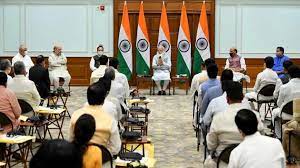
The Union Cabinet led by Prime Minister Narendra Modi yesterday expanded its council of ministers, the first such exercise in the third year of his second term. While the cabinet reshuffle was on the cards for a long time, the move comes at a time when the Modi government faces criticism over the alleged mishandling of the COVID-19 pandemic. The list of ministers also indicates that due attention has been given to upcoming assembly elections and the 2024 Lok Sabha elections. Day before yesterday, two major political developments took place which indicated that the BJP has started preparing for the polls besides appeasing its allies. In the first development, Thawar Chand Gehlot was appointed Governor of Karnataka to make more space for new ministers. Later in the day, a new ministry was created – the Ministry of Cooperation.

The focus has been on Uttar Pradesh, Madhya Pradesh, Odisha and West Bengal. Uttar Pradesh is the most crucial state for the BJP given the number of Lok Sabha seats. The inclusion of the allies like JD(U), Apna Dal etc. indicates that the Modi government is not willing to let go more of its allies since two of its major partners – Shiv Sena and Shiromani Akali Dal had already deserted the NDA over different issues. The move will boost the confidence of its allies and the same will prove beneficial for the saffron party in the coming polls.

Below is the full list of new ministers in Modi Cabinet:

Cabinet Ministers

  • Narayan Rane
  • Sarbananda Sonowal : Ports and Shipping, AYUSH Ministry.
  • Dr Virendra Kumar
  • Jyotiraditya Scindia : Civil Aviation.
  • Ramchandra Prasad Singh : Steel Ministry.
  • Ashwini Vaishnav : Railways, Communication & Electronics and Information Technology.
  • Pashu Pati Kumar Paras: Minister of Food Processing Industries.
  • Kiren Rijiju : Law and Justice Ministry.
  • Dharmendra Pradhan : Education Ministry.
  • Raj Kumar Singh : Power and Ministry of New and Renewable Energy.
  • Hardeep Singh Puri : Petroleum, Housing and Urban Development.
  • Mansukh Mandaviya : Chemicals and Fertilizers, Health Ministry.
  • Bhupender Yadav
  • Parshottam Rupala
  • G Kishen Reddy
  • Anurag Thakur : Information & Broadcasting and Sports.

Ministers of State

Pankaj Choudhary
Anupriya Singh Patel
Satya Pal Singh Baghel
Rajeev Chandrasekhar
Shobha Karandlaje
Bhanu Pratap Singh Verma
Darshana Vikram Jardosh
Meenakshi Lekhi
Annpurna Devi
A Narayanaswamy
Kaushal Kishore
Ajay Bhatt
BL Verma
Ajay Kumar
Chauhan Devusinh
Bhagwanth Khuba
Pratima Bhoumik
Subhas Sarkar
Bhagwat Kishanrao Karad
Rajkumar Ranjan Singh
Bharati Pravin Pawar
Bishweswar Tudu
Shantanu Thakur
Dr Munjapara Mahendrabhai
John Barla
Dr L Murugan
Nishith Pramanik

Kapil Moreshwar Patil

Math 2.0 day

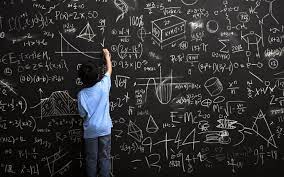
Today is math 2.0 day, but what exactly does that even mean?.With or without knowing we all use math several times every single day. The subject is also important for the advancement of technology. And thus, to celebrate the combination of maths and technology, Math 2.0 Day is celebrated on July 8. Read on to know other details.

Imagine the way the world used to be viewed! Math as known to be important but not thought to be something you could make a living at and the rising tide of technology was considered a fad! Math 2.0 Day reminds us that technology is here to stay!

Every year, Math 2.0 Day is celebrated on July 8. The day is observed to highlight the importance of the combination of maths and technology. The day was formed to celebrate the achievement made through the combination of maths and technology. Math 2.0 Day also helps to educate the masses about the benefits of maths and technology. Without maths and technology, it would have been impossible for us to achieve the various entertainment mediums we have now.

History of Math 2.0 Day

In 2009, the Math Interest Group formed Math 2.0 Day. Math is extremely important for the advancement of science, technology and education.Math 2.0 Day is a celebration of the blending of technology and mathematics. For a lot of us, math wasn’t a favorite subject, we’d spend the entire period staring at the equations and wondering what sort of livid madman designed these torture chambers on paper. Ultimately, however, we realized that math is utterly indispensable in our modern world. If you’ve ever wondered who uses math in their day to day careers, you aren’t alone and we have some answers for you.

Programmers deal with mathematics every day, as it’s the framework upon which all computer operations are formed. Everything from the order of operations to quadratic equations is necessary to make even the simplest program. Scientists are one of the biggest users of mathematics, whether they’re calculating the statistical variance of their data or figuring out how much to add to their chemistry experiment, it’s involved at every step.

One presumes you live in a house, drive a car, or operate a computer? The engineers responsible for designing those things so that they work, and especially in the case of the house, use math to ensure it doesn’t come crumbling down on your head. Math 2.0 day celebrates all these mathematical heroes and more.

How to celebrate Math 2.0 Day

If you’re like me, you probably have your old math books from college laying around. I suggest busting them open and studying them again. Who knows, in the intervening years you may have secretly developed a love for those dancing numbers. If not, make sure that you stop by those people who use math every day and thank them for doing the work so you don’ thave to.Mathematics is one of the most important fields in the world today, and just about everything we know and love is built on its back.

The Story of the Best Selling Video Game of all time: Tetris

Tetris has its origin in the Dorodnitsyn Computing Centre (Research Lab). It was one of the foremost research institutes of the Russian Academy of Sciences, located in St Petersburg, Soviet Union (Now Russia). Created by software researcher Alexey Pajitnov in 1984, Tetris is a simple tile-matching game that took the world by storm upon it’s release.

It was developed for Electronika 60, which was a computer, made in the Soviet Union. This period was the final stage of the Cold war Era and computers were becoming more popular as well.

The game wasn’t intended as a commercial product just like the creation of the music record. But it was to be distributed freely among academic institutions around the Soviet Union and the economic bloc of countries aligned with the USSR in Eurasia, Africa, and the Americas that demonstrated use cases for the software.

As USSR was a communist state, so Pajitnov did not technically own the program as the game was under the ownership of the state. Pajitnov along with the help of a colleague, Dmitry Pavlovsky, and a teen computer programmer, Vadim Gerasimov continued to work on the game project even though commercializing it would have been a risky move under the Soviet government. Gerasimov further ported the game from the old and bulky Elektronika 60 to the more widely used (IBM) compatible PCs.

As Elektronika 60 had no graphics output, the individual blocks in the game were made of different text, but with the port in PC, they were able to support color graphics. This brought the game to life.

Pajitnov and Gerasimov had started distributing Tetris for (PC) in 1985 among their friends and colleagues in various math or computer conventions. Soon the sharing spread and the game was smuggled outside USSR to Hungary. During mid-80s U.S and Japan had a more prevalent console market whereas, in Europe, gaming was primarily done on computers. There was a non-existent software market in Russia and most software was usually copied in floppy disks.

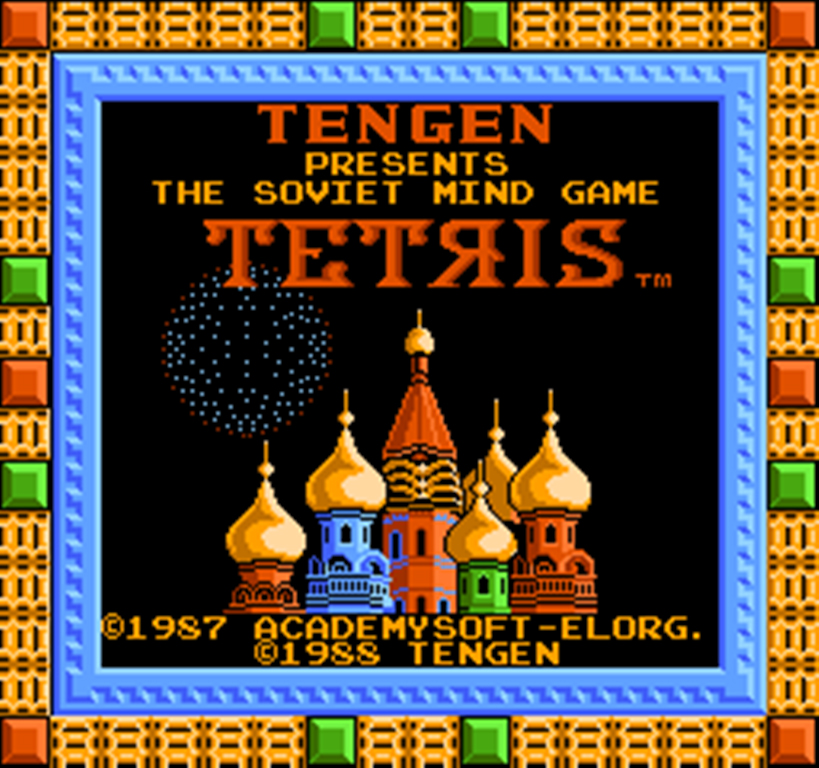
Welcome screen of 1987 version of Tetris

In 1986 Robert Stein, a salesman from the UK-based software company Andromeda spotted Tetris at Hungary’s Institute of Computer Science. He was convinced by the potential of the software and he struck an agreement with Pajitnov to sell the games internationally. But legally Tetris was still under the ownership of the Soviet government.  There was one problem, the agreement was only for the PC and not for any other platform and Stein has struck a deal with Sega to launch the game on their platform. Later Henk Rogers, another salesman from the Netherlands wanted to find a good launch game for the Nintendo’s new Game Boy handheld. The Soviet government was not happy with the Stein deal. But Rogers convinced the Soviet government and they agreed and he also formed a good relationship with Pajitnov. Later Andromeda’s license of Tetris was deemed illegal. Nintendo was given the right to launch the game on its console. The GameBoy was a platform to showcase one of the first video games exported from Russia. The game was a commercial hit and it has been ported to the most number platforms to date. The game also holds the record as the best-selling game of all time. In 1996, Pajitnov was able to reclaim the ownership of the rights and formed the Tetris Company, along with Henk Rogers. Even though he missed collecting the potential royalties for Tetris which were over hundreds of millions, he was still able to secure the future royalties.

References: