Branding is the process of giving a name or a sign or a symbol to a product. One of the most important decisions that a marketer has to take in selling a product is in respect of branding. He/ She has to decide whether the firm’s product will be marketed under a brand name or a generic name. Generic name refers to the name of the class of the product. If the products were sold by their generic names, it would be difficult for the marketers to distinguish their products from that of competitors. Therefore, most of the marketers give a name to their products, which helps in identifying and distinguishing their products from the competitors products.
As the traditional marketing tools and techniques has been replaced by the modern marketing tools and techniques and the number of factories of every good has now been increased, the producer tries to make their product different from other producer of the same product. These things give birth to a new marketing dimension and new era of marketing by the emergence of BRANDING. In olden days, the brands were just a mark, sign or some sort of numbers to differentiate their goods. The brand then builds many function which creates the value in the mind of the customer. Like the advertisement, which is the function of the branding and it creates a unique association and memory link in the minds of customers on one side and on the other hand, it creates the demand for your goods and services as it attracts the customer, it creates awareness about your production and also educate the customer about the use of goods and services.
ADVANTAGES OF BRANDING To the marketers
Enables making product differentiation.
Ease in introduction of new product.
Differential pricing.
Helps in advertising and display programs. To the customers
Helps in product identification.
Ensures quality.
Status symbol.
CHARACTERISTICS OF A GOOD BRAND NAME
A brand name should be short, easy to pronounce, spell, recognize and remember.
A brand name should suggest the product’s benefits and qualities. It should be appropriate to the product’s function.
A brand name should be distinctive.
Chosen name should have staying power i.e., it should not het out of date.
The brand name should be sufficiently versatile to accommodate new products, which are added to the product line.
It should be adaptable to packaging or labelling requirements, to different advertising media and to different languages.
It should be capable of being registered and protected legally.
Brand image is positive and creates many customers and build strong customers relationship with them and maintain loyalty. But if the brand image is negative, it will be harmful as there will be no customers repetition and retention. So, firm pays a huge investment on advertisement to maintain the brand image and brand equity management programs. As brand image creates perception in customer mind so after purchase, if cognitive dissonance occurs then there is a change in customer’s behavior. Brand association will impact the consumer buying pattern and behavior. These associations will affect your decision positively if the brand image is positive. Brand loyalty reduce the cost for the firm to retain the customer forever. A loyal customer is helpful for the firm to create new customers. Generally, brand has greater impact on consumer buying behavior. But at local level, behavior of customer also changes due to branded products and services. Consumer buying behavior is the study of actions of consumer towards planning, purchasing and consuming goods and services. Consumer buying decision consists of 7 steps:
Need recognition
Information search
Pre-purchase evaluation
Choose alternative
Purchase consumption
Post consumption evaluation
Feedback Now, market has become too much competitive due to hyper competition in the market. The best way is to compete these conditions by developing a strong brand image. Basically, the key driver of brand equity is simply brand image. By easily remembering brand , quality production increases which leads to sales increase and makes mire profit. It is the best way which leads towards maximizing market share and to sustain competitive advantage and strong position in the market.
One way to make a big difference to your life is to gain confidence. From negotiating your salary, to standing up for yourself, to believing you can make your dreams a reality, confidence is often the most important ingredient. But confidence doesn’t come naturally to most of us. For the majority of people, those big moments where you have to believe in yourself usually result in self-doubt and a little anxiety. This is normal.
The good news is that confidence isn’t just a magic quality that some people have and some people don’t. Confidence can be developed, it just takes a few tricks and some practice. It might seem impossible at the start, but if you keep a few things in mind then you really can gain confidence with time. Here’s a few simple tips to get you started.
1. Take care of yourself
One of the best ways you can begin to value yourself and see your own importance more is to start taking care of yourself a little more. Take some time to make sure you are eating a little better or giving your body the exercise it needs. Over time, you will begin to see the improvements you have made to your health and the importance of valuing yourself.
2. Give someone some help
It could be something small, with a neighbour, a friend, a colleague, or a complete stranger. Most of us have a family member who could do with a little assistance in their lives, especially the elderly who need caregiving sometimes. By making a difference in someone else’s life you will see just how impactful you can be, which can be a great way to gain confidence.
3. That voice is not right
We all have voices in our head that tell us things we shouldn’t listen to. Those voices can trick us into doing silly things, but did you know there are some great psychological techniques for ignoring or controlling those voices? The next time you hear the voice that tells you that you can’t do something, or don’t deserve something, just remember “It’s just a voice, that doesn’t make it accurate.”
4.It’s not about what you can do right now
If someone asks you to do something that you can’t do, don’t lose confidence. The only important thing that is that you can find the motivation to learn how to do this thing, or that you can tell the person this is just not possible. Having confidence is not just about who you are right now. It’s definitely not about who you used to be. It’s about who you are going to become.
So, keep these few tips in mind, gain confidence little by little each day, and keep moving forward. This can make a real difference to your life and work, so give it a go. A more confident you starts today.
The problem of National Integration is universal and it involves reconciliation of all diversities to build up national solidarity. Nationalism and regionalism do not go together. If Nationalism represents the ‘forces of unity and cohesion’, regionalism is a symbol of ‘Particularistic identity’.
The process of National Integrations, therefore, tries to achieve both —the forces of national unity, solidarity and cohesion and the regional identity and freedom. In brief, national integration helps building up the national character out of the individual character. It involves national cohesiveness through territorial unity. Amidst socio-cultural, regional, religious, linguistic and economic diversities, national integration aims at the process of uniting together various parts of the society into a “functions whole”, where in there shall be “reduction of all barriers and tolerance of all differences unity, shared values and consensus.”
However, national integration lacks a precise definition. To a common man, the term ‘integration’ implies ‘the process of becoming a whole’. It is more a psychological, behavioural and emotional concept. In a limited sense, it (National integration) believes in a sense of territorial nationality which overshadows or eliminates the subordinate parochial loyalties .
National integration is highly necessary in a multi-religious, multi-ethnic, multi-caste, multi-regional society like India. Realizing the need of it, the National Integration Conference organised in 1961, had suggested a code of conduct for political parties. Besides the suggestions of the National Integration Conference, some other steps can be recommended for securing high level of national integration.
(1) Promotion of Secularism:
The spirit of secularism is highly necessary in Indian multi-religious society. For this reason the National Integration Conference of 1961, suggested that no political party should indulge in any activity aggravating the differences or causing any tension between various castes, communities or linguistic groups. There is a demand to ban all communal parties and communal organisations by which the danger of communalism can be made less serious. Any sorts of activities creating communal reactions in the public mind should be prohibited. No discrimination among the people on the grounds of religion should be made.
2) Cultural Integration:
Recognizing the existence of a wide range of groups, inter-group relations should be promoted in India. Though not uniformity, yet unity among the people can be created with a common set of values. National goal or national objectives generate cultural integration which partially favours emotional integration of the nation.
(3) Economic Development:
Regional imbalance in economic development and acute poverty of certain section of the people impose serious impediments in the achievement of national integration. Despite the adoption of five-year economic planning’s and a number of socio-economic welfare measures, poverty continues as a serious problem. A great chunk of people remain far away of national mainstream. Economic development means the development of whole people and the development of entire nation. Special efforts are necessary in this direction to ensure common national prosperity.
Education:
Illiterate and ignorant people cannot be conscious of the values of national integration. Education only can promote faith in the integrity and the moral worth of the individual. The educational institutions can play important role as forums for arousing the spirit of national integration.
The study and solution of various social problems can be assigned to the educational institutions. In case of higher educational institutions like colleges and universities, exchange of teachers and students from one institution to another for lectures or seminars can promote national integration. Reading materials used by students in schools and colleges should be properly examined to avoid communalization of text books.
Political and Administrative Measures:
Since India is a federal-democratic country, its integration in all respects should also be done on a democratic basis. Each ethnic, caste, tribal, religious and linguistic group should have freedom for protecting and promoting their own culture and traditions. Analyzing the process of national integration in India, Prof. Rasheeduddin Khan has observed that it means cohesion not fusion, unity but not uniformity, reconciliation but not merger, agglomeration but not assimilation, solidarity but not regimentation of the people constituting our political community. Emotional integration with the development of a strong brotherhood among the people, discourage the growth of separatism, regionalism or secessionism.
The agencies of media both electronic and print should be used for inculcating a national outlook. Academic seminars and entertainment programmes on the theme of communal harmony should be organised. Cultural Academies should be established and they should work for strengthening the movement for unity.
Non-Government Organisations:
Besides the governmental steps, non-government social service organisations can play an important role in strengthening the process of national integration. These organisations can create necessary social awareness for bringing social reforms and change in the mind set of the people. Emergence of awareness can subsequently promote national integration .
From plants to tress and animal to men all, species communicate in their all manner and style. We as a human are capable of spoken language. Effective communication compromises of technology since its start in primitive times as communication is essential for variety of reasons. Human as a society use communication to inform, educate, entertain, inspire, establish power, buff and control the ambience around.
Communication
Communication is a way to imparting and exchanging information and messages. Communication is of two types and the important one is verbal communication that helped us in developing as a society. It is not hard to imagine about the kind of life without any means of verbal communication. Simply, non-progressive is what comes to the mind. However non-verbal communication has been the oldest mode of communication and exited before written and verbal but we couldn’t have achieved advancement with non-verbal.
Various mode
Advancement of communication did not happened in a day. From nonverbal to verbal, it’s been long and hectic journey to form a developed civilization. One can imagine a world with no verbal communication in it. One can’t even think about it. Communication has mostly done a good for human existence’s and assisted it in good ways, often. Communication has always exited in different forms. And it was only be possible through verbal communication as it gives human a chance to express and connect. It is such an important element of human survival and business success. From print to electronic and to wireless mode, communication has witnessed a gradual change with passing time. Many of these methods that are also called the initial stage to communicate were a unsystematic form of sign and symbols. And it took around 3 million years to communicate in an intentional and manufactured format. Among all the sets of language at their primitive stage, the most well-known is the painting being painted on cave walls by using fruits and animal bloods. Homo sapiens used to communicate to each and send signals through these paintings. This can be considered as the baby stepping in the world of communication.
Mode of communication
Print
Johann Gutenberg is the man behind the invention of printing press in 1448. Technology utilized was a vision for a device that would utilize movable type using blocks with pre-printed text. Success of this vision allowed printing of books to be mass-produced and with effective cost cutting as well. Invention of printing press took the world with printing of pamphlet, books, magazine and the newspaper.
Electronic
People desire to progress quick and accurately lead to invention of electronic mode of communication. Radio is another powerful and popular mode of communication. It was a new and portable form of communication and entertainment. It began to serve as communication with short wave length during First World War that turned as the hottest technology for communication and was invented in 1920s.
Television
Termed as an idiot box, television was invented in 1939. With both audio and video, it gained popularity in no time. It can educate, entertain or inform audiences worldwide. With discovery of satellite, television has made world a global village. it now easy to get and witness information and happenings of one place sitting in another corner of the world. Technology of TV sends electronic transmissions that evident themselves on receiving devices as either sound or video in it. . There are many mode of communication that we use to connect with people around. It
Telephone to cell phone
In 1876, Alexander Bell, invented telephone by transmitting vibration through air and received the same vibration in another place. It was transmission of sound and pitch through a wire. bel applied the same concept as it is composed of many complex sound vibrations.
Michael Faraday wanted to check if space could conduct electricity and invented the first portable handset. Now cell phones have become an integral part of our life. It has become hard to think of existence without cell phones.
Communication simply is a technology that is essential to create social sense of cohesion. People have used the communication and technology to develop the society making it a global, village. Every day, new invention in the field of communication is enhancing behavior of mankind in different ways. Communication has morphed into an endless variety of ways to express oneself to other humans
The sad demise of Kai Po Che actor Sushant Singh Rajput sent shockwaves to the entire world. God alone knows the real reason behind such a drastic and brave step taken by Sushant to depart from the world into eternal peace.
Now, Rajput being from a non-filmy background created a lot of stir in the film industry. As everyone is well acquainted with the knowledge of Bollywood star kids and nepotism, a synonym connected to a certain privilege, most succumb to success easily deny.
The actor was often bullied and trolled by the Bollywood’s most successful and popular bandwagon including well-established directors and mainly actress student Of The Year starlet Alia Bhatt for nearly belittling and falling short of all empathy for the actor.
It seemed as if the needles were straight targeted towards Sushant because of his background.
However, the recent developments suggest that the actor was undergoing a mental health treatment for the past 6-months which the industry was unaware. An hour before he passed away, two recent calls made to his rumoured girlfriend Rhea went unanswered.
Director Karan Johar and Alia Bhatt were called out for bullying the actor and is being touted as the main cause for his recent developments of feeling indifferent. In one of the eps of Coffee With Karan, Alia made a rude reference to Sushant, saying ”Who Sushant”, answering to one of the rapid-fire rounds.
While so much has happened. It was Kangana Ranaut who spoke the reality of filmy world plastered by invisible crudeness. May Sushant rest in peace and let us all pray for his soul to be in a better place.
Mental health refers to cognitive, behavioral, and emotional well-being. It is all about how people think, feel, and behave. People sometimes use the term “mental health” to mean the absence of a mental disorder.
However, this link also works in the other direction. Factors in people’s lives, interpersonal connections, and physical factors can all contribute to mental health disruptions.
Looking after mental health can preserve a person’s ability to enjoy life. Doing this involves reaching a balance between life activities, responsibilities, and efforts to achieve psychological resilience.
Conditions such as stress, depression, and anxiety can all affect mental health and disrupt a person’s routine.
Although the term mental health is in common use, many conditions that doctors recognize as psychological disorders have physical roots.
In this article, we explain what people mean by mental health and mental illness. We also describe the most common types of mental disorders, including their early signs and how to treat them.
What is mental health?
Mental health disorders are one of the leading causes of disability in the U.S.
According to the World Health Organization (WHO):
“Mental health is a state of well-being in which an individual realizes his or her own abilities, can cope with the normal stresses of life, can work productively, and is able to make a contribution to his or her community.”
The WHO stress that mental health is “more than just the absence of mental disorders or disabilities.” Peak mental health is about not only avoiding active conditions but also looking after ongoing wellness and happiness.
They also emphasize that preserving and restoring mental health is crucial on an individual basis, as well as throughout different communities and societies the world over.
In the United States, the National Alliance on Mental Illness estimate that almost 1 in 5 adults experience mental health problems each year.
In 2017, an estimated 11.2 million adults in the U.S., or about 4.5% of adults, had a severe psychological condition, according to the National Institute of Mental Health
Risk factors for mental health conditions
Everyone has some risk of developing a mental health disorder, no matter their age, sex, income, or ethnicity.
In the U.S. and much of the developed world, mental disorders are one of the leading causes of disability.
Social and financial circumstances, biological factors, and lifestyle choices can all shape a person’s mental health.
A large proportion of people with a mental health disorder have more than one condition at a time.
It is important to note that good mental health depends on a delicate balance of factors and that several elements of life and the world at large can work together to contribute to disorders.
The following factors may contribute to mental health disruptions.
Continuous social and economic pressure
Having limited financial means or belonging to a marginalized or persecuted ethnic group can increase the risk of mental health disorders.
A 2015 study of 903 families in Iran identified several socioeconomic causes of mental health conditions, including poverty and living on the outskirts of a large city.
The researchers also explained the difference in the availability and quality of mental health treatment for certain groups in terms of modifiable factors, which can change over time, and nonmodifiable factors, which are permanent.
Modifiable factors for mental health disorders include:
socioeconomic conditions, such whether work is available in the local area
occupation
a person’s level of social involvement
education
housing quality
Nonmodifiable factors include:
gender
age
ethnicity
The study lists gender as both a modifiable and nonmodifiable factor. The researchers found that being female increased the risk of low mental health status by 3.96 times.
People with a “weak economic status” also scored highest for mental health conditions in this study.
Biological factors
The NIMH suggest that genetic family history can increase the likelihood of mental health conditions, as certain genes and gene variants put a person at higher risk.
However, many other factors contribute to the development of these disorders.
Having a gene with links to a mental health disorder, such as depression or schizophrenia, does not guarantee that a condition will develop. Likewise, people without related genes or a family history of mental illness can still have mental health issues.
Mental health conditions such as stress, depression, and anxiety may develop due to underlying, life-changing physical health problems, such as cancer, diabetes, and chronic pain.
Common mental health disorders
The most common types of mental illness are as follows:
anxiety disorders
mood disorders
schizophrenia disorders
Anxiety disorders
According to the Anxiety and Depression Association of America, anxiety disorders are the most common type of mental illness.
People with these conditions have severe fear or anxiety, which relates to certain objects or situations. Most people with an anxiety disorder will try to avoid exposure to whatever triggers their anxiety.
Examples of anxiety disorders include:
Generalized anxiety disorder (GAD)
The American Psychiatric Association define GAD as disproportionate worry that disrupts everyday living.
People might also experience physical symptoms, including
restlessness
fatigue
tense muscles
interrupted sleep
A bout of anxiety symptoms does not necessarily need a specific trigger in people with GAD.
They may experience excessive anxiety on encountering everyday situations that do not present a direct danger, such as chores or keeping appointments. A person with GAD may sometimes feel anxiety with no trigger at all.
Panic disorders
People with a panic disorder experience regular panic attacks, which involve sudden, overwhelming terror or a sense of imminent disaster and death.
Phobias
There are different types of phobia:
Simple phobias: These might involve a disproportionate fear of specific objects, scenarios, or animals. A fear of spiders is a common example.
Social phobia: Sometimes known as social anxiety, this is a fear of being subject to the judgment of others. People with social phobia often restrict their exposure to social environments.
Agoraphobia: This term refers to a fear of situations in which getting away may be difficult, such as being in an elevator or moving train. Many people misunderstand this phobia as a fear of being outside.
Phobias are deeply personal, and doctors do not know every type. There could be thousands of phobias, and what might seem unusual to one person may be a severe problem that dominates daily life for another.
Obsessive-compulsive disorder (OCD)
People with OCD have obsessions and compulsions. In other words, they experience constant, stressful thoughts and a powerful urge to perform repetitive acts, such as hand washing.
Post-traumatic stress disorder (PTSD)
PTSD can occur after a person experiences or witnesses a deeply stressful or traumatic event.
During this type of event, the person thinks that their life or other people’s lives are in danger. They may feel afraid or that they have no control over what is happening.
These sensations of trauma and fear may then contribute to PTSD.
Mood disorders
People may also refer to mood disorders as affective disorders or depressive disorders.
People with these conditions have significant changes in mood, generally involving either mania, which is a period of high energy and elation, or depression. Examples of mood disorders include:
Major depression: An individual with major depression experiences a constant low mood and loses interest in activities and events that they previously enjoyed. They can feel prolonged periods of sadness or extreme sadness.
Bipolar disorder: A person with bipolar disorder experiences unusual changes in their mood, energy levels, levels of activity, and ability to continue with daily life. Periods of high mood are known as manic phases, while depressive phases bring on low mood.
Seasonal affective disorder (SAD): Reduced daylight triggers during the fall, winter, and early spring months trigger this type of major depression. It is most common in countries far from the equator.
Schizophrenia disorders
Mental health authorities are still trying to determine whether schizophrenia is a single disorder or a group of related illnesses. It is a highly complex condition.
Signs of schizophrenia typically develop between the ages of 16 and 30 years, according to the NIMH. The individual will have thoughts that appear fragmented, and they may also find it hard to process information.
Schizophrenia has negative and positive symptoms. Positive symptoms include delusions, thought disorders, and hallucinations. Negative symptoms include withdrawal, lack of motivation, and a flat or inappropriate mood.
Early signs
There is no physical test or scan that reliably indicates whether a person has developed a mental illness. However, people should look out for the following as possible signs of a mental health disorder:
withdrawing from friends, family, and colleagues
avoiding activities that they would normally enjoy
sleeping too much or too little
eating too much or too little
feeling hopeless
having consistently low energy
using mood-altering substances, including alcohol and nicotine, more frequently
displaying negative emotions
being confused
being unable to complete daily tasks, such as getting to work or cooking a meal
having persistent thoughts or memories that reappear regularly
thinking of causing physical harm to themselves or others
hearing voices
experiencing delusions
Treatment
There are various methods for managing mental health problems. Treatment is highly individual, and what works for one person may not work for another.
Some strategies or treatments are more successful in combination with others. A person living with a chronic mental disorder may choose different options at various stages in their life.
The individual needs to work closely with a doctor who can help them identify their needs and provide them with suitable treatment.
Treatments can include:
Psychotherapy, or talking therapies
This type of treatment takes a psychological approach to treating mental illness. Cognitive behavioural Therapy, exposure therapy, and dialectical behavior therapy are examples.
Psychiatrists, psychologists, psychotherapists, and some primary care physicians carry out this type of treatment.
It can help people understand the root of their mental illness and start to work on more healthful thought patterns that support everyday living and reduce the risk of isolation and self-harm.
Medication
Some people take prescribed medications, such as antidepressants, antipsychotics, and anxiolytic drugs.
Although these cannot cure mental disorders, some medications can improve symptoms and help a person resume social interaction and a normal routine while they work on their mental health.
Some of these medications work by boosting the body’s absorption of feel-good chemicals, such as serotonin, from the brain. Other drugs either boost the overall levels of these chemicals or prevent their degradation or destruction.
Self-help
A person coping with mental health difficulties will usually need to make changes to their lifestyle to facilitate wellness.
Such changes might include reducing alcohol intake, sleeping more, and eating a balanced, nutritious diet. People may need to take time away from work or resolve issues with personal relationships that may be causing damage to their mental health.
People with conditions such as an anxiety or depressive disorder may benefit from relaxation techniques, which include deep breathing, meditation, and mindfulness.
Having a support network, whether via self-help groups or close friends and family, can also be essential to recovery from mental illness.
Suicide prevention
If you know someone at immediate risk of self-harm, suicide, or hurting another person:
Ask the tough question: “Are you considering suicide?”
Listen to the person without judgment.
Call 911 or the local emergency number, or text TALK to 741741 to communicate with a trained crisis counselor.
Stay with the person until professional help arrives.
Try to remove any weapons, medications, or other potentially harmful objects.
Typhoid Fever or Typhoid is a systemic enteric infection caused by bacteria usually through ingestion of contaminated food or water. The disease is also referred by several other names such as Gastric Fever, Enteric Fever, Abdominal Typhus, Infantile Remittent Fever, Slow Fever, Nervous Fever, and Pythogenic Fever. The disease causes several symptoms causing mild to severe problems for the patients. The symptoms are generally seen from six to thirty days after exposure. Generally there is the gradual onset of high fever for several days, weakness, abdominal pain, constipation, headaches, and vomiting. Some people also develop a skin rash with red colored spots. The cause of the disease is the bacterium Salmonella typhi which is also known as Salmonella enterica serotype typhi , mainly growing in the intestines and blood. Risk factors include poor sanitation and poor hygiene. Diagnosis of the disease is done by either culturing the bacteria or detecting the bacterium’s DNA in the blood, stool, or bone marrow. Culturing the bacterium is little bit difficult so Bone marrow testing is the mostly used method. It has been observed that a typhoid vaccine can prevent about 40-90% of the infection during the first 2-7 years. But this vaccine is always recommended for the people at high risk or travelling to the places where this disease is so common. Other efforts which can be done to prevent the disease are clean drinking water, good sanitation, and hand washing. The disease is usually treated with several antibiotics such as Azithromycin, Fluoroquinolones or third generation cephalosporins.
SIGNS AND SYMPTOMS Usually, the complete course of untreated typhoid fever is divided into 4 different stages, where the each stage lasts for a week which makes the patient completely exhausted. • In the first week, the body temperature of the patient rises slowly, and the fever fluctuations are generally seen with relative bradycardia, malaise, headache, and cough. A bloody nose is also seen in this quarter of the disease and abdominal pain is also possible. There is also a decrease in the number of WBCs. Widal test is negative in the first week of the disease.
• In the second week, the person is often too tired to get up, with a very high fever and bradycardia is continued in this stage also with dicrotic pulse wave. In this stage, Delirium is frequent which gives the typhoid another name i.e. NERVOUS FEVER. Rose spots also appear on the lower chest and abdomen. Rhonchi are heard in lung bases. Diarrhea can occur in this stage : six to eight stools in a day, green, comparable to pea soup, with a characteristic foul smell. However, constipation is also frequent. The spleen and liver is enlarged and liver transaminases are elevated. Patients can still test positive.
The major symptoms of this fever is that the fever usually rises in the afternoon up to the first and second week.
• In the third week of the fever, a number of complications can occur like : Intestinal hemorrhage due to bleeding in congested Peyer’s patches: it can be very serious but is not usually fatal. Intestinal perforation in the distal ileum: this is a very serious complication and is usually fatal. Encephalitis. Respiratory diseases such as pneumonia and acute bronchitis. Neuropsychiatric symptoms with picking at bedclothes or imaginary objects. Metastatic abscesses, cholestasis, endocarditis, and osteitis. The fever is usually very high and oscillates very little over 24 hours. Dehydration is also caused. Platelet count goes down and risk of bleeding rises.
If you pick up a dictionary, the definition you’ll find for the word ‘feminism’. In simple terms, there shouldn’t be any injustice met out to either sex. They should be treated equally. But, off late, a new type of feminism is developing which is rightly called as pseudo feminism. Pseudo feminists hold a strong resolve to correct all the injustices done to women, mostly by lashing out at men and demeaning them. What they forget is the basic essence of feminism movement: equality. Another form of pseudo feminism, according to me, is the feminism of convenience. The biggest example being: men paying for dates. If we’re as equal as women proclaim to be, why can’t a restaurant bill be split between the two? The reason is simple-men are too egoistic to let a woman pay, and for a few women it miraculously becomes a man’s job to pay for the date. Where, I ask these feminists, does the feminism vanish then?
Feminism is now a muddied term. Difficult to say what it means today. We often don’t realise it, but pseudo feminism is all around us, hiding behind feminism in clandestine. We’re the women shouting for equal rights everywhere, but don’t waste a single minute asking a guy sitting on a Ladies Reserved seat to vacate it. Why do we need reservations in general coaches? Since we’re able bodied, strong, grown-up women of strength, can’t we stand in a general coach? Men doing 9-5 jobs, burning their hours toiling hard to earn, are as tired as we are. It is just a very preposterous notion. Like it’s correctly said, two wrongs don’t make a right.
Although they are in the minority, it’s a crystal clear truth there are men who too are subjected to sexual crimes. The numbers of cases reported to the police are on the lower side, because most of the men don’t report such crime for the fear of being ridiculed at, not being believed and instead facing the charges themselves. Men are mostly kidnapped and abducted for illegal sexual intercourse, forced marriages, prostitution, etc. The number of such victims is really low but it’s a fact we cannot ignore. When we are talking of rising violence against women, we shouldn’t neglect the fact that somewhere out there are men also being subjected to same brutalities.
Board results are a few months away, but a boy has passed with flying colors by refusing to be part of a plan to rape a girl, hatched by the girl herself, who was pretending to be a boy. The boy passed but, many say, feminism failed. They have been saying that for years now. They are not too off the mark though. While it may not have failed, it sure has taken a huge hit.
Fake accounts, false allegations and fraudulent charges have harmed men and their reputations. They are also building a case against women’s right to stay in the fight for justice. Part of the problem is the fact that the odds are heavily stacked against women. But another part of the problem is the way women used social media to fight this battle.
Each true story helps build credibility. Each false story is turned into a weapon against the fight for gender justice. The girl, who faked herself as a boy, is not part of the Bois Locker Room chats, but the story is now all about this one girl who faked her identity.
So what should women do?
I will answer with what they should not.
One, do not shoot and scoot. Don’t get into it if you cannot stay in it. Weigh in before you jump in. This is for the long haul. There is a lot of mudslinging that happens. You can’t escape the splashes.
Two, do not use fake accounts to bring down men. It’s easy to prove. The consequences are for everyone – the man, the movement and also you. Take care of You. Take care of the fight that is for us to stand equal to men with no biases in workplaces, no casual sexism, no acid attacks, no rapes and no honor killings.
If true feminism was followed, then we would treat all the victims equally. Victims would cease to be women or men, but just victims of abuse. But sadly, that is not the case. Pseudo feminism shouts out loudly that men can’t be raped, men can’t be tormented, and men claiming to have been put under such atrocities are lying cheats. It’s most likely that I would be branded ‘anti-feminist’ by pseudo feminists all around, but I don’t mind. I don’t mind because I know how to stand up for my fellow sisters when they actually need it.
When a woman is put on fire, when she is raped, is brutalized, is stripped naked on the streets, forced to quit her studies to marry a man three times her senior in age, when she is blamed if she is raped, or teased, when a woman is beaten repeatedly for refusing to pressurize her parents into paying dowry, when she is considered inferior to her male counterparts, that is when I need to give voice to my anger and lash out at the people responsible for it. If I am a true feminist, I will do the same if it were a man being stoned on the streets, being raped, being accused of a fake rape, being doubted over just because he is a man. As Gloria Steinem rightly said, a feminist is anyone who recognizes the equality and full humanity of women and men.
Not all men do it, but all women suffer through it.
It is easy to urge swayed by the plethora of activities which occur in college. Amidst all this it’s crucial to stay track of the tutorial workload or it’s commonplace to urge caught up by the pressure during the last months of the semester. Check out these tips for effective time management. 1. Write down everythingWith everything going digital, we frequently forget to truly write things down. Be it assignment deadlines or extra classes, writing down saves us from the last moment panic. Keep a separate notebook to write down down everything important. This helps in proper planning and completing the tasks. 2. Cellphone as an efficient toolIt is easy to get lost in the world of endless scrolling in the social networking apps. But with self regulation we can use our mobile phone as our best tool. Keep a copy of the class notes and books in the digital form. This helps in revising things even when books aren’t around. 3. Maintain your healthDo not take your health for granted. Having irregular sleeping habits, improper diets, excessive alcohol and drug usage deteriorate the body slowly. Without proper health, it’s impossible to cope up with college academics, extra-curriculars. Thus your health should be your first priority. 4. Be organizedKeep your things during a way such you are doing not need to spend hours just checking out them. Having books, notebooks, assignment copies in proper places saves tons of your time and helps in completing task faster. Even for the digital copies, arrange them in proper directories. It is also important to stay only the required items and take away the rubbish . 5. Prioritize your tasksYou should have a clear idea of what to do when. Prioritize your activities. This helps in increasing your overall efficiency. It is okay not to do all those things which others are doing. Focus on your goals and work on reaching them.
Time management is probably the foremost crucial element of productivity and it’s also what we get wrong most of the time. Either we get too aggressive about managing time that we stress ourselves beyond the limit or we abate such a lot that each one the work gets accumulated for the last hour. Try to follow the tips below
1 . Say no to micro and macro managementDo not think too ahead when managing time. In that way all what happens is building castles within the air until all of them break down. Also don’t think too rigorously i.e by every half an hour for what you’ve got to try to to . Set an achievable target consistent with your potential and check out to realize it within the deadline set. 2. Write down the tasksYou can use simple note taking apps like Google Keep to notice down your goals. You can also use a Whatsapp group (where you’re the only member) to stay a note of the essential things. Writing down a task prevents you from forgetting it and acts as a push to finish it. 3. Year, month, week, dayBreak your goal into the months needed to finish it. Then further reduce it into rough plans for weeks. From here you can set your daily targets and work on them. Before getting to sleep, have your targets ready for subsequent day. It will take considerable effort to stick within the first few days but once you begin you’ll adapt to the target. 4. Rewards and buffer timeMicro-rewards for completing every task gives you another reason to end it. It can be anything from eating your favourite ice cream to watch that long awaited movie. Think that you simply wouldn’t roll in the hay until you finish your goal. Apart from this, keep some buffer time within the routine. It adds flexibility to the schedule and may be helpful if you miss the target thanks to some reason. Read this text on additional tips to enhance yourself on a daily basis. 5. Prioritization and Cutoff tasksPrioritise your tasks. Make sure you are doing the foremost important tasks first. People often fall under a trap of finishing the better tasks first, thinking that they had a productive time. But that is only fooling yourself. You know automatically which would be the most challenging task. So confirm that’s finished first at any cost. Manage your tasks well. Apart from this, set a cutoff for every task. This means that albeit the whole task isn’t finished, confirm to end an honest amount of it.
6. Stay clear of toxic activitiesDo not engage in activities that are toxic and unnecessary. They do not increase your growth in any manner and are nothing but wastage of your energy and time. Stay beyond all such things which prevent you from completing your tasks and reduce the general productivity.
Your mental health influences how you think, feel, and behave in daily life. It also affects your ability to cope with stress, overcome challenges, build relationships, and recover from life’s setbacks and hardships.
Strong mental health isn’t just the absence of mental health problems. Being mentally or emotionally healthy is much more than being free of depression, anxiety, or other psychological issues. Rather than the absence of mental illness, mental health refers to the presence of positive characteristics.
People who are mentally healthy have
A sense of contentment
A zest for living and the ability to laugh and have fun.
The ability to deal with stress and bounce back from adversity.
A sense of meaning and purpose, in both their activities and their relationships.
The flexibility to learn new skills and adapt to change.
A balance between work and play, rest and activity, etc.
The ability to build and maintain fulfilling relationships.
Self-confidence and high self-esteem.
The relationship between resilience and mental health
Having solid mental health doesn’t mean that you never go through bad times or experience emotional problems. We all go through disappointments, loss, and change. And while these are normal parts of life, they can still cause sadness, anxiety, and stress. But just as physically healthy people are better able to bounce back from illness or injury, people with strong mental health are better able to bounce back from adversity, trauma, and stress. This ability is called resilience.
People who are emotionally and mentally resilient have the tools for coping with difficult situations and maintaining a positive outlook. They remain focused, flexible, and productive, in bad times as well as good. Their resilience also makes them less afraid of new experiences or an uncertain future. Even when they don’t immediately know how a problem will get resolved, they are hopeful that a solution will eventually be found.
Make social connection a priority—especially face-to-face
No matter how much time you devote to improving your mental and emotional health, you will still need the company of others to feel and function at your best. Humans are social creatures with emotional needs for relationships and positive connections to others. We’re not meant to survive, let alone thrive, in isolation. Our social brains crave companionship—even when experience has made us shy and distrustful of others.
Why is face-to-face connection so important?
Phone calls and social networks have their place, but nothing can beat the stress-busting, mood-boosting power of quality face-to-face time with other people.
The key is to interact with someone who is a “good listener”—someone you can regularly talk to in person, who will listen to you without their own conceptions of how you should think or feel. A good listener will listen to the feelings behind your words, and won’t interrupt, judge, or criticize you.
Reaching out is not a sign of weakness and it won’t make you a burden to others. Most people are flattered if you trust them enough to confide in them. If you don’t feel that you have anyone to turn to, there are good ways to build new friendship and improve your support network. In the meantime, there is still a great benefit to interacting face-to-face with acquaintances or people you encounter during the day, such as neighbors, people in the checkout line or on the bus, or the person serving you your morning coffee. Make eye contact and exchange a smile, a friendly greeting, or small talk
Learn how to keep your stress levels in check
Stress takes a heavy toll on mental and emotional health, so it’s important to keep it under control. While not all stressors can be avoided, stress management strategies can help you brings things back into balance.
Talk to a friendly face. Face-to-face social interaction with someone who cares about you is the most effective way to calm your nervous system and relieve stress. Interacting with another person can quickly put the brakes on damaging stress responses like “fight-or-flight.” It also releases stress-busting hormones, so you’ll feel better even if you’re unable to alter the stressful situation itself.
Make leisure time a priority. Partake in your favorite activities for no reason other than that they make you feel good. Go to a funny movie, take a walk on the beach, listen to music, read a good book, or talk to a friend. Doing things just because they are fun is no indulgence. Play is an emotional and mental health necessity.
Make time for contemplation and appreciation. Think about the things you’re grateful for. Mediate, pray, enjoy the sunset, or simply take a moment to pay attention to what is good, positive, and beautiful as you go about your day.
Don’t skimp on sleep—it matters more than you think
If you lead a busy life, cutting back on sleep may seem like a smart move. But when it comes to your mental health, getting enough sleep is a necessity, not a luxury. Skipping even a few hours here and there can take a toll on your mood, energy, mental sharpness, and ability to handle stress. And over the long-term, chronic sleep loss can wreak havoc on your health and outlook.
While adults should aim for seven to nine hours of quality sleep each night, it’s often unrealistic to expect sleep to come the moment you lay down and close your eyes. Your brain needs time to unwind at the end of the day. That means taking a break from the stimulation of screens—TV, phone, tablet, computer—in the two hours before bedtime, putting aside work, and postponing arguments, worrying, or brainstorming until the next day.
Find purpose and meaning in life
Everyone derives meaning and purpose in different ways that involve benefitting others, as well as yourself. You may think of it as a way to feel needed, feel good about yourself, a purpose that drives you on, or simply a reason to get out of bed in the morning. In biological terms, finding meaning and purpose is essential to brain health as it can help generate new cells and create new neural pathways in the brain. It can also strengthen your immune system, alleviate pain, relieve stress, and keep you motivated to pursue the other steps to improve mental and emotional health. However you derive meaning and purpose in life, it’s important to do it every day.
When to seek professional help
If you’ve made consistent efforts to improve your mental and emotional health and still aren’t functioning optimally at home, work, or in your relationships, it may be time to seek professional help. Following these self-help steps will still benefit you, though. In fact, input from a caring professional can often help motivate us to take better care of ourselves.
Each and every life matters . It is very much important to know there is always more to life than some problems.
“Men have emotions too so don’t be shy to cry. It’s ok to let it out. It’s not weakness but a sign of strength. Be man to feel. Feeling is human.” Tweet from Sushanth Singh Rajput. People can’t beleive that the same man who tweeted can commit suicide.Being a man doesn’t mean you can’t cry or show your pain in any form. Tears and Pain is not gendercentric, as it is a form of expression by humans and all species. Have the courage to express your emotions for better.
My 50 DREAMS & counting…! 😉
Learn how to Fly a Plane ✈️
for IronMan triathlon 🏃🏻♂️
Play a Cricket Match left-handed 🏏
Learn Morse Code _..
Help kids learn about Space. 🌌
Play tennis with a Champion 🎾
Do a Four Clap 👏 Push-Up !
Chart trajectories of Moon, Mars, Jupiter & Saturn for a week
Dive in a Blue-hole
Perform the Double-Slit experiment
Plant 1000 Trees
Spend an evening in my Delhi College of Engineering hostel
Send 💯 KIDS for workshops in ISRO/ NASA
Meditate in Kailash
Play Poker with a Champ
Write a Book
Visit CERN
Paint aurora borealis
Attend another NASA workshop
6 pack abs in 6 months
Swim in Cenotes
Teach Coding to visually impaired
Spend a Week in a Jungle
Understand Vedic Astrology
Disneyland
Visit LIGO. 🌇
Raise a horse 🐎
Learn at least 10 Dance forms 🕺🏾🕺🏾
Work for Free Education 📚
Explore Andromeda with a Powerful Telescope 🔭
Learn KRIYA Yoga 🧘♂️
Visit Antarctica 🇦🇶
Help train Women in Self-defense 🥋
Shoot an Active Volcano 🌋
Learn how to Farm
Teach dance to kids
Be an Ambidextrous Archer
Finish reading the entire Resnick – Halliday physics book
Understand Polynesian astronomy
Learn Guitar Chords of my fav. 50 songs
Play Chess with a Champion
Own a Lamborghini
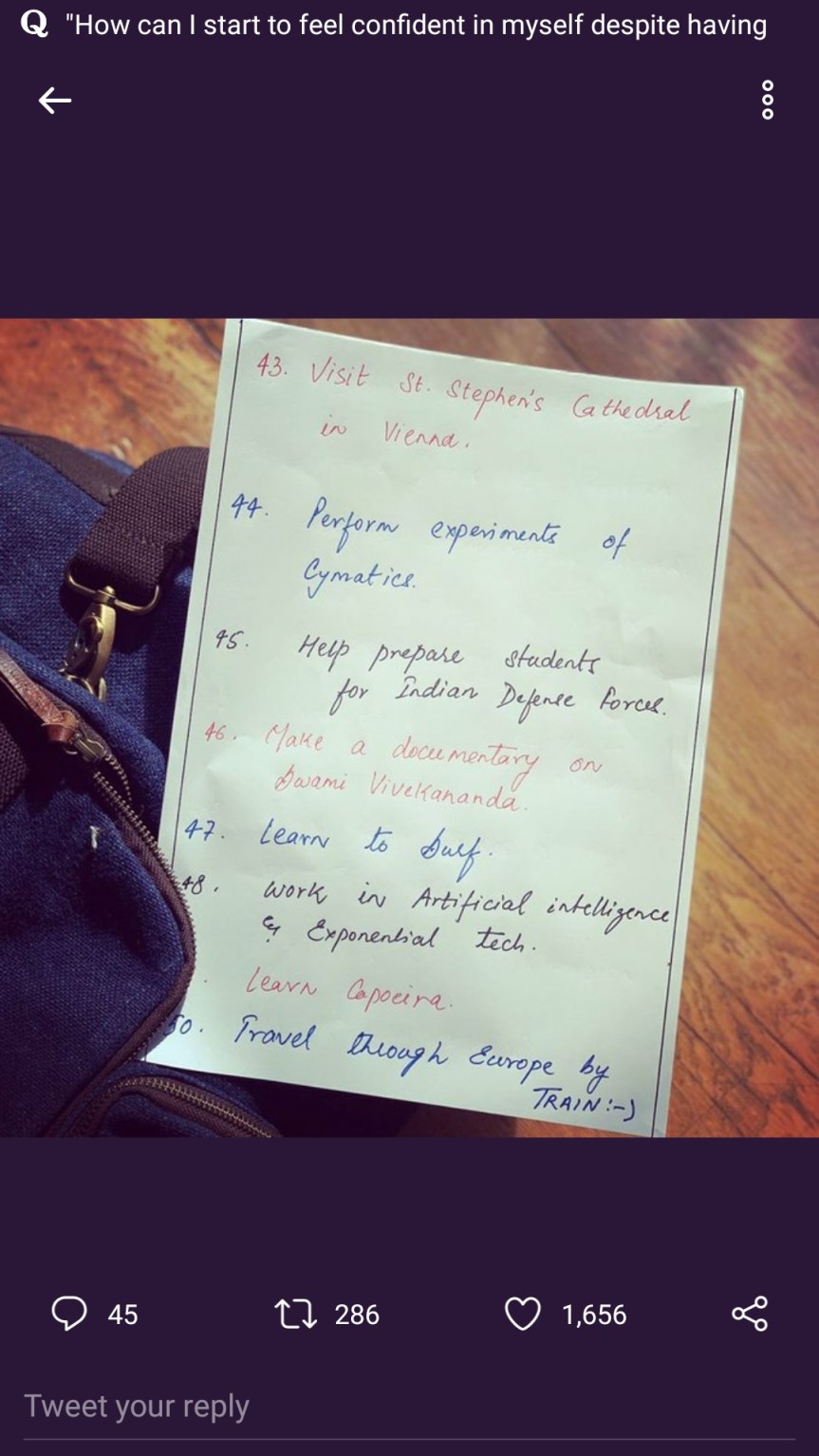
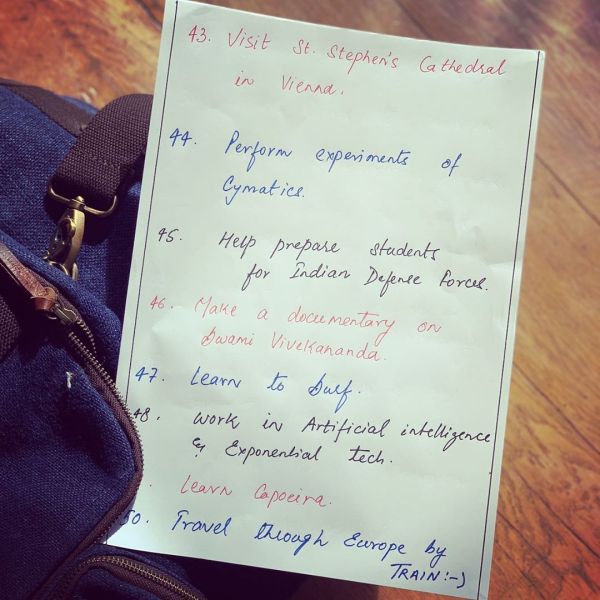
Visit St.Stephen’s Cathedral in Vienna
Perform experiments of Cymatics
Help prepare students for Indian Defence Forces
Make a documentary on Swami Vivekananda
Learn to Surf
Work in AI & exponential technologies
Learn Capoeira
Travel through Europe by train
He last used the Twitter on December 2019 which also confirms the news of his depression from last six months.Suicide by sushant singh rajput is a grave reminder to us that you never know what a person is going through. To everyone out there who’s hurting in silence, you may not want to exist right now, but someone is happy that you do. You are worthy.Never give up.No death note. Preliminary investigation is not yet complete. We don’t really know what has happened, let his soul rest in peace. We have to know the truth. 6 days ago, his ex-manager committed suicide. Police hasn’t ruled out anything yet.One middle class small town guy came to mumbai touched sky against all odds , inspired millions middle class but now you suddenly left , we can’t understand what pain you were going through but we will always miss you.
Did he knew what we know now. He had a list of 50 dreams which meant that he had to fulfill his dreams before he could commit suicide?
The depression we feel, the happiness we enjoy, the moments we live are temporary. Remember everything is a feeling and it doesn’t last long. You can trust anybody except yourself. Don’t become the fool who try to fool the fool within you. The love we get is the love we give. You can expect someone to treat you the same way you did to them but you can’t expect it from the life.
Life is unpredictable and can act unfair to anyone because it has a feeling that feeling is just a feeling and act cruelly. If life turns you upside down then don’t try to escape from it. You rather try to look the life in the way it expects you to look. Then life will change its way to again change you so that your life again comes to normal.
Games have always been a huge part of development for everyone as a child. From playing with soft toys to physically running to now technology, we all have played some sort of games in our lives. Some of these games that we play in our childhood can be later transitioned into traditional outdoor sports like cricket, football, badminton, tennis etc and various indoor sports like carrom, pool, chess etc which are all played professionally. These sports have also given careers and fame to various athletes and players all around the world.
With the advancement of technology, recently a lot of attention and recognition is given to players who play digital games on computer systems, playstations or even mobile phones. These types of games when played at a professional level are known as esports i.e. electronic sports. Esports players who play certain games at a competitive level are known as esports athletes. And just like in other sports, esports allow players to create a career in gaming, gain recognition and fame through their skills on a device and at times even allow them to represent the country on a global level.
Some commonly played esports games are fortnite, pubg, dota, paladins, rocket league, pubg mobile, clash of clans etc. Some commonly known esports athletes who have gained recognition and respect all over the world are Ninja for fortnite, Shroud for player unknown battlegrounds, Stewie2k for counter strike global offensive, Scout and Mortal for pubg mobile etc.
Unlike traditional sports, in order to start to even practice these electronic games, a person needs a fair amount of investment which usually goes into the main device which can be a computer or a mobile, an internet connection etc.
Getting into esports is a dream for any gamer that exists. To be signed up by a team and play on a competitive level is a big deal as there is too much competition. Also, there is no specific age limit in these esports, it is purely based on skill. U can be a 12 year old or a 55 year old, if u have the skill, you can be signed up to a esports team and pursue a successful career ahead as a professional gamer. Attaining a skill of that of a esport athlete is no joke, some players have invested more than thousands of hours into a video game in order to reach that level of skill.
Thus pursuing a career as an esports athlete is a very uncertain and risky task. But the good news is if someone wants to pursue their career as a gamer, esports isn’t the only option. One can become an entertainer via youtube or streaming, gain an audience and make a good amount of money through it. Some entertainers around the world like pewdiepie, Markiplier, Jack Septic Eye, Ninja, Shroud etc have made millions and millions of dollars by uploading their content online but the chances of that happening are very slim as well.
So, if someone wants to pursue their career as a gamer or an online entertainer, they should start it as a hobby with passion and not expect anything particular out of it. Enjoy it and have fun.
In a search Carried by police, Medical documents prescribing treatment of depression are found in the apartment of Sushant Singh Rajput , who ended his life and drifted into eternal peace by hanging himself.
He was such a fighter, for he fought depression on his own , he must’ve been having terrible nightmares, absurd thoughts, he must’ve been crying silently, hugging his pillow at nights to comfort his loneliness.
I can understand what he must’ve been going through. The last moments , in which people think that he was struggling for life and gasping for breath, NO, he must’ve been feeling so good sensing that all that life is slowly going out and soon he will feel no pain at all, just peaceful silence.
In these times of COVID-19, the big challenge for most of us is how to protect ourselves and our families from the virus and how to hold on to our jobs. For policymakers that translates into beating the pandemic without doing irreversible damage to the economy in the process.
With over 4 million cases and some 250,000 victims of the virus to date globally, and the expected loss of the equivalent of 305 million jobs worldwide by mid-year, the stakes have never been higher. Governments continue to “follow the science” in the search for the best solutions while foregoing the obvious benefits of much greater international cooperation in building the needed global response to the global challenge.
This is moreover a global crisis, and vision has not yet focused on the new realities in other leading powers and major economies. If we try to take an unflinching measure of the impact globally, we can see both good news and bad news—although the two are by no means equally balanced.
But with the fight against COVID-19 still to be won, it has become commonplace that what awaits us after victory is a “new normal” in the way society is organized and the way we will work.
The bad news, on the other hand, lies in the nature of the virus itself and in its implications for human life and socioeconomic arrangements. Covid-19 is an extremely contagious virus with high lethality for those exposed to it, and it can be transmitted by asymptomatic “super spreaders.” Further, since this disease is zoonotic (contracted from another species) and novel (our species has no preexisting immunity), the pandemic will roam the world in search of human quarry until an effective vaccine is invented and mass-produced—or until so many people are infected that herd immunity is conferred.
The potential downside of this crisis looks dire enough for affluent societies: even with excellent economic management, they may be in for gruesome recessions, both painful and prolonged. But the situation for the populations of low-income countries—and for least-developed, fragile states—could prove positively catastrophic. Not only are governments in these locales much less capable of responding to pandemics, but malnourished and health-compromised people are much more likely to succumb to them. Even apart from the humanitarian disasters that may result directly from raging outbreaks in poor countries, terrible indirect consequences may also lie in wait for these vulnerable societies. The collapse of economic activity, including demand for commodities, such as minerals and energy, will mean that export earnings and international remittances to poor countries are set to crash in the months ahead and remain low for an indefinite period. Entirely apart from contagion and lockdowns, this can only mean an unavoidable explosion of desperate need—and under governments least equipped to deal with this. While we can hope for the best, the worst could be much, much worse than most observers currently imagine.
This is hardly reassuring.
We are still very much in the “fog of war” phase of the calamity. The novel coronavirus and its worldwide carnage have come as a strategic surprise to thought leaders and political decision-makers alike. Indeed, it appears to be the intellectual equivalent of an unexpected asteroid strike for almost all who must cope in these unfamiliar new surroundings. Few had seriously considered the contingency that the world economy might be shaken to its foundations by a communicable disease. And even now that this has happened, many remain trapped in the mental coordinates of a world that no longer exists.
Because nobody seems able to say what the new normal will be. Because the message is that it will be dictated by the constraints imposed by the pandemic rather than our choices and preferences. And because we’ve heard it before. The mantra which provided the mood music of the crash of 2008-2009 was that once the vaccine to the virus of financial excess had been developed and applied, the global economy would be safer, fairer, and more sustainable. But that didn’t happen. The old normal was restored with a vengeance and those on the lower echelons of labor markets found themselves even further behind.
So May 1, the International Day of Labor is the right occasion to look more closely at this new normal, and start on the task of making it a better normal, not so much for those who already have much, but for those who so obviously have too little.
This pandemic has laid bare in the cruelest way, the extraordinary precariousness and injustices of our world of work. It is the decimation of livelihoods in the informal economy – where six out of 10 workers make a living – which has ignited the warnings from our colleagues in the World Food Program, of the coming pandemic of hunger.
It is the gaping holes in the social protection systems of even the richest countries, which have left millions in situations of deprivation. It is the failure to guarantee workplace safety that condemns nearly 3 million to die each year because of the work they do.
And it is the unchecked dynamic of growing inequality which means that if, in medical terms, the virus does not discriminate between its victims in its social and economic impact, it discriminates brutally against the poorest and the powerless.
The only thing that should surprise us in all this is that we are surprised. Before the pandemic, the manifest deficits in decent work were mostly played out in individual episodes of quiet desperation. It has taken the calamity of COVID-19 to aggregate them into the collective social cataclysm the world faces today. But we always knew: we simply chose not to care. By and large, policy choices by commission or omission accentuated rather than alleviated the problem.
Fifty-two years ago, Martin Luther King, in a speech to striking sanitation workers on the eve of his assassination reminded the world that there is dignity in all labor. Today, the virus has similarly highlighted the always essential and sometimes heroic role of the working heroes of this pandemic. People who are usually invisible, unconsidered, undervalued, even ignored. Health and care workers, cleaners, supermarket cashiers, transport staff – too often numbered among the ranks of the working poor and the insecure.
Today the denial of dignity to these, and to millions of others, stand as a symbol of past policy failures and our future responsibilities.
On May Day next year we trust that the pressing emergency of COVID-19 will be behind us. But we will have before us the task of building a future of work which tackles the injustices that the pandemic has highlighted, together with the permanent and no longer postponable challenges of climate, digital and demographic transition.
This is what defines the better normal that has to be the lasting legacy of the global health emergency of 2020.
The questions linger in your head, even when you try to ignore them.
“Why don’t they want me? What’s wrong with me?”
The truth is, it’s not always about you. It’s not that something is wrong with you. It’s not that you did or said anything wrong. It’s not that you drove them away. They just didn’t want to be part of your life. And that hurts. It painstakingly and irrevocably hurts.
You wonder if only you had said more, or said less. If only you had tried harder, or played it cool. If only you had been more open or been more aloof. If only you had been precisely what they were looking for, even if that meant changing who you were.
I need you to ask yourself why you want someone who doesn’t want to be with the authentic, genuine version of yourself that you’re working so hard on every day? I know that the answer is you want them, and you want them badly. Feelings drive us to do crazy things. A sense of connection can push us to believe we have to do anything to keep it alive. The possibility of “what if?” convinces us to bend the “what is,” in order to make it happen.
Yet I need you to ask yourself again, why do you want someone who doesn’t want to be with you? Because what if you did change? What if you did become the person they were seeking after? Then what? Because that person isn’t who you are- it’s an idea. That means you have to keep up that idea for as long as you’re with them. It means you spend every moment with them not being yourself.
Because if you think for a moment that you can pretend to be someone different, until they get comfortable enough to know the real you, and then try to be the person you’ve always been? It’s not going to last. They aren’t going to stay. Heck, they may not even stay if you keep being the fake version of yourself- they may decide they want something different.
We want people because they make us feel something incredible. They fill our minds and our hearts, and we love that. We love that this person is with us right now. We are willing to do so much to keep it that way. Yet the good news is, there are billions of people on this planet. You haven’t met even a fraction of them. This person may not want you, and that doesn’t mean it’s your fault.
You can’t make them want you. You just can’t. Maybe they have their own issues. Maybe they aren’t in a healthy state to appreciate what you have. Maybe you’re not in a healthy state to be what they need. Maybe they just have different preferences that don’t add up to you- and that isn’t a sign that you’re broken or need to change. It means that one person, out of everyone on the planet, doesn’t want to be with you. And that while it feels like it, it’s not the end of the world.
I know that either way, it sucks. You’re allowed to feel hurt. You’re allowed to be sad. You’re allowed to wish that things were different. You’re allowed to wish they wanted you. It’s not a crime. It’s not a sin.
But you also have to get to the other side, where you realize this doesn’t mean you’re not worthy of love. This doesn’t mean you’re undesirable. That you’re unlovable. You can’t let this one person dictate how you see yourself for the rest of your life. They are just a person. They aren’t a god. They aren’t the end-all and be-all of your happiness. They are not the only chance you will ever have to find connection, love, and joy. There are others out there who want you for exactly who you are. You will find them. They will find you. You have your whole life ahead of you, so why waste it on someone who isn’t worth the time?
You can’t make them want you, but I promise that one day, you won’t even want them to.









You must be logged in to post a comment.