Golden Girl PV Sindhu – An Inspiration for Girls to Learn and Lead Life

Pusarla Venkata Sindhu popularly known as PV Sindhu (born on 5 July 1995, Hyderabad) has brought name and fame for the country as she is the first Indian to win the BWF World Championships. Sindhu was in international limelight in 2012 when she was within 20 of the BWF World Ranking in September 2012 at the age of 17. It is pertinent to mention that the BWF World Championships (formerly known as IBF World Championships, also known as the World Badminton Championships) is a badminton tournament sanctioned by Badminton World Federation (BWF).

Her name will be written in the history of Indian badminton by Golden Letter as she is the first Indian to win the World Championships in Badminton. Interestingly, she has won this laurels in August (2019), which is the most auspicious month for Indians as we have got independence in this month as well as winning day (Sunday, 25/8/19) was her mother’s birthday. Both her parents are national level volleyball players. She is also one of the two Indian badminton players to ever win Olympic medal and other one is Saina Nehwal. From 2012 onwards, Sindhu’s sports carrier was in upward trend. Here few of her achievements (out of many) are presented – i) she won Malaysian open title 2013, ii) she reached semi-final in 2014 Commonwealth Games. And in the same year, she created history by becoming the first Indian to win two back-to-back bronze medals in the BWF World Badminton Championships, iii) in October 2015, at Denmark Open, she reached to her maiden final but lost. In the same year in November, P. V. Sindhu won her third successive women’s singles title at the Macau Open Grand Prix Gold, iv) In January 2016, she won the Malaysia Masters Grand Prix Gold women’s singles title, also in the same year at Rio Olympics, Sindhu clinched the silver medal and created history as she was youngest and first female individual to bag an Olympic Silver medal for India, v) now coming to 2017, in the BWF World Championships held in Scotland, she had to settle for silver after losing to Japan’s Okuhara in the finals but she defeated Okuhara in the final of 2017 Korea Open Super Series and became the first Indian to win Korea Open v) in 2018, all England Open, Sindhu made it to the top 4 and in the same year, she clinched silver medal in Asian games. 
She was endowed with many many awards inter alia of which are Padma Shri, Arjuna Award, Rajiv Gandhi Khel Ratna Award, FICCI Breakthrough Sportsperson, NDTV Indian of the Year, the CNN-News18 Indian of the Year (originally CNN-IBN Indian of the Year) etc. But I feel her greatest award is love and affection from the people of India. 
Wishing her more and more laurels.
– Writer is a famous for his writings on current affairs and social change. 
Dr Shankar Chatterjee
Former Professor & Head (CPME),NIRD & PR ( Govt. of India), Hyderabad,  India
Former Associate Professor, Eritrea

Former Assistant Prof, Govt. Degree College, Tripura, India
Former Senior Planning Officer, Govt of Assam, India 

Career options in India: Law as a career Option (Part 1)

The key reason that humans excelled compared to other species, or even managed to survive the harsh initial days on earth was their abilities to co-ordinate and stay in groups. For functioning of such groups, a set of rules must exist. Therefore, law is a field which is almost as ancient as the civilization. 
The first written instance of law came during the reigns of Hammurabi (18th century BC, Babylon). His laws were simple four lines, but it is a remarkable point in the history of civilization. For a long time the Kings usually kept the justice system under their thumb or let a council of his trusted ministers handle the affair.
Independent Judiciary
Needless to say, such a justice system was easily swayed by the ruling authorities or other influential few persons. Such a justice system can never be truly just. The concept of independent judiciary can be traced back to 18th Century England. One of the founding fathers of the United States Alexander Hamilton wrote in 1788 “The complete independence of the courts of justice is particularly essential in a limited constitution.” 
Such a judiciary can safeguard the people’s interests and rights and prevent any encroachment by the rulers of the country. Within this statement is the purpose and need of the judiciary system and this gives birth to various career options available in field of Law.
Career Options
The two main actors in a courtroom are the lawyers- who present various sides of the arguments in favor of their respective clients, previous precedence, constitution citations etc. and the judges who with or without assistance of a jury dwell into the arguments to decide upon a verdict so that the justice is provided.
Career as a Lawyer
Law as a profession is in great demand these days. With economic system and corporate world getting more and more complex, lawyers are required to a daily basis to interpret the law and it is no longer limited to traditional streams like civil or criminal. Now, lawyers can specialize in streams such as Criminal Justice, Civil Rights, Corporate Affairs, Taxation, Patent Law etc.
How to pursue a career in law?
Most popular way to pursue a career, one has to start with a good college. The tests can be taken post clearing 12th. The cut-off and other details can be obtained from the respective websites of the tests. The most popular Law entrance exams in India are-
i. CLAT- Common Law Admission Test. 21 national universities take admission through this test. (https://www.clat.ac.in/)
ii. AILET – All India Law Entrance Test is an exam conducted exclusively for National Law University (NLU) Delhi. (http://www.nludelhi.ac.in/)
iii. SLAT- For admission in Symbiosis Law School, Pune/Noida/Hyderabad (http://www.set-test.org/)
iv. LSAT – Law School Admission Test is conducted four times every year specially designed for LLB and LLM admissions.
 LSAT scores are accepted by more than 70 top institutes like Rajiv Gandhi School of Intellectual Property Law, IIT Kharagpur Law School, Galgotia University Law School, The Jindal Global Law School, UPES Dehradun, SRM University, Amity Law School and many more (http://www.pearsonvueindia.com/lsatindia/)
The top colleges as per the MHRD NIRF ranking (https://www.nirfindia.org/2019/LAWRanking.html) 2019 are-
1. National Law School of India University, Bangalore
2. National Law University, Delhi
3. Nalsar University of Law, Hyderabad
4. Indian Institute of Technology Kharagpur
5. The West Bengal National University of Juridical Sciences, Kolkata
6. National Law University, Jodhpur
7. Symbiosis Law School, Pune
8. Jamia Millia Islamia, Delhi
9. Gujarat National Law University, Gandhinagar
10. The Rajiv Gandhi National University of Law, Patiala
Job Opportunities
As discussed earlier, there are plenty of job opportunities in the area of Law and many more are being created as the world gets complicated. You may choose to practice on your own, join a law firm or join a corporate to advise them on daily matters. You may also choose to specialize for social issues like environment, labor laws, PLIs etc. If you give your heart and mind to a career in law, there is no way you will regret it.

NTA released UGC NET Examination Schedule

The National testing Agency (NTA) has released the UGC NET examination schedule for December 2019 and June 2020. Candidates can check the examination details on the official website of NTA, the link is nta.ac.in. This year the CSIR UGC NET examination will be conducted on 15th December 2019, while UGC NET examination will be held between 2nd to 6th December. The Online application process for December session will starts from 9th September. Aspirant will have one month time for registration as last date of registration is 9th October. Further, the hall ticket/admit cards will be available for download from November 9. 31st December will be the result day for both examination.

                      Source: Pexel

What is NTA
National Testing Agency (NTA) has been established as a premier, specialist, autonomous and self-sustained testing organization to conduct entrance examinations for admission/fellowship in higher educational institutions.The country`s top entrance/ competitive examinations such as Joint Entrance Examination (JEE)  mains, NEET (UG),  UGC NET etc  are conducted by the agency.
On behalf of UGC,  NTA conducts the National Eligibility Test (NET) for determining the eligibility of Indian nationals for the Eligibility for Assistant Professor only or Junior Research Fellowship & Eligibility for Assistant Professor Both in Indian Universities and Colleges. Earlier It was CBSE who conducted the NET in 84 subjects at 91 selected Cities of spread across the country.

Understanding NET and JRF
From Dec 2018, the UGC-NET (for Eligibility for Assistant Professor only or Junior Research Fellowship & Eligibility for Assistant Professor both), was conducted by the NTA. The award of JRF and Eligibility for Assistant Professor both OR Eligibility for Assistant Professor only depends on the performance of the candidate in both the papers of NET in aggregate. However, the candidates qualifying exclusively for Assistant Professor are not to be considered for award of JRF. Candidates who qualify the Test for eligibility for Assistant Professor are governed by the rules and regulations for recruitment of Assistant Professor of the concerned universities/colleges/state governments, as the case may be.


Examination Module
Mode: The Examination shall be conducted as Computer Based Test (CBT) only. 
Pattern: The test will consist of two papers. Both the papers will consist of objective type questions. There will be no break between papers. 

Paper 1
Marks- 100
Number of Questions- 50 
MCQ     — The questions will be generic in nature, intending to assess the teaching/ research aptitude of the candidate. It will primarily be designed to test reasoning ability, comprehension, divergent thinking and general awareness of the candidate.

Paper 2
Marks- 200
Number of Questions- 100
MCQ  —  This will be based on the subject selected by the candidate. 
Total duration–  03 hours without any break
Syllabi for all NET subjects can be downloaded from the UGC website: https://www.ugcnetonline.in/syllabus-new.php

Why are there stones on railway tracks?

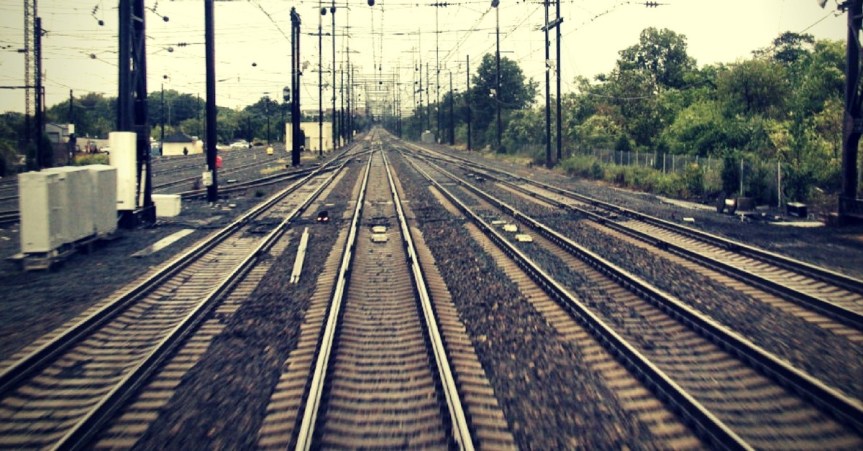
The train journey can be a very soothing and wonderful travel experience. However, most of us must have wondered at least once in our lives why there are stones on railway tracks. These crushed stones are called track ballast and they help keep the train tracks in place.

What is track ballast?

Track ballast is the collective term for the crushed stones on railway tracks. They form the trackbed and are packed around railway tracks. They form the ground for the railway sleepers which are used to keep the railway tracks upright and properly spaced.
Railway sleepers are the rectangular support piece kept perpendicular to the tracks. A railway sleeper is also called a railroad tie or a crosstie.
Sleepers used to be made of wood earlier but now they are mainly created with pre-stressed concrete.

Why is only a certain type of stone used on railway tracks?

Track ballast cannot be made with any kind of stone. If smooth, round pebbles like the ones on river beds or used for decoration were used on railway tracks, they might roll over or slide against one another when a train passed on the railway lines.
Thus, the wrong type of stone wouldn’t fulfil the main function of track ballast to provide support to the railway tracks. Only stones which wouldn’t move around much would suit the job.
That is why sharp edges stones are used on railway tracks for track ballast.

Other functions of track ballast

Apart from holding the railway lines in place and providing support for heavy trains to pass on, here are the other functions of the stones called track ballast:
1. The stones don’t allow vegetation to grow on railway tracks which could weaken the ground on which the railway lines run.
2. Track ballast also keeps water from reaching the track on a regular basis and softening the ground. It doesn’t completely seal off water from the railway tracks but it facilitates proper drainage beneath or around the tracks to ensure that the water doesn’t stay on it.

Technique used to minimise railway vibrations

The immense vibration of a passing train is a threat to nearby buildings apart from the loud noise which is a problem too.
Railways use a clamping technique to minimise vibrations consisting of EPDM or Ethylene Propylene Diene Monomer rubber which is highly resistance to heat, water and other mechanical strains. This helps noise and vibration to be reduced to a great extent.
Now that you know the crucial function of track ballast and why there are stones on railway tracks, make sure you don’t keep picking stones from the tracks to chuck them outside!

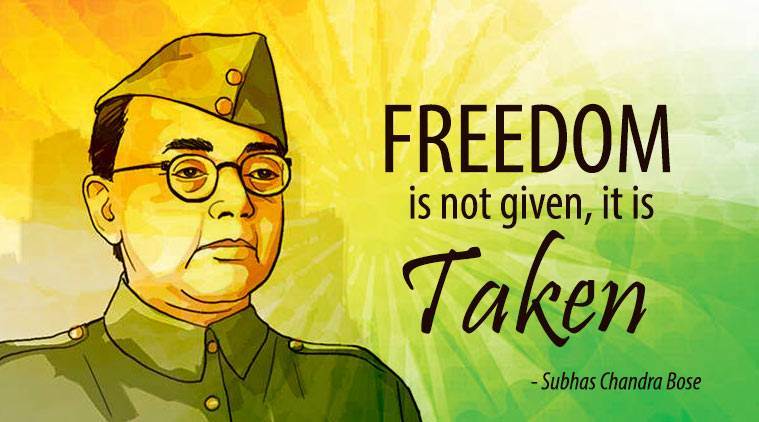
Death of Netaji Subhas Chandra Bose

 One of the
greatest selfless leaders with vision during freedom movement was Netaji Subhas
Chandra Bose. It is believed that he died on 18 August 1945 (today’s date) after
his Japanese plane crashed in Japanese-occupied Formosa (now Taiwan). However,
many Indians refused to believe the circumstances of his death.
 Conspiracy theories appeared within hours of
his death and have persisted since then, keeping alive various myths. Whether
he died in plane crash or not but considering his date of birth, 23 January
1897 now his chance of survival is bleak.

Netaji Subhas with heart and soul was
Indian and he never tolerated any foreigner talking against Indians. In this
context an incident may be mentioned. He beat a British Professor E.F. Otten in
the Presidency College of Calcutta in 1916 for Prof Otten’s racist remark
against Indians and for this Subhas Chandra had to suffer also, however with
the intervention of Indian scholars and others, the matter was resolved. Subhas
Chandra was a brilliant student and his brilliancy may be assumed when he went
to England in 1919 to compete Indian Civil Service (as desired by his parents)
and subsequently in 1920, he came out fourth in order of merit with highest
mark in English but he was deeply disturbed by the Jallianwalla Bagh massacre
and left his Civil Service probation in midway and returned India. After
returning, Subhas Chandra joined Indian National Congress subsequently, he started
working under Deshbandhu Chittaranjan Das, whom he always respected as
political mentor. In those days Netaji and other youth leaders were in favour
of complete freedom but other  leaders
were in favour of
  “dominion status
for India within the British rule” and this difference sharply cropped up
in
  1928 Gauhati (now Guwahati) Session
of the Congress.

    While Subhas Chandra Bose was Congress President
many admired him for his vibrant role and that is why he was elected President
of Indian National Congress for two consecutive terms but had to resign in the
mid of second term due to ideological difference with Gandhiji as Mahatma
Gandhi’s preferred candidate Pattabhi Sitaramaiah was defeated.  Total votes pulled by Subhas Chandra were
1580 against 1375 by Sitaramaiah. Gandhiji was upset for his candidate’s defeat
and openly ventilated his dissatisfaction albeit
Subhas Chandra was democratically elected. It is believed that albeit Pattabhi Sitaramaiah was a Telugu person
hailing from southern part of India but many persons of southern region of
India voted in favour of Netaji Subhas. Anyhow, while Netaji was Congress
President many remarkable works were carried out under his leadership – one was
his initiative to keep Assam with India as then Muslim League leaders’ had
different game plan. In 1938, Assam was passing through a great political
turmoil as there was a serious political problem – Muslim League vs. Congress.
During that time, Gopinath Bordoloi invited Subhas Chandra Bose (President of
Congress that time) to visit Assam so that chaotic political situation is
settled. Subhas Chandra immediately rushed to Assam and strongly advocated the
formation of the ministry under the leadership of Gopinath Bordoloi.  As a sequel, Assamese youths were happy and a
booklet on Subhas Chandra was published by some enthusiastic students of Cotton
College in 1939, under the umbrella of All Assam Progressive Youth Association
(AAPYA, formed that time). Further, they decided to invite Subhas Chandra Bose
to inaugurate the association, which he gladly accepted.
   While Netaji Subhas Chandra Bose was Head of
Indian National Army (INA) or Azad Hind Fauj, Dr. (Mrs.) LakshmiSwaminathan met
him in Singapore and decided to join in the freedom movement as she was
impressed with the charismatic speech of Netaji Subhas. She as   Captain Lakshmi    headed a regiment called Jhansi Rani Laxmi
Bai Regiment.  It was the first regiment
headed by a lady in Asia. Later on, she married to Colonel Prem Kumar Sahgal
(leading personality of INA) and subsequently known as Dr. Lakshmi Sahgal.  From historical documents etc. it is evident
that Netaji’s contribution in freedom movement is immense. In this context Clement
Richard Attlee, who was the Prime Minister of the United Kingdom from 1945 to
1951 and the Leader of the Labour Party from 1935 to 1955 may be quoted, “Netaji
was the toughest challenge to the British Empire faced”.
Open Editorial Article contributed by 
Dr. Shankar Chatterjee

Former Prof &Head (CPME)
NIRD &PR, Hyderabad-500 030, Telangana, India
E-mail: <shankarjagu@gmail.com>

‘India’s participation at WorldSkills International Competition must be seen as big as the Olympics’

The 48-member Indian Team representing the country at WorldSkills Kazan 2019 was given a grand send-off at a ceremony in the capital today, organized by National Skill Development Corporation (NSDC) under the aegis of Ministry of Skill Development and Entrepreneurship (MSDE), to motivate the participants as they gear up to pit their skills against the best in the world. India is the sixth largest team that will take part in the competition.

Nearly 1,500 competitors from 60 countries will compete in 56 skill competitions at this mega event in Kazan, Russia on August 22-27. The 48-member Indian team will participate in 44 skills, including mobile robotics, prototype modelling, hairdressing, baking, confectionary & patisserie, welding, brick laying, car painting, floristry, etc. Forty-four experts and 14 interpreters are also accompanying the participants to Kazan. In 2017, a 28-strong contingent took part in the WorldSkills International at Abu Dhabi, winning one silver, one bronze and nine Medallions of Excellence.
Addressing the candidates Dr. Mahendra Nath Pandey, Minister for Skill Development and Entrepreneurship, said, “My heartiest congratulations to the 48 of you who have proven your mark at the national level. You all will now represent the country at the world’s biggest skill competition in Russia. My advice to you is to compete in the true spirit of participation and make India proud on the global platform and at the same time learn from your international peers competing with you. You are the brand ambassadors of India and your victory will be an inspiration for every Indian youth who aspires to make it big in their life. Participating at events of such scale adds to the larger cause of skill development which is integral to Prime Minister, Shri Narendra Modi’s vision of a Skilled India.”
“I am happy to learn that we have six young girls also bearing the flag of the country at Kazan. I am positive you will inspire many more and we will see increased female participation in the years to come. I also hope with Team India’s participation at WorldSkills, the event will gain the same level of popularity in the country, as the Olympics and the Asian Games,” he added.
The desire to excel in the trades of their choice has played a crucial part in the candidates realising their dream of performing at a global stage. Mohammed Rabith from Malappuram, Kerala is one such example of grit and determination. The 22-year-old whose father works as a coolie and mother is a homemaker, aims to make his parents and his country proud by winning the gold medal in Wall & Floor Tiling Skill at the WorldSkills. Stories like Rabith are abound in the Indian team, where the spirit of youth is motivated by aspiration and the desire to excel.
Himanshu Vohra, a final-year civil engineering student from Chitkara University in Punjab, is representing India in Plumbing and Heating Trade. Himanshu’s passion and interest in plumbing has taken him to multiple competitions, including Global Skills Competition in Australia, before he found himself as a contender for the WorldSkills in Russia.
About 75% participants come from tier II and tier III cities, with 25% from rural areas. Most belong to humble backgrounds, parents work as farmers, coolie, daily wage laborers and security guards. Among states/UTs, Maharashtra tops the chart with seven contestants participating in the competition, followed by five from Karnataka and four from Uttar Pradesh. Over 50,000 youth had registered for the IndiaSkills Competitions that was organized across several legs last year.
Participants spoke about their experiences at the send-off. Present among the audience were proud parents who greeted them with loud cheers as the Minister felicitated all 48 contestants.
The 48 contestants have been shortlisted through a series of contests conducted at district, state, regional and national levels over the past year. These candidates were provided extensive training in skills ranging from Wall and Floor Tiling, Brick Laying, Cabinet Making, Car Painting, CNC Turning, Hair Dressing, Welding, Restaurant Service, Beauty Therapy, Auto-body Repair to Mobile Robotics, Mechatronics, Prototype Modelling, Visual Merchandising, etc, by leading corporate entities with NSDC acting as a facilitator and have been gained extensive support from Sector Skill Councils, Industry and Corporates.
Candidates have been exposed to international training with industry support from over 100 companies. More than 100 companies have Renowned experts such as Vinesh Johny – Chef/Trainer, winner of Forbes 30-under-30; Samantha Kochhar, renowned beauty expert and director of Aroma Magic; JP Shroff, Chairman of Kushal Credai; Seema Jhaveri, Director of IFD and Vaishali Shah, Principal of LTA Beauty School came together to prepare the contestants for the mega-event. Leading organisations such as Maruti, Mahindra, Toyota, Daikin, Saint Gobain, Tata Motors are among the 100+ partners which have extended support via infrastructure, equipment, expert trainers, facilities, training and more.
Aimed at promoting world-class standards in technical education and vocational training, NSDC, under the aegis for MSDE, is working to make skills aspirational and create a pathway for a career in vocational trades. 

Successful Supervisor/PhD student Relationship

A good relationship is the basis for a good performance in science and a way to promote collaboration and the success of all the members in a research group. At the core of all the labs relationships is the professor/student relationship. If this works properly, it can be the seed for the whole lab relationship.
Yet, as higher education has transformed over the decades, so have traditional relationships in academia – some more effectively than others.
Decades ago, this relationship was based on the authority of the master over the disciple. The professor/student relationship was a sort of dictatorship where the student had to follow any small desire or suggestion of the professor. The professor was a superhuman that possessed all the knowledge and wisdom, and the student was obliged do what the professor said without any doubt or discussion.
In most disciplines, the supervisor/PhD student relationship is established through the bonding process that occurs during the development of a doctoral thesis, where the student is supposed to be guided by the professor. This relationship, during a specific and limited period of time, can generate links that endure over the time, far beyond an employment relationship that is established for the fulfillment of the objectives of a project.
This does not happen today, at least not in most of the advanced research centers. Previously, the authority of the professor was based on their supposed possession of all the knowledge and the nearly absolute dependence of the student on the decisions of the professor. Now, we live in a society where access to knowledge is almost unlimited, and the professor’s preponderance over the student is based fundamentally on experience more than access to knowledge.
Also, whereas the student’s success used to require obedience and unwavering loyalty to the professor, the modern student has no need for such dependence. This has been lost in an open world, in the entire global village. Today, students have a contract and labor rights, so their survival does not depend on the whim or arbitrariness of a professor.
Apart of this, when a professor/student relationship begins, there is a need to combine two wills, each with their circumstances, to achieve a single objective. This objective is usually linked to a research project and usually leads to a doctoral thesis. Years ago, this was usually just a manuscript.
But today, the thesis is not enough; we must add on to it. From this professor-student relationship, other fruits grow, such as articles in journals, conference papers, patents, and collaborations with other research groups, some of them abroad. PhD students in my research group have gone on to work at research centers in the Netherlands, Italy, France, Sweden, Switzerland, Germany, Austria and the United States as well as in other parts of Spain. See ranking of institutions here. https://ranking.eduindex.org/ 
Normally in this relationship, the seed of the idea for a research topic comes from the professor. The professor introduces the idea to the student and provides all the necessary means for growth: laboratories, libraries, consumable material, trips (if necessary). It is the student who takes the shovel to nurture the seed with soil, water it and monitor its growth. The professor must also watch that everything goes well so the tree can grow. If problems arise, such as a plague, hail or drought, the professor must provide solutions and the means to reach them advised or helped by the student, of course, who cares directly for the tree and probably knows it better than the professor. But the main responsibility to find solutions belongs to the professor.
When time has passed and the fruits appear, they will be the fruits of both of them. Both are responsible for the final product, and both will benefit (or experience harm) from what has been achieved.
For this relationship to function well, there must be rules, which will ensure this co-responsibility becomes an eternal and enduring positive relationship over the time. When a student believes that their thesis is good or bad because of the professor, or vice versa, it is because the norms for the professor/student coexistence have not been followed.
These are the ingredients for the recipe for a healthy and fruitful relationship:
1. A relationship between equals. The professor, from the first day, should establish a personal relationship of mutual respect, equal to equal. The student will respect the professor (who is usually is wiser and older) but starting from the reality that it is a relationship between equals. Mutual respect must be the basis for the relationship.
2. Inspiration and creation of ideas. The professor should be a source of inspiration and creation of ideas. But also, the student will endeavor to learn the state of art that allows him or her to propose alternative ways in the creative process. The student must generate, from the beginning, ideas that enrich the work.
It is normal for ideas to come from the professor. Usually, when the first contact is established, the professor has a running research line established, often with funding allocated to the project. But the idea must be taken by the student as their own, and the student must strive to expand the possibilities of the work thorough their own input.
3. Means. The professor must provide the student with all the necessary means to carry out their work, including a decent salary. At the same time, the student will make every effort to make the work evolve to achieve the objectives set by the professor, and to take advantage of everything that has been put in their hands.
In former times, where a research activity often progressed thanks to the goodwill of the participants, who had to overcome what seemed like an obstacle course where even the tools to be used were not provided, is a nonsense today. Any research endeavor should ensure the basic resources in order to be developed with enough guarantees for success. The times where PhD work is done under the principle of generosity have passed. There must be enough funding to allow the research to progress, and the focus of the student should be the development of their creative work.
4. Progress of the work. The professor must monitor the progress of the student’s work at all times. The student must help the professor find solutions to the seemingly unresolvable problems that will surely come up along the way.
The times where the professor does not “give audience” to the student, waiting on their “throne hall” for the “vassal,” are long gone. In today’s research environment, if a professor does not have time to supervise PhD students properly, the supervising activity must be redefined. Also, the student must put all effort and energy in trying to solve the problems by themselves before discussing it with the professor.
5. Cooperation. The professor will become the first ally (partner, associate) of the student in the performance of the work. And the student must go to the professor whenever there is any problem or contingency related to the work along the way. The basis for the cooperation is communication. It is quite normal that students try not to disturb the professor, even though most of the time, the professor could solve the problem faster than any other person. Both professor and student must consider the work relationship as teamwork.
6. Encouragement. The professor should always encourage the student (in the best positive attitude), especially in those moments when things do not go as expected.
7. Discrepancies management. The student will discuss with the professor any possible discrepancy of criteria that may arise in the development of the work. The student will comply with the decisions of the professor, decisions that will be the result of a prior discussion.
When discrepancies appear, the best way to reach an agreement is discussion, discussion and discussion, and then reaching an agreement. Sometimes, discrepancies appear because someone fails: the professor in the guidance or the student in the execution. In those cases, before starting the discussion the first step should be communication, trying to explain what’s happened.
Failure to comply with this rule will generate a great mutual distrust that can end with a mutual hostile attitude that can, in turn, make the project fail.
8. Knowledge transfer. The student must be aware that having accepted the supervision of the professor, he becomes an essential link in the propagation of the knowledge previously accumulated by the professor. The professor will try to put all their effort in giving international relevance to the work of the student, which is also is the professor’s work.
In the today’s society, knowledge transfer is more important than ever, so both professor and student must assume that one of the main objectives in their research work is to promote, as much as possible, the transfer of the generated knowledge to the society. This can be done through scientific papers, patents, spin-offs – and scientific divulgation today is a must. This task, easier now thanks to social networks. Even when using social media for self-interest purposes, scientists that have high impact in social networks are cited more in academic metrics, according to a 2016 study in PLOS One.
In this effort to disseminate the knowledge, the student plays an important role as the main link between the professor and future students.
9. Professional projection. The professor should be aware that no matter how much he or she gives to the student, that student is putting into the hands of the professor several years of their life, in their moment of more physical and intellectual splendor. The professor will seek the greatest professional projection he or she can provide to the student.
The better the future of the student, the better the future of both of them. One well promoted student is the best way for the professor to assure future scientific networks, future collaboration and future projects. Today’s students must be future partners. To promote your students is actually a way to promote yourself.
10. Relationship forever. The professor, from the moment he or she accepts the student, must be their mentor forever. And the student must expect and ask for advice and help from the professor for the development of their later professional career.
If both are intelligent people (which is supposed), they will try to maintain, forever, this mentor/mentored relationship. With time, the student could even play the mentor role with their former professor. Both of them will grow personally and professionally, and this will allow them to help each other. If the relationship is an equal relationship from the beginning, with the passing of the years, it will be much even more egalitarian, if it is possible. This kind of relationship could promote connections as strong father/mother and son or daughter. And this could be one of the best ways to enrich the personal lives of both.


Daring Resolve Taken By Centre On Jammu And Kashmir

It is not Sanjeev Sirohi or my best friend Sageer Khan or any of my other friends or any layman who has termed Centre’s latest decisions on Jammu and Kashmir as a daring resolve. It is senior Congress leader and former Union Law Minister who is also one of the eminent, senior lawyer of the Supreme Court – Ashwani Kumar who has called the move on Jammu and Kashmir by Centre as “a daring resolve in line with the mood of the nation”. How can anyone ignore when such an eminent senior lawyer of Supreme Court and former Union Law Minister who hails not from ruling party BJP or its ally party but from the main opposition party which is the Congress says so openly with full confidence? It is reliably learnt from many news channels that even another eminent and most experienced senior lawyer of Supreme Court who has also served earlier as Additional Solicitor General and is also a senior Congress leader Abhishek Manu Singhvi has also expressed his support to this bold decision taken by Centre!

To be sure, Ashwani Kumar further reiterated that, “The J&K gamble by the Central government has received popular national support and seems to be consistent with the national mood although history and future alone can attest to its wisdom.” He also clarified that he can’t work by diktat! Very rightly so!

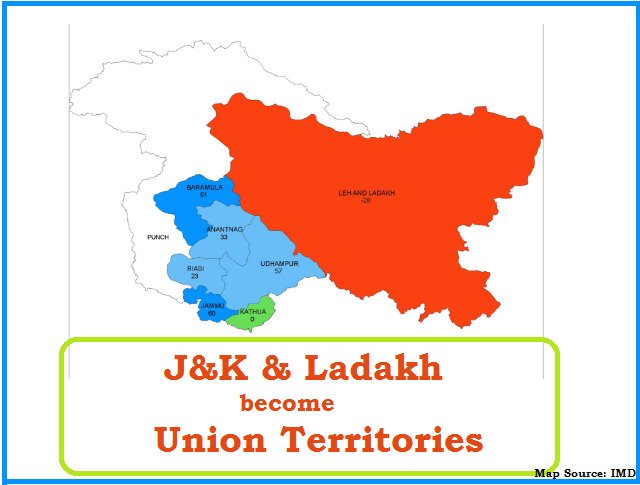
There are a galaxy of other senior and eminent Congress leaders who too have hailed this daring resolve of Centre in taking steps to ensure the full integration of Jammu and Kashmir with India by virtually eliminating all the key provisions of Article 370 of the Constitution and abolishing most controversial Article 35A! I support the move on Jammu and Kashmir & Ladakh and its full integration into Union of India. There is no valid reason to oppose what Centre has done which according to me was the crying need of the hour!

No doubt, even though Congress is fulminating against revocation of Article 370 and Article 35A yet it is most heartening to note that many prominent faces of Congress party including Janardhan Dwivedi, Jyotiraditya Scindia, Deepender Hooda, Jiten Prasad, Salman Khurshid, Milind Deora among many others have expressed their solidarity with this latest move by Centre! Senior and eminent Congress leader Janardhan Dwivedi minced no words in saying that a historic blunder has been remedied today after the scrapping of Articles 35A and 370! Jyotiraditya Scindia said that he supported the Narendra Modi government’s proposed move to bifurcate the state into two Union Territories – Jammu and Kashmir and Ladakh. He tweeted minutes before the Lok Sabha voted on the resolution that, “I support the move on Jammu and Kashmir & Ladakh and its full integration into union of India. Would have been better if constitutional process had been followed. No questions could have been raised then. Nevertheless, this is in our country’s interest and I support this.”

As things stand, Congress senior leader Janardhan Dwivedi said happily that, “It is a very old issue. After Independence, many freedom fighters did not want Article 370 to remain. I had my political training under Dr Ram Manohar Lohia, who was against this Article. Personally, this is an issue of a matter of satisfaction for the nation. This historical mistake that happened at the time of independence has been rectified today, even though late, and is welcomed.” Mumbai Congress Chief – Milind Deora said that it was “very unfortunate” that Article 370 was being converted into a “liberal vs conservative debate”. He said in a tweet that, “Parties should put aside ideological fixations & debate what’s best for India’s sovereignty and federalism, peace in J&K, jobs for Kashmiri youth and justice for Kashmiri Pandits.”

Not stopping here, another Congress leader Deepender Hooda who is a three-time MP from Haryana’s Rohtak constituency said that, “I’ve always maintained that Article 370 should be scrapped. It is irrelevant and has no place in the 21st century. Abrogation of this article is in the interest of national integrity and the people of J&K which is an integral part of India. Senior Congress leader Anil Shastri also openly came out in support of Centre’s move and said that the the people are totally with the government on this issue! There can be no denying it! Kuldeep Bishnoi who is a special invitee to the Congress Working Committee also welcomed the removal of Article 370 calling it a “good decision”. He said that, “When this Article was implemented, then Nehru called it temporary. My personal view is that it is a welcome step. This amendment will be successful only when we are able to convince Kashmiris that they are a part of Akhand Bharat.” Former Union Minister RPN Singh too has backed Centre’s daring move!

Above all, even the Congress’s chief whip in the Rajya Sabha – Bhubaneshwar Kalita strongly protested against his party’s stand and said emotionally while quitting his membership in Rajya Sabha after the party asked him to issue a whip to all members for opposing the bill that, “I was asked by the party to issue a whip but this is against the mood of the nation. The party as it is on its way towards destruction and I can’t be a contributor to it.” Even Congress MLA from Rae Bareli Aditi Singh said on Twitter that, “United we stand! Jai Hind. #Article 370”. She termed it a historic decision and urged people not to politicize it. When someone reminded that she was a Congress leader, she boldly retorted that, “Main ek Hindustani hoon (I am an Indian).” Absolutely right!

Interestingly enough, even veteran Congress leader Karan Singh who is son of J&K’s last ruler, Maharaja Hari Singh who signed the Instrument of Accession in 1947 and who was a Union Minister in the Indira Gandhi Cabinet in 1967, has been a member of CWC and worked with four generations of the Nehru-Gandhi family took a divergent stand from that of his party and said that he did not agree with a “blanket condemnation” of the government’s decision and said that it has “several positive points”. He welcomed the government’s decision to make Ladakh a Union Territory and reminded that, “In fact, I had suggested this as far back as 1965, when I was still Sadr-i-Riyasat of J&K, when I had publicly proposed reorganisation of the state.” He said that he hoped the hill councils of Leh and Kargil would “continue to function, so that in the absence of the Legislature, the grassroots opinion of the people of Ladakh are duly represented.” He minced no words to reiterate his support to scrap Article 35A and the government’s plan to initiate an exercise to redraw the contours of the Assembly constituencies. He said that, “The gender discrimination in Article 35A needed to be addressed as also the long-awaited and enfranchisement of lakhs of West Pakistan’s refugees and reservations for Scheduled Tribes which will be welcomed. There will also be a fresh delimitation which, for the first time, will ensure a division of political power between the Jammu and Kashmir regions.”

Be it noted, Union Home Minister Amit Shah who tabled the Jammu and Kashmir Reorganisation Bill, 2019 and the statutory resolutions in Rajya Sabha around 11 am after the Union cabinet met at Prime Minister Narendra Modi’s residence at 9.30 am to grant the go-ahead said that, “Article 370 was a temporary provision…how long can a temporary provision be allowed to continue…After abrogation of Article 370, Jammu and Kashmir will truly become an integral part of India.” Saying Article 370 was at the root of terrorism, Amit Shah told the House that full state status will be restored to Jammu and Kashmir at an appropriate time when normalcy returns. He rightly said that the decision to do away with the special status of J&K and to bifurcate the state into two UTs was in the supreme national interest! No denying it!

Honestly speaking, PM Narendra Modi very rightly summed up by saying that, “Nobody could pinpoint what benefit these Articles had brought to the people. These Articles only gave terrorism, dynasty politics and widespread corruption to J&K.” He also rightly said that, “Who voted in Parliament or who did not, who supported the Bill or who did not; we must move beyond all this and work together for the people of Jammu and Kashmir-Ladakh.” He also clarified that the new UT arrangement for J&K would be required for some time “but not indefinitely”. He indicated that the arrangement could change if development works happen at a quicker pace than he has envisioned.

What’s more, even Ahmad Al Banna who is the UAE’s ambassador to India was outspoken in observing that, “The reorganization of states is not a unique incident in history of independent India and it was mainly aimed at reducing regional disparity…It is an internal matter as stipulated by the Indian Constitution.” China and US have also advised Pakistan to come to terms with what has happened and not to overreact or do anything that spark more tension in the entire region! Very rightly so! Even Russia has backed India and termed it as internal matter with India having right to amend its Constitution!

Why is it that so many opposition parties like AAP, BJD, BSP, TDP, AIADMK, YSR-Congress and many others extended their unstinted support to Centre? It is because this most historic decision reflected the true sentiments of every Indian! This alone explains that why so many top leaders of Congress party also which opposed this landmark decision came out in open support of it! Why even JD(U) which initially walked out in protest has now endorsed Centre’s move to scrap Article 370? It is because many senior party leaders came out in full support of Centre’s bold move! There were rumblings of discontent even within TMC led by Mamata Banerjee and many leaders openly voiced their unstinted support for Centre’s bold move!

More importantly, another eminent and very senior Supreme Court lawyer who is also the former Attorney General of India Soli J Sorabjee too has clarified that, “The opposition has condemned the legislation as murder of democracy and betrayal of the people of J&K. In my opinion the charge is exaggerated and not tenable. The J&K Reorganization Bill and the resolutions moved by Amit Shah have been passed by both the Houses. The result is that Jammu and Kashmir now has no special status and all laws applicable to people of India including fundamental rights guaranteed by Part III of the Constitution shall be available to people of J&K. In short, J&K is now constitutionally recognized as an integral part of India.” He also sought to make it clear that, “The other favourable points are that people from other states can buy land in Kashmir which they could not do before. RTI which was not applicable before cannot now be denied. There will be no separate flag for J&K, but only one flag, the Indian tricolor.” If this is not a daring move, then what else can it be? Can anyone please tell me?

Truth be told, the first statutory resolution stated: “That this House recommends the following public notification to be issued by the President of India under Article 370(3): ‘In exercise of the powers conferred by Clause (3) of Article 370 read with clause (1) of Article 370 of the Constitution of India, the President, on the recommendation of the Parliament, is pleased to declare that, as from 5th of August, 2019, all clauses of the said Article 370 shall cease to be operative except clause (1).”

To put things in perspective, Article 370 will survive on paper but will now read “All provisions of this Constitution, as amended from time to time, without any modifications or exceptions, shall apply to the State of Jammu and Kashmir notwithstanding anything contrary contained in Article 152 or Article 308 or any other article of this Constitution or any other provision of the Constitution of Jammu and Kashmir or any law, document, judgement, ordinance, order, bye-law, rule, regulation, notification, custom or usage having force of law in the territory of India, or any other instrument, treaty or agreement as envisaged under Article 363 or otherwise.”

Going forward, the second resolution pertaining to the Bill said that the President has referred the Jammu and Kashmir Reorganisation Bill, 2019 to the House “under the proviso to Article 3 of the Constituion of India for its views as this House is vested with the powers of the State Legislature of Jammu and Kashmir, as per proclamation of the President of India dated 19th December, 2018.” Amit Shah who is Union Home Minister tabled the Bill and the statutory resolutions after Ram Nath Kovind signed the official notification, The Constitution (Application to Jammu and Kashmir) Order 2019, superseding the Constitution (Application to Jammu and Kashmir) Order 1954 under which the Constitution was applied only selectively to the State. The notification said that, “All the provisions of the Constitution, as amended from time to time, shall apply in relation to the state of Jammu and Kashmir…”

It would be pertinent to mention here that the government has added in Article 367 of the Constitution a clause 4 which makes four changes. The order said references to Sadar-i-Riyasat of Jammu and Kashmir shall be construed as references to the Governor of J&K. Similarly, references to the Government of J&K shall be construed as reference to the Governor of J&K acting on the advice of the Council of Ministers. With Opposition members expressing their dismay that the Bill to bifurcate was not even circulated, Shah introduced the Bill and statutory resolutions again promptly. Shah also introduced the Jammu and Kashmir Reservation (Second Amendment) Bill, 2019 providing for 10 percent reservation for SC, ST and OBCs in J&K which now after being passed and having received President’s assent have become a law.

In essence, this daring resolve which many term as biggest surgical strike since independence will ensure that Jammu and Kashmir will have no separate flag or Constitution. The tenure of Assembly will be for 5 years and not for 6 years. Article 356 under which President’s rule can be imposed in any state will become applicable to J&K as well. Now people from other states would be free to buy land and properties and settle down wherever they want! Those who don’t hail from J&K can now be employed in any state government job. There can now be quota for minorities like in other states. Those lakhs of people who had come from Pakistan and settled down in Jammu and who earlier could not vote in elections can now vote and also apply for any government job which they like unlike earlier when they were wrongly forbidden! RTI Act will also be applicable to Jammu and Kashmir thus empowering people in the real sense!

Now coming to its legality, many eminent lawyers have concurred with Harish Salve according to whom “Article 370 confers powers on the President to issue orders with the concurrence of the state government where the subject matter is not covered by the Instrument of Accession. Here the President has obtained the concurrence of the government of J&K. So, the order is valid.” Supreme Court Judge NV Ramana rightly refused to entertain a plea of urgent hearing by senior Supreme Court lawyer ML Sharma who said that Pakistan would move the United Nations against the Presidential order and said that, “If they go to the United Nations, can the UN stay the constitutional amendment of the Union of India?” Who is UN to meddle in the internal affairs of India? Just no one! Has UN done anything to compel Pakistan to vacate LoC and China to also vacate the territory of PoK illegally ceded by Pakistan to China? It has just been a mute spectator all these years! So how can it interfere in India’s internal matters?

In summary, it may well be said that this daring move will help the Kashmiri Pandits and other Hindus and Sikhs to return to the Kashmir Valley and settle down there and once again lead a normal life! Many benefits accruing from it have already been pointed exhaustively! Now Jammu and Kashmir women are free to marry a men of their choice residing in any part of India without losing their rights in any manner!

It may well be said that Kanwal Sibal who is India’s former Foreign Secretary rightly sums up by saying that, “India has succeeded in outflanking Pakistan. There is now no scope to discuss the issue of Kashmir with Islamabad in any “comprehensive dialogue”. All in all the Modi government has taken a risky but much needed step in the long term interest of the country and deserves applause for this.” Can any sane person question this? Certainly not!

It is now that India can confidently say that, “Jammu and Kashmir which is now a Union Territory along with Ladakh who also has been made a separate Union Territory are an integral part of India in the real sense.” What Sardar Patel was not allowed to do in Jammu and Kashmir and Ladakh what he did to other 562 princely states has now been done by the incumbent government in Centre led by Narendra Modi as Prime Minister and Amit Shah as Home Minister! Those who criticize the government’s move must remember that the governments in the past had affected 44-45 amendments to this article beginning with replacing Maharaja with Sadr-e-Riyasat in 1952. On all such occasions we find that the same Presidential Order route was adopted and this time also the same has been done!

Yes, what is extraordinary this time is that Pakistan which was gaining because of the wrong effects of Article 35A and Article 370 will now stop gaining and this alone explains that why it is so frustrated that it approached the UN Security Council which refused to meddle in between and same is the case with US and China who too advised Pakistan to behave cautiously with India! Yet Pakistan has resorted to heavy firing along border which India is responding effectively and has decided to recall its ambassador and also send India’s ambassador back to India because it is Pakistan which was directly gaining by the operation of Article 35A and Article 370 which is indisputable as is evident from Pakistan’s belligerent approach also! But now Pakistan must reconcile with the ground reality and accept that Jammu and Kashmir will henceforth be always treated as an integral part of India in the real sense! Thanks to the daring resolve by Centre to proceed ahead for integrating Jammu and Kashmir along with Ladakh with India even though many questioned its utility and some criticized it most bitterly! We must also accept that whenever something great happens, it is initially criticized as done by JD(U) initially by staging a walkout and then accepting it after seeing the groundswell of public support it received from the people cutting across party lines, religion lines, caste lines and community lines! No denying it!

Sanjeev Sirohi, Advocate,

s/o Col BPS Sirohi,

A 82, Defence Enclave,

Sardhana Road, Kankerkhera,

Meerut – 250001, Uttar Pradesh.

Structural Reforms in the Agricultural sector to make Agriculture profitable and Sustainable

The
Vice President of India, Shri M. Venkaiah Naidu has called for
introducing structural reforms in the agricultural sector along with
financial assistance schemes like Direct Benefit Transfer to make
agriculture profitable and sustainable.
He
was addressing the gathering after inaugurating the Mukhya Mantri
Krishi Ashirwad Yojna of the Jharkhand Government, in Ranchi, Jharkhand
today. Lauding the Jharkhand government for coming up with the scheme,
he expressed hope that it would go a long way in addressing agricultural
distress in the state.

Under
the scheme, all the small and marginal farmers of the state, who have
arable land up to a maximum of 5 acres, will be given a grant-in-aid at
the rate of Rs. 5000 / – per acre per year, which will also reduce their
dependence on loans. This amount would be given in two installments
through Direct Benefit Transfer to the beneficiary’s bank account. This
is in addition to PM Kisan Nidhi Yojana under which each small &
marginal farmer’s family having combined landholding/ ownership of up to
two hectares is paid Rs. 6, 000 per year, said the Vice President.
Shri.
Naidu opined that Direct Benefit Transfer would eliminate middlemen and
ensure that every penny of the financial assistance given by the
government reaches the beneficiaries.
The
Vice President said that the Government of India had taken a firm
resolve to double the income of farmers by 2022. He added that the
government was continuously increasing the minimum support price of food
grains to achieve this objective.
He
asserted that our development would be meaningless until the benefits
of progress reached the rural areas and made the lives of our farmers
better.
The
Vice President also stressed the need for water conservation and said
that “Conservation of natural resources like water is essential. For
this, a massive campaign of rainwater conservation should be carried
out, which will replenish our ground water”.
He
cautioned that groundwater levels are continuously falling due to
uncontrolled exploitation of groundwater. Due to which the cost of
irrigation is increasing. The Vice President also urged the farmers to
adopt traditional techniques to support groundwater conservation.
The
Governor of Jharkhand, Smt. Draupadi Murmu, the Chief Minister of
Jharkhand, Shri Raghuvar Das, the Deputy Chairman of Rajya Sabha, Shri
Harivansh Narayan Singh, the Minister of Agriculture, Animal Husbandry
and Co-operative Department, Government of Jharkhand, Shri Randhir Kumar
Singh and others were present on the occasion.

Indian Army Intensifies Flood Relief Operations in Maharashtra, Karnataka, Kerala & Tamil Nadu

The
Indian Army has intensified its relief and rescue operations in the
states of Maharashtra, Karnataka, Kerala and Tamil Nadu. 13 X Engineer
Teams of the Indian Army have been airlifted from Rajasthan to provide a
surge to its ongoing relief and rescue operations in Kerala. Additional
Engineer teams have also been put on standby to move at short notice to
the flood affected regions. 20 X medical teams are being moved to
provide medical support to the rescued personnel in Maharashtra and
Kerala.As on date more than 3000 army personnel have been deployed for
flood relief and rescue operations in 17 districts of the four affected
states.

Lieutenant
General SK Saini, Ati Vishisht Seva Medal, Yudh Seva Medal, Vishist
Seva Meal, General Officer Commanding -in- Chief, Southern Command
visited the flood affected areas of Maharashtra and reviewed the ongoing
relief and rescue operations being carried out by the brave and
dauntless troops of Southern Command .
A
total of approximately 10,000 persons have been rescued and more than
17,500 persons have been evacuated from the marooned / flooded areas.
The rescued and evacuated persons are being provided necessary medical
aid and food while the isolated people are being distributed food
packets and water. A special helpline number 020 26357444 is functional
for assistance of the citizens of Maharashtra. Similarly a helpline
number has also been made functional at Trivandrum (0471) 2352373,
2353030 for assistance of all citizens of Kerala. 
As
on 10 August 2019, a total of 09 Relief Teams, 12 Engineer Teams are
providing assistance to the flood affected persons of Kohlapur and
Sangli in Maharashtra while 33 Relief Teams, 37 Engineer Teams continue
to provide flood relief in Bagalkot, Raichur, Belgaum, Kalburgi and
Kodagu districts of Karnataka.  In the state of Kerala, 24 Relief Teams,
21 Engineer Teams have been employed for flood relief in Allepy,
Ernakulam, Pathanamthitta, Idukki, Malappuram, Wayanad, Kannur and
Kozhikodu districts while 06 Relief Teams have been deployed in Nilgiri
district of Tamil Nadu.

Flood Situation in Karnataka and Maharashtra by undertaking an Aerial Survey

Union
Minister for Home Affairs, Shri Amit Shah undertook an aerial survey of
flood affected areas of Belgavi district of Karnataka and Sangli &
Kolhapur of Maharashtra today.
Shri
Shah was accompanied by the CM, Karnataka, Shri B.S. Yediyurappa, Union
Minister for Parliamentary Affairs, Coal and Mines, Shri Prahlad Joshi,
Minister of State for Railways, Shri Suresh Angadi, Member of
Parliament, Shri Prabhakar Kore, Local MLA , MLC and officers of the
State Government.

Thereafter,
the Home Minister held a meeting at the Belagavi Aiport to review the
flood situation in the Karnataka State. A presentation was made by the
state government officers depicting the extent of damage and the rescue
measures taken, including the NDRF teams deployed.
Shri
Shah also enquired about the further forecast and was informed that
further rain was not expected in that area and adjoining areas of
Maharashtra in the next 2-3 days and the situation is likely to improve.

‘Samagra Shiksha-Jal Suraksha’ Drive for School Students

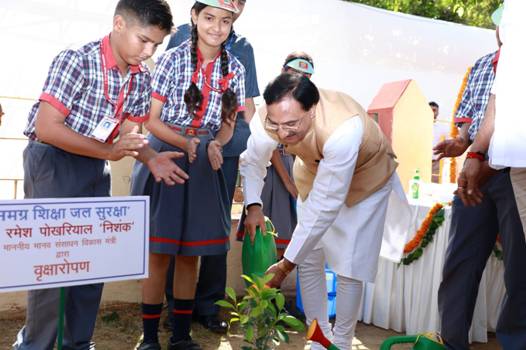
Union HRD Minister Sh. Ramesh Pokhriyal ‘Nishank’ and Union Minister for Jal Shakti Sh. Gajendra Singh Shekhawat launched ‘Samagra Shiksha-Jal Suraksha’ drive at KV no. 2 Delhi Cantt today. The dignitaries planted more than 350 saplings along with School Students and inaugurated Drip Irrigation System in the School campus. In order to create awareness about water conservation among school students, this mega drive targets to connect more than 10 crore students with this programme.
Union HRD Minister Shri Ramesh Pokhriyal ‘Nishank’ while launching the Drive asked School Students to take pledge for saving one litre water every day. 10 Crore Students together can save 10 Cr. Litres of water per day, he said. He appealed all School Students to become brand ambassador of water conservation. Students shall spread awareness about water conservation in their School, home and locality on the lines of Swachh Bharat Abhiyan.
Union Minister for Jal Shakti Shri Gajendra Singh Shekhawat expressed his deep concern on water scarcity in the Country and discussed various methods of water conservation. Quoting the example of Israel he explained how a small country with very limited sources of water generated innovative methods of water conservation and became a water exporting country. He also appreciated the efforts of Ministry of HRD and Kendriya Vidyalaya Sangathan towards water conservation.
Shri ‘Nishank’ and Shri Gajendra Singh Shekhawat also launched a booklet prepared by Department of School Education and Literacy, titled- ‘How I am going to save 1 litre water every day?’ This booklet discusses those small efforts which can save a lot of water.
Inspired by Prime Minister’s impetus on Jal Sanchay, Government of India has launched the Jal Shakti Abhiyan (JSA). It is a time bound campaign with a mission mode approach. This concept of water conservation is essential for students so that they can understand the importance of water and how it is shaping their lives meaningfully, thereby enabling them to participate in water conservation activities in their day to day lives.
The Department of School Education & Literacy, MHRD has launched the ‘Samagra Shiksha-Jal Suraksha’ drive to promote water conservation activities for School Students, so that they can become competent, conscientious and committed water citizens of our nation. The Department has prepared a detailed outline to implement this programme in all the schools of the country.
Five Major Objectives:
  1. To educate Students learn about conservation of water
  2. To sensitize Students about the impact of scarcity of water
  3. To empower Students to learn to protect the natural sources of water
  4. To help every Student to save at least one litre of water per day
  5. To encourage Students towards judicious use and minimum wastage of water at home and school level

5375 Persons Rescued And More Than 42,000 Evacuated By NDRF

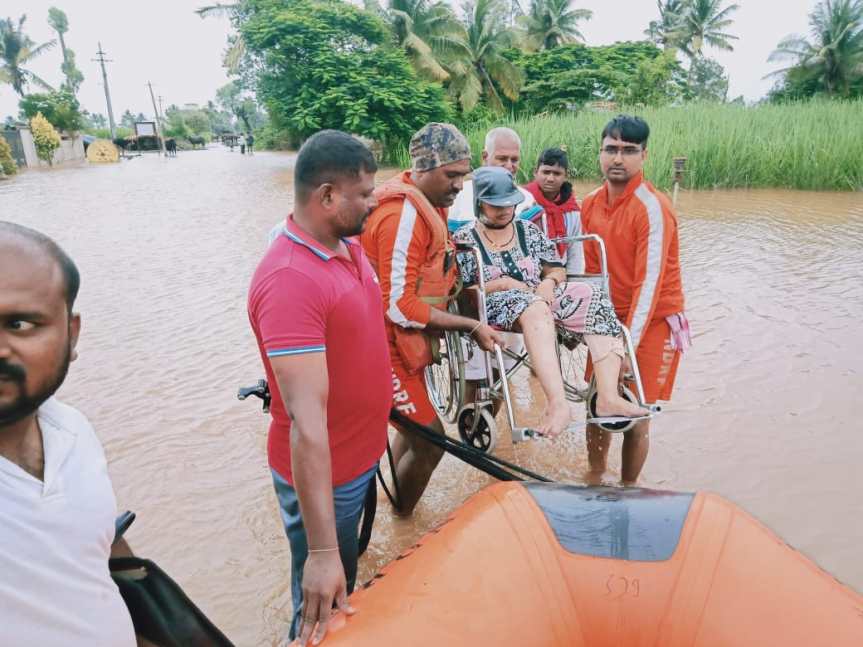
5375 people rescued & more than 42,000 stranded persons & 268 livestock have been evacuated and taken to safer locations by National Disaster Response Force (NDRF) across the country since operation commenced. The NDRF is engaged in rescue & evacuation work with full zeal & commitment at various districts of flood affected states viz. Kerala, Karnataka, Maharashtra, Andhra Pradesh, Madhya Pradesh and Gujarat. Total 173flood rescue teams are deployed by Force across the country for rescue & relief work during the recent monsoon season.
In Kerala the incessant rainfall across the region has affected most of the districts of the state viz. Ernakulam, Idukki, Thrissur, Malappuram, Palakkad, Kozhikode, Wayanad, Kozhikode and Kannur. Bridges, roads are vulnerable to flood which has affected the normal life of the populace. Yesterday, incessant rainfall triggered a major landslide at Ipadi, Puttupala, Wayanad in Kerala, which trapped several people under the debris. NDRF team immediately rushed to the incident site. However, heavy rains and debris on the way obstructed the movement of NDRF team. Despite all odds, NDRF team managed to reach incident site and immediately started the operation with other agencies. In a joint operation, rescue agencies evacuated 194 persons. In addition, NDRF team operational at Mallapuram evacuated 27 person from flood affected areas, today. 13NDRF teams are deployed in Kerala.
In Karnataka, 09 additional teams (05 from Kolkata & 04 from Ghaziabad) are in the State to expedite operations. Presently, 20 NDRF teams are engaged in rescue & relief work with full zeal & commitment at Kodagu, Raichur, Belagavi, Bagalkot & Dharwad districts. Today, teams evacuated 374 persons at Belagavi and 12 at Dharwad . Till Now, NDRF has evacuated over 3400 persons & 24 live Stocks to safer places in Karnataka.

In Maharashtra,  32 NDRF teams are present in the flood affected areas of the State for quick response. Today, NDRF has rescued 2750 persons & evacuated 883 persons at Sangli whereas 300 persons rescued and 246evacuated to safer locations at Kolhapur by NDRF teams. So far, NDRF has rescued 5292 persons and also evacuated more than 18,000 persons & 40 livestock’s in Maharashtra. Besides, team also retrieved 07 dead bodies. The operations are still on.
In Andhra Pradesh, 05 NDRF teams are deployed in Andhra Pradesh. NDRF team deployed at East Godavari commenced rescue operation and evacuated36 people to safer places, today. Total 76 persons evacuated in Andhra Pradesh, till now.
In Madhya Pradesh, 03 NDRF teams are deployed in the State. Today, team evacuated 86 persons at Badwani. So far, 115 persons & 17 livestock have been evacuated by NDRF in Madhya Pradesh.
And In Gujarat today, NDRF team evacuated 150 persons from flooded areas of Chota Udaipur where a total of 4245 persons and 57 livestock have been evacuated by NDRF. 18 teams are deployed in Gujarat.
24×7, NDRF Control Room in New Delhi is functioning round the clock to keep the close vizil over the development of situation and is in touch with other agencies & stakeholder. DG, NDRF is personally monitoring the rescue & relief operations by NDRF and additional teams are on standby at various NDRF locations.

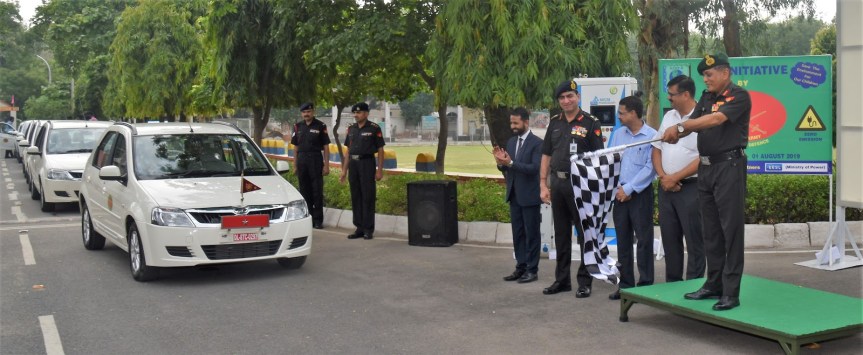
Army Launches E Car to Combat Pollution

The
Indian Army in step with government policies on environmental
protection has launched an ecological initiative with employing E Cars
for use of its officials in New Delhi in partnership with Energy
Efficiency Services Ltd (EESL), a joint Venture of Central PSUs under
Ministry of Power. The introduction of E-Car in Army at Delhi was
visualised on World Environment Day and launched on 01 Aug 2019 with
flagging off the first lot of E-Cars for Indian Army by QMG, Lt Gen
Gopal R. Army plans to operate the first batch of 10 E-Cars as a pilot
project and develop further on this initiative and increase the number
of E Cars in Delhi to ensure economy, efficiency and minimal emissions.
It
is pertinent to mention that Army has always been at the forefront of
environmental initiatives. Indian Army has a large number of Territorial
Army Battalions (ECO) which have done a yeoman service in environmental
protection initiatives such as forestation. Army units posted in remote
and ecologically sensitive areas from Kashmir to Kanya Kumari have been
carrying out various activities in close coordination with local
populace to conserve the ecological balance and protect the environment.
Air
pollution has been a major challenge in Delhi. Governments across the
World are investing a lot of resources in fighting this menace. Electric
vehicle technology has proved to be a viable alternative by reducing
the carbon emission footprint. Indian companies like Tata Motors and
Mahindra have taken a lead in R&D and manufacturing of Electric
Cars. EESL has been the main facilitator in providing these vehicles to
various Government agencies. Army’s initiative in encouraging these
electric vehicles will go a long way in further development of this
technology and its adoption for the general public in near future.

How to Write a Press Release?

So, how to write a press release? That’s a million dollar question.
If done right, it can indeed bring you a million dollars in revenue.
Let’s get started by answering what a press release is.
“A press release is simply a statement prepared for distribution to the news media
announcing something claimed as having news value with the intent of gaining media coverage.”
A press release consists of following elements:
  • Headline

    The headline is the first single line of text in the press release and
    tells what the press release is about. It can be a very effective tool
    to grab the attention of the journalists, so writing it from a
    journalists perspective is very important. Think what headlines catch
    your eyes in the newspaper.

    The headline should be descriptive but not too long. For the
    later reason, Eduindex News limits it to 100 characters.

    The headline should be formatted in title case, that is, each word in
    the sentence should have first letter capitalized, and rest of the
    letters in lowercase. Acronyms can be in uppercase.

  • Summary

    The summary lets you build up your chance to sell your press release to
    the journalist.
    It is generally a requirement of online press release services. Identify
    a unique feature about your product or service and then write how it is
    going to revolutionize the world.

    The summary should be a single paragraph with about three to
    five lines. Beyond 250 characters is too long, so this is the limit for
    PRLog.

    All sentences in the summary should be in sentence case, that is, only
    first letter of a sentence should be capital, and all others should be
    lowercase. Again, acronyms can be all capital letters.

  • Body

    1. Dateline

      The dateline contains the release date of the press release and usually
      also the originating city of the press release. For online press release
      services like PRLog, the date stamp is automatic and should not be
      entered.

    2. Introduction

      The introduction is where the press release body starts.
      It is the first paragraph in a press release,
      that generally gives basic answers to the questions of who, what, when, where and why.

    3. Details

      The details come after the introduction.
      It gives further explanation, statistics, background, or other details relevant to the news
      and also serves to back up whatever claims were made in the introductory paragraph.

    The body should be around 3000 characters or 450 words. The body should
    have a minimum of two paragraphs. All paragraphs should be ideally
    between 5 to 8 lines each. There should be a blank line after each
    paragraph for good visibility.

  • About

    The about section is also called the “boilerplate” as it used over and
    over again. It is generally a short section providing background
    information on the press release issuing company or organization.

  • Media Contact Information

    This section contains the contact information like name, phone number,
    email address, mailing address, etc for the media relations contact
    person. For good credibility, the email address should be the same as
    the organization the press release is about. For example, if the press
    release is about an organization with a website called abcd.com, then
    the email address should be email_address@abcd.com.

General Tips

  • A press release should be written in third person. Instead of using we, us and ours, your should be using they, them and theirs.
  • It is very useful to look at other people’s press releases. Feel
    free to take a look at the most viewed press releases, as it usually
    gives a lot of insight into how to write a press release.
  • Submit press release to Eduindex News at news@eduindex.org