Case Analysis : National Legal Services Authority Vs Union of India

Indian society has usually lacked gender awareness, and the same is reflected in the mindset of the society. The tale of people who are generally referred to as transgender is a story of pain, misery, and agony.

They have not only face deprivation of rights, but also abuse and violence just because they do not fit within the “norms” that society has generally accepted.   They are shunned and defamed by society and are considered to be outcasts and kept far away from participation in various societal activities.

Background

In 2012, the National Legal Services Authority, an Indian statutory body which is constituted under the Legal Services Authority Act, filed a writ petition (writ petition no. 400 of 2012) with the Supreme Court of India. It was followed by another writ petition (No. 604 of 2013) which was filed by Poojya Mata Nasib Kaur Ji Women Welfare Society, a non-governmental organization representing the Kinnar transgender community. Laxmi Narayan Tripathi, an individual who identified himself as a Hijra also approached the court and was also impleaded in the present case.

Issues involved

The petitions mainly raised an issue of “Gender Identity”. It has two facets, viz.:

  • Whether a person who is born male but has female orientation has the right to be identified as a female as per his choice ; the same question arises when an individual uses surgery to change his/her sex.
  • Whether a person who does not identify either as a male or a female has the right to be categorized in a “third gender”.

Arguments

The argument was made that the recognition of only the binary genders of male and female and the lack of legal measures to cater for the needs of the represented groups violates Right to Equality (Article 14), Freedom of Expression (Article 19), Right to Life and Personal Liberty (Article 21).

The transgender community urged that their inability to express themselves in terms of a binary gender denies them their rights and social welfare schemes.

Judgment

The judgement was delivered by a 2-judge bench comprising of Justice K.S. Radhakrishnan and Justice A.K. Sikri on 15th April 2014. The Court had to decide whether persons who fall outside binary gender can be legally recognised as “third gender” persons.

The Supreme Court in this case relied on various judgements from foreign courts like New Zealand, Australia, and England and took into consideration different foreign judgements like Corbett v. Corbett with its complete emphasis on biological sex, Attorney-General v. Otahuhu Family Court in which Justice Ellis noted that once a transsexual person has undergone surgery, he or she is no longer able to operate in his or her original sex.

The Court ruled that all provisions in the international conventions including the Yogyakarta Principles must be followed provided they align with the fundamental rights guaranteed under Part III of the Constitution.

In this landmark judgement Supreme Court legally recognised “third gender” for the first time and discussed “gender identity” at length. Further, it declared that eunuchs and hijras can legally identify as “third gender”.

The Court recognised that third gender persons were entitled to fundamental rights guaranteed under Part III of the Constitution and under International law.

The Court declared that the State and Central governments must grant transgenders full recognition in the eyes of the law so that they can avail education and healthcare without being subjected to any kind of discrimination.

Conclusion

Well, we cannot ignore the fact that the transgender community for long have suffered torture, humiliation, and pain. This judgement came as a fresh ray of hope for the transgender community who have faced discrimination and social injustice. This is a landmark judgement because it is the first to legally recognise non-binary gender identities and uphold the fundamental rights of transgender people in India. However, the transgender community still has a long way to go.
INDO-PAKISTANI WAR OF 1971

Ajay Devgan’s latest film BHUJ: The pride of India trailer was released on Monday. It’s basically based on the Indo-Pakistani war of 1971. The Indo-Pakistan war is one of the most glorious moments in Indian history.
The Indo-Pakistan war bears witness to the bravery and courage of the Indian army and the Indian civilians who helped them in so many ways.
So, let’s take an overview of those proudest moments.

INDO-PAKISTAN WAR 1971

BRIEF OF INDO-PAKISTAN WAR of 1971:-
The 1971 Indo-Pakistani war was a military confrontation between the Indian and Pakistani army during the Bangladesh Liberation War. It is one of the shortest wars in history, lasting only 13 days. During the war, the Indian and Pakistan armies clashed simultaneously in the eastern and western areas. The confrontation started when the Pakistani army launched its “CHENGIZ KHAN” operation and carried out air strikes on 11 Indian air stations.

CASUALITIES AND LOSSES:-
India had lost between 2500 and 3843 soldiers and between 9851 and 12000 soldiers had been wounded during the confrontation. Naval planes, frigates and several aerodromes in West India were also damaged during the war.
While up to 9,000 Pakistani soldiers were killed, 25,000 soldiers were violently wounded and 93,000 civilians, Razarks and soldiers were captured. India also destroyed the two destroyers of Pakistan, a minesweeper, a submarine, three patrol ships and seven gunboats. The main Pakistani port facilities in Karachi and various airfields were also destroyed during the clashes. A part of all these about 3 lakh to 3 crore civilians of Bangladesh was killed by Pakistani military and razarks.

RESULT OF THE WAR:-
The war ended when the eastern command of the Pakistani army signed the instrument of surrender with the Indian army on 16 December 1971 in Dhaka. As a result, the eastern Pakistan was declared as an independent nation named Bangladesh. But due to the brutality of the Pakistani army and Razakars, approximately 8 to 10 million people from Bangladesh fled and became a safe haven in India.

AWARDS AND HONOURS:-
The courageous Indian soldiers who fought valiantly on the battlefield were honored by the “PADAM VIR CHAKRA”.
PADAM VIR CHAKRA award recipients as follows:-

  1. Lance Naik Albert Ekka (Posthumously)
  2. Flying Officer Nirmal Jit Singh Sekhon (Posthumously)
  3. Major Hoshiar Singh
  4. Second Lieutenant Arun Khetarpal (Posthumously)

    Former Indian Prime Minister Indira Gandhi was also honored by the Bangladeshi government by posthumously awarding Bangladesh Swadhinata Sammanona on 25 July 2011.

Each time we read and hear the stories of the Indo-Pakistani war, it is given like a grumble. The Indo-Pakistani war is one of the proudest moments in Indian history that demonstrates to the world that we are no less than anyone else. I hope you all feel equally proud reading this blog as I feel about writing and researching about it.
Finally greet all the soldiers that protect us without blinking.
Have a good day and Happy Reading.


[If there are some mistake and misinformation in the blog so sorry about it and tell us to comment. All the information is taken from trusted sources. Thank you]

IDENTIFYING HUMAN REMAIN USING DNA TECHNOLOGYBACKGROUND


DNA stands for Deoxyribonucleic acid. Ever since this technology has paved its way it started
revolutionizing each and every possible field from the food medicines research and a lot more.
Every single individual has different genetic sequence and thus different DNA which is the
reason why this technology is used. The advent of DNA technology proved to be very
beneficial in the field of forensic science not only for providing criminal justice , determining
the parent of the child but also finding a missing person or even identifying the dead remains
of a person . Day in and day out we see innumerable catastrophic accidents happening over the
globe but when it happens it is usually not possible to determine the person because their
condition might have so deteriorated that all that would have left of them are ashes.

NEED

When these accidents happen it is the sole right of the family of the victim to get its body for
a proper funeral but without DNA technology it would not have been possible . Not only this
it is very difficult to find a missing person which can be resolved with the help of DNA
technology by with the help of DNA profile of the missing persons family.

Research

We all have heard of 9/11 one of the darkest day so far that ripped off the humanity from the
roots. Just a few days after that National Institute of Justice formed a panel making
recommendations on forensic technologies, policies, and procedures to help identify thousands
of victims who suffered death at the hands of the terrorists in the World Trade Center.
Identification of victims were made by comparing their remains DNA with the samples present
in their personal belongings or by with their biological family. These remains could be
collected over 10 months to get the DNA sequence. More than one fourth of the case were able
to be identified in this manner. US FBI formed CODIS (Combined DNA Index System) in which
they contained DNA profile of missing persons relative to find him. This technology was used
in India in 1992 to find the remains of the victims who suffered death in Rajiv Gandhi
Assassination. NIJ also formed model legislature for proper utilization of this technology in
any catastrophe .

Significance

DNA technology played an important role in the field of forensic mostly in
finding remains of a person . More the decayed remains of an individual more is the role of DNA technology. Although this technology requires a lot of funding and the body parts which
are in good condition can be identified using cheaper sources such as dental examination Xray
etc but when it comes to fragments of body they are no match to DNA technology.

The utterly butterly delicious story of Amul

Over the years, Amul, one of the most beloved brands of our country, has become the taste of India, just as its tagline claims. Every Indian millennial has grown up listening to the jingles of its many dairy products, and the Amul girl, the brand’s mascot in the polka-dotted dress, has become a nostalgia-evoking symbol. Amul has truly come a long way since its founding in 1946.

The beginning

Amul was formed as a part of a cooperative movement against Polson Dairy in Anand, Gujarat, which procured milk from local farmers of Kaira District at very low rates and sold it to the then Bombay government. Everyone except the farmers benefited from this trade. The farmers took their plea to Sardar Patel, who had advocated farmers’ cooperatives since 1942. The result was the formation of the Kaira District Co-operative Milk Producers’ Union Limited in Anand.

The union started pasteurising milk produced by a handful of farmers for the Bombay Milk Scheme and grew to 432 farmers by the end of 1948. The rapid growth led to problems including excess production that the Bombay Milk Scheme couldn’t accommodate. To solve this issue, a plant was set up to process all that extra milk into products such as milk powder and butter.

Amul is born

The late Dr. Verghese Kurien, rightly called the Milkman of India, was Amul’s true architect. His journey at Amul began in 1949 when he arrived in Anand to manage a dairy as a government employee. He went from helping farmers repair machinery to revolutionising India’s dairy industry with the White Revolution (or Operation Flood), the largest dairy development programme in the world.

The new dairy with the milk processing plant was ready for operation in October 1955, the year that also saw a breakthrough in dairy technology —buffalo milk was processed to make products for the first time in the world. The word ‘Amul’, derived from ‘Amulya’, which means ‘precious’ or ‘priceless’ in Sanskrit, was used to market the range of milk products developed by the Kaira Union. It is also an acronym for Anand Milk Union Ltd.

Dr Kurien had a vision. He wanted to offer small-scale dairy farmers quality-control units and centralised marketing, which were missing at the time in the dairy economy. Thus, the Gujarat Cooperative Milk Marketing Federation (GCMMF) was created in 1973 to market milk and all milk products produced by six district cooperative unions in Gujarat. GCMMF is the largest exporter of dairy products in India and Amul is the umbrella for all of its products.

Awards, accolades, and a global presence

Over the years, Amul, together with GCMMF, has won numerous awards. Some of these include the Rajiv Gandhi National Quality Award, 1999; the Golden Trophy for Outstanding Export Performance, 2009-10; Best Marketing Campaign, 2014; and World Dairy Innovation Award, among many others. Amul earned recognition all over the world when GCMMF  introduced it on the Global Dairy Trade (GDT) platform, where only the six top dairy players across the world sell their products.

More than a mere slogan

Amul’s famous slogan, which is now a part of its logo, was created in 1994 by Shri Kanon Krishna of a Mumbai-based advertising agency called Advertising and Sales Promotion (ASP). According to Amul, the Taste of India slogan is more than just corporate positioning or advertising jargon. This slogan lends meaning to the brand’s never-ending commitment to taking quality food and products to the rural man, which he otherwise couldn’t have afforded.

The Butter Girl

Amul did not always have the round-eyed moppet as its mascot. The Butter Girl was born in 1966 when Sylvester daCunha, the then MD of the advertising agency handling Amul butter’s account, created her for its campaign. It was a pleasant change from the dull, corporate ads that the previous agency had come up with. Being a seasoned marketer himself, Dr Kurien gave daCunha complete creative freedom to create and release the ads without taking the company’s permission. 30 years later, the Utterly Butterly Girl still wins hearts wherever she is, whether on a billboard or on the packet of butter.

Amul is not just a brand; it is also a movement that represents farmers’ economic freedom. The name is now a household term that is here to stay, and the chubby-cheeked Amul girl will continue to cast a spell on the public.

Teacher’s Day

Let us give one day tribute to our prior of our life. Yes, you think about right one those are our Teachers. Teacher’s day is the one day tribute to our teachers to appreciate their efforts to make us successfull in life and carrer. It is celebrate on 5th september on the birth aniversary of Dr. Radhakrishnan Sarvapalli.

He was a renowedscjokar, recepient of bharat ratna, first vice president and second president of Independent india. Teacher’s day is one such event for which students and teachers equally look forward to. Teacher’s day is as important as to students just like it is for teachers because it gives a chance to student to understand the efforts that teachers gives us to make our life successful.

Also, According to our Prime Minister ”Narendra Modi” Teaching is not a profession, it is Jeevan Dharma(A way of life). He also said that India should regain the status of Vishvaguru(Leader in education) by giving high respect to teachers.

He told that:- “Teachers Determination and Sincerity will shape the destiny of the nation as they are laying the foundation and the building blocks of the society”.

Despite of playing such a crucial rolw in the lives of student life teacher’s doesn’t get there value of appreciation. So we celebrate this one day for our teachers.

|Obstacles to National Integration|

India is a land of widespread diversities in terms of religion, language, caste, tribe, race, religion and so on. Hence, the achievement of National Integration becomes very essential for the all round development and prosperity of the country.

Obstacles to national integration:

Regionalism- Regionalism refers to the sub-nationalism and sub-territorial loyalty. It implies the love for a particular region or state in preference to the country as a whole. There is also sub-regionalism that is love for a particular reason in preference to the state of which region forms a part. Some examples of regionalism are demand of the people of certain areas for separate state would like Telangana, Bodoland, Uttrakhand, Vidarbha, Gorkhaland and so on; demand of people of certain union territories for full-fledged statehood like Manipur, Tripura, Puducherry, Delhi, Goa; formation of organisations with regional motives which advocates a militant approach in pursuing its policies and goals like Hindi Sena, Shivsena, Lachit Sena and so on.

Communalism- Communalism means love for one’s religious community in preference to a nation and a tendency to promote the communal interest at the cost of the interest of other religious communities. It has its roots in the British rule where 1909, 1919 and 1935 Acts had introduced communal representation for the Muslims and others.

Casteism- It implies love for one’s own caste group in preference to the general National interest. It is mainly an outcome of politicization of caste. Its various manifestations include formation of political parties on the basis of caste, emergence of pressure groups based on caste, allotment of party tickets during elections and formation of Council of Ministers in the states on caste lines.

Linguism– It means love for one’s language and hatred towards other language speaking people. The phenomena of linguism like that of regionalism, communalism and casteism are also a consequence of the political process. The problem of linguism got accentuated with the rise of some Regional parties in recent times like TDP, AGP, Shivsena and so on.

Video Game crash of 1983

In 1983 the video games industry was hit with a recession that almost ended the existence of video games of that time period. This period lasted for almost two years from 1983 to 1985. Many people and journalists who were critical were calling video gaming a fad. Numerous companies went bankrupt or stopped making video games entirely. This recession is known as the Great North American Video Game Crash or Atari Shock (Primarily in Japan).

Video games in the 1970s were dominated by arcade machines and by the end of the decade home game consoles were also getting popular. With the start of the 1980s, the video gaming industry witnessed a boom with numerous companies like Mattel, Atari, and Coleco dominating the market. The early 80s was a time of innovation and growth in the video game industry but there was instability in the industry as well. This was a time period when video games were becoming more mainstream and popular. Many new players entered the market ranging from industries to small developers that had no association or prior experience in game development in general.

Pacman was a big hit in the early 80s and it was not of the most popular video games in the arcades. Its successor Miss. Pacman improved on the formula and was a success as well. After the success of Pacman in the arcades, Atari wanted to replicate the success in the home game consoles. But with the limited constraints with the memory and short development period, the game was not well received by the consumers and critics alike. In 1982 Atari also brought the license to release the video game of the movie for 21 million. The game was developed in a time period of only 5 weeks. The game was negatively received and only 1 million copies of the game were sold off the 5 million manufactured. Many of the sales were also returned to the retailers furthering the damage. During this period video games were being published by small developers with very poor quality and many big developers were producing games that were more of a marketing token than the game. There were many clones of the same games with little to no redeeming quality and replayability. There were also numerous consoles unlike today with too many options that were no different from one another. With the abundance of supply and low sales of games, retailers started to remove stocks of video games and this led to the shrinking of the industry. Atari had lost $500 Million in 1983 and had to cut its workforce from 10,000 employees to just 400 employees.

During the 1980s there was a boom in the Personal Computers market as well. The PCs were much more powerful than consoles and they could play games and do many tasks like word processing and spreadsheets. The PC industry was unaffected by this low point of video game consoles.

In 1985 Nintendo Corporation launched the Nintendo Entertainment systems in North America and Nintendo ensured that only a limited number of games to be released under their license agreement. This ensured a certain threshold of quality for the games that were released for the system and Nintendo emerged out of the survivor from the video game crash. The Nintendo Corporation started to dominate the video game industry with an assurance of quality that was unmatched by any other corporation at that time. Many other entrants like SEGA also emerged after the crash. Nintendo with its approach and license and quality assurance of video games has left a big impact on the industry to this date. Video games industry has only grown since then and also overtaken other source of entertainment. Nintendo can be credited to provide the industry a trajectory that was severely needed after the crash of 83.

References:

A COMPUTER WILL NEVER REPLACE A BOOK

In this digital era we always use an electronic device like computer for getting our works done but coming to the taste of experience a computer will never replace a book. There might be several reasons to say that computer is best than a book but for sure what ever the epic information that we see today in a computer was written in a book priorly. A good book in the words of John Milton is the precious lifeblood of a master spirit, embalmed and treasured up to a purpose of life.

The thoughts and ideas contained in a book are immortal like tulasidas’s Rama Charitra Manas, Veda Vyas Mahabaratha, The Bible and many other religious literary works like shakespere’s play etc… On the other hand, a computer is a machine that can visualize the contents of a specific book but thinking about the replacement of a book by a computer is unthinkable and far fetched.

A book provides the most cost effective for spreading education and literacy. It is available at a fraction of the cost of a computer. Moreover it is extremely portable and handy, it is not dependent on any external factors like availability of power supply, software and space which are essential prerequisites for a computer. To go through the contents of a book, the two basic ingredients required are time and inclination. It can be read at any time of day or night and anywhere, like while travelling or even while dozing off to sleep.

Though the above mentioned all phases can be full filled by an electronic gadget also reading a book does not create any physical discomfort or eye strain. We all are aware of the hazards of back pain and eye strain caused by a long stretch of viewing a computer screen. Another factor in favor of the book is the general high degree of respectability and faith commended by the written word. Thus while we may see or hear event on our computer terminal, there is nothing better than to confirm the same from a newspaper or a book. Besides helping in spreading education to masses, a plays an important role in developing our power of expression, and the generation of new ideas and thoughts, which help in modelling our personality .

A book is a source of knowledge on a particular subject, offering no diversion or distraction while a computer offers multiple sources like reading, entertainment, games or news on one go along with several advertisements which some times leads to the distraction of our mind and consequently hinders the acquisition of knowledge.

Thus the computer can never replace a book either now or in the near future, this is for the conviction and convenience offered by a book and it can never be possible through a computer. Moreover being a machine it has chance to break down or show an error, these factors are non-existent while reading a book.

Cyber Bullying

What is Cyber Bullying?

When a young person uses the Internet or technology to harass, threaten, embarrass, or target another person, this person is called a cyberbullying. Typically, cyberbullying involves tweens and teens; but it’s not uncommon for adults to experience cyberbullying and public shaming as well. Even if someone deletes a mean post, chances are it’s still available in some form such as in a screenshot or a shared text message. Worse yet, those targeted by cyberbullies often don’t know who is bullying them, so they often have no way to bring it to an end.

Impact of Cyberbullying

If your child is being targeted by cyberbullying, it’s important that you work with them to report the cyberbullying and do everything you can to get the victimization to stop. Additionally, you should talk to their pediatrician or a mental health professional about what your child is experiencing. Expecting your child to cope with the cyberbullying on their own is not realistic. Cyberbullying also can lead to increasing levels of anxiety and depression. One study found that as many as 93% of kids victimized by cyberbullies reported feelings of sadness, hopelessness, and powerlessness.

Coping with Cyberbullying

  • Encourage your child to reclaim control. Cyberbullying can make teens feel like their lives are out of control. For this reason, you want to give them opportunities where they feel like they have some control. One way to do this is to encourage your child to use what they have experienced and turn it into something good like helping others going through the same thing.
  • Focus on learning from the experience. Whether your child needs a boost to their self-esteem or they need to learn to think positively, help your child identify what they can learn from this experience. You also can help them reframe their experience and focus on the good that has come from it rather than the pain that it caused.

The rivers in the rainy season.

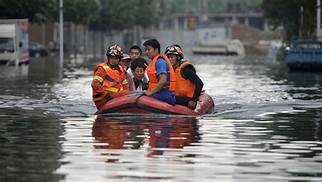
The monsoon rain is believed to be a blessing as well as a curse. When the rain comes down in sufficient quantity, it is a blessing for us after the scorching heat of summer and also for the farmers because the crops grow in abundance. After the dry summer spell the rivers fill up. Fed by the monsoon rain the rivers become furious in size and volume in the rainy season. At that time water runs down from hills and mountains and strong currents overflow the banks of the rivers. Sometimes crops are washed away by flood water on both sides of the river. When the flood becomes more furious, some domestic animals are drowned. The roads and national highways are inundated, and people become homeless. They are bound to starve for a number of days. The whole system of economy of the rural areas as well as urban areas is miserably hampered by the floods in the rivers. The heavy rains in the highland regions cause soil erosion. The rainwater gushes down bringing with it all the top soil and plants. This makes the river water very muddy. Sometimes big trees are uprooted and they too flow down the river.

So, to control floods dams are erected on some of the rivers to check such devastating floods. When the volume of water is controlled through dams, flood is stopped, and it causes good harvest by the useful use of the river water. Thus, sometimes the rivers become a curse and sometimes a boon in the rainy season.

So we always hope for moderate but sufficient rainfall so that the rivers in the rainy season remain manageable.

Delhi- The most polluted city of the world

Among the most polluted cities of the world, Delhi enjoys the dubious distinction of topping the list.

It is not only the most polluted city in India, but the whole world. The reason are quite obvious. Delhi has developed and expanded phenomenally at the great extend. With the ever increasing population, the number of vehicles plying on the road has also multiplies manifold. Growing number of industries, and infrastructure are emitting poisonous gases is another contributory factor for air pollution and environment degradation. The discharge of chemical waste into the Yamuna has polluted the water of the river. It is now unfit even for animals.

Main causes of air pollution in Delhi:-

Pollution caused by the traffic menace in Delhi is another reason contributing to this air pollution and smog. The air quality index has reached ‘severe’ levels. Vehicular emission is increasing the hazardous effects of air pollution and smog. The Central Pollution Control Board (CPCB) and the National Environmental Engineering Research Institute (NEERI) have declared vehicular emission as a major contributor to Delhi’s increasing air pollution.

As the winter season sets in, dust particles and pollutants in the air become unable to move. Due to stagnant winds, these pollutants get locked in the air and affect weather conditions, resulting in smog.

Another reason of air-pollution is over-population in the capital. Over-population only adds up to the various types of pollution, whether it is air pollution or noise pollution.

Investing less on public infrastructure is another reason of air pollution. In India, investment in public transport and infrastructure is low which leads to congested roads, and hence air pollution.

Large scale construction in Delhi-NCR is another culprit that is increasing dust and pollution in the air. Considering the dipping air quality, a number of construction sites have stalled work, as directed by the Delhi Government.

Industrial pollution and garbage dumps are also increasing air pollution and building-up smog in the air.

Despite the ban on cracker sales, firecrackers were a common sight this Diwali. It may not be the top reason for this smog, but it definitely contributed to its build up.

So, to decline the pollution immediate steps should be taken to check carbonisation. Tree- plantation and preservation should be given top priority. Mass public awareness has to be built. Only then we can control the demon of pollution.

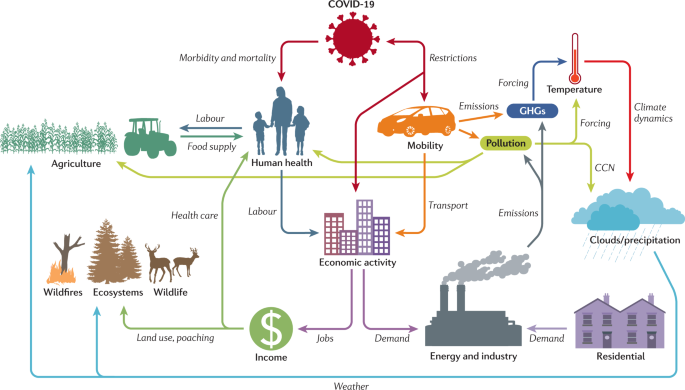
Impact of Covid-19 on environment

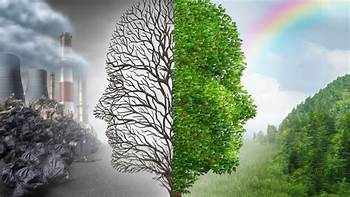
The activities human does has its impact directly on the environment which in turn affect humans in the long term . In the last two centuries the concern for the environment protection arose first during the Industrial Revolution in Europe which changed the entire dynamics of the world leading to revolutionary changes but the burning of coal to run the machines in the industries led to smoke pollution. With time as the number of industries increased globally so did the number of harmful pollutants released in the air causing high smog level, acid rain , respiratory diseases among many other things. It was not just the air but also the water where the waste from industries was directly released making water misfit for humans as well as posing threat to the animals in there. Everything on the surface of earth is interrelated , the cycle of destruction which once starts consumes everything within it fueled by the human greed. Extensive mining , improper waste disposal, excessive noise from honking of cars and other sources leads to different forms of air, soil and noise pollution . Over the years, different governments have come up with different plans to preserve and protect the natural resources and environment along with various methods to reduce the negative impact of globalization and industrialization on the environment.

The covid-19 pandemic which hit the world in early 2020 and has claimed almost a million lives till now had the countries going into the complete lockdown to prevent the further spread of the disease. Lockdown ceased the normal routines of the people as everyone was caged inside their houses with many loosing their jobs, many getting rest from the normally hectic lives, the conditions of the medical professionalists being worse as they had to deal with a foreign deadly disease which they had no idea about. The lockdown which closed all industries and workplaces brought down the world economy to a major level. Despite all these hardships, the only positive thing which happened was the clearance of the environment such as air and water which had been polluted beyond repair by the humans.

Everything has its own pros and cons. This blogs will tell you about the positive and negative impact of covid-19 on environment.

Positive impacts

  • There was a phenomenal reduction observed in the emission of green house gases such as carbon dioxide , methane and nitrous oxides due to closed industries and shut down of transportation which led to cleaner air. According to a study, China which had an average of 2,00,000 metric tones of carbon dioxide emission saw the emission being reduced by 25% which according to the Earth system scientists saved the lives of over 77000 people in two months. The decrease in air pollution brought with it 50% reduction of nitrogen dioxide and oxides of carbons levels which also decreased the rain in that particular time period being acidic. Acid rain which had led to many diseases and corrosion of metals and monuments such as our mighty Taj Mahal is caused by the combination of nitrogen dioxide with oxygen and water vapor present in the atmosphere which leads to the production of the harmful nitric acid along with water.
  • India, where the AQI(Air Quality Index) had worsen in the last decade, saw a drastic improvement in the air quality. The AQI obtained by the Central Pollution Control Board(CPCB) was assessed by comparing the level of pollutants degrading the air quality( PM10, PM2.5, Carbon monoxide and sulphur dioxide) in the unlock (pre covid-19) phase to that in the four lockdowns which the country experienced. It was observed that there was a gradual to rapid reduction in the level of these harmful pollutants and increment in ozone concentration due to the reduction in Nitrogen dioxide concentration by almost 80%.
  • Water Pollution which is a major problem in India and Bangladesh with industries releasing their waste water without its proper treatment in the water bodies causing the decrease in oxygen level in the water affecting the aquatic life present there and also making it unfit for human use. According to various reports, the Ganga and Yamuna rivers of the country which were one of the highly polluted rivers due to the dumping of garbage and industrial releases pre covid showed the signs of rejunevation during the lockdown. No discharge of harmful affluent in these water bodies led to the decline in nitrite concentration in water increasing the dissolved oxygen level. Further, it was reported that the districts in Ganga river basins experienced 60% more rainfall than what it normally experiences which led to the increased discharge of water in river further contributing towards the dilution of remaining pollutants.
  • Also, the animals which were rarely found in open such as the sea turtles finally retreated to their original natural habitant with many sea turtle and rare species of fishes being spotted in the open and on the beaches which were deserted in the lockdown.

Negative Impacts

  • People were advised to use masks and gloves as a precaution against covid-19. The inappropriate disposal of masks and gloves along with other bio medical waste which was used to treat the covid-19 patients will lead to more harm in the long term. Governments advised people against the open disposal of the bio medical wastes but lack of proper knowledge led people to do the otherwise contributing in the water and soil pollution.
  • Also, the flora and fauna which was protected by human guards against the illegal human activities was also at risk. As with lockdown, decrease in man power guarding the reserved forests and sanctuaries decreased which led to the increase in illegal deforestation, wildlife hunting among other things.

Covid-19 can be seen as the nature’s warning to humans to stop interfering in the natural things and to mend its relation with the environment , else the consequences will be terrible.

Dark Web

The term “dark web” sounds ominous, and there’s a reason for that. The dark web is a part of the internet and made up of hidden sites that you can’t find through conventional web browsers. Instead, you must rely on browsers and search engines designed specifically to unearth these hidden sites.

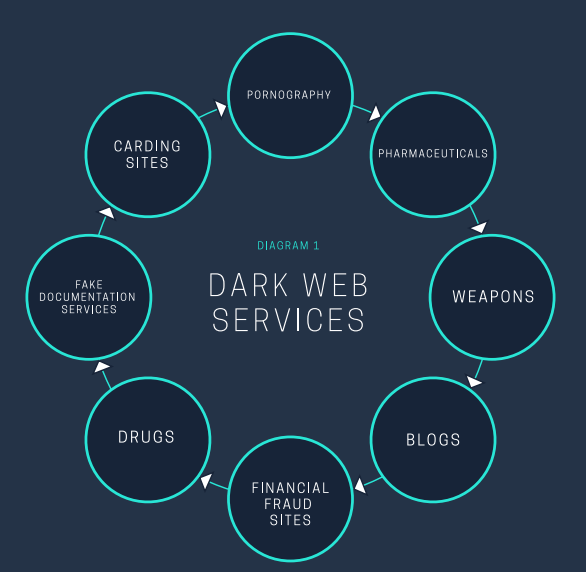
There’s also plenty of secrecy surrounding this corner of the internet. Sites on the dark web use encryption software so that their visitors and owners can remain anonymous and hide their locations. It’s why the dark web is home to so much illegal activity. If you tap into the dark web, you’ll find everything from illegal drug and gun sales to illicit pornography and stolen credit card and Social Security numbers.

Dissidents who fear political prosecution from their governments might use the dark web to communicate with each other. You might visit the dark web to get medical advice that you want to make sure remains anonymous. Sometimes journalists use the dark web so that they or their sources can remain anonymous.

Here’s a guide that will help you learn about the dark web, the sites that populate it and how you can visit it. Be careful, though: The dark web can be dangerous. And if you want to explore it for illegal activities, you could face prosecution and jail time. Depending on where you visit, and what you download, you could also be exposed to scammers and cybercriminals who could attempt to infect your devices with malware or steal your personal information.

What’s on the dark web?

The dark web has earned some of its seedy reputation. A 2016 report from researchers Daniel Moore and Thomas Rid, of King’s College in London, looked at 5,205 live sites on the dark web and found that 2,723 contained illicit content.

What does this mean? The report found that visitors to the dark web can buy and sell guns, drugs, counterfeit money, other people’s Netflix accounts, credit card numbers, and more. You can also find software that you can use to access other people’s computers.

But, again, the dark web isn’t just for criminals. You’ll also come across online versions of books that have long been out of print, a collection of political reporting from mainstream news sites, and several sites run by whistleblowers looking to expose corporate and government corruption.

Drugs

The dark web might be most notable for providing black markets that visitors can use to buy illicit drugs. Silk Road is a good example. This site was famed for the drugs visitors could find on it. The FBI shut down Silk Road in 2013. A new version of the site came online later that year but was also shut down.

The founder of the site, Ross Ulbricht, who went under the false name Dread Pirate Roberts, was arrested in late 2014 and sentenced to life in prison without the possibility of parole. AlphaBay was another popular online marketplace filled with illegal products. It was shut down in 2017.

Passwords and usernames for streaming services

If you don’t mind stealing, you can find the passwords to a host of streaming services — both those offering mainstream movies and those hosting pornography — on the dark web. Cybercriminals sell these passwords to those who want to skimp out on paying the monthly fees for streaming subscriptions.

Passwords and usernames available typically include those for services such as Netflix, Hulu, HBO, Amazon Prime, and other streaming services.

Credit card and debit card numbers

Here’s a scary one: According to a report by Gemini Advisory, 115 million stolen debit and credit card numbers were posted to the dark web in 2020.

Criminals sell these stolen numbers to other thieves. Armed with these numbers, criminals can make unauthorized purchases online using your information. And, yes, you can dispute these purchases, but who knows how much damage these thieves can do before you catch these illegal purchases?

Bank account numbers and passwords

If thieves sell credit and debit card numbers on the dark web, you can bet that they’ll sell bank account numbers and passwords to online savings and checking accounts, too.

According to a report by cybersecurity firm Digital Shadows, more than 15 billion pieces of financial account details are now being sold in online marketplaces. According to the report, banking and financial accounts made up about a quarter of these online listings.

Again, criminals can do a lot of damage after buying your bank account details. They can use your account to make purchases and drain your savings or checking accounts quickly.

Social Security numbers

Criminals can also find Social Security numbers — along with other personal information like people’s birthdates, addresses, and phone numbers — for sale on the Dark Web.

Criminals can use your Social Security number to help steal your identity. That can lead to serious financial pain, as these thieves can use your identity to apply for credit cards in your name, apply for mortgage loans, and even file your income taxes in the hope of stealing your refund.

Difference between dark web and deep web

It’s easy to confuse the dark web with the deep web. But they aren’t the same.

The deep web is also hidden, in a way. But it’s home to benign sites, such as people’s password-protected email accounts, the intranets run by businesses, the online bank account pages of consumers, government databases, and private sites that require users to type in a log-in name and password.

Think of the dark web, then, as a small subset of the deep web that has become a haven for illegal activity.

Is it illegal to access the dark web?

Surfing the dark web isn’t illegal. Buying illegal drugs or firearms from a site on the dark web or downloading child pornography? That is illegal.

For instance, in the summer of 2018, the U.S. Department of Justice, U.S. Department of Homeland Security, U.S. Secret Service, Drug Enforcement Administration, and the U.S. Postal Inspection Service teamed up to arrest more than 35 dark web vendors of drugs, weapons, and other illegal products. The agencies also seized $23.6 million in illegal guns, drugs, gold, and Bitcoin.

An Application

Respected Sir/Madam

Education administration is a fast-changing field that requires knowledge of modern classroom practices and insights in student behavior. My experiences in education and administration make me the ideal candidate for this position.

The position listing for principal stated that you were searching for a candidate who could develop and maintain curriculum standards. I served as a teacher for seventeen years before entering administration and am keenly aware of the state and local standards for curriculum development.

I might not have sparkling marks and dazzling grades up to post graduation due to many reasons, but nevertheless, this lacuna always has kept me awaken and stimulated to impart updated education to my students at every level of their academic growth and aspiring career to score big, achieve high.

Close to 19 years of sound academic experience in more than one school has accustomed me to various teaching-learning and working experience. Employed in various capacity right from common teacher to HOD English to academic coordinator and finally to an esteemed post of a Principal has given me ample space, time, authority and opportunity to groom my pedagogic skill, academic quality, planning ability, leadership efficiency, administrative proficiency and management capacity, appropriately.

As a School Principal, I am nurtured, experienced and accumulated with vital information related to School leadership, Operation, Management, Administration, Marketing, Teaching, Training, planning and community relationship building. Being a priest of English, Sound writing and communication skills have always assisted me to be resourceful and updated at every level of my progress.

Educational requirements change quickly, and principals often act as liaisons between the state and the teaching staff. My experience in curriculum development has helped me be able to interpret state standards and communicate them efficiently to my colleagues. As a principal, I would be comfortable holding everyone accountable for these rapidly changing standards.

My resume highlights specific examples of my administrative and leadership duties, my strong problem-solving, creative thinking, and long-range planning abilities. Additionally, I am adept in communicating with a diverse population.

I relish the range of challenges that are part of this job and enjoy working with students, parents, and teachers. My interests, strengths and abilities, along with my experience, I believe, are exactly what you want for this position. I hope you will give me the opportunity of a personal interview to help me understand your needs better and explain to you in greater detail how I can contribute to your school system.

Thanking you in anticipation

Yours Sincerely

The Jagannath Rath Yatra

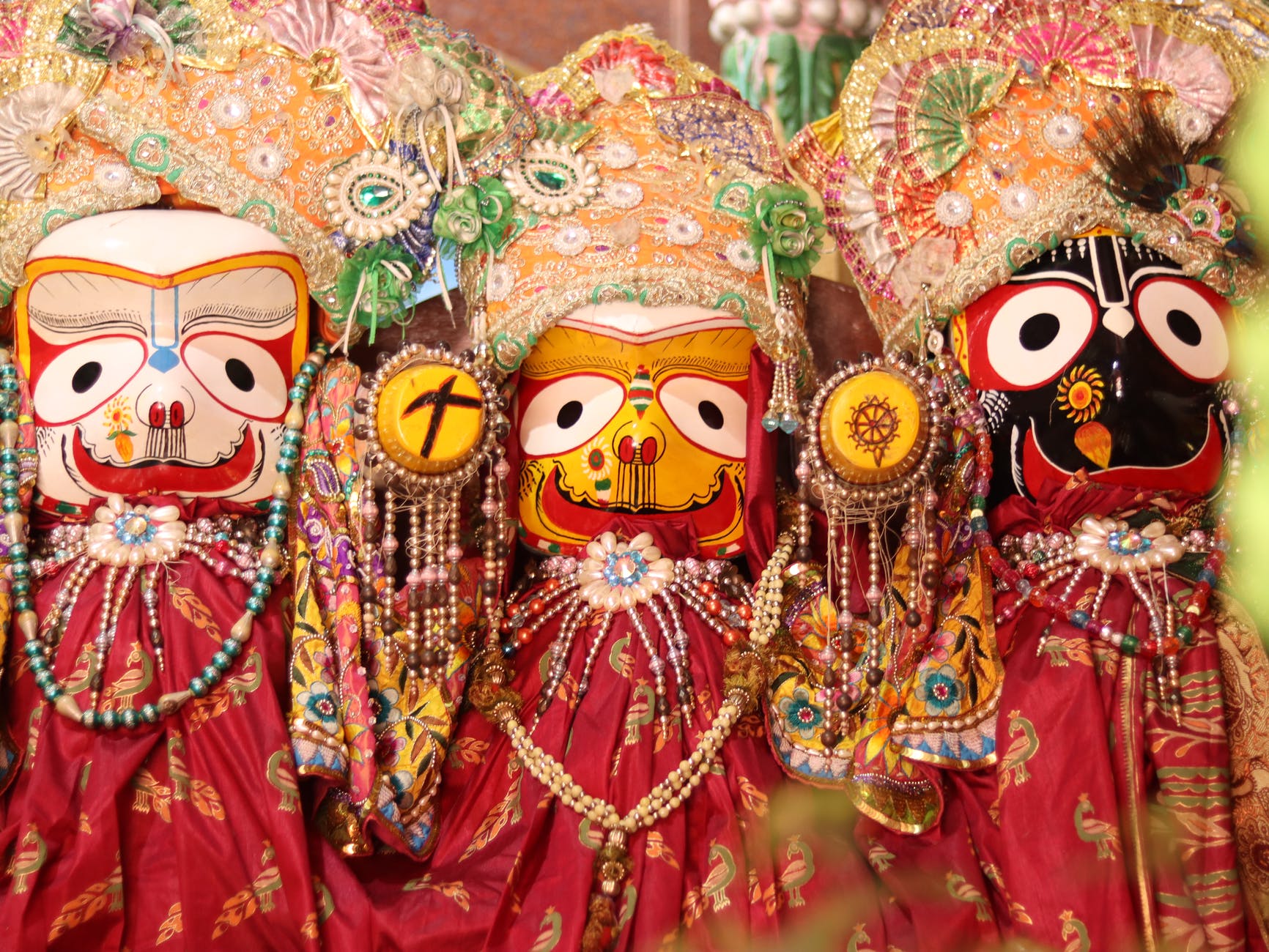
The Jagannath Rath Yatra is an annual Hindu festival associated with Lord Jagannath celebrated in Puri at the state of Odisha. It is celebrated on the Ashadha Shukla Paksha Dwitiya which is the third month according to the traditional Oriya calendar. A 9-day long event, it is celebrated as the return journey of Lord Krishna- who is known as Lord Jagannath, his brother Balabhadra- also known as Balaram and his sister Devi Subhadra to Vrindavana . On their way back from the Shri Gundicha Temple, the three stop near Mausi Maa’s Temple (their aunt’s abode) where Poda Pitha is offered to them.

The rath yatra begins at the Jagannaath Temple in Puri. The Jagannath Temple is believed to have been constructed by the king of Ganga Dynasty- Ananta Varman Chodaganga Deva in the 12th century(source-wikipedia). The image of Sri Krishna (Lord Jagannath) in the temple of Puri is made of wood and is replaced every 12 or 19 years by an exact replica. This temple is part of the Char Dham( that comprises of the temples of Badrinath, Dwaraka, Puri and Rameswaram).

Every year, the rath of all three deities is newly constructed by a specialized team of carpenters from the wood of a particular type of neem tree and takes about 2 months to construct. They are given hereditary rights for the very same. A week prior to the Rath Yatra, the Jagannath temple’s doors are shut as the lord is believed to have caught a high fever during his annual bath. After the end of the 7-day rest period, the doors are opened and the 3 km Rath Yatra begins, where thousands of devotees from all over the world participate in pulling the raths of the 3 deities to Shri Gundicha Temple. It is a popular belief that anyone who participates in the Rath Yatra is blessed with a good fortune. During the festival, the king dressed as a sweeper, sweeps the area around all the 3 chariots with a golden broom and sprinkles sandalwood water and powder as a part of the Chera Paahara ritual held on two separate days that marks the beginning as well as the end of the Rath Yatra. This day of the beginning of Rath Yatra also marks the beginning of agricultural season and farmers start ploughing their fields. It also marks the beginning of a three weeks long Chandan Yatra.

This year, however, in response to the covid-19 pandemic that is spread across the country, the government said that the Rath Yatra will take place with only 5 vehicles including 3 chariots and no devotees. The Supreme Court also said that the Rath Yatra will take place in limited areas of Puri. It began on the 12th of July,2021.