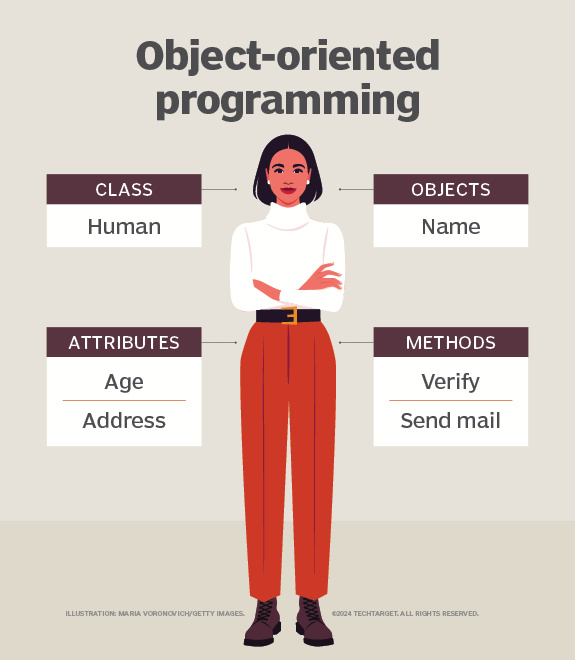
Object-oriented programming (OOP) is a fundamental programming paradigm used by nearly every developer at some point in their career. OOP is the most popular programming paradigm and is taught as the standard way to code for most of a programmers educational career. OOP focuses on the objects that developers want to manipulate rather than the logic required to manipulate them. This approach to programming is well-suited for programs that are large, complex and actively updated or maintained.
Example
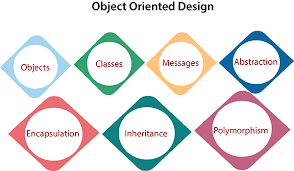
Following are the Basic Concepts Of OOP
Objects
Classes
Data Encapsulation
Data Abstraction
Inheritance
Polymorphism
Message Passing
Dynamic Binding
1. Object
•Objects are the basic run-time entities in the object-oriented system. •They may represent a person, a place, a bank account, a table of data etc. •They may also represent user-defined data such as vectors, time and lists. •Programming problem is analyzed in terms of objects and the nature of communication between them. •Objects take up space in the memory and have an associated address •Each object contains data and code to manipulate the data
2. Class
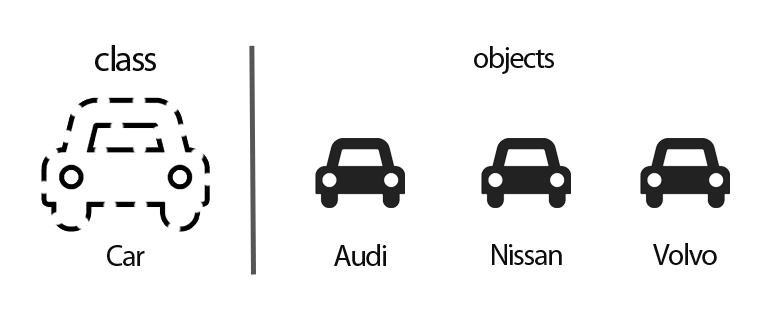
•Class is defined as an abstract data type characterized by a set of properties (attributes and functions) common to its objects •Class is a user defined data type for object •Objects are the variables of the type class •Thus class is a group of objects of similar type •e.g. Mango, apple, pineapple, orange are objects of class Fruit •Class is defined first and then objects are created of the type class
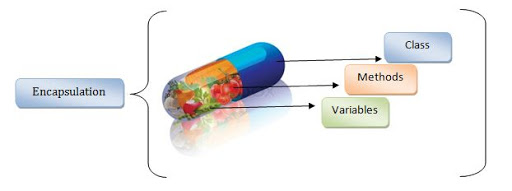
3. Data Encapsulation
•The fundamental idea behind OOP approach is to combine the data and functions operate on that data, into a single unit •The wrapping up of data and functions into a single unit (called class) is known as encapsulation •The data is not accessible to the outside world •The encapsulation (protection) of Data from direct access by outside functions in a program is called Data hiding or Information hiding
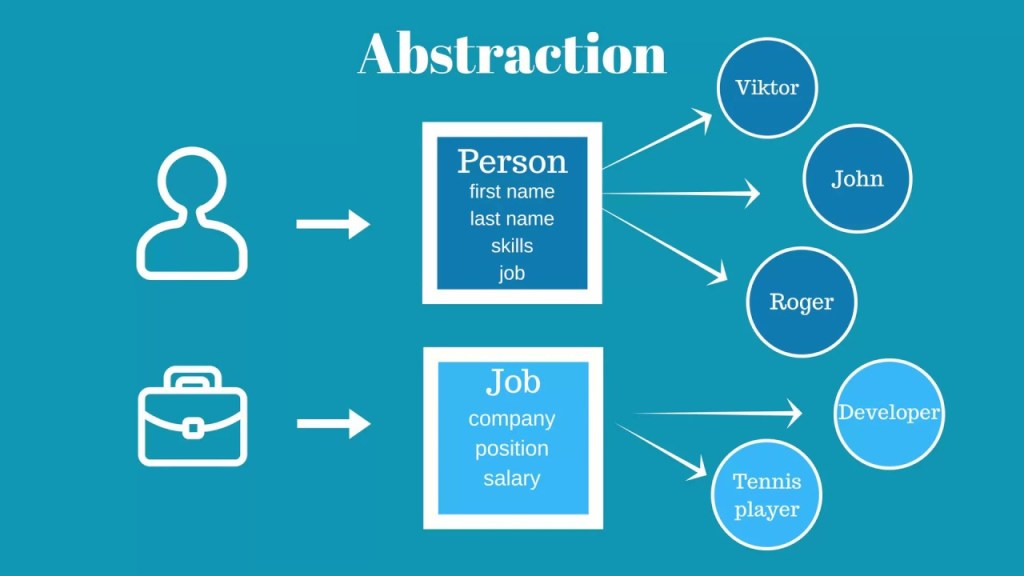
4. Data Abstraction
•Abstraction refers to the act of representing essential features without details •Abstraction is also defined as hiding an implementation details from user •Classes use the concept of data abstraction and hence they are also known as Abstract Data Types (ADT) •Classes are defined as a list of abstract attributes such as size, weight, cost, and function to operate on these attributes
5. Inheritance
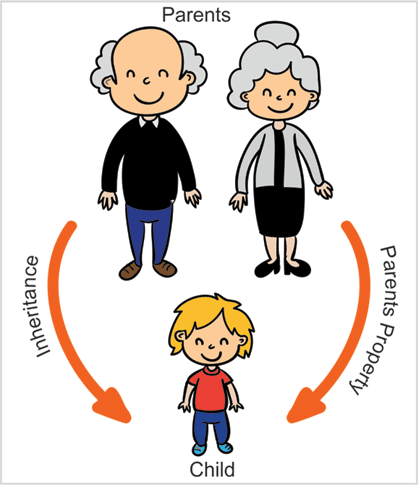
•Inheritance is the process by which objects of one class acquire the properties of objects of another class •In OOP, the concept of inheritance provides the idea of reusability •Reusability allows to add additional features to an existing class without modifying it •It is possible by defining a new class from the existing class •The new class will have combined features of both the classes •The mechanism of deriving a new class from existing class is called as Inheritance
6. Polymorphism
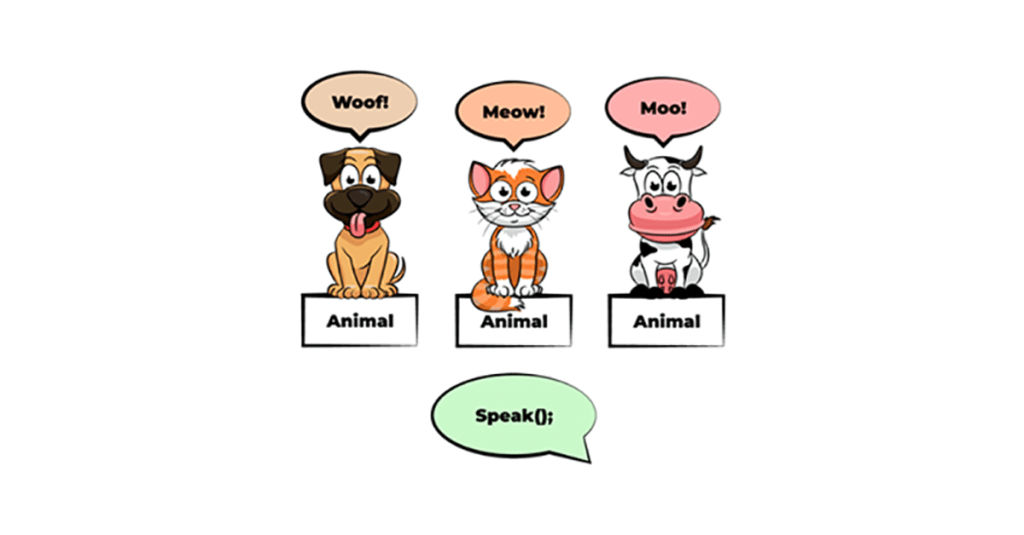
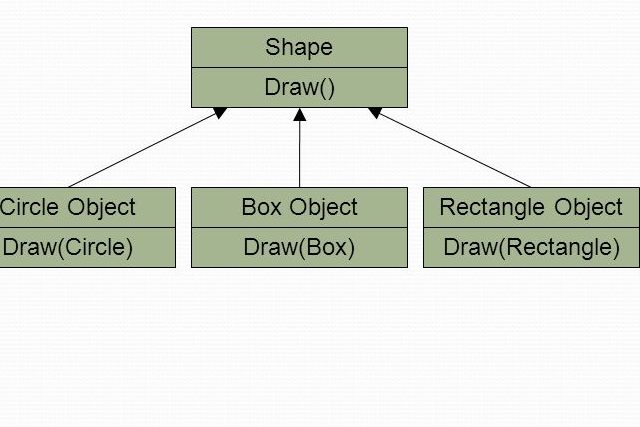
•Polymorphism means the ability to take more than one form •An operation may exhibit different behavior in different instances and this behavior depends upon the types of data used in the operation •Polymorphism can be implemented using function overloading, function overriding and operator overloading •It allows the objects with different internal structures to share the same external interface
In the above example all animals are performing the same task of speaking but it is different for every animal.
7. Message Passing
•The Objects communicate with one another by sending and receiving information (Messages) •A message for an object is a request for execution of a function •Message passing involves specifying the name of the object, the name of the function and the information to be sent
8. Dynamic Binding
•Dynamic binding means that the code associated with a given function call is not known until run-time. •The code to be executed is selected at the run-time •The same function executes different code dynamically depending on data entered at run-time •It is associated with polymorphism and inheritance. •A function call associated with a polymorphic reference depends on the dynamic type of that reference.
Since the pandemic unleashed each country from every nook and corner of the world started the research on the virus to make a vaccines. Till date a lot of countries have produced innumerous vaccines. Following are some of the most widely used vaccines.
1.Covaxin
Released by Bharat Biotech, it has an efficacy of 78% against symptomatic cases. The phase 4 trials were started in June 2021. It constitutes an inactive form of the covid virus. This invokes the immune system which kills any such virus that enters the future. It is given in the form of 2 doses each 4 to 6 weeks apart. There may be side effects like pain, swelling, stiffness in the upper arm, etc. It has not been tested on infants, pregnant, and breastfeeding women.
2.Covishield
Developed by the Oxford-AstraZeneca, it is being manufactured by the Serum Institute of India (SII). It is also given in 2 doses but both are 12 to 16 weeks apart. When both doses are given 30 days apart it is 70% effective but when the doses are 2 to 3 months apart, the efficacy rises to 90%. It has the same side effects as covaxin and is also not tested on infants, pregnant, and breastfeeding mothers.
3.Pfizer
Developed by the German company BioNTech it is an mRNA bases vaccine that encodes the mutated form of the spike protein. Its efficacy is around 91% after the second dose. A gap of 3-4 weeks is recommended between the 2 doses. Side effects remain the same. It can be administered to children above 16 years of age.
4.Sputnik V
Produced by the Gamaleya Research Institute of Epidemiology and Microbiology in Russia, it is an adenovirus viral vector vaccine. Its efficacy is 91%. The second dose is different from the first and is given after 21 days gap. The export from one country to another is easy as it requires a storage temperature of +2-8 degrees Celsius. With the same side effects, it is not recommended to pregnant women.
5.Moderna
Produced by ModernaTX, Inc., an American pharmaceutical and biotechnology company in Cambridge, it is an mRNA-based vaccine. It is given in the form of 2 doses 28 days apart. It is recommended for people above 18 years of age with the same side effects. After 2 weeks of the second dose, the efficacy rises from 91% to 94%.
The side effects that these vaccines have are normal and only means that our body’s defense mechanism is working. Therefore each individual should get a vaccine as soon as possible.
Sexism is an ideology which is used by men to victimize women.
“Sexism is the ideology that one sex is superior to the other. The term is generally used to refer to male prejudice and discrimination against women.”
Barbara Bovee Polk has stated that men in their own interest to maintain power and privilege over women are practicing sex differentiation. It is indeed a power game in which men want to establish their supremacy over women.
Economic cost of sexism:
In comparison with men the economic cost to women is greater. Even though women have equal qualifications on par with men, in many business establishments they are paid less than what men in the same profession get. In fact there are legislations such as the equal remuneration act of 1976 in India which remove wage discrimination between male and female workers but in actuality this legislation is remain in majority of the instances as that letters. Studies have proved that families that rely on female breadwinners are found to be poorer than the ones which have male breadwinners.
Psychological costs of sexism:
Women are treated as second class citizens and their experience becomes passive, rather than active they tend to be treated as thoughtless objects and not subjects in the social environment. Women are forced to forego many educational, political, cultural and economic opportunities and to accept the feminine ideal -a thing of beauty and perfect housewife.
Costs of the practice of sexism on men:
Sexism has created stereotypes in the long run which has a negative impact upon men as well. Men often find it embarrassing to reveal or show too much affection for stereotypically they are expected to exercise control over women, if a husband helps his wife in the kitchen it is generally considered weird.
Hence, sexism is a practice which needs to stop as as it stands in the way of the growth and progress of women who are an equal member of the society and so it has a negative impact upon the growth and development of the society as a whole.
Sandra and Daryl Bem’s views are worth mentioning: “…. when a boy is born it is difficult to predict what he will be doing twenty-five years later we cannot say whether he will be a doctor or a college Professor because he will be permitted to develop and fulfill his own identity, but if the newborn child is a girl, we can predict with almost complete certainty how she will be spending her time twenty-five years later. Her individuality does not have to be considered, it is irrelevant.”
Wireshark is a free and open-source packet analyzer. It is used for network troubleshooting, analysis, software and communications protocol development, and education. Originally named Ethereal, the project was renamed Wireshark in May 2006 due to trademark issues. Wireshark is cross-platform, using the Qt widget toolkit in current releases to implement its user interface, and using pcap to capture packets. It runs on Linux, macOS, BSD, Solaris, some other Unix-like operating systems, and Microsoft Windows.
Features
Available for UNIX and Windows.
Capture live packet data from a network interface.
Open files containing packet data captured with tcpdump/WinDump, Wireshark, and many other packet capture programs.
Import packets from text files containing hex dumps of packet data.
Display packets with very detailed protocol information.
Save packet data captured.
Export some or all packets in a number of capture file formats.
Filter packets on many criteria.
Search for packets on many criteria.
Colorize packet display based on filters.
Create various statistics.
Requirements
The amount of resources Wireshark needs depends on your environment and on the size of the capture file you are analyzing.
Microsoft Windows
Wireshark should support any version of Windows that is still within its extended support lifetime. •
At the time of writing this includes Windows 10, 8.1, Server 2019, Server 2016, Server 2012 R2, and Server 2012.
The Universal C Runtime. This is included with Windows 10 and Windows Server 2019.
Any modern 64-bit AMD64/x86-64 or 32-bit x86 processor.
500 MB available RAM. Larger capture files require more RAM.
500 MB available disk space. Capture files require additional disk space.
Any modern display. 1280 × 1024 or higher resolution is recommended.
A supported network card for capturing.
macOS
Wireshark supports macOS 10.12 and later.
Similar to Windows, supported macOS versions depend on third party libraries and on Apple’s requirements.
UNIX, Linux, and BSD
Wireshark runs on most UNIX and UNIX-like platforms including Linux and most BSD variants.
The system requirements should be comparable to the specifications listed above for Windows.
security attacks considered in wireshark
LOCAL AREA NETWORK ATTACKS
ARP Poisoning Attack
MAC Flooding Attack
DOS Attacks
DHCP Spoofing Attack
VLAN Hopping
Working diagram of Wireshark
Advantages of using Wireshark
Free software
Available for multiple platforms – Windows & UNIX
Can see detailed information about packets within a network
Not proprietary can be used on multiple vendors unlike Cisco Prime
Disadvantages of using Wireshark
Notifications will not make it evident if there is an intrusion in the network
Can only gather information from the network, cannot send
Removal of nirogenous waste produce during metabolism of protein and nucleic acid.
Human excretory system includes:- Pair of kidney Pair of ureter Urinary bladder Urethra
Function of kidney
Kidneys regulate the osmotic pressure of a mammal’s blood through extensive filtration and purification, in a process known as Osmoregulation.
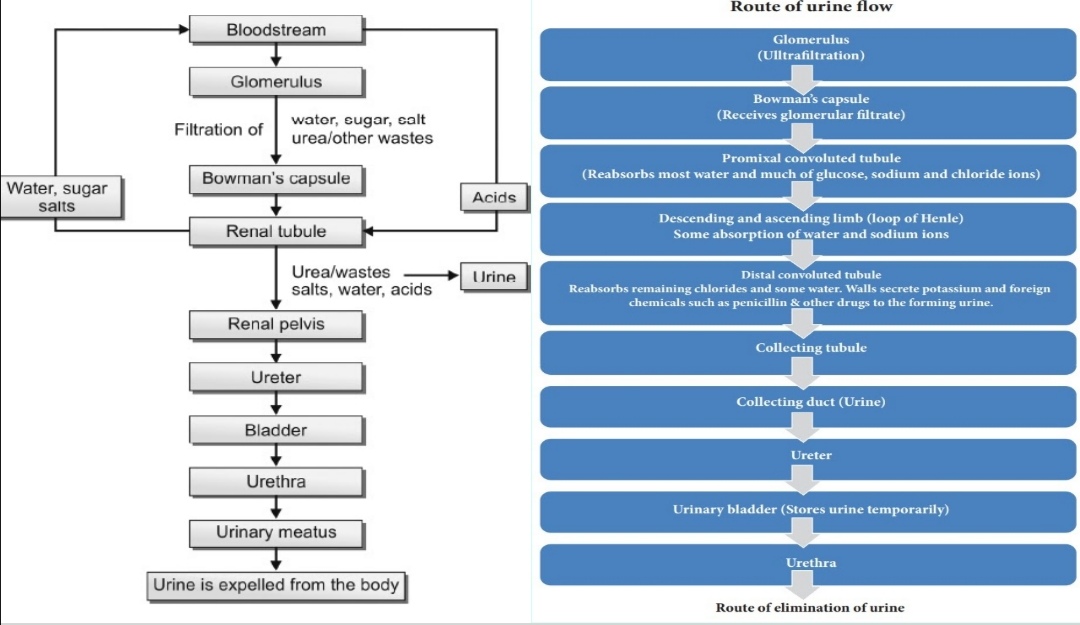
Kidneys filter the blood; urine is the filtrate that eliminates wastes from the body via the ureter into the urinary bladder.
The kidneys are surrounded by three layers:
Renal fascia
perirenal fat capsule
Renal caps
EXTERNAL ANATOMY
A typical adult kidney (mass – 135–150 g) is:
10–12 cm- long 5–7 cm – wide 3 cm cm- thick
The concave medial border of each kidney faces the vertebral column.
Near the centre of the concave border is an indentation called the Renal hilum, through which the ureter emerges from the kidney along with blood vessels, lymphatic vessels and nerves.
Human kidney are Retroperitoneal(covered with peritoneum)
Present between 12th thoracic vertebrae to 3rd lumber vertebrae.
Left kidney is higher than the right kidney due to position of liver in right side.
Three layers of tissue
a) .The Renal capsule(Deep layer) – Smooth, transparent sheet of dense irregular connective tissue that is continuous with the outer coat of the ureter.
It serves as a barrier against trauma and helps maintain the shape of the kidney.
b) The adipose capsule (middle layer) – Mass of fatty tissue surrounding the renal capsule.
Protects the kidney from trauma and holds it firmly in place within the abdominal cavity.
c) The renal fascia(superficial layer) – Thin layer of dense irregular connective tissue
Anchors the kidney to the surrounding structures and to the abdominal wall
On the anterior surface of the kidneys, the renal fascia is deep to the peritoneum
Internal anatomy
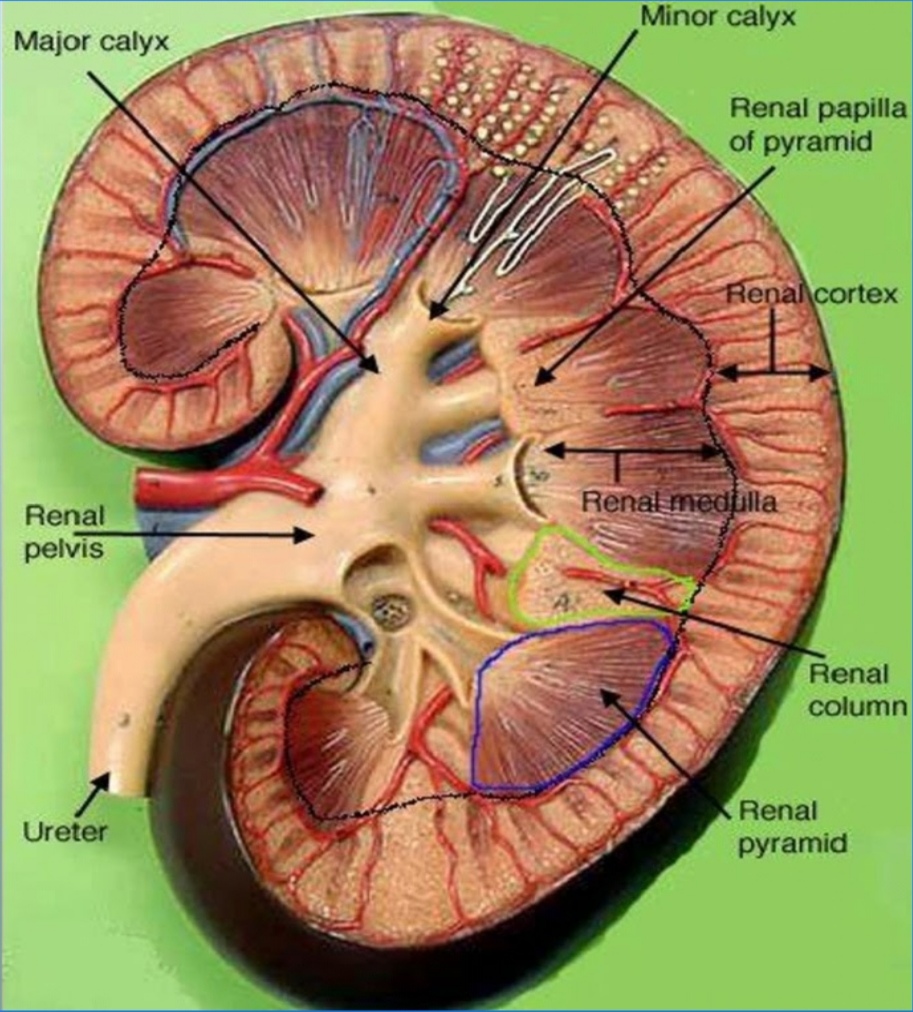
A frontal section through the kidney reveals two distinct regions:
Renal cortex (outer)
Renal medulla (inner).
The renal medulla consists of several cone-shaped renal pyramids.
The base (wider end) of each pyramid faces the renal cortex, and its apex (narrower end), called a renal papilla, points toward the renal hilum.
The renal cortex, smooth textured area extending from the renal capsule to the bases of the renal pyramids.
It is divided into an outer cortical zone and an inner juxtamedullary zone.
Ureter
Muscular tubes of 25-30cm length, 3m in diameter.
Wall of Ureter
Innermost-Transitional epithelium
Middle layer-Muscular(longitudinal and circular muscle)
Outermost layer – Tunica adventita.
Urine is move through ureter by peristalsis.
Urethra conduct the urine from urinary bladder to outside. Female urethra is short. Male urethra is long.
Urinary bladder
Urinary bladder
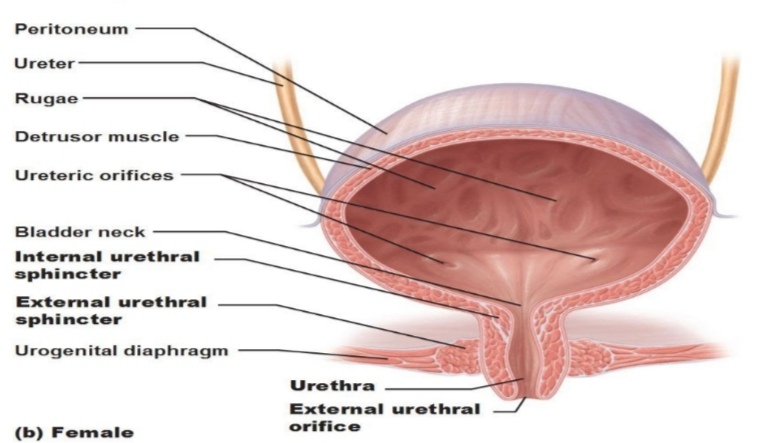
It is hollow muscular organ that stores urine from the kidneys before disposal by urination.
In humans the bladder is a hollow distensible organ that sits on the pelvic floor
Urinary Bladder
Nephron
Structure of nephron
Structure and functional unit of kidey.
Each kidney contain about 1 million nephron
Each nephron has 2 part
Glomerulus
Renal tubules.
Take a simple filtrate of the blood and modify it into urine.
Cleanse the blood and balance the constituents of the circulation.
Many changes take place in the different parts of the nephron before urine is created for disposal.
The term urine will be used here after to describe the filtrate as it is modified into true urine.
The principle task of the nephron population is to balance the plasma to homeostatic set points and excrete potential toxins in the urine.
RENAL CORPUSCLE
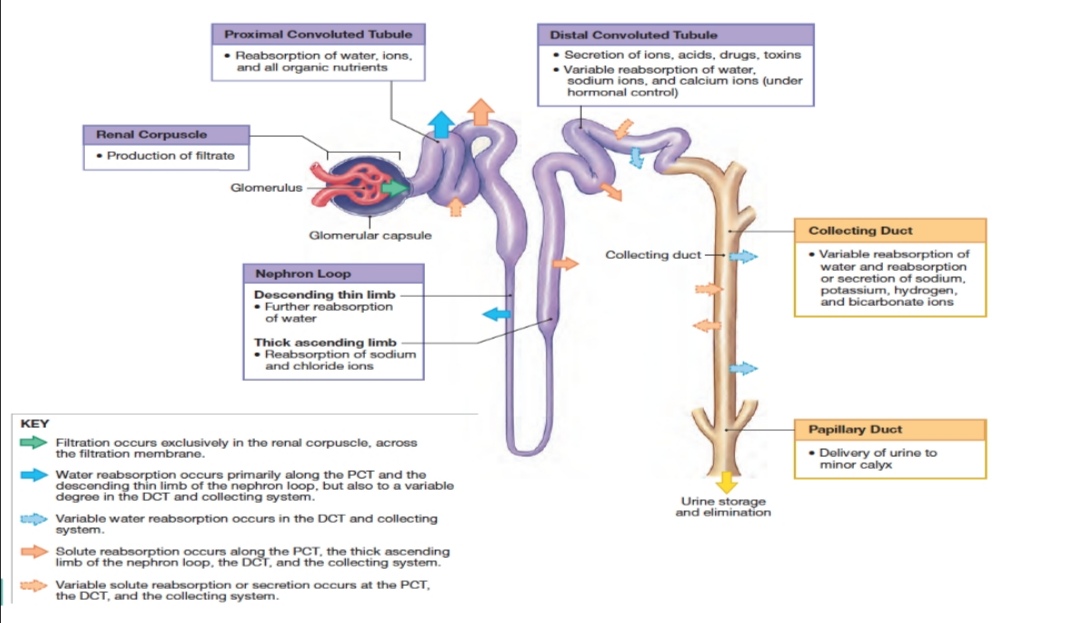
It CONSISTS OF A GLOMERULUS SURROUNDED BY A BOWMAN’S CAPSULE.
THE GLOMERULUS ARISES FROM AN AFFERENT ARTERIOLE AND EMPTIES INTO AN EFFERENT ARTERIOLE.
THE SMALLER DIAMETER OF AN EFFERENT ARTERIOLE HELPS TO MAINTAIN HIGH BLOOD PRESSURE IN THE GLOMERULUS.
THE BOWMAN’S CAPSULE IS DIVIDED INTO THREE LAYERS:
OUTER PARIETAL LAYER- MADE UP OF EPITHELIAL CELLS WITH MINUTE PORES OF DIAMETER 12NM.
MIDDLE BASEMENT MEMBRANE-IT IS SELECTIVELY PERMEABLE.
INNER VISCERAL LAYER-IT CONSISTS OF LARGE NUCLEATED CELLS CALLED PODOCYTE(BEAR FINGER-LIKE PROJECTIONS CALLED PODOCEL)
Renal tubule
It IS A LONG AND CONVOLUTED STRUCTURE THAT EMERGES FROM THE GLOMERULUS
IT CAN BE DIVIDED INTO THREE PARTS BASED ON FUNCTION:-
PROXIMAL CONVOLUTED TUBULE (PCT) – IN THE RENAL CORTEX.
THE LOOP OF HENLE, OR NEPHRITIC LOOP – IT FORMS A LOOP (WITH DESCENDING AND ASCENDING LIMBS) THAT GOES THROUGH THE RENAL MEDULLA.
DISTAL CONVOLUTED TUBULE (DCT)- IN THE RENAL CORTEX.
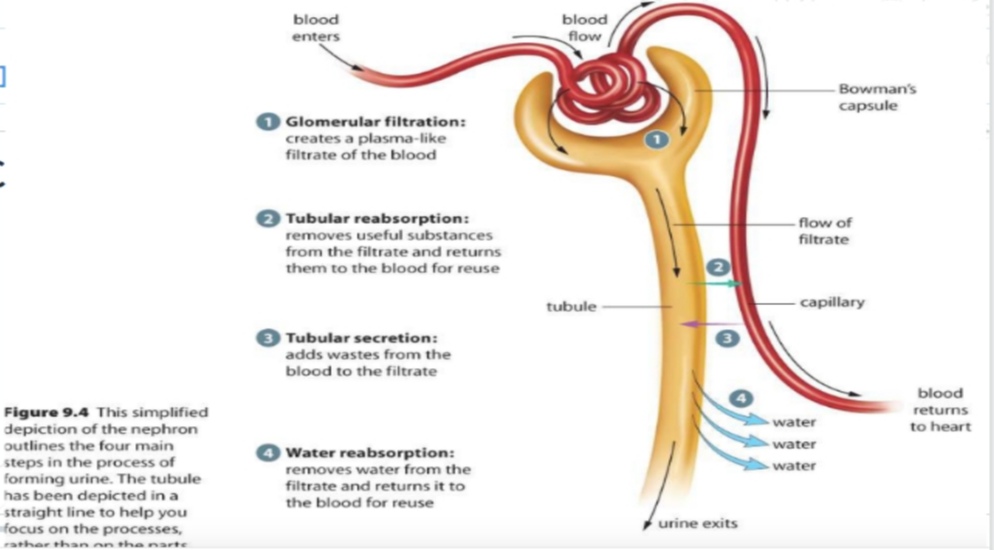
WATER AND SOLUTES ARE FORCED THROUGH THE CAPILLARY WALLS OF THE Glomerulus INTO THE BOWMAN’S CAPSULE (GLOMERULARCAPSULE)
FILTRATE –THE FLUID THAT IS FILTERED OUT INTO BOWMAN’S CAPSULE.
Glomerulus filtrate-same as plasma but protein are absent.
Contains-Water, ions, Glucose, amino acid, water soluble vitamin, urea, uric acid etc.
Tubular reabsorption
OCCURS BOTH PASSIVE AND Actively.
GLUCOSE, AMINO ACIDS, AND OTHER NEEDED IONS (NA, K, CL, CA, HCO3) ARE TRANSPORTED OUT OF THE FILTRATE INTO THE PERITUBULAR CAPILLARIES ( REABSORBED BACK INTO THE BLOOD)
ABOUT 65% OF THE FILTRATE IS REABSORBED IN THE PCT.
AS THESE SUBSTANCES ARE Reabsorbed, THE BLOOD BECOMES HYPERTONICSO WATER EASILY FOLLOWS BY OSMOSIS.
REABSORPTIONIN THE DCT IS UNDER Hormonal CONTROL ALDOSTERONE CAUSES MORE SALT TO BE ABSORBED
ADH CAUSES MORE WATER TO BE ABSORBED
TUBULAR SECRETION
WASTE PRODUCTS SUCH AS UREA AND URIC ACID, DRUGS AND HYDROGEN AND BICARBONATE IONS ARE MOVE OUT OF THE PERITUBULARCAPILLARIES INTO THE FILTRATE; THIS REMOVES UNWANTED WASTES AND HELPS REGULATE PH
Urine
It is pale yellow in colour due to Urochrome pigment that is byproduct of red blood corpuscles(RBC) breakdown.
Around 1-1.5 litre of urine is formed per day.
PH =6 (vary 4.2 – 8.2)
It can be four times as concentrated as the blood i. e-1200mosmol/L.
There as been many controversy about this but as a south Indian who’s mother tongue is Tamil ,how do we see this thing ?. We are not only the one who is opposing hindi as a national language but this has been framed that we are the one opposing this thing. But practically India is a country which speaks more than 20 languages and tamil is one of the oldest.
the thing is we are not saying that Hindi should not exist but we don’t want them to force on every one if anyone wants to learn hindi they can. But some of them are trying to make people forget Tamil but is that what you think . you cant just make people forget there their mother tongue by forcing a language
I read this in a blog stating south Indian cant speak hindi but we are the people who knows hindi but refuses to speak hindi. The statement they are making is hindi is a profound language then what about Tamil it is the oldest language its is been here over 2000 years but yours is just 70 years old . Its funny right people are translating novels from tamil to their language not from hindi . you cant even compare it.
If you wanna make a language as a national language make English a national language because each and every country speaks English not Hindi . see before speaking about this just try to go through the history and you will know who is the real king and which is the 1st language that is spoken
The dystopian genre can be categorized into a wide group of literary works of speculative fiction. It usually involves a vision of the future, or an alternate world, which is used by an author to comment on and explore ideas about their own society. It’s has been a popular genre for quite some time. Lets analyze why dystopian literature, in particular, is so important.
Dystopian literature makes important commentary on the world, societies, and our governments. Humans, since the beginning of the organized society, have always been fascinated by a perfect society which is ‘Utopia’. Since Humans are flawed and our societies mirror that, but it’s also in our nature to strive for better, similar to philosophers who focused on political theory.
During the medieval age, utopia seemed to be a noble idea among the European authors and philosophers. While its main aim was to depict an ideal society, Dystopia on the other hand was a response where authors argued with the Utopian literature. Dystopias are utopias in the real world as these visionary ideas work well, as ideas. When placed in reality they quickly turn into dystopias.
In order to have an ideal society, humans should be devoid of humanistic values. Writers Depict societies that strive for perfection but ultimately fail as they ignore some vital part of humanity, which makes a convincing dystopian world.
Writers look for flaws that exist in our societies today, grounded in truth, and amplify them. A similar reflection of flaws can be seen in Orwell’s 1984 where it paralleled the problems that were ongoing in that period with the depiction of the overt dictatorial elements present in the Soviet Union and Third Reich. He critically pointed out the Government Surveillance, thought police, the constant change of history, and banning of books, which may seem exaggerated. These elements parallel our society albeit in a more subdued manner. Nevertheless, the parallels are present there, hence 1984 is still a very relevant piece of literature today.
Similarly in Brave new world, Huxley pointed out that there would be no need for banning books as people will be bombarded with too much information and would be critically incapable to decipher reality with information overload. Where pleasure receptors hijack people’s critical thinking
Within these two instances, we can interpret that one man’s heaven (Utopia) is another man’s hell (Dystopia). And dystopian writers don’t shy away from being political or radical when they try to describe these phenomena to warn readers.
It has also given rise to many similar genres like science fiction and cyberpunk, dystopian literature can share elements with these themes. In recent times, dystopian literature has also been popularized with the help of Movies, TV shows, and Video Games.
With the advent of the 20th-century dystopian literature evolved and flourished, many of the revered classic literature in the past century has been a part of this genre. Technology and science progressed and new means of government and bureaucratic institutions were established. This gave writers a new method to introspect the societal trend.
There is a critical need to academically evaluate these literary writings as its getting more relevant in our present society.
“With the dawning of a new age, after pandemics have done their work, we may find ourselves at the watershed of singular considerations about how to handle the changes that revolutionize our lives, and trace the silver lining in a new reality. (What do they think behind their dirty aprons?)” ― Erik Pevernagie
TASTE THE POWER OF THE ‘PROVERB’
Clouds are the symbol of grave period of life and the silver lining as mentioned refers to the bright, contented, or enjoyable times. It is very obvious that the entire proverb is about optimism. If an individual is positive even in the murkiest of periods, then indeed things will ultimately be in his/her favour. However, if the individual has a pessimistic approach towards life, then no opportunity in his/her life can ever make him/her gratified and he/she will end up in difficulties. Ups and Downs are part and parcel of life. In fact, if these did not exist, life would have been boring and meaningless. All these understandings enhance us in some way or the other and help us to become strongminded individuals. In fact, all the hardships and difficulties we face in life have the effect of making us richer in experience and educate us to embark upon adverse situations. Therefore, it can be appropriately said that ‘Every Cloud has a Silver Lining’.
HOW DARKNESS PENETRATES OUR LIVES
To elucidate the above, let us analyse the problems of a person called Kamal. He was an average person, coming from a middle-class family. His parents, who were well-educated themselves, wanted him to have the best education and so he was admitted to the best school in the city. As a student, he outshined neither in academics nor in sports and was always placed in the middle of his class in both. Even in extra co-curricular activities Kamal did not leave behind any distinctive mark. Being an obedient child, he was always guided by parental advice, which prevented the development of his personality and as a result, he lacked self-confidence.
AN IRON DETERMINATION PAVES THE WAY
However, Kamal’s life went disordered with the sudden demise of his father in an accident. The family was staring at imminent poverty because his father was the sole bread-winner and the pension that they were to get was not enough to fund the education of both Kamal and his younger sister. All of a sudden, the entire burden of the family descended on Kamal’s young shoulders, but that was a blessing in disguise because the misfortune made him resolute. He developed into a very strong-willed individual who was ready to take on the world legitimately. Kamal took stock of the situation and started providing private tuitions to supplement the family income. In doing so, he realized that his actual calling in life was to be an academician. Gradually, he cleared all the examinations with flying colours and at a very young age joined an elite institution as a there has been no looking back since then. Had the disaster never occurred, Kamal might have followed and done what his parents believed fit for him instead of realizing his own potential and aptitude in life and society would have been left without a very good teacher.
SO…BE OPTIMISTIC
Like Kamal, there are millions of such individuals who suffer major hindrances in their lives but still manage to pull through. So, one should never feel hopeless because of problems, as no individual in this world leads an uncomplicated existence. Whenever clouds of worries appear, they always carry an indication of something better that might happen.So, we must be inspired from such events and should always move frontward in life even if it is hard for us to do so. Strong willpower and undying hope pave the way for success to be achieved. Every single problem in life is like a riddle which hides some solution and a mindful search for that solution open many closed doors of achievements.
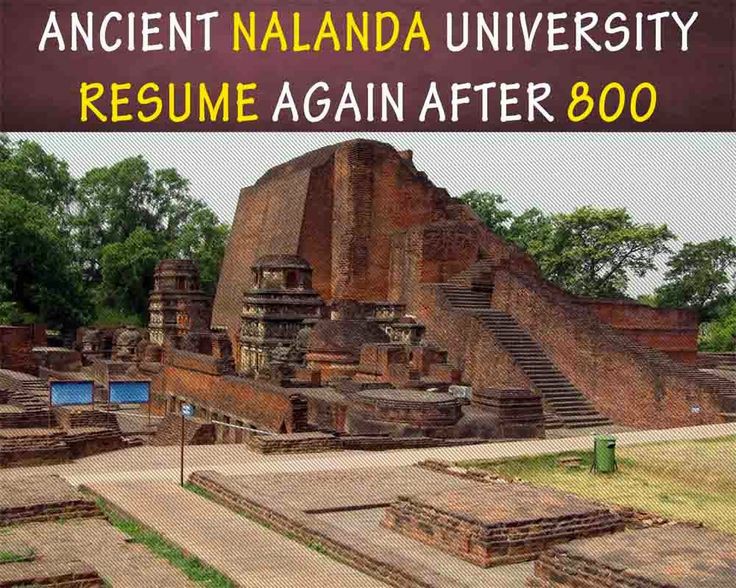
Since ancient times to the modern world, the Higher Education System has always been remarkable in our country, India. From ancient Bharat to modern India, higher education has always occupied a place of prominence in Indian history. In ancient times, Nalanda, Taxila and Vikramsila universities were renowned seats of higher learning, attracting students not only from all over the country but from far off countries like Korea, China, Burma, Sri Lanka, Tibet and Nepal. Today, India manages one of the largest higher education systems in the world.
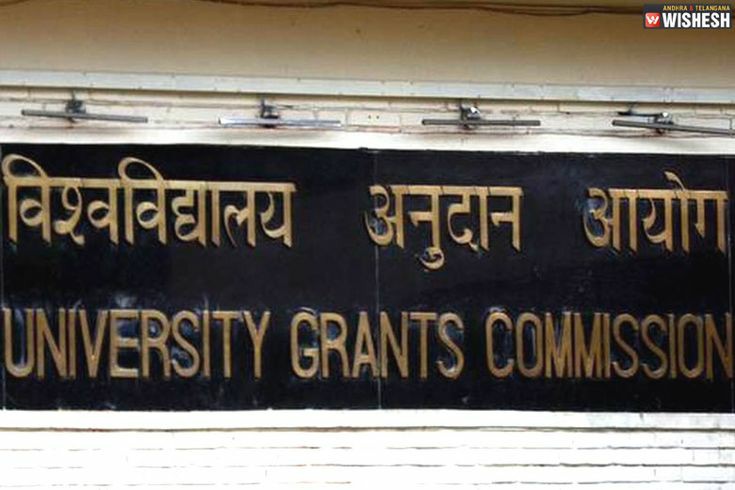
UGC
The University Grants Commission of India (UGC India) is a statutory body set up by the Government of India in accordance to the UGC Act 1956 under the Ministry of Education, and is charged with coordination, determination and maintenance of standards of higher education. It provides recognition to universities in India, and disbursements of funds to such recognized universities and colleges. The headquarters are in New Delhi, and it has six regional centers in Pune, Bhopal, Kolkata, Hyderabad, Guwahati and Bangalore. A proposal to replace it with another new regulatory body called HECI is under consideration by the Government of India. The UGC provides doctoral scholarships to all those who clear JRF in the National Eligibility Test. On an average, each year more than a $100 million is spent on doctoral and post-doctoral fellowships by the commission.
University grant commission logo
Basic information
Established
28 December 1953 First
executive
shanti Swaroop bhatnagar
Headquarter
new Delhi
Chairman
Dp Singh
Department
department of higher education, ministry of education
Sector
higher education
History
The present system of higher education dates back to Mountstuart Elphinstone`s minutes of 1823, which stressed on the need for establishing schools for teaching English and the European sciences. Later, Lord Macaulay, in his minutes of 1835, advocated “efforts to make natives of the country thoroughly good English scholars”. Sir Charles Wood`s Dispatch of 1854, famously known as the ` Magna Carta of English Education in India`, recommended creating a properly articulated scheme of education from the primary school to the university. It sought to encourage indigenous education and planned the formulation of a coherent policy of education. Subsequently, the universities of Calcutta, Bombay (now Mumbai) and Madras were set up in 1857, followed by the university of Allahabad in 1887. The Inter-University Board (later known as the Association of Indian Universities) was established in 1925 to promote university activities, by sharing information and cooperation in the field of education, culture, sports and allied areas.
The first attempt to formulate a national system of education in India came In 1944, with the Report of the Central Advisory Board of Education on Post War Educational Development in India, also known as the Sergeant Report. It recommended the formation of a University Grants Committee, which was formed in 1945 to oversee the work of the three Central Universities of Aligarh, Banaras and Delhi. In 1947, the Committee was entrusted with the responsibility of dealing with all the then existing Universities.
Soon after Independence, the University Education Commission was set up in 1948 under the Chairmanship of Dr. S Radhakrishnan “to report on Indian university education and suggest improvements and extensions that might be desirable to suit the present and future needs and aspirations of the country”. It recommended that the University Grant Committee be reconstituted on the general model of the University Grants Commission of the United Kingdom with a full-time Chairman and other members to be appointed from amongst educationists of repute. In 1952, the Union Government decided that all cases pertaining to the allocation of grants-in-aid from public funds to the Central Universities and other Universities and Institutions of higher learning might be referred to the University Grants Commission. Consequently, the University Grants Commission (UGC) was formally inaugurated by late Shri Maulana Abul Kalam Azad, the then Minister of Education, Natural Resources and Scientific Research on 28 December 1953.
The UGC, however, was formally established only in November 1956 as a statutory body of the Government of India through an Act of Parliament for the coordination, determination and maintenance of standards of university education in India. In order to ensure effective region-wise coverage throughout the country, the UGC has decentralized its operations by setting up six regional centers at Pune, Hyderabad, Kolkata, Bhopal, Guwahati and Bangalore. The head office of the UGC is located at Bahadur Shah Zafar Marg in New Delhi, with two additional bureaus operating from 35, Feroze Shah Road and the South Campus of University of Delhi as well.
In 1994 and 1995 the UGC decentralized its operations by setting up six regional centres at Pune, Hyderabad, Kolkata, Bhopal, Guwahati and Bangalore. The head office of the UGC is located at Bahadur Shah Zafar Marg in New Delhi, with two additional bureaus operating from 35, Feroze Shah Road and the South Campus of University of Delhi as well.
In December 2015 the Indian government set a National Institutional of Ranking Framework under UGC which will rank all educational institutes by April 2016.
Role
The main aim & role of UGC in higher education is to provide funds to universities and coordinate, determine & maintain the ethics in institutions of higher education. The commission upholds the interpretation among the universities, government, and the community. UGC has also set some standards for the universities for being UGC Approved Universities. With the growth of higher education in India, many top, medium, and small universities are being established day by day. Among these universities, there are many universities that are fake and not fit as per the UGC standards. Therefore, the University Grants Commission has released the list of Fake Universities in India to help the students to recognize these rejected universities
Functions
It provides funds and it also arranges for the coordination and maintenance of the universities in India. The UGC controls the following in India:
1.Maintaining the standard of research, teaching and examination in the university maintaining standards of teaching, examination and research in universities & Framing regulations on minimum standards of education.
2.It is a link between the union government and the institutes of higher education system.
3. It also advises the government about the steps to be taken in order to improve the education system.
4.Allocates grants to the universities and colleges out of its own funds for their development or other general purpose.Advises the central and state government on disbursing grants to the universities out of the Consolidated Fund of India. Advises any authority on the establishment of new university or on the proposal seeking expansion of any university.
5.Collects information on university education in India and in other countries.
6.Seeks information from the universities from time to time. The information may range from the financial position of the university, their various branches of learning to the rules and regulations followed in a particular university.
Imparts education to the students in various streams through its Country wide classroom teachings and a four-year old 24 hours educational channel ‘Vyas’.
8.Conducts National Eligibility Test (NET) through its National Educational Testing Bureau in a bid to determine eligibility for lectureship. It also awards Junior Research Fellowship (JRF), which has been set as the minimum standards for Indian nationals to enter teaching profession and research. Humanities (including languages), Forensic Science, Computer Science, Social Sciences, Environmental Sciences, and Applications and Electronic Science are the subjects in which a student can appear for a JRF.
9.The University Grants Commission has recently launched an ‘e-scripting’ course in television for all those students who want to make a career in broadcast media. The course is being run by its Consortium of Educational Communication, an Inter University Centre of the UGC on electronic media.
10.Monitoring developments in the field of collegiate and university education; disbursing grants to the universities and colleges.
The human beings between the age of 0 to 14 years are classified as children. It is the age of innocence which forms the basic foundation of a person’s character. It is in this age where the basic physical and mental structure of an individual develops and also morals like integrity, perseverance, honesty and hard work are cultivated. This age can be compared to that of a blooming bud which needs proper nourishment in the form of water , sunlight and nutrients to bloom into a beautiful big flower. Any kind of extra interference in the normal building of a human body tampers the growth and cause serious consequences for the future that is the adulthood which in turn affects the nation as a whole.
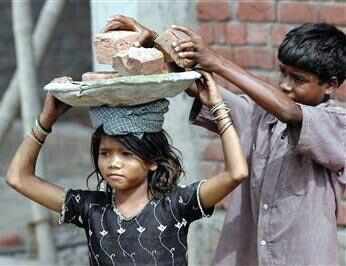
The term child labor refers to the exploitation of children by making them do any type of work that deprives them of their innocence, cause damage to their physical health, mental trauma, affects their dignity and causes any kind of moral or social harm. If in the age of learning an individual will be force to work and will be exposed to physically and morally dangerous situations or any kind of violence it will make that child to grow into an adult full of social loathe, low learning, may also make him/her abusive as the absence of proper learning and tremendous pressure tampers the brain to a great extent and that individual may not even be able to live a basic life maybe adopting the way of crime. They will have this mentality that no matter the amount of hard work which is put , the people who are born to just serve (work) can never succeed by the hook.
The United Nations Children’s Fund(UNICEF) has revealed in its report that India with its larger population has the highest number of labors under 14 years of age i.e. it has the highest number of child labors. This blog will tell you the reasons for these high numbers and the measures taken by government to prevent the exploitation of children.
Why is India leading in Child labor
According to the statistics, over 68.8% of the total Indian population is in poverty with an income of less than $2 per day (i.e. 150 rupees) per family where the number of family members can extend more than 10 too with minimum earning members. In a situation where hand to mouth existence becomes difficult, it is very obvious that people tends to increase the number of heir earning members and thus the children in the age of learning becomes the earning members. Education becomes a very high graded luxury in such cases though the government schools provide free education for children upto 14 years of age. Parents believe that the money child will earn in 8 hours which would have been spent in school will at least gather them one meal.
This is the reason the children of 7- 8 years of age are sent far away from their homes on the pretext of getting good jobs when they are in reality being pushed into trafficking. While in some cases tired of poverty, parents themselves sell their children for a small portion amount of money. The trafficked children are then brought into the“child begging industry” where one of their body part is removed and they are forced to beg money as such children evokes the emotion of pity. Organ trafficking is also a part of this big racket which leads to the early deaths in children.
Few children mostly girls are introduced into sex trafficking and as domestic maids where they encounter not only physical and sexual violence but also are starved for days with maximum labor. This is a complete violation of their innocence and dignity.
Child soldiers are another category where these children are sent to serve for money and are trained to rebel against a group of individuals or a government since their childhood days. The best example of child soldiers is the incorporation of children in the terrorist groups which inculcates the strong emotion of hate in them at such a tender age.
Further, the children are naive and can work for longer hours in a relatively low income which makes them a perfect employee for the illegal small scale industries like firecrackers, bidi making etc. It has been reported more than once of many children getting injured in the blast accidents which happens in such industries.
The illegal employment of children working in Brick kilns, minning areas , stone quarries have led to several health problems such as severe respiratory ailments, weakness, hair loss, vision loss and premature aging.
Steps taken to cease this violation
According to data from Census 2011, India was recorded to have 10.1 million (nearly 1 crore) children working as child labors out of which 5.6 million were boys and 4.4 million girls. Whereas, 152 million children works as child labors worldwide with 88 million being boys and rest 64 million being girls. This statistic shows that 1 out of every 10 children works as a child labor worldwide.
The Indian Constitution has labelled Child Labor as a criminal offence with many acts offering a minimum of 3 years of jail if a person is found guilty of child labor. Also, section 372 of IPC(1860) declares the selling of a minor for the purpose of prostitution as a non bailable offence with over 10 years of imprisonment and fine.
Further several non profit organisations are also working to rescue the children from bondages and grant them their fundamental right of Right To Education. Kailash Satyarthi, a receiver of the Nobel Peace Prize in 2014 has worked since years for the upliftment of suppressed children and to terminate child labor. His foundation The Kailash Satyarthi Children’s Foundation has rescued many children from the exploitation and continues to do so till date.
Child labor is a plague which robs the innocence and the growth from the children who are not privileged, which if not stopped from the common effort will continue to affect the future of the nation.
In the last blog, we have seen 2 best AI movies. Now we are going to continue that. Previously we have seen Ex Machina and 2001: A Space Odyssey. In our list, the movie that ranks 3 is Metropolis.
Metropolis
Metropolis is a 1927 German film, and undoubtedly, this movie served to be a pioneer for many AI related movies. This film depicts a future world where the wealthy people of the society live a easy and luxury life on the surface. In contrast to that,there is a city deep down in the underground where working- class people labour out of sight on the machinery that supports Metropolis. In time, this oppressive situation eventually leads to a class conflict. Freder Frierson, being a member of the wealthy class, falls in love with a working- class women named “Maria”. He also discovers the hard life under the city and is determined to help the workers. To support his plan and his relationship with Maria, Freder’s father, a scientist creates a robot in Maria’s image. Within the context of the film, the robot Maria seems to have its own mind that causes rebellion within the working class and eventually attempts to destroy Metropolis. With the massive popularity of ‘Metropolis’, the robot Maria stands as the first significant robot in film industry. It is the first film to attempt AI in the storyline.
Her
The movie “Her” ranks 2 in our list. This film highlights emotional intelligence in the form of Human- Robot romance. This film reveals the direction humanity might be headed if artificial intelligence continues to evolve. The main lead of the film doesn’t know what he wants from life and people after being pushed to the verge of divorce. His life takes an unexpected turn when he begins to find peace in the voice of his computer’s new OS – Samantha. The heartfelt conversations with the AI system Samantha makes him fall in love with it. Despite its advanced settings, the idea of this movie is alarmingly genuine and there relies its brilliance. Given our dependence on innovation, AI voice assistants and Virtual realities may soon witness relationships between devices. They are engaging, entertaining, yet sad.
Wall-E
Last on our list is Pixer’s masterpieces and one of the thought -provoking movies, “Wall-E”. Wall-E is an excellent contrast to other AI killer robots shown in films. This is the last solar-charged robot left on Earth. He spends his days tidying up the mess that humans have created before leaving the Earth. Yet, during 700 years, Wall-E has developed a character and it is being sad of being alone. At that point he spots EVE, a smooth and more advanced AI not sent back to Earth on a scanning mission to find any existence of life. It ignores Wall-E entirely as he was a robot. Smitten Wall-E embarks on his most incredible adverture and follows EVE across the galaxy and along the Milky Way. Wall-E can’t even talk but his characteristics and mannerisms resemble human behaviour. Another important aspect is Wall-E tells a story where AI saves humanity rather than destroying it. This is interesting as it shows a sense of dependency and the needs of AI for creating a better future. Wall-E is one of the best AI movies that do well to combat fears of AI potentially destroying the world.
Digital marketing the world become digitalizing day to day.
Every things we can do with digital, we are become digital life’s.
Marketing is main source for improve companies, on before digital life’s there was we have person to person and posters to expose their products and services
Now , we are in surviving digital life’s . every things will get on internet so the bases of internet ,we have recognised by Digital marketing .
The digital marketing it is high level, digital marketing refers to advertising delivered through digital channels such as search engines, websites, social media, email, and mobile apps.
by help of these online media channels, digital marketing is the method by which companies endorse goods, brands and services.
On these digital marketing we have a wide range of digital marketing jobs out there meaning there are a huge variety of career options.
Video/audio production.
Interactive technology (such as AI)
Mobile marketing.
Search engine optimization (SEO)
Search engine marketing (SEM)
Social media.
E-commerce.
Email marketing.
Scopes for digital marketing
The scope of digital marketing is quite good. Anyone who is looking to learning digital marketing would surely get a good benefit from it. There are also huge of job opportunities available in the field .
How can you start
There we have many web sites and blogs, start learning digital marketing help of reading books or blogs, enrolling in courses, watching videos on YouTube, listening to podcasts, watching webinars, and more.
Sumer was an ancient civilization founded in the Mesopotamia region of the Fertile Crescent situated between the Tigris and Euphrates rivers. Known for their innovations in language, governance, architecture and more, Sumerians are considered the creators of civilization as modern humans understand it. Their control of the region lasted for short of 2,000 years before the Babylonians took charge in 2004 B.C.
Sumerian Civilization
Sumer was first settled by humans from 4500 to 4000 B.C., though it is probable that some settlers arrived much earlier.
This early population—known as the Ubaid people—was notable for strides in the development of civilization such as farming and raising cattle, weaving textiles, working with carpentry and pottery and even enjoying beer. Villages and towns were built around Ubaid farming communities.
The people known as Sumerians were in control of the area by 3000 B.C. Their culture was comprised of a group of city-states, including Eridu, Nippur, Lagash, Kish, Ur and the very first true city, Uruk. At its peak around 2800 BC, the city had a population between 40,000 and 80,000 people living between its six miles of defensive walls, making it a contender for the largest city in the world.
Each city-state of Sumer was surrounded by a wall, with villages settled just outside and distinguished by the worship of local deities.
Sumerian Language And Literature
The Sumerian language is the oldest linguistic record. It first appeared in archaeological records around 3100 B.C. and dominated Mesopotamia for the next thousand years. It was mostly replaced by Akkadian around 2000 B.C. but held on as a written language in cuneiform for another 2,000 years.
Cuneiform, which is used in pictographic tablets, appeared as far back as 4000 B.C., but was later adapted into Akkadian, and expanded even further outside of Mesopotamia beginning in 3000 B.C.
Writing remains one of the most important cultural achievements of the Sumerians, allowing for meticulous record keeping from rulers down to farmers and ranchers. The oldest written laws date back to 2400 B.C. in the city of Ebla, where the Code of Er-Nammu was written on tablets.
The Sumerians were considered to have a rich body of literary works, though only fragments of these documents exist.
Sumerian Art and Architecture
Architecture on a grand scale is generally credited to have begun under the Sumerians, with religious structures dating back to 3400 B.C., although it appears that the basics of the structures began in the Ubaid period as far back as 5200 B.C. and were improved upon through the centuries. Homes were made from mud bricks or bundled marsh reeds. The buildings are noted for their arched doorways and flat roofs.
Elaborate construction, such as terra cotta ornamentation with bronze accents, complicated mosaics, imposing brick columns and sophisticated mural paintings all reveal the society’s technical sophistication.
Sculpture was used mainly to adorn temples and offer some of the earliest examples of human artists seeking to achieve some form of naturalism in their figures. Facing a scarcity of stone, Sumerians made leaps in metal-casting for their sculpture work, though relief carving in stone was a popular art form.
Under the Akkadian dynasty, sculpture reached new heights, as evidenced by intricate and stylized work in diorite dated to 2100 B.C.
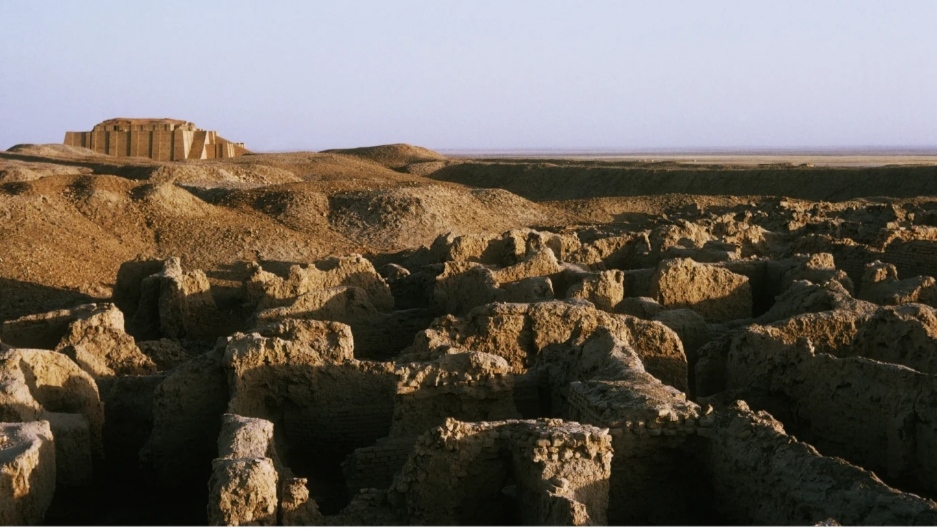
Ziggurats began to appear around 2200 B.C. These impressive pyramid-like, stepped temples, which were either square or rectangular, featured no inner chambers and stood about 170 feet high. Ziggurats often featured sloping sides and terraces with gardens. The Hanging Gardens of Babylon was one of these.
Palaces also reach a new level of grandiosity. In Mari around 1779 B.C., an ambitious 200-room palace was constructed.
Sumerian Science
Sumerians had a system of medicine that was based in magic and herbalism, but they were also familiar with processes of removing chemical parts from natural substances. They are considered to have had an advanced knowledge of anatomy, and surgical instruments have been found in archeological sites.
One of the Sumerians greatest advances was in the area of hydraulic engineering. Early in their history they created a system of ditches to control flooding, and were also the inventors of irrigation, harnessing the power of the Tigris and Euphrates for farming. Canals were consistently maintained from dynasty to dynasty.
Their skill at engineering and architecture both point to the sophistication of their understanding of math. The structure of modern time keeping, with sixty seconds in a minute and sixty minutes in an hour, is attributed to the Sumerians.
Sumerian Culture
Schools were common in Sumerian culture, marking the world’s first mass effort to pass along knowledge in order to keep a society running and building on itself.
Sumerians left behind scores of written records, but they are more renowned for their epic poetry, which influenced later works in Greece and Rome and sections of the Bible, most notably the story of the Great Flood, the Garden of Eden, and the Tower of Babel. The Sumerians were musically inclined and a Sumerian hymn, “Hurrian Hymn No. 6,” is considered the world’s oldest musically notated song.
Gilgamesh
The very first ruling body of Sumer that has historical verification is the First Dynasty of Kish. The earliest ruler mentioned is Etana of Kish, who, in a document from the time, is credited as having “stabilized all the lands.” One thousand years later, Etana would be memorialized in a poem that told of his adventures in heaven.
The most famous of the early Sumerian rulers is Gilgamesh, king of Uruk, who took control around 2700 B.C. and is still remembered for his fictional adventures in the Epic of Gilgamesh, the first epic poem in history and inspiration for later Roman and Greek myths and Biblical stories.
A devastating flood in the region was used as a pivotal point in the epic poem and later reused in the Old Testament story of Noah.
Sumerian Power Struggles
Somewhere around 2600 B.C., a power struggle erupted between the leaders of Kish, Erech and Ur, which set off a “musical-chairs” scenario of rulers for the region for the next 400 years.
The first conflict resulted in the kingdom of Awan seizing control and shifting the ruling body outside of Sumer until the kingship was returned to the Kish.
The Kish kept control briefly until the rise of Uruk King Enshakushanna, whose brief dynasty was followed by Adabian conqueror Lugalannemundu, who held power for 90 years and is said to have expanded his kingdom up to the Mediterranean. Lugalannemundu also conquered the Gutian people, who lived in the Eastern Iraqi mountains and who would later come to rule Sumer.
In 2500 B.C. the only woman to rule the Sumerians, Kubaba, took the throne. She is the only female listed on the Sumerian King List, which names all rulers of Sumer and their accomplishments. Kubaba’s son, Puzur-Suen, eventually reigned, bringing in the fourth dynasty of Kish, following a brief ascendency of Unzi, the first in the Akshak Dynasty.
This last Kish dynasty ruled for a century before Uruk king Lugal-zage-si ruled for 25 years before Sargon took control in 2234.
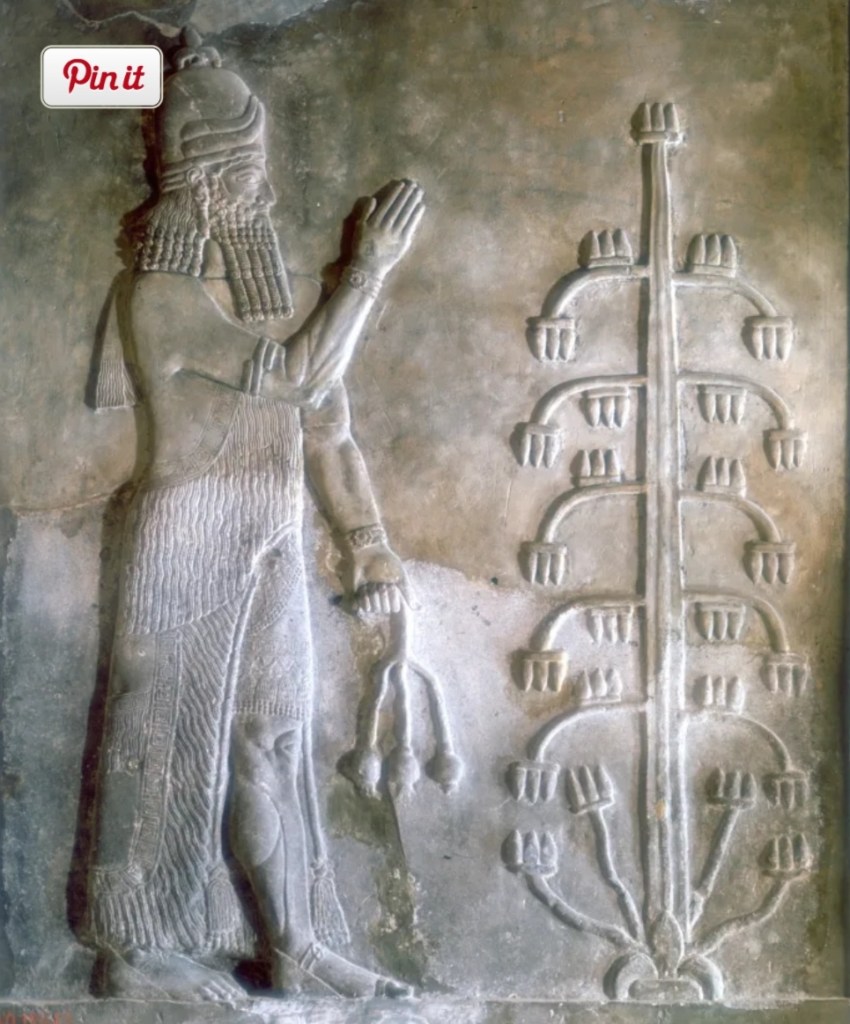
Sargon
Sargon was an Akkadian whose past is shrouded in legends that some claim were ignited by Sargon himself. The claim is that he was the secret child of a high priestess who placed him in a basket and cast him off into a river, a story that was later utilized for Moses in the Old Testament.
Sumerian tradition says that Sargon was the son of a gardener who rose to the position of cupbearer for Ur-Zababa, king of Kish, which was not a servant position but a high official.
Ur-Zababa was defeated by the king of Uruk, who was, in turn, overtaken by Sargon. Sargon followed that victory by seizing the cities of Ur, Umma and Lagash, and establishing himself as ruler. His militaristic reign reached to the Persian Gulf.
Sargon built the city of Agade as his base, south of Kish, which became an important center in the ancient world and a prominent port. Agade was also home to Sargon’s army, which is considered the first organized standing army in history and the earliest to use chariots in warfare.
Sargon took control of the religious cultures of the Akkadians and the Sumerians, making his daughter Enhedu-anna the head priestess of the moon god cult of Ur. Enheduanna is best remembered for her transcriptions of temple hymns, which she also wrote and preserved in her writings.
Sargon ruled for 50 years, and after his death, his son Rimush faced widespread rebellion and was killed. Rimush’s brother Manishtushu met the same fate.
Sargon’s grandson, Naram-Sin, took the throne in 2292 B.C. Naram-Sin considered himself divine and was leveled with charges of sacrilege.
The Gutians invaded in 2193 B.C. following the reign of the last Akkadian king, Naram-Sin’s son Sharkalisharri. Their era is marked by decentralized chaos and neglect. It was during Gutian reign that the grand city of Agade decayed into wreckage and disappeared from history.
Ur-Nammu
The final gasp of Sumer leadership came in 2100 B.C. when Utuhegal, king of Ur, overthrew the Gutians. Utuhegal’s reign was brief, with Ur-Nammu, the former governor of Ur, taking the throne, starting a dynasty that would rule for about a century.
Ur-Nammu was known as a builder. Figurines from the time depict him carrying building materials. During his reign, he started massive projects to build walls around his capital city, to create more irrigation canals, construct new temples and rebuild old ones.
Ur-Nammu also did the considerable work of constructing an organized and complicated legal code that is considered the first in history. Its purpose was to ensure that everyone in the kingdom, no matter what city they lived in, received the same justice and punishments, rather than rely on the whims of individual governors.
Ur-Nammu also created an organized school system for state administrators. Called the Edubba, it kept an archive of clay tablets for learning.
What Happened to Sumer?
In 2004 B.C., the Elamites stormed Ur and took control. At the same time, Amorites had begun overtaking the Sumerian population.
The ruling Elamites were eventually absorbed into Amorite culture, becoming the Babylonians and marking the end of the Sumerians as a distinct body from the rest of Mesopotamia.
Raja Ram Mohan Roy is considered as the pioneer of modern Indian Renaissance for remarkable reforms brought in 18th and 19th century India. Among his efforts the abolition of Sati pratha was the most prominent his efforts were instrumental in eradicating the purdah system and child marriage.
Contributions:
Anti Sati campaign- started in 1818 with the citation from various texts that no religion sanctioned the burning alive of Windows. He also visited cremation ground, filed petitions to the government. His efforts brought about the abolition of Sati in 1829, by the government declaring Sati a crime.
Women’s rights- He was a campaigner of women’s rights, condemned the general subjugation of women and misconceptions to form the basis of inferior status of women he attacked polygamy and wanted property rights for women and widow remarriage.
Modern Education- He supported David Hare’s effort to establish the Hindu College in 1817. He established Vedanta college in 1825 where both Indian learning and western social and physical sciences were offered.
Freedom of press- He was a bold supporter of freedom of press and a pioneer of Indian Journalism. About journals like Mirat ul Akhbar in Persian and a Bengali weekly to educate and inform the public and represent their grievances before the government.
As a political activist- He demanded reduction in land revenue in export duties on Indian goods abroad. He vehemently demanded judicial equality between Indians and Europeans and that trial to be held by jury.
Founded Brahmo Samaj- He laid the foundation of Brahmo Samaj which discarded faith in divine Avatars, opposed the rigidity of caste system, believed in unity of all religions and focused mainly on prayers, meditation and reading of scriptures.
Hence, Raja Ram Mohan Roy has been rightly called the ‘father of modern India and father of Indian Renaissance’. There was hardly any aspect of nation building which he left untouched, he started with the Reform of Hindu religion but he also laid the foundation for reform of Indian society.
Our country has started to unlock once again after the dreadful second wave. With the unlocking various statutory bodies have announced the dates for entrance exams that were earlier postponed due to the ongoing coronavirus pandemic. Even though we received extra time for the preparation of our exams, we humans tend to procrastinate and assume we have a lot of time. However, now that time is over. We need to get back up on the horse and cross that finish line. We have been preparing for a months and it is time for the final revision. Last minute revisions are very beneficial because it helps in refreshing all the facts we already have in our mind.
Let’s look at some last minute exam tips to avoid panic when the exam date is finally announced:
Recheck the syllabus: Since the dates have yet to be announced you have a little time to recheck your syllabus and see if you have left any topic uncovered. If so, take a day or two and finish those topics first. Do not take a chance with those topics because the questions can be asked from anywhere and you still have time to cover those. Also, you need to remember to not spend too much time on such topics either. Just read enough which will help you score.
Prepare a Schedule: Planning is an important part of preparation as well as revision. During the final days make sure you have a schedule but for a limited number of days. Do not make schedules for a week straight. Make a plan every 3-4 days with a different approach. Revisions tend to be monotonous as you have already read the material and making long term schedules might lead to loss of interest by the end of the week.
Solve Previous Year Questions: Previous year questions are the key to clearing the entrance exams. You get to know the kind of questions that can be asked. The most important advantage of such papers is that it lets you know how frequently questions are asked from a particular topic and you can shift your focus onto those topics first. However, before the exam it is not optimum to solve too many previous exam papers. Solve one paper every 2-3 days to maintain efficiency.
Flash Cards: Create flash cards for the topics you find extremely hard to remember. Note down the important topics and review them once before the exam.
Use Audio-Visual aids: For those students who find revising from the book tedious and repetitive can also use YouTube for the same. The tutors always have something extra to offer and their revision tactics are easy to retain. Watching videos makes preparation interesting and gives you a break from reading the same material again and again.
Block All Social Media: It might not seem like a big deal but turning off social media a few days before the D-Day has tremendous amounts of benefits. Avoid all distractions that are a hindrance in your learning process.
Adequate Sleep: Do not stress too much over the exam. Do not lose your sleep during those final days. Inadequate sleep adversely affects your schedule and your health. Make sure you sleep the required 7-8 hours and try to optimize your time during the day without having to sacrifice your sleep.
Take a Rest: Between every schedule take a rest day to recover from the stress. You can do any kind of recreational activity during that time but try avoiding excessive use of social media.
The final days before the exam are extremely stressful and you continuously find reasons to avoid studying because your mind is occupied with fear and anxiety. However, that is no reason to slack off. Every aspirant goes through this phase but the one who soldiers through it are the real winners. So, in order to be a winner one must not lose their focus during those ultimate days. One day you will look back and be thankful that you didn’t give up when every bone in your body wanted you to. Power through and keep your eye on the goal.





















 Eduindex
You must be logged in to post a comment.