How to set Financial goals

Setting financial goals is essential for personal finance management and budgeting. In order to efficiently manage spending, savings and investments and be financially secure, one must set financial goals.

Being unprepared and spending mindlessly can be quite risky. One should be as prepared as they can be in case of emergencies or financial crises.

Moreover, saving and investing your earnings can help you grow your wealth and utilise your earnings in a profitable manner.

Before setting goals

Financial goals and objectives can vary from person to person depending on their income, investments, expenses, life stage/age, needs etc. Hence, it is important to assess the objective and duration of the goal by following the steps mentioned below-

  1. Identify starting point: Set a date for implementing the plan and its duration
  2. Set priorities: Identify your objectives; Are you saving to invest or to buy or to set up an emergency fund?
  3. Document your spending: Calculate your monthly expenditure. Analyse them and try to reduce them.
  4. Pay down your debt: Reduce your debt and pay it off first to reduce your interest expenses.
  5. Secure financial future: Implement the plan to become financially secure.

Most importantly, financial goals should be S.M.A.R.T – Specific, Measurable, Attainable, Relevant, Time-based.

Specific: Financial goals should be specific in terms of objective, time and amount.

Measurable: Goals should be measurable and expressed in monetary terms. For example, goal to be rich is not measurable as it is a subjective term. Hence, an amount limit suitable for every person should be set.

Attainable: A reasonable amount and time and limit should be set so it is possible to achieve them. For example, saving up to buy a car on a monthly salary of ₹30,000-₹40,000 within one year is not realistic and attainable.

Relevant: Every individual’s financial goal should be relevant to and in sync with their individual financial needs and objectives. For example, if a person wants to save up for retirement, they should focus on saving to invest in schemes specially designed for retirement planning.

Time-based: In order to achieve a goal, it should have an end period which motivates one to achieve it. They cannot be never ending as different stages of life have different financial requirements. At the end of the time period, one should evaluate and see if they were successful in achieving it or not.

Duration of Financial goals

As mentioned above, setting time-based goals is very important. Duration of each goal varies and is dependent on its nature and the income and expenses of the individual. For example, saving up to buy a TV should take between 3-6 months depending on the saving capacity of each individual. However, saving up for retirement takes years of planning, saving and investing.

Financial goals can be classified into Short-term, Mid-term and Long-term goals.

Short-term goals have a duration of 2 or less than 2 years. Example- Stick to weekly/monthly budget, reduce unnecessary expenses.

Mid-term goals have a duration of 2-years. Example- Build and diversify portfolio.

Long-term goals have a duration of more than 5 years. Example- Make a retirement plan and implement it.

The Restoration Period: Prose (Part 1)

Restoration Period is during 1660 and the monarch and its influence in England. This period marked the return of Charles II as King (1660–85) following the period of Oliver Cromwell’s Commonwealth

  1. history writing – a significant contribution made during the Restoration Period, documenting the religious and political history of England. The English Prose written to popularise Science – in Renaissance – emergence of new cosmos and science able to release from the clutches of religion, and during the Restoration Period – The Royal Society of London – for the improvement of Natural Knowledge – a learned society thinking about rationality, factual interpretation, empirical reasoning, clearly the opposite of the Medieval Period, where we don’t question authority – a significant thread carried forward in the Restoration is the spirit of Science and Technology. The Royal Society of London – a scientific advisor to the British Government, a principal advisor as well. Thomas Sprat – history piece, on The History Royal Society of London.  Gilbert Burnet.
  2. Diary writingPepys and Evelyn diaries- social documents –  presenting grant details, gossip and rumours of 17th Century intellectuals, discussing events like  – coronation of Charles II, Fire of London (1666) Plague of England (1665), wars fought.  Evelyn’s work Fumifugium – smokiness of London, how it was becoming increasingly populated , Sylva – reforestation, and pollution, how river Thames was becoming increasingly populated.
  3. Travel Writing – sponsored by The Royal Society of London to make a systematic documentation and collection of natural knowledge, funding foreign travels – only condition is to report the travels. Samuel Smith, Benjamin Walford, William Dampier – traveler belonging to the Restoration Period, connection is restoration science and travellers as they work hand in hand, beyond providing data  but also their direct interaction with a new land would impact – direct experience of the new land and not just the marvels of travel documentation. Richard Haklyut and Thomas Roe (India is a very rich country and they sell Jewels on the streets of India).
  4. Biographies – secular as well as religious people as well – Izeak WaltonLives’, John Dryden the History of particular mens life. Hagiography – biography of a christian Saint – the pious life of a saints life.

SELF-HELP IS THE BEST HELP

“Don’t start your day with the broken pieces of yesterday. Every day is a fresh start. Each day is a new beginning. Every morning we wake up is the first day of our new life.” …….. Self-Help Quotes

WHAT IS SELF-HELP?

Self-help asserts developing one’s competences or solving one’s own problems, fighting against social, physical, professional, and psychological complications, with or without the association with other individuals having similar interests. Self-help demands the use of one’s own efforts, resources, etc. to achieve things, without depending on others. It is a great virtue. It provides courage to meet the difficulties of life bravely. It is the secret of success in life.

SELF-HELP GENERATES SELF-CONFIDENCE WHICH LEADS TO SUCCESS

The life of man is very complex. He is always placed in adverse situations. Every dawn of man comes with a shining hope and a whole day’s gruelling work and crushing ups and downs, frustrate and betray many dreams he had stored for the future. If his dreams depend on others whims and wishes, then his success is questionable. If for every short decision he waits for other assertion then he/she certainly under the shadow of life long pain.  It is his strong will, determination and repeated attempt that help him to overcome difficult situations. His indomitable will power coupled with his irresistible effort for the liberation, help him to rise above all odds. Supports him every moment to beat dark clouds of devastation. Being self-confident he stands like rock and defeats all oppositions. He who depends on his own efforts and resources is the most successful man because the best kind of help comes from within.

GOD HELPS THOSE WHO HELP THEMSELVES.

God has sent us on this earth with many gifts like a body, mind and a soul. How we make use of these gifts is our own discretion. It is the way we use our faculties that makes all the difference. Some people share hard work and believe that whatever is in store for them, would be theirs ultimately. This blind faith in one’s destiny is in itself defeating and damaging. God helps those who help themselves. We have to make efforts: otherwise, all promising opportunity will vanish and will leave us mourn over our sluggish helplessness. One has to sow the seed, till the land and plough the fields, water them, nurture them carefully and only then can we expect good crop. God’s mercy is also important because for good crop, we must have rains at the right time, but if we have not sown the seeds, rain or no rain, we would not get any crop. So, destiny or luck, no doubt, plays an important part in our life but we can’t depend on that only. Destiny, along with right efforts in the right direction, will bless us with our desires fulfilled.

THE BEST KIND OF HELP COMING FROM WITHIN

The deer do not enter into the mouth of a sleeping lion. The lion has to run after it. The fan does not give air by itself. It has to be operated manually or electrically. A plate full of delicious meal doesn’t go automatically within the mouth, hands pick it up and take it to the mouth. A job doesn’t come to the job seeker, he or she has to put her effort to grab it. There are several examples of self-made men and countries. Though Vidyasagar was born poor, poverty could not dampen his spirit. His courage and determination helped him in every field of activity. Japan which was weakened in 1945 in the atomic bomb explosion has now become a superpower because of self-efforts.

So, leaving behind all weakness, closing all the doors of begging attitude and silly dependency, diminishing expectation and appreciating every little step of achievement, come, let us be winner by changing our views about the happening, rewarding world.

A wise man says……

“You can’t go back and change the beginning, but you can start where you are and change the ending.”

Should reading be an important part of our life?

Let me start it here by pointing out that, if you’re here already and reading, it simultaneously becomes an activity you engage into.. so yes, reading is important.

But the question is how important; am I right? Education doesn’t have to be what you have studied over the years inside an institution; it could be beyond that — books, per se, they have the ability to enable you with a education that knows no bounds, be it a sci-fi comic, a text on Newton’s thesis, or just some legal content; the best thing about reading is you get to choose what you like, what you prefer, what interests you, beyond institutionalised barriers. Reading is essentially a generic term, panning across undefined boundaries, anything could be considered a text, and you just read it. Nothing is good or bad, you have to just invest yourself into it, and surely over a period of time human brain will adapt into what is becoming the ew normal, and you’ll noting changes — good changes, within yourself. You’ll be moving towards a plane where you have the level of objectivity, where you are aware, and won’t be swayed by anyone around you, you will have the power for yourself to act like how you want to.. and isn’t that almost an ultimate goal amongst us beings, to be liberated and be this autonomous being?

Its also significant to not label what you read, because no matter what genre, or what kind of a text you read, the essence of it would always be to analyse it, not just absorb the words at face value, but rather delve deeper into what or why an author writes the way they do, or what does if a certain section written differently could do to a text, brush up your imagination, glide smoothly with any text you adopt, but absorb a lot more, nothing can ever be set-in-stone, people change, time changes, though written words can’t; they have the potential to be perceived the way someone wants to perceive it, and no one can fight over one’s views, that’s counterproductive to what we’ve been trying to establish. However, don’t forget; if someone’s entitled to their opinion, you are entitled to yours and you have the power to keep on bettering it, to be better and as much you exercise reading into your daily existence, you are stepping closer to what I would consider is being a better being — for that, make sure to keep your eyes and brain open, and not rigid. 

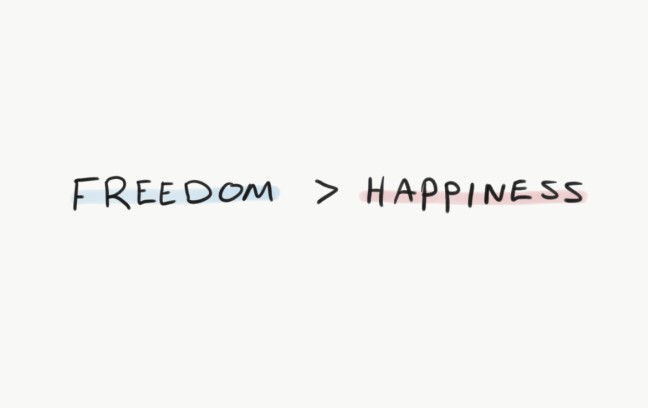
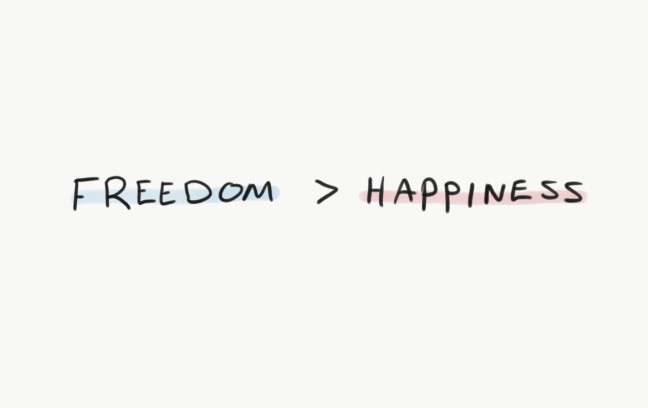
The Pursuit Of Happiness Will Not Make You Happy

A few years ago, I gave up my excessive pursuit of happiness. I used to think that the purpose of life was happiness. But that philosophy didn’t work for me. I realized that happiness is always a byproduct. 

When you spend time with people you love, you feel happy. When you invest four years in getting a degree, you feel happy and accomplished when you graduate. You feel happy when you come up with a useful idea at work. You feel happy when you finish a hard workout. You feel happy when you listen to good music. 

You see? Happiness is the byproduct of an action. It can be as simple as having a conversation with someone or listening to a song. 

But happiness doesn’t last. 

It’s a feeling that comes and goes. Some people disagree with that and say you can always be happy. I think you can be happy the majority of time—not all the time. Why? Because even the best life has bad times.

When You Try Too Hard

If you’re unhappy or frustrated, it doesn’t mean you should do everything to become happy again. 

When you try too hard to be happy, you become impatient. You’re more likely to chase pleasure. And that can lead you to a negative cycle that only raises your bar of pleasure. You will need more pleasure to satisfy your desires. 

In the book Positive Emotion, there’s a chapter called ‘Paradoxical Effects of Pursuing Positive Emotion’ that talks about this principle. In that chapter, written by two UC Berkley professors, Brett Q. Ford and Iris B. Mauss, I read the following:

“Those pursuing happiness may set high standards for their levels of happiness. When their happiness falls short of their standards—which is likely when the standards are high—the resulting disappointment and frustration impedes the experience of happiness.”

Increasing your standards of happiness is a dangerous game. Instead of trying too hard to be happy, seek the truth. 

If you’re unhappy, a different job or city is not the answer. You can travel to every country in the world, but if you don’t have inner peace, your problems will follow you wherever you go. 

Daily life is the same for every individual. We all have to wake up, eat, wash, go to the toilet. We will all experience death, loss, and grief. We all get rejected. We all get injured and ill. And your level of happiness will not change anything about being human. 

Sometimes we forget that. We think that everything will be better if we only feel happy. That’s not the case.

Build A Life Around Things You Value

You will never be truly happy when you live a shitty life of your own making; if you live below your potential, give up on life, and don’t reach for something better, you will be miserable. 

By contrast, if you’ve built a life you’re in control of and have goals you’re working towards, you will be mostly happy. 

One of my close friends has 3 kids. He works as a network engineer and many people count on him at a telecom provider. If he doesn’t solve certain network issues, thousands of people will be affected. 

But despite his responsibilities, his boss gives him a lot of freedom. Why? Because my friend made arrangements with him. 

A lot of people assume you have to work for yourself to be free. That’s not true. If you’re employed, your company or organization wants you to do your job. 

If you’re happy and free, you do a better job. That’s why it’s important to have an open discussion at your workplace about the way you work and live. My friend drops off his kids at school and comes home for lunch. He has enough freedom to enjoy his life. That wasn’t always the case. 

Just two years ago he complained a lot about his work situation. But now his life has more balance because he made a few clear decisions. He didn’t even switch jobs. He simply committed to freedom. That means no more spending time with negative co-workers. Instead, he’s doing his best and prioritizing family and health. He no longer “hangs out” with everybody he knows. 

He works, spends time with his family, and goes to the gym. That’s his decision. Sure, he can’t pick up his kids from school when they are done, but he has peace with that. He’s still around a lot in the morning and for lunch. You can’t have everything. But as long as you have freedom, you will be happy.

After Rain Comes …

Look, no matter how free you are, no one is immune to being unhappy at times. But regardless of how bad life is at times, unhappy moments always pass. 

Time moves in one direction. And even the worst times are not here to stay. If you’re unhappy, you don’t have to fight it. Accept it. And go through it. Know that everything will pass. That’s also true for good times. Everything we do or experience is temporarily. 

In The Netherlands, we have this saying, “After rain comes sunshine.” We use it to remind ourselves and others that good times are on the horizon.

That’s the nature of life. Sometimes it’s good, sometimes it’s bad. Once we accept that, we become free from trying too hard to change how our life is during a specific moment. 

Some things, we have to endure. But it doesn’t mean that you can’t change your life. Since all life situations are temporary, you get a new chance every hour and day. You can commit to making your life better by taking action. No matter what your circumstances are, you can build a life that gives you inner joy.

Start now.

HOLI : FESTIVAL OF COLOURS

INTRODUCTION

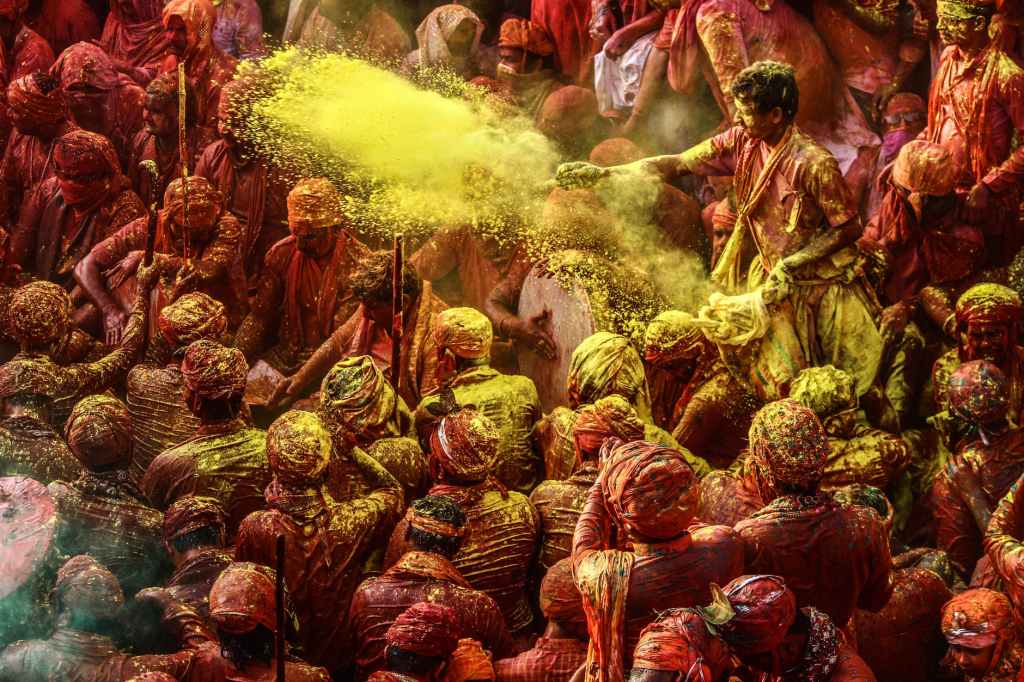
Holi is also known as the “festival of colors” in which people celebrate the day. They throw and splash the colors over friends and family. It is celebrated in the spring season of the year. It is celebrated every year by all people across the country, no matter what their faith or race is. The quality of colors are some things that bring a heap of positivity in our lives. Holi is the festival of colors. Holi is a known Hindu festival celebrated in each part of Bharat with utmost joy and enthusiasm.

HISTORY OF THE FESTIVAL

The ritual starts by lighting up the bonfire in the future before the day of Holi. This process symbolizes the triumph of excellence over the bad. On this day people play with colors with their friends and families. In the evening, they show love and regard to their close ones and celebrate it by distributing sweets. According to Indian mythology, Holi is celebrated on the occasion of the demolition of the demoness Holika by Lord Vishnu. Holika was the sister of Hiranyakashipu. Hiranya kashipu thought himself to be god and ordered others to worship him as god. He thought that no one could beat him. He also thought that he was immortal. He would kill anyone whoever didn’t follow him because of God. Hiranya kashipu had a son named Prahlad who didn’t follow his father as a god.

Due to this reason Hiranyakashipu tried to kill Prahlad. On the other hand, Prahlad idolized Lord Vishnu. Holika had an extraordinary power that she didn’t get burned from the fireplace — once wearing a unique garment. Thus, Hiranya kashipu created an idea to kill Prahlad. He planned to keep Prahlad within the lap of Holika and make her sit in a burning fire, as a result Prahlad will be burnt to death in fire. It’s believed that it had been the firm religion of Prahlad. In Vishnu, that caused the garment to hide Prahlad.

Later, Lord Vishnu appeared within the sort of Narsingh and killed Hiranya kashipu together with his claws by putting him in his lap so that the people were free from the demoness Holika and demon Hiranya kashipu. And from that day they celebrated the occasion by smearing the ash of Holika over one another. In this way the festival Holi originated. People play with colors on the day of Holi; they eat sweets and celebrate. These bright colors represent our feelings. Kids have the foremost fun at this festival by playing with colors. Balloons stuffed with colored water, pichkaris, and buckets full of colored water.

HOW IT IS CELEBRATED

On the day before Holi, we celebrate Holika Dahan. People collect wood and put fire in it. Then we celebrate it by singing songs round the hearth from that woodpile. It is dedicated to honour the myth of burning Holika and the protection of Prahlad from that fire. There is no Holi without colours. In this festival we throw colours upon one another. This is the primary means of celebrating Holi. Since Holi is known throughout the start of the spring season, the colors symbolize the recent harvest and fresh fruits and vegetables that are about to be harvested that season. The vibrant colors used to celebrate Holi’s essay in English welcome the spring season. And nothing will boost our energy state because of the bright colors.

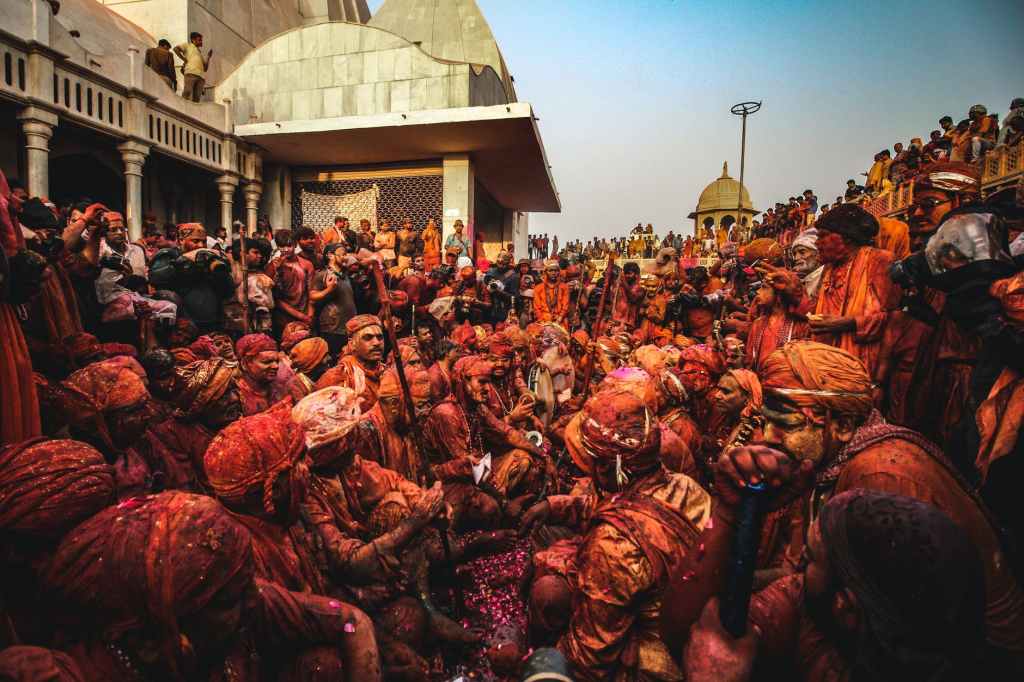
 At night people light the fire. People supply crude coconut and corn to the fireplace. The second day is the celebration of shading or “Dhuleti,” celebrated by sprinkling hued water and applying hues to at least one another. Dwarka, a dry land town of Gujarat, observes Holi at the Dwarka dheesh sanctuary and with broad satire and music festivities. Barsana, a neighboring city Mathura within the Braj scene of state. They celebrate lathmar Holi within the rambling compound of the Radha rani sanctuary.

Thousands of people accumulate to look at the lath Mar Holi once women beat up men with sticks. As those on the side-lines finally, end up insane. Everyone sings Holi melodies and yells “Shri Radhey” or “Sri Krishna.” Several foreigners visit India throughout the time of Holi to experience our culture.

Since children are thus excited about throwing colors on others, they’ll find themselves hurting others. Each festival includes a purpose. We must always celebrate it in an exceedingly good method and maintain the spirit of the festival. Holi festival is an image of our nation, and since everybody widely knows. Holi, despite caste and creed, it shows to the globe nations; yet, united we are. Holi festival brings people even a lot of firmly and makes them happier.

Media, Disability & COVID-19

According to United Nations, about 1 billion people all over the world come under the category of “disabled” and that is 15% of the global population. Now, the question is, shall we as a society neglect 15% people in the world just because they happen to be in minority?

Media being one of the crucial facets of society has a major role to play when it comes to disseminating information and making people aware about significant and ignored issues. Now, let us go through what media has done to represent people with disabilities and their issue since the beginning of the pandemic.

1) Disability and Broadcast Media


A Look: Public Broadcasters of various countries

In 2020, the World Federation of the Deaf noted that 80 governments in the world have been providing sign language interpretations while Covid-19 press briefings.

For example, in order to curb Covid-19 pandemic, South Korean government aimed to strengthen the ways disabled people could be informed during the pandemic and other related disasters. The country’s public broadcaster KBS during the pandemic announced that it would work to expand the reach of information in its disaster countries. During the pandemic, the public radio in the country had continued to provide programmes dedicated to disabled community with daily news and health updates and general life advice.

When it comes to India’s public television broadcaster Doordarshan and public radio-All India Radio, very minimal representation of disabled community took place during the pandemic. Even though the objective of the these broadcasters is social welfare, disabled community was one of the most ignored ones as “no special programmes” were held for this community, nor was their issue highlighted specifically anywhere. News Bulletins with sign language were held for the disabled community though. More has to be done to ensure social inclusion of all communities including the disabled ones.

Private Broadcasters: nothing matters, but profits!

Media all over the world, including the Indian ones either portray disabled people as “nothing” or “everything” and both of them are dangerous. In 2019, Ministry of Information and Broadcasting in India directed the private channels to include special schemes for disabled community. Although some channels have started news bulletins for disable people but there was almost equal to zero representation of the disabled community during the pandemic.

There should be open space for the disabled community such as they should be invited for panel discussions and debates relating to different happenings in the world from politics to entertainment and like.

Digital Media: A hope in every way!

This is probably the best when it comes to serving and representing the disabled community during the pandemic. Digital and online media were the perfect mediums through which disabled people got proper spaces to talk about the issues they were facing during the pandemic.

One of the online apps called “News Hook” became increasingly popular among the disabled audience which used sign language specifically for the audience with hearing impairment. It covered headlines relating to technology, politics, entertainment, business and sports during the pandemic. It should also be noted that 65% of the staff here were from the disabled community.

Moreover, web portals of Indian Newspapers like The Indian Express and The Business Standards and many more gave enough of space to the disabled people so that they can talk freely about the issues they faced during the lockdowns.

The same above mentioned media channels also used platforms like YouTube to sensitise the audiences regarding the hindrances faced by the disabled community. Some reporters and even famous YouTube personalities covered the terrible times disabled people in India went through during the pandemic.

It should also be noted that online media was comfortable for disabled people as well as the medium is now more easily accessible with good quality content and also because of its low price rates.

Media, especially the mainstream media should be more responsible and sensitive in dealing with issues relating to the disabled community. More representation about the disabled community should take place in the mainstream media. Disabled people “aren’t incapable” and therefore they should be given proper employment in the media. They should be engaged and involved in live discussions and debates. Together, as society which includes the media we should create an environment which is inclusive, anti- discriminatory and diverse.

Stock Exchange Market ( Meaning, Definitions , Functions , Members , Stock Exchange Market in India , Trading procedure , Members)

Stock exchange Market

What is a stock exchange market?

A market is said to be an arrangement between buyers and sellers to exchange goods or services for money.
A stock exchange is a highly organised market ,where listed securities are bought and sold under a code of rules and regulations.

A stock exchange Market is also known as a ‘security exchange or ‘, ‘security market ‘ or ‘share bazar ‘.

It is an organised market for the purchases and sale of industrial and financial securities or where financial instruments like stocks, bonds and commodities are traded.

It is a platform where buyers and sellers come together to trade financial tools or securities , adhering to SEBI’s well-defined guidelines. SEBI’s responsibility is to ensure that the securities market in India functions in an orderly manner.

( About SEBI )


Definitions

” A stock exchange is an association of persons engaged in buying and selling of shares , stocks , debentures and bonds for public on commission and are guided by certain Rules and usages “
…….. Dr. K.L Garg

” A stock exchange is an organised auction market where buyers and sellers come together through their brokers ,to effect transactions in securities admitted to listing on the exchange and unlisted securities for which a market is maintained “
……… Charles W. Gerstenberg .


” A stock exchange is a marketplace where securities that have been listed thereon ,may be bought and sold for either investment or speculation “
…….. W.Pyle .

” Stock exchange means a body of individuals ,whether incorporated or not , constituted for the purpose of assisting ,regulating and controlling the business of buying , selling and dealing in securities .”
…….. Securities Contracts ( Regulation ) Act , 1956


The stock market is a market where exchange of regular activities of buying, selling, and issuance of shares of publicly-held companies take place.


Key meaning :-

• it is an organised market where securities are purchased and sold
• transaction takes place between the members or their authorized agents on behalf of the investors.
• securities refer to shares , stocks , debentures and Government bonds .
• Securities are traded in a stock exchange in a systematic manner for investment .
• only listed securities are traded in a stock market.
• functions on the basis of rules and regulations.
•It is managed by the Board Of Directors elected by the shareholders .
• brings a huge amount of capital necessary for the economic progress of a country .


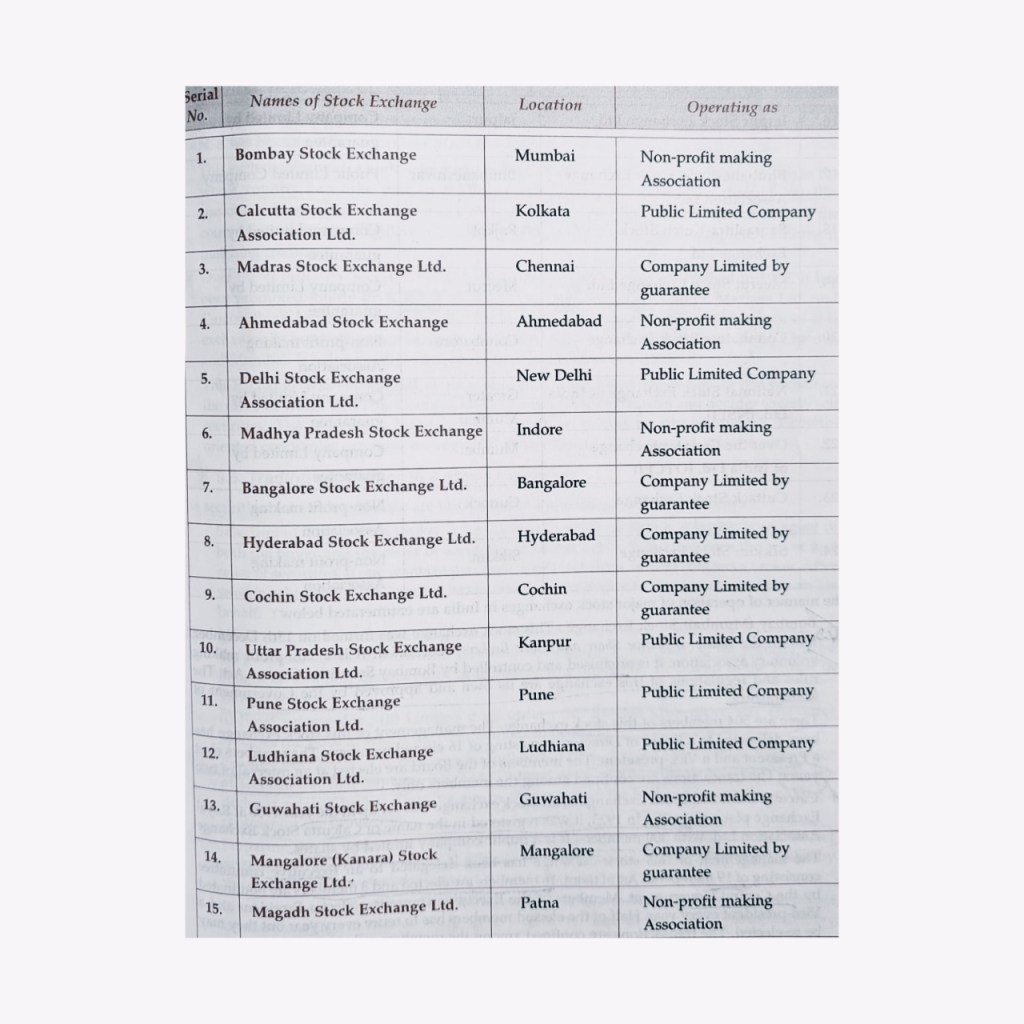
Names and locations of stock exchanges in India :-

At present there are 24 recognised stock exchanges in India .


The major stock exchanges in India :-


1: Bombay ( Mumbai ) Stock Exchange :-
This stock exchange was formed on 13th December , 1887 in the name of Native Share and Stock Brokers Association .
It is a non – profit making voluntary association . It is organised and controlled by Bombay Securities Control Act . The rules and regulations of this exchange are its own and approved by the Government of Maharashtra.


2: Calcutta ( Kolkata ) Stock Exchange :-
This stock exchange was set up in the year 1908 at Royal Exchange place , Calcutta . In 1923 , it was registered in the name of Calcutta Stock Exchange Association Ltd. with 300 members . It is a public company limited by shares .


3: National Stock Exchange ( Greater Mumbai ):- This stock exchange was recognised by the Central Government on 26th April , 1993 . The object of its establishment was to convert the exchange market into a professional market . It provides security (i.e , shares , debentures , bonds , etc.) trading facilities at the national level through satellite communications systems .


4: Over the Counter Exchange (OTCE) :-

(About OTCE )

This stock exchange was established in 1992 . It has been promoted jointly by ICICI , UTI , IFCI , IDBI , SBI , GIC ,LIC , Capital Market Ltd. and Canara Bank Financial Services Ltd. These institutions are the sponsor members of this exchange. Its head office is in Mumbai . It has four regional offices at Kolkata , Delhi , Chennai and Mumbai . It helps smaller companies to raise funds at low cost .


There are two types of stock exchange market investment :-


Primary market – Primary market creates opportunities for the issuer to issue shares and bonds , and acts as a market where companies meet their investment requirements . The companies enlist their shares for the first time in the market and sell their shares through an Initial Public Offering or IPO.

(About IPO )


Secondary market – The secondary market is a trading market platform for investors or issuers , and is also known as the stock market. It is a market where shares of a company are traded after being initially offered to the public in the primary market by the help of brokers or agents . It is a market where buyers and sellers meet directly.

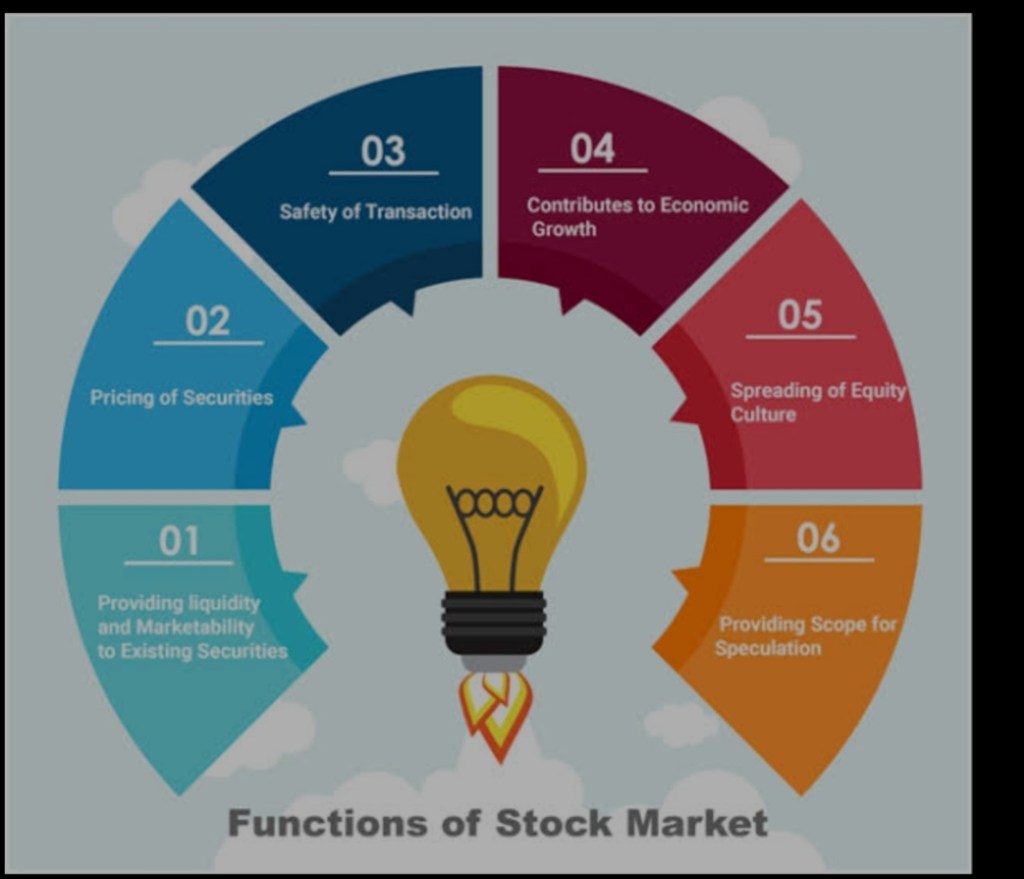
Functions and Services of a Stock Exchange:-


Stock exchange renders the following services :-

1:
Services to the Investors :-

• Investment guide :- Stock Exchange periodically publishes the quotations of listed securities. Investment can decide about purchase and sale of securities on the basis of stock exchange and quotations . Thus , the investors can get the maximum benefit from their investment.

• Liquidity of Investment :- Stock Exchanges are ready and continuous markets for purchase and sale of securities .The securities can easily be converted into cash as the needs of the investors arise .

• High Collateral Value of Listed Securities :- Listed securities in any stock high collateral value . These securities are preferred by rational investors . The securities of such companies can be sold easily . The investors have no fear of risk while trading in listed securities.

• Better use of Capital :-
The prices of shares reflect the profitability and efficiency of the company concerned . A stock exchange helps the investors in choosing good companies for their investment .

• Protection from Bad deliveries :- Securities in the stock exchanges are listed after the proper scrutiny . It prevents the trading of false and duplicate securities .

2:
Services to corporate sector

• Wide market for new securities :-
A stock exchange serves as a sales counter for new securities . Once a company gets listed in a stock exchange, it’s shares are traded freely in that exchange . Therefore , a company can raise a huge amount of capital from different types of investors.

• Increasing Goodwill of the company:-
The shares of only those companies are listed in the stock exchange which are financially sound . Therefore , listing of shares adds to the goodwill and credit standing of a company.

• Transfer of Securities at suitable prices :-
In the event of a merger or amalgamation ,the company whose securities are listed ,is in a better position than the company whose securities are not listed.

• Assist development of companies :-
A stock exchange is an essential adjunct of companies for quick capital formation . It provides a wider and a ready market for the secur of companies . It ensures higher bargaining power to companies in the event of further expansion and merger.

• Knowledge about future investment :-
Companies can get relevant information regarding trends of investment , investors choices and priorities etc., From the stock exchange on a regular basis .The companies can plan their future issue of capital on the basis of such information.

3: Services to Society :-

• Capital formation :- A stock exchange provides good investment opportunities to investors .It promotes the habit of savings and investment.

• Industrial Development :-
A stock exchange helps to mobilize public savings for the economical development of the country.This leads to industrial and commercial development .

• Utilizing scarce capital for productive purposes :- Idle lying funds can be invested in securities on account of stock exchange .

• Useful to Government :- The government plays a vital role as an entrepreneur in the promotion and management of commercial and industrial enterprises . A stock exchange helps the Government in raising sufficient funds for rapid industrial growth .


Operators In A Stock Exchange

Stock market operators are market participants who form a organise stock securities purchases and sales .

Generally found operators:-

Broker :-
A broker acts as a link between the investors and the jobber . He is a commission agent of buyer or seller of securities . A broker charges commissions from both the buyers and the sellers.
He does not specialize in any particular security .He assists in buying and selling all types of securities .

Jobber :-
Jobber can sell and purchase securities in his own name . He is a professional operator . He gets no commission for his service. His income is the profit in purchase and sale of his securities. The service of a jobber is both useful for both the investors and the stock exchange.


Speculators in Stock Exchange

On the basis of Zoological characters , speculators are of four types :-

Bull

In India , bull speculator is known as
Tejiwala “.
The stock market is called a ” bullish market ” when there are large numbers of bulls speculators .
A ‘bull’ is an optimistic speculator who buys securities with the exception of a rise in their prices . He makes purchases of Securities to be sold in future at a higher price to make profit .

Bear

In India , a ‘ bear ‘ speculator is known as a
Mandiwala “. When a stock market has large number of bears ,it is known as ” bearish market “.
A bear speculator expects a fall in the prices of securities . He sells securities with the hope of buying the same at a lower price before the date of delivery.

Stag

A ‘stag ‘ is a ” premium hunter “. He never holds securities as a permanent investment. He issues shares by the new company on the basis of their issued prospectus .He sells these shares at a premium soon after the allotment is made . The premium earned became his profit.

Lame & duck :-
A ‘lame-duck’ is a bear speculator struggling against the difficulties involved in meeting his commitments. He struggles like a duck to purchase shares so that he may deliver the same to another party . He is a bear speculator who is in no position to find shares .


Trading procedure in a Stock Exchange.

Trading in stock markets means the transfer (in exchange for money) of a stock or security from a seller to a buyer. This requires these two parties to agree on a price.


Procedure :-

• Selection of a broker
• Placing the order
• Executing the order
• Preparing the contract note
• Final settlement.

My year reading a book from every country in the world | Ann Morgan |

Something which kept me quite on to the edge was the reading journey taken up by Ann Morgan. It was quite wonderful of her to take up such a wonderful opportunity. As someone who loved to read I felt myself more closer to her perspective. I was able to identify myself with her and the way she spoke and carried herself, the more I noticed, the more I realized her idea of the world. 

The fact that we can understand a person by looking at their book shelf was a quite a point, Because we are what we read upon. What we encounter and read enhance us. They make us who we are. The socialization and books make us realize our potential. A good book is worth a good friend because it moulds you into a better version of yourself.

Reading about various things under the sun and not just sticking to one genre is very important for a reader. He/she must be ready to break the barriers and go beyond their comfort zone because it is only when we explore, we learn about the unknown and hidden and the voiceless. These are very important, because what the world need is a good reader because a good reader knows the world better than anyone else. The person will be objective and not subjective. A good reader knows the bias and learns to be impartial and be more open to the world. They know the  difference between empathy and sympathy. 

What Ann Morgan stresses again is that fact that if we need something so badly, then the whole world will be with us. Just like how Paulo Coelho said in Alchemist that if we really want something then the whole world will conspire. She brings in and stress some long forgotten words and values. 

I hope that more people realize the value of reading in their lives and learn to be better people and change the nation and break away from the stereotypes.

Positive and Negative Impacts of Industrialization

How Can Industrialization Affect National Economies of Less Developed  Countries (LDCs)?

IMPACT OF THE INDUSTRIAL REVOLUTION

The Industrial Revolution started in the 18th century in the United Kingdom and later spread too many other parts of the world, during which the agrarian and handicraft economies changed rapidly to industrial and machine-manufacturing-dominated ones. Not only did this economic change alter how work was done and goods were produced, but it also altered how individuals related to each other and to the world as a whole. Today, this wholesale shift in social organization continues and has created many impacts that have rippled through the political, ecological, and cultural spheres of the World.

POSITIVE IMPACTS OF INDUSTRIALIZATION

Goods became cheaper and more affordable:

The factories and equipment they housed started making goods faster and cheaper than they could make by hand. As the availability of different goods increased, their cost to the customer declined (see supply and demand). Shoes, clothes, household goods, equipment, and other products have become more common and less costly to improve people’s quality of life. For these products, international markets were also established, and the balance of trade changed in favor of the consumer, bringing increased prosperity to the businesses that manufactured these products and adding tax revenue to government coffers. It has, however, also led to the disparity in income between countries producing products and consuming goods.

Manual labour was replaced by machine work:

The rapid manufacture of hand tools and other useful objects has led to the development of new types of instruments and vehicles for moving goods and people from one location to another. The development of road and rail transport and the formation of the telegraph (and its related telegraph infrastructure and later telephone and fiber optic lines) meant that progress in manufacturing, agricultural harvesting, energy production, and medical techniques could be easily communicated between stakeholders. Also well-known products of the Industrial Revolution are labor-saving machines such as the spinning jenny (a multi-spindle machine for spinning wool or cotton) and other inventions, particularly those driven by electricity (such as home appliances and refrigeration) and fossil fuels (such as cars and other fuel-powered vehicles).

Evolution in the field of medicine:

The Industrial Revolution was the catalyst behind numerous medical advancements. Industrialization has made it possible to manufacture medical instruments more rapidly (such as scalpels, microscope lenses, test tubes, and other equipment). Using machine production, refinements to these tools could be more effective for the doctors who wanted them to roll out. When contact between doctors in various fields increased, it was possible to easily spread the information behind new cures and disease treatments, resulting in better care.

Increased standard of living:

Mass production reduced the cost to the common (i.e. non-aristocratic) people of much-needed tools, clothing, and other household goods, which allowed them to save money for other things and create personal wealth. Furthermore, new job opportunities emerged as new manufacturing devices were developed and new factories were established. The average citizen was no longer so tightly tied to land-related issues (such as being dependent upon the wages farm labor could provide or the plant and animal products farms could produce). The emphasis on land ownership as the chief source of personal wealth was diminished by industrialization. The increasing demand for manufactured goods meant that as factory workers and as employees of companies that sponsored the factories, average individuals could make their fortunes in towns, paying better salaries than farm-related positions.

Rise of Professional jobs:

As industrialization advanced, in search of better pay in the factories, more and more rural folk flocked to the towns. To improve the overall productivity of the factories and to take advantage of new business opportunities, factory employees have been qualified to perform specific tasks. The owners of the factory divided their employees into numerous groups, each group concentrating on a particular mission.

Some groups secured and transported the raw materials used in the mass production of goods (namely iron, coal and steel) to factories, while other groups worked different machines. When they broke down, some groups of workers repaired equipment, while others were tasked with making changes to them and the overall operation of the plant.

Additional teachers and trainers were required to pass on advanced skills as the factories expanded and employees became more specialized. Furthermore, factory workers’ lodging, transportation, and leisure needs contributed to the rapid growth of cities and towns. To support these, governmental bureaucracies expanded, and new specialized departments were formed to manage traffic, sanitation, taxation, and other services. As more builders, doctors, attorneys, and other staff were added to handle the diverse needs of the new inhabitants, other industries inside the cities also became more skilled.

NEGATIVE IMPACTS OF INDUSTRIALIZATION

Over crowded cities:

The prospect of better pay attracted refugees, who were ill-prepared to manage them, to cities and manufacturing cities. Although initial housing shortages ultimately gave way to construction booms and the development of new buildings in many areas, first existed crowded shantytowns made up of shacks and other types of poor-quality housing. The sudden influx of people overwhelmed local sewerage and sanitation schemes, and drinking water was frequently polluted. Ideal conditions for outbreaks of typhus, cholera, smallpox, tuberculosis, and other infectious diseases were provided by people living in such close proximity, fatigued by bad working conditions, and consuming contaminated water.

Environmental degradation:

In India two centuries ago, factories emitted toxins such as carbon di oxide, carbon monoxide, and other harmful gases that caused air pollution along with vehicular exhausts that were not heard or seen before. Because of Greedy Indians and their Expansionist conquests, India lost many of its forests and natural ecosystems and botanical and zoological species became Endangered or Extinct overnight. Water contamination is caused by heavy metals, arsenic, lead; hard water and industrial hazardous waste are released into lakes, rivers and other water bodies. Aquatic and aquatic animals are dying as a result of water bodies being polluted. As the human population of the planet continues to rise and more and more people are chasing the material benefits promised by the Industrial Revolution, more and more of the resources of the Earth are appropriated for human use, leaving a diminishing stock of plants and animals on which ecological services the biosphere depends (clean air, clean water, etc.).

Moreover, more than 40 percent of the Earth’s land-based net primary production is used by human beings, a measure of the rate at which plants transform solar energy into food and development. Coal, which had to be extracted or obtained after wood burning, was used by most factories, creating smoke and photo chemical smog in North Indian cities such as New Delhi, where visibility and breathing was difficult. Fossil fuels had to be imported from foreign countries and would again produce smoke, Green House Effect, Global Warming by using them for industrial purposes.

Poor working conditions:

Their owners valued production and profit above all else as factories appeared in the cities and industrial towns. Security and salaries of employees were less important. Compared with farm workers, factory workers received higher wages, but this also came at the cost of time and less than desirable working conditions. Factory staff frequently work six days a week for 14-16 hours a day. Human beings (employees) have become more vulnerable to exploitation, violence at work, more working hours and fewer fixed payments, job instability, and after retirement or termination of their employment, a bleak future. Also, finished Indian products were not on par with global standards and labels, but were more costly than comparatively cheaper imports from countries such as China, Hong Kong, Japan, etc.

Other problems

Nuclear plants are a threat to health and different forms of diseases can be caused by human beings living in close proximity. Farmers, who were in heavy debt to pay their dues to industrialists and real estate sharks, sold agricultural land with fertile and cultivable soil, and these lands have now become less yielding as factories or buildings have been constructed upon them. Inflation in India has always been increasing due to scarce natural resources or lack of availability.


India’s Anti-Hacking Laws


Many Indian official websites have been hacked, including state government and defence websites. Defense officials were unable to view their compensation information when the website of the Principal Comptroller of Defense Accounts was hacked. The government has agreed to DEITY’s recommendation to cease using popular email ids for official purposes, and has sanctioned a budget of Rs. 100 cores to protect the data, in order to reduce hacking of precise work. State government websites have previously been compromised.
Images of Hacker vs. Cracker

Following the revision of the IT Act in 2008, a very thin line of demarcation has been formed between the two words: hacking and cracking. Hackers are persons who are highly talented at computer programming and utilise their expertise to help the government and numerous other companies protect their sensitive information and trade secrets. They look for flaws in the software and try to figure out why they exist.


The Cracker’s Liability


Liability in civil cases
The IT Act’s Section 43A addresses the legal culpability of cyber criminals. The section deals with the compensation that should be paid in the event that the date is not protected. His was included as part of the Act’s modification in 2008. Section 43A, which requires corporations to establish reasonable security policies, emphasises corporate responsibility for data protection.
Liability for the consequences
When the cracker’s intent or liability to destroy the system or steal crucial information is demonstrated, criminal liability for cracking arises. If the cracker simply trespasses the system without intending to do harm, section 43A only applies to civil culpability. Criminal trespass can lead to further criminal behaviours that are punishable under the Indian Penal Code, such as computer theft, which is penalised under section 378.

India’s cybercrime laws
Data theft and hacking are covered by sections 43 and 66 of the IT Act, respectively, as civil and criminal offences.

A simple civil crime under section 43 occurs when a person gains access to a computer without the owner’s authorization and removes or damages the data stored on it. The cracker will have to compensate the persons who have been harmed. The maximum compensation cap under the ITA 2000 was Rs. One crore in fines. This ceiling, however, was eliminated in an amendment issued in 2008. Section 43A was inserted in the 2008 amendment to encompass the corporate shed, when employees took information from the secret files of the company.

Receiving a stolen computer resource or information is punishable under Section 66B. A year in prison or a fine of one lakh rupees, or both, are possible punishments. Under section 66A, mens rea is an important component. The existence of criminal purpose and the wicked mind, i.e. the concept of mens rea, destruction, deletion, alteration, or diminishment in the value or utility of data, are all major factors to bring any act under this Section. 2

How to File a Hacking Complaint

Any cyber cell in the world can receive a complaint regarding cybercrime. In India, there are several cyber crime units where a complaint can be filed.

To begin, write an application to the director of the cyber cell department, including your name, address, e-mail address, and phone number.
Second, accompany the cell with the following documents:

1. Log files that are automatically sent to the server when files are opened are known as server logs. It keeps track of daily activities.
2. All material that has been tampered with by the hacker must be submitted to the cyber unit as proof, in both hardcopy and soft copy format.
3. A tangible copy of both the original and defaced web pages should be submitted so that the work may easily identify the defaced or manipulated material.
4. Details of the control mechanism, including who had access to the password and the computer, as well as the complainant’s contact information.
5. If any person is suspected, a list of suspects should be provided for future reference, since this will aid the cyber cell in their investigation.

Conclusion
Hacking is an undeniable danger to the virtual world. This theft is largely unknown throughout the country. Hacking and cracking must be made more widely known throughout the country. The government’s rules are strict, yet they lack the power to be enforced and public knowledge. The majority of minor hacking cases go undiscovered because people are hesitant to file criminal charges for minor offences, even if the penalties are severe. Additionally, due to a lack of equipment, it is extremely difficult to track a virtual hacker. Because hacking can occur anywhere on the planet, it is difficult for authorities to track him down and prosecute him in another country.

The Indian Tax System

There are various references in History which act as evidence that taxation existed in olden times also. Some references are ‘Arthashastra’ by Chanakya, King Dalip’s regime and Caesar Augustus. The word “Tax” originated from “Taxation” meaning ‘an estimate’. These were imposed and collected on the trade of commodities or livestock in a disorganised manner. The importance of tax increased with time and became a source of government income and expenditure.

TAX STRUCTURE IN INDIA 

India has a well developed taxation structure. The tax system in India is mainly a three-tier system which is based between the Centre, State governments and the Local Government organisations. In most cases, these local bodies include the local councils and the municipalities. According to the Constitution of India, the Government has the right to levy taxes on individuals and organisations. However, the Constitution states that none has the right to levy or charge taxes except the authority of law. 

The tax structure in India is divided into two components: Direct Taxes (such as income tax) and indirect taxes (such as custom duty). 

I. Direct Taxes: Direct taxes are those taxes that are not shifted, that is, the incidence of which falls on persons who pay them to the government, the taxpayer. According to Article 265, each tax levied or collected has to be backed by an accompanying law, passed either by the Parliament or the State Legislature. 

The direct taxes in India are: 1. Wealth Tax- 

Wealth tax is one of the major direct taxes in India. It is also known as the Wealth Tax Act, 1957. This tax is applicable to all the citizens of India. Wealth tax is the cess levied on owned property. It applies to those who enjoy property ownership benefits. It is applicable to every property owner till he or she retains the ownership of that particular property. The tax paid on property depends entirely on the current market rate. In case the property is not generating any income, then also wealth tax has to be paid. 

2. Corporate Income Tax- 

Corporate income tax is levied in many different forms in India. Corporate Income Tax is primarily meant to be paid by domestic corporations. Domestic corporations in India pay a minimum income tax rate of 35 per cent along with a surcharge of 2.5 per cent. Corporate income tax is also applicable to foreign organisations that have their own economic bases working in the country. These types of corporations are required to pay tax on 40 per cent of their income along with a surcharge of 2 per cent. This surcharge goes as a reservation for funding the state‘s education. Corporate income tax is also applicable to all the people that are working for any corporation in or outside India. 

3. Personal Income Tax- 

This is the most common form of tax in India. The system of personal income tax in India is very similar to the taxation system in the United States of America. It is based on the personal income of an individual. If the annual income of an individual is under Rs. 1, 80, 000/- then he or she is exempted from paying any personal tax. There are further allowances made under the personal income tax domain for the physically handicapped and elderly. 

II. INDIRECT TAXES: An indirect tax is defined as a tax levied on goods and services rather than on income or profits. Given below are the indirect taxes imposed in India: 

1. Sales Tax- 

Sales tax is the tax levied by the State Government on goods bought and sold in the country. This policy is followed in most industrially developed countries in the world. The taxes levied under sales tax are not the same for all kinds of goods. 

2. Custom Duties-

Custom duties were introduced in India through the Customs Act in 1962. This duty was introduced with the aim of checking illegal exports and imports of goods. Taxes are charged for all the goods that are imported into the country, mainly to protect the industries in India. 

Shortcomings of Indian Tax System: 1. Canon of Justice: The increased activities of the Government of India to develop the infrastructure and economy indicate a regressive tax structure that is against the canon of justice. The lower and middle income groups have to bear more burden of taxation as compared to the higher income groups because the government tries to raise amounts by indirect taxation. 

2. Agricultural Income: Agricultural income is not taxed in India. Hence, there is a higher burden of taxes on the urban areas. 

3. Complex Tax Framework: India has a complex tax framework with contradictory tax exemptions. Efforts are being made by the IT Department to enhance and simplify transparency of the tax system to help the individual taxpayers by reducing their compliance costs. 

4. Removal of Tax Incentives: Tax exemptions are given to achieve the objectives of development but they promote rent seeking behaviour, contributing to the complex tax laws. Exemptions lead to tax leakage and tax abuse which makes the system counterproductive and dysfunctional. 

5. Refunds: Getting refunds of tax from the Income Tax Department is a difficult process. It should be made easier by easy accessibility through internet services and refunding electronically. 

6. PAN: The tax base must be increased by extending PAN to cover all citizens serving as a Citizen Identification Number. 

7. Monopolistic Power of Tax Officials: The tax officials operate within a geographical limit with ambiguously defined roles that leads to abusive behaviour on their part. A high degree of discretionary power and lack of adequate monitoring and reporting mechanisms leads to corruption. The tax officials misuse the rules of the government and extract illegal payments from taxpayers. 

8. Lack of Supervision: There is a lack of supervision and monitoring of officers and holding them accountable for their actions. There must be promotion and enforcement of ethical standards, merit based recruitments, promotion procedures and regular staff rotation schemes to prevent the creation of a nexus. 

9. Decrease in Tax Revenue due to Corruption: Corruption decreases tax revenue, which leads to a shortfall in the funds of the government. This forces governments to resort to public borrowing and public debt, thereby endangering fiscal sustainability. Corruption adds to the adverse effect over investment and growth. 

10. Broadening the Tax Base: The majority in India do not file personal income tax. To bring them into the tax net, the government adopted a “one-in-six” scheme under which an individual satisfies one out of six criteria. This measure has increased the number of individual income tax payers, but a lot needs to be done still. 

India was different from other countries as they were made by the Indian citizens without any sort of external interference. 

There are different types of taxes in India. The system of taxation in India is clearly vested in the hands of authorities such as the central government, state government and the local governments. The taxes that are levied by the central government are on personal income, central excise, custom duties and service tax.

Education Policy from 1968-2020

OVERWIEW
It has been a major step for our education sector. The policy that we were following before was the National Policy on Education (NPE) formulated by the Government of India to promote and regulate education in India. The policy covered elementary education to higher education in both rural and urban India. The first NPE was promulgated by the Government of India by Prime Minister Indira Gandhi in 1968, the second by Prime Minister Rajiv Gandhi in 1986, and the third by Prime Minister Narendra Modi in 2020.
THE EDUCATION POLICIES
In 1968
The government of Prime Minister Indira Gandhi announced the first National Policy on Education in 1968, which called for a “radical restructuring” and proposed equal educational opportunities in order to achieve national integration and greater cultural and economic development. The policy called for fulfilling compulsory education for all children up to the age of 14, as stipulated by the Constitution of India and specialized training and qualification of teachers. The policy called for a focus on the learning of regional languages, outlining the “three-language formula” to be implemented in secondary education – the instruction of the English language, the official language of the state where the school was based, and Hindi. Language education was seen as essential to reduce the gulf between the intelligentsia and the masses. Although the decision to adopt Hindi as the national language had proven controversial, the policy called for the use and learning of Hindi to be encouraged uniformly to promote a common language for all Indians. The policy also encouraged the teaching of the ancient Sanskrit language, which was considered an essential part of India’s culture and heritage. The NPE of 1968 called for education spending to increase to six percent of the national income.
In 1986
The government led by Rajiv Gandhi introduced a new National Policy on Education. The main points of this policy was that, it was called for “special emphasis on the removal of disparities and to equalize educational opportunity,” especially for Indian women, Scheduled Tribes (ST) and the Scheduled Caste (SC) communities; to achieve such social integration, the policy called for expanding scholarships, adult education, recruiting more teachers from the SCs, incentives for poor families to send their children to school regularly, the development of new institutions, and providing housing and services. The NPE called for a “child-centred approach” in primary education and launched “Operation Blackboard” to improve primary schools nationwide; the policy expanded the open university system with the Indira Gandhi National Open University, which had been created in 1985; the policy also called for the creation of the “rural university” model, based on the philosophy of Mahatma Gandhi, to promote economic and social development at the grassroots level in rural India; 1986-education policy expected to spend 6% of GDP on education.
2020
In 2019, the Ministry of Human Resource Development released a Draft New Education Policy 2019, which was followed by a number of public consultations. The Draft NEP discusses reducing curriculum content to enhance essential learning, critical thinking and more holistic experiential, discussion-based and analysis-based learning. It also talks about a revision of the curriculum and pedagogical structure from a 10+2 system to a 5+3+3+4 system design in an effort to optimize learning for students based on the cognitive development of children.
On 29 July 2020, the cabinet approved a new National Education Policy with an aim to introduce several changes to the existing Indian education system.
RECENT EDUCATION POLICY 2020 BRIEF
Another major step taken in the History of India becoming a global superpower was awaited with the change in the Education Policy. In 2019, Modi Government released a draft which stated about changing the Education Policy. It was approved by the Union Cabinet at a meeting presided by Prime Minister Narendra Modi on Wednesday, 29th July 2020. The new education system aims at bringing in transformation reforms in the education system of schools and higher education. Replacing the 34-year old education system is another major move in the direction of strengthening India as a global power. The new NEP also includes the renaming of the HRD Ministry back to the Education Ministry. Promoting the spirit of “Ek Bharat Shreshtha Bharat”, Prime Minister Narendra Modi tweeted, “Aspects such as widening the availability of scholarships, strengthening infrastructure for Open and Distance Learning, Online Education, and increasing the usage of technology have received great attention in the NEP. These are vital reforms for the education sector.”
Key Points-
~All higher education institutes excluding the medical and law colleges will be governed by a single regulator.
~MPhil courses will now be terminated.
~Board exams will now be more application and knowledge-based.
~Both the public and private higher education institutes will be governed under the same norms.
~To promote and give more emphasis on the regional language/mother-tongue, instruction medium up to class 5 will be in local/home languages.
~All entrance exams for higher education institutes and universities will be held commonly.
~School curriculum to focus more on core concepts.
~Vocational education will also be imparted from 6th grade onwards.
10+2 study cultures discontinue and new structure of 5+3+3+4 will be followed, subjecting to the respective age group of 3-8, 8-11, 11-14, and 14-18 years.
These were all the changes in detail that were proposed and introduced in the New Education Policy 2020.

SOCIAL MEDIA

One in three-person have heard this word before and may had used it too frequently. But what social media stands for? Social media is a collective term for websites and applications which focus on communication, community-based input, interaction, content-sharing, and collaboration.  There are plethora of social media platforms present out there, which not only allow you to share your thoughts and ideas with the world but also provide a stage to do online business.

Types of platforms-

  1. Facebook and Instagram: they are a popular free social networking website that allows registered users to create profiles, upload photos, and videos, send messages and keep in touch with friends, family, and colleagues.
  2. Twitter: it is a free microblogging service that allows registered members to broadcast short posts called tweets. Twitter members can broadcast tweets and follow other users’ tweets by using multiple platforms and devices.
  3. Linkedln: it is a social networking site designed specifically for the business community. The goal of the site is to allow registered members to establish and document networks of people they know and trust professionally.

And much more others.

Social media networks help a person to expand his clients and work with larger networks easily.  You need to answer the question-  how much social media help my business to grow? And you are all set to join a large community of people needing your goods.

social media monitoring- analytics: what is happening at websites, who visited there and are interested in your business help you find a target audience you can put efforts to make a sale.

Social media is a large field where you can do diverse actions, make friends, learn new things, see what is trending in the world, stay updated with current happenings, and much more.

But you need to use it wisely due to ongoing cyber threats and lots of misshaping. to every coin, there are two sides you need to know both before flipping the same!

“Indira Banerjee The only Women judge in Supreme Court at Present. “


India is a massive democratic and independent country .All men and women are equal in this era no discrimination of gender in any matter like employment business government jobs. Many women work in different different sector. Women and men are valued equally in societies that are safer and healthier. Equality between men and women is a fundamental human right. Gender equality benefits everyone.
Indira Banerjee is the best example for Women empowerment. Indira Banerjee is the only women judge in Supreme Court at present and she become the only 8th women Judge of the supreme Court.
List of 8 Female Judge in Supreme Court:-
1. Fathima Beevi (6 oct 1989 – 29 Apr 1992)
2. Sujata Manohar(8 Nov 1994 – 27 Aug 1999)
3. Ruma Pal (28 Jan 2000- 2 Jun 2006)
4. Gyan Sudha Mishra(30 Apr 2010 – 27 Apr 2014)
5. Ranjana Desai(13 Sept 2011 – 20 Oct 2014)
6. R. Banumathi (13 Aug 2014 – 19 july 2020)
7. Indu Malhotra (27 Apr 2017 -13 Mar 2021)
8. Indira Banerjee(27 Aug 2018- 23 Sep 2023)

Indira Banerjee, who was born on September 24, 1957, went to Loreto House in Kolkata for her education. She subsequently moved on to Presidency College for her Bachelor’s degree, and then on to Calcutta University for law school. In July 1985, she began working as a lawyer at Calcutta High School.
On February 5, 2002, she was named to the Calcutta High Court as a permanent judge. She was sent to the Delhi High Court in August of 2016. In April 2017, she succeeded Justice Sanjay Kishan Kaul as Chief Justice of the Madras High Court. Following Justice Kanta Kumari Bhatnagar, Justice Banerjee is the second woman to lead the chartered High Court.
Justice Banerjee’s name was suggested for elevation to the Supreme Court by the Supreme Court Collegium on July 16, and the Centre accepted it yesterday.
Justice Banerjee is the Supreme Court’s eighth female judge.

In addition, she releases a new album. With Justice R Banumathi and Justice Indu Malhotra already on the Supreme Court, Justice Indira Banerjee’s appointment brings the total number of female judges on the court to three, a number that has never been reached since the court’s creation in 1950.

In the judiciary, more women are needed.
It’s past time for those in charge of appointing judges to the high court and the Supreme Court to recognise the need of providing enough representation for women in the judiciary. Without diluting merit, the superior judiciary should have reserved seats for women, similar to the subordinate judiciary.
We should be concerned about more than just the economic consequences of the dearth of female (judges) in the employment. Women at all levels of the judiciary are critical in addressing certain issues that can have far-reaching social and political consequences: one, insufficient representation in the courts can exacerbate biases; second, a lack of women in courts raises questions about the courts’ legitimacy as representatives of the societies they serve; and third, the presence of women judges signals equality of opportunity for women.