Reservation; Is it fair to all?

Reservation is a fiend that is present in the Indian system for ages now. Right from the education sector till jobs and recruitment, reservation is everywhere. In simple terms, reservation in India is all about reserving access to seats in the government jobs, educational institutions, and even legislatures to certain sections of the population.

Also known as affirmative action, the reservation can also be seen as positive discrimination. Reservation in India is a government policy, backed by the Indian Constitution (through various amendments).

What is the principle of reservation in India?

The two main motives to provide reservation as per the Constitution of India are:

1.   Advancement of Scheduled Castes (SC) and the Scheduled Tribes (ST) OR any socially and educationally backward classes of citizens (E.g.: OBC) OR economically weaker sections (EWS) – Article 15 (4), Article 15 (5), and Article 15 (6),

2.   Adequate representation of any backward class of citizens OR economically weaker sections (EWS) in the services under the State. – Article 16 (4) and Article 16 (6)

The extent of Reservation in India

In India, reservation is provided in:

1.   Government Educational Institutions (like IITs, IIMs etc.) – as per Article 15 – (4), (5), and (6)

2.   Government Jobs (like IAS, IPS etc.) – as per Article 16 – (4) and (6)

3.   Legislatures (Parliament, and State Legislature) – as per Article 334

Before 2019, the reservation was provided mainly based on social and educational backwardness (caste). However, after the 103rd constitutional amendment in 2019, economic backwardness is also considered.

Apart from the reservation quota, additional relaxations like upper-age relaxations, additional attempts, and lower cut-off marks are also provided for various reservation categories.

A vacancy reserved for SCs or STs or OBCs cannot be filled by a candidate other than an SC or ST or OBC candidate, as the case may be.

As seen from the above table, about 60% of seats are reserved in India – for various sections like ST, SC, OBC, and EWS – for Government jobs and Higher Education Institutions. 3% of seats are also reserved for differently-abled persons across all categories.

This also means that only 40% of seats are available under merit. In the merit seats, not only the general category candidates but all other categories like SC, ST, OBC, and EWS can also compete.

History of Reservation System in India – Rectifying the Historical Injustice

To an extent, reservation as a policy is pursued by the State to correct the historical injustice done to certain castes by the so-called “upper castes”. The caste system prevailed in India had alienated many “lower castes” from the mainstream – hindering their development. To a great extent, the repercussions are still felt.

Original Constitution of India has provided reservation only for quota in legislatures – that too only for 10 years until 1960 (article 334). Subsequent amendments to the constitution extended the period of reservation for quota in legislatures.

Provisions of reservations in Educational Institutions and Government Jobs – article 15(4) and Article 16 (4) – were too created employing Constitutional Amendments later. No period is given for the validity of the reservations mentioned in article 15(4) and Article 16(4).

The initial reservations were only for SC and ST [article 15(4) and Article 16(4)]. OBCs were included in the ambit of reservation in 1991 [Article 15(5)]. In 2019, Economically Weaker Sections are also included [article 15(6) and Article 16(6)].

SC/ST Reservation

The objective of providing reservations to the Scheduled Castes (SCs), Scheduled Tribes (STs) in services is not only to give jobs to some persons belonging to these communities. It aims at empowering them and ensuring their participation in the decision-making process of the State.

Besides, the state is also keen to end practices such as untouchability.

Scheduled Castes (SC) are given 15% quota in jobs/higher educational institutions while Schedule Tribes (ST) is given 7.5% quota in jobs/higher educational institutions.

Reservation is provided not only concerning direct recruitment but also for promotions for SC/ST category (Article 16(4A)).

There is no concept of ‘creamy layer’ for SC/ST reservation. This means that irrespective of the income status or the government posts held by the parents, children of SC/ST parents will get SC/ST Reservation.

OBC Reservation

Reservation for Other Backwards Classes (OBC) was introduced based on the Mandal Commission Report (1991). The quota for OBCs is 27% in government jobs and higher educational institutions.

However, there is a concept of ‘creamy layer’ to the OBC reservation. Only those from OBC who comes under Non-Creamy Layer would get OBC reservation.

The creamy layer concept brings income and social status as parameters to exclude some of the privileged members of OBC from the extent of reservation. This concept also keeps a check to ensure that the benefits of reservation do not get extended to subsequent generations.

EWS Reservation

The Central Government of India recently introduced the EWS Reservation. 10% quota is provided for the Economically Weaker Sections (EWS) among General Category candidates in government jobs and educational institutions. This is done by adding clauses for the same in the Indian Constitution (103rd Constitution Amendment Act, 2019).

Should India need reservation (now)?

The government must provide equality of status and opportunity in India.

Reservation is one of the tools against social oppression and injustice against certain classes. Otherwise known as affirmative action, reservation helps in uplifting backward classes.

However, reservation is just one of the methods for social upliftment. There are many other methods like providing scholarships, funds, coaching, and other welfare schemes.

The way the reservation is implemented and executed in India is largely governed by vote-bank politics.

Indian Constitution allowed reservation only for socially and educationally backward classes. However, in India, it became a caste-based reservation instead of class-based reservation.

Initially, the reservation was intended only for SC/ST communities – that too for 10 years (1951-1961). However, it got extended ever since. After the implementation of the Mandal Commission report in 1990, the scope of the reservation was widened to include Other Backward Communities (OBCs).

The benefits of the reservation were successively enjoyed only by a few communities (or families), excluding the truly deserving ones. Even 70 years after independence, the demand for reservation has only increased.

Now, with the introduction of economic criteria for reservation, in addition to the caste-criteria which already existed, things have become more complicated.

Unequal’s should not be treated equally, but is reservation the only solution?

There is no doubt that unequal’s should not be treated equally. However, is the current system of unequal treatment perfect? Is it creating more injustice? Is it the only way out in a welfare-nation? It’s time to introspect.

Reservation based entirely on economic criteria is not an all-in-one solution, though family income can be one of the parameters. Also, it’s time to fix a period for the reservation system – rather than extending it to eternity.

Denying India, the service of the meritorious candidates, who see them being overtaken by others with lesser academic performance or brilliance, is also a crime and injustice.

Aren’t there any alternative mechanisms to uplift the marginalised so that everyone gets equal opportunities? How is affirmative action done in other countries?

A reform in the reservation system of India is the need of the hour. However, as the subject of reservation revolves around a lot of votes, parties are reluctant to disrupt the existing system.

 Implications of the Judgement of the Supreme Court:

  • After this judgement, the members of the SC and ST communities, as mentioned in the Presidential List under Article 341 and 342 of the Constitution of India, will be presumed to be backward on account of their castes.
  • Such communities will be given reservation in job promotions without the need of any data to act as a proof of their backwardness.

M Nagaraj vs Union of India, 2006: In this judgement, the Supreme Court ruled that if the state wishes to make a provision for reservation in promotions for SCs/STs, it must:

  • Collect quantifiable data showing backwardness of a particular class.
  • Prove inadequacy of representation of that class in public employment.
  • Prove that such a reservation in promotion would not affect the overall efficiency of public administration.

There is no second question that all castes/classes should be adequately represented in government services. However, which percentage can be called adequate – without compromising the merit or efficiency of the administration?

Is the current level of reservation adequate? Or is it less? Or has it already compromised the merit? What do you think?

COVID: A boon in disguise for Indian education system?

Over the past few years,India has developed in many sectors be it health, hospitality, tourism, education etc and has tried to incorporate technology wherever possible. Although being novice in this India has shown significant improvements. One of the major area being education. It has been almost 10 years since schools and colleges are emerging towards the era of smart learning, using laptops, mobile phones and other gadgets.

2020 has been a very difficult and tough year for everyone, being in lock down, going through a pandemic, facing economic problems, mental issues and what not. In the beginning all the schools and colleges were closed, no classes were conducted, no assignments, no exams, nothing. But as time passed a new era emerged, educational institutes started conducting online classes. This was a great initiative by the authorities but was it well thought?

Students were asked to take classes over the internet, but not everyone has a great internet service. Students living in big cities were able to do so but those who lived in small cities, villages or backward areas faced so much problem. Both students and teachers were not that tech-savvy that they could incorporate the change in this teaching pattern. Internet was not the only problem, sitting in front of a gadget for hours had a bad effect on the health of the students as well, including behavioral impact such as depression, aggressiveness etc. Also, not everyone has the privilege of affording such expensive gadgets. Under this shadow of COVID-19 the lives of millions of students have temporarily been just about their homes and their screens.

It’s not all about the classes. What about exams? What about the degree? For this, many institutes have taken online exams but it was not a complete success everywhere, as it depended on internet availability. Recently, UGC gave a guideline that final year exams will be conducted in July. UGC is The University Grants Commission of India, it is a statutory body set up by the Government, it is charged with coordination, determination and maintenance of standards of higher education. Students challenged this UGC guideline in Supreme Court by signing a petition and the dates have been moved till September. Asking the students to give exams in a traditional way is not the solution. Then what is? No student is asking for a degree without the final evaluation, but the basis of evaluation should be modified. It can be on the basis of previous exams or assignments and projects.

Corona virus has awaken the whole world in many ways, it has made people realize the value of nature, a healthy lifestyle etc. Along with this it has also made us realize that Indian education infrastructure is not yet ready for online studies. It is challenging but not impossible to achieve. We already know the shortcomings, we just need to work on them like technological improvement and making it easily accessible across the country.

Co-Operative Housing Society

A co-operative society is a voluntary association of individuals having common needs who join hands for the achievement of common economic interest. Its aim is to serve the interest of the poorer sections of society through the principle of self-help and mutual help. The main objective is to provide support to the members. Nobody joins a cooperative society to earn profit. People come forward as a group, pool their individual resources, utilise them in the best possible manner, and derive some common benefit out of it. A Co-operative Society can be formed as per the provisions of the Co-operative Societies Act, 1912. At least ten persons above of 18 years, having the capacity to enter into a contract with common economic objectives, like farming, weaving, consuming, etc can form a Co-operative Society. Cooperative Societies Act is a Central Act. However, ‘Cooperative Societies’ is a State Subject (Entry 32 of List II of Seventh Schedule to Constitution, i.e. State List). Though the Act is still in force, it has been specifically repealed in almost all the States and those States have their own Cooperative Societies Act. Thus, practically, the Central Act is mainly of academic interest and as per preamble to the Act, the Act is to facilitate formation of cooperative societies for the promotion of thrift and self-help among agriculturists, artisans and persons of limited means.

If object of the society is creation of funds to be lent to its members, all the members must be residing in the same town, village or group of villages or all members should be of same tribe, class, caste or occupation, unless Registrar otherwise directs. The provision of minimum 10 members or residing in same town/village etc. is not applicable if a registered society is member of another society.

The Statement of Objects and reasons states as follows:

(a) Cooperative Society can be established for purpose of credit, production or distribution.
(b) Agricultural credit societies must be with unlimited liability.
(c) Unlimited society is not best form of cooperation for agricultural commodities.
(d) Unlimited society can distribute profits with permission of State Government.

Introduction

The need for shelter is one of the elementary human necessities in a civilized society. Over the past few decades, housing finance has become an increasingly attractive business proposition for various players in the financial market of the country. Among the various institutional arrangements made by the Central and State Governments for housing development, Co-operative Housing Society plays a dominant role in improving the housing stock. In India, Co-operative housing has emerged as a strong, well-organized and significant movement. Over the years, co-operative housing has grown from strength to strength and presently there are about 92,000 co-operative housing societies spread across the length and breadth of the country. This has enabled it to make a noticeable impact on the housing situation in the country.

Origin of Housing Co-operative society

The origin of the co-operative housing movement in the country dates back to the beginning of the present century.
The first co-operative housing society was set up in the year 1909 in the former Mysore state (now Karnataka) and was known as the Bangalore Building Co-operative Society.

Maharastra also took the initiative in this field by forming a non-official body in the year 1913. This was known as the Bombay Co-operative Housing Association. This association framed a set of model bye-laws which later became the guiding factor for the organizational set up of many housing co-operatives in other parts of the country.

There has been continuous growth in the number of housing co-operatives, their membership and house construction activities. Since 1959-60 and up to March, 2001 the number of registered co-operative housing societies in the country has increased from 5564 to 92000. Their local membership has considerably increased from 0.32 million to 6.60 million and their working capital has also gone up by more than 94 times from Rs.550 million to Rs 52000 millions.

Need For housing Co-operative society

The co-operative sector has an important role to play in housing development in India. The housing co-operatives support the Government in implementing their social housing schemes especially for the rural area. Poor members are able to get houses at a relatively lower cost. They have the facilities to become owners by paying the cost in easy instalments. Co-operative housing estates and townships endeavour to provide modern amenities such as roads, street lights, parks, post office, library, school and recreation centres. Thus, housing co-operatives also facilitate community living.

Some of the important activities of housing co-operatives are discussed
a) Housing Cooperatives and National Development Housing cooperatives have contributed to national development through national housing development in not only quantitative but also in qualitative terms. The housing stock created by housing co-operatives is qualitatively superior to that created by other supply sub-systems catering for lower and middle-income groups. b) Co-operative Housing for the Weaker Section- Members from the more affluent sections of the society are able to construct houses of their own without recourse to co-operative housing. But through co-operative action considerable economy is effected in land development, purchase of building material, technical consultancy, efficient architectucture, planning and providing other
infrastructure facilities like sewerage, water supply, electricity and approach roads to bring down the overall cost of housing so as to be within the reach of poor families.

Conclusion

A Co-operative society is a form of voluntary organization. It enables people to attain effective realization of higher and more prosperous standard of living, better living, better business and better Farming. In essence, Co-operation is self-help made effective by the organization. It naturally relies on honesty and integrity of members for the economic amelioration of the weaker sections of the population. It follows democratic management and solves common problems for all, particularly the housing problem in the country.

Improve your English

Writing for the sake of writing isn’t writing. You should have a passion to write. That pushes you forward to a greater extent. The interest on writing makes you write the writings that were never written. Don’t make yourself to write, let yourself make you write. There’s a lot of difference between them. It’s like earning to write and writing to earn. What we know is a drop, what we don’t know is an ocean.

Develop a habit of writing because that makes us improve without our knowledge. Write something that happened to you because it tries to bring the coordination between our brain and hands. As the time passes our hand should be faster than our brain. We should think of next sentence while writing the previous. It can even be writing in a dairy.

Start a blog and keep on writing and express what you feel like. Share it to your contacts and ask them to suggest any improvements. Keep on writing and improving by implementing their suggestions and get improvised with your writing.

Writing not only comes from writing. Start reading the different writings. Analyse the way different people write and try to figure out the pattern they try to express themselves. Read and read until you get better in writing.

Write for someone who are looking for writers because that makes you know more about your writing from others. Try to become freelancer and ask for work. Doing work makes you improve. Such work involves lot of research and you will get a chance to know about the unknowns.

Start your journey in facebook groups and Quora groups and make friendship with your mates . Connect with like minded people and that will surely make you know more about the various styles of writing.

WhatsApp Bullying

A few days back, I was casually chatting with my cousin sister discussing about how the pandemic is altering our life. While discussing she cited a very interesting incident which happened to her daughter, Tanaya a couple of weeks back. Tanaya is currently promoted to fifth standard and she has been attending her classes in online mode since June end. My cousin said that they have created WhatsApp group among themselves where they discuss about their ‘school-affairs’. A few days passed by, she noticed that Tanaya was feeling very low and she almost stopped communication with her fellow mates. Distressed, she questioned her if something is bothering her, since it is a very new thing for Tanaya. After a lot of pestering, she opened her unofficial WhatsApp group of their class and she says that she was shocked reading the conversation. She noticed that there were a lot of slangs for fifth standard students. The most oppressive thing that she understood was that Tanaya was completely ignored when she asks or say something, or laughed at or completely victimised her. She was so outrageous that she took the matter up to the Principal and finally after a heated discussion that volunteer parents will be a part of those group and banned the creation of any other unofficial WhatsApp groups. Upon listening, I just saluted her for what she did and how she stood up to it.

WhatsApp is the only source of communication among us right now. That is the platform where everyone, from students to professionals, converse among themselves, trying to keep up with the changing world. That said, now when we all are chatting in a public forum, we usually tend to oversee the boundaries and limitations. Students who have been programmed to attend classes in offline mode were under a lot of restrictions and discipline and so such random conversations were easily avoided. But they have started attending their classes online, where there is no restriction, no rules and especially there is no such ingrained discipline. Well, I have particularly experienced that seeing my cousin’s daughter. Considering her age, it is very well perceived that freedom of such kind in unexpected and very often, such freedom bears its own consequences. They tend to say everything, thinking that it is cool and very often they tend to exhibit groupism. At times, they say something to a particular person, out of ‘longing for acceptance’, without giving it a second thought. This is what constitutes bullying. Repeated avoidance, being laughed at or made mockery of, posting ridiculous and insulting messages as WhatsApp status, sending offensive memes or caricatures in the public groups are some forms of mental harassment in online mode, otherwise known as WhatsApp Bullying.

What I believe is that people, especially such young ones, are going through a massive change. Schools and other such institutions need to understand that just initiating classes in the online mode can make someone ‘educated’ but it will completely erode the ‘mental’ and ‘civilized’ part of our character. Parents and teacher should make them understand that everyone is feeling excluded at this hour and we should take the responsibility of making someone feel inclusive.

While leaving my cousin’s house, Tanaya came to bid me good-bye. I looked at her eyes and remembered about my past too. I smiled, and then left.

Source: Self

Longitudinal Research

A longitudinal research is an observational research method in which information or data is collected for the same subjects over a period of time. It is a type of correlational research that includes looking at variables or samples over an extended period of time. In correlational research is a non-experimental study based on describing relationships among variables and making predictions. They are often used in the field of psychology. Longitudinal researches can take place over a week, month, year or even years. In some cases, it can last for decades. The data of longitudinal study can either be quantitative or qualitative. In this research, the survey respondents are observed over a period of time ranging from weeks to even years to observe any noticeable changes in them or in their behavior. In a longitudinal research, same variables are being observed over the study period.  These researches are effective to study the changes that happen over a period of time.  A longitudinal research can be applied in various fields. There will be myriad of reasons why a researcher may want to conduct longitudinal study. The Terman Study of the Gifted, also known as the Genetic Studies of the Genius, is the oldest and longest running longitudinal studiy in the world. The study, which began in 1921, was aimed to observe the development and characteristics of gifted children over the lifespan. It was conducted by Lewis Terman.

There are mainly three types of longitudinal study. They are Panel study, Cohort study, and Retrospective study.

  1. Panel study– They are a particular type of study in which there will be samples of individuals from a huge population. This study is conducted at specified intervals for a longer period of time. The collection of data is often called as waves. One of the important characteristics of panel study is that data is obtained from the same individual at different points in time. Some of the major panel studies include Baltimore Longitudinal Study of Aging, The Berlin Longitudinal Study, Panel Study of Income Dynamics etc.
  • Cohort study– Cohort is another type of longitudinal study that samples a cohort (a group of people who have experienced a common event in a given point of time). Specifically cohort studies recruit and follow individuals who share a common characteristic such as demographic similarity or a particular occupation. In this study, selecting a group of people will be based on a specific event such as birth, historical experience or geographic location. Usually, these studies adopt a purely observational approach.
  • Retrospective study– Retrospective is a form of longitudinal study that makes use of already existing data, which exists because a similar type of research had been conducted recently. This study involves looking to the past by checking historical information such as medical reports. The researcher use administrative database that already exists while conducting a retrospective study.

8 WAYS Technology is Helping To Fight the CORONA VIRUS 2020

As Corona virus keeps on getting bigger and spreads so is the technology and innovation. It is making peoples life easier in the lockdown by keeping us all virtually connected. Technology is helping the authorities fight this virus.

The Drones in the Skies-

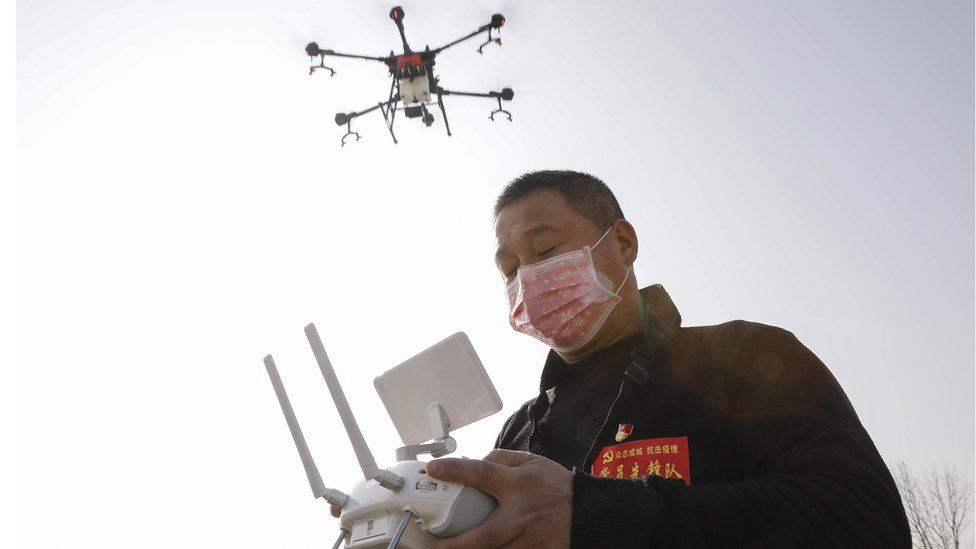
These flying camera birds are helping in patrolling and making sure evrybody is maintaining social distancing. They help the officials check on things and also maintain social distancing at the same time. In remote areas agricultural drones were used for spraying disinfectants. In some parts of the country theyare being used to deliver crucial medical supplies.

Coronavirus: China's tech fights back - BBC News

Online Clinics and Counseling-

Due to this one illness other diseases have lost its importance. People suffering from issues like hypertension and arthiritis are being provided with online medical assistance. Many institutes are also offering online psychological counseling service.

How Technology Has Made Online Medical Consultation Possible ...

Robot nurses and Artificial Intelligence scans

Robots are also used in many Chinese hospitals to deliver food, medicine and other supplies to patients; to disinfect hospitals and other public areas; to check patients temperatures; and to answer common questions. Coronavirus is being   diagnosed using AI, which can read thousands of CT scans in 20 seconds with an accuracy rate of 96%.

Robot nurse helps Italian doctors care for COVID-19 patients

Virtual Classrooms

After weeks of schools being closed, possibly the biggest challenge for parents is keeping children occupied and continuing their schoolwork.  To enable this, many schools have rolled out online learning platforms, where students take courses and teachers give lectures from home, via live-streaming platforms.

With online classes in vogue, schools shift focus to feedback and ...

Research and Development

Within the first few weeks of the virus, China had sequenced the genome. By posting that sequencing online, it trigged a ripple effect in research labs across the world, with a surge in orders for synthetic samples of the virus to build copies of it from scratch. This allowed new treatments to be trialed – even experiments that failed offered vital clues in guiding researchers on where they should focus.

Three TN medical colleges to get virus research labs in 6 months ...

Smartphones and Internet

Smartphones are playing a critical role in reducing exposure. Delivery apps offer contact-less delivery, whereby drivers drop food off at a specific point – including a card stating the temperature of everyone involved in cooking and delivering the food. Another offers users maps marking residential communities with confirmed cases and their proximity to them. Meanwhile, mobile payment apps are reducing transmission along paper money, which can carry viruses for up to 17 days. With the world’s highest penetration of e-wallets and two of the world’s largest mobile pay, Chinese fin-tech is helping to slow the coronavirus spread.

India lockdown throws online delivery out of gear, millions cry

Work From Home

A major challenge during the virus is being able to work.  Several tech companies are offering free online collaborative tools. Other businesses have quickly adopted work-from-home policies, using online meeting software, collaborations platforms and LBS technology to clock in and  ensure employees stay home. At UNDP, the use of Zoom teleconferencing and ERP Platforms have allowed us to keep working.

Coronavirus and Working From Home: How to Keep the Kids Busy - Nelson

Virtually Connected

Compulsory quarantine has disrupted daily life and curtailed social interaction for nearly one fifth of the global population. This is leading millions to meet online instead. Families dine together with relatives in distant cities, raising a glass to each other on camera. Even weddings have been held in Virtual Reality.

Things To Do With Friends While Hanging Out Virtually - Addison ...

While the use of technology can at times present its own challenges, and fuel debates about privacy and public good; in the fight against the coronavirus, it is playing a critical role in offering treatment, information, support, food, schooling and greater safety for many.

My favourite subject

As a student, everyone excels in some subjects and not in the others. Of course, there are some students who do well in all of them, but that number is low. However, almost every student has a favourite subject. It does not matter if it’s related to academics or arts. Personally, my favorite subject is English. I have always scored well on the subject because I understand it well. It makes learning effortless and I always manage to get good marks. There are other subjects I like too but English definitely tops my list. I never get bored of it and am always ready to study it.

Reason For Favouritism

There are many reasons as to why I enjoy studying English. The major one is that it enhances my reading skills. Ever since my childhood, my mother has always read stories to me. So, I developed a habit of reading and listening to stories. As my reading skills get polished through English, it helps me in other subjects too. I grasp the concepts better through reading.

Furthermore, through English, I developed a knack for writing. I absolutely enjoy writing essays and articles. It is only through English, that I started writing my own work. This helps me in forming incredible answers for other subjects as well. It gives me the experience to use accurate words and sentences to convey my message better.

Most importantly, I love fictional stories in English. I love how it always has some lessons in them to learn. They also apply in real life and help me make wise decisions. The stories in English novels and plays always keeps me entertained. It also enhances my imagination powers.

A Scoring Subject

English is definitely a scoring subject which makes it even more special for me. I am an average student who does not take much interest in Science. I manage to get decent marks in the subjects, but in English, I score well. When we compare English to other subjects, we see it is most scoring.

English does not demand word to word answers. It gives the child a chance to play with words. It gives them the creative liberty to speak their minds out. For instance, in Maths, you cannot create your own formulas. You must copy the same exact one taught in the syllabus. But, in English, we can compose our own answers based on our understanding and intelligence.

In addition, English teachers are usually more approachable and understanding. In other subjects, the teachers always have to stick by the book and literally make students mug up the formulas and theories. The English teacher takes time to make them understand each phrase. They allow the students to interpret it as per their intellect. This empowers the child too so they can put their own thinking in it.

In short, I absolutely love English. It gives me the chance to excel without putting too much pressure on me. I get to play with words and form my own interpretations. This helps me get the creative freedom I do not get in other subjects.

Suspension Of Insolvency And Bankruptcy Code (IBC)

An ordinance was recently approved to amend the IBC in order to provide relief for the businesses and corporates after the pandemic and subsequent lockdown significantly impacted most of their economic activities.

Section 10A was introduced in the Code which suspended the following sections 7, 9 and 10 of the provision. Section 7 provided for initiation of insolvency proceedings by financial creditors, Section 9 provided the same creditors and Section 10 for a corporate applicant.  The introducing provision suspended filing for initiation of corporate insolvency resolution process of a corporate debtor for any default for a period of six months extendable up to a year.

The Economic stress because of the ongoing pandemic COVID-19 led to the various losses in the different sectors. The Industries are grappling with continuous supply chain breakdown, trouble handling the slowdown in demand, face unavailability of labour and ultimately, finding themselves in positions with inabilities to complete the contracts. Moreover, the service sectors such as aviation or hospitality are also facing reluctance of the customers because of the precautionary lockdown. The entire by-product increased stress and number of debt-laden Indian corporates.

There is also a concern over the value money as currently under IBC there are around 220 unresolved cases which means that only 44 per cent amount of the total debt has been recovered yet since the commencement of this mentioned law in 2016. Moreover, for every one case which is left resolved there are four cases which would end up in liquidation, hence a situation where the recovery falls down to 15-25% sharply. Specifically guiding that the creditors would have to undergo large cuts on their loans.

The litigation pressure on judiciary has also then increased since the judicial system, already as burdened as such, would have to handle a huge influx of cases after the suspension of IBC.

In addition to that there is also a ballooning of liabilities without resolution. When a corporate applicant or creditors themselves cannot initiate the insolvency proceedings, it consequently restrict the exiting of a business and also lock-up its following assets. Therefore, only further deteriorating their position in terms of value and only leading to losses.

The suspension of this specific law will also negate the two states objectives. The objective of faster resolutions and the objective of value maximization under IBC.  The creditors will thus be forced to turn to older mechanisms to help them address defaults. This diversion from the Code to other methods may alternatively result in innumerable recovery cases. Along with it there can also be a flow of various security enforcement cases being filed, thereby only further burdening the courts.

The decision also the potential to hamper the economy in the long run if there is any absence of definite and timely resolution. In a case where the NPAs of banking sector may rise and increment their lending rates. Hence, hampering the investment and of course credit cycle, most probably lowering investor the confidence.

As the introducing provision required the proceedings under IBC to never be able file for default occurring in the suspension period, so:

  1.  The Promoters of the companies that may have the capacity to repay dues could intentionally force a default during this period and get safe from never to be held accountable under the IBC.
  2. While only the pandemic-related cases should get the benefit of this absolution, it will particularly be very much tough to pinpoint why only a pandemic serves as the reason for the non-servicing of loans.
  3. Furthermore, it can adversely affect operational creditors, such as the suppliers and the vendors. They would not be able to file insolvency proceedings which may go on to lead to artificial delays in payments done by corporate debtors on them.  

Also there has been no suspension against personal guarantors of a company. That is, the directors or promoters of any company who have provided personal guarantees to its lenders, might still find a position in the insolvency court under IBC. The ordinance in addition to that, does not grant any relief to applicants whose resolution plans got approved of late.

The ability to implement the said plans will be undoubtedly be directly impacted by such interruptions going forward.

The EXACT 10 Steps You Need- to become a BETTER Writer

I receive more than 50 E-mails a day from people all over the world asking me for “TIPS” on becoming a WRITER. Didn’t you just write me a mail ? That makes us all writers. But people think of writing as an ART which only few possess, WHY? Because they write everyday. However there are some who simply want to get better at writing just like you and me.

Here are some tried and tested steps on how to become a writer specifically a better one:

5 Steps To Becoming a Professional Writer | BKA Content

STEP 1:

Pick up a pen and a paper without thinking too much. Nowadays, I write on my mobile phone by typing whatever comes to my mind. So pick up the writing tools of your choice and sit in a comfortable place.

STEP 2:

There is no style of writing or rules to what not to write. You are your own rule-maker so instead be the rule-breaker. Write your own style.

STEP 3:

DO NOT start writing for the trend of it. Write what you feel connected to. Become the trend setter by pouring your heart into those words.

STEP 4:

If the purpose of your writing is to publish the work then write what you will read as an audience.

STEP 5:

It is okay to take inspiration from other Writer’s work. BUT don’t copy the entire content. Ideas can be shared but thoughts should be your own.

STEP 6:

There is no Language of Writing. My thoughts occur in my mother tongue-Tamil– and my regional language- Hindi/Marathi-; however, my education was in- English; hence I find comfort in it. Never feel embarrased about the language of your writing, it is your greatest super power.

STEP 7:

Write Everyday or at least every alternate day. Writing was an art in the past but today it is a skill which can be developed by practice and habitual scribbling of thoughts and opinions.

STEP 8:

Be relatable in your writing. Readers like to read articles which relate to them and hence they feel hostile and comfort in your words. I often portray myself as the character in my stories, the one who got to gain the experiences that life threw at me. Chances are all humans face similar challenges in life. Relatable AF!

STEP 9:

Let your writing be creative and free-flowing. You can always edit it later with but your initial draft should be fresh. To put it more easily- WRITE DRUNK BUT EDIT SOBER.

STEP 10:

Send your works to people who always motivate you – friends, family or even professional writers like me and many others. This will motivate you to write more regularly and also to feel validated and improve yourself in the process. Learn and grow fellow WRITERS!

Hope these tested steps qualify as practical tips to anybody in need. Do COMMENT your steps, to becoming a better writer in the comments below or leave a comment if you need more TIPS.

Till then – EAT- SLEEP- WRITE- REPEAT.

Most UNDER-RATED Holiday DESTINATIONS in INDIA

Osian, Rajasthan

Adventure Activities & Sports in Rajasthan - Rajasthan Tourism

Osian village in Jodhpur district in Rajasthan is a delight for those who love historical architecture and the fact that you get to see all of it in an oasis in the Thar Desert makes it a double whammy. The 8th to 11th century temples there make this village a must-visit destination.

Tarkarli, Maharashtra

MTDC RESORT TARKARLI (Maharashtra) - Resort Reviews & Photos ...

Frankly, almost any beach on the Konkan coast could have qualified for this spot. Tarkarli, in Sindhudurg district in Maharashtra, with its pristine waters, long and narrow beaches with Shuru trees in the background, managed to earn some extra points. It’s one of the most peaceful and non-commercialized beaches in India.

Gavi, Kerala

Gavi, Kerala - Wikipedia

We usually associate trekking with mountains and hills. But this is one wildlife trek you wouldn’t want to miss. Located in Pathanamthitta district in Kerala, on the highway connecting Kollam and Madurai, Gavi is part of the Periyar Tiger Reserve. It is said that the only two gopher trees in India can be found in Gavi.

Kasar Devi/Crank’s Ridge, Uttarakhand

Kasar Devi Temple Almora - Timings, Entry Fees, Location, Facts

If you’re interested in the hippie-way of life but are tired of the huge number of tourists in Himachal Pradesh, you need to make it a point to visit Kasar Devi village near Almora in Uttarakhand. Crank’s Ridge, or Hippie Hill as the locals call it, on the way to Kasar Devi temple is also a historical place for hippies. Legends like Allen Ginsberg, Bob Dylan and Cat Stevens are some of the few people who visited this place during the peak of the Hippie movement in the sixties.

Lonar Crater, Maharashtra

Lonar Crater Lake | District Buldhana, Government of Maharashtra ...

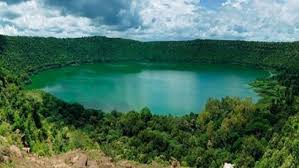
Located in Buldana district in Maharashtra, the Lonar Crater Lake was formed around 570,000 years ago due to a meteor impact. Owing to its high concentration of carbonate salts it’s categorized as a saline soda lake. So, it’s a soda lake formed by a crater.

Krem Mawmluh & Krem Ri Blai, Meghalaya

Travelstruck - Krem Mawmluh & Krem Ri Blai, Meghalaya... | Facebook

Cave exploration hasn’t taken off in a big way in India, which is really surprising considering there are so many options to do so in this country. Krem Mawmluh and Krem Ri Blai, in Mehgalaya, are natural horizontal and vertical caves respectively. Make it a point to visit them at least once in your life.

Ziro, Arunachal Pradesh

Arunachal Pradesh Itinerary Service - Dibrugarh Ziro Pasighat ...

Ziro is a town in the Lower Subansiri district in Arunachal Pradesh and it has been hosting the Ziro Festival of Music for the past three years. But here’s the thing – the quaint little town is so attractive, that even without a crowd pulling event, it would find a spot on this list.

Wayanad, Kerala

GRASSROOTS WAYANAD (Kalpetta, Kerala) - Guesthouse Reviews, Photos ...

This piece of trivia goes out especially to those trying to escape the city life for a while – Wayanad district is only 3.79% urbanized. Yep, lots of greenery here. Ancient history geeks can also trip out on the Edakkal caves where they can see actual pictorial writings from the Neolithic period.

Unakoti, Tripura

Unakoti - Wikipedia

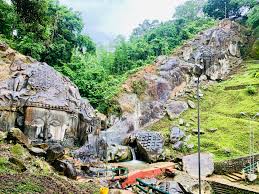
The stone carvings in Unakoti in Tripura are one of the most detailed ones in India and yet, this place is rarely visited. As per Hindu mythology, when Lord Shiva was going to Kashi along with one crore gods and goddesses, he made a night halt at this location. He asked all of them to wake up before sun rise. It is said that in the morning, except Shiva himself, no one else woke up on time. So Shiva set out for Kashi on his own cursing the others to become stone images. Perfect for both spirituality and history enthusiasts, this is truly one of the most underrated places in the country.

Top Highest Paying Jobs in India 2020- TRENDING AFTER CORONA VIRUS PANDEMIC

Finding the highest paid jobs in India for freshers might seem a little difficult. But once you’ve found them, your task will get a lot easier. You’ll then know what you should focus on. And to help you in that regard, we have prepared the following list of the top jobs in India.

Well you need skills and alot of hard work too, to earn the highest pay that any field is offering. These options can however be one of the motivating factor for you. If you dont find the field of your interest then remember that –

Photo by Kampus Production on Pexels.com

“Earning money is possible in any job if one is passionate about the kind of work and hence hustles hard enough to reach the top of their game.”

The List to top highest paid jobs in India are as follows:

Blockchain developer

Much like how a normal web developer uses the protocols and design structure set up by a core web architect to build web apps, blockchain software developers build decentralized applications or Dapps using blockchain technology. Their roles include: Development of Smart Contracts

There’s a wide base of knowledge to help you become a blockchain developer. If you’re interested in joining the field, it’s an opportunity for you to make a difference by pioneering the next wave of tech innovations. It pays very well and is in high demand.

The banking sector, the insurance industry, governments, and retail industries are some of the sectors where blockchain developers can work. If you’re willing to work for it, being a blockchain developer is an excellent career choice.

Cybersecurity specialist

Cyber Security Specialist is responsible for providing security during the development stages of software systems, networks and data centers. The professionals have to search for vulnerabilities and risks in hardware and software. They manage and monitor any attacks and intrusions

Security analysts spend their days studying the devices in use, analyzing network structure, and testing security measures like firewalls and software permissions. They look for weak points and aim to shore up defenses. They also report regularly to upper administration and may have to present findings and recommendations before management. Security analysts sometimes work with other departments to ensure their colleagues understand the organization’s best practices for information security.

Digital marketing specialist

digital marketing analyst is responsible for analyzing statistics and looking for ways that the company can improve its online marketing efforts. These efforts include things like social media ads, website banner ads, and online branding. Many businesses know that digital marketing is essential to their success.

Customer success specialist

Customer Success is an integration of functions and activities of Marketing, Sales, Professional Services, Training and Support into a new profession.  There are three necessary building blocks for this emerging profession: an in-depth knowledge of the customers, effective expertise in the product being sold, and extensive domain expertise.

Growth manager

he Growth Manager function typically lives at the intersection of marketing and product development, and is focused on customer and user acquisition, activation, retention, and upsell. The Growth Manager usually reports either to the CEO, the vice president of Product Management, or the vice president of Marketing.

Artificial intelligence specialist

Artificial intelligence (AI) specialists program computers to “think.” Some AI specialists work in cognitive simulation, in which computers are used to test hypotheses about how the human mind works. For example, the AI specialist might develop a computer program to simulate the way the human brain might recognize a face. The computer’s ability to recognize a face would then be compared to a human’s ability.

Data Analysts 

A good number of companies are leveraging Big Data in order to pull out the most vital and beneficial data. This practice has paved the way for augmented productivity not only for the companies but also for their employees.

So, what do Data analysts do? Well, they translate trajectories, trends, and numbers into digestible chunks of information. Businesses gather data such as inventories, profit margins, transportation costs, logistics, and sales figures, etc.

Data analysts collect that data and help the companies to go with workable business decisions. The primary job of a data analyst is to resolve the issues that increase the company’s costs and to make better decisions for the expansion of the business. 

Robotics engineer

India might be a little slow when it comes to technology advancements, nut we have some of the most brilliant minds in this country. Machines have started to replace people in dangerous jobs such as defense, space, nuclear power plants, etc.

A career in robotics is a career of the future and is a high paying career to adapt for.

Robotics Engineer deals with the design, building structure, and the applications of robots and computer and their manipulation and processing. Robotic science has a tremendous scope as a career option as robots play an important role in the industrial sector. 

Keep all future jobs in your mind now and start developing your skills in the one that excites you. Start finding your passion also starts working on it today. It really does not matter what career option you choose, but the key factor of getting the desired position lies in your resume writing skills. ensure that you have a professionally written resume along with sharpening your career, that 10x your chances to land your DREAM JOB.

Yesterday will not repeat

Believe in your future if you had a bad past. If you are going through worst present then remember your sweet memories from past. You can’t decide your future with one incident because it ruins your whole future. Give more time to your future because we can’t know when is the time that changes our fate. Believe in yourself if you want a better future. It’s you who should have a hope on you. The confidence on you is the confidence on your future.

The yesterday is bad, then think of better present, if today is worse, then think of better future. Time changes the way it does. Believe in it. Everyone will have a good time but the time for everyone is not same. Be good and do good to have good. It’s not in our hands to decide our future but it’s we who have to make it from whatever it happens. Making form worse is the best thing. Have hope to create yourself from scrap. Nothing goes in vain, if you want something from nothing it take time. Believe yourself and keep on working. One day will definitely become the someday that you dreamt off.

Remembering bad incident is easy because it’s never not forgotten that easy. Cherishing happy moment is not done so often because it’s momentary. Celebrate the life by cherishing happy moments and by forgetting sad. Beleive in long life because it’s way more to live. Never settle as though believing in short life. Life keeps on going if you keep on exploring. It’s never too late to get out of your sadness. Thinking of it makes us to think more and leaves us in a cycle where we can’t escape because our mind never makes us to think out of it. So believe in having a great destiny and live accordingly.

17 Essential Tips for Young Entrepreneurs

Youth is the biggest resource of the Nation. Today’s generation is not only smarter but also ahead in innovation and dare to build their own empire at the prime of their youth. Though it takes a lot of efforts, a right amount of motivation and guidance can help the young budding entrepreneurs go a long way. Well who learn from than the experienced businessmen who started out at your age and now are known as the Young minds who made it to Big Shots.

Here are 17 essential tips for young entrepreneurs inspired by 17 people who made it under 17 years of age:

  • Dare to Dream:

Dr.A.P. J Abdul Kalam once rightfully said, ‘Dream is not what you see while sleeping, it is something that doesn’t let you sleep.’ Your dreams don’t have to look like anyone else’s. You get to define what success looks like in your life. Dare to dream your own unique dream of what living well looks like.

  •  Have a Vision:

The founder and CEO of Tumblr, David Karp, notes that an entrepreneur is someone who has a vision for something and a desire to create it. Keep your vision clear at all times. Having a vision means we have a clear sense of purpose.

It means we have a much larger picture of our business, than simply setting and reaching short term goals and tackling problems as they come along. In business, having a clear vision is absolutely critical. It is an extremely powerful tool to achieve the results you want.

  •  Do what you are Passionate about:

Where you care about DOING that thing, rather than what you get at the END of doing that thing. The dictionary definition of passion is “a strong feeling of enthusiasm or excitement for something or about doing something” The spark of passion when gets action it fires up and lights the way ahead.

  •  Take Action:

The world is full of great ideas, but success only comes through action. Walt Disney once said that the easiest way to get started is to quit talking and start doing. That’s true for your success as well. Work in silence, let your success make the sound.

  •  Face your Fears:

Overcoming fear isn’t easy, but it must be done. Arianna Huffington once said that she found fearlessness was like a muscle — the more she exercised it, the stronger it became.

  •  Take the Risk:

We never know the outcome of our efforts unless we actually do it. Jeff Bezos said it helped to know that he wouldn’t regret failure, but he would regret not trying.

  •  Believe in Yourself:

As Henry Ford famously said, “Whether you think you can, or think you can’t, you’re right.” Believe that you can succeed, and you’ll find ways through different obstacles. If you don’t, you’ll just find excuses.

  •  Rome was not built in a day:

No one succeeds immediately, and everyone was once a beginner. As Steve Jobs wisely noted, “if you look closely, most overnight successes took a long time.” Don’t be afraid to invest time in your company.

  •  Plan for raising funds & capital:

Richard Harroch, a venture capitalist, has this advice for upcoming entrepreneurs: “It’s almost always harder to raise capital than you thought it would be, and it always takes longer. So plan for that.”

  • Set goals and targets:

Ryan Allis, co-founder of iContact, pointed out that having the end in mind every day ensures you’re working toward it. Set goals and remind yourself of them each day.

  • Learn from your mistakes:

Many entrepreneurs point to mistakes as being their best teacher. When you learn from your mistakes, you move closer to success, since learning from failure is the first step towards succeeding.

  • Adapt to the market:

Bill Gates once said that your most unhappy customers are your greatest source of learning. Let unhappy customers teach you where the holes in your service are.

  • Put customer needs at the top:

“Customer is the king,” is the first rule of any market and business organizations.

  • Manage Energy, not Time:

Your energy limits what you can do with your time, so manage it wisely. Plan a proper schedule keeping your physical and mental potential as priority.

  • Invest your money wisely:

Investing your money can allow you to grow it. Most investment vehicles, such as stocks, certificates of deposit, or bonds, offer returns on your money over the long term. This return allows your money to build, creating wealth over time.

  • Be Consistent and determined:

       Consistency in your business is far more important that you can imagine. Being consistent allows you to establish awareness, build trust and deliver your services efficiently and profitably.

Whether you are establishing your brand or determining the course of your sales and marketing strategy, you have to recognise the power of consistency. Give yourself an advantage over fickle competitors by becoming consistent in how you operate your business, and what you present and offer to your customers.

  • Deliver more than expected:

Google’s Larry Page encourages entrepreneurs to deliver more than customers expect. It’s a great way to get noticed in your industry and build a loyal following of advocates.

Being a successful entrepreneur takes a lot of work, a lot of vision and a lot of perseverance. These 17 tips, from entrepreneurs who have already found success, will help you navigate the path much more easily.

5 SECRETS TO FINDING TRUE LOVE

Everybody desires to find their one true love with whom we can live our fairy tale of falling in love and living happily forever and ever. Welcome to reality my friends because these fairy tales exist only in movies and fiction stories.

Love is no fairy tale, so you can stop looking for a perfect “10” who fulfills all the qualifications on your wish list. It is possible, however, to find someone to stand by your side, brave the messiness of the world, and help you experience life to its fullest potential.

How do you work towards finding this ” someone ” ? Here are the 5 tried and tested secrets to finding your companian:

  1. BE REAL

To find real love, you must first emphasize your true self. If you want someone to love you through your moments of imperfection, you must first be willing to do that for someone else. Be real with yourself, so you are ready for someone else’s true self.

If you shift your personality, passions, or purpose to impress another person, you are not being your true self. People are attracted to genuine souls. Get to know yourself, love yourself, and learn to act and speak authentically.

2. BE CONFIDENT

Be confident in yourself, your decisions, and your ability to attract love into your life. If you are being your authentic, best self, this CONFIDENCE will radiate from you in a glow of SELF-WORTH. You will attract someone who recognizes, appreciates, and loves who you are.

Foster this confidence by knowing that you are whole and complete just by being you. Understand that a soul mate is nice to have, but not a must-have. You, alone, are enough.

3. BE OPEN

If your desire is to meet someone new, then you must be willing to connect and open up with the people around you. If someone next to you in the coffee line strikes up a conversation, be willing to engage. Even if that person is not to be the love of your life, practice BEING HONEST anyway. Developing this energy of openness will help you facilitate iterations that may lead to lasting relationships.

4. BE HAPPY

Perhaps the most important secret of this list is to be happy. Everyone wants to be around happy people; HAPPINESSS is magnetic. So focus your energy on thinking about and doing the things that make you happy. This energy of yours will also attract a similar kind of person which wiill only further amplify your life.

Will Smith said, “her happiness is not my responsibility. She should be happy and I should be happy individually. Then we come together and share our happiness. Giving someone a responsibility to make you happy when you can’t do it for yourself is selfish” let that sink in.

5. BE IN LOVE WITH YOURSELF

Loving yourself allows you to make healthier choices.When you put yourself first, you make choices that will only improve your quality of life. You eat better and sleep and exercise more because you realize that taking care of your mental and physical well-being are essential to your success.

By not loving yourselfyou‘ll create extra work for your partner because they‘ll have to pick up that slack and carry your weight. When you struggle with self-doubt and low self-esteem, your partner will have to work extra hard to make you happy.

The next time you enter a relationship, see to it that it will be with your true love already. This would save you from heartaches due to being with the wrong person.

Let love find you.
These tips can only help you increase the chance of finding the right person for you. However, there is no formula that can create true love. It just happens beyond conscious effort, and if handled well, it will surely last.

Do not try too hard on finding your true love. Let love find you, instead. And while waiting for it to arrive, focus on loving yourself.