Planetizen

Eduindex News tries to bring in focus organisations working for the betterment of the society and institutions providing quality contents and services to scholars.

Planning

Planning is the professional practice and an academic study focused on the future of built environments and connected natural environments—from the smallest towns to the largest cities and everything in between.

Planning: A professional practice and an academic study focused on the future of built environments and connected natural environments—from the smallest towns to the largest cities and everything in between.

Planetizen: The independent resource for people passionate about planning and related fields.

Planetizen

Planetizen is a fiercely independent platform that creates, curates, and amplifies stories and resources to inform planning and people passionate about planning.

Scholars can visit the site of the Planetizen at https://www.planetizen.com/

Planetizen published its first story, by Anthony Downs, on August 1, 2000. The first Planetizen server ran on a used desktop computer connected to a telephone line in Chris’s house, and the site published 3-4 stories a day.

Within months, thousands were reading, and Planetizen expanded to cover news throughout California. By 2003, Planetizen contributors were submitting news from across the country, capturing the growing interest in the Internet and the need for an online community interested in planning.

Today, Planetizen reaches 90% of the U.S. urban planning community through news, editorial, job postings, online courses, books, and product sales. But one thing hasn’t changed: We are always looking for new ways to advance the field and work for healthier, more prosperous communities.

the mission of Planetizen Press is to provide innovative resources for students and professionals in the field.

Planetizen is the go-to news and information site for the urban planning, design, and development community. With a steady stream of fresh, relevant stories every day, our readers check in regularly to get the latest news on transportation, architecture, infrastructure, housing, economic development, and urban design. Our readers follow our influential bloggers and read original features from leaders in the field.


Publications
The Planetizen Press catalog currently includes a variety of titles available at the Planetizen Store.

Submissions
Planetizen Press accepts manuscripts for consideration from authors and opinion leaders. We favor manuscripts that are near completion on the subjects Planetizen covers on a regular basis:

  • Urban and regional planning and land use
  • Transportation and transit
  • Environmental issues
  • Energy and infrastructure
  • Historic preservation
  • Landscape architecture
  • Urban planning technology
  • Planning-related humor


We are open to ideas ranging from extended academic papers to popular non-fiction, like The Tipping Point. Our goal is to encourage debate and spread knowledge of the concepts and goals of urban planning. However, we are primarily interested in near-finished manuscripts. We are not seeking to develop books with authors from scratch.

Hope readers will be enrich themselves by visiting such resourceful forum. If you thing your organisation is working for the benefits of the scholars and community at large then let us know so that we can highlight their resource to our thousands of readers worldwide. For writing guest post and for informing about new and useful resources, write a mail to news@eduindex.org

We will try to give space in our News Portal free of charge. Keep reading and keep enriching yourself and keep helping others in getting good resources like Planetizen.

Go back

Your message has been sent

Warning
Warning
Warning
Warning.

Planning Tank

Eduindex News tries to bring in focus organisations working for the betterment of the society and institutions providing quality contents and services to scholars.

We found that Planning Tank has a mission to create Happy, Healthy & Sustainable Human Settlements by means of education & awareness. They are active and providing quality educational resources for students, academicians & professionals covering their diverse needs. Scholars who are looking for articles to read on different topics of Urban Planning and the following sub aspects:

  1. Resources for Urban, Rural & Regional Planners
  2. Data Sources, analysis & presentation
  3. Geographic Information System (GIS)
  4. Academic Writing information
  5. Environment & sustainable development

Scholars can visit the site of the Planning Tank at https://planningtank.com/.

They keep on updating the latest information to the website and improving the existing information. The information provided is meant to cater to the needs of students, professionals, the general public, planning enthusiast alike. Apart from Urban Planning we frequently cover information related to:

  • Real Estate
  • Latest happening affecting human settlements
  • Job opportunity
  • Urban & Land Economics
  • Memes
  • Organizations & agencies dealing with Planning

Hope readers will be enrich themselves by visiting such resourceful forum. If you thing your organisation is working for the benefits of the scholars and community at large then let us know so that we can highlight their resource to our thousands of readers worldwide. For writing guest post and for informing about new and useful resources, write a mail to news@eduindex.org

We will try to give space in our News Portal free of charge. Keep reading and keep enriching yourself and keep helping others in getting good resources like Planning Tank.

Go back

Your message has been sent

Warning
Warning
Warning
Warning.

Useful and widely used language to learn

Intro

The best we have been able to do is to narrow down the timeline for origin of language and studying human phycology to know when we developed mid-brain for language. Magpie is the name given to English language as it has a mix of many languages that picks up word from all other language. Some language has understandably widened vocabulary of English than others. Modern English dictionaries contain more of a geographical melting pot than ever before.

 Global lists that are famous worldwide are listed down. There are some seventy thousand languages in world that are famous worldwide also English has borrowed language from these different languages.  Here goes the list of six such important languages that are spoken worldwide in large number.

CHINESE: 1197 million native speakers

So far it is the widely spoken language in the world. According to the Oxford English Dictionary, Chinese words have been recorded in English since the mid-16th century, with the earliest examples including the likes of tai chi (1736), ginseng (1634), yin and yang (1671), kumquat (1699) and fang shui (1797). One of the earliest of all is lychee (1588). Chinese is a linguistic that is also referred as macro language that comprises many forms to derive a different form and dialects that together have of 1.2 billion native speakers

2. SPANISH: 399 million

Mainly spoken in Mexico, but other part of the world where this language is spoken as a major language is Colombia (41 million) Argentina (38.8 million), and Venezuela (26.3 million). They are many native speakers in the United States of America. In English, Spanish loanwords like weaponry and military in termed as guerrilla, flotilla, armada, machetealso the animals name are as follow like chinchilla, alligator, cockroach, iguana.

3. ENGLISH: 335 million

As per Ethnologies the English language has some 335 million native speakers, that incudes2 55 million in United States itself, 55 million in the United Kingdom and 19 million in Canada. Few other main countries have also 15 million in Australia and 5 million in New Zealand. Though English is spoken in almost every Asian countries of the world and is most wide spread it is recorded to be spoken in 101 different countries and territories worldwide.

Additionally, the number of people that has opted English as a second linguistic Franca included, the total no of speaker could rise globally to one billion.

HINDI: 260 million

Hindi is native language of the world’s 260 million speakers that are mainly found in India and Nepal. Although some 120 million projected people in India uses Hindi as a second language.  Also it is spoken in many part of the world such as in Mauritius, Fiji, Suriname, Guyana, Trinidad & Tobago and Nepal. Hindi is declared to be official language of the union. The Indian constitution in 1950 declared the Devanagari script and made it an official one. However, Parliament decided the use of English for an official purpose was announced fifteen years after the constitution came into effect, i.e. on 26 January 1965.

PORTUGUESE: 203 million

The population of Portugal is around 12 million but Portuguese is enjoyed and spoken in large belt and it has 187 million native speakers. People in many of these countries adopted these languages mainly forcibly and many took it over their own language.  Adopting these languages made it spread too many other communities in a country.

Story of Automotive fuels

Automotive fuels are broadly divided in to two categories. Motor gasoline which is used in spark ignition engines and High-speed diesel, used in compression ignition engines. Both these fuels are generally produced from crude oil.  There is an alternate raw material such as reformate from which this automotive fuel can be derived, however this intermediary is also product of crude oil distillation process. Natural gas is used as a feed in some refineries but limited to low scale production.

Petroleum Crude (Crude Oil)

Crude oil is mixture of comparatively volatile hydro carbons, compounds mainly composed of Hydrogen and Carbon. Hydro carbon in crude is mostly alkanes (Paraffins), cyclo-alkanes (Naphthenes) and various hydrocarbons. Other elements present are sulphur, nitrogen, oxygen and traces of metals such as Iron, nickel copper etc.

Composition of crude oil by mass percentage

Carbon 83 to 87%

Hydrogen 10 to 14%

Nitrogen 0.1 to 2%

Oxygen 0.05 to 1.5%

Sulfur 0.05 to 6.0%

Metals < 0.1%

Crude is formed when large quantities of dead organisms are buried underneath sedimentary rock and undergo intense heat and pressure. Petroleum is recovered mostly through oil drilling. This comes after the studies of structural geology, sedimentary basin analysis, reservoir characterization.

Crude oil is refined and separated, most easily by boiling point, into large variety of consumer products, from petrol (or gasoline) and kerosene to asphalt and chemical reagents used to make plastics and pharmaceuticals.

Petroleum Industry

Petroleum industry is involved in exploration, production, storage, transportation and marketing of petroleum products. The major part product handled by the industry is Fuel Oil and petrol. These are the most widely used fuels around the world. Oil accounts for the largest part of energy consumption all over the world. Approximate oil consumption of the world is around 30 Billion barrels per year.

Upstream oil companies are engaged in exploration, production and refining activities. Down stream oil companies are their expertise in transportation and marketing of refined products. Few companies are engaged in both upstream as well as down stream activities due to their wide experience in the field. Marketing companies are closer to end customers as they have to develop strategy based on changing market requirements.

Refinery Process

Crude oil is subjected to destructive distillation for separating the constituents. The most common distillation fractions of petroleum crude are fuels.

The chemical structure of petroleum is heterogeneous. The chemical separated by distillation are treated by other chemical process for meeting various specification requirements and the customer needs.

Fraction                                               Boiling Range (Degree centigrade)

Liquefied petroleum gas (LPG)                    −40  to  −1

Petrol                                                                  -1   to   110

Jet Fuel                                                                150 to 205

Kerosene                                                             205 to 260

Fuel Oil                                                               205 To 290

Diesel Fuel                                                          260 To 315

Finished products are subjected to stringent laboratory tests to ensure they meets all specifications prescribed by the national and inter national agencies also the specific customer requirements before releasing from refinery.

Supply chain.

Refined products are stored in storage facilities designed based on capacity requirements. Products are transported by different modes based on market locations. Costal movement by oil tankers is preferred for long distance and exports. Pipeline transfer is used as safe and economical option. Rail and road modes are also used widely for transporting fuels. Product transported from refinery locations are stored at intermediate location after ensuring all safety and statutory requirements before finally being dispatched to retail outlets.

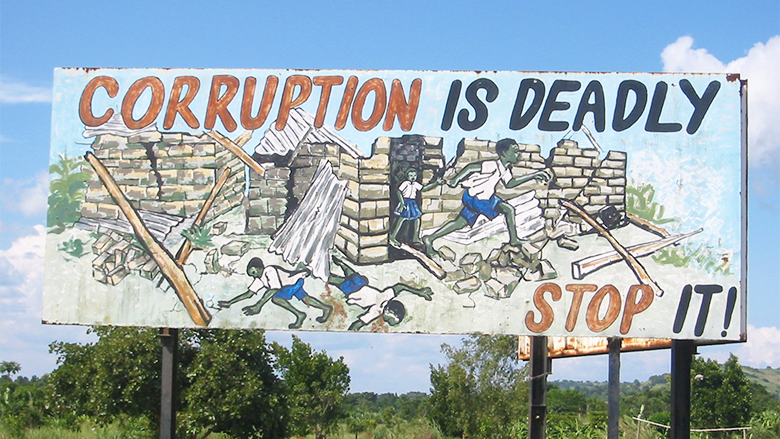
IS THERE END TO CORRUPTION?

People think that we may catch scam after scam and this country will not change. There must be a sense of urgency and restlessness because we need and want to make a corruption-free India. The other name of ‘just the way things are in India’ is corruption. Corruption is the misuse of power or public property for personal gains, like taking bribery. We see that even the simplest daily- routine administrative tasks cannot be performed without a bribe to the civil servant in charge of the paperwork. If you need your work done, don’t forget your bribe money. This situation leads to many issues, but there are two significant issues in it.

Firstly, if we get our work done through bribery, that means we are not paying our taxes rightly, and the person who is receiving it is also not paying taxes. It generates black money. Some people cannot afford bribe. When their work doesn’t get done, and some person with money gets his job done, the divide between have, and have-not widens. This exercise is also contagious. Others get influenced, and they decide that paying a little bit more will get their work done, and so they jump on the bandwagon. It creates a big chain of people who give rise to corruption and black money.

Secondly, we are developing a habit of getting our work done on our own and not informing an authority about something wrong in administration. After this becomes a habit, any new policy will face resistance because we deal with things in our way. So, subsequent procedures or instructions for the collective goodwill not work and so everyone who is connected with that system suffers.

Luxury, convenience and comfort are some offerings that lure us into becoming corrupt. The government allocates let’s say anti-poverty funds, resources for infrastructure development. Why is it that a minor percentage of the entire sum reaches us? It is because, throughout the channel of resource distribution, people are sitting who want an extra taste of all these offerings. The force of this desire is so immense that they snatch money without considering people for whom it was destined.

Corruption in India worsens poverty. A good portion of our taxes gets collected in few hands when it is meant for everyone. Corruption also gives rise to inflation. Since people have black money now and their purchasing power has increased, they demand more for things. When there is a huge demand for materials and objects due to surge in black money, pressure comes on supply which creates inflation. People with money will consume resources since now they have additional money (all thanks to black money and corruption) and ultimately the poor will be deprived of things that he deserves. There is more poverty which leads to a deficit of public trust in government and law.

India’s goal to transform itself into a market for foreign companies and attract investment is increasingly being challenged by corruption and red-tape”.[1] The culture of bribery creates uncertainty for foreign investors. They don’t know if their investment is safe anymore and so become reluctant. Why isn’t everyone alarmed about it and doing something required at own level? Indeed, we Indians are a ‘low arousal’ people. We endure injustice and unfairness. The poor suffer inhuman conditions, and we say ‘that is how it works here’. We must stand up peacefully and resist corruption. It is an epidemic tearing into India’s foundation and economic wellbeing. We can only fix it by real Indians. There is only one-step- we must do it at our level.


[1]Siddharth Chatterjee, Corruption- An Epidemic of Epic Scale in India, The Huffpost, April 4, 2014, available at: https://www.huffpost.com/entry/corruptionan-epidemic-of-_b_5083293.

Rabindranath Tagore : Pertinence in the 21 century

Rabindranath Tagore is truly the maestro of Indian literature a man who inspires us and the one who with his spectacular poems instils hope in us to light the fire. He has created magical works which have left a mark behind and will always be cherished for his knowledgeable flair and for his bewildering literary creations. His works are till date best sellers and will continue to remain so. He is also known as “the world poet” and the “Shakespeare of India”.

He is an author whose works will never be outdated that is his works will always be relevant and will be read with great aspiration. In today’s time we have become quite insensitive towards many components of our lives be it religion, race, culture, economy or even our surroundings. Tagore’s works offer an insight into many raw realities of life. His works are looming with verity be it his poems, plays or short stories.

His famous novel Ghar-Baire that is the home and the world gives an insight into politics of a nation and marital life, it offers a real picture into the life of the relation between a husband and wife. The novel has been greatly recognised and also gives one an insight for our strong attraction towards the ways of the western world and their influence on us. His works transcend time. This novel and its themes are very much relevant till date, one can greatly empathise with the instances of the novel.

158th Birth Anniversary of Rabindranath Tagore Observed

His works have a modern point of view to them, it is said that unlike men of his time Tagore had a broad mind set and he could think out of the box and his views were not at all monotonous, he was always seen as a man who inculcated wisdom with his wise words. Unlike the conservative society he always propounded women’s education and favoured women’s equal treatment in all instance of life.

His glorious poem collection Geetanjali is known for the remarkable poems it consists of which bring lives from different backgrounds together, his glorious collection still holds a great amount of weightage even in the twenty first century, and is equally popular in the western countries as well. It holds great value in the western countries as well and has become super famous worldwide. Devotion being its central theme attracts many readers and will always hold value over many other things. Devotion can bring many people together and can imbibed spiritual aspects within people.

Even his artworks like landscape, dancing woman and woman’s face brings the notion of unanimity amongst the people over his beautiful creations. His works have always been related to society and its different aspects. Be it gender studies or culture and influences that shape a society. His works always gave out a fruitful message to society.

Even our beautiful national anthem which we sing with pride filled in our hearts is a pulchritudinous anthem representing our diverse society and representing our sundry culture and its ways. The vivid combination of cultural and societal themes along with the words he combined and formed many exorbitant creations and gave society masterpieces to appreciate and ponder upon.

“Prototyping and Analysis Software-The new ideal techniques for ideas to turn reality.”

This 21st century is an era where we see big buildings, flying planes,sailing ships, space missions and a number of other things which once seemed impossible and one can only imagine them. The journey from pencil and sheet to reality has transformed human way of living. Ideas and new thoughts have always fascinated humans to something new which thus has resulted in many of the facilities, and comforts which we see around us to be a reality. We have been investing much of our money in things without any hesitation and double thought of assurity in its success. Humans have failed many times in their journey to being out something new and have lost both material as well as money. 

So the problem which early scientists and research workers did face was the loss of much of their resources whether money or material in making something new. This was due to lack of proper information about the required material and operations which needed to be performed on them, and thus resulted in major losses. When we consider the building of airplanes,big buildings and ships especially in the initial phases, we do acknowledge various mistakes, sometimes in calculation and sometimes in the size and construction of the material. This was a serious issue in earlier days and scientists surely wanted to do this out so as to save their time and precious resources. 

The idea of prototyping and analysis came out to be a boon for scientists, manufacturers and customers.

  1. A prototype can be defined as a scaled model of the original object. This helps in reducing the loss of much if the material as well as money. Prototyping helps to make an original model of the product but as a small entity. Various aspects and parts which are estimated to be a part of the desired product are scaled sone to reduce its size. This is an effective technique used by most of the experts and scientists to figure out the final outcome of their product in a much cost effective way.
  2.  The other is the technique of Analysis and 3-d design modelling. This gives a glance of the final product and how it would look after it’s final outcome. This reduces time and more money and various tests can also be performed testing the rigidity, stress and strain graph, toughness and various other factors without making a model and testing on a machine. These have brought a significant change in the field of designing and has helped a number of new ideas to be born without much of expensive, material and technology. 

These do have helped us in our manufacturing production process but still have various drawbacks. The analysis and the results are easy to get but are not 100% correct, which  leaves us with a condition of doubt and work efficiency if the product . We do lack experienced people to work on this simulating softwares. Also these simulation and analysis software are much too expensive. But all these factors lie with the other practices also. These also need much investment to operate. Investment in these techniques are more as compared to others. 

“Many new ways are still in the run to make our dreams turn into reality, with less investment and better return outputs. These have really transformed our way of manufacturing and production techniques, provided ideas to turn reality which ones seems to be just a dream and thus have brought much comfort and ease to the life of the common man”. 

HACCP

“Hazard Analysis and Critical Control Points”.
It is basically a preventive approach to food safety which is used to find and then eliminate the biological, chemical and physical hazards which may or may not be there in production processes and can cause the final products to be unsafe and unhealthy for human consumption. These are certain principles which have been designed by the government to ensure the food quality and safety. It is a various step process that is followed in any food industry.
The HACCP system is followed at each and every level of food chain i.e. in food production and preparation processes which also includes packaging, distribution and even consumption by the consumer. It is therefore known as FARM-TO-TABLE process.
This technique was originated by NASA in the 1960s and US food and drug administration gave a particular definition to this. The main objectives of the HACCP system are –
• Prevention of food-borne diseases so that no one is affected after the consumption of food.
• This system mainly focuses on quality assurance unit i.e. maintains the quality of the food.
• HACCP system tends to reduce the cost of analysis of food.
• It also reduces the losses which occur due to product recall.
• And finally it helps in protecting the reputation of government.

HOW TO CONDUCT A HACCP PLAN??????
Conducting a HACCP plan is a 5 step process as mentioned below –

  1. Collection of HACCP resources and assembling of HACCP team which will look into the all steps.
  2. Description of the product by the team and deciding its method of distribution.
  3. Developing a complete list of ingredients and raw materials which are to be used in the production of the final product.
  4. Developing a flow diagram of the process i.e. how the product will be manufactured, its complete process.
  5. Meeting the requirements for the product to be manufactured safely.

PRINCIPLES OF HACCP
There are 7 main principles of conducting successfully a HACCP plan.

  1. To conduct a hazard analysis is the first step in which all the potential physical, chemical as well as biological hazards in the production of the product are identified.
  2. To determine all the critical control points (CCPs). At this step, all the control measures are thought to be applied. Basically at this step, those points are identified where control measures can be applied for the safety. This step is very essential to eliminate hazards completely from the product.
  3. To establish critical limits is the next step i.e. in this step the control measures are actually applied and also the maximum and minimum limits are set for the preventive measures. To each point found in the last step, a critical limit is applied. These limits assure the food safety.
  4. To establish monitoring procedures is the next step in which all the planning which was done yet is monitored and it should be done on a regular basis. This step assures that there is no mishandling of any procedure of the complete plan.
  5. To establish corrective actions is the next step in which appropriate correct actions are taken if after monitoring it is observed that the critical limits are not met. The corrective actions for each point and limit are already pre-decided.
  6. To establish verification procedures is the next and most important step in which the complete HACCP plan is validated. The complete verification of the plan is required to assure that the precautions and preventions are taken carefully.
  7. To maintain record keeping and documentation procedures is the final step in which the record is maintained and established which must be done regularly. It is necessary for validation procedures.

HRD Minister Calls Exams Mandatory for Final Year Students

DU Exams 2020 : HRD Minister Calls Exams Mandatory for Final Year Students

The Union Minister of HRD, in an interview with the Zee News last night, addressed the speculations concerning the fate of the examinations in the universities and the colleges across the country.

The minister highlighted the formation of a UGC taskforce to receive recommendations in order to orchestrate the examinations of the graduation and the post-graduation courses. He mentioned that the students in their first semester/year of study will be entirely evaluated on the basis of their Internal Assessments. The students in their intermediate semester/year will be awarded a composite grade on the basis of their marks in the previous semester/year and the Internal Assessment marks of the present semester/year. These were the provisions for the promotion of the students to the next academic year.

The minister, however, clarified the stance on the examinations of the final year students and emphasized on the necessity of their examinations to be conducted. He said that though the examinations cannot be conducted in the month of July because of the health crisis across the country, the students will have to appear for their final examinations when the situation improves. The new academic session, he declared, will begin only after the final examinations are conducted.

Swarm Of Locusts Reaches Gurugram, But Will They Enter Delhi?

Houses and trees were covered by locusts in some parts of Gurugram as the swarm continues to advance from west to east with steady wind.

A swarm of locusts, about 3 km in length, has hit Gurugram and it is flying across the city in the NCR region from west to east, according to officials.

The Gurugram administration is sounding sirens and blowing horns to make noises so that the locusts don’t settle on green vegetation and destroy them.

Besides, we have been spraying chemicals through vehicle-mounted pump sets in rural areas,” said Amit Khatri, Gurugram Deputy Commissioner (DC).

There is disagreement amid different administrations over whether the swarm will enter Delhi.

“They are flying across the city West to East due to the steady wind. They will most likely enter Delhi,” said Khatri.

Delhi Air Traffic Control (ATC) on Saturday directed pilots of all airlines to take necessary precautions during landing and take-off of aircraft in view of locust swarms seen near the airport in areas along Gurugram-Dwarka Expressway, news agency ANI reported. A team has been set up to monitor the situation.

However, KL Gujjar, deputy director, Plant Protection, Quarantine and Storage (PPQS), Faridabad, says that it is unlikely that they will reach Delhi because they are moving in East direction. PPQS comes under the Ministry of Agriculture and Farmers Welfare and it is a nodal body to take locust control measures with its various sub-offices across the country.

“They have entered India from Pakistan through Jaisalmer and Barmer border area and reached Jhujhuna. From there, they travelled to Rewari. From Rewari, they came to Jhjhar and from there they have reached Gurugram. Now from here, they will fly to Faridabad and then considering the current wind direction they will move towards Palwal side. I don’t see that they will enter Delhi,” he said.

Meanwhile, Delhi Environment Minister Gopal Rai called an emergency meeting to discuss the situation following a locust attack in Gurugram. The minister also directed the administration to be alert, an official said.

“After the emergency meeting, an advisory will be issued on steps to be taken to deal with the situation,” Rai told PTI.

He asked the officials of the Agriculture department to make field visits to areas close to Gurugram.

On Friday, Gurugram administration reportedly warned its residents about the attack, urging them to keep their windows shut as a precautionary measure. The administration also asked them to make clanging noise by beating utensils to repel the crop-eating insects.

The locust attack has ravaged parts of Uttar Pradesh, Rajasthan, Punjab and few other states for over a month.

Experts say that the present locust crisis that many Indian states are faced with is intense due to the younger population of the insect, swarms of which have entered the country from the north-west areas bordering Pakistan.

A young locust is far more dangerous for crops than a mature and older one. While the mature locusts cover shorter distances and focus more on breeding, the younger ones can fly 150 km in a day and devour more green vegetation.

Experts believe that the current locust invasion was part of the residue population that survived after February 17, 2020, in the deserts of Pakistan and Iran. After 1993, for the first time on May 22, 2019, large swarms of locusts invaded areas bordering Pakistan. Locust controlling units thought that they could finish them by the end of October 2019 but the invasion continued till early February 2020.

“On February 17, 2020, we either killed all the locusts or forced them to go across the border in Pakistan and Iran. We stopped our locust control measures and expected that Pakistan and Iran would take similar measures to eliminate them. But somehow, the residue population continued breeding and in April they attacked,” said Dr Rajesh Kumar, Plant Protection Officer, Jaisalmer.

Is Wearing a Face Mask All Summer Bad for Your Skin?

Look, no one wants to wear a face mask. But even as states open back up and the urge to forget COVID-19 ever happened becomes almost irresistible, it’s good to remember that wearing a mask in public places is not about you, it’s about keeping other people safe from a disease that has killed more than 115,000 people in the U.S. alone.

That said, if wearing a face mask has proved problematic in late winter and spring, it’s going to get much worse when the sweat, sunscreen and sweltering temperatures of summer come into play. You may have already dealt with an unfortunate bout of maskne (that’s mask acne, for people who aren’t keeping up on the new COVID lingo), but when you’re essentially creating a hot box around half your face, strange skin issues will follow.

To help you save face this summer, literally, we got in touch with Dr. Jaime Davis, Board Certified Dermatologist and Medical Director and CEO of Minnesota’s Uptown Dermatology and SkinSpa, who has already been dealing with these conditions among patients.

What sunscreen pairs best with a face mask? What materials should you avoid when buying one? And what issues should men, a generally dermatologically naive bunch, be aware of? Dr. Davis answered all these questions and more.

What kind of face mask should I wear in summer?

Before even talking about the type of mask, Dr. Davis pointed out that many issues are cropping up due to overuse. “Wear the mask when necessary, but remove it as soon as it is not necessary,” she said. “Try to avoid prolonged stretches of mask wearing.” This falls in line with current CDC guidelines that recommend “wearing cloth face coverings in public settings where other social distancing measures are difficult to maintain.” Also, if you have severe breathing issues, it’s important to note that the CDC exempts you from that recommendation.

In terms of materials, Dr. Davis recommends masks with moisture-venting features, which it should be said does not mean cutting a hole in it. While she says that medical-grade options are the most protective, they’re also the most occlusive (in other words, they provide the tightest seal, which is good for stopping virus transmission but potentially bad for your skin); instead, she recommends homemade alternatives “made from tightly woven soft cotton fabric that has been washed in unscented soap, rinsed well of any residual detergent, and dried without fabric softener.”

I’ve developed a rash from my mask. What is it?

While you shouldn’t self-diagnose a rash or other skin irritation, one issue Dr. Davis has dealt with at her practice that people should be aware of is allergic reactions to face-mask materials. She points specifically to “the metal nose bridge (if nickel is in the alloy) or elastic (rubber allergy) or any textile-specific coatings on the fabric.” The nickel issue will be familiar to people who wear earrings or other jewelry, and may be more of a concern for people wearing medical or medical-style coverings.

If you think you’re experiencing an allergic skin reaction, be sure to seek out professional help from a dermatologist. Even if you’re nervous about venturing out to a doctor’s office, Dr. Davis notes that her Minneapolis practice has been offering e-visits which have been, in her words, “freaking fantastic!” She notes that insurance is covering the online sessions, care can be delivered quickly and there’s always the potential for an in-person follow-up, so check with your local dermatologist.

How do I avoid and treat maskne?

Not all acne is the same and it should not be treated the same; the same goes for maskne. Dr. Davis says she’s dealt with both acne rosacea (“inflammatory acne exacerbated by heat and humidity of occlusive masks”) and acne vulgaris (“pimples and plugs from excess oil”) in the current mask-wearing age, but notes people should seek a professional opinion if their acne doesn’t go away. If face wash isn’t part of your regular grooming arsenal, she says to use a mild cleanser like Cetaphil twice a day, which may solve your problem.

What sunscreens go well with masks?

The biggest conversation around sunscreen in recent years has been mineral versus chemical. Basically, chemical sunscreens are the most popular products you’ll find on shelves, available from companies like Banana Boat and Coppertone, but some of them are being banned because they’re unsafe for marine life. Mineral sunscreens are generally considered to be friendlier to oceans and the environment, but in terms of protecting you from skin cancer while wearing a mask, Dr. Davis says you’ll be better off with chemical versions.

“Mineral-based sunscreens sit on top of the skin and could be rubbed off by the mask. Chemical-based sunscreens absorb into the skin and generally provide longer-lasting protection,” she says. “Brands that are generally well tolerated by sensitive skin include Vanicream and Cetaphil.” If you have a favorite brand already, she suggests using SPF 30 or higher for normal daily use. And yes, you should be applying sunscreen on your face every day. However, Dr. Davis also notes that if you’re wearing a snug-fitting or tightly sealed mask, you could develop a sensitivity to the sunscreen.

If you do end up with an unfortunate mask-shaped sunburn, the dermatologist-recommended salve is a cool, moist compress on the burn over a thin layer of 1% Hydrocortisone cream, which is available over the counter at local drugstores.

What other skin issues should I be aware of?

If you’ve got facial hair, you may be having problems with beard folliculitis, which is basically inflammation or infection in the hair follicles, similar to razor bumps. Dr. Davis says men have been experiencing this issue when short whiskers get caught in masks as their facial hair grows out. To avoid it, she advocates for beard commitment: either let it grow out or keep a close shave. “It’s that five o’clock shadow or weekend of not shaving that is the stuff which gets caught and causes folliculitis,” she says.

In a similar vein, the last issue she’s noticed is seborrheic dermatitis, which is a condition that generally leads to dandruff on the scalp but can also manifest in dandruff of the face (yes, 2020 is only getting worse). Thankfully, the solution is generally simple. “People are skipping showers during the pandemic and we’re seeing a lot more dandruff,” Dr. Davis says. So to keep face dandruff at bay just do what she already recommended and wash your face at least once a day.

Copyright © 2020 InsideHook. All rights reserved.

Theory vs Practices : Super Conjunctive Comparison !!!!!!

I want to justify titles with several popular quotes-

Credit : Third Party Reference

“In theory, there is no difference between theory and practice. But in practice, there is.” – Jan L.A. van de Snepscheut

“The people heard it, and approved the doctrine, and immediately practiced the contrary.” – Benjamin Franklin, The Way to Wealth.

“Theory is when you know everything but nothing works. Practice is when everything works but no one knows why. In our lab, theory and practice are combined: nothing works as and no one knows why!” – Anon.

“Beware of bugs in the above code; I have only proved it correct, not tried it.” – Donald E. Knuth, The Art of Computer Programming

“At school, we learn the theory to do the practice, but they didn’t teach you that in real life you learn from the practice to know the theory.” – Goitsemang Mvula

“An economist is someone who says, when an idea works in practice, ‘let’s see if it works in theory.’” – Walter W. Heller

“Well, it may be all right in practice, but it will never work in theory.” – Warren Buffett on how the academia considers his investment techniques.

“I have a name for people who went to the extreme efficient market theory—which is “bonkers.” It was an intellectually consistent theory that enabled them to do pretty mathematics. So I understand its seductiveness to people with large mathematical gifts. It just had a difficulty in that the fundamental assumption did not tie properly to reality.” – Charlie Bonker

“Before I got married I had six theories about raising children; now, I have six children and no theories.” – John Wilmot.

“Very simple was my explanation, and plausible enough—as most wrong theories are!” — H.G. Wells, The Time Machine

“In Theory everything is possible; however, I live in Practice and the road to Theory has been washed out.” – Anon.

“In my relativity theory I set up a clock at every point in space, but in reality, I find it difficult to provide even one clock in my room.” – Albert Einstein

“If the facts don’t fit the theory, change the facts.” – Albert Einstein

“A theory with mathematical beauty is more likely to be correct than an ugly one that fits some experimental data,” – Paul Dirac.

“It’s a recession when your neighbor loses his job; it’s a depression when you lose yours.” – Harry S Truman.

“If Edison had a needle to find in a haystack, he would proceed at once with the diligence of the bee to examine straw after straw until he found the object of his search… I was a sorry witness of such doings, knowing that a little theory and calculation would have saved him ninety per cent of his labor.” – Nikola Tesla, New York Times, 19 October 1931

“How empty is theory in the presence of fact!” – Mark Twain, A Connecticut Yankee in King Arthur’s Court

“It doesn’t matter how beautiful your theory is, it doesn’t matter how smart you are. If it doesn’t agree with experiment, it’s wrong.” – Richard P. Feynman.

Always remember, theory and practice are just theoretically related…

Reference – https://divyanshspacetech.wordpress.com

How Important Is Your Sleep?

Our lives are fast. Time does not wait for us and we do not wait for the time. Neither can catch up to each other. There are days when you have so much work and tasks to do that sleep feels like an impossible reality. You have to submit the report to your boss in the office, you have to pick up groceries from the market on your way home, you have to read a bedtime story to your kid and see that they complete their homework. There isn’t enough time left and you end up going to bed late and getting up early. And then there are days when you are determined to get your eight hours of sleep at any cost. You don’t mess around with unnecessary work and end up getting a good night’s sleep.

alarm

Sometimes sleep seems like a perfectly fine waste of time. Why should you spend close to one-third of your life sleeping when instead you could gear up and do something more useful? You could, after all, achieve great success in those lost hours. Not sleeping should be the thing responsible for your body, right?

This is the part where your brain tricks you. Sleep is essential for forming memories. It is responsible for your brain’s physiological maintenance. When your body is asleep, your brain is still awake acting like a mental janitor by clearing out all of the junk that has accumulated as a result of your daily thinking.

Here are a few reasons why should you make sleep a priority

  1. Fatigue: Sleep deprivation results in fatigue, low energy throughout the day, and poor concentration. You have an irritable mood and are inattentive.
  2. Immunity: Your immune system is more likely to break down when you have burned the candle at both ends. It can cause abnormal thyroid function and growth hormone secretion.
  3. Prediabetes: Sleep deprivation causes impaired glucose tolerance, or higher than normal blood sugar levels.
  4. Stress: Not having enough sleep causes elevated levels of cortisol (stress hormone). You are likely to have neurological disturbances including visual illusions, hallucinations, blurred vision, memory lapses, and droopy eyes.

sleepSo the next question automatically becomes how to make sleep a priority? Here are a few suggestions you could practice:

  1. Enticing bed routine: Our brain loves patterns. Save appropriate activities until the minutes leading up to bedtime. This signals your brain that sleep is on the horizons and your brain treats it as a reward.
  2. Streamlined and peaceful bedroom: By re-purposing your sleeping space you are tricking your brain, making it difficult to go to bed. Leave your gadgets, snacks, and work stuff out of the room for a blissful sleep.
  3. Consistent bedtime: Although easier said than done but try to maintain a consistent routine. Research shows that the most beneficial hormone secretions and bodily recovery occur between the hours of 10 p.m. to 2 a.m.
  4. Sleep is an investment: The busier you are during the day, the less time you have to sleep. Re-prioritize your schedule and invest some hours in your sleep. A little extra sleep is instrumental in health and work benefits too.

Image Courtesy: GOOGLE

Google adds more security features, New users to benefits the Most

So Google adds more security features for new users. We all know that Google collects our statistics to make the user journey better. But that is simply the vibrant factor we are looking at. But no longer the security and privacy worry being raised. To make things extra impervious and better, Google has now determined to exchange the way it collects and save users’ data. Hence Google adds more security features. According to these features, it will now delete them by using default.

Google’s attempt for better security

The new Google privacy function will now auto-delete your place History, search, voice and YouTube undertaking records through default. This has been announced via a blog post. So, if you enable get entry to your area history, search history, and extra data, you will be capable to allow the auto-delete alternative. All can be done from the Activity settings. However, if you have already finished that, your settings won’t trade. But instead, Google will give you a regular reminder about the auto-delete controls. By this, you can change them each time and also alternate them every time you desire.

Announcement

Alphabet and Google Sundar Pichai have announced new security improvements. It will keep your information safe. This includes adjustments to its statistics reservation practices throughout core merchandise. This is necessary because it holds much less information by way of default.
Location History is off by default. Your auto-delete option will be set to 18 months by default when you first turn it on. This is starting from today itself.
Web and App Activity auto-delete will also default to 18 months for new accounts.

Flip the setting

“It simply indicates the data will be assembled through all the actions you do. It will then mechanically and continuously deleted right after 18 months. This will be done as a substitute than stored until you select to delete it.
“You can continually flip these settings off. And even trade your auto-delete option as well,” Pichai stated in a statement late Wednesday.

Auto-delete control

Google final the latest year to gave rise to auto-delete controls. This control gives customers the desire to have Google robotically. And it can help continuously delete Location History, search, voice and YouTube history. But it may take from 3 t0 18 months. Google says it’s only possible when location and web history are turned on.

“But we will keep reminding you about the auto-delete controls. This can be done via in-product notifications and emails. Hence you can choose the auto-delete setting that works for you,” stated Pichai.

On YouTube, auto-delete will be set to 36 months via default. But this is only if you create a new account or turn on your YouTube History for the first time.
Current customers can, however, choose the 3 or 18 months auto-delete option.

Is this also applicable for Gmail and Drive?

“Default retention periods will now not follow to other products like Gmail, Drive and photos,” stated Pichai.
Google stated it will make it simpler to access key Google Account controls from Search.

Soon, when you’re signed in to your Google Account, you’ll be able to search for matters. This may include “Google Privacy Check-up” and “Is my Google Account secure?” And discipline only viewed to you will exhibit your privateness and protection settings. This is important so that you can except issues assessment or alter them.

Access to Incognito mode

“We’re also making it less complicated to access Incognito mode in our most popular apps, with the aid of long-pressing on your profile picture in Search, Maps and YouTube,” stated Pichai.

It’s on hand on the Google App for iOS and coming quickly to Android and different apps.

We’re also in progress to make it work to continue to be in Incognito mode. This would be available across Google apps, like Maps and YouTube, and will have greater to share soon,” he added.
Each year, extra than 200 million human beings go to privacy Checkup.
The organization is increasing it to new programming languages entirely of Java and Go. And also releasing additional tools to assist builders to use machine getting to know to beautify privateness protections.

Upcoming features

Furthermore, Google will make Password Checkup (the tool to be aware of if your password has been compromised) a part of Security Checkup (the device to shield your Google account). They will continue to invest in the privacy and security of the users. Google adds more security features will help more in securing our privacy. Already added features as well as the upcoming features, is the parts by which we can take a breath of relaxation for the security of our data.

>Coronavirus update: Record 18,500 new cases in India in 24 hours, 2.9 lakh cured so far

Coronavirus cases in the country have breached the 5 lakh-mark after India registered 18,552 new cases in the last 24 hours. The new cases have crossed the previous record of 17,296 that was registered on Friday. The total number of people in India who tested positive for coronavirus has reached 5,08,953.

The current total includes 1,97,387 active cases. 2,95,881 Covid-19 cases have been cured or discharged from the hospital. The total recovery now stands at 58.13%. The death tally has also increased to 15,685.

Maharashtra continues to be the worst affected state in the country with 1,52,765 cases. Out of the total cases in the state, 79,815 have recovered from the coronavirus disease and 65,844 are still active. The state has reported a total of 7,106 deaths so far.

The national capital is second in terms of total cases. Delhi’s Covid-19 tally now stands at 77,240. The capital has registered 2,492 deaths, so far and 47,091 have recovered out of it. The tally of active cases stands at 27,657.

Delhi Chief Minister conducted a press conference on Friday claiming that the current situation in the capital is under control. He also claimed that the testing rate has been increased by three times.

Tamil Nadu has reported 74,622 total cases of coronavirus and the death tally in the state has grown to 957. Out of the total cases in the state, 32,308 are active and 41,357 have recovered.

Globally, the Covid-19 cases have increased to over 9.4 million and the death toll has reached over 4,80,000, as per the World Health Organisation on Friday. The total increase in cases was over 1,77,000 in 24 hours and the deaths over the same period were reported at 5,116. The United States continues to be the worst affected country with over 4.7 million cases. Brazil is the second-worst affected country with over 1.1 million positive cases. India is fourth in the list.