Money Management

“Money” is a medium of economic exchange in which prices and values are expressed. It is very important to live a life. Just like the three basic units of life- “food, cloth and shelter”. Money is also can be said to be the basic unit as we can but food, cloth and shelter with money only. So its management is also important. “Money Management” means budgeting, saving, investing, earning, spending money in the best way possible. Spending money to satisfy cravings/needs is a natural human phenomenon. The idea of managing money has been developed to reduce the amount of money that is spend on items that add no significant value to one’s living standards. In a nut shell money management means spending money carefully on the needs rather than on wants and wishes and also saving it for the better future.

In Indian Society, if we take a look, we can see that indian society people/groups were divided into different categories on the basis of their earning and living standards. People are divided on assets and income/expenditure. Based on these parameters there are broadly three categories (sub categories are also there) i.e., rich/upper class people, middle class people and poor/lower class people.

Rich/upper class refers to a group of individuals have highest place and status in society. These people are considered the wealthiest, lying above the poor and middle class in the social hierarchy. Middle class people fall between the poor class and upper class. They are neither poor nor rich. These people have a simple living and their earning are mostly equal or less than their expenditure resulting to short debts. Poor/lower class people are those who live under poverty. They are homeless, living on roads and slums, don’t have food to eat, usually dependent on begging and daily wage activities.

People ending up in the same category in which they are born, it is very less likely that a poor class person becomes a middle class one in this life span. There are chances that a rich person becomes a middle class one due to many reason but the chances of upgradation in class is very less.

The reason for such situations- “Wrong money management” and less/no knowledge of managing money. Rich people become more rich and poor become more poor and middle class reamains in debt, the reason behind this phenomenon is that knowledge of money management is not being taught in school and if we talk about poor class children dont even go to school. They don’t even know how to read and write. Money management is taught at home rather than in school. Many of us usually learn about money from our parents.

Talking about poor people, how can you say that they can teach their children about money when they themselves don’t have money to fill their stomach. Poor people just teach their children to go school and work hard. It might happen that the child will pass with excellent grades in his/her academic career but even after this their economic status and mindset remain poor and they keep running in the vicious cycle of poverty like a rat.

Children of upper class are given exposure and knowledge of money management from their childhood. As their parents have more than enough money and seeing their parents earning and managing money they also learn and their intellectual development happens in the same matter but it is not possible in the case of middle and lower class as they themselves don’t have enough money so how can they teach their children about the importance of the same.

Money management should be a topic of concern as it is an important aspect of one’s life which determines his/her status and standard of living. Money management be taught from school level only then children can understand the importance of it. Both government and private schools should organise lecture and seminars on the topic “money management”. If they can manage then parents should also be invited to attend such seminars and lectures. Parents should also give opportunities to their child to learn about the money, its expenditures, saving and management. Parents should send their children to the nearby shops to purchase small goods.

Tips for Money Management

1.Every child should be given the opportunity to go to schools. 2.Budgeting should be done to save money. 3.One should create a realistic monthly budget. 4.Everyone must track their spending. 5.One should build up their savings 6.Must pay your bills on time. 7.Have an investment plan. 8.Know your money priorities. 9.Differentiate between needs and wants.

Money is important to live a good life so as its management also. Money management is a skill that everyone must know to have a good present and better future. Children should be taught about money management at school from the very beginning. It is effectively must to manage money to have a good lifestyle. So don’t waste your time and manage your money now to have a healthy, happy and wealthy lifestyle.


Child Labour

Child labour is the worst form of child exploitation. There are more than 25 million child labourers in India. There is nothing more henious than this line. When it is time for children to play in the garden, they are forced to do banded labour. They have dreams to fulfill so it is need of the hour to stop this exploitation. They need play, education and nutrition. These must be provided to them but unfortunately they have to work in inhuman conditions. Childhood which is the most carefree period of a person’s life becomes a nightmare for them. they are mercilessly exploited at the hands of certain sections of the society.

Penury, in fact, is the root cause of all the troubles. It forces the poor parents to engage their children to work for them and earn something. The main culprits of the society are greedy contractors, the poor and uncaring parents and also the perceptors who do not teach. This gigantic wrong must stop and must be eliminated.

Law against child labour must be made strict and be enforced. Severe punishment should be given to those who indulged in or even encourage child labour. Though various steps have been taken by the government and many voluntree organisation are working to prevent the exploitation. Yet this social evil has not been eradicated completely. It is our foremost duty to look into this grave problem and take stringent actions in order to safeguard the rights of children.

The need of the hour for the government and NGOs is to come forward to establish institutes which provide free education and free meds. Primary education should be made mandatory. Until and unless we all get together to fight against the inhuman exploitation of children. We will not be able to eliminate this social stigma completely.

10 BEST INDOOR PLANTS FOR YOUR HOME

  1. SPIDER PLANT
Spider Plants are a great indoor plant that purifies the air

Resilient spider plants seem to thrive even when neglected. They prefer moist soil but will forgive you if you forget to water occasionally. Keep spider plants in bright to moderate light, but avoid direct sun. Fertilize spider plants twice a month during the spring and summer.

PROS

  • Spider plants remove benzene, carbon monoxide, formaldehyde and xylene from the air.
  • Spider plant are considered safe for pets.

CONS

  • Who knew? Spider plants are mildly hallucinogens to cats.

2. ALOE VERA

Aloe Vera Plants Make Great Houseplants

Aloe vera plants prefer bright, indirect light. While it prefers moist soil, it seems to do just fine if you forget to water it occasionally. Aloe vera is native to southern Africa, but is now a common household and office plant thanks to its usefulness.

PROS

  • The gel-like sap from aloe vera helps heal cuts and burns.
  • Aloe vera absorbs carbon dioxide and releases oxygen at night, making it nice to have in bedrooms.
  • Your aloe vera plant will regularly produce plantlets. These baby plants can be removed to easily start a new plant.

CONS

  • If you take your aloe plant outside for the summer sun, don’t be surprised if it’s a pest magnet. The juices in this succulent are irresistible to sap-sucking insects. 

3. ENGLISH IVY

English Ivy Indoor Plant

English ivy (Hedera helix) is an easy-to-grow plant that does not like direct sunlight but does prefer bright light. It needs moist soil and cooler temperatures than most other house plants at about 50°F to 65°F (10°C to 18°C). Ivy likes humidity, so make sure you mist it or place it in a tray of pebbles and water. Regular fertilizing, except during the winter, is important to English ivy.

PROS

  • Research presented to the American College of Allergy, Asthma & Immunology found ivy reduces air pollutants including mold and dog feces.

CONS

  • It can be toxic to children and pets. This is due to the fact that English ivy generates a chemical called glycoside hederin. This chemical can produce a number of symptoms if ingested, including nausea, diarrhea, fever and difficult breathing.
  • English ivy can cause contact dermatitis to those sensitive to it. It’s not uncommon to confuse this rash with rashes caused by poison ivy.
  • If your light isn’t bright enough, English ivy will become leggy and sickly in appearance. This also leaves them prone to pest problems.

4. ARECA PALM

Areca Palm - Great Office Plants

If you’re after a tropical look for your home or office, the areca palm is the one. Areca palm looks exotic, elegant and stately. It prefers bright, indirect light and moist, well-drained soil. However, be careful not to overwater. In the spring, you can try using a time-release fertilizer.

PROS

  • The areca palm is featured on NASA’s list of air-purifying plants.
  • It removes benzene, formaldehyde and trichloroethylene from the air.
  • Areca palm adds humidity to indoor air.
  • Rarely suffers from problems from pests and diseases.

CONS

  • Areca palm plants require a large pot and they can grow quite big.
  • If not acclimated to office or home lighting, it can weaken rapidly after being removed from a greenhouse setting.
  • Can succumb to root rot.

5. GOLDEN POTHOS

Golden Pothos are Great Office Plants

Even if you think you have a “black thumb,” you can probably grow golden pothos. This plant does well in low light and is forgiving if you miss an occasional watering. In fact, the golden pothos prefers to dry out in between watering.

PROS

  • The golden pothos is easily one of the most common houseplants. It’s attractive and easy to grow.
  • Golden pothos is considered an air-purifying houseplant.
  • While root rot is a common problem with most houseplants, but the golden pothos rarely succumbs to this condition.
  • You’ll know when you need to water a golden pothos by its drooping leaves. Droopy leaves that cannot be revived by watering are a sign the golden pothos needs to be repotted into something larger.

CONS

  • This plant is toxic to ingest because it includes oxalates, so keep it away from pets and children who might try to eat the leaves.

6. SNAKE PLANT

Snake Plants can help clean your indoor air

Also known as mother-in-law’s tongue and by its species name (Sansevieria trifasciata), snake plant is hardy and adds a unique look to your decor with its upright, strap-like leaves. It can tolerate low water and light environments, though it prefers bright, indirect light.

PROS

  • Snake plants are on the NASA list of houseplants that clean and filter indoor air.
  • Caring for snake plants is relatively easy. Water them at their base. They can survive with fluorescent lighting. If they’re in a window, rotate them a quarter turn every week.

CONS

  • Saponins in snake plant leaves make it toxic to pets and may cause nausea and vomiting.

7. MINT

Growing mint indoors helps keep bugs away and purifies the air

Mint is one of the best herbs to grow inside because you can control where it spreads. When mint is outdoors, it tends to take over entire regions of your yard. When it’s in a small planter, it can be contained while still offering all the benefits that mint leaves present.

PROS

  • Mint plants act as their own natural insecticide and repel bugs.
  • Mint is great for adding natural flavor to iced tea and other beverages.

CONS

  • Once mint buds, its sprigs lose their signature taste. Pinch off flowering buds as they appear to extend the harvesting season.
  • Mint requires high-moisture conditions to grow, so watering is mandatory!

8.  DIEFFENBACHIA

Dieffenbachia houseplant that helps clean the air

Dieffenbachia, also called dumb cane, is a beautiful plant with leaves that feature an attractive mottled pattern. Dieffenbachia plants need well-drained, moist soil. It does best with low, indirect light, which makes it a great indoor plant for the home and office. Your dieffenbachia can also get as tall as 4 feet or more if you care for it well.

PROS

  • The dumb cane plant can improve indoor air quality.
  • Dieffenbachia is easy to grow when exposed to filtered light.

CONS

  • It’s toxic to pets and children. Pets will drool excessively and demonstrate oral irritation, including difficulty swallowing.
  • Overwatering is a common problem for dieffenbachia plant owners. It needs well-drained soil that is consistently moist but not soggy.
  • It can lean toward light sources, so rotate it regularly to keep it straight.

9. HEART LEAF PHILODENDRON

Heart Leaf Philodendron Indoor Plant

Heart Leaf Philodendron is a vigorous vining plant that makes a great indoor plant for the home or office. It prefers moderate to low indirect light. You should keep the soil moist, and occasionally mist the plant for ideal watering.

PROS

  • It effectively removes VOCs from the air, especially formaldehyde.
  • Heart Leaf Philodendron plants may bloom at any time of the year. Its blooms look a lot like peace lily flowers.

CONS

  • Heart Leaf Philodendron is toxic to pets and children. Pets will exhibit irritation to the mouth, tongue and lips, as well as drooling, vomiting and trouble swallowing.
  • Expect vigorous growth, which will demand regular pruning.
  • This plant is subject to a wide variety of pests, including thrips, scale, mealybugs, spider mites and aphids. 

10. BAMBOO PALM

The Bamboo Palm makes a Great Office Plants

Bamboo palms are great plants if you want to add a tropical feel to your home or office. While this houseplant, also called parlor palm, prefers bright light, it can do very well in low light as long as it receives enough water. However, make sure you don’t overwater the bamboo palm. Wait until the top of the soil is dry. This plant likes high humidity, so consider placing it on a tray of pebbles with water added. As the water evaporates, add more so the pebbles are almost covered.

PROS

  • Bamboo palm is excellent at reducing the airborne formaldehyde that is released by new furniture.
  • Bamboo palm is nontoxic to pets.

CONS

  • Spider mites are common pests to the bamboo palm. If you see webbing in the leaves, spray on the top and bottom of leaves.

what is Information technology?

Information technology or IT is a very interesting and popular field in our life. Basically ,information technology is the use and development of computer software , system and networks or we can say , it is anything related to the computers, and a person or employee who is working on information technology is refer to as IT professional who has a descent knowledge of dealing with it.

We all know that in this generation, computers have revolutionized in today’s industries. whether it is Business, entertainment , shopping , software development or any other. Today computer are being used almost in every sector. IT has played a huge role in this.

In brief, IT includes all matters concerned with advancement of computer science and technology with its use , development and implementation of information systems. We all have become dependent on it we cannot imagine even a single day without it. It also plays a huge role in networking. IT industry is considered as the quickest growing industry in the world.

Now let us discuss about what is a work of an IT professional, but first let us think about making of computers. The one who makes its CPU, one who makes processor ,one who makes monitor, one who develops software , one who connects the computer with internet for us, one who makes websites and other things. these all things that I have stated are not all jobs and work that are linked with IT. IT have a very vast scope. Almost all things are connected with information technology for example , traffic lights that switch between different lights , train ticket reservation system that tells us the number of seats in a train for a particular destination. And books it automatically. There are many many other examples also which is all about information technology. Our life is connected with IT or products of IT.

IT as a career option

It is a very good field for choosing as a career option. IT has many fields that requires good planning to decide on the area that we can choose our career. It can be software development , networking or Animation. we have to update ourselves with new technologies day by day because software keeps on upgrading in short periods of time. if we have a training in a particular domain or or an extra knowledge it is always beneficiary for us with our bachelor’s or master’s degree. We can also do different courses through various platforms to learn various technology and use that certificates in future. And there are many other ways to become good in information technology.

In today’s world different IT companies are hiring IT professionals from different countries. To extract best talent available and make their network large. With a good internet speed , professionals can also work from home or from their preferred location .There are different posts in an IT company. like a programmer . network engineer , hardware technician , Project manager and many other important posts. To sum up , Information technology is a very important and one of the biggest sector in the world and we can build a secure career in it.

Eat, Pray and Love| Life lessons to look forward to!

You need to learn how to select your thoughts just the same way you select your clothes every day. 

Summary:

Elizabeth Gilbert’s perfect world comes shattering down when she gets divorced. She then embarks on a journey across the world in an attempt to rediscover her true self.

Book adapted from: Eat, Pray, Love: One Woman’s Search for Everything Across Italy, India and Indonesia

 “Happiness is the consequence of personal effort. is the consequence of personal effort. You fight for it, strive for it, insist upon it, and sometimes even travel around the world looking for it.

Review:

Liz Gilbert- a women in a subtly failing marriage, successful life, and a safe home. She has everything one dreams about. She hits the stage of crisis in faith and realizes hard truths of her marriage. She leaves him and travels around Italy, India and Indonesia to find herself. Doing so isn’t easy. She hits roadblocks and understands that she, herself is her biggest hater.

Liz went to Bali for a Yoga magazine work, and she met Ketut Liyer. He reads her palm and lays out her near future. He inspires her to travel to know answers to her questions. She regains her love for cuisine, her body, her likes, and her dislikes. After meeting and conversing with people she meets in Italy, her love for food and meaning of life starts building. The notion of perfect body, extreme diet, and insecurities one might have about their body is pondered upon here.

She visits her guru’s ashram, introduced by David, a short love-interest she had after her divorce. Her initial days at ashram is challenging. She meets Richard from Texas, who gives her a push in understanding the true meaning of meditation and life here.

Instead of trying to forcefully take your thoughts out of your mind,  give your mind something better to play with. Like pure divine love.

She then tries to focus her prayers on someone and find more meaning to “Praying“. She then decides to stay there for few more months. Richard helps her to find freedom- letting go, forgiving- and resolves things between her and her ex-husband. She is greatly affected by meditating in Ashram. The Author has left 2 poems to express gratitude.

“I’m here. I love you. I don’t care if you need to stay up crying all night long, I will stay with you. If you need the medication again, go ahead and take it—I will love you through that, as well. If you don’t need the medication, I will love you, too. There’s nothing you can ever do to lose my love. I will protect you until you die, and after your death I will still protect you. I am stronger than Depression and I am braver than Loneliness and nothing will ever exhaust me.”

She visits Bali, Indonesia to meet Ketut Liyer again, She meets Felipe and her journey to refine the meaning of “Love” and trust again begins.

“Happiness is the consequence of personal effort. You fight for it, strive for it, insist upon it, and sometimes even travel around the world looking for it. 

This movie, book and several more books by Elizabeth Gilbert is going to be a part of my life forever. The moment we let ourselves be receptive to healthy thoughts, they are bound to be grown when you nurture them occasionally with love and faith. Even the slightest beam of sunlight (Metaphors for faith and hope) is enough to keep you going, trying again and again without pondering over growth rate compared to others. Go with your own pace.

it is a book and a movie which you must see and read at least once.

Patriarchy and women.

Man is a social animal, and his need to socialise gave rise to society, thus society is made of people. With the birth of society, certain principles and ideologies were born.
Even though society was born 2,000,000 billion years ago, differences in ideologies remain within different societies, however certain ideas and principles remain the same in different societies. The inferior position of women to men, i.e. women’s subordination is prevalent in every society, irrespective of the class they belong to. Women’s subordination alludes to the second-rate position of women, their need to get to assets and choice making. Subordination is a result of patriarchy.

Dr Lerner, the author of ‘Creation of patriarchy’, cites proof for the idea that patriarchy is a cultural invention, not a natural or inevitable phenomenon. Pieces of evidence, suggests that prehistoric hunter-gatherer societies were egalitarian. Patriarchal social structures failed to develop until the Pleistocene era. With the rise in social and developmental advancements, domestication took place, this gave rise to the downfall of the women’s status in the society.

The Oxford Dictionary states, patriarchy as, “a society, system or country that is ruled or controlled by men and giving power and importance only to men”. This patriarchal system comprises male-dominated hierarchy throughout the society. Patriarchy is the principal impediment to women’s development and advancements, regardless the levels of domination, the principles remain the same that is men are in control, despite the levels of domination and oppression that may differ.

The roots of patriarchy are embedded deep into the culture of any society. Some scholars believe the concept of fatherhood took root, at the beginning of the spread of patriarchy. Dr Lerner views that patriarchy was established and developed around 3100 to 600 B.C.

Ancient history showed pieces of evidence of patriarchal structures and ideologies. For instance, in his work, Politics, Aristotle saw women as subjects and objects to men, he believed that they are higher than slaves, but lack authority and that men are superior to women and the latter are properties of the former. He also, believed that the husbands are meant to rule, while the wives are meant to be ruled. Aristotle claimed that women are more apt to scold and to strike, more compassionate, more dependent, jealous than men.

Modern events that occur still prove to us that patriarchal ideologies prevail and continues to be an obstacle to women. A relevant example of patriarchy is the ‘Bois Locker Room’ chat conversations that degraded and objectified and shared the nudes of women without their consent. This gave rise to an uproar among many youngsters shunning the chats and calling for serious action against the members of the group. With a large majority calling for the arrest of these boys, and a minor portion supported the boys and their motives, by using the phrase, ‘boys will be boys’, and slut-shaming the girls.

Subordination of women still occurs despite the class or the society she belongs to. Some ways women are held subordinate in the family, at the place of work and the society are stated below:

• Families prefer male infants to the female ones, whenever a baby girl is born in the family, they are treated differently than the boys in the family. Sometimes, the pregnant lady is forced into an abortion, if the family members come to know that the child is the girl. Female infanticide and illegal abortion still go on in the country even though, there are laws.

• Women are pressured into doing more household works like cleaning and sweeping and taking care of the family members, while men are given opportunities to work and advance.

• Girls lack educational opportunities because their parents think education is primarily necessary for male children. In a patriarchal society, a woman from her childhood does not get an equal chance to develop her qualities, which makes her vulnerable and dependent on the male members of her family.

• Sexual harassment and molestation is another feature. Many women have faced sexual harassment either by the members of their family or people they know of or strangers. Sexual harassment is so common that women don’t even feel the need to report it, however, if they do, it turns into a, ‘He said, She said’ situation, wherein the people in power mostly support the male, and victim shame the women. The #metoo movement that encouraged women to speak up against their perpetrator, were told that they were fame chasers.

• Men control female bodies, and how they are supposed to dress and who are they supposed to talk to. Women have no control or access to fertility or reproductive rights. Domestic violence is another example.

• In most cases, women don’t even choose their life partners; rather the male members of their families that choose their spouse for them.

• Honour killing is another patriarchal feature. Women killed by their male family members if seen interacting with members of the other caste or marrying a guy their family didn’t choose for them.

• Women earn a far lower wage than their men counterparts doing the same work. In India, men and women do not earn an equal wage in agriculture, mining and trade. In America, female football players are paid less than their male counterparts, even after they won the women’s world cup; after standing up and bringing the issue to light, they were ridiculed by saying their level of the game, wasn’t that intense in comparison to their male counterparts. Women in all countries face the same issue of not getting equal pay even after putting in more efforts than their counterparts.

Today, media and entertainment institutes spread patriarchal ideologies by portraying women to be the submissive and dependent type, while men are portrayed as the alpha male and more dominant type. Media and entertainment industries reduce women to bodies and objectify them, thus giving rise to an increase in various acts of violence and sexual assault women.

Movies to play an important role in spreading the ideology of women’s subordination, this gives rise to increase incidents of molestation and rape in urban centres. The film Kabir Singh despite having scenes of domestic violence against the women turned out to be a great blockbuster. The filmmaker of the movie justified the movie and the scenes by saying, “Being in love with someone means having the freedom to assault each other”. This movie gave people or men the excuse of justifying domestic violence as their love for their partner.

As it can be seen, without a doubt that women still witness subordination in various parts of the world, despite the class of society they belong to. However, nowadays women face more freedom than what they did before, as of today, they can go out and set their mark in various fields, divorce their husbands, and also gain access to reproductive rights and use contraceptives to some extent. It is obvious that there have been many important changes in state policy over the last 150 years but these also include some very significant limitations.

Thus, the state is still patriarchal and continues to contribute to the subordination of women.


REFERENCES:

Sultana, A. (2012). Patriarchy and Women’s Subordination: A Theoretical Analysis. Arts Faculty Journal, 4, 1-18.
Retrieved from:https://doi.org/10.3329/afj.v4i0.12929

Collins, G. Historian upends social ideas. Retrieved from: https://www.sun-sentinel.com/news/fl-xpm-1986-05-04-8601260770-story.html

Sidharth Ravi,’Bois Locker Room, a reflection of existing mindset’
Retrieved from: https://www.thehindu.com/news/cities/Delhi/bois-locker-room-a-reflectionof-an-existing- mindset/article31638044.ece

Sparshott, Francis, “Aristotle on Women” (1983). The Society for Ancient Greek Philosophy Newsletter. 107.
Retrieved from:https://orb.binghamton.edu/sagp/107

The Hiroshima Day

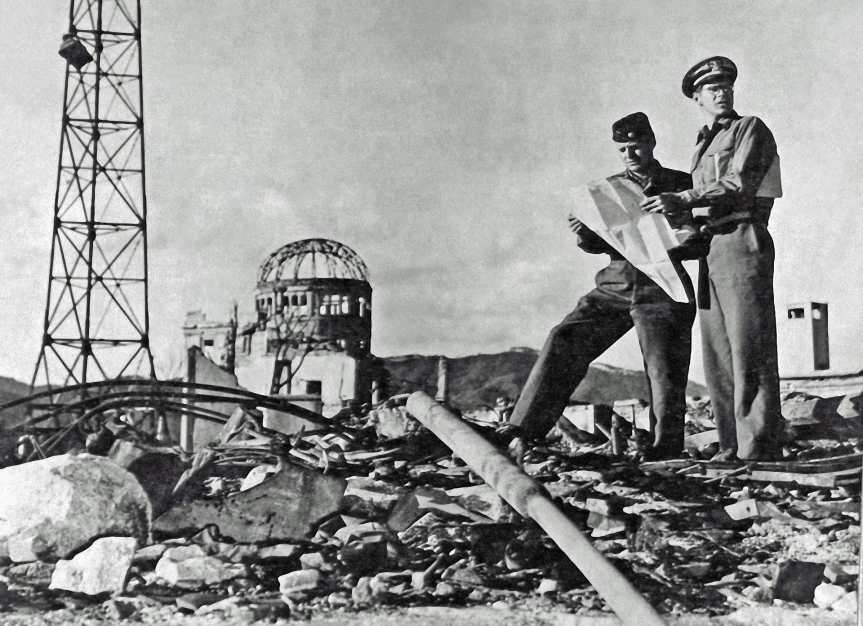
6th August 1945. Imperial Japan had refused to surrender even though all the other Axis powers had. Hitler and Mussolini were dead – the Second world war in Europe had come to an end as far as conflicts were concerned (A long age of a partitioned Germany and the Nuremberg trials would happen later). Roosevelt had overseen the construction of secret weapon and Truman, who came to power in the April of that year, ordered for its use.

Atomic Bomb Dropped on Hiroshima - HISTORY
Hiroshima was the first city in history to suffer a nuclear detonation.

The city of Hiroshima was bombed on the 6th of August 1945 – the first ever atomic bomb attack in human history. 3 days later, another Japanese city – Nagasaki was bombed with the nuclear weapon – forcing Japan to surrender unconditionally and bring the second world war to a decisive end in the favour of the Allied forces. But Truman and most Americans shall never know what it is to be bombed with the weapon. Hiroshima and Nagasaki mark the only instances of atomic bombing recorded. The Allied had failed to bring Japan to its knees and sought the Atom bomb as a quick and effective way. But this quick way, which was a joint plan by the US and its allies – as required by the Quebec Agreement killed a 150,000 people – a 120,000 of them being civilians in Hiroshima alone. And this might have been one of the deadliest attacks on a civilian city by any country involved in a conventional warfare – let alone the US that was trying top be the leader of human rights and civilian liberties.

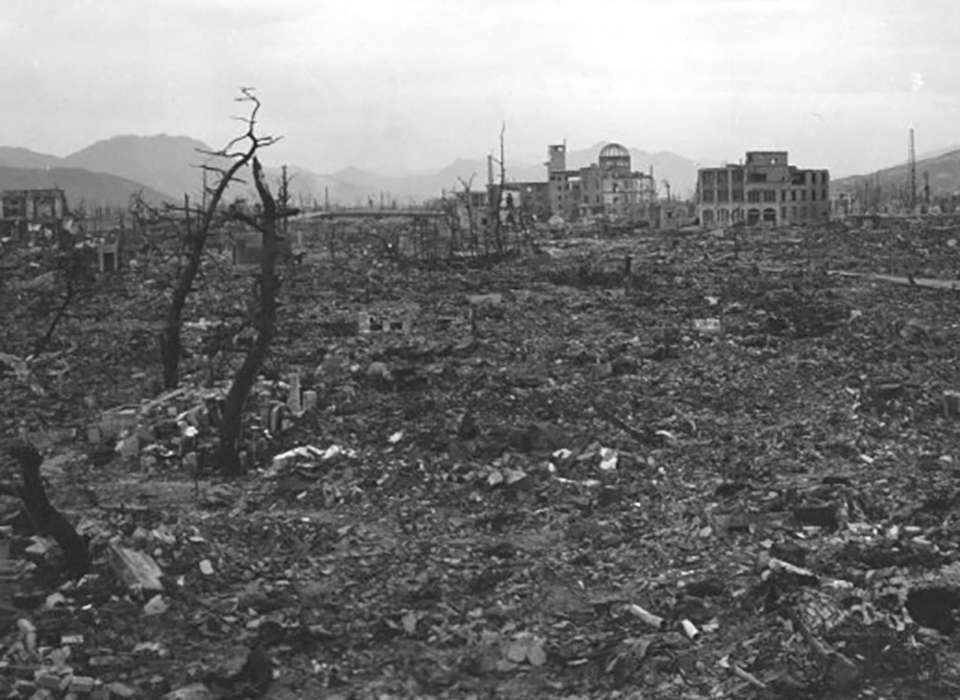
The Most Fearsome Sight: The Atomic Bombing of Hiroshima | The National  WWII Museum | New Orleans
A 120,000 people and 50sq km of area were eradicated in a matter of seconds.

To the Allies, the bomb meant an end to warfare and a sign of American supremacy for the next 5 decades. But to Japan, it meant deaths of 200,000 people in both cities and several decades of nuclear poisoning, radiation induced mutations and cancers that spanned several generations and in some families continue even today.

The University of Texas created a photobook to let the average American – who allegedly yields more pride than sympathy toward the incident – to know of the plight of a nuclear warfare. And people across the world – may it be Chinese, Indian, Pakistani, American, Russian, Israeli or North Korean(if they could read this) would agree that the rhetoric of a nuclear warfare is so blatant in these societies that a bunch of stupid people in the government can lead to a humanitarian and environmental crisis unprecedented in history.

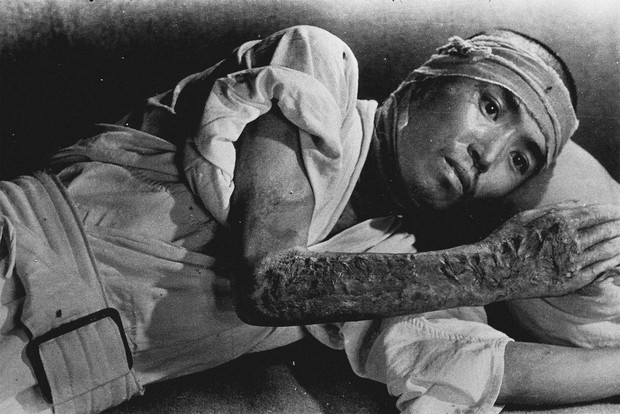
University of Texas photo book aims to show realities of Hiroshima,  Nagasaki blasts to US - The Mainichi
Raditation poisoning killed about 20,000 more people in the later months.

The Hiroshima Day is a reminder of the powers of nature that man has been able to harness and the fact that these powers mean only more responsible behaviour is needed in all of us.

Hiroshima Peace Memorial Park Hiroshima Tickets & Tours - Book Now
The Hiroshima Memorial Park stands as a testimony to those people who bore the brunt of war between two groups who sought nothing but a global supremacy in trade and diplomacy.

Taree zameen pr

REVIEW

Theme -Education 

Title of the movie-Tare zameen pr

Duration -120 minutes

Director -Amir khan & Amol Gupta

cast

Amir khan, Darsheel safary and girija oak

Protagonist

The movie is about a boy named as Ishan Awashti, who found the difficulties in writing and reading. He is a creative boy who had his own sight to understand the world. He is not good in academics. He always found the words running when he tried to read them.  The eight year old loved his family. His brother and mother are always support him but his father wants to prepare him for the race of life. The conception for protagonist in the society (school & home) is that he lazy, trouble maker and rebellious. No one try to find out the struggles of that boy. He always compared on the basis of academic. 

Attitude of parents  family member and friends

The attitude of parents towards their child is always loving and caring. In this movie, the mother of ishan   also loved him very much. She always supports him and help in studies. She cares about him day and night. His mother’s tried to help him and never judge him or compare him with siblings. 

Whereas his father, is always compare him with his sibling. He wanted his child to studies well and cope up with the world. when the school suggest him to out the ishan in some special school he get angry and decided to take out the enrolment of ishan from the current school and enrolled in him a boarding school. His father doesn’t want to accept that his son can have any such kind of problems.

The bonding of ishan and his brother youhan was really good. He always support and love him. He cares about his little brother and tried to engage him studies at his level.

Ishan have only one friend in boarding school, Rajan. He is the only person who found that ishan have a different perspective to understand the things. 

Attitude and role of teachers 

The attitude of teachers toward ishan was not good at all. They always ishan found as trouble maker and messy student. They don’t try to listens his side. According to them, he doesn’t want to learns the things and write them proper way. The teachers are follows traditional method of teaching. They consider the life as the race and school as the training campus. Being teachers they have a different perspective for differently abled children. They called ishan – a trouble maker and abnormal. This movie also focus that the teachers have a mindset that all the children with disabilities should be placed in special and isolation from other children.

Nikumbh (Amir) able to understand the problem of ishan and trying to create a special bond with him. He always tried to motivate ishan directly and indirectly. He found his own childhood in ishan and trying to help him. 

Educational implication

  • The movie shows the traditional method of teaching. In traditional teaching, the teacher decided what to make the read and learn to the student, even in arts class teacher asked them to draw what they have drawn on blackboard.
  •  In traditional teaching, the students consider as the blank board. But need to the student also matters in teaching. What we teach is not enough, what they understand is important.
  • The teacher should have patience and try to find the reason behind the action of students.
  • It is responsibility of a teacher to calm the every curiosity of students.
  • There should be spread the awareness about the inclusive education.
  • The school should involve the parents in educational activities.
  • The teacher should help the children if they found something wrong with the children.
  • There should be a healthy competition in school.
  • The child should not be judges on their academics.
  • The school should try to boast up the self -esteem of students.

Reflection 

‘Tare zameen pr this movie is about the needs of children and methods of teaching in the school. The movie is focus over the methods of teaching in school. While watching the movie I found that the tradition method of teaching focuses on academic more than overall development whereas the modern method of teaching focuses over the participants of students and make them understand the concept behind the topic. 

The movie shows the two types of teachers, one who have willing to understand children and wants to help them not only academics levels but also emotional and personal problems. This is the time when the teachers, parents and society have to understand that only academics can’t help the children but the overall development of child is important.

The movie focuses on inclusion of the education. The perspective of seen the children with the disabilities is really pathetic. More us we see them as the good for thing which shows that are only qualified not educated. Inclusive education gives the opportunity to other children for making positive approach for the children with disabilities. We have to understand the children with disabilities are not different from us, they are just differently abled they don’t need our sympathy, what they need is just a positive and better environment where they can learn, read and write.

……………………

HOW TO IMPROVE WRITING SKILLS?

Writing is an art and not everybody could become an expert without practice. Maybe, everyone can write generally like blogging and things. But professional writing needs certain steps to be followed and practiced. It is not an inborn quality for anyone, it lies in the person’s interest to learn and master it. To stand unique from others and gain appreciation, the person should have a passion for writing from the heart. Here are few steps one could take and follow while writing.

  • HAVE THE HABIT OF READING

Read articles, blogs, and other kinds of stuff as much as you can. The more you read the more you get the ideas and intuitions to write properly. You will also get some inputs before writing. You can notice that it is easier to write after gaining inputs. Reading also helps to improve your vocabulary. One can start the practice of reading from the newspaper. When you read the newspaper, you could get to know at least 5 new words every day. 

  • BRUSH UP YOUR BASICS

Before starting to write, revise the rules in English grammar and writing. Although you don’t need to complete a course on grammar, the basics are required. Build a strong basement with the basics of spelling and grammar. Grammar is very important while writing although it is not paid attention to while speaking.

  • RESEARCH WELL

Ensure you have made the necessary research on the topic. Reach out to the available resources of that topic, make a thorough study and note the key points that are required. This will make you more knowledgeable and you could write easily with a flow. Unless you know more about a topic, you couldn’t expand your ideas and write well.

  • PRACTICE WRITING

To improve your writing, do as much practice as you can. It is the only helper to mould you in the right shape. Learn to frame paragraphs and sentences. Try to bring a coherent sequence of sentences. When you write never doubt yourself or your skills. Don’t do it as a practice, think of it as your job and give your best every time you write. Take up workshops and internships until you feel confident and have become a passionate writer.

  • REVIEW AND EDIT

When you are writing, always start with the rough draft. Read what you have written and make the required changes to make it a better one. Check for spellings and grammatical errors. Edit the rough draft, remove unnecessary words, proofread and frame a fair copy. Try to deliver the content with simple words so that anyone who reads could understand it. Finally, check for plagiarism from the available online tools. This is essential to ensure that your work is not copied from other sources and is unique.

  • HAVE SOMEONE TO READ WHAT YOU’VE WRITTEN

Try to have a person by your side to read, guide, and organize you. The person may be your teacher, colleague, friend, or anyone with enough knowledge in grammar and the language to suggest and give a true opinion on your work. 

These are some of the tips to become a better writer. Nothing comes without effort and so as any language. “Practice makes a man perfect” – so practice more and become a perfect writer. Start simple, make gradual increments and then master the art. Happy learning😊.

Rani Lakshmi Bai- an epitome of bravery and courage.

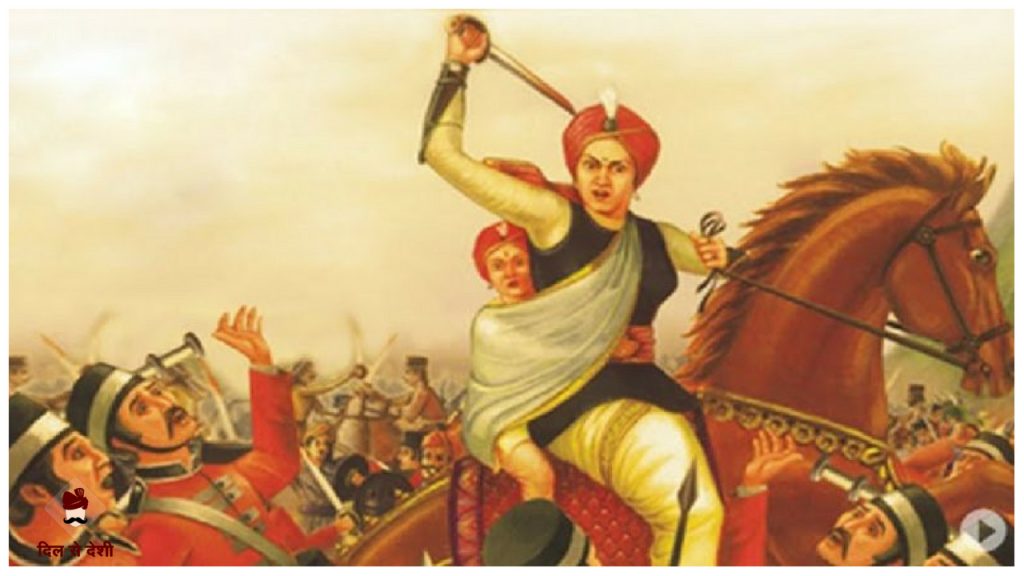
Rani Lakshmi Bai was the queen of the princely state of Jhansi, which is located on the northern side of India in UP. She was one of the leading personalities of the first war of Independence that started in 1857. The name of Rani Lakshmi Bai will be immortal in the history of India. She was considered as the heroine of India’s war of Independence. Her struggle against the British is legendry. She was a true patriot and full of self-respect. She was born on the 19th of November 1835 in the town of Bithur. Her parents were Moropanth and Bhagirathibai. Manikarnika or Manu as she was named at birth, lost her mother at the age of four, Manu was brought up by her father. With education, she also learned skills like sword fighting, horse riding, and using a gun.

  She was married to Gangadhar Rao, the king of Jhansi at the tender age of eight. Thus, she became the Rani of Jhansi. Jhansi is now the district in Uttar Pradesh. There was a treaty between the British and the Raja of Jhansi. One being that if the British needed any help then Jhansi would help them and the other being that the British decide who would be the ruler of Jhansi. On 21st November 1853, Lakshmi’s husband and the only son died. During that period, Lord Dalhousie was the Governor-General of British India. The adopted child was named Damodar Rao. As per the Hindu tradition, he was their legal heir. However, the British rulers refused to accept him as the legal heir. As per the Doctrine of Lapse, Lord Dalhousie decided to seize the state of Jhansi.

  Rani Lakshmi Bai went to a British lawyer and consulted him. Thereafter, she filed an appeal for the hearing of her case in London. But, her plea was rejected. The British authorities confiscated the state jewels. Also, an order was passed asking the Rani to leave the Jhansi fort and move to the Rani Mahal in Jhansi. Lakshmi Bai was firm about protecting the state of Jhansi. Jhansi became the focal point of the uprising. Rani of Jhansi began to strengthen her position. By seeking the support of others, she formed a volunteer army. The army not just consisted of the menfolk, but the women were also actively involved. Women were also given military training to fight the battle. In the revolt, Rani Lakshmi Bai was accompanied by her generals.

  Rani Lakshmi Bai prepared herself well for this fight for freedom. She used to set out on horseback, attired like a man with a metal helmet with a flowing turban, a protective plate bound to the chest, pyjamas, and a sash over them. With weapons like pistols and daggers, Rani was now ready for battle against the British. From the period between Sep-Oct 1857, Rani defended Jhansi from being invaded by the armies of the neighboring rajas of Orchha and Datia. In January 1858, the British army headed its way towards Jhansi. The conflict went for two weeks. Finally, the Britishers succeeded in the annexation of the city. However, rani Lakshmi Bai managed to escape along with her son, in the guise of a man.

   She took refuge in Kalpi. She then attacked the Gwalior fort and the Raja later surrendered. The British army then attacked the fort of Gwalior. Rani and her army fought courageously but got defeated. Rani Lakshmi Bai sustained many injuries. She died on 17th June. It is believed that when she was lying unconscious on the battlefield, a Pandit found her and brought her to an ashram, where she died. For her immense effort, she is referred to as the ‘Icon of Indian Nationalist Movement’. Her story became a beacon for the upcoming generations of freedom fighters.

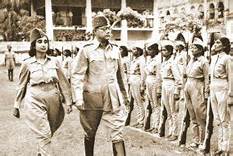
   A lot of literature has been written on the life history of Rani Lakshmi Bai of Jhansi. Heroic poems have been composed in her honor. Rani Lakshmi Bai became a national heroine and is a perfect example of female bravery. When the Indian National Army formed its first female unit, it named the Unit after her. Indian poetess Subhadra Kumari Chauhan wrote a poem in the Veer Ras style about her, while is still recited by children in schools all over India. The Rani of Jhansi was immortalized in bronze statues both at Jhansi and Gwalior.

‘Rani of Jhansi Regiment’ (of Indian National Army)

Divorce by Mutual Consent

Although it is believed that relationships are created in heaven, these heavenly ties do not always continue forever. Divorce is now seen casually, and individuals utilize it as a first choice, despite the fact that the law intended it to be a last resort. Many times, the partners in a marriage can no longer stand one other and cannot live peacefully together. In such situations, the couple may choose to divorce mutually. Mutual divorce occurs when both husband and wife mutually agree that they can no longer live together and decide to dissolve their marriage.

Essential Conditions of Mutual Divorce

  • Parties must be living separately – In order to dissolve a marriage by mutual divorce, the parties must have been living apart for at least one year prior to submitting the divorce petition. Living apart does not imply living in different locations. Living under the same roof as a couple but without sharing the bond of husband and wife qualifies the required requirement of living apart.
  • Parties are unable to live together – There are a variety of scenarios in which a couple is unable to live together despite mediation, reconciliation, and numerous efforts. In such a case, the couple can divorce by mutual consent. Following the filing of the petition, the parties are allowed a six-month cooling period, which can be extended to eighteen months. Both parties must ponder and examine their options during this period. If the parties are still unable to live together, the district judge should issue a divorce order.
  • Parties have mutually consented to end the marriage– In order to dissolve the marriage by a mutual divorce, both parties must have agreed to do so. The divorce petition is submitted jointly by both parties in the case of mutual divorce. The parties have the right to withdraw the petition at any moment. The petition appears to be withdrawable at the request of one of the parties within six months of the petition’s filing date. When a joint motion is adopted by the parties after the expiry of six months but before the expiration of eighteen months from the date of presentation of the petition for inquiry, the individual right of a party to withdraw the petition seems to be barred.
  • Parties must file for divorce jointly and without undue influence, fraud, or corruption– Both parties must have consented willingly and without pressure from the other parties to file for divorce. If neither partner is willing to file for amicable divorce, the party seeking divorce may do so using the grounds specified in Section 13 of the Hindu Marriage Act.

Advantages of Mutual Divorce

  • A divorce by mutual consent minimizes needless confrontations, saving both spouses time and money.
  • Maintenance and custody of the kid can be readily arranged by the parties amicably before the marriage is dissolved.
  • In this divorce, the court legalizes and agrees to all that the couple has talked and chosen.
  • Under this, the spouses need not explain the reason for divorce before the court of law. 
  • It does not lead to any confusion or chaos between the parties regarding how the assets and liabilities will be divided between the couple.
  • If the divorce takes place amicably without any conflict the couple can continue to be friends rather than sworn enemies.

Procedure for Mutual Divorce

To get a divorce by mutual consent, one must follow several steps. In India, the process of mutual divorce usually begins with the filing of a petition under Section 13B of the Hindu Marriage Act. Two motions are also involved in this procedure. Following are the important steps:

  • Filing a Joint Petition– The first step is to file a joint petition in the relevant family court. This joint petition must be signed by both parties. Both parties sign a joint declaration in the divorce petition declaring that they can no longer live together due to fundamental disputes and should be granted a divorce. This declaration also includes a distribution agreement, parental rights, and other details.
  • The appearance of both the parties in Court– The second step involved is the appearance of both the parties before the competent court before which the petition is filed. The court fixes the date and on this date, parties are asked to present before the court with their counsels. 
  • Court review of the petition– The court will review the petition as well as the papers filed by both parties. When the court is satisfied, it records both parties’ statements. In some situations, the court will attempt to mediate a resolution between the parties. When the parties are unable to reconcile, the divorce process begins.
  • Recording of the statement and adoption of the order on the First Motion– When both parties’ statements are recorded, the court issues the first motion order. Previously, the parties were allowed six months to reconcile. This six-month period can be extended to eighteen months, after which a second motion can be submitted. This is no longer a required requirement. In the case of Amardeep Singh v. Harveen Kaur, the Supreme Court waived the six-month cooling period if it was believed that both parties were committed to the divorce, there was no possibility of cohabitation between an estranged couple, and no alimony, child custody, or property issues were raised.
  • Appearing for Second motion– If neither party agrees to come together after six months from the first motion or by the conclusion of the reconciliation period, the parties may appear for the second move for the final hearing. This also entails the parties appearing in court and making remarks that are recorded. Both parties present their cases at the final hearing, and the court records their statements under oath in the family court.
  • The Court’s decision– The most essential condition for a divorce by mutual consent is the free consent of both parties. In other words, unless there is total agreement between the husband and wife for the dissolution of the marriage and the court is satisfied, the court cannot grant a decree of divorce by mutual consent. Based on the parties’ declarations as well as the facts and circumstances of the case, the court makes the proper judgments and dissolves the marriage. The divorce is then finalized when the court issues a divorce decree.

Conclusion

Divorce is a painful issue that should only be used as a last resort; nevertheless, many people nowadays do not hesitate to divorce. It causes family disintegration, and the kid of a divorced marriage suffers substantial stress as a result of growing up with split parents. The best way to divorce is by mutual consent since the parties do not have to publicly embarrass each other in court and may resolve any issues and dissolve their marriage willingly. From the time of filing until the finalization of the divorce judgement, the total mutual consent divorce procedure might take anywhere from 6 months to 1-1.5 years.

BASKETBALL

Basketball is a team sport in which two teams, most commonly of five players each, opposing one another on a rectangular court, compete with the primary objective of shooting a basketball (approximately 9.4 inches (24 cm in diameter) through the defender’s hoop a basket 18 inches (46 cm) in diameter mounted 10 feet (3.048 m) high to a backboard at each end of the court) while preventing the opposing team from shooting through their own hoop. A field goal is worth two points, unless made from behind the three-point line, when it is worth three. After a foul, timed play stops and the player fouled or designated to shoot a technical foul is given one, two or three one-point free throws. The team with the most points at the end of the game wins, but if regulation play expires with the score tied, an additional period of play (overtime) is mandated.

The five players on each side fall into five playing positions. The tallest player is usually the center, the second-tallest and strongest is the power forward, a slightly shorter but more agile player is the small forward, and the shortest players or the best ball handlers are the shooting guard and the point guard, who implements the coach’s game plan by managing the execution of offensive and defensive plays (player positioning). Informally, players may play three-on-three, two-on-two, and one-on-one.

In December 1891, James Naismith, a Canadian professor of physical education and instructor at the International Young Men’s Christian Association Training School (now Springfield College) in Springfield, Massachusetts, was trying to keep his gym class active on a rainy day. He sought a vigorous indoor game to keep his students occupied and at proper levels of fitness during the long New England winters. After rejecting other ideas as either too rough or poorly suited to walled-in gymnasiums, he invented a new game in which players would pass a ball to teammates and try to score points by tossing the ball into a basket mounted on a wall.

Basketball was originally played with a soccer ball. These round balls from “association football” were made, at the time, with a set of laces to close off the hole needed for inserting the inflatable bladder after the other sewn-together segments of the ball’s cover had been flipped outside-in. These laces could cause bounce passes and dribbling to be unpredictable. Eventually a lace-free ball construction method was invented, and this change to the game was endorsed by Naismith. The first balls made specifically for basketball were brown, and it was only in the late 1950s that Tony Hinkle, searching for a ball that would be more visible to players and spectators alike, introduced the orange ball that is now in common use.

HOW DDMP: 2041 ADDRESS THE ISSUE OF POLLUTION

Master Plan is a dynamic long term planning document which kays down guidelines for regulating and guiding the future growth and development of cities. Master Plan provides actions and strategies for meeting the social and economic needs of the current and future population. It includes analysis, recommendations, economy, housing, transportation etc. depending on the social, economic and environmental conditions of the are The purpose of a Master Plan is to promote growth and guide and regulate present and future development of towns and cities with a perspective of 20-25 years. It is an instrument to work out land and infrastructure requirements for various urban and rural uses, and allocate land for various uses to result in harmonious and sustainable distribution of activities. The plan guides the physical development of the community with the help of its long-term planning visions. This provides long ranged, comprehensive strategies which consists of all functions and make the community function.

DRAFT DELHI MASTER PLAN (DDMP)

The Master Plan of Delhi is the key instrument that facilitate and regulate Delhi’s development by assessing and analyzing the present condition and will guide how sustainable and balanced development can be achieved. The apex body of the master plan is the Delhi Development Authority and the implementation of this plan is the collective responsibility of all agencies involved in the development of Delhi.

The Draft Delhi Master Plan (DDMP)- 2041. focuses to take measures for reducing the tackling the air, water and noise pollution level in the city with the help of measures, such as ‘refuge points and self-sustained isolated residential areas to deal with the challenges of pandemic. Greener environment, Yamuna cleaning, economy focusing on areas such as IT, service sector and hospitality, enhanced mobility promoting cleaner fuels, addressing housing needs of the poor, and rejuvenation of the heritage fabric of the city are among the key features of the draft Master Plan of Delhi 2041.

DDMP aim to address issues of pollution

  1. Strategies to address Vehicle Pollution: The key strategies for achieving this include:  adoption of mix-use transit-oriented development (TOD), migration to greener fuels for public transport. The main aim of mix-use and transit-oriented development (TOD) is the reduction in average trip length and bringing jobs and homes closer to transit networks. With the help of using clean fuels the plan tries to encourage clean travel and green mobility by “improving pedestrian, cycling and EV infrastructure”.
  2. Strategies for Improvement of Water Quality: The improvement of water quality in the Yamuna and various natural drains, lakes and baolis by assigning different agencies with specific tasks, such as checking the outfall of untreated wastewater from surrounding developments.
  3. Strategies for large housing requirements: The plan tries to meet the future housing requirements through large scale greenfield development using “the land pooling method”.
  4. Strategies for low density housing requirements: The DMP tries to address the development of low density and low floor area ratio (FAR) residential areas within Green Development Area. It will also focus on regeneration of existing areas through “improvement of existing stock and creation of new units”.
  5. The second volume contains “Spatial Development Strategy and Action Plan” which highlighted major strategies and provisions covering both green field and brown field development in the city.

“ROBERT BRUCE” Biography

“Robert Bruce” was a warrier and King of Scotland. He was born on 11 July, 1274 in Turnberry Castle, Ayrshire. His father’s name was Robert de Brus and mother’s name was Marjorie, Countess of Carrick. Robert was born into an aristocratic Scottish family. His father was the 6 th Annandale. Robert Bruce would most probably have become trilingual at an early age. In early 1296 Robert married his first wife Isabella of map juice also married Elizabeth. By Elizabeth he had four children David II, John, Matilda and Margaret.

England was at war with Scotland the king of England wanted to capture Scotland and make it a part of England Robert the Bruce had a small Army of Scottish soldiers. They fought 6 battles with England but lost each time. The English Army was much bigger with more resources with them and stronger than Scottish Soldier when King Bruce and his Army lost the 6 th battle they where driven out of their own country the entire Army of Scotland got scattered. The king became a refuge in his own country he had to hide in the forests and caves. Because if the English Army caught him he would be imprisoned. One day when he was lying down on the Rocky bed of a cave hungry and tried, he noticed a spider getting ready to spin a web he watched her fascinated as she worked slowly and with great care. She tried but failed but she did not lose hope and tried again six times she tried and six times she failed King Bruce was amazed. This tiny creature kept on trying again and again Robert find a lot of similarity between the spider and him he also tried to fight the English Army six times and feel just like the spider. Robert the Bruce carefully watched the spider try for the seventh time. If forgot about his own trouble and follow the spider the spider held hair thread and managed to reach the other end of the cave and succeed in the seventh attempt. King Bruce was filled with new hope and courage and thought to himself let me try one more time I just might win Robert the Bruce that that his captured on me together and told just story of the spider to gave them new hope with inspiration. Robert Bruce gathered his scattered army together and told the story of the spider to gave the new hope with inspiration he again built and Army of brave scotsman. A servant battle was found and they managed to defeat the English army in June 1314. The king of England was forced to go back to his own country England finally recognised Scotland as an independent country Robert the Bruce became crowned king of Scott on 25 March 1306. Robert died on 7 June,1329, at the Manor of Cardross, near Dumbarton, at the age of 54.

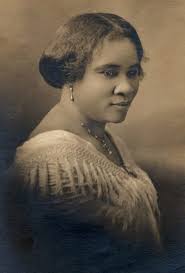
“MADAM C. J. WALKER” Biography

Madam C. J. Walker nickname was Breedlove. She was an entrepreneur she was born in Delta, louisiana, the United States on December 23, 1867. Her father’s name was Owen Breedlove and Mother’s name was Minerva Breedlove. Her family members were slaves. She had five siblings.

In 1872 her mother died possibly from cholera her father remarried but he died within a few years at the age of 7 she was orphaned. She moved to Vicksburg, Mississippi, at the age of ten and worked as a domestic. She lived with her older sister, Louvenia and brother-in-law, Jesse Powell. She went on to work with an entrepreneur named Annie Turnbo Malone and sold hair care products on behalf of the business women. Her knowledge of hair care products helped Sarah turn into a beautician hair dresser and a retailer who earned profits through the sales of cosmetic creams. She soon started employing many female agents to create awareness of the culture of enhancing beauty. In 1908 she set up an institution named “Lelia college” in a bid to groom the salesperson into hair culturist. He then relocated to the city of Indianapolis years later and initiated various business establishment related to hair care which included a beauty school and salon. During the year 1917 this business women organised an annual meet of Madame Walker Beauty culturists in tha city of Philadelphia. This event was one of the first of its kind in the United states during its time in 1917 she even initiated the “Walker Hair culturists” Union of America which was the first ever convention at that time which was exclusively aimed at encouraging women to venture into commerce the idea of starting a beauty product hit Walker after she lost her hair and faced scalp problem due to washing herself with water which was contaminated with chemicals like “Lye”. She was barred 14 years old she entered the wedlock with a man named Moses MC Williams. The couple had a baby girl who was named A’ Lelia. Her husband died when Sarah was hardly twenty years old. In January 1906, She married Charles Joseph Walker. Sarah adopted the name Madame C. J Walker only after she married Charles. She died in Irvington-on-Hudson, New York, United States on May 25, 1919, at the age of 51. “IF I HAVE ACCOMPLISHED ANYTHING IN LIFE IT IS BECAUSE I HAVE BEEN WILLING TO WORK HARD”.