Psychological Disorders Part 2

Introduction

In Psychological Disorders Part 1, Neurodevelopmental and Bipolar Disorders were discussed. The DSM (Diagnostic and Statistical Manual of Mental Disorders) contains a huge range of disorders which will be explained in a series of articles. This article discusses Anxiety and Stress-related disorders.

Anxiety Disorders

These disorders are characterized by persistent and extreme fear and worry. Fear is a response to a threat and anxiety is the anticipation of a threat in the future. There are various types of anxiety disorders which are explained further. Generalized Anxiety Disorder (GAD) involves extreme levels of worry about daily events, so much so that it interferes with the person’s daily functioning.
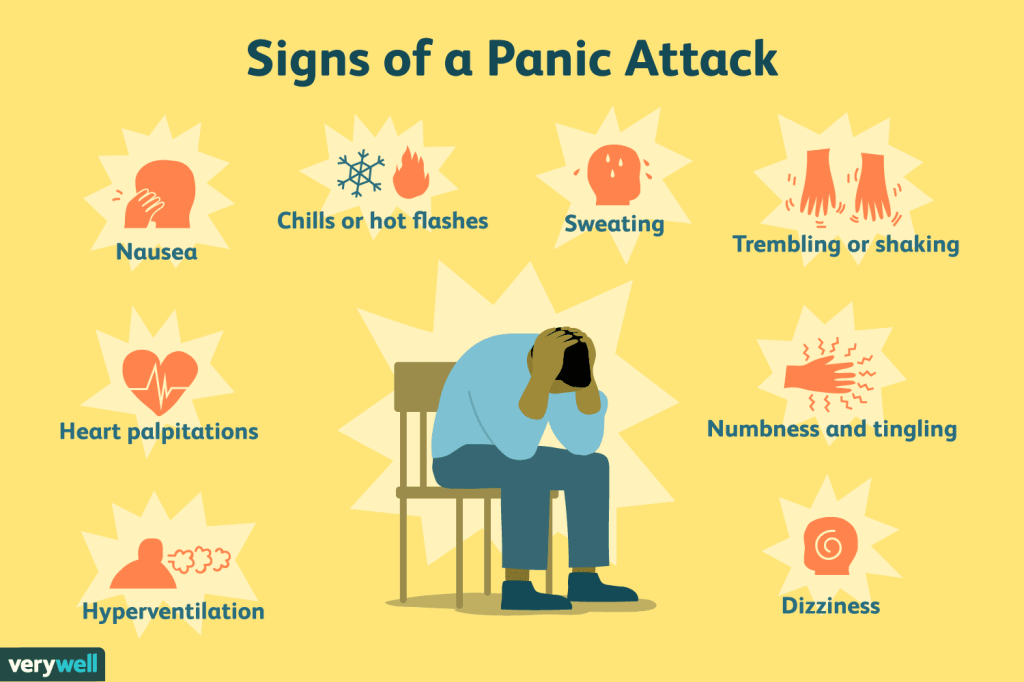
Panic Disorder involves having panic attacks in certain situations and so people start avoiding the situations which trigger a panic attack. A panic attack is a sudden episode of intense fear which brings symptoms like a sense of impending doom, rapid heart rate, sweating, shaking, chills, hot flashes, nausea, chest pain, headache, dizziness, and numbness.
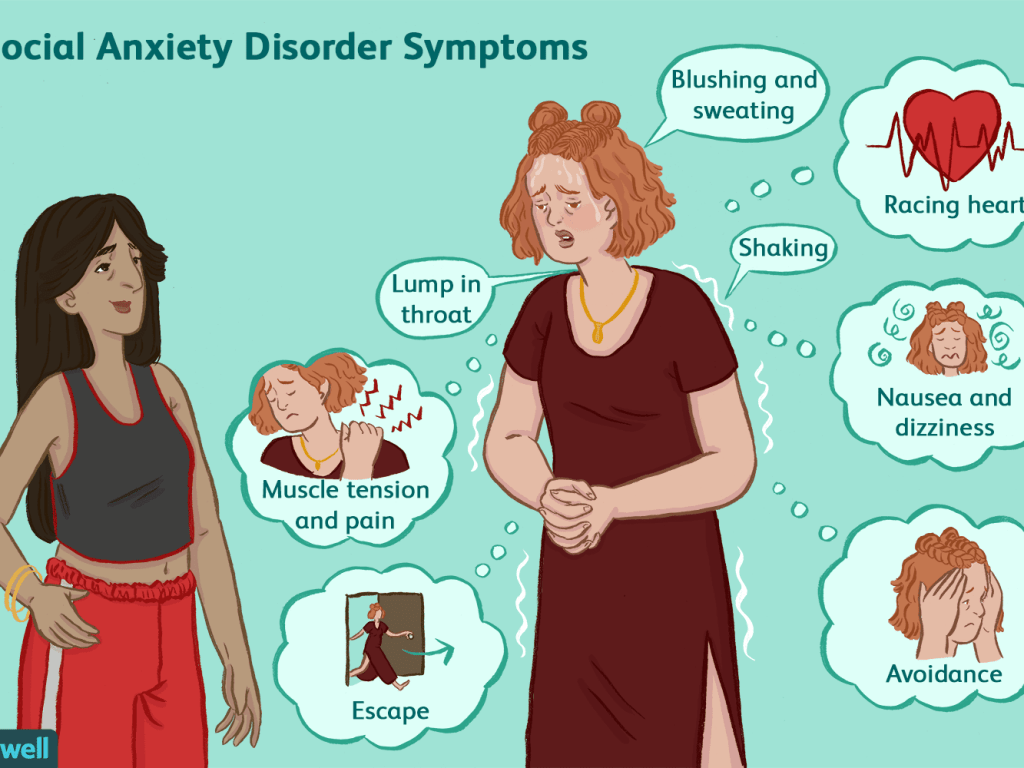
Social Anxiety Disorder involves an irrational fear of being judged or watched. This is a very common disorder and it interferes with functioning at school, work, and other social settings. For example, a person can have a fear of going to a party because of the fear of being judged by everyone.
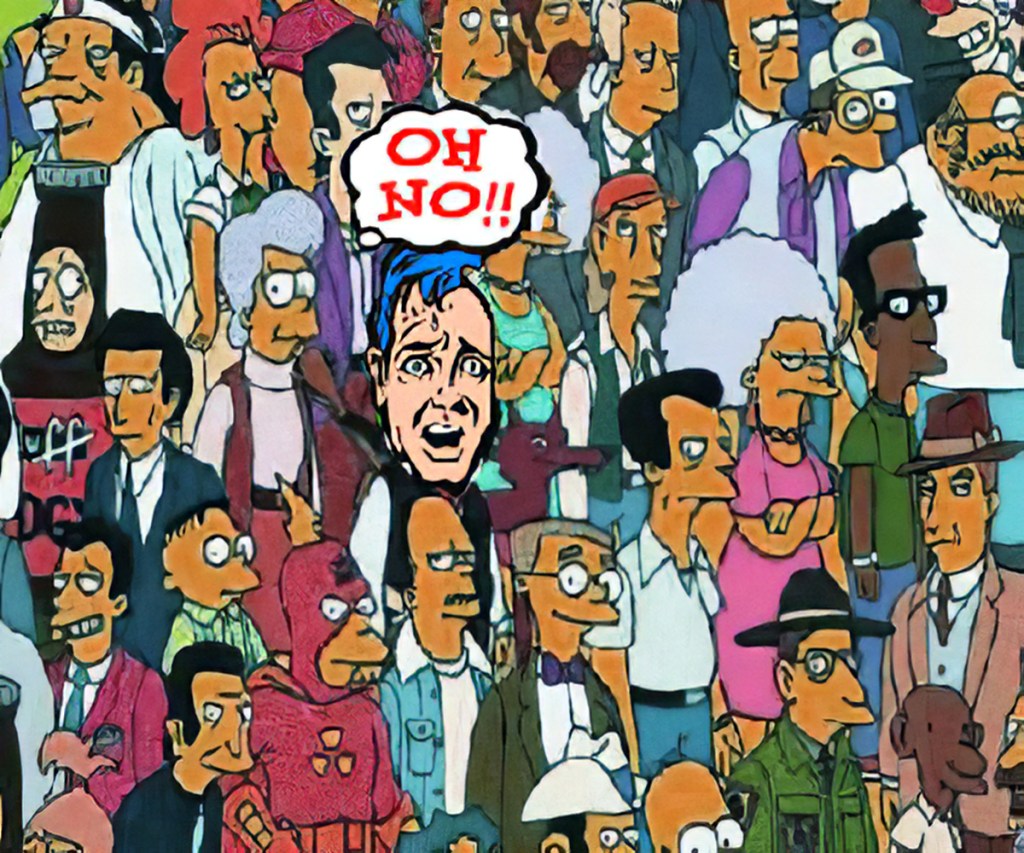
Agoraphobia involves a fear of public places, that is that the people with this disorder have a fear of anticipating a panic attack in a place where they cannot escape or deal with it.

Specific Phobias involves an extreme fear of a specific object or a situation, such as fear of insects, animals, height. When people are confronted by their phobic object, they experience trembling, nausea, and rapid heart rate. These phobias usually arise from a bad associating event they have had before in their life.
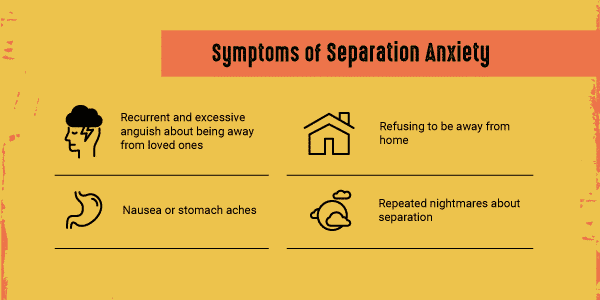
Separation Anxiety Disorder involves a high level of fear of being separated from things and the people they are attached to. This is most common in the case of young children having the fear of being away from their parents but it also exists for adults.

Stress-Related Disorders

These previously used to be grouped with anxiety disorders but are now considered a separate category. These disorders usually arise because of trauma or stress-inducing event. Acute Stress Disorder involves severe anxiety for almost a month after a traumatic event, such as accidents or the death of a loved one. This can result in the person experiencing dissociative symptoms like inability to remember important parts of the event, flashbacks, and difficulty in experiencing positive emotions.
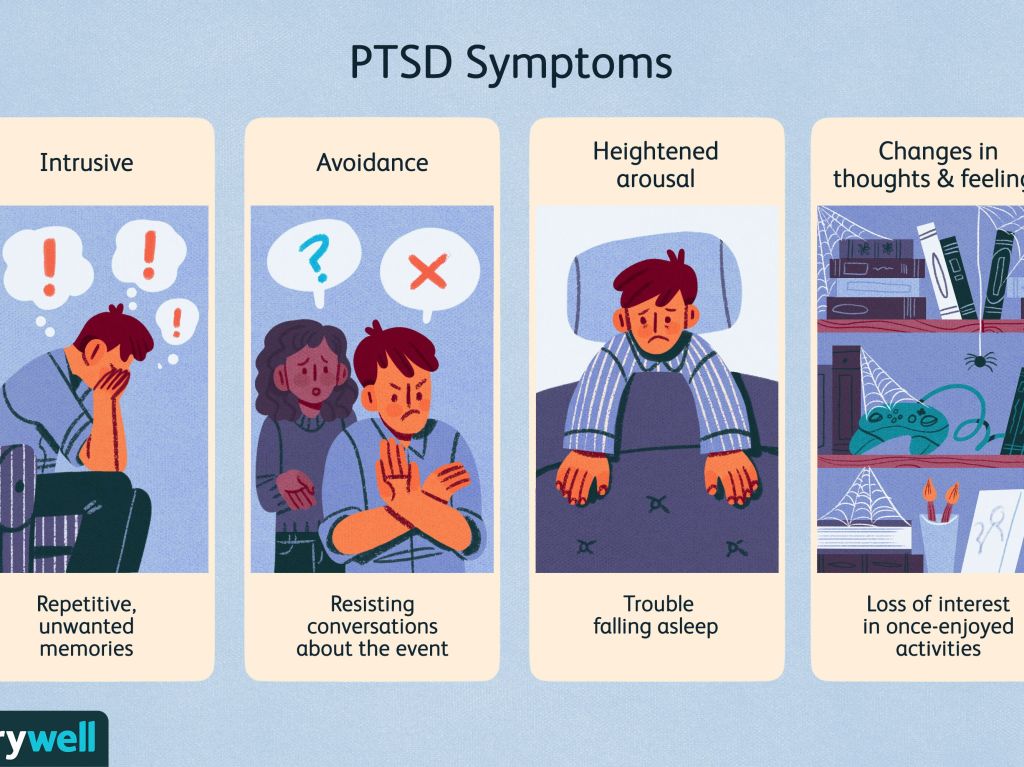
Post-Traumatic Stress Disorder (PTSD) can arise after a person has gone through a very traumatic event. This disorder includes symptoms such as reliving the event, feeling on edge, having negative thoughts, avoiding things that remind them of the event, nightmares, bursts of anger, and difficulty in concentrating.

Adjustment Disorders can arise because of a sudden change in life like losing a job, a break-up, shifting from one state to another. This disorder can bring symptoms like anxiety, worry, hopelessness, feeling of isolation, depressed mood.

Reactive Attachment Disorder forms when children in their early years of childhood fail to form a healthy relationship with their adult caregiver which later on results in being withdrawn from these caregivers, and they might also face social and emotional disturbance.

Conclusion

Some people keep claiming they have anxiety when they are just suffering from fear, same with the use of PTSD. It is important to not self-diagnose yourself as you might not be qualified to do so and it is wrong to claim to have disorders when you don’t as it creates a negative environment for people who are actually suffering from these disorders. It is important to consult a psychologist if you face any of the symptoms you think might point to anxiety or stress-related disorder as there are therapies to deal with it.

References

Note: this is the Part 2 of the Psychological Disorders series.
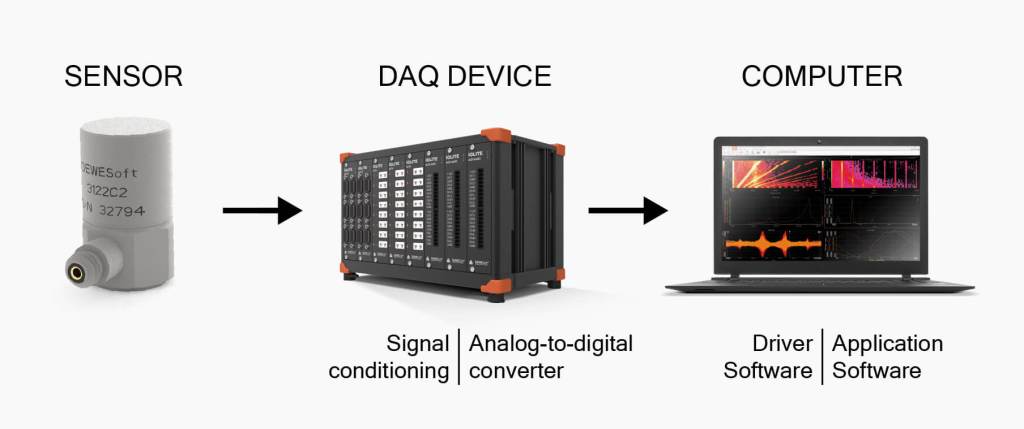
Signal Conversion In Computer Networks – In Short

1) Analog to Digital conversion

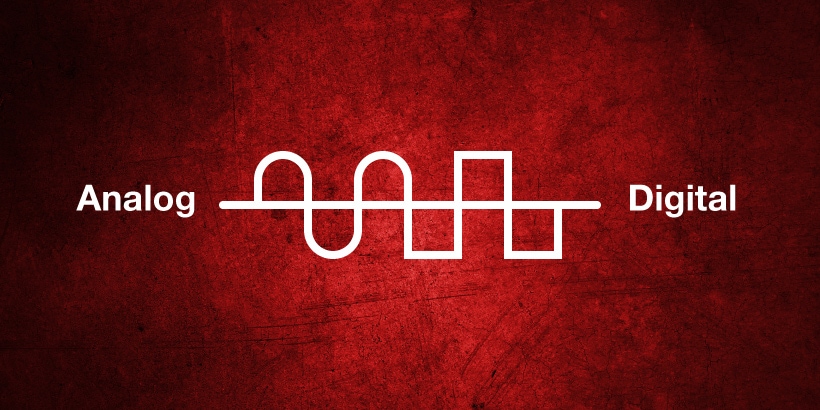
-It is an electronic process in which a continuously variable (analog) signal is changed,
without altering its essential content, into a multi-level (digital) signal.

-The input to an analog-to-digital converter (ADC) consists of a voltage that varies
among a theoretically infinite number of values.

-Examples are sine waves, the wave forms representing human speech, and the signals
from a conventional television camera.

-The output of the ADC, in contrast, has defined levels or states.

-The number of states is almost always a power of two – that is, 2, 4, 8, 16, etc.

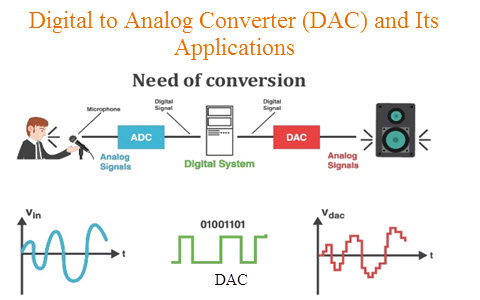
2) Digital to Analog Conversion

-In this conversion technique, the amplitude of analog carrier signal is modified to
reflect binary data.

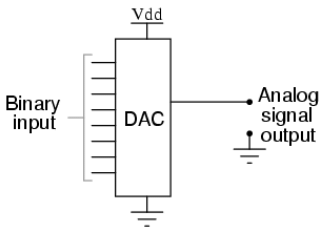
-A Digital to Analog Converter, or DAC, is an electronic device that converts a
digital code to an analog signal such as a voltage, current, or electric charge.

-Signals can easily be stored and transmitted in digital form; a DAC is used for the
signal to be recognized by human senses or non-digital systems.

Things to do in your 20s

Photo by Helena Lopes on Pexels.com

This is the time when you start becoming more independent and truly begin the journey of self- discovery. A time for many big decisions and experiences and certainly is one of the most important phases of your life. Here are few things that one must learn to make the most of this period in life

LEARN FINANCES

Financial education is one of the most important subjects but yet ignored by many young adults. The sooner you start saving, investing and managing, the sooner you will learn and see the results. Since you are young, you don’t really have much to lose, this will help you practice without lasting consequences and will give you a leg up in regards to your peers and provides you with experience. So start planning for the future.

MAKE MISTAKES

Do not fear making mistakes, take the risk, take the chance. Our mistakes are what helps us grow and learn. So, for your 20s, embrace the idea that you will make mistakes and lots of them! But always learn the lesson that it has taught you, or else it would be an effort in vain. These lessons must be the push on your journey towards a better self.

LEARN HEALTHY HABITS

In 20s, health is at its peak, so this creates an illusion for many young adults that they can eat junk and drink anything for pleasure, but these choices have severe long-term consequences on body. So, this time of your life is a good opportunity to establish life-long healthy habits.

Consider your diet, learn to cook, and find a way of exercising that works best for you. Starting early on to build a healthy foundation is likely to improve your well-being significantly and will be one of the best investments for future.

TRAVEL

Even if you are short on your budget, travel your city and neighboring towns, because traveling can add value to your life. When you travel, you learn how to adapt to new situations, it takes you out of our comfort zone and allows you to test yourself. You learn to live with people, often without a common cultural ground or language. It gives a new perspective about life and boosts confidence.

HOW TO FILE A PATENT IN INDIA?

If any one have created or invented a process, product or service that can be defined as an original invention, then it is important to get it patented because it helps to safeguard ones invention.  It can protect any product, design or process that meets certain specifications according to its originality, practicality, suitability, and utility.  In most cases, a patent can protect an invention for up to 20 years. This time period starts soon as you file your patent.  The first and foremost thing that a person must do for getting a patent is to file a formal application of Patent at patent office. 

However, patent registrations are not applicable for all inventions because the invention should satisfy specific criteria to obtain a patent in India. So, let us know about who can file a patent and what types of inventions get patented in a clear way.

WHO CAN FILE FOR A PATENT ?

A patent registration application for an invention can be made by the people either alone or jointly. Most of the patents were applied by the true inventor or the assignee of first inventor and sometimes it can also be applied by the representative of the deceased true and first inventor assignee. In the case of a proprietorship firm, the application should be made in the proprietors’ name and if it is a partnership firm, then the names of all personally responsible partners must be included in the patent application. Most importantly the applicant is required to disclose the name, address, and nationality of the true and first inventor.

WHAT CAN BE PATENTED?

The Patent Act states that for an invention to be patentable, the invention must be a new product or process that involves an inventive step and can be used in the industry. For an invention to obtain patent registration, it should be technical and the invention should possess utility so that it can be used either in industry or market. The invention must possess novelty i.e the specified invention should not published in India or elsewhere priorly. These all should be cross checked before filing the patent application in India.

PATENT APPLICATION PROCEDURE:

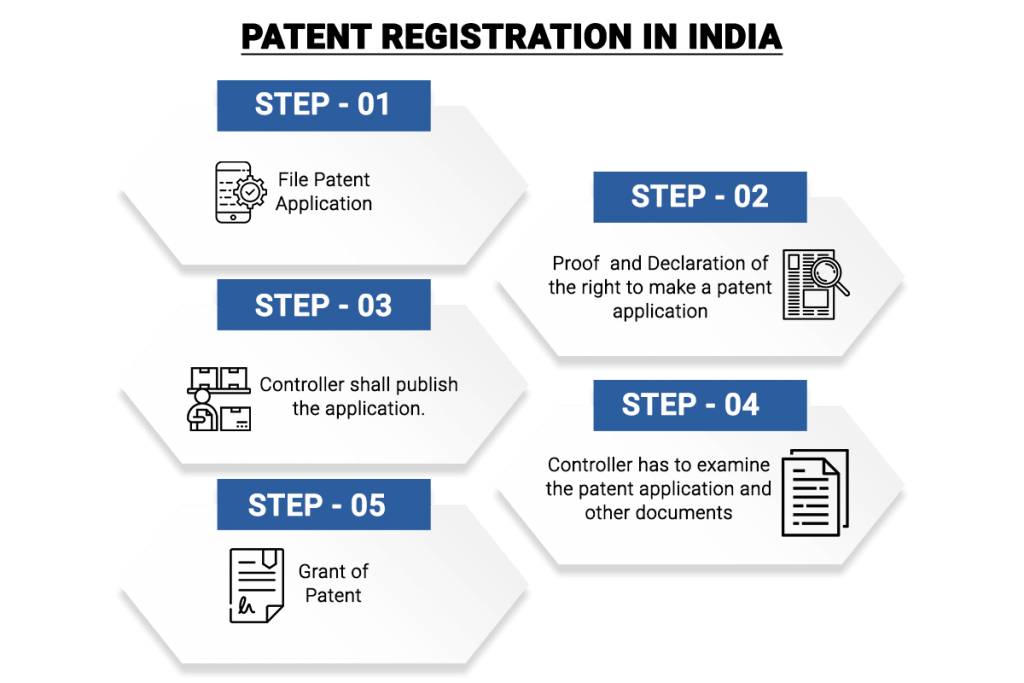
Step 1 – PATENTABILITY OPINION:

Before you begin the patent registration process, you need to check if your invention is patentable. This means that you need to check if another individual has filed a patent for a similar technology for which you are filing. Performing an in-depth patentability search helps you to understand whether you have a chance of getting a patent for your invention or not.

Step 2 – DRAFTING & FILING THE PATENT APPLICATION:

After successfully completing the first step, you can begin the patent application process. Indian applicants need to fill Indian Patent Application Form 1 and along with that you need to provide a Form 2 mandatorily for specifying the type of patent where you can choose between a provisional and complete patent application, based on the stage of invention. This means that if your invention is still under testing then, you need to apply for a provisional patent application where you can get a period of 12 months to complete the invention and can file for a complete patent.

You need to pay special attention when you are drafting your patent application and should include clauses like usability and outcome of the invention in detail. It is also necessary to include the intention to get license on the invention while drafting the patent application and be meticulous in including all the clauses that prevent the competition from others who use same technology.

Step 3 – PUBLISHING THE PATENT APPLICATION :

After submitting all the documents, the patent application is safely secured by the Indian Patent Office and applied patent is then published in an official patent journal after a period of 18 months approximately. However, inventors who wish to have their patent application published before this 18 month period can submit Form 9 (form that requests for early publication) so that the application can be published in official patent journal within 1 month of making request.

Step 4 – EXAMINING THE PATENT APPLICATION:

Before granting the patent, the patent application needs to be examined thoroughly. As per rules of the patent application process in India, applied patent should examined based on the merits of the invention and described in the patent specification form. Unlike the publication process, this is not an automatic process and the applicant needs to make a request to examine their patent application by submitting Form 18 because the patent office queues the application form for examination only after a formal request for examination is made.

When the application lands on the examiner’s desk, it is scrutinized according to the Patent Act and underlying rules along with that the examiner also searches for similar technologies to ensure the invention satisfies patentability criteria or not. After reviewing the application, the first examination report is submitted. The examiner lists his objections in detail which can further extend the application process by another 6- 9 months.

Step 5 – DECISION TO GRANT PATENT:

Once the examiner finds no objections in the patent application, he grants the patent and then the patent is then published in the official patent gazette.

Step 6 – RENEWING THE PATENT:

The patent holder also needs to renew his patent by paying an annual renewal fee. In India, it is possible to renew your patent for a period of 20 years at maximum, from the date the patent was first filed.

OVERVIEW OF PATENT PROCEDURE

CONCLUSION:

Finally, the patent filing process is long and complex, one must remember its importance in the long run. The entire process can take anywhere in between 3-5 years. However, This process is created with the intention of ensuring that the inventor gets credit for his invention and also ensures that no other individual can claim rights over the invention. The legal rights that an inventor earn through patent can prevent competitors from using the invention for financial benefits. In any wrong case the related true inventor of invention can also sue on such individuals and claim compensation for using invention without their approval.

So, guys this is the procedure to file a patent in India and I have tried my level best to make you understand about the patent procedure

WHAT IS THE NEED OF PROTECTING INTELLECTUAL PROPERTY RIGHTS

Protecting intellectual property is essential to remain profitable because intellectual property of a company prevent others from infringement of their own products and innovations. Particularly, protecting IP’s are relevant in today’s competitive market. Intellectual properties can cover a wide range of topics such as brand name, logos, services, processes etc.. of a company. An organisation is bound to face losses when these concepts are used without their permission. Let me explain you about the importance of protecting intellectual property with a case study.

CASE STUDY:

YOU ARE NOT BAJAJ:

A Hyderabad food retain chain, Urban Food Mart, India pvt.ltd has told by the Bombay high court to stop using the name ” BAJAJ SUPER MARKET ” for its business. The justice has passed an interim order on Feb 5th, 2021. Retaining urban food mart using the name of Bajaj and has directed into remove all signatures i.e use of marks on shopping bags, cartons, parking material etc… with in 3 weeks.

Bajaj electricals sued urban food mart saying that it had been using the name Bajaj continuously and extensively since 1961.

In the above case study we can clearly identify that Hyderabad related food retain chain has violated the term Trademark in IPR by copying the name of Bajaj electronics with out it’s permission. As I mentioned in previous articles also, Intellectual property highlights the important assets of an entrepreneur, Intellectual property rights is the collective term for creations of the mind which can be used for the commercial good will.

Almost every company in this technical world has undeniably benefited from the internet, which allows goods, services, and marketing messages to reach a large audience at a low cost – but it has also raised the risk of intellectual property infringements. This ultimately makes the protection of Intellectual Property as one of the most important things in today’s business world.

Most of the entrepreneurs because of having lack of knowledge in intellectual properties ignore important steps that they have to take for protecting their IP assets later which results into loss for their company. So a proper attention should be given for protecting IPR of a company by both management and employees. It will be good for the company, if it nominate a manager who takes the responsibility for understanding and protecting IP rights.

LIFE CYCLE OF INTELLECTUAL PROPERTY(IP):

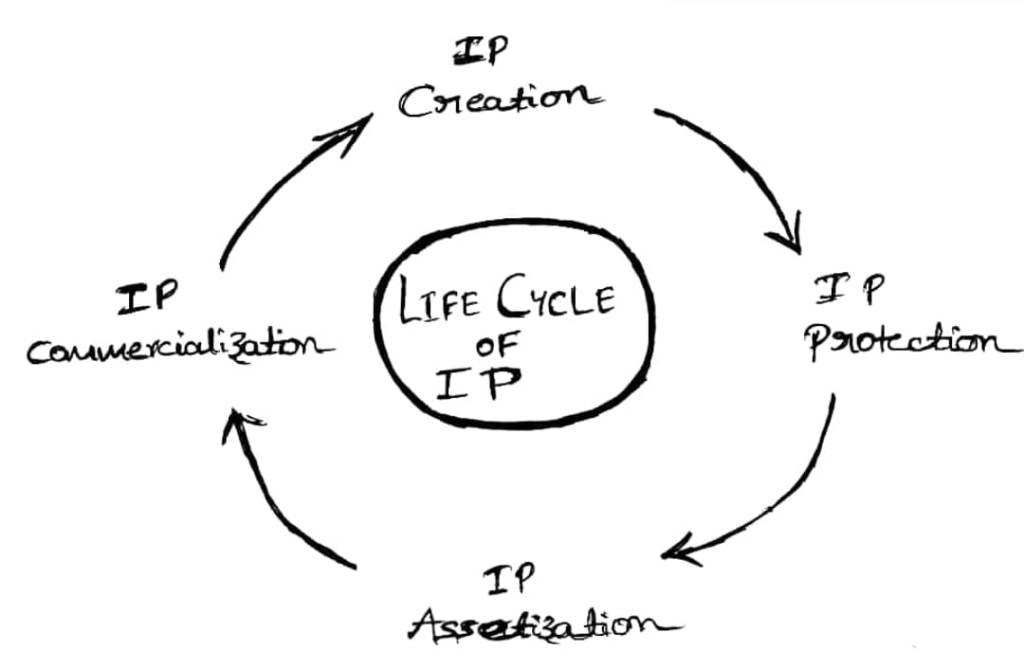
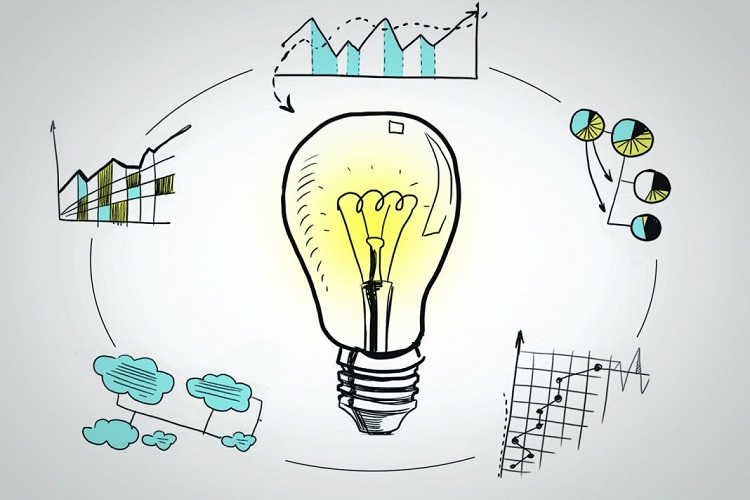
Protecting IP assets at the right time will always maximize the value of business. Now let us see the life cycle of intellectual properties in the following picture.

IP CREATION: Creation of IP enables innovators and inventors to identify and develop the potential research works in various fields.

IP PROTECTION: It enables in getting ownership rights and overall control on IP of a firm.

IP ASSETIZATION: Facilitates the development of IP based products of a company.

IP COMMERCIALIZATION: It enables business to make revenue and helps in expanding the market of the company.

HOW TO PROTECT INTELLECTUAL PROPERTIES:

The following are the five tips that every entrepreneur or owner of a firm must keep in mind for protecting IPR are as follows:

1 APPLY FOR PATENTS, COPY RIGHTS, TRADEMARKS:

Companies can protect their core management and their research & development activities through intellectual property rights and registrations. They also have a better bargaining position for cross-licensing and counterclaims. Intellectual property rights and registrations also allow a corporation to obstruct competing goods, determine new entrants, and pave the way for future market share via technological advancements. Intellectual property rights come in a variety of forms, such as Patents (used to protect technical information), Copyrights ( used to protect original artistic expressions of text, drawings etc..) and Trademarks (used to protect logos, brand names etc..). Each one of these must be applied in prior to protect the companies rights in order to sue if a third party infringes. 

2 SECURE YOUR INTELLECTUAL PROPERTY BOTH PHYSICALLY & DIGITALLY :

Companies must protect their IP in both Physical and digital protection and should maintain high security where sensitive data is stored, whether it is in the server farm or it is in the paper form. Keep track on the person who has the keys. Use passwords and limit employee access to important databases.

3 AVOID JOINT OWNERSHIP FOR INTELLECTUAL PROPERTY RIGHTS:

Make an effort to escape joint intellectual property rights. It is always beneficial for you to have control of your rights. In the long run, joint ownership of such rights can cause confusion and legal issues threatening the security of these assets, causing harm to all parties involved.

4 GET EXACTLY-MATCHING DOMAIN NAMES:

An exact-match domain name is one of the best intellectual property protection strategies for trademarks and copyrights (that you already own). Though it can be a bit expensive but it will help you in the long-term benefits.

5 KEEP YOUR IDEA A SECRET UNTIL YOU HAVE FILED A PATENT APPLICATION:

Make sure that you never share your idea with anyone before you have protected the same. This is because the other person might file for a patent before you and gain ownership rights over it. There is an old maxim that says “a secret shared is not a secret anymore”. So, don’t share the total information about the idea or invention with anyone and keep it as a confidential matter.

ECONOMICS BEHIND INTELLECTUAL PROPERTY RIGHTS

In todays world several companies use the Intellectual Property Rights (IPR) to protect their new inventions and company secrets. IPR are the legal rights granted by government to encourage innovation and creative output by ensuring that creators reap the benefits for their inventions or works. Intellectual property rights include several forms such as patents, trade secrets, copyrights, trademarks, or geographical indications (GIs).

World intellectual property organization(WIPO) defines IPR as a creation of mind inventions, literacy, artistic works and symbols, names, images and designs used in commerce. When a company hold its physical properties with out any IPR then those properties are considered as tangible where as IPR possessed properties are considered as Intangible. Intellectual property is essentially needed for a private nature belong to either through a natured person or legal person( Companies, Institutions). IPR can be own, bought and sold, rented , protected and infringed upon by others.

EVALUTION OF IPR IN INDIA:

Intellectual Property Rights (IPR) in India was imported from the west through the Indian Trade and Merchandise Marks Act 1884 which was considered as the first Indian Law on IPR. The first Indian Patent Law was enacted in 1856 followed by a series of Acts being passed. There is an Indian Patents and Designs Act in 1911 and Indian Copyright Act in 1914 is the first enacted copy write act in India. Later after getting independence the Comprehensive Copyright Act was enacted in the year of 1957 to consolidate the laws related to copyrights in India.

In 1948, the Indian Government appointed the committee to review the prevailing Patents and Designs legislation. In 1957, Government appointed to revise the Patent Law in order to balance the constitutional guarantee of economic and social justice enshrined in the preamble of the constitution. The report submitted by the committee outlined the policy behind the Indian Patent system. After the revision of previous acts on patents, a new patent act was released in the year of 1970 which process the patents only for food, agrochemicals, alloys, drugs and fixed 7 years term for food, drug and 14 years for others with having compulsory license provisions.

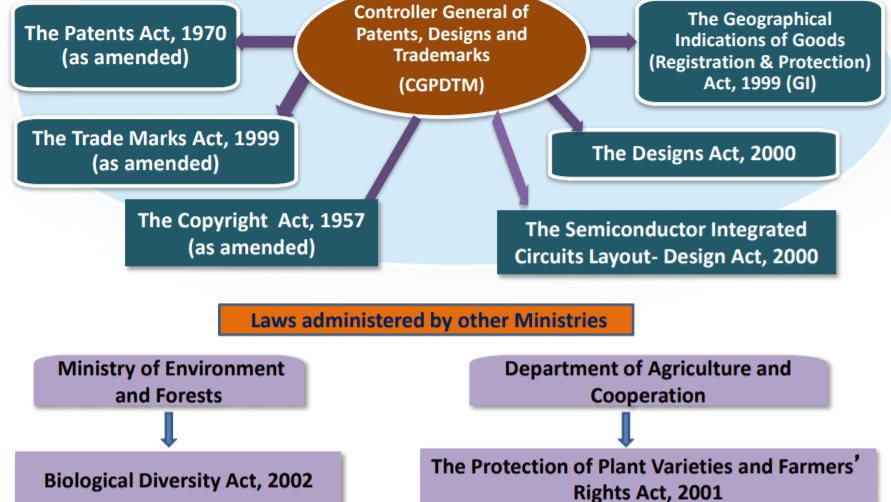
IPR LAWS ADMINISTERED BY OFFICE CGPDTM

EVALUTION OF INTERNATIONAL PERSPECTIVE OF IPR:

Every country has some relationship with other foreign countries in the form of trading, such as imports and exports. The foundation of International Intellectual Property Protection was created in the 19th century in the view of protection of Industrial Property which was created at Paris Convention in the year of 1883 regarding the terms of Patents, Trade Marks and Industrial designs that were granted protection at that convention. In 1998, India also became a member of the Paris Convention. In 1886, International Copyright Act was passed.

The Paris Convention marked the beginning of the International Trade Marks Protection laws and introduced the concept of a well known mark. In 1960 the World Intellectual Property Organization was created which governs the Paris and Berne Convention. In 1977 World Trade Organization (WTO) was created and become an important international organization for the development and understanding the IPR. This WTO was the successor to the General Agreement on Tariffs and Trade(GATT).

The importance of intellectual property in India is well established under statutory, administrative and judicial levels with an agreement made with World Trade Organization (WTO). This Agreement concentrates on Trade Related Aspects of Intellectual Property Rights (TRIPS) which came into force from 1st January 1995. It lays down the minimum standards for protection and enforcement of intellectual property rights in member countries which are required to promote effective and adequate protection of intellectual property rights with a view to reducing distortions and impediments to international trade.

The IPR scene in India has undergone a dramatical change since 1995 with the creation of various tools of Intellectual Property which shows compatibility with TRIPS.

ECONOMICAL PERSPECTIVE OF IPR IN DEVELOPING COUNTRIES :

Intellectual property rights have a great importance in the growth of a country. Intellectual property law differs from county to country. In many developed countries, the strict enforcement of the IPR has a huge contribution to economic growth. IPR promotes innovation which leads to the economic growth. Nowadays every business in the world is looking for the creation of Innovations.

So, protecting those new innovations has become necessary for companies these days. Not only protecting the new inventions of the company but also established companies should also protect their company names also in order to avoid duplicates in the market. Some big companies sell their names in exchange of huge amount in exchange of huge amount of money. Intellectual property rights have a great influence on the financial improvement of a nation. Different country governments face a complex choices on how to design an IP system in the best way to serve their policy objectives.

As India is one of the fastest growing countries, innovation became the first priority to most of the startup companies and as well as established firms including Government firms. Significance of IPR gives a competitive edge in the market for a company and also protects from hackers and pirates. Developing countries went along with the TRIPS agreement for a variety of reasons, ranging from the hope of additional access to agricultural and apparel markets in rich nations, to an expectation that stronger IPR would encourage additional technology transfer and innovation.

From business perspective IPR helps to create a strong brand identity and obtain valuable competitive intelligence. Along with these they help in making revenue through licenses. The main flexibility that is obtained through IPR is freedom of operating. After the introduction of TRIPS the market in India started changing vastly and the act started to provide space for operation and opportunities to companies and innovations. The private sector has started investing in research and development. Finally, The intellectual property right development plays a crucial role on economy for the development of business in a country.

TERMS OF INTELLECTUAL PROPERTY RIGHTS

INTELLECTUAL PROPERTY RIGHTS:

Intellectual Property is an intangible property, which is a product of human intellect, capital, labour, etc. such as artistic creations, literary works, inventions and so forth. It is intangible because it cannot be identified with the help of its physical characteristics.

Intellectual property is an asset by which one can own their business identity, technology, works of authorship, logo, slogans and many other practical expression of the ideas that drives the business forward. Intellectual property plays a vital role at all levels of your business.

To safeguard the interest of the creators, intellectual property rights are introduced which give them the right over their property and prevents others from using it in an illegal way. There are several terms in intellectual property rights, they are described clearly in the following paras:

TERMS OF INTELLECTUAL PROPERTY RIGHTS:

COPYRIGHT:

Copyright is a legal IPR term used to describe the rights that creators have over their literary and artistic works. Works covered by copyright range from books, music, paintings, sculpture, and films, to computer programs, databases, advertisements, maps, and technical drawings. Copyright provides the owner with exclusive rights to use, display, copy, exhibit, modify and distribute the work.

PATENT:

A patent is an intellectual property right which is exclusively related for an invention and grant rights on that invention. The invention may be a product or a process that provides in general for a new way of doing something, or offers a new technical solution to a problem. To get a patent, technical information about the invention must be disclosed to the public in a patent application. There are different types of patents are existed they are:

  • Utility patents: These are the most common form of patents to protect physical inventions, chemicals and processes.
  • Design patents: These patents protect the unique form, appearance or design of an item.
  • Plant patents: These patents protect the development of a new variety of plant through an asexual reproduction in a controlled setting.

TRADEMARK:

A trademark is a sign capable of distinguishing the goods or services of one enterprise from those of other enterprises. Trademarks are protected by intellectual property rights. In simple words trademarks are those things that make up your brand with having certain phrases, logos, unique words, and graphic design elements can be trademarked. Trademarks defend against confusion or dilution of the brand in the marketplace. Trademarks have to be distinctive in order to gain protection. The mark’s that are associated with business denotes its strength, which plays a vital role for defending the piracies.

GEOGRAPHICAL INDICATIONS:

A geographical indication (GI) is a sign used on products that have a specific geographical origin and possess qualities or a reputation that are due to that origin. In order to function as a GI, a sign must identify a product as originating in a given place. A geographical indication is often related to industrial property, which adverts referring to a country or to a place, situated for the origin of that product. This geographical indication not only refers to where the product was made, but more importantly, it identifies the product’s special characteristics which are the result of the products origin. Using the place name where the product was made.

INDUSTRIAL DESIGN:

Industrial design is also a term in intellectual property. It is a process of design applied to products that are to be manufactured by mass production. It can be applied to a wide variety of factors like, materials, production processes, business strategy and prevailing social research activities, commercial or aesthetic attitudes.

As per the Indian law, under the design act 2000, Industrial design protection is a type of intellectual property right that gives the exclusive right to make, sell and use articles that embody the protected design to the selected people only.

TRADE SECRETS:

Trade secrets are intellectual property (IP) rights on confidential information which may be sold or licensed. In general, to qualify as a trade secret, the information must lie in commercially valuable because it is secret and should be known only to a limited group of persons and also it should be subjected to a reasonable steps taken by the rightful holder of the information to keep it secret, including the use of confidentiality agreements for business partners and employees.

The unauthorized acquisition or use or disclosure of such secret information is referred as an unfair practice and considered as violation of the trade secret protection.

So, These are some of the terms that are related to Intellectual property rights. Which are useful and necessary for any type of organization or firm to protect their new inventions, logos, artistic works etc… from their competitors.

INNOVATION MANAGEMENT: TYPES OF INNOVATION

In today’s constantly changing business environment, new opportunities and challenges arise every day which are often driven through digitalization. As a result various market forces like knowledge as business capital, the Information and Communication technologies, Internet of things and of course due to digitalization every organization seeks a competitive advantage. To master over the resulting challenges and get benefited from the opportunities, we must have a systematic and well managed Innovation. That is why now a days innovation has become a core focus area for high performing organizations to ensure long-term survival by making the desired revenue and goals.

WHAT IS AN INNOVATION?

According to Peter Drucker innovation the specific function for entrepreneurship whether in an existing business or a public service institution or a new venture started by a lone individual in family kitchen. Innovation is the means by which the entrepreneur either creates new wealth producing resources or endows existing resources with enhanced potential for creating wealth.

WHAT IS INNOVATION MANAGEMENT ?

Innovation management involves the process of managing an organization’s innovation procedure, starting from the initial stage of ideation to its final stage of successful implementation. It encompasses the decisions, activities and practices of devising and implementing an innovation strategy. These decisions, practices and actions are aimed at achieving a certain target – to generate an idea, product or a service that is of sizeable business value.

According to Gartner, innovation management is a structured process of generating, capturing, discussing and improving, organizing, evaluating and prioritizing valuable insight or alternative thinking that would otherwise not have emerged through normal processes.

The innovation management process necessitates the use of certain management tools that assist in bringing both managers and other entities on a common platform and get them to move towards a common goal. These innovation management tools can look simple but are most effective in reality. Such management tools are considered as brainstorming sessions, planning and finally prototyping. Let’s discuss about various types of innovation which helps in the growth of business.

TYPES OF INNOVATION:

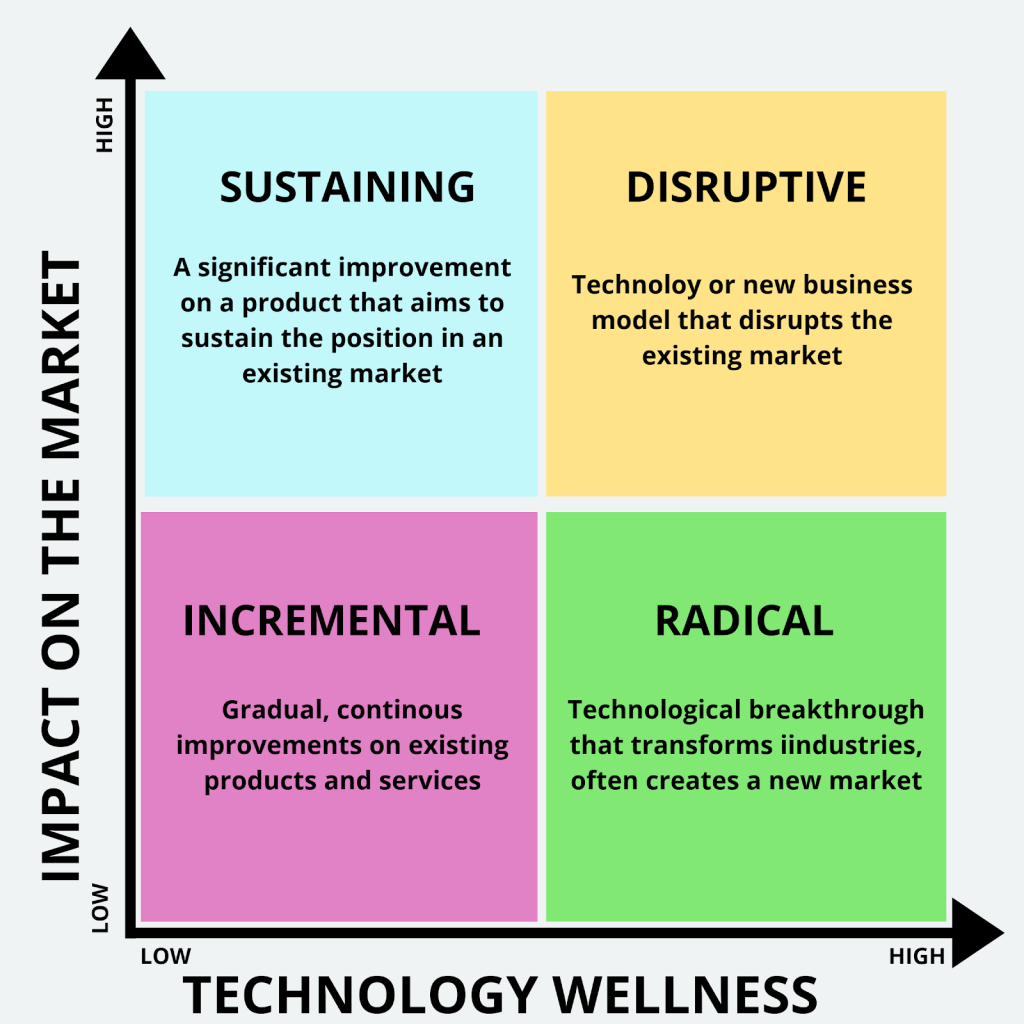
INCREMENTAL INNOVATION: The overwhelming majority of innovations are incremental in nature. Incremental innovation is nothing but improvement or adding new features or characteristics to already existed product which brings a large-scale organisational change. Incremental innovation is arguably the most accessible form of innovation, as it can often be performed without requiring huge budgets, a large team or a reorientation of the business’s strategy.

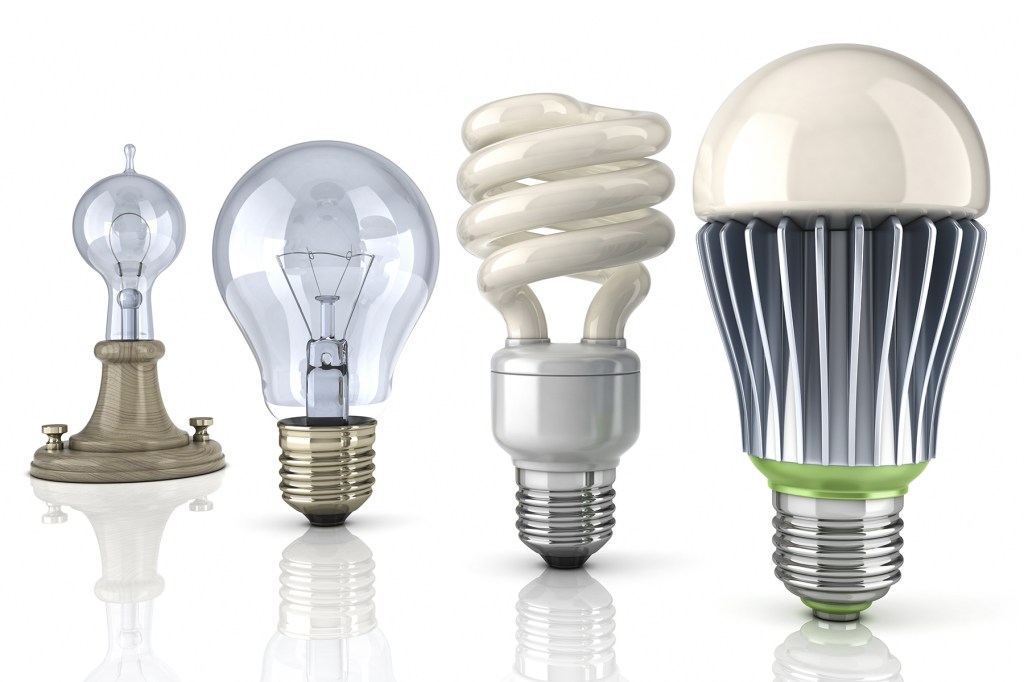
LED LIGHTBULB (Example of Incremental Innovation)

Incremental innovation doesn’t change it’s original dominant design. Incremental innovation will have less financial risks because this innovation doesn’t bring a new product or services into market rather it just modifies already existed product. This innovation can build a strong customer relationships and improves the product longevity in the market and most importantly incremental innovation is the best strategy to get a quick win in the competitive market.

The best example of incremental innovation is, The most famous E-commerce site COCO COLA, CADBURY etc…

DISRUPTIVE INNOVATION: Disruptive innovation is a theory that refers to a concept, product, or a service that creates a new value of network either by entering an existing market or by creating a completely new market. Moreover disruptive innovation refers to innovations by using new technologies that make expensive or sophisticated products and services accessible and more affordable to a broader market.

Disruptive innovation requires enabling technology with an innovative business model for building a coherent network value. One of the key features of disruptive innovation is that it modifies the process of evaluating the company and helps in the provision of better services with its new modification brought in the industry. It improves and modernize a lot of processes of a company, which further benefits the company a lot.

Examples of disruptive innovation are TESLA MOTORS, YOU TUBE, SKYPE etc…

SUSTAINING INNOVATION: Sustaining innovation is the opposite of disruptive innovation as it exists in the current market and instead of creating new value networks, it improves and grows the existing ones by satisfying the needs of a customer. Just like incremental innovation, the products that perform sustaining innovation is slightly made better with every iteration by reducing defects.

A sustaining innovation targets the high-end customers with its better performance than previously available one. The established competitors always win the battles when they operate sustaining technology efficiently. This strategy entails making a better product that can sell for higher profit margins to their best customers.

Examples of sustaining innovation are, IBM, TOYOTA etc..

RADICAL INNOVATIONS: Radical innovation is rare. It has similar characteristics to disruptive innovation but it is different in a way that it simultaneously uses revolutionary technology and a new business model.  Radical innovation solves global problems and addresses needs completely in a new way. This type of innovation completely transforms the market, or even the entire economy .

Technological innovations, such as personal computer and the internet are examples of radical innovations that have transformed the way the entire world functions and communicates. These disruptive innovations provide our society with a platform to build on top of which leads to highly accelerated economic growth where as radical innovation destroys or supplants an existing business model and blows up with something that is entirely new to the market. This types of innovation typically require a lot of time and technological development before they’re ready for the mainstream markets.

Examples of Radical innovation are, I PHONE, NETFLIX, INTERNET etc..

Aim of education

Abstract

The aim of education is important to know how would education will help an individual in their lifespan.

Aim means the objectives of a plan which are going to meet by the action. Aim of education can be said to be the objective or goals of education which meet the interest of an individual and lead the society towards development.

Importance of aim of education in society:

Intellectual Achievement: To provide students with academic knowledge and skills in order to prepare them for post-secondary education or the workforce. This has been the most agreed upon aim of education. Most parents want their children to reach high standards in math, English, history, and science.

Prosocial Values: To train students for responsible citizenship and prepare them for adulthood through socializing them in the norms and values of society. Teachers, who symbolize authority to the child, emphasize the values of a democratic society, such as patriotism, obedience, honesty, cooperation, competitiveness, and moral responsibility.

Economic Competitiveness (social efficiency): To provide students with skills and knowledge needed to be competitive in a global economy; become an effective and efficient workforce; and prepare workers with values and socialization needed in the workplace through developing attitudes such as punctuality, cooperation, and following rules.

Personal Growth: To help students find self-fulfillment, personal relevance, clarification of personal values, communication and self-expression skills, and development of effective learning styles. Student interests and feelings are emphasized. The curriculum is created collaboratively between teachers and students to help students reach their potential.

Socialization and Culture: To impart culture to students through great ideas of western culture, such as works of art, literary classics, and basic skills so that they are literate and cultured citizens and can participate intelligently in American society. Schools are places where students from diverse language and cultural backgrounds learn English and learn about American traditions, holidays, historical figures, geography, and democracy.

Social Change: To help students become productive citizens that are capable of changing the social order through emphasis on social issues and solving social problems. Students are provided with the knowledge and skills to improve society and are given opportunities to see themselves as both individuals and contributing to the group and the larger society. They are encouraged to participate in community service or service learning, so that they become reflective and responsive about the needs and problems in their community. The purpose of education is to advance social mobility, rather than perpetuate the status quo.

Equal Educational Opportunity: To ensure that all students have a free education, common curriculum, opportunities for diverse students to attend the same school, and equality of financial expenditure in a given locality. There is clear evidence that certain groups in American society are denied equal opportunity economically, socially, and educationally. It is essential that all children, regardless of race, ethnic background, gender, religion, socioeconomic level, or language, receive a quality education. A balance between diversity and unity is needed in schools.

Problem Solving: To teach students how to learn through the development of thinking, research, and study skills so that they become excellent problem solvers and creative thinkers who are capable of dealing with change. The rapidity of change today, technological advances, and the explosion of information require that students develop tools for lifelong learning.

Factors which affects the aim of education in society

1.Nature of Reality.

Aims of education have direct relationship with the prevailing philosophy of life. The philosophy of life at a certain time is influenced by the views of eminent thinkers and schools of philosophy.

According to the idealistic view, the aim of education should be self-realisation or unfolding of what is potential within the child. According to the naturalistic view-point, self- expression or self-gratification should be the aim of education. The pragmatists think that education should aim at enabling the individual “to control his environment and fulfill his possibilities.”

2.  Human Nature

Educational aims have often been decided keeping in view one or the other element which comprises human nature. Idealists regard ‘unfolding the divine in child and man’ as the aim. To naturalists, the aim of education is ‘self-expression.’

3. Political Ideologies and Individual-State Relationship.

Political ideologies influence the aims of education. Under a totalitarian system, the aims of education will be much different from those under a democratic political system. Under the former, the system of education becomes stereotyped and education takes the form of indoctrination. School and text-books must promote the ideology of the State.

Under the latter (democratic), the individual enjoys freedom and free play. The goal of education is the good man who is to be educated for a life of freedom. Education aims at developing the full personality of each individual, irrespective of caste, creed, class or religion.

4. Socio-Economic Problems.

Socio-economic problems of a country also determine the aims of education. For example, the Indian Education Commission (1964-66) put emphasis on “increasing productivity’ as one of the national objectives of education.”

5. Exploration of Knowledge.

Exploration of knowledge is a potent factor in determining aims of education. With the advancement of scientific and technical knowledge, education all over the world has become science-education

Conclusion

The aim of education should be holistic development of the individual. An individual is the foundation of the nation. It is important that their education must be according to their needs and interests. 

Reference.

The Abled Wings

“I can’t change the direction of the wind, but I can adjust my sails to always reach my destination”
Jimmy Dean
Whenever we hear the word disability, we automatically think of an image of a person , of a human being , but who lacks certain “ abilities” of a human being Which is the reason why they are not even treated with the same dignity and respect as fellow human beings. Anybody who has faced such indignation or knows someone who has, can resonate with the pain. “The look” they get is enough to convey that you feel nothing but pity or sympathy for them; which is something they most certainly don’t need.


According to WHO :

Disability is part of being human. Almost everyone will temporarily or permanently experience disability at some point in their life. Over one billion people – about 15% of the global population- live with some form of disability and this number is increasing.
Disability results from the interaction between individuals with a health condition such as cerebral palsy, down syndrome and depression as well as personal and environmental factors including negative attitudes , inaccessible transportation and public buildings and limited social support.
As per census 2011, in India , out of total population of 121 crore, about 2.68 cr persons are disabled.


The most important aspect of being a human being is the quality of being able to understand other’s pain and to do one’s best to help them out. SDG goal no. 10 mentions about the reduction in inequality within and among countries by empowering and promoting the social, economic and political inclusion of all, including persons with disabilities.
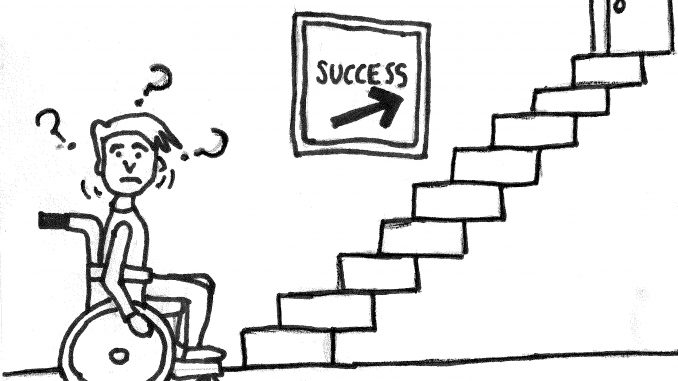
People suffering from certain disability face a lot of discrimination and also fail to achieve equitable representation in normal walks of life. Be it in any professional field, or because of lack of facilities in many colleges and schools fail to provide a pleasant and comfortable environment to them. As simple as constructing a ramp sounds , still very difficult for many public and private places to implement.
Negative attitudes held by the families of the disabled, and often the disabled themselves , hinder them from taking an active part in the family. Even though many disabled adults are capable of productive work, disabled adults have far Lower employment rates than the general population. Inclusion of children with mild to moderate disabilities in regular schools has remained a major challenge.

Disability is diversity, not detriment: – The Ranger


The health sector especially in rural India has failed to react proactively to disability . Further there are lack of affordable access to proper health care, aids and appliances. Healthcare facilities and poorly trained health workers in rehabilitation centers is another concern.
Some steps taken by government to provide a better living environment for the disabled:


1.Accessible India Campaign : creation of accessible environment for PwDs
2.Deendayal disabled rehabilitation scheme
3.Assistance to disabled persons for purchase of aids and appliances
4.National fellowship for students with disabilities


Many NGOs and schools have came forward to help provide people with disabilities a fair chance at life , which is all they need. I remember my school, has special arrangements for children facing disabilities, having qualified teachers and staff and a very friendly environment for them to grow. We often used to play together during our PT periods feeling no difference between us ,for there was indeed no difference between us.The experience and the lessons those years taught us in school helped me to have a different and more humane perspective towards life and all the people in it.


Let no disability hinder or stop your dreams. Your dreams need wings, and thankfully every human is born with them.


Dramatic Monologue – A Form of Poetry .

Monologue is made up of two Greek words ” μόνος mónos,” which means “alone, solitary” and λόγος lógos, “speech”


In general the term monologue means a speech presented by a single character, most often to express their thoughts aboud.

It is a speech given by a single character in a story. In drama, it is the vocalization of a character’s thoughts; in literature, the verbalization. It is traditionally a device used in theater—a speech to be given on stage.

There are different types of Monologue:

1. Dramatic monologue,
2. Soliloquy,
3. Interior monologue,

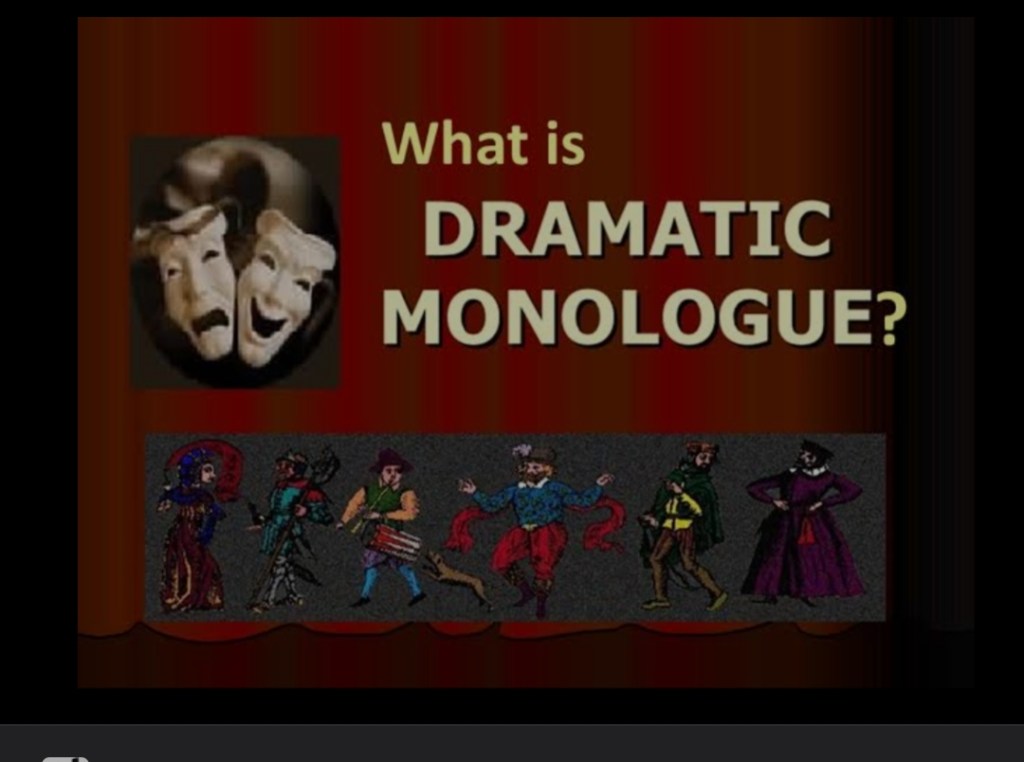
What is a dramatic monologue?

Dramatic monologue refers to a type of poetry. It is a type of poetry written in the form of a speech of an individual character.

These poems are dramatic in the sense that they have a theatrical quality; that is, the poem is meant to be read to an audience.
It is a literary form where the writer takes on the voice of a character and speaks through them.

Although dramatic monologues are found in theater and prose, the term most frequently refers to a poetic form where the poet creates a character who expresses a point of view or the main subject matter .


A dramatic monologue is also called a personal poem.
The character speaking in the poem is referred to as a “persona.”

Dramatic monologues can be told by a period , animals, objects, places, or abstract concepts like fate , love , etc.


M.H. Abrams notes the following three features of the dramatic monologue :-

• The single person, who is patently not the poet, utters the speech that makes up the whole of the poem, in a specific situation at a critical moment.

• This person addresses and interacts with one or more other people; but we know of the auditors’ presence, and what they say and do, only from clues in the discourse of the single speaker.

• The main principle controlling the poet’s choice and formulation of what the lyric speaker says is to reveal to the reader, in a way that enhances its interest, the speaker’s temperament and character.

Dramatic monologue was invented and practiced by Robert Browning followed by many famous poets like Alfred Tennyson , Dante , T. S Elliot and other Victorian poets .

The form remained popular in the 19 th and 20th century. The Victorian period represented the high point of the dramatic monologue in English poetry.

Robert Browning produced his most famous work in this form of dramatic monologue “My Last Duchess” which is quite famous till date .Browning’s poem “My Last Duchess” was one of the first dramatic monologues of the Victorian era.

Alfred, Lord Tennyson’s Ulysses, published in 1842, was a remarkable dramatic monologue in English literature during the Victorian era .

In the Modernist era, poets like T.. S. Eliot and Ezra Pound wrote persona poems
The Love Song of J. Alfred Prufrock” by T.S Elliot being one the most famous works as a dramatic monologue.

With the prevailing trend of confessionalism in poetry, during 1950s and 1960s, great poet like Gwendolyn Brooks, John Berryman, and Sylvia Plath all made notable contributions by writing dramatic monologues that grappled with subjects like the African American urban experience, mental illness, addiction, and suicidal ideation.

___________________________________________

Types of Dramatic monologue

Dramatic monologues can be categorised in three ways :-

Romantic monologues

Poems where a character speaks about a romantic relationship, either past, current, or desired is called a romantic monologue .

For example,
Dilemma” by Anthony Hecht is a romantic monologue.

Conversational Monologue

Conversational monologues are poems where the dramatic monologue is presented by the speaker as if it is part of a conversation.
Samuel Taylor Coleridge’s “The Eolian Harp” is one example.
.
Philosophical Monologue

Philosophical monologues are poems where the character explicates their personal philosophy or theories about the world.

“Lines Written a Few Miles above Tintern Abbey” by William Wordsworth is one example of a philosophical monologue.

___________________________________________

The dramatic monologue was written in the voice of a fictional character, the form sometimes makes use of a character who is already well-known so the poet can explore larger themes.
Use of dramatic monologues made the poet write about situations and subject matter that is not taken from their own lives.

Dramatic monologues are a way of expressing the view of a character and offering the audience greater insight into the character’s feelings .
Dramatic monologue was a famous form to write poetry because of its powerful way to create narrative tension as the speaker reveals crucial information to the reader in a way that allows the reader to feel the real emotions . ___________________________________________

Referral link :-How to write dramatic monologue (tips)

Maintain your limits!

Every child is taught to eat healthy food including vegetables and fruits. Adding vegetables to your diet will help to stay healthy and disease-free. Intake of some vegetables can be more useful in treating health issues rather than consuming medicines. Vegetables are low in fats and calories and can also reduce the risk of heart problems, cancer, digestive problems, etc. They also provide the essential requirements of our body such as vitamins, potassium, fiber, etc.
But we are also taught that everything has a limit. Consuming something more than its need will always cause serious problems in life. Likewise, consumption of some vegetables daily may also react negatively and lead to health problems.
One should always know the limits before consuming any vegetable on daily basis.

Here are some vegetables and it’s negative effects

Spinach

Spinach is filled with vitamin A, vitamin C, vitamin K, iron, and even calcium. But on the other hand, spinach can cause bloating, gas, and even stomach cramps if consumed excessively. A limited amount of spinach should be consumed daily.

Carrots

Carrots are the best source of keeping blood sugar levels under control and can lower the risk of diabetes. But eating too much carrot on daily basis can cause carotenemia which can discolor the skin.

Cauliflower

Cauliflower is extremely gassy and can cause bloating. These conditions occur when it is eaten in excess. A moderate amount of cauliflower can provide antioxidants and can help you prevent cancer.

Potatoes

Potatoes are a good source of fiber and can also prevent heart diseases and strokes. But consuming damaged potatoes, green potatoes and sprouts can cause headaches, gas, stomach cramps, diarrhea, restlessness, this occurs because these potatoes contain poisonous chemicals which cannot be destroyed.

Okra

Eating okra daily can worsen kidney stones and gall bladder stones. Eating too much okra can cause bowel problems too.

Always research before eating any vegetable on daily basis.

What is Bipolar Disorder?

Bipolar disorder, also known as manic depression, is a mental illness that causes extreme mood swings between emotional highs (mania or hypomania) and lows (depression). The word bipolar itself means two extremes. Hence, it is a mental health condition characterized by extreme shifts in moods and mental states. Depression causes feelings of sadness or hopelessness, and you lose interest or pleasure in most life activities. When your mood shifts to mania or hypomania, you may feel euphoric, full of energy or unusually irritable. These mood swings can affect sleep, energy, activity, judgment, behavior and the ability to think clearly. People with bipolar disorder may have trouble managing everyday life tasks at school or work, or maintaining healthy relationships. There is no known cure, but there are many treatment options available that can help to manage the symptoms. 

Causes

The exact cause of bipolar disorder is unknown, but several factors may be involved. For example, researchers believe that certain people with bipolar disorder have biological differences that cause chemical imbalances in the brain. There is also the factor of genetics, as bipolar disorder is more common in people who have a first-degree relative, such as a sibling or parent, with the condition.

Types

  • Bipolar I disorder: This involves manic episodes lasting 7 days or more, or severe mania that requires hospitalization. The person may also experience a major depressive episode that lasts 2 weeks or more. Thus, this type is characterized by extreme and severe highs and lows.
  • Bipolar II disorder: This features both mania and depression, but the mania is less severe than in bipolar I, and doctors call it hypomania. A person with bipolar II may experience a major depressive episode preceding or following a manic episode. Hence, here there are briefer, less extreme periods of elation with longer periods of depression.
  • Cyclothymic disorder: Also known as cyclothymia, this type includes symptoms of hypomania and depression that last for 2 years or more in adults or 1 year in children. These symptoms do not fit the criteria for wholly manic or depressive episodes.
  • Other types: People with these disorders experience symptoms that do not fall into the above categories. The symptoms may stem from drug or alcohol use or medical conditions, for example.

Symptoms

The three main symptoms of this illness are those mentioned earlier; mania, hypomania, and depression. These symptoms also vary depending on the type of bipolar disorder. The most serious type is Bipolar I, where a person experiences both mania and depression very deeply.

Mania is an emotional high that makes people feel excited, impulsive and euphoric. But these exceed ordinary feelings of joy, causing racing thoughts, rapid speech, sleeplessness, hypersexual feelings, and risky actions. Hypomania is generally associated with bipolar II disorder. It is similar to mania, but not as severe.

Depression causes things like low mood, dwindling interest in hobbies, changes in appetite, feeling worthless, sleeping too less/too little, and suicidal thoughts. Basically, life loses all colour for a person experiencing depression, and it is very hard for them to enjoy anything or feel any positive emotions.

Treatment

Though it cannot be cured, bipolar disorder can be controlled with treatment. Medication is the cornerstone of bipolar disorder treatment, and psychotherapy can help many patients learn about their illness and how to cope with it, preventing future mood episodes. Treatment aims to stabilize the person’s mood and reduce the severity of symptoms. The goal is to help the person function effectively in daily life.

Medications known as ‘mood stabilizers’, such as lithium, are the most commonly prescribed type of medications for bipolar disorder. These medications are believed to correct imbalances in brain signaling. Because bipolar disorder is a chronic illness in which mood episodes typically recur, ongoing preventive treatment is recommended. Bipolar disorder treatment is individualized, as individuals react differently and symptoms vary widely. It is important to get a correct diagnosis and find a suitable treatment as per the individual.

People suffering from bipolar disorder have their life split in two realities; elation and depression. For someone constantly bouncing between emotional states, it can be hard to find the balance which will help lead a healthy life. Hence, we should also support the people in our lives suffering from bipolar disorder and help them cope with such extreme and debilitating emotions.

Disaster Management

A disaster is a sudden, calamitous event that seriously disrupts the functioning of a community or society and causes human, material, and economic or environmental losses that exceed the community’s or society’s ability to cope using its own resources. Though often caused by nature, disasters can have human origins. Disaster Management can be defined as the organization and management of resources and responsibilities for dealing with all humanitarian aspects of emergencies, in particular preparedness, response and recovery in order to lessen the impact of disasters. Disaster management Is a systematic process of planning, organizing, and leading in order to effectively manage the after-effects of a disaster. It aims to reduce the negative impact or consequences of adverse events.

Types of disasters

Disasters can be classified as natural, man-made and human-induced.

Ex. of natural disasters :
Earthquakes
Volcanoes
Floods
Cyclones

Ex. of man-made disasters :
Nuclear leaks
Chemical leaks / spills
Terrorist activities
Structural collapse

Ex. of human-induced disasters :
Global warming
Large scale deforestation
Large scale biological warfare

Disaster Management Cycle

Disaster management is an enormous task. Disasters are not confined to any particular location, neither do they disappear as quickly as they appear. Therefore, it is essential that there is proper management to optimize efficiency of planning and response. Due to limited resources, collaborative efforts at the governmental, private and community levels are necessary.

Disaster Management, and Methodology

Disaster management is a cyclical process; the end of one phase is the beginning of another Timely decision making during each phase results in greater preparedness, better warnings, reduced vulnerability and/or the prevention of future disasters.
Mitigation: Measures put in place to minimize the results from a disaster.
Examples: building codes and zoning; vulnerability analyses; public education.
Preparedness: Planning how to respond.
Example: preparedness plans, emergency exercises/training; warning systems.
Response: Initial actions taken as the event takes place. It involves efforts to minimize the hazards created by a disaster.
Examples: evacuation, search and rescue; emergency relief.
Recovery: Returning the community to normal. Ideally, the affected area should be put in a condition equal to or better than it was before the disaster took place.
Examples: temporary housing; grants; medical care.

VARIOUS PHASES OF DISASTER MITIGATION

Disaster prevention
These are activities designed to provide permanent protection from disasters. Not all disasters, particularly natural disasters, can be prevented, but the risk of loss of life and injury can be mitigated with good evacuation plans, environmental planning and design standards. In January 2005, 168 Governments adopted a 10-year global plan for natural disaster risk reduction called the Hyogo Framework. It offers guiding principles, priorities for action, and practical means for achieving disaster resilience for vulnerable communities.

Disaster preparedness
These activities are designed to minimise loss of life and damage – for example by removing people and property from a threatened location and by facilitating timely and effective rescue, relief and rehabilitation. Preparedness is the main way of reducing the impact of disasters. Community-based preparedness and management should be a high priority in physical therapy practice management.

Disaster relief
This is a coordinated multi-agency response to reduce the impact of a disaster and its long-term results. Relief activities include rescue, relocation, providing food and water, preventing disease.

Disaster management in India

In order to manage the various kinds of disasters occurring sporadically in various parts of India, The Disaster Management Act, 2005 provides for the constitution of the following institutions at national, state and district levels.
National Disaster Management Authority
State Disaster Management Authorities
District Disaster Management Authorities
National Institute of Disaster Management and
National Disaster Response Force

SECRET OF NATURE’S PEACE IS PATIENCE!

Forget hard work , Patience is the key to success .

You know what is lacking in today’s generation ? It’s not hark work guys , it’s patience rather. Patience (or forbearance) is the ability to endure difficult circumstances. Patience may involve perseverance in the face of delay; tolerance of provocation without responding in disrespect/anger; or forbearance when under strain, especially when faced with longer-term difficulties. Having the ability to be patient and continue on the journey towards achieving your goals can help you understand that consistent hard work and reflection will generate successful outcomes in your life. If your just expecting everything to come to you within a short period of time, you will end up sadly disappointed and frustrated when a setback or challenge comes your way. Having Impatience can lead you down a road of disappointment and you will eventually give up on achieving that goal or starting up that business. If you are patient enough then whatever the problem is , you will pass it with flying colors. Being impatient leads to greater problems & greater problems leads to stress & then & there stress leads to health issues . Your whole life depends on how patient you are , & it is your patience only which decide how efficient you are in solving a particular problem

It is very sad to know that today’s generation is lacking patience , when they want a particular item then they want , irrespective of the their age group or their understanding of that item , this is what lacking patience means . If they are trying their hand at some new place , there also they lack patience , they want the result early & this urge of getting every thing at first leads to hurdles in their way.

The skill of patience is not only important in life but also in forming strong personal relationships with your friends, partner, employees, family, and other important people who are in your life. Expressing patience towards them shows how caring and supportive you are towards them. Being impatient brings frustration in your life & hampers you inner peace. Bring inner peace into your life and stress less by being patient. Your mind and body will thank you for it in the long run. The skill of patience can be hard to master but developing that skill overtime can really help you out in your life. Being patient will help you taking better decision in you life. So here we can conclude that being patient enough will lead to better mental health .

Let’s end this article with a beautiful quote , ” PATIENCE IS NOT THE ABILITY TO WAIT , BUT THE ABILITY TO KEEP GOOD ATTITUDE WHILE WAITING”.