Skills of the Future

The new world order, brought on by the fourth Industrial Revolution, demands that today’s children acquire skills that will serve them well in the future.

Photo by Andrea Piacquadio on Pexels.com

The world we live in will change so fundamentally that students who come out of school by 2030 will make careers in fields that we have no idea about in the present.

As all of these trends happen, the winners will be those who are able to participate fully in innovation-driven ecosystems by providing new ideas, business models, products, and services, rather than those who can offer only low-skilled labor or ordinary capital, points out Klaus Schwab, founder and executive chairman of the World Economic Forum, in his seminal work, the Fourth Industrial Revolution.

This view is supported by other experts.

According to David Deming, associate professor of education and economics at Harvard University, Soft Skills like sharing and negotiating will be crucial. Modern workplace, where people move different roles and projects, closely resembles pre- school classrooms where we learn social skills such as empathy and cooperation. =

In effect, the skills and traits that must be inculcated in our children include : Social Intelligence

Photo by Polina Zimmerman on Pexels.com

This set of skill include empathy or the awareness of self and others perspective collaboration, negotiations and conflicts resolution, persuasive communication that can change minds and hearts.

A sense of service mindedness, trustworthiness and transparency.

Reference

http://www.timesofindia.com

http://www.wikipedia.com

School vs Workspace

Our children must learn how to acquire knowledge that can be applied across domains and situations.

Photo by samer daboul on Pexels.com

Traditionally, schools and colleges have been cloistered enrollments where students only acquire knowledge. They then move to the next stage of their lives – into work places – where they may or may not apply the knowlege they have.

This separation has ensured that young people who join the work force have no idea about the exigencies of the work environment and are completely unprepared to deal with this situation.

However, future workplaces are likely to be far removes from conventional or current experiences.

In fact, it is estimated that most of tomorrow’s workforce may be contractual. In fact, already many large organizations are tapping into on-demand talent of the gig economy.

Increasingly, these new economy workers will be required to rely on their own knowledge and the skills to provide services and produce products that solve businesses’ and society’s pressing problems.

Photo by Burst on Pexels.com

Our children, therefore, must learn how to acquire relevant knowledge that can be applied in different domains and circumstances. They must discover the joy learning so that they can become learners for life as well as independent learners, capable of handling uncertainty with flexibility.

Schools must therefore re-engineer their systems, curricular and pedagogies to ensure that students have agency over their own learning and lives and learn to learn, unlearn and re-learn with agility.

Schools, therefore, must teach children to be entrepreneurs, expose them to real life work and social environments through projects and experiences so that they know how to tackle challenges that lie ahead and are capable of solving problems independently.

Reference

http://www.timesofindia.com

http://www.wilipedia.com

http://www.hindustantimes.com

Segmenting a market?

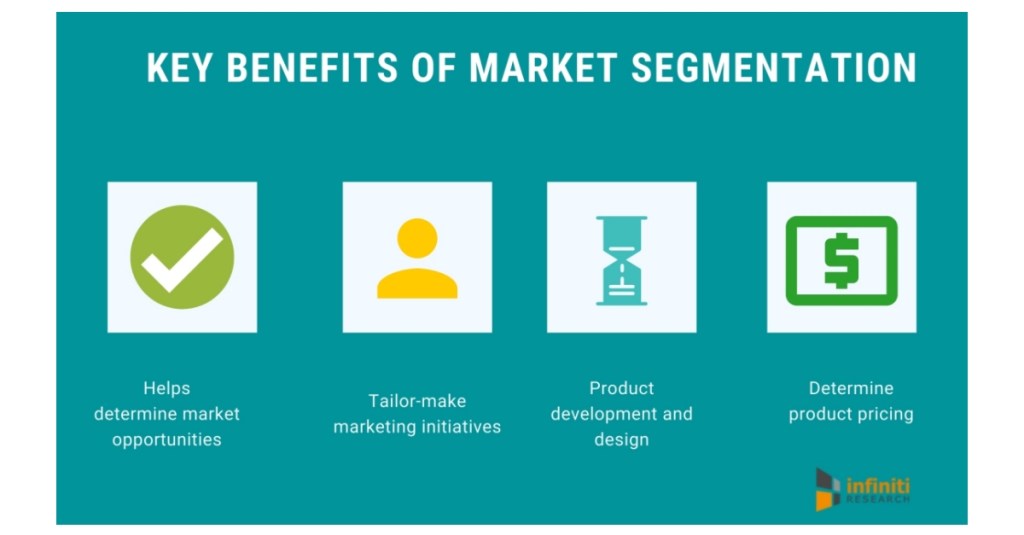
See everybody has their own likes and dislikes right? It is always possible that my need and your need can be different or even similar also. Market segmentation is just the most useful aspect in which a marketer can divide the whole market into subgroups of people having the same needs and wants. Must be wondering why it is done? So by this concept marketer gets the clear idea of the group demanding the same products and can easily satisfy their demand on that basis. Suppose if their is a group of teenagers than obviously their demand and needs about a product will be different from that of old age group. Likewise we have many different basis for market segmentation let us just understand them one by one:

  • Geographic Segmentation: This is the most simple method of market segmentation as in this the people living in one region of the country have different buying behaviours from that of the people living in some other region and thus this becomes the base for dividing the market .
  • Demographic Segmentation: Demographic elements such as age(teenagers/adults/retired), occupation, education, sex and income are used here for Segmentation.
  • Psycho-graphic Segmentation: Under this basis the consumers are divided into subgroups on the basis of their psychological attitude and also includes their personality and lifestyle.
  • Behavioral Segmentation: Consumers are here divided on the basis of the knowledge , attitude and use of actual products.
  • Volume Segmentation: It is assumed that most of the product is sold to a certain percentage of people. There are light , medium and heavy users of products. It is important for the business to give due consideration to the heavy users so that they must not switch to some other brand and also along with that they are required to adopt various techniques to convert light , medium and non users into the heavy one.
Easy explaination of its benefits.

What is Leadership?

Leadership, according to Peter DeLisle, is the ability to influence others, with or without authority. All successful endeavors are the result of human effort; thus, the ability to influence others is a derivation of Interpersonal Communications, Conflict Management, Problem solving. Leadership is a direct function of three elements of interpersonal effectiveness.

  1. Awareness : Awareness is a state of consciousness. It is the ability to recognize yourself, others, events and situations in real time.
  2. Ability : Ability to learn and understand technical issues is the basis of our careers – Ability to communicate, Ability to resolve conflicts, Ability to solve problems and make decisions.
  3. Commitment : Taking decisions without recognizing the impact in both positive and negative manner. To be dedicated and keeping engage.

Attributes or Characteristics of Leader

  • Guiding vision : Effective leaders know their strength to pursue the objectives and achieve the goals.
  • Passion :Leaders have a positive outlook on who they are, and they love what they do.
  • Integrity : Leaders know who they are, effective leaders are also aware of their weaknesses. They only make promises they can follow through on.
  • Honesty : Leaders convey an aura of honesty in both their professional and their personal lives.
  • Trust : Effective leaders earn the trust of their followers and act on behalf of their followers.
  • Risk : Effective leaders take calculated risks when necessary, to achieve their objectives . They learn from the
    mistake and use it as an opportunity to explore other avenues.
  • Dedication : The effective leaders are dedicated to their charge. The leader gives himself or herself entirely to the task when it is necessary.

Leadership Styles

1) Persuasive Leadership
• Leader engage his team through cooperation.
• Explains projects and values, stimulates, encourages, mobilizes resources.
• Remains accountable for every decision.
• Flexible on methods, supports co-workers.

2) Authoritative Leadership
• An Authoritative leader is self committed , gives instructions, structures the team activities.
• Sets precise objectives, defines evaluation criteria, solely accountable for decisions.
• Does not accept co-workers requests, does not accept failure.
• Always decides- does not listen

3) Delegative Leadership
• Defines the rules, mission and the responsibilities
• Plans and organizes the teams activities.
• Gives autonomy, only when required.
• Fosters mutual respect through expertise.

4) Democratic Leadership:
• Supports team work and offers collective projects
• Always encourages the team members to express freely
• Takes into account the individuals needs
• Fosters positive work environment and engages his team in decision making process.

Tips for better Leadership
• Be a good role model.
• Be clear about your rules and expectations.
• Leave room for input.
• Reward employees for good behavior.
• Be liked.
• Stamp out ‘them and us’ culture
• Honor the business roots
• Be passionate, enthusiastic and proud• Communicate effectively.
• Know your limits
• Learn from the past
• Keep meetings productive
• Walk your talk
• Presentations
• Motivational skills

How to find a job during the pandemic?

Not only has the coronavirus pandemic had a big influence on the world economy, but it has also had a significant impact on your employment search. It has wreaked havoc on the stock market and harmed a variety of businesses. If you have a present employment, you are most likely working from home.

Small businesses have been forced to close temporarily, while large corporations have been impacted by the stress of losing customers and a disrupted supply chain. According to NBC News, there are estimates that the jobless rate in the United States will hit 20%.

Layoffs, furloughs, reduced hours and overtime pay, and hiring freezes have all been used by certain companies in response to the health crisis. Other businesses are actively hiring and publishing new job openings on a daily basis.

There’s a lot of uncertainty right now about what the national and global impact on hiring will be, but there are ways to stay positive and proactive about your job search at this turbulent time.

Photo by Andrea Piacquadio on Pexels.com

Engage your network

People recognise that this is a terrible time and want to assist in any way they can. Let your friends and relatives know you’re looking for work and tell them what kinds of employment you’re looking for and which companies you’re targeting so they can keep an eye out for openings. If they hear anything, they’ll let you know. 

Even if human resources isn’t through sorting through the applications that come in through the ATS, those email intros, or having individuals in your network send your resume and cover letter on your behalf, can boost your application to the top of the pile.

If you find openings at a company where you previously worked, don’t be afraid to contact former coworkers and superiors. Because they know your skills and work ethic, they are more inclined to hire you than the competition. Even if they aren’t hiring, they can serve as references for other applications you are submitting.

Because they work in the sector, they may be aware of other opportunities through their own network and can refer you.

Practice phone and video job interviews

Because so many people now work remotely, job interviews are now conducted over the phone or by video rather than in person. A phone interview can be more difficult because it is more difficult to understand someone’s reaction and establish a dialogue that flows organically.

It can be more difficult to do a video interview because being on camera can be uncomfortable.

Take on a temp or freelance gig

If you don’t have a job right now, look for temp and freelance employment to help pay the bills. When you impress your coworkers, it could lead to a full-time employment. Working for a temp agency is also a good way to pick up some in-demand skills.

Employers are searching for employees who are self-disciplined enough to work from home and have outstanding writing skills, so if you’re currently working from home, keep that in mind.

Photo by Pixabay on Pexels.com

Show off your transferrable skills

Because there is so much competition for jobs right now, it’s critical to step up your game. First, look for positions that have been posted recently, as this indicates that the organisation is looking to fill a current position. If a job posting has been up for several weeks, it may no longer be a top priority for the organisation.

When perusing job listings, remain confident in yourself and realise that you can still acquire a job.

Customize your application for each job

Spend more work on each cover letter and resume so that your resume and cover letter are noticed. Modifying them for each job application takes extra effort, but it is important. When you apply for a job online, your resume is typically entered into an Applicant Tracking System (ATS), which analyses your resume to see if you meet the job posting’s requirements. 

Don’t replicate everything word for word, but make sure your resume and cover letter include the bulk of the most significant parts of the job. According to Monster data, nearly 75% of applications that go through an ATS are rejected because they don’t fulfil the hiring manager’s standards, such as the correct abilities, education level, or job titles, so it’s critical to get your resume in the door.

Stay up to date

Read about the companies and the world of market. Make this a habit to stay up to date without any obstacle. This will help you to be spontaneous and aware.

References

http://www.monster.com

History of Tea in India

Though the Camellia synesis is also native to India, and grew in the wild long before its actual value was understood, it is thought that tea was carried to India by silk caravans travelling from China to Europe centuries ago.

Native Americans ate the leaves occasionally, but they were largely employed for their medicinal powers.

Photo by Lisa on Pexels.com

It took a long time for it to evolve into what is currently known as chai, a flavorful black tea sweetened with sugar and milk, along with spices like cardamom and ginger, and used in cooking, vegetable dishes, and soup.

Tea was initially introduced to Indians by the British and is now an integral component of daily life. Tea originated in India thanks to the British, who sought to break China’s tea monopoly after discovering that Indian soil was ideal for growing these plants.

The presence of native flora indicated that the soil was suitable for transplanting Chinese seedlings, and the Assam valley and Darjeeling’s towering mountains were chosen as early tea planting sites.

Tea manufacturing in India began to blossom after 14 years of fruitless attempts, allowing the manufacture of a tea that was equivalent to, if not better than, its Chinese counterpart.

The native tea species

When Scotsman Robert Bruce identified a native type of Camellia sinensis plant in Assam in 1823, commercial tea plantations were first created under British rule.

According to legend, a local merchant named Maniram Dewan brought Bruce to the Singpho people, who drank a tea-like beverage. The Singphos gathered fragile leaves from a wild plant and dried them in the sun.

It’s worth noting that, at the time these changes were taking shape, the East India Company was attempting to break the Chinese monopoly on the global tea trade due to a growing conflict of interests.

In response to this scenario, one of the Company’s initiatives was to begin producing tea in British possessions, particularly India.

Around the year 1840, India’s tea industry began to take shape. Chinary tea plants, which were first tested in Assam, were later tested in the high-elevation districts of Darjeeling and Kangra, where they thrived.

Tea planting in Darjeeling began in 1841, when Archibald Campbell, the first superintendent of Darjeeling, experimented by planting a few chinar trees.

Tea consumption has evolved in a variety of ways, with each region of this large country producing its own chai variations. On one end of the scale are the gourmet stores that sell and serve good Indian tea, while on the other are the simple roadside chaiwallas who offer hundreds of steaming cups to people from all walks of life.

Photo by Tatiana Syrikova on Pexels.com

While India is today known for its high-quality tea and the countless cups of chai consumed by Indians, the custom of drinking tea as a regular beverage did not begin in India.

Tea had been used as a medicinal drink in India since ancient times (nearly identical to China), but it had never been used as a beverage.

After years of selling tea to Portugal, Japan opted to seal its doors to the rest of the world and isolate itself, leaving the global tea trade in the hands of the Chinese. While China was willing to trade, it was adamant about keeping the secrets of tea cultivation.

Darjeeling tea estates began in the 1850s, and the world soon sampled the “Champagne of teas,” Darjeeling tea.

The Chinese tea monopoly was fully broken with the creation of Darjeeling tea and widespread marketing by the British, and Indian teas quickly seized both the market and the imagination of worldwide tea consumers; and the rest, as we all know, is history.

References

http://www.teatrunk.in

http://www.wikipedia.com

http://www.cafesrichard.com

http://www.teabox.com

ETHOS OF VEDANTA IN MANAGEMENT

Ethos of Vedanta are based on supreme truth & supreme soul. If you do good to someone , you will get good . If you are good , the whole world is good to you . Management ethics is the ethical treatment of employees, stockholders, owners and the public by a company. A company, while needing to make a profit, should have good ethics. Employees should be treated well, whether they are employed here or overseas. By being respectful of the environment in the community a compound ethics, and good, honest records also show respect to stockholders and owners. Most of us would agree that it is ethics in practice that makes sense; just having it carefully drafted and redrafted in books may not serve the purpose. Of course all of us want businesses to be fair, clean and beneficial to the society. For that to happen, organizations need to abide by ethics or rule of law, engage themselves in fair practices and competition; all of which will benefit the consumer, the society and organization.

When ethics are used in management , organization grow at a different level .

In these days of globalization, Vedanta-based values will surely have to make a sympathetic assessment of values of those brought up according to Islamic or Christian faith. However desirable it may be to universalize the teachings culled from the Vedanta philosophy, ultimately one will have to find in that same school the lessons of co-existence with alien cultures and roots.

Ethics are about making choices that may not always feel good or seem like they benefit you but are the ‘right’ choices to make. They are the choices that are examples of ‘model citizen’ and are the examples of ‘golden rules’ like; don’t hurt, don’t steal, don’t be dishonest, don’t lie. But if we take Ethics as a subjective philosophy then what will happen to these golden rules. Especially at the time of facing any ethical dilemma how one should decide-what is ethical and what’s unethical? Organization provides rules, regulations, code of conduct, protocols which provide guidelines to work, it shows how to walk, but it does not show the correct path to walk on. Ethical dilemmas faced by managers are often more real to life and highly complex with no clear guidelines, whether in law or often in religion. Ethics gives us a message to always look forward , which gives a message to look at a long go . Ethics teaches a management the most important thing that is forward looking approach . With this forward looking approach , it teaches to be always true to the organization .

Some of the principles of Indian ethos are :

  1. Know who you are & what is your purpose of existence , this concept is used in management because a management’s main motive is to know what who they have to manage & what they have to deal through
  2. Holistic approach : We should behave with others in the manner which we expect from them . Effectiveness & efficiency of an organization increases when the employees are highly motivated.
  3. Service motive : A person should have service motive & at the same time should have a smiling face while providing that service . An organizations main motive is to provide service to other , & they should not be profit oriented .
  4. Self sacrifice : One should have self sacrifice attitude , means sacrificing self ego , & should always be helpful to others

Can Russia ‘Checkmate’ US in global market,with its new fighter jet SU-75 (checkmate)?

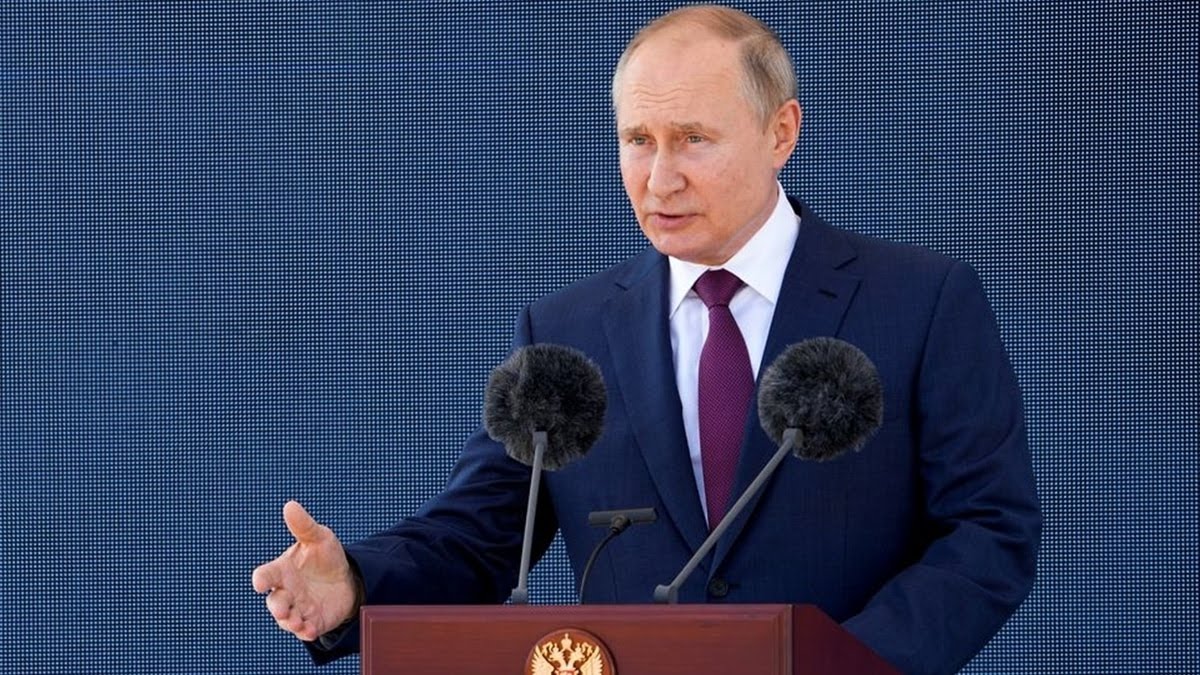
On Saturday, last week in MAKS-2021 arms show, a new fighter jet nicknamed ‘Checkmate’ was unveiled in Moscow, in presence of Russian president Vladimir Putin.This MAKS arms show is a chance for Russian industry to introduce the public to the next generations of its flagship vehicles, as well as for smaller players to pitch their prototypes and concepts to prospective buyers.

SU-75 (Checkmate) Specifications

This jet by Rostec subsidiary United Aircraft Corporation comes With split angled tails, a narrow fuselage suggesting presence of one engine, and diamond shaped wings, it looks similiar to f-35. This jet can fly up to 1,500 kilometers in a single sortie, while loaded with weapons and payload. It is Capable of continuous supersonic flight at the speed of 1,180 miles per hour and can share data with other fighters in the air and it’s also hinted that it might have AI abilities and drone control abilities. It can engage upto 6 targets simultaneously on land,sea or air.

Cost

This aircraft would cost between $25 million to $30 million and Moscow expects demand from the Middle East, Asia Pacific region and Latin America. The cost is extremely low as compared to F-35, which comes at a price of over $75 million.

Competition

It will compete with likes of Swedish JAS-39E/F Gripen,the Dassault Rafale, the Lockheed Martin F-35. and the Shenyang J-35. This jet is expected to take to the skies in 2023, with first batch expected in 2026. Moscow plans to produce 300 units of the aircraft over 15 years once the production begins.

Road ahead for this jet

Russia is known for its fighter jets like Mikoyan-Gurevich MiG-21 (F-16 killer), Mikoyan-Gurevich MiG-25 foxbat,
Mikoyan MiG-29 (Fulcrum),Sukhoi SU-30. Countries like China, India, Egypt, Algeria,are the major buyers of Russian fighter jets. Russian jets are known for their ruggidity as compared with their US counterparts. Cold war is over long ago,but rivalry between Russia and US is still there and even in weapon market. Let’s see how many buyers this new hyped jet will attract in the global market.

8 pieces of clinching evidence that show how IAF’s Abhinandan shot down a Pakistani F-16

“ELON MUSK” Biography

“Elon Musk” is an Entrepreneur, Engineer and Inventor. He was born in Pretoria South Africa on June 28 1971. His father’s name of Errol musk and mother’s name was Maye Haldeman. His father was a British electrical engineer and mother was a British Canadian model. When they divorced in 1980, Elon stated with his father in South Africa.

A few years later she began teaching himself computer programming and sold his first video game at the age of 12. For his undergraduate education he attended the Queen’s University in Kingston Ontario, in 1990. He eventually transferred to the University of Pennsylvania, earning dual degree in physics and economics. In addition to the bachelor’s degrees, he earned in physics and economics, he also holds an honorary doctorate in Design from the “Art Center College of Design” and an honorary doctorate in Aerospace engineering from the “University of Surrey”. He moved to California to attend Stanford for a PhD in applied physics in 1995, but quit within a few of days to pursue his own interest in avenues of technology and entrepreneurship. Later that year, he worked with his brother, Kimbal Musk, to develop the software company”Zip2″, which provided services to high end newspaper clients like “The Newyork Times” and the “Chicago Tribune”. After the successful sale of Zip2 to Compag in 1999, Musk went straight into his next venture an online financial service called “X.com”. Shortly after the company acquired a money transfer service called “PayPal”, through a merger, they began to focus their efforts exclusively on building this Internet payment service.

The Successful off PayPal ID mask to sell his stock in company to eBay for 165 million dollar. Elon Musk has married thirce twice the same woman. His first marriage was to Canadian other Justin Wilson in 2000 they had its children together in 2002. He invested his millions in her third company with in 7 years the company had designed the “Falcon” line of space launch vehicles and the “Dragon line” of multipurpose spacecraft and was making history with their privately funded innovation “SpaveX” received contracts from NASA to create a launch craft to deliver cargo to the International Space Station Tesla Motors was founded with the mission of designing and building electric car musk invested in the company and became its chairman in 2004, a after it Inception taking on an active role in the design of the “Roadster” which won the “Global Green” product award. During the recession when the company was adversely affected he went on to become the CEO and product architect of the company. A role he holds till today. After Designing the initial Concept for “Solar City” Musk remains its biggest shareholder. Today it is the second largest provider of solar energy in the United States with a focus on combating global warming Elon Musk and Justin Wilson divorced in 2008 in 2008 she began dating English actress Tallulah Riley and the two of them got married in 2010. The couple separated in 2012. In 2013 Elon Musk remarried Tallulah Riley really but the couple filed for divorce in 2014 and it was finalized in 2016. On August 12 2013, Musk announced Revolutionary plans for a high-speed travel technology that in theory could replace airplane travel as a faster and cheaper option. His company “SpaveX” is currently working on putting his plants into practice with the design intended to run entirely on solar energy he has envisioned high speed Transportation system known as the Hyperloop it incorporates reduced pressure tube in which pressurized capsules ride on air bearing driven by Linear induction motors and air compressors. Elon Musk for briefly in a relationship with American actress Amber Heard in 2016. But the couples split owing to their conflicting schedules. In July 2017, he announced that first successful test run of Hyperloop has been done in Nevada. He also said that he has got verbal approval to build a Hyperloop from New York city to Washington DC. Elon Musk was heavily involved in the design of Tesla Motors first electric sports car, the “Tesla Roadster” Musk received the 2006 ” Global Green” product design award for this vehicle, presented by Mikhail Gorbachev. “PATIENCE IS A VIRTUE AND I’M LEARNING PATIENCE. IT’S A TOUGH LESSON” Said by “ELON MUSK”.

Ethical Hacking and IT

Data Technology (IT) is one of the greatest and most mainstream businesses as far as building up a profession on the planet today. Industry 4.0 has invited various innovative headways because of which specific IT experts have discovered conspicuousness, in IT organizations as well as in different enterprises. Maybe, the most famous among them is a vocation in online protection.

More than 1 billion network safety experts are required to be sought after over the course of the following 2 years in this field, making it perhaps the most worthwhile profession ways on the planet today. Notwithstanding being a mammoth association, National Health Services couldn’t shield themselves from a huge scope hack. A main nourishment application, MyFitnessPal, likewise went through a monstrous security penetrate where the individual information of more than 150 million clients was taken. The recurrence of these assaults has expanded off-late, making network safety basic in each association.

Huge banks and gems stores regularly enlist proficient hoodlums to endeavor burglaries, to recognize provisos in their security frameworks. Through these preliminaries, these establishments can reliably redesign their security frameworks, to ultimately arrive at a phase of becoming invulnerable. Taking motivation from this interaction, the network protection space has likewise reversed the situation on hacking and made it a legitimized idea through moral hacking.

Moral hacking is a cycle through which experts are paid to hack into an association, to pinpoint weaknesses in the security framework that the association needs to fix. Ill-conceived programmers have likewise discovered lawful conspicuousness in the IT world today because of the developing significance of moral hacking as an idea.

Moral programmers are recruited and prepared to utilize a huge number of methods to attempt to penetrate various associations. They help in the identification of holes inside the security framework as well as during digital assaults.

Government associations wherein digital fighting holds extraordinary unmistakable quality, moral programmers are accustomed to balancing endeavors made by noxious programmers with the expectation of outmaneuvering them, and protecting the information. Another use of moral hacking is of supporting in the examination that follows a digital assault.

Law implementation offices frequently recruit moral programmers to follow the means of a programmer and distinguish the culprit.

Thinking about the incredibly specialized nature of the calling, a basic degree is for the most part insufficient to build up an effective vocation in the field a particular preparing is fundamental. Many driving IT organizations today offer affirmed courses in Ethical Hacking that involve the nuts and bolts of PC organizing as well as intricate methods and driving cycles for keeping up with digital protection.

Think inventively and out-of-the-box:

Aside from these specialized ideas, it is additionally fundamental for moral programmers to have the option to think imaginatively and out of the container. The explanation programmers are developing and can penetrate confounded security frameworks is that they are reliably attempting to concoct new ways and approaches for something very similar.

Another significant quality to have is critical thinking, as the expertise can be fortified after some time, and sharpened with experience and down to earth openness. In this manner, getting ready for a vocation in moral hacking needs to involve a decent blend of both, specialized and reasonable viewpoints.

Be that as it may, there is an exceptionally clear ability hole in the business today, and subsequently, an absence of qualified staff in the field. Attributable to the hole between the interest and supply of moral programmers, this vocation way has gotten very rewarding with monstrous extension later on.

Work From Home Ends For 2.6 Lakh Infosys Employees

Infosys Ltd told employees last week they could resume work from offices, according to a memo seen by Reuters that offers an early sign of the country’s $190 billion technology services sector moving to get back on track.

Many IT businesses are mass-vaccinating their personnel to ensure that they are protected from Covid, while also preparing them to return to work once the situation gets back to normal, or the pandemic’s impact is reduced.

Most MNC employees have already received their first round of vaccination, and some have also completed their second dosage.

Infosys Ltd Will Resume Work From Offices….!!

Large corporations have allowed their staff to work from home but small businesses and startups are finding it difficult to adapt the work from home due to a lack of resources and technology.

Many corporations planned to reopen offices in full force at the moment, but with the second wave striking and more lockdowns being announced, these plans had to be postponed for a long period.

Infosys said the country’s safety situation seems to be improving, with growing vaccination coverage. Infosys did not respond to Reuters’ request for comment on the memo.

“We have been getting requests from certain accounts to allow their team members to work from Infosys campuses. In addition, some of our employees have also been asking to come back and start working from the office, as a personal preference.”

Infosys had a total employees of 2.67 lakh at the end of the June quarter, as compared to 2.59 lakh in the March quarter.

After reporting results last week, Infosys executives told analysts that roughly 99% of its staff was working from home, and the company would make efforts to get “more and more people to come to office” over the next couple of weeks.

Brief steps for innovation in the era of E-commerce

As the Economist Joseph Schumpeter said Entrepreneurs can’t sit idle and try to innovate. They are the people who have an uncanny sense of using the resources from less productive use to more productive use. They are the ones who do Value creation, this is what we call innovation.

E-commerce belongs to this generation and Technology is irreversible; no one can hold it back and only curiosity won’t help us. Research activity is also needed. Scientific knowledge is essential (supported). Research is also supplemented by Developmental activities (R&D), closer to practical uses.

The Technological Innovation world involves product and process development activities (converted into manifestation forms). Then it transcends to the market/people with practical uses. Invention and discoveries constitute the technology world/innovation world- product process- market development activities (Administrative capabilities needed as well).

This all has to be assembled holistically and make the tech happen/forward driven with innovation. Business world needs tech entrepreneurship and administrative skills.

We have to question what value the tech will bring to our product. Simple innovation without value creation cannot create Blue Ocean/has no meaning.

Technological importance means the value that the technology brings to a product/potential product

We have to ensure not to bring value to other products in the competition. We need technological positioning. Frontier-ending R&D investment is needed to compete with the rival companies that are deeply entrenched in technology. Keep competitive parity is not an advantage.  

A technology portfolio consists of- Bet, Draw, Cash, and Fold

Regime of Appropriability

Is the effectiveness of legal mechanisms of protection of technology, Patents, copyrights, trade secrets, tacit knowledge, and codified knowledge.

Process innovation can’t be protected by patents.

Codified knowledge is very prone to industrial espionage, in other words, Hiring people from other companies. The regime of appropriability can be from high to low depending on the technology. E.g. KFC spice formula (easy to safeguard) or a new search algorithm (hard to seep safe).

Any innovation passes through two stages-

Pre Paradigm and Paradigm stage

Pre Paradigm is when a technology is in the process of innovation. Every innovation goes through this stage when it remains in the domain of the innovators and scientists.

In the Paradigm stage product designs are fluid and the manufacturing process is loosely organized whereas in the Paradigm stage less uncertainty for the design emerges and a final design emerges. The focus is now on process design.

Our objective is to transit from the pre paradigm stage to the paradigm stage as fast as possible. Successful transit of tech to practical use is called commercialization and has to be ensured with another set of capabilities called complementary assets.

The tinkering or invention needs to be followed by research and then a complimentary stage in development. Entrepreneurs have to ensure that complementary assets have to be built around innovation to be successful. Innovators need to have certain complementary assets which are not generic (highly specialized).

There is a third category of assets called Co specialized. These assets have a bilateral dependence. These assets have no other use other than their intended use. E.g.: A spacecraft manufacturing facility.

Many innovators fail and succumb and they don’t have the complementary assets. To counter that, entrepreneurs can do collaborative strategy by collaborating with partners with complementary assets. It should exclude the possibility of any other collaboration.  

Technology has to be adopted by people otherwise, it has no meaning. Early adopters need to leverage by patronizing the products. This gives way to the early majority who are more market-orientated. If they are satisfied they give way to the late majority. This transition will secure our position in the market.

But there is a catch, when technology falls between the transition space of early adopters and the early majority. This is known as ‘Chasm’. This change in emphasis poses a problem for innovating firms since incumbents are often much better equipped to meet the desire for complete products and low-risk purchases,and once you fall into this space. It gets really difficult to get out of it. A tornado (another group of people) is needed to take it out of the chasm and hit it into the mainstream.

E-commerce implementation can have two strategies:

Bottom-up approach and Top-down approach

Introduction of Ecommerce has complemented traditional business. This has also made traditional businesses more competitive.

Top-down approach implementation is preferred on a large scale and national level but when it comes to administrative (meeting the requirements of civil services), local trade and commerce services are suited to have a bottom-up approach.

Digital infrastructure is essential for making e-commerce successful. Cradle to grave digital identity is emerging as the new measure to the unique identification of people.

Common service center: Helps in providing e-Services to rural and remote locations where availability of computers and Internet is negligible or mostly absent. With the help of Interoperability and common information center data and information can be accessed at any location.

Mobile banking is another approach that is also increasing its proliferation.  But it’s still in its nascent stages.

Another concept that is emerging is Cashless transactions where all the POS and banking services can be attained remotely. Although the security issue remains which has to be taken care of by a central agency (Government).

One of the most important things to consider is Digital literacy. A certain amount of literacy is needed for availing all these digital infrastructure and access. For a widespread utilization of digital services, we have to ensure that more people are digitally literate.

We also have to keep in mind that common support ICT infrastructure and adequate private and public partnership will help to make these services more efficient and better.  With the help of aforementioned knowledge, an E-commerce can certainly endure in the realm of digital world.

References:

https://www.reed.edu/economics/parker/f10/201/cases/appropriability.html

https://smallbusiness.chron.com/stages-paradigm-shift-organization-78904.html

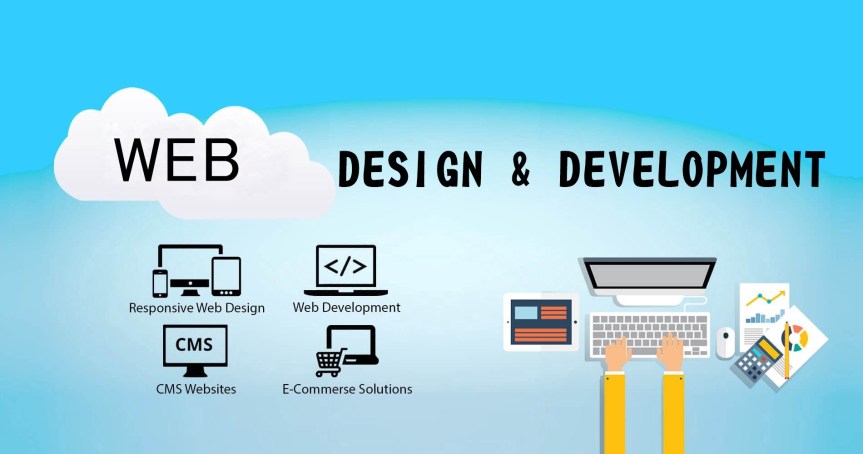
Web Development

Top Web Development Companies in Hyderabad | WebHopers

Web Development Roadmaps

WEB…. The world using websites to take , give informations and converted to its useful

Let we learn about Web development

Front-End Roadmap

STEP 1

•       Learn the Basics

•       Every Web Developer must have a basic understanding of    HTML, CSS, and JavaScript.

•       Responsive Web Design is used in all types of modern web development.

•       ECMAScript 5 (JavaScript 5) is supported in all modern browsers. Take a good look at it, especially the new array functions.

•       HTML     

•       HTMLHTTP /  XHR

•       CSS

•       CSSCSS Responsive

•       JavaScript

•       JavaScriptECMAScript 5

STEP 2
Dig Deeper

When you feel comfortable with HTML and CSS, it is time to dig deeper.

You should learn how to use Maps, Fonts and Icons in HTML.

On the JavaScript side, you should learn how to access the HTML DOM.

You should also learn how to use AJAX and JSON for making server requests.

HTML

HTML DOMGoogle MapsGoogle FontsGoogle Charts

CSS

CSS Icons

JavaScript

XMLJSONAJAX

  • STEP 3
    Choose Frameworks
  • Now it is time to look at some Frameworks.
  • On the CSS side you should choose a framework for reponsive web design:
  • Bootstrap  /  Material Design  /  W3.CSS
  • On the JavaScript side you should learn at least one modern framework:
  • React.js  /  Angular.js  /  Vue.js   /  W3.JS
  • Maybe the popularity of jQuery has passed the top, but it is still the most used JavaScript framework.
  • CSS
  • BootstrapW3.CSS
  • JavaScript
  • jQueryAngularJSVue.jsW3.JS
  • XML
  • XSLTXPathXQuery

Back-End Roadmaps

  • STEP 4
    Back-End Roadmaps
  • Fullstack
  • SQLPHPASPPython
  • Fullstack JS
  • SQLNode.jsMySQLMongo.db

Web Development

Web Development Roadmaps

WEB…. The world using websites to take , give informations and converted to its useful

Let we learn about Web development

Front-End Roadmap

STEP 1

•       Learn the Basics

•       Every Web Developer must have a basic understanding of    HTML, CSS, and JavaScript.

•       Responsive Web Design is used in all types of modern web development.

•       ECMAScript 5 (JavaScript 5) is supported in all modern browsers. Take a good look at it, especially the new array functions.

•       HTML     

•       HTMLHTTP /  XHR

•       CSS

•       CSSCSS Responsive

•       JavaScript

•       JavaScriptECMAScript 5

STEP 2
Dig Deeper

When you feel comfortable with HTML and CSS, it is time to dig deeper.

You should learn how to use Maps, Fonts and Icons in HTML.

On the JavaScript side, you should learn how to access the HTML DOM.

You should also learn how to use AJAX and JSON for making server requests.

HTML

HTML DOMGoogle MapsGoogle FontsGoogle Charts

CSS

CSS Icons

JavaScript

XMLJSONAJAX

  • STEP 3
    Choose Frameworks
  • Now it is time to look at some Frameworks.
  • On the CSS side you should choose a framework for reponsive web design:
  • Bootstrap  /  Material Design  /  W3.CSS
  • On the JavaScript side you should learn at least one modern framework:
  • React.js  /  Angular.js  /  Vue.js   /  W3.JS
  • Maybe the popularity of jQuery has passed the top, but it is still the most used JavaScript framework.
  • CSS
  • BootstrapW3.CSS
  • JavaScript
  • jQueryAngularJSVue.jsW3.JS
  • XML
  • XSLTXPathXQuery

Back-End Roadmaps

  • STEP 4
    Back-End Roadmaps
  • Fullstack
  • SQLPHPASPPython
  • Fullstack JS
  • SQLNode.jsMySQLMongo.db

What is Marketing Mix?

The term marketing sounds simple right? But do you have the clear idea about what is the whole concept of marketing mix? No worries you will have it after going through this article.

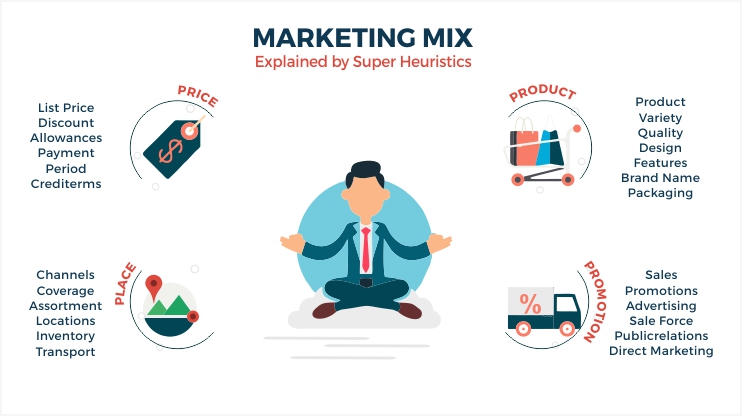
Marketing mix refers to the elements or components that are mixed by the marketers in order to interact with the customers in a much better way. These are basically the tactics used to promote the products. It provides broad guidelines for putting the right products in the right place, at the right time and price. Hence marketing mix plays a very important role for achieving the objectives . Majorly it is divided into the following elements:

Product:

Product is something that is actually offered to the customers for satisfying their needs and wants. Marketers need to clearly look out the conditions in the market before launching a product because customer is the king in today’s market scenario and if the product is not satisfactory for them they will switch over to some other brand as there is stiff competition in the market. There can be two situations the product can be known to the market or it can be the newly launched. More efforts will be required in new one because there will be the need of attracting the new customers and making them aware about that product along with the requirement of that product to the market. Product can be tangible that can be seen and touched or intangible which can’t be seen nor touched.

Price:

Price is the cost charged for a product. It is the most important element of marketing mix as it plays a very crucial role in attracting customers . Price must be set up in such a manner that it must be beneficial on behalf of both the customers and the sellers. Some products involve huge prices that gives them luxury while for some of the necessity products the prices offered are comparatively low.Marketers must link the price to the product’s real and perceived value, but they also must consider supply costs, seasonal discounts, and competitors’ prices.

Place:

It refers to the ultimate place where the product is being offered. Mostly the product is produced in one part and demanded in various parts so various distribution channels are used to make that product available to the customers who are more likely to buy it. Also product can be sold virtually the main difference in that case will be that there will be no personal touch between the buyer and the seller.

Promotion:

It involves adopting all those strategies that are responsible for making the customers aware about a particular product to increase the sale. These strategies leads to the huge changes in the profit potential of a business by helping the business to achieve its goals. It can be done through:

  • Advertising
  • Public relations or publicity.
  • Sales promotion.
  • Direct marketing.
  • Personal selling.

Thin line between pride and arrogance | Are people just envious of my success?

Am I really arrogant or am I just confident? How to deal with people calling me over-ambitious or arrogant when I am just working towards my dream?

Let’s first dive into difference between pride i.e., self-confidence and arrogance.

As we discuss previously, pride is having satisfaction over our abilities and our accomplishments.

Previous article: https://eduindex.org/2021/07/22/pride-prejudice-and-aggression/

Arrogance is having excessive pride over one’s or a particular group’s accomplishment to an extent wherein we believe that our abilities are nothing compared to others and the success would have come sooner if I had done it alone.

In psychological context, there are two kinds of pride. 

  • Authentic pride- Positive feeling about ourselves, loved one’s success, our actions after successfully coming out from comfort.
  • Hubristic pride- It usually involves ego coupled with arrogance. Has an exaggerated self-concept.

PRIDE

  1. Any act that boosts our self-esteem, building trust about what we are capable of, and recognizes it, accepts our flaws. It pushes you to perfect your talent and bring forth a blooming personality.
  2. You accept the potential of those working with you and try to form a group that will put in collective work to achieve your collective goal.
  3. Values other’s input and doesn’t hesitate to ask for guidance.
  4. Accepts constructive criticisms, filters their work to make it more productive.
  5. Never slacks off.
  6. Is aware of strengths, weaknesses, and areas which can be improved.
  7. Keeps striving better (Knows that knowledge is boundless).

ARROGANCE

  1. Believes that I have everything I need and that my gifts are beyond immeasurable.
  2. Believes that I have no flaws and cannot make a mistake or create complications from my actions.
  3. Every bad outcome is due to the people affiliated with my work.
  4. Looks for external validations.
  5. Thinks that there is no need to practice or attend meetings because I can win no matter in the end.
  6. Is okay to not follow moral rules (Legal ways) to achieve my needs.
  7. Other’s input is worthless (but will take others’ great ideas making it own saying you got this idea from me) and find them distracting.
  8. Works alone even though being a part of a group activity.

SELF-REFLECTION

If you need to know, whether you really are being arrogant due to impatience or intentionally or people are envious of your success, potential; self-reflecting on your actions, thoughts, and intention will help you resolve your doubts and get back on track with change in yourself or environment.

Self-reflection: Ability to witness and evaluate our own cognitive, emotional, and behavioral processes. To give an objective thought about your behaviors, thoughts, attitudes, and desires.

You work hard, burn the midnight oil, respect everyone and their opinions, and achieve success. But in the end, you get judged as an overachiever, arrogant and rude. Those judgements try to bring your down, make you doubt yourself.

 Well, let me just highlight that it is okay. These doubts usually arise because you care about how you respect not only yours but others’ effort that goes into bringing about results which is beneficial for everyone.

Look at few differences I have mentioned above and reflect.

Are you dismissive of your colleagues’ efforts? Do you assure them to implement their ideas but you end up doing completely different without informing them? Do you go late to meetings and displace your external anger on their capabilities?

Few more points to take note of:

  1. Not being honest about their work, where you want improvements, and blaming entire failure on their recklessness. (This is concerning leadership).
  2. Thinking you are superior and forcing rules obnoxiously while you try to put them down.
  3. Seeking constant validation.
  4. Yes, you have achieved great things, burnt that midnight oil but boasting about it is not going to change the outcome of your efforts. You have to keep learning and communicate and inculcate views of your colleagues to bring the best out of them and to bring about a team with the same goals and motivation.

Negative critics/members with less motivation, insecurity and less self-esteem may see you with the lens blurred with their issues.

Reach out, write a diary, and find out ways to bring out the best in you. People will usually have prejudices regarding your ethnicity, your way of leading, the cause of your goals, gender, religion, race, color, and everything that has nothing to do with you or your work but everything about themselves.

Do not give up because just like supporters exist, people against you will try to affect you. Believe in yourself, your teammates, reflect occasionally, and keep moving forward with your head held high.