“No work is insignificant. All labor that uplifts humanity has dignity.”Martin Luther King, Jr.
EVERY WORK MUST BE GIVEN HONOUR
The word ‘dignity’ means the ‘quality of being worthy of honour or respect So the expression ‘dignity of labour’ means honour or respect’ received through or for hard work. That is why it is said that ‘work is worship’. Every type of work need labour, physical or intellectual. But the word labour’ is generally used in the sense of physical labour which is as important as intellectual labour. The production of cereals, construction of buildings and the other constructive work require physical labour. Man cannot do without hard labour. So, he should do all types of work.
WRONG NOTION ABOUT MANUAL LABOUR
But the attitude of the educated and the gentlemen towards manual labour is wrong. They are of the opinion that manual work is fit for the illiterate men only. But they are mistaken. All intellectual work involves some sort of physical labour. Even a student has to labour hard to pass the examination. All artists, scientists and writers whose work is intellectual have to spend hours with patience. The manual work too needs the exercise of intellect. A carpenter, an ironsmith, a goldsmith, a barber, etc. whose work is physical have to exercise intellect to improve the quality of their work.
MANUAL LABOUR: THE ROOT OF ALL PROGRESS
And it is the manual labour which is at the root of all progress. It is rightly said that true labour never goes in vain. Labour has its own importance. Nothing can be achieved in the world without labour. The prosperity of a country depends on its agricultural products. So, there is no humiliation in the cultivation of land. The people of the West do their work themselves. They look upon labour as something honourable and sacred. Such is the importance of labour that its dignity is recognised by all. It is the source of health and happiness.
It’s always better to start early, and gain as much experience.
Internships have always been difficult while juggling University where it is required to show up everyday and attend almost all your classes. But the competition these days are cut throat and nothing promising could ever come your way — if you think you could just breeze through lives.
Being respectful that not all situations that every single one of us face are conducive for us to start investing our time for any sort of extra-curricular, but you also need to stop excusing yourself and being lethargic, it won’t ever help you.
You are supposedly at the prime of your age, if you keep up the act that have bailed you away from serious commitment, then you are just downplaying your life. You’d never need to blame it on other’s past action or even current actions, even though you could be right to blame them; it doesn’t help, you’ll just spiral out with your thought, and give power to someone else, that’s a big no-no.
Moving on, let’s ask oneself what they are interested in, and even with what is currently their educational qualification, are you comfortable trying new things? And if you could see yourself trying everything out just once, give yourself a pat in the back and get on your devices, reach out to people and start applying for positions and trainings that could help you.
The more you get exposed to different working conditions is better, you get street-smart for starters, but you also learn what it takes to strive and exist in the market, you learn interpersonal skills and even brush up your communication skills which wouldn’t have happened within your little friends clique.
Thus actively participating in such activities without being nagged by someone would be beneficial for you and improve you, more than anything else.. it could also help proof people that you’re serious with what you’re doing and are capable enough to look after yourself.
The pandemic with all its flaws have provided to accommodate work-from-home internship opportunities to many, which takes off a big load from us, and we can engage in multiple activities at a given time with just a switch of your device screens/windows/slides.
The bandwagon effect is a psychological phenomenon in which people do something primarily because other people are doing it, regardless of their own beliefs, which they may ignore or override. This tendency of people to align their beliefs and behaviors with those of a group is also called a herd mentality. The term “bandwagon effect” originates from politics but has wide implications commonly seen in consumer behavior and investment activities. This phenomenon can be seen during bull markets and the growth of asset bubbles.
Understanding the Bandwagon Effect
The bandwagon effect arises from psychological, sociological, and, to some extent, economic factors. People like to be on the winning team and they like to signal their social identity. Economically, some amount of bandwagon effect can make sense, in that it allows people to economize on the costs of gathering information by relying on the knowledge and opinions of others. The bandwagon effect permeates many aspects of life, from stock markets to clothing trends to sports fandom.
Politics
In politics, the bandwagon effect might cause citizens to vote for the person who appears to have more popular support because they want to belong to the majority. The term “bandwagon” refers to a wagon that carries a band through a parade. During the 19th century, an entertainer named Dan Rice traveled the country campaigning for President Zachary Taylor. Rice’s bandwagon was the centerpiece of his campaign events, and he encouraged those in the crowd to “jump on the bandwagon” and support Taylor. By the early 20th century, bandwagons were commonplace in political campaigns, and “jump on the bandwagon” had become a derogatory term used to describe the social phenomenon of wanting to be part of the majority, even when it means going against one’s principles or beliefs.
Consumer Behavior
Consumers often economize on the cost of gathering information and evaluating the quality of consumer goods by relying on the opinions and purchasing behavior of other consumers. To some extent, this is a beneficial and useful tendency; if other people’s preferences are similar, their consumption decisions are rational, and they have accurate information about the relative quality of available consumer goods, then it makes perfect sense to follow their lead and effectively outsource the cost of gathering information to someone else.
However, this kind of bandwagon effect can create a problem in that it gives every consumer an incentive to free ride on the information and preferences of other consumers. To the extent that it leads to a situation where information regarding consumer products might be underproduced, or produced solely or mostly by marketers, it can be criticized. For example, people might buy a new electronic item because of its popularity, regardless of whether they need it, can afford it, or even really want it.
Bandwagon effects in consumption can also be related to conspicuous consumption, where consumers buy expensive products as a signal of economic status.
Investment and Finance
Investing and financial markets can be especially vulnerable to bandwagon effects because not only will the same kind of social, psychological, and information-economizing factors occur, but additionally the prices of assets tend to rise as more people jump on the bandwagon. This can create a positive feedback loop of rising prices and increased demand for an asset, related to George Soros’ concept of reflexivity.
For example, during the dotcom bubble of the late 1990s, dozens of tech startups emerged that had no viable business plans, no products or services ready to bring to market, and in many cases, nothing more than a name (usually something tech-sounding with “.com” or “.net” as a suffix). Despite lacking in vision and scope, these companies attracted millions of investment dollars in large part due to the bandwagon effect.
Year after year, Google has been ranked as one of the top companies to work for, so it’s no surprise that the tech giant receives roughly three million applications per year. With an acceptance rate of 0.2%, you’d have a better chance of getting into Harvard.
It is difficult to get a job at Google because of their quality standards and the high number of applications they receive per year. For example, INC reported that Google receives 2 million job applications per year, which means it’s more competitive to get into than Harvard University.
Google is an employer of choice for the world’s top talent, typically receiving hundreds of resumes for every opening, which allows them to be extremely selective in their hiring.The hardest part is getting an interview. If you attend a university, go through campus recruiting.
According to the Pascale, The lowest paid Google employees are Entry Levels at $51,000.Google says there is no degree or prior experience required. In fact, 61% of learners enrolled do not hold a four-year degree. This certificate could be a perfect launchpad to a career in IT.
So if you have a keen interest in working at Google California or at any other branches of Google work hard my friend. More than studies work on yourselves, on your IQ level the interviewees are not going to ask you a question from your syllabus.
Minimalism is defined as a design or style in which the simplest and fewest elements are used to create the maximum effect. Minimalism had its origins in the arts—with the artwork featuring simple lines, only a few colors, and careful placement of those lines and colors. More recently, it has become representative of a lifestyle that aims to remove clutter from all facets of life.
Minimalism is all about owning only what adds value and meaning to your life (as well as the lives of the people you care about) and removing the rest. It’s about removing the clutter and using your time and energy for the things that remain. We only have a certain amount of energy, time, and space in our lives. In order to make the most of it, we must be intentional about how we’re living each day.
There are many different approaches to minimalism, but it’s really just a tool to help you prioritize what’s important in your life.
Joshua Becker of Becoming Minimalist offers this definition: “Minimalism is the intentional promotion of the things that bring you joy and the removal of those that do not.” It might be called simple living, tiny living, intentional living, and a myriad of other things—but there is at least one common thread: the idea of curating the things we own to best reflect our priorities and vision for our lives.
If the idea of minimalism sounds intimidating to you or if you’ve seen some images and thought, “that’s a nice idea, but I’d never want to live like that,” don’t worry. You can benefit from applying minimalism in your life whether you live in a tiny home, suburban house, or a mansion. You can use minimalism as a guiding philosophy and customize based on what works best for you.
Common Misconceptions of Minimalism
Contrary to what some people think, there aren’t any actual rules to minimalism. There’s no official board of minimalism to determine whether or not you’re doing minimalism right. Minimalism truly looks different for everyone.
You don’t have to own below a certain number of items. You can still have nice things, and no, you don’t need to get rid of your favorite collection—whether it’s books, shoes, or music. Minimalism doesn’t have to look like white-walled, modern and sparse homes you’ve probably seen in magazines and videos, a common minimalism mistake. Minimalism is also not a one and done project. It is a a continual practice to ensure everything in our lives is working for us in our vision, not against us. Its used over the years to make substantial changes in our careers, home, lifestyle, buying behaviors, etc.
Everyone can benefit from applying the principles of minimalism to their lives. It’s a process of removing distractions and things that no longer add value to our lives.
Why Minimalism Is An Effective Tool For Living An Intentional Life?
In the end, minimalism is less about owning fewer items and more about actively making choices on what kind of things truly matter to you.
We exist in a society that creates false value on owning more stuff and having no time to use them much. The constant pursuit of bigger and better is an endless cycle. There will always be a nicer car to buy, a bigger boat, a larger home, and or a faster private jet. Did you know that there’s a website for billionaires to shop? Yeah. It never ends.
It may seem like an overwhelming challenge at first, but as you untangle the life you built around owning more things, you’ll find the stress disappearing and the world starting to slow down. Those choices you make will begin to build a muscle that will fundamentally change the way you live your life.
China and Japan India and Byzantium traveling culture and history vector geisha and samurai men and women Taj Mahal and torii gate capitol building and Great wall landmarks and heritage nationalities.
Culture and history is the main building block of our lifes
The Culture is the characteristics and knowledge of a particular group of people, encompassing language, religion, cuisine, social habits, music and arts.
The word “culture” derives from a French term, which in turn derives from the Latin “colere,” which means to tend to the earth and grow, or cultivation and nurture
History is the study of life in society in the past, in all its aspect, in relation to present developments and future hopes. It is the story of man in time, an inquiry into the past based on evidence.
As with any scholarly approach that boasts of being “new” when it bursts onto the scene, new cultural history was fairly well established as one among many ways of thinking about history by the twenty-first century. This is not to say that new cultural historians enjoyed the unanimous esteem of their more traditional colleagues, for the field still managed to draw the fire of critics from the left and the right who believed that after twenty years this approach still represented a mere “trend.” One could agree with Peter Novick that this attests to the fragmentation of the historical profession into a plethora of specializations that no longer cohered around shared principles and whose denizens had little common ground for discussion. Yet much has changed in cultural history since its heyday in the 1980s.
When new cultural history was actually “new” it provided innovations both in terms of the topics considered worthy of historical attention and in terms of the ways of theorizing such topics within their respective contexts. It is nevertheless apparent that a good portion of what was marketed in 2000 as “cultural history” reflected more of the topical rather than theoretical innovations entailed by this approach. In fact, some of these works even read more like conventional social histories with a few obligatory nods to one of many privileged theorists.
To some extent this state of affairs reflects the success of this approach in the academy and the willingness of historians to combine methodologies in a creative and eclectic manner. On the other hand, though, one might argue that cultural history lost much of its edge by becoming subsumed into a more or less nonreflective historical establishment. Some historians see less fragmentation than the cooptation of erstwhile radical approaches back into a surprisingly resilient mainstream.
“Whatever possibilities become evident,” notes Patrick Joyce, “something is needed to shake the hold of a history which continually reproduces itself, in the process sucking the erstwhile heterodox into its consensus, in much the way that ‘cultural history’ is slowly but surely becoming routinized as more methodology, yet one more subdiscipline in the house of history.” Joyce’s observation is astute, yet one wonders whether a historical approach that could successfully resist such cooptation is possible and, even if it were, whether it would still merit the name “history.” It seems evident that what makes history “history” has little to do with methodologies and innovations that are unique to it, and perhaps a more thoroughgoing interdisciplinarity would discourage the domestication of future innovations into mere additions to the mansion of conventional history.
A job is something you simply do for the money. Usually, jobs have a small impact on future resumes because they aren’t typically related to what your career is or will be. Also, jobs usually offer less networking opportunities because your coworkers often won’t be continuing on to the same field as you in your future career.
Most jobs consist of hourly wages, are more short-term, and focus on getting a task done.
What is a career ?
A career is all about building up skills through various employment opportunities, giving you the ability to move on to higher paying and more prestigious ones. Careers provide a foundation of experiences that help fuel your professional life for many years.
Careers are more long-term and are about learning, gaining experience, building connections, and putting yourself in the right position for promotions and raises. Also, careers tend to be more salary based, as opposed to hourly based like jobs, and often include benefits such as paid time off and healthcare.
While more education is often required for a career, you don’t need to spend the rest of your life in school just to get ahead. South College offers many associate degree programs that can be completed in just two years, getting you started on your new career before you know it.
If you’re interested in finding out what your future career should be or in getting the right education to put you there, contact us today!
That’s not to say that jobs aren’t valuable. Jobs show your work ethic, which is important to future employers, and money pays the bills! Jobs can help prepare you for a career by providing you with valuable skills like time management and communication.
DIFFERENCE
A job is more short-term oriented and tends to focus purely on earning money. On the other hand, a career is a series of related employment in one field that provides experience for your future and helps you earn a better paycheck and living status
7 Strategies to Build A Successful Career
Identify with Your Goals. Before even considering following a career route, you must get to know yourself. …
“The only difference between success and failure is ability to take action.”….. Alexander Graham Bell
WHAT IS A FAILURE?
According to Wikipedia, “FAILURE is the state or condition of not meeting a desirable or intended objective, and may be viewed as opposite of success.”
In another definition of “ FAILURE is the act of falling short of a goal of a person, who hasn’t achieved what they set out to. It is a cessation of proper functioning or performance or rather a decline in strength or effectiveness.”
HOW IS IT DIFFER WITH SUCCESS?
Your action in your field of work, in your niche, in your desired goal of life, actually work like a decisive factor. If you feel harassed, defeated, exhausted, and give up pursuing, your efforts are bound to hang in the hands of destiny. These things leave you to procrastinate. Start moving away from the active zone and surrender to a gloomy laziness and here begins your downfall.
Now if you see this entire act in opposite train, you are able to penetrate and grip the reason of failure. You reschedule and reprogram your activity. You put more organised, alive and determined endeavour and keep faith within yourself, you are bound to hug success.
FAILURES ARE OUR BEST TEACHERS.
They are stepping stones to success, or to put it in other Words, they are the pillars of success. Since failures teach us to introspect or peep within, they make us think of our weaknesses and flaws and learn lessons from them and vow not to repeat these mistakes again in life. In this way they are a mirror to our real personality and provide scope for upgrading ourselves. Failures may discourage, depress, or demoralize. Most do shake a person’s confidence at least for some time but nor for ever. The real strength of a man comes out only when he faces the ups and downs of life with patience and perseverance.
BE OPTIMISTIC
Men of courage face each rejection courageously and come out unharmed and unblemished. Failures and sufferings bring out the best of human beings. They learn that life is not a bed of roses only; it is full of challenges, obstacles and obstructions which can be set aside with persistent hard work and repeated efforts. To achieve anything in life one has to be aggressive, as nothing is achieved by being passive or pessimistic. Fear of failure may be a hindrance for some people, but to any daring person, it is just an illusion. You may think something is standing in your way, but there is nothing there.
You have an opportunity to do your best and conquer success. If it turns out that your best was not good enough, you’ll just have to look back and say, maybe I was too afraid to try, it was not good enough. There is nothing wrong with that, but nevertheless, a great eye-opener.
HOW DOES IT WORK LIKE A PROPELLING FACTOR?
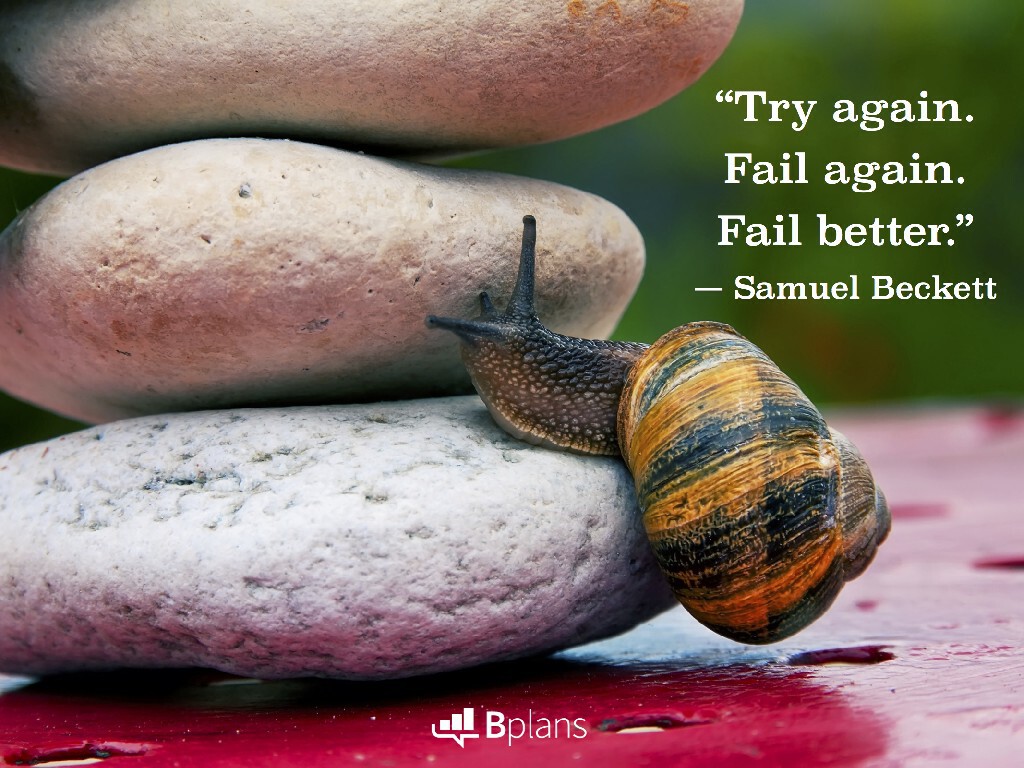
Failure always made me try harder the next time. Think positive. and find fuel in failure’ is a sound advice. Failure will surely get you closer to where you want to be. The greatest discoverers had to face hundreds of failures before the final answers were found. The inventors, researchers and pathfinders had to encounter manifold hardships and opposition. But were they deterred by failures? Many often could not taste success but left great legacy to be followed by others to seek inspiration and take up their half-finished work. The world would not have progressed and the march to civilization would have halted if failures could dampen the spirit of the people. It is, therefore, advisable not to be discouraged by failures but to develop positive attitude to life, that obstacles are bound to be there. Only commitment to your mission must be steadfast.
SO…..NEVER GIVE UP
Therefore, when failures appear awfully incontrollable and life appears miserable, one has to remember “The end part of every night is the darkest one and then comes the dawn.” Thus, when nothing appears to work out in the desired way and all roads seems to lead to failures, one has to just remember the advent of the dawn. Therefore, we shouldn’t drop hope but keep on trying till we achieve. No one knows, that the final round exertion may declare one a champion.
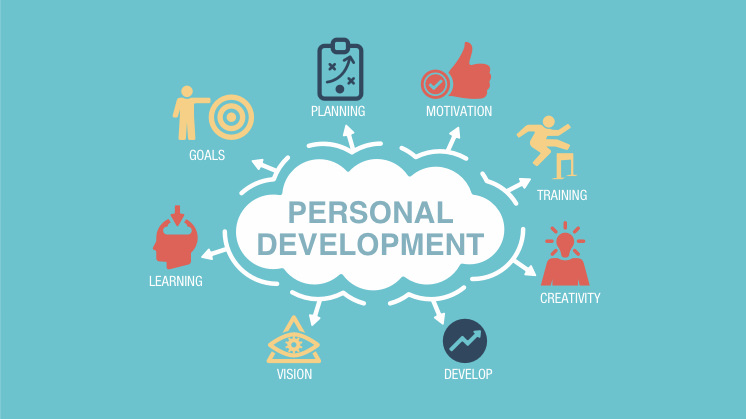
Self help and personality development is a weapon for us
The spirit of self help creates many good qualities in a person. … These people work more harder than a person who is reliable on others for their work. This leads to help them obtain strong will- power and determination.
Self-help or self-improvement is a self-guided improvement—economically, intellectually, or emotionally—often with a substantial psychological basis. … Many different self-help group programs exist, each with its own focus, techniques, associated beliefs, proponents and in some cases, leaders
The following are common examples of self-improvement.
Self-Awareness. A process of introspection to understand your own character, behavior, fears and ambitions.
Awareness. A process of extrospection to understand the world around you.
Health. …
Physical Fitness. …
Time Management. …
Productivity. …
Performance. …
Know-How
Here’s a look at some ways to build self-improvement into your daily routine and let go of negative thoughts about yourself.
Cultivate gratitude. …
Greet everyone you meet. …
Try a digital detox. …
Use positive self-talk. …
Practice random acts of kindness. …
Eat at least one meal mindfully. …
Get enough sleep. …
Breathe consciously.
Personality development refers to how the organized patterns of behavior that make up each person’s unique personality emerge over time. Many factors go into influencing personality, including genetics, environment, parenting, and societal variables.
Personality development helps you gain recognition and acceptance from the society as well as people around. Personality development plays an essential role not only in an individual’s professional but also personal lives. It makes an individual disciplined, punctual and an asset for his/her organization.
Here are great ways to improve your personality:
Be a better listener. …
Read more and expand your interests. …
Be a good conversationalist. …
Have an Opinion. …
Meet New People. …
Be yourself. …
Have a positive outlook and attitude. …
Be fun and see the humorous side of life.
The four personality types are: Driver, Expressive, Amiable, and Analytical. There are two variables to identify any personality: Are they better at facts & data or relationships? And are they introverted or extroverted. Note: Most people will have major and minor type.
* Gender – Are there male jobs & female jobs? – A useful debate which can get heated. The statutory guidance states that you must promote equality of opportunity so care must be taken when guiding this debate.
* Jobs of the future – What jobs will exist in 5, 10, 20 years that don’t exist now?
* What effects are robotic workers having on the job market? Will robots be able to do jobs like journalism & legal work (yes they will, computerised copy writing and contract checking are already a reality) or will automation only affect ‘physical’ jobs?
* Transferable skills – what are they and why do we need them? – Useful question to elicit knowledge of transferable skills – you may find this definition useful in order to help your students decide which skills are transferable “Transferable skills are general skills you can use in many jobs. You gain these skills from previous jobs, projects, voluntary work, sport, your home life, hobbies, and interests. They enable you to be adaptable and flexible in case you need to change your job”
* What skills & qualities do employers want when they employ a person straight out of school/college/university?
* Employers are frequently reported as saying school leavers are not workplace ready. A discussion around what skills are needed and what they are can be structured using the following frequently cited skills:-Understanding of business world; Teamwork; Communication; Negotiation skills; Problem Solving; Leadership; Organisation; Perseverance/motivation; Ability to work under pressure; Confidence
* Why do some people try and dissuade people from taking certain jobs? – An ideal opportunity to explore the motivation behind advice from various sources. E.g. university & school leaver recruitment staff. Teachers who have been instructed to recruit for the school 6th Parents who would like to see their children achieve their parent’s dream etc.
* Can you turn a hobby into a career? – Students may wish to pursue a hobby such as photography or sport as a careers. What considerations might they need to have when doing this? E.g. need to be self-employed; the effect of training 7 days a week on enjoyment of the sport etc.
* Can work be fun? What makes work fun? Can it always be fun? What is fun?
* How many types of job can I expect to do over my lifetime? – A discussion about career paths. Not just changing jobs but changing types of job and progression. The role of lifelong learning, retraining, transferable skills. Using a story about somebody’s career journey is a good prompt for this discussion.
* What’s the difference between a job and a career?
* Is a job just to pay the bills and a career something you’re interested in?
Jobs:-
INTRODUCTION:-
God rebukes Job’s three friends and orders them to make a sacrifice. Job prays for God’s forgiveness of them and God accepts his prayer. At the end of the book, God gives Job twice as much wealth as he had before, along with seven sons and three daughters. After that, Job lived 140 more years.
A job, employment, work or occupation, is a person’s role in society. More specifically, a job is an activity, often regular and often performed in exchange for payment (“for a living”). Many people have multiple jobs (e.g., parent, homemaker, and employee). A person can begin a job by becoming an employee, volunteering, starting a business, or becoming a parent. The duration of a job may range from temporary (e.g., hourly odd jobs) to a lifetime (e.g., judges).
An activity that requires a person’s mental or physical effort is work (as in “a day’s work”). If a person is trained for a certain type of job, they may have a profession. Typically, a job would be a subset of someone’s career. The two may differ in that one usually retires from their career, versus resignation or termination from a job.
Jobs for people:-
Most people spend up to forty or more hours each week in paid employment. Some exceptions are children, retirees, and people with disabilities; however, within these groups, many will work part-time, volunteer, or work as a homemaker. From the age of 5 or so, many children’s primary role in society (and therefore their “job”) is to learn and study as a student.
Types of jobs:-
Jobs can be categorized by intensity (hours per week), by payment status, or by the level of experience required. The types of job stemming from intensity are categorized as full-time or part-time. They can also be classified into temporary, odd jobs, seasonal, self-employment, consulting, or contract employment. Regarding payment status, jobs are categorized as paid or unpaid. Examples of unpaid jobs include volunteer, homemaker, mentor, student, and sometimes intern. Finally, according to the level of experience required, jobs are usually grouped as entry level, intern, and co-op.
Some jobs require specific training or an academic degree.
Those without paid full-time employment may be categorized as unemployed or underemployed if they are seeking a full-time paid job.
A side job, also called a side hustle, side gig or moonlighting, is an additional job or jobs to supplement one’s income. A person with a side job may have little time left for sleep or leisure activities.
The Office for National Statistics in the United Kingdom lists 27,966 different job titles, within a website published 2015.
Day job:-
The expression day job is often used for a job one works in order to make ends meet rather than working in their preferred vocation. Archetypal examples of this are the actor who works as a waiter (the day job) while looking for roles, and the professional athlete who works as a laborer in the offseason because the athlete’s professional or semi-professional team does not pay a full living. The term is also applied to those who maintain a steady occupation while working as a day trader.
While many people do hold a full-time occupation, “day job” specifically refers to those who hold the position solely to pay living expenses so they can pursue the job they really want (which may also be during the day). The phrase strongly implies that the day job would be quit, if only the real vocation paid a living wage.
The phrase “don’t quit your day job” is a humorous response to a poor or mediocre performance not up to professional caliber. The phrase implies that the performer is not talented enough in that activity to be able to make a career out of it.
Getting a job:-
Further information: Job hunting and Employment
Getting a first job is an important rite of passage in many cultures. The youth may start by doing household work, odd jobs, or working for a family business. In many countries, school children get summer jobs during the longer summer vacation. Students enrolled in higher education can apply for internships or coops to further enhance the probability of securing an entry level job upon graduation.
Résumés summarize a person’s education and job experience for potential employers. Employers read job candidate résumés to decide whom to interview for an open position.
Use of the word:-
Workers often talk of “getting a job”, or “having a job”. This conceptual metaphor of a “job” as a possession has led to its use in slogans such as “money for jobs, not bombs”. Similar conceptions are that of “land” as a possession (real estate) or intellectual rights as a possession (intellectual property).
Occupation and life expectancy:-
Historically, manual work has seemed to contribute to shortening one’s lifespan.High rank(a higher position at the pecking order) has a positive effect. Professions that cause anxiety have a direct negative impact on health and lifespan.Some data is more complex to interpret due to the various reasons of long life expectancy; thus skilled professionals, employees with secure jobs and low anxiety occupants may live a long life for variant reasons.The more positive characteristics one’s job is, the more likely he or she will have a longer lifespan.Gender, country, and statistically confirmed danger are also notable parameters.
See also:-
Career and Life Planning Education
International Standard Classification of Occupations
Job analysis
Job guarantee
Job interview
Job performance
Job satisfaction
Job stress
Labour economics
Refusal of work
Unemployment
Wage labor
References:-
Citations:-
“FOI Request: List of all the occupations noted in the UK”. Office for National Statistics. The Crown. 2015. Retrieved December 6, 2015.
Newberry, Jon (October 2000). “Night Moves: Be a day trader after hours and keep your day job, too”. ABA Journal. 86 (10): 86. Retrieved 19 September 2020.
Womack, Sarah (24 October 2007). “Why accountants live longer than builders”. The Telegraph. Archived from the original on 29 August 2018. Retrieved 4 April 2018.
“Living Longer, Working Longer: The Changing Landscape of the Aging Workforce – A MetLife Study” (PDF). MetLife Mature Market Institute. April 2006. Archived from the original (PDF) on 2015-10-02.
“The Most Stressful Jobs of 2014”. CareerCast.com. Archived from the original on 2016-02-20. Retrieved 2016-02-12.
Lyte, Brittany (18 March 2015). “5 Jobs Proven to Make You Live Longer”. Wise Bread. Archived from the original on 16 February 2016. Retrieved 12 February 2016.
Lees, John (11 November 2014). “Personality test: what job would make you happiest?”. the Guardian. Archived from the original on 9 December 2016. Retrieved 11 December 2016.
“Whistling While You Work: The 10 Most Satisfying Careers”. CareerCast.com. Archived from the original on 2016-02-04. Retrieved 2016-02-12.
“Find out how your gender and job may affect your life expectancy”. the Guardian. 21 October 2015. Archived from the original on 2 February 2017. Retrieved 11 December 2016.
Sources:-
Davis, Steven; Haltiwanger, John; Schuh, Scott (1998), Job Creation and Destruction, MIT Press, ISBN 978-0-262-54093-3
Graeber, David (2018). Bullshit Jobs: A Theory. Simon & Schuster. ISBN 978-1501143311.
Granovetter, Mark (1995), Getting a Job: A Study of Contacts and Careers, University of Chicago Press, ISBN 978-0-226-30581-3
Joshel, Sandra (1992), Work, Identity, and Legal Status at Rome: A Study of the Occupational Inscriptions, University of Oklahoma Press, ISBN 978-0-8061-2444-5
Kranzberg, Melvin; Gies, Joseph (1986), By the Sweat of Thy Brow: Work in the Western World, Greenwood Press, ISBN 978-0-313-25323-2
Miller, Ann Ratner; Treiman, Donald; Cain, Pamela; Roos, Pamela (1980), Work, Jobs, and Occupations: a critical review of the Dictionary of Occupational Titles, National Academy Press
Orr, Julian Edgerton (1996), Talking about Machines: An Ethnography of a Modern Job, Cornell University Press, ISBN 978-0-8014-8390-5
Robinson, Tony; Willcock, David (2005), The Worst Jobs in History: Two Thousand Years of Miserable Employment, Pan Macmillan, ISBN 978-0-330-43857-5
Roebuck, Carl (1969), The Muses at Work: arts, crafts, and professions in ancient Greece and Rome, MIT Press
Morse, Nancy; Weiss, Robert (1955). “The Function and Meaning of Work and the Job”. American Sociological Review. 20 (2): 191–198. doi:10.2307/2088325. JSTOR 2088325.
career:-
INTRODUCTION:-
Career development is now a lifelong process, rather than a lifelong job, and involves moving laterally or upwards within an organisation or between organisations. It is the combination of your life experience, learning, and all work experience.
What is a career?
The past, the present and the future
The past:-
A typical career path in the past involved almost guaranteed job security. You obtained a “job for life” and you could expect steady progression up an organisation’s structure.
The present:-
Factors such as technological growth and consumer demand have changed the world of work. Career development is now a lifelong process, rather than a lifelong job, and involves moving laterally or upwards within an organisation or between organisations. It is the combination of your life experience, learning, and all work experience. These days, you are responsible for your own career and you have to continuously reflect on where you are, where you want to be and how you will prepare for further career opportunities.
The future:-
Change is everywhere. The world of work is constantly changing and we must rely on ourselves much more for stability and direction. In order to do this, we need to be aware of the changes that are occurring in the current world of work.
What is the world of work like?
Have I got the right information?
It’s important to make sure that your career decisions are informed by a realistic assessment of the information available rather than relying on assumptions that you or others may have.
Some of these assumptions may have gained credibility over time, especially if they have been reinforced by the media and people whose opinion you value.
The exercise below will give you the opportunity to test your own career assumptions.
Myths and realities quiz
This mini quiz gives you the opportunity to become aware of any career myths you may have accepted as realities and to possibly challenge these assumptions. Being aware of career myths that have influenced your career planning so far may open up new possibilities for exploration that you may not have considered.
Unmistakeable trends
Change is everywhere. There are no longer short periods of change followed by long periods of stability. We have to learn to live and prosper in a world of constantly changing demands and possibilities. Some of these changes include technological change, globally competitive markets, new patterns of work and higher educational requirements.
Whatever the reason, there has been a series of unmistakable trends, particularly in the world of work. These trends include:
changing social contracts between employers and labourers;
increasing contract work;
globalisation;
an increased competition for employment;
technology and its impact on all industries;
the creation of new industries;
an ageing population.
In South Africa, we are still grappling with high youth unemployment, unequal access to further education opportunities, and a widening income gap.
The results of these changes and trends are now having a major impact on our lives and we must rely on ourselves much more for stability and direction. We are constantly being reminded that we need to operate as a “company of one” and be flexible enough to respond quickly in this ever-changing environment.
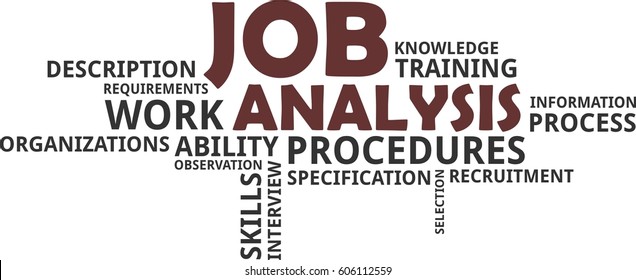
Job Analysis is a systematic exploration, study, and recording of a specific job’s responsibilities, duties, skills, accountabilities, work environment, and ability requirements. It helps in establishing the job’s worth to an organization. In other words, it measures the value and contribution of a job to the growth of the organization.
It has two components- Job Description and Job Specification. A job description is a job profile that describes the contents, environment, and condition of jobs. The job specification identifies the knowledge, skills, abilities needed to perform that task effectively.
Some of the common factors considered by various HR professionals while conducting Job analysis are-
Reporting channel/Work flow: To define reporting relationships and establish organisational structure
Role and Responsibilities of the employee and its scope/expectations
Information pertaining to size of the team the incumbent has to lead, if any
Strategic role
Employee Ability and Availability
Prior Knowledge and Experience
Company culture– To determine the behavioural qualities a candidate must have to be the right fit for the organisation
Geographical location of the employee
Information pertaining to the job from previous/existing employees
Time and dynamicity- Some HR professionals also think that the factors change according to the business environment and/or goals of the organisation and Job analysis is an ‘ongoing process’ as it evolves with the expectations of the job. For instance, according to one respondent, the focus of job analysis has shifted from qualitative and quantitative aspects to employee and company-oriented factors which results in collective holistic development.
The factors mentioned above can be divided into two categories to understand the elements and processes of Job Analysis in detail: Factors considered for preparing Job Description and Job Specifications
Factors that influence the preparation of Job Description and Job Specifications are very different due to the varying nature and objectives of the two processes. As Job description is task-oriented and Job Specification is people-oriented, it is vital to separate the factors to understand the value and significance of both the concepts.
Some of the main factors considered in the preparation of Job Description are: Ergonomics, Role and responsibilities, Organisational structure, Team size, Scope of the job, Key Result Areas, Size of the team under the employee, if any. All task-oriented factors considered during job analysis are utilised to prepare a concise and accurate job description to have a deeper understanding of the job and its significance and role in achieving the organisational roles.
However, all people-oriented factors like qualifications, prior knowledge and experience, geographical location, behavioural traits that are compatible with the work/company culture and ethic, soft skills, Training, values, special skills depending on the nature of the job, personality traits etc are considered while preparing Job specification. Job specifications are heavily dependent on the nature of the job and hence, differs from job to job. Therefore, Job Description influences the job specifications of the ideal employee required for the job.
Conclusion
In conclusion, it can be observed that the factors considered are either people-oriented or task-oriented depending on the dimensions or objectives of the job analysis. Moreover, one of the many factors considered while preparing Job Specifications also includes the Job Description.
Presently, most organisations tend to depend on job analysis to establish working relationships and organisation structure, define job responsibilities, compensate employees and to find and recruit the right fit in accordance with the employees’ and organisation’s goals and expectations.
In this blog, we are going to see the difference between a Business Analyst and a Data Analyst. 4 main things differtiate a Business Analyst from a Data Analyst in a team. They are Responsibility, Qualification, Skills and Salary. Let’s start off with responsibility.
Responsibilities:
First let’s look at the Business Analyst’s responsibilities. A business analyst works a lot with the clients to understand what they need and what the problem they are having. They are going to work with the managers and try to figure out how an idea is going to work within their team. They next thing they do is, using current data to outline a problem. They are going to go in and actually look at the data and then understand what the client is wanting so that they can describe to the team what they are trying to solve and what they are looking for. The next thing they are going to do is outline and communicate what the client actually wants the team to do. After that a business analyst can only do all the analysis around that and then hands it off to either the programming team or Data analyst to look into this further and actually solve the problem. The Data Analyst is going to actually work with the programming teams that collect and analyse the data and so the difference between these two is a business analyst typically going to work mostly with the clients and the managers while the Data Analyst is going to work with the programming side. The next thing a Data Analyst is going to do is using pre-existing data to solve a problem and so the business analyst is going to bring the problem and define the problem and bring that to the programming team and the Data Analysts work with developers to actually solve the problem and figure out a solution. Then they have to create reports and dashboards and visually present the analytical findings to the team and that’s basically the part of any Data Analyst job.
Qualifications:
The qualifications for a Data Analyst and a Business Analyst are pretty similar. For a Business Analyst, a person must have a Bachelor’s degree in Business and Administration/ Finance/ Economics or something that is business related. Sometimes one may need a Master’s degree. For the most part, the business analysts mostly have MBA’s. Data Analysts typically don’t have MBA’s. For a Data Analyst, one must have a Bachelor’s degree and that’s typically in something like Computer Science/ Statistics/ Mathematics/ Economics or Finance. They is a lot of overlap between the Business Analyst and the Data Analyst.
Skills:
Business Analyst:
SQL
MS Access
Excel
Communication skills
Presentation skills
People skills
Data Analyst:
SQL
R/ Python
TABLEAu/ Power BI
Data Modeling
SAS/ SPSS
Excel
AWS/ Azure
Salary:
Business Analyst:
Entry level: 35k – 50k
Mid level: 50k – 75k
Senior level- 75k – 95k
Data Analyst:
Entry level: 45k – 60k
Mid level: 65k – 85k
Senior level- 85k – 110k
Data Analyst gets a little bit more salary on an average than a Business Analyst. This is because in small companies and at times in big companies, Data Analysts are asked to communicate with clients and in those cases there isn’t even necessary for a Business Analysts.
A computer is a machine that performs tasks and calculations according to a series of instructions or program operations (circuits, etc.) and software (OS, the underlying software that controls the hardware when the user issues instructions).
Programming
You don’t need a car, its function is the same as a jukebox that keeps playing tracks. For example, they want to tell the music box to play different music every time. They want to program the music box so that it can play different music. This part of the history of computers is called “the history of programmable machines.” “This is a concise sentence in the history of machines. When I speak their language, I can order to do different things.”
The role of computers in daily life
Today’s computers are fast, small and small. Powerful. Computers can save money, time and labor; otherwise it would take months or years to complete in a few seconds with computers. Launch satellites using a simple application on our desktop. According to the requirements, the storage capacity and speed of the computer will be different. For example, NASA and other companies that use high-speed supercomputers, because speed is an important part of your business. Computers are cheaper than smart phones. The essence is in hand. At home, computers provide opportunities to access social networks, read books, or work from home.In the office, they are the most important because they are the most important form of work. Although computers can help with almost everything from shopping to work to taking notes or playing games, people rely heavily on computers for almost everything. Computers make life easier and faster than ever. Large storage rooms are of great help to today’s business. The data received from different systems is stored on the computer for later use. In addition, previous shopping, reading, work, arithmetic, calling appointments and events or activating alarms all occurred in different places. Now everything can be done with our smart phone. If the book is bulky, it would be great to bring ten books. Now; millions of books are within reach. There is no need to check calendars anymore, because they have been replaced by reminders that automatically remind us of important events and clocks that only need to be activated once. These are some basic tasks that are performed daily, and it is difficult to work without a computer. Computers are no longer a luxury, they can be used in different forms on different platforms, for example as smart phones. Computers are also very helpful in medicine and have undergone extensive development in the past decade. Addictive.All in all, we can say that computers have profoundly affected our lives, and changes are no longer associated with ease, habit, and popularity.
The above is a small example of computers, but as far as modern technology is concerned, computers have changed our way of life. Computers are not only used for arithmetic but are now active in teaching, industrial purposes, automated processes, data management, analysis, personal and group entertainment, Music synthesis, professional photo and video editing, hardcore games, research goals, creating new software and applications to make life easier, shopping, banking, marketing, and even participating in the artificial creation of intelligent creatures with deep learning concepts and machine learning.
“Guard well your spare moments. They are like uncut diamonds. Discard them and their value will never be known. Improve them and they will become the brightest gems in a useful life.” ― Ralph Waldo Emerson
WHY NECESSARY?
Leisure means respite from work. It is essential for men tired with work. A little leisure refreshes the tired limbs and makes him fit for another period of work.
VARIOUS WAYS OF SPENDING SPARE TIME
Set of woman doing leisure activities relaxing at home, vacuuming the house, having coffee, exercising at a gym and gardening,
Modern life is full of cares and worries. We have to work very hard with little or no success. Some work in factories from morning till night, some work in offices for seven, eight or nine hours a day every person has to work hard to earn his or her living. But human body is not a machine. It cannot work continually for hours together it requires some rest. Even a machine is given rest. Otherwise, it breaks down. That is why leisure is so essential. Like machines, our health will break down completely if we have no regular leisure. It always helps us regain our lost energy and refreshes so that we may continue to do our work next day with more vigour both mental and physical.
ITS USE AND MISUSE
So, leisure we all must have. But it does not mean complete cessation of work. Our limbs may stop working; but our mind is never idle. Once the tension of physical labour is gone mind has time to relax and engage itself in finding enjoyment in some entertainment or recreations. Leisure does not mean idleness. It can be utilised by engaging oneself in recreations. All work and no play makes Jack a dull boy. So, work must be followed by recreations that brace up the mind and spirit.
CONCLUSION
Leisure varies from one person to another. Some utilise it in light reading, while other in their particular hobbies, like playing at cards, or at instruments there are some who go to the stress or cinemas for entertainments, while there are others who take evening walks. There are some who simply sit tight and enjoy the pleasure of doing nothing Whatever may be the mode of enjoying leisure, we must have it. Otherwise our life would become dull. We will lose interest in life. Life has to be lived and lived fully and joyfully.
The developing utilization of online applications has opened diverse vocation roads for youth across the globe. Regardless of an applicant is a fresher or an accomplished one, these new position profiles help one in better proficient future and furthermore great motivations.
One of such occupation profile is of Search Engine Optimization (SEO) proficient. As a large portion of individuals across the world use web crawlers like Google to determine their questions. Website design enhancement is one of the advanced showcasing methods that assistance in better streamlining of a site and rank it top in web search tools for applicable questions.
There are many type of improvement, for example, on location content and site page enhancement or site backlink streamlining. Web optimization not just plans to rank better sites or drive quality traffic yet in addition assist with building brand perceivability in the online world.
Different ongoing investigations recommend that SEO will be a significant showcasing device for creating leads and procuring new clients. It has constrained pretty much every organization to put more in SEO prompting expanded interest of SEO experts in India. The developing interest of SEO experts has constrained alumni and website specialists to learn SEO for a superior profession ahead.
















 Eduindex
You must be logged in to post a comment.