TOP 7 ‘WORK FROM HOME’ BUSINESS IDEAS IN LOCKDOWN 2020

the spread of Corona Virus and strict lockdown in the entire nation, everybody is looking for – Work from Home options. However due to the shutting down of businesses, Companies are not in hiring instead they are laying off employees due to recession. Many home-based businesses can be started with very little money and very little experience. How do I know? Because I’ve been there and I’ve done it.

You can begin small, even part-time. And then you can grow them at your own pace. You can make excellent profits even with a very small home-based business. And if you want you can grow it into a much larger enterprise. So even if you don’t have much experience or savings, you too can start your own home-based business and become highly successful.

The key behind a successful business is finding out the DEMAND in the market depending on the situation and customer needs. With Corona Virus being the topic of this year, the demand for related products like hand sanitisers and disinfectants have surged more than these manufacturing industries could ever imagine.

But what can I do sitting at home? It all starts with an idea, hence here are the Top 7 business ideas that can be executed from home during covid-19 pandemic:

  1. Tiffin / Lunchbox Service:

After the entire Nation shut down, many students who lived in hostels and bachelors who were dependent on outside food were left hungry and starving. At such times starting a Dabba Service will not only earn profits but also blessings from these people struggling to find home-cooked food.

In order to run Tiffin service successfully, you will require more than a passion for cooking. Furthermore, you will need good planning and management skills as well as flexibility to successfully handle any last-minute changes required by customers.

How successful your Tiffin service will be will depend mainly on having good reputation. For this business setup to succeed therefore, you must be able to meet the needs of your customers and have the ability to work well under pressure.

Things you require for a Successful Take-off:

  • Table cloths 
  • Kitchen facilities
  • Tables
  • Tiffin boxes
  • Serving equipment
  • Utensils – silverware, glassware
  • Simple but healthy home-cooked meals preparation
  • Online Tuitions & Tutoring:

Schools and Colleges have shut down leaving a big stress among everybody. Students are concerned with completing their portion without their teachers. At such times the need for online assistance for education is at a rise.

Online tutoring is a profitable business. This industry is developing rapidly with advent of innovations, technologies and wide spread usage of the internet. Parents and students are comfortable with online tutoring websites for their personalized learning requirements.
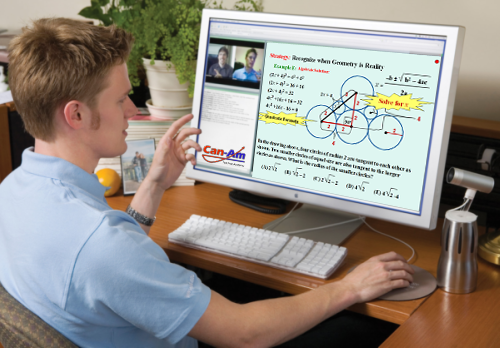
PRIVATE ONE-ON-ONE TUTORIALS (ONLINE) -

Things you require for a Successful Take-off:

  • Start a face-to-face video conferencing.
  • Speak to each other with high-quality and excellent voice.
  • Write, type, erase and draw in distinctive colours on digital advanced whiteboard.
  • Text chat via instant messaging.
  • Upload and share files.
  • Alter message progressively with other person seeing what you are doing. Access the session from all devices.
  • Mask Stitching and Selling:

The world has changed. Not only has the world economy shut down, but people are also on edge. This is likely because we can’t leave our homes, and this can lead to isolation. Nowadays you cannot spot a single person on the streets without a mask covering their face.

If one is good at stitching at home, then this is a golden opportunity to not only earn money but also get creative. People are bored of the old plain mask and hence are looking for designer and customised masks. One can use their own imagination and entice people with your unique masks.

MAP: 3 places to drop off homemade masks for Round Rock health ...

Things you require for a Successful Take-off:

  • Face Mask Cloth
  • Mask Inner Ear Loop threads
  • Paints, beads, needle works
  • Stitching machine or sewing machine
  • Needle and thread
  • Online Fitness and Yoga Coach:

The threat of coronavirus has left the fitness industry ailing and barely able to stand with smaller gyms on the verge of shutting down, larger chains contemplating huge losses and unemployment becoming a very real prospect for many thousands of trainers and support staff.

However, if you have a laptop and good functioning internet connection you can become a fitness coach for everybody missing the gym and looking for services from home. With people wanting to keep themselves fit and improving their immune system, Yoga trainers are high in demand.

WARNING! What they don't tell you about taking your yoga business ...

Things you require for a Successful Take-off:

  • Create a virtual workshop using online studio software
  • clean background
  • remove clutter and distracting objects
  • place select “yoga” objects in frame if desired
  • Use a tripod if you can
  • Test to make sure that the camera can capture you in all your poses
  • Use impeccable, clear language (don’t rely on video)
  • Embrace imperfections! Be human and carry on.
  • Cake Baking for Special Occasions:

Are you the one that makes killer cakes for every birthday? Do you churn out to-die-for donuts? If you’re ready to turn your talents into a profitable bakery, you’ve come to the right place.

No matter what the situation, the show must go on. Cakes have been the symbol of any kind of situation since centuries. But with all CAKE SHOPS and bakeries shut, one cannot access them for special occasions. If you are a good baker, then this is your time to shine. Homemade cakes will be a hit and people will be assured about its safety.

What To Do If Your Dog Eats Chocolate | My Dog Ate Chocolate Advice

Things you require for a Successful Take-off:

  • Mixers
  • Oven
  • Dough proofer
  • Bakeware
  • Tools for measurement
  • Ingredients as per flavour
  • Refrigerator
  • Bread slicer
  • Dough mix
  • Cardboard boxes
  • Piping bags
  • Dairy products
  • Display case
  • Gardening and selling Organic Fruits & Vegetables:

If you are interested in gardening at home and have enough space to grow more for everyone then organic farming is a great business idea. With today’s vegetables being produced with pesticides and chemicals

Growing a garden for profit is something that definitely needs to be kept simple. The reason is that if you try and do a whole bunch at once, then you won’t be great at any of it. If you pick a few simple and small things to start out with, then you can work to perfect those things and be much more successful.

I learned that the hard way because I wanted to sell EVERYTHING out of my garden. Well let me tell you, that is impossible without a team of employees. You just can’t do it well, so don’t try it.

Discover the joy of growing a kitchen garden – Green Station

Things you require for a Successful Take-off:

  • Put them in baskets
  • Order personalized boxes with your logo/brand name on them
  • Make signs that tell about your unique produce
  • Include a recipe card for how to cook with it
  • Organize the different colours in patterns
  • Put the containers on their sides so they appear to be “overflowing” with fruits or vegetables
  • Incorporate wheelbarrows, gardening tools, flowers, etc. into your display
  • Build your own shelves to sell from that stand out
  • Design a logo or picture to use for your new “business”
  • Take attractive pictures of your produce for your display
  • Use tablecloths or nice napkins that make it feel more high end and less dirty.
  • Customised T-shirts and Dresses Painting :

Whenever people think about starting a business, a t-shirt company is probably one of the first five ideas that come to their mind. Why? Well, t-shirt printing business looks like fun and cool. To some extent, they are right. Being your own boss, having own t-shirt designs, selling them with your brand label, having people supporting your work – that’s happiness. Isn’t it?

If you enjoy T-Shirt painting, then there is a whole lot of millennial generation ready to throw all their money at your unique art and designs.

Henry Li showing how to paint a T-shirt with liquid acrylic paints ...

Things you require for a Successful Take-off:

  • Plain t-shirts
  • Fabric paints
  • Tracing paper
  • Sunlight
  • Innovative and creative designs
  • Trendy drawings
  • All size t-shirts

So there you have it in a nutshell- First you need to decide where you are going to sell your produce. Then you can decide what you are going to sell.

Remember your business will grow if people are happy with what they buy from you. Make it look nice, and only sell the best you have.

Now you are all ready to go for it! Good luck!
Reservation; Is it fair to all?

Reservation is a fiend that is present in the Indian system for ages now. Right from the education sector till jobs and recruitment, reservation is everywhere. In simple terms, reservation in India is all about reserving access to seats in the government jobs, educational institutions, and even legislatures to certain sections of the population.

Also known as affirmative action, the reservation can also be seen as positive discrimination. Reservation in India is a government policy, backed by the Indian Constitution (through various amendments).

What is the principle of reservation in India?

The two main motives to provide reservation as per the Constitution of India are:

1.   Advancement of Scheduled Castes (SC) and the Scheduled Tribes (ST) OR any socially and educationally backward classes of citizens (E.g.: OBC) OR economically weaker sections (EWS) – Article 15 (4), Article 15 (5), and Article 15 (6),

2.   Adequate representation of any backward class of citizens OR economically weaker sections (EWS) in the services under the State. – Article 16 (4) and Article 16 (6)

The extent of Reservation in India

In India, reservation is provided in:

1.   Government Educational Institutions (like IITs, IIMs etc.) – as per Article 15 – (4), (5), and (6)

2.   Government Jobs (like IAS, IPS etc.) – as per Article 16 – (4) and (6)

3.   Legislatures (Parliament, and State Legislature) – as per Article 334

Before 2019, the reservation was provided mainly based on social and educational backwardness (caste). However, after the 103rd constitutional amendment in 2019, economic backwardness is also considered.

Apart from the reservation quota, additional relaxations like upper-age relaxations, additional attempts, and lower cut-off marks are also provided for various reservation categories.

A vacancy reserved for SCs or STs or OBCs cannot be filled by a candidate other than an SC or ST or OBC candidate, as the case may be.

As seen from the above table, about 60% of seats are reserved in India – for various sections like ST, SC, OBC, and EWS – for Government jobs and Higher Education Institutions. 3% of seats are also reserved for differently-abled persons across all categories.

This also means that only 40% of seats are available under merit. In the merit seats, not only the general category candidates but all other categories like SC, ST, OBC, and EWS can also compete.

History of Reservation System in India – Rectifying the Historical Injustice

To an extent, reservation as a policy is pursued by the State to correct the historical injustice done to certain castes by the so-called “upper castes”. The caste system prevailed in India had alienated many “lower castes” from the mainstream – hindering their development. To a great extent, the repercussions are still felt.

Original Constitution of India has provided reservation only for quota in legislatures – that too only for 10 years until 1960 (article 334). Subsequent amendments to the constitution extended the period of reservation for quota in legislatures.

Provisions of reservations in Educational Institutions and Government Jobs – article 15(4) and Article 16 (4) – were too created employing Constitutional Amendments later. No period is given for the validity of the reservations mentioned in article 15(4) and Article 16(4).

The initial reservations were only for SC and ST [article 15(4) and Article 16(4)]. OBCs were included in the ambit of reservation in 1991 [Article 15(5)]. In 2019, Economically Weaker Sections are also included [article 15(6) and Article 16(6)].

SC/ST Reservation

The objective of providing reservations to the Scheduled Castes (SCs), Scheduled Tribes (STs) in services is not only to give jobs to some persons belonging to these communities. It aims at empowering them and ensuring their participation in the decision-making process of the State.

Besides, the state is also keen to end practices such as untouchability.

Scheduled Castes (SC) are given 15% quota in jobs/higher educational institutions while Schedule Tribes (ST) is given 7.5% quota in jobs/higher educational institutions.

Reservation is provided not only concerning direct recruitment but also for promotions for SC/ST category (Article 16(4A)).

There is no concept of ‘creamy layer’ for SC/ST reservation. This means that irrespective of the income status or the government posts held by the parents, children of SC/ST parents will get SC/ST Reservation.

OBC Reservation

Reservation for Other Backwards Classes (OBC) was introduced based on the Mandal Commission Report (1991). The quota for OBCs is 27% in government jobs and higher educational institutions.

However, there is a concept of ‘creamy layer’ to the OBC reservation. Only those from OBC who comes under Non-Creamy Layer would get OBC reservation.

The creamy layer concept brings income and social status as parameters to exclude some of the privileged members of OBC from the extent of reservation. This concept also keeps a check to ensure that the benefits of reservation do not get extended to subsequent generations.

EWS Reservation

The Central Government of India recently introduced the EWS Reservation. 10% quota is provided for the Economically Weaker Sections (EWS) among General Category candidates in government jobs and educational institutions. This is done by adding clauses for the same in the Indian Constitution (103rd Constitution Amendment Act, 2019).

Should India need reservation (now)?

The government must provide equality of status and opportunity in India.

Reservation is one of the tools against social oppression and injustice against certain classes. Otherwise known as affirmative action, reservation helps in uplifting backward classes.

However, reservation is just one of the methods for social upliftment. There are many other methods like providing scholarships, funds, coaching, and other welfare schemes.

The way the reservation is implemented and executed in India is largely governed by vote-bank politics.

Indian Constitution allowed reservation only for socially and educationally backward classes. However, in India, it became a caste-based reservation instead of class-based reservation.

Initially, the reservation was intended only for SC/ST communities – that too for 10 years (1951-1961). However, it got extended ever since. After the implementation of the Mandal Commission report in 1990, the scope of the reservation was widened to include Other Backward Communities (OBCs).

The benefits of the reservation were successively enjoyed only by a few communities (or families), excluding the truly deserving ones. Even 70 years after independence, the demand for reservation has only increased.

Now, with the introduction of economic criteria for reservation, in addition to the caste-criteria which already existed, things have become more complicated.

Unequal’s should not be treated equally, but is reservation the only solution?

There is no doubt that unequal’s should not be treated equally. However, is the current system of unequal treatment perfect? Is it creating more injustice? Is it the only way out in a welfare-nation? It’s time to introspect.

Reservation based entirely on economic criteria is not an all-in-one solution, though family income can be one of the parameters. Also, it’s time to fix a period for the reservation system – rather than extending it to eternity.

Denying India, the service of the meritorious candidates, who see them being overtaken by others with lesser academic performance or brilliance, is also a crime and injustice.

Aren’t there any alternative mechanisms to uplift the marginalised so that everyone gets equal opportunities? How is affirmative action done in other countries?

A reform in the reservation system of India is the need of the hour. However, as the subject of reservation revolves around a lot of votes, parties are reluctant to disrupt the existing system.

 Implications of the Judgement of the Supreme Court:

  • After this judgement, the members of the SC and ST communities, as mentioned in the Presidential List under Article 341 and 342 of the Constitution of India, will be presumed to be backward on account of their castes.
  • Such communities will be given reservation in job promotions without the need of any data to act as a proof of their backwardness.

M Nagaraj vs Union of India, 2006: In this judgement, the Supreme Court ruled that if the state wishes to make a provision for reservation in promotions for SCs/STs, it must:

  • Collect quantifiable data showing backwardness of a particular class.
  • Prove inadequacy of representation of that class in public employment.
  • Prove that such a reservation in promotion would not affect the overall efficiency of public administration.

There is no second question that all castes/classes should be adequately represented in government services. However, which percentage can be called adequate – without compromising the merit or efficiency of the administration?

Is the current level of reservation adequate? Or is it less? Or has it already compromised the merit? What do you think?

Top Highest Paying Jobs in India 2020- TRENDING AFTER CORONA VIRUS PANDEMIC

Finding the highest paid jobs in India for freshers might seem a little difficult. But once you’ve found them, your task will get a lot easier. You’ll then know what you should focus on. And to help you in that regard, we have prepared the following list of the top jobs in India.

Well you need skills and alot of hard work too, to earn the highest pay that any field is offering. These options can however be one of the motivating factor for you. If you dont find the field of your interest then remember that –

Photo by Kampus Production on Pexels.com

“Earning money is possible in any job if one is passionate about the kind of work and hence hustles hard enough to reach the top of their game.”

The List to top highest paid jobs in India are as follows:

Blockchain developer

Much like how a normal web developer uses the protocols and design structure set up by a core web architect to build web apps, blockchain software developers build decentralized applications or Dapps using blockchain technology. Their roles include: Development of Smart Contracts

There’s a wide base of knowledge to help you become a blockchain developer. If you’re interested in joining the field, it’s an opportunity for you to make a difference by pioneering the next wave of tech innovations. It pays very well and is in high demand.

The banking sector, the insurance industry, governments, and retail industries are some of the sectors where blockchain developers can work. If you’re willing to work for it, being a blockchain developer is an excellent career choice.

Cybersecurity specialist

Cyber Security Specialist is responsible for providing security during the development stages of software systems, networks and data centers. The professionals have to search for vulnerabilities and risks in hardware and software. They manage and monitor any attacks and intrusions

Security analysts spend their days studying the devices in use, analyzing network structure, and testing security measures like firewalls and software permissions. They look for weak points and aim to shore up defenses. They also report regularly to upper administration and may have to present findings and recommendations before management. Security analysts sometimes work with other departments to ensure their colleagues understand the organization’s best practices for information security.

Digital marketing specialist

digital marketing analyst is responsible for analyzing statistics and looking for ways that the company can improve its online marketing efforts. These efforts include things like social media ads, website banner ads, and online branding. Many businesses know that digital marketing is essential to their success.

Customer success specialist

Customer Success is an integration of functions and activities of Marketing, Sales, Professional Services, Training and Support into a new profession.  There are three necessary building blocks for this emerging profession: an in-depth knowledge of the customers, effective expertise in the product being sold, and extensive domain expertise.

Growth manager

he Growth Manager function typically lives at the intersection of marketing and product development, and is focused on customer and user acquisition, activation, retention, and upsell. The Growth Manager usually reports either to the CEO, the vice president of Product Management, or the vice president of Marketing.

Artificial intelligence specialist

Artificial intelligence (AI) specialists program computers to “think.” Some AI specialists work in cognitive simulation, in which computers are used to test hypotheses about how the human mind works. For example, the AI specialist might develop a computer program to simulate the way the human brain might recognize a face. The computer’s ability to recognize a face would then be compared to a human’s ability.

Data Analysts 

A good number of companies are leveraging Big Data in order to pull out the most vital and beneficial data. This practice has paved the way for augmented productivity not only for the companies but also for their employees.

So, what do Data analysts do? Well, they translate trajectories, trends, and numbers into digestible chunks of information. Businesses gather data such as inventories, profit margins, transportation costs, logistics, and sales figures, etc.

Data analysts collect that data and help the companies to go with workable business decisions. The primary job of a data analyst is to resolve the issues that increase the company’s costs and to make better decisions for the expansion of the business. 

Robotics engineer

India might be a little slow when it comes to technology advancements, nut we have some of the most brilliant minds in this country. Machines have started to replace people in dangerous jobs such as defense, space, nuclear power plants, etc.

A career in robotics is a career of the future and is a high paying career to adapt for.

Robotics Engineer deals with the design, building structure, and the applications of robots and computer and their manipulation and processing. Robotic science has a tremendous scope as a career option as robots play an important role in the industrial sector. 

Keep all future jobs in your mind now and start developing your skills in the one that excites you. Start finding your passion also starts working on it today. It really does not matter what career option you choose, but the key factor of getting the desired position lies in your resume writing skills. ensure that you have a professionally written resume along with sharpening your career, that 10x your chances to land your DREAM JOB.

17 Essential Tips for Young Entrepreneurs

Youth is the biggest resource of the Nation. Today’s generation is not only smarter but also ahead in innovation and dare to build their own empire at the prime of their youth. Though it takes a lot of efforts, a right amount of motivation and guidance can help the young budding entrepreneurs go a long way. Well who learn from than the experienced businessmen who started out at your age and now are known as the Young minds who made it to Big Shots.

Here are 17 essential tips for young entrepreneurs inspired by 17 people who made it under 17 years of age:

  • Dare to Dream:

Dr.A.P. J Abdul Kalam once rightfully said, ‘Dream is not what you see while sleeping, it is something that doesn’t let you sleep.’ Your dreams don’t have to look like anyone else’s. You get to define what success looks like in your life. Dare to dream your own unique dream of what living well looks like.

  •  Have a Vision:

The founder and CEO of Tumblr, David Karp, notes that an entrepreneur is someone who has a vision for something and a desire to create it. Keep your vision clear at all times. Having a vision means we have a clear sense of purpose.

It means we have a much larger picture of our business, than simply setting and reaching short term goals and tackling problems as they come along. In business, having a clear vision is absolutely critical. It is an extremely powerful tool to achieve the results you want.

  •  Do what you are Passionate about:

Where you care about DOING that thing, rather than what you get at the END of doing that thing. The dictionary definition of passion is “a strong feeling of enthusiasm or excitement for something or about doing something” The spark of passion when gets action it fires up and lights the way ahead.

  •  Take Action:

The world is full of great ideas, but success only comes through action. Walt Disney once said that the easiest way to get started is to quit talking and start doing. That’s true for your success as well. Work in silence, let your success make the sound.

  •  Face your Fears:

Overcoming fear isn’t easy, but it must be done. Arianna Huffington once said that she found fearlessness was like a muscle — the more she exercised it, the stronger it became.

  •  Take the Risk:

We never know the outcome of our efforts unless we actually do it. Jeff Bezos said it helped to know that he wouldn’t regret failure, but he would regret not trying.

  •  Believe in Yourself:

As Henry Ford famously said, “Whether you think you can, or think you can’t, you’re right.” Believe that you can succeed, and you’ll find ways through different obstacles. If you don’t, you’ll just find excuses.

  •  Rome was not built in a day:

No one succeeds immediately, and everyone was once a beginner. As Steve Jobs wisely noted, “if you look closely, most overnight successes took a long time.” Don’t be afraid to invest time in your company.

  •  Plan for raising funds & capital:

Richard Harroch, a venture capitalist, has this advice for upcoming entrepreneurs: “It’s almost always harder to raise capital than you thought it would be, and it always takes longer. So plan for that.”

  • Set goals and targets:

Ryan Allis, co-founder of iContact, pointed out that having the end in mind every day ensures you’re working toward it. Set goals and remind yourself of them each day.

  • Learn from your mistakes:

Many entrepreneurs point to mistakes as being their best teacher. When you learn from your mistakes, you move closer to success, since learning from failure is the first step towards succeeding.

  • Adapt to the market:

Bill Gates once said that your most unhappy customers are your greatest source of learning. Let unhappy customers teach you where the holes in your service are.

  • Put customer needs at the top:

“Customer is the king,” is the first rule of any market and business organizations.

  • Manage Energy, not Time:

Your energy limits what you can do with your time, so manage it wisely. Plan a proper schedule keeping your physical and mental potential as priority.

  • Invest your money wisely:

Investing your money can allow you to grow it. Most investment vehicles, such as stocks, certificates of deposit, or bonds, offer returns on your money over the long term. This return allows your money to build, creating wealth over time.

  • Be Consistent and determined:

       Consistency in your business is far more important that you can imagine. Being consistent allows you to establish awareness, build trust and deliver your services efficiently and profitably.

Whether you are establishing your brand or determining the course of your sales and marketing strategy, you have to recognise the power of consistency. Give yourself an advantage over fickle competitors by becoming consistent in how you operate your business, and what you present and offer to your customers.

  • Deliver more than expected:

Google’s Larry Page encourages entrepreneurs to deliver more than customers expect. It’s a great way to get noticed in your industry and build a loyal following of advocates.

Being a successful entrepreneur takes a lot of work, a lot of vision and a lot of perseverance. These 17 tips, from entrepreneurs who have already found success, will help you navigate the path much more easily.

Key to being Financially Independent in India

We all work right from graduating till retirement for five days a week -sometimes six days – only to spend what we have earned. In the midst of this daily hustle, how much time do we actually devote to plan for financial independence? Hardly any! Is financial independence a plan only for retirement? The answer is NO.

Photo by RODNAE Productions on Pexels.com

The first step towards financial independence is to not procrastinate it. A single drop of penny today will contribute to an ocean of financial resource. Then comes the below mentioned road map to a start of a great solo journey of life.

  • Financial planning – First, define clear and realistic financial goals like child’s education or a comfortable retired life. It is critical to factor in inflation while drawing up your financial plan. If you are planning your child’s education, you should be aware that a professional degree that costs Rs.4 lakhs today, is likely to cost around Rs.20 lakhs, 10 years from now.
  • Personal research – While a qualified financial planner can give you investment advice, the importance of doing your own research cannot be undermined. You can rely on credible websites to understand the pros and cons of each financial instrument.
  • Personalized financial plan – A common mistake is to opt for a particular plan simply because others are doing so. An investment plan must be customized according to personal factors such as your risk appetite, financial goals and life-stage needs.
  • Adequate time horizon – It is necessary to align the investment plan and the expected time frame for getting returns out of it. It is irrational to expect immediate returns from long term products like insurance, PPF etc.
  • Risk diversification – A smart investor would always ensure that the risk is distributed over a variety of instruments. A high risk instrument such as, an equity should ideally be balanced with a stable one such as bonds. Your investment portfolio should be a judicious mix of equity, debt, life insurance, real estate etc.
  • Planning for unforeseen events – Along with the current assessment of your future needs, risk of unexpected events must also be factored in. As a woman, it is crucial to be financially prepared to deal with unfortunate events like death, divorce etc.
  • Regularly track your investment – It is common to become complacent and expect the returns to flow in, once the investments are done. However, it is every investor`s responsibility to keep a tab on the performance of their portfolio.
  • Proper paperwork – There have been several instances where an investor is unable to claim returns from a bona fide investment simply because of misplaced or wrongly-filled documents. Proper documentation is a must to safeguard your investments. Also, ensure that someone other than yourself is fully aware of all your investments.
  • Securing your future: As a working member of the family, it is crucial for you to have adequate insurance to ensure that in your absence, your family does not go through any financial stress. Investing in a simple term insurance plan will ensure financial continuity.
  • Plan and execute – Last, but most important is to begin planning for all your financial needs from an early stage. The cost of postponement will weigh heavily on you in the later years when investing will become a compulsion rather than a choice.

In this world of instant gratification, have patience and watch as your pot fills with money one sweat and hard work at a time. Kudos to being financially independent!

Covid-19:India adds 24,879 new cases, total cases 7,67,296.

India had a record single-day surge of 24,879 Corona cases taking the cases to 7,67,296 on Thursday, with Maharashtra, Tamil Nadu, Karnataka, Delhi, Telangana, UP and Andhra Pradesh contributing to around 75 per cent of the new cases, according to the Union Health Ministry data.

The death toll climbed to 21,129 with 487 new deaths, the updated data at 8 am showed.

There have been 4,76,377 recovered cases, while there are 2,69,789 active cases of coronavirus infection in the country.

“Around 62.08 per cent of patients have recovered so far,” an official said.

The total number of confirmed cases included foreigners.

Of the 487 deaths reported in the last 24 hours, 198 are from Maharashtra, 64 from Tamil Nadu, 54 from Karnataka, 48 from Delhi, 23 from West Bengal, 18 from Uttar Pradesh, 16 from Gujarat, 12 from Andhra Pradesh, 11 from Telangana, 10 from Rajasthan, seven from Madhya Pradesh, six each from Jammu and Kashmir and Odisha, three each from Bihar, Uttarakhand, Punjab and Haryana and two from Assam.

India is seeing huge surge in cases with almost 20,000 to 25,000 new cases every day. The positive fact is that recovery rate is very good around 61 % and death rate is also nearly 4-5% .India is facing many tensions amid such pandemic ie border disputes with China, terrorist attacks from Pakistan as well as internal attacks from gangsters. But India would soon sort out things and pave way for world to recover from this crisis.

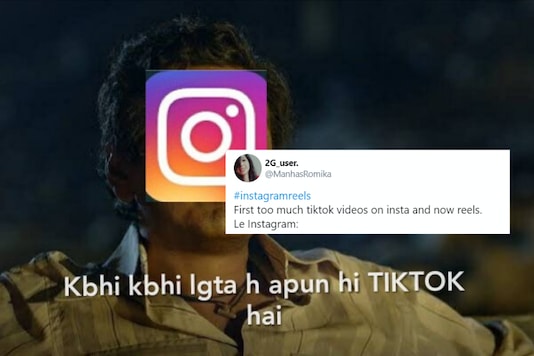
Instagram reels: good alternative to Tiktok. Check here how to use it.

Instagram’s new feature Reels were in testing for some time now and now as the TikTok took an exit from India, Facebook-owned Instagram has rolled out their new Reels feature which allows user to shoot 15-second videos. The feature now arrives in India. This is good opportunity for reels to attract short video lovers as its demand has grown in the country.

many short video apps such as Roposo, Mitron, Chingari, Sharechat, and others are becoming more popular among users and seeing millions of downloads every day.Facebook is also all set to use this opportunity to attract 200 million TikTok users to Reels.

Reels is just a new feature on Instagram and users in India are loving this new feature which is just like TikTok.

Image credits: Twitter.
Memers doing memes on instagram reels against tiktok

How to use Instagram Reels?

Step 1: Update your Instagram on Google Play

Step 2: Open the Instagram Camera

Step 3: Reels option is available next to boomerang, Superzoom, hands-free, and layout.

Step 4: Click on Reels and select audio from the Instagram Music library.

Step 5: Reels also come with an option to record original voice besides lip-syncing.

Step 6: Reels also let users add AR effects and provide options like Timer, Speed to edit videos as required before sharing. Reels also let users re-record a video and even delete it if needed.

Step 7: After creating their Reel, users can choose to share it with either their followers or everyone on Instagram. Reels can be shared to Feed as well as Explore so everyone on Instagram can view it.

Instagram Reels Is Now Available in India, but Can It Replace TikTok?

Reels also feature several AR effects allowing users to add a custom touch to their videos. To put AR effects in their videos, users can open Reels camera and go to effects and then AR effects.

Users will also be able to record multiple 15 seconds Reels – it can also be recorded at once and the different effects can be added to each clip post the shoot. The Reels can also be reviewed, deleted, and re-recorded.

Indian option of CamScanner launched with name BharatScanner.

The BharatScanner mobile app, an Indian alternative to cam scanners, has been launched. In this app, users have got the facility from scanning documents to creating PDFs. The special thing is that this app is completely free and users will not have to pay a separate charge to use any feature.

Rating of 4.4 points found on Google Play Store

Bharat Scanner app is available on Google Play Store for users. This app has downloaded more than 10 thousand users so far and it has got a rating of 4.4 points on the Google Play-Store. At the same time, this app size is 36 MB. .

Features of BharatScanner .

Some current features of BharatScanner are as follows: .

  • Users can scan documents easily.
  • Filters have been supported in this app.
  • Users can keep their documents as PDF.
  • Users have got the facility to share documents in this app on mail and Whatsapp.

Indian government imposes ban on Chinese mobile app .

Under Section 69A of the Information Technology Act, the Government of India decided to block 59 apps as these apps were a threat to India’s sovereignty and integrity, defense of India, security of the state and public order. The government had received many complaints about these apps from various sources, including about the misuse of many mobile apps. These apps were stealing data from both iPhone and Android users.

  • लॉन्च हुआ CamScanner का भारतीय विकल्प Bharat Scanner, जानें इसकी खासियतें

Ban on these Chinese apps

Tiktok, CamScanner, Shareit, Kwai, UC Browser, Baidu Map, Shein, Clash of Kings, DU Battery Saver, Helo, Likee, YouCam makeup, Mi Community, CM Browers, Virus Cleaner, APUS Browser, ROMWE, Club Factory, Newsdog these 59 apps are banned, including BeutryPlus, WeChat, UC News, QQ Mail.

Government concerned over return of large number of Indian students from US due F1 visa issues.

The US order of July 7 stating that F1 visas will not be renewed for students if they are attending only online- lectures in the US is a concerning mater for India since the highest number of foreign students in the US are from India. The US government has announced those F-1 and M-1 (non-academic and vocational students) visa holders attending only online classes will not be allowed to remain in the US.

US Noted India's Concerns Regarding F-1 Visa Issue: Centre

India on Thursday said it has reported its concerns to the US govt about the new rule on F1 visa and urged to keep in mind the role education have played in the developing relationship between the two countries.

The concerns were expressed during the virtual foreign office consultations between Foreign Secretary Harsh Vardhan Shringla and US political affairs secretary David Hale on Tuesday. Ministry of External Affairs’ spokesperson Anurag Srivastava said that the US government has looked into the concern regarding the new rule.

During virtual meeting, Srivastava said that India is concerned about the possibility of the return of a large number of Indian students studying in the US due to new rules in visa.

The Immigration and Customs Enforcement (ICE), an agency of the US Department of Homeland Security (DHS) on Monday said that the foreign students pursuing courses in the US must return to their country if their institutes are conducting only online course due to covid-19 pandemic.

ICSE, ISC exam result 2020 to be announced tomorrow at 3 PM. All you need to know

ICSE, ISC Exam 2020 Result to be Declared Tomorrow at 3 PM | All You Need to Know

ICSE, ISC Exam 2020 Result: The Council for the Indian School Certificate Examination (CISCE) on Thursday said that ICSE (class 10) and ICS (class 12) exams results will be declared tomorrow at 3 PM, on the official website ‘cisce.org’ and ‘results.cisce.org. All students who have appeared for the exams are advised to keep an eye on the website and check their results.

To check the results once they are out, follow this steps:

step 1-Visit the official website at https://www.cisce.org/

step 2-Go on the ‘Careers’ portal on the homepage.

Step 3: Now, click on the relevent exam link.

Step 4: Enter all the details asked including your roll number, click submit

Step 5: You result will now appear on the screen.

Step 6: Download and take a print-out for a future reference.

Icse result 2020, icse board result 2020, isc result 2020, isc board result 2020

To get results on SMS, students can send their Unique id to 09248082883 in this format: ‘ICSE/ISC (Unique ID)’.

Earlier in the day, the CISCE board reduced 25 per cent syllabus from this year’s curriculum in view of the coronavirus pandemic.

According to the latest notification issued by the ICSE Board, the decision to reduce the syllabi will be applicable for Class 9 to Class 12 students and has been taken to reduce the burden amid limited teaching via online classes. The CISCE stated that the reduced syllabus aims to cope with the loss of instructional hours due to the difficulties faced in the academia in the lockdown situation.

Child In Conflict With Law

Every child has the inherent potential to grow up and achieve his or her full potential and contribute positively towards the growth of nation and society. The Constitution of India grants children the highest priority for their protection and well being. The Juvenile Justice (Care and Protection of Children) Act, 2015 adopted by Government of India takes a holistic approach towards protecting the rights of the children by providing for proper care, protection, development, treatment and social re-integration of children in difficult circumstances by adopting a child – friendly approach.
Children are born innocent; however, due to multiple factors, many children adopt behaviours which are defined as delinquent and sometimes being “in conflict with law”. These behaviours range from emotional outburst, petty thefts, substance abuse, violent or aggressive behaviour to more serious types of crimes. These behaviours are often learned early in life. However, parents, family members, and others who care for children can help them learn to deal with emotions without using violence. Studies show that children internalize norms of society through strong bonds with pa rents and others, which protect against delinquent impulses.

Child in Conflict with Law

“Child in Conflict with Law” has been defined under Section 2 (l3) of the Juvenile Justice (Care & Protection of Children) Act, 2015 as a child who is alleged or found to have committed an offence and has not completed eighteen years of age on the date of commission of such offence.

Juvenile delinquency, also known “juvenile offending”, is the act of participating in unlawful behavior as a minor or individual younger than the statutory age of majority. A juvenile delinquent in the United States is a person who is typically below 18 years of age and commits an act that otherwise would have been charged as a crime if they were an adult. Juvenile crimes can range from status offenses (such as underage smoking/drinking), to property crimes and violent.

Offences Alleged to be committed by Children

The Juvenile Justice System assumes that a child offender is a product of unfavorable environment and is entitled to a fresh chance to begin his life. The offences may have been committed without any criminal intent on certain occasions. The child probably lacks foresight on the repercussions/consequences of his actions. It is accepted that a child offender should not be given punishment based on the kind of offence he /she has committed but should be given an individual treatment which is reformative in nature and which is based on his /her need, psychological and social background.
According to National Crime Record Bureau, a total of 31,396 cases of “children in conflict with law” (CCL) were reported in 2015 and the rate of crime committed by them was 2.1 per cent. However, a majority of these cases are petty crimes and are preventable by providing proper guidance and counselling to children and economic strengthening of their families. An analysis of children who were in conflict with law shows that majority of them belonged to economically weaker section (42.5 per cent). Around 11.5 per cent of them were illiterate while another 43.4 per cent were educated up to primary level only ( Crime in India 2015: Compendium ; NCRB).

Causes of juvenile delinquency

There are many factors contributing towards the criminal nature of the youth. Most of these youths come from families of discord or abuse. Peer pressure, neighbourhood also influence the development of a child. Poverty is also one of the main causes for a delinquent youth. Although education plays an important role in moulding the future citizens, the system somewhere lacks in the ability of holding the attention of nonbookish and non-academic individuals and thus contributes towards many cases of juvenile delinquency. Delinquents are typically those who take studies like a burden and on being rebuked turn towards crime. There are some measures which may help in reforming these children:

  1. Instil in them a sense of security and give them the love and affection that they may have been deprived of.
  2. Parents should be counselled to detect early signs of maladjustments, so that any tendency towards delinquency may be destroyed at the roots.
  3. A sense of moral and social values should be instilled in them at the very beginning.
  4. Bring about a change in the community that encourages such behaviour.
  5. Schools should adopt the option of skill management and vocational training, so that children who are not academic by nature have the option of developing a skill which will give them the opportunity to earn a livelihood even without formal education.
  6. Once a delinquent behaviour has been detected, one must remember to reject the behaviour and not the individual.

Types of Crimes Committed by children

Various types of offences committed by children in conflict with law have been defined under the JJ Act, 2015 as follows:

  1. Petty offences : Petty offences include the offences for which the maximum punishment under the Indian Penal Code or any other law for the time being in force is imprisonment up to three years.
  2. Serious Offences : Serious offences include the offences for which the punishment under the Indian Penal Code or any other law for the time being in force is imprisonment between three to seven years.
  3. Heinous Offences : Heinous offences committed by children in conflict with law include the offences for which the minimum punishment under the Indian Penal Code or any other law for the time being in force is imprisonment for seven years or more.
    Delinquency exhibits a variety of styles of conduct or forms of behavior. Each of the patterns has its own social context, the causes that are alleged to bring it about, and the forms of prevention or treatment most often suggested as appropriate for the pattern in question. Howard Becker has referred to four types of delinquencies:
    • individual delinquency
    • group-supported delinquency
    • organized delinquency
    • situational delinquency
    Individual delinquency
    This refers to delinquency in which only one individual is involved in committing a delinquent act and its cause is located within the individual delinquent. Most of the explanations of this delinquent behavior come from psychiatrists. Their argument is that delinquency is cause d by psychological problems that primarily stem from defective/faulty/pathological family interaction patterns.
  4. Group – supported delinquency
    In this type, delinquencies are committed in companionship with others and the cause is located not in the personality of the individual or in the delinquent’s family but in the culture of the individual’s home and neighbourhood. The studies of Thrasher and Shaw and McKay talk of this type of delinquency. Research findings suggest that most young children who became delinquent was because of their association and companionship with others who were already delinquent. Unlike the psychogenic explanations, this set of ideas focuses on what is learnt and who it is learnt from rather than on the problems that might produce motivation to commit delinquencies.
    Organized delinquency
    This type refers to delinquencies that are committed by formally organized groups. These delinquencies were analysed in the United States in the 1950s and the concept of “delinquent sub – culture” was developed. This concept refers to the set of values and norms that guide the behavior of group members to encourage the commission of delinquencies, award status on the basis of such acts and specify typical relationships to persons who fail outside the groupings governed by group norms.
    Situational delinquency
    The above – mentioned three types of delinquencies have one thing in common. In all of them, delinquency is viewed as having deep roots. In individual delinquency (according to the psychogenic explanation), the roots of delinquency lie primarily within the individual. In group – supported and organized delinquencies (the sociogenic explanation), the roots (of delinquency) lie in the structure of the society with emphasis either on the ecological areas where delinquency prevails or on the systematic way in which social structure places some individuals in a poor position to compete for success.
    Situational delinquency provides a different perspective. Here the assumption is that delinquency is not deeply rooted, and motives for delinquency and means for controlling it are often relatively simple. A young man indulges in a delinquent act without having a deep commitment to delinquency because of less developed impulse – control and/or because of weaker reinforcement of family restraints, and because he has relatively little to lose even if caught. David Matza is one scholar who refers to this type of delinquency. However, the concept of situational delinquency is undeveloped and is not given much relevance in the problem of delinquency causation. It is a supplement to rather than a replacement of other types.
    A study by Parackal and Panicker (2016) reveals that most adolescent criminal behaviour is specific to adolescence period and will not continue into adulthood. Much like a toddler outgrows temper tantrums, most adolescents will outgrow deviant behaviour. The National Crime Records Bureau (NCRB) is the only available national resource to understand the magnitude of Juvenile delinquency in India. In India, crimes are usually classified into crimes under India Penal Code (IPC) and crimes under Special and Local Laws (SLL). The number of cases registered under various sections of IPC crimes against juveniles (in conflict with law) in 2015 have decreased by 6.3 per cent during 2015 over 2014 as 33,526 cases under IPC crimes were registered against juveniles during 2014 which decreased to 31,396 such cases in 2015. Cases of juveniles in conflict with law registered under various SLL crimes have decreased by 59.6 per cent in 2015 as compared to 2014 as 5,039 cases of juveniles in conflict with law under SLL registered in 2014 which decreased to 2,037 cases in 2015. The National Crime Records Bureau statistics of 2015 depicts that 41,385 children were apprehended in 2015 as opposed to 48,230 children in 2014, i.e., 1.1 percent less than the share of children apprehended in 2014.
    Even though the fall in children in conflict with law is marginal, it is a positive sign. In comparison to the UK and the USA, the overall child crimes in India in 2014 is 2.1 per cent which is less and not increasing at rapid pace as compared to these developed nations. Given such low participation of children in offences, they should not be viewed as creating a moral panic in society as portrayed or reported in newspapers, videos, and television.                                                                 The NCRB shows that 27 per cent CCL were involved in property-related offences. Children involved in serious and heinous offences of murder and rape constituted only a miniscule with only 2.8 per cent and 5.9 per cent of the total IPC crimes committed by children and 2.1 per cent and 5.1 per cent of the total juvenile crimes in 2014 (NCRB, 2014). This data highlights that children’s involvement in serious and heinous crime is marginal and thus, it is very important to ensure that we reduce the risk factors and prevent our children from getting into crime.

What is to be done

Parents, teachers, schools, community and law enforcement agencies need to understand, prevent and reduce risk factors which may push children towards adopting behaviours that may harm them and the wider society and are defined as being in conflict with law. There is enough evidence to prove that with the right kind of prevention and rehabilitation most children adjust, reform, and return to the maturity of adulthood.


Thus, it becomes important to identify risk factors, i.e. factors whose presence and early exposure enhances the likelihood of engaging in delinquency and other behaviour problems. Protective factors are those which mitigate the influence of risk factors. In recent years, studies of juvenile delinquency and justice system have increasingly examined the impact of these strengths (protective factors) on youth’s ability to overcome challenges and thrive. Generally, protective factors – such as positive school attendance, positive social orientation or the ability to discuss problems with parents – are a buffer to minimize or moderate the effect of risk factors and their ability to bring about delinquent behaviour.
Children form an important and integral part of every -society in the world. In their tiny shoulders rests the future of mankind. It is, therefore, the duty of every society to provide proper care and attention to every child. Also their very dependent nature makes them entitled to special care and attention in the family and society at large. The fact that they are innocent and immature makes them vulnerable to all forms of exploitation. Therefore, a better state and peaceful society can be created only if the childhood of every child is properly nurtured, nourished and protected. A nation’s future is dependent on the children because they are the pillars which forms the basis of the future generation. who is a child in need of care and protection? It is said that the identification of child in need of care and protection is the basic work in solving their problems. It is, therefore, important to discuss the meaning of ‘child in need of care and protection’ and also to analyse the various provisions incorporated under the Juvenile Justice (Care and Protection of Children Act), 2000 regarding the care and protection of child in need of care and protection.

A Roller Coaster of the LAST DAYS OF COLLEGE

This year has been unpredictable in many ways. We have seen terrible occurrences right from the very beginning of the year. What with the bushfires that started around south wales, Australia that a third state emergency had to be called. This was just day 2 of the New Year 2020. Then we saw war threats between the United States of Americas military and Iran. And I don’t even need to mention the corona virus pandemic that took over the entire world. A lot experienced in such a short span of time. We didn’t know what more to expect from this year.

But as everything came to a standstill with complete shutdowns and lockdown and social distancing taking over, many panicked on how they will be handling this new normal. I am focusing on the student community especially the final year students who were supposed to be having farewell parties and reminiscing their college years that had come to an end.

With this sudden take-over of the pandemic, all colleges shutdown adhering to the government issued guidelines. Mid-March that’s when it started in India. We however did not know how long this would be and honestly no one took this serious enough. We underestimated this issue to a great extent.

As time progressed colleges started taking classes online and giving out assignments. As this was happening, simultaneously the corona cases started rapidly increasing. Despite the best efforts taken by the government and the frontline and essential workers the cases were blowing out of proportion. This delayed the time as lockdown kept getting extended. As time was running short, colleges were forced to conduct online exams especially to the final year students. The UGC issued guidelines regarding this and gave the colleges the authority to conduct online exams for the final years.

Online exams were conducted and the results declared. This was a major change for the students as they had least expected the turn of events. They definitely exercised something new and scary. They would not in their wildest dreams imagine that they’ll take up their final exams of their college in this manner.

The most important part was that during a crisis like this the placements were not welcoming. With loyal employees being forcefully terminated and the market crashing, it was not a favourable situation to the fresh graduates. Unemployment was peaking with major layoffs from even reputed companies.

These young adults had to go through so much unprecedented activities during their last days of college life. They missed on some cherishable memories of farewell parties, the final exams with their friends, hanging out around the college campus and remembering fond memories of their college life in the campus. But what’s more important for them now is how they take their career and move forward. I’m sure this is not what they expected at the end of their carefree college times but I’m very sure that they have the ability and capacity to take failures in their stride and come up in life. I wish all of you the very best.

WORK FROM HOME; the New Reality

Work from home sounds familiar right? After all that’s what most of us have been up to for the past four months. Before this pandemic, work from home used to be a delight for many. It used almost feel like a day off. There was no need of waking up early, getting ready and most importantly travelling in the peak hour traffic. It was indeed a something that office goers looked forward to. Not anymore though. We have had enough in these four months that we don’t want to work from home for at least a year now. So many things that we took for granted during the normal times we realise now. Waking up early, having a routine, cursing the traffic on the way to and back from work, those hour long meetings, coffee breaks in between with your office gang, just waiting for Friday and making crazy weekend plans that would probably not happen. These are just a few things that we hated then but now we really miss these times. Working from home is not exciting anymore. We have lost a sense of routine and social life. And the workload seems to have multiplied a hundred times more. Working alone with no one that you could ask suggestions from or clear a doubt immediately. Of course we can text or call but having someone right next to you feels different. You feel that you’re not alone, there is someone right next to you going through something similar and handling the same kind of pressure, it gives you a sense of confidence. Also working from home does not provide you a favourable atmosphere. Office atmosphere makes you more productive and in the mood to get work done. But at home you tend to feel more lazy and unproductive. There are also a whole lot of distractions. You are also staring at the digital screens more which is not good for your eyes. Zoom call after zoom call, clearing your inbox, working around projects is just too much for your eyes to handle. And most of us go on social media for a break or watch a movie on Netflix. This is not healthy for us. For the name of it we are working from home and with our family but we are more distant from them.

However in these unprecedented times, not much is in our own hands now. We have to make the most of what we can. Try to have a daily routine; this really helps bring a sense of normalcy. Have a fixed sleep schedule. Make sure to follow a good and healthy diet. Don’t forget to exercise because keeping your body and mind fit is very important. Do give your eyes some break form the screens it will be of great help. Try to find hobbies that you like and pursue something instead of bingeing shows or going on social media. Try your best to make something productive and worthy of your free time and boredom. Finally, we might not get a chance like this in the future so make the most of what you’ve got folks.

Global Diplomacy: The United Nations.

  • The name “United Nations” appears true only in books but in reality it seems like a contest for nations to prove their dominance and power individually. The diplomacy comes off to be biased. The World today is owned by corporate and the UN follows through. The actual role of united nations should be to rise above the competition and work as ONE UNITED PLANET towards climate change, global pandemic, poverty and financial slavery.

Though it is non-arguable that UN has helped bring forward issues like Women Empowerment, Poverty, Health, Education, etc. on a global platform. The real question is, are these issues solved or they have been piled upon by newer issues day by day.

But on a positive note, the UN has made progress in its peace making strategies and providing financial and healthcare aids to the countries in need. If not for this organisation then there would have not been a diplomatic relationship between nations and war would be the ultimate solution to all inter-nation problems.

Just because a medicine has side-effects does not mean it cannot be used for treating the illness in hand. Similarly, it is easy for anybody to make war but only the united front can make peace and prosperity!

  • The UN came from the minds of some of the renowned politicians of the western countries. When the super power nations felt their security and peace was under threat they collaborated with like-minded ones against the equally powerful nations. Powerful only in military and vengeance and the greed to conquer. According to human psychology (basic), a man desires power more than water for thirst.

From all the glorifications I read about this organisation, UN rose from the ashes of the war like a phoenix bird. Very beautiful and powerful bird- a phoenix-their tears have healing powers. One can say that United Nations came into existence to act as the panacea to diseases like violence, death and fading humanity.

But is the origin really important to determine its worth in the present scenario is something to ponder upon. Today UN works for a cause which it was originally built upon; irrespective of its results, – promotion of peace with its symbol the white dove soaring high, its wings flapping, freeing itself from the shackles of slavery of power, money, greed and hate.

Born in times of desperate times it can be regarded as an invention by man in the time of dire need. As we all know – “NECESSITY IS THE MOTHER OF ALL INVENTIONS!”

  • The UN Security Council consists of 5 permanent members and 10 temporary members all with a right to vote however only the permanent five have the right to veto. The word itself suggests that the council was made to resolve the security concerns of nations and to make peace among them.

 Today, the Council responds to three types of situations:

  • (1) chemical, biological, radiological and nuclear weapons proliferation; (2) international conflict; and (3) intra-state conflict. More recently, the Council has also developed a (4) cross-cutting and (5) quasi-legislative agenda.

The above decisions and powers in the hands of the council sounds safe however it is not the situation in reality. There has to be an expansion of the members instead of giving all the authority in the hands of the few. This will help in avoidance of partiality or constant disagreement that has been happening since the council has been formed. Though it has never successfully managed to make any notable reforms , it is one of our best option to resolve the security threats and war like situations in many countries and their estranged borders.

  • Human rights are the rights we are all entitled to irrespective of the place of birth or the time of birth. The core of United Nations is built upon the protection and service towards human rights and its associated freedoms. However due to international politics and superpower nations greed to stay on top of others and world domination has endangered the human rights of developing and under developed nations. Human rights have become a selective freedom provided to only those who can afford it without any restrictions. In my country citizens think that they are not worthy of having human rights as they think only the rich and developed nations are fortunate enough to have human rights that too the basic one’s. In recent events of racism ad discrimination on the basis of colour and financial status, what is the united nations enforcing laws to stop the fights  to avail basic human rights. People have to come on streets and protest later developing into riots in order to practise their rights and enjoy the freedom of being born as a human on this planet.
  • The united nations in the past has failed in crisis management because of the disagreement between it’s member nations and security councils. Due to the interference of the security council the  situation was aggravated rather than being put out or quite down. Rather than focusing on the crisis at hand it focuses on the political relations of that country with the members of the united nations and then it takes the necessary actions that too not quick or decisive but slow and of poor quality. However by putting the past back the united nations can improve on its crisis management skills by being in constant touch with the country and states local administration and education people on a personal and more localised manner rather than representing it as a political agenda or foreign policy which puts the civilians in a mind-set of confusion and feeling of unsafe and non trustable environment.
  • Today a question arises on the future of the United Nations and will it still prevail in the modern world where people are becoming rather too aware and will want a more secular council, one which works one which provides solutions, one which is actually true to its purpose of being formed.
  • During the 2020 Global Pandemic the true face of UN is being put to test and how it acts now to maintain peace among nations will say a lot about its existence in the future or will it be left to be just pages in history textbooks.

Just wishing for once if we had leaders who cared about the upliftment of the entire nation and not just the name of their political agenda and parties. The world needs educated and selfless leaders and hopefully in the future with my generation in the front we will represent a better council than these old ways and barbaric wars.

Is Media a fourth pillar of democracy?

16 December 2012: A severe assault and murder, prevalently known as “NIRBHAYA GANG-RAPE CASE”, shocked the country. A student, in Delhi, was coming back to home, late night, with a companion. Shockingly, when they couldn’t discover a vehicle late night, they took a transport, which had just six individuals other than them. She was severely assaulted by these six who were tanked, including one who was under 18 years and was generally ruthless among all. Her companion was additionally beaten and left oblivious. Them two were tossed out of the transport, stripped, after the episode. This case offended individuals and entire country saw numerous fights and rallies. Introductory numbness of the individuals passing by and organization intensified the circumstance. Media assumed an essential job for this situation. This weight made by individuals and media got a critical change Indian enactment on Rape cases. It corrected Justice Juvenile Act, and decreased the age bar from 18 to 16, to be considered as a grown-up. Government in association spending plan 2013, given to setting up a Nirbhaya budget. Comparative cases are the ongoing Unnao assault case, Kathua assault case. These cases made a great deal of revisions in different acts like JJ act, POCSO act.

KM NANAVATI versus Province of Maharashtra is another milestone choice, which got a ton of media inclusion and the jury was supposed to be impacted by it. KM NANAVATI was a maritime official. At the point when he came back from a task, he finds about his wife affair with  Prem ahuja, who expected to wed her. He leaves his wife, Sylvia and their child at a theater and went to go up against Prem Ahuja. He asks Prem if he accepts Sylvia and take care of their child, which Prem refuses. In this heated moment, Nanavati shot him dead.

Nanavati was at first announced “not guilty” by a jury however later Bombay high court condemned him to life detainment. In any case, later, vijayalaxmi pandit, recently selected senator absolved Nanavati. This case obviously shows how media’s essence can impact the free organ of Indian democracy- judiciary.

At the point when we consider characterizing democracy , a crucial definition that comes in our psyche is the one which was given by Abraham Lincoln at his popular Gettysburg address. He portrayed democracy as “of the individuals, for the individuals and by the individuals”. The essential thought behind popular government is individuals practicing power. They are the preeminent position.  Associating individuals gets significant at this stage. With increment being used of innovation, individuals are having better associations. Online networking is perhaps the best stage for it. From discussions to offering thoughts and perspectives, different instructive, wellbeing and different applications, media is exceptionally critical. Digitalization and innovation has reached to pretty much every edge of the world. This utilization has carried individuals to a typical foundation of correspondence. They can either interface in local or worldwide dialects. Media isn’t just about reporting.

In any case, in ongoing decades, media is viewed as a lessened organ of majority rules system. It has lost its believability. News channels order themselves as per either ideological group. They, rather than introducing reality, continue charging each other for either issues. More often than not, these channels show insignificant and strange stuff. At the point when they speak to the national TV, they have more noteworthy desires. The method of introduction now and then befuddles the crowd about the phoniness, the suppositions and reality.  Horde lynching cases in news, due to whatsapp counterfeit news is another issue to be centred around. This is upsetting that individuals are moved by these phony news, harming guiltless lives. This is darker side of web-based social networking. Media probably won’t be exclusively answerable for it, yet absence of mindfulness is. Viable utilization of this stage to make mindfulness can maintain a strategic distance from such occurrences.  Now and again political nearness enormously influences the self-governance of press. Media is intended to contact individuals without biasness. At the point when limitations forced, it may adversely influence the working of this body.It keeps a check and parity on government choices. Its self-governance is its quality, giving, it too, requirements to possibly be kept an eye on its activities.

It is as yet as amazing as it was before. Limitations have consistently been forced in past. It generally had a few downsides. Be that as it may, it ought to consistently serve the individuals, the individuals who really oversee. Media has consistently assumed dynamic job in covering numerous issues in past. It has secured touchy issues yet in addition brought and still carries our thoughtfulness regarding issues that we are either unconscious about or oblivious towards them. It has consistently been persuasive. In the event that it presents phoniness, that as well, is acknowledged by individuals. This is the place it has lost its actual sense and believably. It should adhere to its basic standards. Right off the bat, it should consistently table reality without outside impact. Also, it ought to abstain from advancing irrational stuff. It ought not overlook the intensity of pen. It is consistently the fourth mainstay of vote based system keeping a hold on working of other three columns the official, the enactment and the legal executive. We have seen in nirbhaya case how revisions occurred after the occurrences and in Nanavati case, how it, for some time, affected the legal executive. These cases would have gone unnoticed without media-support. Incredible elites have dreaded the intensity of media. Kailash sengar, primary charged BJP MLA in Unnao assault case, was removed out of the gathering after individuals shock and media pressure. This weight on influential individuals and political offices mirrors the quality of media. Yet, there exists nothing without defects. With such an impact and quality, it is still significant mainstay of our vote based system. We can see the critical change that it brought till date.