INTERVIEW ADVICE Self Introduction for Job Interview

Self-introduction actually matters a lot across every industry- from politics, medical, education, real estate, to the healthcare industry. There is an endless number of studies and researches that prove this fact to be true. Whenever you meet a new person, you just have few seconds to either impress him or let him go!

Let’s take an example!

Joseph has come up for his very first interview after completing his graduation. He is well dressed in a carefully chosen formal suit, fully prepared with all the questions he’s expecting in the interview and waiting in the reception area to get a call for his turn.

Well, let me ask you a question here.

Is that all it takes to crack an interview? Are you prepared for the first question the interviewer is going to ask?

Yes, I am talking about the self-introduction part.

The misconception about self-introduction is that job seekers find this question as the easiest one, but actually it’s not. The majority of the candidates never prepare for this part, and during this question, they just say- Hi, My name is Nick….and then hope for the interviewer to take over.

Let’s be honest here!

This is not the approach that can help you get the job you have been dreaming of.

In this blog, we’ll discuss the basic things about the ‘Self Introduction’ part that every job seeker must know to grab the desirable job. Let’s get started!

What to include in the self-introduction

Self-introduction seems to be an obvious question, and nobody makes efforts on this part. But don’t forget that this part will either make or break the hiring decision. You need to invest good time and effort while planning this part. You must understand the interviewer’s intention behind this question and answer accordingly. Here I am listing a few things you need to include in the self-introduction for interview.

Who You Are? Start by greeting the interviewer with a smile on your face, introduce yourself by telling your name.

Where Are You From? You need to specify your native place and make sure you don’t drag it long. Explain in a brief one line only

Education Qualification: Once done with the formal introduction, now you need to mention your qualification details while telling the school and university’s name and location. Begin with the highest qualification, followed by under graduation, and then schooling.

Work Experience (freshers can skip this part): First of all, you need to tell the total experience you have, mention the current job and your role, briefly describe your responsibilities and things you are expert at.

Tips for improving the self-introduction part

Apart from adding the above things in your self-introduction part, you need to know a few tips that can make your self-introduction part an effective one. So, here you go!

Head held high with a smile on the face: No matter you are feeling nervous or not, you must have a smiling face. This signifies a good start of the interview. You must give a firm handshake and say ‘Hello’ to the interviewer.

Be prepared to give family details: Most of the recruiters ask the candidates about their family background and you need to be prepared for the answer in advance. Don’t hesitate, be comfortable and speak up freely.

Stay positive during the past experience part: While describing your past job experience, remember no matter how bad your experience was, you can’t negatively talk about the past employer. Because this will leave a negative impact on the interviewer and indicates unprofessional behavior.

Sharing hobbies and goals: Unlike in the past years, interviews have become interactive and comfortable than ever before. Candidates can freely mention their hobbies, aspirations, and goals to the interviewer. This will reflect your personality clearly.

Mistakes you can’t afford to make during a self-introduction

Keep the self-introduction part brief and concise, don’t make it lengthy. So, try avoiding irrelevant things that have nothing to do with the job role you have applied for.

Many job seekers even rehearse before giving an interview but still panic once they enter the interview cabin. You need to stay calm and have a smile on your face.

Stop being nervous, it’s just an interview. Talk openly with confidence.

If you aren’t confident enough about anything, don’t wander your eyes here and there. Maintain eye contact with the interviewer, it helps in making the conversation interactive.

Never badmouth your past employer or share any negative experience with any past co-workers.

Never interrupt in-between when the interviewer is speaking, start once he’s done.

Samples for Introducing Yourself in an Interview

Before you feel clueless when the interviewer asks you- ‘Tell me about yourself’, it’s high time that you have a few samples in your mind. So, I have listed a few effective samples of self-introduction for experienced candidates as well as freshers.


Self-Introduction Sample for a Fresher:

Of course, a fresher doesn’t have much to showcase in his resume, and the same goes for the self-introduction part. But you can do a lot more to make the self-introduction an effective thing. Here’s one such sample:

Good morning Sir/Madam, It’s a pleasure to introduce myself. My name is Jonas Smith born and brought up in Michigan. I have completed my schooling from Rochester Adams High School with 84% and presently pursuing my final year bachelor’s degree from Michigan State University. Coming to my strengths, I love taking challenges and turn them into opportunities. During failures, I learn a lot out in the future. My goal is to become a part of an organization that enables me to reach my true potential and develop in that field. That’s a brief about me, and thanks for this opportunity.

Let’s have a look at another self-introduction sample in which a fresher is aspiring to begin his career in teaching:

I am Robin, a graduate with no work experience yet. I completed my schooling from Brooklyn City School and now I am in the final year of B.ED. From my school time, I always dreamt of becoming a teacher. At times, I have even given home tuitions to school going kids and really had a great experience throughout. As of now, I am looking for an opportunity to join an institute or an educational center where I can polish my teaching skills.

Self-Introduction Sample for Experienced Job Seekers:

Experienced job seekers are from various industry segments, so I have listed a few industry-specific samples:

1) Self-Introduction sample for IT Professional

Good evening Sir/Madam

I am glad to be here for the interview.

I am Joseph, an engineering graduate from Hong Kong University. I graduated in the year 2013, and since then I have been working as a system administrator. I have worked upon various operating systems, troubleshooting, managing in-house servers, and so on. I always had an interest in exploring operating systems, and during my graduation, I had a good hold over managing PCs and windows of the college. As of now, I am looking forward to expanding my portfolio and enhance my technical skills as a senior system administrator.That’s a brief about me, and thanks for this opportunity.


2) Self-Introduction sample for Software Tester

Good evening Sir/Madam

I am Rihaan, an engineering graduate from Italy University. I graduated in 2012 and completed my internship program at HCL. Since then, I have been working as a Senior Software Tester. I have worked upon numerous software testing projects and have a stronghold over various software testing tools like Selenium, Cucumber, and so on. Presently, I am looking forward to joining a company where I get better opportunities in the software testing industry.


3) Self-Introduction sample for Sales Manager

Good evening Sir/Madam My name is Genelia. I am a graduate from Delhi University in the year 2011. I have worked in sales with Infosys for the last five years. At Infosys, I achieved notable growth over the past years and have successfully achieved challenging targets. My strong networking and relationship management skills have helped me achieve my goals on time. As of now, I am passionate to become a part of an organization where I can experience more growth opportunities.


4) Self-Introduction sample for a Medical Practitioner Morning Sir/Madam

I am Albert. I graduated from Carrington College, my major is clinical medicine. I live in San Jose and have been working as a Medical Practitioner since 2016. Being in the healthcare segment, I spend most of my time with the patients, understanding the ailments, symptoms and assisting them to get out of that ailment. I have carried out deep researches about many pharmaceutical products during my past internship programs. As of now, I am looking for a better growth opportunity where I can broaden my past experience and get better exposure.


5) Self-Introduction sample for a Business Analyst

Good Morning Sir/Madam


My name is Mathew. I have been a Business Analyst for the past five years and my domain expertise is in the retail banking and insurance segment, I have good exposure in numerous end-to-end development solutions and hold proficiency in diverse business phases. I have worked with enterprises with strategic development approach and also with ones that work upon other development methodologies like Waterfall, Agile, SDLC, and so on. I am comfortable working with the team and even complete the target single-handedly. As of now, I am seeking better growth opportunities as a Senior Business Analyst in your company.

Wrapping Up

Every job seeker is looking for something extraordinary in you. If you succeed in presenting that zeal to the interviewer, good for you; otherwise it’s time to put more focus on your resume and interview part. So, whenever you go for the next interview, keep the above points in mind, and rock the interview. This will definitely help to impress the recruiter, and you will get hired!Spread the love

Author: Arjun Singh

 

Who Is Responsible If People Die From Coronavirus On A Reopened Campus?

The loss of lives that could have been otherwise avoided, will attract the most serious penalty and incrimination. Institutional authorities must keep this in mind as they consider the decision to open campus while the pandemic continues to pose threat to life.

Students wearing protective masks appear in the higher secondary school examinations of Madhya Pradesh Board of Secondary Education, during the fifth phase of ongoing COVID-19 lockdown, in Bhopal.

July is almost here, and the autumn semester is not far away. Are we in a position to reopen schools, colleges and universities? What are the implications if we do? Who suffers if COVID-19 attacks campus, and who is responsible if lives are lost?

To open or not to open. Worldwide, this brings together three major crises: a public health crisis, an economic crisis, and the long crisis of higher education. For instance, in the US, due to the high cost of college and the importance of residential education, it is likely that a number of small colleges will go bankrupt, large number of jobs will be lost, and the quality of education will almost invariably suffer. “A kind of a shock therapy,” predicts The Chronicle of Higher Education, “will permanently restructure the higher-education sector.”

Few things in recent history have foregrounded social inequalities as the education sector under the pandemic. Here in India, poor and rural students have suffered the most, lacking the infrastructure to participate meaningfully in online education. In the West, the heads of institutions for racial minorities have championed reopening, pleading that institutions are the safest places for them, as their poor home networks make them more vulnerable to the disease than on campus.

Almost everywhere, education experts have argued that rich and well-prepared students will do fine online, but students from weaker segments of society, including those with poorer academic preparation and lower familiarity with technology, are certain to suffer if on-campus instruction does not resume.

On the other hand, if the campus of a school or college opens and people die from contracting the virus, who holds the legal (to say nothing of the human) liability of such deaths?

The leadership of a number of American colleges are scrambling to get people to sign waivers. However, as the Chronicle has pointed out, this is a fantasy: “No waiver can resolve all those headaches, according to a dozen lawyers who work with colleges.” More than ever, in this circumstance, asking something to sign a waiver is essentially telling them: “I might be doing something that could do you harm.”

Hope Sarah Goldstein, a partner with Bryan Cave Leighton Paisner, told the Chronicle that an employer cannot ask employees to sign away future claims from workplace-related injuries covered by workers’ compensation. Waivers cannot annul liability. On the other hand, a disclosure can raise awareness and underscore communal responsibilities that must be held in a public-health crisis.

What about institutions in India? What are their responsibilities on event of COVID-related fatalities due to virus contracted on a reopened campus?

Dr Abhik Majumdar, a faculty member at the National Law University, Odisha, elaborates on a range of possibilities. The liability of an institution depends on whether or not it reopens following a government order; whether the order in question is mandatory or merely an authorisation given to institutions to reopen at their discretion; and whether the institution is a private or a state body.

If an institution opens contrary to government orders, Prof Majumdar points out, it will attract punishment under Section 3 of the Epidemic Diseases Act 1897, read with Section 188 of the Indian Penal Code 1860. Sections 269 and 271 of the Penal Code might also become applicable in such a situation. It is, however, unlikely to happen, as no institution will be so reckless as to flout governmental orders in the present situation.

It remains important to note, however, that if the government orders educational institutions to open, then liability in case of untoward incidents will lie mainly with the Government. Institutions may incur liability if they fail to adequately provide for safety measures such as dispensing masks, maintaining social distancing, and so forth.

In the last situation, if the government merely permits (as opposed to compelling) institutions to open at their own discretion, the institution becomes liable if their action leads to the spread of the disease and fatalities resulting from the spread. The nature of liability will depend on whether it is a private institute or a state body. In the first case, the institution may incur liability in tort law. It may also be liable under the Epidemic Diseases Act as mentioned earlier, if it is found deficient in implementing appropriate rules. State bodies’ liability features an added dimension. Any deficiency on their part cam be construed as a violation of the right to life under Article 21 of the Constitution.

Surabhi Singh, an alum of NLU Odisha and a current LLM student at the University of Toronto points out that under the current legal regime, State institutions run the risk of being sued for a violation of broader constitutional rights as they are an arm of the government, under writ jurisdictions of the Supreme Court as well as the respective High Courts. A writ jurisdiction is broad, and the relief granted by the courts can range from asking the institute to shut in person classes, award compensation to affected students, refund fees etc. “All of this is of course speculative,” she says, “but as a practicing lawyer I can foresee it being asked for from courts.”

However, Singh thinks that this writ-based relief is less likely with private institutions. Also, should some student fall sick and die, there is the risk of being sued for criminal negligence, which can implicate individual administrators of the institute concerned. Tort claims of negligence can also be made by the students who may claim damages. If the infection spreads through food or water, State based laws on food and water safety may apply.

Life, livelihood, and learning – or at least its best practice. It may seem like a lose-lose situation. This is, however, an extended emergency, and in the end, loss of lives that could have been otherwise avoided, will attract the most serious penalty and incrimination. Institutional authorities must keep this in mind as they consider the decision to open campus while the pandemic continues to pose threat to life.

SAIKAT MAJUMDAR

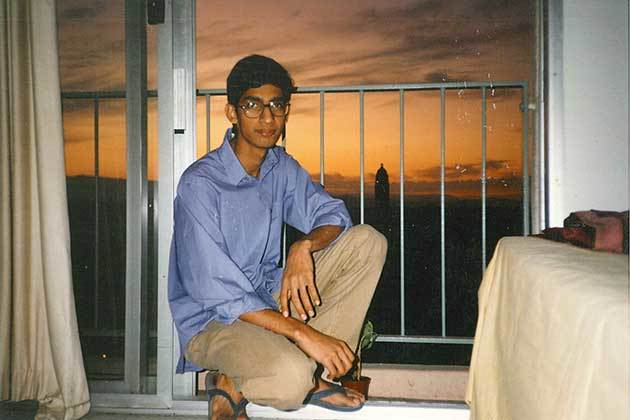
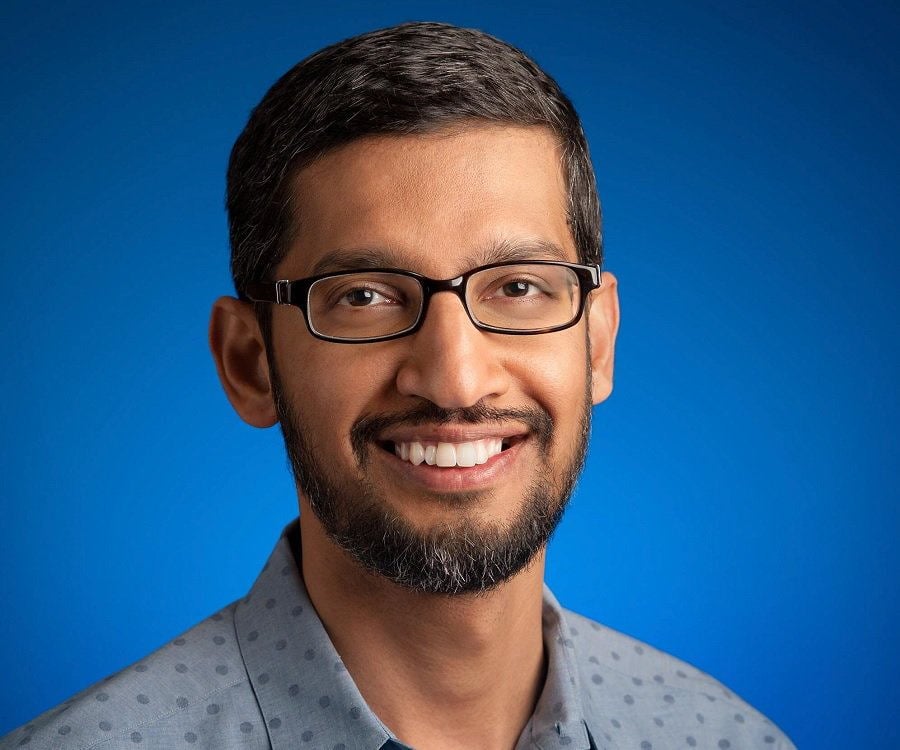
Inspiring story of Google’s CEO: Sundar Pichai – Must read!!!

Growing up in India, like many of you, Sundar Pichai got my first telephone when he was 12. In case it turned out be a rotary phone, so it wasn’t that great for selfies. But he still loved to call my friends, play with it and sometimes take it apart. That telephone cemented my fascination with technology. Sundar Pichai remember in his parents’ house in Chennai, reading about the invention of the transistor at Bell labs. Of course, that initial invention helped found what became referred to as Silicon Valley and out of that came companies like fairchild semiconductor and Intel and every one the computers and software, that we all use today. You can draw an immediate line from that invention to the technology, that powers your Twitter feed or your WeChat messages today.

Google's Sundar Pichai travelled in buses, had no television while ...

Image source : GadegtsNow

When he was younger, people would say, this person didn’t get into this college or something and that is the end of the road. Sundar Pichai thought life is so different from that, and so he think it is important to you know, keep your hopes, keep your dreams and try to follow them and you recognize he think, most of how life plays out is up to you, not up to what happens outside of you. It’s important to keep that in mind and take the long-term view. As a teenager, jumping on to a crowded train. At Chennai and traveling for 24 hours, to attend my school at IIT Kharagpur and that opportunity changed the course of my life. You want to aim high enough that you fail, you know few times thought it is the natural part of the process. In fact, Larry accustomed say if you’re employed on really difficult things, you’re more happy because you’ve got no competition, others aren’t performing on that difficult a drag . And although you fail, you finish up doing something great within the process.

Sundar Pichai Biography - Childhood, Life Achievements & Timeline

Image source: Thefamousperson

You know, working the real world, it is important to be well rounded, it is important to try different things, or you know take some risks, he would encourage people to follow their passions a little bit more. To follow set lanes throughout your career. Getting into an elite institution doesn’t guarantee success, it matters plenty but it doesn’t guarantee success. It is important to stay that perspective in life and life may be a long road, and you know, you would like to require it at the proper pace and luxuriate in what you are doing. Sundar Pichai knew how much hard work it takes to pursue your dream of building a business. The long hours, time faraway from family, the ideas you recognize are brilliant, that just don’t seem to catch on. Reading that and thinking, it is the concept matters. It didn’t matter where you come from or what your background is.
One revolutionary idea, one brilliant invention can unleash other entrepreneurs to revolutionize, industries and ways you could never predict.

black samsung tablet display google browser on screen
Photo by PhotoMIX Company on Pexels.com

15 Books Bill Gates recommend – Must Read!!!

An average person reads 1.5 books per year while your average top CEO reads over 50 books per year they do this so they can maintain a competitive edge in the game and find new ideas that could improve both their lifestyles and companies this  time we’re taking a look at the books multi billionaire Bill Gates thinks  everyone should read because they had such an incredible impact on his own journey.

Here is list of all 15 books that must be read by you to get a better life style:

1, Where good Ideas come from :- Steven Johnson

 Click here to view the book


2, Life is what you make it :- Peter Buffet

click here buy the book


3, Tap dancing to work :- Carol Loomis

Tap Dancing to Work: Warren Buffett on Practically Everything, 1966-2013click here to buy the book


4, Moonwalking with Einstein :- Joshua Foer

Moonwalking with Einstein: The Art and Science of Remembering Everything click here to buy the book


5, The Man Who Fed the World :- Leon Hesser

The Man Who Fed the World

Click here to buy the book


6, “The Sixth Extinction” by Elizabeth Kolbert

The Sixth Extinction: An Unnatural History click here to buy the book


7, Making the Modern World :- Vaclav Smil

Making the Modern World: Materials and Dematerialization click here to buy the book


8, The Rosie Project :- Graeme Simsion

The Rosie Project (The Rosie Project Series)

click here to buy the book


9, Business Adventures: Twelve Classic Tales from the World of Wall Street :- John Brooks

Business Adventures

click here to buy the book


10, The Great Gatsby :- F. Scott Fitzgerald

The Great Gatsby

click here to buy the book


11, Outliers :- Malcolm Gladwell

Outliers: The Story of Success click here to buy the book


12, How to Lie With Statistics :- Darrell Huff

How To Lie With Statistics click here to buy the book


13, The Box :-  Marc Levinson

The Box – How the Shipping Container Made the World Smaller and the World Economy Bigger

click here to buy the book


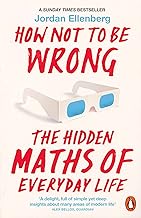
14, How Not to Be Wrong :- Jordan Ellenberg

How Not to be Wrong: The Hidden Maths of Everyday Life

click here to buy the book


15, Sapiens: A Brief History of Humankind :- Yuval Noah Harari

Sapiens: A Brief History of Humankind

click here to buy the book


The Rise of Esports in India

India is emerging as a leader in sports gaming, a growing field that has fascinated the interest of millennials like never before. The Indian digital gaming industry is growing rapidly with behemoths like Dream11, Mobile Premier League, Junglee Games creating their footprints globally.In the past couple of years, the country has witnessed multiple e-sports startups, namely JetSynthesys, Cobx Gaming, FanMojo, Playtonia and Nodwin Gaming, joining the online gaming space, establishing E-sports as an investor-friendly industry. According to the IFSG-KPMG report, the industry is already worth INR 43.8 billion and is said to reach INR 118.8 billion by FY23 with a growth rate of CAGR 22.1 per cent. 

This is to solicit a story on how e-sports platforms are evolving the landscape of sports gaming in India. The primary reason for investors to take an interest in the e-sports section is because India is growing as a sporting nation and the people are taking an interest in building and popularizing leagues for Football, Kabaddi, Hockey, Badminton and other sports.

Alibaba: Tencent and Alibaba-Paytm evaluating India's startup ...

Why E-sports?

More than often people confuse E-sports with Fantasy gaming. While the former is catching a certain interest, electronic sports are not far behind. This form of video gaming has a professional and competitive nature that is facilitated by an electronic system and is often based on organized multi-player video games.Sports gaming is a growing field in India and E-sports is said to be leveraging the country’s love for real sports. “Watching real sports is a passive activity. You switch on your television or open up your mobile app, sit back and enjoy the game,” Ankush Gera, CEO and Founder of Junglee Games started, adding that Online gaming has recognized India’s love for action by making a passive activity engaging.

“Today’s consumers are no longer satisfied with just clicking a button. They want action. They want to do more. They want to be a part of the experience,” he shared. A leader in skill gaming space with over 10 million users across the globe, Junglee Games has emerged as India’s answer to PUBG. The success story specifies that the growth of Indian E-sports platforms is only limited by the initiative.

The Rise of Esports

Currently, India stands at a global number 17 in the soon-to-be USD 1.5 billion Esports industry. Estimated to be about $818 million, the Indian Esports sector while vastly unstructured, is growing rapidly. The number of online gamers worldwide has increased from 20 million in 2010 to 250 million in 2018, whereas the number of game developing companies has grown from 25 in 2010 to 250 in 2018.The IFSG-KPMG reports suggested that fun and excitement are the primary motivators for 72 per cent users for playing online sports across all age and income groups. For around 81 per cent of respondents, the ‘ability to manage teams virtually’, ‘remain connected with the sport’ and ‘utilization of sports knowledge’ was other important motivators for engagement.

The mass penetration of mobile 4G, triggered by Reliance Jio, has further popularized online gaming sports (along with several other internet services) in the country. Thanks to digital innovation, sports have become more interactive, engaging and fun. However, both the real world and online sports have their own charm.Real-life games have their own adrenaline rush whereas the online community to fulfil their urge to play sports, expressed Asifa Sunar, SVP (Head of Product Quality) of Mobile Premier League. Sharing their idea of E-sports, she stated, “MPL is bridging the gap in terms of access to sports by connecting people online who were left out by the world of physical sports.”

Impact over Sports Viewership

Indians harbour a special love for sports. Cricket, especially, has been treated as more like a religion in India. However, a significant change has been noted in the consumption patterns and genre expansion, formulating a jump in the popularity & viewership of other games such as Kabaddi, Badminton, Wrestling & even Football.

“The popularity of a particular sport depends completely on the achievements of the national level teams,” provided Mujahid Rupani, the Co-founder & CEO, Cobx Gaming, an Indian E-sports company. Traditional sports are losing their appeal for the younger viewers due to the multi-hour formats and length of tournaments, making E-sports attractive for quicker gratification and results.While almost every Indian follows at least one sport and has a point of view on the game, players & team selection. Online gaming platforms are now rewarding them for testing their skills as a team selector or coach. Online gaming platforms give the nation an outlet for what they think sports should look like. 

Technology Over Traditional Mediums

“The conventional model of the single-screen broadcast is now only one of the many options at a fans disposal,” provided Sumesh Menon, Co-founder and Group CEO of U2opia Global, the parent company of FanMojo, a homegrown fantasy e-Sports platform that handpicks their players, use their skill to play games, compete and win prize money.Gera argues that Sports gaming does not negate the attraction sports fans have to view the game, in fact, it increases it. “They (Sports viewers) are so much more invested in the performance of the players, (that) watching the match on mobile or catching scores on a mobile app may hold appeal when travelling or busy, the appeal of viewing the match live on a bigger screen is much higher.”

However, he does agree that digital formats might encroach on some market share of traditional media. It would be interesting to see how traditional media adapts to technology. There could be some interesting crossovers between the two formats.

Big players in the market

With a larger appetite for gaming in India, there’s more money moving through the industry, with increased overseas investment and partnership, mostly from China. Alibaba-backed digital payments startup Paytm and Hong Kong’s AGTech Holdings launched a gaming platform Gamepind; Tencent, which has stakes in legendary games like League of Legends, Call of Duty and World of Warcraft, is planning to investin gaming in India this year, and Chinese gaming company Youzu launched local casual strategy games last year. Vietnam-based StomStudio also partnered with mobile game publisher Gamesbond to create mobile games in India.

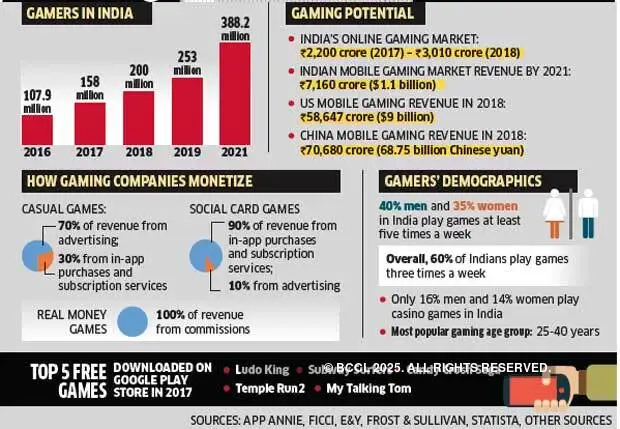
Although most mobile games in India have a very low average revenue per user, except the casino and strategy genre games,  Manojh says, “As the market is maturing, the sector has been getting increasing attention from investors, with many startups raising funds to create niche games.”Globally, over the last few years, the games industry has seen free-to-play (F2P) hit the mainstream, tablet and smartphone games have come into the ascendent and we’ve seen Facebook gaming rise and fall, but in India though, F2P business model – in which games can be downloaded for free, but then make money through adverts – continues its growth.Between 2014 and 2016, game downloads in India more than doubled. “In terms of downloads, casual and sports genre games perform very well,” says Manojh. A survey reveals that mobile gaming is part of daily lives of more than one-third Indians — 40% men and 35% women play mobile games at least five days a week.

AI in gaming

There’s no question that there’s more interest than there has ever been. Virtual-reality gaming is also a fast-evolving vertical in the country. Digital advertising is forcing companies to look at gaming in a big way, embedding commercials through games.What makes all of this even more exciting is the introduction of artificial intelligence into gaming. Tech startup Absentia has developed Norah.ai, a AI-powered tool for quick creation and incorporation of all game elements. “Our engine is trained over 40 million data points, it generates variety at each step thereby adding countless number of possibilities to the terrains, 3D models and game play environments among others,” says Shubham Mishra, co-founder of Absentia. “At the click of a button, a fleet of 100 different variants are generated, empowering the developers with more options.”

This means that games developers don’t need to have particularly powerful hardware — they will be able to create assets for games, ranging from story, to animations, and even models quickly, and affordably. And, it’s all adding up to a fast-growing business.

How to attract people in first 90 seconds- Must read!!!

These are the secrets from an amazing book called “How to Make people like you in 90 seconds or less” by Nicholas Booth Man. Likable people are always open, welcoming and friendly in nature and you can notice their sincerity, trust, and self-confidence in their behavior as well, and you can develop all these qualities in yourself by meeting other people in a regular manner. If other people do not find you interesting in first 90 seconds after meeting you, then they would want to get rid of you as soon as possible.

How to Maintain Communication and Culture as a Growing Startup ...

If you want that people like you more, then you have to invest your efforts from the very beginning, and this starts even before you speak a single word from your mouth. Any new person notices three basic things just after meeting you, these three things are your

  1. Body language
  2. Your eyes
  3. Expression on your face

Thus, it is essential that when you meet anyone, these three elements give the feeling of openness to other people. For doing this, you will have to show your interest in them, along with your body, you will have to move your brain as well toward them. This effort will show your sincerity and commitment and openness in the conversation and in them as well after this, you need to see directly in the eyes of other people, this establishes the trust and as soon as you make an eye contact with other person make sure you give a genuine smile to them before they think or assume anything else about you. Let your positive attitude shine with a broad and genuine smile with this simple action, other people will consider you as a genuine, open and sincere person with this simple effort, you already made a warm and welcoming mood for the situation, and now you need to initiate by introducing yourself. You can do that with a standard greeting, like Hi or hello and you must need to do that in a very pleasant tone. Along with that make sure you share your first name to the other person and it will encourage the other person to introduce themselves for example, you can say,….”Hello, I am Akash”. When you say this, then the other person will also share his or her name with you, and as soon as they share their name, you must need to repeat their name like wise you said… “Hello, I am Sahil” you got response… “Hi, I am Sohil” now you have to say, “Sohil, Nice to meet your Sohil.” In his famous book, “How to win friends and influence people,” Dale Carnage shared the fact that the name of any individual is the sweetest sound in the entire world for that person that is why it is essential that you repeat other person’s name in the conversation as much as possible. This method will increase your acceptance and respect, it will also make it easier for your to memorize their name. And finally, you have to lean forward slightly. Just a little leaning would be enough, just like Mr. Obama is slightly leaning forward in this photo.

How To Give A Proper Handshake - Business Insider

Image source: BusinessInsider

With your slight inclination, other people will assume you are showing interested in them, and you are listening to them carefully, also, it will give you a pleasant appearance. Just look at photo and tell who is looking more generous in both of them. Of course, it is Mr. Obama, because he is using this principle.

Studies proved that people hire those people that are similar to them and even most of the time they date people with similar people because they make them feel safe and comfortable. If you try to pay attention, you will find, you enjoy the company of those people who think like you, who behave like you and those who make you feel comfortable. You can be comfortable for them just by synching your voice with their voice. The synching of voice is a very powerful tool in communication skills for this, you need to speak at the same pace as other people are speaking that means if they talk slow, then you should not run fast and second thing, you shall try to use the same tone similar to them. If they are calm and relaxed, and you will speak loudly or with excitement, then it won’t work well for you. You need to use same volume and you need to relax while talking. With this, other people will think you are like them and they will feel more comfortable while talking to you.

photo of people doing handshakes
Photo by fauxels on Pexels.com

In 1979, Dr. Lisa Berkman did a study on 7000 people, and this study lasted for 9 years with this study, she found that people that do not have more social connections or those who do not meet other people, they get ill more often, and it increased their chances of earlier death as well and who meet other people more often, were likely to live longer. So, go and expand your social circle without having any fear, without any complications.


How Surat Boy and NIT Hamirpur Graduate Shantanu Yadav cracked CAT with 99.7%ile and got into IIM Ahmedabad for MBA 2020!

Shantanu Singh Yadav, CAT 2019 topper from Surat, cracked the exam with 99.73 percentile and has converted number of top B-schools including IIM Ahmedabad. A graduate from NIT Hamirpur, Shantanu belongs to a modest service class family. While preparing for CAT exam, he earned 3 years of working experience in a fertilizer industry. Read his CAT preparation strategy and success mantra

Coming from the small town of Surat in Gujarat, Shantanu Singh Yadav cracked CAT 2019 with 99.73 percentile and has converted number of top B-schools including IIM Ahmedabad. A graduate from NIT Hamirpur, Shantanu belongs to a modest service class family. While preparing for CAT exam, he earned 3 years of working experience in a fertilizer industry.


Shantanu appeared in CAT 2018 also, and scored 95.73 percentile but decided to prepare again to get his dream B-school. He likes playing Football and his hobbies and interests include Photography, Trekking and Hiking.


MBAUniverse.com invited Shantanu to share his exam taking strategy and GD-PI experience. Read on for his views and success mantras.


Q: How did you perform in CAT 2019?

A: I scored 99.73 overall percentile in CAT 2019; 89.44 percentile in VARC section; 99.76 in DILR Section and 99.86 percentile in Quantitative Ability section. I also appeared in CAT 2018 and scored 95.73 percentile.


Q: Apart from CAT 2019, which other exams did you appear?

A: Apart from CAT 2019, I appeared in XAT 2020 and scored 99.914 percentile; appeared in IIFT 2020 and scored 98.74 percentile.


Q: Which top B-schools have offered you admission and which one you have finally chosen?

A: Apart from getting final admission offer from IIM Ahmedabad, I have converted IIM Calcutta, IIM Shillong, MDI Gurgaon, all Baby IIMs. I have finally decided to join IIM Ahmedabad


Q: What have been your academics and family back ground? Do you have some work experience as well?

A: I graduated from NIT Hamirpur with Chemical Engineering in 2017 with 82.6 percent. I scored 91.2 percent in class X; 90.2 in class XII and 82.6 in Graduation. I have 3 years of work experience in the Fertilizer Industry. I belong to a service class family. My father is in Service, Mother is a housewife and younger brother is in 11th grade.


Q: What was your overall preparation strategy for CAT?

A: CAT 2019 was my second attempt at the exam, when the first one in 2018 fetched me admits to some new and baby IIMs. I started preparing again in May’19, mostly focusing on mocks and timing my attempts effectively. I started cross-checking and analysing my wrong answers, something I never used to do earlier.


The quants section was my strength but still I devoted equal time to all the three sections with some extra effort towards DI and LR which is I believe is the most unpredictable section in the exam. You could practice a hell lot of LR sets prior to the exam but might still hassle on the D-Day. LR sets are not straightforward like Quants or DI sets. Timing my complete mocks and sectional tests along with thoroughly analysing my wrong as well as right attempts turned out to be fruitful.


Q: Please share your sectional preparation strategy for VARC in CAT

A: For Verbal and RC, I used to read articles from diverse fields to get a hold of difficulty faced to comprehend as well as retain a column when it does not belong to something you’re usually used to. Reading articles from newspapers and business magazines not only helped in VA and RC but also made a solid base to ace the current affairs during the interview and GD rounds.


Q: Please share your preparation strategy for DILR Section

A: For DILR, I focused mostly on LR and LR based DI sets, as for the past few years you rarely get to see a pure DI set in the actual exam. LR being the most unpredictable section in CAT, I followed a strategy to solve and analyse each and every set I face either during mocks or during practise from dedicated books. Try looking for practise material online on GoogleDrive and you’ll find plenty of LR sets to solve. IMS’s mocks helped a lot in DI LR section as they had questions which were closest to the ones actually faced in the CAT Exam.


Q: Please share your preparation strategy for Quant Section

A: For Quants, I thoroughly practised books by Arun Sharma with a timed approach to solve at least 25-28 questions from various topics under 60 minutes. Apart from this I also solved previous years’ CAT papers with minimal use of on screen calculator.


Q: Was there any particular section/area that you were weak at? How did you overcome this challenge?

A: I was lagging a bit in VA and LR during my initial preparation. For VA there’s only one approach and that is to read, read and read. Read from publications you’re not familiar or used to. Read foreign journals/magazines, editorials in intl. newspapers etc. For LR I solved as many sets I could get my hands on with a timed approach, trying to crack the set within 10-12 minutes was my strategy.


Q: What role did Mocks play in your success? How many mocks did you attempt before the exam?

A: Mocks are the key to better preparation as well as time management skills. I solved about 40 mocks before the actual CAT.


Q: Did you self-prepare or attend a coaching centre and why?

A: I self-prepared for the exams and took guidance from IMS Surat for the WAT-GD-PI. I also enrolled for mocks with IMS because of their well-structured and closest to CAT mocks.


Q: Please share your strategy for the CAT Day. What was your last-minute preparation? How did you plan your CAT test taking?

A: Strategy for D-Day would be to avoid any last minute preparation. Since the syllabus for CAT is so wide and even has no boundaries defined for VARC and DILR, last minute hustle mostly turns fruitless and overloads you with added stress. I appeared for one mock, a day before the exam and scored just 16 in VARC which freaked me out. It somehow affected my actual performance in CAT where I scored merely 40 marks in VARC which took my sectional percentile below 90.


Take rest and sleep well a day before the exam, not much you’ll be able to change with a day’s preparation. I spent my rest of the day watching Netflix after flunking VARC a day before CAT.


Q: How did you prepare for GD/PI/WAT. Please share your GD/WAT topics & PI questions?

A: Post the release of response sheets by IIM Kozhikode and realizing I was scoring 180+, I started my preparation for GD and PI. The first thing I did was to prepare an exhaustive write-up about myself, starting from academics, work experience, achievements, projects, interests and hobbies, short and long term goals. Current affairs for GD and PI didn’t require much preparation owing to my habit of reading newspapers and magazines religiously.


I attended a few sessions from experts along with two mock GD and PI sessions, of which one was purely focused on my IIM Ahmedabad interview, which was only my second interview in a long list of 14-15 shortlists including IIM A,C,L,S, MDI, SPJIMR, XLRI and IIFT. I also prepared a few core subjects from my engineering and also mathematics, which eventually aided me a lot during my IIM A, C & L interviews.


Q: Your final message and tips for candidates preparing for CAT 2020.

A: I want to share following four tips for the prospective candidates:


Always analyse your mocks thoroughly. It’s not at all tough to land in the top 1 percentile.

Try not to appear for a mock on the penultimate day. Relax and sleep well for the D-Day.

Try not get stressed, during the exam and also in the interviews.

Never globe in the interviews. Professors will have a laugh and you’ll walk out looking like a clown.

23 June – World Olympics Day – History…

On the 23rd of June 1894 the International Olympic Committee was founded at the Sorbonne in Paris. Prior to the IOC establishment by Pierre de Coubertin the British physician Dr. William penny Brookes had set up the Wenlock Olympian games in the English market town of Much Wenlock although he always maintained that he had the idea of reviving the ancient Olympic Games for amateur athletes himself, Coubertin entered correspondence with Brooks and benefited from his connections with the Greek government Coubertin was the Secretary General of the Union of French sports associations.

A Brief Look At The Olympics History

Image source: Confidential man.com

Coubertin first proposed establishing a modern Olympic Games at his meeting on the 25th of November 1892 although his enthusiasm was met with little more than general polite applause Coubertin wasn’t deterred and commenced to get the groundwork for what was to become the primary Olympic Congress at the Sorbonne in Paris in 1894. Initially invited participants to a gathering entitled reflections on and propagation of the principles of amateurism Coubertin later changed the name to a congress on the revival of the Olympic Games seventy-nine delegates from nine countries subsequently met at the Sorbonne though Coubertin himself recognized that there was still little enthusiasm for reviving the games. Despite this a vote was held at the last word meeting of the Congress on the 23rd of June that established the International Olympic Committee Coubertin was elected to the role of general secretary with the Greek businessman and writer Demetrius Vikelas because the first president it had been further agreed that the primary modern Olympic Games would happen in Athens in 1896. The second in Paris four years later the IOC has remained liable for the Olympic Games ever since.

All About the Olympics for Kids - The History and Symbols of The ...

There are two main events there are the Winter Olympics and the Summer Olympics if you’re wondering when the winter and summer olympics take place they take place every four years when you see the Olympic logo there are five rings the reason for that is in history it has been told that a man named Baron de Coubertin saw the five rings on an ancient Greek artifact the reason we see five colors on each ring is to represent the five continents Europe, Asia, Africa, Oceania and the Americas finally with sports like track gymnastics figure skating and more each category is awarded a gold silver and bronze medal for the first second and third place winners. Hope you enjoy the Olympics.

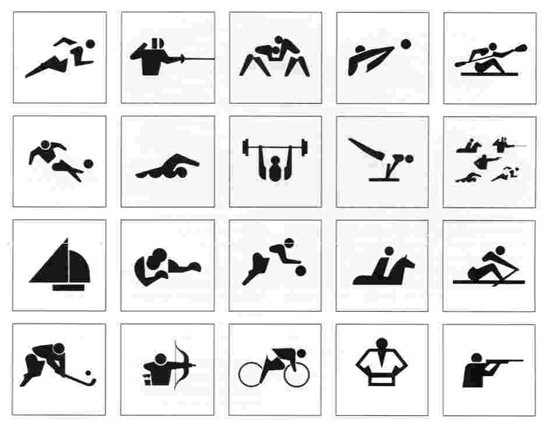
The History of the Olympic Pictograms: How Designers Hurdled the ...

Image source: Smithsonian magazine

“India Boycotting Chinese Products -Easy”?

India boycotting Chinese products has been trending these days . And it has been observed that civilians are reacting to the recent act which happened on the Indo-China border. The loss of our 20 brave soldiers is hitting the minds of people across the country. Defence and our political leaders are finding the best way out to fight these back. But current happenings arise, the big question which needs to be addressed which is to continue trade with them. Losing lives of our country men and still continuing trade with the same country is a shame for us as a response to  those brave souls. Common man is filled with anger and in the steps to take revenge and show their aggression, they have decided to boycott these products and their import. 

But “How difficult and how bad it could be for us to stop trade with these Chinese companies right away”. The major area to focus before discussing the Chinese products and their usage in India would be the export and import of products in and by India. The import percentage is almost double the amount of export we generally do.This surely defies our dependencies not only on China but also on other countries for more of our products. India lacks in their productivity growth which means the lack of raw material for manufacturing any product. Thus India is dependent on other countries for even the raw material. India along with that does not have better skilled labour due to lack of literacy around the country. This leads to rise of manufacturing cost of products and surely rise in their sale cost also. Which countries like China, have a plus point with. They have highly skilled labour, and due to high populations , work is a priority so they hire these skilled people at much lower cost and thus earn better profits than other international companies. 

Comparing China and also enlisting India’s dependency on it. India is dependent on china for most of its products and  components which include:

  1. Automotive parts
  2. Electronic material and parts
  3. Pharmaceutical ingredients
  4. Consumer durables
  5. And many more raw materials. 

These components and their share is hide in importing from other countries and especially china for cost effectiveness. Along with that all the countries are shifting towards sustainable forms of energy and one of the forms is solar energy, but the interesting fact is that most of the components in it are made in China. 

India technology as compared to China lacked in the time-period along the years as they invested most of their resources in creating resources which India focused on just importing and buying them. Many schemes like Make in India and a recent Atma Nirbhar bharat as launched by Prime minister of India Mr. Narendra Modi, which purely focuses on developing their product and manufacturing most of them india.  The main area we lack is raw material, India to manufacture products has to import most if raw material from other countries especially china. So India should try to shift to some other source for their raw material and on coming years must focus on there technology and production of these raw material and ingredients in our country only. 

It’s hard to believe and accept but yes India is dependent on china for most of its product and boycotting them and this stage could result in high lack of these resources especially in pharmaceutical industry, as many medicine especially paracetamol and ingredients used in it comes from china, so boycotting chinese product and its use could be harmful especially in today’s era if pandemic. 

“India should surely learn from this and focus and initiate more towards encouraging people to come up with their ideas of startup which include manufacturing and production of products within the country only, relying less on foreign imports rather focused on foreign exports in near future. India can develop its own market of products and raw material by focusing more on the inputs available in the country itself, and surely in future, India would see a hike with its products being exported all over the world, leaving with us a higher economy and growth capacity and independence from major exports from other countries”. 

Future of Cinema Post Covid-19

The 1999 and 2008 crises were certainly high impact, but neither was as global as the 2020 correction that was felt in every nation due to the first simultaneous worldwide lockdown.

The ongoing COVID-19 crisis has led to large-scale anxieties about the future of the arts. Many livelihoods rely upon the performing and visual arts. It is just not the fraternity of artistes but their support staff, co-workers and an entire ecosystem that is sustained through their practice. We are the largest film-making nation in the world. The film industry offers jobs to several thousands.The lockdown will be eventually relaxed at some point as can be seen in different parts of the world but many are of the opinion that this pandemic will significantly impact our film-viewing behavior and other economic decisions around it. We might stay away from film theatres to avoid large gatherings. This could also indicate a shift towards viewing films on online platforms which have already made a dent during the lockdown.

Netflix, Amazon Prime, etc., have witnessed a record surge in subscriptions during the lockdown. This doesn’t mean that everybody has suddenly turned a film lover, but that these platforms offer a plethora of entertainment options for people locked inside their homes. The content and range of programmes on these portals is also far superior to what is available on regular television. There are films and TV series which are especially commissioned by and released exclusively on these platforms.

For over two months now, cinemas across India—around 10,000 single-screen ones and 3,000 multiplexes—have remained shut as most of the country is under lockdown to curtail the spread of coronavirus. This shutdown is estimated to have cost the Indian film industry over $130 million (Rs984 crore) in box office revenue. Meanwhile, even as the government has started a partial withdrawal of the lockdown, reopening cinema halls isn’t high on its agenda. And even if the government allows theatres to reopen, experts believe, not many people will take the risk of going to the movies.

Wooing audiences again

The “movie theatre experience”—complete with surround sound, visual effects, flavoured popcorns and colas, and even recliners in some cases—has thrived in India despite the touch competition from OTT segment in recent years. But this time, the fight is harder as cinema owners need to deal with consumers’ psyche, which is hard to change, experts said.

To begin with, there’s a need to create an environment that feels hygienic and safe. For instance, cinema hall operators must try to remove all human contact by making it mandatory for customers to book tickets online. “Cine-goers could be encouraged to book their snacks online to avoid crowds at food stands,” suggested Neeraj Roy, founder and CEO of Mumbai-based Hungama Digital Media.In line with cinemas in the US, which are opening up with “social distancing seating,” Indian theatres are bracing for less than half the occupancy. On May 20, the Multiplex Association of India put out a plan detailing measures they were willing to take, including deep cleaning of halls at regular intervals, use of body temperature detectors, making masks compulsory while watching movies, and grilling health check-ups of staff.

These steps will need higher spending by cinema hall owners, who will eventually need to charge customers more. This might become a major roadblock to attracting crowds as thousands of Indians are faced with pay cuts and job losses, which leaves less scope for discretionary spending and instills caution against reckless expenditure. Cinema owners have also been struggling to convince producers to stall releases instead of taking the OTT route. “We were hoping that the producers would accede to our request to hold back their film’s release till cinemas reopen,” said Kamal Gianchandani, CEO of one of India’s leading multiplex chains, PVR. “That said, this is not the first time films are being premiered on streaming platforms. Cinema exhibition has regularly faced competition from new emerging distribution platforms.”

Bypassing the censors

Also, you could bypass many of the problems of censor certification if you release films on these platforms. Amidst the ongoing pandemic, many film festivals are moving online. Britain’s most famous socialist filmmaker, Ken Loach, has made some of his best films available for free on YouTube. Other film streaming platforms are making foreign and documentary cinema available at a nominal fee for a limited time span. With increased awareness about films, will we go back to theatres and settle for the same content that mainstream cinema peddles after the lockdown?

However, there is also a grave danger. Access to these platforms is largely limited to an urban demography that can afford an Internet connection, along with the subscription fees which also determines the class character of its potential viewers. If this were to become the norm, it would exclude a large majority of the film-viewing population. That will be a denial of cinema to those who have been its utmost supporters.

Indian education system and its reformation

Learning is elementary to education and a skill that allows a person to improve his personality.  Apart from being a basic necessity, a good education skill can overcome many personal and professional barriers. Learning being central and basic to education and lack of education can create disturbance in society. Education and learning and its development are important for a person who desires to exchange information meaningfully to the person and places required.  We as a human being started developing knowledge as a proper source to learn something as it also helped in self-control and to develop a character for better development as an individual as well as the society. We as an individual made ourselves to learn about many different things about social, awareness, grooming personality and foremost are the preservation of culture for the coming generation. However, with changing time education has become integral part of human.  Especially in many developed and developing countries it is now termed as a basic human right.

Education in modern India

Macaulay was the man behind the start of education in India (as per internet suggestion) introduced education in India, especially through his famous minute of February 1835. He called for an educational system that would create a class of Anglicized Indians who would serve as cultural intermediaries between the British and the Indians.

Current education system in India

Education is always an integral part of life students’ life. Despite being a nest to many education universities, colleges and varsity, India still lacks the quality education it needs to have. According to a survey India will be ranking 3rd among all countries by 2020 in education. Though if the quality of overall ranking of relevant institutions is seen clearly, out of 500 there were 2 Indian Universities and varsities were featured in the list along with one institution from China as per a survey by education group done in year 2000. Education system in India including other developing countries like India needs substantial expansion. The percentage of students taking higher education is hardly about 13 % whereas the same is varying between 28 to 90 %, across the world. The lowest % being 28 % and the same is as high as 90 % in developed countries (As per a news report)

Why India lacks

  • Over Population: Too many people and limited seats makes student worried of career.  Concerned over future and aspiration to get ion a good college is the main reason of brain drain.  
  • Course choice: mainstream subjects like math science are being taught by world class teachers but good institute for off-bit courses like music and painting is tough to find.
  •  Lack of quality higher education in India

The benefits of an education abroad

Studying abroad has always been associated with improving the chances for a distinguished career prospects. Indians willing to study abroad has seen a sheer increase in the past few years According to recent estimates by RBI (reserve bank of India) latest figures in its monthly bulletin, outlays on education and maintenance of close relatives grew 88% to $334 million and 21% to $300 million, respectively.

Few reforms need to be done.

  • Career oriented learning program: There is need to have courses that could guarantee job placement.
  • Job opportunities –the basic need of a student is to have a secure future that can only be achieved by acquiring a good position in their dream organization.

“India’s Struggle To Fight Chinese Products”.

Every country in today’s era is working hard so as to make their economies strong and thus increase their GDP. This surely gives rise to better job opportunities to flourish, better infrastructure of the countries and also a tourism sector to thrive. India is one of the developing countries and has been able to mark it’s high GDP growth irrespective of its high population rate. But still there are various factors which makes it a bit tough for India to develop completely and cope up as a developed nation. The factor is dependency on other countries for most of the manufacturing technologies and products. India prefers importing most of the goods and services from other countries, and thus lacks its own manufacturing and research technologies. One of the most prominent country from which India is importing is China. China has been one of the most successful countries in exporting most of its products and thus achieving maximum productivity growth as compared to other big nations like the USA and Japan. 

India is dependent on Chinese products for most of its cost saving benefits. Most of the products we do acknowledge and bully are Chinese as we do find them more feasible and lying in our budget. But still India is fighting back and stopping the import from China and various other countries and focusing on increasing it’s export to other countries. The mission and scheme as launched by our Prime Minister Mr. Narendra Modi of “Make In India ” has brought up various startups and investment in manufacturing technology and has led to growth of the country’s economy and job opportunities. 

But still India does lack production and manufacturing of products at cheaper rates as compared to what China does. There are various things which do affect the cause of same which include:

  1. Availability of  cheap skilled labour: India being 2nd in world’s population, still lacks much of a literacy rate, which is not a case in China and other countries. People in China are much more skilled and educated . So companies do acquire much of these as a resource for their company at cheaper rates and thus reduce their manufacturing cost. While in India we lack much of literacy rate, thus affecting our availability of skilled labour
  2. High production: Productivity as mentioned above of China is much more as compared to other countries. This reflects that they have an abundance of material which not only can be used for manufacturing products in their own country but also exported to other countries. India lacks much of the raw material required for manufacturing anything, so they do rely on foreign factors for manufacturing. 
  3. Selling products at cheaper rates : Chinese products are well known for their cheap rates. This mostly fascinates people to buy them. This surely leads to reduction in the sales of the other similar product and thus the company faces losses thus the company’s only 2 choices “Either to merge with that Chinese brand or to shut down”. It’s frequently bseen that most businesses and companies get off the business which gives these Chinese products a plus point and they become the  lone survivor.And in future times they do raise the prices which market them with huge profits. 
  4. Production of duplicate or matching product: China has been investing more of its money in coping things,since we know for manufacturing of any new or original product, companies invest in it’s research work, qualified labour and number of tests and thus find the best and feasible product. China misses this step and jumps off to the production which saves a lot of money and also the manufacturing cost.

“There are many more reasons which give China and it’s product great power in our country. But we should understand the requirement of not investing our money in those Chinese products and rather bring up products manufactured in our own country so as to keep the countries money within the country. Also more startup ideas must be motivated to flourish and thus growth productivity must be targeted so as to manufacturers and use products made in our country only and rather from buying it from other countries, we must export them . These few efforts would bring out significant change which would lead our country to prosper be one of the developed countries in coming years”. 

Why Mukesh Ambani is more successful than Anil Ambani? – Inspirational story…

Once before in 2019 Mr. Anil Ambani either you pay Eriksson 453 crore rupees or go to jail that time is super rich brother saved him from that feed and then it happened again this year you are personally liable to the three Chinese bank for our comms use of 700 million dollars, but sir I have a net worth of zero you Daikin industrialist socialite and fitness enthusiast there riches-to-rags story of Anil Ambani could well be a plot for a Bollywood film just like his father the Dhirubhai Ambani.

Image source: Business Insider

Dhirubhai Ambani also inspired a film guru  Dhirubhai was legendary for his audacious vision and his ability to successfully implement it

“If you don’t build your dreams someone else will hire you to help them build theirs while”

Started as a petrol pump attendant in Aden Yemen his son’s vocational him walk straight to the directors cabinet while returned to India with just 500 rupees set up reliance and took it public in 1977 the boy started life sitting on its board and that time of his death in 2002 Forbes ranked Dhirubhai Ambani as the world’s 130 eighth richest person with a net worth of 2.9 billion dollars leaving behind one of India’s biggest companies worth 75 thousand crore unthinkable to him that his two sons would fight over his legacy. Dhirubhai did not leave behind the wheel despite cracks forming between the two brothers even during his lifetime who were then Chairman and Managing Director of Reliance Industries respectively after the father’s death these cracks came wide into the open over who would own which company. There was no question as to who would get their flagship petroleum company reliance because Mukesh was the one who had built them main Patal Ganga plant and understood the business intricately Reliance Communications India’s second largest telecom company at the time was also micaceous baby having an vision and build it from scratch but Anil wanted it. Finally, it was their mother Kokilaben in 2004 five I need are calm mom supported by external negotiators chartered accountant s guru-murthy and banker KV Kamath who stepped in to divide the conglomerate Mukesh got all the old economy companies Reliance Industries petroleum IPCL infrastructure while Anil got all the new economy companies and renamed his group ad AG telecom Reliance Capital Energy Natural Resources and broadcasting and his legacy left him as the sixth richest man in the world with a net worth of more than 42 billion dollars just one step below his elder brothers forty three billion. It was broadly expected that since Ana had control over sundry sectors he would do better than Mukesh in the long run in his quest to further strengthen his hold in this sunrise sector in 2005 Anil bought ad lab films and their chain of theaters big cinemas which by 2008 had become the largest multiplex chain with 700 screens across India and overseas he also signed a 1.2 billion dollar deal with American filmmaker Steven Spielberg’s production company DreamWorks in the same year making some Academy award-winning movies.

Anil Ambani - Wikipedia

Image source: Wikipedia.org

When Anil floated an IPO for Reliance Power it was subscribed in 60 seconds and record for Indian capital markets a Mills flamboyant lifestyle was a fairytale like his proximity to Bollywood celebrities on a loose was my genre program to politicians like Samajwadi parties. Amar Singh who had enough clout to have him nominated as AI onion through by Ambani having being elected as a member of the Rajya Sabha like his bi-weekly helicopter flight from his South Mumbai home to our comms office in Navi Mumbai named Dhirubhai Ambani knowledge seeking or his love for running and fitness which he apparently took up after an American investor.

Mukesh Ambani

Image source: Forebs

Mukesh boasting of the most expensive house in Asia worth 700 million dollars four and a half thousand crore anil planned his own luxurious house aboard also worth about the same amount in Bandra Pali Hill which is still under construction with so much money and attention around it seemed Anil star would shine forever things however did not go as planned relations between the once close brothers that were until then civil Saud instead of renegotiating an old deal in 2010 and Anil took Mukesh to court over the supply price of gas from Reliance Krishna Godavari Basin. Mukesh refused to supply him gas at the contracted price under the terms of the 2005 gas agreement brokered by their mother who Kokila had contracted to supply gas to onions our NRL at two dollars 34 cents per mm BTU even though its price had since risen sharply in international markets but the Supreme Court in accordance with the government’s gas utilization policy fixed the price at four dollars 20 cents per mm BTU in favor of Mukesh as Anil his next hit was in Telecom when our comb was set up they adopted the cheaper CDMA technology. While rivals such as Airtel and Hutch used the more expensive GSM while CDMA was a superior technology at 2g and 3G levels the world was moving towards 4G and beyond which it could not support once the tenure anti-competition clause with his brother lapsed into end Mukesh launched Jio and changed the face of the telecom industry in India within three years of Jio’s launch our comes one point six five lakh crore market capitalisation lost over 98% of its value and eventually went into insolvency proceedings in May 2018 both these were big setbacks for Anil.

Anil Ambani falls off billionaire club; equity wealth crashes from ...

Image source: Business Today

Now his dominoes began to fall one by one in an effort to reduce debt in 2014 Anil sold big cinemas to Carnival for seven hundred and ten crore and two years later parts of his TV and FM radio business to Zee for one thousand eight seventy two crore during his head is Anil to showcase his engineering capability took huge loans to build Mumbai Sea Link and the city’s verso Agard copper Metro both projects done below cost despite things falling all around him. Anil without domain knowledge tried his hand in the defense sector when in 2016 he bought p-pop of marine and offshore engineering so it was no surprise when the diversification failed and the market cap of Papa renamed Reliance navel fell ninety percent in 2019 from a billion dollars to a hundred million the Fuhrer over the Rafael deal in Parliament also added to his woes finally the profit making and cast generating Reliance Energy was sold off to Adani in 2017-18 for 2.5 million$ 18,000 crore took pay off debts loans that Anil defaulted on worth twelve thousand eight hundred crore also played a part in the downfall of yes bank as of December 31st 2019 Anil Ambani telecom naval infrastructure and power businesses have defaulted on loans over 43860 dollars his pile of deaths has also affected his other projects we had the Delhi Metro or power projects in Madhya Pradesh while Mukesh Ambani’s wealth saw ups and downs but remains steady at 43.1 billion$ last year on his fortunes tumbled to 1.7 billion and is reported to be worth less than 1 billion.

10 amazing facts about Mukesh Ambani's home 'Antilia' - Photos-1

Mukesh Ambani House (Image: Business Today)

Anil monies deadly sins poor strategy are calm lost out when 4g came this way known drawback in CDMA pride chasing prestige projects with long returns rather than the bottom line like the ceiling over ambition looking outside of core competence areas like venturing into defense mismanagement taking more loans than the ability to pay in worst case scenarios like our comm navel etc mukesh on the other hand has not only kept a deep focus on his core business but entered two major sunrise sectors retail and telecom through a well-crafted strategy. Anil is not the only one to lose his fortune Ranbaxy is Shiv endure and Melinda Singh lost their ancestral 2 billion empire Ashika then Ravi can through you had to let go their bankrupt Essar Steel to ArcelorMittal VG Siddhartha of coffee cafe day ended his life citing debts and pressure from lenders the rage girl had to step down as chairman of Jet Airways which eventually wound up operations under a debt of 8500 TV mogul Subash Chandra lost his stake in Zee TV due to mounting debt the once billionaire is currently battling a lawsuit by three Chinese banks which are trying to recover 680 million$ they lend to our Comment 2012 debt backed by onions personal guarantee in a further spate of bad luck Reliance Capital the only business which was still doing well also got hit due to global recession after the corona virus epidemic a London Court has now asked him to deposit a hundred million dollars in six weeks but Anil pleaded, “I do not hold any meaningful assets which can be soon to pay them” now that the six week deadline is over and Anil is still out of jail it appears that he had enough personal funds to make the payment after the Jio-Facebook deal big brother Mukesh sauce even higher but with limited resources left the question is what next for Anil Ambani Baseball’s Limerick this is the story of Anil Ambani how his life was once full of glory but his death overloaded and capital eroded what chapters are left in this riveting story.

Dexamethasone- Corona Vaccine Update!!!

Finally some good news today dexamethasone is now being called a major breakthrough based on a recent randomized controlled trial in the UK. Dexamethasone also known as Decadron is an example of a glucocorticoid are sometimes referred to as corticosteroids other examples of glucocorticoids include hydrocortisone methyl prednisolone prednisolone, prednisone beta methazone and triamcinolone so glucocorticoids are a class of steroid hormones that bind to the glucocorticoid receptor in the body cortisol aka hydrocortisone is the glucocorticoid.

pexels-photo-4031867.jpeg
Photo by Edward Jenner on Pexels.com

We naturally make in our body it’s essential for life it regulates or supports various cardiovascular metabolic and homeostatic functions it also plays a big role in our immune system especially when it comes to reducing certain aspects of inflammation this is why we use them all the time in medicine we sometimes give these steroids for asthma copd rheumatologic type diseases and countless more diseases. Sometimes it is also given for steroids for meningitis and also for some forms of cancer we also give them in the early course of severe ards acute respiratory distress syndrome whether that ards is due to infection such as pneumonia or vaping lung injury or whatever the cause for severe ards we typically give methylprednisolone or solumedral at a dose of one milligram per kilogram per day. So, for most people that ends up being around 80 milligrams per day so this is the equivalent of 15 milligrams of dexamethasone the idea here is to suppress the cytokine storm that has taken place meaning that the massive amount of inflammation that causes lung damage and can indirectly cause damage to other organs as well our body naturally makes cortisol in our adrenal glands specifically in the zona fasciculata of the adrenal cortex the adrenal gland then secretes cortisol into the bloodstream and the cortisol travels to different tissues of the body and then binds to the glucocorticoid receptor inside cells it then stimulates the cell to make more anti-inflammatory proteins and causes the cell to make less pro-inflammatory proteins but giving someone glucocorticoids meaning steroids to someone who has an infection is somewhat of a tricky thing because the fear is that if you suppress the body’s immune system it has the potential to make the infection worse. Sometimes the body’s immune system does more damage than the actual infection for example in cases of meningitis that is due to either streptococcus or tuberculosis we give steroids because the medical evidence shows that they have better outcomes when we do so and giving someone steroids for viral pneumonias like influenza is more controversial because doing so generally leads to worse infection with that said if the viral pneumonia is so bad to the point of causing severe ards most doctors will give steroids in that situation. So this is why, the general medical guidelines so far recommend against giving steroids for covert pneumonia unless the patient has severe ards and we’ve been waiting for randomized controlled trials to come out for steroids in covid and here we are now with this study so in march of 2020 the recovery trial which stands for randomized evaluation of covid-19 therapy was one of the randomized control trials that actually looked at several different potential treatments for covid which included low-dose dexamethasone this trial was done in the UK.

skynews-dexamethasone-covid-19_5014958

Image source: Sky News

Over 11 500 patients in it so this trial has not been peer reviewed as of has not been published in the journal yet so everything I know so far is based on what’s been released to the general public in this trial over 2100 patients were randomized to receive dexamethasone specifically six milligrams once per day for 10 days and this group was compared with over 4 300 patients that were randomized to the standard care alone so 6 milligrams of dexamethasone is the equivalent of 32 milligrams of methylprednisolone so this is about half the dose we would typically use for someone with severe ards so among the patients who received standard care alone 20-day mortality was highest in those who required mechanical ventilation this was 41 and then intermediate in those patients who required supplemental oxygen only this was mortality rate of 25 percent and the mortality rate was lowest among those who did not require supplemental oxygen in which that mortality rate was 13 for patients who were on mechanical ventilators dexamethasone reduced mortality from 41 percent to 28 percent for patients who needed supplemental oxygen it reduced mortality from 25 percent to 20 percent and there was no benefit among those patients who do not require supplement oxygen in other words if someone only had mild disease there was no point in giving dexamethasone so based on these results one death would be prevented by the treatment of around eight ventilated patients. So that’s the number needed to treat for ventilated patients and then the number needed to treat for the ones who required supplemental oxygen that number needed to treat would be 25 so these preliminary results are significant but it doesn’t mean that dexamethasone is a miracle drug it’s certainly not a cure but it does seem to help based on these numbers index and methazone could be of huge benefit and not just rich countries but poorer countries as well because this drug is very cheap and is widely available so this is great news and very exciting but there are still a lot of questions that need to be answered like what is the ideal dose should we use higher doses in patients who are mechanically ventilated with ards and when will it be approved for use in the united states and we’ll get these answers pretty soon now another.

person holding petri dish
Photo by Anna Shvets on Pexels.com

Interesting question is should we give decadron dexamethasone to people who have mild disease now even though this study didn’t show any benefit the reason why i bring this up is because some people start out with mild disease and then go on to have moderate or severe disease and we have no way of predicting who goes on to do that and also it happens very quickly lots of times someone could be doing just fine and then all of a sudden within hours they all of a sudden are deteriorating and they have severe disease so should we give those patients decadron regardless is there any harm doing so that’s another question that remains to be seen.

The Need of Career Counselling in Today’s World.

What is counselling?

Counselling is a general process of helping or guiding an individual to solve one’s personal or psychological problems. Counselling is usually done by someone who is a professional in that particular field and knows how to deal with human behavior,their personality and provide right direction to their thoughts. A counsellor is a person whom you can visit anytime when you feel to as the relationship between the visitor and the counsellor is based on and should be based on trust and good moral support, on the other hand the individual’s identity and problems shared stays confidential.

What is Career Counselling?

It is also a process which focuses on helping an individual understanding his own worth as well as the work trends so that the individual can take a better decision about their career and education. Career counselling gradually helps in the time management issues among the students and children and also solve the trust issues and misunderstandings among the parents and children regarding which career to opt.

Why does one need Career Counselling?

Each and everyone of us require guidance at some point in our life as it is tough to make a significant decision. By career counselling we understand our potential and future aspect of our career and how to improve it. Some of the benefits of career counselling are given below.

  • The major benefit of career counselling is that it helps an individual in choosing the right carrier as the counsellors are experts in their field and help to asses an individual’s aptitude,personality,interests and other aspects. By evaluating the results of the source of information which came from the student, the counsellar suggests the best available career options.
  • As the career counselling provides an access to wide range of resources and knowledge which helps the student and parents to choose the right path and option as they might not be familiar to that kind of expert knowledge.
  • Career cousnelling will help the student to understand the difficulties and hurdles which would arise in the path of their career.The extra knowledge that the student achieves through counselling results in the rise in confidence and enthusiasm.
  • Such counselling will help the students in breaking some of their day to day habits which is not required such as procrastinating and not keeping update on the particular field or career. A career counsellor helps in breaking such behavioral patterns and lead to productive environment.
  • In most of the situations it is a difficult task for both the parents and the students in choosing the right career option and leads to frustration. Career counselling provides such a platform where frustrations can be reduced and the focus is redirected towards the best career options.
  • It helps the students in the connecting to the best experts available with enough life experiences and accomplishments. They become role models for the student in most of the cases who serve as an inspiration for the students.

Status of Career Counselling in India.

Career counselling in India may be a huge addressable market as currently India needs a minimum of 1.4 million career counsellors to take care of a globally acceptable student to high school counsellor ratio. While a few national boards have mandated schools to have counsellors, over 93% schools in India don’t have a professional counsellor on board. There is urgent need of career counsellors at the varsity level in India.

The government had done a survey of over 150,000 households across India between April and December of 2015 showed some startling data – a highly educated Indian youth is quite five times as likely to be unemployed as an uneducated one. Nearly 35% of Indian youth who possess graduate degrees and above are unemployed, while relatively uneducated young workers (6.2% unemployment) do far better . This clearly points to the very fact that there’s a significant mismatch between skill building and contemporary jobs. Timely career guidance can help bridge this gap.

That India features a counselling- deficit education sector may be a critical challenge. We have around 1 Lakh professional career counsellors compared to the necessity for 15 lakh career counsellors to cater to 315 million strong student market. Comparing to the US, they have about 2.6 million student counsellors for 56 million students.
Career Counselling is only now beginning to gain the recognition it deserves and is witnessing exponential growth as a profession. While the developed nations have recognized the criticality of career counselling, and a vast number of progressive schools in India are also waking up to the fact, over 90% of Indian schools still don’t have career counsellors and there’s a shortage of nearly 14 Lakh trained career counsellors within the country.

Market size and expected growth for career assessment.

The size of the market for career assessment and guidance is currently estimated at over Rs 5,000 crore in India and growing at a dramatic rate.The Developing economies are increasingly appreciating the impact of career counselling in aligning students with the proper career options and thus contributing towards the nation building with youth icons.