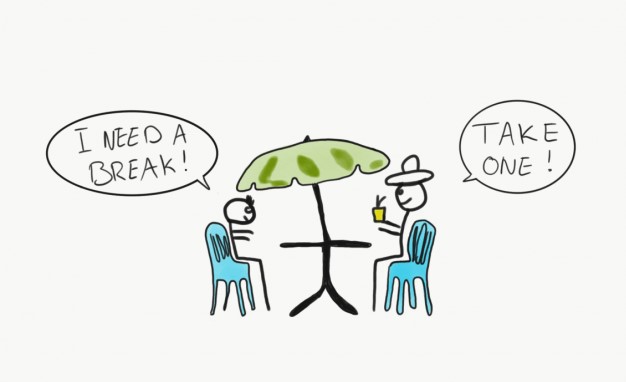
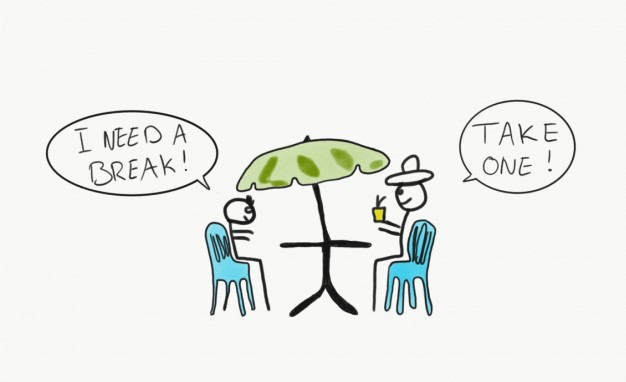
If You Feel Like You Need A Break, Take One

HAVE A BREAK!

You recharge your phone when it runs out of juice. You refill your gas tank when you’re running on empty. But sometimes, you forget to take a break and recharge your most precious possession: Your body (and the brain that’s inside of it).

Whether you love what you do, are in between jobs, or have a job you hate: You’re working. Living is also a job. A pretty tough one, actually. Just the act of getting up in the morning can be a daunting task. And I’m not even talking about all the responsibilities we have.

So why do you make your life even more challenging by not taking a vacation to recharge? I’m not talking about your weekends that are packed with activities, or holidays where you do more work than relax.

No, that type of “free time” only costs energy. I’m talking about resting with a very specific reason: To recharge your battery so you can get back to living a productive life.

A break reduces stress and improves productivity.

Scientific research shows that a vacation decreases perceived job stress and burnout. Now, that’s a pretty solid benefit of taking a few days off. But there’s more.

As you may know, I’m always interested in productivity. In the case of resting or a vacation, my question is:

Will I get more things done when I get back?

The answer is yes, but there’s one major thing to keep in mind. But let’s back up a bit: What does it mean to get more done? Getting things done has nothing to do with time—if you work more hours, you don’t necessarily get more done.

In fact, research shows that working more hours general means less productivity.

Why? Well, we often waste time if we have a lot of it. It’s simple: If I say to you, you have a year to write an article. What would you do? Put it off until tomorrow, right?

But what if I tell you that you only have 2 hours? You’ll probably get started right away. So in a way, having more days off, and fewer days to work, forces you to be more effective with your time.

Research shows that a vacation in itself won’t make you more productive, but when you have more days off, you have a strong desire to get more things done in less time.

And that’s a win-win situation for everybody: You, your business, or your job. You take off a few days, recharge, spend time with your family or friends, and when you come back, you’re more productive.

Sounds great. But wait, there’s a caveat.

When your vacation is stressful, the positive benefits go away. So keep the stress at a minimum on your holiday. Otherwise, you’ve wasted a perfect opportunity to relax and boost your overall productivity.

I recently felt I needed a break for several reasons. I had a few injuries that didn’t seem to go away and had less energy. I could have powered through, but instead, I decided to go on a vacation with my family. For a week, I did absolutely no work. And when I came back, I was full of energy.

Here are a few tips that might help you to take a break that fully recharges you.

1. Do What You Want

There are no rules for taking vacations and everybody relaxes in a different way. If you like to plan your holiday, just do it. If you want to go with the flow, then do that.

Want to wake up early? Do it. Don’t like waking up early? Sleep in. Even if you go on a vacation with your partner, friends, or family, you don’t have to be together 24/7. You can also sometimes do things that you enjoy.

The key is to not have expectations on your vacation. Let go of everything. I also don’t like to post vacation pictures on social media. Otherwise, I’m constantly thinking about taking a cool picture so I can impress others.

You’ll probably even do things you wouldn’t do just to take a picture. “I really need to rent a jet ski so I can take a picture with it.” No, you don’t.

Who cares? Focus on enjoying the moments you experience. Whatever those moments may be.

2. Read

Bill Gates is famous for his voracious reading habit. He is also known for his ‘Think Week’ where does nothing else but read and think.

You don’t have to be Bill Gates to think about your life and career. We all have our daily, weekly, and monthly routines. Usually, routines and habits work very well. However, you can also get stuck inside a loop.

That’s why I recommend you to step back from your daily life and career. If you do that, two things can happen: When you step away, you miss your daily life and can’t wait to pick up where you left off.

Or, the opposite will happen. You don’t want to go back. See that as a sign that you need to make a change. Either way, a break always serves a purpose. It doesn’t only help you to recharge, it will also make you think.

That’s why I like to read for hours on my vacation.

3. Get Bored

One of my favorite strategies for finding new ideas is to get bored out of my mind. It sounds easier than it is because of distractions.

In the past, I would do everything to NOT get bored: Watch TV, go out, browse Facebook, etc. But did you know that you can use boredom to your advantage?

Instead of giving into distractions, just give into the boredom and see it leads your mind to. In fact, one of my favorite artists of all time, Andy Warhol, embraced boredom. You can tell by the boring films he made or the references he made in The Philosophy Of Andy Warhol about getting bored.

Whenever I hit a creative wall, I just do nothing. Literally, nothing. Try it sometime. It’s a great strategy; maybe you come up with the next best thing in your industry.

It’s never a good time to take a break.

  • “I just need to finish this project.”
  • “My boss will never accept it.”
  • “People will think I’m lazy.”
  • “I don’t have time.”
  • “My family needs me.”

Yeah, yeah, I’ve been there too. But what would you rather: Continue to work without resting and burn out? Or take some rest before you’re tired?

So before you use all those valid reasons to not take a break, think about what all the people in your life have to do if you’re not here anymore. Yes, you’re important. So take care of yourself. Take a break and come back with more energy.

PUBLIC DEBT

Public debt refers to the accumulation of annual budget deficits. It is basically the amount a country owes to lenders inside or outside of itself. Public debt is the sum of internal or external debt. The former refers to the public loans floated within the country while the later refers to public loans taken from other countries.

In India, public debt has increased tremendously over the years. This is mainly due to the fact that India is a developing economy the government requires massive investments in infrastructure and capital goods industries. For these purposes, they have to resort to borrowing. Development projects also involve a lot of raw materials. In the past few years the prices of petroleum products have increased significantly and so has it’s import bill in India. The exports however, have not increased in the same proportion. Consequently, the obligations of external debt has increased in India.
The total public debt of India in 2016-17 has been 50.3 per cent as a proportion of GDP. The external debt has to be paid in terms of foreign currency and it’s repayment creates serious problems.

A criteria of assessing the burden of public debt should not be the amount but how the funds are actually used. If public debt is wasted is becomes a problem rather than the debt which is used productively. It has been observed that in India a vast amount of external debt has been used for maintenance imports and has not really increased productive capacity. This shows that burden of external debt is quite heavy. Internal debt however, has been used more productively. A significant amount of it has been utilized for development of industries, railways, projects, services etc.
Just like the central government, the state government also faces problems of public debt. Over the years, the expenditures of state governments have increased more than the revenue they get. This is mainly because tax potential is not at its fullest. Large investments made in projects like electricity, irrigation etc. have not generated expected returns.
Since the burden of public debt is so heavy, economists have come up with different strategies to tackle it.
One way can be the reduction of interest rates. This is specifically for internal debt. Reducing the interest rate can bring down debt-GDP ratio. Interest rate can be reduced directly or indirectly by making debt less risky. A monetary policy which reduces risk and real interest rate can aid in doing so.
Selling a part of vast real estate can also help in raising resources. Government of India hold s a vast majority of real estate especially railways which hold a large amount of land along its rail tracks. Some economists have suggested the government to sell some part of this real estate to generate necessary funds.
Another way to curb public debt is to reduce public expenditure and increase revenues. Reducing public expenditure is not easy especially for India which is a developing economy. As far as rising revenues are concerned, suggestions have been made for increasing taxation. This is however, not feasible. A substitute for this can be building ways to reduce loopholes that allow tax avoidance.

Decline of Political participation of Females in India

Since the beginning of rebellious movements against the oppressive British regime in 19th century, women have played an integral part in freedom struggle in India. From Rani Lakshmibai in 1857 to Mantangini Hazra in 1942, women have always upheld the patriotism and love for their nation.

Sarojini Naidu, an Indian political activist, joined Indian Independence movement back in 1905 and later became the Governor of Uttar Pradesh in Independent India, making her India’s first female Governor.

In the post independent India, prominent freedom fighter Sucheta Kriplani became the first female Chief Minister of India for Indian State Uttar Pradesh. In 1966, Indira Gandhi became the first female Prime Minister of India.

But if women participated in Indian politics and independence movements so actively at a time when women weren’t even allowed to walk out freely, why do we see a sudden decrease in participation of women in Indian Politics in 21st Century?

In 1990s, there were about 6 sitting female Chief Ministers in India and in 2021, there is only one sitting female Chief Minister in India, that is, Mamata Banerjee in West Bengal. Let us see the reasons behind lack of participation of females in Indian politics.

Assault on Indian female politicians:

India holds a bad history of torture, discrimination and hostility towards female politicians. From Ms. Jayalalitha who was brutally assaulted in late 1980s to Ms.Mayawati and Ms. Mamata Banerjee who were assaulted ruthlessly in mid-1990s proves that Indian Politics has never been safe for women. These female politicians were assaulted especially by male chauvinists to intimidate them for being a woman and raising voice in politics. These assaults discourage women in India to join politics.

Indian Political Parties are Male-dominated:

Unless a political party is formed by a female, all other political parties be it left, right or centre are by nature male-dominated in India. Females are not given powerful positions in these parties which further lower their self-esteem and this influences other women negatively to not join politics.

Systematic Sexism in Politics:

Even if women are given political positions, they are mostly given those positions that are stereotypically considered “womanly”. Women holding positions are also often harassed by male politicians. Women who want to hold more prominent positions thus get discouraged. Although some things have changed in recent years where we have seen women holding powerful positions in Defence and Finance Ministry, still a lot more has to be done.

Patriarchal Society:

This is a bitter reality that our male-dominated society doesn’t love “dominant female leaders”. For instance, when in 2019, two Female MPs from West Bengal wore a shirt and jeans, they were criticised and shammed for wearing western whereas so many male members in Parliament wearing jeans wasn’t an issue. The fear of getting judged by the society also discourages women to join politics.

What can be done to improve the situation?

First and foremost, we should make a safe political environment for women and listen to the issues they face in politics. Second, society and the government must have a feminist approach so that women come out and lead political movements. And lastly, although India has women friendly laws, these laws aren’t implemented and thus proper implementation of these laws must be done, for example, taking strict action against male politicians who make misogynistic statements, abuse women and like.

Being in the imagination or live in the realistic world .

Being born in money or torn away by poverty is the world where we live

The Hallucination

Are the money makers living their life without fear ?

Can a poorer get to live more life than its fated ?

Will you ignore the one who hurt you immensely ?

Or like a coward , can you run from the truth ?

If yes , than pray to god for providing you such an imaginary world . Don’t take it seriously but you really need to wake up .

The Truth

The life that we are living is not a game to play . We need be realistic while taking decisions in our life . I don’t want to sound like an arrogant person . But we need to think before taking any decision because it may or may not harm our future . In our life we only focus on materialistic things and grow accustom to them . Which leads to the situation where we become selfish and fiercely jealous to one’s personality .

We judge them regarding to their status , money , power , clothes and their physique . Ding ding …. It’s time for the truth we become impetuous .

So what we learn from OJO -MOJO . 1. Like OJO that donot study and fail in your class. OR 2. MOJO that learn workhard and get award from the school . I choose options 1 (hehe don’t get any ideas I am a hardworker so I will choose my handsome MOJO not an overconfident OJO )


The REALITY

Not against the world of imagination just a believer of reality .

Life is not easy I agree with you but can we make it easy , Is the question only you can answer .

For me , we can only when we are focusing on our work rather than its result . I am not repulsive about getting a promotion on my first day on the work . But I am excited about learning new things and improve my capabilities . That how we need to react . I didn’t get the idea of getting a luxurious jet when I didn’t even have a penny to spend on my health . Well if you can just don’t forget to take me as well ( Huh.. greedy me ) .

I do imagine my life being in the island with some hot people around me ( its a wild imagination) . Well I can’t change that . But what I can change is the accept the reality ( like sitting in my PJ’s , eating popcorn and drooling over Michele Morrone yeah I am fan of 365 days ) .

Conclusion

Life is a series of natural and spontaneous changes. Don’t resist them; that only creates sorrow. Let reality be reality. Let things flow naturally forward in whatever way they like.

Lao Tzu
things that are written in the blog is my perspective of life . i am not taunting anyone . 
its your life you can live according to your rules .

and yes pictures that i used in the blogs are from pintrest .

enjoy your reading .

Does this Pandemic could co-exist with Good Education ?

The answer is: YES!

It has been quite a salacious topic as to how everyone who studied in a Zoom class is nothing but suffering. But are we really? Teacher’s who aimed at delivering their best and optimising the tools they had over the course of this year have certainly made this experience memorable. Graduating batch of 2021, what a load of expectations we had carried upon us, planned to do all the fun stuffs, even study, because its important but the situation didn’t clearly permit such flexible ideas to help nurture. However, we were able to still get-out-of-the-rut that the University’s put us in with just End Semester Exams, an extremely futile practice, and we were suddenly, introduced to a more integrated system, with Assessments throughout the course of semester.

Seems like a big task when first introduced, but now standing at the end of the tunnel and looking back, it was the best thing to shape us, our personality, as well as give us a glimpse of what a true education,  which is not just inclusive but better in terms of helping understanding the Course as well as giving the students the autonomy to act upon their discretion and prove themselves looks like. Heavy, but ’tis not, some may say it’s ‘toxic’ that the ‘pressure of submissions gets too unbearable’ but if contemplated upon the same, we came out better than a lot of our previous batches, a fresh start — a new page to the system of passive education we are unapologetically fed.

For years, there have been discussion on the pros and cons of examination, consisting at least 80% of a students grade; a cemented archetype that made sense to some, but was shattering to the student itself, and unequivocally created nothing short of unhealthy standards and competition with its tendency to be an open exhibition, but having given 50-50 opportunity to have multiple assessments alongside a small examination gave us the chance to prove ourselves, apply the theory we understood, and what’s not good about this entire method of testing, grading, and evaluating a student? I would like to hear about it in the comments, because such methods help us cope from the shame of being labeled as being cheaters in online examination.

Teachers, most likely than not, on one hand may say that they are burdened with additional hours of work, yes, there are some administrational hurdles that we will face, but if we could resolve it, the result for the effort would be a better, stronger education to the citizens of a country, who have plenty of children to educate and have a future to invest in, in order for a stronger, labor intensive population who can carry their own burden proudly. 

So, the pandemic, gave me a new outlook, a more desirable way to pursue education whilst in India, and instilled a hope to prove myself as a better student by the work I submit, also inculcate qualities to work on deadline, and meet new challenges. So, can’t we receive such opportunities with nothing but welcoming arms?

Covid massacre [ INDIA ]

Did you know INDIA was the first country in the world to beat coronavirus, in jan 2021?

At our peak in May, we had 400,000 cases per day and 4000 death per day. An experts say these figures are a gross underestimate. As we know many death hasn’t be registered in Government data.. Because in village, people were not aware about this. They think people die only with high fever, cough, etc.

Even now rest of the world reopens, We are still suffering. Our people are needlessly Dying. In hospital, there is neither oxygen cylinder nor necessary medicine. Our government has blood on its hand.

There in Feb 2021, Scientists began warning government about the new variants and the rise in cases. And of course, Government ignored.

In march, government refuse to cancel Kumbh Mela,And because of this there has been a significant increase in corona cases.

In April, Many parties leaders attended super spreader rallies in west bengal. So we can say that ” People vote matters, but people life doesn’t. “

Due to this Whole Scenario, Many people were dying everywhere,, Hundreds of death bodies were floating in the Ganga river. Death bodies found in the river of people who cannot afford funeral expenses.

In other hand, we produced more than 60 million vaccine doses for other counties. But we did not make enough vaccine for ourselves.

But nowadays the government is buying vaccines in large quantities from outside countries and is also producing it itself. And they Started large vaccine drive in India. India administered a record 82.7 lakh doses of Covid vaccine on 21 june 2021. i hope everything will be fine soon.

Peace Out.

Ecommerce in India!

So let’s have a look that what does ecommerce mean~ E-commerce is the activity of electronically buying or selling of products on online services or over the Internet.

And if we talk about “Ecommerce in India” then, India has an Internet user base of about 696.77million as of May 2020, about 40% of the population. In 2017, the largest e-commerce companies in India were Flipkart, Snapdeal and Amazon. In 2018, Amazon beat Flipkart and was recorded the biggest ecommerce in India in terms of revenue. And it’s rapidly growing up day by day.

In India, cash on delivery is the most preferred payment method, accumulating 75% of the e-retail activities. Demand for international consumer products (including long-tail items) is growing faster than in-country supply from authorised distributors and e-commerce offerings. Long tail business strategy allows companies to realize significant profits by selling low volumes of hard-to-find items to many customers, instead of only selling large volumes of a reduced number of popular items. The term was first coined in 2004 by Chris Anderson.

In 2017, the largest e-commerce companies in India were Flipkart, Snapdeal and Amazon. In 2018, Amazon beat Flipkart and was recorded the biggest ecommerce in India in terms of revenue.

And some of the ecommerce sites are:

1. Amazon.in

2. Flipkart

3. Snapdeal

4. ebay India

5. IndiaMART

6. Shopclue

And so on…

But one should properly check the product and should take a clear look in the mind that this product is the only one which I want to purchase and they’ve can go on but inspection of the product must be the first priority of the customer.

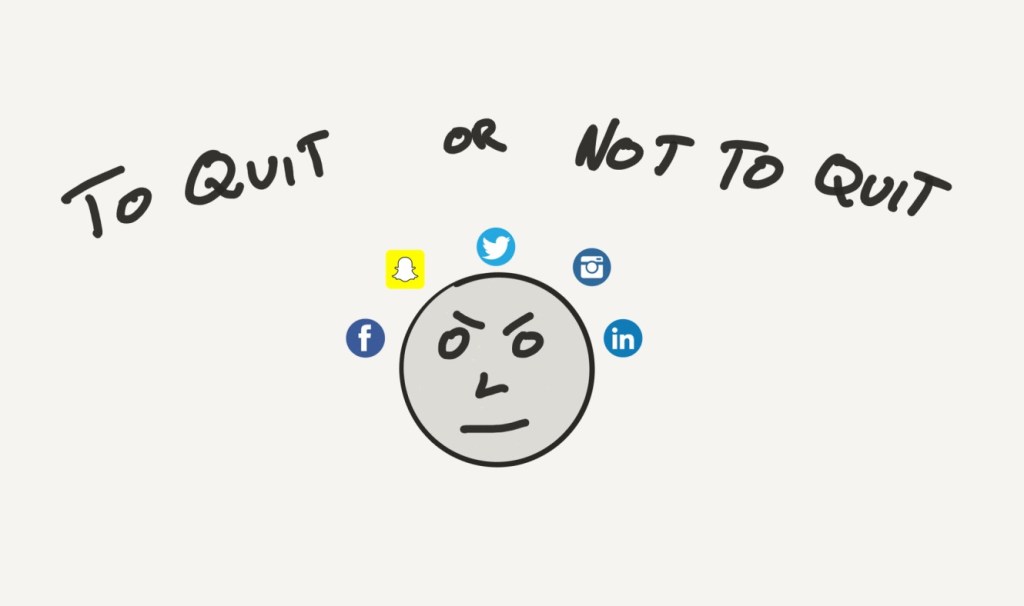
If Social Media Makes You Feel Bad, Quit Using It

YOU ARE YOUR BOSS!

Just admit it, you’ve thought about it before. Social media is great and all. But you and I both know that it also sucks.

Does this scenario sound familiar?

  • It’s late at night, you’re in bed, you dread waking up early tomorrow because you have to go to work, so you grab your smartphone, you open up Instagram (or whatever app you’re addicted to).
  • And you start browsing, you go from one picture to the next, you watch some videos, you start feeling bad about your life, because all the other people have fun, and you have to go to work in the morning.

Alright, we’re at a very bad place right now in that scenario. Because now the existentialism creeps in slowly. And finally, you think:

“My life is shitty compared to these other people. They look amazing, have money, travel the world, and they are important too. Who am I? I’m nothing. What have I done? Nothing! FML.”

And what do you do besides feeling like shit? Nothing. You just go on with your life and repeat that whole process the next day. And some days you counter the posts from other people by ‘crafting’ your own cool posts.

Just admit it, this whole thing is not cool. Of course, I’m exaggerating, and social media is not the source of all our problems. Don’t expect that your life will be awesome when you get rid of social media. I don’t believe in fairy tales.

But you get my point. Social media has a negative impact on many of us. Some people love it. If that’s you, there’s no need to read this article. But if you ever thought about quitting social media, keep reading.

Actually, just stop reading, and go on and delete the apps that make you unhappy.

Just follow the example of Louis C.K. When asked about why he quit Twitter in an interview, he said:

“It didn’t make me feel good. It made me feel bad instead. So I stopped doing it.”

That makes it very simple. If something makes you feel bad, stop using it.

It’s the opposite of the scientific approach to quitting social media that Cal Newport took. He makes some good points about why social media is bad for you.

But to me, that’s way too rational. And we’re not rational beings. We’re emotional. That’s why I like the approach of Louis C.K.

Here’s why I got rid of my social media.

I only used it for self-promotion. And I don’t like that. I don’t think that’s fair to people who follow you. So I got rid of my Instagram, Facebook, and Snapchat. I only have Twitter and LinkedIn (for now). But if I don’t use them, I’ll get rid of them too.

This article is not about convincing you to do the same. Or about getting rid of all your social media profiles. All I’m saying is this: If you ever thought about quitting social media, just do it already.

You’re limiting yourself by not pulling the trigger. Now, you might say: “It’s just social media. Who cares?”

But you’re not getting off that easily. If you want to live a happy and stress-free life, you have to be decisive. When things linger in your head, it’s all dead weight. And you don’t want that.

What’s it going to be? Do you use social media or not? Does it make you happy? Does it improve your life or business?

I know what you’re thinking. “What if I ever need it?”

You don’t need anything for business or your career.

People who have stakes in social media will never tell you to stop using it. Why? Because their career depends on it.

But what did you think people did before social media? It’s all a matter of perspective. Many successful entrepreneurs I know have never used social media.

Is that why they’re doing well? There’s no way to tell. One thing is sure: You can do well in life with and without social media.

It’s up to you to decide. And it comes down to self-awareness. It’s also about simplifying life. Because it’s already complicated enough. Get rid of shit that doesn’t contribute anything to your life.

So what’s your perspective? Have you ever thought about quitting social media? Why did you never pull the trigger? Let me know in the comments.

How to start coding? Part-1

To begin with coding, you need to first learn a programming language. A computer can’t learn the human language. A computer only understands that is in the form of 0’s or 1’s i.e binary language. So to communicate with the computer, you need to learn its language. Programming language is a sort of instructions set that is fed to the computer so that we can get the desired output. There are tons of homogenous programming languages available. Some languages are equivocal. While some are quite the contrary. One such programming language that is most popular today is called “Python”.

Every buzzword around you today is more or less uses Python. Python is an integrated high-level general-purpose programming language. Python is the fastest-growing programming language.

Some of the advantages of coding in the “most popular programming language are”-

It’s easy to read, write and learn code in Python

Python is an interpreted language

Python is free and open-source

Python supports every possible library available

Python is a high-level language

Python is an object-oriented language

Python is portable across Operating Systems

Every coin has two sides, so does Python also has its disadvantages-

Python is quite slow in execution

Python is not so memory efficient.

But, these disadvantages do not anguish its popularity. It may sound perplexing to learn all these keywords. But trust me once you get your hands dirty with coding, you will come to understand these terms.

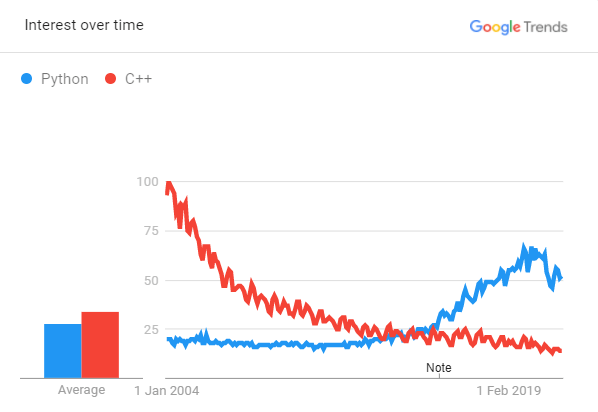
Surge in interest for Python

There are also some analogous programming languages. C, C++, Java are some of these programming languages. They have their advantages and disadvantages. But none of them is even close in terms of usage and popularity with python.

The growth with pythons influence is steadily increasing and will surely see an exponential rise in the near future. Tech giants such as google have left no stone unturned on using python. Due to this increasing demand for python, it’s feasible to learn python. And this will be your stepping stone on your way to learn to code.

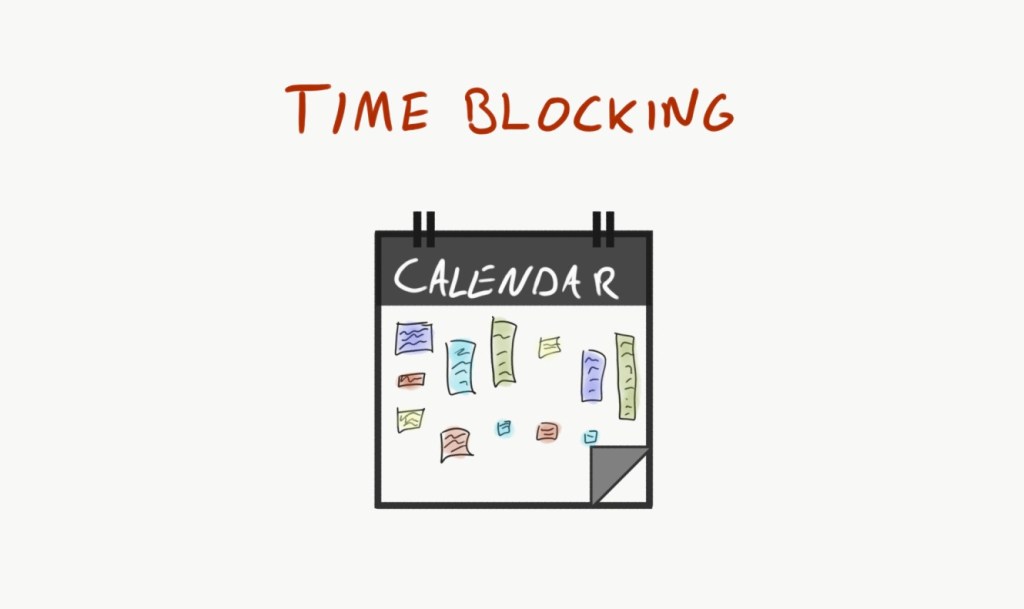
Time Blocking: Improve Your Focus And Get More Meaningful Work Done

Do you have a list of priorities or goals that you want to achieve this year? And do you struggle with allocating time to them? Time blocking might be helpful.

It certainly helped me. Look, I’m not any different from you. Life can be messy. Most of us juggle a lot of different things at the same time. Even though the simple solution is to stop juggling, it’s not always realistic. Or even needed.

What if you could do more things without losing your time? It’s possible. But you must work in an organized way.

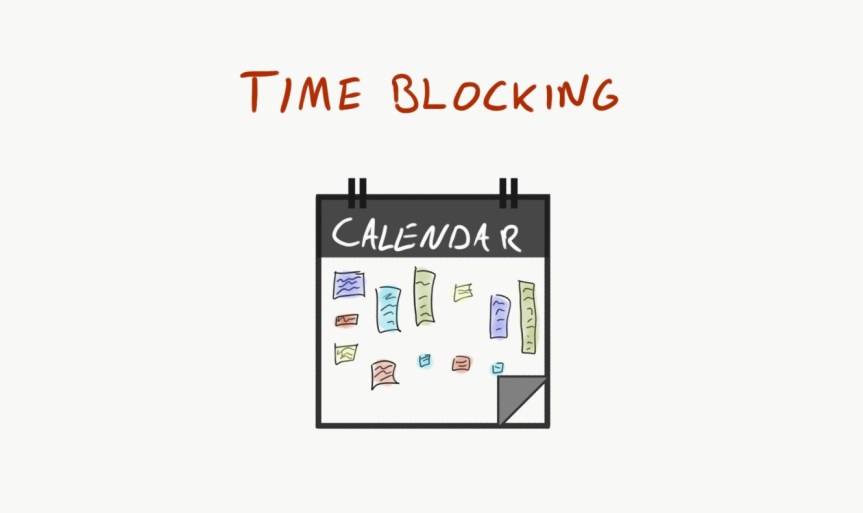
Time Blocking a simple productivity exercise that many people use. It’s not fancy or revolutionary. The only thing you need is a calendar, which is something everyone with a smartphone and computer has.

Time Blocking is simply using your calendar to block time for your most important priorities. During that time, you only work on that one thing. And, you let your calendar lead the way. That way, you don’t have to think, “What should I do next?”

But Time Blocking is more than just a productivity tool. It’s about self-awareness.

The road to high productivity starts with awareness.

For instance, one of my priorities this year is to write a book on pragmatic thinking. However, there’s a problem: I haven’t been writing.

How did I come to this conclusion? I simply looked at my list of priorities for 2017, and I then I looked at my calendar.

I hadn’t scheduled any time for writing in a while. Now, you might think, “do you really have to look at your calendar to realize that?”

Yes, I do. I’m not some kind of supercomputer that remembers everything. I’m a regular human being. I think of something to do, start working on it, life gets in the way, and then I FORGET about it.

It happens to all of us. We need self-awareness and tools that keep us in check. And that’s why I like Time Blocking.

Some people love Time Blocking. Some people hate it.

Computer science professor and author of Deep Work, Cal Newport, also uses time blocking. He says:

“I take time blocking seriously, dedicating ten to twenty minutes every evening to building my schedule for the next day. During this planning process I consult my task lists and calendars, as well as my weekly and quarterly planning notes. My goal is to make sure progress is being made on the right things at the right pace for the relevant deadlines.”

The last sentence is exactly why I schedule everything I want to do. Working is not the same thing as making progress. And Time Blocking helps me to improve my focus so I can get meaningful things done. Things that have an actual impact on my life.

I know there are a lot of successful people who work with empty calendars. I’ve read the articles. They simply work two, three or four hours per day.

And to be honest, that sounds very attractive to me too. However, one must look at his/her own life situation.

What are you trying to achieve?

And more importantly: What resources do you have?

Often, people who don’t have a lot of money, do have a lot of time. So why not use it wisely? Either way, I think that planning serves a purpose.

I plan my days and weeks in advance because I want to make sure I’m working on the RIGHT things. Too often, I get lost in completing daily tasks.

Think about it this way. I’m pretty organized already. And I only work on one big thing per area of my life.

But there are many different areas of my life: My family business, my blog, podcast, online courses, relationship, friends, investments, etc.

It might sound like I’m doing many different things. But it depends on how you look at it. Everything I do leads to one thing: Living a meaningful and independent life.

But let’s not get philosophical here. If you’re lacking focus, not making progress, and want to work in a more organized way, give time blocking a try.

Here are some things I’ve learned that may help:

  • Take 10 minutes every evening and plan your next day. Rearrange blocks if you must create time for other important things.
  • Use recurring blocks for recurring tasks. For instance, I’ve scheduled two hours to write my new book every Tuesday and Thursday.
  • Don’t over-schedule. Realistically, you can’t be productive 10 hours straight. Give yourself some time between tasks.
  • And always schedule more time than you think you need.

“Wow, time blocking sounds like too much planning to me.”

No problem. Plan less. There’s always a counter-movement for everything. People who do the exact opposite and advocate an anti-productivity lifestyle. You know, folks who claim they have empty calendars and don’t care about anything.

People who pretend they are always “enjoying” themselves. They like to go with the flow and daydream.

You know what that reminds me of? Those kids in school always said, “Ah dude, I didn’t have time to study for this class,” but always ended up getting straight A’s.

People just want to make you believe they don’t work hard. It’s facade. And when they do well in life, it seems like it came easy.

As far as I know, achieving meaningful things is hard. I don’t think there’s anything cool about pretending it’s easy. Nor do I believe that it’s cool to work yourself to death.

I often think of this question: Are you an amateur or a pro?

It’s Steven Pressfield’s famous analogy, from his book The War Of Art, for getting work done.

The amateur-only works when inspiration strikes. The pro sits down every day and puts in steady work. The key is steady. Not irregular or extreme.

Pressfield says:

“The sure sign of an amateur is he has a million plans and they all start tomorrow.”

Don’t start tomorrow.

Stop Spending So Much Time In Your Head

YOU CAN’T GIVE UP!

I know something about you without knowing you. I bet you spend A LOT of time in your head.

You know, thinking, worrying, stressing, freaking out — call it whatever you want. I call it a preoccupied mind. And with what?

99% of your thoughts are useless. William James put it best:

“A great many people think they are thinking when they are merely rearranging their prejudices.”

All my life I’ve been obsessed with practical things. Practical philosophy, practical knowledge, practical books, practical work, and practical advice.

That idea comes from Pragmatism, a philosophical tradition that started in the 19th century in America. Charles Sanders Peirce, who was a Harvard professor, is considered as the “father of Pragmatism.”

But it was William James, a trained physician turned philosopher, who really defined the philosophy.

About thoughts, worry, and stress, William James says:

“The greatest weapon against stress is our ability to choose one thought over another.”

Pragmatism believes that a mind is a tool. Your mind should work for you, not against you. People who don’t master their mind, don’t believe it’s possible.

They say: “I can’t help but thinking these things.”

Well, you can with enough practice. It’s a skill.

In other words: You have the ability to decide what you think. Or, you can choose NOT to think.

And that is one of the most important and most practical things you can learn in life. Before I learned that skill, I would spend hours and hours inside my head.

Just think about how much you think.

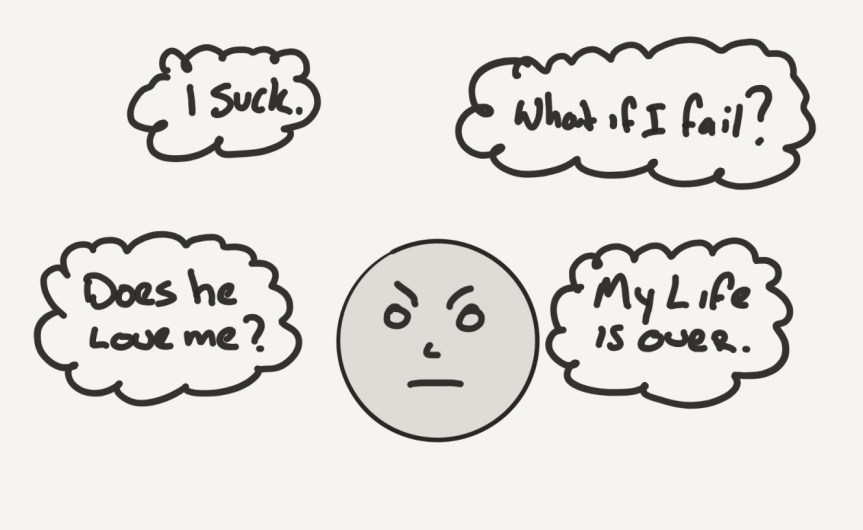
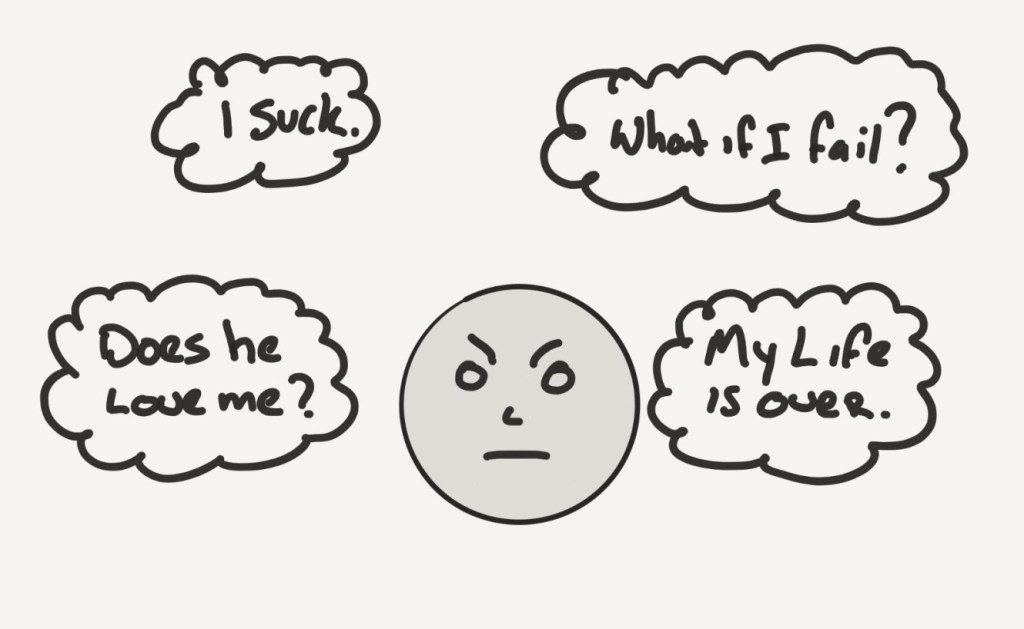
  • “I wonder what my boss thinks?”
  • “What happens if I screw up and lose my job?”
  • “Does she love me?”
  • “I think he doesn’t care about me.”
  • “I just keep failing.”
  • “Why does my life suck?”
  • “Why is my life awesome, and other people’s lives are not?”
  • “What if I get cancer?”
  • “I don’t care about my job. Is there something wrong with me?”
  • “I can’t finish anything. What’s wrong with me?”

And the list goes on. That is all REAL shit. That’s stuff people tell me when I ask them what they worry about.

Do you know what those thoughts do to you? Guilt, anger, suffering.

I just have one question for you: What’s the practical use of your thoughts?

Yes? I’m waiting. Still no answer? Exactly.

Thoughts have no use. 99% of them that is.

Which thoughts are useful?

  1. Thinking about how you can solve problems. A problem is just an unanswered question. Put your brain to use and think about how you can solve problems. There are a lot of those on this earth.
  2. Understanding knowledge. That means this: Try to internalize knowledge and think about how you can use that knowledge to improve your life, career, work, relationships, etc.

That’s it. You can ignore every other thought.

If you’re constantly thinking, it’s because you haven’t’ trained your mind yet. You HAVE to get out of your head.

If not, you go mental. Everyone will. No exception.

Also, you’re probably thinking so much that you’re missing out on life. Did you notice the sunshine this morning when you woke up? Or the raindrops? Did you notice the smell of your coffee? Did you feel the texture of your cereals?

If your answer is no, you definitely need to get out of your head. Stop thinking and start feeling.

Now, you might think: “How do I train myself to stop thinking useless thoughts?”

Awareness.

That’s where it starts. Every time you start drifting off, become aware of it. Just observe your brain. Step outside yourself and just observe the crazy shit you’re thinking about.

Don’t judge. Don’t think you’re stupid. If you do that, you’re thinking again.

No, what you want to do is say this to yourself: “Ah that’s a cute thought. Now, let’s get back to reality.”

“If you can change your mind, you can change your life.”
― William James

Are you back to reality? Do you feel your eyes reading the letters on your screen? Do you feel your phone in your hand? Are you thinking about how you’re going to apply this information to your life?

Great. You’re USING your mind, and it’s not the other way around. Now, keep using that brain of yours.

Because I’ll tell you this: It’s the most powerful tool on earth.

Thanks for reading!

book review :IKIGAI- The Japanese secret to a long happy life.

” Life is not a problem to be solved. Just remember to have something that keeps you busy doing what you love while being surrounded by the people who love you”- Ikigai by Hector Garcia and Francesca Miralles

IKIGAI is a Japanese concept referring to have direction or purpose in life, providing a sense of happiness and fulfillment and towards which the person may take action, giving them satisfaction and a sense of meaning.

This book touches on various elements of life that certainly we all are aware of, but always fail to implement in our daily life by giving ourselves unnecessary excuses. This book talks about how every person in this world has the ikigai ( a reason for being ), and by asking a few simple questions to yourselves, you can discover yours and live a prosperous and happy life. The authors of the book have beautifully put down all the ideas and facts which will persuade you to live your life to the fullest. The authors in the book bring the Japanese secret for the readers from the wise people of OKINAWA Island in Japan on how to live a happy and long life.

The best part of this book is, unlike many other self-help books, this does not go on and on. There are very few chapters. The idea or the message which the authors try to convey is straightforward. Read the book carefully, and it will surely teach you how you can bring meaning and joy to every day by following your IKIGAI .

Overall, a wonderful book to read if you feel stuck in your life or just want to make some changes in your life.

HAPPY READING ; )

Plant parenting

Every time we go out and connect with nature we feel calm and relaxed. Now imagine how great we will feel bringing small parts of nature to our home or workplace.  

Plant parenting is getting a plant and taking care of it like a child.  

If you are looking to add some colour to your house, plants are the best way to do that. Don’t just decorate your house with fake plants, get the real ones instead. They add liveliness and colour to the place.

 Plants also contribute to our environment, they take in the carbon dioxide and provide us with oxygen. Did you know houseplants can remove up to 85% of toxins from the air in just 24 hours? Cool isn’t it.

So buying plants can help reduce the toxins from your house and keeps the air purified.

Planting also makes us more responsible because we need to water them daily. Some people look after plants like it’s their job and, they don’t connect with it. Taking care and nourishing plants is very therapeutic if done correctly with peace and concentration. It is our time to connect with nature and watch it grow into something great.  

Plants also reduce our stress and boosts our mood. They create a soothing environment that creates a positive aura in our house or workplace. They also relieve anxiety and improve our mental health. Plants have a subliminal effect that lift our spirits and bring us happiness.

If you are looking for a hobby, gardening or taking care of houseplants is the perfect thing to do. People who garden are very calm and patient because plants take a long time to grow, and they require a lot of work. But, seeing a plant all grown and healthy is a reward to yourself.  

Even taking full care of one-two plants is a great way to start. Then when you succeed at it you can add more plants to your collection. You can either get seeds and watch the plant grow from the start or go to your local nursery and get halfway grown plants.

Here are a few beginners planting tips:

Read about the plant you are getting: Every plant is different. Each plant has its requirements; some need more light some don’t. If you are someone who lives in hot, humid weather, get a plant the similar weather to survive. Knowing about your plant is important or else they don’t survive that long.

Do not overwater your plants: a lot of people don’t read the water requirements of a plant and tend to overwater it which is wrong and can lead to the death of the plant. Roots growing in waterlogged soil cannot absorb the oxygen, and won’t be able to provide nutrients to the plant. Only water your plants if you think the soil is dry this way you will not end up overwatering them.

Make sure the pot has holes: this is important so the excess water can drain out. If the water is collected on the base, the roots may get fungus or bacteria.

Fertilizer: Other than water and light plants also require fertilizers. They are the food of the plant. If you are someone with a lot of plants. You can get a universal fertilizer liquid that works well for all plants and you can mix it with water as per the plant requirement.

Clean the leaves of your plants: If you think the leaves of your plants have dirt on them, water them or take a damp cloth to wipe the dirt off, this allows them to photosynthesize easily.

Water your plants in the morning or the evening: watering during these times will allow the plant to retain the water. If you water them in the afternoon, the water will be evaporated by the sun.

Remember that it is okay if some plants don’t live so long it is a cycle of life. But, if you take full care of them and keep reading more about plants chances are you will get better at it and enjoy your time with them.

INDUSTRIAL SICKNESS

Industrial sickness refers to the situation wherein an industrial firm performs poorly, incurs losses for several years and often defaults in its debt repayment obligations. The problem of industrial sickness has grown significantly over the years in India and a large number of industrial units were affected by it.

There are various causes of industrial sickness. Firstly, an internal cause can be faults at the planning and construction stage. Faulty decisions like setting up the firm in the wrong location i.e. a location which lacks infrastructure facilities or lacks market availability cause problems in the long run. Unplanned production, unbalanced capital structure etc. are all faulty decision which makes a firm sick.

Defective plant and machinery is another reason for industrial sickness. It has been observed that small scale sector do not seek professional technical guidance in choosing machinery. At times technology adopted is outdated and inappropriate. Production with this sort of technology is bound to be inferior and likely to suffer cost and price disadvantage.
An external cause of industrial sickness is demand and credit restrain. During the times of recession, there is a steep decline of demand in the market. This causes losses to individual units especially the products with high prices like automobiles. If such situation persists for long durations, then industrial units are prone to turn sick.
The most important internal cause of industrial sickness is management problems. Management can make or break a firm. Incorrect managerial decisions pertaining to the fields of finance, production, marketing etc. can ruin a business. Absence of quality control systems, lack of inventory, inadequate maintenance are some examples of mismanagement.
Entrepreneurial incompetence is yet another reason for industrial sickness. Many entrepreneurs in the small scale sector do not have basic knowledge of business, manufacturing, costing, accounts etc. Units set up by them often turn sick.
Industrial sickness can have serious consequences. It is a set back for employment opportunities. When a firm turns sick, it can actually go out of business. Closure of an industrial firm renders its workers unemployment. This situation can be more serious if a big firm with a large number of employees gets shut down. Unemployment brings a lot of complications with itself. This can cause industrial unrest. Closure of a big firm also causes labour unrest which can result in industrial strikes which threatens the peace of industrial environment.
Industrial sickness also leads to wastage of resources. When a sick firm is shut down, resources invested in that unit are wasted. In case of large firms this problem is more serious as a lot of investment is made in its plants and machinery. In fact other industries which are linked to a sick firm through backward or forward linkages, also incur some losses.
Closure of large sick units also effects investors and entrepreneurs and creates a psychology of despair. The prices of share fall down and affect the entire stock market. Even banks and financial institutions which have granted loans to these units suffer losses. Locking up funds in the sick units negatively affects the future lending programmes of banks and financial institutions. Industrial sickness also results in loss of revenue of government. Since industrial sickness has such a wide range of impact, it is considered as a social problem in India.

What is Python programming language?

Python is one of the most popular and fastest-growing programming language. Inherently, it is interpreted, high-level, general-purpose, and object-oriented scripting language, which means the following:

•Interpreted

An interpreter processes the source file at runtime, it reads the lines of code, one by one and performs what is said. Similarly to Perl and PHP, Python does not require that you compile your program before executing it. So, you do not have to invoke a compiler. Instead of running the compiler that helps turn source files into compiled class files, you simply run a .py file. Python byte code compilation is automatic and entirely implicit.

•High-level

Python relies on easy-to-read structures that are later translated into a low-level language, the original code that is run on a computer’s central processing unit (CPU). A high-level language is intended to be used by a programmer and the written code is further interpreted into a low-level language. Like C++ or Java, before running, Python has to be processed. This enables Python’s portability — it can run on different kinds of computers with nearly no modifications.

•General-purpose

Python can be used for nearly everything. It is applicable to almost every field for a variety of tasks. Be it the execution of such short-term tasks as software testing or long-term product development that involves roadmap planning, Python works well for them all, it is applicable all over the map. Its roles are unlimited. It is popular not only among software engineers, but also among specialists in other fields: mathematics, data analysis, science, accounting, and network engineering. Likewise, Python cliques with young people because it’s a very beginner-friendly scripting language.

•Object-oriented

This programming paradigm gives an overall orientation towards scripting and powerful code structuring. This object-oriented approach allows thinking of problems in terms of classes and objects. Then, objects are composed in such a way to make up complex computer programs. Beside the object-oriented programming, Python also supports a procedural paradigm. With OOP being only one of the options, you can make Python programming more advanced by going for an object-oriented programming approach. Developers can create reusable patterns of code thus curtailing redundancy in development projects.