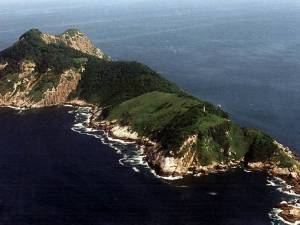
No humans are allowed on Snake Island and with good reason. There’s about one deadly snake per square foot on it.
SHAKE ISLAND
About 25 miles off the coast of Brazil, there is an island where no local would ever dare to say its name. It is said that the last fisherman who strayed too close to its shores was found days later in his own boat lifeless in a pool of blood.
The mysterious island is known as Ilha da Queimada Grande.
The danger on the island comes in the form of the golden lancehead snakes – a species of pit viper and one of the deadliest serpents in the world.
golden lancehead
The lanceheads can grow to be over a foot-and-a-half long and it’s estimated that there are between 2,000 and 4,000 snakes on the island. Snake Island used to be part of Brazil’s mainland, but when sea levels rose over 10,000 years ago, it separated the landmass and turned it into an island. Since the island vipers had no prey but birds they evolved to have extra-potent venom so that they could almost immediately kill any bird.
Ikigai (ee-key-guy) is a Japanese notion that combines the words iki, which means “alive” or “life,” and gai, which means “benefit” or “value.” When these phrases are combined, they indicate something which provides your life value, significance, or goal.
The notion of ikigai is claimed to have originated from traditional Japanese medicine’s core health and wellness concepts. According to this medical tradition, one’s physiological well-being is influenced by one’s mental wellbeing and perception of meaning in life
Explanations of ikigai are frequently associated with components of social identity, such as job and family life, but it is also explained as something more. It is the concept of finding meaning in all you are doing in life. Interests, relationships, public service and traveling all contribute to your ikigai.
Ikigai is frequently connected with a Venn diagram depicting the points where the following elements overlap:
What you love
What you are good at
What the world needs
What you can be paid for
THE DIFFERENT SPHERES OF IKIGAI
WHAT YOU LOVE
This sphere contains everything we do or encounter in life that offers us the most joy and helps us feel the most lively and satisfied. What matters is that we give ourselves permission to think very carefully as to what we enjoy, without regard for whether we are excellent at it, whether the world needs it, or if we can be paid to do it.
WHAT ARE YOU GOOD AT
This sphere contains whatever you are exceptionally great at, such as abilities you’ve learned, interests you’ve pursued, talents you’ve demonstrated since a young age, and so on. It’s possible that you’re excellent at something. This category includes skills or capabilities, regardless of if you are passionate about them, if the world needs them, or if you can be compensated for them.
WHAT THE WORLD NEEDS
The “world” here could refer to mankind overall, a local group with whom you are in contact, or somewhere in between. Whatever the world requires may be established based on your perceptions or the requirements voiced by others. Outside one’s own needs, this area of ikigai links most directly with other people and doing good for others.
WHAT YOU CAN BE PAID FOR
This domain of the diagram also alludes to the world or society as a whole, because it involves what somebody else is prepared to pay you for. Whether you can get compensated for your interests or skills is determined by circumstances such as the condition of the economy, the demand for your passions/talents, and so on.
A “balance point” in this ikigai diagram would thus include something that you are passionate about, are also skilled at, that perhaps the world really needs currently, and for which you will get paid.
IN PURSUIT OF A PURPOSE
Everybody, according to the Japanese culture, possesses ikigai. It denotes the worth that one discovers in their life or the things which make one feel as though their life is worthwhile. It pertains to both mental and spiritual situations that give one the impression that their existence has meaning.
What particularly appeals to me about ikigai is its interchangeability. It is unique to each individual and recognises that the concept of “happy” is really rather complex. Ikigai, as an idea, can grow alongside you. If one route of purpose is no longer available, you may adapt, shift, and follow other pursuits with purpose. This is accommodated by Ikigai.
Even though the present really doesn’t seem right, if you do not feel genuinely valued in your current condition but have a great desire to strive towards, you will have discovered your ikigai.
We frequently measure ourselves to everyone else, and when people around us appear to be doing better than us, we might feel like losers We soon overlook what we’re aiming for and we reject our current journey. This is where I believe ikigai may truly help. When we follow the concepts of ikigai, we are brought back to ourselves, towards our own purposes, and to the road we are taking to get there. Ikigai is just as much about adjustments, difficulties, and blunders as it is about achieving the “ideal” goal of a contented existence.
The concept in itself is not innovative or revolutionary, but it’s worth remembering.
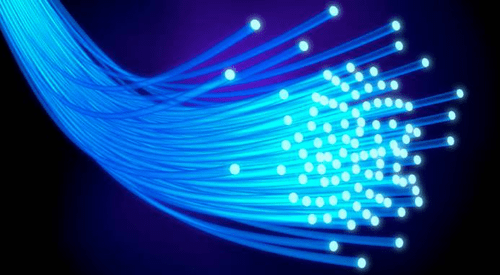
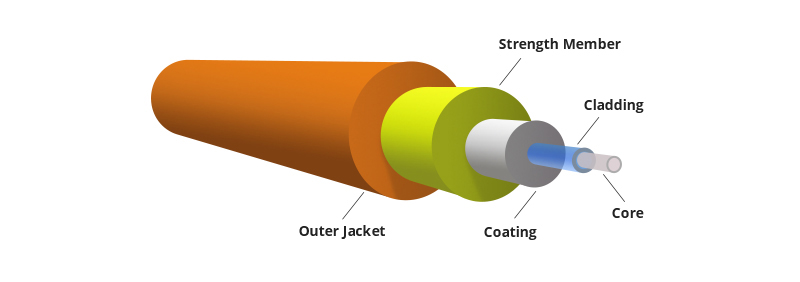
Physical medium that transports optical data signals from an attached light source to a receiving device. It is a single continuous strand of glass or plastic that’s measured in microns (μ) by the size of its outer diameter. The larger the core, the more light the cable can carry.
Cladding:-
It surrounds the Fiber core and serves as a boundary that contains the light waves and causes the refraction, enabling data to travel throughout the length of the Fiber segment.
Coating:-
It is a layer of plastic that surrounds the core and cladding to reinforce and protect the Fiber core. Coatings are measured in microns and can range from 250 to 900 microns.
Strengthening Fibers:-
These components help protect the core against crushing forces and excessive tension during installation.
Cable jacket:-
This is the outer layer of any cable. Most Fiber optic cables have an orange jacket, although some types can have black or yellow jackets.
Transmission Characteristics
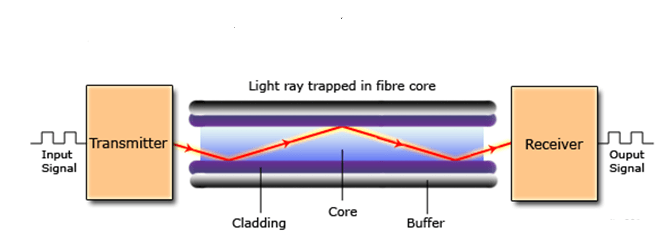
-Optical fiber transmits a signal-encoded beam of light by means of total internal reflection. -Total internal reflection can occur in any transparent medium that has a higher index of refraction than the surrounding medium. -In effect, the optical fiber acts as a waveguide for frequencies in the range of about to this covers portions of the infrared and visible spectra. -Act as wave guide for 1014 to 1015 Hz
In Psychological Disorders Part 1, Neurodevelopmental and Bipolar Disorders were discussed. The DSM (Diagnostic and Statistical Manual of Mental Disorders) contains a huge range of disorders which will be explained in a series of articles. This article discusses Anxiety and Stress-related disorders.
Anxiety Disorders
These disorders are characterized by persistent and extreme fear and worry. Fear is a response to a threat and anxiety is the anticipation of a threat in the future. There are various types of anxiety disorders which are explained further. Generalized Anxiety Disorder (GAD) involves extreme levels of worry about daily events, so much so that it interferes with the person’s daily functioning.
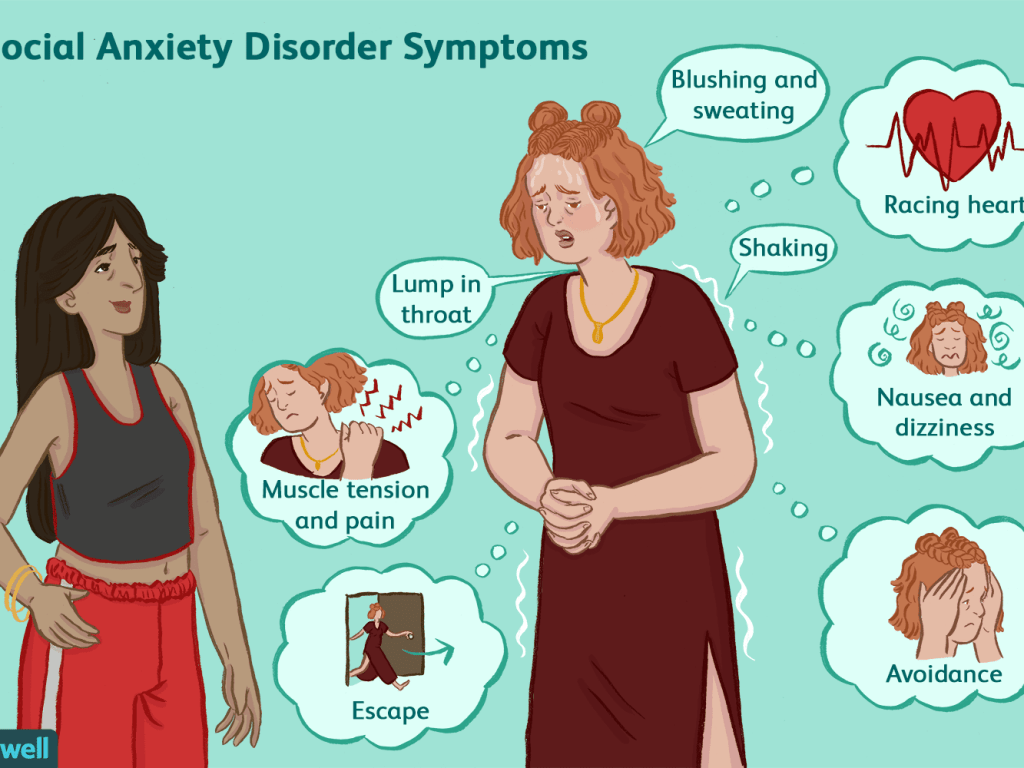
Panic Disorder involves having panic attacks in certain situations and so people start avoiding the situations which trigger a panic attack. A panic attack is a sudden episode of intense fear which brings symptoms like a sense of impending doom, rapid heart rate, sweating, shaking, chills, hot flashes, nausea, chest pain, headache, dizziness, and numbness.
Social Anxiety Disorder involves an irrational fear of being judged or watched. This is a very common disorder and it interferes with functioning at school, work, and other social settings. For example, a person can have a fear of going to a party because of the fear of being judged by everyone.
Agoraphobia involves a fear of public places, that is that the people with this disorder have a fear of anticipating a panic attack in a place where they cannot escape or deal with it.
Specific Phobias involves an extreme fear of a specific object or a situation, such as fear of insects, animals, height. When people are confronted by their phobic object, they experience trembling, nausea, and rapid heart rate. These phobias usually arise from a bad associating event they have had before in their life.
Separation Anxiety Disorder involves a high level of fear of being separated from things and the people they are attached to. This is most common in the case of young children having the fear of being away from their parents but it also exists for adults.
Stress-Related Disorders
These previously used to be grouped with anxiety disorders but are now considered a separate category. These disorders usually arise because of trauma or stress-inducing event. Acute Stress Disorder involves severe anxiety for almost a month after a traumatic event, such as accidents or the death of a loved one. This can result in the person experiencing dissociative symptoms like inability to remember important parts of the event, flashbacks, and difficulty in experiencing positive emotions.
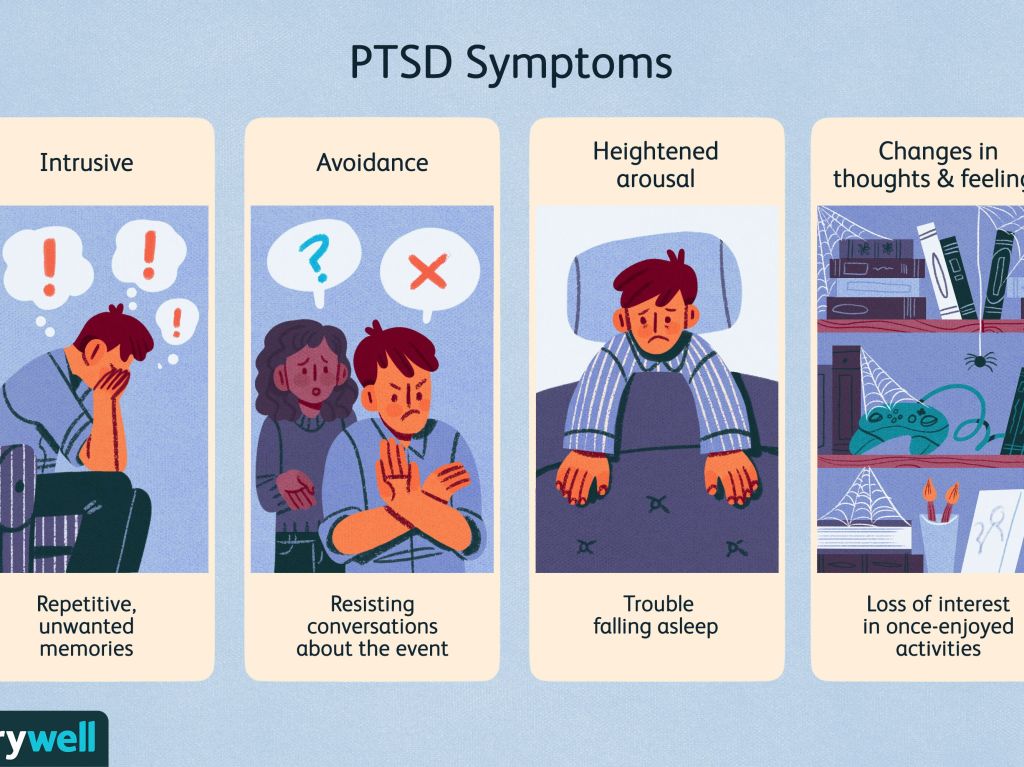
Post-Traumatic Stress Disorder (PTSD) can arise after a person has gone through a very traumatic event. This disorder includes symptoms such as reliving the event, feeling on edge, having negative thoughts, avoiding things that remind them of the event, nightmares, bursts of anger, and difficulty in concentrating.
Adjustment Disorders can arise because of a sudden change in life like losing a job, a break-up, shifting from one state to another. This disorder can bring symptoms like anxiety, worry, hopelessness, feeling of isolation, depressed mood.
Reactive Attachment Disorder forms when children in their early years of childhood fail to form a healthy relationship with their adult caregiver which later on results in being withdrawn from these caregivers, and they might also face social and emotional disturbance.
Conclusion
Some people keep claiming they have anxiety when they are just suffering from fear, same with the use of PTSD. It is important to not self-diagnose yourself as you might not be qualified to do so and it is wrong to claim to have disorders when you don’t as it creates a negative environment for people who are actually suffering from these disorders. It is important to consult a psychologist if you face any of the symptoms you think might point to anxiety or stress-related disorder as there are therapies to deal with it.
Parent(s) – Charles Chaplin Sr.Hannah Chaplin (née Hill)
Awards – Academy Award (1973): Music (Original Dramatic Score) ,Honorary Award of the Academy of Motion Picture Arts and Sciences (1972), Special Award of the Academy of Motion Picture Arts and Sciences (1929).
Works written – My trip abroad, A Comedian Sees the World, My Autobiography etc.
About Charlie:
Chaplin, one of the most financially successful stars of early Hollywood, was introduced to the stage when he was five. The son of London music hall entertainers, young Chaplin was watching a show starring his mother when her voice cracked. He was quickly shuffled onto the stage to finish the act. Chaplin and his older half-brother, Sydney, roamed London, where they danced on the streets and collected pennies in a hat. They eventually went to an orphanage and joined the Eight Lancashire Lads, a children’s dance troupe. Charlie Chaplin is considered a phenomenon in the world of acting. He is worshipped, studied, and imitated by millions of wannabe stars who want to ape his comic timing.
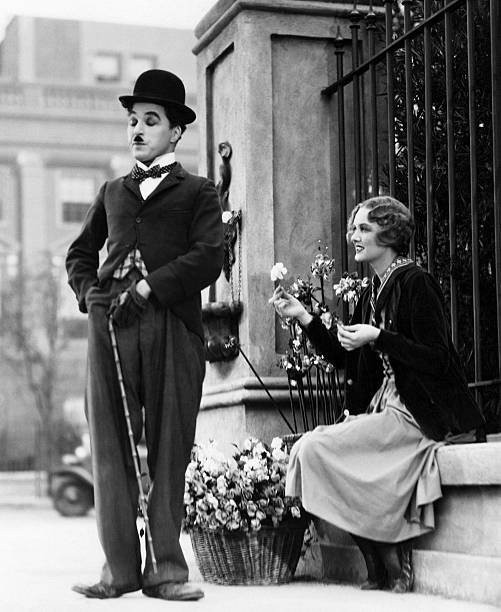
LOS ANGELES – 1931: Actors Charlie Chaplin as The Tramp and Virginia Cherrill as a blind flower seller in the film ‘City Lights’. (Photo by Donaldson Collection/Getty Images) /Getty Images)
His Life:
Charlie Chaplin had to struggle as a child. He was the son of poverty- stricken music-hall entertainers. Chaplin’s father, Charles Chaplin Sr was an alcoholic and had little contact with his son. His father died of alcoholism when Charlie was twelve. A larynx condition ended the singing career of Chaplin’s mother. After Chaplin’s mother (who went by the stage name Lilly Harley) was admitted to the Cane Hill Asylum, her son was left in the workhouse at Lambeth in South London. Charlie and his half-brother, Sydney, forged a close relationship in order to survive. They gravitated to the music hall while still very young and both of them were talented. Themes in Charlie’s films in later years would revisit the scenes of his childhood deprivation and poverty in Lambeth. A lot of his humour was rooted in pain.
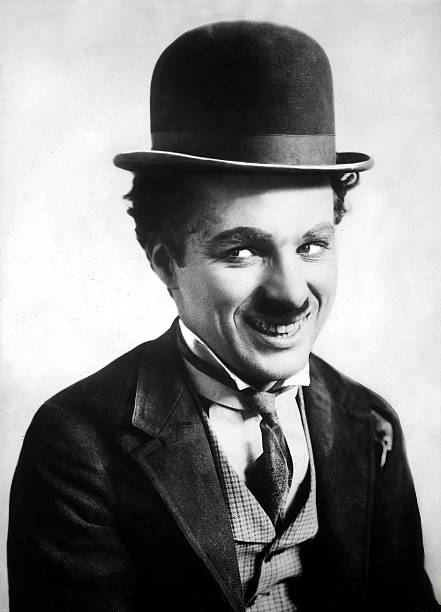
On tour in New York (1913), Charlie caught the who signed him to a film contract. Unfortunately, Chaplin had considerable initial difficulty adjusting to the demands of film acting, and his performance suffered for it, but destiny gave Charlie eye of Mark Sennet another chance and there was no looking back. Chaplin’s earliest films were made for Mark Sennet’s ‘Keystone Studios’, where he developed his ‘tramp’ character and very quickly learned the art and craft of film making. Chaplin developed the costume baggy pants, derby hat, oversized shoes, and cane-that was to become the hallmark of his famous “little tramp’ character. He was soon directing his own films, and he produced, directed, and starred in such classics as The Gold Rush (1925), City Lights (1931), Modern Times (1936), The Great Dictator (1940), Monsieur Verdoux (1947) and Limelight (1952).
Chaplin never spoke more than cursorily about his film making methods, claiming that such a thing would be tantamount to a magician spoiling his own illusion. In fact, until he began making spoken dialogue films with The Great Dictator, Chaplin never shot from a completed script. The method he developed was to start from a vague premise-for example ‘Charlie enters a health club’ or ‘Charlie enters a restaurant’. Then he had sets constructed, and worked with his stock company to improvise gags around them. This is creativity at its best. Charlie Chaplin’s unique film-making techniques became known only after his death, when his rare surviving cut sequences were carefully examined in the 1983 British documentary Unknown Chaplin.
5 Things You May Not Know About Charlie Chaplin:
1.Chaplin made his stage debut as a tot – Both of Chaplin’s parents were music hall entertainers in London. In his autobiography, he described how, at age 5, his mother’s voice suddenly failed in front of a crowd of rowdy soldiers. The stage manager—or possibly his father or one of his mother’s lovers—then ushered him onstage as a replacement. Chaplin first sang a popular song called “Jack Jones,” prompting the audience to shower him with coins. He purportedly drew big laughs by announcing that he would pick up the money before continuing. More laughter ensued when he began imitating his laryngitis-addled mother. A few years later, Chaplin made his professional debut as a member of a juvenile clog-dance troupe. He followed that up with a couple of theater roles, toured with vaudeville acts and did one disastrous night of stand-up comedy in which he was booed off the stage.
2. Chaplin partly grew up in an orphanage – As the health of Chaplin’s mother deteriorated, so too did the family’s finances. It got so bad that in 1896 Chaplin and his older half-brother were sent to a public boarding school for “orphans and destitute children.” Chaplin spent about 18 months there, the longest period of continuous schooling he would ever receive. He learned to read and write, but apparently suffered quite a few indignities, including a severe caning and the shaving of his head during a bout with ringworm. Shortly thereafter, his mother was committed to a mental institution. His father, meanwhile, played very little role in his upbringing and ended up dying of alcoholism at age 37.
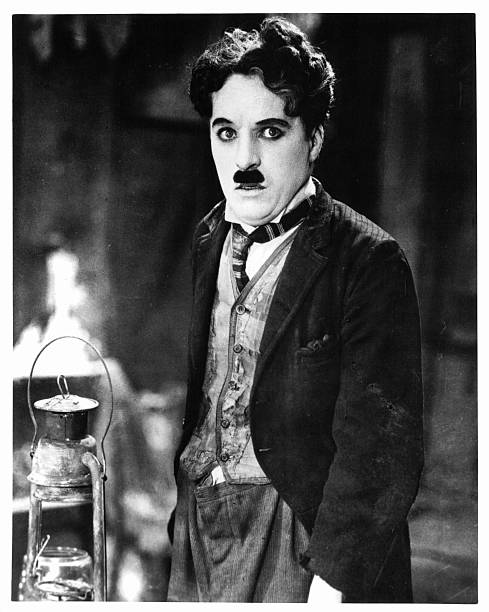
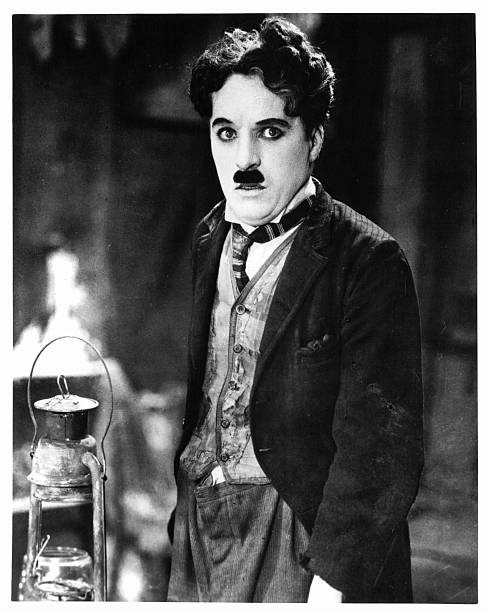
Charles Chaplin in a scene from the film ‘The Gold Rush’, 1925. (Photo by United Artists/Getty Images)
3 Chaplin loathed his first film – During Chaplin’s second vaudeville tour of the United States in 1913, Keystone Studios hired him away for $150 a week. He made his first film appearance early the following year, playing an out-of-work swindler in “Making a Living.” Wearing a handlebar moustache, top hat and monocle, he got in a few funny gags, particularly while fighting the story’s hero, a journalist who at one point interviews a man trapped under a car instead of helping him. Overall, though, Chaplin was appalled by his performance. “I was stiff,” he later said. “I took all the surprise out of the scenes by anticipating the next motion.” He also accused the director of cutting his best material out of jealousy.
4. Chaplin played thr same character in all but a few movies – Prior to his second film, Chaplin dressed up one day in baggy pants, a tight coat, big shoes, a small bowler hat and a bamboo cane. He added a small fake moustache and is said to have strutted around while his co-actors were playing pinochle. Having witnessed the scene, the head of Keystone allegedly “giggled until his body began to shake.” “Chaplin,” he exclaimed, “you do exactly what you’re doing now in your next picture. Remember to do it in that get-up.” This so-called Little Tramp character immediately took off in popularity, spawning so many imitators and marketing schemes that the press labeled it “Chaplinitis,” and would become Chaplin’s onscreen persona for the next two-and-a-half decades. In 1914 alone, he appeared in dozens of short films as the Little Tramp, most of which he directed himself.
5 .Chaplin quickly became a millionaire – For $1,250 a week, plus a $10,000 bonus, Chaplin moved in December 1914 to Essanay Studios, which touted him as “the greatest comedian in the world.” He then signed with the Mutual Film Corporation for $670,000 a year, after which he agreed to make eight comedies for First National for over $1 million. Finally, in 1919, he founded his own studio with fellow Hollywood icons Douglas Fairbanks, Mary Pickford and D.W. Griffith. “I went into the business for money, and the art grew out of it,” Chaplin once said. “If people are disillusioned by that remark, I can’t help it. It’s the truth.”
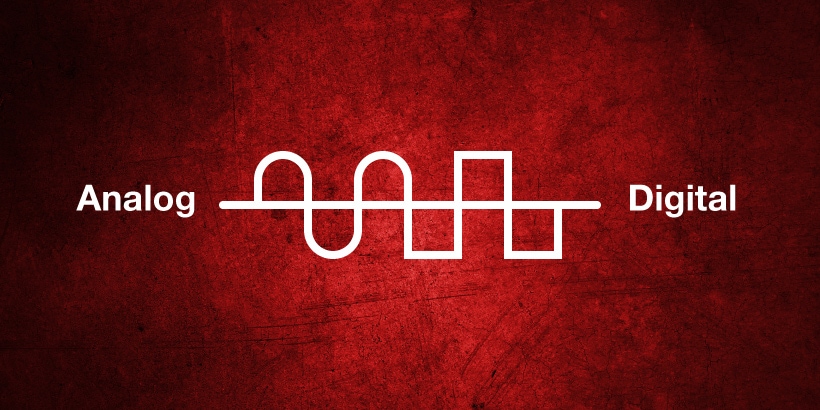
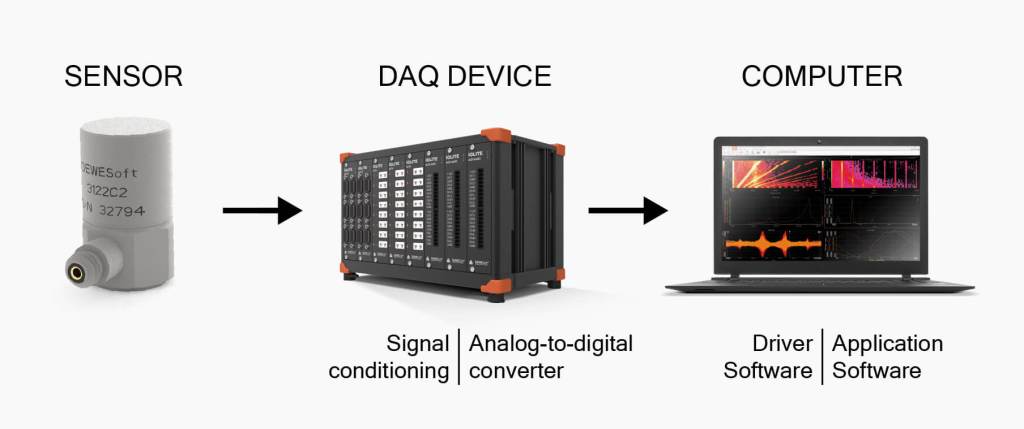
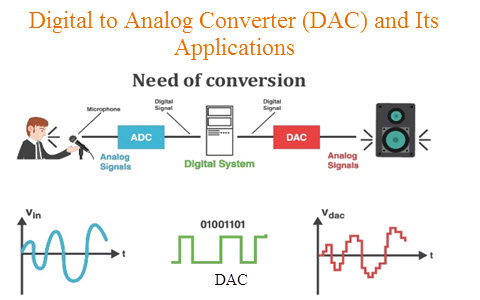
-It is an electronic process in which a continuously variable (analog) signal is changed, without altering its essential content, into a multi-level (digital) signal.
-The input to an analog-to-digital converter (ADC) consists of a voltage that varies among a theoretically infinite number of values.
-Examples are sine waves, the wave forms representing human speech, and the signals from a conventional television camera.
-The output of the ADC, in contrast, has defined levels or states.
-The number of states is almost always a power of two – that is, 2, 4, 8, 16, etc.
2) Digital to Analog Conversion
-In this conversion technique, the amplitude of analog carrier signal is modified to reflect binary data.
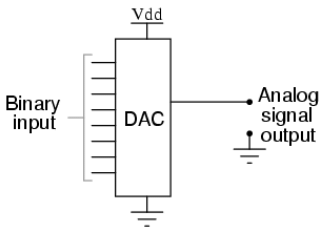
-A Digital to Analog Converter, or DAC, is an electronic device that converts a digital code to an analog signal such as a voltage, current, or electric charge.
-Signals can easily be stored and transmitted in digital form; a DAC is used for the signal to be recognized by human senses or non-digital systems.
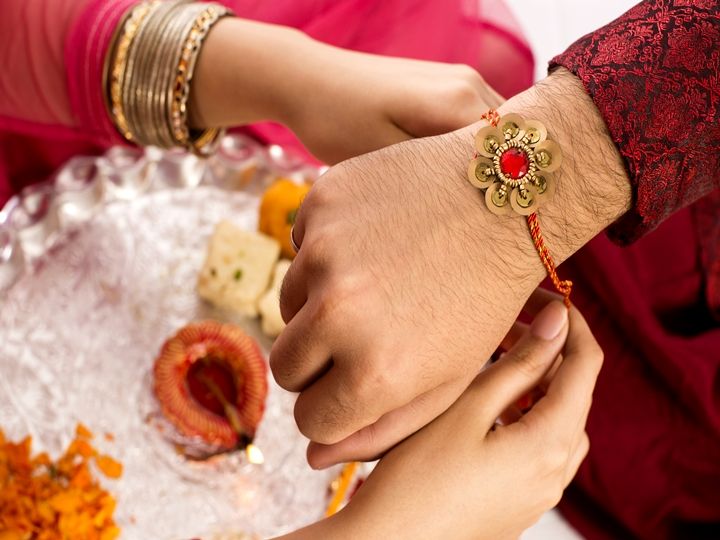
Rakhi Purnima, known as Raksha Bandhan, is a famous festival observed by the Hindu community. On this auspicious day, the brothers traditionally consolidate their oath to protect their sisters from any obstacle. The sisters worship their brothers, tie a holy bracelet on their wrist, and receive gifts and money from their elders.
Rakhi is the symbol of love and unity, but if we study Hindu mythology, it is concluded that rakhi was not performed traditionally by siblings in ancient times. The wives conducted their rites on their husbands. In the legendary tale of Lord Indra Dev and his wife Sachi, Lord Indra went on a fierce battle with a powerful demonic king Bali. Fearing the threatened life of Lord Indra, his wife Sachi tied a pious bracelet to her husband’s wrist that was given to by Lord Vishnu. Thus, in ancient times the tying of thread has become a tradition for married couples, but in the present time, it has extended from brothers and sisters to every kind of relationship.
Raksha Bandhan is a festival which celebrates the bond of a brother and sister. This festival is celebrated in the Hindu religion. It is one of their most important festivals. In addition, sisters and brothers wait eagerly for it all round the year. People celebrate it with abundant zeal and enthusiasm in India.
Similarly, it does not matter if you are a kid or an adult. Brothers and sisters of all ages celebrate Raksha Bandhan. Furthermore, it strengthens the bond between them as well. ‘Raksha’ translates to the protection and ‘Bandhan’ translates to bond. Thus, this explains the meaning of this festival.
Raksha Bandhan is celebrated following the Hindu calendar. It falls in the month of Saawan and people celebrate it on the last day of the month. This auspicious festival usually falls around August only.
Importance of Raksha Bandhan
As we all know, siblings carry a special place in our hearts. However, the particular bond of a brother and sister is very unique. The care they have for each other knows no bounds. The love they share is beyond compare.
No matter how much they fight with one another, they always stand behind them in support. Brothers and sisters fight with each other over trivial matters. In other words, they share a bond which is full of teasing and love.
Brothers and sisters help us grow. At every stage of our lives, the bond between them grows stronger. They stand with each other through thick and thin. The elder brothers are very protective of their sisters. Similarly, elder sisters care a lot for their younger brothers. The younger ones look up to their elder siblings.
Raksha Bandhan is all about celebrating this bond. It is a symbolism of the unique and special relationship shared by the two. This day has been rightly recognized to have a good time and focus on this beautiful bond. It serves as a symbol of their love, togetherness, and confidence in each other.
Occasion of Raksha BandhanRaksha Bandhan is a time for pampering for the sisters. On this auspicious occasion, the sisters tie a sacred thread i.e. rakhi, on their brother’s wrist. It is done so with the intent to wish good health and long life.On the other hand, the brothers, in turn, bless their sisters and pledge to protect them and care for them all their lives. The sisters receive a lot of love and pampering on this day. It is in the form of chocolates, gifts, money, dresses and more.
The family members dress up for this occasion, usually in ethnic wear. We see the markets flooded with colorful rakhis and gifts. Every year, fashionable and trendiest rakhis do the rounds of the market. Women shop for the perfect rakhis for their brothers and the men go out to buy gifts for their sisters.In conclusion, Raksha Bandhan is one of the most enjoyable festivals. It gives the brother and sister to strengthen their bond. Nowadays, even sisters who do not have brothers celebrate Raksha Bandhan with their sisters. The essence of the festival remains the same nonetheless.
This is the time when you start becoming more independent and truly begin the journey of self- discovery. A time for many big decisions and experiences and certainly is one of the most important phases of your life. Here are few things that one must learn to make the most of this period in life
LEARN FINANCES
Financial education is one of the most important subjects but yet ignored by many young adults. The sooner you start saving, investing and managing, the sooner you will learn and see the results. Since you are young, you don’t really have much to lose, this will help you practice without lasting consequences and will give you a leg up in regards to your peers and provides you with experience. So start planning for the future.
MAKE MISTAKES
Do not fear making mistakes, take the risk, take the chance. Our mistakes are what helps us grow and learn. So, for your 20s, embrace the idea that you will make mistakes and lots of them! But always learn the lesson that it has taught you, or else it would be an effort in vain. These lessons must be the push on your journey towards a better self.
LEARN HEALTHY HABITS
In 20s, health is at its peak, so this creates an illusion for many young adults that they can eat junk and drink anything for pleasure, but these choices have severe long-term consequences on body. So, this time of your life is a good opportunity to establish life-long healthy habits.
Consider your diet, learn to cook, and find a way of exercising that works best for you. Starting early on to build a healthy foundation is likely to improve your well-being significantly and will be one of the best investments for future.
TRAVEL
Even if you are short on your budget, travel your city and neighboring towns, because traveling can add value to your life. When you travel, you learn how to adapt to new situations, it takes you out of our comfort zone and allows you to test yourself. You learn to live with people, often without a common cultural ground or language. It gives a new perspective about life and boosts confidence.
If any one have created or invented a process, product or service that can be defined as an original invention, then it is important to get it patented because it helps to safeguard ones invention. It can protect any product, design or process that meets certain specifications according to its originality, practicality, suitability, and utility. In most cases, a patent can protect an invention for up to 20 years. This time period starts soon as you file your patent. The first and foremost thing that a person must do for getting a patent is to file a formal application of Patent at patent office.
However, patent registrations are not applicable for all inventions because the invention should satisfy specific criteria to obtain a patent in India. So, let us know about who can file a patent and what types of inventions get patented in a clear way.
WHO CAN FILE FOR A PATENT ?
A patent registration application for an invention can be made by the people either alone or jointly. Most of the patents were applied by the true inventor or the assignee of first inventor and sometimes it can also be applied by the representative of the deceased true and first inventor assignee. In the case of a proprietorship firm, the application should be made in the proprietors’ name and if it is a partnership firm, then the names of all personally responsible partners must be included in the patent application. Most importantly the applicant is required to disclose the name, address, and nationality of the true and first inventor.
WHAT CAN BE PATENTED?
The Patent Act states that for an invention to be patentable, the invention must be a new product or process that involves an inventive step and can be used in the industry. For an invention to obtain patent registration, it should be technical and the invention should possess utility so that it can be used either in industry or market. The invention must possess novelty i.e the specified invention should not published in India or elsewhere priorly. These all should be cross checked before filing the patent application in India.
PATENT APPLICATION PROCEDURE:
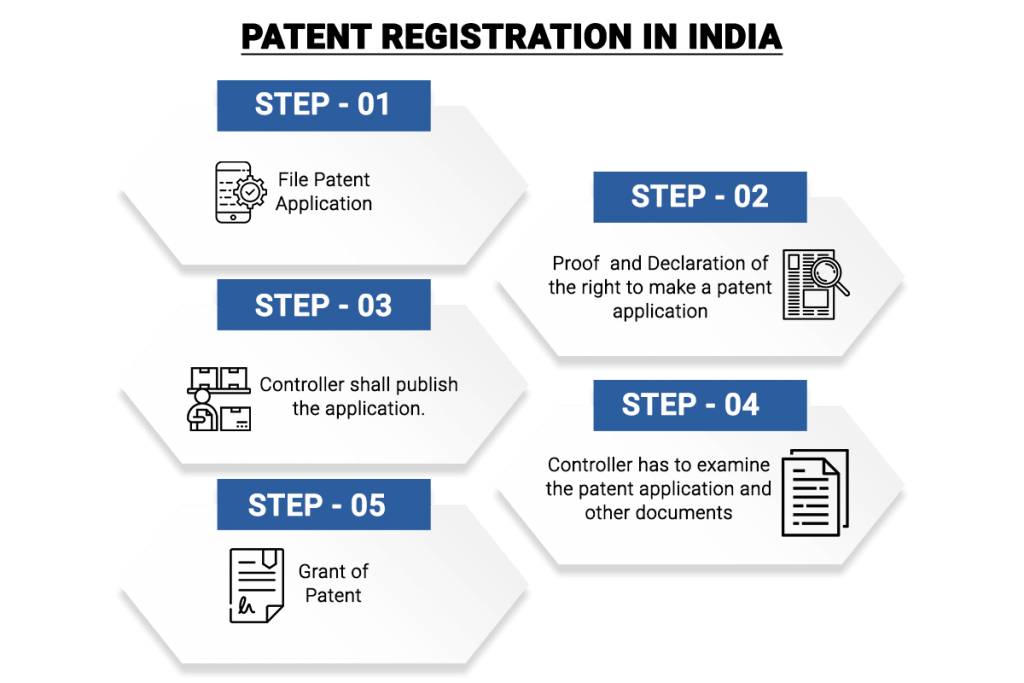
Step 1 – PATENTABILITY OPINION:
Before you begin the patent registration process, you need to check if your invention is patentable. This means that you need to check if another individual has filed a patent for a similar technology for which you are filing. Performing an in-depth patentability search helps you to understand whether you have a chance of getting a patent for your invention or not.
Step 2 – DRAFTING & FILING THE PATENT APPLICATION:
After successfully completing the first step, you can begin the patent application process. Indian applicants need to fill Indian Patent Application Form 1 and along with that you need to provide a Form 2 mandatorily for specifying the type of patent where you can choose between a provisional and complete patent application, based on the stage of invention. This means that if your invention is still under testing then, you need to apply for a provisional patent application where you can get a period of 12 months to complete the invention and can file for a complete patent.
You need to pay special attention when you are drafting your patent application and should include clauses like usability and outcome of the invention in detail. It is also necessary to include the intention to get license on the invention while drafting the patent application and be meticulous in including all the clauses that prevent the competition from others who use same technology.
Step 3 – PUBLISHING THE PATENT APPLICATION :
After submitting all the documents, the patent application is safely secured by the Indian Patent Office and applied patent is then published in an official patent journal after a period of 18 months approximately. However, inventors who wish to have their patent application published before this 18 month period can submit Form 9 (form that requests for early publication) so that the application can be published in official patent journal within 1 month of making request.
Step 4 – EXAMINING THE PATENT APPLICATION:
Before granting the patent, the patent application needs to be examined thoroughly. As per rules of the patent application process in India, applied patent should examined based on the merits of the invention and described in the patent specification form. Unlike the publication process, this is not an automatic process and the applicant needs to make a request to examine their patent application by submitting Form 18 because the patent office queues the application form for examination only after a formal request for examination is made.
When the application lands on the examiner’s desk, it is scrutinized according to the Patent Act and underlying rules along with that the examiner also searches for similar technologies to ensure the invention satisfies patentability criteria or not. After reviewing the application, the first examination report is submitted. The examiner lists his objections in detail which can further extend the application process by another 6- 9 months.
Step 5 – DECISION TO GRANT PATENT:
Once the examiner finds no objections in the patent application, he grants the patent and then the patent is then published in the official patent gazette.
Step 6 – RENEWING THE PATENT:
The patent holder also needs to renew his patent by paying an annual renewal fee. In India, it is possible to renew your patent for a period of 20 years at maximum, from the date the patent was first filed.
OVERVIEW OF PATENT PROCEDURE
CONCLUSION:
Finally, the patent filing process is long and complex, one must remember its importance in the long run. The entire process can take anywhere in between 3-5 years. However, This process is created with the intention of ensuring that the inventor gets credit for his invention and also ensures that no other individual can claim rights over the invention. The legal rights that an inventor earn through patent can prevent competitors from using the invention for financial benefits. In any wrong case the related true inventor of invention can also sue on such individuals and claim compensation for using invention without their approval.
So, guys this is the procedure to file a patent in India and I have tried my level best to make you understand about the patent procedure
Protecting intellectual property is essential to remain profitable because intellectual property of a company prevent others from infringement of their own products and innovations. Particularly, protecting IP’s are relevant in today’s competitive market. Intellectual properties can cover a wide range of topics such as brand name, logos, services, processes etc.. of a company. An organisation is bound to face losses when these concepts are used without their permission. Let me explain you about the importance of protecting intellectual property with a case study.
CASE STUDY:
YOU ARE NOT BAJAJ:
A Hyderabad food retain chain, Urban Food Mart, India pvt.ltd has told by the Bombay high court to stop using the name ” BAJAJ SUPER MARKET ” for its business. The justice has passed an interim order on Feb 5th, 2021. Retaining urban food mart using the name of Bajaj and has directed into remove all signatures i.e use of marks on shopping bags, cartons, parking material etc… with in 3 weeks.
Bajaj electricals sued urban food mart saying that it had been using the name Bajaj continuously and extensively since 1961.
In the above case study we can clearly identify that Hyderabad related food retain chain has violated the term Trademark in IPR by copying the name of Bajaj electronics with out it’s permission. As I mentioned in previous articles also, Intellectual property highlights the important assets of an entrepreneur, Intellectual property rights is the collective term for creations of the mind which can be used for the commercial good will.
Almost every company in this technical world has undeniably benefited from the internet, which allows goods, services, and marketing messages to reach a large audience at a low cost – but it has also raised the risk of intellectual property infringements. This ultimately makes the protection of Intellectual Property as one of the most important things in today’s business world.
Most of the entrepreneurs because of having lack of knowledge in intellectual properties ignore important steps that they have to take for protecting their IP assets later which results into loss for their company. So a proper attention should be given for protecting IPR of a company by both management and employees. It will be good for the company, if it nominate a manager who takes the responsibility for understanding and protecting IP rights.
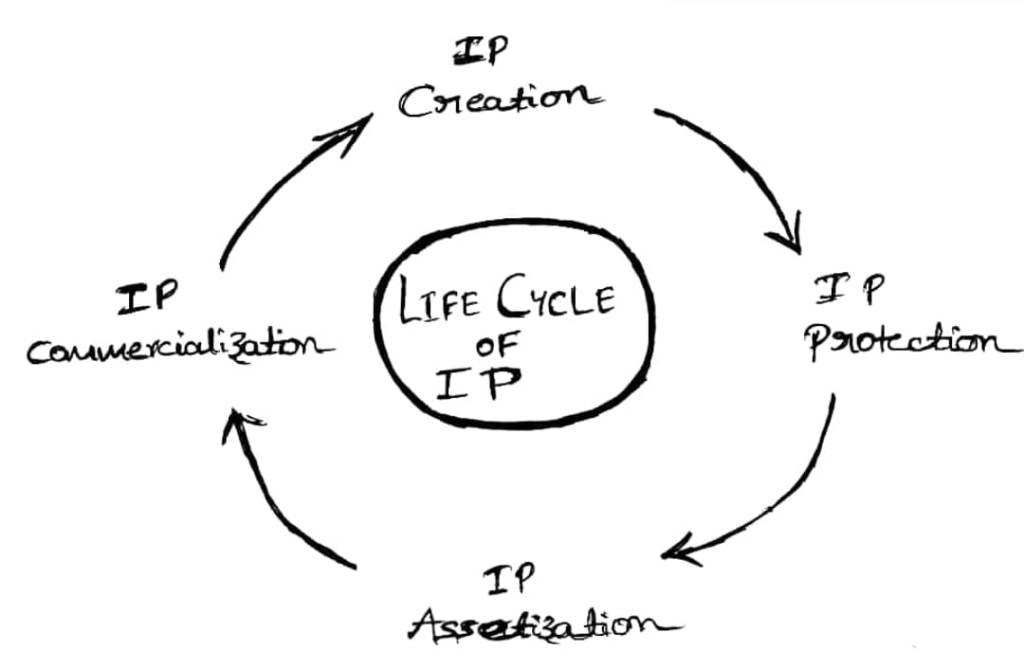
LIFE CYCLE OF INTELLECTUAL PROPERTY(IP):
Protecting IP assets at the right time will always maximize the value of business. Now let us see the life cycle of intellectual properties in the following picture.
IP CREATION: Creation of IP enables innovators and inventors to identify and develop the potential research works in various fields.
IP PROTECTION: It enables in getting ownership rights and overall control on IP of a firm.
IP ASSETIZATION: Facilitates the development of IP based products of a company.
IP COMMERCIALIZATION: It enables business to make revenue and helps in expanding the market of the company.
HOW TO PROTECT INTELLECTUAL PROPERTIES:
The following are the five tips that every entrepreneur or owner of a firm must keep in mind for protecting IPR are as follows:
1 APPLY FOR PATENTS, COPY RIGHTS, TRADEMARKS:
Companies can protect their core management and their research & development activities through intellectual property rights and registrations. They also have a better bargaining position for cross-licensing and counterclaims. Intellectual property rights and registrations also allow a corporation to obstruct competing goods, determine new entrants, and pave the way for future market share via technological advancements. Intellectual property rights come in a variety of forms, such as Patents (used to protect technical information), Copyrights ( used to protect original artistic expressions of text, drawings etc..) and Trademarks (used to protect logos, brand names etc..). Each one of these must be applied in prior to protect the companies rights in order to sue if a third party infringes.
2 SECURE YOUR INTELLECTUAL PROPERTY BOTH PHYSICALLY & DIGITALLY :
Companies must protect their IP in both Physical and digital protection and should maintain high security where sensitive data is stored, whether it is in the server farm or it is in the paper form. Keep track on the person who has the keys. Use passwords and limit employee access to important databases.
3 AVOID JOINT OWNERSHIP FOR INTELLECTUAL PROPERTY RIGHTS:
Make an effort to escape joint intellectual property rights. It is always beneficial for you to have control of your rights. In the long run, joint ownership of such rights can cause confusion and legal issues threatening the security of these assets, causing harm to all parties involved.
4 GET EXACTLY-MATCHING DOMAIN NAMES:
An exact-match domain name is one of the best intellectual property protection strategies for trademarks and copyrights (that you already own). Though it can be a bit expensive but it will help you in the long-term benefits.
5 KEEP YOUR IDEA A SECRET UNTIL YOU HAVE FILED A PATENT APPLICATION:
Make sure that you never share your idea with anyone before you have protected the same. This is because the other person might file for a patent before you and gain ownership rights over it. There is an old maxim that says “a secret shared is not a secret anymore”. So, don’t share the total information about the idea or invention with anyone and keep it as a confidential matter.
In todays world several companies use the Intellectual Property Rights (IPR) to protect their new inventions and company secrets. IPR are the legal rights granted by government to encourage innovation and creative output by ensuring that creators reap the benefits for their inventions or works. Intellectual property rights include several forms such as patents, trade secrets, copyrights, trademarks, or geographical indications (GIs).
World intellectual property organization(WIPO) defines IPR as a creation of mind inventions, literacy, artistic works and symbols, names, images and designs used in commerce. When a company hold its physical properties with out any IPR then those properties are considered as tangible where as IPR possessed properties are considered as Intangible. Intellectual property is essentially needed for a private nature belong to either through a natured person or legal person( Companies, Institutions). IPR can be own, bought and sold, rented , protected and infringed upon by others.
EVALUTION OF IPR IN INDIA:
Intellectual Property Rights (IPR) in India was imported from the west through the Indian Trade and Merchandise Marks Act 1884 which was considered as the first Indian Law on IPR. The first Indian Patent Law was enacted in 1856 followed by a series of Acts being passed. There is an Indian Patents and Designs Act in 1911 and Indian Copyright Act in 1914 is the first enacted copy write act in India. Later after getting independence the Comprehensive Copyright Act was enacted in the year of 1957 to consolidate the laws related to copyrights in India.
In 1948, the Indian Government appointed the committee to review the prevailing Patents and Designs legislation. In 1957, Government appointed to revise the Patent Law in order to balance the constitutional guarantee of economic and social justice enshrined in the preamble of the constitution. The report submitted by the committee outlined the policy behind the Indian Patent system. After the revision of previous acts on patents, a new patent act was released in the year of 1970 which process the patents only for food, agrochemicals, alloys, drugs and fixed 7 years term for food, drug and 14 years for others with having compulsory license provisions.
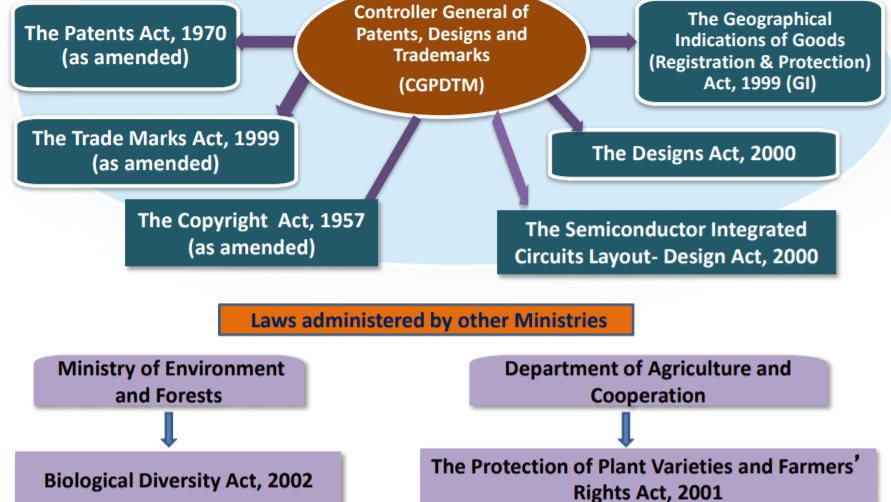
IPR LAWS ADMINISTERED BY OFFICE CGPDTM
EVALUTION OF INTERNATIONAL PERSPECTIVE OF IPR:
Every country has some relationship with other foreign countries in the form of trading, such as imports and exports. The foundation of International Intellectual Property Protection was created in the 19th century in the view of protection of Industrial Property which was created at Paris Convention in the year of 1883 regarding the terms of Patents, Trade Marks and Industrial designs that were granted protection at that convention. In 1998, India also became a member of the Paris Convention. In 1886, International Copyright Act was passed.
The Paris Convention marked the beginning of the International Trade Marks Protection laws and introduced the concept of a well known mark. In 1960 the World Intellectual Property Organization was created which governs the Paris and Berne Convention. In 1977 World Trade Organization (WTO) was created and become an important international organization for the development and understanding the IPR. This WTO was the successor to the General Agreement on Tariffs and Trade(GATT).
The importance of intellectual property in India is well established under statutory, administrative and judicial levels with an agreement made with World Trade Organization (WTO). This Agreement concentrates on Trade Related Aspects of Intellectual Property Rights (TRIPS) which came into force from 1st January 1995. It lays down the minimum standards for protection and enforcement of intellectual property rights in member countries which are required to promote effective and adequate protection of intellectual property rights with a view to reducing distortions and impediments to international trade.
The IPR scene in India has undergone a dramatical change since 1995 with the creation of various tools of Intellectual Property which shows compatibility with TRIPS.
ECONOMICAL PERSPECTIVE OF IPR IN DEVELOPING COUNTRIES :
Intellectual property rights have a great importance in the growth of a country. Intellectual property law differs from county to country. In many developed countries, the strict enforcement of the IPR has a huge contribution to economic growth. IPR promotes innovation which leads to the economic growth. Nowadays every business in the world is looking for the creation of Innovations.
So, protecting those new innovations has become necessary for companies these days. Not only protecting the new inventions of the company but also established companies should also protect their company names also in order to avoid duplicates in the market. Some big companies sell their names in exchange of huge amount in exchange of huge amount of money. Intellectual property rights have a great influence on the financial improvement of a nation. Different country governments face a complex choices on how to design an IP system in the best way to serve their policy objectives.
As India is one of the fastest growing countries, innovation became the first priority to most of the startup companies and as well as established firms including Government firms. Significance of IPR gives a competitive edge in the market for a company and also protects from hackers and pirates. Developing countries went along with the TRIPS agreement for a variety of reasons, ranging from the hope of additional access to agricultural and apparel markets in rich nations, to an expectation that stronger IPR would encourage additional technology transfer and innovation.
From business perspective IPR helps to create a strong brand identity and obtain valuable competitive intelligence. Along with these they help in making revenue through licenses. The main flexibility that is obtained through IPR is freedom of operating. After the introduction of TRIPS the market in India started changing vastly and the act started to provide space for operation and opportunities to companies and innovations. The private sector has started investing in research and development. Finally, The intellectual property right development plays a crucial role on economy for the development of business in a country.
Intellectual Property is an intangible property, which is a product of human intellect, capital, labour, etc. such as artistic creations, literary works, inventions and so forth. It is intangible because it cannot be identified with the help of its physical characteristics.
Intellectual property is an asset by which one can own their business identity, technology, works of authorship, logo, slogans and many other practical expression of the ideas that drives the business forward. Intellectual property plays a vital role at all levels of your business.
To safeguard the interest of the creators, intellectual property rights are introduced which give them the right over their property and prevents others from using it in an illegal way. There are several terms in intellectual property rights, they are described clearly in the following paras:
TERMS OF INTELLECTUAL PROPERTY RIGHTS:
COPYRIGHT:
Copyright is a legal IPR term used to describe the rights that creators have over their literary and artistic works. Works covered by copyright range from books, music, paintings, sculpture, and films, to computer programs, databases, advertisements, maps, and technical drawings. Copyright provides the owner with exclusive rights to use, display, copy, exhibit, modify and distribute the work.
PATENT:
A patent is an intellectual property right which is exclusively related for an invention and grant rights on that invention. The invention may be a product or a process that provides in general for a new way of doing something, or offers a new technical solution to a problem. To get a patent, technical information about the invention must be disclosed to the public in a patent application. There are different types of patents are existed they are:
Utility patents: These are the most common form of patents to protect physical inventions, chemicals and processes.
Design patents: These patents protect the unique form, appearance or design of an item.
Plant patents: These patents protect the development of a new variety of plant through an asexual reproduction in a controlled setting.
TRADEMARK:
A trademark is a sign capable of distinguishing the goods or services of one enterprise from those of other enterprises. Trademarks are protected by intellectual property rights. In simple words trademarks are those things that make up your brand with having certain phrases, logos, unique words, and graphic design elements can be trademarked. Trademarks defend against confusion or dilution of the brand in the marketplace. Trademarks have to be distinctive in order to gain protection. The mark’s that are associated with business denotes its strength, which plays a vital role for defending the piracies.
GEOGRAPHICAL INDICATIONS:
A geographical indication (GI) is a sign used on products that have a specific geographical origin and possess qualities or a reputation that are due to that origin. In order to function as a GI, a sign must identify a product as originating in a given place. A geographical indication is often related to industrial property, which adverts referring to a country or to a place, situated for the origin of that product. This geographical indication not only refers to where the product was made, but more importantly, it identifies the product’s special characteristics which are the result of the products origin. Using the place name where the product was made.
INDUSTRIAL DESIGN:
Industrial design is also a term in intellectual property. It is a process of design applied to products that are to be manufactured by mass production. It can be applied to a wide variety of factors like, materials, production processes, business strategy and prevailing social research activities, commercial or aesthetic attitudes.
As per the Indian law, under the design act 2000, Industrial design protection is a type of intellectual property right that gives the exclusive right to make, sell and use articles that embody the protected design to the selected people only.
TRADE SECRETS:
Trade secrets are intellectual property (IP) rights on confidential information which may be sold or licensed. In general, to qualify as a trade secret, the information must lie in commercially valuable because it is secret and should be known only to a limited group of persons and also it should be subjected to a reasonable steps taken by the rightful holder of the information to keep it secret, including the use of confidentiality agreements for business partners and employees.
The unauthorized acquisition or use or disclosure of such secret information is referred as an unfair practice and considered as violation of the trade secret protection.
So, These are some of the terms that are related to Intellectual property rights. Which are useful and necessary for any type of organization or firm to protect their new inventions, logos, artistic works etc… from their competitors.
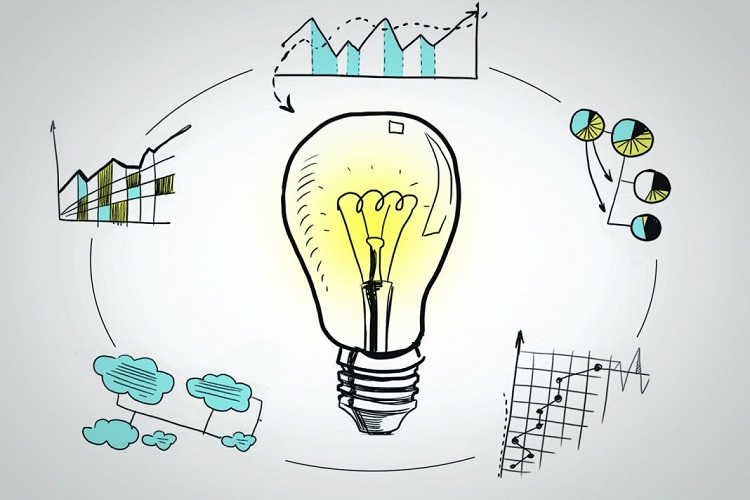
In today’s constantly changing business environment, new opportunities and challenges arise every day which are often driven through digitalization. As a result various market forces like knowledge as business capital, the Information and Communication technologies, Internet of things and of course due to digitalization every organization seeks a competitive advantage. To master over the resulting challenges and get benefited from the opportunities, we must have a systematic and well managed Innovation. That is why now a days innovation has become a core focus area for high performing organizations to ensure long-term survival by making the desired revenue and goals.
WHAT IS AN INNOVATION?
According to Peter Drucker innovation the specific function for entrepreneurship whether in an existing business or a public service institution or a new venture started by a lone individual in family kitchen. Innovation is the means by which the entrepreneur either creates new wealth producing resources or endows existing resources with enhanced potential for creating wealth.
WHAT IS INNOVATION MANAGEMENT ?
Innovation management involves the process of managing an organization’s innovation procedure, starting from the initial stage of ideation to its final stage of successful implementation. It encompasses the decisions, activities and practices of devising and implementing an innovation strategy. These decisions, practices and actions are aimed at achieving a certain target – to generate an idea, product or a service that is of sizeable business value.
According to Gartner, innovation management is a structured process of generating, capturing, discussing and improving, organizing, evaluating and prioritizing valuable insight or alternative thinking that would otherwise not have emerged through normal processes.
The innovation management process necessitates the use of certain management tools that assist in bringing both managers and other entities on a common platform and get them to move towards a common goal. These innovation management tools can look simple but are most effective in reality. Such management tools are considered as brainstorming sessions, planning and finally prototyping. Let’s discuss about various types of innovation which helps in the growth of business.
TYPES OF INNOVATION:
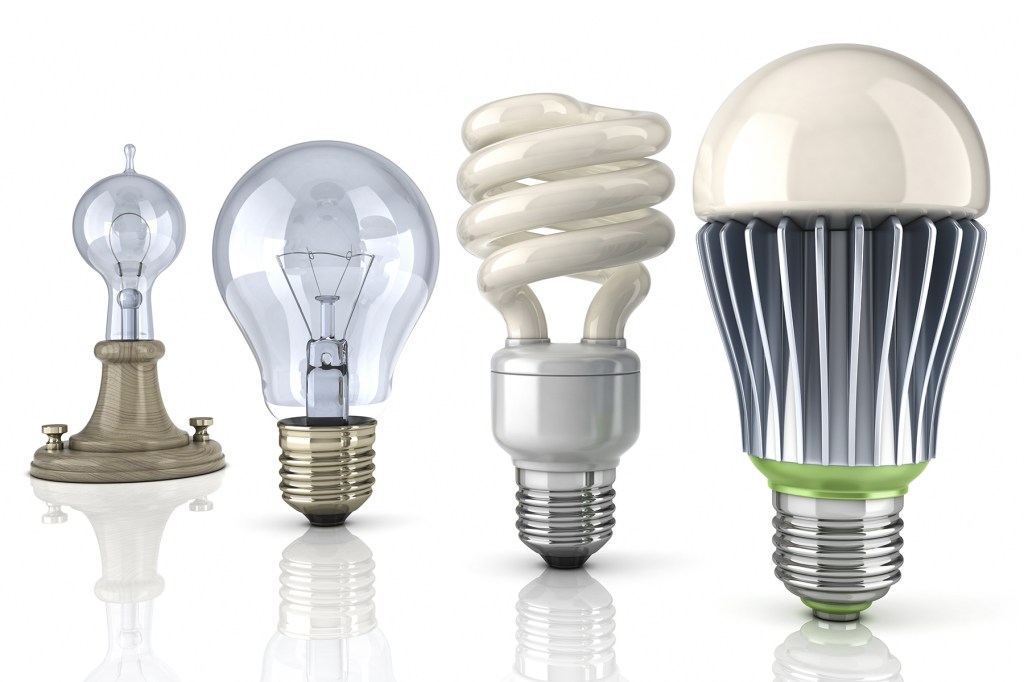
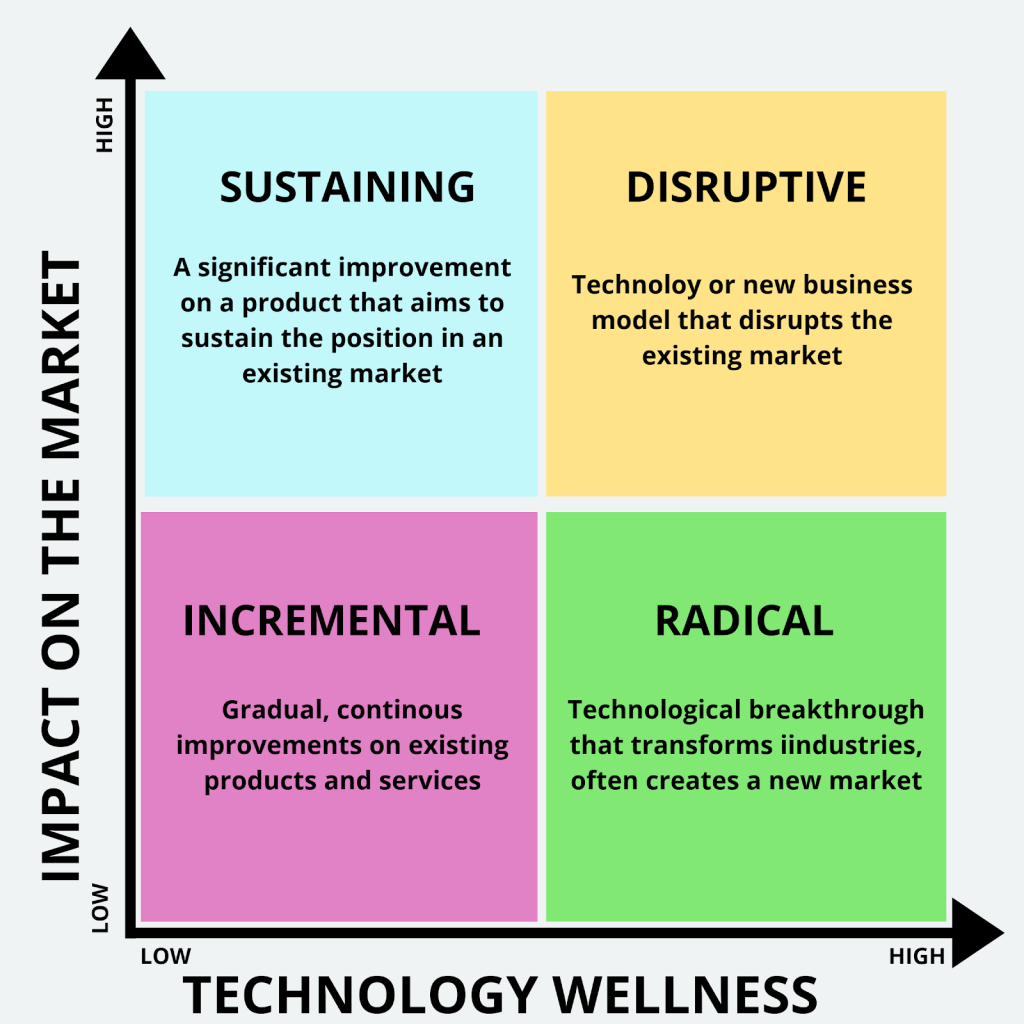
INCREMENTAL INNOVATION: The overwhelming majority of innovations are incremental in nature. Incremental innovation is nothing but improvement or adding new features or characteristics to already existed product which brings a large-scale organisational change. Incremental innovation is arguably the most accessible form of innovation, as it can often be performed without requiring huge budgets, a large team or a reorientation of the business’s strategy.
LED LIGHTBULB (Example of Incremental Innovation)
Incremental innovation doesn’t change it’s original dominant design. Incremental innovation will have less financial risks because this innovation doesn’t bring a new product or services into market rather it just modifies already existed product. This innovation can build a strong customer relationships and improves the product longevity in the market and most importantly incremental innovation is the best strategy to get a quick win in the competitive market.
The best example of incremental innovation is, The most famous E-commerce site COCO COLA, CADBURY etc…
DISRUPTIVE INNOVATION: Disruptive innovation is a theory that refers to a concept, product, or a service that creates a new value of network either by entering an existing market or by creating a completely new market. Moreover disruptive innovation refers to innovations by using new technologies that make expensive or sophisticated products and services accessible and more affordable to a broader market.
Disruptive innovation requires enabling technology with an innovative business model for building a coherent network value. One of the key features of disruptive innovation is that it modifies the process of evaluating the company and helps in the provision of better services with its new modification brought in the industry. It improves and modernize a lot of processes of a company, which further benefits the company a lot.
Examples of disruptive innovation are TESLA MOTORS, YOU TUBE, SKYPE etc…
SUSTAINING INNOVATION: Sustaining innovation is the opposite of disruptive innovation as it exists in the current market and instead of creating new value networks, it improves and grows the existing ones by satisfying the needs of a customer. Just like incremental innovation, the products that perform sustaining innovation is slightly made better with every iteration by reducing defects.
A sustaining innovation targets the high-end customers with its better performance than previously available one. The established competitors always win the battles when they operate sustaining technology efficiently. This strategy entails making a better product that can sell for higher profit margins to their best customers.
Examples of sustaining innovation are, IBM, TOYOTA etc..
RADICAL INNOVATIONS: Radical innovation is rare. It has similar characteristics to disruptive innovation but it is different in a way that it simultaneously uses revolutionary technology and a new business model. Radical innovation solves global problems and addresses needs completely in a new way. This type of innovation completely transforms the market, or even the entire economy .
Technological innovations, such as personal computer and the internet are examples of radical innovations that have transformed the way the entire world functions and communicates. These disruptive innovations provide our society with a platform to build on top of which leads to highly accelerated economic growth where as radical innovation destroys or supplants an existing business model and blows up with something that is entirely new to the market. This types of innovation typically require a lot of time and technological development before they’re ready for the mainstream markets.
Examples of Radical innovation are, I PHONE, NETFLIX, INTERNET etc..
Monologue is made up of two Greek words ” μόνος mónos,” which means “alone, solitary” and λόγος lógos, “speech”
In general the term monologue means a speech presented by a single character, most often to express their thoughts aboud.
It is a speech given by a single character in a story. In drama, it is the vocalization of a character’s thoughts; in literature, the verbalization. It is traditionally a device used in theater—a speech to be given on stage.
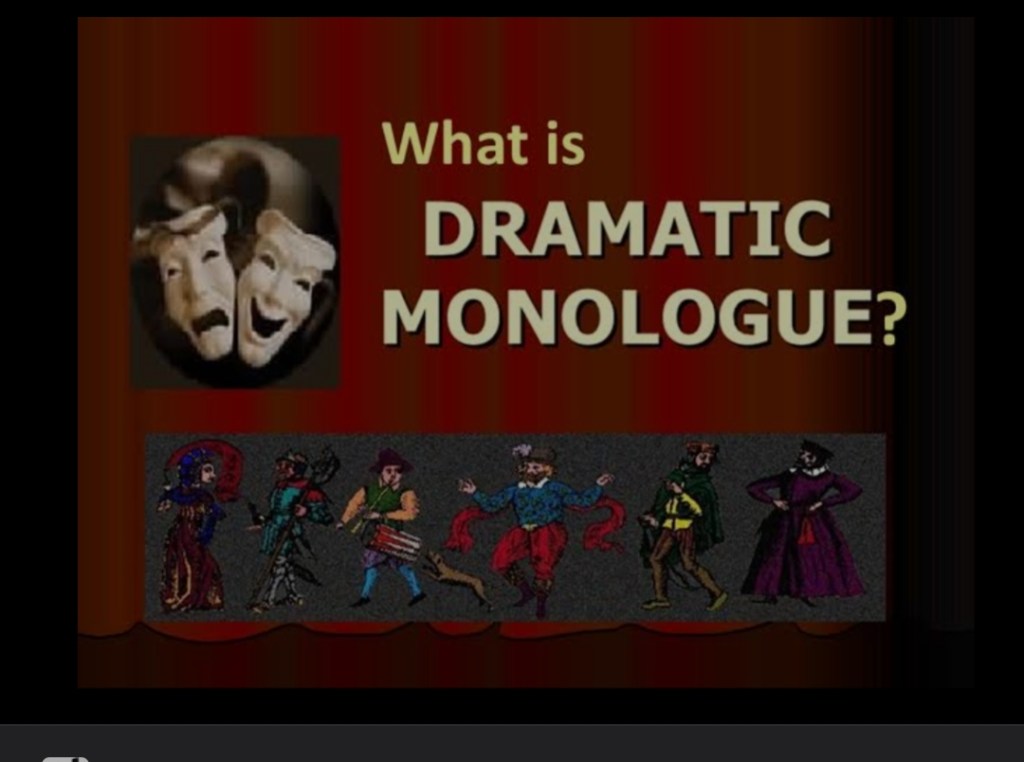
Dramatic monologue refers to a type of poetry. It is a type of poetry written in the form of a speech of an individual character.
These poems are dramatic in the sense that they have a theatrical quality; that is, the poem is meant to be read to an audience. It is a literary form where the writer takes on the voice of a character and speaks through them.
Although dramatic monologues are found in theater and prose, the term most frequently refers to a poetic form where the poet creates a character who expresses a point of view or the main subject matter .
A dramatic monologue is also called a personal poem. The character speaking in the poem is referred to as a “persona.”
Dramatic monologues can be told by a period , animals, objects, places, or abstract concepts like fate , love , etc.
M.H. Abrams notes the following three features of the dramatic monologue :-
• The single person, who is patently not the poet, utters the speech that makes up the whole of the poem, in a specific situation at a critical moment.
• This person addresses and interacts with one or more other people; but we know of the auditors’ presence, and what they say and do, only from clues in the discourse of the single speaker.
• The main principle controlling the poet’s choice and formulation of what the lyric speaker says is to reveal to the reader, in a way that enhances its interest, the speaker’s temperament and character.
Dramatic monologue was invented and practiced by Robert Browning followed by many famous poets like Alfred Tennyson , Dante , T. S Elliot and other Victorian poets .
The form remained popular in the 19 th and 20th century. The Victorian period represented the high point of the dramatic monologue in English poetry.
Robert Browning produced his most famous work in this form of dramatic monologue “My Last Duchess” which is quite famous till date .Browning’s poem “My Last Duchess” was one of the first dramatic monologues of the Victorian era.
Alfred, Lord Tennyson’s Ulysses, published in 1842, was a remarkable dramatic monologue in English literature during the Victorian era .
In the Modernist era, poets like T.. S. Eliot and Ezra Pound wrote persona poems “The Love Song of J. Alfred Prufrock” by T.S Elliot being one the most famous works as a dramatic monologue.
With the prevailing trend of confessionalism in poetry, during 1950s and 1960s, great poet like Gwendolyn Brooks, John Berryman, and Sylvia Plath all made notable contributions by writing dramatic monologues that grappled with subjects like the African American urban experience, mental illness, addiction, and suicidal ideation.
___________________________________________
Types of Dramatic monologue
Dramatic monologues can be categorised in three ways :-
• Romantic monologues
Poems where a character speaks about a romantic relationship, either past, current, or desired is called a romantic monologue .
For example, Dilemma” by Anthony Hecht is a romantic monologue.
• Conversational Monologue
Conversational monologues are poems where the dramatic monologue is presented by the speaker as if it is part of a conversation. Samuel Taylor Coleridge’s “The Eolian Harp” is one example. . • Philosophical Monologue
Philosophical monologues are poems where the character explicates their personal philosophy or theories about the world.
“Lines Written a Few Miles above Tintern Abbey” by William Wordsworth is one example of a philosophical monologue.
___________________________________________
The dramatic monologue was written in the voice of a fictional character, the form sometimes makes use of a character who is already well-known so the poet can explore larger themes. Use of dramatic monologues made the poet write about situations and subject matter that is not taken from their own lives.
Dramatic monologues are a way of expressing the view of a character and offering the audience greater insight into the character’s feelings . Dramatic monologue was a famous form to write poetry because of its powerful way to create narrative tension as the speaker reveals crucial information to the reader in a way that allows the reader to feel the real emotions . ___________________________________________



















 Eduindex
You must be logged in to post a comment.