When the topic of consumption arises our mind usually wonders about food. But today food is not the only thing that we consume. There is term “Content Consumption”. Briefly , it is the social media post or post in any other sites, that a person views or reads.According to a data average daily time spent consuming content is 6 hours and 59 min ( Not so surprisingly, it is accounted as normal these days)
The fact that we spend almost all the day using our phones in not so problematic but what we watch is a serious issue. Is the content we consume worth consuming??
There are thousands of tik tok videos, instagram reels that are available in the net. According to data an average person spends average of 21.5 hours per month scrolling through reels. The statistics seems very low , but when you realise that reels are just about of 30 secs, it will hit that people consumes 645 of such videos per month. Not only reels, consumption of Netflix, Amazon, Hulu and many other OTT platforms ,have increased tremendously since the start of pandemic. Binging shows and chilling is quite a fun idea of relaxation but it traps a person into a loop of entertainment.Many people don’t get good night’s sleep , why?? Because they were watching series or scrolling through social media. At first it seems fun way of escaping daily life challenges , but what we don’t realise is that we are becoming mentally weak. Now everytime a challenge comes down , instead of facing it, we would like to watch a series. For the sake of forgetting , we are burdening our works , thus, leading to mental stress, anxiety and depression.
Now, is it worth watching a series instead of doing work? Being attracted to glorious content and consuming it for hours , without having the knowledge of time , is not worth it at all. It is making us unhealthy in many unknowing ways. What we consume today decides what our personality and mindset will be. Internet is a vast world in its own. There are millions and millions of content . It varies from educational to news to entertainment. Everything that we want is at our finger tip. Just one click and you will have whole world in front of you. Now, what we want to know, what is beneficial for us depends on us!!!
Whenever any job opportunity is provided by the employer there are many people who must have shown interest in it and filled up the forms but may be the positions are less than the number of applicants so interview is the next step in which all the selected candidates are called up for further information. They will be asked about their interest , why they are suitable for that position and many other questions . In the interview the employer can see the applicant and find out their response along with their personality. Suppose if there is any employer looking for a candidate who is having the calm personality but if there is no interview how will the employer can evaluate and choose the most appropriate candidate?
Interview is a conversation that takes place between the job applicant and the employer or may be the representative of an employer. This is done to find out whether the applicant is most capable of getting a job or not.
Mostly these interviews involves the face-to-face interactions because a person can lie but their body language cannot. It is the most common method used to evaluate the applicants in order to ensure that the best person is recruited. Interview allows the employer to get into more details about the applicant as they can know how the applicants are replying ,how they are sitting ,how confident they are and some psychologist are also present at the time of interview who can easily find out the personality of a person. So the big question arises if this is so difficult and all aspects are checked up by the employer then how to attend the interview to get hired? We will answer this question by mentioning the following points that you must take care while going for a interview.
IMPORTANT POINTS:
Be on time is the first thing that plays a very important role in creating the image in front of employer. Many people ignore this but if you want to have the image of a managed and a disciplined person always try to reach the interview location before 10 minutes of stated time.
Present yourself smart and dress properly it will not only make you look good but also provide you alot of confidence.
Have an eye contact with the employers when answering the questions it will remark you as a confident person but don’t look at them inappropriately otherwise it will be awkward.
Greet the employer but don’t try to be over friendly with them and dont dont off just stay honest and answer the questions.
Always have a knowledge about the working and history of the company for which you are going for an interview it will show that you have prepared well for it.
Body language must be clearly look out to avoid any stupid actions that can lead to your rejection. Don’t shake your legs and rubb your hands basically these small things will present you as a nervous person and no company want under confident people to work with.
When it comes to higher study everyone wants to attend the best colleges. If you are a student you also have the same dream. It is also same for an engineering student. I am listing Some best colleges below, which are eventually the dream college for not only engineering student but for every student from every other education field.
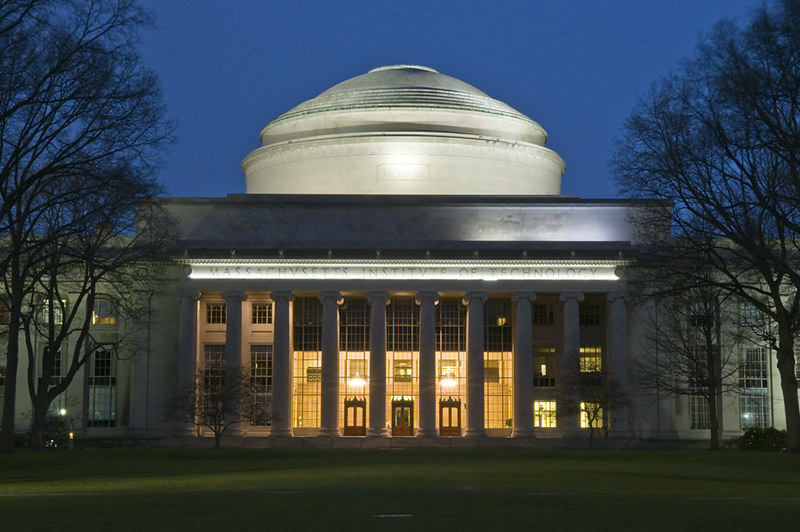
MIT
MIT or Massachusetts Institute of Technology, USA: It is one of the renowned colleges in the world, which is situated in Massachusetts of USA. It was established in 10th April of 1861.It accepted 7% students from all over the world. Their moto is “Mind and Hand”. Here UG, PG, master and PhD courses are available .MIT holds the greatest number of Nobel winners, the notable alumni of these college are Kofi Annan, Richard Feynman, Raghuram Ranjan, Jairam Ramesh Katie Bowman and others. Subjects: language, law, Technology, general science, business ,art social & every other subjects . One can admitted here by GRE, GMAT, CAT etc. international examination.
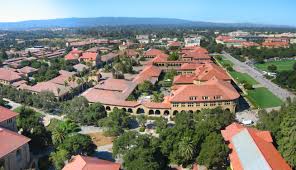
Stanford University
2.Stanford University: It is one of prestigious college for student. It was established in 1891 in the world by Leland Stanford and Jane Stanford. Their Moto is “the wind of freedom blows”. It situated in Stanford in California in USA. Here UG, PG, master and PhD courses are available .The subjects which are taught here are language, law, Technology, general science, business and everything. It accepts 4.3% students from all over the world, it has some Nobel winner students and professors. Notable alumni of this college are Larry Page, Reed Hastings, Mukesh Ambani, Jennifer Connelly, Elon Musk, Stephen Brayer and others. One can admitted here by GRE, GMAT, CAT etc. internal examination.
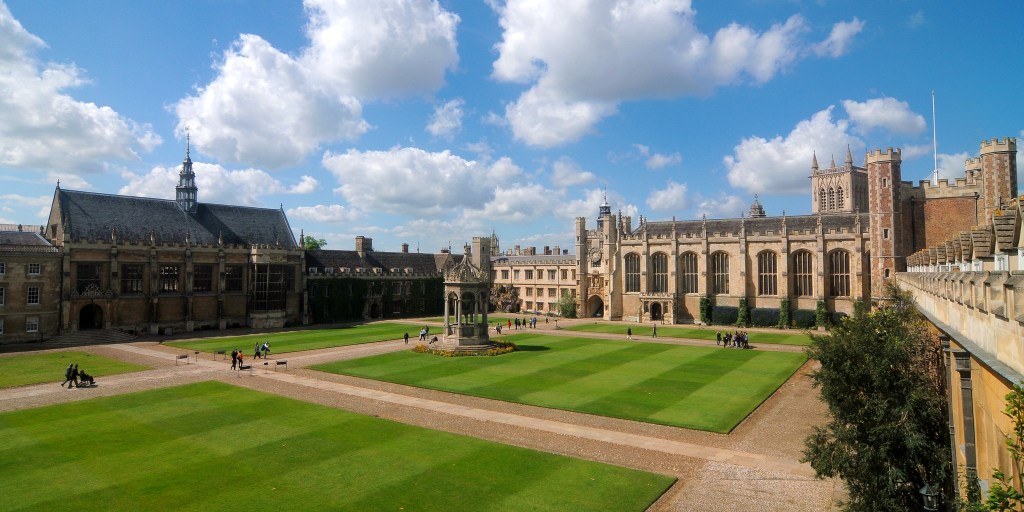
Cambridge University
3.University of Cambridge: Their motto is “from this place, we gain enlighten and precious knowledge”. It was first established in 1209 AC .It is one of the oldest and prestigious college in the world. Here UG, PG, master and PhD courses are available . It is situated in Cambridge in UK. It accepted 21% students from all over the world. Subjects taught here are language, law, Technology, general science, business and everything. It also has noble winner students and professor. Notable alumni are Stephen Hawking, Charles Darwin, John Milton, Emma Thompson. Rajiv Gandhi. One can admitted here by GRE, GMAT, CAT etc. internal examination.
NTU
Nanyang Technical University (NTU):It is situated in Singapore. It is one of the oldest University. It was established on 1st August 1981. It has continuously ranked with 100 from all over the world. 36% students from all over the world are accepted in the University. GATE score is acknowledged here for the admission of Indian student. Subjects which are available — language, law, Technology, general science, business and everything. Here UG, PG, master and PhD courses are available .Notable alumni are Melvin Yong, Cheryl Chan, Darryl David, General Tito Karnavian, Inderjit Singh, Shirley Meng and others.
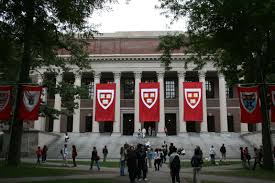
Harvard University
5.Harvard University: It is situated Cambridge, USA. The motto of the University is “truth”. It was established in 1636. It is one of the oldest and most prestigious University. Here UG, PG, master and PhD courses are available. It accepts only 4% students from all over the world .The subject taught here are — language, law, Technology, general science, business and everything. Notable alumni are John Adams, Theodore Roosevelt, John F. Kennedy, Benazir Bhutto, Bill Gates, Michael Obama, Barack Obama. There are so many Nobel Prize winner is from this university. One can admitted here by GRE, GMAT, CAT etc. international examination.
1. “ Successful communication depends upon how well the speaker can make his talk a part of the listeners and the listeners a part of the talk”
2. “The chief cause of your fears of public speaking is simply that you are unaccustomed to speak in public”
3. “ If you want to interest your listeners then don’t begin with an introduction. Begin by leaping right into the heart of your story.”
4. “The best way for a speaker to endear himself to an audience is to play himself down.”
5. “ The audience must feel that there is a message being delivered straight from the mind and heart of the speaker to their minds and their hearts.”
6. “The ability to speak clearly precedes the ability to move others to action.”
7. “ You cant project your personality in a talk to others by using reasons alone; you have to release to them how deeply you yourself believe on what you say.”
8. “ You will never know what progress you can make unless you speak, and speak and speak again.”
College is a new environment. You are probably surrounded by a wider variety of classmates than you experienced in high school – students of different ethnicities and nationalities; students of different economic and social backgrounds; students from more regions of the state, country, and the world; students of more interests and accomplishments; older students returning to school after varied experiences; and upperclassmen and graduate students with developed knowledge and commitments. Your professors will often be deeply involved in their areas of specialization, in ideas they have pursued over time with their colleagues, and in projects that apply their learning to improving various aspects of life. The readings you have been assigned in your courses will introduce you to new subjects and to deeper levels of understanding of subjects with which you are already familiar. The books and journals in the library and the bookstores provide opportunities to pursue ideas and learning on your own in directions not limited by the curriculum. You also get to see special accomplishments and skills up close – the sociology professor’s ability to analyze how people relate to each other, the literature professor’s ability to find the right expression, the philosopher’s ability to cut to the heart of an argument, the architect’s ability to conceive of a graceful and useful building, the government professor’s involvement in state policy making. Many of your classmates may also have abilities, skills, and knowledge you may admire- from the computer programming whiz to the wrestling champion to the classmate who is just so witty. Seeing these accomplishments may open your eyes to new goals and lead you to reassess exactly where your best talents lie. How do you make sense of all you come in contact with and set some directions for yourself? Some questions will sort themselves out spontaneously as you become involved in a heated discussion or suddenly want to do extra reading for a course that fascinates you. Some instructors may encourage you to think about your reaction to what you are learning through discussion questions and informal assignments. They may be available for you to talk with outside of class, during office hours, or even over coffee. Informal talk with your friends and classmates also helps you sort through all the new ideas and experiences you are confronting.
Have you ever heard or read in a newspaper that a person who won millions of dollar got broke after few years, why is this so ? This is because of lack of financial education, and the reason behind many of the people after good degree and jobs and a good salary still facing financial issues is the same lack of financial education.
1. Listen to podcasts, like the Rich Dad Radio Show.
2. There are plenty of you tube channels of financial experts, subscribe their channels and follow them.
3. Read newspapers, magazines, or books based on money, finance, and investing.
4. Follow peoples or pages sharing financial knowledge on social media.
5. Hang around with people smarter than you beyond all this have a keen interest and a burning desire. That’s all you need to be financially literate.
1. The speaker must love and should be genuinely passionate about his topic, if the speaker himself is not inspired by what he is speaking then it cant inspire others. So always choose the topic which you would love to speak about.
2. No one wants to hear the same boring and old stuff. People want something new, thus reveal information that’s completely new to your audience, and they will be your devoted listener.
3. Deliver jaw dropping moment in your presentation. Share something by which your audience will get surprised because that moment makes your presentation remarkable.
4. Don’t try to make your talk too long or too short that the audience cant even get what you have to say. According to the author, the ideal length of a talk should be 18 minutes. Because it forces you to say only what is important.
5. The best way to teach the heart and soul of your audience is to tell them stories, especially your own stories. Because they will only listen to what you are saying only if they feel familiar and connected to what you have to say.
A country’s growth is usually measured by National income, marked by Gross Domestic Product (GDP). The GDP is the total monetary value of the goods and services produced by that country over a specific period of time, usually one year. The level of economic development also indicated by Human Development Index (HDI), Physical Quality of Life Index (PQLI), and National Happiness Index (GNHI).
Indian economy is the seventh largest economy of the world. Being one of the top listed countries. In terms of industrialization and economic growth, India holds a strong position with an average growth rate of 7%.
STRENGTHS OF INDIAN ECONOMY:
1. INDIA HAS A MIXED ECONOMY- Indian economy is a typical example of mixed economy. This means both private and public sectors co-exist and function smoothly. Some of the fundamental and heavy industrial units are being operated under the public sectors. The private sectors has gained importance. This makes it a perfect model for public-private partnership.
2. AGRICULTURE-Agriculture being the maximum pursued occupation in India. It plays an important role in its economy as well. Around 60% of the people in India depend upon agriculture for their livelihood. Green revolution and inventions in bio technology have made agriculture self sufficient and also surplus production. The export of agriculture products such as fruits, vegetables, spices vegetable oils, tobacco, animal skin etc.
3. AN EMERGING MARKET- India has emerged as vibrant economy sustaining stable GDP growth rate even in the midst of global down trend. This has attracted significant foreign capital through FDI and FII. This also makes it an emerging market for the world.
4. EMERGING ECONOMY-India bags the seventh position in terms of nominal Gross Domestic Product (GDP) and third in terms of Purchasing Power Parity (PPP). Indian economy has a place among the G20 countries.
5. FAST GROWING ECONOMY-Indian economy is well known for high and sustained growth. It has emerged as the world’s fastest growing economy in the year 2016-17.
6. FAST GROWING SERVICE SECTOR-The service sector, contributes a lion’s share of the GDP in India. The sectors like Information Technology, BPO have contributed to the growth of the economy.
7. LARGE DOMESTIC CONSUMPTION-With the faster growth rate in the economy the standard of living has improved a lot. The standard of living has considerably improved and life style has changed.
8. RAPID GROWTH OF URBAN AREAS- Urbanization is a key ingredient of the growth of any economy. There has been a rapid growth of urban areas in India after independence.
WEAKNESS OF INDIAN ECONOMY:
1. LARGE POPULATION-India stands second in terms of size of population next to China. Population growth rate of India is very high and this is always a hurdle to growth rate. The population growth rate in India is as high as 1.7 per 1000.
2. INEQUALITY AND POVERTY-There exist a huge economic disparity in Indian economy. The proportion of income and assets owned by top 10% of Indian goes on increasing. This has led to an increase in the poverty level in the society.
3. INCREASES PRICES OF ESSENTIAL GOODS-Even though there has been a constant growth in the GDP and growth opportunities in the Indian economy. The continuous rise in prices erades the purchasing power and affects the poor people, whose income is not protected.
4. WEAK INFRASTRUCTURE-Even though there has been a gradual improvement in the infrastructural development in the past few decades, there is still a scarcity of the basic infrastructure like power, transport, storage.
5. UNEMPLOYMENT-With growing youth population, there is a huge need of the employment opportunities. The Indian economy is characterised by jobless growth.
6. OUTDATED TECHNOLOGY- The level of technology in agriculture and small scale industries is still outdated and passed.
CURRENT INDIAN ECONOMY:
In 2019-20, India’s GDP was Rs 146 trillion. In other words, India had produced goods and services worth Rs 146 trillion that year. Then, in the last financial year, that is, in 2020-21, it fell to Rs 135 trillion. That’s the fall of minus 7.3% we were talking about earlier.
“India will be a global player in the digital economy” -Sundar Pichai, CEO Google
This is probably the most easy way to get a laugh from the audience without much time to spend on it! You just have to do your homework, search for the quotes and its not necessary it should be from famous people but only remember it should make other people laugh.
2. VIDEOS AND PHOTOS
Use videos and photos which you find funny or has a bit of humour in it, tell stories connected with them, tell them what happened exactly, by doing this you will take off the pressure from yourself to be funny.
3. ANECDOTES, OBSERVATION AND PERSONAL STORIES
Try to remember an incident from your pasty where you find humor and if you find it funny then it will definitely put a smile on other people faces too. But remember don’t try to get the big laughter you just need a smile and that’s it!
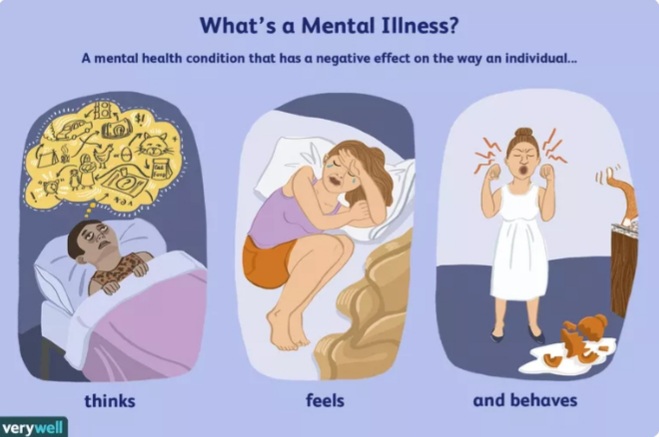
We human beings often tend to pay less attention to our mental health than our physical one, but we all should understand its heavy importance and admit the fact that they can be equally or even more dangerous than the physical issues so one should take immediate help of doctor or councilor in case some abnormalities or issues arises.
Importance of mental health :
Mental and physical health are equally important components of overall health. Mental illness, especially depression, increases the risk for many types of physical health problems, particularly long lasting conditions like stroke, type 2 diabetes and heart disease. Similarly, the presence of chronic conditions can increase the risk for mental illness.
Some mental illnesses :
Mental illnesses are among the most common health conditions in the united states.
* More than 50% will be diagnosed with a mental illness or disorder at some point in their lifetime.
* 1 in 5 children,either currently or at some point during their life, have had a seriously debilitating mental illness.
Causes of mental illness :
There is no single cause for mental illness. A number of factors can contribute to risk for mental illness, such as
* Early adverse life experiences such as trauma or a history of abuse.
* Experiences related to other ongoing medical condition, such as cancer or diabetes
* Biological factors, such as genes or chemical imbalances in the brain.
* use of alcohol or recreational drugs.
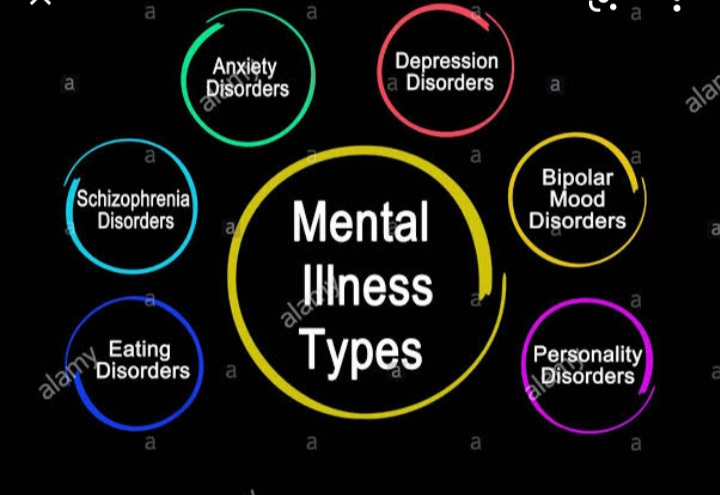
Types of mental illness :
People can experience different types of mental illnesses or disorder and they can often occur at the same time.Mental illness can occur over a short period of time or be episodic. This means that the mental illness comes and goes with discrete beginnings and ends. Mental illness can also ongoing or long term.
There are more than 200 classified types of mental illness. Some of the main types of mental illness and disorders are listed below; however; this list is not exhaustive.
Anxiety Disorders :
People with anxiety disorders respond to certain objects or situations with fear and dread or terror. Anxiety disorders include generalized anxiety disorder, social anxiety, panic disorders and phobias.
Hyperactivity Disorder :
It is one of the most common childhood mental disorders. It can continue through adolescence and adulthood. People diagnosed with ADHD may have trouble paying attention, controlling impulsive behaviors or be overly active.
Disruptive Behavioral Disorders :
It involves a pattern of disruptive behaviors in children that last for atleast 6 months can cause problems in school, at home and in social sitauations.Behavioral symptoms can also continue into adulthood.
Depression and other mood disorders :
While bad moods are common and usually pass in a short period, people suffering from mood disorders live with more constant and severe symptoms. People living with this mental illness find that their mood impacts both mental and psychological well- being, nearly evry day and often for much of the day.
Eating Disorders :
Eating disorders involve obsessive and sometimes distressing thoughts and behaviors including
* Reduction of food intake
* overeating
* Feelings of depression or distress
* concern about weight, body shape, poor self image
Personality Disorders :
People with personality disorders have extreme and inflexible personality traits that cause problems in work, school or social realtionships. Personality disorders include antisocial personality disorder and borederline personality disorder
Substance use Disorders :
Substance use disorders occur when frequent or repeated use of alochol and or drugs causes significant impairment, such as health problems, disability, and failure to meet major responsibilities at work, school, or home. Substance use problems can be fatal to the user or others. Exsmples include drunk driving fatalities and drug overdoses.
In this busy world our brain gets a lot stressed and its very important that we should take due care of it, some of the practices which will help us to do better with our mental health are:
Yoga plays a great role in keeping our mind calm and also helps us to focus and concentrate on things. It also helps us deal with tough situations and gives us the strength to stay away from negativity.
Exercising regularly is a key to healthy body and we all know that a healthy body and a healthy mind goes hand in hand, so we must ensure that we exercise daily to keep ourselves fit.
The environment that we stay in also the company with which we spend time also plays a major role we should be extremely aware while selecting our company and in case we are not able to adjust we should walk away.
Food is the fuel and is of immense importance we should ensure that we are not nutrient deficient also we should ensure that we intake enough amount of water daily.
If karma works, why are so many corrupt people successful? Why do good people have to struggle?
Karma, as a concept, was the idea of cause and effect translated through multiple lives, not just through one.
That by living a good life now and being kind and happy, you will create a positive start for whatever meets you after you pass away.In this sense, Karma isn’t something we will feel any effects of now and is something we will only come to see once we meet our next life.However, even if we do take out that concept the idea is still one of Cause and Effect.Good deeds cause good things, and bad deeds cause bad things, but it never said that we had any control as to what things we gain from what deeds.
When talking about Karma we assume that it is all one big ball of yarn.Different colored strings are so intertwined in this ball that it looks like a rainbow colored sphere where everything is connected.However, the truth may be a little different.
What if Karma did not work like we assume it does?
What if you cannot just treat others nicely and make more money because those two are not connected?
What if you actually had to pull on the money string to get money karma?
And what if, by doing well on the ‘treating others’ string you simply get others to treat you better too?
But then again, maybe that would not be Karma anymore but a very straight-forward matter of cause-and-effect. Most of us do not like this explanation because it means we cannot be as comfortable as we have been. We like the idea of being able to pull on a string that comes easiest to us to uplift our entire lives, for some things just do not come that easy to us. But maybe that is where we have been wrong in what we think Karma is all about. Maybe the successful, but corrupt people, just knew what strings to pull to get to success and have that area of life in order while the rest is crumbling around them. And maybe we do not know how to pull the strings of success so we struggle in a world of niceties and laziness.
Honestly, I do not know how Karma works or if it does. I am probably wrong about it all. Maybe we all are. Karma might just be an idea we tell ourselves to feel more justified in being nice and treating others kindly, but maybe it matters not one bit.
‘Who knows?’
The thing is that it clearly does not work as simply as we make it out to work, for we do see contradictory examples everywhere. But if we take the idea of the ball of yarn, I believe we get a lot closer to how Karma may truly work.
For if you work on your finances every day, if you are charitable and treat others at your job well while still fostering the belief that money will find its way to you, chances stand much better you do create more money for yourself. Psychology supports this concept through things such as the Confirmation Bias, Self-Fulfilling Prophecies and Selective Attention. You will likely find more opportunities and therefore more successes in this area if you do more good deeds here, which is the whole point. If you pull on the green string you will get greener results, but you may not get green results by pulling on the red string. You cannot just do good to get good things returned to you in a completely separate area of life.
Successful people, as corrupt as they may Be, often at least have something they know about success.
Some cheat their way through, others lie their way through, and others hide the truth or weasel their way through with other people, but as long as they find a way that means there has to be something they know we do not. And while we go through life being honest, nice and hard-working there is clearly something that is not leading to more success. That does not mean you have to stop being honest, nice or hard-working, but rather that it may be time to learn about success and money instead of relying on Karma to do it all for you. It’s easy to say that we could just be as corrupt as they are and then we’d be rich and famous too, but I believe it is a little more complicated than that, for there are already quite a few corrupt but unsuccessful people out and about.
Corruption is not the string that will lead to success either.
It’s easy to point the finger towards others but maybe we have to ask ourselves what the things were we did and did not do. Maybe we got the Karma, but maybe it was just by getting something we did not want to get. If you have your health, if you have people that care for you, if you have a roof over your head and clean water, then you already have more than most, which may mean your Karma is quite positive.
Whether or not I am right with my assumptions does not really matter. If I am not and Karma is supposed to work in a way where pulling one string leads to random, but positive, results, then maybe there is just something wrong with the system or maybe you did not yet pull hard enough. Either way, even then learning about success and money and taking actions that lead to results you want to have may just be more reliable way to go.
For if Karma does not exist at least this way will give you more opportunities to create the life you want to create.
I, for one, will take the route that gives me the most likely chance to create the life I want, and if that means doing extra work then so be it!
“GOOD GOVERNANCE SHOULD BE LIKE AIR. IT’S EXISTENCE NEED NOT BE DISCUSSED BUT IT’S ABSENCE WOULD MAKE A HUGE DIFFERENCE”
Nowadays the terms “Governance” and “Good Governance” are being used widely. Major reforms, actions, changes and even donations and institutional activities are basing all their rules and regulations which will help achieve “good governance”.
WHAT IS GOVERNANCE ?
Governance is the process or system by which entities are administered or directed and controlled. It is the process of decision making and the process of deciding the actors who will be involved in the decision making process and implementation of decisions.
The concept of “governance” has been used from past many years and can be used in several contexts such as international or national governance, corporate governance, local governance etc. One of the major actor of governance is “government” and other actors involved in the process of governance are NGOs, private bodies, landlords, research institutes, religious leaders, political parties, military etc.
GOOD GOVERNANCE
The term “Good Governance” originated from the report entitled ” Governance and Development” which was published by World Bank in year 1992. The World Bank defined Good Governance as “the manner in which power is exercised in the management of a country’s economic and social resources for development”.
Thus, good governance is an approach which aims in creating a system which finds justice and peace and ensures the protection of individual’s human rights and liberties. Good Governance is measured by 8 characteristics : Participation, Rule of Law, Transparency, Responsiveness, Consensus Oriented, Equity and Inclusiveness, Effectiveness and Efficiency, and Accountability.
Good Governance is a process of governance that considers the views of minorities and vulnerable groups of society and minimizes corruption while taking decisions thereby boosting the economy.
REFERENCES OF GOOD GOVERNANCE
The importance of Governance is clearly highlighted and explained in Indian Constitution which is based on – Sovereign, Socialist, Secular and Democratic Republic for attaining democracy, rule of law and welfare of people.
The Sustainable Development Goal q6 also describes the linkage between improvement of governance, inclusivity, participation, rights and security.
The Bhagavad Gita also provides numerous indications of good governance, leadership, dutifulness and self realization.
According to former United Nations Secretary-General Kofi Annan, “Good governance is ensuring respect for human rights and the rule of law; strengthening democracy; promoting transparency and capacity in public administration.” He also said that “Good Governance is perhaps the single most important factor in eradicating poverty and promoting development”.
PRINCIPLES OF GOOD GOVERNANCE
Principles of Good Governance
Participation: Participation by each section of the society irrespective of their gender, social class, caste, income etc. The participation of the individuals can be through direct or indirect (through other institutions or representatives) mediums. Participation is an crucial part of governance because it brings forward the major concerns of the society, the issues as well as in identification of potentials of the area.
Rule of Law: It ensures fair and legal frameworks and methods being used in the governance and enforces impartially. This requires full protection of human rights, especially of the weaker sections and vulnerable groups of the society. For this the law needs to be impartial, uncorrupted and judicial.
Transparency : Transparency in a process or system or governance ensures that all the decisions, actions and enforcements are taken only after considering the governing rules or laws or regulations. It signifies the availability of information’s to all the stakeholders and the people who will be affected by the actions or enforcements.
Responsiveness: Good Governance requires timely actions and processes and tries to serve all the stakeholders within a reasonable time frame or specified time frame.
Consensus Oriented: Good Governance requires different interests to sum up into a broad consensus to show the best interest for the community and society. It is necessary for developing sustainable human development and the only way by which cultural, social and historical diversity can be preserved.
Equity and Inclusiveness: Equity and Inclusivity ensures that all the members of the community or society are feeling free to put forward their concern and idea. Nobody should feel excluded. Equity and Inclusivity is highly important for minor or vulnerable groups because it is very important to give them the opportunities to express their issues and ideas for improving and maintaining their well being.
Effectiveness and Efficiency: The results or outcomes of the processes should satisfy the needs of the society and should make the best use of available resources, without exploiting them. It is necessary to identify the potentials and weaknesses of the society or community or area before coming up or implementing any solution. All the outcomes and results should within desirable time frame and should be the best decisions for the welfare of the society.
Accountability: It is one of the most vital requirements of good governance as it ensures that all the stakeholders (government bodies or private institutions or civil organizations or NGOs etc) are accountable to the public. Who is accountable to whom depends on the actions or decisions which are taken in the organization.
What makes Good Governance different from Bad Governance
CONCLUSION
From the above discussion it is clear that “Good Governance” is the most ideal form of governance but it requires transperancy, accountability and intelligent form of governance which makes it more difficult to achieve. For achieving good governance, a system much be uncorrupted, bias free and free from prejudices.
Thus, there is a need to reform and reformulate strategies for restoring good governance. The government should focus on the principle of : “Sabka Saath, Sabka Vikas and Sabka Vishwas” which will guide the way to achieve inclusive and sustainable development.
Self- confidence is a feelung of trust in one’s abilities, qualities, and judgment.children with a healthy sennsr of self-confidence are able to feel good about themselves and knoe that they deserve respect from others. Confidence can be a tough thing to build up. We’ve put together some handy tips to help you put.
TIPS FOR BUILDING SELF – CONFIDENCE :
There are number of things you can do to build your confidence. Some of them arejust small changes to your frame of mind; others you’ ll have to work on fora big longer to make them familiar habits.
1.LOOK AT WHAT YOU’VE ALEADY ACHIEVED:
It is easy to lose confidence if you believe you haven’t achieved anythkng. Make a list of all the things you’ re proud of in your life, whegger it’s getting a good mark on an exam or learning to surf. Keep the list close by and add to it whenever you do something you’ re proud of. When you’re low in confidence,pull out the list a use it to remind yourself if all the awesome stuff you’ ve done.
2.SET SOME GOALS :
Set some goals and set out the steps you need to take to achieve them. They don’t have to be big goals; they can even be things like baking a cake or planning a nighy out with friends. Just aim for some achievements that you can tick off a list to hrlp you again confidence in your ability to get stuff done.
3.THINK OF THINGS YOU’RE GOOD AT :
Everyone has strengths and talents. What are yours? Recoginising what you’re good at,and trying to build on those things,will help you to build confidence in your own abilities.
4.TALK YOURSELF UP :
You’re never going to feel confident if you have negative commentary running through your mind telling you that you’re no good. Think about your self- talk and how that might be affecting your self- confidence. Treat yourself like would your bestfriend and cheer yourself on.
5.GET A HOBBY :
Try to find something that you’re really passionate about. It could be photography, sport, knitting or anything else! When you’ve workef out your passion, commit yourself to giving it a go.chances are, if you’re intetested or passionate about a certain activity, you’re more likely to be motivated and you’ll build skills more quickly.
Confidence helps us feel ready for life’s experiences. When we’re confident, we’re more likely to move forward with people and opportunities no back away from them. And if things don’t work out at fisrt , confidence helps us try again. It is the opposite when confidence is low.
Self- confidence is a feeling of trust in one’s abilities, qualities, and judgement. Some of the many causes of low self- esteem may include. Unhappy childhood where parents were extremly critical. Poor academic performance in school resulting in a lack of confidence.








































 Eduindex
You must be logged in to post a comment.