Stress is part of being human, and it can help motivate you to get things done. Even high stress from serious illness, job loss, a death in the family, or a painful life event can be a natural part of life. You may feel down or anxious, and that’s normal too for a while. Talk to your doctor if you feel down or anxious for more than several weeks or if it starts to interfere with your home or work life. Therapy, medication, and other stategies help. In the meantime, there are things you can learn to manage stress before it gets to be too much. Consider these suggestions:
Exercise
To start with, physical activity can help improve your sleep. And better sleep means better stress management. Doctors don’t yet know exactly why, but people who exercise more tend to get better deep “slow wave” sleep that helps renew the brain and body. Just take care not to exercise too close to bedtime, which disrupts sleep for some people. Exercise also seems to help mood. Part of the reason may be that it stimulates your body to release a number of hormones like endorphins and endocannabinoids that help block pain, improve sleep, and sedate you. Some of them (endocannabinoids) may be responsible for the euphoric feeling, or “runner’s high,” that some people report after long runs.
People who exercise also tend to feel less anxious and more positive about themselves. When your body feels good, your mind often follows. Get a dose of stress relief with these exercises:
Since the time Earth developed the quality of sustaining life, life has always gone under the process of evolution. Life started from single celled organisms and developed stage by stage. One organism extinct to develop into its better developed species or even at times it happens that some animals get erased from the surface of the earth due to extreme environmental condition.
EXTINCT ANIMALS: Species of animals which existed in the surface of the earth once upon a time but has no current existence, this may have been a result of extreme environmental condition or some other condition for existence. For example, we have dinosaurs, Dodo.
ENDANGERED ANIMALS: The species of animals which have only a few animals left on the surface of the earth and are in the mouth of being extinct are known as endangered, currently this is a result of poaching i.e., unethical killing of wild animals with purpose or change in the climate due to pollution and other factors. For example, we have the Royal Bengal Tiger.
We cannot do anything for the species which are extinct but we can definitely take steps and save our endangered species. Poaching laws should be made stricter and it should be taken care that people follow them.
Different types of animals :
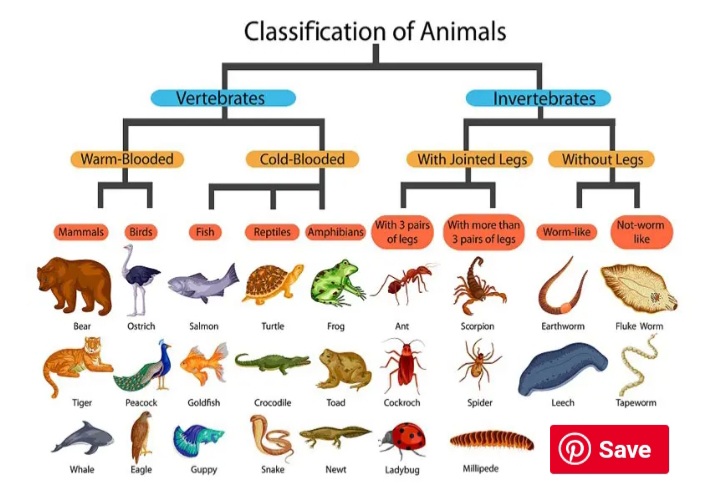
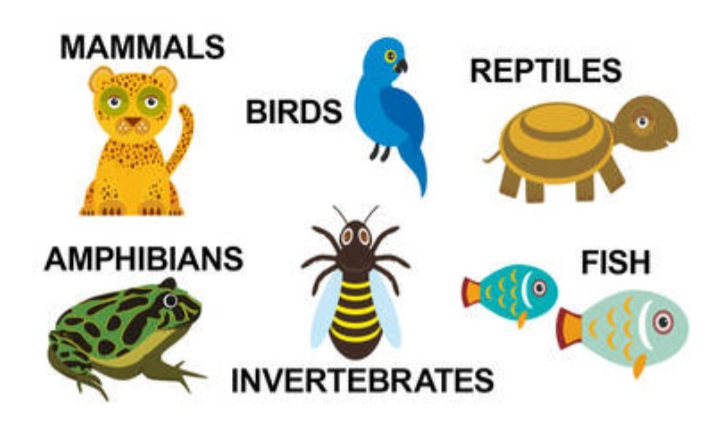
Scientists sort the different types of animals in the world into categories based on certain characteristics. Animals are generally grouped into six types of aninals. The system for animal classifications is called taxonomy.
The Animal Kingdom :
All animals belong to a biological kingdom called kingdom Animalia. This kingdom is then broken down into over 30 groups. About 75% of all species on earth are aninals. Animals are then broken down into two types : vertebrates and invertebrates.
* Animals with a backbone are vertebrates.
* vertebrates belong to the phylum called phylum chordata.
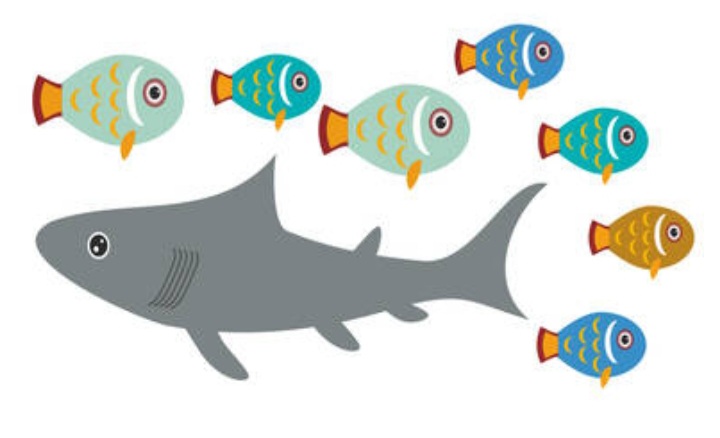
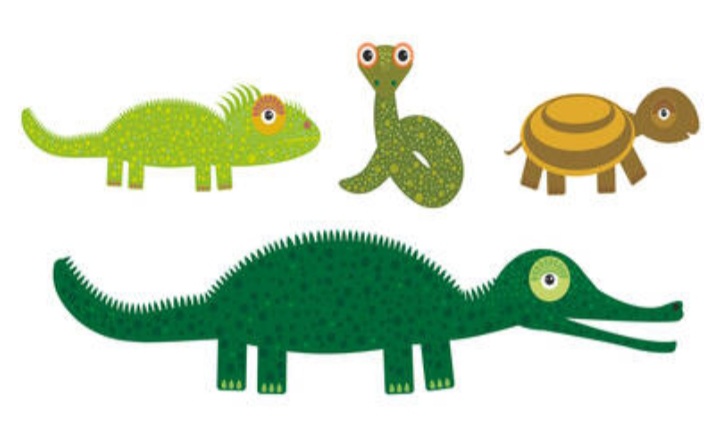
* vertebrates are classified into five classes. They are amphibians, birds, fish,mammals, and reptiles.
* Animals without a backbone are invertebrates.
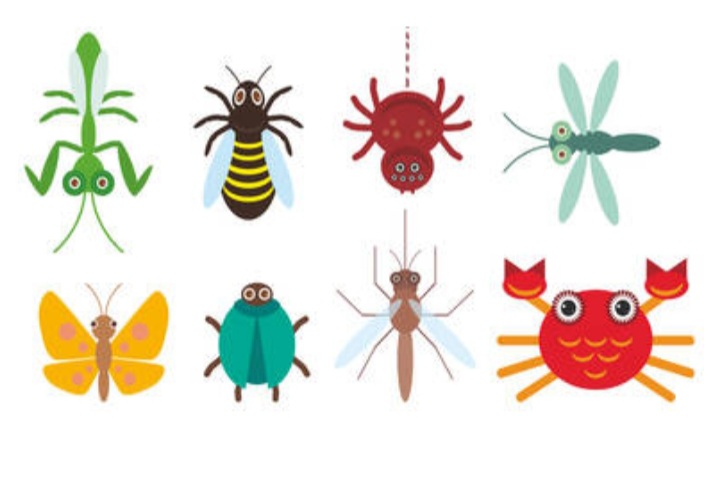
* Most invertebrates are in the phylum Arthropoda.
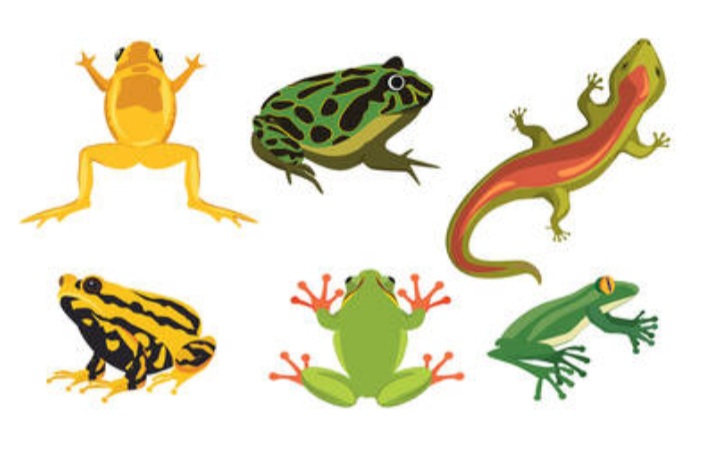
1. Amphibians :
All amphibians are vertebrates, and they need moist environment or water to survive.
* They are cold- blooded.
* They absorb water and breathe through their thin skin
* They have at least one special king gland used for defense.
* Most follow the life cycle of egg-larva- adult.
* examples : frog , newts, salamanders, toads.
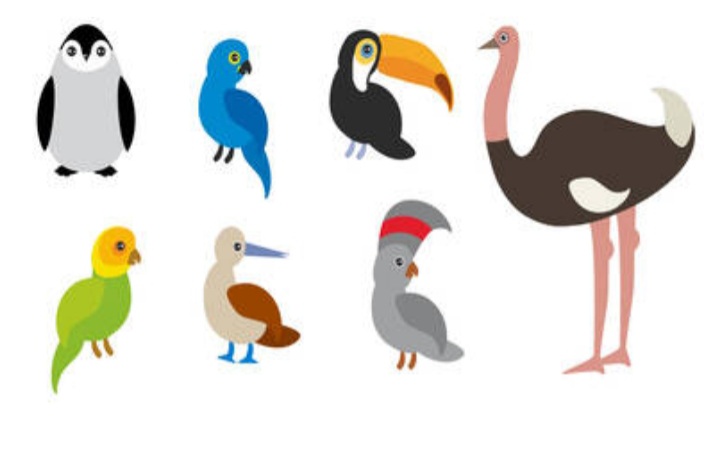
2. Birds
Birds are a type of warm- blooded vertebrate that are adapted to fly.
* Not all birds can fly, but they do all have wings.
* Birds have beaks that help them catch and swallow food.
* The digestive system of a bird allows it to eat whenever it can and digest that food later.
* Birds lay egg to reproduce.
* They are endothermic, mening they maintain their own constant body temperature.
* They are bipedal, which means they have two legs.
* They have hollow bones and their bodies are covered in feathers.
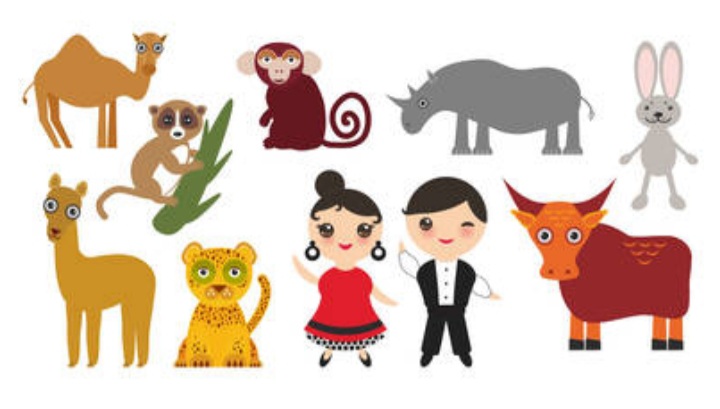
Mammals are another type of vertebrate that belongs to the class Mammalia.
* young mammals get nourishment from milk produced by their mothers.
* Most mammals have hair.
* Their jaw is hinged directly to their skull unlike all other vertebrates.
* Almost aĺl mammals give birth to live bsbies.
* They are endothermic, or warm- blooded.
* Examples : there are over 5500 living species of mammals all over the world. Aardvarks, bats, elephants, hamsters, human, rabbits, rhinoceroses, whales.
5. Reptiles :
Reptiles are thought to be the first vertebrates to live completely on land. But, not all reptiles live only on land today.
* They are cold- blodded, or ectothermic
* They lay eggs to reproduce.
* They have four legs or descended from animals with four legs.
Approximately 95% of all animals are invertebrates. Invertebrates do not have a backbone. There are different types of invertebrates, but they all share a few characteristics.
• They are made up of many cells that work together, or multicellular.
• Most, but not all have tissues, cells that work together in a more complex way.
• Most, but not all, can move.
• There are over 35 phyla of invertebrates.
• They generally have soft babies.
● Types of Invertebrates :
There are eight phyla of invertebrayes that are alive today.
* Annelida – have a segmented body and primitive brain
* Arthropoda – have jointed appendages and an exoskeleton.
* Cnidaria – have tissues and an incomplete digestive system
* echinodermata – have some type of spiny structure on their bodies
* Mollusca – generally have sofy bodies and a hard exoskeleton.
* Nematoda – unsegmented with worm- shaped bodies
* platyhelminthes – have soft, ribbon- like worms with no respiratory system.
* porifera – multicellular organisms living in water with no organs or tissues.
Property rights define the theoretical and legal ownership of resources and how they can be used. These resources can be both tangible or intangible and can be owned by individuals, businesses, and governments. In many countries, including the United States, individuals generally exercise private property rights or the rights of private persons to accumulate, hold, delegate, rent, or sell their property. In economics property rights form the basis for all market exchange, and the allocation of property rights in a society affects the efficiency of resource use.
Understanding Property Rights
Property is secured by laws that are clearly defined and enforced by the state. These laws define ownership and any associated benefits that come with holding the property. The term property is very expansive, though the legal protection for certain kinds of property varies between jurisdictions.Property is generally owned by individuals or a small group of people. The rights of property ownership can be extended by using patents and copyrights to protect:
Scarce physical resources such as houses, cars, books, and cellphones
Non-human creatures like dogs, cats, horses or birds
Intellectual property such as inventions, ideas, or words
Other types of property, such as communal or government property, are legally owned by well-defined groups. These are typically deemed public property. Ownership is enforced by individuals in positions of political or cultural power. Property rights give the owner or right holder the ability to do with the property what they choose. That includes holding on to it, selling or renting it out for profit, or transferring it to another party.
Acquiring Rights to a Property
Individuals in a private property rights regime acquire and transfer in mutually agreed-upon transfers, or else through homesteading. Mutual transfers include rents, sales, voluntary sharing, inheritances, gambling, and charity. Homesteading is the unique case; an individual may acquire a previously unowned resource by mixing his labor with the resource over a period of time. Examples of homesteading acts include plowing a field, carving stone, and domesticating a wild animal. In areas where property rights don’t exist, the ownership and use of resources are allocated by force, normally by the government. That means these resources are allocated by political ends rather than economic ones. Such governments determine who may interact with, can be excluded from, or may benefit from the use of the property.
Private Property Rights
Private property rights are one of the pillars of capitalist economies, as well as many legal systems, and moral philosophies. Within a private property rights regime, individuals need the ability to exclude others from the uses and benefits of their property. All privately owned resources are rivalrous, meaning only a single user may possess the title and legal claim to the property. Private property owners also have the exclusive right to use and benefit from the services or products. Private property owners may exchange the resource on a voluntary basis.
Private Property Rights and Market Prices
Every market price in a voluntary, capitalist society originates through transfers of private property. Each transaction takes place between one property owner and someone interested in acquiring the property. The value at which the property exchanges depends on how valuable it is to each party. Suppose an investor purchases $1,000 in shares of stock in Apple. In this case, Apple values owning the $1,000 more than the stock. The investor has the opposite preference, and values ownership of Apple stock more than $1,000.
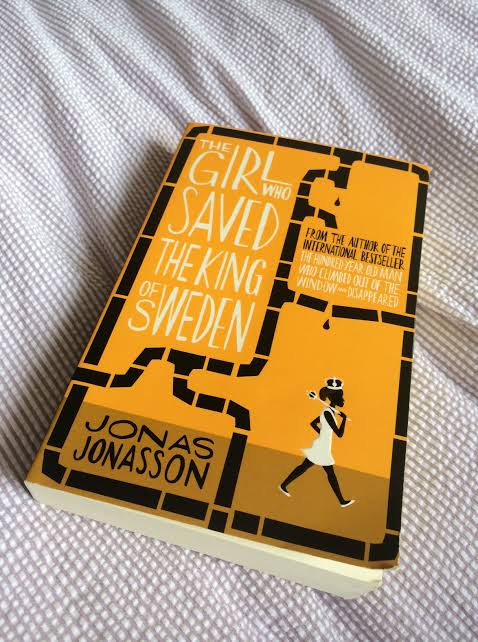
The Girl who saved the king of Sweden is written by Jonas Jonasson. His best-selling novel is the hundred years old man who climbed out of the window and disappeared.
Book plot:
Nombeko Mayeki is born a poor black girl in Soweto. She leaves the slums and in a twist of fate. She ran over a car but survives. this puts her into the employ of the engineer who ran her over, as a cleaner in South Africa’s secret nuclear weapons facility. Nombeko is smart, brilliant and a fast learner. Even during her childhood, she is surrounded by uneducated people, still, she managed to teach herself how to read write, and calculate arithmetics. She even tells the answers of long multiplications within seconds. She learned English and poetry from a scholar who has 32 diamonds in his teeth. He is irresponsible about his life, but he is good at poetry and reading. First, he wanted to seduce Nombeko but, she stabbed his leg with her scissors and made him use a crane for more than several months. After that incident she always had her scissors wherever she goes, one night she came to know that person is dead and went to his home and grabbed all his diamonds then in the morning she left her native place. In the custody of the engineer, she taught herself engineering arithmetics and science as well as learned Chinese from the other servent sisters. After fate made her escape from there. She went to Sweden but… Instead of antelope meat, one of the atomic bombs ended up inside her luggage. Nombeko’s Ultimate wish is to live a normal and happy life with her own family and children. How does she gets rid of that nuclear weapon, what happened to her diamonds? how she lives her life normally and how she saves the king of Sweden- as it is said in the title of the book is the main plot of this book.
About the book:
This is one of the books that you never feel pathetic whenever a character dies. Cause, the whole book is written in a comical manner, and the author used a lot of anectode and funny incidents to make the book more alive.
Some facts about Jonas Jonasson’s books:
His storylines will be simple and understanding. Whatever the plot might be, it will have the question mark of what is going to happen at every end of the chapters in our minds.
Jonas Jonasson’s book themes will be similar to his other works. The cover itself tells you that the appearance of the books is similar to one and another.
Jonas Jonasson is a comedy writer. Who writes with a lot of anectodes and comical scenes. He is one of the authors who has the ability to make the funeral into a theatre.
Book Quotes:
It sure was an unjust world when certain people received an excess of certain things, while others got nothing.
The more I see of men, the more I like my dog.
The difference between stupidity and genius is that genius has its limits.
Financial literacy is the ability to understand and effectively use various financial skills, including personal financial management, budgeting, and investing. Financial literacy is the foundation of your relationship with money, and it is a lifelong journey of learning. The earlier you start, the better off you will be, because education is the key to success when it comes to money.
Read on to discover how you can become financially literate and able to navigate the challenging but critical waters of personal finance. And when you have educated yourself, try to pass your knowledge on to your family and friends. Many people find money matters intimidating, but they don’t have to be, so spread the news by example.
Understanding Financial Literacy
In recent decades financial products and services have become increasingly widespread throughout society. Whereas earlier generations of Americans may have purchased goods primarily in cash, today various credit products are popular, such as credit and debit cards and electronic transfers. Indeed, a 2019 survey from the Federal Reserve Bank of San Francisco showed that consumers preferred cash payments in only 22% of transactions, favoring debit cards for 42% and credit cards for 29%.
Other products, such as mortgages, student loans, health insurance, and self-directed accounts, have also grown in importance. This has made it even more imperative for individuals to understand how to use them responsibly. Although there are many skills that might fall under the umbrella of financial literacy, popular examples include household budgeting, learning how to manage and pay off debts, and evaluating the tradeoffs between different credit and investment products. These skills often require at least a working knowledge of key financial concepts, such as compound interest and the time value of money. Given the importance of finance in modern society, lacking financial literacy can be very damaging to an individual’s long-term financial success.
Being financially illiterate can lead to a number of pitfalls, such as being more likely to accumulate unsustainable debt burdens, either through poor spending decisions or a lack of long-term preparation. This in turn can lead to poor credit, bankruptcy, housing foreclosure, and other negative consequences. Thankfully, there are now more resources than ever for those wishing to educate themselves about the world of finance. One such example is the government-sponsored Financial Literacy and Education Commission, which offers a range of free learning resources.
Strategies to Improve Your Financial Literacy Skills
Developing financial literacy to improve your personal finances involves learning and practicing a variety of skills related to budgeting, managing and paying off debts, and understanding credit and investment products. Here are several practical strategies to consider.
Create a Budget—Track how much money you receive each month against how much you spend in an Excel sheet, on paper, or with a budgeting app. Your budget should include income (paychecks, investments, alimony), fixed expenses (rent/mortgage payments, utilities, loan payments), discretionary spending (nonessentials such as eating out, shopping, and travel), and savings.
Pay Yourself First—To build savings, this reverse budgeting strategy involves choosing a savings goal (say, a down payment for a home), deciding how much you want to contribute toward it each month, and setting that amount aside before you divvy up the rest of your expenses.
Pay Bills Promptly—Stay on top of monthly bills, making sure that payments consistently arrive on time. Consider taking advantage of automatic debits from a checking account or bill-pay apps and sign up for payment reminders (by email, phone, or text).
The five-year plans are a sequence of economic and social development initiatives furnished by the CCP (Chinese Communist Party) since 1949. The five-year plans were inspired by the five-year plans from the USSR and the focus was on launching new schemes, reforms and setting new growth targets.
Since the 11th five-year plan (2006-2010), the Chinese government has mentioned it as ‘Guidelines’ instead of plans. Currently China is on its 14th five-year plan/ guidelines. Unlike the previous five year plans, there is no specific GDP growth target and instead, the government announced that growth would be kept in “reasonable range” and an annual target would be set based on the specific conditions each year. The focus of the current plan is on self-sufficiency as the country had to endure difficulty after the United States had restricted China’s major chip makers from using American technology. Other areas of focus will be on the above 7 percent growth in the research and development spending. The government will also try to raise the urban residents to 65 percent of the population while maintaining green development and increasing the life expectancy by 1 year. Infrastructure will also be an area of priority with a focus on high-quality development of the belt and road initiative.
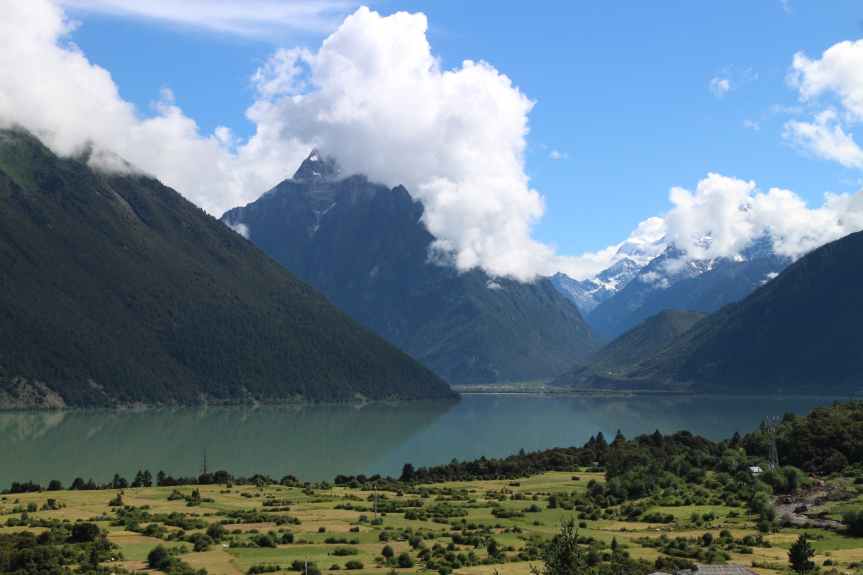
One of the biggest infrastructure projects of the 14th The five-year plan (2021-2025) has been officially approved to build a series of dams in the lower reaches of the Yarlung Zangbo River, as the Brahmaputra is known in Tibet before it flows into India.
The proposed dam would be in Medog, Tibet region will have a maximum possible capacity of 60 gigawatts and could potentially produce 300 billion kWh annually. The location is an area called ‘the great bend’ also known as ‘Yarlung Tsangpo Grand Canyon’ where the river goes through a very drastic U-turn and then the river descents from an elevation of 3000 meters to around 800 meters. Due to the drastic elevation change, the river flow is quite strong and is also an ideal location to build the dam.
The location of the dam could be a strategically risky move by china as it is very close to the Indian border but the other issue is that this proposed dam can undermine the water security of India. India relies heavily on the Brahmaputra River for agriculture and various other purposes. Due to this, the proposed Dibang Dam by India in downstream (Arunachal Pradesh) might be the solution to offset the effect of the Chinese proposed dam. Although the majority of the catchment area of Brahmaputra is on the Indian side there is still the issue of water flow from the upstream as Assam usually suffers from floods in the rainy season and any additional water flow from the Chinese dam would make the situation worse. The problem will not only affect India but also Bangladesh due to its low-lying land and flood-prone region. Problem is that the region is ecologically diverse and sensitive and any kind of development in this region will negatively affect the ecology of this region. Due to turbulent tectonic plates, there are high chances of landslides and earthquakes as well. India will have to be vigilant and develop its strategy according to the developments on the Chinese side.
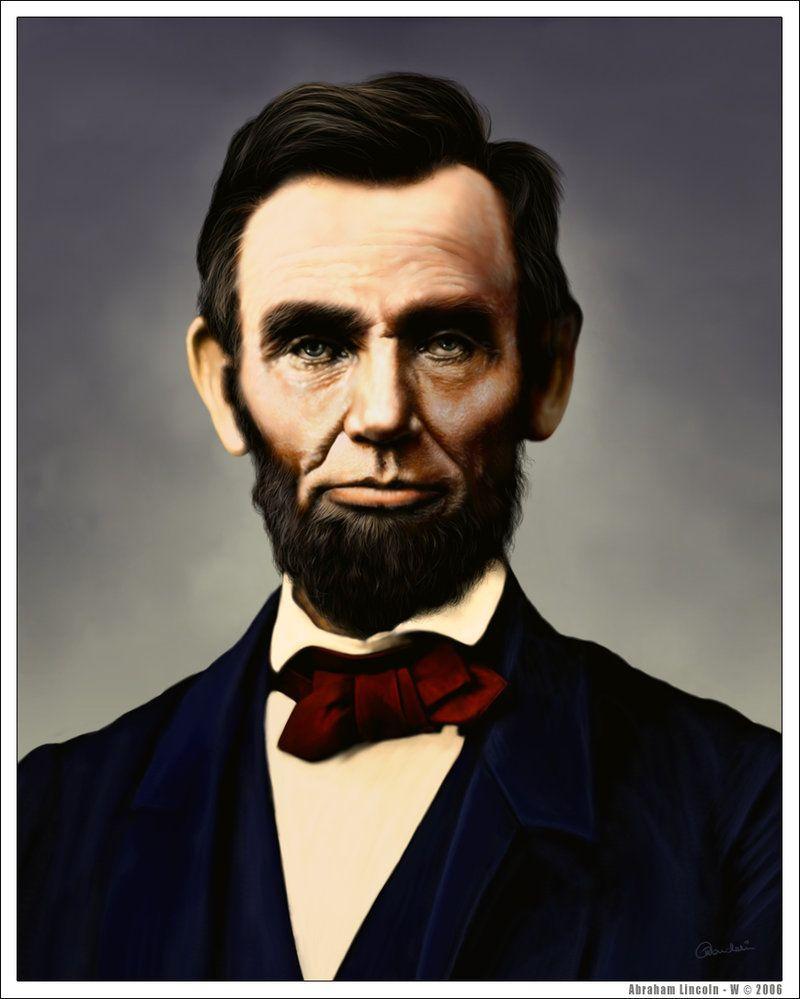
” I walk slowly, but I never walk backward” -Abraham Lincoln
Abraham Lincoln, the 16th President of the United States, guided his country through the most devastating experience in its national history- Civil War. He is considered by many historians to have been the greatest American President. He was born on 12February,1809 in Hardin (now Laure) country in Kentucky. His father Thomas Lincoln was a skilled carpenter and his mother was Nancy Hanks. Lincolns left Kentucky and moved to Indiana in 1816. There little Lincoln attended some schools for less than a year altogether. Lincolns left Indiana for Illinois in 1830. In 1831 Lincoln left home for New Salem and served briefly in the black Hawk War (1831). The military interlude was uneventful except that he was elected Captain of his volunteer Company. In 1842 he married Mary Todd. He served one term (1847-49) as a member of the US House of Representativeswhere he opposed the Mexican War as unnecessary and unconstitutional. He had been indifferent about the annexation of Texas, already a slave territory, but he opposed any expansion that would allow slavery into new area, gained as a result of the Mexican war. He expressed his view that the nation would become “either all slave or all free”. He won the Presidential election as the 16th President of the US and his inauguration was held in March 1861. He was soon noted for taking vigorous measures in the Civil War sometimes at odds with the Constitution and often at odds with the ideas of his military commanders. He was naturally anti-slavery. He endorsed the 13th Amendment to the Constitution abolishing slavery and thus charged the racial future of the United States. But it agitated a section of the white people. John Wilkes Booth, a Negrophobe shot Lincoln while he attended a performance at Ford’s Theatre in Washington on 14th April, 1865. Lincoln’s achievements for saving the Union and freeing the slaves, and his martyrdom just at the War’s end assured his continuing fame forever.
Man is a social being and social service is a must in a system of man-making education, There are so many kinds of social service and students have a lot of work to do in this field. They have some duties to remove illiteracy. They can hold night schools for the illiterate adults and give them lessons on the three R’s. They can remove bad customs and inform the people of the rights and duties. They can clean dirty ponds and maintain hygiene around their area. In times of emergency such as flood, famine and earthquake, they can take an active part in bringing relief to the sufferers like giving them food, clothes, and finding them shelter. In times of normalcy they can organise cultural functions for the poor villagers as we know that poverty is depressing but drudgery is killing but most of the time students waste their time in idle gossip, in roaming and in fruitless work. It is better to utilise the power of youth in socially productive work than to squander our precious time in loitering at the market place or before theatre hall. It is true also that the studies of students will be affected somewhat if they turn their attention to social service. But, on the whole, they will be gainer as social service will promote their fellow-feeling, increase their love for the country and develop their organising capacity.
High schools can deliver social services on campus or refer students to outside agencies for assistance like various NGO’s.
If a student utilizes his time fruitfully and in socially useful work he gets contentment. Contentment is his satisfaction with his position. Students should remember that they are born for the improvement of the society by instilling the spirit of service in them. They can help the mankind in the best possible way.
The value of social service should be taught to students to create inspiration in them. They should be enthused to pay their utmost strength and service to the society to make their existence meaningful.
Students can co-operate with people on matters of public interest such as education, sanitation, trade and commerce and be a part of that so that they can help more and more people.
Students have a spirit to work but the guardians and teacher should guide them in the right way. Social service can be safely managed if they can be guided properly. Our leaders should guide them in the right way.
Situated in North Kolkata, in the oldest part of 300 year old city situated on the banks of River Hooghly, is Sonagachi, Asia’s largest red light district whose narrow , rat infested lanes houses around 11, 000 sex workers.
Click on the link to know what are the red light areas.
SONAGACHI in Bengali means TREE OF GOLD. There is a fascinating story behind the origin of its name.
SONAGACHI- a place of SAINT and SIN
Sonagachi is named after a Muslim saint turned dacoit, Sanaullah. The area in olden times was known as the den of notorious dacoit Sanaullah who lived with his mother. After his death, when his mother lamented the loss of her son she heard a voice which said ,” Mother don’t cry, I have now become a Gazi”. Gazi which means a “warrior who help in the spread of Islam” is the title given to the Muslim saints. Thereafter, a mosque was constructed in his rememberance and many people came there for cures and the mosque came to be know as the Dargah of Sanaullah and the area as Sonagachi. This fascinating tale was traced by PT Nair, Kolkata’s “barefoot historian” in his book ‘ A History of Calcutta’s streets’.
Though the transformation from a dacoit to warrior may seem strange but it is pretty normal as there were many Bengali Hindu dacoits who were the devotees of Goddess Kali and a robin hood figure for the people.
Though there is no direct documentary tracing the reasons responsible for the transformation of Sonagachi into a Red light district but some stories blame the neighborhood of the area which was a business one. Sonagachi is in the neighborhood of Chitpur which many centuries back was a business center even before the arrival of the Britishers. Any place with large number of travellers or pilgrims in the British area was bound to have a red light area which housed brothels enclosing many women who were seen as nothing but a toy.
Brothels in those times were known to be owned by the prominent Bengali families . The now decrepit mansions which has suggestive names like “Prem kutir” houses and provides livelihood to thousands of woman living there.
SONAGACHI- where bounts of make up hides the pain
Majority of the sex workers there like any other red light district are trafficked . They were dubbed by husbands , lovers or by the well wishers in the false hope of a better future and “sold” to this area which has painful stories behind every gesture. The 10 by 10 rooms in the brothels provides a perfect balance of the personal + professional lives of the workers. The single bed with condoms stacked beneath the mattress and household utensils underneath the bed is a reminder of the family life for which these places and this profession provides the money for. The glossy make up, flashy lights , scented rooms and loud music is a facade to drown the cries of the children of sex workers and also the horrors faced by the workers.
To us , as the third persons the place may seem like hell , but for some workers it is a place of refugee which accepted and provided shelter to them when nobody else did. A sex worker told her story to Indian Express mentioning how she dreamt to be a teacher in a rural conservative household but since the idea of woman in the professional zone is strictly prohibited in a rural conservative home, she had to give up on her home until she found a “well wisher” who on the pretext of helping her get education sold her to these narrow lanes of Sonagachi , which after all these years are her safe haven.
Women here are scared of love because all they got in the name of love from the men outside is just hurt. Another sex worker recalled her leaving the brothel with the man she loved only to come to know months after being pregnant with his child that he already had two wives and in order to escape the physical torture , she had no where else but the lanes of Sonagachi to return.
The children of these workers have a hard time coming i terms with their mother’s profession. They have only their mother in terms of family , identity of the fathers being unknown . While some children slips into depression and denounce their mothers, the others leave their mother forever when they are able to stand on their feet while some understand the sacrifices she gave in terms of her body, soul and peace to provide for them.
Health concerns of the workers
The local government , a few years back had started the “Sonagachi project” which educates women about the use of condoms necessary to prevent HIV diseases. The result is that today the area as compared to other red light districts has low rate of Hiv.
During the covid lockdown, when there were no customers, local authorities and NGO provided ration here and educated the women about measures to keep themselves save from Covid-19. Authorities also ensured the vaccination of the workers.
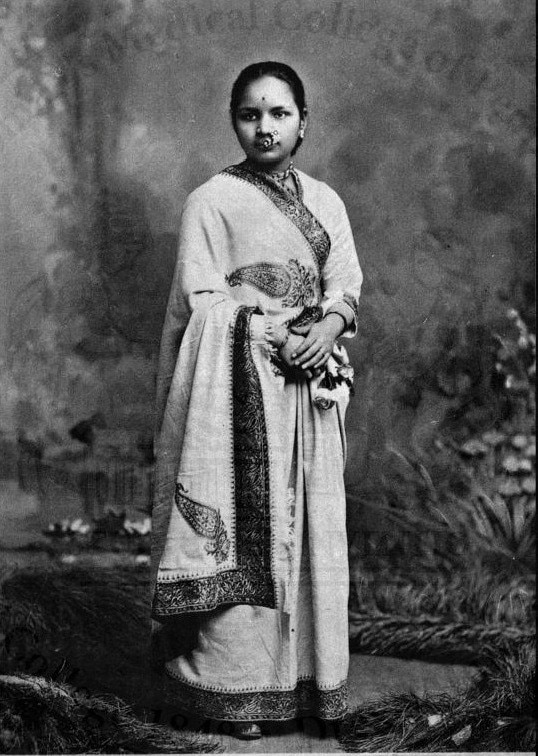
Today’s google doodle is dedicated to Kadambini Ganguly, an inspiring lady who was born in Bhagalpur, Bihar and wrote history by achieving exceptional heights during her lifetime.
Google has already honoured her by dedicating the doodle on her 160th birth anniversary, born today in the year 1861. She belonged to an upper-class Bengali family and her father Braja Kishore Basu who was a Brahmo reformer and founder of Bhagalpur Mahila Samiti. She was born in an era when, educating a girl was far beyond imagination of people but, opposite to that her father encouraged her to pursue her education, after completing her schooling. she wanted to pursue her career in medicine and she cracked the entrance exam of University of Calcutta, she got admission in the university and became first women to do so but, after facing lot of struggles and denial from the society. At every stage of her life, she has to face a lot of obstacles mostly from society to fulfil her dreams and ambition. She later went abroad and received a triple diploma from training in Dublin, Glasgow and Edinburgh, adding another feather to the cap she became the first women to achieve such a qualification. On her return to India, she served great ladies like- Florene nightingale, Anne Beasant and other people. By this time, she got recognised for her work, a medical professional who was serving her nation. In the year 1890, she gave a lecture at INC which is again something exceptional that she did at that time
Later, she started working on improving the condition of the society, where educating a girl child and letting her pursue her dreams was considered unacceptable. She was always supported by her husband Dwarkanath Ganguliyand along with him she raised her voice against the discrimination between a male and female that she herself faced at the university, her voice turned out to be so impactful that in 1915 the University of Calcutta made the decision to open the university for female candidates as well.
As a woman medical practitioner, she was not only dedicated to her work but also had a vision to bring change in the society by setting an example since her schooling to her triple diploma, an inspirational and passionate women wo created history back then. Today, it’s her 160 th birth anniversary and her story makes us remember the contribution of all those women who worked really hard and stood up against the wrong opinion and criticism of society to become what they wanted to be. All the stories have one common learning that there is nothing that a women can not achieve just that she has to have that courage to step up herself and cross the boundaries that the society sets up by the narrow perspective they have in their mind. By proving all the critics wrong, and successfully reaching at a level that is beyond the imagination of an orthodox mentality. Today, in many countries women are in a much better situation but, there is still so much that has to be changed.
Dinnerware is the allure of the dining table. It settles the right tone of the dinner. Whether it is an informal dinner with your friends or a formal with your boss and colleagues or maybe even your regular dinner at home with your family. Different types of dinnerware are used for different purposes of dinner gatherings. If you have doubts about how to choose dinnerware, you have come to the right place. This right here is the proper guide for choosing dinnerware for the perfect setting.
Dinnerware is not just for style, it should be useful as well. It is a daily use item and should be durable for a long time. Now, how do you choose the right type of dinnerware for all different purposes? Don’t know? Well, let us help you with that. Come on, let’s dive into the world of dinnerwares.
Before searching for anything else like the style, design, and colors, of the dinnerware set, look for something that will be durable and will not embarrass you in front of your guests. Some of the famous materials used for dinnerware sets are Bone China, Porcelain, Earthenware, Ceramic, and many more. Read on to have a detailed look at the types of materials.
Bone China
Bone China is the perfect type of dinnerware for both daily use and formal dinners. It is durable, stylish, comes in many designs and colors. It is generally thin, lightweight, and chip-resistant. In addition to its qualities, it is microwave safe and can be easily washed in a dishwasher. It has an elegant appearance and is better than fine china.
Earthenware
One of the oldest types of dinnerware sets that gives a casual appeal. Earthenware gives slight durability and adds value to the dinner set. It also provides a significant weight to the dishes. But make sure you avoid high temperature changes that may damage the look of the material. Keep the microwave at low temperature settings while using earthenware. It is affordable but not as suitable for daily use as others.
Porcelain
Porcelain is the most common type of dinnerware material and the best for daily use purposes. This amazing type of material is dishwasher, microwave, and oven safe. It provides wonderful durability and appealing designs. Porcelain has a non-porous surface that gives an amazing texture. It is difficult to manufacture. But it is less expensive than Bone China and is easily affordable.
Ceramic
Ceramic is specifically not a type of material but it is considered as a class containing different types of china and porcelain. It is generally white in appearance but ranges in color from white to blue. White also has many different shades in ceramic, like off-white and others.
Stoneware is made from the same materials as porcelain but in different ratios. This makes it more heavy weight and sometimes it has a texture. This material may have speckles on it which gives a beautiful look to the plates and dishes. It generally comes with an off-white body. It is durable and user friendly. It is good for regular use as well as dinner parties. But they need to be kept at normal temperatures and away from both freezing or very high temperatures.
Melamine
Melamine is used for outdoor purposes as it is unbreakable. It is hard to break or chip. It is dishwasher safe but unfortunately not microwave or oven safe.
Sizes of Dinnerware sets
Now after getting to know about the materials of dinnerwares, next important point is to decide what size you have in mind. Is it a proper dinner set or just some plates for regular use? Let’s have a look.
Formal Dinnerware
Formal dinnerware sets mostly contain all the required dishes for a person to have a great dinner easily. It may also contain soup bowls. It contains full plates, quarter plates with serving spoons, and small spoons for eating.
Open stock
Open stock is a piece by piece sold dinnerware set. It can include dishes of your own choice. You are free to add items of your requirement like plates, spoons, or some dishes. You can mix and match with your collection at home if you need some white plates to go with your set, you can easily find them. If you don’t want the whole dinner set with things you don’t require, then you can go for open stock and select the items as per your requirements.
You can collect single pieces of different sizes or designs and colors according to what you have in mind. Choose whether you want soup bowls or not. Which color will go with your existing collection at home? Which design matches the tone for your dinner party? With open stock, you can customize your cabinet of dinnerware set with beautiful designs, shapes, and colors of the dishes and bowls. If you don’t want the unnecessary saucers, you can remove them, or maybe you just need one serving bowl, it’s your wish. Pick your item and that’s it.
Other Points to Keep in Mind While Buying Dinnerware
Choose plates and bowls according to the size of your cupboards and dishwasher. It will cause a problem for you if the plates are too wide or big.
Dinnerware makes the dining table look presentable if it is glazed or white with a beautifully designed plate set. So choose your set of designs and colors according to your choice.
Don’t shy away when buying a good dinnerware set. It will be useful in the long run. Don’t hold back if the set is a bit expensive. Make sure to buy enough for hosting a huge gathering. You don’t know when you might have to celebrate!
Look for thinner rim plates as they offer a larger plate area for use as compared to the ones with broad rims. Or maybe you want plates with flat surfaces.
You can decide whether to buy large cereal bowls, that can be used for many purposes, or you want shallow soup bowls. Commonly round bottom bowls are preferred over flat ones.
If you are planning for a formal meal, you may want cups and saucers. They give an old and classic look to the setting.
These were all the required things you need to keep in mind while choosing your set of dinnerware. Enjoy shopping! We have made sure you have the answer to your query that is, ‘how to choose dinnerware?’ Remember these things and you are ready to start your collection of perfect dinnerware sets.
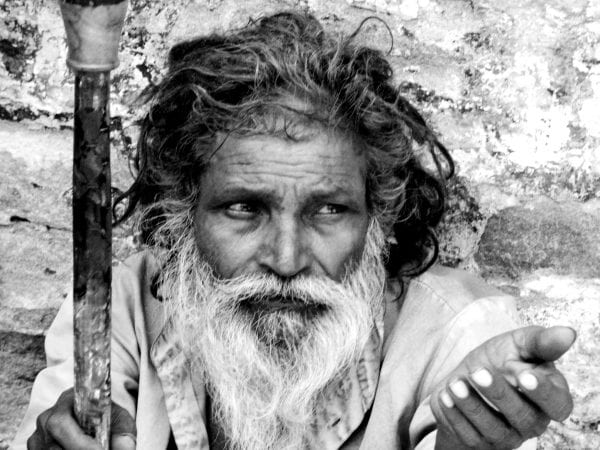
At a tender age when children should study in schools, play with toys and enjoy their leisure, many of them are seen on roads seeking alms to make both ends meet due to selfish motives of some miscreants that make them beg under extreme conditions. Masked perpetrators of such deeds are making it a huge business by remaining behind the scenes. The plight of such children is really heart-wrenching. Several initiatives are taken by various institutions and NGOs to check it, but to no avail. Not because they are not true to the work they are doing, but because people like us are not ready to accept that by giving them money we are encouraging begging. The situation is not better throughout the nation as these beggars can be seen begging at traffic intersections, market places, religious places and outside educational institutions. Many of them are mowed down by speeding vehicles. Such children sometimes take to stealing and snatchings. They also disrupt the traffic. There is a need to unmask those elements who are behind the menace. Don’t encourage begging, instead help them by instilling positive ideas and educating them. JASPREET SINGH, PATIALA, editorial@tribune.com
A Street Beggar Begging has been declared an offense in independent India, but it has really no real impact. On almost every red light’, there are number of beggars who beg in the name of mercy or religion. Initially, people used to beg only in desperate circumstances but now-a-days, it has become a profession. Those who can make easy money by begging. do not want to work. And at times, they can earn more than an honest worker. At every crossing, a woman carrying a child, a handicap person. young children asking for alms for food or in the name of God, IS a common sight. They can all work to earn their livelihood, even the handicapped, because all self-respecting people try to stand on their own feet. Of course, crippled people should be helped, but not by giving them alms. Begging cannot be justified at any cost. People use different innovative ideas for begging. Some form singing parties, some wear saffron clothes and carry a bowl, others beg in the name of charitable institutions. Some try to rouse sympathy by carrying small, crying, hungry infants but while giving aims to any beggar, one should always remember that one is not helping the beggar in any way by giving them money but is only satisfying his ego of being a kind and benevolent man. Begging is a stigma on the name of any nation and charity should be given only to charitable institution so that it reaches those who really need them.
A whooping 7.9 billion people, 8.7 million discovered eukaryotic species and an estimated 1 trillion microbes- How did it all came into being? How did our Earth or even better, the solar system or the whole universe came into being?
So, it all began about 13.8 billion years ago. There existed a single point, a minute, hot and really dense point which violently exploded-‘The Big Bang’, and it is how everything came into being- Matter, Energy space, universe, stars, solar system, me, you-everything. After the explosion took place, it expanded into what we today call the universe. And, what’s more interesting is the fact that it is still expanding, and this is how the scientists came to believe that it all began with a big bang.
Scientists divide the period after the big bang into 2 era-
Radiation era
Matter era
Radiation era
The period between 10^(-43) seconds (after the explosion took place)-the Planck era(here, the current laws of physics do not apply), to about 30,000 years after the big bang is referred to as the radiation era. During this period, the temperature of the atmosphere was soo high that there was no distinction between matter and radiation ,or even better, no matter existed.
It is divided into 7 era or epoch-
Grand unification epoch- Named for the unification of 3 grand forces of nature- Electro-magnetic forces, Weak forces, Strong nuclear forces. With a temperature greater than 1029 K, it began 10−43 s after the big bang. At the end of this epoch, the strong nuclear force broke away from the other two.
Inflationary epoch- With a temperature greater than 1032 K, it began 10−36 s after the big bang. As the name suggests, the universe rapidly expanded in this epoch. The universe, ta this time had electrons, quarks and antiquarks.
Electroweak epoch- Here, now all the 4 forces of nature have split off. Temperature- 10^20 K and time after big bang- 10^(-32)s.
Quark epoch- Temperature here is 10^16K and 10^-12 s have passed since the big bang. All of the ingredients required to form subatomic particles were present but the universe still was too hot and dense.
Hadron Epoch- Temperature- 10^10 K and Temperature-10^-6 s. The universe has not finally cooled down enough for subatomic particles to form and hence, quarks bind to form protons and neutrons.
Lepton epoch- Temperature- 10^ 12 K and finally, about1 sec have passed since the big bang.
Nuclear epoch- Temperature-10^9 K and 100 s approximately have passed since the big bang.
In these last two epoch, when the universe has cooled down quite a lot, the protons and neutrons fuse together to form the very first chemical elements- Hydrogen and Helium. And now that our universe is capable of forming elements, it brings us to the end of radiation era and the matter era begins.
Matter Era
Matter era includes 3 epoch that spread over billions of years and include the formation of our galaxy, solar system and even the present day.
Atomic epoch- With the temperature of 3000 K and time after big bang- 50,000 years, this epic marks the beginning of attachment of electrons to nuclei. This process is known as recombination.
Galactic epoch- Now, 200 million years have passed since the formation of our universe. With the ability of universe to now form Hydrogen and Helium molecules, the universe is dotted with atomic clouds. Within the clouds, due to gravity, clusters were formed which later led to the formation of galaxies.
Stellar epoch- 3 billion years have now passed. Within those clusters of clouds, now stars will be formed. Stars begin their lives as proto-stars. These are formed as a result of gravitational forces between particles of dust and gas and heat is generated due to friction and collision. When the proto-star becomes extremely hot, the process of thermonuclear fusion starts taking place. This is how stars generate heat and electricity. This heat within the clouds convert the already exiting elements into all others that are currently known to humankind. When stars burn themselves and are destroyed in explosion know as supernova, it destabilizes the heat cloud, which then begins to rearrange itself in the shape of a flattened disc. At the center a proto-star forms (eg.- our sun). The clumps of dust are flash heated and form chrondules that later from planetesimals by cohesion. These planetesimals then, later accrete to form what we call today as planets.
And this is how our solar system was formed about 4.5 billion years ago. It is located in the Milky Way galaxy’s Orion Star Cluster and has about 8 planets with a total of 63 moons. The inner 4 planets (also known as terrestrial planets) are separated form the outer 4(also known as jovian planets) by a belt of asteroids. Terrestrial planets are known as such because they are made of rocky material, have solid surface, do nor have rings and are relatively small. Earth, among these, is the only one to have a moon.
The jovian planets, on the other hand, have multiple moons, support ring system, have no solid surface and are immense in size. The Oort Cloud, a collection of icy debris, marks the edge of our solar system as the gravitational and physical influence of sun diminishes .
This is how our solar system and our Earth were formed. Now, can our solar system end? If yes, then how and by when? It’s a question for a later time.
Not everyday is a perfect day. Not everything will be perfect as you think. One day will be the best day, you accomplish all your targets and will have a happy ending. Another day will be worst, every plan fails and every second a new problem arises. What do you do if your day is going rough? How you handle yourself if you get angry and irritated by everything that’s going around. You can only wish for a restart button. Better thing is to try to handle everything with peace even though you are loosing it. Dragging yourself towards positivity when life is trying to push you back, will be a good strategy to follow for your own good. You can try these things if you are having a unpleasant day.
go for a walk
To get things out of your head, you can choose a lonely walk. Just walk by a roadside or in a park, whatever is good for you. Just get out of the place which is making you feel unpleasant. If you can, just go for a picnic. watching the outside world will make you realize that you are not the only one with struggles. You may get inspired by some stranger or the busy world, will take out the problem from your head.
just breath in
The day may get hectic and bring you discomfort. When you feel as if you are inside a trap, sit back and try to relax. Try to concentrate on your breathing, may be some pranayama, and take a deep breath. Concentrating on your breath relaxes you and shifts your attention from the tension. This may be is a very short term solution, but this will help you rethink and think better.
get a treat for yourself
Why to have treat only when you are happy. Get a treat to make yourself happy. Grab some coffee or get a pastry or a cake. Even you can bake for yourself. Make your favorite drink or visit your favorite restaurant.
just write it out
What’s bothering you all day? let that flow out through your words inside a journal. Write about the whole day. Write about all the reasons you think of, for the bad mood. Write about all your feelings. Let them be stay inside a book rather be inside your head. This will help you have a better perspective about the things. You will get to analyze what went wrong and what you should do now. It will help you take better decisions.
let music takeover you
If you are a person who loves music, what is better to deal with the bad day other than music! Just put your headphones on and let the world be on mute. Or just sing for yourself. Play any instrument if you can. Sing as if nobody around you. Dance on your favorite song. Listen to all motivational songs and cheer yourself up.
talk to the people you love
Why do you have bestfriends! call them. Talk to your buddy who will complain along with you about the bad life. Talk and laugh through your bad fortune. Or they will help you get out of the problem. Talk to your family. They may not have a best solution ready in hand, but talking to them will make you feel lighter.
trust you hobby
Your hobby will be a best partner. Just read a book or cook. Clean your house or draw a bird. Watch a movie or a fun Vedio. They will help you get out of bad mood.
At last, we all know nothing stays forever. Then a small problem should not be affecting you too much. Be happy for what you have. Be grateful and graceful. Remember a non living thing will never get problems, only living things do. Try to solve the problem and find out what caused it if you can. Just let a day be a day, not more than that.
Though mathematics is an interesting and beautiful subject, most of us find it difficult to learn. We often learn mathematics to do calculations and learn formulas to get good grades in the exams. Mathematics is a wonderful subject which we tend to apply in our day-to-day life. If you see maths through a different dimension, it will be as interesting as social media. We learn so many formulas and theorems, but where do we apply them? Think and come to a solution to make mathematics an interesting one. To prove mathematics an interesting subject, here come the Fibonacci numbers. Most of us have heard it once or twice in our classes when our teacher says about it. If you love to play with numbers, then Fibonacci numbers are the one. Let’s see how interesting these Fibonacci Numbers are!!
Fibonacci numbers are numbers, such that each number is the sum of the two preceding numbers starting from 0 and 1. The Fibonacci numbers or Fibonacci sequence are first used in the book, Liber Abaci, by Fibonacci which is used in the calculation of the growth of the rabbits. The Fibonacci numbers are closely related to the golden ratio. The ratio of the two consecutive Fibonacci numbers gives the golden ratio as n increases. {Golden Ratio: 1.61803398875}. Though, Liber Abaci contain the earliest description outside India, Indian mathematicians are the ones who described Fibonacci sequence as early as the sixth century.
Fibonacci Sequence
The Fibonacci day is celebrated on November 23rd every year. If we write it in mm/dd format, 11/23; it is also a Fibonacci number. The name Fibonacci is named after its inventor, Leonardo of Pisa, commonly known as Fibonacci was an Italian Mathematician, who was famous for his invention in the history of mathematics.
Leonardo of Pisa, commonly known as Fibonacci (1170 – 1250)
Let’s see the Fibonacci sequence with the example of rabbit, A farmer put a pair of rabbits on a closed surface. How many rabbits can be produced from the pair in a year, if it is that every month each pair produces a new pair which from the second month on becomes productive? The solution is the Fibonacci sequence. The sequence will go on like 1, 1, 2, 3, 5,….. and so on.
FIBONACCI SEQUENCE IN NATURE!!
In some flowers, the petals are arranged in the Fibonacci sequential arrangement which is enough to prove that Fibonacci sequences are available in nature too.
In the branches of plants, the leaves are spirally arranged in the Fibonacci sequence arrangement. In small plants, it will be 5 or 8. In larger ones, it will be 8 or 13 based on the growth of the plant.
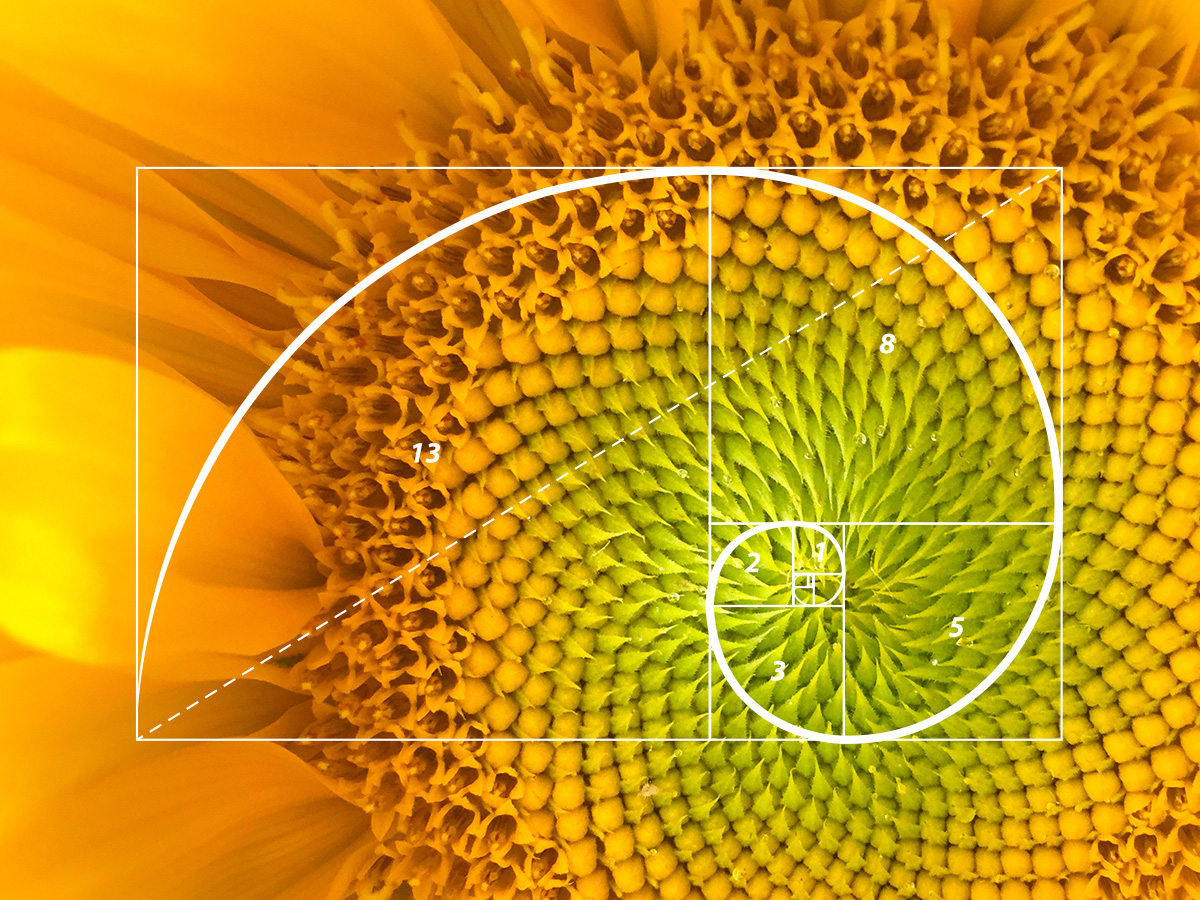
The pattern of the seeds within the sunflower follows the Fibonacci sequence (1,1,2,3,5, …..).
Fine! Till now, we saw what is a fibonacci sequence, and who is the inventor and where can we see this fibonacci series. Now, shall we see where these fibonacci sequence are used practically? Yeah! Come on!
IN MATHEMATICS,
The Fibonacci numbers occur in the sum of the shallow diagonals of Pascal’s triangle.
Fibonacci sequence and Pascal’s triangle
The Fibonacci sequence is also used in the Pythagoras theorem. The hypotenuse of the triangle can be a Fibonacci number.
The Fibonacci sequence is also used in the network topology for parallel computing.
IN COUMPUTER SCIENCE,
The Fibonacci numbers are important in the analysis of algorithms (computational run-time analysis) of Euclid’s algorithm.
Its also used in the common factor tree method that is called a binary tree method which is the Fibonacci number minus one.
This Fibonacci sequence also used in the game called poker, it is a step in the game development.
Fibonacci sequence are used not only in these two fields but also in many other fields. To put it simply, I have given these two fields. As we saw earlier, fibonacci sequence can also be seen in nature. While contructing tall buildings, climb up and see from the top, this is also an example of a fibonacci sequence.
These are the various interesting facts in the Fibonacci sequence. It’s just a small part of mathematics. If we take an interest in various parts or topics in mathematics, we can make maths an interesting one. Mathematics is an ocean, where Fibonacci sequence is a small fish in it. Let’s try to catch various fishes like the Fibonacci sequence and make our lives a great one. If you find it interesting, just do some more research and excite by yourself like how I got excited!!













 Eduindex
You must be logged in to post a comment.