Augmented reality

Augmented reality (AR) is an interactive experience of a real-world environment where the objects that reside in the real world are enhanced by computer-generated perceptual information.

sometimes across multiple sensory modalities, including visual, auditory, haptic, somatosensory and olfactory. AR can be defined as a system that incorporates three basic features: a combination of real and virtual worlds, real-time interaction, and accurate 3D registration of virtual and real objects. The overlaid sensory information can be constructive (i.e. additive to the natural environment), or destructive (i.e. masking of the natural environment). This experience is seamlessly interwoven with the physical world such that it is perceived as an immersive aspect of the real environment. In this way, augmented reality alters one’s ongoing perception of a real-world environment, whereas virtual reality completely replaces the user’s real-world environment with a simulated one. Augmented reality is related to two largely synonymous terms: mixed reality and computer-mediated reality.

The primary value of augmented reality is the manner in which components of the digital world blend into a person’s perception of the real world, not as a simple display of data, but through the integration of immersive sensations, which are perceived as natural parts of an environment. The earliest functional AR systems that provided immersive mixed reality experiences for users were invented in the early 1990s, starting with the Virtual Fixtures system developed at the U.S. Air Force’s Armstrong Laboratory in 1992. Commercial augmented reality experiences were first introduced in entertainment and gaming businesses. Subsequently, augmented reality applications have spanned commercial industries such as education, communications, medicine, and entertainment. In education, content may be accessed by scanning or viewing an image with a mobile device or by using markerless AR techniques.

Augmented reality is used to enhance natural environments or situations and offer perceptually enriched experiences. With the help of advanced AR technologies (e.g. adding computer vision, incorporating AR cameras into smartphone applications and object recognition) the information about the surrounding real world of the user becomes interactive and digitally manipulated. Information about the environment and its objects is overlaid on the real world. This information can be virtual. Augmented Reality is any experience which is artificial and which adds to the already existing reality or real, e.g. seeing other real sensed or measured information such as electromagnetic radio waves overlaid in exact alignment with where they actually are in space. Augmented reality also has a lot of potential in the gathering and sharing of tacit knowledge. Augmentation techniques are typically performed in real time and in semantic contexts with environmental elements. Immersive perceptual information is sometimes combined with supplemental information like scores over a live video feed of a sporting event. This combines the benefits of both augmented reality technology and heads up display technology (HUD).

Comparison with virtual reality

In virtual reality (VR), the users’ perception of reality is completely based on virtual information. In augmented reality (AR) the user is provided with additional computer generated information within the data collected from real life that enhances their perception of reality. For example, in architecture, VR can be used to create a walk-through simulation of the inside of a new building; and AR can be used to show a building’s structures and systems super-imposed on a real-life view. Another example is through the use of utility applications. Some AR applications, such as Augment, enable users to apply digital objects into real environments, allowing businesses to use augmented reality devices as a way to preview their products in the real world. Similarly, it can also be used to demo what products may look like in an environment for customers, as demonstrated by companies such as Mountain Equipment Co-op or Lowe’s who use augmented reality to allow customers to preview what their products might look like at home through the use of 3D models.

Augmented reality (AR) differs from virtual reality (VR) in the sense that in AR part of the surrounding environment is actually ‘real’ and just adding layers of virtual objects to the real environment. On the other hand, in VR the surrounding environment is completely virtual. A demonstration of how AR layers objects onto the real world can be seen with augmented reality games. WallaMe is an augmented reality game application that allows users to hide messages in real environments, utilizing geolocation technology in order to enable users to hide messages wherever they may wish in the world. Such applications have many uses in the world, including in activism and artistic expression.

Is love depleting from the world of humans?

Photo by Min An on Pexels.com

“Love will find a way through paths, where wolves fear to pray”, as beautifully quoted by Lord Byron. Indeed “Love”, is one of the purest elements in the whole universe, which makes our world more beautiful.

Why do we love? Is it important to love others? Should we love ourselves? There are endless unexplored questions that make us think about it. For a poet, love is like seeing those dazzling stars at night, for a painter, love is beauty gifted by nature, for a philosopher it is something beyond existence. But one common thought which provokes in every human is that love makes us unite, it gives us harmony and a sense of comfort towards each other.

Love is illusioned in our minds, in our hearts, but yet it is fading somewhere from the world of humans.  Somewhere, we humans have forgotten how to love each other.

 We are living in a generation where humans are rebellious and have detached from the emotional state of being. In the Contemporary world, people have forgotten about love and its profoundness. Whether it is self-love, to love others, Humans are having a neglecting behavior when it comes to love and gratitude.

This era is an era of remorse! An era where we are afraid of each other. Humans are toxic to each other. Where people don’t care for each other.

Gone are the days when the world was a beautiful place with all the precious jewels of mother nature. Now our world is a place filled with hatred, jealousy, evilness towards each other. Humans are in a motive to devastate each other for their desires and to let down other humans.

The love is no more the love that was there in the 18th century when Romeo loved Juliet had an eternal for each other. This was the time when love was the most prominent role for all humans to perform. Humans are the most threatening creature on our earth which is not only depleting love but also depleting humankind.

Love is no more than the love we had!

We have lost all our ethics and norms and living a misleading life. Often, we are living a life that has become a misfortune. We are living beings with shallow hearts. We have created a world where faith and trust no longer exist, and if it all is found we are burdened with societal pressure that we fall apart from our convictions.

Love is considered feeble, rather is one of the most vigorous things in the universe.

But as we say there is always hope for all. Love never dies and so we are alive till love exists. It all depends upon us and our convictions that how we perceive it.

In the end, to conclude we can say that why to deplete such a beautiful thing from the world. Let’s make a world more alluring than it is. Let’s make the world a paradise by loving and caring for each other.

WHAT IS LITERATURE

Literature is one of the fine arts like music and painting. It is fundamentally, an Expression of life through the medium of language. Literature is composed of books that are of great human interest due to their subject matter and mode of presentation.

In Literature, form and the pleasure that form gives are of great importance. The writer is provoked by an urge for self-expression. Literature reflects an interest in the world of reality as well as imagination and our love of form and order. Matthew Arnold one of the prominent writers defined literature as a criticism of life.

We can find four distinct elements in all good Literature which are:

  1. The intellectual element
  2. The emotional element
  3. The element of imagination and fancy
  4. The element of composition and style or (The technical element)

Literary productions can be classified into five categories from the point of view of their subjects or themes:

  1. Literature of purely personal experience.
  2. Literature dealing with the common questions of life, death, Destiny, and God.
  3. Literature dealing with the social world order and its activities.
  4. Literature dealing with nature and man’s relationship with the external world.
  5. Literature deals with Literature and Art’s themselves.

How Literature came into existence:

The study of Literature begins with the reading of books which gradually leads to a familiarity with authors. Every great book has something fresh and original to say and it says this freshly and originally. As Plato says the foundation of all good and lasting work is entire sincerity to oneself and to the truth of things one perceives in life. The purpose of studying literature may be pleasure or acquirement of knowledge and insight or both. In any case, the Readers business is to enter into the spirit of the work and to penetrate the vital forces of the author’s personality.

Features of Literature:

Another important aspect of Literature is style. Literature uses language in various molds. The great writer modifies the language to his purposes and molds it according to his peculiarities. Thus the style of the author is the product of his personality; it is also a record of his artistic, spiritual and intellectual growth.
A proper study of Literature involves the study of its history, the biography of the author, and the ethos of the ages and society in which it is produced. Thus Literature becomes a supplement to the study of history. While history tells us about the externals of a people’s civilization, Literature gives us an insight into their mental, spiritual and moral condition.

Literature helps us to know more about the life of the people and the period of the time. It gives us an enormous study of the works and the mentality of the author and the author reflects the visions of the people. Thus, it expresses the emotional aspects which are locked inside the person and it provokes agony in the paper. However, Literature is a fine art that provides inner knowledge and enlightens people all over the world in different languages.

GET PAID TO READ https://eduindex.org/2021/07/12/get-paid-to-read/

BOOK SELLING WEBSITES FOR INDIAN RESIDENCE https://eduindex.org/2021/07/12/best-bookselling-websites-for-indian-residents/

SAROJINI NAIDU

Born on 13th February 1879, Sarojini Naidu was a Bengali. She was born in Hyderabad to a prosperous family. Since her young age, she showed exceptional skills that made her stand out from the crowd. She had beautiful skills of writing poems. Her marvellous writing skills offered her an opportunity to study in two of the best institutions, Girton College, University of Cambridge, and King’s College in England.

It was her family that instilled progressive thoughts and high values in her mind. She grew up in a very forward environment. This is the reason why she believed in equality and justice for all. With these excellent personality features, she grew up to be one of the best poetesses in India and an ardent political activist.

When the British Government implied the divide and rule policy to curb down the independence movement in Bengal by partitioning the state in 1905, she took it very seriously. She became a political activist and traveled a lot of places in India to deliver speeches. She wanted to see all the natives of contemporary India unite against the tyranny of the British colonial rule. All her speeches and lectures focused on nationalism and social welfare.

She took a step ahead and formed the Women’s Indian Association. This association was formed in the year 1917. She gathered many women activists like her. After three years, she then joined Mahatma Gandhi in the Satyagraha movement. She then carried her nationalistic deeds under the supervision of Mahatma Gandhi. She also took part in the 1930’s Salt March. The British police arrested the protesters and she was one of them.

She was on the frontline leading the Civil Disobedience Movement and Quit India Movement. Many significant nationalists and freedom fighters were present at that time. These two movements literally shook the pillars of British rule. She continued to fight for the independence of her country. After India got independence, she was appointed as the first governor of the United Provinces. She was also the first female governor of India.

She wrote excellent books on poetry. She had remarkable poetry skills. When she was in school, she wrote a Persian play named Maher Muneer. It was so good that she got praised by the contemporary Nizam of Hyderabad. In 1905, she published her first poetry collection with the name ‘The Golden Threshold’. She was a remarkable poetess who knew how to write poems for all. She has amazed children with her skills. She also instilled patriotism with her critical poems. Her tragic and comedic poems also have immense significance in Indian literature.

ONLINE EDUCATION

Online education is a form of education where students use their home computers through the internet. For many nontraditional students, among them all those who want to continue working full time or raising families, online graduations and courses have become popular in the past decade. Often online graduation and course programmes, some of which are conducted using digital technologies, are provided via the online learning portal of the host university.

It’s not easier studying online! Online institutions must meet with the same quality requirements as brick-and-mortar institutions. With the advancement of online learning technologies, virtual institutions have enhanced automated processes to deter fraud and/or plagiarism.

Many online institutions will partner with universities on campus to develop and deliver online programs. This enables an online service, while providing validated course studies through the brick-and-mortar institution, to benefit from the advanced expertise and technology that an online provider provides.

What Are The Advantages Of Online Learning?

What Are The Advantages Of Online Learning?

1. Efficiency

2. Accessibility Of Time And Place

3. Affordability

4. Improved Student Attendance 

Disadvantages :

1. Inability To Focus On Screens.

2. Technology Issues 

3. Sense Of Isolation 

4. Manage Screen Time

Must Read Books:

I am beginner in reading books, and since I have not read thousand I can give you some recommendations from my prospective and from my reading style which is very really simple.

For begginers i would suggest read books that generate your interest in reading and you can read it without getting bore.

TIPS TO CHOOSE BOOKS/NOVEL :

  • Don’t judge any book by it’s cover, believe me guys I was same, just to buy books which look really attractive and caught my eye but that’s not really worth it, as you are judging a book by it’s cover but not by story, so please don’t do it
  • Find your interest, find what’s the one thing you are really interested in reading, it can be a romantic story, fictional books, non fictional , crime thriller etc.
  • Select book by reading about it’s multiple reviews, so that you dont regretit later.
  • For people, whop think investing in buying paperbacks books is costly, just go for Audiobooks, Audiobooks are easily available option for it and you dont have to carry it anywhere.

Some Recommended books –

  1. World’s Best Boyfriend by Durjoy Datta (the language of book is really simple and storyline is interesting).
  2. A Touch of Eternity by Durjoy Datta (this is latest books by him which is totally different from all stories written by Durjoy, I think you should give it a try).
  3. We were lairs by E.Lockhart (story of cousin’s and their bonding’s, believe me it’s one such a read).
  4. Fault in our stars by John Green(most loved story of all time).
  5. Books by Robin Sharma are also very good.

HAPPY READING 🙂

Problem Play – A Form of Drama .

The term “drama” comes from a Greek word meaning “action” .

Drama is the specific mode of fiction represented in performance: a play, opera, mime, ballet, etc., performed in a theatre, or on radio or television.


A problem play is a type of drama .
As the name suggests, problem play discusses problems openly in the form of play in theatre or stage.
It is a drama built around a specific problem. The problem is generally of a sociological nature.
Problems such as prostitution, inadequate housing, unemployment, labour unrest, etc. are mostly found as major subject matter of the play .
It examines a specific social or political problem with the aim of igniting public debate.

It was established in France in the 19th century to deal with controversial social issues in a realistic manner openly to the audience.
It flourished in England in the period between the last years of the nineteenth century and the middle of the twentieth.

It deals with the social problems or ills through debates between the characters on stage, exposing the conflicting points of view within a realistic social context.

According to Albert Guerated ,
” The problem play is the presentation of a contemporary question through realistic techniques”

The dramatists of the problem play were preoccupied with the vital problem of contemporary life and morality and the drama which was directly inspired by the society of the time could be effective only if it adopts a realistic form or medium.

___________________________________________

The beginning of the problem play was introduced into England towards the end of the nineteenth century by Henry Arthur Jones & and Sir A. W. Pinero .
Towards the end of the 19th century the English
society started feeling the need of something new and refreshing
on the stage and therefore the start of problem play began .

Pinero’s most popular play is The Second Mrs Tanqueray which deals with the marriage of “a woman with a past.

G. B. Shaw and Galsworthy took the problem play to its height in the twentieth century.

G.B Shaw plays ,
Widowers’
Houses, Mrs.Warren’s Profession ,Arms and the Man and many
other plays are concerned ,as the writer saw it, less with the
crimes of society, and more with its romantic follies and with the
struggles of the individuals against these follies.

Some other examples of problem play are :-

The earliest forms work of Alexandre Dumas, dealt with the subject of prostitution in The Lady of the Camellias.


Shakespeare ‘s All’s Well That Ends Well, Measure for Measure, and Troilus and Cresside written between the late 1590s and the first years of the seventeenth century:
These plays are difficult to classify because their sombre themes and cynical tones contrast oddly with their comedic elements, and the moral issues raised are not satisfactorily resolved.

Ibsen’s plays are mostly problem plays.
His works usually concentrated on the moral dilemmas of a central character which dealt with a social problem such as in A Doll’s House (1879), sexually-transmitted disease in Ghosts (1882) and provincial greed in An Enemy of the People (1882).

In America the problem play was associated with the emergence of debates over civil rights issues. Racial issues were tackled in plays such as Angelina Weld Grimké’s, Rachel

Shaw’s Mrs Warren’s Profession (1902), examining attitudes towards prostitution; and Galsworthy’s Justice (1910), exposing the cruelties of solitary confinement and the legal system.

Some plays by later writers such as A. Wesker, J. McGrath, Caryl Churchill, H. Brenton, and D. Hare also raises contemporary issues, in the form of problem play.

___________________________________________

The problem play is also termed as “thesis play,” or “discussion play “ .
As the play discusses the social ill and opens a room for discussion over certain important topics for the audience.
Using the serious subjects it brings to life some contemporary controversy of the public,by creating a somewhat simplistic, didactic thesis with the audience .

The problem play is sometimes called “the propaganda play,” for the obvious reason that its intent is overtly didactic and propagandist.

Problem play or a play of ideas deals with a particular social or
moral problem related to love, marriage, sex, war, peace, justice
or crime etc. and tries to suggest a solution to it. It profusely
takes the recourse of wit, intellect, materialism and realism. A
problem play finally opposes and rejects all types of narrowness,
confusion and falsehood, and adheres to the principles of
equality, freedom or justice .

Scoffing at the romantic
view of life the new genre of drama examined the social institutions and social ills .
Slum landlords, prostitution, marriage conventions ,social prejudices,
romanticized soldier, glamorous historical figure, medical
profession, critics, religion- these are but some of the people
and things which come under the major theme of problem plays during the 19th & 20 th century .

Many dramatists used problem play for the theme of socialist and socialism.

The problem play is supposed to have arisen out of sentimental drama of the nineteenth century and has often been identified with ‘serious drama ‘ ; a dramatic form distinctly serious but not tragic that aims at presenting the real life problems using fiction on a realistic level.

___________________________________________

Referral link :- Shakespeare’s problem plays. G.B Shaw ‘s Play

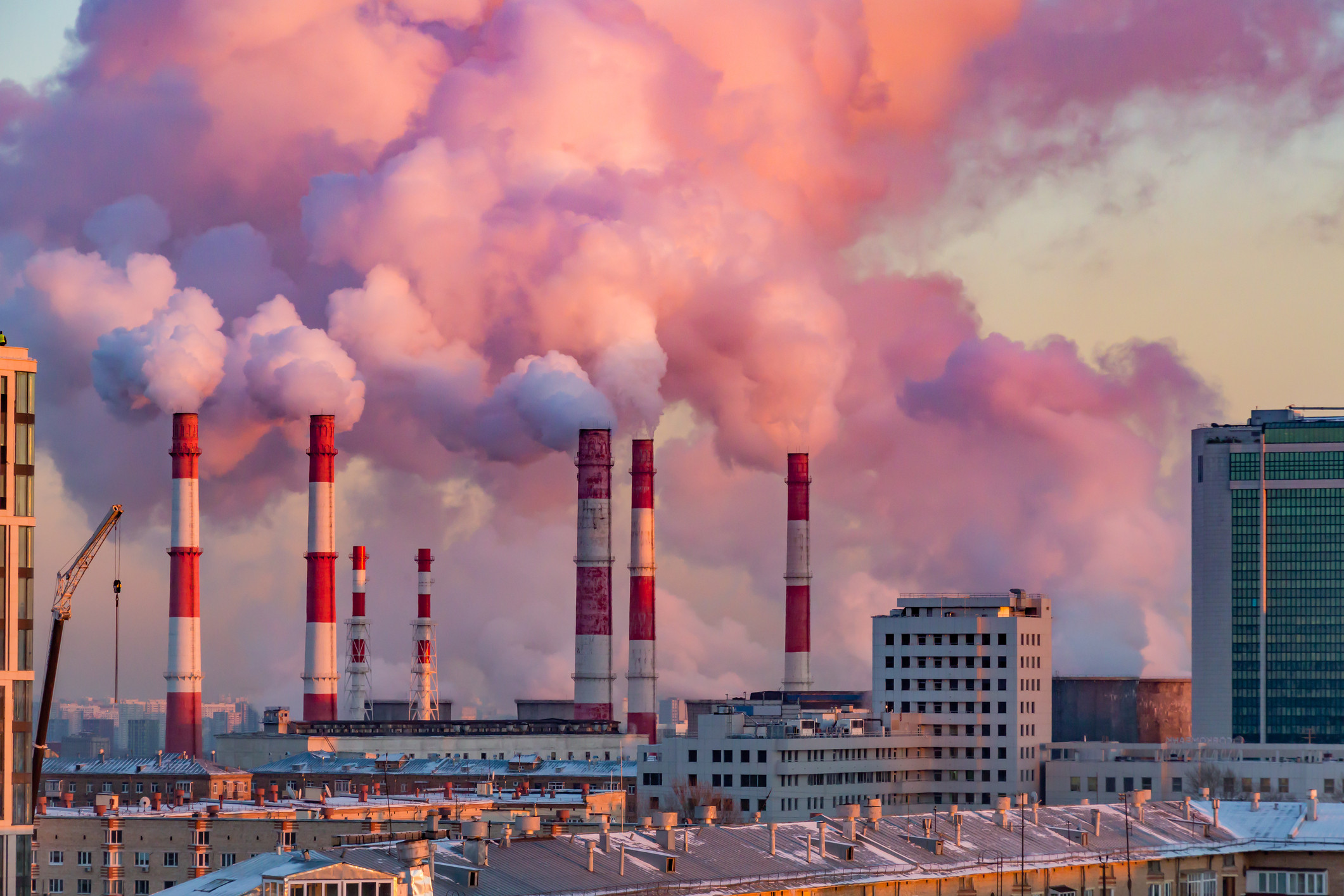
AIR POLLUTION

Pollution

Any undesirable changes in the physical, chemical or biological characteristics of any component of environment i.e. air, water and soil – which can cause harmful effects on various form of life or property are called environmental pollution.

Any favorable unpolluted environment has pertains a specific composition in their component i.e. air, water and soil.

The problem like pollution come into existence due to short-term economic gain over long-term ecological benefits for humanity.

During last few decades we have contaminated badly on air, water and land on which life itself depends with a variety of waste products.

Be the part of Solution , not the part of Pollution…

We can survive without food for a few days, without water for few hours but without air it is impossible to survive for few min.

An average human require about 12 Kg of their each day which is nearly 12 – 15 times greater than the amount of food we eat.

Types

  1. Air pollution
  2. Water pollution
  3. Soil pollution
  4. Marine pollution
  5. Noise pollution
  6. Thermal pollution
  7. Nuclear hazard

Air pollution

Air pollution started from very beginning of human evolution. Hippocrates had mentioned air pollution in 400 BC.

  • Any undesirable changes in physical, chemical or biological characteristics of any component of the in air which can cause harmful effect on living things is called Air pollution.
  • Earlier the air pollution is caused only by burning of fire word as a means of cooking and heating.
  • With the industrial revolution the problem become more serious due to cold burning in the industries and development of Transportation system leads to large amount of petrol and diesel was started utilising in the beginning of 20th century.
  • Severe air quality problem due to diesel and petrol engines were felt for the first time in Los Angeles in1943.
  • The gaseous pollutants include oxides of sulphur, oxides of Nitrogen, carbon monoxide, volatile organic compound, Ozone etc.
  • Particulate pollutants includes smoke, soot, fumes, aerosoles, liquid droplets, Pollen Grain etc.
  • Radioactive pollutants include Radon222 , Iodine 131, Strontium 19 plutonium 239 etc.

Greatest industrial disaster leading to serious air pollution took place in Bhopal were extremely poisonous methyl isocyanide gas was accidentally released from union carbide pesticides manufacturing plant on the night of 3rd December 1984, the effect of this disaster on human health and the soil are felt even today.

Now we know this tragedy as Bhopal gas tragedy.

The London smog was the major disasters were recorded in 1952 which cause more than 8000 deaths due to accumulation of air pollutants over the city for 5 days.

Primary pollutants – primary pollutants are emitted directly from the point source (natural or human activities).

  • Five primary pollutants together constitute 90% of the Global air pollution
    • Carbon dioxide
    • Carbon monoxide
    • Sulphur oxide
    • volatile organic compound mostly hydrocarbon
    • suspended particulate matter

Secondary pollutants – secondary pollutants formed by the interaction of primary pollutants. example – peroxyacetyl nitrate, smog, Ozone, sulfuric acid, nitric acid, carbonic acid etc.

Indoor air pollution

Many people spend large portion of their time in inside the homes as much as 80% of their life.

We work study, eat, drink, sleep in enclosed environment whereas circulation may be restricted.

  • Children and Womens are more exposed to rest in indoor air pollution
  • Burning of dung cake , wood, kerosene for fuel.
  • Cigarette smoke
  • Incomplete combustion produce carbon monoxide that are injurious to health.
  • Chemical fumes from paint and solvents
  • Chemicals released from Modern building and Furnishing material

Effects of air pollution

  • Human health
  • Animals
  • plants
  • material
  • stratosphere
  • environment

Control of air pollution

  • Reduce energy uses
  • Remove pollutant generating stuff
  • Check the generation of pollutant where burned
    • Putting catalytic converter in automobiles.
  • Protect the object from pollutants
    • Coat statues with protective material.
  • Constructing walking and bicycle lanes
  • Encourage mass transportation

What are consonants?

Speech sounds are of two types vowels and consonants . A consonant is a speech sound during the articulation of which there is an obstruction with in the oral cavity or a narrowing of the air passage by various organs of speech so that lung air escapes with audible friction . In other words , all speech -sounds necessitating a closure or narrowing ,which involves plosion or friction ,are called consonants .

Consonants are produced in one of the two ways : either there is a closing movement of one of the speech organs forming such a narrow constriction that it is possible to hear the sound of the air passing through or the closing movement may involve the lips ,the tongue or the throat . The over-all effect in each case is quite different from the open unobstructed articulation found in the case of vowels .

During the production of certain consonants , vocal cords vibrate . Those consonants that involve the vibration of vocal cords are called voiced consonants . During the production of the rest of the consonants ,vocal cords do not vibrate .Those consonants that are produced without the vibration of vocal cords are called voiceless consonants .This distinction ,however ,is not absolute .The position of the consonant in a word , to a great extent , determines the degree of voicing .For example , if a voiced consonant appears at the end of a word it loses a great deal of its vibration . The /z/ sound at the beginning of the word zebra /zi:bra/ is much more vibrant than the /z/ sound at the end of the word jazz /dzaez/.

CONSONANTS OF ENGLISH RP

There are 24 consonants in english RP. The following details regarding their production are necessary for the description of these consonants .

  1. THE NATURE OF THE AIR STREAM MECHANISM
  2. THE STATE OF THE GLOTTIS
  3. THE POSITION OF THE SOFT PALATE
  4. THE PLACE OF ARTICULATION
  5. THE MANNER OF ARTICULATION

THE GOTHIC NOVEL

During the later half of the 18th century, there was a revival of interest in the life and art of medieval times. The gothic novel arose out of this new zeal for medieval life and fashions.

Gothic Novel:

The Gothic novels of the period sought to satisfy the reader’s craving for mystery and violent emotion and for stories set in remote times and places, depicting ghosts, portents, and demonic forces at work.

Themes of the Gothic Novel:

  • Generally, the central theme of the Gothic novel is romantic love. A somber, restless villain is the central figure.
  • The innocent, beautiful heroine probably imprisoned in a castle wants to be rescued by her lover.
  • The scene is placed in a castle or the dark cloisters of a ruined Abbey equipped with frightening secret passages and private chambers.

Structure of the Gothic novel:

Supernatural events, physical violence, and mental anguish are part of the thematic structure of the Gothic novel. Wild and desolate nature provides the background. The central sentiment of the Gothic novel is melancholy. The Gothic novel was, thus, a conscious protest against the rational and realistic creed of the earlier period.

The father of Gothic novel:

Horace Walpole is called the father of the Gothic novel. His “The Castle Of Otranto” published in 1764, set the trend. He used a medieval setting for this novel. There is death murder, intrigue, and villainy in the novel. The Castle looms large as a sinister symbol until a ghost throws it down.

Ann Radcliffe

Ann Radcliffe continued the gothic tradition in several novels. Her best work is ‘The Mysterious Of Udolpho’ published in 1794. It shows an extravagant spectacle of Gothic elements like the somber castle of Udolpho with its sliding panels, secret passages, and supernatural sounds. Her other important novel is “The Italian.” Her method way to arouse terror and curiosity by apparently supernatural events which are finally explained as natural events.

Some other Gothic novels:

  • Dracula by Bram Stoker
  • The strange case of Dr. Jekyll and Mr. Hyde by Robert Louis Stevenson
  • The Turn of the Screw by Henry James
  • The Fall of the House of Usher and Other Tales by Edgar Allan Poe
  • Wuthering Heights by Emily Brontë
  • Frankenstein by Mary Shelley
  • The Picture of Dorian Gray by Oscar Wilde

Why they are famous:

The plot and content of the gothic novels will be Scary and mysterious. The book contains several allusions and assumptions. The plot always seems creepy to the readers. And during that era, people needed some drama and unrealistic elements in their life to boost up the experience of reading time. When some novels started to fire up the process of Gothic literary forms, more authors started to write on this theme. Even, some well know authors who are famous for their humorous works and romance works started to write Gothic to follow the trend and current affairs.

However, People love unrealistic dramas and fiction, especially Gothic elements. Thus, Gothic novels will always entertain their readers with the plots and beautiful narration of dark aesthetics.

ARE WE ‘DECEPTIVE’ IN NATURE ?

“A lie that is half-truth is the darkest of all lies.”
― Alfred Tennyson

In true sense, the word deception implies ‘make believe’, that is, convincing a person that something exists whereas, in reality, it does not exist. Deception is a simple tool for enticing people and trapping them to believe in something unbelievable. This is an evil that has subsisted among human beings since time immemorial in literature and history we come across several uses of deceptive methods; even in our contemporary world, deception is rampant. In fact, such is the enormity of deception that it is often difficult to distinguish the real from the fake. Consequently, even today we come across reports of how many large corporations, especially related to chit funds, dupe their investors through unrealistic schemes. As a result of their ‘get-rich-quickly schemes lakhs of innocent investors lose their lifelong savings because they are shown the dream of coming out of their miseries but are pushed to the brink of perishing.

Deception is also a major tool used in forging currency notes and other negotiable instruments like cheques and drafts. Governments across the world have introduced many new techniques to ensure that their markets are not flooded by fake currency notes or negotiable instruments but, so far, there has been no fool-proof methodology to prevent the menace. Master criminals always manage to deceive by preparing exact copies of the originals. The same applies for important documents like passports and visas.

With the dawn of online shopping, fraudsters have had a free-run as it is practically easy to dupe people and escape without leaving a trace. People end up paying money for products bought online but never actually receive the goods on many occasions, or even if they do, such goods are either defective or elaborately wrapped empty boxes are provided. Consequently, tracking cyber-criminals is very difficult and the number to solved cases is low.

However, like everything else, even deception is a double-edged weapon: it can be used against a deceitful enemy and so serves as an important military tactic, especially in guerrilla warfare. We have read how Babur, the first Mughal Emperor enticed Ibrahim Lodhi to charge headlong and then fall into the covered trenches on the battlefield or how Chhatrapati Shivaji, the great Maratha warrior, used deception to kill Afzal Khan and harass Aurangzeb. Nobody can ever forget the deception carried out by Mark Antony in inciting the Romans from the Forum to rebel against the conspirators who killed Julius Caesar.

In present day military tactics, elaborate plans are drawn out to combat the enemy. The best-known methodology is to plant spies among them so that delicate information can be easily retrieved and the opponent’s actions can be monitored.

Environmental laws in india

Either Stable burning in various states accrued the air pollution in Delhi and created a gas chamber around NCR ; SC came upon a committee to observe scenario , Or 4 industries inflicting stream pollution were shut down by Maharashtra pollution board . Everybody has responsive to environmental problems as higher than . The key solution for resilience to environmental issues are provided by government in various legislations , enactments and provisions on environment laws .


In republic of India environmental law is concern with the policy and law for protection of the environment . It aims for achieving carbon free economy through taking measures for reducing climate change. All the acts under this laws are safeguards in ensuring effective management of the environment and its multiple ecosystems . It provides for preventing environmental damage .


Natural resources in the earth were unscathed from millions of years. It were remain pure until the industrialized started . After the industrialization this resources have been exploited in Spain of 100 years only . From 19th century, the environment (air , water and land ) is directly exploited by rapidly growing population at alarming-rates.


environment includes water, air and land and the inter-relationship which exists among and between water, air and land, and human beings, other living creatures, plants, microorganisms and property , as mentioned in section 2 of environmental protection Act of 1986 . Environment is a wide sphere , it consists of social, economically , political , religious dimensions .


Addressed area of environmental laws in India :

1. Quality of water : For the prevention and control of water pollution and to maintain or restore wholesomeness of water in the country the water act of 1974 was enacted. It further provides for the establishment of Boards ( CPCB and SPCB ) for the prevention and control of water pollution with a view to carry out the aforesaid purposes. This act prohibits the discharge of pollutants into water bodies beyond a given standard, it also lays down fine and penalties for non-compliance.

2. Reduction of air pollution and maintaining air quality : The Air (Prevention and Control of Pollution) Act, 1981 (the “Air Act”) is an act to provide for the prevention , protection and abatement of air pollution .It provides for establishment of Boards at the Central and State levels with a view to carrying out the aforesaid purposes.

3. Hazardous Waste management : legislations that directly or indirectly deal with hazardous waste management are the Factories Act, 1948, the Public Liability Insurance Act, 1991, the National Environment Tribunal Act, 1995 and rules and notifications under the Environmental Act.

4. Containment cleanup, damage mitigation : preventing future damage to the environment is undeniably the primary objective of environmental law, mitigating and reducing existing damage is also important. This area most often deals with issues like toxic leaks and oil spills. The central objective of this branch of environmental law is deciding liability, planning an appropriate response, and also determining the best process of investigation and monitoring in the overall clean up process. This area also concerns itself with the study and assessment of risk in the long term, to better mitigate any future accidents and risks.

5. Sustainability of resources : United Nations has put great emphasis on ensuring the sustainability of resources. For this vision , it has advocated the formation of various legal principles and legislation. In this regards concept of environmental impact assessment introduced .

Noble legislations and enactments on environment law in India :


Laws on Forest and wild life protection:
• The Indian Forest Act, 1927 ; The Wildlife Protection Act, 1972; The Forest (Conservation) Act, 1980 ; The Environment (Protection) Act, 1986; The National Green Tribunal Act, 2010.


Laws on Water pollution :
• The Water (Prevention and Control of Pollution) Act, 1974.


Laws on air pollution :
• The Air (Prevention and Control of Pollution) Act, 1981 (the “Air Act”)


Laws on hazardous waste management :
• Biomedical Waste (Management and Handling) Rules, 1998 ; Municipal Solid Wastes (Management and Handling) Rules, 2000 ; Batteries (Management & Handling) Rules, 2001 ; Hazardous Wastes (Management, Handling and Transboundary) Rules, 2008 ; E – Waste (Management and Handling) Rules, 2011 .
Laws on wetlands


Ramsar convention (1971) : This convention was initiated to push for greater conservation and sustainable use of wetlands ; Wetlands (Conservation and Management) Rules, 2017.
Constitutional provisions on environment laws


Part IVA (Art 51A-Fundamental Duties) of the constitution casts a duty on every citizen of India to protect and improve the natural environment including forests, lakes, rivers and wildlife, and to have compassion for living creatures.


• the Constitution of India under Part IV (Art 48A-Directive Principles of State Policies) stipulates that the State shall endeavour to protect and improve the environment and to safeguard the forests and wildlife of the country.

environment makes human life possible, and our cultural environment helps define who we are. It is therefore essential that our population and economic growth are environmentally sustainable.

WHAT IS PHONETICS?

For the communication language is used in two ways speech and writing. A systematic study of the spoken and written. A systematic study of spoken and written forms of language is called linguistics. The branch of linguistics that deals with the spoken forms of the language is known as phonetics. It studies the production, transmission and reception of speech sounds. It deals with all possible sounds human vocal organs can produce.

Phonetics can be classified into three groups.

  1. Articulatory phonetics: It deals with the movements of the speech organs in the production of speech sounds. It studies how the outgoing air from the lungs is regulated along the vocal tract to make different speech sounds.
  2. Acoustic phonetics: The transmission of sound from the speaker to the listener is studied by acoustic analysis. Acoustic phonetics deals with the physical properties of speech sound like frequency and amplitude.
  3. Auditory phonetics: it deals with the reception and perception of speech sounds.

First online exam.

Switching from books to computers, notes in copy to PDF file, pencil/pens to keyboard keys, white board to power point presentation, question papers to online exams is a huge change.

When I attended my online examination, I was anxious, but after I attended the first exam, I felt like, I was more stress free, like we don’t have to worry for long question paper, all questions were conceptual. I have never been so stress free during an exam before. Best thing is that I can sit on my chair near study table in my comfort zone and give the exam.

However, it has some disadvantages too. In school, students are used to constant interaction with their friends but on an online platform, students tend to feel lonely and isolated. This social isolation for students can also cause a lack of communicational skill in them.

On the other hand, during assessments on online platforms, the prevention of cheating isn’t easy as there is no physical invigilator.

Hemmingway’s ‘Old Man and the Sea’

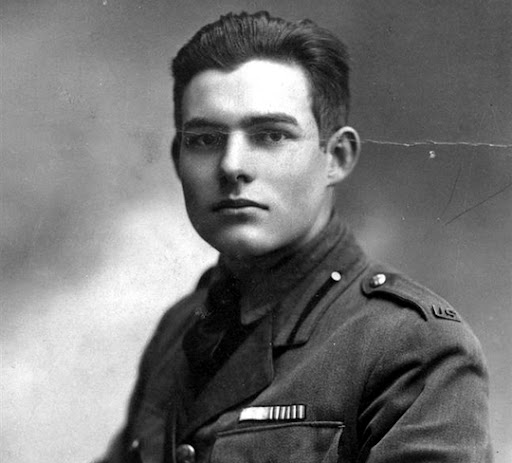
Ernest Hemmingway was an American novelist, short-story writer and journalist. He has written several best-seller classics and has also received the Nobel prize for literature in the year 1954. He was noted and admired both for the intense masculinity of his writing and for his adventurous and widely publicized life. His powerful prose writing style made an impact on the world in 20th Century. He served as an ambulance driver for American Red Cross during World War 1. His novel, The Sun Also Rises published in the year 1926 earned his first solid success. His other famous books include A Farewell to Arms, For Whom the Bell Tolls, A Moveable Feast etc.  

Old Man and the Sea is one of Hemmingway’s most famous books and the last major work of fiction that he published. Published in the year 1952, it received the Pulitzer Prize and is said to be one of the main reasons for gaining favour while being considered for the Nobel Prize. Set in the coastal regions of Cuba, it contains most of the themes that preoccupied Hemmingway as a writer and a man. It is a short heroic novel that entails the voyage of an old fisherman who ventures out into the vast sea for one last adventure. The old man is named Santiago and he sails across the sea, engaging in an epic battle to catch a large Marlin.

“But man is not made for defeat. A man can be destroyed but not defeated.”

The novel begins with Santiago mulling over his continues streak of misfortunes. Once a splendidly talented fisherman, he used to be considered the luckiest in catching fishes and selling them. But as old age started to haunt him, he was slowly overtaken by the younger folks who made fun of him for being out of luck lately. So much so that the parents of the young boy Manolin who assists him have forced him to desert the old man in favour of a more prosperous boat. In an attempt to regain his younger glory, on the eighty-fifth day of his unlucky streak, Santiago follows a large Marlin across the sea for more than forty-eight hours.

“Every day is a new day. It is better to be lucky. But I would rather be exact. Then when luck comes you are ready.”

Compared to the weakening old man, the Marlin tows Santiago’s boat into the ocean until it gets tired. Despite wanting to kill the Marlin, over the course of the journey, Santiago feels connected to the fish. He suffers hunger, sleeplessness and fatigue but feels that the Marlin has kept him company throughout. With great difficulty, he manages to kill the Marlin in a long-drawn-out duel. But as he proceeds to back home with the dead Marlin, it leaves a trail of blood into the sea attracting all sorts of sharks along the way. They attack him one after the other and he is finally left with nothing but a large skeleton of his prized fish. “The essential physicality of the story—the smells of tar and salt and fish blood, the cramp and nausea and blind exhaustion of the old man, the terrifying death spasms of the great fish—is set against the ethereal qualities of dazzling light and water, isolation, and the swelling motion of the sea.” (Britannica) Filled with symbols, allusions and strong poetic verses, the Old Man and the Sea is definitely worth the read.

Reference Links: