Literature broadly is any collection of written work, but it is also used more narrowly for writings specifically considered to be an art form, especially prose fiction, drama, and poetry. In recent centuries, the definition has expanded to include oral literature, much of which has been transcribed.
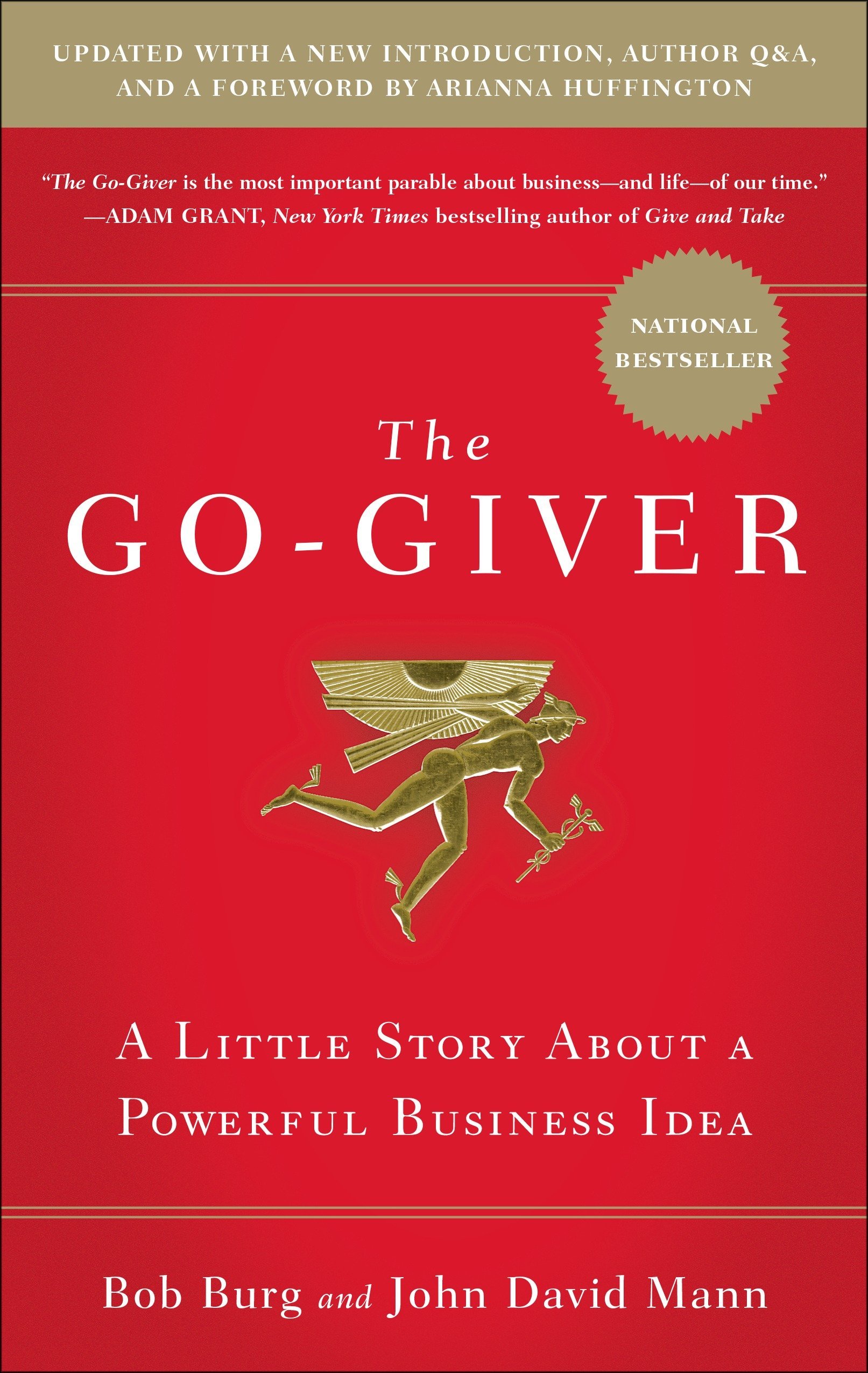
1. Your income is determined by how many people you serve and how well you serve them.
2. The only winning proposition is one hundred percent. Forget win-win , focus on the other persons win. Because your influence is determined by how abundantly you place other peoples interest first.
3. As long as you are trying to be someone else or putting on some act or behaviour someone else taught you, you have no possibility of truly reaching people. The most valuable thing you have to give people is yourself.
4. All the giving in the world wont bring success, unless you also make yourself willing and able to receive in like measure. Thus, the key to effective giving is to stay open to receiving.
5. Your true worth is determined by how much more you give in value than you take in payment.
If you work in local SEO, you know that dealing with spam on Google My Business is going to be a constant battle. This is especially true if you work in industries like:
Legal
Health
Home services
We need to understand why Google My Business spam is so rampant.
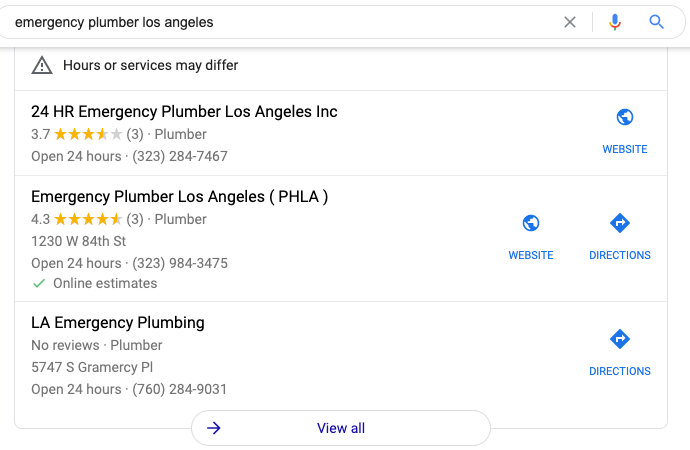
Unfortunately, having keywords in your business name is a massive ranking factor. As an example, I performed a search for “emergency plumber Los Angeles” and here are the top three Google My Business listings ranking in the map pack:
The first result (24 HR Emergency Plumber Los Angeles Inc) is a lead generation website, which is against Google My Business Guidelines. The second result appears to be a lead generation website, too. The third result? You guessed it, it’s another lead generation listing, they don’t even list a website!
These companies sell leads to real plumbers at a hefty price. Clicking through View all to see all listings, you don’t find a real plumber until the 10th result! Outside of completely fake listings that need to be removed, sometimes competitors will keyword stuff their Google My Business name.
Our Google My Business Spam Checklists
There are two checklists: one for identifying potential listings violating Google My Business guidelines and the other is a reporting checklist.
The first checklist doesn’t need to be done frequently, but it would be beneficial to do it at least once. If your rank tracking is set up correctly for Google Maps, you will likely just need to pay attention to your map rankings. If you drop a position on a major keyword, what listing is outranking you now? If it’s a new listing, head to checklist no.2.
Checklist No.1:
On google.com/maps, make sure you’re in the area you want to find spammers
Use the search operator intitle:”keyword” to surface listings with the keyword in the business title
Any listing that has the primary keyword is a Yellow flag
Any listing that is ONLY named the keyword is a Yellow flag
Any listing that has a modifier (-) is a Yellow flag
Any listing that has no website is a Yellow flag
On a Google Sheet, add the business name, address, phone number, website, and link to Google My Business listing for each Yellow flag listing
Repeat this process for each major keyword (topic) that you/your client covers
For good measure, perform a few raw searches in Maps as if you were a customer looking for the particular service, including the city name
This checklist enables you to find potential listings relatively quickly. These listings may be fake or could be completely legit. The second checklist will help us go through each listing, one-by-one, to build a case for the listing to be corrected or completely removed.
Checklist No.2:
Tip: (A “no” response on any checklist item will require documentation)
Use the state’s business name lookup. Is there a business registered at the address?
From the listing, click on photos and then go to Street View and 360º.
Is there signage for the business?
Is it a personal residence?
In a new tab, do a search of the exact address/is the listing the only one at that address?
Visit the website. Is the branding/logo the same as the business name?
Does the site have an about page with real people or company history?
Is the content heavily ‘SEO’d’ and generic?
Is the content focused on connecting users to someone else (lead gen)?
For industries that require a license, is one listed? If yes, is it a valid license?
This checklist should be used on each listing that has a Yellow flag.
Documenting Your Evidence
As you’re going through the checklist, you need to document all of your findings, this will be used when we submit the Business Redressal Form.
Open a Google Doc, name it appropriately, and let your documentation live there. Each listing should have it’s own Google Doc. The more detail you can provide in the document, the better. Some suggestions for added detail could include adding screenshots, external links with descriptions, etc.
Suggest an Edit or the Redressal Form?
If you are reporting a competitor that is just keyword stuffing their business name and the location is legitimate, you may want to consider simply suggesting an edit first.
Pro tip: Do not use an email address that is associated with Google My Business listings. This can cause your other listings to be suspended. (h/t to my friend, Jason Brown).
If and/or when your suggested edit does not stick, then submit the redressal form. If the listing is fake, go straight to the Business Redressal Form.
Filling Out the Redressal Form
Follow the Business Redressal Form instructions and fill out the sections. When you get to the last section that allows you to explain why you’re requesting a redress, this is where your Google Doc is going to come in handy.
In this field, you can’t add photos, but you are able to include a link to your Google Doc. When grabbing the Google Doc link, make sure it is viewable by anyone with the link. If it’s not, Google Support will not be able to see the contents. Don’t just drop the link and submit, provide some context, and then place the Google Doc link. Submit.
Repeat the process for each and every listing that you believe needs to be removed. Google recommends:
“If you have many URLs to report, we recommend submitting 10-100 at a time for a faster processing time. You can submit multiple URLs by clicking the ‘Add additional’ link or by uploading a spreadsheet with all the URLs.”
Now the hardest part begins, waiting.
In your original spreadsheet, add a date column and add the date that the redressal form was submitted. Timelines can vary depending on multiple factors but if nothing has happened after 10 weeks, then you’ll need to reassess the redressal and look for further evidence.
Having to deal with spam on Google My Business is frustrating and can be time-consuming, but if done correctly, can help protect users from spammers and help real small businesses. For more tips, check out SEMrush’s post about their Google My Business checklist.
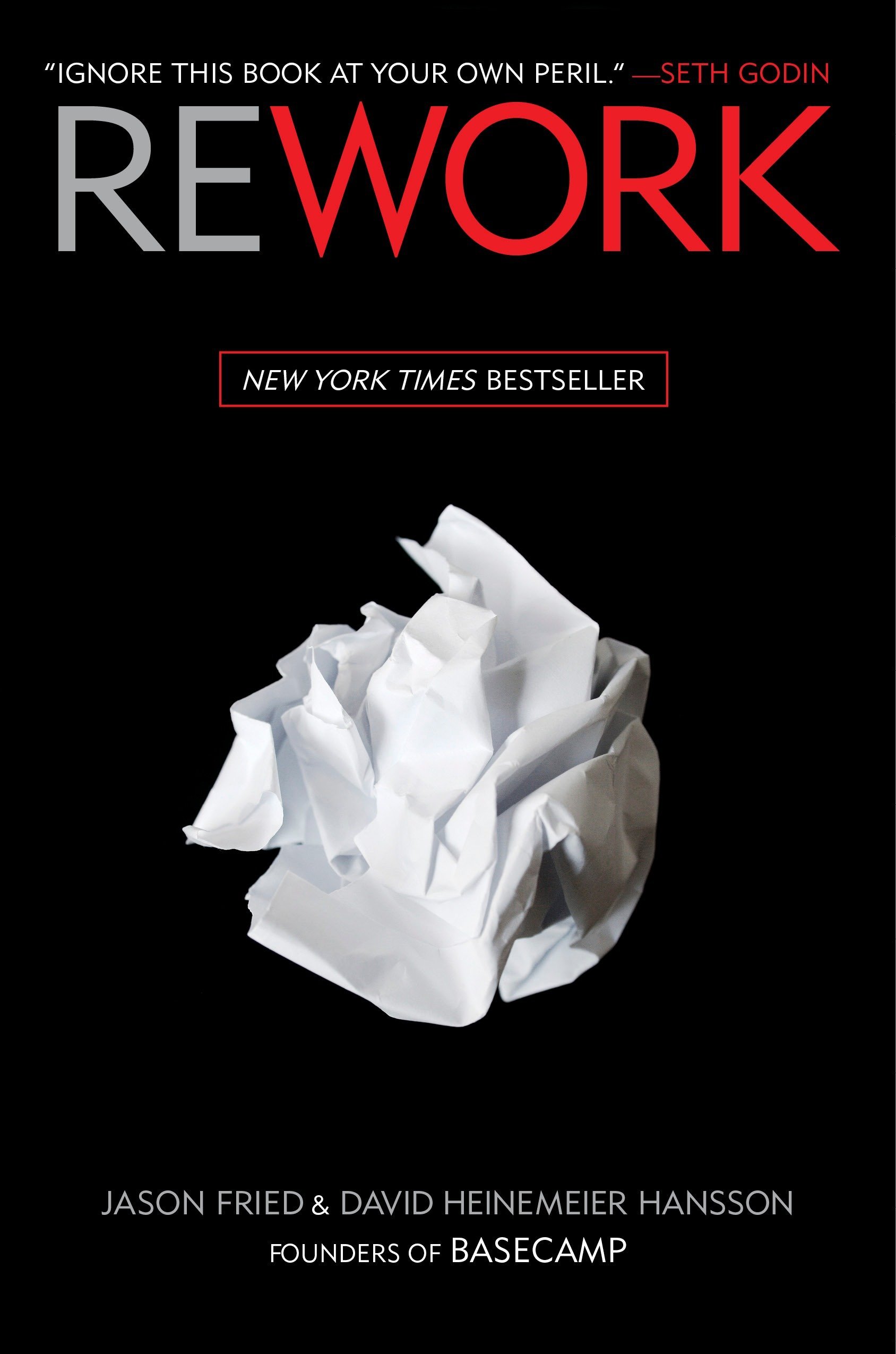
What makes a great product is not the things or features in it but the things which are removed, yes its true! Because people like it simple and easy to use so don’t make it complex, be like a good curator always look for removing things.
2. UNDERGO YOUR COMPETITION
In business most people focus on becoming better than competition than making a better product . But the best way is to do less than your competitor to beat them.
Solve the simple problem and leave the hairy, difficult, nasty problems to the competition. Instead of one upping, try one-downing .
3.WELCOME OBSCURITY
If you are unknown, you company is unknown then its just fine because this is the real time when you have full freedom to make a lot of mistake and no one will blame you because no one knows you, but once you get bigger you become too conservative and you don’t take risk, so enjoy this beauty.
4. PLANNING IS GUESSING
Your plans are not plans they are just guesses so if certain plan doesn’t got executed well, then don’t take it seriously, because they are just mere guesses and every time guessing cant be right. So stop worrying about it.
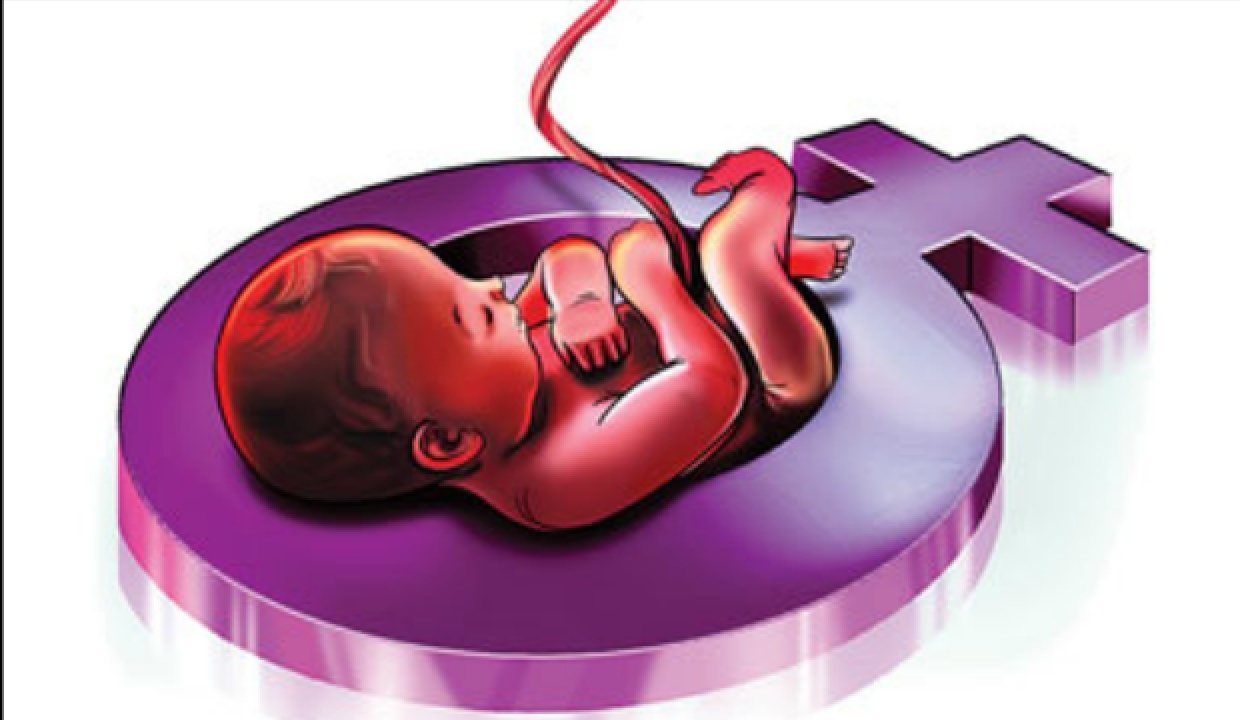
The process of finding out the sex of a foetus and then undergoing abortion if it is a girl is called Female foeticide.
Stop female foeticide
According to certain section of the Indian penal code for forced abortion ,causing death of an unborn child or intentionally preventing a child being born alive are punishable offence.
Besides this the prenatal diagnostic technique regulation and prevention of misuse act consider engaging and sex selective abortion using prenatal diagnosis technique are punishable.
Why I am killed by my parents Why?? Could I harm someone Or can I do something wrong If no then why I am killed by my parents Why they killed me Just tell me Were my dreams only for dying…? Was I meant nothing for you? Why your hand don’t tremble while taking my life? Why..? Please don’t kill me … I also wants to live I also want to enjoy every moment of my life Please don’t kill me Please….
Let them live
The natural sex ratio is assumed to be between 103 and 107, and any number above it is considered as suggestive of female foeticide.
Sex selection is a practice which takes place among some uneducated,poor sections or a particular religion of the Indian society.
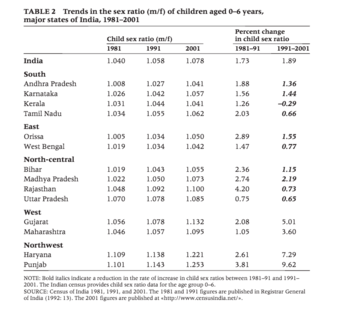
According to the decennial Indian census, the sex ratio in 0 to 6 age group in India has risen from 102.4 males per 100 females in 1961, to 104.2 in 1980, to 107.5 in 2001, to 108.9 in 2011.
Child sex ratio is significantly higher in certain western and northwestern states such as Maharashtra, Haryana, Jammu and Kashmir (118, 120 and 116, as of 2011, respectively).
The western states of Maharashtra and Rajasthan 2011 census found a child sex ratio of 113, Gujarat at 112 and Uttar Pradesh at 111.
Urban India has higher child sex ratio than rural India according to 1991, 2001 and 2011 Census data, implying higher prevalence of female foeticide in urban India.
child sex ratio in major states in India throughout the years 1981, 1991, and 2001-Wikipedia
The following table presents the child sex ratio data for India’s states and union territories, according to 2011 Census of India for population count in the 0-1 age group.The data suggests 18 states/UT had birth sex ratio higher than 107 implying excess males at birth and/or excess female mortalities after birth but before she reaches the age of 1, 13 states/UT had normal child sex ratios in the 0-1 age group, and 4 states/UT had birth sex ratio less than 103 implying excess females at birth and/or excess male mortalities after birth but before he reaches the age of 1.
Due to male dominancy in society ,the male babies are preferred because they provide manual labour and success to the family lineage.
A son is preferred as an asset since he can earn and support the family but a daughter is a liability since she will be married off to another family or she will not contribute financially to her parent or due to dowry system.
Dowry is the payment from bride’s family to the groom family at the time of marriage.
Dowry is the main reason behind the female foeticide.
Dowry system legally ended with the dowry prohibition act of 1961 ,the impossibility of monitoring families and prevalence of corruption have led to its continuance all over India.
The advancement in technology is the major cause of female foeticide.
Some doctors do this act to fulfill their moneydesire
People in India usually see men’s work as “productive” and contributing the family, while the social perception of female labor does not have that connotation. This also ties to the fact that it is easier for men in India to get high paying jobs and provide financially for their families.
Role of panchayat members
Panchayat members should
give accurate information on the laws pertaining to this issue
find out where it is being practiced in the village and investigate it immediately
register all births and deaths under the purview of the panchayat
raise awareness about gender sensitivity through public education programmes
prevent female foeticide with assistance from the ANM and local mid-wife.
Increasing awareness of the problem has led to multiple campaigns by celebrities and journalists to combat sex-selective abortions.
Don’t judge a book by its cover. But, who can ignore if the books come with eye-grabbing front covers and alluring editions? Book readers have a lot of Idioms and Phrases and especially things names to convey their ideas among themselves. But, not everyone knows the difference between the books and those names. Thus, we are going to look at those bookish terms (Especially about book editions) and their meaning and I will include some pics in each section so that you will get a clear idea about all of them. Book editions have a great part in the lifespan of the books. If the quality of the book is promising, they can live until your grand grandchildren age. So, choosing a book is not merely choosing the title or the plot of the book. But, it’s an investment to pass knowledge through generations.
Paperbacks
Reference image: The Night Circus by Erin Morgenstern
Paperbacks are common books that we see and buy day to daily life. Paperback editions are based on thin front binding and are most fragile. Paperback always has good designs on its front cover. And easy to read, lightweight and comfortable. Paperbacks are pocket and travel-friendly editions. If you are a person who would like to read while traveling, paperbacks are an adequate option.
Hardcovers
Reference image: Circe by Madeline Miller
Hardcovers are the most expensive editions in books categories. They will have thick hard binding rather than a thin paper front cover. And to the bonus, they will have a highly decorated protective cover. Which helps the hardcover to remain dust-free. (To be honest, the binding of the book will be hard and plain but the protective sleeves will be decorative. thus, we will take care of the sleeves as much as we care about the book.) Some hardcovers come with designs even in the binding part. Those are called as special editions. Hardcovers are heavyweight and double in price range comparing to paperbacks. But, still, they are the real shelf slayers. If you want to collect books. Hardcover can give a dramatic image to your shelves.
Hardbound
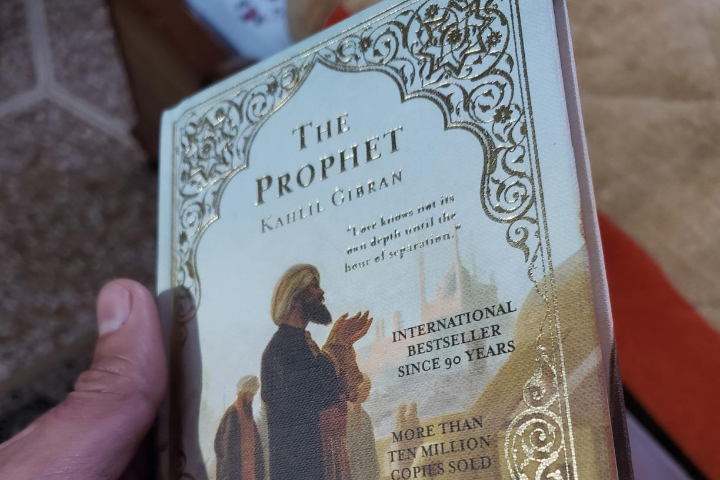
Reference image: The Prophet by Kalil Gibran
Hardbound books are nearly hardcovers but don’t have protective sleeves. They have a hard binding with attractive designs on them. But, without protective sleeves. Some hard bounds come with gold dust paper edges which is an alluring part of these books. These kinds of editions are also heavily weighed some short stories and novels contain lesser pages have no effect of hand pain while reading. Hardbound gives an aesthetic, classy, and breathtaking vintage look to your collections. The idea of hardbound books is to giving us some vintage and classical themes while reading.
Pirated Books
Reference image: Ink spilled and poor quality pages from the book IKIGAI
Pirated books are cheap books but which are illegally printed. Some publishing houses print them without the author and the authorization’s/copyright’s permission. And those books are highly cheap compared to any other editions. They will have tons of errors and misprints. So, even though if you don’t want to have that book you can’t even sell them at half rate. Because the lifespan of Pirated books are less than 30 years. And no one will love to buy misprinted and ink-spilled books. So, whenever you are going for a sale if the books are cheap flip those books 1000 times and make sure it is not misprinted, ink spilled, cross alignment, missing pages or black pages in between the chapters. And one more thing to add, Pirated books are unauthorized copies. Thus, it won’t give any profits to the Authors. As readers and book admire we should support them will all our efforts. So, spending a little more on good books is not spending it’s an investment for the future.
Well you must be living under a rock if you don’t know who is this person,
So, Durjoy Datta is an Indian author and screenwriter known for his coffee-table novels about the romantic life of young Indians. His books are in simple language and they are basically for particular age group they are just for 18 to 25 year old people but if you are someone who is beginner in Reading world than I think you should must Read books by Durjoy Dutta
also, the language is so simple and easy that you don’t need to have a good vocabulary
some books that I must recommend and you should definitely try are :
1. Of Course I Love You ..! Till I Find Someone Better
2. World’s Best Boyfriend
3. A Touch of Eternity
A must recommended would definitely be a touch of eternity this is something different from just a normal romantic love story, it has all.
“All round me are words, and words and words, They grow on me like leaves, they never Seem to stop their slow growing From within… But I tell my self, words Are a nuisance, beware of them, they Can be so many things, a Chasm where running feet must pause, to Look, a sea with paralyzing waves, A blast of burning air or, A knife most willing to cut your best Friend’s throat… Words are a nuisance, but. They grow on me like leaves on a tree, They never seem to stop their coming, From a silence, somewhere deep within…” ― Kamala Suraiyya Das, Summer in Calcutta
ABOUT THE POET
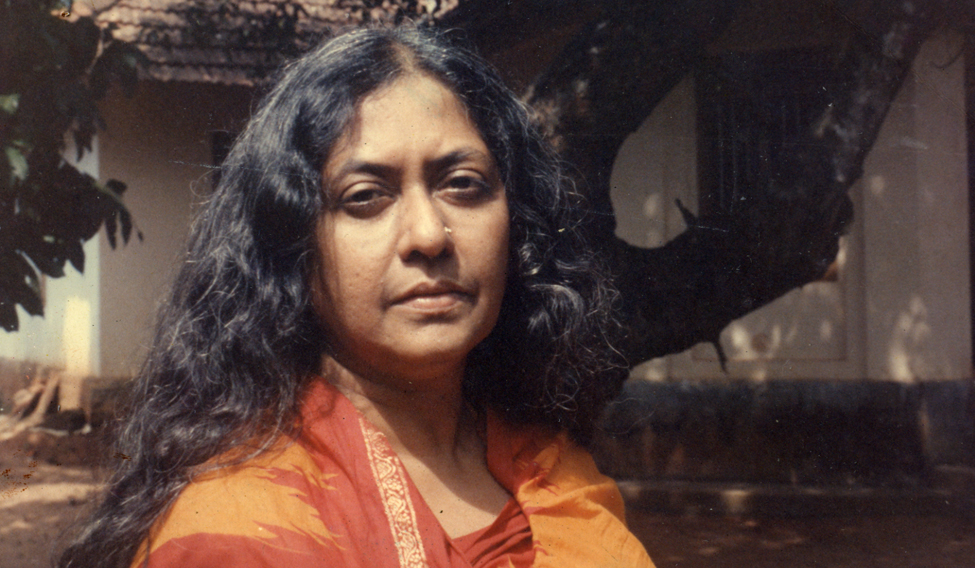
Kamala Das was born in the year 1934 in Malabar, Kerala. She received her education at home. Her mother wrote poetry in Malayalam and Kamala Das also published short stories in Malayalam before her first book of poems, Summer in Calcutta’ appeared in 1965 and brought her recognition. Her works in English include The Playhouse and Other Poems’ and her autobiography ‘My Story’.
Her poetry is frank and open. It impresses by being totally natural and distinctively feminine. Her favourite theme is fulfilment and unfulfillment in love and her expression is striking for its frankness and intensity of feeling. She won the poetry award of the Asian PEN, Manila in 1964 and the Kerala Sahitya Academy Award in 1969.
THE POEM
In this poem Kamala Das recreates idealized moments in her childhood. It is a nostalgic, sentimental reminiscence of her family home in Malabar. She remembers the landscape of Kerala. Others may be annoyed by the heat dust and noise, but she always longs for the hot noon in Malabar because it is associated in her mind with wild men, wild thoughts, wild love.’ It has been often said that her poetry is in the nature of a psychic striptease and she always exudes autobiography. Most of her poems deal with the theme of unfulfilled love, her search for love and her failure to get it. Some of them, like the poem under consideration also deal with the loss of her happy childhood in the family home in Malabar. She writes, from every city I have lived, I have remembered the noons in Malabar with an ache growing inside me, a homesickness.’
The poem is a nostalgic journey down memory lane and the poetess looks back on her pre-marital years when she lived happily in her family home in Malabar. She particularly misses the hot noons of Malabar when the streets of Malabar used to be crowded with interesting people and pleasant sounds, beggars, bangle-sellers, fortune-tellers and other strangers used to throng the streets. She confesses that no doubt her house in Calcutta also gives her a chance to see and hear similar type of people. In the Calcutta streets also can one see a fortune-teller with parrots and soiled cards, beggars and bangle-sellers sell their wares in sing-song voices. But there is a major difference between the noons in Malabar and those in Calcutta.
Everything and everybody in Malabar bore a look that was innocent pure and familiar. All pulsated with a warm and full life her home, the Malabar town and its landscape. Contrasted with it Calcutta appeared strange and dirty. The cries of the beggars, fortune- tellers and bangle-sellers jar harshly to the ears of the poetess. There are jungle voices and their eyes hot burning and wild. The heat of the noon in Calcutta is maddening and strange.
To live in Calcutta is a torture for Kamala Das as her mind and body reject this environment. Her soul yearns to return to her heavenly home in Malabar where she spent a joyous childhood.
Malabar was a place which the poetess associated with love but in Calcutta she finds the people to be freaks, abnormal persons who cannot love. The poetess attempts to show that the transition from childhood is from a world of joy and love into a cold, indifferent world. The childhood memories are a much-needed relief.
William Shakespeare was an actor, playwright, poet, and theatre entrepreneur. He was born in Stratford, Evan on April 23, 1564. He is the son of John Shakespeare and Mary Arden and may have been educated at King Edward VI High School in Stratford, where he learned Latin and a little Greek, and read Roman dramatists. At the age of eighteen, he married Anne Hathaway, a woman seven or eight years older than him.
Shakespeare wrote more than thirty plays. These are usually divided into four categories: histories, comedies, tragedies, and romances. Some of his famous works include Hamlet, Romeo and Juliet, Much ado about nothing, King John, The tragedy of King Lear, etc. William Shakespeare first appeared on the London stage around 1592, where his plays will be written and performed, but the exact date is unknown. After 1594, Shakespeare’s plays were performed in their entirety by a company owned by a group of actors, which became the leading company in London. After the death of Queen Elizabeth in 1603, the company obtained a royal patent and changed its name to King`s Men, named after King James I.
Shakespeare has written at least 38 plays and more than 150 long and short poems, many of which are considered the best English plays of all time. His works have been translated into several existing major languages, in addition to other languages. Even after 400 years after his death, they are still performed around the world. In his poems and plays, Shakespeare invented thousands of words. According to the Oxford English Dictionary, includes such words as arch-villain, birthplace, bloodsucking, courtship, dewdrop, downstairs, fanged, heartsore, hunchbacked, leapfrog, misquote, pageantry, radiance, schoolboy, stillborn, watchdog, and zany.
Shakespeare’s influence on art, literature, language and a wide range of creative arts has long been known and documented. He is the most widely read playwright in the Western Hemisphere, and English is full of quotes and phrases derived from his plays. He is also the inventor of the iambi pentameter, a form of poetry that is still widely used even today.
He is also one of the most influential figures in English literature, having a profound influence on everyone like Herman Melville, Charles Dickens, Agatha Christie, Anthony Burgess, etc. But his influence is not limited to the field of art. The psychoanalyst Sigmund Freud used Hamlet as the basis for many of his theories about human nature. His influence is also reflected in painting and in the opera, especially Giuseppe Verdi and the entire community of Romantic and Pre-Raphaelite painters.
On April 23, 1616, he died at the age of fifty-two in his hometown of Stratford-upon-Evan. His death occurred on or near his birthday (which is still unknown).
Some famous quotes by Shakespeare
“It is not in the stars to hold our destiny but in ourselves”
English is a Global language that helps us communicate with each other regardless of where we are! There are billions of people in over 49 countries who speak English. When we talk about the importance of English some people may get bored because it is an ancient topic that we discuss often. We talk in English to express our ideas and thoughts with people of our country and other countries. Nowadays, English has been a very common language that influences our daily lives other than our mother tongue.
English plays a major role in our daily life. It is an essential language to be learned in this fast growing world. Ever since our childhood, our parents and teachers says often that English plays a vital role in our future. We want to improve our communication skills to shine in our lives. Nowadays, the Internet and social media play a huge role in promoting English as communicative language. This is the reason why non-English speaking countries make them learn better English.
ENGLISH IN BUSINESS
In business, the vitality of the English language is more important. It can often be called as business language. This is the basic reason why the companies hire people with good English and communication skills. This reduces their high pressure and makes a better future for their colleagues and themselves. There is always a preference for the people who are good in English personnel at global level. If you want to shine as a business analyst, consultant, social media analyst, etc., learn better. English to establish yourself in your fields.
ENGLISH IN EDUCATION
The importance of English in education, it makes people open their minds and establish their thoughts as words and make them a better person. Learning English appropriately and master in non-lingual subjects (Economics, Commerce, History etc.,) make them blossom in their respective fields. Students working hard to go abroad for higher studies or research, the ability to read and write English is a must. If a person could not communicate or write well in English, the percentage of selecting them will be very low.
The only thing to be worried is that we Indians make common mistakes that makes it more difficult.
WHY IMPORTANT?!
English is essential not only for getting a job, studying abroad, and so on. We should not be material or goal-oriented but we should think more, how English improves our ability and communicative skills. Communicative skills and the ability to do so will determine the success and failure of life and other deeds.
Learning English is not that difficult and any interested people can learn it better to improve their standard of living. Though learning a new language is a bit hard, we should pull ourselves together to learn better. Those who moves forward to learn English being very interested in it, are the ones who communicate with major people across the world without fear. English helps in improving your confidence level to some extent. English has become the one to develop the personality of an individual. So, learn English; shine bright!!
THE ENGLISH IS NOBODY’S SPECIAL PROPERTY. IT IS THE PROPERTY OF IMAGINATION: IT IS THE PROPERTY OF LANGUAGE ITSELF.
Beauty is an essential part of our lives even though we don’t always realise it. Beautiful in looks and quality is that special thing that make us wonder and fall in love with people and things. Sometimes people are beautiful not in looks, not in what they say, just in what they are. Everything has a beauty but not everyone sees it.
What if we have a jasmine, beside a beautiful rose, will you still look for the beauty, when the the smell of the jasmine blows?
What we hear a cuckoo singing, beside a beautiful peacock, will you still look for the beauty, when the voice of the cuckoo evoke?
Mahasweta Devi is a Bengali writer and activist who is known for her strikingly social and poignant stories. She wrote several works ranging from novels and plays to essays and short stories. Her most notable works include Hajar Churashir Maa, Rudali, Aranyer Adhikar etc. She has received highest literary merits in India like Jnanpith Award and Padma Vibhushan. As an activist, she has also worked towards the empowerment and rights of tribal people from West Bengal, Bihar, Madhya Pradesh, and Chhattisgarh.
Rudali is a thought-provoking short story that deals with the underlying class and caste issues prevalent in India. Originally written in Bengali, it follows a raw narrative that depicts the struggles of the subaltern in a vastly power-imbalanced society. Rudali follows the story of Sanichari who labours hard all her life to make ends meet. The story begins by establishing her caste and how despite being the majority, the Ganjus and Dushads live in desperate poverty. They work as cheap labourers for the ‘Malik Mahajan’ who are the wealthy landlords and money lenders of the village. After losing her in-laws and her husband, she works hard to sustain for her son. But after his marriage, he slowly deteriorates due to tuberculosis and eventually after his death, his wife leaves, leaving Sanichari to look after their new born son. Later after he runs away from home, Sanichari finds an unlikely partnership with Bhikni, an old friend.
The two women forge a strong companionship and together they play a cunning game of getting back at their exploiters. ‘Rudali’ refers to a particular Rajasthani culture wherein women of lower castes are hired as professional mourners by the upper-class to mourn the deaths of their family members. The two women build a business together, harnessing this profession to get jobs to local lower-caste women who have been exploited and ostracised and exploited by the society. In no time, the upper-class people try to one up each other even in funerals and even go as far as purposefully killing themselves or the elders to hold grand funerals.
Entitled by the power of money, Devi reinforces the fact that people in power compromise morality to maintain their position through the shenanigans of the upper-class folks who are known as the ‘Malik Mahajan’. Historically, they were Rajput soldiers who pillaged and killed innocent tribes and conquered these lands. And then, Dulan says that “From century to century, their holdings and power increased. Even now, they take possession of land…” (Devi 73) They built up their power over the tribes and the lower caste through violence and debt traps. They spend lavishly on funerals to ‘uphold honour’ and ‘raise prestige’ by extracting money from the poor. Their greed for more lessens their humanity even with respect to their own kind. In this society, the rich are constantly rich while the poor are perpetually poor.
Where the privileged are divided amongst themselves due to greed for more, the powerless, though diverse, are united in their struggles against the elite. In Rudali, the lower caste and the shunned women look out for one another due to their shared resistance against the Malik Mahajan. Mahasweta Devi narrates this story of oppression without overtly emotionalising it and yet, it affects the readers in such a way that it provokes these emotions within us. To bring out maximum impact, she portrays reality as it is in all of its rawness which makes us question the power play prevalent in the society.
Shashi Tharoor is a writer and that too an extraordinary one. He is a legend and his pen has the power to change the world through his words. He writes others maybe imagine but can not put into appropriate words. He has many published works which are just perfect. One such work of his is the book named An Era of Darkness : The British Empire in India. This book was also published in United Kingdom under the name Inglorious Empire : What the British did to India. It was of course a best seller. This book basically depicts what is in Shashi Tharoor’s mind about the British rule in India. His ideology about the British Empire is written in this amazing work. Through this book he wants us to know about “the origins of the difficulties that confronted India.” , as stated by himself. In simple words, he wants us to understand about the evils of the British Rule in India and how it affected us. He strongly desires an apology from the British, same as whole of the country does. In his opinion, an apology would be most desirable, rather than compensation by cash or other valuables. This book also exposes the corruptions during that period along with questions their claim on superiority.
He deeply explains the way how it all came to the establishment of British Empire and also about why it all happened. He puts light on the manipulations of the British on the people of our country. He has clearly stated in his book that “this book is an argument and not a story.” He argues that the ruling record of the Indian governments is far better than the British. He accepts the fact that the British has in fact paid the reparations in form of aids over the years, but he is adamant that they were not due to guilt. According to Tharoor, India suffered many problems and conflicts due to racism, wars, disputes for kingdoms and other several problems, under the British Rule. He also states in his book that “this just basic knowledge about the history of our country but is still unknown even to the educated Indians.” He stresses on his point of the reparations, by saying that day by day it is getting late to amend things but it’s certainly not that late. The damage is done but can still be somewhat repaired to some extent.
Tharoor has remarked that every single thing the British did and the rules they imposed on the citizens were for their own benefit and not ours. He is right of course in all his arguments. The correct word for the Rule of British in India has to be ‘rotten’. The British Rule and their Empire was rotten in terms of all the policies they put up to follow, all the standards as compared to ours. He has done an impeccable job on the book and made us realize what we had forgotten with time.
Happiness is a state of mind which we possess when something good happens to us and we feel that goodness at our heart. This is an abstract feeling which is not materialistic and cannot be bought by money or some other possession. Happiness brings with itself a lot of positivity and also provides us with the motivation to go ahead and achieve other milestones. Happiness also maintains the zeal and enthusiasm for doing things and experiencing new paths. Happy state of mind also increases the age of people and lets them live a longer life.
Happiness is a key to healthy life; it sets a soul free and encourages it to explore the world and also gives us power. Happiness is a part of being successful in life it is that fruit which we all want to grow and thus we do so much of hard work throughout our entire life so that we can live a happy peaceful life after all. Happiness cannot be ever faked it comes straight out from our heart and it is priceless. At the end of a hard-earned day all we care for is some peace and happiness in our families and ourselves so that we can start another fresh day ahead.
4 levels of Happiness :
” Happiness is the meaning and the purpose of life, the whole aim and end of human existence” . Of course, there are a number of different types of happiness and each person has different things in life that make them happy and unhappy. It is important for people to be self- aware and to truly understand what makes them happy and content as individuals. Take a look at the different types of happiness below and think about the things in your life that maku you happy.
There are main types of happiness, these being related to; pleasure, passion and purpose.
Pleasure :
Pleasure is important to us human beings but its related benefits are relatively short term. A delicious meal, a nice meeting with friends or listening to our favourite music all produce endorphins and offerus happy moments that can be the highlights of our day. However, these singular moments don’t equate to long- term satisfaction.
Passion :
Being passionate about something whether a hobby cause or group activity and actively being involved with it can be a great source of happiness. These activites deliver contentment in the medium term and provide a sense of achievement and variety in life
Purpose :
Feeling like you are part of something bigger than yourself and that your actions will really matter can lead to a deep sense of fulfillment and long- term happiness. We all like to think that our lives have menaing and if you can find your ” calling” or be part of great team, group or organisation that are making a difference then chances are you will be truly happy.
Ultimate Good :
The fourth level of happiness is known as ultimate good. This is a fundamental desire we have as human beings for perfect truth, goodness beauty and love . Many people find this form of happiness through their religious beliefs. Even those who don’t believe in a higher power can find happiness in their pursuit of truth, beauty, love and goodness in themselves and in helping others. This level is happiness is often considered the most enduring and profound.
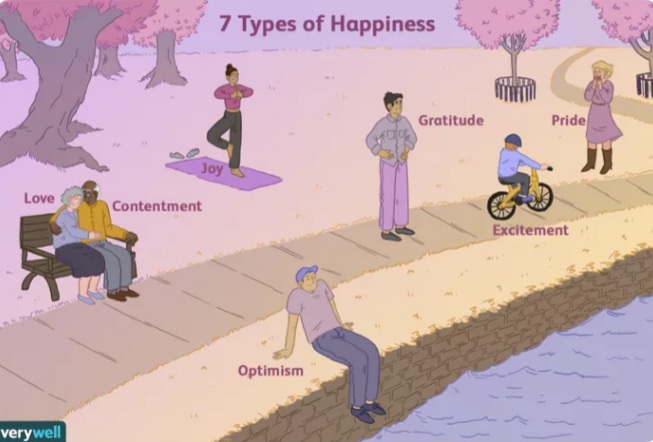
Different types of Happiness :
1. Joy :
Joy is when you win a hard- fought competition, you finally accomplish a project you’ve wanted to or times when you doible over in uncontrolled laughter when someone relates a hilarious story. Joy makes you feel great about yourself, makes you feel confident, assertive, capable, loved and fulfilled.
The feeling of joy is fleeting joy is presemt at the moment. It is possible to feel joy despite grief or uncertainty. Happiness can be found in many things. It transforms tough times into blessimgs and turns heartache into gratitude.
2. Love :
Second, on the list pf different types of happiness is love. Which means other things to different people still, a wholesome ,reciprocared love with another person seems to be the fundamental predictor of happiness. Here, we are not just talking about romantic love, it means to love with friends and family, as well as partners. When you’re in love, you’ re blissfully happy all the time.
3. Contentment :
The secret of Happiness is contentment which means a state of happiness or satisfaction . It isn’t a matter of being satisfied with what you have. Contentment not only holds the power tobmake you happy, but it will transforms your life in many ways.
4. Optimism :
Optimism is a type of happiness that reflects the belief that events or experience outcomes will generally be positive. The key to attaining happiness is to have an optimistic approach to life, as optimism reflects hope and faith, helping people believe that this world is the right place
5. Gratitude :
Gratitude creates positive emotions, like different types of happiness, joy, love, and contentment, it can undo the hold of negative emotions. It goes hand in hand with mindfulness in its focous on the present and greatfulness for what we have now, rather than wanting more and more.
6. Excitment :
Excitment can be anything from about a new job or moving to a different place and motivates youbto work harder and channel that positive energy into more constructive activity. Excitements is fleeting. It dissipates rather quickly and can turn into ennui. It sometimes acts as a motivating factor , and execitment often leads people to likely make a decision. Even a bad one as excitment leads to impulsivity.
7. Pride :
Last on the list of different types of happiness is pride. Yes, pride and happiness go hand in hand. You can take pride in your work and your family, your haome and yourself, and in anything you put effort, attention, and love into. It is a positive feeling in reactive to a jouous event.
There are 7 essential keys to happiness and successthat will help to materialize both those things in your life:
* Gratitude.
* Be present
* Manage time Effectively
* Set smarter Goals
* Embody an Empowering morning Routine
* Tackle the MITs
* Focus on Health and wellbeing.
To get the most bang for the happiness buck, I’ve realized that I should complete four stages of reveling in a moment of happiness :
ALL OF US HAVE STUDIED ABOUT LOUIS XVI FAMOUS STORY. AND THE SAGA OF NAPOLEAN BONAPARTE.LETS HAVE A FLASHBACK TO THE HISTORY
French Revolution
Paragraph 1
Women’s participation in the revolutionary events in France between 1789 and 1795 has only recently been given nuanced treatment. Early twentieth- century historians of the French Revolution are typified by Jaures, who, though sympathetic to the women’s movement of his own time, never even mentions its antecedents in revolutionary France. Even today most general histories treat only cursorily a few individual women, like Marie Antoinette. The recent studies by Landes, Badinter, Godineau, and Roudinesco, however, should signal a much-needed reassessment of women’s participation.
Paragraph 2
Godineau and Roudinesco point to three significant phases in that participation. The first, up to mid-1792, involved those women who wrote political tracts. Typical of their orientation to theoretical issues—in Godineau’s view, without practical effect—is Marie Gouze’s Declaration of the Rights of Women. The emergence of vocal middle- class women’s political clubs marks the second phase. Formed in 1791 as adjuncts of middle-class male political clubs, and originally philanthropic in function, by late 1792 independent clubs of women began to advocate military participation for women. In the final phase, the famine of 1795 occasioned a mass women’s movement: women seized food supplies, held officials hostage, and argued for the implementation of democratic politics. This phase ended in May of 1795 with the military suppression of this multiclass movement. In all three phases women’s participation in politics contrasted markedly with their participation before 1789. Before that date some noblewomen participated indirectly in elections, but such participation by more than a narrow range of the population—women or men—came only with the Revolution.
Paragraph 3
What makes the recent studies particularly compelling, however, is not so much their organization of chronology as their unflinching willingness to confront the reasons for the collapse of the women’s movement. For Landes and Badinter, the necessity of women’s having to speak in the established vocabularies of certain intellectual and political traditions diminished the ability of the women’s movement to resist suppression. Many women, and many men, they argue, located their vision within the confining tradition of Jean-Jacques Rousseau, who linked male and female roles with public and private spheres respectively. But, when women went on to make political alliances with radical Jacobin men, Badinter asserts, they adopted a vocabulary and a violently extremist viewpoint that unfortunately was even more damaging to their political interests.
Paragraph 4
Each of these scholars has a different political agenda and takes a different approach—Godineau, for example, works with police archives while Roudinesco uses explanatory schema from modern psychology. Yet, admirably, each gives center stage to a group that previously has been marginalized, or at best undifferentiated, by historians. And in the case of Landes and Badinter, the reader is left with a sobering awareness of the cost to the women of the Revolution of speaking in borrowed voices.
In Democracies and its Critics, Robert Dahl defends both democratic value and pluralist democracies, or polyarchies (a rough shorthand term for Western political systems). Dahl argues convincingly that the idea of democracy rests on political equality—the equality capacity of all citizens to determine or influence collective decisions. Of course, as Dahl recognizes, if hierarchical ordering is inevitable in any structure of government, and if no society can guarantee perfect equality in the resources that may give rise to political influence, the democratic principle of political equality is incapable of full realization. So actual systems can be deemed democratic only as approximations to the ideal. It is on these grounds that Dahl defends polyarchy.
Paragraph 2
As a representative system in which elected officials both determine government policy and are accountable to a broad-based electorate, polyarchy reinforces a diffusion of power away from any single center and toward a variety of individuals, groups, and organizations. It is this centrifugal characteristic, Dahl argues, that makes polyarchy the nearest possible approximation to the democratic ideal. Polyarchy achieves this diffusion of power through party competition and the operation of pressure groups. Competing for votes, parties seek to offer different sections of the electorate what they most want; they do not ask what the majority thinks of an issue, but what policy commitments will sway the electoral decisions of particular groups. Equally, groups that have strong feelings about an issue can organize in pressure groups to influence public policy.
Paragraph 3
During the 1960s and 1970s, criticism of the theory of pluralist democracy was vigorous. Many critics pointed to a gap between the model and the reality of Western political systems. They argued that the distribution of power resources other than the vote was so uneven that the political order systematically gave added weight to those who were already richer or organizationally more powerful. So the power of some groups to exclude issues altogether from the political agenda effectively countered any diffusion of influence on decision-making.
























 Eduindex
You must be logged in to post a comment.