
Public administration and development

Since its founding in 1949, Public Administration and Development (PAD) has been reviewing and assessing the practice of public administration at the local, regional, national and international levels where it is directed to managing development processes in low and medium income countries.

The role of public administration in bringing about development?

On the role of public administration, it will address such areas as sustained economic growth, the promotion of social development, facilitating infrastructure development and protecting the environment, promoting public- private partnerships, managing development programmes and maintaining a legal framework for

ROLE OF PUBLIC ADMINISTRATION IN DEVELOPMENT TO BE CONSIDERED AT RESUMED GENERAL ASSEMBLY SESSION 15-19 APRIL

19960412 Background Release The crucial role of public administration in development, particularly in developing countries and economies in transition, will be the subject of a one-week resumed session of the General Assembly, beginning on Monday, 15 April. The resumed session represents the first time the Assembly will meet specifically to consider that issue.

The aim of the resumed session of the General Assembly is to explore themes contained in two distinct categories: the role of public administration, and capacity-building for effective administration. Thirteen specific topics were identified within those categories.

On the role of public administration, it will address such areas as sustained economic growth, the promotion of social development, facilitating infrastructure development and protecting the environment, promoting public- private partnerships, managing development programmes and maintaining a legal framework for development.

With respect to capacity-building, the Assembly will discuss improving civil service systems, organizational strengthening, the enhancement of policy-development capacity, strengthening financial management for development, human resource development for the public sector and the development of administrative capacities for post-conflict and crisis conditions.

In deciding to hold the resumed session, the Assembly recognized the important role that governments and public administrations can play in promoting sustained economic growth and sustainable development (resolution 49/136). It also recognized the need for strengthened public administrative and financial management capacities in order to ensure a civil service that is responsive to the needs of the people.

As a stimulant to its discussion, the Assembly will have before it a report of the Secretary-General containing a series of recommendations on strengthening the role of the United Nations in public administration and development, including recommendations for national governments (document A/50/847-E/1996/7).

Recommendations in Secretary-General’s Report

The report of the Secretary-General contains recommendations on the role of policy-making for public administration and development, the focus of the United Nations programme on that subject, the coordination of relevant activities within the United Nations system and support of donors. It also includes recommendations for national governments and United Nations responses.

On the role of policy-making, the Secretary-General recommends that the issue of public administration and development be included as a regular item on the agenda of the General Assembly and the Economic and Social Council and that the Group of Experts on Public Administration and Finance be redesignated the Committee on Public Administration and Development, which would report to the Council. Likewise, the United Nations programme in public administration and finance should be renamed the United Nations programme in public administration and development.

The United Nations programme in public administration and development should enhance its role as the central depository for materials, reports and non-print media on public administration and development worldwide, the report recommends. Using the latest technology, it should become the clearing-house for all materials on the subject, to serve as a catalyst for a network of international, regional and national institutions and organizations involved in those issues. The programme’s focus should be on action-oriented, practical research on effective systems and procedures in public adminstration.

Tied to its research and clearing-house functions is the assistance the United Nations can provide to individual governments, at their request, in helping them improve their governmental machinery and public management systems for development. To that end, the United Nations programme should be strengthened in the areas of advisory services, needs assessment, diagnostics and substantive support to projects. It is recommended that the United Nations assist governments, when requested, in translating the recommendations of global conferences into detailed programmes for implementation.

The report recommends that the United Nations programme assist in all the phases of the restoration of public administration institutions in countries recovering from conflict and crises, and that it actively assist developing countries and countries with economies in transition.

On coordination of public administration and development activities within the United Nations system, the Secretary-General recommends that a consultative group on the matter will meet once a year, under the auspices of the Department for Development Support and Management Services. It will focus on closer collaboration in the planning and implementation of global

– 3 – Press Release GA/9056 12 April 1996

programmes of information exchange, research, preparation of guidelines, and organizations of seminars and workshops. It will also provide a forum for mobilizing international assistance.

With regard to donor issues, the report recommends that the donor community recognize the significance of public administration in development and provide adequate resources to improve such structures in developing countries and those with economies in transition. Particular consideration should be given to the loan of expertise to carry out practical research and advisory missions. To that end, the Secretary-General recommends the establishment of a trust fund for United Nations activities in public administration and development.

The Secretary-General highlights a number of recommendations for governments made by the Group of Experts on Public Administration and Finance, which held its twelfth meeting from 31 July to 11 August 1995. Following each recommendation is a projected United Nations response (document A/50/525- E/1995/122, annex).

The Group states that national governments should strengthen the policy, advisory and administrative capacity in critical areas, while the United Nations programme can organize professional exchanges, arrange professional training programmes and prepare case studies on policy matters for dissemination.

According to the Group, in the process of restructuring public administration, government institutions should be encouraged to develop strategic plans and monitor their performance, while the United Nations would continue to undertake comparative studies on restructuring and disseminate them on a regular basis.

Leaders should invest in people, upgrading the capacity of national training institutions to develop a core group of professional trainers, the report states. The United Nations would seek to create and sustain momentum for a global exchange of information on human resource development.

Governments are asked to establish clear goals, encourage operational flexibility, measure results impartially and develop appropriate incentives, while the United Nations would continue offering advisory services in areas including the management of change, performance management and measurement, and information technology.

Public administration services should be provided to reflect ever- changing needs of the citizens they serve, the Group states. The United Nations can assist in developing state-of-the-art technological communication networks.

– 4 – Press Release GA/9056 12 April 1996

Furthermore, governments should encourage financial management at the grass-roots level, the Group states. For its part, the United Nations would assist governments in creating and strengthening national capacities in fiscal policy analysis and economic management, and in promoting a proper environment for capital flows for investment, private sector development, transparency and accountability.

According to the Group, governments should seek objective evaluations of their privatization programmes to establish the appropriate place and timing of privatization in structural adjustment programmes; they should also pay greater attention to performance improvement in parastatals. For its part, the United Nations shall, at the request of the government, arrange for such evaluations, assisting governments in defining the role and scope of their public, private and combined sectors.

While governments should provide an encouraging environment for small and medium-sized enterprises, the report states, the United Nations would assist countries by operating an information clearing-house, developing case studies of successes and failures and providing technical support.

National governments should assume the responsibility for establishing environmental standards for all infrastructure policies, the Group states. The United Nations would assist governments in administrative capacity- building and infrastructure management. Codification of laws must be undertaken to facilitate access to legal guarantees, with the United Nations assisting governments to organize a legal framework of public administration and strengthen judicial supervision of public administration.

For countries recovering from crisis and conflict, the development of both immediate and transitional or long-term strategies is recommended. The United Nations would provide special assistance to countries in post-conflict situations and to collapsed States, to help restore effective public administration.

Governments should promote the use of aid as a stimulant for development and economic growth in civil society, the Group states. The United Nations would provide technical assistance to strengthen institutional machinery capable of evaluating the consistency between development project outcomes and such macro-objectives as growth, employment and income distribution.

Related Meetings, Activities

A number of activities are also being carried out in connection with the resumed session. Among these, Cabinet ministers and other high-ranking officials from each of the major regions will hold an executive session to discuss their experiences in restructuring governments. An International Technical Forum was held on 11 and 12 April at Headquarters, the site of a

– 5 – Press Release GA/9056 12 April 1996

related Internet Exposition until 19 April. (For more information, see Note to Correspondents No. 5329, of 10 April.)

In the lead-up to the resumed session, regional meetings were held in Africa, Asia, Latin America and the Caribbean, and Central and Eastern Europe. The impetus for the session arose from the June 1994 Tangier Declaration of the Pan-African Conference of Ministers of the Civil Service, which called for the convening of a global conference on public administration and development.

George Herbert’s ‘Love (III)’

Love bade me welcome. Yet my soul drew back
                              Guilty of dust and sin.
But quick-eyed Love, observing me grow slack
                             From my first entrance in,
Drew nearer to me, sweetly questioning,
                             If I lacked any thing.
 
A guest, I answered, worthy to be here:
                             Love said, You shall be he.
I the unkind, ungrateful? Ah my dear,
                             I cannot look on thee.
Love took my hand, and smiling did reply,
                             Who made the eyes but I?
 
Truth Lord, but I have marred them: let my shame
                             Go where it doth deserve.
And know you not, says Love, who bore the blame?
                             My dear, then I will serve.
You must sit down, says Love, and taste my meat:
                             So I did sit and eat.
-George Herbert

George Herbert was a metaphysical poet who was prominent during the Elizabethan era. He was also a theologian, priest and an orator. Herbert is renowned for his spiritually inclined poems that touches upon metaphysical and philosophical topics. Most of his spiritual poems recounted his wavering, yet strong relationship with God and the internal conflicts that ensues when he thinks of a material life beyond the constraints of a religious life. His poems are allegorical, auto-biographical and an intimate reflection of his own struggles as a devotee of God.

Herbert’s Love (III) is a part of ‘The Church’, a central part of his work ‘The Temple’. In his ‘Love’ series, he explores various types of relationships and connections. Love (I) entails the relation between mortal and immortal love. Love (II) explores the connection between divine love and human lust. Love (III) is an exploration of sacred love by personifying love in a dialogue between a worshipper and God. Herbert’s connection with his god is exemplified through his lexical simplicity. Here, Herbert’s God is kind and gentle, like an inviting lover whose love compensates for human weaknesses. His worries and doubts of his love for God despite his immense faith is a common theme that runs through this poem as well.

He explicates that Divine Love is unconditional. God, for Herbert, is all forgiving and considers the distance between himself and is devotee more sinful than the internal conflicts that a devotee has. He reinforces the Christian ideology that human resistance to love can be overcome by the love and sacrifice of Christ. His allusion of God as a host has been mentioned several times throughout the bible. And similarly, the part of the speaker resisting the God’s invitation is also a recurring notion that has been shown through prophets like Moses, Isiah, and Jeremiah. But nevertheless, the God is portrayed as a kind and gentle being which represents the idea of Christ. He embraces all his devotees and forgives them no matter how sinful they are. This is referred to as ‘The mystery of God’s love’ in Christian mysticism.

Herbert’s language is very simple and it reflects the conversational tone that has been represented between the God and the Man in the Bible. His style reflects the tender ways in which the psalmists addressed the god, or how the lovers talk to each other in ‘songs of Solomon.’ This is very unlike the vengeful version of God found in other poems of Herbert like ‘Discipline’. Although the concepts in his poems seem borrowed, they are fresh and delivers the simplest poem written on the Christian tradition of ‘Holy Communion’.  Thus Love (III) can be thus considered to be a quintessential Herbert Poem.  

Reference:

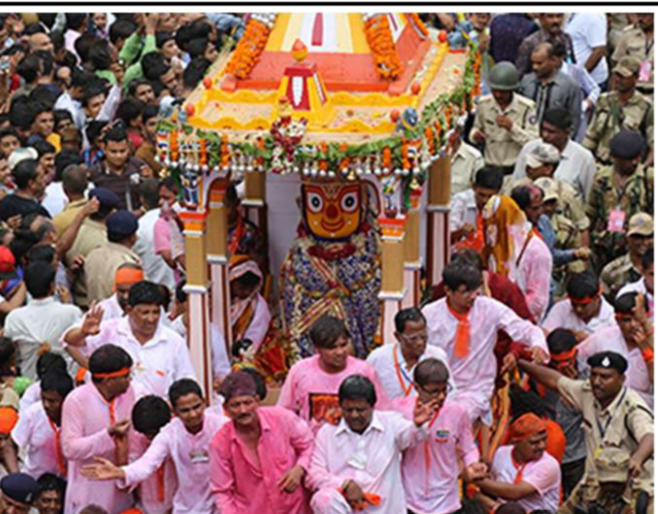
Shree Jagannathji temple

• Situated in Ahmedabad, Gujarat.

• Established 460 years ago – beside river Sabarmati.

• Main deities – holy trinity – Lord Jagannath, Lor Baldevji, Goddess Subhadra Ji.
 Idols installed in the temple by sadhu Shree Sarangdas ji.
• Sadavrat – yeoman service – meals every day to 1000 to 1200 needy, poor persons
including saints irrespective of caste, creed and religious distinction.

Rath yatra

• Also referred as Ratha-yatra, Ratha-jatra

  • ‘Chariot festival’ – public procession in a
    chariot carrying a deity.
  • • Particularly annual Rathayatra conducted in
    Odisha, Jharkhand, Gujarat, West Bengal
    and other East Indian states.
  • • Chariot carrying holy trinity and the
    Sudarshana Chakra.

• Shree Jagannathji temple Rathayatra – introduced in 1878.
 Conducted on the Ashadhi Beej every year.
 Starts with pahind vidhi – cleaning the way
for the chariots using a golden broom.
 Led by 15 to 20 elephants in decorative dress + group of trained athletes performing aerobatics + disciples with
decorative flags of the temple.
 Finally comes the Holy Trinity on chariots pulled by devotees.

If You Can Believe It, You Can Achieve It

Belief creates the actual fact.

I know what you’re thinking. “This guy probably read a motivational quote on social media and now he’s telling us that nothing is impossible. Yeah right.”

I think the world has no shortage of motivational articles, books, videos, or Facebook posts.

You don’t need a bigger dose of #mondaymotivation. You know why? That type of motivation is not practical. It doesn’t do anything. It’s not useful. It’s the same as drinking Red Bull. It fades quickly.

Belief, on the other hand, is a tool that’s extremely useful. And it’s underutilized by many.

The problem is that most of us lack belief. And when I talk about belief, I talk about it from a practical point of view.

I’m not talking about hope or faith. I don’t believe that you can “hope” for the best, sit back and wait until good things happen to you.

Hope is not a strategy for life. I prefer to look at facts and make conclusions like a pragmatist.

Like it or not, but everything that’s floating in that head of yours is there because you believe it.

  • “Life sucks.”
  • “I’m not good at my job.”
  • “I can never find my dream job.”
  • “No one loves me.”
  • “I will never become successful.”

See? It’s all there because you believe those things. William James, one of the primary figures associated with pragmatism, put it best:

“Belief will help create the fact.”

Belief is a practical instrument that you can use to shape reality.

Have you ever considered that you decide what you believe? Not your friends, colleagues, family, or even the media.

You observe things, and then decide what you believe. That’s why belief creates facts.

No, life is not an R. Kelly song. You can’t fly, no matter how hard you believe it.

A pragmatist always keeps it real.

  • You will never become a respectable leader without putting in the work.
  • Your life will never change unless you take action.

But that’s not the point. You know this. There’s no outcome without action.

It comes down to one thing: Do you believe that you can, or can’t live the life you want?

It’s as simple as that. But it’s something that you truly have to believe.

It’s one thing to say that you believe something. It’s a whole different thing to actually believe.

Let me highlight that by sharing a personal story. For most of my life, I lived in fear. It all started at school. People told me:

“If you don’t get good grades, you will not be accepted to a good university, and without a good degree, you will never get a job, and you will become a bum who dies alone.”

After hearing that, my seventeen-year-old brain went into a full-fledged panic mode. I started believing that stupid story.

Who wants to become a bum and die alone?

That’s a metaphor for not believing in yourself. Because somehow, that’s always the alternative.

If you do something that’s uncommon, or maybe a little risky, the common argument is that you become homeless.

I meet a lot of people who say they’ve made important life decisions based on fear.

  • Do you hate your job, but are you afraid to look for something else because you might lose your house?
  • Do you want to leave your spouse, but are you afraid you’ll die alone?
  • Do you study yourself to death because you’re afraid of what your parents will say when you quit?
  • Do you never expose your work to the world because you’re afraid people will throw rocks at you because you suck?

Will that really happen? Or is that just your mind acting up? Probably the latter.

I always wanted to become a writer. Back in school, I wrote poems for my girlfriend. It was kind of pathetic, but hey, she enjoyed my weird poems. But all jokes aside, I loved to read and enjoyed putting my thoughts on paper.

But no, every adult in my life was trying to scare me to death. “You can’t make a living as a writer.” They were probably right. It’s not easy to make a living by writing.

So what? Everything that’s worth it is hard. I didn’t realize that back then.

So I gave up my goal. I decided to pick the safe road and pursue a degree in business. I don’t regret that decision because I’ve learned many useful things.

But the whole experience turned me into a fearful creature. Because after that whole scare-fest in school, I eventually stopped believing in myself.

I stopped writing and reading. And that’s a pure waste of time that I could’ve used for practicing my skills.

You can achieve anything (as long as you believe in it).

What’s something you once believed in but stopped believing because of fear? I think we’ve all been there. If you’re not careful, you’ll always stay there.

For me, it wasn’t until two or three years ago that I figured out belief is an instrument that can help you to achieve your goals.

Somehow I started reading about pragmatism (which is a way of thinking).

And it completely changed my own way of thinking. I realized that not believing in yourself is useless. So I decided to believe that I could live the life I wanted.

Granted, I’m not fully paying the bills by writing yet. I run a business and do consult. But I do make some money with my blog. And that’s pretty good to know for the seventeen-year-old version of me.

Believing in yourself is very simple. You can do it too. Just understand that belief is an instrument. That idea is not new or anything. It’s been around for hundreds of years. People just have different names for it.
I don’t care how you call it. But guess what happened since I’ve been using belief as an instrument? Most things I believed are facts now. And the other stuff I believe will one day become a fact.

How am I so certain?

Because my mind can conceive it. And if your mind can conceive it, you can achieve it.

That’s not a motivational quote. That’s a fact.

Do you believe it?

Indian Culture – Varied but one


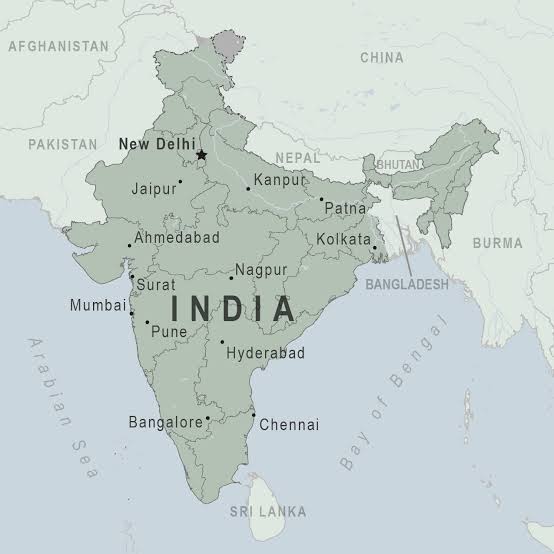
India is a country with vast culture and several religions within itself. Before, getting into the context let us know what exactly the word culture mean.


Culture can be defined as knowledge of a particular group of people, cuisine, religion, rituals, language, arts and music, etc.


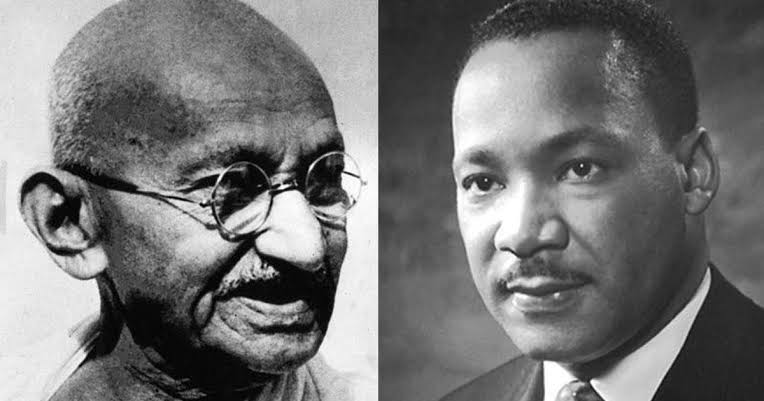
Indian culture is one of biggest and most complex cultures to understand in the world. With 29 states and 8 union territories and more than 4 religions in a single country, India stands rich in its literature. Even though, the nation has 80.5% Hindus, 13.4% of Muslims, 2.3% Christians, 1.9% Sikhs with 2 billion followers in total the unity of the nation holds strong. There is always culture in everything from God to Art in India . It has to be mentioned here that ‘Indian Gods’ play a major role in the ocean-like Indian mythologies. From Mahabharat, India has had the culture of giving priority to prayers. The religions that originated in India are based on the concepts of dharma and karma (Hinduism, Jainism, Buddhism and Sikhism). Ahisma, being an important aspect of Indian culture, has played a major role in India’s struggle for Freedom. Mahatma Gandhi, a freedom fighter, followed Ahimsa to gain freedom for the nation which was later took as an inspiration by Martin Luther King Jr.
Atheism is seen as a rejected concept by most of the Indians. Atheists are seen as aliens in the country. Even though, it is a personal choice of a person it is often not understood by many, which shows their deep passion for religions, gods and prayers.

Mahatma Gandhi (left) and Martin Luther King Jr ( right)


This country with vast culture celebrates several festivals. With half of them being celebrated by the nation together (Diwali, festival of lights) and rest celebrated by a particular group of people from an area or state (Onam being celebrated by Keralites). The three national holidays in India, the Independence Day, Republic Day and Gandhi Jayanthi are celebrated with great enthusiasm.

Diwali – festival of light


India has five major languages that includes Hindi, Tamil, Telugu, Malayalam and Kannada. Each language has its own history with Tamil being considered as one of the oldest and classical languages in the world. Hindi being considered as the national language by many.


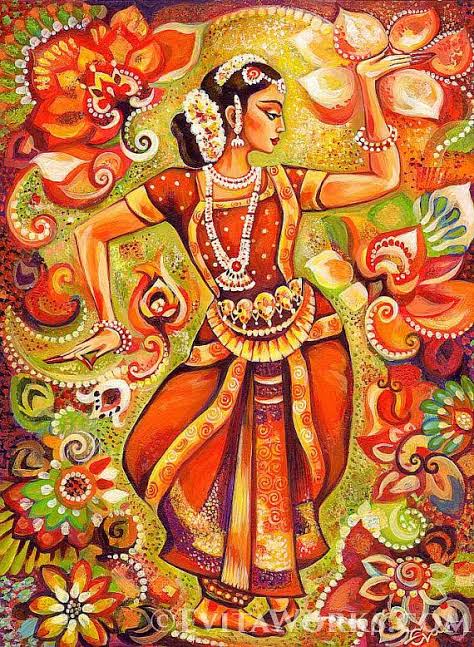
India has eight classical forms of dance. Indian Art has always had mythological elements in it. With Bharatanatyam from Tamil Nadu, Kuchipudi from Andhra Pradesh, Mohiniattam from Kerala, Yakshagana of Karnataka, Manipuri from Manipur, Odissi from Odisha, Sattriya from Assam and Kathak from Uttar Pradesh. Apart from the classicals dance forms, Indian regions have a strong dance tradition from Bhangra of Punjab to Dekhnni of Goa.

Bharatanatyam- a classical dance form


Hockey is often seen as the national game of India, though Indian Government has denied it. Indian Government has clarified India currently doesn’t have any national game. Martial Arts being another traditional sport that originates in Kerala. Kalaripayattu (400 BCE-600 CE) in the Sangam literature is one of the oldest martial arts in the world. Ayurvedic Massage with Sesame oil is also considered as a form of Martial Arts.
India being a roof for varied cultures and religions, still stays together and strong.

Kalaripayattu – martial arts

The Silent Patient – Going to break my silence over it

Silent patient written by Alex Michaelides is the first psychological thriller I have ever read. Hence I am going to be reviewing it like a thriller novice, as it’s my first encounter with psychological warfare that’s unleashed by this book. 

Plot Summary

This story essentially revolves around Alicia Berenson and her silence.  Alicia is an artist who fortes in painting photorealistic oil paintings, which becomes the reason for her popularity. But one day when the police are called to her house her reason for popularity alters when they find her husband, Gabriel dead.  Shot in the head five times by her and with a refusal to speak anything after that. 

Six years pass since her refusal to speak, no one has heard one word from her. Sitting in the Grove, a forensic institute, we still don’t know what was the reason she committed such a brutal crime. The only clue is the last painting she painted after killing her husband and her long long silence. 

Someone finally takes the dare to solve this mystery, this how our second primary protagonist is introduced. Theo Faber, a psychotherapist with a keen interest in Alicia Berenson. Through Theo we come face to face with many elements in Alicia’s life, that may have been instrumental in the murder. 

Review

The book is written in fairly simple language, there is not much medical jargon that might have made this book complex. The two protagonists are well developed. But other than that, secondary characters are not given much attention. As the story majorly revolves around the two primary characters. 

The story is an easy read, but it is slow progress. You get to know about Alicia and Theo little by little. The driving force behind the story is essentially the question WHY, why did she kill him. While it is a good motivator to continue the book, it lacks the drama and volume for a perfect ending. 

The part I liked the most was the ending because it was a well worthy twist to wait for, but I did get an inkling for the last twist. And hence it lacked the dramatics. 

This book also gave me an insight into the world of psychology, it brought forward the inner working of our brain and how it works under absurd circumstances. The importance of past and childhood can clearly be seen in this book.  Giving some compelling takeaways as psychology lessons. 

Should You Read This Book ?

As a novice, I would definitely suggest giving a one-time read to this book. It is a good book to enter the world of psychological thrillers. Its simple language is definitely suitable for everyone. But if you are looking for a book with adventure and excitement, then maybe this book is not for you. I would give this book  3.5/5 for its interesting plotline and easy to follow plot. 

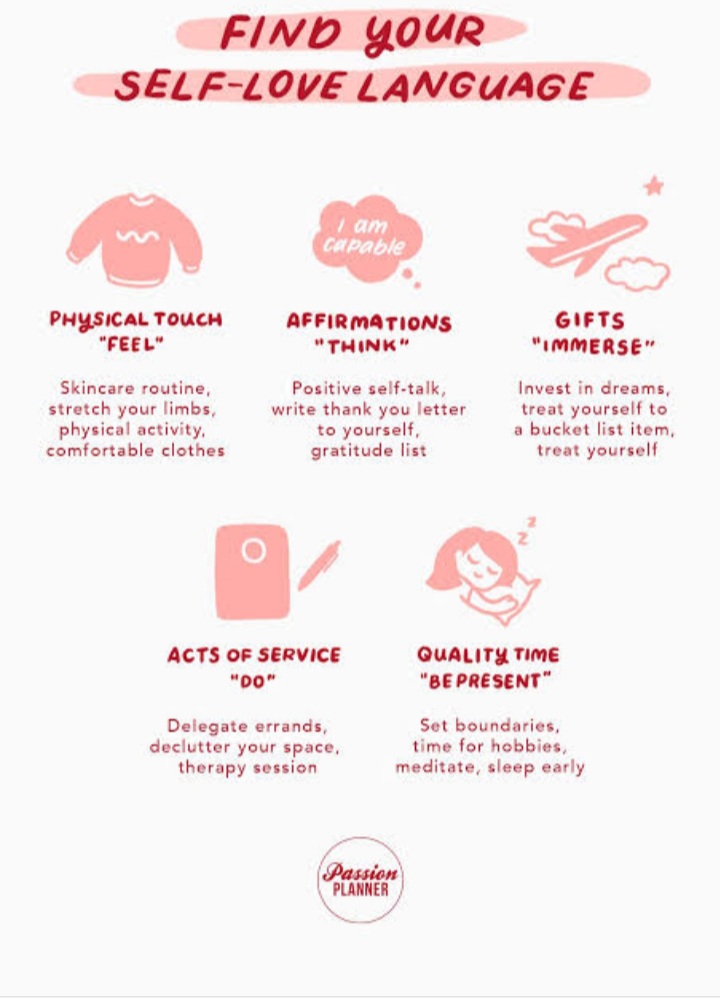
Find your self- love language

When you think of the term love languages, the first thing that may come to mind is relationships and romance. But finding your self- love language is actually an important factor in your self care routine. Here are some helpful tips .

Before delving into self- love languages,let’s know about where this concept from. In 1992, Dr. Gary champan wrote a book called The Five languages. In the book ,he discusses five different ways to express love with your partner. They include words of affirimation,acts of service, receiving gifts, quality time and physical touch.

Champan notes that discovering your love language can help you communicate and better connect. With your love! He also adds that everyone expresses and recieves love differently , so it’s important to understand your love language.

1. Quality Time :

If your love language is quality time, you adore just being together with the person you love .A perfect day would be hanging out with your loved ones and simply enjoying the moment. Why not apply this to your self care routine? Be mindful of how you spend time with yourself. Give yourself the undivided attention that you would want from someone else.

Self- love Ideas for Quality Time :

* practice mindfulness.

* spend a day at the coffee shop.

* Do a gudied meditation exercise.

* sign up for a yoga class.

* Enjoy the sunset.

* Go for a drive.

* start a garden.

*Go on a solo- trip to a dreamy destination.

* Read a chapter of a new book before bed.

* paint a picture.

* Treat yourself to dinner at your favorite restaurant.

* Listen to your favorite album on repeat.

* stargaze.

* watch a meaningful movie.

* sit on your porch.

* Go on a nature hike.

2. Words of Affirmation :

Sometimes, it’s nice to just hear the words,”I love you” or ” you did a great job”, If words of affirimation is your love language,you feel happiest when someone expresses their affection in words. Similarly ,you should speak loving to youself.At times, we can be our own worst critics. Replacing negative self- talk with kind words is a powerful way to show yourself love.

Self -love ideas for words of affirimation:

* Recite daily positive affirmations

* stick encouragingnotes on your fridge.

* write yourself a loving letter.

* keep a gratitude jar.

* Remind yourself of your dreams by making a vision board.

* Be aware of how people in your life speak to you.

* Talk about your passions with others.

* Forgive yourself for past mistakes.

*Give yourself a compliment.

* write a list of things you’ve accomplished this year.

3.Receiving Gifts:

When it comes to this love language,it’s the thought behind the gift that counts. You love the idea that someone bought or made a gift with just you in mind. If receiving gifts is your love language ,you truly appreciate when people listen to your interests and passions.

Let’s say that you adore all things music. You’d probably feel emotional if your loved ones suprised you with tickets to your favorite artist’s concert. Another thing that would mean the world to you is if they made you a personalized playlist! Overall, small gifts make you feel special because someone you love thought about you

Self-love Ideas for Receiving Gifts:

* Treat yourself to a small gift from yore fav shop.

* Buy a ticket to see a local show or movie.

* Invest in your hobbies and passions.

* Decorate your workspace with positive knickknacks.

* create a scrapbook of memories & mementos.

* Make yourself a self care kit.

* start a DIY project just for fun.

4. Physical Touch :

If physical touch is your love language,a hug from someone you care about can make your wholeday. Showing affection through physical touch calms you down and makes you happiest. When it comes to self care , take the steps you need to feel more in tune with your body. Doing so well bring you a sense of calm.

Self-love ideas for physical Touch:

* cook yourself a healthy dinner.

* Get some fresh air

* Light your favorite candle.

* work on your skincare routine.

* sign up for a fitness class.

* Enjoy a cup of tea.

* Drink a glass of water

* play with makeup.

* Go to the gym.

5. Acts of service :

On to the final self- love language _ acts of service! When I took Dr.chapman’s quiz,I was’nt too surprised that this was my personal love language.At the end of the day ,this love language is all about showing the people in your life you care.

Self-love Ideas for Acts of service:

* check off your to-do list.

* Donate to a local charity.

* Learn how to set boundaries and say no to things that drain your energy.

* Make your bed in the morning.

* Give yourself braeks throughout the workday.

* pick up your favorite snacks at the store.

Gandhi ji and Communal Liberty

Gandhi is an important figure in India’s national movement. A phase of our national movement is called the Gandhian Phase. Nation is defined as a people sharing a common language, history and culture and having a sense of belonging to their common identity. The idea of nation was combined with the nation of the state. It developed where the people of one nation were suppose to live in one state. Nationalism has 2 versions: Premordial and Modernist.

Premordial versions means is the the original versions of nationalism in which the nation has a common language, culture, ethics and history. The modernist version however they treat people like a particular territory and sharing its civic amenities despite loving different ethic on regular affinities.

Gandhi ji was one of the nationalist who was the leader of many movements. He helped us to get independence. He believed in non- violence. He lead many movements in his opposition to the British rule like Satyagraha, Dandi March, Khilafat Movement, the non-cooperation movement. For Mahatma Gandhi, nationalist was based on understanding what was required for people to be free. He was not a socialist but, in common with the socialists, he believed that capitalism could never solve the problem of unemployment and the mental dullness is produced. Gamdhi ji also fought against the practices of sati, child marriage, oppressions of widow, ‘pardah’ and fueled emancipation of women.

Gandhi ji on Communal Liberty

India is a land of diversity. Populated by heterogeneous people of multifarious languages, religion, castes and creeds. Inspite of such diversities of character, there is always an underlying unity among them since time immemorial. The fact also remains that there is always a threat to narrow communal feelings. In modern India, gandhi was one of the greatest champions and communal unity. He lived his whole lofe striving for it, ensuring it, stood firmly by itand finally sacrificed his life in the pursuit of his communal unity. For Gandhi the life of communal unity was even greater than swaraj. None of the political leaders or religious priests were as devotedly concerned about communal unity as Gandhi ji was. Gandhi ji saw truth, love, compassion and service enlisted in all religions, which led him to accord equal respects to all faiths. All religion insist on equality of human race and developing a harmonious relationship with the entirety of creation. Any violation of the principle of equality gives way to conflict and violation. Gnadhiji regarded Islam as a religion of peace in the same sense as Christanity, Buddhism and Hinduism. No doubt, there are differences in the degree. He said in this regard that he knew the passages that could be quoted from the holy Quran to the contrary. Hindu and Muslim has often raised a great challenge before India became secular. Without unity between Hindu and Muslim no certain progress can be made by the nation tenet that ‘unity is strength’ is not merely a copy book maxim but a rule of life. Hindu-Muslim unity means not only unity betwwen Hindus and Muslims but betwwen all these who believe India to be their home, no matter to what faith they belong. Gandhi ji did not fully succeed in Hindu-Muslim unity . Some writers felt that Gandhi ji locked a historocal perspective. He did not take into the account that held that religion with its dagma, tradition, customs, rituals and historical memories has on the minds of men and women in the pre modern society. Gandhi assigned only a derination role to the cultural factors. He did not grasp the deeper social and cultural roots of the hindu-muslims conflict. Gamdhi placed the entire blame for the communal problem on the British. He thought that hindu-muslim was essentially religious amd missed the social aspect of the problems. Gandhi always emphasized upon the necessity of openness of mind for the unity and harmony of the society. It was not a question of failure or success. Gandhi realised that the only alternative to violence coercion, retribution and chaos was restoration of society among the misguided individual to counter Frenzy and indictiveness, gandhi sought rehabilitation of balanced social interrogation among the masses to reslove to put the cause of nation above all denominated prejudices. Today, India is a secular nation. Democracy is mature, muslims have got equal rights and opportunities and are more secure in India than in any other country. The credit goes to the founding father of contribution and Mahatma Gandhi.

Color psychology

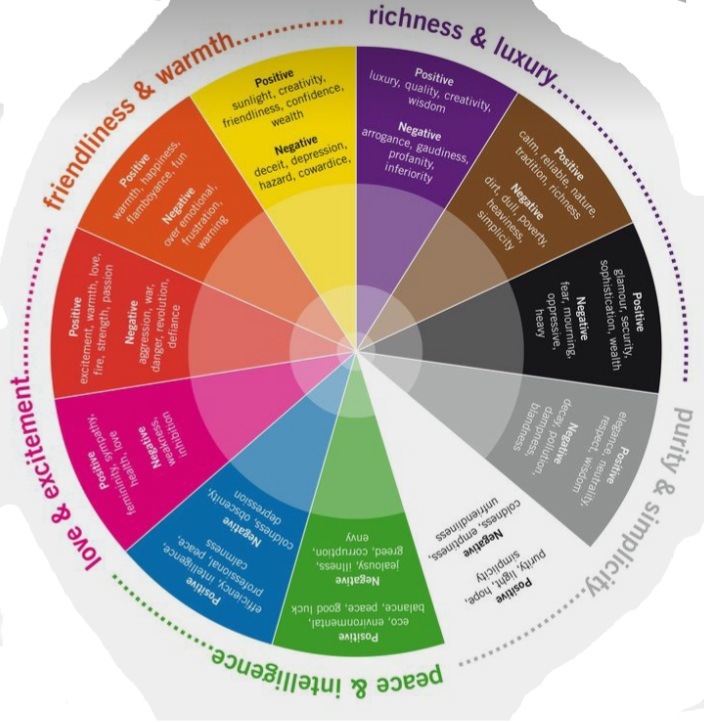
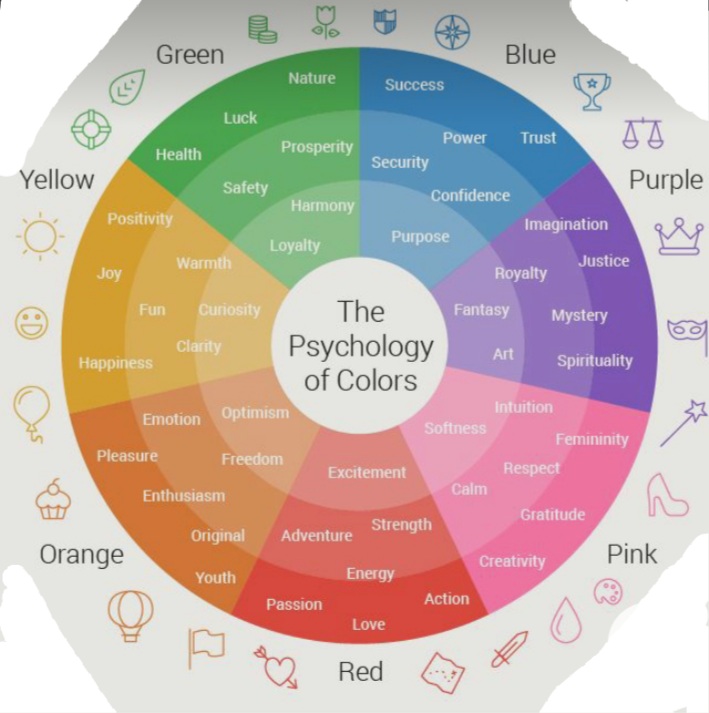
Color is a communicator. It has a language all its own that we utilize, and culturally participate with, on a daily basis. Color can inspire moods from outside in interior designers and decorators know this. To initiate color choices, color professionals.Mere color,unspoiled by meaning,and unallied with definite form, can speak to the soul in a thousand different ways.

It is used effectively color theory is one of the most powerful tools a designer can wield. Colors are a form of non verbal communication that can speak volumes in a fraction of second. They can instantly set a mood,convey an emotion,invoke a physiological reaction or inspire people to take action.when we harness the right color emotion to help tell a client’s story it can have a powerful effect. Below is a list of PMS colors and their associated moods.

Red :

Evokes strong emotions like passion or intensity, encourages appetite,symbolizes love and danger, Eyes look to red first, it draws attemtion,creates movement and exctiment, Too much red however,feels hostile. Use to stimulate quick decision making, shows to increase respiration rate ,raise blood pressure and enhance metabolism.

Yellow :

A spontaneous yet unstable color, associated with joy, intellect , energy, happiness, and food. Use to attract attention. When overused it can have a disturbing effects, studies have shown that babies cry more in yellow rooms. Cherrful, warm and symbolizes energy and increases metabolism. Yellow also causes the brain to seretonin, giving one a feeling of optismism . That is all well are good but if used wrongly on a brands graphics and especially on a website, and can strain eyes and cause eye fatigue.

Blue :

Number one color preferred by males. Symbolizes trust, loyality, wisdom, confidence, intelligence, faith, truth. Use to promote cleaniness, stability and hi tech products. Shown to supress ones appetite and stimulate productivity.

Orange :

Highly accepted among the younger generation. Associated with tascination, creativity, determination, attraction, encouragement and stimualtion. Effective in promoting food products by stimulating, appetite. Increases oxygen to the brain amd stimulates mental activity.

Green :

The color of nature that involves a healing power. Symbolizes grown relaxation, harmony, freshness and fertility. Use to promote saftey and tranqullity. Stimulates harmony in the brain promoting balance between body and mind.

White :

A depiction of faith and purity. Associated with safety and cleanliness. Use to suggest simplicity and sterlitity in products. Acts as a clean state and helps to promote creativity.

Purple :

The color of royality. Associated with luxury, ambition, wisdom, dignity, independence, creativity and magic. Use when marketing toys to children. Surveys taken have shown that 3/4 of childen prefer that color purple.

Black :

A mysterious yet authoritative color, associated with elegance, formality, fear, death and evil. Use behind bright colors to make them pop. Know to create a slimming effect when worn.

Gray :

Gray is the perfect neutral to work with in a graphics environments and has less reflection than white. Evokes a sense of professionalism and calm. Seen a sleek and high-end and gives one a sense of stability. Too much evokes a feeling of aging, depression and loss.

Pink :

A calming and warm color that evokes love and romance. Pink is a clean and feminine color. Recently however, there has been a backlash against is overuse in product packaging, giving rise to the term ” pink- washed”.

Color Harmony :

Color is similar to musical notes in many ways, and there are certain combinations of colors that are pleasing when put together, approximately called color chords or color Harmonies.

Complementary :

Colors that are opposite of each other on the color wheel are called complementary colors. The high contrast between complementary colors when seen together causes them to stand out more and has a very vibrant look, but can be tricky to use in large doses without being too intense.

Split- Complementary:

Split – complementary is a variation on complementary. It uses one color and the two adjacement colors to its complement to bring the same strong contrast as complementary color combinations,but with less tension.

Analogous :

Using colors next to each other on the color wheel tend to give designs a feeling of unity and serenity. Because these colors are similar in hue, having constrating values is important when using analogous combinations to keep colors distinct from each other.

Triadic :

Triadic combinations are made with three colors located equal distance from each other on the color wheel, such as red, yellow, and blue making a triangular pattern. This harmony has a tendency to be vibrant despite satuartion, and is often more impacting when one color is used more than the others.

Classification of Law in Jurisprudence

International Law and Municipal Law

Law maybbe broadly divided into two classes: international law and municipal law. Whatever the objections raised against the claim of international law to be called international law, it is now recognised that international law is not only law but also a very important branch of law.

International law is divided into two classes: public international law and private international law. public international law is that body of rules which governs the conduct and relations of the States with each other. by private international law we mean those rules and principles according to which cases having foreign element are decided. if a contract is made between an Indian and a Pakistani which is to be performed in Sri Lanka, the rules and principles on which the rights and liabilities of the parties depend are to be determined by private international law. Critics point out that the term private international law is not correct. The adjective “international” is wrongly given to it as it does not possess any characteristics of international law. Private international law applies to individuals and not to States. Moreover, the rules and principles of private international law vary from State to State and there is no uniformity. Private international law is enforced by municipal courts which apply municipal law and not international law. In order to avoid controversy, it is suggested that private international law be called Conflict of Laws and should be treated as a branch of municipal private law.

Municipal Law

Municipal law is the law applied within a State. It can be divide into two classes: public law and private law. Public law determines and regulates the organisation and functioning of the State and determines the relation of the State with its subjects.

Public law is divided ito three classes: constitutional law, administrative law and criminal law. Constitutional law determines the nature of the State and the structure of the government. It is superior to the ordinary law of the land. Constitutional law is written in India and the Unites States but it is unwritten in England. The modern tendency is to have written constitutons.

Administrative law deals with the structure, powers and functions of the organisation of administration, the limits of their powers, the methods and procedures followed by them and the methods by which their powers are controlled including the legal remedies available to persons whose rights have been infringed.

Criminal law defines offences and prescribes punishments for them. It not only orevent crimes but also punishes the offenders. Criminal law is necessary for the maintenance of law and order and peace within State. In criminal cases, it is the State which initiates proceedings against the wrongdoers. The State is always a party in criminal cases.

Private law regulates and governs the relations of citizens with one another. The parties are private individuals and the State decides the disputes among the people. There is great difficulty in classifying private law. A general classifiactionof private law is the law of persons, the law of property, the law of obligations, the conflict of laws, contaracts, quasi-contracts and tort.

Critics point out many defects in the above classification o laws. Many of the classes of laws do not exist in many legal systems of the world. Those branches f law which have recently been developed cannot be put under any classification. The result is that the classification given abone is neither universal nor exhaustive. Many jurists have attempted classifications on different principles. New branches of law are growing and developing rapidly in different parts of the world and provision has to be made for them in any classification of laws. Industrial law and commercial law are such subjects.

Conversion to Islam and Marital Rights

Introduction

Muslim law applies to-
        1)   Mohammedans by birth, as well as to,.                                                               

2) Mohammedans by conversion.

A non-muslim , who has attained majority and is of sound mind may embrace Islam in any of two modes:-

a) He may simply declare that he believes in the oneness of God and the Prophetic character of Mohammad,or

b) He may go to a mosque, to a person who is well versed in Islamic theology (Alim), where he utters Kalma (Lailaha-ill-Allah Muham-mad-ur Rasoolullah) before Imam, whereupon he is given a muslim name by the Imam. It is however, necessary that the conversion must be bona fide; the Court will not permit any one to commit a fraud upon the law by pretending to be a covert Islam in order to elude te personal law by which he is bound .

In Rikhya Bibi v. Anil Kumar , a hindu women accepted Islam in order to get rid of her Hindu husband, who was impotent. It was held that her conversion to Islam was colourable and was effected with the intent to commit a fraud upon the law, and was therefore invalid and ineffective.

Conversion to Islam and Marital Rights

According to Muslim Law, a distinction, is made between conversion to Islam of one of the spouses when such conversion takes place-
1) In a country subject to Muslim Law, and

2) In a country where the Law of Islam is not the law of the land

In the first case, when one of the parties embraces Islam, he should offer Islam to the other spouse , and of the latter refuses, the marriage can be dissolved. In the second case, the marriage is automatically dissolved after the lapse of a period of three months after the adoption of Islam by one of the spouses. The courts in India do not administer the laws of any particular community but they administer such laws as are valid in India. Muslim Laws is administered only in those cases where it happens to be the law of India and where the parties are muslims. In India , the spouse who has become a convert to Islam can sue for divorce or a declaration of dissolution of the marriage on the ground that the other spouse has refused to adopt the Muslim religion. It has been held in Pakistan that a marriage of a Hindu married woman on her conversion in British India to Islam should be regarded as dissolved on the completion of three of her monthly couses without any decree or order of the court.

In Sarla Mudgal v. Union of India, the Supreme Court has held that the second marriage of a Hindu husband after conversion to Islam without having his first marriage dissolved under law would be invalid. The second marriage would be void in terms of the provision of Section 494, IPC and the apostate husband would be guilty of the offence under Section 494 of IPC.

In Lily Thomas v. Union of India, the Supreme Court has observed that if hindu wife files a complaint for the offence of bigamy under Section 494, IPC on the ground that, during subsistence of marriage her husband had married a second wife under the other religion after converting to that religion, the offence of bigamy pleaded by her would have to be investigated and tried in accordance with the provisions of the Hindu Marriage Act. Since under Hindu Marriage Act, a bigamous marriage is prohibited and has been constituted as an offence under Section 17 of the Act, any marriage solemnized by the husband during the subsistence of that marriage in spite of his conversion to another religion, would be an offence under Section 17 of the Hindu Marriage Act read with Section 494 of IPC. Change of religion does not dissolve the marriage performed under the Hindu Marriage Act between two hindus. Apostasy does not bring to an end the civil obligation or matrimonial bond but it is a ground for divorce under Section 13 as well as ground for judicial separation under Section 10 of Hindu Marriage Act.

Conversion to Islam and Rights of Inheritance

In the absence of a custom to the contrary, in case of a Hindu converts to Islam, succession and inheritance are governed by Mohammedan Law and not by Hindu law.

Where a Hindu, who had a Hindu wife and children, embraced Islam and married a Muslim woman and had children by her,his property would pass on his death to his Muslim wife and children and not to his Hindu wife or children because under Muslim Law, a Hindu cannot succeed to the estate of a Muslim.

Effects of conversion to Islam

The legal consequences that follow by conversion, may be summarised as under:

1) The religion of Islam is substituted for the previous religion of the convert to Islam, with so much of the personal law as necessarily follows from that religion;

2) The rights and status of the convert become subject to the Mohammedan law;

3) His apostasy (abandonment of religion) has an immediate and prospective effect, from the moment of the conversion and is not retrospective;

4) Conversion of the both spouse, without any intention to commit fraud upon the law, will have the effect to altering the rights incidental to marriage, but this question was left undecided by the Privy Council in Skinner v. Orde.

5) Succession to the estate of a convert is governed by Muslim Law.

Effect of renunciation of Islam

Under the pure Muslim Law Mohammedan after renouncing Islam loses all rights to succeed as Muslim. But now under the provision of the Caste Disabilities Removal Act XXI of 1850, the apostate will lose such rights. The question here arises as to what amounts to apostasy, i.e., abandonment of one’s religion. The answer is that mere deviation from non-fundamental provisons of Mohammedan religion does not amount to apostasy. So long as a person is prepared to accept the fundamental tenets of Islam, he is not an apostate.

Apostsy of guardian – According to Mohammedan Law an apostate has no right to contract a minor in marriage: Hedaya, 392. It is enacted however, by Act XXI of 1850, that no law or usage shall inflict on any person who renounces his religion any “forfeiture of rights of property”, and it was accordingly held in Muchoo v. Arzoon that a Hindu father is not deprived of his right to the custody of his children and to direct their education by reason of his conversion to Christianity. It is submitted that the decision in Muchoo’s case is correct . But the court may in its discretion deal with each case on its own merits.

Effect of renunciation of Islam on Marriage

Marriage of a Muslim husband with a Muslim wife is dissolved ipso facto on the renunciation of the husband of the Islamic religion, their marriage remains intact and is not dissolved.

The renunciation of Islam by a married Muslim woman on her conversion to a faith other than Islam does not by itself dissolve her marriage. But were a woman converted to Islam from some other faith re-embraces her former faith, her marriage with the Muslim husband stands dissolved .


Agusto Boal and Aristotle’s Coercive System of Tragedy

Photo by Ibolya Toldi on Pexels.com

Agusto Boal was a Brazilian activist who brought revolutionary changes to theatre as an artform. In his work Theatre of the Oppressed, Boal extensively discusses about the theatrical form that he developed of the same name. He also explains the politics involved behind various dramatic techniques and criticisms from across the world like Aristotle, Hegel and Brecht. In the first chapter, Boal argues that the Greek tragedies, as defined by Aristotle, is actually a coercive system that enforces state ideologies onto the citizens.

Tragedy, then, is an imitation of an action that is serious, complete, and of a certain magnitude; in language embellished with each kind of artistic ornament, the several kinds being found in separate parts of the play; in the form of action, not of narrative; through pity and fear effecting the proper purgation of these emotions.

-Aristotle

According to Aristotle, Tragedy is an imitation of an action that, through its several characteristics, evokes catharsis or ‘proper purgation of soul’. Every tragedy has a tragic hero who is defined as “a man who is not eminently good and just, yet whose misfortune is brought about not by vice or depravity, but by some error or frailty”. This error in the hero is referred to as his tragic flaw or hamartia. The spectator establishes an empathic relationship with the protagonist and lives vicariously through him as he enjoys a state of happiness brought upon by the same hamartia. Then suddenly, the hero falls from happiness to misfortune. This is referred to as ‘peripeteia’. The spectator along with the hero suffers this but is unable to disassociate with the character due to ‘anagnorisis’, i.e, recognition of the flaw. Furthermore, the tragedy ends with a ‘catastrophe’ wherein, the hero suffers the consequences of his action through death or a fate worse than death. 

Boal sums up this process in three stages. Stage 1, where the protagonist and the spectator take a path towards happiness which then moves towards misfortune. Stage 2, the character and the spectator realise their own hamartia which Boal refers to as an ‘anti-constitutional flaw’; where the state reinforces certain unsaid social set-ups. Stage 3, where after the horror of the catastrophe, the terrified spectator undergoes catharsis through which they are purified of their hamartia. As explained by Arnold Hauser, the tragedians were paid by the state to produce the plays and thus, they naturally denied any plays that went against the state. Through the tragedies, the spectator is emotionally manipulated into thinking that having this hamartia would lead to a terrible fate, thus maintaining the status-quo in the society. This can also be analysed with reference to Althuser’s Ideological State Apparatus. In this context, the values of the state are propagated through theatre which acts as an institution.

Tragedy effectively coerces people into believing that any desire to go against the state will prove disastrous. This reinforces Boal’s statement that, theatre is the most perfect artistic form of coercion. Though Aristotle claims that poetry, theatre and tragedy are not associated to politics, Boal points out that reality states otherwise. And so, it can be argued that artforms, including theatre or its modern variants such as television and film – are all political.

ALL THAT GLITTERS IS NOT GOLD

The line “all that glitters is not gold” occurs in William Shakespeare’s well-known play The Merchant of Venice”. It comes as a shock to Prince of Morocco when he, led by the exterior glitter of gold, chooses the gold casket and loses the lottery of caskets. The line has since then become a proverb. It means, in simple words, that appearances are deceptive. The seemingly beautiful and valuable object may turn out to be something most ugly and worthless.

Therefore, like all proverbs, ‘all that glitters is not gold contains the time-tested truth. It enjoins upon us to be cautious in our approach while judging the worth of a person or object. We should not be led by external appearance. A seemingly good apple may be rotten at the centre. A person may smile and smile, and yet prove to be a villain. An extremely beautiful face of a woman may hide her ugly, vicious character. A charming Cleopatra often proves to be a siren.

It is, of course, human to be attracted by good and beautiful persons and things. When a young man falls in love or goes to select a life partner, he is first tempted or repulsed by the outward appearance of the girl. If he does not pause and judge the real character of the girl, he is destined to rue and suffer for his choice throughout his life. So, it is equally true in the case of a girl in the choice of her would- be husband.

There is a beautiful story in the Bible which warns us against falling in to the seemingly attractive exterior. Eve gets attracted to the beautiful and yet forbidden fruit of knowledge (an apple). She fails to resist the temptation of tasting it. The moment she and Adam eat the forbidden fruit, they are thrown out of the Paradise forever. They bring upon them and their progeny (the whole mankind) endless sufferings in many forms.

In our modern world of glitter and glamour, there are many temptations around us. Most of us get attracted to glittering cars and bikes, gadgets and products of several kinds. Youngsters force their parents to buy them, which land their parents in vicious debt circles. The young men and women realise quite late how some of these attractive gadgets tell upon their health and ruin their careers.

Advertisements on the screen and in newspapers often coax people to buy things which are neither worth their money nor as useful as claimed. Most of us are misled by the utility of some products as they are advertised by some beautiful actresses, popular actors or other celebrities.

Know what happens during period!

Menstruation is the actual time when women bleed. And the entire time between 2 menstruation is called Menstrual cycle.

The excessive pain in menstruation is not normal and this condition is called Dysmenorrhea.

As everyone says period blood is dirty blood but in reality it is not the rejected blood of the body. It is less concentrated than normal blood and it has less blood cells.

“Smuggling pads to the bathroom like it’s some sort of illegal thing gotta be the worst adaptation to patriarchy”

Transgender men may still get their periods, just as transgender women might not have periods.

Girls miss their school 1-2 days every month and it affect their studies and education.

We bleed 5 days in a month and it really sucks

I am a girl
Yes, I am a girl
And like every other girl, I also go through those painful days
The day which comes and goes every month.
When the day comes, I feel like I’m in hell
I don’t have to touch stuff
I am not allowed to go to bed
I am not allowed to go to the place of worship.
I am not allowed to say anything
I am not allowed to cry because of this cycle
I feel like thousands of hammers are breaking my bones.
I go through all these things like – mood swings, cramps, frustration, anger, and much more.
But I am not allowed to cry
I am not allowed to cry even when I feel the worst.
The reason behind this is that I am a girl
I am a girl
And I always taught to hide this
I always have to do that
I always have to be away from everyone
I have to hide this just because I am a girl And I am on my periods

How it feels when I am on my periods and no one understands the pain I am going through…

Superstitions

INDIA

  • Yoan’t enter a kitchen or cook food for anyone else.
  • Can’t enter a place of worship.
  • only enter a place of prayer once we’ve washed our hair on or after the fourth day.
  • Must wash our hair on the first day of our period to clean ourself completely. Buttt on the contrary…
  • If we wash our hair, our flow will be less and it will affect our fertility later in life.

Italy

  • Can’t touch plants.
  • Everything we cook will be a disaster.

UK

  • Tampons will break our hymen and make us impure.
  • Can’t take a bath.

Bolivia

  • can’t cradle babies or we’ll cause them to get sick.

As we know it is just because improper balance of estrogen and progesterone leads to the breakdown of endometrium lining that ultimately causes Menstruation every month.


we were taught to hide this.
Why, why do we have to hide this if it is natural.


This menstrual cycle is a natural thing and this is the reason why only women carry babies.But despite this, we all try to hide this.Everyone knows that this menstrual cycle always comes during it’s duration but everyone tries to hide it.When it is natural then why do we feel shame for this. Why??

Language is Man-made, not “Human Made”!

This is a very simple title, yet a major loophole that our society is facing for many decades. This is not about giving rights to a specific gender but the suppressions which a language creates in the backdrop of society and makes it a center of concern. Never thought language can create such discrimination against two genders.

In colloquial context we see that every day we speak our language and communicate flawlessly yet we never recognized the ocean of problem which a language brings every day.

Profoundly, the title itself gives us the best example as to how we use the word “Manmade”, linguistically whenever a thing is made by a human it is denoted as manmade. But the question here arrives is that why don’t we spell it as human-made?

There are many endless words where the wordings are based on one gender-biased, for say: countrymen, mankind, etc and mostly these words denote men and women were often neglected or ignored since the formation of words.

“Language has always been a media through which many cultures and communities bounded and created a sense of harmony with each other”.

Whereas we can notice that Gender Discrimination has always been a core of fear since civilization. It has become one of the cliché topics when it comes to feminism and cause of this people are ignorant as they assume that the world is changed and there is no more discrimination in today’s society.

Taking back to the advent of the problem we can observe that many writers, critics have battled to always protect the women community as they are always considered the “weaker section of the society”. We can’t deny this fact but, inevitably, they are still subjected when it comes to literature and language.

  1. How Women are Neglected by Language  as Language reflects Patriarchal world:

She says, “Women can either read and choose to stay trapped in their bodies by a language that does not allow them to express themselves, or they can use the body as a way to communicate.”

Helene Cixous (in; “The Laugh of Medusa” )

This very quote is taken from the famous article written by a critic, writer, and feminist; Helene Cixous who has explained how a woman had gone through repression in history and how literature and language had given an upper hand to the men in society to suppress women.

In “The Laugh of Medusa”, she explains how women should find their voice and the Language is the symbol of how a person portrays themselves. “Writing is for you, you are for you, your body’s yours, take it”. This line highlights that it’s high time that women should raise their head and minds and be themselves by being flawlessly independent and break the walls which portray women as fragile and frail.

The author claims that there is a very close relationship between women’s bodies and their writings and both have been repressed by men for centuries. Literature, in particular, explains to us how women as a writer were hard for the audience to accept them due to cultural prejudices laid against them since ages.

Writers like Virginia Woolf show us the patriarchal world through one of her works namely “Room of one’s own” through the lens of all the women present in the world and the problems they go through.

“A Woman must have money and a room of her own if she is to write fiction”. This quote is quite relatable for the women of contemporary society, but this was a major issue which women of the 18th and 19th centuries were facing, to be independent they always needed acceptance to flourish in their fields and for that, they always needed acceptance which was a great hurdle in their lives. For their personal growth, they were bounded to be under 4 walls and do all sorts of wifely duties which gave the society that women are doing dutiful jibs under their husbands present.

But unfortunately, those women were never accepted who was unique and out of the box because society was not people’s perspective, rather it was the male perspective.

Even in “Room of one’s own”, Woolf mentions Judith Shakespeare ( was considered as Shakespeare’s real sister), her character portrays us the devastation a woman goes through while struggling for getting justice.

It also portrays us that many decades of literature didn’t accept women’s works as they were not considered as talented and rather, they were judged based on patriarchal society.

  •  Females were Disowned yet contributed best Literature:

As when we look into 18th century British literature, we can see that several female writers have given an immeasurable piece of works which is still remarkable to date.

It would be a disgrace if we forget to mention  Jane Austen, the Bronte sisters, Virginia Woolf, who were the pillars of 18th-century literature. Whether it is a broody romantic novel of wuthering heights or it is jane Eyre, every writer has spilled their hearts and provided the real situation of women in the era.

Some great writers are unforgettable like J.K Rowling who made us believe in fantasy and made childhood more fascinating by giving us Harry Potter which always provides us nostalgia going back to those days.

Unfortunately, these writers have always struggled to prove their identity to the world, that these immense writers like J.K.Rowling, Emily Bronte, had to change their names to get worldwide recognition. Even in the postmodern age, the situation didn’t change and the process of women hiding their originality, their names was like a custom they followed for ages.

But these female writers never let their readers down and always provided the best piece of art even having so many hurdles in their life.

It’s a long way to go, but still, the situation is better as women are gaining recognition and fame in society, the world, and literature through their masterpieces of works.