Literature broadly is any collection of written work, but it is also used more narrowly for writings specifically considered to be an art form, especially prose fiction, drama, and poetry. In recent centuries, the definition has expanded to include oral literature, much of which has been transcribed.
It takes no compromise to give people their rights ... it takes no money to respect the individual. It takes no political deal to give people freedom. It takes no survey to remove repression.
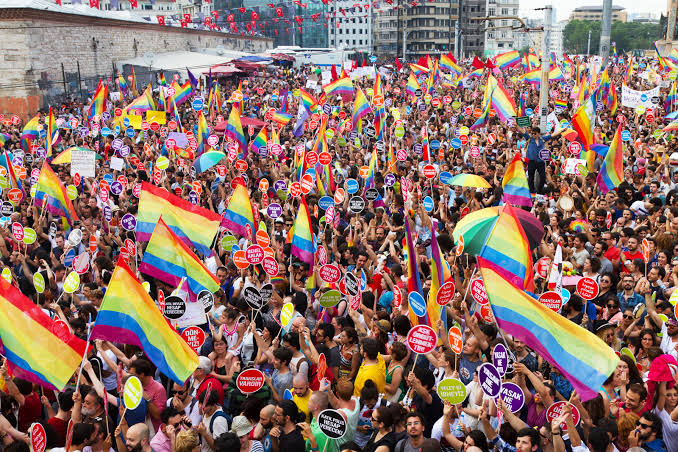
Pride is the stand for dignity, equality and justice for the people who are in relationship or prefer same gender .
Pride has lent its name to LGBT-themed organizations, institutes, foundations, book titles, periodicals, a cable TV station, and the Pride Library.
Pride Month
THE HISTORY OF PRIDE MONTH
During the time of 1950s and 60s the LGBTQ community in United State of America . The initiative to Fight against the odds was taken by two homophile organizations Daughter of Bilitis and Mattachine Society. These two pioneered in carrying out pickets called AnnualReminders. These two organization woke up people to inform and reminded that LGBTQ community didn’t receive civil rights protection.
Gay Is Good The anti-LGBT discourse of these times equated both male and female homosexuality with mental illness. Inspired by Carmichael’s “Black is Beautiful“, gay civil rights pioneer and participant in the Annual Reminders “Gay is Good” a slogan Originated by Frank Kameny in 1968 to counter social stigma and personal feelings of guilt and shame.
CRITICISM FACED BY LGBTQ COMMUNITY.
The criticism faced by the community outside And inside is against the movement of Pride Events. In Many countries the initiative to promote LGBTQ community was taken by the Government officials. Brazil In August 2011, Carlos Apolinário the Aldernman of Sao Paulo City the right-wing Democrats Party sponsored a bill to organize and sponsor “Heterosexual Pride Day” on the third Sunday of December. Apolinário, an Evangelical Protestant, stated that the intent of the parade was a “struggle … against excesses and privileges“. Members of Grupo Gay da Bahia and the Workers’ Party opposed the bill as enhancing “the possibility of discrimination and prejudice”. The bill was nevertheless passed by the city council, but never received the signature of mayor . Turkey. In 2015 police dispersed the LGBT Pride Parade using tear gas and rubber bullets.
In 2016 and 2017, the Istanbul Governor’s Office did not allow the LGBT Pride Parade to take place, citing security concerns and public order.
The Pride March
CONCLUSION.
• people are marginalized and suffer a lot for their human rights. •Their are several Anti-Gay bills passed by some States and some states fought against the odds and help the LGBTQ community to attain their human rights.The issues, challenges and the opportunity experienced by this group in the labor force will draw the attention towards the issues.
Nelle Harper Lee popularly known as Harper Lee was born in April 25 1926. She was an American novelist and known for her classic novel “To kill a Mockingbird”
To Kill a Mockingbird gives a picture of 1930’s fictional town Maycomb, Alabama. The book deals with various topics that was prevalent at that time , from hypocrisy to racism. Though the topic of book is very serious, author has written it in very light tone which makes book less depressing and more fun to read
There are really some interesting characters in the book , my favorite being Jean Louise ‘Scout’ Finch and her fathet Atticus Finch. Jean Louise ‘Scout’ Finch , popularly known as Scout is loud and intelligent girl. She is not afraid of saying what she thinks and deeply resent the idea of ‘Proper lady like behaviour’. She usually gets irritated when her aunt tries to teach her ‘ how a lady should behave’. She is just a girl who wants to live her life like just a regular kid. The whole book is written through her perspective and shows the various encounters she faces in three years of her life from being age 6 years old to 9 years old.
Atticus Finch is a widowed father of Scout and Jem Finch ( elder brother of Scout). He is a lawyer whose life gets changed drastically when he gets the case of black man being accused of raping white woman. Since it was 1930s there was a major racism at that time. So when Atticus takes up the case , almost all the people starts to hate him and his children. Though providing sufficient evidence that black man was falsely accused , he fails to save him from allegation. This shows how at that time black people were wrong in whatever they did and whites were always seemed as correct , no matter what. Atticus is shown as a father who does not have a great relationship with his children but never fails give right lesson and value to them.
One of the most interesting and mysterious character in the book is Arthur Radley , famously known among children as “Boo Radley”. He lives in the same area as of Finch family. There are many rumours surrounding why he is socially reclusive and almost all the people of fears him. Ironically, in the end he saves the lives of Scout and her brother. This book does a really great job in showing how people are often misjudged because of their looks and behavior
Apart from this people there are other characters named Nathan Radley ( brother of Arthur Radley) , Dill Harris ( best friend of Jem and Scout). The first half of book revolves around the life of children ( Scout , Jem and Dill) but the later half proceeds toward a serious note when Atticus takes the case. This book will surely give readers a good laugh and insight of 1930’s hypocrite and racist world.
The Renaissance was a fervent period of European cultural, artistic and economic. Renaissance means rebirth. Following the middle age and conventionally need to add been characterized by a storage of interest in classical scholarship and values and covering the fifth and sixth centuries. It occur after the crisis of the late middle age and was associated with great social changes. The traditional view focuses more on the early modern expects of The Renaissance and argus that it was a break from the past but many students today to use more on it. Mediaeval aspects and argue that it was an extension of the middle ages. The Renaissance also witness that discovery and exploration of new continents the substitutions by the copernilan for the Ptolemaic system of astronomy the decline of the federal system and growth of commerce and the invention of applications of such potentially e powerful innovations as paper painting the marine compass and gunpowder.
The intellectual basis of The Renaissance was its version of humanism as a cultural movement The Renaissance in composite innovative flowering of Latin and vernacular literature which contemporaries credited to Petrarch the development of linear prospective and other techniques of rendering a more natural reality in painting and gradually but white spread educational reforms. Although the Renaissance saw revolutions in many intellectual and social scientific pursuits as well as the introduction of modern banking and the field of accounting it is perhaps best known for its artistic development and the contributions of such polymath. The Renaissance as a long and complex histrography and in line with general scepticism of discrete periodisation, daraz been much debate among students reacting to the 19th century glorification of The Renaissance. The Renaissance was a cultural movement that profoundly affected European intellectual life in the early modern period. The Renaissance was a scholars employed the humanist method in study and searched for realism and human emotion in art.
In addition to studying classical Latin and Greek Renaissance authors also begin increasing need to use vernacular language combined with the introduction of the painting press that would allow many e people access to books especially the Bible. In all The Renaissance could be viewed as an attempt by intellectual to study and improve the secular and wordly both through the revival of ideas. During the Renaissance money and art went hand in hand. Artist depended entirely on patrons while patrons needed money to artistic talent. Scholars and thinkers of the day it was primarily a time of the revival of classical learning and wisdom after a long period Of cultural decline. The Renaissance took place in Europe France Holland and Italy. And the people who were in the Renaissance where Donato Bramant, Erasmus, Giotto, El Greco, Leonardo da Vinci, Michelangelo ,Claudia Monteverdi, Raphael, Tintoretto and Titian.Renaissances thinkers considered the middle ages to have been a period Of cultural decline they sought to revitalize their cultural two emphasising classical text and philosophies some major development of The Renaissance include astronomy humanist philosophy the painting press vernacular language in writing painting and sculpture techniques .
World exploration and in the last Renaissance Shakespeare’s works The Renaissance o 12th century that there were main periods that saw Renaissance in the art and philosophy of antiquity firstly the Carolingian Renaissance which occur during the region of Charlemagne the first emperor of the holy Roman empire and secondly Ottonian Renaissance which developed during the league of emperors Otto 1 otto 2 and Otto 3 and finally the 12th century Renaissance which was especially influential on the later Renaissance.
Once upon a time, a merchant named Sohan owed a huge sum of money to Rohan, a money lender. The time came when the merchant ran out of the last chance given to him to give the money back.
Sohan had a beautiful daughter. Rohan asked the merchant to give all the money back failing which he will marry his beautiful daughter.
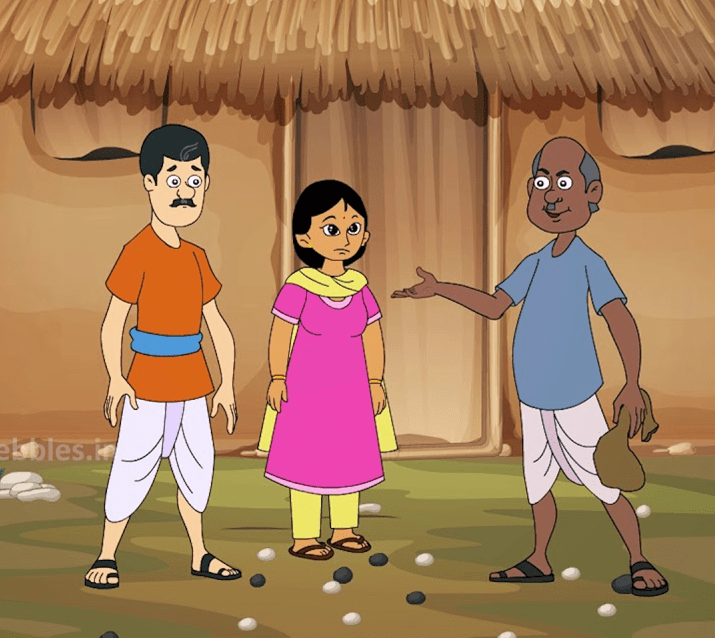
Rohan was not at all good looking and was ill minded, so the merchant was in dilemma. Rohan proposed a new condition. There was a mix of black and white pebbles on the ground where they were standing. He will take two pebbles on both the hands, one will be white and the other will be black.
If the daughter correctly chooses the white pebble, then Rohan will write off all the debt and leave the marriage proposal too. But if she chooses the black pebble, he will write off the debt but will marry the daughter.
Rohan bent down to pick the pebbles from the ground and the daughter noticed that he took black pebbles on both hands.
The girl had three choices- to notify the same to her father which may provoke Rohan, take the black pebble and sacrifice her life or simply refuse to take the pebble which might land her father into trouble. But what she did totally surprise Rohan.
She took the pebble from his hand and ‘accidentally’ the pebble fell off from her hand to ground. She then asked Rohan to see which color pebble was left in his hand to identify the color she picked. Rohan had no other choice but to show the black color pebble in his hand and set them both free.
Moral
Sometimes, life offers a person a situations which not only demands hard work and perseverance but some creative thinking and presence of mind which saves the situation.
The Journalism and mass media is the graduates work nationwide and worldwide at newspapers and magazines and in advertising, branding, broadcast news, social media, marketing, media research, photojournalism, publication design, public relations, radio, and other areas.
The Journalism is the activity of gathering, assessing, creating, and presenting news and information. It is also the product of these activities. Journalism can be distinguished from other activities and products by certain identifiable characteristics and practices.
There are five types,
investigative,
news,
reviews,
columns,
feature-writing.
The Rules Of Journalism
#1: Ask questions.
The journalist’s greatest assets is their natural curiosity. Start with the famed five W’s (and one H), then ask some more. Asking “why?” is what gets you the good stuff.
#2: Dig for the story.
If you think you’ve got the whole story, dig around some more. The most fascinating parts of the story are often just under the surface.
#3: Master the language.
As a journalist, language is your main tool. Read as much as you can and as often as you can, research odd words and archaic sayings, look at what’s behind etymology. Learn the patterns behind language and how to use them.
#4: Spelling matters.
Double-check if you aren’t sure about spelling or style (especially in the case of names), and read through messages and articles thoroughly before sending either.
#5: Know thy publication.
Before you pitch, know a publication’s style, editorial staff and content. Publications are usually more than happy to provide back-issues. If you can’t find writer’s guidelines, send a short introductory email requesting them.
#6: Contacts are your career.
Contacts (and your reputation with said contacts) are your entire career. Editors, sources and interviewees are all vital parts of the journalistic process. Without them, you’d be screwed.
#7: Once it’s off the record, keep it that way.
Trusted sources will tell you all sorts of juicy, fascinating, scandalous and personal things in your career as a journalist, often off the record. Shut up about it.
#8: Three is a golden number.
Mind the rule of threes: Have at least three reliable, corroborating sources for every fact; three interviewees for every article; and read through a piece at least three times before you sit down to change a comma – that’s at least.
#9: Rejection is opportunity.
Getting a story rejected means you’ve just opened up a line of communication with a new editor – congratulations. Pitch again. Rejection also gives you a chance to sell the story elsewhere: Sometimes rejection just means it’s not right for them
#10: Editors are teachers.
You can learn a hell of a lot from the experience of your editors, and when given the chance you should. They braved the journalistic battlefield before you, so you can trust their edits and advice. Usually, they’re right.
#11: Mind the word count.
Yes, you can do that in the assigned word count, and the editor will either make you add or cut if you don’t. Here, they always know better. (Remember this piece of key-advice from The Elements of Style and repeat it as your daily editing mantra: Omit unnecessary words.)
#12: Deadlines are holy.
Deadlines exist for a reason: Never skip out on a deadline unless you are incapacitated or dead. If you have to, let your editor know beforehand and have a damn good reason. Then, don’t do it again. Compare deadlines to menstrual cycles: If you skip one, you might just be stressed. If you skip several, you’re in trouble.
#13: Know the law.
Journalism can take you to some strange places. Make sure you know the law and what side of it you’re standing on at all times.
#14: Always do your research.
Make sure that your research is flawless and that you can always match which source gave which fact. Cross-reference, find first-hand information and do your background research before requesting, planning or conducting an interview.
#15: Have it outlined.
Have the skeleton of your idea outlined and ready by the time you pitch the idea. That way you have all the information ready, and it makes your job – and theirs – easier. Your outline should include the article’s proposed headline, the article’s sub-headers and sections (you can write down facts as key-words here) and who you will interview.
#16: Keep and file everything.
Keep prior notes, interviews, sources, tapes, the lot: You never know when you’ll need it, and you probably will.
#17: Guard your vices.
Many great journalists have been crippled or completely destroyed by their vices – and it can be almost anything: Overworking, coffee, manic exercising, painkillers or heavier drugs. Whatever yours is, keep it in check or risk your job.
#18: Burnout is a rabid, fanged monkey.
Burnout is a myth, until you’re there. It’s a mental and physical size of your writing engine, and if you don’t find your way to unwind you’ll get there a lot quicker.
The Mass media refers to a diverse array of media technologies that reach a large audience via mass communication. … Broadcast media transmit information electronically via media such as films, radio, recorded music, or television.
The types of mass media include Newspapers, Radio, Television, Internet, Magazines and more,
…
What is Mass Media?
Journalism.
Social Media.
Films.
Television.
Radio.
Advertising.
Public Relations.
Books, Magazines, Newspapers and Journals.
RULES OF MASS MEDIA
The Privacy Act works to guarantee privacy to individuals and controls how personal information is used. Defamation in the written form (libel) or the spoken form (slander) is illegal in the United States.
Section 315 (Equal Time Rule) ensures that broadcast media cannot favor any one candidate over another by granting one more time than another. The Fairness Doctrine ensured that radio stations offered equal time to opposing viewpoints.
The Freedom of Information Act grants the public, including the news media, access to many government documents. The Digital Millennium Copyright Act, established in 1998, extended existing copyright laws to encompass and protect information online.
On 10 April 1912, when the largest ocean liner in service at that time, RMS Titanic, started its maiden voyage from Southampton, it was a new beginning in the history. With at least 2,224 people on board, including a number of prominent personalities, the luxury ship that nicknamed as ‘Millionaire’s Special’ was en route to New York City on that day.
Designed to be the epitome of style and safety, the vessel featured many advanced luxury and safety features. Moreover, the ‘unsinkable’ RMS Titanic was commanded by a senior captain, 62-year-old Captain Edward Smith, again ensuring the safety of the vessel and its passengers.
However, the destiny of this spectacular ship was already made. On the 14th of April, the world witnessed what could easily be considered as its most deadly civilian maritime disaster – the sinking of the great Ship Titanic. On that fateful night, at around 11.40 PM Titanic struck an iceberg off the coast of Newfoundland and began to sink.
Over the course of the next few hours, people witnessed the biggest catastrophe to hit the world, and at 2.20 AM on the morning of the 15th, the biggest ship that the world had seen settled to the bottom of the North Atlantic.
The sea, the sinking of the ship and the cold weather were enough to take the lives of 1517 passengers and crew on board. Just 706 of them survived the ordeal to tell the horrific and sad tale to the world.
Why the ‘unsinkable’ Titanic sunk?
As the news of the Titanic disaster reached land, there was shock and outrage directed against several issues that possibly led to the accident. Many legends and conspiracy theories arose almost immediately after the accident on those who died and survived, and also on the reasons behind the sinking of the vessel.
How did the Titanic sink in spite of having the best technical design available at the time seemed a mystery for a long time? This was the question that baffled many scientists and engineers for days after the disaster.
Immediately after the sinking, the investigations into the matter began and in fact, two separate inquiries had been set up – one by the United States Senate and the other by the British Board of Trade.
The U.S inquiry was headed by Senator William Alden Smith and the British one by Lord Mersey. The surviving passengers and the very crew who managed to escape from the clutches of death gave their versions of the tragedy and the investigations were concluded quickly, though the initial questioning and detail gathering took more than a few months.
The results of the investigations revealed that many of the safety measures and regulations of the international maritime were outdated and required a second look. The ship itself was found short on a few of the standards
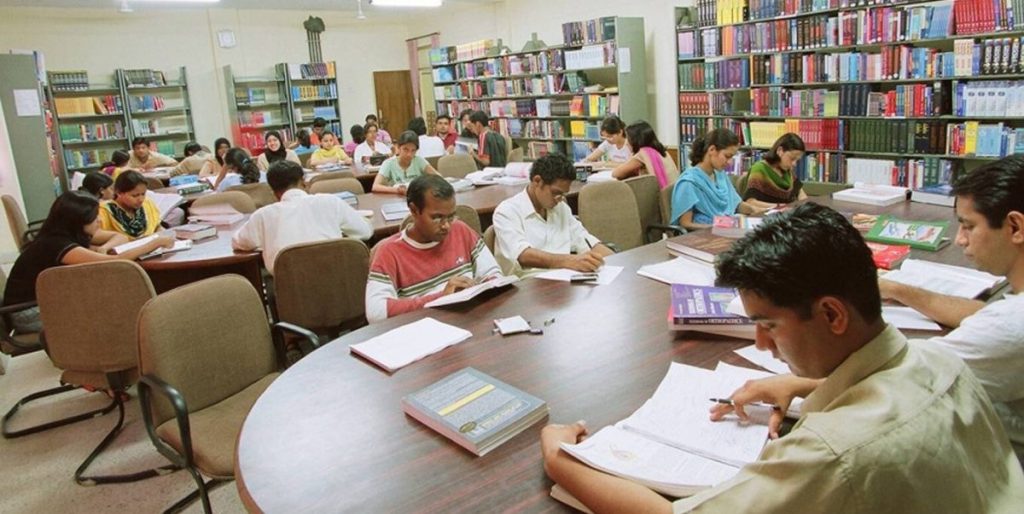
According to WIKIPEDIA, “A library is a collection of materials, books or media that are easily accessible for use and not just for display purposes. It is responsible for housing updated information in order to meet the user’s needs on a daily basis. A Library provides physical (hard copies documents) or digital access (soft copies) materials, and may be a physical location or a virtual space, or both. A library’s collection can include printed materials and other physical resources in many formats such as DVDs, CDs and Cassette as well as access to information, music or other content held on bibliographic databases.”
IMPORTANCE OF LIBRARIES TO MAN
Libraries are said to be the storehouse of culture. If a man is to be known by the company he keeps, society is to be known by the number of good libraries it has. Man’s craving for knowledge is eternal. He wants to know more; he wants to enjoy more. But he cannot always move about for various reasons. He goes to a library and reads books of his choice. Libraries preserve books of various types, old and new. There are also periodicals and daily papers to meet the demands of the people. In all ages, libraries have been considered to be the best medium of public instructions.
The doors of library are exposed to everyone for rewarding the requirement for information. They are run by the government, schools, colleges, and universities. The society members of the neighbouring locality can visit these libraries to boost their information and complete their research.
TYPES OF LIBRARIES
There are different types of libraries, such as public libraries, circulating libraries, private or personal libraries. Of these, public libraries are most important. These are financed either by Government or by public institutions. All readers are allowed to read here. These libraries have two sections-lending and reference. Books are lent out to those who deposit money. Others are allowed to sit a id read books during the period, these are kept open. As libraries spread education, the Government of India have taken up a scheme to establish rural libraries for the benefit of rural people. They sanction annual grants to these libraries in cash or kind. In these libraries, books are stocked to suit the half-literate people of villages.
A FRIEND IN NEED
Government-managed libraries are well equipped and well manned. Only technical men are employed here to help the readers. Quite a large number of scholars, students and members of the public daily attend such libraries for reading and making notes. There are public libraries organised by public institutions. These libraries cater to the needs of a large number of people living in particular localities. Students of schools and colleges also utilise these libraries and derive benefit from them. But these libraries are in bad shape. Government grants to these libraries are not adequate. Public-spirited men now-a-days, are rare. Development of libraries is an important task of a welfare Government. Common people and students get opportunities to read in these libraries. In our country where the percentage of illiteracy is high, these libraries help in expanding the facilities for reading. Public libraries and rural libraries do a lot of good to the localities where they are established. Now the Government has established primary unit libraries, town libraries etc. The Government gives regular grants for the purchase of books and equipment. But still the grants are not adequate. However, they help the public libraries to satisfy the needs and aspirations of the local people.
CONCLUSIONS
So, if we can see deeply a library Builds and helps to connect Community, it Provide Access to the full range of information resources needed to live, learn, govern, and work. It Promote Literacy to both children and adults. It Protect Your Rights to read and offers freedom of information gathering and sharing. People becomes innovative and smart in the company of library, which enhances creation and collaboration.
Every student wants to join a dream college or university.
After schooling, we desire to join a top college or university for the security of our feature
Is a college the same thing as a university? What does “liberal arts” mean? Why are some colleges called public and others private? Here are the basics of the types of colleges.
Let me know about NIT AGARTALA
Institute is committed to developing highly competent young Engineers, Scientists, and Management Professionals to cater to the ever-increasing techno-managerial needs of national and international standards fulfilling professional ethics and societal commitment.
MISSIONS
• To produce techno-managerial human resources in line with global needs, offering a state-of-the-art facility, research, and engineering and allied disciplines.
• To enhance the effectiveness of technical education with innovative systems and devising a mechanism to facilitate the application of research findings to solve real problems of industries/academics.
• To nurture and sustain an academic ambience conducive to the development of intellectually capable and committed professionals so that effective growth is obtained for the region’s economic development and the nation as a whole.
• To establish as the corridor of higher education for the South East Asian countries.
EDUCATION SYSTEM
Presently the Institute offers eight UG courses and PG courses in several fields along with Post Doctoral Fellowships. This Institute is autonomous under NIT being act passed by the parliament.
The Institute recently introduced a new curriculum in IITs where more elective subjects are being offered to make the system flexible. Previously, the Institute used to follow the mark based system of evaluation, but have been switching over to a credit-based system to keep track of the global evaluation methods. Industrial training, Undertaking projects are parts of the education system and students are also encouraged to take various activities for social development through NSS and NCC.
Initiatives
The Institute recently has been converted from State Engineering College to National Institute of Technology. The total seats have been increased from 250 to 420 for the academic session 2007-2008. Recently three Under Graduate courses has been introduced in Electrical & Electronics Engineering, Transportation Engineering and Production Engineering. The Civil Engineering Department will start a PG programme in Structural Engineering to fulfil the requirement of the State. The nonresidential campus is to be made residential with the reopening of two boys hostels and one girl’s hostel for the students admitted for the session 2007-2008. A master plan is under preparation for 335 acres of land where a new campus will be built with modern facilities for the overall requirement of the Institute. The Institute is getting a 33 VK dedicated power supply through Tripura State Electricity Corporation Limited for uninterrupted power supply in the campus. The R. D. Department of Govt. of Tripura took total renovation work of the existing buildings after conversion to NIT. The Institute has also obtained a grant of 12 crore rupees from DoNER for the development of infrastructures like the extension of the Library Building, an extension of the Academic Building, the Centralized Computer Centre, a new water treatment plant and boys and girls common room. The campus is now totally connected through Wi-Fi with WiMAX wireless backbone and all e-journal facilities are available in the digital library of NIT Agartala.
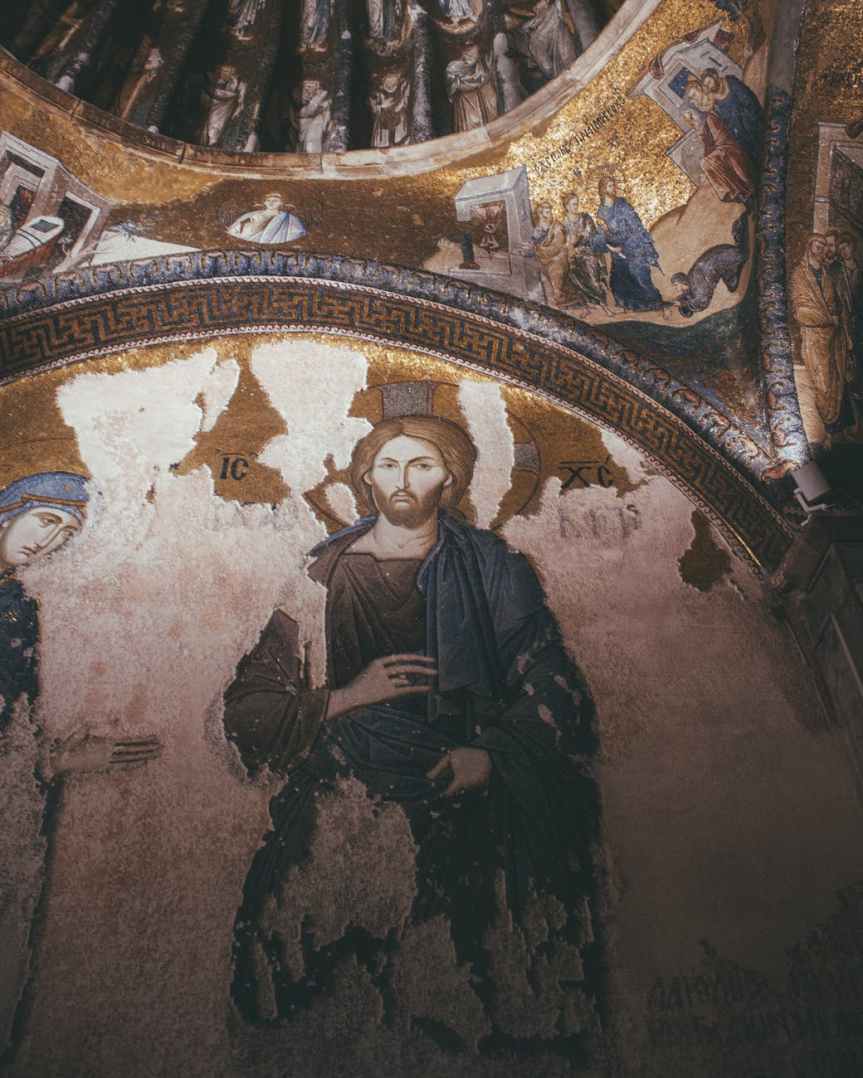
Mysticism is a word derived from the Greek word ‘Mysticos’ which refers to the belief that a person has the potential to achieve oneness with the god. Spirituality and mystics have been around for a long time. It’s a part of humanity that defines a diviner affinity to the belief that God is watching over us and our ultimate goal in this life is to achieve oneness with God. Over the years, there have been several religions that have emerged all over the world, but one of the key differences that separates a spiritual mystic from the others is the fact that they have the tendency to break away from tradition and hence, other forms of religious practices which were considered the norm.
I watch the clouds rupture.
Mira says, nothing can harm him.
This passion has yet
to be slaked.
-Mirabai (Clouds)
A mystic might take on any sort of relationship with the God and it is not restricted to the traditional hierarchical relationship where God is the supreme force who rules over the devotees. The devotees might choose friendship, teacher-student bond, familial bonding or even romantic companionship with their God. Thus, the concept of Bridal mysticism isn’t a new one. It has been around for several ages and is a true form of devotion where a devotee loves their god as they would love their beloved.
Let him kiss me with the kisses of his mouth! For your love is more delightful than wine.
-Song of Solomon (1:2)
The mode of bridal mysticism is so unique, for it negates all the humane all the societal constraints that denies sexuality to women. Bridal Mysticism has no such earthly constraints, it celebrates and even glorifies the bodily union between a devotee and their god, for sexual union is considered to be one of the divinest methods of indicating oneness with God. In this relationship, it is not just the devotee who expresses love, they also understand that their God loves them similarly, just as passionately. The love that persists between the devotee and the heavenly one is pure and true.
If I adore You out of fear of Hell, burn me in Hell!
If I adore you out of desire for Paradise,
Lock me out of Paradise.
But if I adore you for Yourself alone,
Do not deny to me Your eternal beauty.”
-Rabia Al Basri
Bridal mysticism is a practice that can be seen all over the world across all religions. In Christianity, the most explicit, yet the purest form of Bridal mysticism can be found in ‘Songs of Solomon’; a collection of love poems that has been included in the first testament. In it, two lovers go through a series of events that includes periods of blissful union as well as separation. It has been interpreted in several ways over the years, but the love that is cherished between the lover and her beloved is pure. In Hinduism, we see clear indications of Bridal mysticism in the poems of Mirabai from northern India and Antal from southern India. Both of the women adored and loved the Hindu God Lord Krishna. Like any couples, they express their love, grief, jealousy and fiery passion to their beloved God and relish in the devotion that flows through them. In Islam, the Sufi mystics are known for their poetic works which are brimmed with their love for God. Sufi saints like Rabia spoke of a divine selfless love for God which criticised those who loved God out of fear.
Bridal mysticism is also not gender specific. There are numerous instances of devotees from all genders expressing a romantic love, despite the conventional norms. Bridal Mysticism is thus one of the purest forms of devotion that solidifies the bond between a God and their devotee.
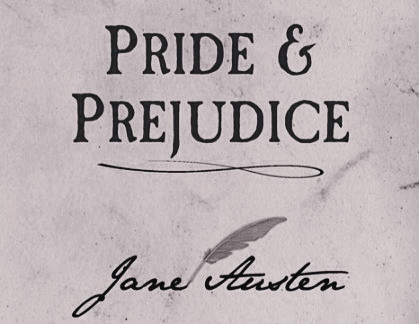
Pride and Prejudice is a romantic novel by Jane Austen, was first published in 1813. It is a classic of English literature which centres on the relationship between Elizabeth Bennet, the daughter of a country gentleman and Fitzwilliam Darcy, a rich aristocratic landowner. The novel throws light on role of women in early nineteenth century Britain. The importance of marriage in the lives of Elizabeth Bennet and her sisters have been revealed which reflects on how hard it is to be in a unmarried state, where one needs to depend on others to support themselves financially.
Those days it was believed that marriage as a vital part in a women’s life who needed support inorder to lead their life. The men were allowed to pursue higher education, then job and were let to live independently whereas women were denied education and as a result only few of them got employed. This situation of women are represented through the story of Elizabeth Bennet and her sisters. The women of those period weren’t given choice of independent life and were left to relay on someone else. Although the daughters of the middle and upper class were sent to school still their education was in a restricted form. It created lesser academic knowledge in them and restricted them from pursuing in various fields. Education for women of that time was only gained through private tutors or private institutes thus higher education got restricted and even those who were able to complete their studies successfully were not able to choose the job of their choice. As these cases can be seen through the novel where Elizabeth Bennet being lively and inquisitive mind was able to further her education independently whereas her sisters needed a more elaborate and structured one. Another major cause for denial of women’s formal education was the less job opportunities. In turn these less job availability paved way for marriage as a unavoidable part of their life. The novel also clearly states how the inheritance of property moves only to the male heirs. In case of unmarried state they remained dependent upon their relatives, receiving small incomes. At the end women were left to depend on men to support themself financially. In order to live a independent life and to ensure it for everyone there was a need for structured form of education. The novel thus clearly portrays the life of women of early nineteenth century and also stands as a record which shows the changes the life of women had been through.
Liquid water may still flow on Mars, but that doesn’t mean it’s easy to spot. The search for water on the Red Planet has taken more than 15 years to turn up definitive signs that liquid flows on the surface today. In the past, however, rivers and oceans may have covered the land. Where did all of the liquid water go? Why? How much of it still remains?
Observations of the Red Planet indicate that rivers and oceans may have been prominent features in its early history. Billions of years ago, Mars was a warm and wet world that could have supported microbial life in some regions. But the planet is smaller than Earth, with less gravity and a thinner atmosphere. Over time, as liquid water evaporated, more and more of it escaped into space, allowing less to fall back to the surface of the planet.
Where is the water today?
Liquid water appears to flow from some steep, relatively warm slopes on the Martian surface. Features known as recurring slope lineae (RSL) were first identified in 2011in images taken by the High Resolution Imaging Science Experiment (HiRISE) camera aboard the Mars Reconnaissance Orbiter (MRO). The dark streaks, which appear seasonally, were confirmed to be signs of salty water running on the surface of the planet.
“If this is correct, then RSL on Mars may represent the surface expression of a far more significant ongoing drainage system on steep slopes in the mid-latitudes,” a research team member told Space.com in 2012.
“The detection of hydrated salts on these slopes means that water plays a vital role in the formation of these streaks,” the study’s lead author, Lujendra Ojha, of the Georgia Institute of Technology in Atlanta, said in a statement. Vast deposits of water appear to be trapped within the ice caps at the north and south poles of the planet. Each summer, as temperatures increase, the caps shrink slightly as their contents skip straight from solid to gas form, but in the winter, cooler temperatures cause them to grow to latitudes as low as 45 degrees, or halfway to the equator. The caps are an average of 2 miles (3 kilometers) thick and, if completely melted, could cover the Martian surface with about 18 feet (5.6 meters) of water.
Frozen water also lies beneath the surface. Scientists discovered a slab of ice as large as California and Texas combined in the region between the equator and north pole of the Red Planet. The presence of subsurface water has long been suspected but required the appearance of strange layered craters to confirm. Other regions of the planet may contain frozen water, as well. Some high-latitude regions seem to boast patterned ground-shapes that may have formed as permafrost in the soil freezes and thaws over time.
The European Space Agency’s Mars Express spacecraft captured images of sheets of ice in the cooler, shadowed bottoms of craters, which suggests that liquid water can pool under appropriate conditions. Other craters identified by NASA’s Mars Reconnaissance Orbiter show similar pooling.
Evidence for water on Mars first came to light in 2000, with the appearance of gullies that suggested a liquid origin. Their formation has been hotly debated over the ensuing years.
But not everyone thinks that Mars contains water today. New research reveals that RSL may actually have formed by granular flows formed by the movement of sand and dust.
“We’ve thought of RSL as possible liquid water flows, but the slopes are more like what we expect for dry sand,” lead author Colin Dundas said in a statement. “This new understanding of RLS supports other evidence that shows that Mars today is very dry.”
That idea may have been washed away by the recent discovery of a possible subsurface lake near the Martian South Pole.
An underground lake?
Researchers made a big splash when they announced that Mars might be hiding a lake beneath its southern pole. The European Mars Express spacecraft used its Mars Advanced Radar for Subsurface and Ionosphere Sounding (MARSIS) to detect the proposed water. Ground-penetrating radar sent radar pulses to the surface, then timed how long it took for them to be reflected. The properties of the subsurface layers affect how long it takes for the beams to return.
MARSIS’ investigation revealed that the Martian south pole is composed of multiple layers of ice and dust to a depth of about nearly 1 mile (1.5 kilometers) spread over a 124-mile-wide (200 km) region.
“This subsurface anomaly on Mars has radar properties matching water or water-rich sediments,” Roberto Orosei, principal investigator of the MARSIS experiment and lead author of the new research, said in a statement.
MARSIS also revealed the presence of a subsurface lake among the pockets. According to the radar echoes, the lake is no more than 12.5 miles (20 km) across, buried nearly a mile beneath the surface. The scientists aren’t certain of the lake’s depth, but they have confirmed that it is at least 3 feet (1 meter) deep. According to the researchers, the lake must have salt to keep from freezing.
“This is just one small study area; it is an exciting prospect to think there could be more of these underground pockets of water elsewhere, yet to be discovered,” Orosei said.
Not all researchers are as certain about the presence of liquid water.
“I think it’s a very, very persuasive argument, but it’s not a conclusive or definitive argument,” Steve Clifford, a Mars researcher at the Planetary Science Institute in Arizona, told Space.com. “There’s always the possibility that conditions that we haven’t foreseen exist at the base of the cap and are responsible for this bright reflection.”
More than three decades ago, Clifford proposed that Mars could harbor liquid water beneath its polar caps in the same way that Earth does. On Earth, lakes beneath the Antarctic and Greenland ice sheets are created when heat from within the planets melt the glaciers in patches. Clifford told Space.com that a similar scenario could happen beneath the Martian polar ice caps.
“The bright spot seen in the MARSIS data is an unusual feature and extremely intriguing,” Jim Green, NASA’s chief scientist, said in a statement. “It definitely warrants further study. Additional lines of evidence should be pursued to test the interpretation.”
“We hope to use other instruments to study it further in the future,” Green said.
Liquid gold
Water may seem like a very common element to those of us stuck on Earth, but it has great value. In addition to understanding how Mars may have changed and developed over time, scientists hope that finding water will help them to find something even more valuable — life, either past or present.
Only Earth is known to host life, and life on our planet requires water. Though life could conceivably evolve without relying on this precious liquid, scientists can only work with what they know. Thus they hope that locating water on celestial bodies such as Mars will lead to finding evidence for life.
With this in mind, NASA developed a strategy for exploring the Red Planet that takes as its mantra “follow the water.” Recent orbiters, landers, and rovers sent to Mars were designed to search for water, rather than life, in the hopes of finding environments where life could have thrived.
That has changed, however, with the flood of evidence these robots have returned. Curiosity determined that Mars could indeed have supported microbial life in the ancient past, and the next NASA rover — a car-size robot-based heavily on Curiosity’s basic design — will blast off in 2020 to look for evidence of past Red Planet life.
Most of the popular anime series like Naruto, dragon ball z, one piece etc. have more than 200 episodes. They are all great shows off course but watching them requires a lot of time. Due to this reason some people refrain from getting into these series. There are however, many series out there which are very good too and very short indeed. Here are some of the short but great anime series. Each of these series have utmost 13 episodes which can be watched in a day or two.
Erased is one of the best short anime series out there. It is a bliss for thrill seekers and for people who like the idea of time travel. The story revolves around a 29 year old man who is sent back in time to erase the events which lead to his mother’s death, which began with a series of kidnappings. The anime has very nice soundtrack and beautiful animation and the plot is very interesting. The characters are well written and overall the series is a must watch.
• Blue Spring Ride (2014) : Episodes: 12 Genre: coming-of-age, drama, romance
Blue spring ride or more popularly known as ao haru ride, is a very decent slice of life romance anime. It is a coming of age drama and shows how the characters grow and change over time. It depicts very well the internal conflicts characters have and is very relatable to watch. The music in this anime is used very well to emphasise the scenes. Overall it is a must watch for those who are into romance genre.
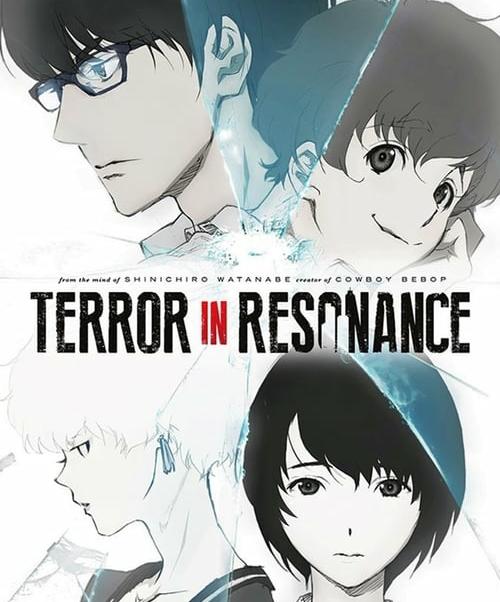
• Terror in Resonance (2014) : Episodes: 11 Genre: psychological, thriller
This is anime is rather underrated but nevertheless it is one of the best short anime thrillers out there. This anime serves everything in just 11 episodes. Excellent storyline, great music, top notch animation etc. It depicts terrorism very differently and deals with many of the contemporary issues. This is a must watch for everyone.
• Angel Beats! (2010) : Episodes: 13 Genre: fantasy
This anime is set in a realm of afterlife where a band of teens fight from being taken to the next level. This is a very nice series and worth your time. It has action, drama, fight sequences, tragedies, music, romance and what not. The concept of this anime is very different and it deals with overcoming the regrets of life. It is an epic journey showcased in just 13 episodes!
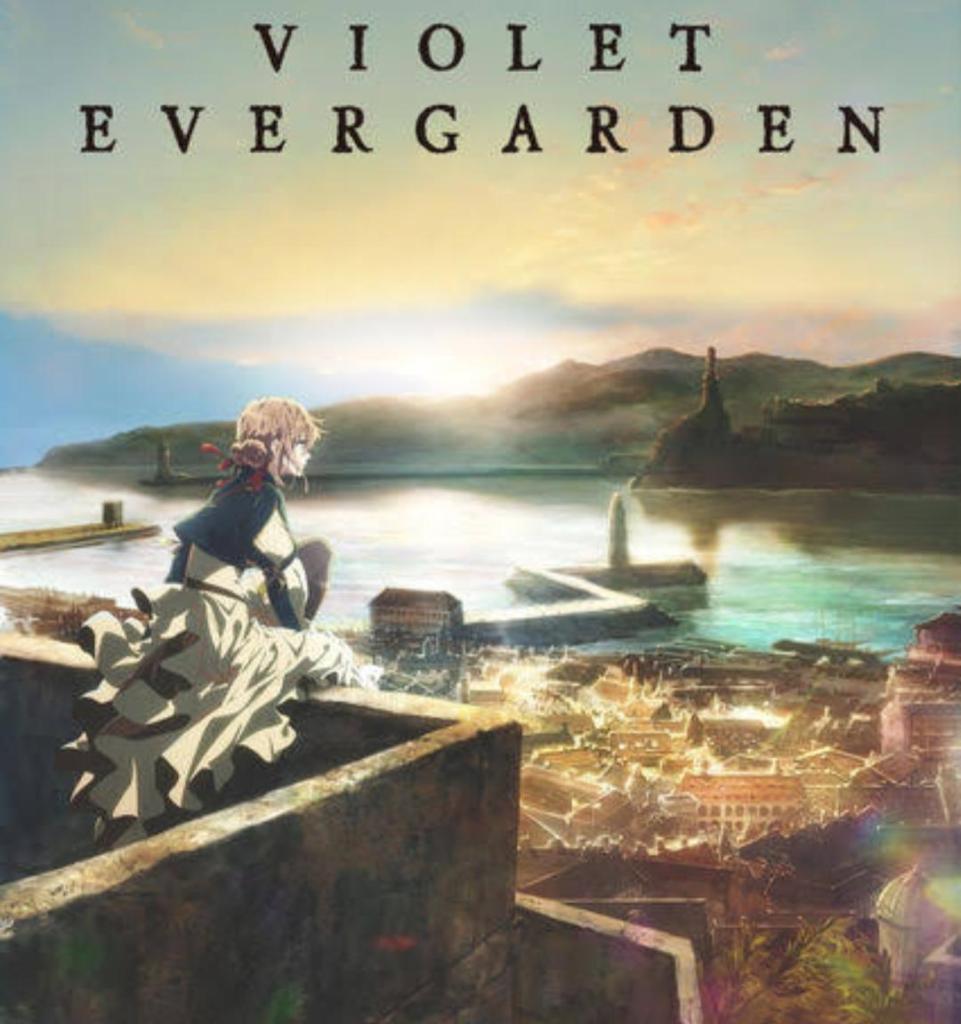
This is a more recent anime series. The story revolves around the post war life of an emotionally detached soldier who begins to reconnect with her feelings while searching for the meaning behind her commander’s final words. This anime is a masterpiece. The animation, music, pacing, character designs, backstories etc. all are done very well. It is very empathetic and sentimental anime. This anime is a must watch for anyone!!
There as been many controversy about this but as a south Indian who’s mother tongue is Tamil ,how do we see this thing ?. We are not only the one who is opposing hindi as a national language but this has been framed that we are the one opposing this thing. But practically India is a country which speaks more than 20 languages and tamil is one of the oldest.
the thing is we are not saying that Hindi should not exist but we don’t want them to force on every one if anyone wants to learn hindi they can. But some of them are trying to make people forget Tamil but is that what you think . you cant just make people forget there their mother tongue by forcing a language
I read this in a blog stating south Indian cant speak hindi but we are the people who knows hindi but refuses to speak hindi. The statement they are making is hindi is a profound language then what about Tamil it is the oldest language its is been here over 2000 years but yours is just 70 years old . Its funny right people are translating novels from tamil to their language not from hindi . you cant even compare it.
If you wanna make a language as a national language make English a national language because each and every country speaks English not Hindi . see before speaking about this just try to go through the history and you will know who is the real king and which is the 1st language that is spoken
The dystopian genre can be categorized into a wide group of literary works of speculative fiction. It usually involves a vision of the future, or an alternate world, which is used by an author to comment on and explore ideas about their own society. It’s has been a popular genre for quite some time. Lets analyze why dystopian literature, in particular, is so important.
Dystopian literature makes important commentary on the world, societies, and our governments. Humans, since the beginning of the organized society, have always been fascinated by a perfect society which is ‘Utopia’. Since Humans are flawed and our societies mirror that, but it’s also in our nature to strive for better, similar to philosophers who focused on political theory.
During the medieval age, utopia seemed to be a noble idea among the European authors and philosophers. While its main aim was to depict an ideal society, Dystopia on the other hand was a response where authors argued with the Utopian literature. Dystopias are utopias in the real world as these visionary ideas work well, as ideas. When placed in reality they quickly turn into dystopias.
In order to have an ideal society, humans should be devoid of humanistic values. Writers Depict societies that strive for perfection but ultimately fail as they ignore some vital part of humanity, which makes a convincing dystopian world.
Writers look for flaws that exist in our societies today, grounded in truth, and amplify them. A similar reflection of flaws can be seen in Orwell’s 1984 where it paralleled the problems that were ongoing in that period with the depiction of the overt dictatorial elements present in the Soviet Union and Third Reich. He critically pointed out the Government Surveillance, thought police, the constant change of history, and banning of books, which may seem exaggerated. These elements parallel our society albeit in a more subdued manner. Nevertheless, the parallels are present there, hence 1984 is still a very relevant piece of literature today.
Similarly in Brave new world, Huxley pointed out that there would be no need for banning books as people will be bombarded with too much information and would be critically incapable to decipher reality with information overload. Where pleasure receptors hijack people’s critical thinking
Within these two instances, we can interpret that one man’s heaven (Utopia) is another man’s hell (Dystopia). And dystopian writers don’t shy away from being political or radical when they try to describe these phenomena to warn readers.
It has also given rise to many similar genres like science fiction and cyberpunk, dystopian literature can share elements with these themes. In recent times, dystopian literature has also been popularized with the help of Movies, TV shows, and Video Games.
With the advent of the 20th-century dystopian literature evolved and flourished, many of the revered classic literature in the past century has been a part of this genre. Technology and science progressed and new means of government and bureaucratic institutions were established. This gave writers a new method to introspect the societal trend.
There is a critical need to academically evaluate these literary writings as its getting more relevant in our present society.
What a good artist understands is that nothing comes from nowhere. All creative work builds on what came before. Nothing is completely original.
If we are free from the burden of trying to be completely original, we can stop trying to make something out of nothing, and we can embrace influence instead of running away from it.
2. PRODUCTIVE PROCRASTINATION.
Creative people need time to sit around and do nothing. You get some of your wonderful ideas when you seat and do nothing. So take time to do nothing and just sit.
If you are running out of ideas, go for a long walk. Por stare at something as long as you can. As artist Maira Kalman says, “Avoiding work is the way to focus my mind”.
3.KEEP YOUR DAY JOB.
A day job gives you a daily routine in which you can schedule a regular time for your creative pursuits. Establishing and keeping a routine can be even more important than having a lot of time.
4. SCHOOL YOURSELF.
School is one thing. Education is another. The two don’t always overlap. Whether you are in school or not its always your job to get yourself an education.
You have to be curious about the world in which you live. Look things up. Chase down every reference. Go deeper than anybody else – that’s how you will get ahead.
















 Eduindex
You must be logged in to post a comment.