Journalism and mass media

INTRODUCTION:-

Journalism and mass communication graduates work nationwide and worldwide at newspapers and magazines and in advertising, branding, broadcast news, social media, marketing, media research, photojournalism, publication design, public relations, radio, and other areas

Journalism:-

Journalism is the activity of gathering, assessing, creating, and presenting news and information. It is also the product of these activities.Journalism can be distinguished from other activities and products by certain identifiable characteristics and practices. These elements not only separate journalism from other forms of communication, they are what make it indispensable to democratic societies. History reveals that the more democratic a society, the more news and information it tends to have.

JOURNALISM ESSENTIALS

  1. What is journalism?
  2. What makes journalism different than other forms of communication?
  3. What is the purpose of journalism?
  4. The elements of journalism
  5. What does a journalist do?
  6. The journalist as a ‘committed observer’
  7. The theory of the interlocking public
  8. Bias and objectivity
  9. The lost meaning of ‘objectivity’
  10. Understanding bias

1.What is journalism?

Journalism is the activity of gathering, assessing, creating, and presenting news and information. … Journalism can be distinguished from other activities and products by certain identifiable characteristics and practices.

2. What makes journalism different than other forms of communication?

The vast majority of this communication, however, is not news and especially not journalism. Almost 70 percent of email traffic is spam, according to web security company Symantec. In 2012, there were an average of 175 million tweets each day. But almost all – 99% — consisted of “pointless babble,” according to researchers at Carnegie Mellon University.

3. What is the purpose of journalism?

“The purpose of journalism,” write Bill Kovach and Tom Rosenstiel in The Elements of Journalism, “is not defined by technology, nor by journalists or the techniques they employ.” Rather, “the principles and purpose of journalism are defined by something more basic: the function news plays in the lives of people.”

4. The elements of journalism?

In their book The Elements of Journalism, Bill Kovach and Tom Rosenstiel identify the essential principles and practices of journalism. Here are 10 elements common to good journalism, drawn from the book.

5. What does a journalist do?

Asking who is a journalist is the wrong question, because journalism can be produced by anyone.At the same time, merely engaging in journalistic-like activity – snapping a cell-phone picture at the scene of a fire or creating a blog site for news and comment – does not by itself produce a journalistic product. Though it can and sometimes does, there is a distinction between the act of journalism and the end result.

6. The journalist as a ‘committed observer’

Gil Thelen, the former publisher and president of The Tampa Tribune, believes the journalist has a very specific role in society. He calls it the “committed observer.” What he means by that, Thelen explains, is that the journalist is not removed from community, though at times may stand apart from others so as to view things from a different perspective.

7. The theory of the interlocking public

The splintering of mass media audiences and the migration of information consumers to tens of thousands of niche web sites is further evidence that everyone is interested, and expert, in something. The diversity and magnitude of the public, in fact, is its strength. A mix of publics is usually much wiser than a public comprised of just the elite or one segment of special interest.

8. Bias and objectivity

Journalism attempts to be fair and accurate. It does this through objective methods and managing bias. The guides in this section help you understand and navigate those processes.

9. The lost meaning of ‘objectivity’

One of the great confusions about journalism, write Bill Kovach and Tom Rosenstiel in The Elements of Journalism, is the concept of objectivity. When the concept originally evolved, it was not meant to imply that journalists were free of bias. Quite the contrary. The term began to appear as part of journalism after the turn of the 20th century, particularly in the 1920s, out of a growing recognition that journalists were full of bias, often unconsciously. Objectivity called for journalists to develop a consistent method of testing information – a transparent approach to evidence – precisely so that personal and cultural biases would not undermine the accuracy of their work.

10. Understanding bias

For a time, “bias” was the term of choice to describe anything people hated about journalism, whether the power and influence of corporate news organizations to the choices reporters made in writing individual stories. In 2001, in fact, a book about media unfairness entitled “Bias” was number one on the New York Times bestseller list. In recent years the public seems to have adopted a more nuanced view of bias.  Perhaps this is because many critics have found their voice online – where studies confirm that half the blogs contain just the author’s opinion – or that one-sidedness has become a successful business model, as Fox News Channel and MSNBC have demonstrated.

What Is Mass Media?

INTRODUCTION:-

Mass media is communication that is to a large group, or groups, of people in a short time (Mass Media, 2013, p. … This can be written, spoken or broadcast communication. Some of the most popular forms of mass media are newspapers, magazines, radio, advertisements, social media, television, Internet, and films/movies.

Mass Media:-

Think about this for a second: whenever you want to hear your favorite song, watch your favorite show, or see the latest current events, where do you go? You more than likely turn on your television, radio, or computer. The source that the majority of the general public uses to get their news and information from is considered mass media.Mass media means technology that is intended to reach a mass audience. It is the primary means of communication used to reach the vast majority of the general public. The most common platforms for mass media are newspapers, magazines, radio, television, and the Internet. The general public typically relies on the mass media to provide information regarding political issues, social issues, entertainment, and news in pop culture.

There are 6 main types of Mass Media:

  1. Traditional Media
  2. Print Media
  3. Electronic/Broadcasting Media
  4. Outdoor Media or Out of Home Media (OOH)
  5. Transit Media
  6. Digital Media/New Media/Internet

1. Traditional Media:-
People have developed different ways of communication depending upon their local language and culture. Traditional media is one of the oldest types of mass media to transfer traditions and culture over generations. The tools of communication have been developed from beliefs, customs, rituals, and practices of society. Traditional media imparts indigenous ways of communication for ages. Further, this type of mass media varied as per each culture and society as every culture has their own mediums to communicate to their mass audience. Thus, the traditional media can be folk songs, dances, folktales and folklore as well as paintings, sculptures, stupas, statues and fairs, festivals, rural or community radio and announcement mediums like nagada, etc.

Forms of Traditional Media

  • Folk Dances
  • Folk Songs and Music
  • Theatre, Drama, and Folktales
  • Painting, Sculptures, Inscriptions, Statues, and Stupas
  • Motifs and Symbols
  • Announcements made by beating drums or ‘nagada’
  • Shadow Puppetry and String Puppetry
  • Storytelling
  • Nautanki
  • Fairs and Festivals
  • Rural Radio

2. Print Media

In simple words, Print Media is all about the printed form of information and news. Before the invention of the printing press, printed materials had to be hand-written that made mass distribution almost impossible. Print media is one of the basic types of mass media tools making it very popular and convenient to reach a wider audience. Newspapers are considered as the oldest forms of mass media after the traditional mass media as for a long period of time, the general public relied on newspapers to know the latest happenings in their local areas as well as from around the world. Thus, print media originally refers to newspapers and then expanded towards magazines, tabloids, promotional brochures, journals, books, novels and comics.

Forms of Print Media

  • Newspapers (broadsheet and tabloid)
  • Periodicals, Newsletters, and Magazines (general or specific interest)
  • Brochures, Leaflets and Pamphlets
  • Journals
  • Books, Novels and Comics

3. Electronic/Broadcasting Media

Broadcasting is simply a distribution of audio and video content to a dispersed audience using the electronic broadcasting medium. Originally the term ‘broadcasting’ referred to the sowing of seeds on farms by scattering them over the large field. Broadcast media allows ease of news dissemination to even an illiterate person because it appeals to both the auditory and visual senses making it one of the most lucrative types of mass media. Centuries later after the newspapers were used as the original mass media, the advent of radio and television happened. Radio was the primary medium of news for the general public during wars as well as for sports and entertainment. When television was invented, it became the most effective type of mass media as it was primarily used for news dissemination and then for TV shows, live events and other entertainment purposes.

Forms of Broadcasting Media

  • Television
  • Radio (AM, FM, Pirate Radio, Terrestrial Radio, and Satellite)
  • Traditional Telephone
  • Film/Movie/Motion Picture
  • Video Games
  • Audio Recording and Reproduction

4. Outdoor Media or Out of Home Media (OOH)

This is also known as OOH or Out-of-Home Media and is focussed on transmitting information and news when the public is outside their home. Outdoor media gives importance to display advertising and attracting individuals towards new products, some social cause or any development or change in the society. These are prominent in brand promotion seen on buildings, streets, electric polls, roadside, vehicles, screens, kiosks, etc. This is one of the most prominent types of mass media used for commercial as well as public welfare advertising and mainly includes billboards, banners, posters, brochure distribution, ComPark Advertising, Wallscape, amongst others!

Forms of Outdoor Media

  • Billboards or Bulletins
  • Inflatable Billboards
  • Mobile Billboards
  • Banner
  • Lamppost Banners
  • Posters
  • Signs and Placards
  • Blimps, Skywriting
  • Brochure distribution
  • ComPark Advertising
  • Wallscape

5. Transit Media

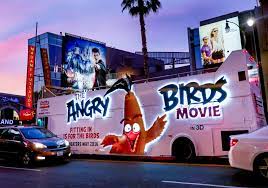
Transit Media revolves around the concept of advertising and information dissemination when consumers are “on the go” in public places or in transit. These include display advertising on vehicles and transportation. With the aim “driving home a message” transit media is significantly used for massive brand promotion to millions of people who travel the country’s streets and highways every day.Some people might think that this type of mass media is outdated or ineffective, yet it is widely visible on the sides of buses, in subway cars, at transit stations where passengers enter or disembark from public transportation.

Forms of Transit Media

  • Bus Advertising
  • Railway Advertising
  • Taxi Advertising
  • Transit Shelter Advertising

6. Digital Media/New Media/Internet

Since the invention of the World Wide Web by English scientist Tim Berners-Lee in 1989, the Internet has drastically taken over all the types of mass media because of faster dissemination speed and higher digital technology. New Media is an interactive two-way communication with users being the active producers of content and information. The Internet is considered as a highly interactive mass medium and can be simply defined as the “network of networks”. It has quickly transformed as the centre of the mass media as it has marvellously integrated all the prominent types of mass media. Now, you can see news websites, broadcasted TV shows as well as listen to online radio using the internet and this is also called as the convergence of mass media!New Media is normally a re-conceptualization of the existing media. This is a rapidly growing mass media with the ease of accessibility with a computer and an Internet connection (broadband or WiFi). From Story Writing and Graphic Designing to Multimedia and Animation, pursuing a career in this field can be highly advantageous.

Forms of Digital Media

  • Websites
  • Emails
  • Social Media and Social Networking Sites (SNS)
  • Webcast and Podcast
  • Blogging and Vlogging
  • IPTV (Internet Protocol Television)
  • E-forums and E-books
  • E-commerce and M-commerce
  • Digital Videos
  • Computer Animation
  • Digital Video Games
  • Human-Computer Interface
  • Virtual World & Virtual Reality

Reference Link:-

https://www.americanpressinstitute.org/journalism-essentials/what-is-journalism/

https://leverageedu.com/blog/types-of-mass-media/

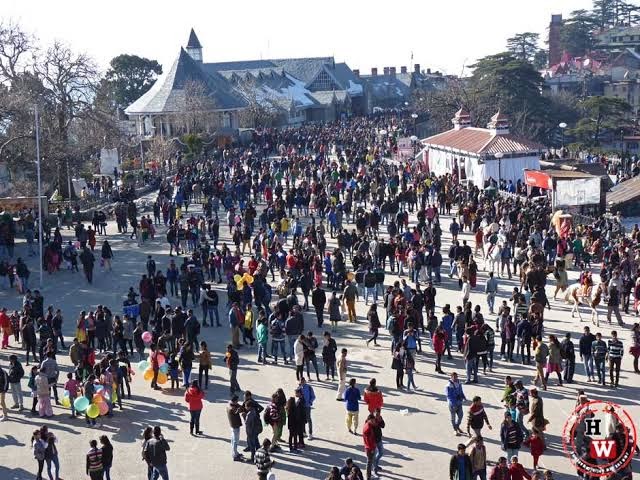
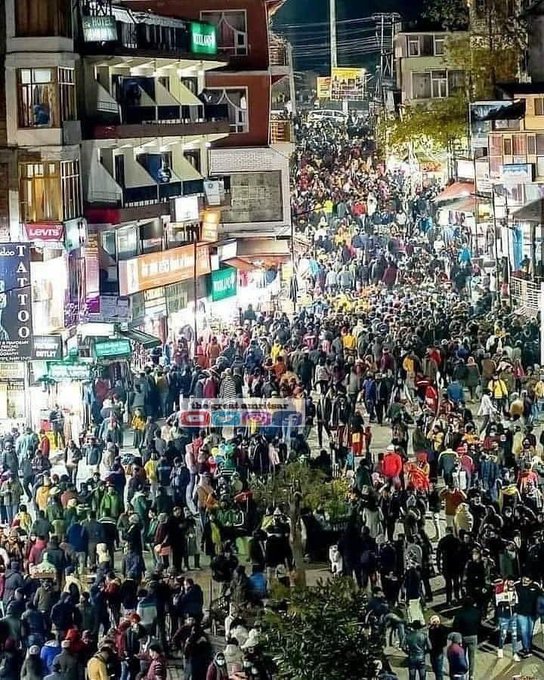
Manali flooded with tourist amid third wave warning; covid protocols getting ignored.

Inspite of third wave warning lakhs of tourists have thronged Himachal Pradesh in less than a month.Videos emerging from Manali and Shimla show that social distancing norms put in place to contain the coronavirus pandemic have gone for a toss.Highways choked, hotels fully booked after the Himachal Pradesh government relaxed Covid-19 related restrictions.Hotel occupancy in major tourist spots, including Shimla, Manali and Dharamshala, is almost full and tourists have been heading to less popular tourist spots in a bid to find accommodation and in guest houses.

Even though the governments, health experts have been warning against large crowds, a sea of tourists was seen in Manali town in Kullu district as the Himachal Pradesh government eased COVID restrictions.the increase in the number of tourists has posed a challenge for the authorities who are struggling to ensure implementation of Covid protocols amid fears of an impending third wave of coronavirus infections.

Reason behind this huge influx of tourist

  1. The prime reason is that the Himachal administration has withdrawn the mandatory need of a negative RTPCR report and e-Covid pass to enter the hill state.
  2. Another reason, behind the rush of tourists, is the ongoing heatwave in North India.
  3. while the third reason is that some people fear that lockdown-like restrictions may be imposed if the third wave of coronavirus strikes the nation. So many have decided to use this opportunity to visit some places

Twitterati reaction

Social media was abuzz with pictures of crowded Manali markets and tourist spots. While some were concerned over the violation of Covid protocols by the tourists, others shared memes and took taunt at the carelessness of the public.

for more news related to covid vist the link👇

https://www.timesnownews.com/india/article/tourism-with-a-vengeance-in-himachal-pradesh-shimla-manali-jampacked-covid-protocols-thrown-to-wind/780836

https://news.google.com/covid19/map

Wireless Energy Transfer-Tesla’s Dream

WPT- Wireless Power Transmission
Wireless Power Transfer holds the promise of freeing us from the tyranny of power cords. This technology is being incorporated into all kinds of devices and systems.

Wireless Power Transfer holds the promise of freeing us from the tyranny of power cords. This technology is being incorporated into all kinds of devices and systems. Let’s take a look!
The Wired Way
The majority of today’s residences and commercial buildings are powered by alternating current (AC) from the power grid. Electrical stations generate AC electricity that is delivered to homes and businesses via high-voltage transmission lines and step-down transformers.
Electricity enters at the breaker box, and then electrical wiring delivers current to the AC equipment and devices that we use every day—lights, kitchen appliances, chargers, and so forth.
All components are standardized and in agreement with the electrical code. Any device rated for standard current and voltage will work in any of the millions of outlets throughout the country. While standards differ between countries and continents, within a given electrical system, any appropriately rated device will work.
Here a cord, there a cord. . . . Most of our electrical devices have AC power cords.


Wireless Power Technology
Wireless Power Transfer (WPT) makes it possible to supply power through an air gap, without the need for current-carrying wires. WPT can provide power from an AC source to compatible batteries or devices without physical connectors or wires. WPT can recharge mobile phones and tablets, drones, cars, even transportation equipment. It may even be possible to wirelessly transmit power gathered by solar-panel arrays in space.
WPT has been an exciting development in consumer electronics, replacing wired chargers. The 2017 Consumer Electronics Show will have many devices offering WPT.
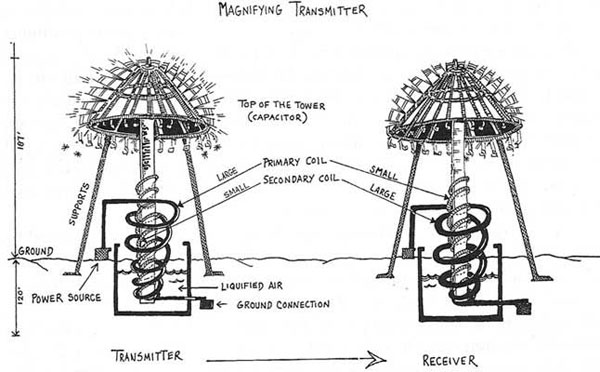
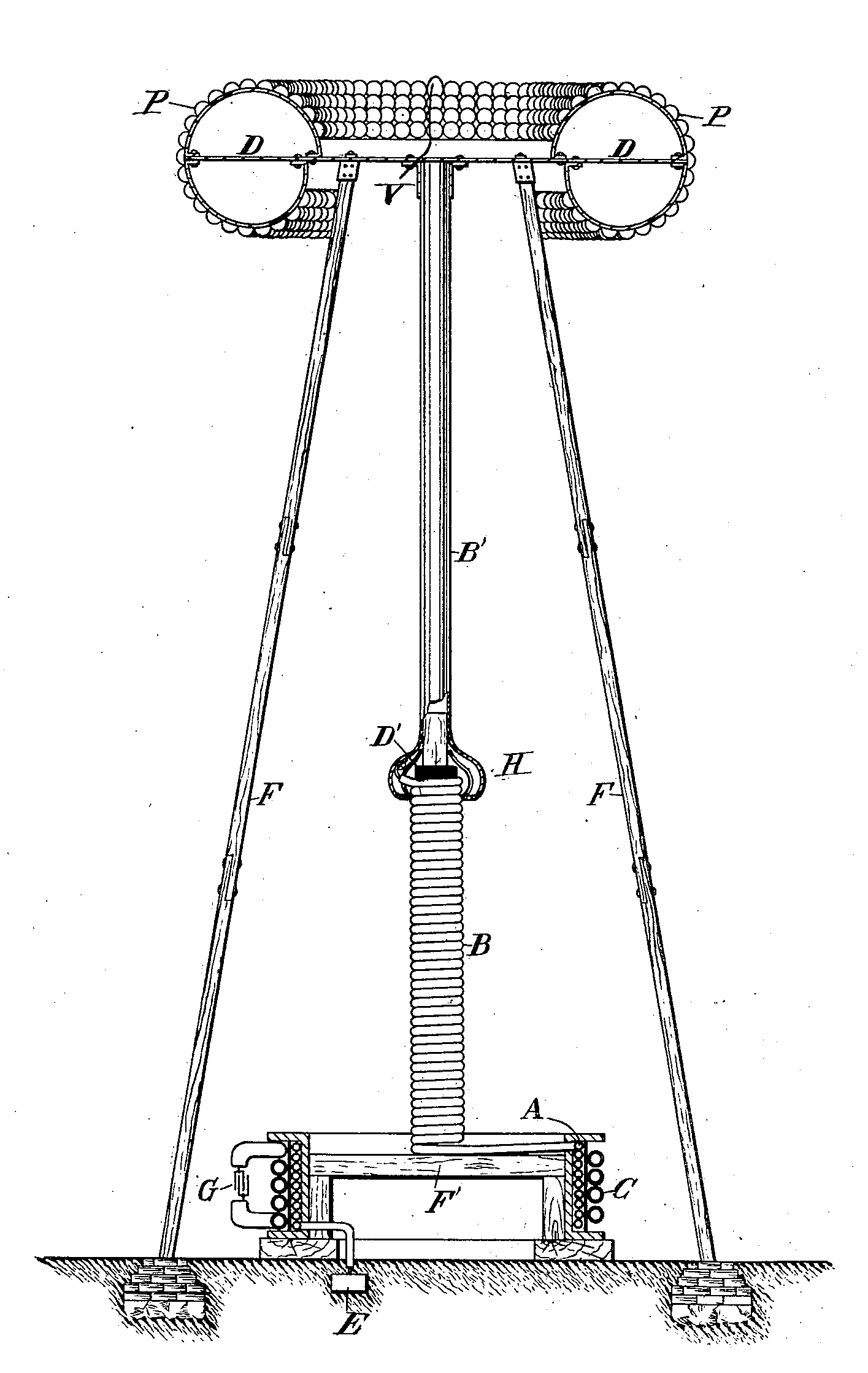
The concept of transferring power without wires, however, has been around since the late 1890s. Nikola Tesla was able to light electric bulbs wirelessly at his Colorado Springs Lab using electrodynamic induction (aka resonant inductive coupling).
 

An image from Tesla’s patent for an “apparatus for transmitting electrical energy,” 1907.
 
Three light bulbs placed 60 feet (18m) from the power source were lit, and the demonstration was documented. Tesla had big plans and hoped that his Long Island-based Wardenclyffe Tower would transmit electrical energy wirelessly across the Atlantic Ocean. That never happened owing to various difficulties, including funding and timing.
WPT uses fields created by charged particles to carry energy between transmitters and receivers over an air gap. The air gap is bridged by converting the energy into a form that can travel through the air. The energy is converted to an oscillating field, transmitted over the air, and then converted into usable electrical current by a receiver. Depending on the power and distance, energy can be effectively transferred via an electric field, a magnetic field, or electromagnetic (EM) waves such as radio waves, microwaves, or even light.

 
Qi Charging, an Open Standard for Wireless Charging
While some of the companies promising WPT are still working to deliver products, Qi (pronounced “chee”) charging is standardized, and devices are currently available. The Wireless Power Consortium (WPC), established in 2008, developed the Qi standard for battery charging. The standard supports both inductive and resonant charging technologies.
Inductive charging has the energy passing between a transmitter and receiver coil at close range. Inductive systems require the coils to be in close proximity and in alignment with each other; usually the devices are in direct contact with the charging pad. Resonant charging does not require careful alignment, and chargers can detect and charge a device at distances up to 45mm; thus, resonant chargers can be embedded in furniture or mounted in shelving.
 

The Qi logo displayed on the Qimini wireless charging plate. Image courtesy of Tektos.
 
The presence of a Qi logo means the device is registered and certified by the Wireless Power Consortium.
When first introduced, Qi charging was low power, about 5W. The first smartphones using Qi charging were introduced in 2011. In 2015, Qi was expanded to include 15W, which allows for quick charging.
Only devices listed in the Qi Registration Database are guaranteed to provide Qi compatibility. There are currently over 700 products listed. It is important to recognize that products with the Qi logo have been tested and certified; the magnetic fields they use will not cause problems for sensitive devices such as mobile phones or electronic passports. Registered devices are guaranteed to work with all registered chargers.  
For more information on Qi wireless charging, check out this article, and for an introduction to and technical evaluation of Qi-compatible transmitter/receiver WPT evaluation boards, click here and here.
 
The Physics of WPT
WPT for consumer devices is an emerging technology, but the underlying principles and components are not new. Maxwell’s Equations still rule wherever electricity and magnetism are involved, and transmitters send energy to receivers just as in other forms of wireless communication. WPT is different, though, in that the primary goal is transferring the energy itself, rather than information encoded in the energy.


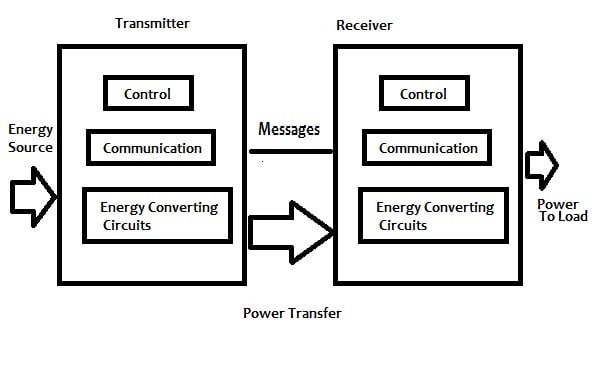
WPT transmitter/receiver block diagram.
The electromagnetic fields involved in WPT can be quite strong, and human safety has to be taken into account. Exposure to electromagnetic radiation can be a concern, and there is also the possibility that the fields generated by WPT transmitters could interfere with wearable or implanted medical devices.
The transmitters and receivers are embedded within WPT devices, as are the batteries to be charged. The actual conversion circuitry will depend on the technology used. In addition to the actual transfer of energy, the WPT system must allow the transmitter and receiver to communicate. This ensures that a receiver can notify the charging device when a battery is fully charged. Communication also allows a transmitter to detect and identify a receiver, to adjust the amount of power transmitted to the load, and to monitor conditions such as battery temperature.
The concept of near-field vs. far-field radiation is relevant to WPT. Transmission techniques, the amount of power that can be transferred, and proximity requirements are influenced by whether the system is utilizing near-field or far-field radiation.
Locations for which the distance from the antenna is much less than one wavelength are in the near field. The energy in the near field is nonradiative, and the oscillating magnetic and electric fields are independent of each other. Capacitive (electric) and inductive (magnetic) coupling can be used to transfer power to a receiver located in the transmitter’s near field.
Locations for which the distance from the antenna is greater than approximately two wavelengths are in the far field. (A transition region exists between the near field and far field.) Energy in the far field is in the form of typical electromagnetic radiation. Far-field power transfer is also referred to as power beaming. Examples of far-field transfer are systems that use high-power lasers or microwave radiation to transfer energy over long distances.
 
Where WPT Works
All WPT technologies are currently under active research, much of it focused on maximizing power transfer efficiency (PDF) and investigating techniques for magnetic resonant coupling (PDF). In addition to the idea of walking into a room equipped for WPT and having your devices charge automatically, much more ambitious projects are in place.
Across the globe, electric buses are becoming the norm; London’s iconic double-decker buses are planning for wireless charging, as are bus systems in South KoreaUtah, and Germany.
Using WiTricity, invented by MIT scientists, electric cars can be charged wirelessly, and those cars can wirelessly charge your mobiles! (Using Qi charging, of course!) This wireless technology is convenient, to be sure, but it may also charge cars faster than plug-in charging can.
 

Graphic of a wireless parking charge setup built into a parking space. Image courtesy of Toyota.
 
An experimental system for wirelessly powering drones has already been demonstrated. And as mentioned above, ongoing research and development is focused on the prospect of supplying some of Earth’s energy needs using WPT in conjunction with space-based solar panels.
WPT works everywhere!
 
Conclusion
While Tesla’s dream of having power delivered wirelessly for everyone’s use is still far from feasible, many devices and systems are using some form of wireless power transfer right now. From toothbrushes to mobile phones, from cars to public transportation, there are many applications for wireless power transfer.

India’s Poverty Challenge

The virus struck India at a time when the country was experiencing its worst economic development in over a decade. The weakening economy had adversely harmed rural areas, which house the bulk of the country’s citizens.

Even in the lack of official data, one might detect an increase in rural poverty. High unemployment, consumption expenditure was continually decreasing, and public development investment was stagnating. These three variables, taken combined, determine an economy’s health.

For more than a year, rural Indians — mainly an informal workforce and impoverished by any recognised measure — have been living with sporadic work. Anecdotal reports of risky survival are coming in. People are cutting back on food purchases; many have ceased eating staples such as lentils as food prices have risen.

The Mahatma Gandhi National Rural Employment Guarantee Scheme is no longer sufficient to hold employment expectations. Most people are depleting their small savings. Mostly with the pandemic’s second wave wreaking havoc, it’s a desperate scenario. One may say that the economy for the poorest and the moderately well-off has come to an end.

A pre-Covid economic downturn, coupled with the pandemic’s economic shock, is believed to have reversed any poverty-reduction advances, resulting in a significant increase in poverty.

Using World Bank statistics, Pew Research Center projected that the number of poor in India (those with an earnings of $2 a day or below in purchasing power parity) has increased to 134 million from 60 million within only a year as a result of the pandemic-induced recession. It means that, after 45 years, India has once again become  a “country of widespread poverty.”

Since 2011, India has not counted the impoverished. However, the United Nations projected that 364 million people were impoverished in the nation in 2019, accounting for 28% of the population. This does not include the projected new impoverished as a result of the outbreak. According to estimates, millions of people in major cities have also fallen below the poverty line. According to the Pew Center, the middle class has decreased by one-third. Despite population and geographical divisions, millions of Indians have gotten worse, remained poor, or are on the verge of becoming impoverished.

For a huge population like India, where millions of lives are at stake, the need to create a system that maps the areas and homes that are in desperate need for some help from the government. Public services are seen as the most realistic means of lifting the most vulnerable people from poverty.

To bring about change in anti-poverty initiatives, the government should use scientific methods and analyses. Moreover, there is a need for a long-term plan to combat poverty, which may be accomplished by enabling the most disadvantaged section of society self-sufficient by providing them with some type of skill set.

Local authorities can play a significant role in this issue because they are more familiar with the underlying causes of the crises. Strengthening them via technical and technological support as well as an enhanced monitoring system will help to reduce poverty at the grass roots. It is critical to provide food assistance and enough cash to such families in order to keep them from falling further into impoverishment.

When compared to the time it was at its peak, the number of Covid 19 cases has decreased, but many individuals have been trapped in a vicious circle of exacerbating the situation, economic decline, and unemployment. There is still some hope that along with long-term solutions, we can not only overcome the crisis, but also use it to raise people out of poverty, which is feasible for a nation that has decreased poverty at the highest pace in history.

Game Of Thrones(GOT) season 1 Review

Game Of Thrones is an American television series created for HBO by David Benioff and D.B. Weiss released in 2011. This series is based on a novel ‘A Song of Ice and Fire’, a series of fantasy novels by George R.R. Martin. The show got popularity soon after it is released. This show is shot in UK, Canada, Croatia, Malta, Morocco and Spain. It was released as TV show but now available in online at HBO website. The show is full of fantasy, and best for viewers to imagine and feel the fantasy world.

There are total 10 episodes of approximately 55 minutes. HBO had ordered a television pilot  in November 2008; filming began the following year. However, it was deemed unsatisfactory and later reshot with some roles recast. In March 2010, HBO ordered the first season, which began filming in July 2010, primarily in Belfast, Northern Ireland, with additional filming in Malta.

There are total 10 episodes of approximately 55 minutes. HBO had ordered a television pilot  in November 2008; filming began the following year. However, it was deemed unsatisfactory and later reshot with some roles recast. In March 2010, HBO ordered the first season, which began filming in July 2010, primarily in Belfast, Northern Ireland, with additional filming in Malta.

The story is primarily upon continent Westeros, with one storyline occurring on another continent to the east, Essos. Like the novel, the story focuses on Nobleman Eddard Stark also called Ned, the Warden of North and ruler of Winterfell. He asked to be ‘Hand’ of the King of Seven Kingdoms Robert Baretheon, also he was his best friend. They won many battles together before Robert became King, and only one Robert trusts is Ned. Later on Ned seeks to find the mystery behind the murder of his predecessor Jon Arryn. He also finds out that the son of Robert is not actually his. He uncovers the dark secret of Lannister family, which includes Robert’s queen, Cersei, that his predecessor died trying to expose. Ned fooling tells this to Cersei(Robert’s wife), and this leads to the murder of Robert. But Robert before dying orders a letter to make Ned the king of Seven Kingdoms till his son(Robert’s) come to a proper age. Ned is killed at the order of Cersei’s tyrannical teenage son, King Joffrey Baratheon.

Meanwhile, in Essos, the exiled Viserys Targaryen, son of the former king, forces his sister Daenerys to marry a Dothraki warlord in exchange for an army to pursue his claim to the Iron Throne. The season ends with Viserys dead and Daenerys becoming the Mother of Dragons.

The story is not only this much, I have given a very very brief from all 10 episodes. There is more to find out by seeing this show. Game of Thrones features a large ensemble cast. Critics praised the show’s production values and cast.

The first season won two of the thirteen Emmy Awards for which it was nominated: Outstanding Supporting Actor in a Drama Series (Dinklage) and Outstanding Main Title Design. It was also nominated for Outstanding Drama Series. U.S. viewership rose by approximately 33% over the course of the season, from 2.2 million to over 3 million by the finale.

However this show is also criticized for its foul language, nudity, high violence and sexual violence. So this is show is highly recommended for adults and one who can see violence. Here violence is not only killing, but it is like to see a surgeon operation. These have showed organs after being cutted by swords, what a head will look if one cuts into half. So I recommend not to watch if you start screaming just seeing blood as there is lot more than just blood.

But this show is must watch. For its locations, natural beauty, fantasy beauty and more.

Game of Thrones: https://www.hbo.com/game-of-thrones

Germany lifts a ban on travelers from India, Uk, Portugal.

On Monday, Germany’s Health agency said they will lift the ban on travelers from some countries which are hit by the delta variant of Covid-19 namely; U.K, India, Russia, Portugal, and Nepal. Also, the Robert Koch Institute (RKI) said these nations would be reclassified from so-called virus variant countries to high incidence areas, by Wednesday.

This change will allow travelers to visit Germany as long as they follow quarantine and testing protocols.

Germany has introduced the ‘virus variant country’ travel category to put a stop to the new virus variant of coronavirus as it was not spread widely on the land. But, Health Minister (Jens Spanh) said last week that the Delta variant is becoming dominant in Germany, indicating that bans on countries affected by this variant of the virus may be lifted. As the research suggesting vaccines are effective against it, “we’ll look into the situation in few days”, said Spanh.

Last month, Chancellor Angela Merkel had taken a tough call and had put restrictions and longer quarantines for people traveling from Britain, where the Delta Variant has caused an explosion in cases. Last Friday on her visit to London, she indicated that the restrictions might be on ease for the travelers from Britain. She said, “We think that in the foreseeable future, those who have received double jabs will… be able to travel again, without having to go into quarantine”.

Anyone can visit Germany from high incidence areas as long as they provide a negative test on the arrival. Visitors must follow the 10 days quarantine protocol, although they can end it after five days with another negative report. Travelers from high incidence areas are also spared if they have been fully vaccinated. 

Although the countries with other variants apart from the Delta variant such as Brazil and South Africa will remain in the variant category. 

RKI has reported that the conditions are getting better for Germany with a decline in the overall prevalence in recent weeks. On Monday, it has reported 212 new cases in the past 24hrs and a prevalence rate of 5 new infections per 100,000 people over the last seven days.

FIRs Under Struck Down Section 66A IT Act

Introduction

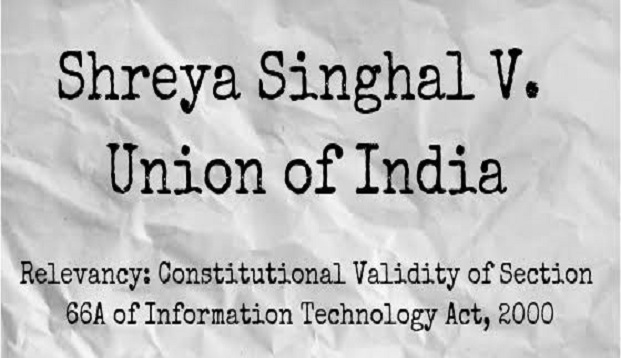
On 5th July 2021, the Supreme Court expressed their shock at the practice of police registering FIRs under Section 66A of the Information Technology Act which was struck down by the Supreme Court in the 2015 judgement in the case of Shreya Singhal. An application filed by Peoples Union for Civil Liberties (PUCL) was being heard by a bench headed by Justice RF Nariman. The application sought directions and guidelines against the FIRs which were being filed under Section 66A of the IT Act which was struck down. There were over 1000s of FIRs being filed under the said provision. Justice Nariman commented on the issue, saying “What is going on is terrible. We are issuing notice”.

Background

An amendment made in 2008 introduced Section 66A in the Information Technology Act, which penalized sending of “offensive messages”, it also introduced Section 69. This amendment was passed on 22 December 2008 without any debate in the Lok Sabha and it was signed by President Pratiba Patel on 5th February 2009 to be made an official part of the law. Using this amendment, the Government of India restricted the freedom of speech to avoid self-harm and misuse. This allowed the arrest of any person which the law per se felt was harmful. In 2012, Shreya Singhal filed a Public Interest Litigation (PIL) in the Supreme Court of India.

Shreya Singhal v Union of India

In 2012, the leader of Shiv Sena, Bal Thackeray passed away and there was a bandh declared in Maharashtra by the members of Shiv Sena. Two girls, Shaheen Dhada and Rinu Srinivasan residing in Thane, were involved in this case, one of them posted something on Facebook and the other simply liked the post. Both of them were expressing their displeasure because of the state-wide bandh. They were arrested by the Mumbai police in 2012 under Section 66A of the Information Technology Act, 2000. This section aims to punish any person who sends through a computer resource or communication device any information that is grossly offensive, or with the knowledge of its falsity, the information is transmitted for the purpose of causing annoyance, inconvenience, danger, insult, injury, hatred or ill-will.

Although the two girls were released later, and their criminal cases were closed, they attracted widespread public protests. People felt that the police had misused their power by invoking Section 66A, they felt that it violated the freedom of speech and expression. So, later a writ petition was filed in Public Interest to declare Section 66A, 69, and 79 of IT Act, 2000 as unconstitutional. It was argued that the Section was in violation of Article 19(1)(a) and no provision under Article 19(2) saved it. It was also argued that the section created a lot of vagueness which gave arbitrary powers to the authorities.

In the judgement of this case, the Supreme Court agreed that none of the grounds contained in Article 19(2) were capable of being invoked as legitimate defenses for the validity of Section 66A of the IT Act. They said that any law that seeks to impose a restriction on freedom of speech can only pass muster. They also agreed that Section 66A is vague as it did not define what counts as ‘offensive’ as the object of offense will always be subjective. The Court found that Section 66A leaves many terms open-ended and undefined, therefore making the statute void for vagueness. To conclude, the court invalidated Section 66A in its entirety as it violated the right to freedom of speech and expression guaranteed under Article 19(1)(a) of the Constitution.

Conclusion

The highest Court had made the statute void but the police still keep using it to curb voices and rights that go against them. It is important to make every citizen aware of this update so that they know when they are being charged under a revoked section. And it is also important to hold regular briefings in every police station specifying which laws no longer hold credibility so that each one of them is aware and knows that doing so would then be a crime.

References

Antikythera-The Modern Invention in the Past.

After 2,000 years under thesea, three flat, misshapen pieces of bronze at the National Archaeological Museum in Athens are all shades of green, from emerald to forest. From a distance, they look like rocks with patches of mold. Get closer, though, and the sight is stunning. Crammed inside, obscured by corrosion, are traces of technology that appear utterly modern: gears with neat triangular teeth (just like the inside of a clock) and a ring divided into degrees (like the protractor you used in school). Nothing else like this has ever been discovered from antiquity. Nothing as sophisticated, or even close, appears again for more than a thousand years.

For decades after divers retrieved these scraps from the Antikythera wreck from 1900 to 1901, scholars were unable to make sense of them. X-ray imaging in the 1970s and 1990s revealed that the device must have replicated the motions of the heavens. Holding it in your hands, you could track the paths of the Sun, Moon and planets with impressive accuracy. One investigator dubbed it “an ancient Greek computer.” But the X-ray images were difficult to interpret, so mainstream historians ignored the artifact even as it was championed by fringe writers such as Erich von Däniken, who claimed it came from an alien spaceship. It wasn’t until 2006 that the Antikythera mechanism captured broader attention. That year, Mike Edmunds of Cardiff University in Wales and his team published CT scans of the fragments, revealing more details of the inner workings, as well as hidden inscriptions—and triggering a burst of scholarly research. 

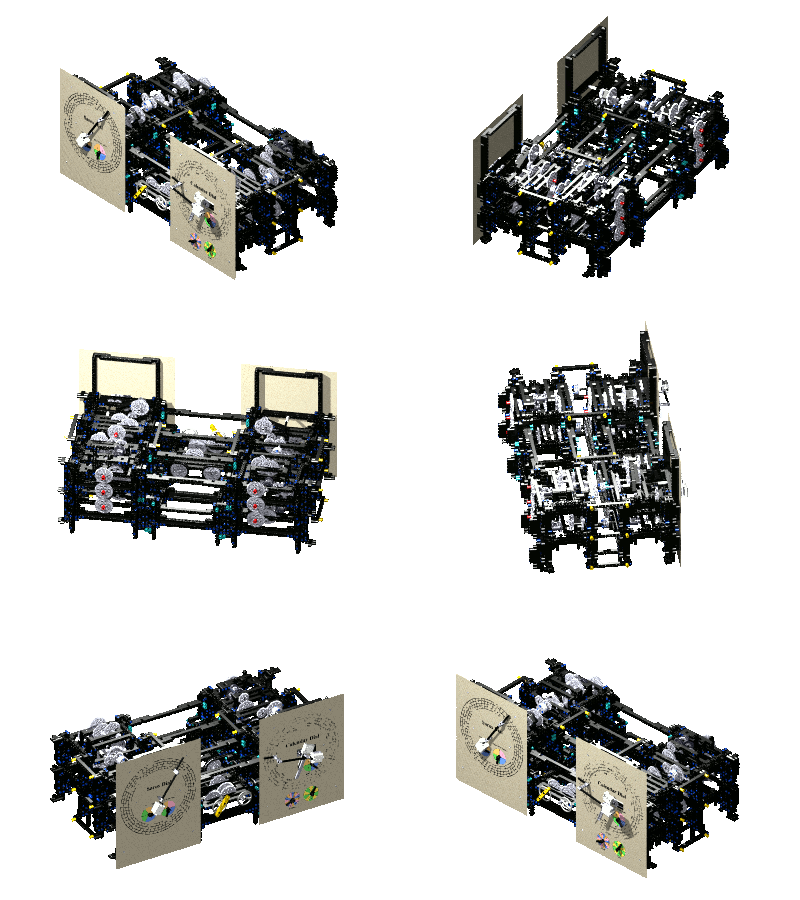
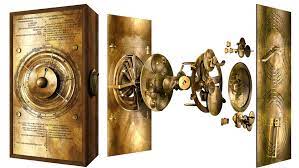
The Antikythera mechanism was similar in size to a mantel clock, and bits of wood found on the fragments suggest it was housed in a wooden case. Like a clock, the case would’ve had a large circular face with rotating hands. There was a knob or handle on the side, for winding the mechanism forward or backward. And as the knob turned, trains of interlocking gearwheels drove at least seven hands at various speeds. Instead of hours and minutes, the hands displayed celestial time: one hand for the Sun, one for the Moon and one for each of the five planets visible to the naked eye—Mercury, Venus, Mars, Jupiter and Saturn. A rotating black and silver ball showed the phase of the Moon. Inscriptions explained which stars rose and set on any particular date. There were also two dial systems on the back of the case, each with a pin that followed its own spiral groove, like the needle on a record player. One of these dials was a calendar. The other showed the timing of lunar and solar eclipses.

Experts have been working to decipher inscriptions hidden inside the mechanism, in particular to understand the mechanism’s missing pieces, some destroyed, some probably still at the bottom of the sea. Though the pointers on the front face don’t survive, Alexander Jones, a historian at the Institute for the Study of the Ancient World in New York, says an inscription reveals that they carried colored balls: fiery red for Mars, gold for the Sun. 

Also missing are the parts that drove the planetary pointers, leading to debate about exactly how they moved. Because planets orbit the Sun, when viewed from Earth they appear to wander back and forth in the sky. The Greeks explained this motion with “epicycles”: small circles superimposed on a larger orbit. According to Michael Wright, a former curator at London’s Science Museum who has studied the mechanism longer than anyone, it modeled epicycles with trains of small gears riding around larger ones. Though some experts have dismissed this as beyond the Greeks’ abilities, Jones says he will publish evidence supporting the idea later this year.

Other inscriptions hint at where the mechanism was made. Paul Iversen, a classicist at Case Western Reserve University in Cleveland, reports that the calendar includes month names used in Corinth and its colonies in northwest Greece. A dial that displayed the timing of major athletic festivals, including the Olympics, lists Naa, a festival held in northwest Greece, and Halieia, held to the south on the island of Rhodes. Perhaps the mechanism hailed from Rhodes and was being shipped north. The ancient philosopher Posidonius had a workshop in Rhodes that could have been the source; according to Cicero, Posidonius made a similar model of the heavens in the first century B.C.

The tradition of making such mechanisms could be much older. Cicero wrote of a bronze device made by Archimedes in the third century B.C. And James Evans, a historian of astronomy at the University of Puget Sound in Tacoma, Washington, thinks that the eclipse cycle represented is Babylonian in origin and begins in 205 B.C. Maybe it was Hipparchus, an astronomer in Rhodes around that time, who worked out the math behind the device. He is known for having blended the arithmetic-based predictions of Babylonians with geometric theories favored by the Greeks. 

Regardless, the Antikythera mechanism proves that the ancient Greeks used complex arrangements of precisely cut wheels to represent the latest in scientific understanding. It’s also a window into how the Greeks saw their universe. They came to believe that nature worked according to predefined rules, like a machine—an approach that forms the basis of our modern scientific views. Edmunds argues that this “mechanical philosophy” must have developed as a two-way process. The ancient mechanics who captured the cosmos in bronze weren’t just modeling astronomical theories but were also inspiring them.

FEB15_J03_Antikythera.jpg

Hill Stations Getting Overcrowded

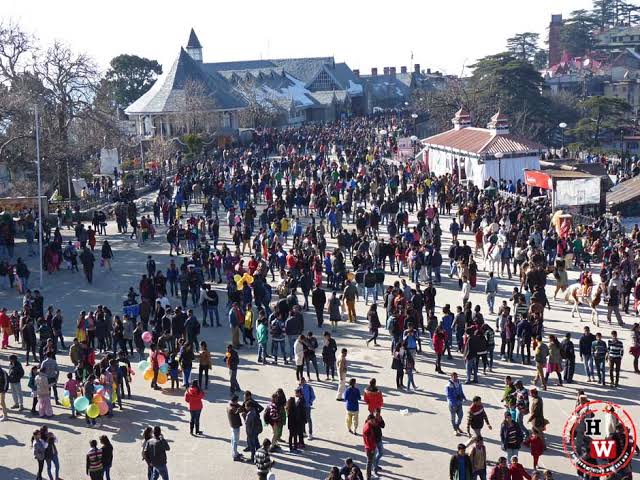
Visuals from Manali

Amidst the heat waves in various places across the country people are setting off to the hill stations . Manali, Shimla, Mussoorie and many more hill stations are now packed up by people. Hotels are running out of beds .

The pandemic has tested the patience and strength of all of us since it has been over a year now Covid has infiltrated our lives. With lockdown imposed regularly the number of tourists declined in the previous year. It was now when the lockdown has just been lifted and the second wave has started to ease out that people decided to visit the hill stations . Moreover most of the people have summer vacations at this point of time.

Nainital administration has announced that once the parking reaches the limit ,tourists will be allowed to enter according to the availability of the space. Although the hoteliers are enthralled since the occupancies of the rooms has peaked, but it is adding a lot of problems to the tourists especially when the rainy season has set off. As a result a lot tourists are returning midway.

Image result for overcrowding in manali

Last year Shimla faced utter water crisis and the tourists were urged not to visit. Therefore with this overcrowding water pollution , air pollution aggravates and the whole purpose of setting off to hill stations in the lap of nature demolishes. There are even some cities where even RT PCR is not compulsory .

Although the second wave is at its departure , the third wave is at large which is speculated to arrive in end August and is supposed to peak in September. Therefore it is advised to be careful and not to assume that Covid is over and avoid visiting to the hill stations especially when it is overcrowded . Although vaccinations shields from the virus but since its efficacy is not 100% the protocol of wearing mask, using sanitizer and keeping distance should be followed.

CBSE’s decision to conduct 2022 Board exams in two terms, beneficial or not

Covid-19 has affected lives of everyone with people compromising on the most important events of their lives. Uncertainty is very common during these times especially for ones who have their most important exams of their lives hanging on a thread. When the first wave of Covid-19 hit in 2020 , few remaining board papers were cancelled by both- the ICSE and the CBSE. With the second wave of covid-19 hitting the subcontinent in its most horrible form, the students who were supposed to give their boards were highly stressed and confused about the position of their board exams. However, long after the general date of the commencement of the exam, the Board exams were declared CANCEL among much speculation.

With an aim to not arose confusion among students regarding the position of their Board exams if the worst case scenario happens, CBSE declared its 2022 Board Exam’s scheme today keeping in mind the worst happening possibilities of covid-19 which may or may not happen during the scheduled time.

CBSE’s decision

The CBSE has decided to hold 2022 boards in two terms- Term I and Term II respectively. As per the new criteria, the syllabus for the academic session 2021-22 will be divided into two terms with each term containing 50% of the original syllabus . The term end exams will be of 90 minutes duration each, while the the term-1 will be conducted in November-December, the term-2 exams will be conducted in March-April and the final rsult will include the average of both the terms. The pattern of the exams have also changed ensuring not to put much pressure on the students while the difficult times are going on. The term-1 exams will have MCQs including case based MCQ and assertion-reasoning type MCQs instead of the general descriptive paper which students are writing for their boards since ages. However , term-2 will have questions on different formats and in the case the condition is not conducive in March, the duration for the term-2 exams will be extended to two hours.

CBSE has asked the schools to continue the online classes unless further notice from the authorities and have especially asked them to create a student profile for each student which will record their assessments undertaken over the year. This year more focused will be paid to the Internal Assessments so that if the condition arose where the students are not able to give the exams in the formats that have been planned, the Internal Assessment marks can be relied upon. While for classes 9th and 10th, the internal assessment will include periodic tests, practical works, speaking and listening activities which have to be conducted in the entire academic session, classes 11th and 12th will have Unit Tests at the end of every topic, exploratory activities, practicals and projects. CBSE will facilitate schools to upload the internal assessment marks on the CBSE IT platform which is used by the schools this year to upload the home exams marks for classes 11th and 12th.

Is the decision beneficial for students?

Keeping in mind the situation which had occurred in the second wave with almost every family facing death of one or more members due to the deadly disease and hospitalizations due to severe health issues, this decision is extremely beneficial for the students. The second wave brought with it the terror of death, with everyone in stress about the deadly situation going around which brought extreme pressure for the students who didn’t know whether or not they will be able to write their boards. The studies show that it is not possible for the brain to work normally in the situations of extreme stress and if the board exams are to be held somehow even by the online means, it won’t be an unbiased exam and will be highly unfair for the students who had the ability but couldn’t perform.

With the division of syllabus in two parts with each term conducting exams only with the one part of the syllabus, has reduced the stress which the board students would be facing. Further, the decision of the board to keep internal assessment as a priority which generally is not for the board students ,ensures that the students get fair opportunity to perform throughout the year and maintain a good score at the end if the evaluation is to be based on internals .

World population day

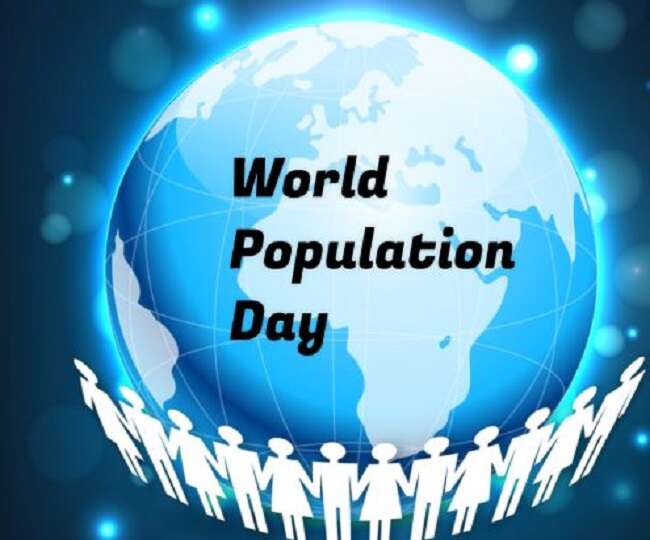
World population day is celebrated on 11th July every year.this day was initiated to spread awareness about issues related to population growth. This day was established by the governing council of United Nations development programme in 1989. This day was inspired by the population growth in 11th July in 1987 as the population became 5 billion . This day is used to spread awareness regarding population growth, poverty, unemployment ,health issues and discrimination.The day was suggested by Dr. K.C.Zachariah in which population reaches Five Billion when he worked as Sr Demographer at World Bank .As population has become more than 7 billion now .

This population growth has causing a lot health issues as there are not enough facilities for everyone . Hospital are not available and because of which people are having health issues which is having an impact on the economy of the country and the whole world.  People are making babies without any family planning which leads to a lot of issues. They are not able to Fulfill all the needs of a their kids and they grow up to be illiterate. We should understand how important family planning is . We should only produce Bab es if we can provide them with all the facilities. People in rural areas give birth till they get a boy which is causing discrimination between boys and girls . Such girls are not given proper education and are been married off at early age . Thus population growth is also causing lack of employment which directly leads to poverty . Which affects the economy and the s not good for the country in any way .

This population growth leads to global warming and pollution which is causing lack in natural resources . Fossil fuels are decreasing day by day and cannot be renewed further .People should realise how dangerous this growth is for all humans and mother earth . It is our duty to control population growth and help nature and maintain the balance . We should use condoms to control population growth and have family planning which we can afford to give to the child

By Ishita Pillay

What is UPSC civil services examination

UPSC- union public service commission

UPSC is India’s central agency.

CSE is widely known as ‘IAS EXAM’, even though it is conducted to recruit candidates to about 24 top government services like IAS, IPS, IRS, IFS ,etc.

UPSC conducts exams like Civil Services Exam (CSE) to recruit candidates into top government services like IAS, IPS, IFS etc. Civil services exam is one of the most popular examination conducted by upsc.

UPSC civil services exam mainly consists of three stages.

1. Preliminary. 2. Mains. 3. Interview

Educational requirements

Any graduate can attempt the UPSC civil services examination. The graduate can be in any stream, it may be a regular degree or distance education.

Age limit

To attend the UPSC civil services examination, a person should cross the 21 years by August of that specified year. This is the minimum age limit for UPSC CSE. The upper age limit is 32 for general category, 35 for other backward classes (OBC) , 37 for scheduled castes (SC) and scheduled Tribes (ST).

UPSC recruits candidates to both civil services as well as defence services.

.

The Conspiracy of “Bulbs”

Do you know for how long a light bulb can last? 1000 hours, 1500 hours, 3000 hours? What if I say there is an light bulb lasted for more than 120 year and still counting, you will definitely say are you kidding me?, mine doesn’t last for more than 1000 hours. Or you may ask which machine has manufactured it? But what if I say it is hand made. Read on full article to know why life span of light bulbs are made to decrease by some giant light bulb manufacturers…

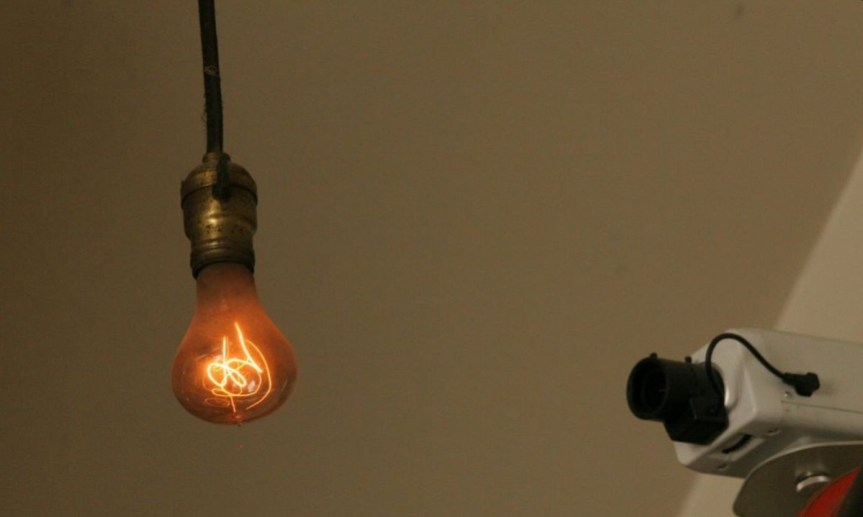
In Livermore Fire station 6 there is a light bulb active from more than 120 years hand made. The light doesn’t have a switch but it has battery back an a power generator. The bulb is never switched off as by cooling and heating up again there act stress on filament which decreases the life span of bulb.

When everyone is trying to make a filament they failed the filament burned with contact of oxygen, so in 1840s Warren De La Rue told to put the filament in vacuum so if there is no contact of oxygen and no burn. In 1879 Thomas Edison invented a perfect light bulb by making filament of carbon, from then onwards everyone tried different filament to increase the life span and then come up with tungsten. And in 1920s the life of bulbs were at peak lasting from 2000 hours to 2500 hours normally.

But at these time the sales were at least for the bulb manufacturers for example OSRAM sold 63 million bulbs in 1923, and in 1924 only 28 million. So the giant manufacturers of that come with a meeting. In 1924 at Geneva, Switzerland before christmas the giants Philips, International General Electric, Tokyo Electric, OSRAM from Germany, UK Associated Electric(AEI) formed a cartel named Phoebus Cartel after the name of Greek God of light.

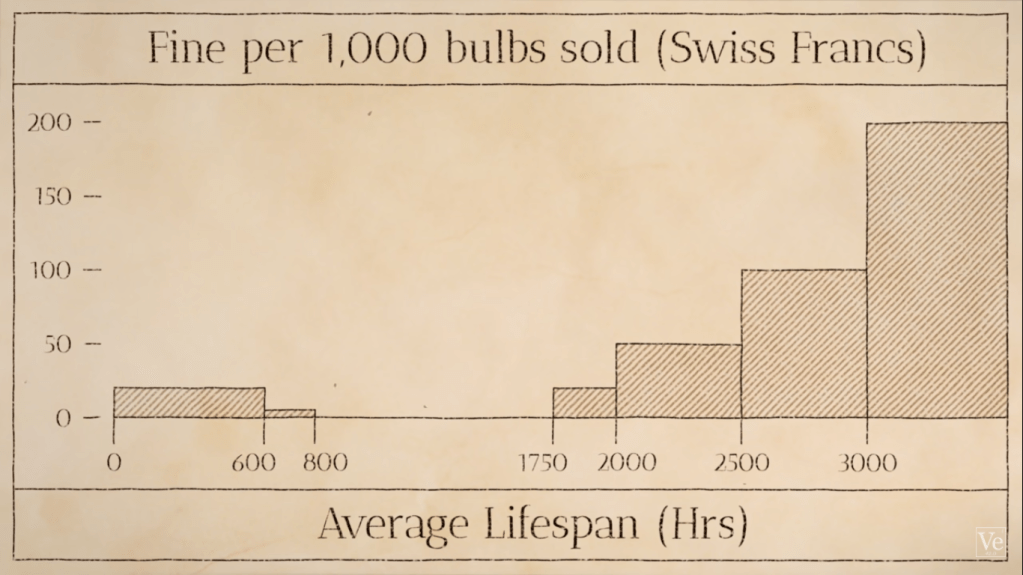
They agreed to decrease the life of bulbs to 1000 hours, the same way engineer discovered to increase, they told their engineers to decrease the life of bulbs. But, due to lack of trust they agreed to send bulbs from every factory to a lab for test. If the bulb lasts for 1000 hours is fine, but if it lasts more than 3000 hours then there is a fine of 200 Swiss Francs for every 1000 bulbs sold.

There again one question of will every manufacturer will follow or not? So they divided the area of sales. They were successful in there plan. The life of light bulbs decreased and there increased tremendously. They sold with same price to increase the profit.

-Sales – life of bubs

The cartel was made to last till 1955 but it ended in 1930s. However there were allegations on cartel, but they said that cartel in established for improvements in the bulb. The screw thread in bulbs are introduced by them.

The light bulb of Livermore is made before the formation of cartel that’s why it is there.

These is not the end of this case as there is still this type of work is going on.

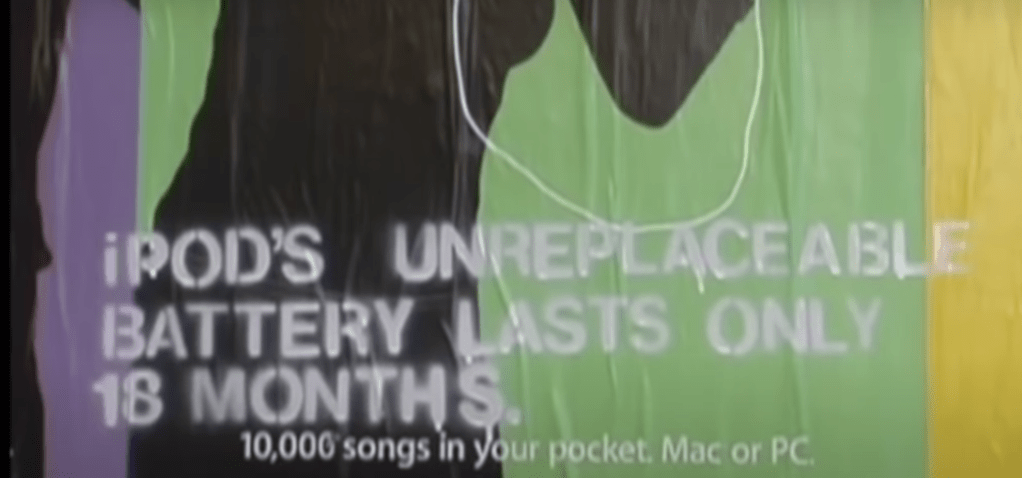
In 2003 the video of Casey Neistat was gone viral as he tried to protest against apple. Apple launched IPod having non removable memory which lasts only for 18 months, and after that you have to give 250$ to refurbish it. So there was a case in court against this which Apple settled outside court.

Dowry Continues To Remain A Menace In Indian Society

Despite the fact that dowry has been banned in India since 1961, a research found that it is still being given on a regular basis, with over 95% of weddings including the exchange of money.

Dowry is correctly represented as a societal evil since it is the practise of paying and accepting articles of worth (such as clothes, jewellery, furniture, cash, and other items) between two households. Typically, the bride’s family is obligated to pay these items to the groom’s family.

The World Bank carried out the study, which examined almost 40,000 marriages that occurred between 1960 and 2008 in 17 Indian states that account for 96% of the nation’s population.

Researchers calculated “net dowry” to study the difference as to what was paid by the bride’s family to the groom’s family and vice versa, and the results revealed that, in the vast majority of instances, it was the bride’s family who paid more compared to the groom’s family, rather than the other way around.

According to the estimated amount confessed by families, a groom’s family spends Rs. 5,000 on presents to the bride’s family on average. The bride’s family, on the other hand, pays about Rs. 32,000 on presents and other monetary contributions to the groom’s family, taking the net dowry to roughly Rs. 27,000.

It has also been noticed that the dowry value is typically 14 percent of the annual income and includes a significant portion of the family’s savings.

While much has started to change since 2008, experts think the tendency of dowry is still highly prominent in India, since the notion is quite widespread in all major religious groups, with Christians and Sikhs exhibiting a “dramatic increase in dowry.”

Dowry inflation was seen in certain states, including Kerala, Haryana, Punjab, and Gujarat, with Kerala having the highest average dowry in recent years. On the other side, average dowry decreased in states such as Orissa, Tamil Nadu, Maharashtra, and West Bengal.

This venom affects people of all castes and socioeconomic classes. Neither the husband’s nor the wife’s educational background protects them from dowry harassment. Currently, dowry-related fatalities in Kerala have been documented, with the majority of victims coming from the upper strata of society. The culprits come from well-educated and wealthy families, and the victims are also well-educated. If this is the situation of women in a culture that was matriarchal a few decades earlier and claims of high social indicators in women empowerment, it’s anybody’s imagination how it will be in many Indian states that have numerous social indicators that are much worse than those of war-torn Syria or Sub-Saharan Africa. According to the NCRB study, Uttar Pradesh and Bihar top the list of dowry-related deaths, accounting for roughly 30 percent.

It is time to reform these retrograde societal standards in 2021. Receiving dowry should be considered a societal shame, and all generations should be taught. Young people should also make a stand. Women should explicitly refuse to pay dowry as part of a marriage , and men should also refuse to accept it in any way. Why should brides’ parents be obliged to give pricey “gifts” that are essentially a dowry by another name? 

The wider background for dowry is women’s low labor-force participation and, as a result, their lack of financial independence. Women should be encouraged to work and earn their own money.

Discrimination is present in all parts of life. To combat gender inequality, States should examine gender-disaggregated statistics across the life cycle — birth, early childhood, schooling, nourishment, employment, healthcare access, and so on. Teachers and textbooks shape students’ views and values. Children should be routinely educated on the fundamental ideal of gender equality.

Stone baby

In UK ,a five month old, baby is turning into a stone due to some unusual diesease. Lexi Robin born on 31 January is ‘turning to a stone’ due some extremely rare genetic diesease .Her X-ray in April shows that she has bunion on her feet and double -jointed thumb.This condition is known as Fibrodysplasia ossificans progresiva (FOB) which turns muscle into bones.Its perceived that such conditions generally turns a body into stone.