

The Delhi High Court on Wednesday called for a concentrated focus on ramping up laboratory testing for Covid-19 in the national capital as 1,300-odd cases are still reported daily. The high court also raised the question of migrant labourers returning to Delhi after Unlockdown-3 has been declared by the government and construction and industrial activity have picked up. A bench of justices Hima Kohli and Subramonium Prasad asked whether adequate arrangements have been made by the Delhi government at the borders and other places, where industries or construction sites exist in the national capital, for large scale testing to detect Covid-19 cases and for segregating them without causing any inconvenience.
Category: News
Comprehensive, up-to-date news coverage, aggregated from sources all over the world by EduindexNews.
India crosses 70k mark for first time with record surge in Covid cases.
India registered a record number of fresh Covid-19 cases on Wednesday, crossing the 70,000-mark for the first time since the outbreak of the pandemic. With 978 fresh deaths, the country’s cumulative toll reached 53,929.
University of South Alabama
We’re the University of South Alabama. South, for short. Home to more than 14,000 students and more than 100 academic programs, South is a dynamic community of leaders and learners who support and challenge one another to be actively engaged citizens who advance the Gulf Coast region and the world. Founded in 1963, South’s vision is to foster an environment that couples engaging learning experiences with high-level research, enabling our faculty and students to be leaders in their disciplines.

The unique and beautiful Gulf Coast region is a catalyst for discovery and innovation, and South’s 1,200-acre campus has been transformed over the past decade with new facilities and resources for teaching, housing and recreation, health sciences, the arts, engineering, computer science and athletics.
Jaguar athletes compete in 17 NCAA Division I sports, including baseball, basketball, cross country, football, golf, soccer, softball, tennis, track and field, and volleyball.
The coastal region is healthier because of the USA Health system. Through its five components — Children’s & Women’s Hospital, University Hospital, Mitchell Cancer Institute, USA Health Physicians Group and the College of Medicine — and supported by the College of Nursing and the Pat Capps Covey College of Allied Health Professions — USA Health provides care to hundreds of thousands of people, and is a training ground for future physicians and healthcare professionals.
The University has implemented a strategic plan that is organized around five major priorities: Student Access and Success, Enhancement of Research and Graduate Education, Global Engagement, Excellence in Health Care, and University-Community Engagement. These priorities are the guiding influence in developing a strong, consistent vision for the future of the University.
USA is a place where students discover and strengthen their career passions, and form connections that result in lifelong relationships. At South, we look at the world and see things that we have the power to change, affect and shape — together. So that’s exactly what we do, every single day.
We are South!






Samford University
Samford University is a premier nationally ranked Christian university. Founded in 1841, Samford is the 87th-oldest institution of higher learning in the United States. Located in the Birmingham, Alabama suburb of Homewood, the university’s campus covers approximately 247 acres and is renowned for its beauty and Georgian-Colonial style architecture. The university currently enrolls 5,692 students from 47 states and 28 countries.
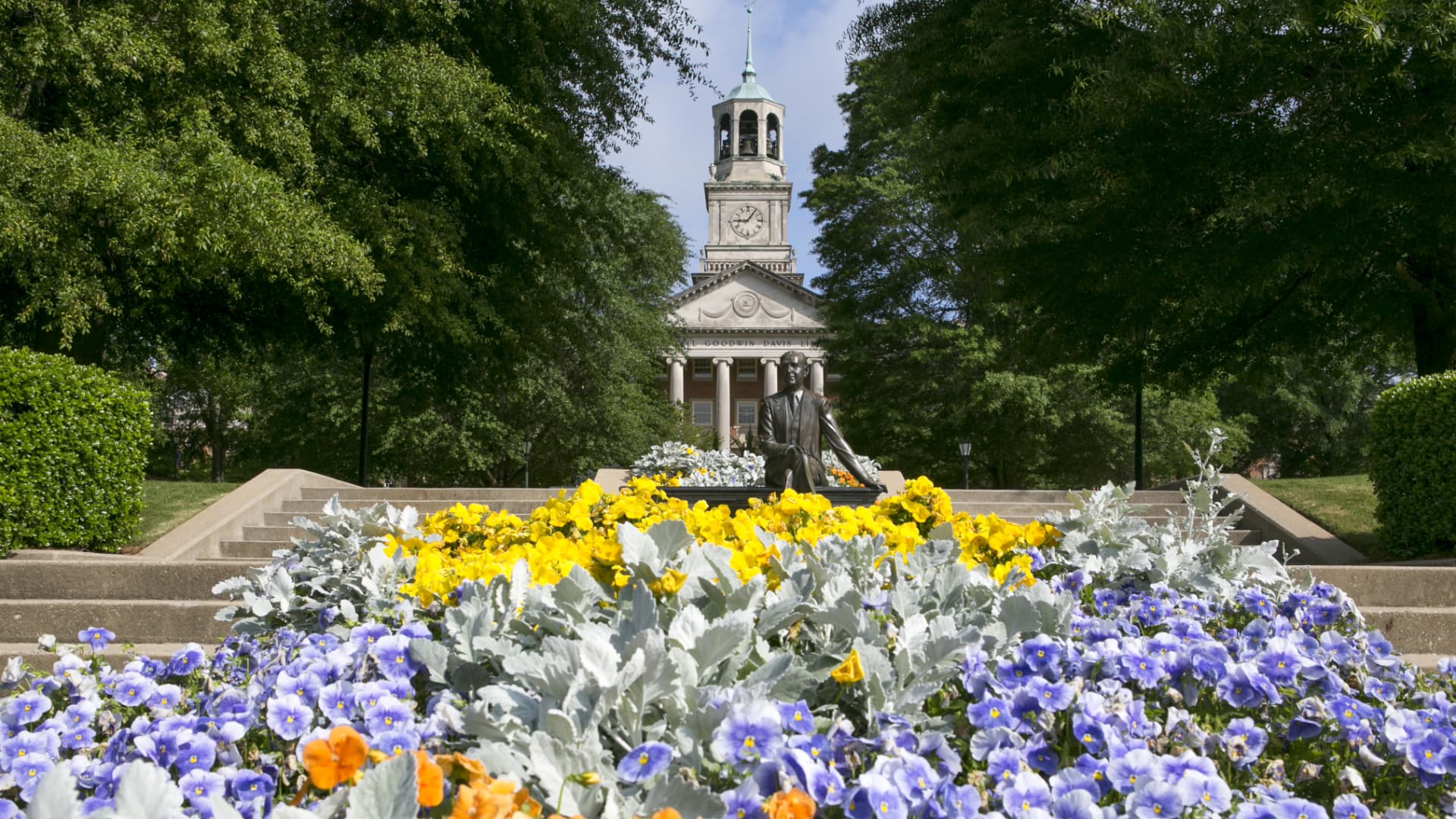
Samford is the top-ranked university in Alabama in national rankings published by The Wall Street Journal. Additionally, The Wall Street Journal ranks Samford third in the nation for student engagement. U.S. News & World Report ranks Samford 40th in the nation for best undergraduate teaching and 100th for best value. Kiplinger’s Personal Financeranks Samford 34th among U.S. private universities for value and affordability. The student-to-faculty ratio is 13:1.
Samford offers undergraduate programs grounded in the liberal arts and a distinct blend of graduate and professional schools through 10 academic schools: arts, arts and sciences, business, divinity, education, health professions, law, nursing, pharmacy, and public health. The university has one of three accredited law schools and one of only two accredited pharmacy schools in Alabama. Samford’s Beeson Divinity School is the only fully accredited graduate divinity school based in Alabama. The university is classified by the Carnegie Commission on Higher Education as a doctoral/professional institution.
Samford’s mission to nurture student development intellectually, ethically and spiritually is fostered through an array of opportunities, including 166 student organizations, global engagement in more than 19 different countries and more than 180 courses that incorporate community service. Additionally, undergraduate students complete Samford’s core curriculum, providing a well-rounded foundation in the liberal arts. The result is a highly-tailored educational experience that results in 97% of undergraduate alumni employed or in further study within six months of graduation.
Samford’s strategic plan expresses four focus areas: emphasize student success, enhance our community, extend our reach and ensure financial strength. To support the continued advancement of this strategic plan, the university launched in the fall of 2016 a capital campaign titled Forever Samford. The six-year, $300 million campaign is intended to provide new financial resources to support student scholarship, academic programs and capital projects. Samford maintains a strong endowment with investments totaling $301 million (June 2019), which helps support scholarships, study abroad opportunities, general operations and other programs. In addition to the main campus in Homewood, the university owns a house in Marion, Alabama used for cultural study and service, and the Daniel House, a study center located in the heart of London, England near Kensington Park.
Samford’s 52,838 alumni have included more than 60 members of the U.S. Congress, eight state governors, two U.S. Supreme Court justices, one U.S. Secretary of State, four Rhodes Scholars, multiple Emmy and Grammy award-winning artists, two national championship football coaches, and recipients of the Pulitzer and Nobel Peace prizes.
The university fields 17 intercollegiate sports—eight men’s and nine women’s—that participate at the NCAA Division I level. The Samford Bulldogs have won 40 conference championships since joining the Southern Conference in 2008. Samford’s athletic teams in the 2018-2019 academic year enjoyed a 97% Graduation Success Rate (GSR) as calculated and published by the NCAA. For that academic year, Samford was ranked first in Alabama and 18th in the nation for GSR among all colleges and universities in the NCAA Division I level.
Oakwood University
At Oakwood University we are dedicated to teaching with RESPECT and COMPASSION. We are dedicated to ensuring that our graduates enter the work force with strong commitment to INTEGRITY and a focus on EXCELLENCE. We are dedicated to instilling a sense ofcommunity in our graduates through numerous opportunities for Christ-centered SERVICE learning. We are dedicated to INNOVATION and COLLABORATION with our students through groundbreaking research and the latest technology. We are dedicated to you.
RESPECT
COMPASSION
INTEGRITY
EXCELLENCE
SERVICE
INNOVATION
COLLABORATION

God First! It’s not just our institutional aim, it’s the very core around which our identity, ethics, values, relationships, and curricula orbits. Whether it’s in the classrooms, dorms, the dining hall, on the campus green, or everywhere in between, we strive to put God first in everything we do. Simply put, it’s a way of life. So many ministries and mission opportunities to choose from, such as choirs, drama clubs, outreach and mission groups—you can be an active partner in ministry here. Use your talents and discover new ones as together, we seek to serve God and our fellow man.


 For years, Oakwood University has consistently been ranked by the U.S. News & World Report as one of the best regional colleges and universities to attend. With over 58 different majors, divided across five different schools from which to choose, our students are equipped with the tools they need to become leaders of industry in their fields. Our students receive an education that is further augmented by strategic partnerships that have produced internships and other opportunities with numerous leading corporations, nationwide. Our passionate faculty not only make learning a rewarding experience but also maintain supportive relationships for years after students have graduated. Come and experience an academic learning environment that is unlike any you could have imagined.


Oakwood is regionally accredited by the Southern Association of Colleges and Schools Commission on Colleges to award associate, baccalaureate, and master’s degrees. In addition, the following programs are further accredited through national and professional associations: Business, Dietetics, Social Work, Education, and Nursing.next traffic light after Jordan Lane, which is Adventist Blvd. Proceed to campus entrance on the right.
Medical science Latest News: Some Interesting Researches.
- Do you know how your cell phone’s sensor can calculate the alcohol percentage present in your body? It calculates the percentage by monitoring the way you are walking.
Researchers from Stanford University and the University of Pittsburgh completed this study on 18th August. In a sample of 17 participants, they could calculate the intoxication amount with 92% accuracy. The study focuses on blood alcohol concentration (BAC) and breath alcohol concentration (BrAC). They published the study in Journal of Studies on Alcohol and Drugs. - Can we treat dementia and Alzheimer’s with sound waves? A team of Doctors led by Cardiologist Hiroaki Shimokawa recently experimented and discovered that applying low-intensity pulsed ultrasound (LIPUS) to the entire brain of a mouse improved blood vessel formation and nerve cell regeneration without having apparent side effects. “The LIPUS therapy is non-invasive physiotherapy which could apply to high-risk elderly patients with no surgery or anesthesia, and could be used repeatedly,” says Shimokawa. See the study here.
- Scientists solve mystery behind body odour! This is not our fault. Researchers at the University of York found out that there is a special microbe which lives in the human armpits. This odour is called thioalcohol, which gets released when these microbes feed on other compounds on our skin. The study is published in Nature journal.
- Coronavirus: Filter “paper” made from titanium oxide nanowires can trap pathogens and destroy them with light. This is a discovery by an EPFL laboratory which can be put to use in personal protection equipment, in ventilation and air conditioners. Although experiments are still under process, they say that it be equally successful on a wide range of viruses, including SARS-CoV-2 or coronavirus.
Sports And Games In Schools.
Education is for the mind, it is important. Similarly sports is for the body. Sports educate the body. That’s the reason why sports and games have been made compulsory in schools.
I can’t really stress in the need and emphasis on sports. It is so important and mainly a stress burtster because most children dynamically take part in it. Unless the classroom activity, sports activities are enjoyed by the students. It successfully engages both body and mind. A child learns without being told that there are rules for his good as well as the good for others. This is also successfully in maintenance of discipline. Because team games teaches the young coordinate and cooperate with each other. The game also teaches the young to not be selfish, instead gives chances to everyone and thus it ensures a fair play. This is so important opportunity which is very important for health. This is therefore a major difference between classroom learning and sports activities. A short period of time in playground refuses them and makes them ready to learn more.
All though the Government and various organisations do everything to encourage children in this field, we don’t show expected results. There are sports schools and coaching campus, but we do badly in International completions. This shouldn’t be the case. School shouldn’t overly worry about examinations. If we begin from the easy stage we can have sportsmen the nation can be really proud of. Talent of sports in every individual should be brought out and therefore cherished.
Drugs and alcohol abuse
“Alcohol can make you hate someone,” these words are more than enough to justify the plot of this blog. Addiction, this term has a sense that even others who have experienced the repercussions of addiction will appreciate, whether in their communities or in certain situations, the addict himself. Let me be really specific here. I don’t criticize people who drink or smoke, it’s just that being addicted to it is obviously not healthy.
Addiction is a disease that affects your brain and your behavior. You can’t stop the temptation to use drugs while you’re addicted to narcotics, no matter how much damage the narcotics can do. Drug abuse is not just meth, crack, or other illicit substances. You can be hooked to caffeine, tobacco, prescription painkillers, and other controlled drugs.
Your brain is wired to make you want to repeat the experience that makes you feel good. So you’re motivated to do it again and again. Drugs that could be addictive to strike the dopamine function in the brain. Your brain is filled with a compound named dopamine. It induces a sensation of deep gratification. So you’re still taking the drug to chase that high. The brain is getting accustomed to excess dopamine over time. Then you would continue to take more medications to help you experience the same good. And other things that you enjoyed, like eating and hanging out with your family, may give you less pleasure.
Drug abuse is when you use legal or illegal substances in ways you’re not supposed to do. You may take more than a regular dose of pills, or you may use someone else ‘s prescription. You may use drugs to feel good, ease stress, or avoid reality. Yet you ‘re typically willing to alter your unhealthful habits or avoid doing them entirely.
Addiction is when you can’t stop it. Not when it puts your health at risk. Not unless it causes you or your loved ones physical, emotional, and other problems. The desire to get to consume narcotics will take up any minute of the day, even though you decide to leave. Dependence is a condition where the body allows the existence of a drug such as alcohol to function normally. Without it, the patient may suffer serious, potentially life-threatening symptoms of withdrawal. Alcohol dependence is often experienced in tandem with addiction. Those who are abusing or abusing alcohol are not necessarily addicted to or dependent on alcohol. Individuals may use alcohol without drinking on a consistent basis. For example, an individual who misuses alcohol may drink only once a week. Nevertheless, as they drink, they can place themselves in dangerous positions or drink sufficiently to trigger complications, such as alcohol poisoning.
Individuals who want to resolve issues with drug usage or who fear that they might have alcohol use disorder have a range of choices. According to the National Survey on Drug Use and Health, more than 2.4 million people aged 12 or older received substance use treatment on their own in 2017.8 Many people who are treated for alcoholism and alcohol abuse often seek outside help from treatment centers and treatment sessions.
Alcohol rehab services are built to assist those who become intoxicated or who use alcohol in a variety of ways. Some treatment centers require an individual to stay at the center for a certain amount of time while others offer outpatient treatment.
Inpatient therapy enables patients to seek care in a formal, regulated setting. For accommodation, psychiatric services and different types of counseling, inpatient medication can be better for people who may not have an adequate home support program or who are struggling with a more serious level of substance dependence. Outpatient rehabilitation is also an alternative for certain alcoholics. Outpatient rehab facilities are built to offer a forum for recovered alcoholics to overcome their addictive actions. Most residential rehab facilities offer open community sessions, as well as other services to help patients heal from their issues. With outpatient care, patients are not put in a regulated setting, and it is crucial that those who need outpatient services have a good program to focus on during therapy.
Good photography using phone
Today 19 Aug is World Photography Day. And who does not love getting pictures clicked. it is not necessary that you need to have a professional camera to get good pictures. If we keep some things in mind we can even use a smartphones camera to get some amazing pictures. Here are some tips
• When you choose the subject of your photography it is not necessary that your focus remains on the subject always. Try making such a composition that the surroundings of the subject enhances the subject.
• Try playing with dark and light, it helps in in bringing out the emotions. A kind of picture where everything is dark and just the subject has some source of light or the light is coming from behind the subject.
•Lessen the shutter speed and also lessen the ISO. You can reduce the noise in the picture if the ISO is less. And if the light coming in the picture is less it can be edited afterwards easily.
•Using the natural setting you can click good picture in places where there is less light. For this increase the ISO and decrease the shutter speed.
•When you have to focus on a subject touch the screen to set focus and then only click for the picture. When the subject will be appropriately exposed then the photo will be clear.
•When clicking images of people at night try using artificial light rather than the flashlight of the camera phone. If you use the flashlight its reflection can ruin photo.
In case you don’t have a tripod make sure that your phone does not shake while you click picture. To avoid shaking your hands hold your breath for sometime.
ROLE OF RELIGIONS IN INDIAN SOCIETY.

Religion s regarded by the common people as truth, by the wise as false and by the rulers as useful tool. The role of religion know society us definately a dynamic one. The relationship between both religion and society is always changing. Religion can be a driving force in the society. Religion could save people from fights since people with same thought live together forming groups of their own. Religion causing the different groups in the society helps in mantaining the well being and social solidarity of the society and stresses on the moral values of life. But when religion fails to perform this action, new religion form. Religion doesn’t change, it’s firm does.
Religion used in politics to get ahead in polls. A country of diverse cultures gets ripped apart in the name of religion. At the time of Independence the classification of religion can’t up and the consequences of it are still being came up and the consequences of of it are still being faced by India. Religion has made people weak rather than making them stronger. Whatever is good at one point in time turns evil at some other, same is happening with religion. Religion were made to maintain peace and order in the society but it has spread it’s creepers into every nook and corner of the society including the Government. The most affected would be, developing the remote areas where petty communal clashes take place, where the politicians take this to their advantage and frame innocent people of another religion of their killings. These killings are made known to the media, a huge brawl takes place, opposition parties rise up, pretend to take a stand Hut all they care about is getting ahead in polls and winning the elections. The people who get tangled in this chaos are the common people. They are made to take sides and if they disagree to do so, they are threatened to be exposed to the wrath of the religion they follow.
Religion has had it’s good time when all the good aspects of each religion were respected and followed by people. But now the scenario is completely different person It’s come together and sustain. Let’s start respecting religion again and give meaning to the phrase “Unity in diversity”. Let’s build and atmosphere to live happily and peacefully.
How Gram Panchayats in India kept Covid out of Villages
In the tough period of this pandemic everyone were at stake and worried how everything will fall into place,when we will be back to our normal with new mindset.At present as every state government has planned for unlocking different sectors according to reviewing the condition and focusing to start again all the activities again in major cities and places of great strength.In this case,we have our Gram Panchayats of village who are the source of inspiration that how effectively they have managed to kept this Covid-19 out of their respective villages.
In India around two-third of people stay in villages and coronavirus creating a havoc all the health workers and sarpanches have tried to kept this virus out of the village.There are many examples of such workers and sarpanches in that few are very aspiring and also giving motivation to others how they can also control this virus.Varsha Nikam of Mankapur Village,Maharashtra is a sarpanch and goes on day to day mission at door step of every house to train people how to maintain social distancing,tells them how important is to wear mask.She has also kept in mind as in this lockdown period there was a channel of fake news going on social media which at times have created a chaos in the people so she has formed one whatsapp group in which there are police patil,gram sevak,health workers and other important people so that there is proper imformation is passed on to village members.
If we talk about this workers there are almost 2,60,000 workers from different gram panchayats working as a foot soldier in their respective villages.Another example is of Manisha Dattatreya a civilian police patil or representative from Kolhapur,Maharashtra.She helps in setting up quarantine facilities for villagers who have returned from cities.She has became the go-to go person of her village as for arranging food,coordinating with medical staff and many other areas she is working tirelessly for village people.In Jharkhand,healthcare workers carry out awareness campaign and are distributing ration kits to all the village people.
In the villages Asha(Accredited Social and Health Activist) Workers have also been deployed by the governments.They are also working tirelessly at the village level.In this recent times government has increased their remuneration from Rs 1000 to Rs 3000.Asha workers are the trained female community health activists as there are 9 lakh Asha workers in 33 states across India.In Odisha, sarpanches were given the “collector power” to tackle this covid situation.As the state of Odisha was the first state to declare Covid-19 a state disaster.
So it is clear that gram panchayats and the villages have showed that how to control this virus through awareness and being active in the areas where only the government messages are reaching not their frontline workers.The pandemic has shown the strength and the importance of villages and their sarpanches who have handled this situation diligently.
Impact of lockdown on Middle Class
“Cricket is a Socio Economic Disaster in South Asia and Commonweal Countries: A Study on Manmade Disaster”: A Book of Different Flavour
Recently I have the opportunity to read an interesting book as mentioned in the title. The book is written By Dr Manik Kar, a Geo-morphologist and retired from Nowgong College as Head of the Department of Geography, Assam. It has been published by Global Publishing House (India), Vishakhapatnam. The essence of the book is that British by introducing and popularising ‘Cricket’ dominated in South Asia and Commonweal Countries which facts and figures have presented in ten different chapters as well as with rich references.
The first is the introductory chapter where Cricket as a Socio Economic Disaster in South Asia and Commonweal Countries has been discussed. In the second chapter under the title of
‘Cricket is a Sport which is Detrimental for The Nation’; the author has highlighted hidden agenda of playing Cricket and according to the author, the British introduced cricket with the motive of keeping natives as steadfast. In the third chapter, ‘Past History of Cricket: The Birth and the Journey through Centuries’, the author, with his analysis and documents, has revealed that the first publish reference of Cricket was in the late 1600s century. In the fourth chapter the author has evaluated other sports like hockey, tennis, table tennis, baseball, sumo wrestling etc., and has come to the conclusion that these sports are better than ‘Cricket’. In the fifth chapter, author with evidences has presented because of the British rule, Zimbabwe has been facing many issues which prior to British Raj had egalitarian society. In the sixth chapter, by refereeing Norman Bury’s article the author in nutshell has highlighted whether Cricket is a gentleman’s game? Similarly in chapter seven, by referring Ehsan Masood’s article, the author has presented an overview of the Global Politics of Cricket. In Chapter eight, the author by referring from secondary sources, has presented some facts about the Politics of Cricket. In chapter nine, countries with their Gross Domestic Product (GDP) and Per Capita Income (based on Purchasing Power Parity/PPP) has presented how Cricket has been spoiling the economy. So he feels albeit Cricket is popular in India but at the same time, lot of time is wasted and thus GDP is affected.
Lastly, in the context of the book many references, around 50, have been included, which is really praiseworthy.
By quoting the author, it may be mentioned that as far as “cricket is concerned, it is spread over the commonwealth countries where the British ruled their natives in the name of making them “gentlemen” from their so-called uncivilized state. But at that time the hidden agenda was to exploit the natives or Commonwealth countries in the name of making them “Gentle man” through a game called “Cricket”. This game in reality ruined the nations in their total development. If not what civilization we are learning from this game as they introduced it in commonwealth and South Asian countries, is it the work of a civilized person that is match fixing for money, dancing of ladies in front of minors, old people, and others ?Is it our culture that players will spent their time in hotel with other lady”? Further, the author has appealed to the then Hon’ble President of India Dr. A. P. J. Abdul Kalam ji to introduce the games football and hockey, which takes only 90 to 120 minutes. In this context, the author has presented 20 points for kind consideration of then President mentioning how ‘Cricket’ has been spoiling the economy of India.
Finally, the author has concluded with data that in the world football and cricket playing countries altogether were 84 percent against the cricket playing country only 16 percent as per 2016.
Dr. Shankar Chatterjee
Former Professor& Head (CPME)
NIRD &PR (Govt. of India),
Hyderabad-500 030
Telangana, India
Email <shankarjagu@gmail.com>
Start-up India to Kick Start Entrepreneurship
Why Startup India ?
In a very innovative move, the government has acknowledged the shift in economies by the startups and has launched ‘Startup India, Standup India’ to promote and motivate not only the entrepreneurs to venture out, but also the venture capitalists who have been the primary funding source for these ventures. With Startup India, there is an effort to make the legal, funding, taxation processes simpler for the entrepreneurs.
Are you eligible to avail benefits under the initiative ?
Government has been keen to promote the right talent for a better future, and thus carefully framed the rules under Startup India schemes, which states that the startups that are eligible under the initiative are as follows:
- The operational years should be less than 5 years
- Turnover should be less than 25 crore
- Potential and Commercial business plan
- Innovative Idea or development plan
And the same would be approved and certified by the DIPP via the inter-ministerial board before they can avail the benefits of startup India, which are
- Tax exemption for the first 3 years
- 80% reduction in patent registration for your business idea
- 2500crores of initial funds with the overall FoF being 10,000 crores
- Dedicated website and mobile app
- Self-Certification
In order to inculcate the spirit on entrepreneurship in India, the Government of India launched ‘Start-up India’ initiative on January 16, 2016. If successful, this initiative indeed would be a watershed in ushering the era of economic prosperity in India. The objective of this initiative is not just to create jobs for the youth but create an army of job creators through entrepreneurship. The major elements in this initiative are as under –
- Government will set up a corpus fund of INR100 billion that will fund the private venture capitals registered with Security and Exchange Board of India (SEBI) which in turn would fund the start-ups in sectors such as manufacturing, agriculture, education and health.
- In order to enable the start-ups to register within a day, government will launch a mobile app and portal on April 1, 2016. This app and portal will serve as a single point of contact for clearances, approvals and registrations, and for companies to apply for schemes under the Start-up India Action Plan.
- Start-ups will self-certify themselves on for compliance on nine labour and environmental laws. For three years, there would be no labour inspection. This would reduce the regulatory burden.
- Central Government shall bear the cost of patents, trademarks and designs for a start-up, with an 80% rebate to encourage the creation and protection of its intellectual property.
- If the start-up doesn’t distribute the dividend, it will be exempted from income tax for the first three years. Capital gains invested in venture capitals would also be exempted from capital gains tax.
- A start-up India hub will be set up which will assist start-ups in obtaining financing, and organise mentorship programs to encourage knowledge exchange. It will function as a single point of contact on hub and spoke model with participation of central and state governments, Indian and foreign venture capital funds, angel networks, banks, incubators, legal partners, consultants, universities and research and development institutions.
- For government procurement programmes, central and state government and PSUs will exempt start-ups in the manufacturing sector from the criteria of “prior experience/ turnover” as long as they have their own manufacturing facility in India, and have the requisite capabilities and are able to fulfil the project requirements.
- Start-ups would be able to wind up their business on a fast track within 90 days of making the application.
- A credit guarantee mechanism will help start-ups raise debt funding through the formal banking system through National Credit Guarantee Trust Company (NCGTC)/SIDBI, which has an annual corpus of INR 5.0 billion for the next four years.
The start-up India programme is different from erstwhile programmes in its very basic approach and objective. While the objective erstwhile programmes was to create employment opportunities for the youth of the country in different sectors, start-up India aspires to channel the energy of the youth in entrepreneurship which will create jobs. Thus the start-up initiative aspires to make the Indian youth not a job seeker but a job creator. If start-up India succeeds in what is expected from it, it would be a game changer for Indian economy.
However, the road for change is not very easy and there are many challenges. First of all, the basic objective of the start-up India initiative is to inculcate the spirit of entrepreneurship in common man. Like any other plan, this scheme also requires large scale people participation along with the supportive business policies. Historically, India was good at announcing the plans but poor at implementation level. If start-up India initiative fails at implementation level, it will have same fate as the erstwhile programmes.
Secondly, experts have criticised the income tax rebate for three years as it is very hard for a start-up to become profitable in three years. Thirdly, in order to get funding, unit had to avail a certificate from the Department of Industrial Policy and Promotion (DIPP) for innovation which is just an additional hurdle in receiving fund. Setting up of the corpus find of INR100 billion is also criticised as it will fund the private venture capitalists with tax payers’ money.
Nevertheless, Start-Up India is indeed new in its approach and its failure would be a severe loss to the country. Still a lot of work is required on the front of ease of doing business. If a person is made to run from pillar to post to get a government approval, it is unconceivable for a common man to engage in manufacturing activity. A suitable business environment, disappearance of red tape, proper infrastructure is crucial to involve the common man in start-up business. Authorities should make sure that spirit of entrepreneurship generate by this programme is not faded with time.
Slowing Industrial Production : Reasons & Solutions
Industrial production declined at a 2.2 percent annualized pace through the first half of 2019. It’s tempting to interpret the slump as an early warning of a faltering economy, but a closer look at the headwinds facing the nation’s manufacturers reveals several idiosyncratic forces behind the slowdown. Tariffs are unlikely to have been a major factor in the decline, and the underlying support from consumer demand remains strong.
Industry’s slowdown has been concentrated in the energy, automotive and aerospace sectors due to unique forces that are likely to subside without causing broader economic disruption. Despite falling industrial production, the tightening labor market implies that the expansion still has momentum.
The Index of Industrial Production (IIP), considered as the representative of industrial growth in India witnessed the reduced growth of 2.7% in May 2015 making a dent on the tall claims of the government about the revival of high growth phase. The overall growth of the secondary sector for the month of April was also revised downward to 3.4% from the earlier estimated 4.1%.
The slowdown in the industrial growth was driven by the slow growth in manufacturing sector from 4.2% in April 2015 to 2.2% in May 2015. Among the sub-sectors of industry: mining and electricity sectors improved to 2.8% and 6% respectively but consumer good industry contracted by 1.6%.
The consumer durables and non-durables both saw the negative growth of -3.9% and -0.1% respectively. Capital goods also dragged the industrial growth as they saw a meagre 1.8% growth in May 2015 as compared to 6.8% in April 2015.
Despite the improvement in core sectors like electricity and mining, slower growth in capital goods indicate that business sentiments are still not strong enough to make companies add machinery to their production lines to increase the production.
Are Tariffs to Blame?
Escalating trade tensions are undoubtedly concerning for businesses that rely on international supply chains and sales to overseas markets. But the actual tariffs levied so far amount to a relatively small slice of the US economy.
Last year’s $35 billion worth of tariffs on Chinese imports amounted to only 0.18 percent of American GDP, and its impact was offset by devaluation of the Chinese renminbi, which discounted Chinese goods on the US market.
If trade tensions really were behind the industrial slump, high-tech manufacturers should have been the hardest hit. Yet this sector has been one of the brightest spots in US industrial production, expanding at a 9 percent annualized pace this year, almost triple last year’s growth rate. America’s high-tech manufacturers have had little trouble sourcing components from foreign suppliers and selling their products overseas.
The Bigger Picture
Industrial activity is still important to the economy, but as a share of GDP, manufacturing has shrunk considerably from past decades. Today, industrial production represents only 11.5 percent of the economy and accounts for about 8 percent of the workforce; it’s possible for manufacturers to make modest cutbacks without stalling overall GDP growth.
As the headwinds facing the nation’s energy, automotive and aerospace manufacturers subside, industrial production should return to alignment with consumer demand. As always, layoffs are providing a reliable indicator of whether a disappointing economic indicator is actually causing distress for businesses. So far, industry’s slump hasn’t created a surge in applications for unemployment benefits; this implies that manufacturers aren’t making permanent staff cuts, confident that their assembly lines should soon be operating at full capacity.
Reasons of Slowdown
The negative growth of consumer goods was a significant drag on the industrial growth in May 2015. The demand for consumer goods has contracted in May 2015 due to low demand from rural areas. The unseasonal rainfall during the harvesting season in April resulted in heavy loss of rabi crops in general and wheat in particular adversely affecting the income of the farmers. Loss of income resulted in reduced demand from rural areas and ultimately affecting the growth of consumer goods.
Slow growth in capital goods and manufacturing indicated that investment climate is still not positive enough to usher high growth and signals the need of urgent reforms. Though government has made some moves to reduce the hassles in doing business in India, country still ranks low in doing business. Slow growth indicates that there is still a lot of scope to improve the investment climate. Reduced demand, infrastructural bottlenecks and many archaic laws are putting impediments for the high growth. When it is easy to do business in low cost countries like Bangladesh, Vietnam why would an international manufacturer invest in India. The cyclical upswing in demand can definitely improve the growth but this would not be sustainable.
Possible Solutions
As far as consumer demand from the rural sector is considered, it is likely to improve due to better than expected monsoon and we can see better growth of consumer sector during the third quarter. Reserve Bank on its part may reduce the interest rates to improve the investment climate as inflation is likely to remain within safe limits. But major thrust had to come from the government. However, ad hoc measures would only give a temporary boost to the growth.
For permanent solution, government must ensure positive and enabling environment. For that matter comprehensive reforms are required in every sector including labour relations, policy solutions, infrastructure improvements, energy reforms, financial reforms, skill enhancements etc. Along with aforesaid measures, bureaucratic hassles must be reduced to minimum because in comparison to other nations, red tapism plays a significant role in delaying the assured investments while denying the possible investments.
Moreover, government cannot bank on any one measure to usher growth but a holistic approach is required for a diverse growth that can gainfully absorb the increasing Indian work force.


You must be logged in to post a comment.