“Today’s Youth-Tomorrow’s Leaders’

“The Future depends on what you do today” These words were said by Mahatma Gandhi. For today’s youth to be tomorrow’s leaders, they need to have a good foundation. Both in terms of education and extra curricular activities. Youth of today should be exposed to their countries socio economic fibre and cultural richness so that when they becomes leaders they know what contribution they need to make for their individual self as well as country’s growth. The future of any country always lies in the hands of their youths and grooming the youth of today is what will help country build good leaders for tomorrow.

Leaders take responsibility for their team. They guide them, direct them and lead them to success.

 What does it take to be a true leader? Is this generation of youth prepared to take the lead of a movement that stands for positive change? Some are doubtful, believing our children are too distracted with pop culture video games and reality shows to have a clue.

What do we have to do to cultivate or transform today’s youth into leaders who, for example, could discern the ideological difference between Democrats and Republicans? Most teenagers wouldn’t have a problem breaking down the pros and cons. What are the qualities of a leader? How can we instill those qualities in our youth? Here are a few:

  • Courage: It takes courage to do the right thing when most of your peers do not.
  • Humility: Sometimes your personal agenda may conflict with the needs of many. A true leader will make the selfless sacrifice.
  • Wisdom: A leader makes wise decisions that may not be popular but are in the best interest of those around him or her.

If you are a young person, how aware are you of current local and world events? Are you prepared to assume a leadership role that brings about change?

By educating people in decision-making and arming them with effective methods, we will enable them to tackle their decisions in a more enlightened and empowered manner. Today’s youth are tomorrow’s leaders. Clearer thinking about decision-making will yield profound benefits for us all.

Young people have important responsibilities towards their country. It is important to learn from the past and to live with a hope for a better future, a future that is appropriate for our children and future generations.
The future generation has a duty to be honest, genuine, of good values ​​and to work day and night for the betterment of the society and the country. Young people have a duty to use their skills, strength, creativity and imaginations to serve the country and the nation in the best possible manner. These are the young people who can make the difference, because they are the backbone of a nation and can build a bright future for society based on values ​​and courageous behavior.

Country’s future depends upon how the youth is shaped. However, the young generation must be honest, loyal and must be accorded with moral values.

UP govt issues guidelines to start next academic session in state universities; Undergraduate classes to begin from Oct 1

The Uttar Pradesh government has issued new guidelines regarding the beginning of the next academic session in the state universities. According to an official statement, the admission process to graduation classes will begin from September and classes for first year graduation will start from October 1. Classes for all post-graduation classes will begin from 1st November. However online classes for graduate students other than first year will start from 4th August.

AIR correspondent reports that a minimum of 45 days of online studying will be ensured according to the syllabus and after that groups of students can be called for classes while maintaining the social distancing norms.

Admission process for undergraduates and post graduates students will only be online and should be completed by 15 September and 31st October respectively.

The examinations for the 2020-2021 academic session of the universities will be held in March-April next year.

All universities have been asked to upload their educational callander by 20th July and uploading of e content of the syllabus should start from today and will be completed by 31 of this month.

Due to the coronavirus pandemic the educational callander was affected badly and Classes and examinations in all state universities have been inordinately delayed.

Home Minister Amit Shah praises security forces for their efforts to fight COVID-19 in country

Home Minister Amit Shah has praised security forces for their efforts to fight Covid 19 in the country. He said, India is one of the most populous countries. Everyone thought how will a country like India battle COVID19, there were apprehensions but today the whole world is witnessing how one of the most successful battles against COVID19 has been fought here.

Mr Shah said, in India’s battle against COVID19, all of our security forces are playing a huge role. He said, our security forces have proved that they not only know how to fight terrorism but also against the pandemic with help of people. Mr Shah said, India is on a strong pedestal in the fight against COVID-19 under the leadership of the Prime Minister Narendra Modi with the motto ‘One People, One Thought, One Nation. The Home Minister was addressing an All India Tree Plantation Campaign’ run by the Central Armed Police Forces in Gurugram yesterday. Mr Shah said, the nationwide CAPF tree plantation drive has set a target of 1.37 crore saplings. He said, we should harness natural resources and not exploit them.

The Home Minister said, however, today due to consumerism, this balance has been disturbed and as a result we are facing the challenges of Climate Change and Global Warming. Emphasising on the important role played by trees in reducing pollution, Mr Shah said that various varieties of saplings have been chosen in this plantation drive such as peepal, jamun, neem, vatavriksh, burgud based on their oxygen giving capability and abilities to survive in different seasons.

Ashok Gehlot-led Congress govt in Rajasthan plunges into crisis after Deputy CM Sachin Pilot declares open rebellion

The Ashok Gehlot-led Congress government in Rajasthan has plunged into crisis after Deputy Chief Minister Sachin Pilot declared open rebellion. Mr Pilot claimed that the Gehlot government has been reduced to a minority as over 30 Congress MLAs are supporting him.

In a statement, Mr Pilot said some independent MLAs have pledged their support to him. Mr Pilot said he will not attend the Congress Legislature Party meeting scheduled to be held today. Mr Pilot had been incommunicado for about two days.

Pilot’s supporters said he is camping in Delhi and is upset over a notice sent to him by Rajasthan police. The notice from the Special Operations Group (SOG) has sought time from him to record a statement on an alleged plot to topple the Gehlot government. Pilot supporters say the notice is meant to humiliate him.
Mr Gehlot had on Saturday alleged that the opposition BJP is trying to lure Congress MLAs to topple the state government.

The BJP has dismissed the claim, saying the recent developments only reflected a power struggle between Mr Gehlot and Mr Pilot.

WORLD’S FIRST COVID-19 VACCINE TESTED SUCCESSFULLY

A university in Russia tested the world’s first COVID 19 vaccine successfully. Russia’s university named Gamaliel institute of epidemiology and microbiology began the clinical trials for testing the vaccine on 18th June. It was tested on volunteers at the Sechenov First Moscow State Medical University. This information was confirmed by the director of the Institute for translational medicine and biotechnology, Mr Vadim Tarasov. He further went on to say that the first group of volunteers would be discharged on the Wednesday of the second of July.

The director of the institute of medical parasitology, tropical and vector-borne diseases at Sechenov University, Mr Alexander Lukashev, stated that the objective of the study conducted was to the vaccines is safe for human health. He further said that the objective was successfully achieved.

“The safety of the vaccine is confirmed. It corresponds to the safety of those vaccines that are currently on the market,” Lukashev told Sputnik.

The further vaccine development plan is already being determined by the developer’s strategy, including the complexity of the epidemiological situation with the virus and the possibility of scaling up production, Lukashev added.

“Sechenov University in a pandemic situation acted not only as an educational institution but also as a scientific and technological research centre that is able to participate in the creation of such important and complex products as drugs … We worked with this vaccine, starting with preclinical studies and protocol development, and clinical trials are currently underway,” Tarasov noted.

After over six months of novel coronavirus outbreak, which has infected more than 12 million people and killed over 500,000 all over the world, the clinical trials of the purported world’s first coronavirus vaccine have been successfully completed.

While over 7 million virus-infected people have recovered so far, scientists and other healthcare systems worldwide are trying to upgrade the production and development of a potential Covid-19 vaccine as soon as possible.

Gilead Sciences, Oxford University’s researchers and American biotech company Moderna are at the forefront of developing a Covid-19 vaccine. However, Gilead Sciences Inc. said earlier that an analysis showed its antiviral remdesivir helped reduce the risk of death in severely ill COVID-19 patients, but cautioned that rigorous clinical trials were needed to confirm the benefit.

Moreover, BioNTech SE and Pfizer Inc.’s Covid-19 vaccine candidate is expected to be ready to seek regulatory approval by the end of 2020, the Wall Street Journal reported on Friday, citing the German biotech firm’s chief executive officer. The experimental vaccine, which showed promise against the fast-spreading respiratory illness in early-stage human testing, is expected to move into a large trial involving 30,000 healthy participants later this month, pending regulatory nod.

Russia is the first nation to successfully complete the human trials of the corona virus vaccine. It has been many months since the deadly virus shook the world with its intensity. Other countries are also trying their best to find a beneficial solution and put an end to this pandemic. I really hope we can all overcome these testing times and hope for a brighter future.

The Internet and Social Connection.


Today, the Internet is one of the most powerful tools throughout the world. The Internet is a collection of various services and resources. The Internet or the World Wide Web is indeed a wonderful and amazing addition in our lives. The Internet can be known as a kind of global meeting place where people from all parts of the world can come together. It is a service available on the computer, through which everything under the sun is now at the fingertips of anyone who has access to the Internet. A human brain to our eyes appears approximately six inches in size only but inside this little bowl hidden an ocean of ideas and thoughts. Internet is not that little word as is generally understood but actually it is the name of whole computer world’s universe which is carrying with it sea of knowledge and information that deals with each and every topic that exists on the face of the earth.

Today, Internet is providing everyone peculiar knowledge and information that one needs. The internet has allowed our world to become a globally connected network that advances knowledge everyday.

The last few years in the society have seen incredible changes technologically and culturally. Life has become increasingly easier as machines designed to improve living standards proliferated. Computers have brought so much information home that many students do all their research from the comfort of their desktop. Socially the changes have been just as great, though perhaps not always for the better. Overall, people are feeling less connected to one another than ever before.

Many sociologists subscribe to the belief that the internet, in-home computer usage and widespread availability of virtual access, are transforming modern social and economic life. Problematic to these issues, however, is whether the changes have been beneficial or detrimental.

If people were to use the Internet primarily for entertainment and information, the Internet’s social effects might resemble those of television. However, research has shown that interpersonal communication is the dominant use of the Internet at home. That people use the Internet mainly for interpersonal communication, however, does not imply that their social interactions and relationships on the Internet are the same as their traditional social interactions and relationships, or that their social uses of the Internet will have effects comparable to traditional social means of communication

ADVANTAGES OF THE INTERNET:

In fact, the advantages out-weigh the disadvantages. The most common thing the Internet is used for is research. Children and students are among the top people who use the Internet for research. Today, it is almost required that students use the Internet for research. Thirty percent of teachers give assignments requiring research from the Internet. In the classroom, sixty-six percent of teachers use the Internet to teach. The Internet has become one of the biggest sources for research. Almost everyday, research on medical issues becomes easier to locate. Web sites have become available for people to research diseases and talk to doctors online at sites.

Another popular thing to do on the Internet is to check out the news. Almost all local news can be obtained through the Internet.  Shopping online has also become a huge success and is considered a great advantage of the Internet. No matter what people are shopping for, it can be found on the Internet. People do not even have to leave their homes. A few companies have collected millions of dollars using the Internet for selling. Clothing is probably one of the most bought items online. Almost every major clothing store has its on Web site. Just one click of the mouse on the items they want to purchase and the items are delivered to their front door.

DISADVANTAGES OF THE INTERNET:

Despite all of these advantages of the Internet, there are numerous disadvantages. Many fear the Internet because of its disadvantages. They claim to not use the Internet because they are afraid of the possible consequences or are simply not interested. People who have yet connected to the Internet claim they are not missing anything. Today technological society must realize, it is up to them to protect themselves on the Internet.

Children using the Internet have become a big concern. When children are online, they can easily be lured into something dangerous. When children talk to others online, they do not realize they could actually be talking to a harmful person. Most parents do not realize the dangers involved when their children log onto the Internet.

Another major disadvantage of the Internet is privacy. Electronic messages sent over the Internet can be easily snooped and tracked, revealing who is talking to whom and what they are talking about. People should become aware that the collection, selling, or sharing of the information they provide online increases the chances that their information will fall into the wrong hands. Consequently, they will become a victim of identity theft, one of the worst privacy violations with potentially devastating financial consequences. When giving personal information on the Internet, people should make sure the Web site is protected with a recognizable security symbol. On the other hand, this does not mean they are fully protected because anyone may obtain user information.

Today, not only are humans getting viruses, but computers are also. Computers are mainly getting these viruses from the Internet.

Vehicle manufacturers facing less sales in India

Automobile sales in June improved a lot compared with sales in May, but they still have to catch up when it comes to year-on-year comparison, across all the segments. For instance, in the passenger vehicle segment, market leader Maruti Suzuki India reported total domestic sales of 51,274 units in June, down 54 per cent from 1,11,014 vehicles sold in the corresponding month last year. Similarly, Hyundai Motor India reported sales of 21,320 units, down 49 per centcompared with 42,007 units in June 2019. The director of sales, marketing and service Tarun Garg at Hyundai said: Our newly launched products like the all-new Creta, Verna, all-new Aura as well as traditionally strong brands like Elite i20, Venue, Santro and Grand i10 Nios have been receiving an encouraging customer response. Veejay Nakra, Chief Executive Officer, Automotive Division, Mahindra & Mahindra, said the automotive industry has started to see recovery both in the passenger and small commercial vehicle segments. The company sold 8,075 units of utility vehicles in June, down 57 per cent compared with 18,826 units in the same month last year. But, like others, it’s sales have grown when compared with May.

This has been led by rising rural demand and movement of essential goods across the country. Our key brands such as Bolero, Scorpio and Pick-Up, are all seeing good traction. Managing the supply chain will be our key focus area as we ramp up production to meet this increased demand, Japanese subsidiaries of Toyota and Honda also reported decline in sales in year. Interestingly, Chinese-owned MG Motor India recorded sales of 2,012 retail units in June as the carmaker witnessed an increased traction in the markets for both its product lines the updated BS-VI versions of the MG Hector that recorded sales of 1,867 units and the MG ZS EV with sales of 145 units.

Two wheeler sales in India

In the two-wheeler segment, market leader Hero MotoCorp recorded sales of 4,50,744 two-wheelers in June, down 27 per cent compared with 6,16,526 units in corresponding month last year. However, on month-on-month basis, sales have improved a lot as the company sold 1,12,682 units in May. Sales of over 4.5 lakh two-wheelers in a highly disrupted month is also a clear signal of the resilience of the Indian economy to be able to revive in the face of any adversity. This has vindicated our strong belief in the robust fundamentals of the Indian economy Honda Motorcycle and Scooter India also said June turned out to be the first confidence booster. The company sold 2,02,837 units of two-wheelers in June, down 55 per cent, compared with 4,50,888 units in June 2019.

In the commercial vehicle segment too, sales have improved from May. Vehicle brands in India faced lot of problems in sales during the covid-19 situation and still they are facing the same problems with less sales count and the overall rate of customer is on a decline, In the county like India people spend their hard-earn money at a right time and a for a right value product only.

Mi Notebook 14 inch will be available soon for sale on e-commerce websites

Mi Notebook 14 and Mi Notebook 14 Horizon Edition will go on sale today at 12pm (afternoon) via Amazon and Mi.com. Smaller and smaller laptops were switched on in India in early June. Laptops boast clear bezels and 10th gen Intel Core processors, as well as Nvidia GeForce discrete graphics card options. Mi laptops come with many layouts and one color option each. Mi Notebook 14 and Mi Notebook 14 Horizon Edition have a sandblasted coating coating and no built-in web camera.
Mi Notebook 14 is available in three settings. 8GB RAM model and 256GB storage price for Rs. 41,999 while the final 512GB model costs Rs. 44,999. The 512GB model is available with the Nvidia GeForce MX250 GPU and costs Rs. 47,999. The Mi Notebook 14 comes with a single silver color option.
The Mi Notebook 14 Horizon Edition comes with two upgrades, one with a 10th generation Core i5 processor with a standard SSD and the other with a Core i7 10th generation processor with a faster NVMe SSD. While, Core i5 model costs Rupees. 54,999 and the Core i7 model costs Rupees 59,999.
Both laptops will continue to sell starting at 12pm (afternoon) via Amazon and Mi.com (1, 2). Laptops will also be available at Mi Home stores.
Mi.com has something to offer on both laptops for interested consumers. You can stand up to Rs. 2000 refunds with HDFC Bank cards and simple EMI, no cost to EMI with BFL EMI Network card, and no cost to EMI on selected cards ranging from three months to nine months.
Details of Mi Notebook 14
Mi Notebook 14 runs on Windows 10 Home and incorporates 14-inch pixels full 1920×1080 pixels display with 16: 9 aspect ratio. The laptop is powered by 10th generation Intel Core i5-10210U processor, integrated with up to Nvidia GeForce MX250 models and 8GB of DDR4 RAM clock at 2,666MHz. Comes with up to 512GB of SATA SSD storage.
There is a 46Wh battery in the Mi Notebook 14 which is said to last 10 hours for one charge. Connection options include Wi-Fi, Bluetooth v5.0, 3.5mm jackphone, dual USB 3.1 ports, USB 2.0 port, HDMI port, and USB Type-C transmission port data and charging. Audio is handled by two 2W speakers with DTS audio transmission. The Mi Notebook 14 weighs 1.5kg.
Depending on the audio, the Mi Notebook 14 Horizon Edition comes with two stereo speakers and includes DTS audio processing. Xiaomi has installed a laptop with a 46Wh battery that is available for 10 hours of single charge and can go from 0 to 50 percent in just 35 minutes.

Mi Notebook 14 Details of Exon Edition
The all new Mi notebook works on the latest windows 10 home version 2004 and with a lifetime activation with office 365 pre-installed in it. The Mi Notebook 14 Horizon Edition is powered by a 10th generation Intel Core i7-10510U, paired with a Nvidia GeForce MX350 GPU and 8GB DDR4 RAM clock at 2,666MHz. The laptop can be fitted with 512GB of NVMe M.2 SSD storage with a bandwidth of 3,000MBps.

INDIA AFTER NIRBHAYA

According to data of National Crime Records Bureau (NCRB) in India, every 15 minutes, a woman is raped. In the year of 2017, 34000 rape cases were reported. Out of these, only 32% lead to conviction. Rape cases against children or minors have also increased. 39,827 cases were reported under the Protection of Children from Sexual Offence (POCSO) Act. On an average 89 women of age group above 18 and 109 children gets sexually abused every day. What about all the unreported and unprosecuted cases? On December 12, 2012, a 23 years old physiotherapist girl was brutally gangraped and killed by five men and one juvenile in a moving bus in Delhi. This incident not only shook India but the whole world. The incident generated international coverage and was contained by the UN entity for gender equality and empowerment of women who called the Government of India and government of Delhi to do everything in the power to take a political reforms and shift justice and reach out with robust public services to make women’s life safer and secure. Later on BBC documentary titled ‘India’s daughter’ based on the attack was broadcast in the UK on 4th March 2015. After this incident many existing sexual offences laws in India were changed making them stringent to ensure the security of women against sexual offences.

LAWS AFTER NIRBHAYA

  1. Justice Verma committee- on December 23, 2012 a three member committee headed by justice J.S. Verma of Supreme Court, was constituted to recommend amendment to criminal law related to sexual offences. The committee accepted the views of public, eminent jurists, legal professionals, NGOs, women groups and activists to suggest changes in law to strengthen it. The committee suggests faster trial for sexual crimes against women, and stricter penalty and punishment for convicts but the panel has not recommended death penalty for rape convicts. It recommended rigorous punishment for not less than 20 years for causing death or persistent vegetative state after rape. Punishment for gangrape and causing death would extend to life imprisonment.
  2. Criminal Law Amendment Act,2013 – This act is an Indian legislation passed by the parliament in 2013 which provides for the amendment of Indian Penal Code, 1860, The Indian Evidence Act, 1872, and Code of CriPminal Procedure, 1973, on laws related to sexual offences. The act also recognised certain acts as offences such as acid attack, sexual harassment, voyeurism, stalking etc. the most significant change that’s been made is that this act expanded the definition of rape. It included penetration of penis or any other object into the urethra, labia majora, labia minora, anus and mouth as rape including non penetrative sex as well. The punishment for rape has increased to up to 20 years or life imprisonment depending upon the facts of the case.
  3. Abolishment of two finger test has been done. This kind of tests only adds burden up the victims and this test never helps rather it only tells whether the victim was sexually active or not.
  4. Fast track courts have been established for speeding up the trial process for rape victims so they get justice without much delay.
  5. Juvenile justice amendment act 2015- With this act, the minors of age group 16-18 will be treated and prosecuted as an adult in case of heinous crimes like rape.
  6. The criminal law amendment act 2018- It increases minimum punishment for rape for seven years to ten years. For rape of a girl below the age of twelve years, punishment is lifetime imprisonment or death. Rape of girls below the age of 16 years, will be punished with imprisonment of 20 years or lifetime.
  7. The government took steps to secure public transportation for women by installing CCTV cameras in bus and GPS system.
  8. Hospitals were ordered to give immediate treatment to victims without waiting for the arrival of the police.
  9. A three-number helpline number 181 with phone was set up to save women from getting assaulted.
  10. The POCSO Act, 2012 was bought in to save children from sexual violence.
  11. Nirbhaya fund has been introduced to spend money on women security.
  12. One stop centre SAKHI had been established to give shelter to women of sexual, domestic violence.
  13. Mahila police volunteers force has been established throughout the country.

THE AFTERMATH

Even after introducing several safety measures and changing laws, the women are still not safe and sadly, rape crimes against women have increased and still increasing day by day. According to the data of NCRB, in 94 cases out of 100, the accused is an acquaintance or the relative of the victim. In such cases most of the time no action is taken. Marital rape is another issue and there are still no laws against this crime. There had been this need of introducing capital punishment for all the rape convicts but this thing has decisive opinions. Despite imposing stricter punishments, there is no change in happening of the sexual offences at all. We have witnessed so severe rape cases like Kathua rape case, Bhopal rape case, Shakti mill Rape case to very recent Priyanka Reddy rape case. Nirbhaya fund is also not spent precisely on things for which it is meant. You may read 3-4 rape news in newspaper every day. Fast track courts takes an average 8-9 months to dispose off a case. Most of the rape cases are dismissed declaring the rape as consensual rape. Is it the law, the government, the human behavior or the education system is to be blamed, that’s altogether an another issue. Moreover we are still awaiting to see justice getting delivered to Nirbhaya even after 7 years of wait

Bhupen Hazarika -Aman sharma

Bhupen Hazarika: A personality who received all the highest-ranked national awar
Jaipur: Bhupen Hazarika was born on 8th September 1926 in Sadiya, Assam. He was an Indian playback singer, lyricist, musician, singer, poet and filmmaker. He was popularly known as Sudhakantha. He was multitalented as he himself wrote and sung in the Assamese language. His songs are even translated in many languages and most notably in Bengali and Hindi. He is also acknowledged to have introduced the culture and folk music of Assam and Northeast India to Hindi cinema at the National level. At the age of 10, he was discovered by Jyotiprasad Agarwala, the noted Assamese lyricist, playwriter and the first Assamese filmmaker.
He is a personality who has received all the highest national awards and the are Padma Shri (1977), Padma Bhushan( 2001), Padma Vibhushan (2012), Bharat Ratna( 2019 ) and many more to count.
His famous Assamese songs include Bistirno Parore, Moi Eti Jajabor, Ganga Mor Maa and many more.
He also became the Secretary of the Reception Committee of Indian People’s Theatre Association in 1955. He had even briefly worked at the All India Radio Station at Guwahati.
Hazarika was hospitalized in the Kokilaben Dhirubhai Ambani Hospital and Medical Research Institute in Mumbai in 2011. He died of multi-organ failure on 5 November 2011. His funeral was attended by an estimated half a million people.

‘KOOVAGAM’- the transgender festival in Tamil Nadu

Festival | Creative Junks

People who identify as transgender or transsexual are usually people who are born with typical male or female anatomies but feel as though they’ve been born into the “wrong body”. For instance, a person who identifies as transgender or transsexual may have typical female anatomy but feel like a male and seek to become male by taking hormones or electing to have sex reassignment surgeries.

Koovagam is a unique festival that is celebrated among the transgender community in Tamil Nadu. It is an 18-day long festival that is celebrated in Koovagam village. This village (Koovagam) is located about 25 km away from Villupuram District of Tamil Nadu. These days fall in the month of Chiththirai (according to the Hindu calendar), that is in March/April month. The ‘Koothandavar temple‘ is the place where this festival is held. 

Lord Aravan, from the epic Mahabharatam, is one of the core elements of this festival. Lord Aravan is worshipped by all the transgenders, visit Koovagam during Koovagam festival. Various mythological stories trace back to the importance of Lord Aravan among transgender community. Koovagam festival is also referred to as the Kuthandavar-Aravan Mela.

Koovagam Festival- Origin and Significance

Lord Aravan
(Source)

The origin, history and mythological significance of this festival trace back to the time of ‘Mahabharata‘. For Pandavas to win the Kurukshetra war, it required sacrificing a life to Goddess Kali. At this time, Lord Aravan, son of Pandava Arjuna offered to sacrifice his own life for the victory in the battle. His last wish before death was to get married and experience marital life for once. Since no woman would agree to marry a man who was supposed to die the next day, it was Lord Krishna who took the form of a woman named ‘Mohini‘. In one night, they got married, and Aravan sacrificed his life on the next day. 

Koovagam festival commemorates this mythological incident and thus celebrates the union of various transgender women, also known as Aravanis, in order to celebrate this festival. 

The 18 days of celebration

  • Koovagam village is one of the quietest, sleepy villages. But during the Koovagam festival, it awakens and illuminates. This 18-day long festival includes a lot of activities that brings tons of transgenders at Koovagam, about 25km from Villupuram district. 
  • The first 16 days involve enormous activities such as programmes and cultural performances, in order to make transgender community happy. For instances, awareness skits by NGOs, singing, dancing and more. 
  • The 17th day is the most important one. On this day, various transgender women dress as bride (to take the form of a women called Mohini), wearing bright coloured sarees, colourful bangles, jewellery and ornaments. They visit the Koothavandar Temple in order to marry the deity ‘Aravan‘. The temple priests tie the ‘thali‘ or ‘mangalsutra‘ around their necks to signify marriage. 
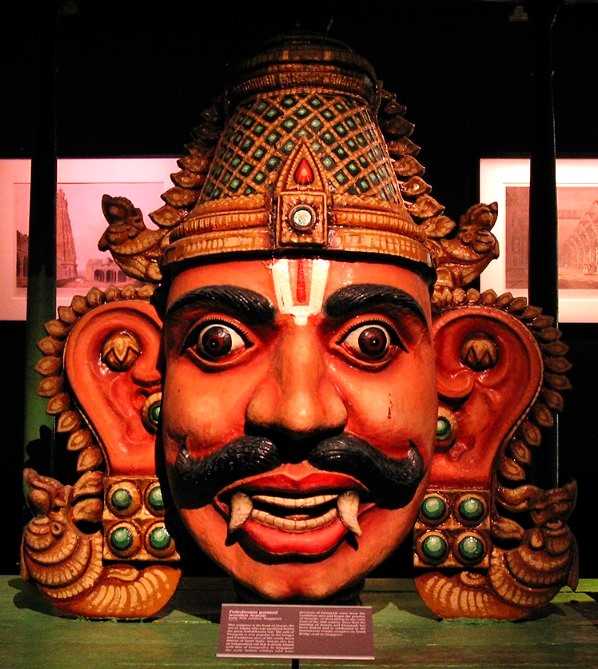
  • The streets are filled with crowds to witness the procession and festivities. A huge image of Lord Aravan is also carried across the streets. It is kept in the temple throughout the rest of the year. It’s only during this festival that a fresh coat of paint is applied to it, and it is taken out from the sanctum. 
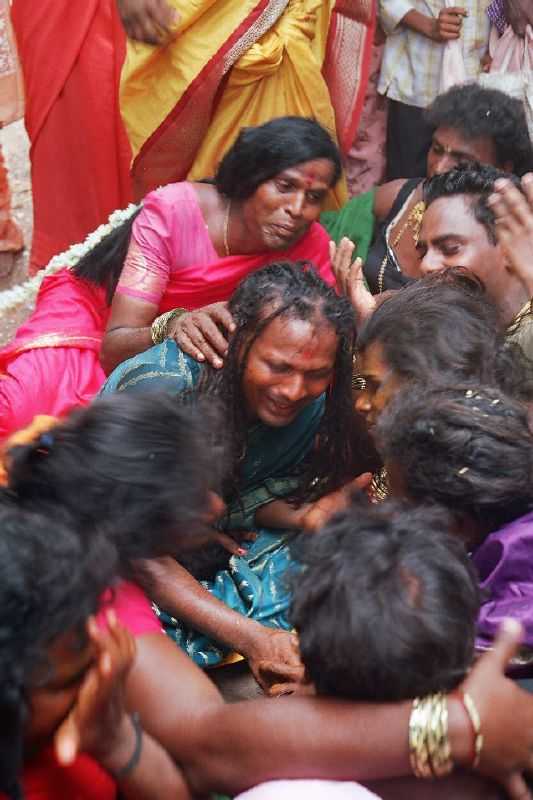
  • The next day, they mourn the Aravan’s death through ritualistic dances and by breaking thier bangles, wore white saree and no makeup is worn. The priests remove the thali, signifying their widowhood. 
  • The rejoice heard on the day before, is converted to sorrow and mourning on the next day and this is one of the stark contrasts of this festival. 
Aravanis Mourning the death of Aravan
(Source)

The cultural activities and union of various flocks of people from all over the country lead to a spirit of togetherness and a sense of belonging in the hearts of everyone. It is an occasion to bring about light where there is darkness, and let all groups of people rejoice who they truly are. It is indeed a unique festival that brings about the diversity and culture of Tamil Nadu in a rather beautifully dramatic manner.

Police Brutality: a socially accepted crime?

A “JUSTIFIED” CRIME :

Police brutality is depicted as a method promoting the idea of “instant justice”. However, the concept of Quo Warranto (latin maxim for “by what authority”) comes into picture, considering the fact that it oversteps on the fundamental roles of courts or quite literally known as the “justice system” of the country. Although, the latter doesn’t seem to be doing its duty quite efficiently as we are very well aware of the great history of the piled up cases and the never ending loopholes that sort of comes complimentary to any Government organisation. However, this in no way justifies the inhumane culture of police brutality, that has been so widely accepted by the people that it seems as an alternative dispute resolution to the long lasting court trials.

HYPOCRITICAL APPROACH:

There have been various protests against this rising injustice, especially during the worldwide lockdown period. However, I do feel there is some sense of hypocrisy attached to the opinions of the so called “woke” people who tend to have a different opinion when it comes to raising their voice on social media and a completely different reaction when the same concept is showcased and applauded in the entertainment sector, for example, in Bollywood movies like Singham, Simba, Dabbang etc. When the same concept is portrayed in an entertaining way, it is well praised. The protagonists of these movies are idealised and followed, since the encounters or torture that they succumb, is towards the “guilty”. But again, the police is not the deciding authority.

CONCEPT OF FAIR TRIAL:

There is a reason why, “statements given by the accused while under police custody are inadmissible in the court of law”. One of the principles of natural justice,” Audi Alteram Partem” which states that, no one should be condemned unheard. Irrespective of how strong evidence is there, against the accused, each party deserves a fair and formal trial with a proper legal representation. For example all the police encounters that take place may appear to be fair prima facie, however, these cannot only be used as a tool for “instant justice” but also for instant promotions or sudden increase in the credibility of the police department. We all lashed out at George Floyd’s case, but what about the recent Hyderabad rape case of Priyanka Reddy where the accused were shot dead in a “police encounter”. Most of us felt relieved saying “inke saath toh yeh hi hona chahiye”. Although, the “accused” were unarmed in that case, there was no threat to the police, so what was the need to kill them? The rage in a heinous crime like rape is justified, however, we forget the fact that they were the “accused” and not the “convicts”, again the basic principle of law saying “innocent until proven guilty”.

CONCLUSION:

The Priyanka Reddy rape case (encounter) is one such example, there are hundreds of such cases that occur every day. Fake encounter, torture while in custody ( Jairaj and fenix) or oppression based on race ( George Floyd) are daily occurring and only few make it to the limelight. One of the basic steps that has to be taken by us is to sensitise people about the lawlessness of this act and how power does not give you the right to misuse it and exploit the vulnerable. Stop promoting this inhumane behaviour by being aware of your rights and calling out these personnels on such acts.The essence of our constitution and the judiciary is “May the 100 guilty be free but one innocent should not be convicted or punished“.

Internet Theft: Can the government be considered as a white collar criminal?

With the constant rise in digitalization, the computer stores information in binary data form and deeply on the data form which is a way that the device tracks a lot of information in an effective way. Subsequently, with the invention of personal computers and microprocessors the idea of using computers for exclusive use of an individual rose. The process was not only affordable but also made management and storage of information easier. But this evolution has also led to increased interactions and sharing of private data using computer, ultimately leading to illegal activities known as cybercrimes. Identity theft is one such crime. Identity theft refers to a crime when a person fraudulently obtains information of another person and later uses it for economic or personal gain.  The theft happens in a two-step process. Firstly, the personal information gets stolen. Later, the information gets used to impersonate the victim and commit the fraud.  Identity theft has already made its place among the fastest growing sector in not only the developed countries but also the developing countries. The primary reason for US being affected stands firm to the fact that all the personal information is linked to a single social security number. The number allows an individual to avail all government schemes and records related to the individual whose social security number it is. This allows very little safeguarding to the individuals whose number gets leaked. Landing on Indian records, there has been an 11% increase in identity theft and ransom ware, followed by phishing attacks increase to 9%.  India also been ranked amongst top 5 countries to be affected by cybercrimes in 2013.  Problematically, there is a very low conviction rate despite the high levels of cybercrime.

There are provisions in Indian Penal Code, 1860 which governed the crimes of forgery and fraud but it was later amended by the Information technology Act, 2008 as it also included the electronic record, ultimately widening the ambit of such computer data related crimes. Provisions such as section 464 criminalizing forgery, Section 465 criminalizing making of false documents, section 468 criminalizing forgery for purpose of cheating, Section 469 criminalizing forgery for purpose of harming reputation, Section 469 criminalizing the use of a genuine document as forged and section 474 of having possession of a document with intention of using the genuine document as forged were coupled with IT Act. Section 420 could be used in circumstances when the Act requires including unique identification information of any individual. 

In the present scenario, the IT Act, 2000 is the main legislation governing cybercrimes in India. The objective of the Act, however, was to mainly recognize e-commerce and that’s why it did not define cybercrime. Before the 2008 amendment, the Act could impose civil liability for unauthorized access to computer or network which would have facilitated an illegal act under section 43 by way of compensation under the pecuniary limit of one crore. Also, Section 66 criminalized hacking which would result to destruction, deletion or alteration of any resource in the computer. 

The Amendment of 2008 introduced the term ‘Identity Theft’.  Section 66C of the Act governs the crime and provides punishment for the same.

The ‘sensitive personal data’ however required stronger laws to be formulated which could ensure the protection of private data. The ambit of the term has been defined by IT rules, 2011. It involves the data related to one’s password, financial information, sexual orientation, biometric information, medical records. Such a clause would be exceptional to the State or central government for monitoring, surveillance or interception. The same was provided under Section 69 of the Act. 


Data Protection Bill 2019 and Cyber-Crime are often used together these days. Not scholarly but indeed since the bill does come with serious implications for all technological and digital service provider companies and has already generated controversies. Despite India’s attempts to create a complex legal framework with the objective of protecting data but it comes with shortcomings which are inevitable. On a bare reading, there are three serious flaws with the current draft.

Firstly, the section of data localization requires data fiduciaries to store atleast one copy of personal data on a data centre or server which is located in India. However, the centre holds the upper hand to exempt categories falling under the personal data. Also the centre can declare certain datas as critical and require them to be stored in India. In the present, this would allow all the social sites also known as foreign internet services to physically able a user data in the country. This would allow law enforcement easy access to this data, which brings to the second issue.

The law enforcement access to data section would allow processing of data considered personal by an individual in the hands of centre and in the interest of security and public welfare, the state can utilize the information which would not be illegal as it would be according to procedure established by law. Now, this access stands as a threat to the right to privacy that exists in India. If combined with the section of data localization, the government shall have access to information about users in social media.

However, this legal framework for surveillance by the government is governed by the judgment in PUCL v Union of India in which the Apex Court stated rules to concentrate the power to order and review surveillance in the executive body which doesnot require court orders or supposedly, any third party review. The measure intended to act as a stopgap measure by the SC and if any subject falls short of international human rights then there will be very little to safeguard the citizens.

The last section is about the regulatory structure created. The Centre has control significantly over the controls. The bill further gives powers to data protection authority to appoint its members by merely the recommendation of an outside committee. For a person to be an effective regulator of an institution, one must have sufficient time to learn and the bill providing only five years of term seems ineffective.


The term white collar crime has grown to define the fraudulent crimes of business and government professionals over time. The characterization of such a crime is violation of trust, concealment of information, deceit through information and categorically not dependent on any kind of force or violence imposed. White collar crimes end up having huge impacts on the society. There have been various scams in the country like the Havala scam, 2g scam, fodder scam, banking scam and many more. This does not necessarily indicate towards the entire involvement to be criminal but it merely requires one financial fraud in greed of money or power to commit such an act. Cybercrime stands as one of the biggest causes to these types of crime in the country. It is the information that single handedly threatens a person’s security and financial status.

Since the actions of Government have direct impact on the society, it is easily identifiable that when a white-collar group is discussed, the Government is a part of it.

Now, bringing the recent proposed bill and the white-collar crime concept together, the question stands whether the bill in the name of data protection is actually for protection or is merely a tool of mass surveillance by the Government.

The SC in its judgment of right to privacy in K.S Puttuswamy case declared the right as a part of Article 21 guaranteed under the Constitution. The judgment clearly stated that the right is a natural right and is a measure to protect an individual from the scrutiny of the State. Thus, any action by the State would undoubtedly result in violation of such a right and would be subject to judicial review. But the right clarified to have reasonable restrictions which empower the State to impose restrictions in accordance with a law in the interest of State’s need and also the means should be in proportion to the objectives of law.

Even if not called the worst but if the bill is passed, it would bring in major implications especially in areas of national security, foreign investment as well as international trade.


National Simplicity Day-2020

We live in a complicated world, with taxes and devices and every imaginable complication the world can provide. Wouldn’t it be nice if we could just take some time to keep things simple? Simplicity Day encourages you to do just that, to let go of all of life’s complications and live a day….. simple.

The National Simplicity Day is the time to get back to basics and celebrate this event every year on July 12. It is celebrated in the honour of the birthday of Henry David Thoreau, who was born in 1817. It is said that Henry David Thoreau was a super talented person, an author, an environmentalist, an abolitionist, a poet, and a transcendentalist (A person who accepts the ideas not as religious beliefs but as way of understanding life relationships).

Simplicity Day was born out of the need to be free from the complications of the world and to allow ourselves to just be simple. Celebrate life through simplicity by turning off your devices, getting rid of complicated things and just let life be about living for a day.

This day highlights the importance of keeping yourself away from technology so that individuals can connect with themselves, and do away with the pointless clutters in their lives. It encourages us to estimate and thoroughly understand what are the significant things in their life.

The unofficial holiday motivates people to embrace simple living and a simple outlook towards life. It also promotes participants to do one thing to make the world a better place. The holiday is also sometimes known as National Simplicity Day in the United States.

So now, just step away from your your computer, and find a sunny nook with a cup of tea or a book to pass the time. Feel the sun on your skin and the sounds of birds and insects. These moments will be the ones that can truly set you free. During these long moments take the time to relax and consider how you want to proceed in your life.

Simplicity Day can lead the way!