A Few Low Cost Tips to Market Your Business

By Chemeketa SBDC

Every business owner is busy and has limited time and money for marketing, but it still needs to be done. Here are a handful of low-cost ways to spread the good news about your business.
  • Ask family and friends to help market your business. Educate them on the products and services you offer and tell them how they can help bring in customers — after all this close group of people wants to see you succeed.
  • Build a business referral network where you can find other business professionals who work within the same target market as you.
  • Attend meetings, events and trade shows to connect with other business professionals and attract new customers.
  • Offer to speak at an event. There are always groups who are looking for speakers that will interest their attendees. This does not have to be only to groups in your own industry but other businesses that can benefit from your expertise.
  • Volunteer in your community, or volunteer to be on the board of a local charity. You will meet a variety of people and attain a positive image for your business.
  • Use the press. Write a publicity article about your business or a local cause in which you are involved. In addition to the newspaper, there are several smaller local publications in which to advertise. Offer to write an article for them.
  • Put up posters and fliers on local community bulletin boards, at local businesses and in meeting places.
  • Offer informational brochures to educate your customers about your industry and the products and services you offer. Write a blog and become an expert in your field.
  • Collect email addresses from your customers. Produce a monthly or quarterly e-newsletter and use this as a way to stay in touch with your customers.
  • Give something away for free — have a contest or drawing to attract customers. Sponsor a local event by offering your product as a prize in a local contest.
  • Never run out of well-designed business cards. Give each person two, one to keep and one for them give away to your next customer.
  • Advertise on local websites not just on your own.

Study: Medical Marijuana Laws Reduce Prescription Drug Spending

Doctors prescribing medical marijuana to Medicare patients in place of prescription drugs is helping save taxpayers millions of dollars, a new study reports.
According to a recent study published in the Health Affairs journal, doctors are prescribing medical marijuana to Medicare patients in place of medications that have been typically used to treat seizures, depression, pain, and anxiety.
As a result, the Medicare program—whose patients include seniors and people with disabilities—has saved $104.5 million in 2010 and $165.2 million by 2013. The reason for the savings? Doctors are prescribing other drugs less.
An article in U.S. News & World Report states, “In other words, the government appears to spend less on drugs in states where medical marijuana is a legal option. During the time evaluated, 17 states and the District of Columbia had passed medical marijuana laws. Now, 24 states and D.C. have passed such laws. The laws vary—some specify what conditions medical marijuana can be used to treat, others require the prescription of a licensed doctor. Researchers took these factors into account in their study.”

Medical Marijuana Laws and Savings

If all states had passed medical marijuana laws, authors of the study estimate, then the government and beneficiaries could save as much as $468.1 million a year. This total represents 0.5 percent of Medicare drug spending in 2013, according to U.S News & World Report.
However, the study has some limitations. According to U.S. News & World Report, “…previous studies on the Medicare populations have suggested that Medicare patients make up a small percentage of people who use medical marijuana, and that only 13 to 27 percent of people who used medical marijuana are age 50 or older. They admit their study cannot apply to those that are younger.”

UVM Cannabis Science and Medicine Program

With medical marijuana now legal in nearly half the states across the U.S., including Vermont, there is a dramatic rise in the interest in cannabis science and medicine. Physicians, dispensary managers, and edible creators need to understand the indications, counter-indications, benefits, and risks of cannabis and medical marijuana.
UVM is the only medical school in the nation offering a professional certificate in cannabis and medicine. The eight-week, online professional certificate is designed for clinicians, dispensary personnel, nurse practitioners, physicians, pharmacists, physician assistants, edible creators, regulators, and budtenders

A Pursuit to Help Vulnerable Communities

UVM senior Ian McHale’s first exposure to lack of public health access was while setting up mobile clinics in remote villages in Peru, where there was no medicine or clean water. The biology and international development major credits that first trip to Peru as a life-changing experience.
We talked to Ian, president of UVM MEDVIDA and a student in the UVM Accelerated Master of Public Health Program, about his pursuit to become a doctor and his passion for helping vulnerable communities.

When you first traveled to Peru during your first year at UVM, what were you surprised to find from a public health perspective?

During my time in Peru, there was an indefinite strike of health care workers due lack of proper wages. I visited a remote clinic where there were no doctors, nurses, or anyone to run it, and women were giving birth in unsanitary conditions with no medical help. That experience affected me deeply. Far from any large city or hospital, these women and their children would die if there were any complications during or after childbirth. It was shocking and upsetting to me to see what a lack of public health infrastructure could lead to. Witnessing the lack of medical care in the clinic caused me to want to not only continue with my goal of becoming a doctor, but sparked my interest in public health.

How did your trip to Peru shape your career plans?

I was able to connect my passions in what I was learning in school. I was also able to put what I was learning to the test while implementing community development projects, setting up community meetings, attending patient follow ups, and leading mobile clinics. I made a lasting and meaningful connection with the community members we worked with, and I was able to understand the issues that affected these communities in Peru. These experiences will always be with me and will always have an impact on the decisions I make in my life.

MEDVIDA is the UVM’s official chapter of the national MEDLIFE organization and serves as a student hub for community service and social activism both internationally and in the local community. What do you enjoy most about your involvement with MEDVIDA?

I enjoy the amount of community volunteering and global health education we have in our chapter. At every meeting we are discussing and critically thinking about global health issues. Our chapter volunteers abroad and in our local community, where we make meals for a homeless shelter downtown and serve as mentors in our local community.

You want to work in pediatrics, and have spent time volunteering to help children. Can you talk about your volunteer work both locally and abroad?

I have volunteered on the pediatrics floor at UVM Medical Center for the past two years. I am also a DREAM mentor for two children. DREAM is a mentorship program where college students are paired with children from low-income community housing, fostering strong relationships not only with the children but the community we work in. Both of these experiences have helped shape what I want to do in my future career, hopefully one day becoming a pediatric doctor.
Over the summer, I was a volunteer affairs intern with MEDLIFE in Lima, Peru. I have also volunteered with MEDLIFE during my freshman and sophomore summer for one week in mobile clinics in Cuzco, Peru and Esmeralda, Ecuador. At these mobile clinics, we bring local doctors, nurses, dentist gynecologists, and pharmacists to communities that lack access to healthcare. We also work with the local leaders and community members on development projects such building stairs, bathrooms, and schools.

Why did you decide to enroll in the accelerated MPH program?

I want to learn more about disease prevention and management, how to identify and assess population needs, and implement population interventions. I want to use this knowledge from the program to better understand the healthcare system that I will one day work in. It will allow me to help others because I’ll have an in-depth understanding of public health policy and the local and global healthcare systems. I have learned first-hand what the lack of a public health infrastructure leads to and how to implement public health initiatives.

What is the best part about being a student at UVM?

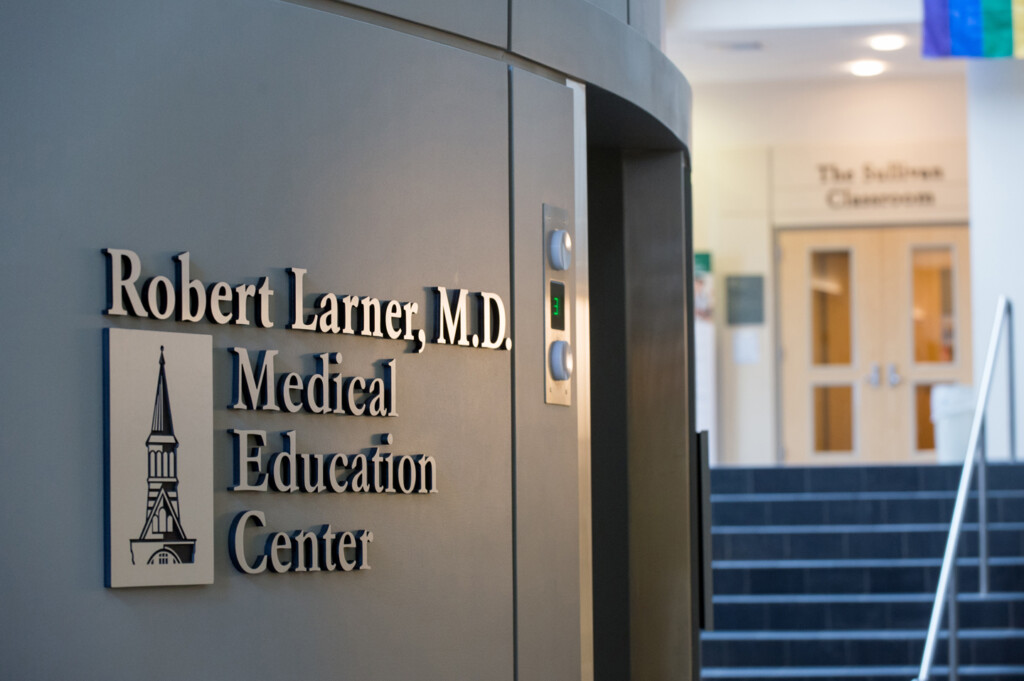
The best part about being a student at UVM are the range of opportunities that are available. With the UVM Medical Center and Robert Larner, MD College of Medicine on the heart of our campus, we are given opportunities for research, jobs, volunteering, internships, and amazing experiences. My freshman year I was hired at the Vaccine Testing Center and I have been able to work with them ever since. I was able to join MEDLIFE, which has changed my life in such a great way. I have also been able to have internship experiences, such as my current internship with the Office of the Chief Medical Examiner.

You recently saw Paul Farmer recently speak at UVM. What was the most inspiring thing you learned from Dr. Farmer?

The most inspiring thing I learned from Paul Farmer was that rather than focus on cultural competency, we should be focusing on cultural humility to allow us to better understand the people we’re working with and trying to help

Pride of Place: LGBTQ Inclusion in Medical Education and Patient Care

By Carolyn Shapiro
During a first-year course on human reproduction at the UVM College of Medicine, medical student Matthew Shear was startled to see lecture notes referring to a person with ambiguous genitalia as “hermaphroditic.” Shear, a member of the Class of ’17, wasn’t the only UVM medical student who noticed the outdated language, he says. He decided to email the instructor to propose a change in the text to today’s preferred term “intersex.”
The suggestion was welcomed, he says. His instructor invited Shear to talk, thanked him for his help, and told him, “I never know how to brush up on this. It’s really important that I use the right words.”
LGBTQ-inclusion

Student Matthew Shear
For Shear, the experience was another validation of the College of Medicine’s progressive approach to handling LGBTQ health topics — those related to the lesbian, gay, bisexual, transgender, queer, questioning, gender-neutral and gender nonconforming communities.
“That’s absolutely the place UVM is,” Shear says. “And there are dozens of little stories like that, proving to me that I got the correct read on this place when I interviewed.” At UVM, Shear says, he has found a pervasive openness to heightened understanding of LGBTQ issues — always with a goal to provide better care for patients. “That’s what we’re trying to create — a culture where those learning opportunities are so mainstream that everybody’s interested, everybody sees the value of being competent in that area.”
As the country progresses on LGBTQ rights, so does medical education and patient care. The College of Medicine is at the forefront of this change.

A Foundation for LGBTQ Inclusion and Educational Initiatives

Recent events in the media spotlight — the gender transformation of Caitlyn Jenner and the US Supreme Court decision on the right of same-sex couples to marry — have thrust sexual and gender identity diversity into nearly every avenue of discussion. At this point in social evolution, it has become clearly necessary for future physicians to be sensitive to, inclusive of, and informed about LGBTQ health concerns.
“We’re in a different era, because the bridge has been crossed already regarding the legitimacy of the material and the need for the material,” says A. Evan Eyler, MD, MPH, a UVM associate professor of psychiatry and family medicine and co-editor of Gay, Lesbian, Bisexual and Transgender Aging: Challenges in Research, Practice and Policy. “So now we’re looking at how best to do it, the same as you would women’s health or cancer care.”
The College began addressing that issue a dozen years ago — long before Jenner and the LGBTQ moniker became entrenched in the cultural lexicon. Around 2003, Professor of Pediatrics Paula Duncan, MD, laid the foundation for the first LGBTQ educational initiatives at the College. Since then, UVM has steadily moved to the forefront of LGBTQ medical education.
“We know that culturally, in the state of Vermont, we are on the leading edge of advocating for equality and the civil and health care rights of this population,” says William Jeffries, PhD, senior associate dean for medical education and an administrative champion of the College’s LGBTQ efforts. “It’s a natural extension that we should be leading the way in developing a cutting-edge health care approach to ensure that the needs of the LGBTQ community are met.”
In a survey of curriculum last year, the Association of American Medical Colleges (AAMC) recognized UVM as exemplary in its incorporation of LGBTQ health issues into curriculum. Jeffries’ colleagues at other schools, including members of the LGBTQ community, tell him that UVM is ideally situated — on a progressive campus and in a forward-thinking state — to take a pioneering role in LGBTQ healthcare education, he says.
“I like to build on strengths, and I view this as a strength,” Jeffries says. “Our job is to make this the best medical school it can be. That means our education program needs to be recognized as a leader in areas where we are innovating.”

A Cultural Climate to Emphasize the Importance of LGBTQ Health

In November 2014, the AAMC released new competencies in LGBTQ healthcare required for medical students at its member schools. The goal is to train doctors to address patients’ specific health needs no matter their sexual or gender identity, says Kristen Eckstrand, MD, PhD, founding chair of the AAMC Advisory Committee on Sexual Orientation, Gender Identity and Sex Development and a psychiatrist at the University of Pittsburgh Medical Center.
“A lot of people are well-intentioned, and they want this area to be addressed,” Eckstrand says. “The challenge is you don’t know what you don’t know.”
LGBTQ-inclusionUVM has distinguished itself by building the institutional support and cultural climate to emphasize the importance of LGBTQ health, Eckstrand says. “It has a unique combination of very dedicated students and very dedicated faculty members, which is a catalyst for change in this area,” she says of UVM. “And that’s where a lot of medical schools fall apart.”
Across the country, medical schools are grappling with ways to build LGBTQ content into their curriculum. Some have added distinct courses focused on LGBTQ topics or spend a few hours or a day on LGBTQ health. Others simply pledge support for “gay-friendly” initiatives or rely on nondiscrimination clauses in their policies, Eckstrand says.
“When I speak to colleagues nationally, the approach that some institutions take is at the early stage,” says Catherine Nicholas, EdD, assistant professor of family medicine education and operations director of the College’s simulation laboratory, and director of the standardized patient program. “They create one LGBTQ+ standardized patient case.”
UVM’s structure is different, she adds. “It’s not an LGBTQ course. It’s integrated. It’s part of the fabric of what we do. Incorporating LGBTQ scenarios in standardized patient instructional cases is crucial, Nicholas says. Who you are as a patient matters, because we teach a very patient-centered approach. So who you are, your age, who you live with, what you do for work, how you look at health and illness, is all important.”

An Approach that Involves Academics and Attitude

The College of Medicine has taken a broad, all-encompassing approach along three primary directions: increasing LGBTQ representation among students and faculty; weaving LGBTQ subject matter into every category of content and teaching; and developing students’ communication skills and compassion in working with LGBTQ patients.
The third piece is perhaps the most important, fundamental to the humanistic elements of doctoring. It’s more about attitude than academics.
It’s an ability to respond with respect and the right questions when a patient comes out as LGBTQ during an exam. It’s an expression of support and interest when a colleague or student mentions a family with a same-sex partner. It’s the willingness to throw away traditional assumptions about gender and identity.
“Affirming who the person is and encouraging it is part of the delight in the work,” says Michael Upton, MD, ’94, clinical assistant professor of psychiatry and co-advisor to the College’s Gender and Sexuality Alliance, an advocacy group of medical students. “As physicians, we have the capacity to transmit an appreciation and a caring for the richness of the individual person who has come to see us.”
LGBTQ-inclusion

Michael Upton, MD
Upton draws much of his approach to care from his own experiences as a gay man and physician. LGBTQ doctors and faculty serve as mentors for LGBTQ students and help all of those in medical training learn how to navigate difficult topics.
“It’s not pleasant to come out to a doctor and then have them have to look at the floor because they’re so uncomfortable,” Upton says. “That’s why we need an inclusive environment, because we need students and residents, and all physicians to get this exposure, so they don’t have to look at the floor.”
Certainly, a competent physician must know when a transgender man needs a pap smear because he still has a cervix or a lesbian needs birth control because she occasionally has sex with men. The more nuanced lessons in an LGBTQ-progressive medical school, though, guide doctors on gleaning the most crucial elements of their patients’ care, the aspects of their lives that influence their well-being.
“It starts with the basic content side of things, medical students understanding that gender is not binary and what that means from a biological standpoint,” says Eileen CichoskiKelly, PhD, a UVM associate professor of family medicine, who serves on the AAMC committee on Sexual Orientation, Gender Identity and Sex Development. “Having the ability to understand that we’re not going to put people in boxes is a primary concept,” she says. “As the care provider, you don’t have to have all the answers, but you do have to at least have an understanding and be able to be accepting.” She continues, “The reality is you’re going to have a range of patients like this; so we want to prepare our students for the universe of the patients that they’re going to be encountering.”
With these changes, the College has come a long way, Dr. Eyler says. At first, more than ten years ago, student evaluations of his courses in transgender health would include blunt expressions of disgust and questions about the need to endure such discussion, he says. “And I don’t get those anymore, teaching the same material.”
Eyler sees two reasons for that: “One is that our medical school has made tremendous progress in this area in a decade,” he says. “And the other is that so has the country.”

College of Medicine Sees Number of LGBTQ-identified Students Increase

To bring in more LGBTQ students — who ultimately will add to the number of LGBTQ doctors — Jeffries adjusted the admissions process last year to ensure that LGBTQ candidates are well represented in the admissions pool. That was tricky, because years of discrimination have encouraged many to remain closeted.
UVM’s voluntary process allows applicants to self-identify, making it one of the first two medical schools in the country to take this step, Jeffries says. “We’re giving students the assurance that we believe this is important,” he says. “We’re not asking this to be discriminatory. We’re asking to ensure that an integral portion of our community is represented.”
LGBTQ-inclusionIn the most recent admissions cycle, Jeffries says, the College saw the number of LGBTQ-identified students increase — along with those of all underrepresented minorities, which grew from 7 percent of the entering class in 2013 to 12 percent this year.
Matthew Shear, who is openly gay and moved with his partner for medical school, says he recognized the difference at UVM during his admissions interviews. He asked schools about their LGBTQ student populations, their support and funding of advocacy groups, their hospitals’ policies on dealing with transgender patients and the option for patients to specify a pronoun in their medical records.
“Some people just glazed over, like, ‘I have no idea what you’re talking about,’ ” Shear says. “At UVM, they’re like, ‘Oh, yeah, we’re working on it.’ And as a Michael Upton, MD, ’94 student, you can pick your own pronoun with the registrar.”
He also gauged interviewers’ reactions when he came out to them and discussed his undergraduate LGBTQ activities. Some responded with “complete dismissal” and treated “those components of my application as if they were unrelated to medicine.”
When the subject arose at UVM, the representative spent about a third of the interview talking about it, which sealed the deal for Shear.
“I definitely made it a priority,” he says, “to be someplace where I was going to be embraced and welcomed to be out while training as a physician.”


Dealing Effectively with a Temp Agency – and What to Expect

Image result for temp hiring“A temp agency – are you kidding me?”  That’s the understandable reaction of many upcoming or new BAs when someone suggests  going to see a temp agency.  But for upcoming graduates or unemployed recent graduates, it may be one of a number of options to consider, especially if some of this applies to you…
  • You are very unclear about the career path you want to pursue, or even the employment sector that most interests you – government? non-profits? private sector? start your own enterprise?
  • You worked your way through school in a retail job, nannying, etc. – and this limited your opportunities to do internships.
  • You are facing financial pressures and need to start earning money asap, but working in a hardware store is not an appealing career path.
“Temp-to-Perm” Positions.  Try to focus on agencies that emphasize temp positions that could convert into longer-term jobs.  Here are a few possibilities in DC:
How to Present Yourself to Temp Agencies
  • Put a bulleted “Administrative Skills Profile” at the top of your resume, listing the number of words per minute you can type, your software skills, and any experience you have with data entry, other digital filing, physical filing, mailrooms, doing inventory. (BTW, there’s lots of typing-test freeware available on the web.)
  • Be upbeat & energetic in your demeanor (!) – because the temp agency staffer interviewing you is trying to determine whether their client will like you.
  • Be ready to answer interview questions without hesitation; e.g., Are you restricting yourself to Metro-accessible employers? (probably say “yes”); Can you work weekends or evenings if needed? (say yes, but probably won’t be necessary); When can you start?
  • Be ready to prove yourself with the temp agency; i.e. be willing to take an initial offer that is not temp-to-perm, but which will build your credibility with the agency when the employer gives them a glowing report about this. Such initial offers could be a month long or as short as a few days.
  • Remember – you are not the agency’s client; the employer is.
Finally, applying to temp agencies is just one strategy.  You also should be applying for jobs in the normal way, via job boards and contacts; you should be networking you should and trying to get informational interviews.  And see your AU career advisor!

Ben & Jerry’s Social Mission Leader Teaches UVM Students of the Breakthrough Leaders Program About Creating Consensus

How do stakeholders find common ground when they share the same goals but hold vastly different opinions?
Simone Washington, the social mission strategy and policy manager at Ben & Jerry’s Homemade, shared a pragmatic and productive approach to building consensus in her 2018 workshop, “How to Become Allies Fighting the Same System, Role Play, Power Analytics, Conflict and Resolution Techniques.” Her session was presented to students in the UVM Breakthrough Leaders for Sustainable Food Systems Program last June.
This year Washington is teaching a variety of workshops including What is Social Equity Work and How to Lead It? during the 2019 program.
Photo Credit Ben & Jerry\'s 1978Photo Credit: Ben & Jerry’s

Washington is responsible for helping Ben & Jerry’s translate its three-part mission, progressive values, and linked prosperity framework into innovative, inspirational internal programs and initiatives, and external partnerships and projects. A dedicated social justice advocate and self-professed “innovation junkie,” Washington has over 16 years of experience challenging conventional thought and practices in the nonprofit and philanthropic sectors. Her work is focused on creating progressive structural change using a racial equity lens with an emphasis on systems thinking and design.
We talked to Washington, an instructor for UVM’s Breakthrough Leaders program, about the art of building consensus. 

How do stakeholders find common ground when there are very different points of view?

We are quick to position ourselves as adversaries, as opposed to positioning ourselves as people with needs to be met. Often when people have divergent perspectives and identities, it’s hard for them to find commonalities on which to build trust, and to use those differences to work toward building creative solutions.
For Breakthrough Leaders students, I focus on how to build consensus with large multi-stakeholder groups who share a common goal or set of goals but have a difference in opinion on how to achieve them. Participants develop an understanding of how power dynamics and cultural differences can affect a situation, and how to apply an equity lens when addressing complex conflict.
We use Ben & Jerry’s negotiation process with Migrant Justice to implement Milk with Dignity, a worker-driven social responsibility model, into its existing dairy supply chain. Participants in the Breakthrough Leaders program hear accounts of the process from actual stakeholders, and engage in a role play scenario where they engage in their own negotiations process.

What will students will take away from this exercise?

It’s my hope that this type of exercise will help the participants develop a pragmatic approach to engaging with stakeholders who hold different opinions, identities—such as racial, cultural, gender, socio-economic status—that will equip them with the skills to actively listen to one another, isolate the people from the problems or issue, and identify the unique attributes and resources that each party brings to the table that can be useful in addressing the problems. Additionally, participants gain practice in being self-aware when working with diverse groups and learn to take on the hard conversations that lead to building relationships across differences.

Do you include lessons that Ben & Jerry’s learned from working with Migrant Justice?

Yes, we invited Rob Michalak, director of social impact, and Cheryl Pinto, global values-led sourcing manager, both of whom led the negotiations for Ben & Jerry’s to talk to the group. They provide insight into what we felt worked, what we would do differently, and how this experience transformed the company. For example, because of this process, we recognized that we needed to overhaul our dairy sourcing model. The new model has been evolving to truly embody our Linked Prosperity model.
Milk with Dignity is an apt illustration of how we are working diligently to lift the voices and meet the needs of the “invisible” stakeholders in our value chain. This process will potentially change how we approach business from hiring to how we support systemic change in communities, globally. This marks a new era in how we will show up in the world as a social justice company and carry forward the vision of our co-founders.

Can you share examples of any other socially-driven projects Ben & Jerry’s is working on?

The company made a commitment to embedding racial and economic equity into its policies, practices, and programs. We have partnered with Race Forward and Frontline Solutions to conduct our first-ever racial equity assessment. This will help the company to identify ways that we can actively create inclusion and access through our Linked Prosperity philosophy for historically marginalized and underrepresented communities touched by our value chain.

How long has Ben & Jerry’s had a social mission?

The social mission has always been at the heart of the company. The co-founders were committed to finding a new way to do business. Their vision was realized in 1988 when they developed the Linked Prosperity Model which states all three parts of our mission— product, economic, and social—must thrive equally in a manner that commands deep respect for individuals in and outside of the company and support the communities of which they are a part

Graduate School Applications: What Do They Include?

While every program will have specific requirements, there are some common elements to grad school applications. When planning to apply to grad school, prepare to meet the following requirements for most programs:

Transcripts

You’ll need to send in your transcript from DU (and any other institution you’ve attended in the past) when you apply to grad school. Make sure to get your requests in to the Registrar’s office early so that your applications will be submitted and complete by the deadline.

Standardized Tests

A person behind a laptop writing on a tablet.Many grad programs require a standardized test, such as the GRE or GMAT, as part of the application package. Research ahead of time which test you may be required to take, if any, and begin studying early. Resources to help prepare for standardized tests include study guides, practice exams, and preparation courses, as well as information from the testing companies themselves:


Resume or CV

Your resume or CV (depending on your field) is the key document to highlight your academic achievements and relevant experience going into your program. Be attentive to whether programs ask for a professional resume or a CV.
A resume should be a short, effective summary of your relevant experience, usually no more than one page long. A CV, on the other hand, should be as long as necessary to include relevant information pertaining to your academic career, such as research projects, conference presentations, publications, and fellowships and grants you have been awarded.
If you are creating a CV using your undergraduate experience, make sure to have a mentor or advisor in your field review the CV to make sure it meets the standards for your specific discipline.

Statement of Purpose

A common element of the graduate school application is the statement of purpose or personal statement. For some programs, there might be a series of essay questions instead.
This document should inform the admissions committee about who you are, what has influenced your academic or career path so far, your professional or research interests, and how you plan to utilize that specific program to reach your future goals. When writing the statement, it’s crucial to plan ahead and start early, so that you can get feedback. These resources can help:
  1. The DU Writing Center
  2. Career and Professional Development: Schedule an appointment with us by visiting Pioneer Careers.
  3. Additional tips and samples are available at statementofpurpose.com

Letters of Recommendation & References

It is common for a program to request 3-4 letters of recommendation or references from past professors or supervisors. When reaching out to references, be sure to communicate as early as possible the deadlines, prompts, and what you would like them to focus on. Include your resume with your request as a helpful reminder of your achievements, and follow up with a formal thank you, as well as with an email letting them know your final decision of where to attend.

Hard Cider Production on the Rise, But Challenges Remain

By Terry Bradshaw
Hard cider production in the U.S. has increased an average of 73 percent annually since 2008. That’s a lot of apples, and Vermont fruit growers and cideries (businesses that make hard cider) are capitalizing on this market expansion. Sales of cider nationally topped 54 million gallons in 2014, which required 18 million bushels of fruit, or the equivalent of 7 percent. of the nation’s total apple production.
However, the supply of fruit available to cideries is getting tight.
Growers in Vermont have traditionally sold their apples to the fresh market, where prices are significantly greater than for cider apples. This has created a disconnect between the cider and apple industries in terms of fruit supply, and has opened up an exciting field of research and outreach.
The timing of this expansion of the cider industry is serendipitous. After the retirement of Dr. Lorraine Berkett, who led the UVM Apple Research Program for 32 years, I assumed leadership of the program in 2014 as a faculty research associate in plant and soil science, where I have been a research specialist since 1999. I have been an “advanced amateur” cider maker for over 20 years, and research in this unique niche in the apple and value-added industries will be a major focus of our work for the foreseeable future.

Hard Cider Production in Relation to Pomology

For the past century, pomologists and growers have been working to avoid production of cider apples by developing production systems that focus on production of large, blemish-free fruit. Therefore, research on cider apple production is at the ground level, and evaluation of economic characteristics of cider apple production is just as important as assessment of horticultural conditions.
Together with Community Development and Applied Economics Agricultural Economist David Conner, I was awarded in 2014 a Vermont Working Lands Enterprise Fund grant to study economic and horticultural constraints and opportunities for apple growers and cideries in the state. Surveys conducted by CDAE research specialist, Florence Becot, were sent to growers and cideries last summer to assess characteristics of each industry.
The survey generated several findings:
  • Vermont continues to have a robust apple production industry. Growers report yields in line with published averages for the state and most anticipate increased production in the future. Growers were more likely to sell to local markets than the state as a whole. They see opportunity in the growth in popularity of hard cider, but receiving adequate prices is a perceived threat.
  • Cideries are also growing, with all of the survey respondents anticipating increasing production in the future. These cideries see opportunities in the growth of the hard cider’s popularity, and a corresponding increase in cider quality. Adequate fruit supply was identified as a major risk to their operations. Presently, cideries pay an average price above the growers’ mean target price for specialty cider apples, but lower than the growers’ target price for dessert apples.
  • Cideries and apple growers have both expressed interest in dual purpose varieties for cider-making that may also be sold to the fresh market. Apple growers have expressed limited interest in growing specialty varieties suited only to cider-making, while cider makers have expressed strong interest in purchasing them. Planting new specialty apple varieties is a long-term investment and commitment that growers most likely will not do unless they have the assurance that cideries will buy the apples when the trees start producing. This might imply entering into more formal agreements than just handshake agreements, which are currently the norm.
The survey results have generated more questions than answers.
Growers and cideries both question what apple varieties are best-suited for making high-quality commercial ciders, while providing adequate and sustainable crop yield that make their production economically feasible.
Orchard planting, training systems, and pest management programs for cider apples need to be evaluated. Business structures, price points, contracts, and other arrangements between orchards and cideries must be investigated to ensure profitability for both parties.
Fermentation practices that improve and maintain cider quality need to be researched and the results extended to the industry.
These questions demand a long-term research and outreach program that I am building at UVM. In addition, we are working with like-minded collaborators at other institutions, including Washington State University, Virginia Tech, Michigan State University, and Cornell University to coordinate projects and share knowledge across regions.
This is an exciting time to be working on hard cider projects that focus on the ‘apple to glass’ production chain, and I look forward to presenting results from this research for many years to come.
Terry Bradshaw is a Tree Fruit & Viticulture Specialist at UVM, and director of the UVM Horticulture Research and Education Center

Top 5 Tips to Keep in Mind When You’re Ready to Interview for Your Dream Job

You’ve been invited to interview for your dream job, what could go wrong?  After all, you are just talking about yourself, what could be so difficult?  Interviewing has plenty of pitfalls if you are not prepared.  Invest the time necessary to present your best, most genuine self and make the most of your opportunity to prove you are the right person for the job.
Research:
  • The interviewer will gauge your interest by learning what you know about their organization.  Visit the organization’s website, news feeds and talk to alumni or others who work at the organization.
  • Dissect the job description review the job responsibilities and qualifications as they are clues to possible interview questions.
  • Know what’s happening in the industry and be up-to-date on the latest trends.
Practice Common Interview Questions:
  • Begin by knowing yourself and what you have to offer the employer.  Be ready to discuss what skills and strengths you have that relates to the position.
  • A very common opening question is in the form of “Tell me about yourself.” Don’t repeat your resume, but rather talk about what motivates you, how you became interested in the field, what you bring and why you are excited about the position.
  • Find out more in How to Answer the 31 Most Common Interview Questions
Prepare for Behavior-Based Interview Questions (past behaviors predict future behaviors):
  • These questions ask for very specific examples that demonstrate particular skills or behaviors. To respond to these questions, use the STAR format:
    • S/T Describe the situation or the task
    • A Tell about the action you took
    • R Explain the result or outcome quantifying when possible
  • Practice with the Top 10 Behavior Based Interview Questions.
Prepare Questions for the Interviewer:
  • An interview is a 2-way conversation where both you and the employer are trying to determine if this is the right match. When it’s your chance to interview the interviewer, prepare and bring with you several questions such as 51 Great Questions to Ask In an Interview.
 Follow up after the interview:
  • The interview is not over once you walk out the door or hang up the phone. Send an email to your interviewer(s) within 24 hours of your interview, preferably as soon as possible. Personalize your email by noting 1-2 pieces of new information that reinforces your interest in the position.  If you don’t have contact information for all of your interviewers, ask the person who scheduled your interview for assistance. What else can you do? Read How to Properly Follow Up After a Job Interview.
View every interview as a learning experience by reflecting on what went well, what challenged you and how you can better prepare for the next interview or next round of interviews to land that dream job!

The Benefits of Resume Review

Constructing a resume can be difficult. Well, scratch that, constructing a resume IS difficult. To articulate your accomplishments and professional identity in a way that is positive, clear, and concise is no small feat. The good news is there are people out there who can help you! Getting your resume reviewed by career advisors, industry professionals or even family and friends can really make a world of difference. Here a few ways that a resume review can help you.
1.) How Easy is it to Find Important Information? Is it easy to find your education section and what degrees you’ve earned (or are earning)? Is your Skills section buried at the bottom of your resume? It’s important to ensure that your resume is easy to scan, because employers likely won’t spend time reading every word. According to Dr. John Sullivan of ERE Recruiting, Recruiters will only look at a resume for an average of 5-7 seconds.
2.) Spelling, Grammar & Formatting: Avoiding spelling and grammatical errors in your resume is of tremendous importance since your resume is a professional document. As many times as you read through it, it can be easy to overlook small spelling and grammatical errors. New perspectives and fresh sets of eyes can help to identify errors you’ve simply missed. A resume review can also help with formatting. You might not realize that there are inconsistencies in your resume like different styles or alignments of bullet points or spacing issues between sections. Getting someone to review your resume can help identify issues like these.
3.) You Don’t Know What You Don’t Know: Did you know that you can put your LinkedIn URL on your resume? What about languages you speak or awards you’ve won? Often times you may not be aware of certain content that is appropriate to add to your resume and a review, especially by someone you know well, can help to identify those missing details.
4.) Affirmation and Positive Feedback: Sometimes it’s just good to be reminded that you’ve done a good job and that your professional and academic accomplishments are remarkable. Certainly, critical feedback is also important, but given the time and energy that’s often invested in writing a resume, it can be just as helpful to receive some well-deserved affirmation.
To have your resume reviewed by a Career Advisor here at DU you can make an appointment in Pioneer Careers. If searching for an internship, you may want to bring your resume to Internshipalooza on January 31st to have it reviewed by DU Career Staff, or you can bring it to the Driscoll Bridge on February 7th to get feedback from employers and industry professionals for Resume Review Days! For more information on both events and to register, see the Events section in Pioneer Careers. We hope to see you there!

Does salary matter? Building a fulfilling career

Life is a matter of choices. Some choices do not require much thought and reflection, while others merit rigorous deliberation. Career is one aspect of life that is replete with difficult choices. Choosing a career is one of the most crucial decisions in life as it can either make or mar personal happiness for many years to come. There is a plethora of literature on careers, but not enough attention has been devoted to the actual process of selecting a career.
Many factors contribute to a fulfilling career. A career should necessarily be in sync with one’s personality type. Every person is either an introvert or an extrovert and each career is either more suitable for extroverted or introverted personality types. For example, an extrovert is likely to be more comfortable in people-oriented careers such as marketing and should, therefore, choose a career that fits into his persona. A good career match can potentially catapult a person to new highs, whereas a wrong move can drag a person down the road to mediocrity and disillusionment.
All careers call for adequate preparation in terms of knowledge and skills, whether you are aiming to become a banker or a blog writer. A person aspiring for success in a particular field should keep himself abreast with the latest technological developments and industry trends. There is a misconception that professional training begins only after college. For the uninitiated, college life is a good time to experiment with different types of jobs and decide on the most suitable career. On the other hand, a person who has already made up his mind can utilize the college vacations to augment skills and acquire experience pertaining to long-term career goals. In fact, the student years are an opportune time to acquire knowledge and develop skills in varying walks of life as companies increasingly prefer employees that have proven abilities to work in diverse settings.
A person has to decide on factors that are most important in a job and choose the option that best addresses these aspects. Every decision involves a rational and emotional component; a person would be genuinely happy if he succeeds in aligning the mind and the heart. A good decision has to be an informed decision. A person should gather maximum information about various job options before finalizing his choice as job satisfaction would ultimately depend on the nature and demands of the job. Money alone would not matter unless the work is satisfying. The values of the organization, what it stands for and how it approaches the business environment and employees and social responsibilities are also important determinants in opting for a particular company. Job seekers should also pay close attention to company culture. Since a considerable amount of life is spent at the place of work, a company that facilitates a healthy physical environment, and encourages personal growth in areas such as higher education and work-life balance should be on the radar of prospective employees.
At the end of the day, a career that matters is one that aligns personal vision, professional goals, and societal well-being.

Skill Series #3: Written Communication

Why is it important to write well? What does ‘writing well’ mean, anyway? Every day I read resumes, cover letters, personal statements, essays and email and text messages. So do you.
Have you ever gotten a text that made no sense? Was the verb or subject missing? Maybe you thought that you knew what the person meant to say, but you had to guess.
Let’s start with some examples….
  • My courses in History and Philosophy taught me strong critical thinking skills.
Your courses taught you? YOU had nothing to do with amassing these skills? Don’t you think that YOU learned or developed critical thinking skills by taking courses in History and Philosophy?
  • Other responsibilities include progress toward degree meetings every semester.
What does this mean? Who made progress? And, what did this person do to advance the progress of these meetings?
  • I have developed a valuable database of employer relationships that get results.
Have you known databases that get results? I have not. I thought that people used databases and the information in databases to get results.
  • My educational experiences and my work experience have allowed me to develop exceptional interpersonal, clerical, analytical and leadership skills.
Your educational and work experiences gave you the opportunity to develop interpersonal skills – how did that work? Would it be accurate to say that while you pursued your education and gained work experience, YOU strengthened your interpersonal…..skills?
  • I am the daily liaison between coaches and instructor’s.
Your turn….what is the issue?
  • Young Democrats of Utah, Salt Lake City, Utah May, – June 2006
               Volunteer Champagne Manager
 Have you spotted the typos?
  • I am interested in applying for the position of with you organization.
Did this person read the sentence out loud? How many problems do you see?
  • One who will make a positive contribution to your college.
Is this a sentence? Does it include a complete thought OR do you feel something is missing?
  • All of these experiences have shown that children and animals are forever bonded and the stories arising from that relationship inform us how to approach and respect
Be clear about what and who you are referencing. WHAT RELATIONSHIP is this person talking about? And WHO exactly are we approaching?
Whether you are writing a resume, an email or an academic essay, writing skills are critical.
Here are some tips for writing as clearly as possible to convey what you mean to say:
  • Use active tense: Experiences do not teach you. YOU learn skills by engaging in experiences and completing projects.
  • Be specific and include details: As a senior majoring in Anthropology, with a minor in History, I have traveled to WWI battlefields in Belgium and worked with forensic anthropologists to uncover the remains of soldiers who died in the trenches.
  • Use a font that is large enough to see. No one will read your work, no matter how excellent it is, if the person can’t see the text!
  • ALWAYS read what you have written out loud to yourself. That is the only way you will notice if you have left out a word or used the wrong phrase.
Resources in the Career Center Library:
Eats, Shoots & Leaves: The zero tolerance approach to puncuation, by  Lynne Truss
On writing well: an informal guide to writing nonfiction, by William Zinsser
Get to the Point!  by Elizabeth Danziger
Writing That Works, by Kenneth Roman and Joel Raphaelson
 

DU Student Interns with Zayo Group

As winter quarter comes to an end, this is a great time to search for summer internship opportunities. The University of Denver’s Career and Professional Development department awards 8 undergraduate students with a $2,500 award if they land an unpaid internship for the summer. For most students, internships are a chance to gain experience in the workforce, a way to find out their strengths, and discover their interests.
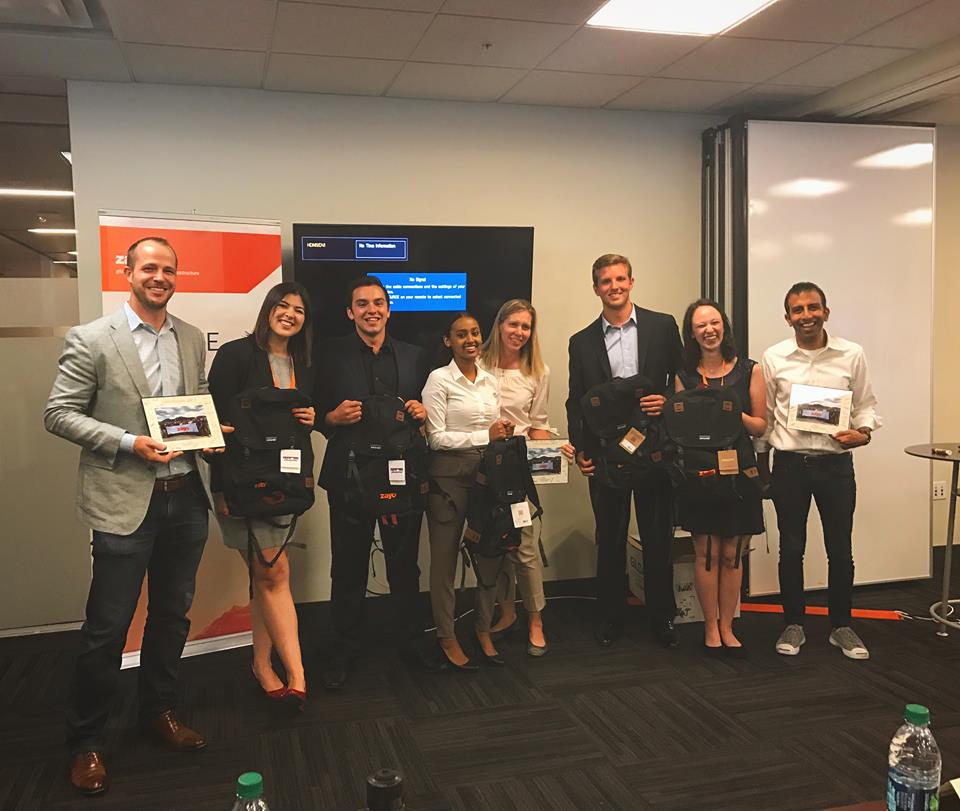
Last summer, Tyler Linnebur, a graduate student at the University of Denver, interned with a rapidly growing tech company, Zayo Group. While he was there, he was analyzing the company’s expense reports and, on occasion, presenting his findings to senior level management. He described his experience as being valuable. “I learned how to apply my studies in financial analysis and in using tools such as Excel, Google Drive, Tableau, and SalesForce.”
For Tyler, what was particularly exciting, “was getting to work with teams of full-time accountants and financial analysts, [and] seeing how people interacted and collaborated in the business world. [He] was included in a number of messages and email strings, team meetings, conference calls, and board meetings.” Tyler said, “I was pretty involved for a new guy.” For Tyler, these are great skills and accomplishments he can include in his master resume. Most students do not realize that such small details can contribute to great value for a potential employee; the key is learning to incorporate it correctly within their resume.
When asked about what other aspects of his internships Tyler enjoyed the most, he said that he cherishes the connections he made with his fellow interns and the programming that the internship program incorporated. “We went to hiking trails, happy hours, baseball games, tours, and workshops. There was a case competition among the 55 interns, where my team won 1st place and a Patagonia backpack for a prize! The summer ended with all the interns voting for each other for several superlatives. I was surprised when I was voted most likely to be a comedian! That summer I learned a lot, and I enjoyed an experience I will never trade!”
Career and Professional Development Staff are so happy that Tyler had the opportunity to experience a wonderful internship, and create not only meaningful memories and connections, but also grow his skills as a student and future employee. We wish you all the success in your future career and internships journeys, and we hope to hear your future stories (maybe as a comedian!).

Crowdfunding your graduate startup: pros and cons

You’ve been thinking about your next career step, and you’re pretty sure you’ve come up with a great idea for a business, product or innovation that could be a big hit with the right tools in place to deliver it. Great! So how do you go about making it a reality?
Well, once the initial sketching out of the idea is done, and you’ve developed a reasonably watertight plan for the subsequent development stages, it’s extremely likely that money will be the next major barrier you’ll run into. Without the requisite backing to finance bringing your great new business idea to market, it could be destined to remain little more than a pipe dream.
That’s why more and more people are taking advantage of crowdfunding platforms – the range and accessibility of which have grown exponentially in recent years – to provide that all-important initial startup capital.
However, while there are many reasons why it can be a fantastic way of securing early funds to help get your scheme off the ground, there are also a number of potential issues and concerns with crowdfunding models. It would be wise to consider all the points below before deciding whether it’s the right route for you and your plan:
Pros
It can be a cheaper way to get going. Many crowdfunding platforms essentially offer potential access to startup money without the typical loan-type burdens of scheduled repayments or interest, which you’d almost always be stuck with if you went a more traditional route via the bank.
It allows for smaller, uncredited investments and pledges. Other, more ‘formal’ creditor arrangements typically require a lot of legal groundwork that can block uncredited investors from being able to help you out.
It (usually) leaves your project in your hands. Some equity-type crowdfunding models allow investors to pledge backing in return for a degree of business control or shareholder power, but the more popular reward-based models generally mean you’ll retain full control of the business and any intellectual property associated with it after launch.
Backers represent tangible interest. If it’s likely that you’ll need to seek further support for launching your business or idea – for example, if crowdfunding is just a small part of a larger financial plan – then a successful public campaign represents a solid declaration of interest and support that can be very helpful in persuading other lenders.
It gives you options outside your immediate location. Seeking more traditional funding sources can often mean trawling local banks and creditors in your area, which is time consuming (and inherently limiting if you don’t live in a big city).
It allows you to tell a fuller story. A key part of putting together a good crowdfunding campaign is fully articulating why your idea is important and valuable. In doing so, you’ll get to develop a narrative, character and profile for your product or business, rather than simply having it appear on the high street or online and hoping your target market ‘gets it’.
It gives you a pre-launch support base. Appealing to relevant communities or key demographics in advance of your launch means you’re pre-engaged with right sorts of people before hitting the market.
Backers with wider influence can help spread your message. Trying to do everything through just your own channels is tough, but creditors or supporters who are interested enough to invest in your idea will likely also be interested enough to help you spread the word.
It gives you easy access to feedback. People who back your idea will usually be keen to share their views on how the early planning and development stages are shaping up, which can be incredibly helpful in gaining a wider perspective and making sure you deliver something customers want.
It can give you a foundation for future plans. Success in one crowdfunding campaign will sometimes mean you’ve also got a pre-built platform for publicising and funding your next idea, should you choose to develop one – your previous backers are right there.
Cons
You’ll need to offer rewards, and deliver them. Many crowdfunding models rely on you pledging tiered reward schemes for backers, to give them an incentive to donate. This demands careful thought and structuring to encourage people into higher pledge brackets through increasingly attractive benefits packages, and of course you’ll need to ensure you’re able to fulfil all promises later.
It’s unsuitable for complex projects. The idea or business model you’re pitching will need to be fairly simple and non-technical in order to get a good number of nonprofessional creditors on board; anything too complex or technical can often seem overly risky or confusing, and put off more casual backers.
It takes considerable time and effort. Planning and creating a compelling pledge drive includes myriad responsibilities such as developing those all-important multimedia elements, monitoring and responding to donations, supporting and developing the initiative with a well-executed social media campaign, and attending to constant queries and feedback from potential investors. All of this can quickly take on the weight of a part-time job – and, given that most crowdfunding campaigns are best suited to smaller funding targets, it can all feel a bit disproportionate to the amount you’re seeking from it.
There’s little scope for making any profit at the crowdfunding stage. This is particularly true with campaigns that are ‘all or nothing’ (meaning if you don’t secure your initial target amount, you get nothing from anyone – a very common model). Pressure to reach this baseline target often means setting the initial bar as low as you can, so it’s likely that you’ll only be covering very basic launch needs. This also requires any plans for rapid growth in phase two to be very carefully laid.
Your idea is made public before it’s ready to launch. In launching a crowdfunding campaign for a great idea, you’re always running the risk that someone who already has the capital you lack might see it and get in there first. However, bear in mind that copying is likely to happen if it’s successful anyway – just because you were first to market, that won’t necessarily stop someone with a higher profile launching their own version anyway. It’s part and parcel of the business world, unfortunately.
Failure doesn’t look great when it happens very publicly, and crowdfunding campaigns are inherently pretty public affairs. Even though it doesn’t indicate your idea was no good-by any means, it can be a big drain on momentum or moral, especially for team-based campaigns. (This con alone shouldn’t stop you from giving it a go, though, or trying again in future – many success stories failed to make their targets first time out.)
Adapting your idea can be difficult once people have started pledging support for it. Having to clearly define your precise plan in such a public way means that if you subsequently find you need to change elements of it, you risk losing that initial support or being tied in to all your original claims.
Negative reactions are immediately more visible. Not everyone is going to like every aspect of how your project develops or launches, and a successful crowdfunding campaign gives your backers a very public forum for broadcasting criticism during and after delivery. That’s fair, on many levels – but it’s something you’ll want to be mindful of as you go along.

Worker Classification

Classifying a worker as an employee or independent contractor can be very confusing. However, misclassification can be costly to both the employer and employee. Learn the difference between the federal and state guidelines on what constitutes an employee versus an independent contractor, and the issues and legal ramifications that arise when employees are not correctly classified. Also learn about the resources available to help you in making the correct decision.
Date/Time: April 26, 10 am to 12 noon
Location: Chemeketa Center for Business & Industry, 626 High Street NE, Downtown Salem
Cost: No charge