
By – Supriya


THANKYOU !

Comprehensive, up-to-date news coverage, aggregated from sources all over the world by EduindexNews.
By – Supriya
THANKYOU !
More Harm Than Good
Peer pressure is the direct influence on people by peers, or an individual who gets encouraged to follow their peers by changing their attitude, values or behaviour just for the sake of acceptance. The section of society which is most vulnerable to the effects of peer pressure is teenagers. The fact of peer pressure is that when your peers start trying to get you do things which you otherwise wouldn’t do. For instance, in our society we have people who pressurise us to do things we don’t want to do, hence causing us to not being able to think for ourselves. If you neglect being able to think for yourself and let others do that job then it could have a good outcome for them, but for your well being and for you as a person it can turn out to be a disaster.
Ill effects and Impact
Peer pressure can harm the group by making it too uniform. When all the members think and act alike, the group does not have access to alternative opinions creating a barrier in solving problems.
Peer pressure is a rite of passage that all of us go through but its impact varies from person to person. Some are able to brush it off without any issues while it negatively impacts others. Peer pressure affects the lives of teenagers in a number of ways. It can take a self-confident child and make him or her someone who is not sure about themselves and has a low self esteem. It affects their academic skills too because despite being capable of performing well, they choose not to because in the eyes of their peers, it would seem uncool. In an effort to fit in with their peer group, they place more emphasis on being social rather than working on their academics.
Adolescence and Peer Pressure
The desire to be accepted by their peer group is one of the strongest motivating forces during adolescence. The reason that negative peer pressure happens, especially during adolescence, is because humans are social beings and ‘WE’ want to belong. We do what we believe others want us to do for the sake of acceptance and to ‘fit in’. Extreme peer pressure may lead you to follow what your peers feel right, thereby, you end up losing your own identity.
Conclusion
It honestly depends on the people you surround yourself with. Peer pressure is influenced from a members peers. So it is up to you who you hang around with. It is only a bad thing if you make it one.
There are a lot of benefits some foods serve us. Like mustard contains manganese and phosphorus, which contribute to strong bones and teeth so help prevent osteoporosis. Many other foods have similar preventive powers such as:

Asparagus for high blood pressure.
Image result for asparagus
Asparagus contains the natural diuretic asparagine, which helps your body get rid of excess salt and fluid. For people with oedema caused by high blood pressure, eating asparagus can be very helpful. Asparagus also has B-vitamins that help fight early cognitive decline and depression.
Onions For lung cancer
Image result for onion
Studies have found that dietary flavonoids that are found in onions, reduce risk of lung cancer. Onions may also help boost your good cholesterol.
Cheese for dental health.
Image result for cheese
The fat that is naturally present in cheese coats your teeth and acts like a natural barrier against bacteria. Cheese also contains caesin, a protein that provides protection.
Lemons and limes for kidney stones
Lemons and lime contain citric acid that helps reduce the excretion of calcium in urine so it prevents kidney stones from forming. Lemon rinds are also rich in a component called rutin, which helps strengthen the walls of the capillaries, potentially reducing the pain and severity of varicose veins.
Papayas for arthritis
Image result for papaya
Papaya is an excellent source for vitamin C. Thus help prevent the ailment, if consumed regularly.
Beets for a better brain.
Beets produce nitric oxide, which helps blood flow throughout your body and brain. Which decreases the risk of developing Alzheimer’s disease and vascular dementia.
Increase in Telephone Subscription:
Jump in Internet and broadband penetration:
· Internet connections jumped from 25.15 crore in March 2014 to 83.37 crore in June 2021, registering a growth of 231%.
· Broadband connections rose from 6.1 crore in March 2014 to 79 crores in June 2021, growing by about 1200%.
· Average revenue realization per subscriber per GB wireless data reduced to Rs. 9.8 in June 2021 from Rs. 268.97 in December 2014, a reduction of more than 96%.
· Average monthly data consumption per wireless data subscriber increased by 22605% to 14 GB in June 2021 from 61.66 MB in March 2014.
Growth in BTS and Towers:
· The number of Mobile Base Transceiver Stations (BTS) increased from 8 lakh in 2014 to 23 lakhs in 2021 growing by 187 %.
· The number of mobile towers increased from 4 lakh in 2014 to 6.6 lakh in 2021 growing by 65%.
Increase in FDI:
(B) TELECOM REFORMS
(i) Telecom Reforms announced on 15.9.2021:
In view of the telecom industry facing financial stress and challenges on issues like liquidity, rationalization of levies, Adjusted Gross Revenue (AGR) and spectrum pricing, the Government has approved a number of structural and process reforms in the Telecom sector:
(a) Structural Reforms
1. Rationalization of AGR: Non-telecom revenue will be excluded on prospective basis from the definition of AGR.
2. Bank Guarantees (BGs) rationalized: Huge reduction in BG requirements (80%) against License Fee (LF) and other similar levies. No requirements for multiple BGs in different Licensed Service Areas (LSAs) regions in the country. Instead, one BG will be enough.
3. Interest rates rationalized/ Penalties removed: From 1st October, 2021, delayed payments of License Fee (LF)/Spectrum Usage Charge (SUC) will attract interest rate of SBI’s MCLR plus 2% instead of MCLR plus 4%; interest compounded annually instead of monthly; penalty and interest on penalty removed.
4. For Auctions held henceforth, no BGs will be required to secure instalment payments. Industry has matured and the past practice of BG is no longer required.
5. Spectrum Tenure: In future Auctions, tenure of spectrum increased from 20 to 30 years.
6. Surrender of spectrum will be permitted after 10 years for spectrum acquired in the future auctions.
7. No Spectrum Usage Charge (SUC) for spectrum acquired in future spectrum auctions.
8. Spectrum sharing encouraged- additional SUC of 0.5% for spectrum sharing removed.
9. To encourage investment, 100% Foreign Direct Investment (FDI) under automatic route permitted in Telecom Sector. All safeguards will apply.
(b) Procedural Reforms
10. Auction calendar fixed – Spectrum auctions to be normally held in the last quarter of every financial year.
11. Ease of doing business promoted – cumbersome requirement of licenses under 1953 Customs Notification for wireless equipment removed. Replaced with self-declaration.
12. Know Your Customers (KYC) reforms: Self-KYC (App based) permitted. E-KYC rate revised to only One Rupee. Shifting from Prepaid to Post-paid and vice-versa will not require fresh KYC.
13. Paper Customer Acquisition Forms (CAF) will be replaced by digital storage of data. Nearly 300-400 crore paper CAFs lying in various warehouses of TSPs will not be required. Warehouse audit of CAF will not be required.
14. Standing Advisory Committee on Radio Frequency Allocation (SACFA) clearance for telecom towers eased. DOT will accept data on a portal based on self-declaration basis. Portals of other Agencies (such as Civil Aviation) will be linked with DOT Portal.
(c) Addressing Liquidity requirements of Telecom Service Providers
The Government approved the following for all the Telecom Service Providers (TSPs):
15. Moratorium/Deferment of up to four years in annual payments of dues arising out of the AGR judgement, with however, by protecting the Net Present Value (NPV) of the due amounts being protected.
16. Moratorium/Deferment on due payments of spectrum purchased in past auctions (excluding the auction of 2021) for up to four years with NPV protected at the interest rate stipulated in the respective auctions.
17. Option to the TSPs to pay the interest amount arising due to the said deferment of payment by way of equity.
18. At the option of the Government, to convert the due amount pertaining to the said deferred payment by way of equity at the end of the Moratorium/Deferment period.
C. PROJECTS AND INITIATIVES
(i) Service delivery in villages through BharatNet – Progress in 2021:
· The flagship BharatNet project is being implemented in a phased manner to provide broadband connectivity to all the Gram Panchayats (approx. 2.6 lakh GPs) in the country. The Phase-I has been completed in December 2017 covering over 1 lakh GPs.
· In 2021 (01.1.2021 to 31.10.2021), a total number of 17,232 GPs have been made Service Ready of which 16,344 GPs are on Optical Fiber Cable and 888 GPs are on satellite media.
· As on 01.11.2021, out of the remaining Gram Panchayats to be connected under BharatNet Phase-II, a total of 1,79,247 GPs have been connected by laying 5,52,514 km Optical Fibre Cable (OFC), out of which 1,61,870 GPs are Service Ready.
· In addition, 4218 GPs have been connected over satellite media taking the number of total Service Ready GPs to 1,66,088.
· The scope of BharatNet has now been extended to reach all villages in the country in accordance with the announcement made by the Hon’ble Prime Minister on 15th August 2020.
· On 30.06.2021, Government accorded approval for a revised strategy for implementation of BharatNet through Public-Private Partnership (PPP) model in 16 States of the country covering about 3.61 lakh villages (including 1.37 lakh GPs).
(ii) Installation of mobile towers in LWE affected areas: In order to provide mobile connectivity in the areas affected by Left Wing Extremism (LWE), the Government has installed mobile towers at 2343 locations under Phase- I of this project and these towers are providing mobile services. Under Phase-II of this project, the Government has approved installation of 2542 towers for providing 4G mobile services and the project is under implementation.
(iii) 210 out of 354 Uncovered Villages covered with mobile services: In order to provide connectivity in villages in border areas of Jammu & Kashmir, Ladakh, Himachal Pradesh, Uttar Pradesh, Bihar, Rajasthan, Gujarat, Uttarakhand, Karnataka and West Bengal, the Government has accorded to connect 354 villages. As of October 2021, around 210 villages have been covered with mobile services.
(iv) 4G based Mobile service in 502 uncovered villages under Aspirational District Scheme: In order to boost telecom infrastructure in Aspirational Districts of four states namely Uttar Pradesh, Bihar, Madhya Pradesh & Rajasthan, the Government has accorded to provide 4G based Mobile service in 502 uncovered villages and the project is under implementation.
The Government in November 2021 has further accorded to provide 4G based Mobile service in 7287 uncovered villages of Aspirational Districts of 5 States namely Andhra Pradesh, Chhattisgarh, Jharkhand, Maharashtra and Odisha.
(v) 1,358 towers installed under Comprehensive Telecom Development Plan (CTDP) for the North-Eastern Region: Government has drawn up a plan to provide Mobile connectivity in the uncovered villages and along National Highways of Assam, Manipur, Mizoram, Nagaland, Tripura, Meghalaya, Sikkim, and Arunachal Pradesh in North East region. The projects are under implementation and as of October 2021, a total of 1,358 towers have been installed, covering 1246 villages and 283 National Highway sites.
(vi) Submarine Optical Fiber Cable Connectivity Laid under Comprehensive Telecom Development Plan for Islands :
Andaman & Nicobar Islands: The undersea 2,313 km optic fiber-based telecom connectivity between Chennai and Andaman & Nicobar Islands was inaugurated in August 2020.
Lakshadweep islands: Government has approved a proposal for provision of submarine Optical Fiber Cable Connectivity by laying approximately 1891km of submarine cable between Kochi and Lakshadweep Islands. The project is under implementation and targeted to be implemented by May 2023.
(vii) Launch of Satellite-based broadband connectivity for Lakshadweep Islands: Minister of State for Communications and Administrator to Union Territory of Lakshadweep launched and dedicated to the nation the high capacity satellite-based connectivity for Lakshadweep for providing broadband services on 14.08.2021. Under this Satellite project, the bandwidth has been enhanced from 318 Mbps to 1.71 Gbps for Lakshadweep Islands. For Agathi, Androth, Minicoy & Kavaratti Islands, the bandwidth has been enhanced by 200 Mbps, whereas for Amini, Chetlat, Kalpeni, Kadmath, Kiltan & Bitra Islands, the bandwidth has been enhanced by 100 Mbps.
(viii) 50000 Access points deployed under PM-WANI: The Government on 09.12.2020 approved the proposal to proliferate broadband through Public Wi-Fi Networks under the framework of Prime Minister’s Wi-Fi Access Network Interface (PM-WANI). It is expected that with Public Wi-Fi Broadband, the user experience and Quality of Service for Broadband will be improved significantly. This service will be especially useful in rural areas where Public Wi-Fi Hotspots are also being created under BharatNet. Proliferation of Public Wi-Fi Hotspots will lead to increased employment for small and micro entrepreneurs, and provide them with an additional source of income.
Under the PM-WANI framework, online registrations of PDOAs and App providers began on 07.01.2021. As on 23.11.2021, a total of 125 PDOAs and 63 App Providers have been registered by DoT and more than 50000 Access points have been deployed under PM-WANI.
(ix) New Guidelines for Other Service Providers (OSPs): The Department has issued New Guidelines for OSPs on 05.11.2020 and then the Revised Guidelines for OSPs dated 23.06.2021 to further simplify and liberalize the Terms & Conditions for registration of OSPs. It is expected that the New guidelines for OSPs will make the Indian IT/ITeS Industry more competitive in the Global market and further boost the Industry. Under the new guidelines, (i) no registration certificate or bank guarantee required from OSPs,
(ii) Work from anywhere (WFA) in India is permitted
(iii) Sharing of infrastructure between domestic OSP and International OSP is permitted etc.
(x) Online licensing for use of Spectrum: This initiative has been launched on 29.06.2021 to facilitate online licensing for use of Spectrum to conduct Experiments, Demonstrations and for Testing Requirements. The scope of existing Saral Sanchar Portal of DoT, on which applications for Access Services, Internet Services, Internet Services and other licenses are being received, has accordingly been expanded to cover this initiative and to make the approval process faceless, transparent and time bound.
(xi) Liberalisation of Unified License and Commercial VSAT CUG license
The Unified License and Commercial VSAT CUG license regime have been liberalized by permitting:
D. HARNESSING EMERGING TECHNOLOGIES
(i) High Throughput Satellites (HTS): HTS have the capability of delivering significantly enhanced data rate as compared to conventional satellites. The deployment of HTS in coming times will be instrumental in providing abundant capacity and connectivity to unconnected or sparsely connected regions. Department has issued notifications on 23.09.2021 and 27.09.2021 which will enable framework for sharing of HTS gateway hubs. The data speed restrictions for different types of satellite-based telecom network deployments have been done away with, thereby enabling deployment of faster throughput networks. The relevant standard has been revised and in line with advancements in technology in this field and will help in realizing the Government’s broadband proliferation initiatives.
(ii) Low Earth Orbit (LEO) satellite is an emerging satellite technology which offers low latency communication by virtue of low propagation delay. Such new technology satellites may supplement availability of requisite bandwidth that could be utilized for rendering broadband services alongwith voice communication in difficult terrain and far-flung areas bringing digital inclusion and digital empowerment at par with others to fulfil the vision of government.
(iii) Mandatory Testing and Certification of Telecom Equipment: Telecom Engineering Centre (TEC), an attached office of this department, completed evaluation of products for determination of trusted sources on trusted Telecom Portal. This is in accordance with mandate under the National Security Directive for procurement of Telecommunication Equipment.
E. INDIA’s RANKING IN GLOBAL INDICES:
The report released on 02-12-2021 reveals that India not only improved its ranking but also improved NRI score from 41.57 in 2020 to 49.74 in 2021 i.e 20%.
The report stated, “India is another strong economy in the region and made one of the most notable improvement in NRI 2021 by jumping 21 positions. The aggressive upward movement resulted from better country-wide performance in addition to the introduction to more relevant indicators to the NRI framework. India displayed significant progress across most pillars and sub-pillars, with the technology pillar (49th ) as it’s best dimension.…”
National Telecommunication Institute for Policy Research, Innovation & Training (NTIPRIT), launched a course on “National Security” on 17.05.2021 initially for DoT officers and will later be expanded to cover officials in other Government Department as well as the Private sector.
F. PLANNING FOR THE FUTURE
Technology ownership is considered necessary to take lead in the global competitive market and also to make value addition in global supply chains with IPRs. The technology control also facilitates development and production of cost-effective communication network products and devices to bridge digital divide considering the large rural geographies in the country.
Atmanirbhar Bharat initiative provides a big impetus to address current and future technology needs in telecom sector. The following initiatives are being driven in the next generation communication technologies including 5G, upcoming 6G, Quantum Communications etc.
With regard to rollout of 5G services, Telecom Service Providers (TSPs)- M/s Bharti Airtel, M/s Reliance Jio and M/s Vodafone Idea- have established 5G trials sites in Gurugram, Bangalore, Kolkata, Mumbai, Chandigarh, Delhi, Jamnagar, Ahmadabad, Chennai, Hyderabad, Lucknow, Pune, Gandhi Nagar cities. These Metros and big cities would be the first places for launch of 5G services in the country, next year.
*****
The year 2021 brought some unprecedented challenges for mankind amidst the Covid-19 pandemic. Indian scientists and researchers came out with a number of remarkable achievements in the field of Earth Sciences and related sectors in year 2021. A few of many success stories of the hard work and relentless efforts of Indian scientists and researchers are listed below.
Major Success Stories of M/o Earth Sciences During 2021
*****
1. Rashtriya Gokul Mission:
Breed Development:
The Livestock sector, besides contributing to the national economy, plays a key role in providing livelihoods to 80 million rural households. India is a global leader amongst dairying nations and produced 198.48 million tonnes of milk in the current year valued at more than Rs 8.32 lakh crore. However, productivity of Indian dairy animals is low as compared to most of the dairy countries in the world. Due to low productivity farmers are not getting remunerative income from rearing of dairy animals.
New Initiatives of the Department:
a) Implementation of Rashtriya Gokul Mission from 2021-22 to 2025-26
In order to improve productivity and enhance milk production, thereby making dairying more remunerative to the farmers Rashtriya Gokul Mission for genetic upgradation of bovine population and development and conservation of indigenous bovine breeds has been extended for implementation with an allocation of Rs 2400 crore over duration of 5 years. Several new technologies have been accessible to the farmers at their doorstep under the Mission such as sex sorted semen, IVF technology, genomic selection etc.
Focus of the implementation of the scheme has been shifted from creating cattle and buffalo breeding infrastructure in the States to bringing quality breeding services including artificial insemination services, IVF technology and sex sorted semen at farmer’s doorstep. The scheme also focuses on facilitating private entrepreneurship to improve access and affordability.
With implementation of proposed programme milk production in the country will be increased from 198.4 million metric tonnes in 2019-20 to 300 million metric tonnes in 2024-2025. 8 crore farmers engaged in dairying will get direct benefit in the form of increased milk production on an average 1200 kg per animal per year.
New Components under Rashtriya Gokul Mission:
i) Accelerated Breed Improvement programme: Under the component, IVF technology and artificial insemination with sex sorted semen is being leveraged to produce female calves female calves for the dairy farmers. IVF is important tool for genetic upgradation of bovine population at rapid rate, work which is done in 7 generations (21 years in case of cattle and buffaloes) can be done in 1 generation (3 years in case of cattle and buffalo) through IVF. The technology has huge potential in enhancing farmers’ income through production of only female calves with genetic potential of producing 4000 kg of milk per lactation thus increasing farmers income by many fold. Under the Accelerated Breed Improvement programme 2 Lakh IVF pregnancies will be established in next five years. Subsidy at the rate of Rs 5000 per assured pregnancy will be made available to farmers. The programme has already been initiated in the country.
Sex sorted semen production has been introduced in the country for production of only female calves upto 90% accuracy. Use sex sorted semen will be game changer not only enhancing milk production but also limiting stray cattle population. During the next five years 51 lakh pregnancies will be established and subsidy of Rs 750 or 50% of the cost of sorted semen on assured pregnancy is available to farmers.
ii) Establishment of Breed Multiplication Farms: A major constraint for aspiring dairy farmers is the difficulty of procuring high quality heifers or milch animals from their local areas. To address this issue and to attract investment including entrepreneurship for the dairy sector, and to simultaneously create the opportunity for developing a hub and spoke model of dairy farming where small and marginal dairy farmers can thrive with the help of a local hub of reliable dairy services, a subsidy of 50% (up to Rs 2 crores per farm) on capital cost (excluding land cost) is being provided to private entrepreneurs under this component for establishment of breed multiplication farms of minimum herd size of 200 heads of bovines. The entrepreneur will obtain bank finance for the remaining capital cost and sale high quality heifers, conceived through sorted sex semen/ IVF, to farmers in the region.
Awards and new launches
a) Gopal Ratna Award 2021
Gopal Ratna Award has been launched by the Department in 2021 and is one of the highest National Awards in the field of livestock and dairy sector. Objective of the award is to encourage all individual farmers, artificial insemination technicians nicians and Dairy cooperative societies working in this sector. Awards are conferred in three categories, namely (i) Best Dairy Farmer Rearing Indigenous Cattle/buffalo Breeds; (ii) Best Artificial Insemination Technician (AIT) and best Dairy Cooperative. Award consists of a Certificate of merit, a memento and following cash amount in each category: Rs. 5,00,000/-(Rupee five lakh) for 1st rank holder; Rs. 3,00,000/- (Rupee three lakh ) to 2nd rank holder and Rs. 2,00,000/- (Rupee two lakh) to 3rd rank holder. For the first time, applications were invited on self nomination basis through online application portal https://gopalratnaaward.qcin.org from 15.07.2021 to 15.10.2021. Total 4401 applications were received and were evaluated by the Department and 4 beast dairy farmers, 3 best AI technicians and 3 best dairy cooperatives in the country were felicitated on 26th November 2021.
b) Launching of Breed Multiplication farm Portal
Breed Multiplication Farm Portal has been launched on 26th November 2021 to receive online application from interested private individuals/ Entrepreneurs, FPOs, SHGs, FCOs, JLGs, and Section 8 companies for breed multiplication farm.
c) Launching of Dairy mark
Dairy mark has been launched by Hon’ble Prime Minister on 23rd December 2021, this unified logo is featuring the earlier respective logos BIS-ISI mark & NDDB-Quality Mark and Kamadhenu Cow, for ‘Product–Food Safety Management System–Process’ certification under one umbrella. With the dairy mark our consumers will be ensured about the quality of milk and milk products and will be easy for milk producers/processor to obtain quality certification by applying online to BIS through portal.
Ongoing Programmes
Nationwide Artificial Insemination Programme:
Nationwide AI Programme has been initiated in September 2019 and under the programme AI services delivered free of cost at farmers’ doorstep. As on date 2.20 crore animals have been covered, 2.6 crores Artificial Insemination have been performed and 1.4 crores farmers benefitted under the programme. Income of the participating farmers is expected to increase with the enhancement in productivity. During the next five years Nationwide AI programme will be extended to 15 crore breedable bovines benefitting 7.5 crore farmers.
Genomic selection:
Advanced dairy nations are using DNA based selection called genomic selection for proving genetic merit of the bulls at birth against 6- 7 years taken in traditional method to prove genetic merit of the bulls. DNA chip for genomic selection has been developed, Indus chip and Buff chip by NDDB and Low density chip for cattle and buffalo by NBAGR. This chip has been converged with the chip developed by NBAGR for undertaking genomic selection of indigenous breeds. Cost of production of bulls will be reduced substantially.
e-GOPALA app:
A comprehensive breed improvement marketplace and information portal for direct use of farmers in the form of the e-GOPALA app (Generation of Wealth through Productive Livestock) has been launched by Hon’ble PM on 10th September 2020. e- Gopala app the digital platform is helping farmers in managing livestock including buying and selling of disease free germplasm in all forms (semen, embryos, etc); availability of quality breeding services (Artificial Insemination, veterinary first aid, vaccination, treatment etc) and guiding farmers for animal nutrition, treatment of animals using appropriate ayurvedic medicine/ethno veterinary medicine.
Establishment of MAITRIs:
In order to meet the demand of AI technicians project has been sanctioned under Rashtriya Gokul Mission for induction of 90958 Multi Purpose AI technicians in Rural India (MAITRIs) as on date 11,000 MAITRIs have been trained and inducted. With the establishment of MAITRIs Artificial insemination coverage will be available at farmer’s doorstep.
2. DAIRY DEVELOPMENT SCHEMES:
1.) National Programme for Dairy Development (NPDD) :-
The Department is implementing Central Sector Scheme- “National Programme for Dairy Development (NPDD)” across the country since Feb-2014 with an objective of creating/strengthening of infrastructure for Production of quality milk, Procurement, Processing and Marketing of Milk & Milk Products through State Implementing Agency (SIA) i.e State Cooperative Dairy Federation.
The scheme has been restructured/realigned in July 2021. The restructured NPDD Scheme will be implemented from 2021-22 to 2025-26 with a budget allocation of Rs.1790 crore. The scheme the aims to enhance quality of milk and milk products and increase share of organised procurement, processing, value addition and marketing. This scheme has two (2) components:-
(i) The Component ‘A’ focuses towards creating/strengthening of infrastructure for quality milk testing equipment as well as primary chilling facilities for State Cooperative Dairy Federations/ District Cooperative Milk Producers’ Union/SHG run private dairy/Milk Producer Companies/Farmer Producer Organisations.
(ii) The Component ‘B’ provides financial assistance from Japan International Cooperation Agency (JICA) as per project agreement already signed with them. The central Government share in this project is proposed to be funded through NPDD (Component A).
Progress/Achievements (Jan-Dec 2021):
12 new projects in 8 States were approved under NPDD scheme during January 2021 to December 2021 at a total outlay of Rs. 361.67 crore (Central Share Rs.236.94 crore). These projects primarily aims for creation of additional milk processing capacity of 60 thousand litres per day and strengthening of village level milk chilling, collection and testing infrastructure by installation of 788 bulk milk coolers (with a capacity of 2201.9 thousand litres), 5172 automatic milk collection units and 3921 electronic milk adulteration testing machines.
Physical achievements (January to December 2021)
|
S. No. |
Parameter |
Achievement |
|
1 |
Milk Processing Capcity created (TLPD) |
381 |
|
2 |
Incremental Daily Milk Procurement (TKgPD) |
368.66 |
|
3 |
Dairy Cooperative Society organised/revived (Number) |
1914 |
|
4 |
Farmer members enrolled (in lakh) |
1.43 |
|
5 |
Bulk Milk Coolers installed (Number) |
291 |
|
6 |
Automatic Milk Collection units installed (Number) |
4251 |
|
7 |
Electronic Milk Adulteration Testing Machine installed (Number) |
511 |
“Dairying through Cooperatives” Component B of National Programme for Dairy Development (NPDD) scheme
Cabinet Committee on Economic Affairs (CCEA) has approved restructuring of National Programme for Dairy Development (NPDD) under Central Sector Scheme (CSS) umbrella Scheme “Development Programmes” on 14.07.2021 as “Dairying through Cooperatives” Component B of National Programme for Dairy Development (NPDD) scheme.”Dairying through Cooperatives” Component B of National Programme for Dairy Development (NPDD) scheme has the aims to increase sales of milk and dairy products by increasing farmer’s access to organised market, upgrading dairy processing facilities and marketing infrastructure and enhancing the capacity of producer owned institutions, thereby contributing to increase in return to milk producers in the project area with an outlay of Rs.1568.28 crore including in the form of Loan of Rs.924.56 crore (JPY 14,978 million) by Japan International Cooperation Agency (JICA), RS. 475.54 crore as Grant by Govt. of India and participating Institutes’ (PI)share of Rs.168.8 crore for the period of 5 year from 2021-22 to 2025-26. Eligible States are Uttar Pradesh and Bihar. The scheme provides employment generation opportunities in the field of procurement, processing, marketing etc under the project area of the scheme.
2) Dairy Processing and Infrastructure Development Fund (DIDF) Scheme:-
Launched: 21st December 2017
Objectives: To modernize the milk processing & chilling plants including value addition
Scheme Outlay: Rs. 11,184 Cr; Total project outlay: Rs. 10,005 Crore (Loan: Rs. 8004 Crore, End Borrowers’ contribution: Rs. 2001 Crore); NDDB & NCDC Contribution: Rs. 12 Crore, Interest subvention (Government of India): Rs. 1167 Crore
Components of DIDF:
New Components added in June 21
End Implementing Agency (EIA): State Milk federation. District Milk Union, Multi-state dairy cooperative, Milk producer Companies, Subsidiaries of NDDB,
Newly Added EIA: Registered FPOs & SHGs.
Funding:
Progress under DIDF:
Financial Progress (Jan-Dec 2021):
During 2021, 8 projects from 4 states with total outlay of Rs 750.82 Cr with loan component of Rs 519.26 Crore have been sanctioned by NDDB and NCDC. Rs 101.91 Cr of laon has been disbursed.
On cumulative basis, as on 21.12.2021, under DIDF, 48 Projects from 13 States with a total outlay of Rs. 6216.15 Crore with a loan component of Rs. 4101.82 Crore have been sanctioned by NDDB and NCDC Further, Rs. 1256.68 Crore of loan has been disbursed. DAHD, GoI has released Rs. 54.59 Crore to NABARD as interest subvention.
Physical Progress: On cumulative basis, 45 LLPD Milk Processing Capacity, 113 BMCs with 3.54 LLPD capacity, 165 MTPD Drying capacity and 6.76 LLPD Value added Processing (VAP) capacity has been established. Around 23 thousand villages have been covered under the scheme
3) Supporting Dairy Cooperatives and Farmer Producer organizations engaged in dairy activities” (SDC&FPO)
INTEREST SUBVENTION ON WORKING CAPITAL LOANS FOR DAIRY SECTOR
Department of Animal Husbandry and Dairying has introduced a new
component “interest subvention on Working capital loans for Dairy sector” as one of
the component under its scheme “Supporting Dairy Cooperatives and Farmer
Producer organizations engaged in dairy activities” (SDC&FPO). Under the interest
subvention component of SDCFPO scheme so far Rs 146.57 Cr has been provided as interest subvention amount against eligible total working capital loan amount of
Rs 10588.64 Cr for milk unions as on 13.12.2021.
KISAN CREDIT CARD (KCC) FOR ANIMAL HUSBANDRY & DAIRYING
FARMERS
A Special drive has been undertaken to provide concessional credit to Animal Husbandry & Dairying farmers through Kisan Credit Cards during 01.06.2020 to 31.12.2020. This has enabled such farmers to gain access to institutional credit at concessional interest rate for working capital expenditure. Under this drive 14.25 fresh KCC were issued to Animal Husbandry and Dairy Farmers.
In order to provide Kisan Credit Card facility to all eligible Animal Husbandry and Fishery Farmers, Ministry of Fisheries, Animal Husbandry and Dairying in association with Department of Financial Services have launched a “Nationwide AHDF KCC Campaign from 15 th November 2021 to 15 th February 2022. During this Campaign, District Level KCC Camps are being organized in every week for on the spot scrutiny of applications. Under this campaign 50,454 KCC were sanctioned as on 17.12.2021.
3. Livestock Health and Disease Control Programme (LHDCP):
Livestock Health and Disease Control (LH & DC) scheme and National Animal Disease Control Programme (NADCP) are merged under Disease Control Programme renamed as Livestock Health and Disease Control (LH & DC) Programme.
National Animal Disease Control Programme for control of Foot & Mouth Disease and Brucellosis (NADCP) is a Central Sector Scheme, with an outlay of Rs 13,343 Cr for five years and was launched inSeptember 2019. The main aim of the Scheme is to control FMD and Brucellosis by 2025 with vaccination and eventual eradication of FMD. Also, the objective of the scheme is to vaccinate all Livestock including cattle, buffalo, sheep, goat and pig biannually against Foot and Mouth Disease (FMD) and to vaccinate all Female Bovine Calves (4-8 months old) annually against Brucellosis.
The programme envisages 100% ear tagging of the eligible animal population and their registration on the INAPH (Information Network for Animal Productivity and Health portal), in order to enhance the traceability, monitoring and control of animal diseases. So far, approximately 21.93 crore cattle and buffaloes have been ear tagged; 16.91 crore cattle and buffaloes have been vaccinated in FMD round-1; 4.46 crore cattle and buffaloes have been vaccinated in the ongoing FMD round-2; and 0.27 crore female bovine calves (between 4-8 months of age) have been inoculated in the ongoing Brucellosis vaccination phase.
The Livestock Health & Disease Control scheme with the aim of reducing risk to animal health by prophylactic vaccination against diseases of animals, capacity building of Veterinary services, disease surveillance and strengthening veterinary infrastructure. The major activities supported are: Critical Animal Disease Control Programme (CADCP) for eradication and control of two major diseases namely Peste des Petits Ruminants (PPR) and classical swine fever (CSF); establishment and strengthening of mobile veterinary units (ESVHD); and Assistance to States for control of other economically important, exotic, emergent and zoonotic animal diseases (ASCAD). The funding pattern is 100% central assistance for the CADCP and the non-recurring components of ESVHD, and 60:40 between Central and State for the other components as well as for ASCAD, with 90:10 for hilly and NE States and 100% for UTs.
Livestock Health and Disease Control Programme (LHDCP) include both NADCP and LHDC, with budget allotment (BE Rs.1470.00 crore and RE Rs. 886.00 crore). Out of this Rs. 886 crore already Rs. 678.51 Crore have been released to the states/UTs under LH&DC during current financial year, including the sanction of MVUs to different states as per the action plan/proposal.
4. Various Developments /Achievements in AHS Division during 2020-21: –
As per 20th Livestock Census report, the Total Livestock Population and total poultry in the country is 536.76 million and 851.81 respectively showing an increase of 4.8% and 16.8% respectively over Livestock Census-2012.
|
Estimate of MLPs for the year 2019-20 |
||||
|
Product |
Milk (Million Tonnes) |
Egg (Billion Nos) |
Meat (Million Tonnes) |
Wool (Million Kg) |
|
Production |
198.4 |
114.38 |
8.60 |
36.76 |
|
Growth Rate (%) |
5.69% |
10.19% |
5.98% |
-9.05% |
MV/MG *************
The fisheries sector has been recognized as a powerful income and employment generator as it stimulates growth of a number of subsidiary industries and is a source of cheap and nutritious food, at the same time it is an instrument of livelihood for a large section of economically backward population of the country. Fishery sector occupies an important place in the socio-economic development of the country. “Fisheries is a fast-growing sector in India, which provides nutrition and food security to a large population of the country besides providing income and employment to more than 28 million people.
Fisheries sector has been recognized as a ‘Sunrise Sector’ and has demonstrated an outstanding double-digit average annual growth of 10.87%since 2014-15. The sector has reached record fish production of 142 lakh tons in FY 2019-20 and has immense potential for growth. Moreover, it has been instrumental in sustaining the livelihoods of over 28 million people in India especially for marginalized and vulnerable communities and has contributed towards encourage socio-economic development.
India is the second largest fish producing country in the world accounting for 7.56% of global production and contributing about 1.24% to the country’s Gross Value Added (GVA) and over 7.28% to the agricultural GVA. Fisheries and aquaculture continue to be an important source of food, nutrition, income and livelihood to millions of people. Export earnings from the Fisheries sector has been Rs.46,662.85 crores during 2019-20. The sector provides livelihood support to about 280 lakh people at the primary level and almost twice the number along the value chain and the annual average growth rate in the Fisheries sector has been 7% over the last few years. Fish being an affordable and rich source of animal protein, is one of the healthiest options to mitigate hunger and nutrient deficiency. The sector has immense potential to double its exports, it is essential that sustained and focused attention is given to the fisheries sector through policy and financial support to accelerate its development in a sustainable, responsible, inclusive and equitable manner.
Schemes and Programs
The Cabinet on 20thMay, 2020 approved the Pradhan Mantri Matsya Sampada Yojana (PMMSY) at a highest ever total investment of Rs. 20,050 crores comprising of (i) Central share of Rs. 9407 crores, (ii) State share of Rs 4880 crores and (iii) Beneficiaries contribution of Rs. 5763 crores for its implementation within a period of 5 years from FY 2020-21 to FY 2024-25 in all States/Union Territories. PMMSY was initially announced in the Union Budget for FY 2019-20 and subsequently announced as part of the COVID-19 Relief Package (AtmaNirbhar Bharat Package) of the Government of India. PMMSY was launched by the Hon’ble Prime Minister on 10th September 2020.
The Department of Fisheries, Ministry of Fisheries, Animal Husbandry and Dairying issued the Administrative Approval and the Operational Guidelines of PMMSY to all the States/UTs on 12th June 2020 and 24th June 2020 respectively.
During 2020-21, Proposals from Thirty four (34) States/UTs (except West Bengal, Chandigarh) and other organizations at a total cost of Rs. 2881.41 crore (Rs. 2746.86 crore under CSS + Rs. 134.56 crore under CS) involving central share of Rs. 1089.86 crore (Rs. 955.26 crore under CSS + Rs. 134.56 crore CS) have been approved and 1st installment of Central share of Rs. 585.68Crores (Rs. 500.08 Crore under CSS + Rs. 85.60 Crore under CS) have been released. The activity wise achievement made is as under:
During 2021-22, As on date the Proposals from sixteen (16) States/UTs for developmental projects and 22 States/UTs under Livelihood and Nutritional Support during fishing ban/lean period component with a total project cost worth of Rs. 2600.54 crore involving central share of Rs. 845.31 crore have been approved and 1st installment of Central share of Rs. 405.92 Crores and Rs. 176.27 crore as a committed liability were released to various States/ UTs. The activity wise Achievements under PMMSY during the year 2021-22 till date is as under;
b. Implementation of FIDF
In order to address the infrastructure requirement for fisheries sector, the Department of Fisheries, Ministry of Fisheries, Animal Husbandry and Dairying during 2018-19 has created dedicated fund namely Fisheries and Aquaculture Infrastructure Development Fund (FIDF) with a total funds size of Rs 7522.48 crore. FIDF provides concessional finance to the Eligible Entities (EEs), including State Governments/Union Territories and State entities for development of identified fisheries infrastructure facilities through Nodal Loaning Entities (NLEs) namely (i) National Bank for Agriculture and Rural Development (NABARD), (ii) National Cooperatives Development Corporation (NCDC) and (iii) All scheduled Banks.
Under the FIDF, the Department of Fisheries provides interest subvention up to 3% per annum for providing the concessional finance by the NLEs at the interest rate not lower than 5% per annum. Loan lending period under FIDF is five years from 2018-19 to 2022-23 and maximum repayment period of 12 years inclusive of moratorium of 2 years on repayment of principal.
Under the FIDF, so far 156 nos proposals to the tune of Rs. 5954.96 crore have been received from various eligible Entities (EEs) including State Governments and Union Territories. These proposals have been received from a total of 20 States/UTs namely Andhra Pradesh, Tamil Nadu, Maharashtra, J&K, Telangana, Mizoram, West Bengal, Assam, Lakshadweep, Gujarat, Uttar Pradesh, Odisha and Haryana, Himachal Pradesh, Manipur, Andaman and Nicobar, Kerala, Tripura, Goa and Bihar.
The Tripartite MoA is executed between the (i) concerned (loan availing) State Government, (ii) NABARD and (iii) Department of Fisheries(DoF), Ministry of Fisheries, Animal Husbandry and Dairying, GOI funding the State/UTs Projects under FIDF by NABARD. However, so far, only 8 States Governments namely Tamil Nadu, Gujarat, West Bengal, Andhra Pradesh, Karnataka, Kerala, Maharashtra, Haryana and Goa have signed the Tripartite Memorandum of Agreement (MoA) for availing the initial concessional finance.
The Central Approval and Monitoring Committee (CAMC) constituted under FIDF has approved projects to the tune of Rs. 3783.46 crore with Project cost restricted for interest subvention under FIDF for Rs. 2304.37 crores.
(c) Kisan Credit Card (KCC)
The Hon’ble Finance Minister announced Rs.2 lakh crore concessional credit boost to Rs.2.5 crore farmers including fishers and fish farmers under Kisan Credit Card (KCC) Scheme as a part of Atmanirbhar Bharat Package. Thus, Department of Fisheries in collaboration with all the States/UTs took up a special drive several times to saturate the issuance of KCC to fishers and fish farmers. Further, Hon’ble Union Minister of Fisheries, Animal Husbandry and Dairying, Shri Parshottam Rupala launched the Kisan Credit Card (KCC) campaign to cover fishers and fish farmers on 15th November, 2021. The said campaign will run from 15.11.2021 to 15.02.2022 and will seek to bring majority of fishers and fish farmers under coverage of institutional credit.
Fishermen can be classified into two types, viz., Marine fishers and fish farmers (Aquaculturists), Aquaculture which required heavy capital investment was still nascent in the country and traditional marine fishers did not require too much capital as per their current practices. Under this scheme and under PMMSY, DoF was working with State Governments and fishers/fish farmers to make them aware about the best practices and encouraging them to scale up their activities. This would help farmers enhance their income and also lead to higher credit offtake.
As on date, a total of 6,08,820 of KCC applications received from fishers and fish farmers. Out of that, 70,818 KCCs have been issued and about 4,80,965 lakh applications are with the Banks at various stages for issuance of KCCs. And sum of Rs. 1038.60 Crore has also been disbursed to various KCC card holder beneficiaries against the KCC issued.
Budget Announcements
The initiative intended under Budget announcement would link and promote Seaweed farming and the seaweed-based industries together to bring out full-fledged expansion of this sector. Further, One Stop Park for entire seaweed value chain will link all the activities, farmers, processors, buyers, exporters, importers, retailers together for arriving at an optimum output and thereby maximizing value addition, minimizing wastage, increasing farmers income and creating employment opportunities and this Will be developed on a hub and spoke model for which Government would invest about Rs 100 crores for establishing the seaweed park.
The possible area of Collaboration is being identified by State Government of Tamil Nadu after the detailed deliberation and discussion with the stakeholders and Government of India, for further submitting the comprehensive model for the Multipurpose seaweed park at the earliest.
5 major fishing harbours – Kochi, Chennai, Visakhapatnam, Paradip, and Petuaghat – will be developed as hubs of economic activity with world class infrastructure and amenities, Seamless and quality cold chain and Hygienic handling, reduce post-harvest losses for which around 600 crores would be spent. In this regard, Preparation of DPRs and Impact Assessment Study wherever required will be completed by 30thSept, 2021 followed by sanction of the Projects by 31st December, 2021.
Other Key initiatives/ Highlights
*************
From Price Monitoring and Price Stabilisation to tightening noose over violators of Consumer Protection Act, the Department of Consumer Affairs under Ministry of Consumer Affairs, Food and Public Distribution made concerted efforts round the year to bring relief and provide protection to the Consumers.
Some of the key initiatives and achievements of the Department are:
In the area of Prime Monitoring, the Department of Consumer Affairs strengthened the mechanism through:
Price Monitor Cell monitors wholesale and retail prices of twenty-two essential commodities (Rice, Wheat, Atta, Gram Dal, Tur (Arhar) Dal, Urad Dal, Moong Dal, Masur Dal, Sugar, Gur, Groundnut Oil, Mustard Oil, Vanaspati, Sunflower Oil, Soya Oil, Palm Oil, Tea, Milk, Potato, Onion, Tomato and Salt) based on data collected from 179 market centres spread across the country. These prices are collected through the Mobile App. The following are the achievements during the year:
Similar efforts were made in the area of Prime Stabilization Fund:
Prices of some of the horticulture commodities especially onion, potato and pulses are highly volatile. At harvest time and soon thereafter, a steep fall in the wholesale and retail prices is normally observed. With depletion of the stored stocks, the prices tend to increase. This phenomenon is more apparent in the case of onions, potatoes and pulses. Price volatility affects consumers in a big way. Abnormal increase in price of these commodities affect the consumers by way of increase in food consumption budget. Wide price fluctuations also lead to speculation which further impact prices in retail market. To mitigate hardships to consumers, buffer stock is created for procurement and distribution of agri-horticultural commodities, utilizing the “Price Stabilisation Fund”. The following has been achieved in PSF during 2020-21:
Release of funds to States/UTs as reimbursement for intra-States transportation and fair price dealer’s margin for distribution of pulses under PMGKAY and ANB
Rs. 35.59 crore was released to States/UTs as reimbursement for expenditure on intra-State movement & handling of pulses, as also fair price shop dealer’s margin and Additional Margin Distribution through PoS Device under the PMGKAY and ANB scheme.
To protect the rights of Consumers, the Department tirelessly worked towards Consumer Awareness:
One of the pioneer institutions under the Department, Bureau of Indian Standards (BIS) also have remarkable accolades:
The Bureau of Indian Standards was set up as a statutory organization under the Bureau of Indian Standards Act, 1986 by taking over the assets and liabilities of the Indian Standards Institution (ISI) that came into existence in 1947. The Bureau has its Headquarters in New Delhi. It has a network of 05 regional offices, 41 branch offices, 08 laboratories and 01 Training Institute.
BIS Act 2016 came into force with effect from 12 October 2017, subsequently Governing Council was reconstituted and its third meeting was held on 01 March 2021 at BIS HQ New Delhi.
The mandate of BIS is to formulate standards that promote quality of goods and services. The Bureau provides technical support to industries and services sector by way of updated standards, developing new standards in emerging areas, and providing certification of goods and services for ensuring quality and safety. The performance of BIS in its principal activities are indicated below:
Towards Consumer Protection, the Department took several steps:
I) Consumer Protection Search and Seizure and Compounding of Offenses by the Central Authority and crediting of Penalty Rules, 2020
II) Annual Accounts Rules relating to Central Consumer Protection Authority
III) Central Consumer Protection (Annual Report) Rules, 2021
IV) Regulations on submission of inquiry or investigation by the investigation wing of Central Consumer Protection Authority
V) Consumer Protection (Direct Selling) Rules, 2021
i) Landmark judgments on Consumer Law and Practice
ii) Handbook on Mediation under Consumer Protection Act, 2019
iii) Handbook of E-filing before Consumer redressal Commission
LEGAL METROLOGY:-
i) Steps taken for Ease of Doing Business
ii) Enforcement of Legal Metrology on the e commerce Platform
iii) Implementation of Government Approved Test Centre
iv) Digitization of the services of Legal Metrology through its online portal lm.doca.gov.in
v) Inauguration of RRSL Varanasi
Under the Strengthening of RRSL & IILM scheme, The RRSL Varanasi Laboratory has been inaugurated by the Prime Minias a conglomerate of the various testing and calibration facilities shall be very beneficial for the industries like the textile, agricultural, automation and infrastructure etc along with the effective enforcement of Legal Metrology in the region. The laboratory building is ready for the inauguration and is expected to inculcate the feeling of confidence in the industries regarding their performance and production at par with the international standards. As in industrial production the accurate and precise measurement plays a major role for the overall quality. This will be in line with the vision of AtmaNirbhar Bharat mission and Vocal for Local.
vi) Time Dissemination
The dissemination of time through five RRSLs and NPL project is going on for which the tender for the procurement of the time ensembles shall be done soon through the Global Tender Enquiry.
The department organized several activities under Azadi Ka Amrit Mahotsav
Department of Consumer Affairs and the organisations under it have organised training programs lectures webinars and consumer awareness programs on various issues like drinking water, BIS standards, Hallmark, Consumer Protection, Independence of the country, Single Use Plastic, footwear, importance of standards for Nation building and e-commerce websites. These activities involved participation of educational institutions, Self-help Groups and industry bodies. Messages on MRP, pre- packaged commodities, National Consumer Helpline (NCH), BIS standard etc were disseminated through TV and social media. A Nukkad Natak was organised in the India International Trade Fair to create consumer awareness on hallmarking, BIS standards, NCH and importance of taking receipt after purchase. A hackathon on My gov portal was undertaken involving large number of software professionals to provide software solutions for Consumer Court Cases assessment and Legal Metrology registered and approved shops in an area.
In addition, special cleanliness drive was organized:
*******
Prime Minister Shri Narendra Modi delivered the inaugural address at the National Metrology Conclave 2021 organised by the Council of Scientific and Industrial Research -National Physical Laboratory (CSIR-NPL), New Delhi on its 75th year of inception.
CSIR-NPL, New Delhi, is one of the few premier laboratories established under CSIR before independence on January 04, 1947. As a beginning of the Platinum Jubilee year and to commemorate this special day as its NPL Foundation Day Celebrations, CSIR-NPL organised a National Metrology Conclave under the theme ‘Metrology for the Inclusive Growth of the Nation’. Vice-President, CSIR and Union Minister of Science & Technology, Earth Sciences, and Health & Family Welfare, Dr Harsh Vardhan and Principal Scientific Advisor Dr K VijayRaghvan graced the function.
PM chairs meeting of CSIR Society
Hon’ble Prime Minister Shri Narendra Modi chaired a meeting of the CSIR Society on the 04th of June 2021 through videoconference. Speaking on the occasion, the Prime Minister remarked that the Corona pandemic has emerged as the biggest challenge of this century. But whenever there was a big humanitarian crisis in the past, science has prepared the way for a better future. He added that the basic nature of science is to create new strength by finding solutions and possibilities during crises. He urged CSIR to take society and industry along and move forward in a definite way with a roadmap.
COVID-19 Mitigation Initiatives
Launch of aerial delivery of Covid-19 vaccine through Octacopter drones in Jammu
Hon’ble Union Minister Dr Jitendra Singh, launched the aerial delivery of Covid-19 vaccine through Octacopter drones in Jammu on 27th November 2021. The Octacopter drones indigenously developed by CSIR-National Aerospace Laboratories (CSIR-NAL) are medium class BVLOS multi-copter UAV. The UAV is made out of lightweight carbon fiber foldable structure for ease of transportation and has unique features like autonomous guidance through dual redundant MEMS based digital Autopilot with advanced flight instrumentation systems. NAL Octacopter is integrated with Powerful onboard embedded computer and latest generation sensors for versatile applications like agricultural pesticide spraying, crop monitoring, mining survey, magnetic geo survey mapping etc. The demo was conducted from CSIR-IIIM, Jammu to Government Sub-District Hospital, Marh, Jammu in 15 minutes covering a distance of 15 kilometers. The first consignment of 50 vials of COVID vaccines was dropped by the Drone near the International Border (IB) in the Marh area.
Swasth Vayu Non-invasive Ventilator developed by CSIR-NAL receives regulator nod; technology commercialized with 6 private companies
CSIR-NAL scientists along with medical professionals from CSIR-IGIB came forward to address the shortages of ventilators in the beginning of the Covid-19 pandemic and indigenously designed and developed the non-invasive Bilevel Positive Airway Pressure Ventilator – SwasthVayu, with additional features to treat Covid-19 patients and make the country self-reliant. The expert committee constituted by Director General of Health Services, Government of India, has evaluated the performance of the device. The expert committee, after careful evaluation, concluded that SwasthVayu might be used on Covid-19 patients who require oxygen supplementation up to 35%. CSIR-NAL has commercialized this technology with six private companies and one of these companies (in the MSME category) has set up the production facilities for almost 300 units per week. CSIR-NAL bagged an order for supply of 1200 SwasthVayu machines to Delhi Government, and the execution & installation at various hospitals in Delhi.
CSIR-IIP has developed, installed and commissioned 108 Oxygen Plants in partnership with DRDO and funding from PM-CARES
CSIR-Indian Institute of Petroleum (CSIR-IIP), Dehradun, has developed oxygen enrichment units that can generate up to 500 litres per minute of medical-grade oxygen. This is based on an innovation that allows oxygen to be produced more efficiently and cheaply – using pressure vacuum swing adsorption technology (PVSA). It is cost effective and also has a small footprint and technology has been licensed to multiple industrial partners.
100-bedded Makeshift Hospital Inaugurated in Bhatinda
Punjab Chief Minister Captain Amarinder Singh virtually inaugurated a 100-bed makeshift Covid hospital at Talwandi Sabo in district Bathinda, Punjab, scaling up the state’s preparedness for Covid-19 pandemic. The makeshift hospital for Covid patients was built within a very short span of a month & a half with the help of HPCL-Mittal Energy Ltd (HMEL) Refinery, Bathinda, under the guidelines of CSIR- Central Building Research Institute (CBRI), Roorkee.
CSIR-CBRI setup a 44-bedded makeshift hospital at Safdarjung Hospital
CSIR’s Central Building Research Institute (CBRI) setup a 44-bedded makeshift hospital at Safdarjung Hospital in New Delhi, providing for management of COVID-19 patients. Hon’ble Minister for Health and Family Welfare Shri Mansukh Mandaviya, inaugurated the facility.
CSIR-CSIO developed UV Disinfection technology to combat SARS-CoV-2 transferred to indigenous manufacturers and also installed in the Central Hall of Parliament
CSIR-Central Scientific Instruments Organisation (CSIO) developed an UV-C air duct disinfection system. The disinfection system can be used in auditoriums, large conference rooms, classrooms, malls etc. which will provide a relatively safer environment for indoor activities in the current pandemic. The technology has been developed according to the requirements for deactivation of SARS COV-2 virus contained in an aerosol with necessary ventilation measures, necessary safety and user guidelines and tested Bio-safety standards etc. The CSIR-CSIO developed product is tested for more than 99 % disinfection and could be used as a retrofit solution to Air Handling Units (AHUs) of buildings, transport vehicles and other spin off applications. CSIR-CSIO has transferred the technology to 28 companies. The technology has been installed in the central hall of parliament for inactivation of the virus before the commencement of monsoon session of the parliament.
CSIR-National Chemical Laboratory (CSIR-NCL), Pune, jointly with Reliance Industries Ltd. (RIL) and other companies recycle PPE waste into useful products
In a proof-of-concept study, the CSIR-NCL team successfully demonstrated the lab-scale manufacture of moulded automotive products from the decontaminated PPE plastic waste (at M/s Niky Precision Engineers, Pune) by leveraging the existing recycling infrastructure available in Indian cities. CSIR-NCL and RIL have now signed an MoU to scale up the production, laying a path to take the concept to the national level. A pilot scale of 100 Kg in the Pune city area was successfully implemented by collaborating with Pune-based companies like M/s APPL Industries Limited, M/s SKYi Composites, M/s Harsh Deep Agro Products, M/s Urmila Polymers, M/s Jai Hind Autotech Pvt. Ltd., who produced the recycled goods.
Innovative Patient-Friendly Saline Gargle RT-PCR Testing Method developed by NEERI Nagpur
Scientists of Nagpur-based National Environmental Engineering Research Institute (NEERI) under CSIR have achieved another milestone in this journey, with the development of a ‘Saline Gargle RT-PCR Method’ for testing COVID-19 samples. The Saline Gargle method offers a bunch of attractive benefits, all rolled into one. It is simple, fast, cost-effective, patient-friendly and comfortable; it also offers instant results and is well-suited for rural and tribal areas, given minimal infrastructure
Role of CSIR-IICT in the Synthesis of Agonist molecule for use in COVAXIN developed by Bharat Biotech International Ltd.
Bharat Biotech International Ltd. (BBIL) emerged as the frontrunner in the development of indigenous vaccine for COVID-19, COVAXIN™. The vaccine developed by BBIL is a highly purified, whole virion, inactivated SARS-CoV2. The vaccine is formulated with Algel-IMDG, which contains chemisorbed TLR7/8 agonist onto aluminium hydroxide gel to generate the requisite type of immune responses. Owing to the significant role played by TLR7/8 agonist molecule in the performance of a vaccine, CSIR constituent lab, Indian Institute of Chemical Technology (IICT) based in Hyderabad, was approached by BBIL to develop the synthetic route for the agonist molecule with indigenous chemicals at an affordable price and with highest purity. This agonist molecule has aided BBIL to scale up the production of the adjuvant.
CSIR and Tata MD partner to make COVID-19 detection more accessible across India by harnessing network of CSIR labs
CSIR’s apex scientific research organisation and Tata MD, the new healthcare venture from the Tata Group have announced a significant partnership to ramp up the COVID-19 testing capacity across Tier II and III towns as well as rural areas across India. CSIR and Tata MD are developing this capacity to manage any future surge in the COVID-19 testing requirements. The initiative will utilise CSIR’s network of labs across India and help increase India’s testing capacity in smaller locations in the country. CSIR and Tata MD will jointly develop the testing capacity and the RT-PCR CRISPR test will be done using the Tata MD CHECK SARS-CoV-2 test kits that are powered by FELUDA technology from CSIR-IGIB.
Major Achievements and Highlights
State-of-the-art Heli-borne survey technology for ground water management launched
Hon’ble Union Minister Dr Jitendra Singh, launched state-of-the-art Heli-borne survey technology for ground water management developed by CSIR-NGRI Hyderabad on 5th October 2021. Minister for Jal Shakti, Gajendra Singh Shekawat graced the occasion with his presence. To start with, the States of Rajasthan, Gujarat, Punjab and Haryana are being taken up for this latest heli-borne survey and the beginning was made today from Jodhpur in Rajasthan. Speaking on the occasion, Dr Jitendra Singh said that the water technologies of CSIR from source finding to water treatment would benefit millions of people across the country and positively contribute to Prime Minister Narendra Modi’s “Har Ghar Nal Se Jal” as well as “doubling farmers’ income” goals.
Indian Bio-Jet Fuel Technology Receives Formal Military Certification
CSIR-IIP Dehradun’s home-grown technology to produce bio-jet fuel has been formally approved for use on military aircraft of the Indian Air Force (IAF). The provisional clearance (PC) certificate was handed over by Shri R. Kamalakannan, Group Director (AT&FOL), Centre for Military Airworthiness and Certification (CEMILAC) to Mr Saleem Akhtar Farooqui, Principal Scientist from CSIR-IIP in the presence of Group Captain Asheesh Shrivastava and Wing Commander A Sachan of the IAF and Mr R Shanumgavel of CEMILAC. This certification represents India’s growing confidence in aviation biofuel sector and another step towards ‘Atmanirbhar Bharat’.
Union Minister Dr. Jitendra Singh launches India’s first Virtual Science Lab for children under CSIR Jigyasa programme
Hon’ble Union Minister Dr Jitendra Singh launched India’s first Virtual Science Lab for children under CSIR Jigyasa programme, which will also connect students with scientists across the country.
Describing the Virtual Lab as a huge new beginning, Dr Jitendra Singh said this will not only take science to all segments of students in every corner of the country, but it is also in tune with the National Education Policy (NEP), where students are allowed to choose any subject and the concept of streams has been disbanded. He said, the new facility will immensely benefit students from Kendriya Vidyalayas, Navodaya Vidyalayas and Government Schools, and will help in catching them young.
Launch of India’s First Indigenous Hydrogen Fuel Cell Bus
India’s first indigenously developed and manufactured Hydrogen fuel cell bus was launched on 15 December 2021 in Pune. CSIR-National Chemical Laboratory (NCL) and CSIR-Central Electrochemical Research Institute (CECRI) developed the Hydrogen Fuel Cell Technology in collaboration with Sentient Labs, an R&D innovation lab incubated by KPIT Technologies.
DCGI gives approval for use of Hydroxyurea in Sickle Cell Anaemia treatment
The Drugs Controller General of India (DCGI) approved the use of Hydroxyurea in the treatment of Sickle Cell Anaemia (SCA). The CSIR’s Sickle Cell Anaemia Mission is coordinated by the CSIR-Centre for Cellular and Molecular Biology (CCMB), Cipla, and with support from CSIR-Indian Institute of Integrative Medicine (IIIM). The committee of experts constituted by Central Drug Standard Control Organisation (CDSCO) approved marketing of Hydroxyurea for treatment for SCA.
CSIR-IIP Partners with IndiGo to Manufacture Sustainable Aviation Fuel
CSIR’s Indian Institute of Petroleum (IIP), Dehradun, and IndiGo have signed an agreement to manufacture and deploy Sustainable Aviation Fuel (SAF). It will help in controlling carbon emissions.
Hansa New Generation (NG) aircraft, designed and developed by CSIR-NAL, successfully make its maiden flight
Hansa New Generation (NG) aircraft, designed and developed by CSIR-National Aerospace Laboratories (NAL), Bangalore, successfully made its maiden flight on 3 September 2021. The aircraft took off from HAL airport at 2:09 PM and flew at an altitude of 4000 ft. and gained a speed of 80 knots before it made a successful landing after about 20 minutes.
MoUs exchanged between Aarhus University, Denmark and Geological Survey of Denmark and Greenland and CSIR-NGRI; CSIR-TKDL and Danish Patent and Trademark Office
During the visit of Prime Minister of Kingdom of Denmark to India, in the presence of the Hon’ble Prime Minister, Shri Narendra Modi, two CSIR agreements were exchanged between the two countries. The first was the MoU between CSIR-NGRI, Aarhus University, Denmark and Geological Survey of Denmark and Greenland on mapping of ground water resources and aquifers. The second was the TKDL Access Agreement between CSIR and Danish Patent and Trademark Office.
CSIR and NCSM sign a MoU for setting up of Science Museums at select CSIR Labs
A MoU was signed between CSIR and National Council of Science Museums (NCSM) in the presence of Shri G. Kishan Reddy, Union Minister of Culture, Tourism and DoNER and Union Minister of State (Independent Charge) Science & Technology, Dr Jitendra Singh. The MoU aims at setting up Science Museums at select CSIR Laboratories to promote scientific curiosity and awareness among the common people across all sections of society.
CSIR develops indigenous Mechanized Scavenging System for Sewage Maintenance
CSIR-CMERI, Durgapur developed indigenous Mechanized Scavenging System was successfully demonstrated at the premises of the CSIR-NPL. Two more versions of machine have been developed for tier-2 and tier-3 cities.
CSIR-CMERI demonstrates three Variants of advanced indigenous design and featured Mob Control Vehicle prototypes
In a view to elevate modern technical support to paramilitary forces engaged in maintaining law and order situation; train and equip them with advanced options, CSIR’s Central Mechanical Engineering Research Institute (CMERI) demonstrated its three innovative variants ‘Compact, Medium, Heavy’ category of Mob Control Vehicles (MCVs) to a team of MHA recommended members under leadership of IG (RAF), CRPF. The demonstration was successfully carried out at Parade Ground, CRPF Group Centre, Gurugram recently.
CSIR-CDRI and Marc Laboratories Ltd, India sign License agreement for developing drug for coronary and cerebral artery diseases
CSIR-Central Drug Research Institute (CDRI), Lucknow is committed to support Pharma Cluster in Uttar Pradesh and has tied up with UP-based Marc Laboratories Pvt. Ltd., India, a young progressive enterprise with operating base in 13 other states. It has signed an agreement for the development of a synthetic compound S-007-867 as modulator of blood coagulation cascade, in particular as inhibitor of collagen induced platelet aggregation. This may be helpful in treating patient population of coronary and cerebral artery diseases. The institute has recently obtained the permission to initiate the Phase I clinical trials for the drug
Dr. Jitendra Singh inaugurated with one-day awareness cum training programme for farmers, Agriculture Start-Ups and young entrepreneurs in Jammu under CSIR- Aroma Mission Phase-II
Hon’ble Union Minister Dr. Jitendra Singh inaugurated the one-day awareness cum training programme for farmers under CSIR-Aroma Mission Phase-II at CSIR-Indian Institute of Integrative Medicine (IIIM), Jammu, and further During interacted with Agriculture Start-Ups, young entrepreneurs and farmers. Dr Jitendra Singh flagged off two mobile vans for awareness the Mission and inspected Stalls showcasing the processed products of aromatic plants from the UT. He also unveiled a song in Baderwahi language composed by artist Maloop Singh for mass awareness to attract farming community to embrace lavender farming.
CSIR celebrates 20 years of India’s Traditional Knowledge Digital Library, the first of its kind globally
CSIR launched a new campaign of highlighting 80 success stories from the organization as it is set to turn 80 years old in 2022. This campaign was launched recently as CSIR’s Traditional Knowledge Digital Library (TKDL) completes two decades of safeguarding India’s Traditional Knowledge. To commemorate the two decades’ journey, a webinar “Two Decades of TKDL – Connecting to the Future” was organized. The distinguished dignitaries who graced the program were Dr. Raghunath A. Mashelkar, Former DG, CSIR & Secretary, DSIR; Vd. Rajesh Kotecha, Secretary, Min of AYUSH; Shri Guruprasad Mohapatra, Secretary, DPIIT and Ms. BegonaVenero, Sr. Counsellor, Traditional Knowledge Division, WIPO, Geneva, and Dr. Shekhar C. Mande, DG, CSIR and Secretary, DSIR.
Scheduled Tribes (ST) constitute approximately 8.6 percent of population of India numbering around 10.4 crores. There are over 705 Scheduled tribes notified under article 342 of the Constitution of India. In keeping with the vision of Prime Minister Shri Narendra Modi of ‘Sabka Saath, Sabka Vikas, Sabka Vishwas’, the Government of India has focused on development of tribes and conservation of their heritage and culture as a priority.
The Ministry of Tribal Affairs in line with this vision and its enduring commitment for welfare of tribals geared itself to ensure sectoral development through enhanced allocation of financial resources, convergence of efforts, re-engineering of planning and implementation mechanism of the Ministry.
The budget of MoTA also increased from Rs. 3850 crores in 2014-15 to Rs. 7484 crores in 2021-22. This enhanced availability of resources has enabled the Ministry to chart a new progress path with greater commitment to ensure holistic development of tribal communities.
The major highlights of the Ministry of Tribal Affairs during the year 2021 are as follows:
The Union Cabinet, chaired by the Prime Minister Shri Narendra Modi has approved declaration of 15thNovember as Janjatiya Gaurav Divas dedicated to the memory of brave tribal freedom fighters so that coming generations could know about their sacrifices about the country.
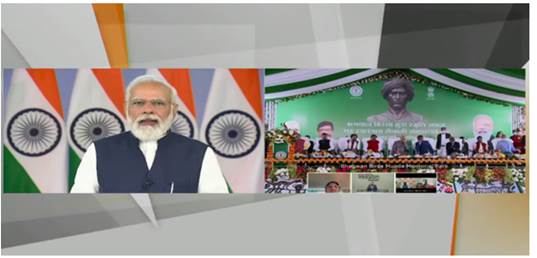
The date is the birth anniversary of Sri Birsa Munda who is revered as Bhagwan by tribal communities across the country. Pursuant to the speech of Prime Minister on Independence Day of 2016, Government of India has sanctioned 10 tribal freedom fighter museums across the country. Tribal Freedom
Prime Minister, Shri Narendra Modi, inaugurated the Bhagwan Birsa Munda Tribal Freedom Fighters Museum and Park. Congratulating citizens of the state and the tribal society, PM Modi dedicated the Birsa Munda Memorial Udyan and Museum to the nation. A 25-feet tall statue of Birsa Munda was installed on the premises. “The project has been developed, in association with the Jharkhand government,”
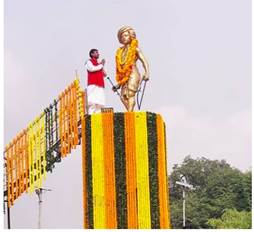
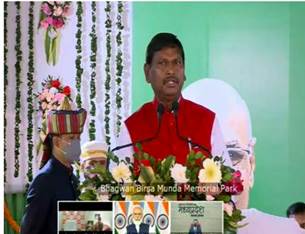
It demonstrates the way tribals struggled to protect their forests, land rights, their culture and displays their valour and sacrifices, which is vital for nation-building.
On the occasion of Janjatiya Garav Divas Prime Minister Shri Narendra Modi laid the foundation stone for the construction of 50 new Eklavya Model Residential Schools (EMRSs) in 27 districts of 7 States and 1 UT through virtual mode from Bhopal at an event to commmeorate Azadi ka Amrit Mahotsav (India @ 75). The Ministry of Tribal Affairs has been making continuous efforts in the direction of welfares of the tribal community; education being one of its key areas of intervention. The presently held stately stone laying foundation event marks the indomitable spirit of the Ministry aiming to niche education as a powerful driver for tribal students to pave the roads for future success and accomplishments.
Shri Arjun Munda and MoS Shri.Bisheshwar Tudu laid the foundation stone of 11 EMRS in Jharkhand and Odisha between July and September 2021. Total 84 EMRS foundation stones were laid during 2021; out of which foundation stone for 50 EMRS was laid by Prime Minister Shri Narendra Modi, total 27 EMRS foundation stone was laid by Tribal Minister Shri Arjun Munda and MoS Shri Bisheshwar Tudu. Other than these, 7 foundation stone of EMRS was laid by State Ministers.
639 EMRSs have been sanctioned, which include 288 under the old scheme and 351 in the new scheme. There are 367 functional EMRSs across the country with around 85,232 students currently enrolled. The construction is under progress in 173 EMRSs, out of which 66 are in the old scheme and 107 are under the new scheme.
These schools are envisaged to be brought at par with Navodaya Vidyalayas. National Education Society for Tribal Students (NESTS) as an autonomous body under the Ministry has been set up to provide overall support and policy directions to the schools in order to bring uniformity in the administration of the schools. The State/UT EMRS Societies at the State/UT level have been set up for day-to-day Administration and Management of the schools.
The Government of India has announced 15th November, the Birth Anniversary of Bhagwan Birsa Munda as ‘Janjatiya Gaurav Divas’ to pay tribute to the sacrifices and contributions of tribal freedom fighters and for the preservation of cultural heritage and promotion of Indian values of valour, hospitality and national pride.
More than 125 events / activities were organized during the week-long Azadi ka Amrit Mahotsav celebrations from 15th to 22nd November in various parts of the country to mark the Iconic Week to remember the great unsung tribal heroes who have sacrificed their lives and contributed to nation-building.
The Union Minister of Home Affairs and Minister of Cooperation, Shri Amit Shah, laid the foundation stone of the ‘Rani Gaidinliu Tribal Freedom Fighters Museum’ at Luangkao village, in Manipur’s Tamenglong district. The museum will inspire the youth of the country in dedicating their service to the nation apart from realizing the spirit of the freedom struggle.
Addressing on the occasion the Union Home Minister Shri Amit Shah said that “It has been 75 years since the country achieved independence from the British, and the country has a strong commitment to become a superpower of the globe while celebrating its 100th year of independence 25 years later,”.
The Union Home Minister also remembered the life and sacrifices made by Rani Gaidinliu, whose struggle to free her people from the British began from an early age. Mentioning the freedom fighters of Manipur and others from the northeast region, the Union minister also reminded the gathering of the Central government’s decision to rename Mount Harriet, the third-highest island peak in Andaman and Nicobar Islands, where Manipur’s Maharaja, Kulchandra Singh, and 22 other freedom fighters were imprisoned after the Anglo-Manipur war (1891).
The collaboration seeks to skill educators and students in next-generation digital technologies, including Artificial Intelligence. With a vision to build an inclusive, skills-based economy, the Ministry of Tribal Affairs (MoTA) linked a Memorandum of Understanding (MOU) with Microsoft to support the digital transformation of schools such as Eklavya Model Residential Schools (EMRS) and Ashram Schools, among others under the Ministry, at an online event ‘Empowering Youth for Success’. Under affirmative action initiative, Microsoft will make AI curriculum available to tribal students in both English and Hindi at all EMRS schools under the Ministry to skill educators and students in next-generation technologies, including Artificial Intelligence.
Under this programme in the first phase, 250 EMRS schools were adopted by Microsoft, out of which 50 EMRS schools were given intensive training, and 500 master trainers were trained, in the first phase.
As part of celebrations of Azadi ka Amrit Mahotsav, the Secretary, Ministry of Tribal Affairs, Shri Anil Kumar Jha and Chairman, CBSE, Shri Manoj Ahuja, jointly launched a certificate course on Experiential Learning for the 21st Century for educators from CBSE and Eklavya Model Residential Schools (EMRSs) in collaboration with Tata Trusts, CETE, TISS (Centre of Excellence in Teacher Education, Tata Institute of Social Sciences), Mumbai and MGIS (Mahatma Gandhi International School), Ahmedabad.
The programme was deployed for 350 educators in 6 States and the event was attended by Shri Asit Gopal, Commissioner, National Education Society for Tribal Students (NESTS), an autonomous organization under the Ministry of Tribal Affairs. Dr Naval Jit Kapoor, Joint Secretary, Ministry of Tribal Affairs and Mr R. Pavithra Kumar of Tata Trusts were also present, on the occasion.
To fulfil the long-standing vision of the Ministry of Tribal Affairs (MoTA) and to achieve academic excellence in Eklavya Model Residential Schools (EMRSs), 120 EMRS teachers and principals from 3 states completed a 40 days’ NISHTHA-National initiative for School Heads and Teachers Holistic Advancement Program’. It was a national flagship program of the NCERT on 19th June 2021. The Capacity Building programme aimed at building competencies among teachers and school principals, additionally, improving the quality of School Education through Integrated Teacher Training.
MoTA recently collaborated with the National Council of Educational Research and Training (NCERT), a national apex education body of several programmatic initiatives and interventions and conducted similar programmes across 350 functional EMRS schools pan India.
The Hon’ble President, Shri Ram Nath Kovind, on September 5th 2021, presented the National Teacher Award to 44 talented teachers selected from all over the country on the occasion of Teachers’ Day.
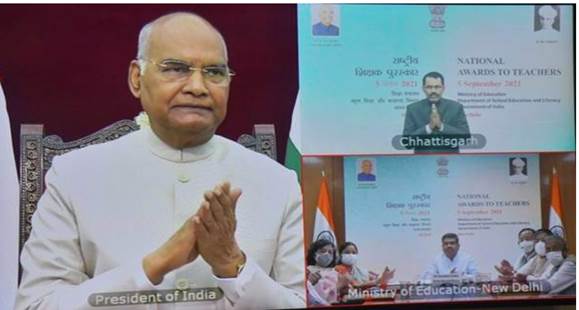
The award was also bestowed upon Shri. Pramod Kumar Shukla, English Lecturer of Eklavya Model Residential School (EMRS), Karpawand, Bastar Chattisgarh. It is the second award in a row for EMRS teachers and holds special significance for Eklavya Model Residential Schools established under the Ministry of Tribal Affairs. In 2020, Smt. Sudha Painuli, Vice Principal, EMRS-Kalsi, Dehradun, Uttarakhand, was felicitated with the award. With the implementation of National Education Policy- 2020, it is believed that greater thrust shall be given to teachers as they gain centre-stage, empowering the teachers to implement the NEP recommendations. It holds direct insinuations to change the facets of EMRSs established for providing quality education to tribal students at the behest of talented and committed teachers.
The Ministry disbursed an amount of Rs. 2500 crores to 35.2 lakh tribal students under Pre and Post-Matric Scholarship Scheme through Direct Benefit Transfer during 2021, amid the Coronavirus pandemic situation to provide essential support for the continuation of education. In this regard, the State’s portals of Pre-Matric and Post-Matric Schemes have been integrated with DBT Tribal Portal and DBT Bharat Portal. Moreover, 331 Universities have been assimilated into this scheme, while an online student verification process has been undertaken to identify and verify the student’s details.
The total Budget Outlay for Pre/Post Matric, National Fellowship and Scholarship, and the National Overseas Scholarship has been upgraded to Rs. 2546 Crores in 2021 from the previous budget outlay of 2013. Over 32, 08,154 students benefitted from these scholarships and the mode of implementation of this scheme remained fully online, to shift from paper-based application to data-based application as well to reduce the release time of the scholarship.
The Union Education Minister, Shri Dharmendra Pradhan and the Union Minister of Tribal Affairs, Shri Arjun Munda, jointly launched the ‘School Innovation Ambassador Training Program’ for 50,000 school teachers. It aims at training 50,000 School Teachers on Innovation, Entrepreneurship, IPR, Design Thinking, Product development, Idea generation, among others.
The Ministry of Tribal Affairs (MoTA) received the coveted “SKOCH Challenger Award”- “Best Performance in e-Governance” today for its various initiatives such as Digital Dashboard and Digital Transparency on its 20+ Online Portals with updated information of its implemented schemes, taken during last year. The Award was received by the Union Minister for Tribal Affairs, Shri Arjun Munda, at the Virtual SKOCH Summit.
The Ministry also received 3 Gold Awards for its initiatives namely “Eco-Rehabilitation of tribal villages through Innovative design in water management using Ice-stupas”, Swasthya: Tribal Health and Nutritional Portal and the Performance Dashboard “Empowering Tribals Transforming India” which were received by Dr Naval Jit Kapoor, Joint Secretary, on behalf of the Ministry.
The Ministry of Tribal Affairs bagged the prestigious Award of Appreciation in the Project Category-Central Government Entity – in the 18th CSI SIG e-Gov Awards 2020 for their ‘Performance Dashboard Empowering Tribals Transforming India through various ICT initiatives”. The award was received by the Joint secretary of the Ministry of Tribal Affairs, Dr. Navaljit Kapoor from the Chief Minister of Uttar Pradesh Shri Yogi Adityanath in Lucknow.
In a unique initiative Ministry of Tribal Affairs in partnership with The Art of Living Foundation, Aurangabad, and Maharashtra launched Vrushka Bandhan Project where 1100 tribal women created Rakhis for Raksha Bandhan with seeds of indigenous trees, which is a unique contribution to increasing forest cover & combating climate change.
The Rakhis were made of indigenous seeds stuck on naturally dyed, soft indigenous, non-toxic, biodegradable cotton. Once used, the seeds can be sown in soil, thereby benefiting the environment. It is expected that thousands of trees would be planted under this project and project will provide employment to tribal women associated with the project.
A workshop for Non-Governmental Organizations on Nutrition and Health was organized by the Ministry of Tribal Affairs on 09th September, 2021, as part of its POSHAN MAAH activities. The purpose of the workshop was to closely associate NGOs working with Ministry of Tribal Affairs in the mission of Sahi Poshan-.Desh Roshan. The workshop was attended by more than 70 NGOs who are working in the health sector in tribal areas.
In a bid to promote entrepreneurship amongst the tribal community and encourage successful entrepreneurs, a grand event was organized by the National Scheduled Tribes Finance and Development Corporation (NSTFDC) and Ministry of Tribal Affairs, Government of India honoured tribal entrepreneurs on 22nd November 2021 at Visakhapatnam in association with TRICOR-Andhra Pradesh
GOAL (Going Online as Leaders) is a joint initiative of Ministry with Facebook for digitally-enabled mentorship and empowering tribal youth to become leaders in their area of interest. Through the GOAL initiative, renowned people from the industry, arts, politics, business etc., known for their leadership skills or roles, are mobilized to personal mentor tribal youth through a digital medium. GOAL program has so far covered 23 States / UTs.
Ministry of Tribal Affairs continuously strives for fostering partnerships with reputed organizations: working for the welfare of tribes like Microsoft, Art of Living Foundation, Tata Foundation, and SECMOL aimed at taking the project with community participation and for creating awareness about leadership among tribal youth.
One of the themes of Amrit Mahotsav is the ‘whole of Government approach’ and ‘Jan Bhagidari’. Taking this into consideration, the Ministry of Tribal Affairs planned several activities during this period both at the National as well as the State Level.
PESA is a significant Act for the welfare of the tribal communities. Officials of the State and Public representatives were asked to visit tribal regions and comprehend the issues of the Tribal at the grassroots level. During the gathering, it was accentuated that safeguarding the culture of the tribal communities is a necessary measure, to be transparent with the tribals and show them the ray of development under rapidly evolving scenarios. Endeavors were made toward this path in many states; different exercises were embraced under PESA in Maharashtra resulting in the economic empowerment of tribals.
The National Aadi Mahotsav was held at Dilli Haat, INA, New Delhi, from the 1st to the 15th February 2021. It celebrated several aspects of tribal culture that evinced a lot of interest and witnessed much footfall in the first place. The festival was an attempt to familiarize the people with the rich and diverse craft, the culture of the tribal communities across the country in one place.
The fortnight-long National Tribal Festival witnessed the participation of thousands of tribal artisans, chefs, artists and cultural troupes from 25 states across the country. The rich tribal culture was evident in the forms of rare tribal handicrafts, handloom and natural products, tribal cuisines as they were exhibited in about 200 stalls. The Aadi Mahotsav succeeded in winning the hearts of the residents of Delhi and witnessed heavy footfall over 15 days and the sales registered. It observed tribal artisans register approx. Rs 4 Crore in direct sales over the past fortnight. Moreover, a purchase order worth Rs 8 Crores was placed by TRIFED; leading to a total of approx. Rs 12 Crores in business transactions for the tribals participating in this festival. The Aadi Mahotsav was in its entirety a celebration of the spirit of tribal life – crafts, culture and cuisine.
As India is celebrating the Azadi ka Amrit Mahotsav, Aadi Mahotsav from 16th November to 30thwas organised in Dili Haat.
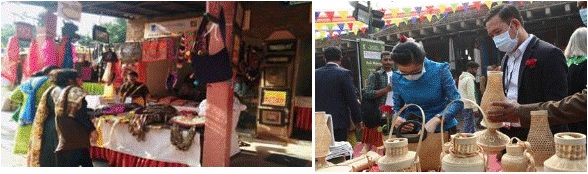
With more than 200 stalls from across the country and about 1000 artisans and artists participating with their unique stories, the AadiMahotsav is a way to draw the Adivasis into the mainstream. Showcasing traditional art and handicrafts, and the cultural heritage of the country, this festival connects the tribal artisans with larger markets and brings to focus the diversity and richness of the tribes of India.
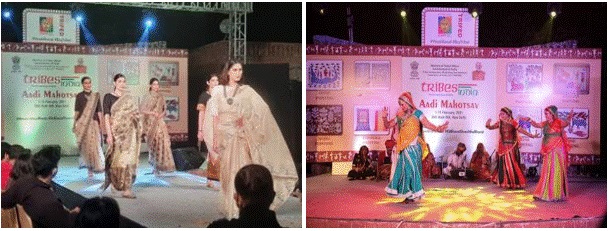
The Aadi Mahotsav is a mini-India where the exquisite craft traditions of tribal artisans – weavers, potters, puppeteers, and embroiders – are all in one place. With a wide range of artefacts like paintings be it in the Warli style or Pattachitras; jewellery handcrafted in the Dokra style to bead necklaces from the Wancho and Konyak tribes to the famous Toda embroidery from the South; from virgin coconut oil of the Nicobar Islands to multi-flavoured Nutra-beverages of north-east; from colourful puppets and children’s toys to traditional weaves such as Dongri shawls, Bodo weaves, Kota Doria from Rajasthan; iron craft from Bastar to bamboo craft and cane furniture; pottery such as blue pottery and Longpi pottery from Manipur, the festival is a feast for the senses.
The campaign was launched to leverage the 45,000 Van Dhan Vikas Kendras (VDVK) of the Tribal Co-operative Marketing Development Federation of India (TRIFED), a national level cooperative body under the administrative control of the Ministry of Tribal Affairs, Government of India.
In a move that would effectively help in the smooth formulation of State and National level programs for migrant workers, the Union Ministry of Tribal Affairs (MoTA) launched “Shram Shakti”, a National Migration Support Portal and Shram-Saathi, a training manual for migrant workers in Goa. To facilitate and support approximately 4 lacs migrants who come from different States to Goa, the Chief Minister of Goa will also launch a dedicated Migration cell in Goa. MoTA has also sanctioned Tribal research Institute, Tribal Museum, Van Dhan Kendras and Tribal Lok Utsav in Goa.
Hon’ble Union Minister of Tribal Affairs, Shri Arjun Munda, launched the ‘ADI PRASHIKSHAN’ portal and inaugurated a three-day training programme on “Capacity Building Training of Master Trainers for ST PRI Members” as part of Azadi Ka Amrit Mahotsav in New Delhi.
The Adi Prashikshan portal developed by the Ministry acts as a Central Repository of all training programs conducted by Tribal Research Institutes (TRIs), different divisions of Ministry, National Society for Education of Tribal Students (NESTS), Centre of Excellence funded by the Ministry of Tribal Affairs and National Tribal Research Institute.
To commemorate World Sickle Cell Disease Day on 19th June 2021, the Ministry of Tribal Affairs (MOTA) organized the Second Online National Conclave on ‘Sickle Cell Disease in India’, in partnership with FICCI, Novartis, Piramal Foundation, Apollo Hospitals, NASCO and GASCDO.The event brought together a group of experts on Sickle Cell Disease across India to deliberate on recent advances in Sickle Cell Disease management-ranging from early diagnosis to the latest medicines and advances in the treatment of the disease.
Shri Arjun Munda, Union Minister and Renuka Singh Sauta flagged off mobile vans under the Unmukt project for strengthening screening and timely management of SCD in Khunti district of Jharkhand and Kanker in Chhattisgarh, two tribal districts with a high prevalence of sickle cell disease among tribals.
Anamaya, the Tribal Health Collaborative, was launched by Union Minister of Health and Family Welfare Dr Harsh Vardhan and Union Minister of Tribal Affairs, Shri Arjun Munda, at a function in New Delhi . The Collaborative is a multi-stakeholder initiative of the Tribal Affairs Ministry supported by the Piramal Foundation and Bill and Melinda Gates Foundation (BMGF). It will converge efforts of various Government agencies and organisations to enhance the health and nutrition status of the tribal communities of India.
The Forest Rights Act (FRA) 2006 recognizes the rights of the forest-dwelling tribal communities and other traditional forest dwellers. These communities are dependent on forest resources for a variety of needs, including livelihood, habitation and other socio-cultural needs.
A “Joint Communication” was signed by Shri R.P. Gupta, Secretary, Ministry of Environment, Forest & Climate Change (MoEFCC), and Shri Anil Kumar Jha, Secretary, Ministry of Tribal Affairs (MoTA), in the presence of Minister of Environment, Shri Prakash Javadekar and Minister of Tribal Affairs, Shri Arjun Munda.
The Joint Communication, addressed to all Chief Secretaries of States/UTs, pertains to more effective implementation of the Forest Rights Act (FRA), 2006 and for harnessing the potential for livelihood improvement of the Forest Dwelling Scheduled Tribes (FDSTs) and Other Traditional Forest Dwellers (OTFDs).
Union Minister of Tribal Affairs, Sh. Arjun Munda; MoS Tribal Affairs, Renuka Singh Saruta, and Dy. Chief Minister & Minister for Tribal Welfare, Andhra Pradesh, Smt.Pamula Pushpa Srivaniji virtually inaugurated the New Building complex for the Tribal Cultural Research and Training Mission (TRI) of Andhra Pradesh on 15th August 2021 as a part of Azadi Ka Amrit Mahotsav India @ 75.
The Ministry of Tribal Affairs provided funds to the State Governments based on their proposals for undertaking various livelihood activities, including agriculture, horticulture, animal husbandry, fisheries and other non-farm based livelihood activities etc. under the schemes ‘Special Central Assistance to Tribal Sub-Scheme (SCA to TSS)’, ‘Development of Particularly Vulnerable Tribal Groups (PVTGs)’ and ‘Grants under Article 275(1)’ during 2020-21. An amount of Rs. 587.47 crore was approved/sanctioned by various State Governments for launching various livelihood activities.
Further, funds to the tune of Rs. 12355.43 crore have been provided as Scheduled Tribe Component (STC) by the other Central Ministries / Departments under livelihood related schemes during 2020-21 and 2021-22.
****
The Ministry of Heavy Industries (MHI) has been continuously working towards making the auto sector in India ‘Aatmanirbhar’ by augmenting ’Make in India’ efforts of the Government and to position India as an alternative manufacturing hub for automobiles and its components. The key initiatives of Ministry of Heavy Industries during the year are as under:
After remodeling of FAME II in June 2021 sale of electric two wheelers has increased to over 5000 per week from 700 per week before remodeling.
Achievements under FAME India II scheme in this year
Other Initiatives
A 11 .3 km long, Asia’s longest high-speed track (HST) was inaugurated at NATRAX, Indore, Madhya Pradesh by Hon’ble Minister (HI&PE) on June 29, 2021. This will be a one stop solution for all sorts of high speed performance tests for automobiles within the country. Availability of NATRAX HST will encourage indigenous development of wide variety of automobiles.
In compliance of directives of Cabinet Secretariat for digitization of official records, the work of digitization of more than 15 Lakh pages (accumulated since inception of the project) were completed in Nov 2021 for NAB (NATRIP)/HQ. This is a major work accomplished by NAB (NATRIP) organization in time bound manner.
****
The Ministry of Power in the current year has undertaken an array of reforms. Union Minister for Power and NRE Shri R.K Singh highlighting the reforms said that we have put in place rules and procedures for ease of doing business and ease of living. As a result of the reforms, power sector is poised for greater growth and more reforms are on the anvil in the next year, he remarked.
Shri Singh mentioned that the power sector has shown strong growth in demand in 2021 as it is 14 percent higher than in the previous year, this is indicative of the fact that our economy is recovering and the 28 million new consumers we have added are adding more appliances. The minister noted that the government has continued with reforms in the power sector and efforts also continue to keep the price of power low.
The reforms can be placed in the following categories:
The Ministry of Power has notified Electricity (Rights of Consumers) Rules, 2020 on 31.12.2020 under section 176 of the Electricity Act, 2003. These Rules shall empower the consumers of electricity and emanate from the conviction that the power systems exist to serve the consumers and the consumers have rights to get the reliable services and quality electricity.
Implementation of these Rules shall ensure that new electricity connections, refunds and other services are given in a time bound manner. Wilful disregard to consumer rights will result in levying penalties on service providers.
An amendment to Electricity (Rights of Consumers) Rules, 2020 was also notified on 29.09.2021 wherein the limit for net metering was increased to 500KW from 10KW.
Electricity (Late Payment Surcharge) Rules, 2021 have been notified by the Central Government on 22nd February, 2021.Late Payment Surcharge means the charges payable by a distribution company to a generating company or electricity trader for power procured from it, or by a user of a transmission system to a transmission licensee on account of delay in payment of monthly charges beyond the due date. Late Payment Surcharge shall be payable on the payment outstanding after the due date at the base rate of Late Payment Surcharge applicable for the period for the first month of default.
In Order to promote generation from renewable sources of energy, Ministry of Power has issued an Order on 5th August 2020 for extension of waiver of Inter State Transmission System (ISTS) charges and losses for transmission of the electricity generated from solar and wind projects commissioned till 30th June 2023.Further an order was issued on 21.06.2021 for extension of waiver of Inter State Transmission System (ISTS) charges for transmission of the electricity generated from solar and wind projects up to 30.06.2025.Moreover vide this order the waiver of ISTS charges shall also be allowed for Hydro Pumped Storage Plant(PSP) and Battery Energy Storage System(BESS).
Long term RPO growth trajectory for the period 2016-17 to 2018-19 has been notified by Ministry of Power on 22.7.2016. .An order on RPO Trajectory for a further period of three years i.e. from 2019-20 to 2021-22 under the provisions of Tariff Policy has been issued by Ministry of Power on 14.06.2018. In super-session of orders dated 22.7.2016 and 14.06.2018, Ministry of Power has specified new RPO trajectory vide order dated 29.01.2021. Trajectory for HPO has also been issued through this order.
This would help in meeting the renewable energy generation targets set by the Central Government.
Green Day Ahead Market (GDAM) is a marketplace for trading of renewable power on a day-ahead basis. This would facilitate accomplishment of green targets as well as support integration of green energy in a most efficient, competitive and transparent manner. GDAM was launched on 25.10.2021.
The Green day Ahead Market will be available through the Power Exchanges. The GDAM market structure will be within the existing Day Ahead Market (DAM) structure but will create a separate clearing mechanism and price discovery for renewable and conventional energy sources.
It will give opportunity to the RE generators to sell their power and reduce curtailment and also the buyer of RE to transparently purchase green power from the market. It would also facilitate the obligated entities to meet its Renewable Purchase Obligation (RPO).
Timely recovery of the costs due to change in law is having importance as the investment in the power sector largely depends upon the timely payments. At present the pass through under change of law is taking a lot of time, forcing the drying of the investment in the power sector. If payment is not made in time, it impacts the viability of the sector and the developers get financially stressed. If this is not addressed now, the investment will not come and the electricity consumers may face shortages of power once again. In order to address this issue, Ministry of Power has notified Electricity (Timely Recovery of Costs due to Change in Law) Rules, 2021 on 22.10.2021.
Ministry of Power has notified Electricity (Promotion of generation of Electricity from Must-Run Power Plant) Rules, 2021 on 22.10.2021. This rule is mainly to achieve this goal and will help in promotion of the generation from renewable sources. This will ensure that the consumers get green and clean power and secure a healthy environment for the future generation.
With the objective of Redesigning of present market mechanism for lowering the cost of power purchase to Consumers, Framework for Implementation of Phase1 of Market Based Economic Despatch (MBED) wherein mandatory participation by ISGS ( Inter State Generation Stations) plants and voluntary participation by other generators, was communicated to CERC for implementation from 1st April, 2022.
Ministry of Power assent was given to make amendment in the existing Renewable Energy Certificate (REC) mechanism, in order to align the present REC mechanism with the emerging changes in the power scenario and also to promote new renewable technologies.
Government of India notified “Integrated Power Development Scheme” (IPDS) in December’14 to extend financial assistance against capital expenditure to address the gaps in sub transmission and distribution network and metering in urban areas to supplement the resources of Discoms/ Power Departments.
The scheme has an outlay of Rs. 32,612 crore including a budgetary support of Rs 25,354 crore from Government of India during the entire implementation period.
Progress (From 01.11.2020 to 31.10.2021)
Further, Revamped Reforms Based and Results Linked Distribution Sector Scheme has been approved by Ministry of Power in July 2021 with an outlay of Rs. 3,03,758 crore over a period of five years from FY 2021-22 to FY 2025-26 for providing conditional financial assistance for supporting DISCOMs to undertake reforms and improve performance in a time bound manner with following objectives
The Concession Agreement for the project was signed between Royal Government of Bhutan (RGoB) and Kholongchhu Hydro Energy Limited (KHEL) [Joint Venture (JV) Company of SJVN Ltd (Indian CPSU) & DGPC Bhutan (RGoB PSU)] at Bhutan in the presence of Hon’ble Minister of External Affairs, GoI and Hon’ble Foreign Minister, RGoB on 29.06.2020. All three main Civil works packages have been awarded on 04.03.2021 & the project is scheduled to be commissioned by Feb., 2026.
Lower Arun project was allotted to SJVN Ltd by Government of Nepal (GoN) on Build Own Operate and Transfer (BOOT) basis through international competitive bidding on 04.02.2021. MoU has been signed for the development of 679 MW Lower Arun HEP between SJVN Ltd and Investment Board Nepal (IBN) on 11th July 2021.
Central Electricity Authority (CEA), monitors the coal stocks being maintained at the power stations along with their daily coal consumption requirements. The earlier coal stocking norms were advisory in nature, at times; power plants do not maintain coal stock as per the norms, which is not desirable for a sustained plant operation. In view of this, the existing coal stocking norms have been revised and issued by Central Electricity Authority (CEA) on 06.12.2021 to ensure more fuel security to the power plants, reflect true picture of the stocks being maintained at each power stations and ensure sufficient coal stock even during the period of less supply by CIL/SCCL during the month of July to September.
The revised norms mandates 12 to 17 days of coal stock at pit head stations and 20 to 26 days coal stock at non-pit head stations with month-wise variation based on coal despatch/coal consumption pattern during the year corresponding to 85% PLF, and prescribes the coal stocks to be mandatorily maintained by the power plants and penalty mechanism for not maintaining the stocking norms. The coal stock for 17 days at pit head plants and 26 days stocks at non-pit head power plants have been made mandatory during February to June every year.
The power plants are graded as red, yellow and green for not maintaining the coal stocks; and would be penalized for not maintaining their normative availability due to reduced coal stocks and their fixed charges shall be reduced in a graded manner.
Ministry of Power on 17th November, 2017 issued Policy on biomass utilization for power generation through co-firing in coal based power plants. In this earlier Policy, it was advised in the policy that coal based thermal power plants, except those having ball and tube mill, of power generation utilities, to endeavor to use 5-10% blend of biomass pellets made, primarily, of agro residue along with coal after assessing the technical feasibility, viz. safety aspect etc. In order to support the energy transition in the country and to achieve the target of cleaner energy sources, the policy has been modified and issued on 08.10.2021. This modified policy would provide the necessary direction in achieving the desired goals.
Govt. of India, Ministry of Coal had approved a new coal linkage allocation policy on May 17, 2017 named SHAKTI (Scheme for Harnessing & Allocating Koyala Transparently in India). Linkages granted under SHAKTI Policy in the last one year:
Shakti Policy Para B (ii) – Linkage on auction basis for Independent Power Producers (lPPs) with PPA based on domestic coal. Under clause B(ii) of the SHAKTI Policy, the lPPs participating in auction bid for discount on existing tariff.
Shakti Policy Para B(viii)(a) – Linkage on auction basis for non-PPA capacity for Short Term & DAM: Ministry of Power issued a methodology in this regard on 02.12.2019 to carry out such auction at every quarter to cater to the dynamic requirements of short term and day-ahead markets (DAM). Amendment to the methodology was issued on 12.05.2020.
Pilot project for procurement of 2500 MW power:
In order to address the problem of lack of Power Purchase Agreements (PPAs) in the country, the Ministry of Power had notified a scheme for procurement of 2500 MW on competitive basis for a period of 3 years from the generators with commissioned projects having untied capacity.
2nd Round (2500 MW):
Department of Financial Services (DFS) sent a list of stressed projects in the power sector on 22.03.17 to Ministry of Power (MoP). The 34 non-captive coal based power projects mentioned in the DFS list are mostly private and have a total installed capacity of 40,130 MW. Status of 34 thermal power projects of capacity 40,130 MW which are under stress as reported by DFS is as follows:
Based on approval of the CCEA conveyed by MoP vide order 15.09.2020, PGCIL monetised five TBCB projects through POWERGRID lnfrastructure lnvestment Trust (PGlnvlT) in May’21. This is the 1’t lnvlT sponsored by a CPSE and largest public offer by any lnvlT/RelT. PGCIL received Rs.7,735 crore. As per National Monetisation Plan issued by NlTl Aayog, POWERGRID is targeted for carrying out monetisation of Rs. 45,200 crore of assets during FY 2021-22 lo FY 2024-25 (including Rs. 7735 crore already raised during FY 2021-22).
Rules/Policies adopted for robust transmission infrastructure
3) Electricity (Transmission Planning, Development and Recovery of ISTS Transmission Charges) Rules, 2021 issued on 01.10.2021
4) MoP order dated 20.10.2021 for dissolution of 5 Regional Power Committees (Transmission Planning)
5) MoP advisory to all states dated 1.9.2021, along with the Report, for bringing 33 kV system under Transmission for performance improvement of sub-transmission system
Accordingly, to improve the performance of 33 kV system, Ministry of Power has issued advisory to State/Uts on 01.09.2021 to take following actions:
i)33 kV system should be the handed over from DISCOMs to the STU for better planning, loss reduction and increased supply reliability. It can be done in phased manner. In the first phase, incremental assets in 33 kV network and existing overloaded assets/assets can be handed over to STUs.
ii)State Govt. would need to provide financial assistance to STU for upgrading/modernizing their 33 kV assets.
iii)In the event, the State Govt. is not in a position to provide financial assistance to STU, then STU can be asked to form JV with POWERGRID on 50:50 equity basis for mobilising their financial resources.
6) MoP order for Re-constitution of the “National Committee on Transmission” (NCT)
In order to simplify the process of Inter State Transmission System (ISTS) planning and approval to further facilitate RE development in the country in consonance with energy transition goal, Terms of reference of National Committee on Transmission (NCT) have been modified on 28.10.2021 with delegation of powers to CTU and NCT among others to fast-track ISTS meant for RE.
7) MoP Letter to State & Uts on Report of Task Force on Cyclone Resilient Robust Electricity Trans & Distribution Infrastructure in the Coastal Areas along with Report of Task Force on Cyclone Resilient Robust Electricity Transmission & Distribution Infrastructure in Coastal Area
The task force suggested a multi-pronged approach, which encompasses the change in design philosophy, better planning and adoption of modern technological solutions required to safeguard the T&D infrastructure
from natural disasters and to increase resilience, reliability and availability of the system.
After acceptance of the Report by the Ministry, the Report was shared with coastal States and UTs vide MoP’s letter dated 10 June 2021 with a request that each Coastal States/Uts may mark out areas prone to cyclones within 20-30 kms of Coast line and any new construction / reconstruction of Power systems in these areas will follow the design parameters laid down in this report.
***
The Ministry of Petroleum & Natural Gas is concerned with exploration and production of Oil & Natural Gas, refining, distribution and marketing, import, export and conservation of petroleum products. Oil and Gas being the important import for our economy, many initiatives have been taken by the Ministry for increasing production and exploitation of all domestic petroleum resources to address the priorities like Energy Access, Energy Efficiency, Energy Sustainability and Energy Security. Following initiatives have been taken up by the Ministry in the current year:
Pradhan Mantri Ujjwala Yojana: PMUY was launched in May, 2016 to provide 8 crore deposit free connections to poor women. The second phase of the scheme Ujjwala 2.0 has been launched by Prime Minister in the Mahoba District of Uttar Pradesh on 10th August, 2021 on pan-India basis to provide additional one Crore LPG connections, along with free first refill and stove. As on 01.12.2021, a total of 80.5 lakh connections have been released under this scheme. This Ministry is monitoring the implementation of the scheme on a daily basis.
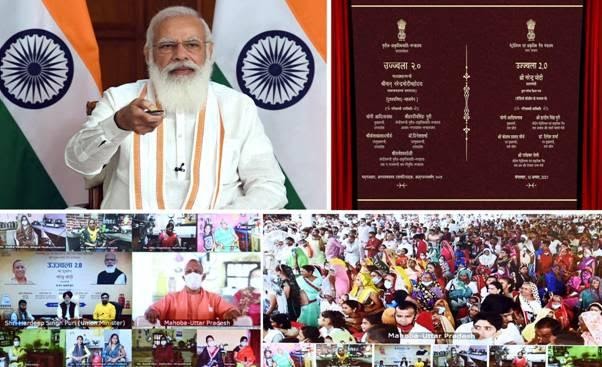
Refill Portability: In order to create competition among distributors in the interest of customer service, refill portability was implemented which enables customer to choose his/ her distributor at the time of booking the refill. In such a scenario, a customer not satisfied with services of his parent distributor can choose any distributor from the list of distributors of the same company serving in his locality/area. This would result in better customer satisfaction and impetus for distributors for providing better service. With customers exercising the right to choose the delivery partner, it further motivates the distributors to provide best in class services to the customers and improve their performance ratings. The flexibility to choose the Distributor for each refill further expands the bouquet of digital services being offered to LPG customers.
Hassle free Non-subsidised LPG Connection (Across the counter): To ease out the process of issuance of new connection, LPG Non-subsidised domestic connection can be issued across the counter with the submission of requisite proof of ID and self-declaration of address by the customer. In case customer wants to submit documents to avail subsidy after taking non-subsidised connection, provision is also enabled to convert to subsidised connection, by submitting Proof of Address other than self- declaration subject to OMC and NIC dedupe clearance.

Development of Non-monetized Discoveries: A total of 09 discoveries {03 from nomination regime (03 from ONGC) and 06 from PSC} have been monetised as on November, 2021. Ministry of Petroleum and Natural Gas vide resolution dated 8.11.2019 revised the guidelines for authorization to market transportation fuels, which would promote ease of doing business and boost private players to invest in retail sector. The said resolution applies for marketing of only Motor Spirit and High Speed Diesel for “Bulk” and “Retail” business. Further, under the New Guidelines, authorization has been given to 10 Companies as on 16th December, 2021.
Ethanol Blended Petrol (EBP) Programme: During Ethanol Supply Year (ESY) 2020-21, 302.30 crore litre of Ethanol has been procured by OMCs for blending purpose till 30.11.2021. The feedstock wise enhanced ethanol prices have been announced for the ongoing Ethanol Supply Year (ESY) 2021-22- from C heavy Molasses route at Rs.46.66/- per litre; from B heavy Molasses route at Rs.59.08/- per litre; from sugarcane juice/ sugar/ sugar syrup route at Rs.63.45/- per litre; from Maize and damaged food grains route at Rs.52.92/- per litre and from surplus rice available with FCI route at Rs.56.87/- per litre.
Biodiesel Blending Programme: On 4th May, 2021, the Minister of Petroleum & Natural Gas remotely flagged off the first supply of UCO (Used Cooking Oil) based Biodiesel blended Diesel under the EOI Scheme from Indian Oil’s Tikrikalan Terminal, Delhi. The GST rate on biodiesel, which is sold to Oil Marketing Companies for blending with diesel, has been reduced from 12% to 5% by the Ministry of Finance w.e.f. 1st October, 2021.
Sustainable Alternative Towards Affordable Transportation (SATAT): “Sustainable Alternative Towards Affordable Transportation (SATAT)” initiative was launched on 1st October 2018 wherein Oil and Gas Marketing Companies are inviting Expression of Interest (EoI) from potential entrepreneur to procure Compressed Bio Gas (CBG). Under this initiative, 2700 Letters of Intent (LoIs) have been issued till 15th December 2021. Supply of CBG initiated from 16 plants through 26 ROs and injection of CBG in CGD network at one place in Gujarat.
Reduction of Regulatory Compliance Burden: Reducing compliance burden, simplification of procedures and improving ‘Ease of Doing Business’ is a continuous process in the Petroleum & Natural Gas sector. In the special campaign launched by the Government in the year 2021, a total number of 276 compliances were reduced and procedures simplified.
Performance Indicator of MoP&NG: Production as on 01.12.2021 is 42.65 MtoE (Oil – 19.88 MMT; Gas – 22.77 BCM). Total of 105 exploration blocks covering an area of 1,56,580 sq km awarded till date. 50 discoveries monetized till 30.11.2021. INR 2,75,781 Cr spent on Hydrocarbon infrastructure till 30.11.2021. As on 01.12.2021, 80.5 Lakh LPG connections released against 1.29 Cr cleared application under Ujjwala 2.0. Indian Gas Exchange launched in June 2020. 21,735 km gas pipeline laid upto Sept., 2021. A total of 83.7 Lakh PNG (D) connections and 3532 CNG stations as on 31.10.2021. CAPEX in overseas assets till date is INR 22,681 Cr. Production of ~56 MMToE from overseas O&G assets added since FY 19 (achieved 50% of the target).
DSF-III: DSF-III was launched on 10th June 2021 by the Minister of Petroleum & Natural Gas. Thereafter on 30.07.2021, a Promotional Road show on DSF-III was organized in presence of Hon’ble Minister of Petroleum & Natural Gas, Shri Hardeep Singh Puri.
Setting up of PSA Plants : In view of perturbing situation created due to second wave of Covid-19 and shortage of oxygen supply in various States across India, as per the directions of MoH&FW, 13 Oil PSUs were assigned 110 Hospitals in States of Uttar Pradesh, Bihar, Madhya Pradesh, Rajasthan, Odisha, Karnataka, Kerala, Gujarat, Nagaland, Arunachal Pradesh, Delhi and Maharashtra for setting up a Pressure Swing adsorption (PSA) Oxygen Plants of adequate capacity under CSR activity so as to appropriately address the oxygen shortage in these Hospitals/Districts. CPSEs are setting up PSA Plants of combined capacity of 98840 LPM. A total of 101 Plants are commissioned and others are at later stage of commissioning.
Setting up of Jumbo facilities: In some refineries, LMO (Liquid Medical Oxygen) is not produced, but Oxygen at low pressure is available. This cannot be liquefied or transported via cylinders. As this Oxygen can be used for medical purposes, hence jumbo Covid care Facilities have been set up adjacent to the refinery premises in coordination with the State Govts. The details of such facilities are as below:
|
PLANT NAME
|
LOCATION
|
OXYGENATED BED CAPCITY SUPPORTED |
STATUS
|
|
PANIPAT NAPTHA CRACKER, IOCL |
Panipat, Haryana
|
500 Beds
|
Operational
|
|
CPCL (IOCL) |
Chennai, T.N. |
60 Beds |
Operational |
|
Bina Refinery |
Bina, Madhya Pradesh |
200 Beds |
Operational |
|
Kochi Refinery |
Kochi, Kerala |
350 Beds |
Operational |
|
HMEL |
Kanakwal, Bathinda |
100 Beds |
Operational |
Gasoline Desulphurization (GDS) Unit under CPCL-fuel Quality up-gradation project has been dedicated to the nation by Hon’ble Prime Minister through video conferencing on 17.02.2021. INDMAX project at Bongaigaon Refinery of IOCL was dedicated to nation on 22.02.2021. Propylene Derivatives Petrochemical Project (PDPP) at Kochi Refinery of BPCL was dedicated to the nation by Hon’ble Prime Minister on 14.02.2021.
******
The Ministry of Petroleum & Natural Gas is concerned with exploration and production of Oil & Natural Gas, refining, distribution and marketing, import, export and conservation of petroleum products. Oil and Gas being the important import for our economy, many initiatives have been taken by the Ministry for increasing production and exploitation of all domestic petroleum resources to address the priorities like Energy Access, Energy Efficiency, Energy Sustainability and Energy Security. Following initiatives have been taken up by the Ministry in the current year:
Pradhan Mantri Ujjwala Yojana: PMUY was launched in May, 2016 to provide 8 crore deposit free connections to poor women. The second phase of the scheme Ujjwala 2.0 has been launched by Prime Minister in the Mahoba District of Uttar Pradesh on 10th August, 2021 on pan-India basis to provide additional one Crore LPG connections, along with free first refill and stove. As on 01.12.2021, a total of 80.5 lakh connections have been released under this scheme. This Ministry is monitoring the implementation of the scheme on a daily basis.
Refill Portability: In order to create competition among distributors in the interest of customer service, refill portability was implemented which enables customer to choose his/ her distributor at the time of booking the refill. In such a scenario, a customer not satisfied with services of his parent distributor can choose any distributor from the list of distributors of the same company serving in his locality/area. This would result in better customer satisfaction and impetus for distributors for providing better service. With customers exercising the right to choose the delivery partner, it further motivates the distributors to provide best in class services to the customers and improve their performance ratings. The flexibility to choose the Distributor for each refill further expands the bouquet of digital services being offered to LPG customers.
Hassle free Non-subsidised LPG Connection (Across the counter): To ease out the process of issuance of new connection, LPG Non-subsidised domestic connection can be issued across the counter with the submission of requisite proof of ID and self-declaration of address by the customer. In case customer wants to submit documents to avail subsidy after taking non-subsidised connection, provision is also enabled to convert to subsidised connection, by submitting Proof of Address other than self- declaration subject to OMC and NIC dedupe clearance.
Development of Non-monetized Discoveries: A total of 09 discoveries {03 from nomination regime (03 from ONGC) and 06 from PSC} have been monetised as on November, 2021. Ministry of Petroleum and Natural Gas vide resolution dated 8.11.2019 revised the guidelines for authorization to market transportation fuels, which would promote ease of doing business and boost private players to invest in retail sector. The said resolution applies for marketing of only Motor Spirit and High Speed Diesel for “Bulk” and “Retail” business. Further, under the New Guidelines, authorization has been given to 10 Companies as on 16th December, 2021.
Ethanol Blended Petrol (EBP) Programme: During Ethanol Supply Year (ESY) 2020-21, 302.30 crore litre of Ethanol has been procured by OMCs for blending purpose till 30.11.2021. The feedstock wise enhanced ethanol prices have been announced for the ongoing Ethanol Supply Year (ESY) 2021-22- from C heavy Molasses route at Rs.46.66/- per litre; from B heavy Molasses route at Rs.59.08/- per litre; from sugarcane juice/ sugar/ sugar syrup route at Rs.63.45/- per litre; from Maize and damaged food grains route at Rs.52.92/- per litre and from surplus rice available with FCI route at Rs.56.87/- per litre.
Biodiesel Blending Programme: On 4th May, 2021, the Minister of Petroleum & Natural Gas remotely flagged off the first supply of UCO (Used Cooking Oil) based Biodiesel blended Diesel under the EOI Scheme from Indian Oil’s Tikrikalan Terminal, Delhi. The GST rate on biodiesel, which is sold to Oil Marketing Companies for blending with diesel, has been reduced from 12% to 5% by the Ministry of Finance w.e.f. 1st October, 2021.
Sustainable Alternative Towards Affordable Transportation (SATAT): “Sustainable Alternative Towards Affordable Transportation (SATAT)” initiative was launched on 1st October 2018 wherein Oil and Gas Marketing Companies are inviting Expression of Interest (EoI) from potential entrepreneur to procure Compressed Bio Gas (CBG). Under this initiative, 2700 Letters of Intent (LoIs) have been issued till 15th December 2021. Supply of CBG initiated from 16 plants through 26 ROs and injection of CBG in CGD network at one place in Gujarat.
Reduction of Regulatory Compliance Burden: Reducing compliance burden, simplification of procedures and improving ‘Ease of Doing Business’ is a continuous process in the Petroleum & Natural Gas sector. In the special campaign launched by the Government in the year 2021, a total number of 276 compliances were reduced and procedures simplified.
Performance Indicator of MoP&NG: Production as on 01.12.2021 is 42.65 MtoE (Oil – 19.88 MMT; Gas – 22.77 BCM). Total of 105 exploration blocks covering an area of 1,56,580 sq km awarded till date. 50 discoveries monetized till 30.11.2021. INR 2,75,781 Cr spent on Hydrocarbon infrastructure till 30.11.2021. As on 01.12.2021, 80.5 Lakh LPG connections released against 1.29 Cr cleared application under Ujjwala 2.0. Indian Gas Exchange launched in June 2020. 21,735 km gas pipeline laid upto Sept., 2021. A total of 83.7 Lakh PNG (D) connections and 3532 CNG stations as on 31.10.2021. CAPEX in overseas assets till date is INR 22,681 Cr. Production of ~56 MMToE from overseas O&G assets added since FY 19 (achieved 50% of the target).
DSF-III: DSF-III was launched on 10th June 2021 by the Minister of Petroleum & Natural Gas. Thereafter on 30.07.2021, a Promotional Road show on DSF-III was organized in presence of Hon’ble Minister of Petroleum & Natural Gas, Shri Hardeep Singh Puri.
Setting up of PSA Plants : In view of perturbing situation created due to second wave of Covid-19 and shortage of oxygen supply in various States across India, as per the directions of MoH&FW, 13 Oil PSUs were assigned 110 Hospitals in States of Uttar Pradesh, Bihar, Madhya Pradesh, Rajasthan, Odisha, Karnataka, Kerala, Gujarat, Nagaland, Arunachal Pradesh, Delhi and Maharashtra for setting up a Pressure Swing adsorption (PSA) Oxygen Plants of adequate capacity under CSR activity so as to appropriately address the oxygen shortage in these Hospitals/Districts. CPSEs are setting up PSA Plants of combined capacity of 98840 LPM. A total of 101 Plants are commissioned and others are at later stage of commissioning.
Setting up of Jumbo facilities: In some refineries, LMO (Liquid Medical Oxygen) is not produced, but Oxygen at low pressure is available. This cannot be liquefied or transported via cylinders. As this Oxygen can be used for medical purposes, hence jumbo Covid care Facilities have been set up adjacent to the refinery premises in coordination with the State Govts. The details of such facilities are as below:
|
PLANT NAME
|
LOCATION
|
OXYGENATED BED CAPCITY SUPPORTED |
STATUS
|
|
PANIPAT NAPTHA CRACKER, IOCL |
Panipat, Haryana
|
500 Beds
|
Operational
|
|
CPCL (IOCL) |
Chennai, T.N. |
60 Beds |
Operational |
|
Bina Refinery |
Bina, Madhya Pradesh |
200 Beds |
Operational |
|
Kochi Refinery |
Kochi, Kerala |
350 Beds |
Operational |
|
HMEL |
Kanakwal, Bathinda |
100 Beds |
Operational |
Gasoline Desulphurization (GDS) Unit under CPCL-fuel Quality up-gradation project has been dedicated to the nation by Hon’ble Prime Minister through video conferencing on 17.02.2021. INDMAX project at Bongaigaon Refinery of IOCL was dedicated to nation on 22.02.2021. Propylene Derivatives Petrochemical Project (PDPP) at Kochi Refinery of BPCL was dedicated to the nation by Hon’ble Prime Minister on 14.02.2021.
******
SAGARMALA PRAGRAMME
(i) Maritime India Summit, 2021
The Prime Minister on March 02, 2021 inaugurated the ‘Maritime India Summit 2021’ through video conferencing. The summit was organized by the Ministry of Ports, Shipping and Waterways and conducted on a virtual platform from 2ndto 4thMarch, 2021. 486 MoUs were signed for Maritime India Summit 2021 by 22 Maritime Ports/Agencies/Authorities for INR 3.39 lakh crore or USD 47.02 Bn across different subsectors. A compendium of 400 Investible Projects for INR 2.24 lakh crore or USD 31.08 Bn for investment was released for the Summit. During the three days of the summit, a number of important announcements were made.
The Prime Minister launched the Maritime India Vision 2030, which contains the targets to be achieved by Maritime Sector over the next decade alongwith the strategies related to each of the stakeholders of MoPSW. Sagar-Manthan: Mercantile Marine Domain Awareness Centre (MM-DAC) which is an information system to enhance maritime safety, search, rescue capability and environment protection was also launched.
MIS 2021 highlights:-
(ii) Sea Plane Services
An Memorandum of Understanding signed between Ministry of Ports, Shipping and Waterways and Ministry of Civil Aviation on 15.06.2021 to jointly facilitate the development of “Non-scheduled/Scheduled operation at sea plane services within territorial jurisdiction of India under RCS-UDAN scheme.
(iii) Public Private Partnership:
In order to further improve the viability of Public Private Partnership projects the following initiatives have been taken:
(iv) Modal Concession Agreement
To attract more PPP projects and to give flexibility to PPP operators, revised MCA has been issued in November, 2021 with the approval of Minister of Ports, Shipping and Waterways.
(v) Maritime India Vision (MIV) 2030
Maritime India Vision 2030 was formulated by the Ministry of Ports, Shipping and Waterways with the objective of propelling India to the forefront of the Global Maritime Sector in the next decade.Detailed discussions involving 350+ stakeholders from all parts of the maritime sector viz. ports, shipyards, inland waterways, trade bodies & associations, ministries, legal experts, national and international industry experts were undertaken. Substantial deliberations and ideations running over More than 250 different brainstorming sessions, study of 100+ global benchmarks & best-in-class examples, and analysis of 50+ Acts and Laws (including state & environmental) have led to development of MIV 2030. Over 150 initiatives covering 515 key activities across 10 themes encompassing all the facets of maritime sector have been identified to form the building blocks for future of the Indian Maritime sector.
MIV 2030 envisions an overall investment of INR 3,00,000 – 3,50,000 Cr across ports, shipping, and inland waterways categories. This Investment amount excludes projects already under implementation stage as part of Sagarmala project. This vision roadmap is estimated to help unlock INR 20,000+ Cr worth of potential annual revenue for Indian Ports. Further, it is expected to create an additional 20,00,000+ jobs (direct and non-direct) in the Indian maritime sector.
PORTS SECTOR
(i) Digitization
Major strides have been taken at the major ports towards the digitization of key EXIM processes. The PCS 1x has digitized processes such as Electronic Invoice (e-Invoice), Electronic Payment (e-Payment) and Electronic Delivery Order (e-DO) for physical release of cargo by custodians. Further, the process of generation of electronic Bill of Lading (e-BL) and enabling the Letter of Credit (LC) process to be conducted digitally have already been implemented in the PCS 1x. There is also going to be complete integration between PCS 1x and Indian Customs EDI Gateway (ICEGATE). Partial integration has been completed (PCS 1x is integrated with ICEGATE via SFTP for existing messages, further for SCMTR messages PCS 1x-ICEGATE is getting integrated for API integration). Further, the Radio Frequency Identification Device (RFID) solution has been implemented at all major ports to enable seamless movement of traffic across port gates, including substantial reductions in documentation checks. All Major ports have already implemented Radio Frequency Identification Device (RFID). Up gradation and integration with recent technologies- IGoT, Block Chain to ease transaction and real time basis tracking has been envisaged in Maritime India Vision 2030. Further the process to bootstrap PCS 1x into National Logistics Portal-Marine (NLP-Marine) is already underway which will act as a Unified Digital Platform all maritime stakeholders. NLP Marine + PCS 1x platform is envisaged as the central hub for all interactions with various stakeholders viz. Port, Terminals Shipping Lines/ Agents, CFS and Customs Brokers, Importer / Exporter etc.
(ii) Enterprise Business System
An Enterprise Business System (EBS) is being implemented at 5 Major Ports (Mumbai, Chennai, Deendayal, Paradip, Kolkata (including HaldiaPort)) with project cost of approx. 320 crores) to provide a digital port ecosystem that will adopt leading International Practices without losing its alignment to existing local needs. A total of 2474 processes (ChPT – 671, DPT – 376, KoPT – 501, HDC – 374, MbPT – 278 and PPT – 274) were rationalized, harmonized, optimized and standardized to arrive at a final reengineered process count of 162 processes
(iii) Western Dock, Paradip Port
The Cabinet approved the project of Deepening and Optimizing of Inner Harbour Facilities of Western Dock at Paradip Port under PPP mode with total estimated cost of Rs. 3004.63 crore. The scope includes Western Dock berths, Capital dredging in the channel and in front of the berths and all other ancillary equipment and facilities. The proposed project envisages construction of Western Dock Basin to handle cape size vessels with an ultimate capacity of 25 MTPA in two phases of 12.50 MTPA each. The project will cater to the requirement of coal and limestone imports besides exports of granulated slag and finished steel products.
(iv) Major Port Authorities Act, 2021
The Major Port Authorities Bill was passed by the Lok Sabha on 23.9.2020 and subsequently by the Rajya Sabha on 10.2.2021 with amendments. The Bill alongwith amendments passed by the Rajya Sabha was again passed by the Lok Sabha on 12.2.2021. After assent by the President the Major Port Authorities Act 2021 was notified by the Legislative Department, Ministry of Law & Justice on 18.2.2021. The Major Port Authorities Act 2021 (1 of 2021) has come into force with effect from 03.11.2021. Five Rules under the Act have also been notified in the Gazette of India on 23rd November 2021.
(vi) The Prime Minister dedicated the 8-laning of Korampallam Bridge and Rail over Bridge to the Nation and laid the foundation stone for 5 MW Ground-Based Solar Power Plant at VOC Port, Tuticorin, through video conferencing from Coimbatore.
(vii) The Mobile X-Ray Container Scanner system installed at Kamarajar Port was commissioned on 1stJuly, 2021. The Mobile X-Ray Container Scanner system is operated by the Container Scanner division of Chennai Customs.
(viii) The first Coal Export Movement from N. S. Dock, Syama Prasad Mookerjee Port, Kolkata to Khulna, Bangladesh was flagged off on 02nd July, 2021, for Rampal Power Station set up by Bangladesh India Friendship Power Company Ltd., a JV between NTPC & Bangladesh Power Development Board.
(ix) Jawaharlal Nehru Port (JNPT), one of India’s premier container handling ports, flagged a trial operation at the newly constructed coastal berth on 09th July, 2021.
(x) The Union Minister for Ports, Shipping and Waterways, Shri Sarbananda Sonowal, virtually flagged-off the dwarf container train service from Jawaharlal Nehru Port on 20.09.2021.
(xi) Shri V. Shantanu Thakur, Minister of State for Ports, Shipping & Waterways visited Visakhapatnam Port on 23.9.2021. The Minister inaugurated “Grade Separator from H-7 to Convent Junction” and laid Foundation stone for “Development of Cruise Terminal”.
INLAND WATER TRANSPORT
(i) Inauguration of projects by Prime Minister
Prime Minister digitally launched Mahabahu Brahmaputra in Assam on 18.02.2021 and inaugurated the following initiatives of IWAI: –
(ii) Signing of MoUs
In presence of Union Minister for Ports, Shipping and Waterways, IWAI signed MoUs on 26.08.2021 with:
(iii) Stakeholder Conclave
A Stakeholder Conclave was organized on “Waterways as Engine of Growth” at Guwahati on 27th August, 2021. Minister of State for Ports Shipping & Waterways and stakeholders participated in the Conclave.
(iv) Movement of cargo on National Waterways
The Cargo movement on National Waterways continued to be encouraging. This year so far 54.03 Million Ton has been achieved from April-October 2021 against 37.22 Million Ton last year for the same period recording 45.15% increase.
(v) Inland Vessels Bill, 2021
Parliament on 02.08.2021 passed the Inland Vessels Bill, 2021, which aims to replace over 100 years old Inland Vessels Act, 1917 (1 of 1917) and usher a new era in the inland water transport sector to make the Legislative framework user friendly and promote ease of doing business.
SHIPPING SECTOR
(i) All Women Officers’ Sailing’ aboard SCI Tanker M.T. Swarna Krishna
As a part of its on-going Diamond Jubilee celebrations of SCI, and also to commemorate the International Women’s Day on March 08, 2021, SCI achieved a historical feat when Shri Mansukh Mandaviya, Minister of State (Independent Charge) for Ports, Shipping & Waterways, virtually flagged of the “All Women Officers’ Sailing” on MT Swarna Krishna – SCI’s crude oil carrier from JNPT Liquid Berth Jetty on March 06, 2021.
(ii) Delivery of Sindhu, 500 pax Passenger vessel to Andaman and Nicobar Administration
Cochin Shipyard Limited delivered the first 500 Pax cum 150 Tons Cargo vessel named “Sindhu” to Andaman and Nicobar Administration on March 27, 2021. This project is a part of a “Make In India” initiative of the Government.
(iii) Awards and Accolades
On the occasion of ‘Day of the Seafarer’, which was virtually celebrated on 25th June, 2021, Shipping Corporation of India (SCI) was recognized and conferred with the prestigious National Maritime Day Celebration Award for the historic journey of M.T. Swarna Krishna, being the first Indian Flag vessel with all Women Officers on board.
(iv) Marine Aids to Navigation Act, 2021
The Marine Aids to Navigation Act, 2021 has been notified and published in the Gazette of India by Legislative Department, Ministry of Law & Justice on 2nd August, 2021 after getting the President’s assent on 31st July, 2021. The Bill was passed by Lok Sabha on 22ndMarch, 2021 and by the Rajya Sabha on 27thJuly, 2021. The Act aims to replace over 90-year-old Lighthouse Act, 1927, to incorporate the global best practices, technological developments and India’s International obligations in the field of Marine Aids to Navigation. The new Act will facilitate harmonized and effective functioning of aids to marine navigation and Vessel Traffic Services along the Indian coastline.
(v) Promotion of flagging of merchant ships in India
In order to achieve the objective of Atmanirbhar Bharat, the Union Cabinet has approved a scheme to provide Rs.1624 crore over five years as subsidy to Indian Shipping companies in global tenders floated by Ministries and CPSEs for import of government cargo.
(vi) Strategic Disinvestment of Shipping Corporation of India
On 10.11.2021, Shipping Corporation of India (SCI) incorporated a wholly owned subsidiary “Shipping Corporation of India Land and Assets Limited” pursuant to approval of Board of Directors based on the concurrence given by this Ministry and NITI Aayog for hiving off the Non-core Assets of the Company as a part of the Demerger under SCI’s strategic Disinvestment process.
(viii) Agreement between India and Maldives
Agreement for augmenting marine safety, security and environment protection in the region through cooperation in the LRIT system between India and Maldives was signed on 30.09.2021 at Male by Minister of Transport and Civil Aviation on behalf of the Government of the Republic of Maldives and High Commissioner of India on behalf of the Government of India.
(viii) Inauguration of Lighthouse at Valiyazhikkal
Union Minister for Ports, Shipping & Waterways inaugurated a new Lighthouse at Valiyazhikkal in Alappuzha district of Kerala in the presence of Alappuzha MP, on 30th October, 2021. Construction of the lighthouse will immensely benefit the mariners plying in this Kerala region and the local fishermen will benefit for Day mark in day time and Safe return in Night time from the sea. After obtaining the Coastal Regulatory Zone (CRZ) clearance and other statutory clearance, the 41.26 metre height pentagonal RCC tower with elevator and allied buildings have been constructed and the lighthouse is currently on trial run since 03rd June, 2021.
(ix) Special Campaign from 2nd October, 2021 to 31st October, 2021
During the drive Minister of Ports, Shipping & Waterways took meetings with the officials of Ministry on the special campaign for disposal of pending matters and issued written instructions on the issues such as Clean India Drive directly to all officers/ Staffs to take necessary action in this regard. Main Secretariat of the Ministry Weeded out 5179 files, organized Swachhta Pakhwada, freed 561 Sq. Feet of floor area and Organizations of this Ministry weeded out 160700 files and 8294 obsolete equipment / furniture disposed of during the campaign.
(x) Reducing Compliance Burden (RCB)
The Sub-Nodal Agencies under this Ministry i.e., Directorate General of Shipping and Indian Port Association identified 124 compliances for reduction of same in Phase-I and Phase-II. The progress of RCB was reviewed regularly and the target of reducing the all 124 identified items was achieved before 15th August, 2021.
(xi) Azadi Ka Amrit Mahotsav Programme
Ministry of Ports, Shipping and Waterways has prepared week wise programme for the celebration of Azadi ka Amrit Mahotsav from March, 2021 to August, 2022 which include programmes for foundation stone laying and inauguration at Major Ports. 27 organizations under the Ministry have organized various activities like Essay Writing Competition, Singing Competition of Patriotic Songs/Inspirational songs, Quiz on National Freedom Movement and India’s rich Culture & Heritage. Programmes on Nutrition, Exercise and Yoga by organizing various competitions have also been done. Programmes for providing Assistance to Old Age Home, Health checkup camp, Eye camp and training programmes for employees and family have also been organized. As on date, around 124 programmes have been organized by various organizations under this Ministry and around 104 programmes details uploaded on Ministry of Culture website after the celebration.
********


You must be logged in to post a comment.