

Indian had a roller-coaster path during the Tokyo Olympics. It started with a bang, struggled in the middle, and then ended with a stunning win that makes the grand event historic.
The first medal was won in track-and-field which happened to be the first gold in 13 years, the first medal in hockey in 41 years, the first woman with two Olympic medals, first silver in weightlifting, first boxing medal in 9 years, the most number of debutants ending up on the podium, and the most numbers of medal ever for India in happened in one single game.
Whereas some missed to reach out to the podium by one step. Their anguish is a story in itself the women’s hockey team and golfer Aditi ended up covering the distance of the podium but was unable to reach there. India’s overall performance was bigger than the remarkable seven medals in the game. All the Olympians reflected confidence which can be best exemplified through Neeraj Chopra when he won the Olympic Stadium with his self-assured pace during the final throw.
India’s Olympic crusade was a story of human vitality as of sporting virtue. India’s story of progress in sports, the country isn’t at the highest yet but certainly inching closer one at a time.
Category: News
Comprehensive, up-to-date news coverage, aggregated from sources all over the world by EduindexNews.
A Load Balancer for Any Workload
Kemp, Inc. was founded in 2000 in Bethpage, New York and operates in the application delivery controller industry. The company builds load balancing products which balances user traffic between multiple application servers in a physical, virtual or cloud environment.
In 2010, Kemp opened a European headquarters in Limerick, Ireland Edison Ventures, Kennet Partners and ORIX Venture Finance invested $16 million into the company for research and development, sales and marketing in early 2012. In April 2014, Kemp announced a further investment in its Limerick Operations to expand from 30 positions to 80. Kemp was recognized as a Visionary in the 2015 Gartner Magic Quadrant for Application Delivery controllers and again in 2016.
In 2019, Kemp was acquired by private equity firm Mill Point Capital.
Kemp is a software company that develops load balancing and application delivery software built on a bespoke Linux operating system which is sold under the LoadMaster brand. As of 2019, there were over 100,000 deployments of LoadMaster globally for customers that need high availability, scalability, security and visibility for their applications. This enables customers to scale their operations by delivering applications in a highly available manner with layer 4 to 7 load balancing, enhanced performance, and greater security. LoadMaster is available as a hardware appliance as well as a software-based load balancer that is available as a virtualized appliance and in the cloud including Microsoft Azure, Amazon AWS, and other private clouds.
Kemp is offering the Free LoadMaster to help small companies and developers by providing them with a robust and proven load balancing option. As their load balancing needs grow and expand, they will be able to upgrade to a commercial version in the future, since they will already be comfortable with and knowledgeable about the LoadMaster.
The availability of a proven free load balancer from a well-established company will enable many start-ups and QA/Dev teams to focus on the task at hand. They will no longer have to worry about addressing the trade-off between cost, quality and upgradeability associated with some open source and application-embedded load balancing solutions.
The Kemp Load Balancer is also great for existing Kemp customers who wish to replicate their production environment for UAT purposes. While there are some limiting differences between the Free LoadMaster and commercial versions, this community supported, lower performance model provides all of the same core functionality that is included in our commercial LoadMasters.
How you can use Free LoadMaster Load Balancer
Development and Test Environments
The Kemp Free LoadMaster is ideal for use at all stages of service development and testing to minimize risks when services are delivered in a production environment…

Open Source Load Balancer Users
Mitigate some of the complexity and risk inherent in open source Load Balancers Open source load balancers…
Active Directory Federation Service (ADFS)
Free LoadMaster can provide a load balanced ADFS service that incorporates in-house ADFS deployment with ADFS in a cloud service (such as Azure, Amazon Web Services or vCloud Air). In the event of a site outage…
Application PCI compliance validation
For organizations that process credit card details and are required to comply with the Payments Card Industry (PCI) standards, the Free LoadMaster can help…
Windows Network Load Balancing (WNLB)replacement
Using a free load balancer to replace WNLB not only provides the server and application status awareness for smarter load balancing…
Organizational Behavior
Another article is management related. One of the basic and core part is organizational behavior in an organization. Organizational behavior (known as OB) is the” study of human behavior ” in organizational settings, the interface between human behavior and the organization itself.
- OB research can be categorized in at least three ways. The following three ways are mentioned as under :-
- Individual in organization (MICRO LEVEL)
- Work groups (MESO LEVEL)
- How organizations behave (MACRO LEVEL)
Organizational Behavior is the academic study of how people act within groups. It’s principles are applied primarily in attempts to make businesses operate more effectively. The study of organizational behavior includes areas of research dedicated to improving job performance, increasing job satisfaction, promoting innovation and encouraging leadership.
The new frontiers of organization behaviour are the cultural components of organization, such as how race, class and gender roles affect group building and productivity. Organizational Behavior is the study of how people behave within groups. Early studies determined the importance of group dynamics in business productivity.
The study of organizational behavior gives insight on how employees behave and perform in the workplace. It helps us develop an understanding of the aspects that can motivate employees, increase their performance and help organization’s establish a strong and trusting relationship with their employees.
Thank you for today!!!
SCRAP POLICY 2021
The topic for today’s article is scrap policy in India. Now the question is what is meant by scrap? The answer to this is – to remove an unwanted covering or a top layer from something. Scrap consists of recyclable materials left over from product manufacturing and consumption, such as parts of vehicles, building supplies, and surplus materials.
Unlike waste, scrap has monetary value, especially recovered metals and non-metallic ,especially are also recovered for recycling. And the much -awaited draft policy on vehicle scrapping is finally out.
The policy outlines the criteria for defining end -of-life vehicles and scrapping them. It also makes provision for scrapping facilities for safe disposal of waste and material recovery. This policy has only “advised” the state governments and the automobile industry to provide voluntary incentives to the owners of the vehicles.
This proposed policy seeks to phase out unit vehicles to reduce vehicular pollution, meet the climate commitments, improve road safety and fuel efficiency, formalise informal vehicle scrapping industry and recover low cost material for automotive, steel and electronics industry. The vehicle scrapping scheme is likely to usher in significant change and is expected to generate demands for new vehicles.
The policy says, commercial vehicles of more than 15 years and passenger vehicles of more than 20 years will have to be mandatorily scrapped if they don’t pass the fitness and emission tests. Vehicle owners who would voluntarily scrap their vehicles will get a rebate on road tax in the range of 15% to 25% and complete waiver of registration fees on the next vehicle purchase.
The government has envisaged investments worth Rs 10000 core for establishing vehicle fitness centers. Most likely scrapyards are to be established in the four zones and they will also supply scrap steel to automobile manufactures and other industries. The milestones set in the draft policy require the rules for fitness tests and scrapping to be in place by October 1, 2021. All government and PSU -owned vehicles older than 15 years will be scrapped by October 1, 2022. The same will be done for other vehicles by 2023 and 2024.
Hope you will like this information. Thank you!!
STAR FISH
Starfish (or sea stars) are beautiful marine animals found in a variety of colors, shapes, and sizes. All starfish resemble stars, and though the most common have only five arms, some of these animals can grow up to 40 arms. The amazing sea creatures—part of a group of animals known as echinoderms—travel using their tube feet. They can regenerate lost limbs and swallow large prey using their unusual stomachs.
Sea Stars Are Not Fish
:max_bytes(150000):strip_icc():format(webp)/close-up-of-orange-starfish-on-sand-489010151-59847f7f22fa3a0010518acc.jpg)
Although sea stars live underwater and are commonly called “starfish,” they are not true fish. They do not have gills, scales, or fins like fish do.
Sea stars also move quite differently from fish. While fish propel themselves with their tails, sea stars have tiny tube feet to help them move along.
Because they are not classified as fish, scientists prefer to call starfish “sea stars.”
Sea Stars Are Echinoderms
:max_bytes(150000):strip_icc():format(webp)/starfish-and-purple-sea-urchin-510809471-571e3f555f9b58857dfcf727.jpg)
Sea stars belong to the phylum Echinodermata. That means they are related to sand dollars, sea urchins, sea cucumbers, and sea lilies. Overall, this phylum contains approximately 7,000 species.
Many echinoderms exhibit radial symmetry, meaning their body parts are arranged around a central axis. Many sea stars have five-point radial symmetry because their body has five sections. This means that they do not have an obvious left and right half, only a top side and a bottom side. Echinoderms also usually have spines, which are less pronounced in sea stars than they are in other organisms such as sea urchins.
There Are Thousands of Sea Star Species
:max_bytes(150000):strip_icc():format(webp)/galapagos--closeup-of-seastar-on-colorful-sand--177721012-571e5a5d3df78c56405914a8.jpg)
There are about 2,000 species of sea stars. Some live in the intertidal zone, while others live in the deep water of the ocean. While many species live in tropical areas, sea stars can also be found in cold areas—even the polar regions.
Not All Sea Stars Have Five Arms
:max_bytes(150000):strip_icc():format(webp)/diver-and-sun-star--crossaster-sp---monterey-bay--california--usa-128929538-571e5aa25f9b58857d068b38.jpg)
While many people are most familiar with the five-armed species of sea stars, not all sea stars have just five arms. Some species have many more, such as the sun star, which can have up to 40 arms.
Sea Stars Can Regenerate Arms
:max_bytes(150000):strip_icc():format(webp)/comet-starfish-regenerating-595539277-571e59965f9b58857d04f6b0.jpg)
Amazingly, sea stars can regenerate lost arms, which is useful if a sea star is injured by a predator. It can lose an arm, escape, and grow a new arm later.
Sea stars house most of their vital organs in their arms. This means that some species can even regenerate an entirely new sea star from just one arm and a portion of the star’s central disc. This won’t happen too quickly, though; it takes about a year for an arm to grow back.
Sea Stars Are Protected by Armor
:max_bytes(150000):strip_icc():format(webp)/crown-of-thorns-starfish-Borut-Furlan-waterframe-getty-56a5f7763df78cf7728abec4.jpg)
Depending on the species, a sea star’s skin may feel leathery or slightly prickly. Sea stars have a tough covering on their upper side, which is made up of plates of calcium carbonate with tiny spines on their surface.
A sea star’s spines are used for protection from predators, which include birds, fish, and sea otters. One very spiny sea star is the aptly named crown-of-thorns starfish.
Sea Stars Do Not Have Blood
:max_bytes(150000):strip_icc():format(webp)/starfish-589dd8cd3df78c47588a85c3.jpg)
Instead of blood, sea stars have a circulatory system made up primarily of seawater.
Seawater is pumped into the animal’s water vascular system through its sieve plate. This is a sort of trap door called a madreporite, often visible as a light-colored spot on the top of the starfish.
From the madreporite, seawater moves into the sea star’s tube feet, causing the arm to extend. Muscles within the tube feet are used to retract the limb.
Sea Stars Move Using Their Tube Feet
:max_bytes(150000):strip_icc():format(webp)/Tube-feet-of-spiny-starfish-Borut-Furlan-Getty-56a5f7713df78cf7728abebb.jpg)
Sea stars move using hundreds of tube feet located on their underside. The tube feet are filled with seawater, which the sea star brings in through the madreporite on its top side.
Sea stars can move quicker than you might expect. If you get a chance, visit a tide pool or aquarium and take a moment to watch a sea star moving around. It is one of the most amazing sights in the ocean.
Tube feet also help the sea star hold its prey, including clams and mussels.
Sea Stars Eat With Their Stomachs Inside-Out
:max_bytes(150000):strip_icc():format(webp)/rough-seastar-129288589-571e5b9a5f9b58857d07f079.jpg)
Sea stars prey on bivalves like mussels and clams as well as small fish, snails, and barnacles. If you’ve ever tried to pry the shell of a clam or mussel open, you know how difficult it is. However, sea stars have a unique way of eating these creatures.
A sea star’s mouth is on its underside. When it catches its food, the sea star will wrap its arms around the animal’s shell and pull it open just slightly. Then it does something amazing: the sea star pushes its stomach through its mouth and into the bivalve’s shell. It then digests the animal and slides its stomach back into its own body.
This unique feeding mechanism allows the sea star to eat larger prey than it would otherwise be able to fit into its tiny mouth.
Sea Stars Have Eyes
:max_bytes(150000):strip_icc():format(webp)/Common-sea-star-Paul-Kay-Getty2-56a5f7723df78cf7728abebe.jpg)
Many people are surprised to learn that starfish have eyes. It’s true. The eyes are there—just not in the place you would expect.
Sea stars have an eye spot at the end of each arm. This means that a five-armed sea star has five eyes, while the 40-armed sun star has 40 eyes.
Each sea star eye is very simple and looks like a red spot. It doesn’t see much detail but it can sense light and dark, which is just enough for the environments the animals live in.
All True Starfish Are in the Class Asteroidea
:max_bytes(150000):strip_icc():format(webp)/a-child-s-hand-touching-a-starfish-464708901-5984800f6f53ba0011b2a2ad.jpg)
Starfish belong to the animal class Asteroidea. These echinoderms all have several arms arranged around a central disk.
Asteroidea is the classification for “true stars.” These animals are in a separate class from brittle stars and basket stars, which have a more defined separation between their arms and their central disk.
Sea Stars Have Two Ways to Reproduce
:max_bytes(150000):strip_icc():format(webp)/mating-starfish-amongst-mussels--148847489-59848051845b340011b3be3a.jpg)
Male and female sea stars are hard to tell apart because they look identical. While many animal species reproduce using only one method, sea stars are a little different.
Sea stars can reproduce sexually. They do this by releasing sperm and eggs (called gametes) into the water. The sperm fertilizes the gametes and produces swimming larvae, which eventually settle on the ocean floor, growing into adult sea stars.
Sea stars can also reproduce asexually through regeneration, which is what happens when the animals lose an arm.
Sheer Force of Will

The drive of willpower can let us achieve many heights which we just think is impossible from afar and to prove that everything is just the sheer force of our will we can’t take more suitable study than National Sports Day to celebrate the power of one’s will regardless of any hurdle and stepping stones.
Many legends have been born in India and have overcome many of the basic issues that every one of us has to go through if we are not born with silver spoons.
The power that drives their will to fight the same fight every day despite the situation and condition that is never constant tells us that it indeed is one of the fields, where there is will there, is the way.
So, to know more about the importance of will and significance of the Sports day altogether let’s get with our history journey.
The Hetrick of Gold Medals
The importance and significance of the National Sports Day can be measured when it is celebrated exactly on the birth anniversary of the hockey legend Late Major Dhyan Chand on the 29th of August every year.
Major Dhyan Chand was one of the finest examples of the saying that if you want to do something then it’s never about the shortage of time to do your duty as well as achieve your dreams as well.
Major Dhyan Chand used to practice Hockey at night after doing and serving his whole day duty and that is how he got his name as Chand.
Not just Major Dhyan Chand but this day is also celebrated to recognize all the efforts and sacrifice of every sportsman out there when they win over the forces that keep us locked in the dilemma that we can’t do things.
Sir Dhyan Chand’s contribution to winning a steak of gold medals, was one of the main reasons we tribute this day to him, even being under the rule of Britishers he achieved some moments of pride for us for his own family.
Many awards are being given this day like the Rajiv Gandhi Khel Ratna, Arjuna Award, Dhyan Chand Award, and the Dronacharya Award are conferred to sporting heroes to honor their contribution to sports.
As a tribute to him, the National Stadium of Delhi has been renamed Major Dhyan Chand Stadium, Delhi.
Some Famous Quotations
- Mary Kom- “People used to say that boxing is for men and not for women and I thought I will show them someday. I promised myself and I proved myself.”
- Harmeet Desai- “Sports teaches you to overcome failure, make you humble, keeps you fit and so many more things in life. It is very important for every human being to make sports an integral part of his/her life.”
- Sania Mirza- “I don’t play to prove a point to anyone. I play for my country and myself. If I feel I have the ability to achieve something, I’ll keep trying to succeed.”
AMAZING HOME REMEDIES FOR SKIN.
Here are some amazing home remedies for skin which are listed below.
- HONEY.
- Moisturizer.
Honey is found in many beauty products because it deeply moisturises the skin.it also make your skin soft.
How to use: Take one spoon of honey and apply on your clean face, let it be for 15 to 20 mins and wash it with cold water.
- Pore cleaner.
Honey helps to clean your pore deeply because it has antioxidant properties.
How to use: Take one tablespoon of honey with few drops of olive oil and massage it on your face for 15 min in circular motion and wash it with cold water.
- Reduce scares.
Honey has antiseptic properties which helps to heal the scares and also makes your skin healthy.
How to use it: Take one tablespoon of honey with few drops of coconut oil and massage in the circular motion.
- LEMON
- Helps to fight acne.
Leomon have anti-microbial properties and acidic in nature which helps to fight against acne.
How to use it: take few drops of lemon and few drops of water, now take a cotton ball, and dap the mixture on your face leave it for 10 min and wash it with cold water.
- Improve skin tone.
Lemon is a citric fruit which have natural bleaching properties it helps to reduces dark spots and pigmentation.
How to use it: Make a smooth paste of papaya, honey and lemon apply evenly on your face leave it for 25 min and wash your face with plain water.
- Helps to prevent puffy eyes.
Puffy eyes make your skin look dull and life less lemon helps to reduce the puffiness of the eyes.
How to use it: make a mixture of tomato juice and lemon, dap it under the eyes and leave it for 10 min and wash it with water.
- ALEO VERA
- Helps to prevent acne.
Aleo vera has antibacterial properties which helps to prevent acne causing germs.
How to use it: Take one tablespoon of honey and 2 tablespoon of aloe vera and two pinch of cinnamon powder. Apply this mixture on your face and wash it after 15 to 20 mins.
- Boosts skin cell.
Aloe vera helps to prevent over production of oil from the face which clog the pores.
How to use it: make an antibacterial spray using aloe vera, purified water and essential oil. Spray it on your face before going to bed.
- Natural cleaners.
Aloe vera has acne fighting properties and antibacterial properties.
How to use: Take few drops of tea tree oil, plain water, and aloe vera, apply this mixture carefully leave it for 10 min and wash it with cold water.
- TURMERIC
- Skin tightening and anti-ageing.
Turmeric has antioxidant properties which helps to repair damage skin cells.
How to use: take a white part of egg, one teaspoon of turmeric and one teaspoon of olive oil, apply this mask your face and wash it after it dries up.
- Exfoliate you skin.
Turmeric helps to clean your pores deeply which helps to prevent acne causing germs.
How to use: just apply smooth paste one teaspoon of turmeric and milk and gently scrub it on your face in circular motion.
- Makes skin smooth
Turmeric has antioxidant properties which soothes the skin and helps to make your skin smooth.
How to use: take one teaspoon of turmeric, one tablespoon of yogurt apply this mixture on your face and wash it after 15 min with cold water.
Majuli Island Ecotourism
Bhagat Singh : True Face of FEARLESSNESS
Bhagat Singh was a prominent freedom fighter of India. The courage with which Bhagat Singh fought the mighty British government for the independence of the country is a great role model for the youth of today. He also refused to run away by throwing a bomb in the Central Parliament (Central Assembly). As a result of which he was hanged on 23 March 1931 along with his two other companions, Rajguru and Sukhdev.
The whole country remembered his sacrifice very seriously. First the Saunders-Slaughter in Lahore and then the Explosion of the Central Assembly in Delhi with Chandrashekhar Azad and other members of the Party gave rise to an open rebellion against the British Empire. Bhagat Singh was interested in anarchist and Marxist ideology.
Early Life:
Bhagat Singh was born on 27 September 1907. His father’s name was Sardar Kishan Singh and mother’s name was Vidyavati Kaur. It was a Sikh family. The Jallianwala Bagh massacre that took place in Amritsar on April 13, 1919 had a profound effect on Bhagat Singh’s thinking. Leaving the National College of Lahore, Bhagat Singh founded the Naujawan Bharat Sabha for the independence of India. Bhagat Singh was so agitated by the hanging of 4 revolutionaries including Ram Prasad ‘Bismil’ and the imprisonment of 16 others in the Kakori incident that along with Pandit Chandrashekhar Azad, his party joined Hindustan Republican Association and gave it a new name Hindustan Socialist Republican Association.
His family was politically active. His grandfather Arjun Singh was a follower of Dayanand Saraswati in his campaign for the reconstruction of the Hindu Arya Samaj. This had a great impact on Bhagat Singh. Bhagat Singh’s father and uncle were also members of the Ghadar Party run by Kartar Singh and Har Dayal Singh. Arjit Singh was exiled due to many legal cases, while Swaran Singh died in Lahore in 1910 after being released from jail.
In 1919, when he was only 12 years old, thousands of unarmed people were killed in Singh Jallianwala Bagh. When he was 14 years old, he was one of those people who used to kill the British for their defense or for the defense of the country. Bhagat Singh never adopted the element of non-violence of Mahatma Gandhi, he believed that it is very important to be violent to get freedom. He always opposed Gandhiji’s campaign of non-violence, because according to him, the reason behind the killing of the villagers in the Chauri Chaura massacre of 1922 was to be non-violent. Since then, Bhagat Singh, along with some youth, started a revolutionary campaign whose main objective was to violently end the British Raj.
Bhagat Singh had the inspiration to serve the country since childhood. He always opposed the British Raj. And at that age, he did a revolutionary movement at that age. We will get to see many stories of Bhagat Singh’s bravery in history. He himself was brave but he had made his comrades also brave and the British had to be washed away even in his short life. He is the role model of Indian youth and today’s youth should also try to be like them.
Bhagat Singh first joined the Naujawan Bharat Sabha. When his family members assured him that they would no longer think of their marriage, Bhagat Singh returned to his home in Lahore. There he interacted with the people of Kirti Kisan Party, and started working for their magazine “Kirti”. He used to convey his message to the youth of the country through this, Bhagat ji was a very good writer, who also used to write for Punjabi Urdu paper, in 1926 Bhagat Singh was made secretary in Naujawan Bharat Sabha.
After this, in 1928, he joined the Hindustan Socialist Republican Association (HSRA), a fundamental party, which was formed by Chandrashekhar Azad. The whole party together opposed the Simon Commission which came to India on 30 October 1928, in which Lala Lajpat Rai was also with him. They stood at the Lahore railway station, shouting “Go back Simon”. After which there was a lathi charge, in which Lala ji was badly injured and then he died.
To avenge the death of Lala Lajpat Rai, Bhagat Singh, along with revolutionary partner Batukeshwar Dutt, threw bombs and pamphlets to escape the British government on 8 April 1929 in the Parliament House, the auditorium of the then Central Assembly of British India in present-day New Delhi. . After throwing the bomb, both of them also gave their arrest there. And he was also jailed for 116 days. Bhagat Singh did not believe in the non-violence of Mahatma Gandhi. On 23 March 1931, Bhagat Singh and his two companions Sukhdev and Rajguru were hanged at around 7.33 in the evening. And even while dying, he had happily welcomed death by kissing the noose of the gallows.
On 8 April 1929, Bhagat Singh and Batukeshwar Dutt threw a bomb in the Legislative Assembly building during the Central Legislative Assembly session. No one was harmed by the bomb. Instead of fleeing from the scene, he deliberately gave the arrest. During his hearing, Bhagat Singh refused to appoint any defense counsel. In jail, he went on a hunger strike to protest against the inhuman treatment being meted out to fellow political prisoners by the jail authorities. On 7 October 1930, Bhagat Singh, Sukh Dev and Raj Guru were sentenced to death by a special court. Bhagat Singh and his companions were hanged early in the morning on 23 March 1931, despite immense pressure and many appeals by all the political leaders of India.
In 1921, when Mahatma Gandhi called for non-cooperation movement against British rule, Bhagat Singh left his studies and became active in the movement. In the year 1922, when Mahatma Gandhi called off the non-cooperation movement after the violence at Chauri-Chaura in Gorakhpur, Bhagat Singh was very disappointed. His faith in non-violence weakened and he came to the conclusion that armed revolution was the only useful way to achieve freedom. To continue his studies, Bhagat Singh took admission in the National School established by Lala Lajpat Rai in Lahore. This school was the center of revolutionary activities and here he came in contact with Bhagwati Charan Verma, Sukhdev and other revolutionaries.

Bhagat Singh wrote many letters during his nearly two years in jail. And in many of his articles, he had strongly condemned the exploitative policies of the capitalists. In the prison, the prisoners were kept in raw food and unclean exile. Bhagat Singh and his comrades called for a fast unto death against this atrocity – a hunger strike. And continued the hunger strike for almost two months (64 days). In the end the British government surrendered-And he was forced to accept the demands of Bhagat Singh and his companions. But revolutionary Yatindranath Das was martyred due to hunger strike.
Out of all the accused arrested in the Kakori incident, four were sentenced to death and, the other sixteen accused were given life imprisonment. This news turned Bhagat Singh into the blazing embers of revolution. And after that Bhagat Singh called for the new party “Hindustan Socialist Republican Association” by merging his party “Naujawan Bharat Sabha” with “Hindustan Republican Association”.
Interesting Facts about Bhagat Singh:
• In childhood, when Bhagat Singh used to go to the farm with his father, he used to ask why we cannot grow guns in the ground.
• At the time of Jallianwala Bagh massacre, Bhagat Singh was only 12 years old. This incident made Bhagat Singh a revolutionary forever.
• Bhagat Singh had established ‘National Youth Organization’ during his college days.
• Bhagat Singh was also a good actor during his college days. He took part in many plays. Bhagat Singh was also fond of wrestling.
• Bhagat Singh was also a good writer, he used to write regularly for many newspapers in Urdu and Punjabi language.
• Saddened by the Hindu-Muslim riots, Bhagat Singh declared that he was an atheist.
• Bhagat Singh loved watching movies and eating Rasgulla. He used to go to see films with Rajguru and Yashpal whenever he got a chance. I loved Charlie Chaplin movies.
• The slogan of ‘Inquilab Zindabad’ was given by Bhagat Singh.
• Bhagat Singh’s last wish was that he should be shot to death. However, his wish was also ignored by the British government.
Ideas:
• I am a human and I mean anything that affects humanity.
• The sanctity of the law can be maintained only as long as it expresses the will of the people.
• Revolution is an indispensable right of mankind. Freedom is a never-ending birth-right of all. Labor is the real sustainer of society.
• Life is lived on its own… Only funerals are raised on the shoulders of others.
• Evil does not increase because evil people have increased, but evil increases because people who tolerate evil have increased.
• Every particle of ashes is moving with my heat. I am such a lunatic who is free even in prison.
• My pen is so full of my feelings that whenever I want to write love, It always writes Inquilab.
Swami Vivekanand : Small Introduction to a big personality
Swami Vivekananda was a renowned and influential spiritual teacher of Vedanta. His real name was Narendra Nath Dutt. He represented Sanatan Dharma on behalf of India in the World Dharma Mahasabha held in 1893 in Chicago, USA. The Vedanta of India reached every country in America and Europe only because of the oratory of Swami Vivekananda. He had established the Ramakrishna Mission which is still doing its work. He was an able disciple of Ramakrishna Paramhansa. He is best known for opening his speech with “My American Brothers and Sisters”. This first sentence of his address won everyone’s heart.

Early Life:
Narendra’s primary education took place at home, after which he went to study at many places. Swami Vivekananda was fond of wrestling, boxing, running, horse racing, swimming, his health was very good, due to his beautiful and attractive personality, people would keep looking at him mesmerized, the house upper father would have a discussion with the wise men, Narendra participated in that discussion. Taking and surprising everyone with his thoughts, he got the education of B.A, by this time he had studied Indian culture after him.
With the study of philosophical thoughts, the desire to know the truth started awakening in his mind. After some time, Narendra realized that he could not get the right guidance without a qualified guru, because while on the one hand he had an innate tendency towards spirituality, he had an equally intelligent logical nature, in such a situation he was attracted towards the Brahmo Samaj. Narendra’s question was whether God exists, for the solution of this question, he met many people but could not get the solution.
The atmosphere of Swami Vivekananda’s house was very religious. In the afternoon, all the women of the house would sit and talk about the story, Narendra would listen to this story with great interest. In childhood, Narendra had memorized many episodes of Mahabharata, Ramayana and some hymns. walked .
Guru:
Once a foreign friend of Swami Vivekananda requested to meet his Guru Sri Ramakrishna Paramhansa and said that he wanted to meet the great man who created a great personality like you. When Swami Vivekananda introduced that friend to his guru, that friend was surprised to see the outfit of Swami Ramakrishna Paramahansa and said – “How can this person be your guru, he does not even have a way of dressing.” So Swami Vivekananda said with great humility – “Friend, a TAILOR builds CHARACTER in your country, but in our country CHARACTER is built by ETHICS.”
As a young man, he had to go through a deep conflict because of the atheistic materialism of the Western philosophers and the firm Indian belief in the existence of God. A jeweler like Paramhans ji tested the gem. The touch of that divine great man changed Narendra. It was around this time that he met his guru, Ramakrishna, who first convinced him that God really exists and that man can find God. Ramakrishna guided Narendra in attaining the supreme realization of God as the all-pervading Absolute Truth and taught him that service should never be a charity, but the conscious worship of the God inherent in all humanity.
This sermon became the main philosophy of Vivekananda’s life. It is said that because of that shaktipat, Narendra remained frantic for a few days. He was given self-realization by the Guru. At the age of twenty-five, Narendra Dutt wore Kashayavastra. Inspired by his guru, Narendranath took initiation to lead a sanyasi life and became known as Swami Vivekananda. He had to present the light of life to the creatures wandering in the darkness of the world. Swami Vivekananda traveled all over India on foot.
Love for the Country:

After Ramakrishna’s death, he tried to immerse himself in the ocean of contemplation in the Himalayas, but soon he left it and set out on a tour across India to interview India’s crippling poverty and rebuild the country. During this he also had to starve for several days. During these six years of travel, he was the guest of both the kings and the Dalits.
His great journey culminated in Kanyakumari, where the meditative Vivekananda came to know that only by awakening the dormant divinity of the new Indian recluse and all souls, especially the common man, who are inclined towards national reconstruction, life can be infused in this dying country. His passion for the reconstruction of India eventually led him to attend the Chicago Parliament of Religions in 1893, where he had gone uninvited, making it difficult for him to be allowed to enter the council. Every effort was made to ensure that they do not get time.
The work that Swami Vivekananda accomplished in his short life span of forty-nine years will continue to guide generations for many centuries to come. At the age of thirty, Swami Vivekananda represented Hinduism at the World Conference of Religions in Chicago, USA and brought it universal recognition. Gurudev Rabindranath Tagore once said, “If you want to know India, read Vivekananda. In them you will find everything positive, nothing negative.
Romain Rolland said of him, “It is impossible to even imagine that he is second. Wherever he went, he was the first. Everyone would refer to their leader in them. He was the representative of God and it was his specialty to achieve sovereignty over all. Once in the Himalayan region, an unknown traveler stopped by seeing him and shouted in amazement, ‘Shiva!’ It was as if the deity of that person had given his name. written on his forehead.
Ideas:
1. Tell people what is true, boldly and boldly – do not pay attention to whether it hurts anyone or not. Never give shelter to weakness. If the light of truth seems to the ‘intelligent’ man to be too bright, and drives them away, let them be carried away—the sooner they are carried away, the better.
2. Only God can achieve God. All are living Gods – look at all with this attitude. Study man, man is living poetry. All the Jesus or Buddhas in the world are astrologers with our light. If you leave this flame, all of them will not be able to live any more for us, they will die. You stay on your soul.
3. The human body is the supreme body, and man is the supreme being, because it is only in this human body and in this birth that we can be completely out of this relative world—certainly we can attain the state of liberation, and this Liberation is our ultimate goal.
4. One after the other appears in all these great men – in the end, the ultimate result of their power emerges such a powerful person who imparts education to the world.
5. Apart from the liberation-benefit, which higher state can be availed? Angels never do any bad deeds, so they never get punished, so they cannot be free. It is the worldly push that wakes us up, it helps in breaking this world-dream. It is such constant trauma that awakens our desire to get rid of this world, that is, to gain liberation.
Demise:
Vivekananda’s eloquent and succinct lectures are famous all over the world. On the last day of his life he explained the Shukla Yajurveda and said – “One more Vivekananda is needed, to understand what this Vivekananda has done so far.” According to his disciples, even on the last day of his life, on July 4, 1902, he did not change his meditation routine and meditated for two to three hours in the morning and took Mahasamadhi after breaking his Brahmarandhra in the meditative state itself.
He was cremated on a sandal pyre on the banks of the Ganges at Belur. On the other side of this Ganges, the last rites of his guru Ramakrishna Paramhansa were performed sixteen years ago. His disciples and followers built a temple there in his memory and established more than 130 centers to spread the messages of Vivekananda and his guru Ramakrishna all over the world.
Hobbies- A Necessity in Life

Gautam Buddha : Synonym of Enlightenment in Life
Early Life of Gautam Buddha:
He was born between 483 and 563 AD in Lumbini, Nepal, near Kapilvastu, the then capital of the Shakya Republic. The Lumbini forest was located in the Terai region of Nepal between Kapilvastu and Devdah, 8 miles west of Nautanwa station, near a place called Rukmindei. Mahamaya Devi, the queen of Kapilvastu, on her way to Naihar Devdah, experienced labor pains and gave birth to a child there. The child was named Siddhartha.
He was also called Gautam because of being born in Gautam Gotra. His father was Suddhodhana, the king of the Shakyas. According to the traditional legend, Siddhartha’s mother Mayadevi, who belonged to the Koli clan, died seven days after his birth. He was brought up by his maternal aunt and Shuddhodhana’s second queen Mahaprajavati (Gautami). The infant was named Siddhartha, which means “He who is born to achieve Siddhi”. During the birth ceremony, the sage seer Asit announced from his mountain abode—the child would either become a great king or a great holy guide.

Siddhartha was of a compassionate and serious nature since childhood. Even after growing up, his attitude did not change. Then his father got him married with a beautiful girl named Yashodhara. Yashodhara gave birth to a son who was named Rahul. But Siddhartha’s mind did not rest in the household. Went out for a day’s excursion. On the way, the patient saw the old and the deceased and the truth of life came to know. They got restless thinking whether this is the speed of man. Then one night when everyone was sleeping in the palace, Siddhartha got up secretly and left his wife and children sleeping and left for the forest.
Slowly, there was a change in the mind of Mahatma Buddha. Prince Buddha expressed his desire to roam the city. He was allowed to tour the city. The king gave a message to the guards of the city that they should not bring any such scene in front of the prince which would create a feeling of detachment in his mind towards the world. Siddhartha went for a walk in the city. He saw the old man in the city. On seeing him, he asked the charioteer, who is this? Why has this situation happened? The charioteer said- This is an old man. In old age this condition occurs in almost all men.
One day Siddhartha saw the patient. Seeing the patient, he asked the charioteer about him. The charioteer told- He is a patient and the disease leads to such a condition of a human being. These incidents increased Siddhartha’s disinterest. His mind turned away from worldly pleasures. He decided to leave the world to know the secret of life. He started severe penance in the forest. His body became weak due to penance but the mind did not get peace. Then he chose the middle path, leaving severe penance. Finally he reached a place called Gaya in Bihar and sat meditating under a tree. One day he attained enlightenment. He became ‘Buddha’ from Siddhartha. That tree became famous as ‘Bodhi tree’.
The teachings of Mahatma Buddha were simple. He said that the world is full of sorrows. The cause of sorrow is desire or craving. By giving up desires, one is freed from sorrows. He told the people that by right-seeing, right-feeling, right-discourse, right-behavior, right living, truth-observing, right-thinking and true meditation, man’s cravings are quenched and he remains happy. The teachings of Lord Buddha are very relevant even in today’s times.
Education:
Siddhartha not only read the Vedas and Upanishads with Guru Vishwamitra, but also took education in politics and warfare. No one can match him in wrestling, horse racing, archery, chariot driving. At the age of sixteen, Siddhartha was married to Yashodhara, a Koli girl. He started living with Yashodhara in a palace built by his father to suit the seasons, where his son Rahul was born. But after marriage, his mind went in dispassion and he left his family for the sake of proper happiness and peace.
The path of nirvana that he suggested to mankind is as relevant today as it was two and a half thousand years ago, he himself renounced the royal pleasures and suffered many types of physical tortures to find the way to the salvation of humanity. It was only after deep contemplation and rigorous spiritual practice that he had attained philosophy under the Bodhi tree in Gaya (Bihar). And he had given initiation to the first five disciples. After that many majestic kings also became his followers. His religion spread rapidly outside India. Even today Buddhism is the main religion of many countries like China, Japan etc.
Ideas:
1. Time that has passed does not come back – We often think that if a work is left unfinished today, it will be completed tomorrow, although the time that has passed now will not come back.
2. “Just as a candle cannot burn itself without fire, so a man cannot live without spiritual life.”
3. “Don’t get caught up in the past, don’t get lost in the dreams of the future, focus on the present, that’s the way to be happy.”
4. “There are only two mistakes a person can make while walking on the path of truth, either not going the full way or not starting at all.”
5. Every human has the right to discover his own world.
6. Understand the importance of every day – Every day a new person is born, every day is for fulfilling a new purpose, so understand the importance of each day.
7. Time elapsed does not come back – We often think that if any work is left unfinished today, it will be completed tomorrow, although the time which has passed now will not come back.
8. Happiness is in our mind – Happiness is not in things bought with money, but happiness is in how we feel, how we behave and how we respond to the behavior of others, so the real happiness is in our brain.
9. There is no distinction between East and West in the sky, people create discrimination in their mind and then believe it to be true.
10. Think of the good things – We become what we think, so think positive things and be happy.
Demise:
Mahatma Buddha continued to propagate the religion throughout his life. In the end, while preaching it, he died at the age of eighty in Kushinagar. He became immortal even after his death. Even today millions of his veterans worship him like a god.
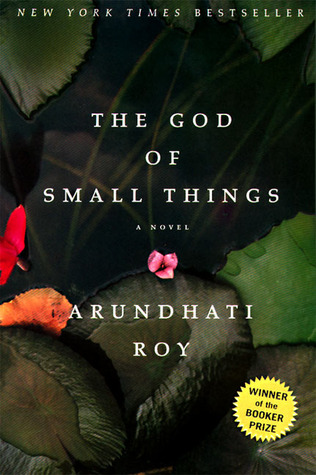
The God of small things
THE ROLE OF COMMUNAL HARMONY FOR SUSTAINABLE DEVELOPMENT OF THE INDIAN SOCIETY
BY DAKSHITA NAITHANI
India is a huge country with the second largest population on earth. It is a hub of various religious and the very nature of culture is diversified and composite. We gained independence in 1947 and keeping the diverse nature of our country, our fore fathers prepared our constitution and dreamed of a secular country where every religion will be respected and given equal weightage. They realised very early that unless we had ’unity in diversity’ there will be no development for the Indian society. India is a emerging economy where the small businesses and agriculture are the two main providers to the job industry. Unfortunately during communal violence the shopkeepers and various other small scale industry entrepreneurs and daily wagers are the ones who are the most hit and are prone to loss and damages. Violence usually resulting in loss of income and property are not recovered in any sorts of insurances and people are left to face the economic burdens afterwards.
In most of the typical Indian homes where the male is the sole earner for the family and females are designated to the household chores are amongst the worst sufferers which leads to disintegration of homes as well as community as a whole. Many children as a result of these broken homes usually end up missing a good education and a hope of good growth in life which in turn nullifies their future contribution to the society and economic growth of the country.
Communal violence leads to generations of suffering and spoiling the economic prospect of a country
The very famous Godhra riots which is also known as 2002 Gujarat riots was a three-day period of inter-communal violence in the western Indian state of Gujarat. Following the initial incident, there were further outbreaks of violence in Ahmedabad for three months; statewide, there were further outbreaks of violence against the minority Muslim population for the next year. The burning of a train in Godhra on 27 February 2002, which caused the deaths of 58 Hindu pilgrims karsevaks returning from Ayodhya, is cited as having instigated the violence.
According to official figures, the riots ended with 1,044 dead, 223 missing, and 2,500 injured. Of the dead, 790 were Muslim and 254 Hindu. The Concerned Citizens Tribunal Report, estimated that as many as 1,926 may have been killed. Other sources estimated death tolls in excess of 2,000. Many brutal killings and rapes were reported on as well as widespread looting and destruction of property. There was widespread destruction of property. 273 dargahs, 241 mosques, 19 temples, and 3 churches were either destroyed or damaged. It is estimated that Muslim property losses were “100,000 houses, 1,100 hotels, 15,000 businesses, 3,000 handcarts and 5,000 vehicles.” Overall, 27,780 people were arrested. Of them, 11,167 were arrested for criminal behavior (3,269 Muslim, 7,896 Hindu) and 16,615 were arrested as a preventive measure (2,811 Muslim, 13,804 Hindu). Thus destroying many lives and causing fear amongst people from one another On 23 May 2008, the Union Government announced a 3.2 billion rupee (US$80 million) relief package for the victims of the riots. In contrast, Amnesty International’s annual report on India in 2003 claimed the “Gujarat government did not actively fulfill its duty to provide appropriate relief and rehabilitation to the survivors”. The Gujarat government initially offered compensation payments of 200,000 rupees to the families of those who died in the Godhra train fire and 100,000 rupees to the families of those who died in the subsequent riots, which local Muslims took to be discriminatory. Thus creating more hate between the two community
The recent riots in Delhi’s Chand Bagh Bhajanpiura and surrounding areas were one such example the violence led to huge losses both emotional as well economic . Around 42 people lost their lives. About 92 houses, 57 shops, 500 vehicles, 6 godowns , 2 schools,4factories and 4 religious places were burnt and taken down . The riots led to property and business losses of over 1000 cr. However long term economic loss, production loss, employment losses as well emotional losses cannot be quantified. These riots led to large scale migration of people to other states thus uprooting people who have been flourishing there for decades successful businesses were destroyed and demolished overnight dreams were shattered and the already stressed farm and agriculture was further stressed to support and feed the additional mouths.
The Delhi government was forced to announce compensation and financial support to the people who were affected running into crores of rupees. The precious funds which could have been used for development of schools, hospitals, betterment of the NCT and upliftment of the poor and needy were exhausted to support the riot victims. The immeasurable loss to the image of country and subsequent losses in share markets due to foreign funds pulling out their funds were a huge blow to India’s economic progress leaving it behind others. India is now being looked upon as an unsafe destination for Investments and travel. The travel tourism industry of India which provides employment to over 42 million people in India suffered huge losses in cancelled bookings. The Industry which was projected to grow at the rate of 4 per cent in 2020 is now looking at a bleak future.
India is a developing country and the vision of our leaders to make India a developed nation and an economic powerhouse cannot materialize unless the internal security of the nation, particularly communal harmony is intact. Maintenance of communal peace and tranquillity occupies a lot of government energy and valuable resources which could be used in nation building.
In case peace prevails, an ambience of trust will develop between various communities, leading the nation on the path of development and economic advancements.
System to think? Dowry system
So my another article is about a well known evil practice of society, dowry system. It the most common problem in every family whether it’s the poor, middle or rich class of the society. The marriage is considered as business and terms and conditions are mentioned. It sounds like a contract, the better the boy and family is, the higher is the price.
The history of dowry system is old. At the time of marriage of a daughter, the presents are given as dowry to her husband and family so that she can live happily there with all the luxuries and comforts. But unfortunately it has turned into an ugly and unfair practice.
One of the worst part of this practice is that if a girl brings less dowry she is harassed by her husband and in laws of the family. No one supports her at that time and the girl takes major steps which can risk her life. Most of the girls try to hide this from their parents so that they don’t get tense about the situation and handle everything alone. Parents are even pressurised to fulfill the demands from time to time.
The custom of dowry has crossed every barrier and has got it’s roots in the society. Although there are strict laws which have been made and imposed on the culprits too but people are not taking it as a lesson in their lives. Many ngo and women organization are also working for the enforcement of these laws strictly and encouraging the women to speak up.
We as the citizens, marching towards the new millennium, should also strive for the discontinuation of this evil practice. The boys should try to change the mindset of the families that marriage can’t be done as business and girls should try to make understand their parents that dowry is an unfair practice, not a tradition.
Hope this was helpful. Thank you all my readers!!


You must be logged in to post a comment.