Why your votes matter

voice your future through your vote

The right to vote is the most direct, most determinant and most dynamic expression of democracy.

Our Indian democracy gives the power to the people. The power to vote and choose a leader / party of our choice. And so, it is only apt that we make use of this opportunity. This is our opportunity to express who we are and what we care about. If you care about your future, Vote your future.

It is essential for every Indian to take the elections seriously. Be it playing an alternate card, keeping fascits at bay or to try a third card. Not everything may change overnight.  But we as citizens of democratic India, have an obligation to vote.

I know you and I are frustrated with the way things are going on in this country. And we’re all trying to post and tweet but nothing you can do is more powerful than you and I voting. Stand up for yourself, educate yourself, use your voice and vote. Make your voice heard because it counts.

As Rabindranath Tagore in his poem, where the mind is without fear, says,

” into that heaven of freedom, my father, Let my country awake.” we are called to lift up this people and this nation to that place.

Needless to say, every citizen’s vote is counted in the polling process. If the people are equally divided between two candidates, one single vote can be a game-changer and a decisive factor. We have seen in the past how one vote from an MP can decide the fall of the government. Exactly the same way, a single person’s vote can confirm the win/fall of an aspiring MP or MLA. Voting is the fundamental basis of democracy’s ‘Of the people, for the people, and by the people’ slogan. Therefore, rather than enjoying it as a holiday, one must vote if he truly wants to contribute to the nation-building process and bring about a change. A Citizen should actually not need to find any reason to Vote. It must be done as a compulsive duty although there is no legal obligation to vote.

At times, it is possible that one does not want any single candidate to be elected from all who are contesting. The election commission has made a special provision of NOTA. It stands for None of The Above. Hence if none of the candidates fit into your criteria, just hit the NOTA option and voice the opinion. Introduction of this alternative is believed to play a significant role in the future. In the late future, it may also be possible that the NOTA will decide the re-elections with fresh candidates.

one of the main reason to vote :

Covid19- we all know how this pandemic affected every corner of the world and how our nation suffered. Millions of people lost their jobs, daily bread and yes lives too So as a responsible citizen of this nation we should elect a government which can work efficiently for the people during any crisis.

TOP 10 INNINGS OF VIRAT KOHLI

1-
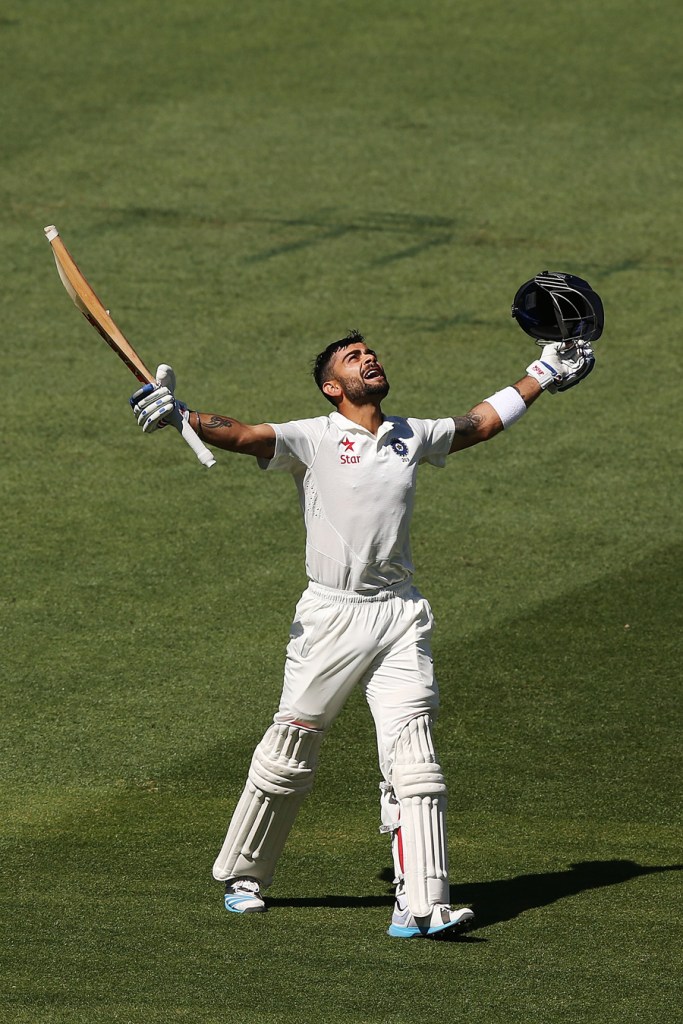
141 vs Australia – Adelaide 2014


141 vs Australia – Adelaide 2014ia’s 2013-’14 tour of Australia remains significant as it saw Dhoni announce his retirement from Test cricket in the middle of the series. But that tour is also memorable for Kohli’s sensational run with the bat. In the first game at Adelaide, he got centuries in both the innings and almost took his team to an improbable win. After scoring 115 in the first innings, the right-hander played an absolute blinder in the second. India were set a target of 364 and even as wickets kept falling around him, Kohli believed in himself and kept chipping away at the target. India eventually suffered an agonising 48-run defeat but Kohli’s 141 off 175 became an instant classic.

2-169 Vs Australia (Melbourne)

After losing the first two Tests in the 2013-’14 tour of Australia, India arrived in Melbourne for the third game hoping to turn the tide. Kohli had a quiet second Test in Brisbane but he roared back at the MCG with a majestic 169 against an attack comprising Mitchell Johnson, Ryan Harris, Josh Hazlewood, Shane Watson and Nathan Lyon. He shared a mammoth 262-run fourth-wicket partnership with Ajinkya Rahane (147) and that went a long way in helping India draw the match. This was the Test after which Dhoni announced his retirement from the longest format. And thus began a new era in Indian cricket as Kohli took over the reins.

3- 82 vs Australia at Mohali 2016

The 82 he scored against Australia at the 2016 World T20 rates as the best T20 innings played by Virat Kohli.
. It was the 2016 World T20 at home and India were struggling against the mighty Australians. Despite only needing to chase 161 for victory, India found themselves 94-4, with only 6 overs left. Australia still had their key bowlers left with crucial overs. The likes of Josh Hazlewood, Nathan Coulter-Nile and James Faulkner were still to bowl out.

With the run rate above 11 already, another couple of wickets would probably have knocked India out. Instead, as he did right throughout that tournament, Kohli rose to the occasion. He was in sublime touch, as Nathan Coulter-Nile found out towards the end – toying with the bowling.
Kohli’s 82 saw India through to the Semi-Finals.

4- 133 Vs Srilanka

In fourth place is arguably Kohli’s most important innings ever. The 133 that Kohli made against Sri Lanka at Hobart catapulted the young maestro into stardom. A bowler of the quality of Lasith Malinga took full toll.

It came in just 86 balls, at a strike rate of 155 and it helped India cruise to victory, chasing 321 in just 36.4 overs. His innings gave India the chance of reaching the finals but it proved in vain in the end as other results didn’t go India’s way.

The best ODI innings played by Virat Kohli

5- 153 Vs South Africa

Number five on this list of best innings by Virat Kohli is his 153 vs South Africa. Against the best bowling attack in the world at the time, Kohli stood above all of his teammates and compiled a superb century that took India within touching distance of South Africa’s first innings total.

The innings came off just 217 balls, at a strike rate of 71. This was no mean feat. Despite Steyn being injured in the first test, Kohli was facing a bowling attack that included Kagiso Rabada, Morne Morkel, Vernon Philander, Keshav Maharaj and Lungi Ngidi.

On a slightly subcontinental that still had pace and bounce, Kohli was in complete control. The Supersport Park pitch could not stop him. His 153 came out of an Indian total of just 307. This meant that Kohli had scored nearly half of the runs in the innings. The second and third highest scores were 48 and 36, by Murali Vijay and Ravi Ashwin respectively.

6- 235 Vs England

Again a one sided series, but Kohli showed his class and maturity in the way he built his innings to get way ahead of England’s first innings total of 400. Once again, not taking much risks and scoring mostly of the ones and twos and the occasional boundary in between he went on to make another double hundred and after that what England witnessed was a batsman playing Test Cricket but thrashing their bowlers just like a batsman would in a T20 match. Kohli just unleashed on the bowlers and started hitting boundaries at ease, though he couldn’t do that for long as he was caught on 235 trying to hit a six, but this innings was as good as it could get. In that grand home season, he scored 4 double hundreds in 4 consecutive series and made another record.

7-The first hundred (2009 vs Sri Lanka)

India were looking to win the five-match series in Kolkata. Sri Lanka had registered a huge score of 315 and Suranga Lakmal had removed openers Virender Sehwag and Sachin Tendulkar in no time. India were reeling at 23/2 in the fourth over.

Despite having senior batsman Gautam Gambhir at the other end, Kohli pierced gaps at will and counter-punched with carefree abandon. Gambhir played an anchor role as the Delhi duo stitched a massive 224-run stand. Just weeks after turning 21, Kohli got to his first ODI hundred. He didn’t see the team across the line, though, falling for 107.
Gambhir did the rest, chasing down the total to hand India the series with a classy unbeaten 150. After winning the Man of the Match award, the southpaw handed it over to his younger teammate, a gesture seldom seen in international cricket.

8-The highest score (183 vs Pakistan 2012)

India had everything going against them at Mirpur in the Asia Cup after Mohammad Hafeez and Nasir Jamshed’s centuries put Misbah-ul-Haq’s side in command. India had to chase down 330 – a score they had never got to during the second innings – at the time.

Tendulkar was up and away, taking on the pacers early on to keep India on course. In a way, this knock may have been a watershed moment in the design of Kohli’s chases taking shape. During the powerplay overs, when Tendulkar was aggressive, Kohli was subdued. After the batting legend’s departure, Pakistan were sent on a leather hunt.

With Umar Gul, Wahab Riaz and Saeed Ajmal, the bowling attack had quality to hurt the Indian batsmen.
Rohit Sharma, at the other end, played a sheet anchor’s role. Who can forget Kohli’s celebrations after he reached the three-figure mark: Chest pumping out, swaying his bat with passion and letting out an expletive or two in Hindi.

Kohli departed for 183, his highest ODI score till date. The number has some significance in Indian cricket as former captains Sourav Ganguly and Dhoni’s highest ODI scores were 183 too.

9-Virat Kohli’s “notebook” celebration.

India captain Virat Kohli prefers his bat to do all the talking. But in a rare incident during the opening Twenty20 International against the West Indies in Hyderabad on Friday, he turned his arm into a virtual ‘notebook’ to celebrate.
In the 16th over of India’s run-chase at the Rajiv Gandhi International Stadium, Kohli smashed West Indies pacer Kesrick Williams for a six and then imitated the bowler’s famous notebook celebration. The Indian skipper used his arm as a notebook to sign, after hitting Williams over the ropes.
Kohli scored a masterful unbeaten 94 off 50 balls as India chased down the challenging target of 208 with eight balls to spare for a six-wicket win.

10-Virat Kohli’s unbeaten 254 Vs South Africa

Virat Kohli hit a clinical unbeaten double hundred (254 off 336b, 33x4s, 2x6s).It was his highest individual score in an innings.
Kohli’s was a captain’s innings of supreme will power and intensity. He concentrated on all aspects of batsmanship: surviving the rough period, mixed defence with offence, stole runs, encourage his batting partners and deflated the opposition morale.

An introduction

By reading the title you must be thinking that what is the introduction about. A very important part of our lives which has lessons, memories, friends, guidance and path for a better future. Yes I think you must have guessed it…. It’s our schools, colleges and universities in which a major part of our lives is invested. We learn, innovate and implement the things with confidence in our lives and everyone has gone through this phase!…

Schools – What should write about it. For me it’s a place where a child is able to see a new world rather than family members. He is surrounded by unfamiliar and unknown faces. He has to prove himself there with his own sense and knowledge. School is always said to be a temple of learning and it is very true. We make mistakes and our teachers are present right at the moment to guide us and nurture us by what they have learnt with all their efforts for everyone at the same time.

Colleges and universities- The place where the competition begins and a teenager chooses his particular stream to build a better future. They provide the confidence to present things in the most effective way so that our knowledge and experiences are utilised. A vast area for ourselves to involve in more and more activities and create the ability to think. It provides a discussion about the topic and understanding it by the depth. The courses are available for everyone in any field they want to pursue.

This was a short detail about school, colleges and universities in our lives. Teenagers can easily develop and learn things. They can innovate things in a better version that may lead to a successful life. I hope you will relate this to your school and college days and smile a little more thinking about the memories.

Thank you !!!!!!

ROLE OF QUAD IN SOUTH CHINA SEA

BY DAKSHITA NAITHANI

The Quadrilateral Dialogue was established in 2007 when four countries—the United States, India, Japan, and Australia—joined forces. However, it did not take off at first due to a variety of factors, and it was resurrected in 2017 after almost a decade due to factors such as growing country convergence, the expanding importance of the Indo-Pacific area, and rising threat sentiments toward China, amongst many others.

The origins of QUAD may be traced back to the Malabar Exercise. Malabar began as a modest Passage Exercise named PASSEX between the Indian and US Navies in 1992, but was halted after India’s nuclear testing in Pokhran in 1998. It was later restarted in 2002. Since its inception in 2002, QUAD has become an annual event. With the addition of Japan in 2015, it has become a trilateral practice.

The Quad’s goal remains intact: to promote the economic and security objectives of those nations with genuine and essential interests, to devise a new approach for keeping the Indo-key Pacific’s maritime lanes free of foreign influence. It has become necessary in view of the increased need for information exchange in the maritime sector. With the growing presence of the Chinese Navy in the Indian Ocean, awareness is a key subject for the Navy. After 2008, China increased its presence in the Region under the pretext of anti-piracy operations, even deploying submarines for the objective. In 2017, China formally established its first overseas facility near Djibouti, in the Horn of Africa.

What are the underlying challenges?

The environment in which QUAD has been resurrected, as well as subsequent engagements like as Malabar Exercise 2020, are regarded as governed by a counter-China narrative. There are several features that may not constitute sites of convergence, despite how they appear.

China’s influence: China has significant economic links with Quad partners, particularly Australia, which is what it may use to compel or sway nations to its side. This might prove to be an issue for India.

Maritime orientation: Quad is a marine rather than a land-based organisation because of its strong concentration on the Indo-Pacific. This raises some important concerns about the basis of collaboration with Asia-Pacific and Eurasian countries.

Differing perspectives. There are conflicting viewpoints on certain situations, such as the Myanmar crisis as seen through the eyes of the United States and India. India has remained silent in the face of Japan’s expressed worry that China is attempting to alter the status quo in the East and South China Seas.

Advantages in Space- When QUAD representatives join forces in space, they have significant benefits and are able to fight China. This includes (a) lowering the extremely high expenses of building a dock in order to promote the development of interplanetary vehicles (IPVs). (b) One member state has benefits that will compliment each other and will lead to a successful Mars exploration and the construction of support facilities that will be necessary for effective asteroid belt mining. (c) All member countries bring a high degree of convergence in space applications, for example, the United States has the advanced technological base required for advanced avionics, which will form the backbone for both the construction of a space dock and the construction of IPVs; India has a highly educated and inexpensive working population, which will lower the cost of space; and Australia has the natural resources required for exploration.

The Quad met in Tokyo on October 6, 2020, for the second time since the organisation revived in November 2017. It was the second such gathering, following the inaugural virtual meeting in June, and the first high-level Quad meeting since the 2019 foreign ministers’ meeting in New York on the margins of the UN General Assembly meeting. Furthermore, given mounting worries about Beijing’s hostile conduct and growing suspicions about China’s management of the COVID-19 outbreak in Wuhan, the meeting’s timing and circumstances added to its relevance.

China’s ‘incremental encroachment strategy’ in the South China Sea (SCS) is a source of worry not only for the countries currently affected by the loss of influence over the Exclusive Economic Zone (EEZ), but also for the rest of the world, as China may be able to exercise a monopoly over SCS Sea Lines of Communication (SLOC). Affected nations lack the necessary power to stand up to China, and so will be forced to accept a one-sided agreement such as the China-driven “Code of Conduct” (COC).

As a result, Chinese adventurism must be restrained by other major maritime countries in the global interest. The fact that China could establish a military facility in the SCS despite the existence of the US Navy shows that worldwide criticism and more effort are required to prevent the SCS from becoming “China’s lake.”

Quad may not have the fangs it needs right now, but there is no other option than to establish a prospective structure like this involving likeminded maritime countries with shared strategic objectives in the Indo-Pacific. Various perspectives on the Quad’s role, viability, and prospects have been expressed on several occasions. Because Quad is a security conversation platform rather than a military alliance, aspirations from it must be suitably limited for the time being. 

In the Indo-Pacific, each Quad member sees a distinct threat. While three of the Quad’s warships (Australia, the United States, and Japan) operate under the NATO military alliance structure, India is not a member of any military alliance, while being a reliable ally of two of them. Without India, the trilateral conversation between the three NATO partners has been since 2002. Because India is the only Quad member with an unresolved land boundary with China, it will take a different strategy to dealing with China.

The Quad has emphasised the importance of ASEAN in the Indo-Pacific; nevertheless, their membership in it is a contentious topic owing to Chinese influence. In reaction to China’s claim to the nine-dash line in the SCS, there are divisions within the ASEAN grouping. Some of the ASEAN nations that have been harmed had previously raised a faint voice opposing Chinese aggressiveness, expecting international powers to rein in China’s antics.

Quad’s shared goal of putting its vision of a free and open Indo-Pacific on a “rules-based” legal framework to ensure freedom of passage in the global SLOC requires some reflection and strengthening. The United Nations Convention on the Law of the Sea (UNCLOS III) has been ratified by Australia, India, and Japan, but the United States has yet to do so. This ratification will be required in order to maintain a high moral ground when implementing the agreement.

China is relatively certain that the US and any other country would not employ military action against it, given the current world geopolitical situation. Beijing is also beefing up its naval capabilities. Quad aims to upgrade beyond its Malabar workouts in this situation.

In the Indo-Pacific, Quad members must maintain freedom of navigation exercises and military posture as China continues to do so. Chinese expansion must continue to be condemned by the international community. Quad may not be powerful enough to stop Chinese adventurism in its current form, but it has the potential to become one of the most effective instruments if the afflicted nations and the international community band together to address their mutual concerns.

The navies of Australia, India, Japan, and the United States conducted their largest naval drills this month, sending warships, submarines, and aircraft to the Indian Ocean, signalling the four countries’ seriousness in countering China’s military and political influence in the Indo-Pacific region, according to analysts. Officials in Beijing were silent, but Chinese state media denounced the Malabar naval manoeuvres, calling them a threat to regional stability, according to the Global Times newspaper.

Conclusion

The Quad is developing as one of the major multilateral which is committed to increased security collaboration in the post–COVID-19 international order, given the rising pace and scope of the group’s work. Furthermore, having an active Quad dispels the long-held belief that the Indo-Pacific is mainly inert. With the stakes higher than ever, each of the Quad’s four members must play a larger role in balancing the Indo-threats Pacific’s and power moves. Every step made by the Quad will make it more difficult for Beijing to realise its great-power goals. As a result, China will be unnerved by the Quad’s emergence as a united front championing a free and open Indo-Pacific. Furthermore, if China continues to push the security boundaries and put the Quad members to the test, the organisation will morph into the anti-China squad Beijing fears.


Academic news

My another article is about education and academic news. Education is one of the most important pillar in the life of an individual. An educated person is respected everywhere. Every organization appoints such a person who can be an asset for the organization in the long time. Education is important for everyone and it’s the fundamental right of every child to access it.

Education – A major transformation has been taken place in the field of academics. The National Education Policy 2020 (NEP 2020) , which was approved by the Union Cabinet Of India in 29 July 2020, outlines the vision of India’s new education system. The new policy replaces the previous National Policy on Education, 1986. The policy is a comprehensive framework for elementary education to higher education as well as vocational training in both rural and urban India. The policy aims to transform India’s education system by 2040.

Vision – National Education Policy 2020 envisions an India – centric education system that contributes directly to transforming our nation sustainably into an equitable and knowledge society by providing high quality education to all. The National Education Policy 2020 has “emphasised” on the use of mother language or local language as the medium of instruction till Class 5 while, recommending it’s continuance till Class 8 beyond. Sanskrit and foreign languages will also be given emphasis. The policy recommends that all students will learn three languages in their school under the ‘formula ‘. At least two of the three languages should be native to India. It also states that now language will be imposed on the students.

Conclusion – The Policy focussed on all the levels of education and recommended prior changes that will be helpful to students in future. The basic idea is to generate competition and feeling of decision making since childhood. Every form of education (since childhood to Masters) is categorized and formed. Hope you will read more about it and clear your doubts.

Thank you for today!!!!!

Culture and history : Hampi !!!

So today we will talk and know about UNESCO World Heritage Site. Hampi is famous for its ruins belonging to erstwhile medieval Hindu kingdom of Vijayanagar. The temples of Hampi, it’s monolithic sculptures and monuments, attract the traveler because of their excellent workmanship. The Hindu style of architecture found at Hampi reflects the splendor of the Vijayanagar Empire. The rugged landscape adds to the historic ambiance of this site.

Location – Hampi is situated on the banks of the Tungabhadra River in the eastern part of central Karnataka near the state border with Andhra Pradesh. It is 376 kilometers from Bengaluru, and 165 kilometers from Hubli, and 13 km from Hospet (Railway Station). It is located on top of the rugged terrain and is 467 m above sea level.

History – The first settlement in Hampi dates back to 1st Century AD and several Buddhist sites belonging to that time have been found nearby. Hampi was the capital of the mighty Vijayanagar Empire. Vijayanagar was one of the largest Hindu empires in India. Two brothers, Harihar and Bukka , founded it in 1336. Krishnadevaraya (1509-1529) was the greatest ruler and controlled almost all of peninsular India south of Tungabhadra River.

Town – The town of Hampi in the 14th century had a population of half a million people. Seven concentric lines of fortifications protected the city. It maintained a huge army to protect it from other kingdoms. Vijayanagar Empire flourished, as it controlled both cotton and spice trade routes of southern India. Medieval historians refer to Hampi as an important center of trade. However the glory was short – lived and the empire was destroyed in 1565.

Main attractions – Hampi is famous for Purandara Festival . This annual festival is held in January – February in the Vittal temple to celebrate the birth anniversary of the medieval poet – composer, Purandar. The best time to visit Hampi is from October to March. I hope by reading about Hampi you will like to visit this place once…!!!

Thank you… Keep reading…..

India’s brilliant performance at Paralympics 2020

It will be fair to say that Paralympics 2020 is India’s most extraordinary Paralympics ever. From 1968 to 2016, India won 12 medals at Paralympics, at Tokyo India have already secured 15 members and counting. 30th august will go down as golden day in history of Indian para sports as India claimed 5 medals in a single day. Let’s have a look at India’s journey at Paralympics till now,

Bhavina Patel created history as she won silver medal in women’s single table tennis C4. She won medal in her maiden Paralympics on august 29. Chinese paddler Ying Zhou ended her impressive run at the games in class 4 final with 0-3 win.

India’s next medal came from men’s high jump T47. India’s Nishad kumar clinched a silver medal in the event with an Asian record effort. The 21 year old cleared 2.06 m to win the silver and set an Asian record. He lost his right hand due to an accident at the age of 8.

Shooter Avani Lekhra made history as she became the first Indian woman to win a gold medal at the Paralympics as she won gold in women’s 10m air rifle shooting standing SH1. The 19 year old finished with a world record equaling total of 249.6, which is also a new Paralympic record. Also it was her maiden Paralympics.

India’s medal favorite, two time gold winning javelin throw veteran Devendra jhajharia didn’t disappointed and clinched a silver in men’s javelin throw F46. 40 year old Devendra already India’s greatest Paralympian pulled off a new personal best throw of 64.35 m for silver. Sundar Singh Gurjar, another Indian secured third place with a best effort of 64.01 m in the same event.

24 year old Yogesh Kathuniya started India’s golden day in para sports history with a silver in Men’s discus throw F56. He sent the discus to the best distance of 44.38 m and clinch the silver.

30th august didn’t stopped producing amazing moments for Indians as Sumit Antil upgraded his own world record in the Men’s javelin throw F64 category with a throw of 68.55m to hand India second gold medal of Paralympics 2020. Singhraj added to India’s medal tally by winning bronze medal in the men’s 10 m air pistol shooting SH1. He started shooting only 4 years ago and it was his debut Paralympics.

Mariyappan Thangavelu and Sharad kumar secured silver and bronze for India in men’s high jump T42 on 31th august. Mariyappan cleared 1.86m while Sharad succeeded in clinching bronze with 1.83m jump. 18 year old Parveen kumar also won silver in T64 classification of men’s high jump with the best jump of 2.07m. It was his personal best performance and his first major medal.

Avani Lekhra added 12th medal to India’s medal tally as she won bronze in women’s 50m rifle three positions SH1. She also became India’s most successful women para-athlete as it was her second medal after winning gold in women’s 10m air rifle.

We can hope for more as many more events are yet to come. India’s para-athletes are on a dream run and we hope it doesn’t stop.

Mukesh Ambani guarantees a ‘Jio’ for energy change

authorrishabhsharma's avatarTrack2Training

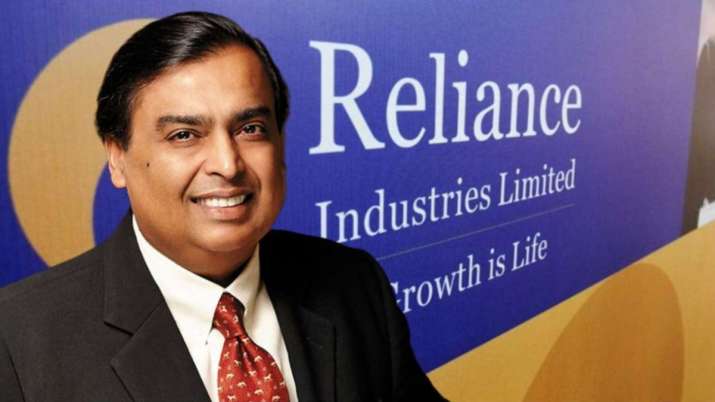
Reliance Industries Ltd administrator Mukesh Ambani on Friday revealed his arrangement to do a ‘Jio’ in energy change by delivering green hydrogen for under $1 per Kg, or generally Rs 73 at Friday’s dollar conversion scale, for quicker reception of the cleanest versatility arrangement accessible to the world now.

“Green hydrogen is zero-carbon energy. It is awesome and cleanest wellspring of energy, which can assume a crucial part on the planet’s decarbonisation designs,” India’s most extravagant man revealed to International Climate Summit 2021, adding Reliance will seek after the objective of first lessen the expense to underneath $2 per kg and eventually to under $1 in 10 years.

Ambani’s vision for green hydrogen has a natural ring to it. It can possibly disturb the portability and energy change showcases the manner in which Reliance did when it entered the telecom market with Jio, which diminished taxes and got buyers snared…

View original post 452 more words

BLESSING IN DISGUISE

BY DAKSHITA NAITHANI

The year 2020, as we all know, will be a major change in our life. It has also demonstrated the opposite side of existence. We continued to count things for the future, and when the pandemic struck, it reminded us of how unexpected life can be; different aspects of life were affected, and working conditions were significantly altered. There was a lot of misunderstanding in the education industry about how to teach pupils, how to start lessons, and so on. However, technology was the solution to all problems.

People have used mobile phones for social interactions and pleasure in the past, but they have now evolved into a source of information, and we can say that school has come within our grasp. This situation is very similar to one of the chapters in NCERT’s English course book for class 9 called “The fun they had,” in which two children from the future (2050) got their hands on a real hardcover book from their grandfather and were amused by the idea of a real school and school building where all the children of the same age group used to study together under one roof and thought that happiness was being together with their friends. Did the pupils in this circumstance realise that this narrative would become so relevant and genuine to them? Many parents used to refuse to let their children to use cell phones, but it has now become a necessity.

Although there are always two sides to a coin, sales of smart phones soared as a result of the epidemic, since every home needed one additional one for their children to attend courses. Technology has also played a significant role in education, and how we use it can have positive or negative consequences. Phones have evolved into more than simply a means of communication; they have also become a lifeline and an indispensible component of our lives in some manner. It was a struggle for teachers to not only teach their material but also to engage with their pupils throughout these testing periods. They’ve also learned to utilise technology in a variety of ways, including not just communicating but also using various digital classrooms, boards, and audio and visual teaching and learning methods. They were not only effective in speaking with pupils, but also with their guardians, and despite the challenges, they were able to establish an emotional bond with them.

Many parents lost their jobs as a result of industry losses and were obliged to shift their children from private to government schools, but many were pleased to do so because the curriculum is on par with top institutions. The government and teachers have made it a point to link each and every kid with them. Many teachers aided their students financially as well as academically. Many teachers have also attempted to offer phones or internet connections to their kids, demonstrating that humanity bears primary responsibility in any scenario.

The desire for change in school education emerges as a result of continual changes in society on psychological, social, and economic levels. As a result, we must constantly introduce and upgrade a framework. As you can see with the current pandemic, a lot of adjustments are required both during and after the crisis. With this in mind, the Delhi government began giving curriculum-based work sheets to children of all grades, as well as training their teachers.

Teachers’ ability and efficiency have been improved via the use of webinars and online seminars on a regular basis. Regular trainings were provided to demonstrate how to use Google products to make the teaching and learning process more engaging and beneficial. The government has also launched a number of applications, such as Chalklit and Diksha, to provide a platform for various trainings and to keep instructors informed about innovative ways of teaching and learning. It was remarkable that students continued to attend courses on a regular basis, whether they were in the same city or in their village; their desire to study grew day by day, and they began to respond positively.

Personality development!!

So today’s post is about you, about us. I mean about our personality , about our identity, our views , our behavior, etc. Personality development encompasses the dynamic construction and deconstruction of integrative characteristics that distinguish an individual in terms of interpersonal behavioral traits.

Indeed , personality development is ever -changing and subject to contextual factors and life altering experiences. Personality development is also dimensional in description and subjective in nature. The dominant viewpoint in personality psychology indicates that personality emerges early and continues to develop across one’s lifespan.

We all possess certain personality traits that set us apart from the rest. A mix of good and bad, these traits define how we respond to situations and people. Now I tell 13 personality development ‘tips’. I hope you will enjoy reading it and become the most terrific version of you.

13 ways of personality development :

  • Know you are incomparable – Know that you and the other person are unique and are just incomparable
  • Be kind to yourself – Self compassion brings positive traits in life.
  • Give space to imperfections – Find your peace amidst the world’s flaws even as you strive to make a change.
  • Be spontaneous – Spontaneity makes one to be fun around and be per cent aware in the present moment.
  • Be light in mind and heart – Be happy and don’t overthink and overanalyze yourself.
  • Stay enthusiastic – Enthusiasm is infectious and appealing so one must never give up enthusiasm.
  • Be a better communicator – A skillful communicator can win over people and adverse situations through his words.
  • Be warm and approachable – We all like people whom we can easily mingle and talk to. Be friendly and be ready to share and help.
  • Do things with style – Doing things with style adds zing to your personality. At the same time, stay relaxed.
  • Learn to let go – After you’re done with your task, let go of your attachment with the result.
  • Be a lion in the face of danger – Don’t give into pressure and face every challenge confidently.
  • Stay calm with the power of breath – Being calm strengthens one’s personality and your stress will diminish.
  • Remember you’re a proton! – A proton never lose its positivity, nor can you. Your inner core continues to radiate positivity.

That’s all for today hope you will like it!! Thank you…