Genius Marketing That To $19.6 Billion – American Express Case Study

Hi everybody, If you want to be a legendary entrepreneur, this episode is for you. because the story that I’m about to tell you today is the story of a brand that has leveraged, perhaps, the most undervalued attributes of mankind and made a billion dollars out of it. And if you learn how to use these attributes you can easily go on to outperform your competition regardless of which domain you belong to. These attributes that I’m talking about are kindness and empathy. Now, in this capitalistic world while most people might consider empathy and kindness to be intangible qualities . I gotta tell you that it’s an open secret recipe that can enable you to design game changing marketing strategies in the 21st Century. To tell you about it, let me take you back to 2010 America. 

This is when the American economy was still experiencing the wrath of the 2008 recession which caused the stock market to hit rock bottom, the giant corporations to shut down, and caused millions of job losses within a fortnight. When this happened, while the entire economy was collapsing there was one company that did not just survive but also went on to make a profit of $13.4 billion during the very same times of recession. This company that I’m talking about is the giant American retailer- Walmart. And as it turns out during the two years of recession Walmart improved its profitability by $700 million year on year. Additionally, Walmart never had a return of equity of less than 20% during the same time of recession. Now, on the outside this might sound amazing but if you take a closer look at the impact of Walmart on retail America it’s quite devastating. 

In fact, it has even got a term called the Walmart effect. Among the multiple studies that were conducted, it was proved time and again that every time a Walmart store opens up in a city or a town hundreds of small businesses along the radius of the store shut down within 1 year or at max 2 years. This was because Walmart bought all of its product at such high quantities that it was able to lower the price of products to such a low level that small business couldn’t even come close to competing with Walmart’s prices. Now, just to give you an example of the same, let’s say if you have a small retail shop. You would buy notebooks from the wholesaler for ₹30/notebook, alright? And when you buy it at ₹30 , you will sell it at ₹40 in the market but at the same time Walmart would sell the same notebook at ₹28 per piece. Which means what? Walmart’s selling price is lower than your cost price. And this made it impossible for small businesses to survive in the market. 

In fact, more often than not there are even protests that are held every time Walmart announces that it’s going to open up a store in a town. But you know what? There was a small twist in the tale here. As it turns out another giant company stepped up and became a saviour for small businesses during the times of recession. And this company lodged a campaign that was such an amazing hit that the senate of the United States itself unanimously passed a resolution to support the initiative. And cherry on the cake, President Barack Obama himself publically supported the campaign. The question is- What is this company and how did the American president himself end up endorsing a marketing campaign. Well, the company that I’m talking about is American Express and the campaign that it launched is known the ‘Small business Saturday’ This was an initiative where American Express gave away $25 dollars of special credit to 100,000 credit card members wherein they could only redeem these $25 if they shopped at a small business on a Saturday, after thanksgiving. And they also gave away $100 of Facebook advertising credits to 10,000 small businesses just so that these small businesses could utilise digital marketing in order to maximise their profits. 

On top of the incentives, they also ran T.V. ads, radio ads and even social media campaigns to educate the American population about their impact on the small businesses. And you know what? Soon enough, hundreds of small business owners all across the country participated in the campaign and what followed next was nothing short of a capitalistic miracle that many considered to be impossible. Millions of Americans started walking into a small business store and rather than shopping from a Walmart they began shopping from a small business inspite of knowing that they were making a more expensive purchase as compared to Walmart. In it’s second year, ‘Small Business Saturday’ became even more successful wherein 5,000 small businesses participated in the campaign and 103 million Americans shopped small. And soon enough the Small Business Saturday became such a social phenomenon that it generated over 2.7 million Facebook likes and became a top trend in topic on Twitter. And #SmallBusinessSaturday became so popular that even President Barack Obama tweeted his support towards the campaign. 

This is how the capitalistic America went beyond their conventions and came together as a community to spread kindness and showed empathy towards small businesses in their community. By 2012, American Express took the campaign to the next level wherein they did not just give out credit card incentives but they also provided the small business owners with social media kits, email templates and various marketing materials to help them maximise their marketing. This further maximised their sales and within just 2 years Small Business Saturday became a part of the annual American tradition wherein everybody starting from small business owners to the President himself participate in the campaign. And soon enough, it turned into a beautiful occasion with lots of happines, lots of smiles and most importantly it became an occasion of communal unity for the United States of America. 

In 2015, President Obama even documented taking his daughters to the local bookstore to promote the initiative of shopping at a small business. Fast forward to 2020, American Express estimates that 110 million people participated in the Small Business Saturday and sales hit a record high with an estimated $19.6 billion in spending and all of this money helped keep small businesses alive even during COVID-19 recession. This is how a bank like American Express was able to use empathy and kindness to make an economic miracle come true even during the toughest times of American history. 

Now, there are 3 very important lessons that we need to learn from this case study while we execute these ideas to our domain. Lesson 1, identifying the pain and the interest of the audience is always the key to unlocking extraordinary business ideas. In this case, American Express identified the pain of the shoppers and used its service to give them a $25 credit just so that it could motivate the shoppers to shop from a small business. Therefore, the interest of the shoppers has been addressed, at the same time it has also catered to the pain of small business owners. 

Lesson 2, in the 21st Century participatory campaigns will always turn out to be more powerful than even an award winning advertisement. Why? because the new age of marketing is moving from impressions to expressions. So, more than a T.V. ad it is the participation of the customers that is going to create more impact. In this case, because American Express gave out email templates and social media kits the shopkeepers automatically became the local ambassadors who participated in the campaign which eventually led to a chain reaction and got millions of shoppers on board too. This is what we call as participatory marketing campaign.

 And last and most importantly, always remember that empathy and compassion are the most undervalued attributes of this capitalistic world and very few people know that these are two of those qualities that are so powerful that they can turn a commoner into a king. In this case, they were powerful enough to give rise to a capitalistic miracle that America will cherish forever.
How did India's MTR Foods Overcome The Economic Downturns

 Hello everybody , On 25th of June 1975 the Indira Gandhi government officially declared a nationwide emergency. The fundamental rights were curbed, the press was censored and within a fortnight the livelihood of 620 million Indians was at stake. Little did they know that the next 21 months of their lives would be known as the darkest chapter in the history of Indian democracy. And all of this was happening during a time when India was already witnessing a socioeconomic crisis. During this time, let alone business prosperity even survival was considered to be a miracle. And the story that I’m about to tell you today is the story of one such miracle wherein amidst this economic nightmare while most businesses were shutting down there was one incredible businessman who turned this very same emergency into an business opportunity and built a business empire that now has a revenue of 1000 crores. This businessman is Mr Sadananda Maiya and the company that I’m talking about is Mavalli Tiffin Room which is popularly known as MTR. 

The question is- What was so special about MTR and how was it able to turn an economic nightmare into a business opportunity ? The answer to this question lies in the rich history of MTR that dates back to 1924. This is when the Maiya family started the MTR restaurant with the vision to serve the most authentic, hygienic and the tastiest South Indian food to its customers. And the entire family was so dedicated to their profession that even during the post-independence time when the country was witnessing a political turmoil they still served the most authentic, hygienic and the tastiest South Indian food in town. Within a few years the restaurant became so popular that it became a hotspot for tourists television personalities and even film stars. But after 5 long decades of prosperity; in 1975 when the emergency was imposed the family hit a dead end due to the socio-economic crisis. 

During this time, apart from the emergency India had already seen 2 bad agricultural years and due to the formation of OPEC the oil prices had quadrupled and the inflation in the country had skyrocketed to 15%. The situation was so bad that the government had to stop all new construction work they froze the wages and salaries in the public sectors And imposed compulsory savings on income tax payers. And this meant that every single rupee was a lifesaver for a middle class person and it obviously meant that rarely anybody ever went to a restaurant. On top of that, the government required every restaurant to conform to prices set by the government and it was practically impossible to run a profitable restaurant business with those given prices. For example, under the President’s rule, the price of Idli was clipped to 10p from 25p while a cup of coffee which costed one rupee was to be sold for just 25p. 

Now, people, when something like this happens most of the restaurant owners do either one or many of these 3 things to survive. And this is something that you would’ve seen even during the COVID-19 crisis. Number one, they do extreme cost cutting and fire all of their employees. Number two, they indulge in adulteration and serve extremely low quality food to their customers which eventually leads to health hazards. Or number three they just shut their shop altogether and wait for the situation to get back to normal. And this is exactly what the restaurant owners did in 1975 because they saw no other option to survive. But you know what ? Even during this time MTR foods still served the most authentic, hygienic and the tastiest South Indian food to its customers without compromising on their quality. 

And not just that They retained most of their employees and built a supply chain that was so robust that when the emergency was lifted MTR went on to become one of the most successful food companies in the country. The question is- What exactly was this strategy and what was so special about it ? As it turns out, when the government imposed the prices the MTR restaurants started bleeding. They were loosing out ₹25,000 on weekdays and lost upto 1 lakh rupees during weekends. But even during that time Sadanand Maiya sir was not willing to compromise on his family business values. At the same time he did not want to fire any of the employees because they had stayed loyal to the business for decades So you know what ? He took a bold step to shut down the restaurant altogether and made 3 strategic changes to it’s business.

 Number one, he realised that inspite of the emergency, the demand for food did not go down. It’s just that the purchase power of the customers had declined drastically. And the supply chain of the restaurant was too costly to actually cater to their demands. So, to reduce the cost he moved from cooked food to packed food. Because of this the heavy cost and loss due to perishable items was completely eliminated. On top of that instead of adulterating the costly ingredients he changed the ingredients altogether. For example, they moved from rice idlis to rava idlis to make idlis cost effective. And even today, Rava Idli is one of MTR’s signature dishes. 

Number two since he could not comply by the prices imposed by the government he turned the same restaurant into a grocery store and started selling food mixes via grocery sales. And last and most importantly he trained his entire staff to build an efficient supply chain to make packed food and sold it at an affordable price. In the corporate world this is what we call as reskilling. And that is how ladies and gentlemen MTR was able to survive the emergency without compromising on its business values. And guess what ? As soon as the emergency was lifted MTR restaurant reopened but this time along with the restaurant they had a ready to fire manufacturing chain which produced nothing but high quality products. Soon enough it extended to multiple food mixes like pickles, like spices and even special spice mixtures. Fast forward to today MTR has emerged as one of the finest food brands in the country with a revenue of almost 1000 crores. And MTR exports its products to 21 countries including US, UK, Australia and Japan. 

And most importantly it has successfully stood the test of time for 97 years without ever compromising its values And even during the COVID crisis, 10 years after Maiya sir stepped down The company is still setting very high standards for change management in the industry. While most companies were clueless and struggled to keep their supply chain intact during the COVID crisis; MTR foods had already doubled their inventory level from 14 days to 30 days capacity. And while the first lockdown was imposed on 25th of March MTR rigorously started preparing for the crisis way back from 10th March itself. And this is when none of us had a clue that our lives were about to change forever. 

And that is how time and again by turning a business threat into a business opportunity MTR has consistently set a benchmark for other brands to follow and from entrepreneurs like you and me to learn from. Now there are 3 very important lessons that we need to learn from this iconic case study. Number one and this is something that has been followed by Dhirubhai Ambani sir better than anybody else wherein his policy was everytime you see a market crisis you need to realize that your competitors are facing the exact same crisis as you are. The question is are you going to see it as an obstacle and succumb to it or treat it as a business opportunity and get way ahead of your competition.

 Number two, money can build a company but it takes guts, quality and values to build a brand. And last and most importantly as much as the Internet is filled with American and European business case studies we often fail to realise the fact that India has had a long history of political and economic crisis and the adversity has been so much that let alone business, even staying alive was considered to be a big deal.

 But even during these times we have had some incredible entrepreneurs who were able to build a business empire and have established a golden legacy for us to follow and we being in the Indian markets need to pay very close attention to these lesser known goldmines because they have got nuggets of wisdom that can turn us into extraordinary business leaders of this country. 

How did India's MTR Foods Overcome The Economic Downturns

 Hello everybody , On 25th of June 1975 the Indira Gandhi government officially declared a nationwide emergency. The fundamental rights were curbed, the press was censored and within a fortnight the livelihood of 620 million Indians was at stake. Little did they know that the next 21 months of their lives would be known as the darkest chapter in the history of Indian democracy. And all of this was happening during a time when India was already witnessing a socioeconomic crisis. During this time, let alone business prosperity even survival was considered to be a miracle. And the story that I’m about to tell you today is the story of one such miracle wherein amidst this economic nightmare while most businesses were shutting down there was one incredible businessman who turned this very same emergency into an business opportunity and built a business empire that now has a revenue of 1000 crores. This businessman is Mr Sadananda Maiya and the company that I’m talking about is Mavalli Tiffin Room which is popularly known as MTR. 

The question is- What was so special about MTR and how was it able to turn an economic nightmare into a business opportunity ? The answer to this question lies in the rich history of MTR that dates back to 1924. This is when the Maiya family started the MTR restaurant with the vision to serve the most authentic, hygienic and the tastiest South Indian food to its customers. And the entire family was so dedicated to their profession that even during the post-independence time when the country was witnessing a political turmoil they still served the most authentic, hygienic and the tastiest South Indian food in town. Within a few years the restaurant became so popular that it became a hotspot for tourists television personalities and even film stars. But after 5 long decades of prosperity; in 1975 when the emergency was imposed the family hit a dead end due to the socio-economic crisis. 

During this time, apart from the emergency India had already seen 2 bad agricultural years and due to the formation of OPEC the oil prices had quadrupled and the inflation in the country had skyrocketed to 15%. The situation was so bad that the government had to stop all new construction work they froze the wages and salaries in the public sectors And imposed compulsory savings on income tax payers. And this meant that every single rupee was a lifesaver for a middle class person and it obviously meant that rarely anybody ever went to a restaurant. On top of that, the government required every restaurant to conform to prices set by the government and it was practically impossible to run a profitable restaurant business with those given prices. For example, under the President’s rule, the price of Idli was clipped to 10p from 25p while a cup of coffee which costed one rupee was to be sold for just 25p. 

Now, people, when something like this happens most of the restaurant owners do either one or many of these 3 things to survive. And this is something that you would’ve seen even during the COVID-19 crisis. Number one, they do extreme cost cutting and fire all of their employees. Number two, they indulge in adulteration and serve extremely low quality food to their customers which eventually leads to health hazards. Or number three they just shut their shop altogether and wait for the situation to get back to normal. And this is exactly what the restaurant owners did in 1975 because they saw no other option to survive. But you know what ? Even during this time MTR foods still served the most authentic, hygienic and the tastiest South Indian food to its customers without compromising on their quality. 

And not just that They retained most of their employees and built a supply chain that was so robust that when the emergency was lifted MTR went on to become one of the most successful food companies in the country. The question is- What exactly was this strategy and what was so special about it ? As it turns out, when the government imposed the prices the MTR restaurants started bleeding. They were loosing out ₹25,000 on weekdays and lost upto 1 lakh rupees during weekends. But even during that time Sadanand Maiya sir was not willing to compromise on his family business values. At the same time he did not want to fire any of the employees because they had stayed loyal to the business for decades So you know what ? He took a bold step to shut down the restaurant altogether and made 3 strategic changes to it’s business.

 Number one, he realised that inspite of the emergency, the demand for food did not go down. It’s just that the purchase power of the customers had declined drastically. And the supply chain of the restaurant was too costly to actually cater to their demands. So, to reduce the cost he moved from cooked food to packed food. Because of this the heavy cost and loss due to perishable items was completely eliminated. On top of that instead of adulterating the costly ingredients he changed the ingredients altogether. For example, they moved from rice idlis to rava idlis to make idlis cost effective. And even today, Rava Idli is one of MTR’s signature dishes. 

Number two since he could not comply by the prices imposed by the government he turned the same restaurant into a grocery store and started selling food mixes via grocery sales. And last and most importantly he trained his entire staff to build an efficient supply chain to make packed food and sold it at an affordable price. In the corporate world this is what we call as reskilling. And that is how ladies and gentlemen MTR was able to survive the emergency without compromising on its business values. And guess what ? As soon as the emergency was lifted MTR restaurant reopened but this time along with the restaurant they had a ready to fire manufacturing chain which produced nothing but high quality products. Soon enough it extended to multiple food mixes like pickles, like spices and even special spice mixtures. Fast forward to today MTR has emerged as one of the finest food brands in the country with a revenue of almost 1000 crores. And MTR exports its products to 21 countries including US, UK, Australia and Japan. 

And most importantly it has successfully stood the test of time for 97 years without ever compromising its values And even during the COVID crisis, 10 years after Maiya sir stepped down The company is still setting very high standards for change management in the industry. While most companies were clueless and struggled to keep their supply chain intact during the COVID crisis; MTR foods had already doubled their inventory level from 14 days to 30 days capacity. And while the first lockdown was imposed on 25th of March MTR rigorously started preparing for the crisis way back from 10th March itself. And this is when none of us had a clue that our lives were about to change forever. 

And that is how time and again by turning a business threat into a business opportunity MTR has consistently set a benchmark for other brands to follow and from entrepreneurs like you and me to learn from. Now there are 3 very important lessons that we need to learn from this iconic case study. Number one and this is something that has been followed by Dhirubhai Ambani sir better than anybody else wherein his policy was everytime you see a market crisis you need to realize that your competitors are facing the exact same crisis as you are. The question is are you going to see it as an obstacle and succumb to it or treat it as a business opportunity and get way ahead of your competition.

 Number two, money can build a company but it takes guts, quality and values to build a brand. And last and most importantly as much as the Internet is filled with American and European business case studies we often fail to realise the fact that India has had a long history of political and economic crisis and the adversity has been so much that let alone business, even staying alive was considered to be a big deal.

 But even during these times we have had some incredible entrepreneurs who were able to build a business empire and have established a golden legacy for us to follow and we being in the Indian markets need to pay very close attention to these lesser known goldmines because they have got nuggets of wisdom that can turn us into extraordinary business leaders of this country. 

How did India's MTR Foods Overcome The Economic Downturns

 Hello everybody , On 25th of June 1975 the Indira Gandhi government officially declared a nationwide emergency. The fundamental rights were curbed, the press was censored and within a fortnight the livelihood of 620 million Indians was at stake. Little did they know that the next 21 months of their lives would be known as the darkest chapter in the history of Indian democracy. And all of this was happening during a time when India was already witnessing a socioeconomic crisis. During this time, let alone business prosperity even survival was considered to be a miracle. And the story that I’m about to tell you today is the story of one such miracle wherein amidst this economic nightmare while most businesses were shutting down there was one incredible businessman who turned this very same emergency into an business opportunity and built a business empire that now has a revenue of 1000 crores. This businessman is Mr Sadananda Maiya and the company that I’m talking about is Mavalli Tiffin Room which is popularly known as MTR. 

The question is- What was so special about MTR and how was it able to turn an economic nightmare into a business opportunity ? The answer to this question lies in the rich history of MTR that dates back to 1924. This is when the Maiya family started the MTR restaurant with the vision to serve the most authentic, hygienic and the tastiest South Indian food to its customers. And the entire family was so dedicated to their profession that even during the post-independence time when the country was witnessing a political turmoil they still served the most authentic, hygienic and the tastiest South Indian food in town. Within a few years the restaurant became so popular that it became a hotspot for tourists television personalities and even film stars. But after 5 long decades of prosperity; in 1975 when the emergency was imposed the family hit a dead end due to the socio-economic crisis. 

During this time, apart from the emergency India had already seen 2 bad agricultural years and due to the formation of OPEC the oil prices had quadrupled and the inflation in the country had skyrocketed to 15%. The situation was so bad that the government had to stop all new construction work they froze the wages and salaries in the public sectors And imposed compulsory savings on income tax payers. And this meant that every single rupee was a lifesaver for a middle class person and it obviously meant that rarely anybody ever went to a restaurant. On top of that, the government required every restaurant to conform to prices set by the government and it was practically impossible to run a profitable restaurant business with those given prices. For example, under the President’s rule, the price of Idli was clipped to 10p from 25p while a cup of coffee which costed one rupee was to be sold for just 25p. 

Now, people, when something like this happens most of the restaurant owners do either one or many of these 3 things to survive. And this is something that you would’ve seen even during the COVID-19 crisis. Number one, they do extreme cost cutting and fire all of their employees. Number two, they indulge in adulteration and serve extremely low quality food to their customers which eventually leads to health hazards. Or number three they just shut their shop altogether and wait for the situation to get back to normal. And this is exactly what the restaurant owners did in 1975 because they saw no other option to survive. But you know what ? Even during this time MTR foods still served the most authentic, hygienic and the tastiest South Indian food to its customers without compromising on their quality. 

And not just that They retained most of their employees and built a supply chain that was so robust that when the emergency was lifted MTR went on to become one of the most successful food companies in the country. The question is- What exactly was this strategy and what was so special about it ? As it turns out, when the government imposed the prices the MTR restaurants started bleeding. They were loosing out ₹25,000 on weekdays and lost upto 1 lakh rupees during weekends. But even during that time Sadanand Maiya sir was not willing to compromise on his family business values. At the same time he did not want to fire any of the employees because they had stayed loyal to the business for decades So you know what ? He took a bold step to shut down the restaurant altogether and made 3 strategic changes to it’s business.

 Number one, he realised that inspite of the emergency, the demand for food did not go down. It’s just that the purchase power of the customers had declined drastically. And the supply chain of the restaurant was too costly to actually cater to their demands. So, to reduce the cost he moved from cooked food to packed food. Because of this the heavy cost and loss due to perishable items was completely eliminated. On top of that instead of adulterating the costly ingredients he changed the ingredients altogether. For example, they moved from rice idlis to rava idlis to make idlis cost effective. And even today, Rava Idli is one of MTR’s signature dishes. 

Number two since he could not comply by the prices imposed by the government he turned the same restaurant into a grocery store and started selling food mixes via grocery sales. And last and most importantly he trained his entire staff to build an efficient supply chain to make packed food and sold it at an affordable price. In the corporate world this is what we call as reskilling. And that is how ladies and gentlemen MTR was able to survive the emergency without compromising on its business values. And guess what ? As soon as the emergency was lifted MTR restaurant reopened but this time along with the restaurant they had a ready to fire manufacturing chain which produced nothing but high quality products. Soon enough it extended to multiple food mixes like pickles, like spices and even special spice mixtures. Fast forward to today MTR has emerged as one of the finest food brands in the country with a revenue of almost 1000 crores. And MTR exports its products to 21 countries including US, UK, Australia and Japan. 

And most importantly it has successfully stood the test of time for 97 years without ever compromising its values And even during the COVID crisis, 10 years after Maiya sir stepped down The company is still setting very high standards for change management in the industry. While most companies were clueless and struggled to keep their supply chain intact during the COVID crisis; MTR foods had already doubled their inventory level from 14 days to 30 days capacity. And while the first lockdown was imposed on 25th of March MTR rigorously started preparing for the crisis way back from 10th March itself. And this is when none of us had a clue that our lives were about to change forever. 

And that is how time and again by turning a business threat into a business opportunity MTR has consistently set a benchmark for other brands to follow and from entrepreneurs like you and me to learn from. Now there are 3 very important lessons that we need to learn from this iconic case study. Number one and this is something that has been followed by Dhirubhai Ambani sir better than anybody else wherein his policy was everytime you see a market crisis you need to realize that your competitors are facing the exact same crisis as you are. The question is are you going to see it as an obstacle and succumb to it or treat it as a business opportunity and get way ahead of your competition.

 Number two, money can build a company but it takes guts, quality and values to build a brand. And last and most importantly as much as the Internet is filled with American and European business case studies we often fail to realise the fact that India has had a long history of political and economic crisis and the adversity has been so much that let alone business, even staying alive was considered to be a big deal.

 But even during these times we have had some incredible entrepreneurs who were able to build a business empire and have established a golden legacy for us to follow and we being in the Indian markets need to pay very close attention to these lesser known goldmines because they have got nuggets of wisdom that can turn us into extraordinary business leaders of this country. 

All you should know about the Twitter trend”#ArrestLucknowGirl”

-Aditi raj

A women from the capital of Uttar Pradesh has received a deserving criticism from the public after a video where she has been spotted slapping a cab driver in middle of a road in Lucknow went viral all over the social media. Expressing their wrath Twitter users started trending #ArrestLucknowGirl on the micro blogging site.

As per the reports, the incident took place at the Awadh crossing in the Uttar Pradesh capital on an unspecified date. This video https://youtu.be/PLvFFywU48A purportedly showing assaulting the cab driver was first posted on twitter by an account named Megh Updates. The caption of the twitter post read” Viral Video: A girl continuously beating a man at Awadh crossing, Lucknow, UP and allegedly damaging his phone in spite of him asking for reason”

The viral video showed the women slapping the cab driver multiple times in front of the traffic police personnel. She kept assaulting the cab driver even as the traffic personnel tried to intervene. Meanwhile, a man could be a heard saying:” Arre badtameez aurat hai yeh “. In the another video, the woman in question has also assaulted a youth who tried to save the cab driver. The youth counterattacked by slapping her.

The sparking outrage and the continuous demand for her arrest by the social media users finally made Lucknow Police to file a FIR against the women. In our nation the pseudo feminism is continuously acting as a toxicant to the society. Women have been provided with so much rights that some of them have started being misused. There are many incidents in our country where women have been caught thrashing men by misusing those rights which are provided for their safety.

Our constitution provides the right to equality which says everyone deserves respect regardless of the gender. The rules shouldn’t be violated by either men or women. Feminism means women should have same rights as men but this should not be mistaken as women should thrash men in order to show her power.

How Facebook become Powerful & Giant Company

 Hi everybody, We all know Facebook as the giant, powerful company that it is today but very few of us know that when Facebook actually came out in the market it was neither the first social media product in the market nor was it the best social media website in the market. In fact, when Facebook came out, there was already another social media website that had about 1 million users. And it was already one of the most visited websites on the Internet. But somehow, within the next four years Facebook made history by overtaking this huge company and went onto become one of the most powerful companies on the planet. 

And the reason why this happened has got some very very important business learnings for each one of us because more often than not, we all must have had a brilliant idea but then after doing a little bit of research, we tend to realize that there is already a giant company as our competitors doing the exact same thing as we planned to do. And that could be demotivating. But guys, what if I told you that instead, you should be super happy to build a business if there is already a giant competition in the market. And the fact that it will actually provide you a golden opportunity to build a business. The question is- How is it even possible and how can you go on to build a business to compete with a billion dollar company. The answer to this question lies in a story that dates back to 2004.

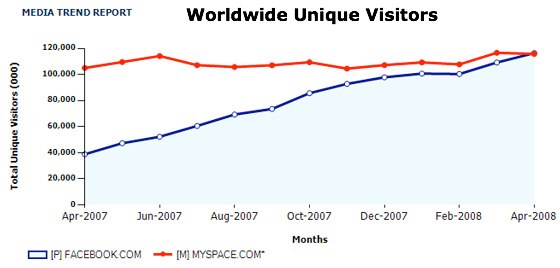
 This is when a social media website called Myspace had arrived on the Internet. It was just like the modern day Facebook which allowed people to form connections and helped them find new friends on the Internet. And within just one year Myspace became a sensation in the making with more than 1 million users signing up within the first month itself. And by the end of the year, Myspace had 5 million users. This is when in 2005, it got purchased by a gigantic media company called News Corp for $580 milllion. Because somehow, News Corp was one of those few organisations that actually realized the potential of social media ads, back in 2005. And the day this purchase happened it marked the beginning of the capitalistic Internet era. During this time, Facebook was just a college student website which was open to only Ivy League students in the US. But on the other side, from 2005 to 2008 Myspace became the most visited social networking site in the world. And in 2006, it even surpassed Google to becoming the most visited website in the world. 

But something happened in the next 4 years because of which the same Myspace had 115 million users while on the other side Facebook, the college community website had more than 1 billion users. The question is What exactly happened and how did two companies inspite of being in the exact same space, doing the exact same thing have such a vast difference in their success. The first reason is based on the fundamental concept of social network and human psychology which is known as the triadic closure property. And this is something that was suggested by a german sociologists named Georg Simmel in 1908. In simple words what it means is if there are three people: Shyam, Baburao and Raju If Raju knows Babu and Babu knows Shyam then automatically, Raju will form a connection with Shyam and Raju will be more inclined to trust Shyam. So, basically, if A knows B, and B knows C then A is more inclined to form a connection with C eventually leading to speed of trust. And you must have observed this while you used Facebook or Instagram, that is when you get a request from a person who has 200 mutual friends you easily tend to accept their request. 

At the same time if you get a request from a person whom you possibly know but has got zero mutual friends there’s a little bit of skepticism that pops in. This is how the triadic closure property plays out. In case of Myspace and Facebook, the major drawback with Myspace was that it did not allow users to use their real names as their usernames and because of this, although you could meet new people on the Internet through similar interests you couldn’t really tell who exactly are you chatting with. So, this kinda turned into a fine mix of privacy and creepiness. But on the other hand Facebook insisted on getting people to use their real names as their usernames. Why? Because as legend has it, Facebook was meant to stalk girls and if you didn’t know the names of those girls stalking wouldn’t be user-friendly right? Will do anything for girls Just kidding guys! It was meant to be that way because Mark Zuckerberg believed in helping people build authentic connections through digital technology. 

And regardless of the truth behind this statement the strategy of using real names turned out to be Facebook’s X factor because of which apart from connecting with people in their own respective social circle users actually started to expand their network to form second and third connections. And this is where the mutual friend feature came in handy and because of this, the networks on Facebook became far more deep rooted and helped people expand their connections beyond their social circle. And this is the reason why in 2006, when Facebook opened itself to the general public people flocked to create a Facebook account inspite of having a Myspace account already. Now, this begs the question If this was just this simple feature of using real usernames that distinguished Facebook from Myspace then why didn’t Myspace incorporate that feature and kill Facebook altogether? In fact, this is what Facebook did with Snapchat right? By introducing Instagram stories. In fact, the Myspace team even had the backing of a large corporation like News Corp, right? Then why couldn’t they incorporate this feature? Well, as it turns out, this is exactly why they couldn’t incorporate the feature in their website. Because News corp turned Myspace into a proper corporate organisation which had to follow protocols and procedures And more than the ideas and the execution, the focus went to register quarterly profits, yearly profits and all the other corporate procedures. 

In fact, even if the Myspace team came out with a brilliant idea. It first used to get scrutinized by the lawyers, then by so-called experts and then a series of meetings used to be held and then a series of emails to be sent and it just kept going back and forth. And in the process, things got so slow that the ideas just got lost into bureaucracy and even something as simple as adding a feature also took forever to be executed. While on the other side, Facebook was being run by a bunch of college students who could add, change, modify and delete features overnight. And make major modifications to the website without any formalities. And unfortunately finally when Myspace incorporated the option of real usernames it was already 2008 and Facebook had already surged way ahead.

 So, to put that straight, while Myspace became a rigid organisation that was focused on procedures and protocols. And was constantly debating about who is right and who is not. Facebook was obsessively focused on what is right and executed ideas with agility. And this became the second reason for the fall of Myspace and the rise of Facebook. And the story didn’t end here the rigid corporate structure of Myspace also lead to another huge setback that literally became the golden recipe for Facebook to surge way ahead of Myspace. And this recipe also became a game changer for Amazon, Google and Apple. And this was the idea of third party integration wherein Facebook practically tranformed from a product to becoming a platform. 

On 24th of May 2007, Facebook launched the Facebook platform to provide a framework for software developers to create applications that could interact with core features of Facebook. For example, Spotify could use Facebook API to allow users to share music directly within the Spotify application itself. Candy Crush used Facebook for instant login and I’m sure most of you must have used it. And thirdly, Nike run club used Facebook API to enable its users to share their achievements of their run with their friends by posting directly to the Facebook’s news feed. So, this way Facebook allowed developers and gave them the freedom to use their technology and build products and services of their own.

 Whereas on the other hand, Myspace was set to be a notoriously closed system and Myspace even used to block contents from potential competitors. And for some reason it also ended up blocking Photobucket which was at that time the most popular photo sharing website. And this is the third reason why Facebook became an incredible platform not just for consumers and advertisers but also for developers. And by the way, this concept of going from a product to a platform is also the reason for the unprecedented success of Apple because back then even Steve Jobs was skeptical about allowing third party developers. But when Apple started providing its platform to developers the iconic App Store was born and that changed Apple forever. 

Even Android did the same with Play Store. But If you look at Nokia Nokia acted like Myspace and made it very difficult for developers to operate because the symbianOS was too rigid for third party apps to be built upon. And fast forward to 2006, Amazon launched its own version of third party integration by allowing third party sellers to use this technology to sell their products. And guess what? In 2020 alone, Amazon generated $80.46 billion dollars in third-party seller services revenue which is more than the revenue generated by its own sellers. This was the insane revenue stream that Myspace passed on and turned Facebook into the billion dollar company that it is today.

Now, let’s talk about the 3 important lessons from this case study. Lesson number one, Every entrepreneur and a leader needs to realize that the fundamental purpose of an organisational structure is not just to help you make strategic decisions but to enable you to make those strategic decisions before its too late. And the day you realize that these protocols are making the execution of ideas tedious you need to kill those protocols straightaway or else those very same protocols will end up killing your organisation. 

Lesson 2, regardless of how marvelous your technology is if you’re building a business to consumer product human centred design must always be taken into consideration because if you see, in this case, it was the simple feature of mutual friends that actually got Facebook the same amount of popularity as Myspace. Because knowingly or unknowingly it abided by the triadic closure property. 

And last and most importantly, even if you’re not the first mover in the industry it’s completely fine guys. In fact, it is great because regardless of how big a company is if they are venturing into a new space, they will make mistakes. And if you carefully learn from those mistakes you can save yourself a lot of time, a lot of money and a lot of efforts. And more importantly, merely by learning from those mistakes you will have the opportunity to race ahead of the game Because afterall, wisdom is that attribute that often separates a few legendary entrepreneurs from the many good ones.

How Facebook become Powerful & Giant Company

 Hi everybody, We all know Facebook as the giant, powerful company that it is today but very few of us know that when Facebook actually came out in the market it was neither the first social media product in the market nor was it the best social media website in the market. In fact, when Facebook came out, there was already another social media website that had about 1 million users. And it was already one of the most visited websites on the Internet. But somehow, within the next four years Facebook made history by overtaking this huge company and went onto become one of the most powerful companies on the planet. 

And the reason why this happened has got some very very important business learnings for each one of us because more often than not, we all must have had a brilliant idea but then after doing a little bit of research, we tend to realize that there is already a giant company as our competitors doing the exact same thing as we planned to do. And that could be demotivating. But guys, what if I told you that instead, you should be super happy to build a business if there is already a giant competition in the market. And the fact that it will actually provide you a golden opportunity to build a business. The question is- How is it even possible and how can you go on to build a business to compete with a billion dollar company. The answer to this question lies in a story that dates back to 2004.

 This is when a social media website called Myspace had arrived on the Internet. It was just like the modern day Facebook which allowed people to form connections and helped them find new friends on the Internet. And within just one year Myspace became a sensation in the making with more than 1 million users signing up within the first month itself. And by the end of the year, Myspace had 5 million users. This is when in 2005, it got purchased by a gigantic media company called News Corp for $580 milllion. Because somehow, News Corp was one of those few organisations that actually realized the potential of social media ads, back in 2005. And the day this purchase happened it marked the beginning of the capitalistic Internet era. During this time, Facebook was just a college student website which was open to only Ivy League students in the US. But on the other side, from 2005 to 2008 Myspace became the most visited social networking site in the world. And in 2006, it even surpassed Google to becoming the most visited website in the world. 

But something happened in the next 4 years because of which the same Myspace had 115 million users while on the other side Facebook, the college community website had more than 1 billion users. The question is What exactly happened and how did two companies inspite of being in the exact same space, doing the exact same thing have such a vast difference in their success. The first reason is based on the fundamental concept of social network and human psychology which is known as the triadic closure property. And this is something that was suggested by a german sociologists named Georg Simmel in 1908. In simple words what it means is if there are three people: Shyam, Baburao and Raju If Raju knows Babu and Babu knows Shyam then automatically, Raju will form a connection with Shyam and Raju will be more inclined to trust Shyam. So, basically, if A knows B, and B knows C then A is more inclined to form a connection with C eventually leading to speed of trust. And you must have observed this while you used Facebook or Instagram, that is when you get a request from a person who has 200 mutual friends you easily tend to accept their request. 

At the same time if you get a request from a person whom you possibly know but has got zero mutual friends there’s a little bit of skepticism that pops in. This is how the triadic closure property plays out. In case of Myspace and Facebook, the major drawback with Myspace was that it did not allow users to use their real names as their usernames and because of this, although you could meet new people on the Internet through similar interests you couldn’t really tell who exactly are you chatting with. So, this kinda turned into a fine mix of privacy and creepiness. But on the other hand Facebook insisted on getting people to use their real names as their usernames. Why? Because as legend has it, Facebook was meant to stalk girls and if you didn’t know the names of those girls stalking wouldn’t be user-friendly right? Will do anything for girls Just kidding guys! It was meant to be that way because Mark Zuckerberg believed in helping people build authentic connections through digital technology. 

And regardless of the truth behind this statement the strategy of using real names turned out to be Facebook’s X factor because of which apart from connecting with people in their own respective social circle users actually started to expand their network to form second and third connections. And this is where the mutual friend feature came in handy and because of this, the networks on Facebook became far more deep rooted and helped people expand their connections beyond their social circle. And this is the reason why in 2006, when Facebook opened itself to the general public people flocked to create a Facebook account inspite of having a Myspace account already. Now, this begs the question If this was just this simple feature of using real usernames that distinguished Facebook from Myspace then why didn’t Myspace incorporate that feature and kill Facebook altogether? In fact, this is what Facebook did with Snapchat right? By introducing Instagram stories. In fact, the Myspace team even had the backing of a large corporation like News Corp, right? Then why couldn’t they incorporate this feature? Well, as it turns out, this is exactly why they couldn’t incorporate the feature in their website. Because News corp turned Myspace into a proper corporate organisation which had to follow protocols and procedures And more than the ideas and the execution, the focus went to register quarterly profits, yearly profits and all the other corporate procedures. 

In fact, even if the Myspace team came out with a brilliant idea. It first used to get scrutinized by the lawyers, then by so-called experts and then a series of meetings used to be held and then a series of emails to be sent and it just kept going back and forth. And in the process, things got so slow that the ideas just got lost into bureaucracy and even something as simple as adding a feature also took forever to be executed. While on the other side, Facebook was being run by a bunch of college students who could add, change, modify and delete features overnight. And make major modifications to the website without any formalities. And unfortunately finally when Myspace incorporated the option of real usernames it was already 2008 and Facebook had already surged way ahead.

 So, to put that straight, while Myspace became a rigid organisation that was focused on procedures and protocols. And was constantly debating about who is right and who is not. Facebook was obsessively focused on what is right and executed ideas with agility. And this became the second reason for the fall of Myspace and the rise of Facebook. And the story didn’t end here the rigid corporate structure of Myspace also lead to another huge setback that literally became the golden recipe for Facebook to surge way ahead of Myspace. And this recipe also became a game changer for Amazon, Google and Apple. And this was the idea of third party integration wherein Facebook practically tranformed from a product to becoming a platform. 

On 24th of May 2007, Facebook launched the Facebook platform to provide a framework for software developers to create applications that could interact with core features of Facebook. For example, Spotify could use Facebook API to allow users to share music directly within the Spotify application itself. Candy Crush used Facebook for instant login and I’m sure most of you must have used it. And thirdly, Nike run club used Facebook API to enable its users to share their achievements of their run with their friends by posting directly to the Facebook’s news feed. So, this way Facebook allowed developers and gave them the freedom to use their technology and build products and services of their own.

 Whereas on the other hand, Myspace was set to be a notoriously closed system and Myspace even used to block contents from potential competitors. And for some reason it also ended up blocking Photobucket which was at that time the most popular photo sharing website. And this is the third reason why Facebook became an incredible platform not just for consumers and advertisers but also for developers. And by the way, this concept of going from a product to a platform is also the reason for the unprecedented success of Apple because back then even Steve Jobs was skeptical about allowing third party developers. But when Apple started providing its platform to developers the iconic App Store was born and that changed Apple forever. 

Even Android did the same with Play Store. But If you look at Nokia Nokia acted like Myspace and made it very difficult for developers to operate because the symbianOS was too rigid for third party apps to be built upon. And fast forward to 2006, Amazon launched its own version of third party integration by allowing third party sellers to use this technology to sell their products. And guess what? In 2020 alone, Amazon generated $80.46 billion dollars in third-party seller services revenue which is more than the revenue generated by its own sellers. This was the insane revenue stream that Myspace passed on and turned Facebook into the billion dollar company that it is today.

Now, let’s talk about the 3 important lessons from this case study. Lesson number one, Every entrepreneur and a leader needs to realize that the fundamental purpose of an organisational structure is not just to help you make strategic decisions but to enable you to make those strategic decisions before its too late. And the day you realize that these protocols are making the execution of ideas tedious you need to kill those protocols straightaway or else those very same protocols will end up killing your organisation. 

Lesson 2, regardless of how marvelous your technology is if you’re building a business to consumer product human centred design must always be taken into consideration because if you see, in this case, it was the simple feature of mutual friends that actually got Facebook the same amount of popularity as Myspace. Because knowingly or unknowingly it abided by the triadic closure property. 

And last and most importantly, even if you’re not the first mover in the industry it’s completely fine guys. In fact, it is great because regardless of how big a company is if they are venturing into a new space, they will make mistakes. And if you carefully learn from those mistakes you can save yourself a lot of time, a lot of money and a lot of efforts. And more importantly, merely by learning from those mistakes you will have the opportunity to race ahead of the game Because afterall, wisdom is that attribute that often separates a few legendary entrepreneurs from the many good ones.

How Facebook become Powerful & Giant Company

 Hi everybody, We all know Facebook as the giant, powerful company that it is today but very few of us know that when Facebook actually came out in the market it was neither the first social media product in the market nor was it the best social media website in the market. In fact, when Facebook came out, there was already another social media website that had about 1 million users. And it was already one of the most visited websites on the Internet. But somehow, within the next four years Facebook made history by overtaking this huge company and went onto become one of the most powerful companies on the planet. 

And the reason why this happened has got some very very important business learnings for each one of us because more often than not, we all must have had a brilliant idea but then after doing a little bit of research, we tend to realize that there is already a giant company as our competitors doing the exact same thing as we planned to do. And that could be demotivating. But guys, what if I told you that instead, you should be super happy to build a business if there is already a giant competition in the market. And the fact that it will actually provide you a golden opportunity to build a business. The question is- How is it even possible and how can you go on to build a business to compete with a billion dollar company. The answer to this question lies in a story that dates back to 2004.

 This is when a social media website called Myspace had arrived on the Internet. It was just like the modern day Facebook which allowed people to form connections and helped them find new friends on the Internet. And within just one year Myspace became a sensation in the making with more than 1 million users signing up within the first month itself. And by the end of the year, Myspace had 5 million users. This is when in 2005, it got purchased by a gigantic media company called News Corp for $580 milllion. Because somehow, News Corp was one of those few organisations that actually realized the potential of social media ads, back in 2005. And the day this purchase happened it marked the beginning of the capitalistic Internet era. During this time, Facebook was just a college student website which was open to only Ivy League students in the US. But on the other side, from 2005 to 2008 Myspace became the most visited social networking site in the world. And in 2006, it even surpassed Google to becoming the most visited website in the world. 

But something happened in the next 4 years because of which the same Myspace had 115 million users while on the other side Facebook, the college community website had more than 1 billion users. The question is What exactly happened and how did two companies inspite of being in the exact same space, doing the exact same thing have such a vast difference in their success. The first reason is based on the fundamental concept of social network and human psychology which is known as the triadic closure property. And this is something that was suggested by a german sociologists named Georg Simmel in 1908. In simple words what it means is if there are three people: Shyam, Baburao and Raju If Raju knows Babu and Babu knows Shyam then automatically, Raju will form a connection with Shyam and Raju will be more inclined to trust Shyam. So, basically, if A knows B, and B knows C then A is more inclined to form a connection with C eventually leading to speed of trust. And you must have observed this while you used Facebook or Instagram, that is when you get a request from a person who has 200 mutual friends you easily tend to accept their request. 

At the same time if you get a request from a person whom you possibly know but has got zero mutual friends there’s a little bit of skepticism that pops in. This is how the triadic closure property plays out. In case of Myspace and Facebook, the major drawback with Myspace was that it did not allow users to use their real names as their usernames and because of this, although you could meet new people on the Internet through similar interests you couldn’t really tell who exactly are you chatting with. So, this kinda turned into a fine mix of privacy and creepiness. But on the other hand Facebook insisted on getting people to use their real names as their usernames. Why? Because as legend has it, Facebook was meant to stalk girls and if you didn’t know the names of those girls stalking wouldn’t be user-friendly right? Will do anything for girls Just kidding guys! It was meant to be that way because Mark Zuckerberg believed in helping people build authentic connections through digital technology. 

And regardless of the truth behind this statement the strategy of using real names turned out to be Facebook’s X factor because of which apart from connecting with people in their own respective social circle users actually started to expand their network to form second and third connections. And this is where the mutual friend feature came in handy and because of this, the networks on Facebook became far more deep rooted and helped people expand their connections beyond their social circle. And this is the reason why in 2006, when Facebook opened itself to the general public people flocked to create a Facebook account inspite of having a Myspace account already. Now, this begs the question If this was just this simple feature of using real usernames that distinguished Facebook from Myspace then why didn’t Myspace incorporate that feature and kill Facebook altogether? In fact, this is what Facebook did with Snapchat right? By introducing Instagram stories. In fact, the Myspace team even had the backing of a large corporation like News Corp, right? Then why couldn’t they incorporate this feature? Well, as it turns out, this is exactly why they couldn’t incorporate the feature in their website. Because News corp turned Myspace into a proper corporate organisation which had to follow protocols and procedures And more than the ideas and the execution, the focus went to register quarterly profits, yearly profits and all the other corporate procedures. 

In fact, even if the Myspace team came out with a brilliant idea. It first used to get scrutinized by the lawyers, then by so-called experts and then a series of meetings used to be held and then a series of emails to be sent and it just kept going back and forth. And in the process, things got so slow that the ideas just got lost into bureaucracy and even something as simple as adding a feature also took forever to be executed. While on the other side, Facebook was being run by a bunch of college students who could add, change, modify and delete features overnight. And make major modifications to the website without any formalities. And unfortunately finally when Myspace incorporated the option of real usernames it was already 2008 and Facebook had already surged way ahead.

 So, to put that straight, while Myspace became a rigid organisation that was focused on procedures and protocols. And was constantly debating about who is right and who is not. Facebook was obsessively focused on what is right and executed ideas with agility. And this became the second reason for the fall of Myspace and the rise of Facebook. And the story didn’t end here the rigid corporate structure of Myspace also lead to another huge setback that literally became the golden recipe for Facebook to surge way ahead of Myspace. And this recipe also became a game changer for Amazon, Google and Apple. And this was the idea of third party integration wherein Facebook practically tranformed from a product to becoming a platform. 

On 24th of May 2007, Facebook launched the Facebook platform to provide a framework for software developers to create applications that could interact with core features of Facebook. For example, Spotify could use Facebook API to allow users to share music directly within the Spotify application itself. Candy Crush used Facebook for instant login and I’m sure most of you must have used it. And thirdly, Nike run club used Facebook API to enable its users to share their achievements of their run with their friends by posting directly to the Facebook’s news feed. So, this way Facebook allowed developers and gave them the freedom to use their technology and build products and services of their own.

 Whereas on the other hand, Myspace was set to be a notoriously closed system and Myspace even used to block contents from potential competitors. And for some reason it also ended up blocking Photobucket which was at that time the most popular photo sharing website. And this is the third reason why Facebook became an incredible platform not just for consumers and advertisers but also for developers. And by the way, this concept of going from a product to a platform is also the reason for the unprecedented success of Apple because back then even Steve Jobs was skeptical about allowing third party developers. But when Apple started providing its platform to developers the iconic App Store was born and that changed Apple forever. 

Even Android did the same with Play Store. But If you look at Nokia Nokia acted like Myspace and made it very difficult for developers to operate because the symbianOS was too rigid for third party apps to be built upon. And fast forward to 2006, Amazon launched its own version of third party integration by allowing third party sellers to use this technology to sell their products. And guess what? In 2020 alone, Amazon generated $80.46 billion dollars in third-party seller services revenue which is more than the revenue generated by its own sellers. This was the insane revenue stream that Myspace passed on and turned Facebook into the billion dollar company that it is today.

Now, let’s talk about the 3 important lessons from this case study. Lesson number one, Every entrepreneur and a leader needs to realize that the fundamental purpose of an organisational structure is not just to help you make strategic decisions but to enable you to make those strategic decisions before its too late. And the day you realize that these protocols are making the execution of ideas tedious you need to kill those protocols straightaway or else those very same protocols will end up killing your organisation. 

Lesson 2, regardless of how marvelous your technology is if you’re building a business to consumer product human centred design must always be taken into consideration because if you see, in this case, it was the simple feature of mutual friends that actually got Facebook the same amount of popularity as Myspace. Because knowingly or unknowingly it abided by the triadic closure property. 

And last and most importantly, even if you’re not the first mover in the industry it’s completely fine guys. In fact, it is great because regardless of how big a company is if they are venturing into a new space, they will make mistakes. And if you carefully learn from those mistakes you can save yourself a lot of time, a lot of money and a lot of efforts. And more importantly, merely by learning from those mistakes you will have the opportunity to race ahead of the game Because afterall, wisdom is that attribute that often separates a few legendary entrepreneurs from the many good ones.

Importance of Financial Literacy

Financial literacy is the understanding of financial components and skills such as budgeting, investing, borrowing, taxation, and personal financial management. Being financially literate allows an individual to be better prepared for their personal financial troubles as well as global recessions.

The absence of such skills is referred to as being financially illiterate. Being financially illiterate can lead to a number of pitfalls, such as being more likely to accumulate unsustainable debt burdens, either through poor spending decisions or a lack of long-term preparation. This, in turn, can lead to poor credit, bankruptcy, housing foreclosure, and other negative consequences. Today’s world is full of things such as student loans, mortgages, credit cards, investments, and insurance, which makes it necessary for everyone to be financially literate. Credit card companies, banks, and other financial institutions are secretly trapping consumers with credit opportunities—the ability to apply for credit cards or pay off one card with another. Without the proper knowledge, it is easy to get into financial trouble.

Thankfully, there are now more resources than ever for those wishing to educate themselves about the world of finance. The following are fundamental components of financial literacy that should be learned:

  • Budgeting

In budgeting, there are four main uses for money that determine a budget: spending, investing, saving, and giving away. Creating the right balance throughout the primary uses of money allows individuals to better allocate their income, resulting in financial security and prosperity. In general, a budget should be composed in a way that pays off all existing debt while leaving money aside for saving and making beneficial investments.

  • Investing

Some of the components that should be learned to ensure profitable investments are interest rates, price levels, diversification, risk mitigation, and indexes. Learning about crucial investment strategies allows individuals to make smarter financial decisions that may result in an increased inflow of income.

  • Borrowing

In most cases, almost every individual is required to borrow money at one point in their life. To ensure borrowing is done effectively, an understanding of interest rates, compound interest, time value of money, payment periods, and loan structure is very important. With this, an individual’s financial literacy will increase, which will provide practical borrowing guidelines and reduce long-term financial stress.

  • Taxation

Gaining knowledge about the different forms of taxation and how they impact an individual’s net income is crucial for obtaining financial literacy. Whether it be employment, investment, rental, or inheritance, each source of income is taxed differently. Awareness of the different income tax rates results in economic stability and increases financial performance through income management.

Achieving an in-depth knowledge of the financial components discussed above guarantees an increase in an individual’s financial literacy, allowing them to make decisions safer and more profitably.

Spotted Wobbegong

The spotted wobbegong (Orectolobus maculatus) belongs to the Orectolobidae family, and is found in the eastern Indian Ocean around Australia; it is possibly endemic to this region. A relatively large shark (reaching lengths of up to 3m/9.8 ft), other common names are “carpet shark,” “common carpet shark,” “common catshark,” “tassel shark,” or just “wobbegong.”

This wobbegong can be distinguished by its unique pattern of dark saddle-like markings on their dorsal side on top of a golden-brown colour. On top of these are white rings scattered about.

The genus name Orectolobus is Greek from orectos (stretched out) and lobos (a rounded projection). The species name maculatus is Latin from macula (spot), most likely referencing the patterns on the shark’s body. The word ‘wobbegong’ itself is an Australian aboriginal word. ​Spotted Wobbegongs are found in the shallow, coastal waters of Australia down to about 100 m. These sharks are famous for their lie-in-wait hunting strategy, known to swallow smaller prey whole. Feeding primarily takes place at night, and food menu items include fish, crayfish, crustaceans and even cephalopods.

Habitat and Diet

Favorite foods of the spotted wobbegong include invertebrates such as crabs, lobsters, and octopi as well as bony fish such as sea bass and luderick. This shark is nocturnal, hunting at night and resting during the day. O. maculatus can extend its reach during prey capture by as much as 30% of the nasal distance from its anteriormost point to the anterior edge of the pectoral fin. This is equivalent to the combined length of the head and branchial arches.

The spotted wobbegong often sits at the bottom and waits for prey to wander near its mouth. Prey has even been known to nibble on this shark’s tentacles before being eaten. Other times this shark has been observed to slowly sneak up on its prey from a long distance.

Occurring on continental shelves, from the intertidal zone down to 360 feet (110 m), the spotted wobbegong is commonly found on or around reefs, under piers and on sandy bottoms. There have been many sightings of this shark in water barely deep enough to cover its entire body. It is considered sluggish and inactive and is often found resting on the ocean floor.

Status in the Wild

The spotted wobbegong is currently assessed as “Near Threatened” in waters off New South Wales due to serious declines in population numbers in that region and “Near Threatened” throughout the remainder of its range by the World Conservation Union (IUCN) Red List. The IUCN consists of a global union of state, governmental agencies, and non-governmental organizations in partnership whose goal is to assess the conservation status of different species.

Some Facts

  • There are 12 known species of wobbegongs.
  • Wobbegong sharks are nocturnal (active at night).
  • The name wobbegong comes from the Aborigine name meaning “shaggy beard”. They are also called carpet sharks.
  • They are not obligate ram ventilators (sharks that have to force water through their mouths and over their gills in order to breathe). They simply lay on the ocean floor, lazily, and open their mouths, sucking water in and over their gills. So they don’t have to keep swimming in order to breathe.
  • These sharks are ambush predators. They lay in wait for passing prey to happen upon their tassels thinking they are food. Then the typically lazy wobbegong opens their mouth, creating a vacuum and sucking in the prey whole. They snap up their prey in the blink of an eye.
  • Wobbegong sharks can actually move across the ocean floor using their bottom fins, which looks just like they are walking.
  • Their jaws are powerful and they also have very sharp teeth, albeit small, that can cut through wetsuit material, yielding a painful bite.

Increase Your Productivity Using This Simple Step To Focus…!!!!

 Hello everybody,  People, let’s first try to understand why are we so bad at instructing ourselves. Why is it that we are not able to manage our time ? Why is it that we are not able to focus ? And the answer to this question lies in our conditioning that has happened. since childhood You will see that since childhood there has always been an external entity which has been telling you what to do and when to do. For the first 18 years of your life you’ve got your school that gives you a timetable and tells you that from 9AM to 10AM you’re supposed to learn Hindi from 10 to 11 your are supposed to learn English and so on and so forth. 

And the same thing happens in college also when the college gives you a timetable and tells you that tells you that you’re supposed to have 75% attendance. And then when you get employed there is a boss who is going to keep an eye on you, the company tells you that you’re supposed to be there from 9 to 5. And then you’ve got those annoying peers who often keep an eye on you as to how many breaks you are taking. So if you see, there has always been an external entity that has been telling you when to do and what to do. As a result of this, we have lost our ability or our ability to self-govern ourselves has degraded to such a large extent that the next time you command your brain to do something the first response that you get is “NO” (laughs) .

So, practically speaking, your mind has become this notorious monkey which requires an external entity to tell it what to do and when to do. So, here’s a simple 5 step procedure which will help you to condition your mind to focus on something. Now the disclaimer over here is that this step by step procedure is very easy to understand but very difficult to execute. So, do not expect this to be like an easy ride for you to improve your focus and and for you to have this ultimate level of concentration that you wish to have. So, here’s step number one People, 

the first thing that you are supposed to do is make sure that you have one particular time slot and you reserve this one particular time slot for whatever activity that you want to do. This could be your homework This could be your project work, this could be anything. But fixing this time slot is very important and once you have, let’s say, fixed 9 AM to 11 AM what you are supposed to do is you’re supposed to make sure that you clear out every single possible distraction. For example, if you want to have breakfast, do make sure to schedule the breakfast before 9AM so that between that time, that is, from 9 AM to 11 AM you don’t have to get up for breakfast. 

Make sure that you do all the calls that you need, make sure you send all the PDFs to your friends or whatever you want to send. After doing all that work you shouldn’t have any work left between 9AM to 11AM except for that activity. The second step would be to get everything that you need at that desk wherein you’re supposed to work so that you don’t have to get up. Now, this includes everything starting from a sharpened pencil to your bottle of water. If you drink a lot of water then get 2 bottles and make sure that you have everything that you needed so that you don’t have to get up during that time slot. 

Step 3 is the most obvious step of all and that would be to put your phone on DnD and keep it away. And then we move on to step 4 and this is by far the most difficult step of all and here’s where no matter what happens, I repeat, no matter what happens you are supposed to be at your desk from 9 AM to 11 AM for 22 days straight, alright ? And here’s where, for the first 10 days your productivity will be ultra low okay ? It doesn’t matter. You are supposed to be at your desk, you’re supposed to be sitting at your chair. And the moment you do this, your battle with the monkey mind begins and here’s where all kinds of thoughts will start coming into play. Bro, what is the purpose of life ? Is Kunal Kamra right or Modi Ji right ? Why didn’t Seema reply ? I think I’m alone. 

What is the purpose of this Indian education system yaar ? Hmm.. these scientists are saying that the world will be doomed by 2030 then what’s the point of me studying all this ? And when this happens, just let your thoughts flow and you know what people ?this reminds me of what one This is what reminds me of what Blaise Pascal once said He said, “Most of the humanity’s problems stem from man’s inability to sit quietly in a room, alone. And this experience of yours is the standing example of the same. Over the course of time, in about 5 to 10 days automatically, you will be able to make peace with your thoughts. And you will see that slowly and steadily your efficiency is increasing. Eventually, by the 22nd day, I can bet you that you would have reached at least 50% efficiency as in, if you sit down for 2 hours you will be able to focus on your work for at least one hour. 

And after you’re done with all of this, what you are supposed to do is maintain a progress sheet and over there you are supposed to write how much work you have done on each day until the 22nd day and if possible, follow it all throughout. Once you start doing this you’ll notice that you’re making progress, your efficiency is increasing and that will give you motivation to keep going. And once you follow this technique for about 22 days, you will see that by the end of 22nd day you have cultivated a powerful habit, you have discplined yourself to sit from 9 AM to 11 AM. Automatically, your focus will improve, your concentration will improve for those 2 hours and once you keep doing this for many many things in life, automatically you will begin see that you are making some amazing progress. 

Now, people, here’s where I want to tell you something very very important. I am not teaching you this technique so that you can study better I know that you are going to study well anyways because your teachers are going to kick your a**, your parents are going to kick your a**. But the reason why I want you to practice this technique for something as lame as studies is because this technique will teach you 3 very important life lessons that will help you achieve greatness in life. 

The first lesson that this technique is going to teach you is to live with your thoughts. And trust me, in this world of hustle and bustle because we don’t spend enough time with ourself we always live in a state of misery and the worst part is more often than not we never realize it. 

The second life skill that this technique will teach you is the art of self-governance. You will learn how do you exactly take control of your temptations, you will learn how to take control over your distractions. And once you start doing this in small things in life, automatically, you will begin to prepare yourself for much bigger and much more difficult battles in life. 

And third and most importantly this technique will also teach you that greatness takes time. At day zero, you will suck. Regardless of whatever you do, if you want to be great at it, you have to first learn to suck. And in this big bad world wherein we get everything with a click of a button it is very important for our generation to understand that greatness takes time. And once you learn this, I am 100% sure. that you will be on your way to achieve greatness. 

Taj – the strongest hotel brand

In its annual report ‘Hotels 50 2021,’ Indian Hotels Business (IHCL), the biggest hospitality company in South Asia, has revealed that its famous brand, Taj, has been recognized as the world’s Strongest Hotels Brand by Brand Finance, the world’s top brand evaluation consultants.

The most valued and powerful hotel brands are recognized in this study worldwide.

“For the Indian hospitality sector, this is a proud occasion on the world stage. Taj being named the Strongest Hotel Brand in the World is a tribute to the constant confidence that our guests have shown and that our staff has personified day-to-day warmth and honest care. We continue our commitment to raise the global premium hospitality experience and to provide all our stakeholders the enchantment of Tajness “Puneet Chhatwal, Chief Executive Officer and Managing Director of the Indian Hotels Company, stated.

Out of 100, Taj got an overall brand strength index of 89.3 with the AAA’s matching consumer acquaintance, staff satisfaction, and reputation as well as its world-class customer service.

Source: businessstandard

Woh Din

When you are wasting another important year of your life but this time it’s isn’t your fault.

Now it’s been more than a year, the students haven’t seen the colleges and schools, even some of the students are now gonna start their second year in colleges but still they don’t even know how their college campus look like. It is the most hurtful thing that we are spending our most beautiful years of life like this, infront of the laptop and smartphone screens. When the lockdown started I was studying in first year and now I’m third year engineering student, I still don’t know how my classroom, classmates and faculty members look like in real life.

The “Woh Din” which were supposed to filled with joy, happiness, fun with friends and lots of travel are ending with “ Am I audible? Yes sir”. In this lockdown many students suffered and some are still suffering from stress, anxiety and demotivation, besides some are just enjoying it like holidays. Lockdown and the online mode education is pretty nice, just enjoy your time with family, learn new things and many more, until then, the thoughts of future knocks at the door.

While the students are struggling to learn through online mode, the teachers and the colleges are mostly focusing on how they can complete the syllabus as early as possible, teachers are also want to help the students and they are doing their best from their side but everything have some advantages and disadvantages like this, online education also have it’s own disadvantages and advantages.

First we thought that the world is testing our patience but, even the nicest person has it’s limit and now we all have had enough of this, we are too young to dealing with all this but we haven’t given up, but now we really want our college life back, those cafeteria talks, waiting for your friends in parking lot, computer lab fun, bunking class and hanging out with your friends, campus rides and many more.

Now we all are going to complete 2 years, while fighting against this covid19 situation and online mode, in this period we all have experienced a lot of good and bad things like, the time we spent with our family. Similarly, we all struggled with lack of oxygen cylinders, hospital beds and most important is FOOD and after all this time we want is to end this “ Mask-World ”. Hope it will really end very soon and we all will get our old life back with No-Mask and the colleges will start soon, hope the world will come to it’s oldself very soon. But until then please give mental support to them who are suffering from depression and those who are tested covid positive.

And last but not the least please stay home and don’t worry this time also will pass very soon.

Take care.


Bailment

Section 148 defines the terms ‘bailment’, ‘bailor’ and ‘bailee’.

A bailment is the delivery of goods by one person to another for some purpose upon a contract that they shall when the purpose is accomplished be returned or otherwise disposed of according to directions of the person delivering them. The person delivering the goods is called the bailor and the person to whom the goods are delivered is called the bailee.

Essentials of Bailment

1.Delivery of the goods for some purpose

2.Return of the goods after the purpose is achieved, or their disposal according to the bailor’s directions.

Kinds of Bailment

  1. Gratuitous Bailment: In gratuitous bailment it is without any consideration for benefit of bailor or bailee.
  2. Non-Gratuitous Bailment: Benefit for both bailor and bailee. Also known as bailment for reward.
  3. Bailment for benefit of bailor: Bailor delivers his goods to bailee for safe custody without any benefit or reward.
  4. Bailment for benefit of bailee: Bailor delivers his goods to a bailee without any benefit for his own use.
  5. Bailment for benefit of bailor and bailee: It is beneficial for both i.e. bailor and bailee.

Duty of Bailor

Section 150 mentions the following duty of bailor in respect of the goods bailed by him:

  1. The bailor is bound to disclose the faults to the bailee in the goods bailed, of which the bailor is aware and materially interfere with the use of them, or expose the bailee to extraordinary risks; and if he does not make such disclosure, he is responsible for the damage arising to bailee directly from such faults.
  2. If the goods are bailed for hire, the bailor is responsible for such damage, whether he was or was not aware of the existence of such fault in the goods bailed.

Duties of Bailee

  1. Duty to take reasonable care of the goods bailed (Section 151 and 152).
  2. Duty not to make unauthorised use of the goods bailed (Section 153 and 154).
  3. Duty not to mix the bailor’s goods with his own goods ( Section 155,156,157).
  4. Duty to return the goods on fulfillment of the purpose (Section 160,161 and 165,166,167).
  5. Duty to deliver to the bailor increase or profit on the goods bailed (Section 163).

Pegasus software

                              (Photo: The Guardian)

Before dwelling into Pegasus software let us firstly know what Spyware is. We often must have come across this world specially the computer users. So, spyware is basically a software which is designed to gather data from your device. It is considered as vitriolic in nature. It can communicate your confidential information to the person who is spying at you and has vengeful intentions. People with such intention can get spyware in your system through many ways. Spyware can also affect the functioning of your system. Your daily activities can be slowed down due to this. The method by which it gets into your system varies.

Now let’s dive into Pegasus software. Pegasus made global headlines again in 2021. Phones of Indian politicians, Journalists were hacked using Pegasus software. Though it is said that the Pegasus spyware is only available with the government. However, the Indian government completely denied the scandal. So, what exactly is Pegasus? Pegasus is a type of malicious software which is classified as spyware. It gains access to your personal information in your system and sends it to the attacker. Pegasus is considered as the ultimate spyware for iOS and android. Pegasus was developed by NSO group, an Israeli company. It first came to news in 2016 when an Arab activist received a doubtful message. He then started identifying it. Before it was believed that the Pegasus only targets iOS. It was only after a year that researchers confirmed that Pegasus is equally capable of targeting iOS as well as android devices.

Pegasus got widely highlighted because it was capable of hacking iPads and iPhones which claims to be the best in terms of data security and privacy. Indeed, if someone has Pegasus in their phone, the attacker can automatically turn on phone’s camera and microphone to capture the data. What can be worst than this? The Israeli company sells Pegasus to only sovereign government at about 7-8 million dollars per year. In this whole process of hacking, the user has no clue that their phone has been hacked. The normal phishing method is typically adopted by the attackers to infect the victim’s device. Clicking on the phishing link would start downloading the Pegasus software in the victim’s device without their knowledge. Through this the hacker gets command over the device.

Pegasus is considered as an extremely sophisticated spyware as it is able to gather vast information from the victim’s device such as password, message, account pin, credit card number, voice calls, etc. The other features which make it the most vicious amongst all is that it can self-destruct itself if it fails to communicate with the attacker or if it detects that it has been installed in a device with wrong SIM card. The intention of the NSO group behind making this spyware was good as it was meant for the law enforcement agencies to use it against terrorism. Who knew that it will be viciously used by the hackers for their own destructive motives?